Showing posts with label Russian Empire. Show all posts

Monday, October 20, 2014

The Congressman Who Spied For Russia


Born in Vilnius, Lithuania, in 1885, Dickstein immigrated with his religious Jewish parents to the Lower East Side as a small child.

Samuel Dickstein, a Democrat from New York City who served in the House of Representatives from the early 1920s to the mid-1940s.

Dickstein didn’t achieve a degree of prominence in Congress until the Democrats took control of the House following the 1930 midterms and Tammany chieftains insisted that he be named to lead the Committee on Immigration and Naturalization. From this perch, he began his career as a scourge of the disloyal.

Stalin had a spy in Congress, an exasperating character who once “blazed up very much, claiming that if we didn’t give him money he would break with us,” according to his Soviet contact. To this day, Sam Dickstein is the only known U.S. representative to have served as a covert agent for a foreign power. His codename was Crook.

Friday, October 17, 2014

Citizen X


Andrei Romanovich Chikatilo (Russian: Андрей Романович Чикатило,Ukrainian: Андрій Романович Чикатило; 16 October 1936 – 14 February 1994) was a Soviet serial killer, nicknamed the Butcher of Rostov, the Red Ripper, and the Rostov Ripper, who committed the sexual assault, murder and mutilation of a minimum of 52 women and children between 1978 and 1990 in the Russian SFSR, the Ukrainian SSR and the Uzbek SSR. Chikatilo confessed to a total of 56 murders and was tried for 53 of these killings in April 1992. He was convicted and sentenced to death for 52 of these murders in October 1992 and subsequently executed in February 1994.
Chikatilo was known by such titles as the Rostov Ripper and the Butcher of Rostov because the majority of his murders were committed in the Rostov Oblast of the Russian SFSR.
BackGround Info via: Wikipedia

Starring: Stephen Rea, Donald Sutherland, Max von Sydow

Monday, September 29, 2014

Help Obama Kickstart World War 3


Our president can’t launch into another war without you. And remember: when we voted for him in 2008 and 2012, we promised to support him no matter what.
And America is dead-ass broke, so our goal is to raise $1.6 trillion on behalf of the U.S. government.
That’s where you come in.
Even a small donation will make all the difference.
World War III is a very important, very progressive war that Obama tells me is very important. So it must be.
World War III is not going to be like those other Republican wars fought on just 1 percent of the world; this war is going to be fought on 99 percent of the world.
It will be everywhere: Russia, China, Africa, Cincinnati, your favorite brunch spot — the one with those kickass ranchero breakfast burritos.
As an incentive, those pledging $25 a piece of rubble from a war-torn Middle Eastern country, kissed by Sen. Lindsey Graham, while $100 donations gets donors a day pass to leave their local refugee camp.
It’ll be all over Twitter, Facebook, Vine, Pinterest, and whatever eventually replaces Pinterest, and I mean, just think of all the hilarious skits we can make of cats reacting to their owners’ homes being obliterated,” the video says. Lots of shock, but tons of awww.
Ten dollars gets one a “shout out” on social media. In fact, the video promises that World War III will be the most social media-focused war in history.
So please, help us reach our goal of $1.6 trillion so we can make World War III a reality. Why? Because Obama.
Let’s make World War 3 a reality!
By The Second City Network

Saturday, July 05, 2014

U.S. Plan For Nuclear First Strike Attack On Russia And China


RT: US revives plans for a nuclear first strike on Russia. Coming up.
Announcer: “Soft assassinations” of anti-NATO leaders.
Star Wars tested for Eastern Europe.
And US space weapons quote an “unofficial declaration of war.”
RT: Secret clauses of NATO membership state, the US can and will depose Europe’s governments on the orders of the White House.
Giuseppe De Lutiis, NATO author: Even if the electorate were to show a different inclination, secret protocols guarantee alignment by any means.
RT: “By any means” means exactly that. Early NATO whistleblower Hans Otto exposed ‘”kill lists” of leading European politicians that defied investigators’ belief, but were subsequently confirmed by police.
Officers found 15 pages of members of the German Communist Party to be assassinated, and 80 pages on Germany’s Social Democrats, one of the two major parties in the country.
The documents state these assassinations would take place “in case of X”. X may refer, writes NATO scholar Dr. Daniele Ganser, to mass protests against a US-backed government, or an election victory of a genuinely left-wing party.
Instructions for such operations were kept at NATO military headquarters south of Brussels.
Der Spiegel reveals a quote “a strictly secured wing of the building. A grey, steel bank vault door prohibits trespassing to the unauthorized.” Papers on NATO operations in Europe are marked “American eyes only.”
When the EU Parliament officially demanded NATO stop these operations, which have become known by the codename Gladio, the US simply ignored it.
Richard Cottrell is a former Member of the European Parliament. NATO tried to ban his investigation Gladio, NATO’s Dagger at the Heart of Europe, which reports both so-called “soft assassinations” – smearing non-aligned EU politicians through mainstream media to make them unelectable – and real assassinations of politicians that still got elected.
Richard joins us, really great to see you, what’s going on?
Richard Cottrell, author of Gladio, NATO’s Dagger at the Heart of Europe: The United States is not prepared to tolerate governments which are unfavorable to the regime. Let’s give the example of Syriza in Greece at the moment, which has just won, come top of the list in the European elections. This is an example of a government which is not going to be tolerated by the United States of America.
RT: You write a prototype “soft assassination”, British Prime Minister Harold Wilson, whose “blasphemy in American eyes” was to “flirt with nuclear disarmament”.
Cottrell: Yes, it’s become a little bit more difficult to, shall we say, use violent means, than it was in the past. So now you’re going to see more of the Harold Wilson tactics. And they will now increase and I will tell you why – because this weekend the European elections were held. And this has resulted in a very large bloc of anti-Europeans, led by the “Penista”, the National Front of France, which has come out on top in the European elections. Nigel Farage, leader of the United Kingdom Independence Party in the UK, who has come from virtually nowhere to become the leader of the third largest party. This will not be allowed to happen, so there will have to be Harold Wilson-type moves now to remove those leaderships, and those parties in those various countries.
RT: NATO is attempting to supersede and actually replace the United Nations, reveals former Assistant General Hans Sponeck.
Its revised doctrine refuses the UN monopoly on the use of force, reports Global Research News.NATO now promotes itself as the military wing of the UN itself.
The doctrine reserves the right to intervene anywhere in the world where there’s “movements of large numbers of persons.” Its newly formed Partners Across The Globe program’s already incorporated Australia, New Zealand, Japan, Pakistan, and Iraq, and leads the occupation of Afghanistan.
With the expected addition of states like Colombia and El Salvador, NATO will be on all six inhabited continents.
Obama’s foreign policy guru, Zbigniew Brzezinski, calls people in countries under US control “vassals,” a medieval term for slaves.
American armed forces are now in over 150 countries. The unofficial figure, including clandestine US forces, is thought to be much higher.
The Pentagon recently formed the United States Africa Command. Since then, NATO’s dispatched the continent’s most developed nation to a “Hobbesian anarchy”, overthrew the Ivory Coast, and chopped Sudan’s oil-rich southern half into a new state, leaving just two and a half countries still outside its military grid.
Leading military analyst, editor of the newslist Stop NATO Rick Rozoff joins us, great to see you. What’ll happen to people when the last countries fall to US control?
Rick Rozoff, Stop NATO newslist: Global enslavement is the answer to that, and we see it manifested for example in ways that may not be immediately obvious, but after certain amount of analysis we can see for example votes that’ve come up in the United Nations General Assembly in the last year and a half, two years, particularly I’m thinking on the question of Syria. We see that the US through a number of factors – economic bribery, diplomatic blackmail, subversion but also through bilateral, multilateral military programs, has been able to secure the overwhelming compliance or servility of other nations. And that’s one of the reasons why there’s no diplomatic and political independence in nations, because they are beholden to the United States and, frankly speaking, they’re fearful of US economic and ultimately military retaliation should they not go along with the US diktat.
Barack Obama: So today, I state clearly, and with conviction, America’s commitment to seek the peace and security of a world without nuclear weapons. I’m not naive.
RT: Obama’s duplicity is perhaps historically unparalleled. As soon as he envisioned a planet without nuclear weapons, he mushroomed nuclear weapons spending to levels above the height of the Cold War.
He has expanded the infamous Bush Doctrine of a nuclear strike against any country, regardless of international law.
“Full spectrum dominance” is the official term used by his administration, meaning “control everything, everywhere on sea, land, air, space, and outer space.” US Space Command documents plan to even “deny other nations the use of space.”
The “one remaining power” with the capacity to stop what the Pentagon calls full spectrum dominance, writes intelligence analyst William Engdahl, is Russia.
By design or coincidence, crisis in Ukraine provided the perfect excuse for US military control of the region.
Ten days ago the administration tested its Star Wars system for Eastern Europe, which will now be rolled out starting in Romania. Obama brands his system the “stronger, smarter and swifter” version of Ronald Reagan’s initial Star Wars program.
Under the plan, the US attacks Russia with nuclear weapons, while NATO missile defense in Eastern Europe mops up any attempted response.
NSNBC News writes “it is most likely and understandable” Russia interprets NATO’s Star Wars deployment on its border as an “unofficial declaration of war.”
Aerospace analysts told Global Research that US Space Command is planning a nuclear first strike on Russia, as well as one on China in 2016.
Bruce Gagnon of the Global Network Against Weapons in Space joins us, thank you very much for coming on, what do we know about the first strike plans?
Bruce Gagnon, Global Network Against Weapons in Space: This is in the planning process today. The US Space Command practicing engaging in a first strike attack and this is the key element here. These are first strike attack planning, these so-called missile defense systems are key elements in US first strike attack planning. The idea is to hit China or Russia first with a first strike, and then when they try to fire their nuclear retaliatory capability, it is then that the so-called missile “defense” systems would be used to pick off any retaliatory strike, so after a first strike sword is thrust into the heart of China or Russia, then the missile defense shield would be used to pick off any retaliation giving the US the a “successful” first strike attack.
It has nothing at all to do with defense, it has nothing to do with freedom or democracy, or any of those words that are used all the time to disguise the true intentions; it’s all about full spectrum dominance.
RT: Several decades ago the first Star Wars initiative faced intense public and industry debate.
Today the US is controlled by just six mainstream media, all totally suborned to the White House. The result is an Orwellian silence on perhaps the most dangerous issue today.
Europeans may decide they want their leaders chosen by NATO, or even that they support nuclear strikes on China and Russia.
Since the US-controlled mainstream’s never even informed the public these apocalyptic plans are on the agenda, the first people may hear of it, would be this. Seek truth from facts. This is The Truthseeker.

Friday, March 07, 2014

US A Full Partner In Ukraine Debacle


FROM THE moment the Soviet Union collapsed in 1991, the United States has relentlessly pursued a strategy of encircling Russia, just as it has with other perceived enemies like China and Iran. It has brought 12 countries in central Europe, all of them formerly allied with Moscow, into the NATO alliance. US military power is now directly on Russia’s borders.
“I think it is the beginning of a new cold war,” warned George Kennan, the renowned diplomat and Russia-watcher, as NATO began expanding eastward. “I think the Russians will gradually react quite adversely, and it will affect their policies.”
... policy makers in Washington have been congratulating each other for a successful American-aided regime change operation in Ukraine.
Russia is not powerful enough to emerge from the Ukraine/Crimea crisis with a full victory, neither is the United States. Diplomatic pressure and covert action supporting pro-Western factions in Ukraine will continue, but President Obama will not risk military confrontation with Russia. This crisis will not produce the grand westward realignment of which many in Washington dream.
Any solution short of partition will have to take Russia’s interests into account. Thus far the United States has shown no interest in doing that. The likely geopolitical outcome, therefore, is a stalemate.
This crisis is in part the result of a zero-sum calculation that has shaped US policy toward Moscow since the Cold War: Any loss for Russia is an American victory, and anything positive that happens to, for, or in Russia is bad for the United States. This is an approach that intensifies confrontation, rather than soothing it.

Monday, January 06, 2014

The Gállok Rebellion. The Sámi People vs. Grendel


The Cast: The Sámi people are the indigenous people (Finno-Ugric) who live in the Arctic area of Sápmi in Scandinavia. Perhaps you've seen them in film documentaries about their semi-nomadic life, herding reindeer. The police who are defending colonization, mineral extraction and the corporations. The reindeer, trees, plants, flowers, insects. wind, water and soil are also supporting characters in this true life drama.

The Plot: A big corporation (i.e. a group of men) who call themselves "Beowullf" is bent on extracting iron ore from pristine wilderness, destroying everything in their path with "eyes on the prize." Beowulf's extraction of the iron ore means profit in the transnational corporate pocket, money for the government officials who write laws and policies, and salaries for the police who act in robotic fashion for the corporation against the people. The extraction of the ore means money in the pockets of a few - and the destruction of migratory reindeer, other sentient beings, the sacred trees, plants, flowers, water, wind, rain, soil and the Sámi who co-habit in a symbiotic relationship with the others. The enlightened Sámi eschew violence but defend themselves and their brethren flora and fauna by other means. The police use every method available, including violence to defeat the Sámi and open the road (literally) for the corporation to rape the land.

For Us To Learn: In this drama, the Sámi are the real heroes in Sweden and they are unrelenting. When all they've built to defend the land is destroyed, they simply, steadfastly build their bulwarks again to stop "Beowulf." As with the indigenous around the world, we have so much to learn from them. The police are the tragic figures in this story, working hard to pave the way for a foreign corporation to rob a natural resource and to destroy the people and their natural home.


Beowulf and Grendel: It may be that the men who named their corporation "Beowulf" have never read nor ever really grasped the message of this oldest known piece of Anglo-Saxon literature. If they wanted to borrow from the 7th century epic poem they would have more accurately called themselves, "Grendel." The Sámi people are a reincarnation of Beowulf, the hero of the Geats who came to the aid of Hroðgar, king of the Danes, to kill the destroyer-monster Grendel with his bare hands and later Grendel's mother with a sword found in her lair.  Grendel lives today in the form of the capitalist system and the corporations and persons who serve it. Likewise, the Beowulf-Sámi are exemplary, attacking Grendel with their bare hands - the indigenous leading the way and we must follow in their path if we want to save the earth and ourselves.  It's been my practice to read Beowulf annually for the past 40 years and a poem emerged from one of those readings ten years ago.

Grendel

Grendel haunts the cellar way
pausing on a lower stair
adumbrations thick and damp
rumbling from his ancient lair

“There a secret humid harbor,
dripping, lingering decay”,
senses with his eyelids low
but for hunger, he would stay.

High above the sunken moors
riders leave their shield and hoof
led by a gaze set like a vice
on the jaws of Beowulf.

- By Les Blough
February 2003

Friday, February 22, 2013

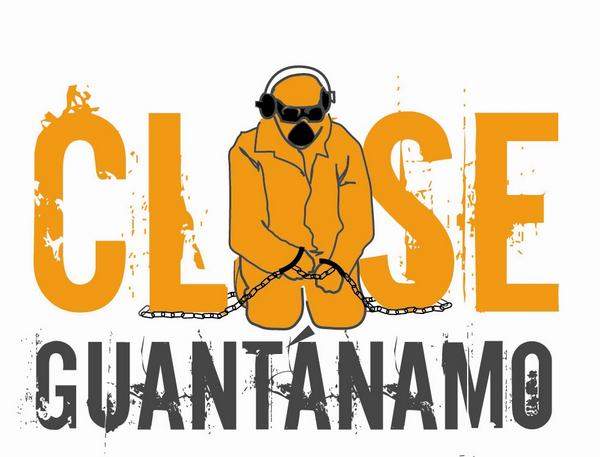
Russia Denies Visa's To U.S. Human Rights Violators


Image via: Griid.org

Russia denied entry to a former commander of the Guantanamo Bay detention camp in retaliation against U.S. moves to punish Russian human rights violators, Deputy Foreign Minister Andrei Denisov said.

Russia denied a visa to Rear Admiral Jeffrey Harbeson, former commander at the Guantanamo U.S. Naval Base in Cuba who now oversees Europe, NATO and Russia affairs at the U.S. Joint Chiefs of Staff, a state-linked newspaper said in December.


"We have already denied entry to some American general, who was commander at the Guantanamo base," Denisov said in response to a question about blacklisted Americans, Interfax news agency said. He did not specify the timing or give the general's name.
In response to the Magnitsky Act, Russia rushed through a law introducing similar measures against Americans it accuses of violating the rights of Russians abroad.
"It includes judges, agents, representatives of security services, prosecutors ... as well as congressmen who were the authors of the Magnitsky Act and Americans who have violated the rights of children adopted from Russia," he said on Friday.
Pushkov said the first such list had appeared in October 2012 and included 11 Americans linked to the Guantanamo U.S. Naval Base in Cuba and alleged secret CIA prisons in Europe.
Campaigners say the indefinite detentions of inmates at the U.S. base, including alleged September 11 conspirators, are illegal. 
Putin, has repeatedly criticized Washington for its treatment of Guantanamo inmates, suggesting the United States had no moral right to lecture Russia on human rights.
Via: "Reuters"

Saturday, July 14, 2012

There Will Be Hell To Pay For NATO's Holy War

Pepe Escobar Writes:
US Secretary of State Hillary Clinton is running out of rhetorical ammunition in the US's Holy War against Syria. Perhaps it's the strain of launching a NATO war bypassing the UN Security Council. Perhaps it's the strain of being eaten for breakfast routinely by Russian Foreign Minister Sergei Lavrov.

Hillary has just called on "Western powers" and their Arab stooges - the NATOGCC compound [1] that passes for the "international community" - to "make it clear that Russia and China will pay a price because they are holding up progress" regarding weaponized regime change in Syria.

In non-newspeak, this means, "If you block our new war, there will be payback".

Howls of laughter in the corridors of the Kremlin and the Zhongnanhai notwithstanding, this shows how desperate the NATOGCC compound is to force regime change in Syria as a stopover in cutting off Iran's privileged connection with the Arab world.

It's useful to examine what price Washington itself, not to mention its NATO subjects, could be paying for this Holy War branch-out fought with - who else - the same bunch of "terrorists" who until yesterday were about to destroy Western civilization and turn it into a giant Caliphate.

Washington, London and Paris have tried - twice - to twist the UN Security Council into yet another war. They were blocked by Russia and China. So plan B was to bypass the UN and launch a NATO war. Problem is NATO has no stomach - and no funds - for a very risky war with a country that can actually defend itself.

Thus plan C is to bet on a prolonged civil war, using the Far-from-Free Syrian Army (FSA), crammed with mercenaries and jihadists, and the band of opportunistic exiles known as the Syrian National Council (SNC).

As for China, it's laughing about Hillary's desperation all the way to the bank. As the House of Saud becomes ever more paranoid with what it sees as the Obama administration flirting with democracy in the Arab world, Beijing jacked up trade ties by delivering a bunch of new missiles to Riyadh.

And while the "West" flirts with Holy War, Beijing's state-sponsored corporations have been buying commodities like crazy all across the Middle East, North Africa and South America - as well as stockpiling rare earths for strategic reserves. China produces no less than 97% of the world's rare earths - used on everything from iPads to those shiny new missiles now frying in the Arabian desert.

Other side effects as in "the price to pay" for the bypassing of the UN and the obsession on NATO as global Robocop will be inevitable. It shouldn't be forgotten that the Holy War on Syria is a stopover on the way to Tehran. For instance, a new system of maritime insurance, as well as a new international exchange mechanism - bypassing Western diktats - may be about to be born.

Yet the most important element may be a concerted move by Russia, Iran and China to reorganize the global energy market by transacting outside of the petrodollar.

So Washington cuts Iran off from SWIFT - the international bank clearing system? Iran's central bank counterpunches; if you want to do business with us, you can pay in any currency apart from the US dollar, or you can pay with gold.

This is the Holy Grail of the Holy War - not Syria; one thing is for Tehran to accept euros as payment for its oil and gas; another thing is to accept gold. On top of it with full support from both Russia and China.

In a nutshell; the whole Holy War syndrome is accelerating the end of the US dollar as global reserve currency. And when it happens, will there be an American Spring? Or will US elites - like the Mob - have the guts, and the muscle, to force Russia and China to pay the price?

Via: "Asia Times Online"

Monday, June 25, 2012

Russia and China: A NATO Of The East?

Inside Story
Last Modified: 07 Jun 2012 11:07
Courtesy Of "Al-Jazeera"


China and Russia are hailing what they say is a new era of strong cooperation. Its symbol? The Shanghai Cooperation Organisation (SCO) Summit taking place in Beijing.

The one-time Cold War rivals have pledged to strengthen their cooperation on foreign policy, and to provide a different approach to resolving the world's crises.

"Russia's present policy on China, that I'd describe as containment through engagement, [of which] the architect is the [Russian] president, Vladimir Putin, ... [is] a very pragmatic policy of having better and better relations with China and solving all the territorial outstanding issues ... and ... getting closer to China and ironing out differences when China is not as strong as it, say, may be in 10 years' time."
- Pavel Felgenhauer, a defence analyst 
They have often voiced unity in opposing perceived US global dominance and have also increasingly coordinated their positions over foreign policy issues.

As permanent members of the United Nations Security Council, they have worked together to block UN Security Council resolutions on Syria, arguing against any type of foreign military intervention with the ultimate aim of regime change.

They have also blocked US-led resolutions on UN sanctions on Iran over its alleged nuclear programme.

But at this Beijing summit, one of their top priorities will be finding a common approach to Afghanistan. And Hamid Karzai, the Afghan president, has been invited to attend.

The SCO was created by China in 2001 to increase free trade and to address security issues around its borders.

Its members are China, Russia, Kazakhstan, Kyrgyzstan, Tajikistan and Uzbekistan. And both India and Pakistan, who are currently observer states together with Mongolia and Iran, have signalled their interest in becoming full members.

The bloc has a total population of 1.5 billion and the region accounts for 11 per cent of the world’s proven oil reserves.

"The basic foundation for [the] good relationship is that both countries understand that they'd like to retain major power status and they certainly would not like to see a unipolar world. They'd like to promote multi-polarity and therefore they need each other because, after all, the European Union and Japan are too close to the United States."
- Joseph Chang, a professor of political science at City University Hong Kong
In 1994, Russia and China agreed not to target each other with nuclear weapons. And they held their first joint military exercise in August of 2005.

But while they appear close on international issues, they have yet to finalise a massive natural gas deal, despite rounds of tough negotiations. Russia is eager to link gas prices to oil prices as it does in Europe, but China says that is too expensive.

Moscow is also unhappy with China's alleged copying of Russian fighter jets and other military hardware. And recently Russia's government announced the arrest of a Chinese man accused of seeking to buy its military secrets.

And despite their 2008 boundary agreements, tensions regarding the Russian-Chinese border periodically reappear.

So are Russia and China looking to build a new NATO of the East? And can they overcome their past differences to create a unified front to offset the US' influence? And what would that mean for global security?

Inside Story, with presenter Ghida Fakhry, discusses with guests: Joseph Cheng, a professor of political science at City University Hong Kong; Ariel Cohen, a senior research fellow at the think tank The Heritage Foundation; and Pavel Felgenhauer, a defence analyst and columnist at the Novaya Gazeta newspaper.

"We will strengthen our strategic cooperation on international issues, work together for the revitalisation of both our countries, and safeguard the peace, stability and security of the region."
Hu Jintao, the Chinese president

Wednesday, May 09, 2012

Russia 'Retains Right' To Pre-Emptive Strike On Missile Shield

Published: 03 May, 2012, 13:49
Edited: 04 May, 2012, 07:34
Courtesy Of "Russia Today"


Russia is ready for a pre-emptive strike on European missile defense systems if the US refuses dialogue, stated Russia’s senior military official. Washington has responded by saying it doesn’t rule out giving Russia legally binding guarantees on AMB.
“Russia is constantly speaking about guarantees of ABM systems not targeting it, but we think we need to come to cooperation. We provide guarantees after we start cooperating,” Ellen Tauscher, US Special Envoy for Strategic Stability and Missile Defense, told reporters at the end of the first day of the Moscow ABM conference.
Earlier on Thursday Russia’s Chief of General Staff Nikolay Makarov stated that Russia might consider a pre-emptive strike an option in certain circumstances.
“Considering the destabilizing nature of the [American] ABM system, namely the creation of an illusion of inflicting a disarming [nuclear] strike with impunity, a decision on pre-emptive deployment of assault weapons could be taken when the situation gets harder,” Makarov said.
Among other measures, Russia has already promised to deploy short-range Iskander missiles in the Kaliningrad Region if NATO fails to reach agreement with it on missile defense.
After Makarov`s remarks, the NATO delegation present at the conference hastened to take issue with the Russian general, saying that the ABM system would never target Russia.
Russia is concerned that the ultimate aim of America’s global ABM shield is the gradual diminution of the effectiveness of Russia’s nuclear arsenal. Moscow says no country possesses any militarily significant quantity of nukes to pose a vital nuclear threat to the US other than Russia.
Vice chairman of the Polish foreign affairs committee Tadeusz Iwinski told RT a pre-emptive strike on Poland represented the “worst case scenario.”
Speaking as a representative of the Polish opposition, Iwinski, said an agreement between Russia and the United States was vital for his country’s security. He further claimed that US Undersecretary of State Ellen Tauscher “was ready to offer guarantees” that the ABM system“was not going to be against Russia.”
Political analyst Vladimir Orlov thinks that missile threats against Europe, which the shield is supposedly designed to counter, are “very much exaggerated.”
“Missile threats by those countries which Americans and Europeans claim develop long-range missiles, it is just not credible. Europe should not feel vulnerable and the issue is that Russia instead of Europe now feels vulnerable,” he asserted.
Moscow's proposition to develop a joint-European missile defense system has been turned down.
Political analyst Jan Tamas believes the generation of leaders in the Eastern European countries that want to join the US-led AMD system are still thinking in the terms of the Cold War. “They still have negative feelings towards Russia and are also partly afraid of Russia. They take this participation in the system as a sort of guarantee for their security,” he told RT.
“They don’t realize that this is not a guarantee but that it would actually make them a target.”
Also, the Obama administration refused to give cast-iron guarantees that the new ABM is not going to be deployed against Russia.
Bruce Gagnon from the 'Global Network Against Weapons and Nuclear Power in Space' think tank told RT the lack of guarantees reflects the US intention "to continue surrounding Russia and China with these so-called missile defense systems.”
Saying Iran has no missiles capable of hitting the United States, Gagnon says the system is aimed at Russia because it has “the world’s largest supply of natural gas.” He further argues “the Pentagon’s primary job today is to serve as a resource extraction service on behalf of corporate globalization.”

'Heading Towards A Dead End'


The Russian Defense Ministry has organized a representational international conference called “Missile Defense Factor in Establishing New Security Environment” on May 3-4 in Moscow to correlate positions of many interested states on the burning issue of missile defense.
Over 200 experts from military departments of 50 countries, including 28 NATO states, have gathered in the Russian capital to share opinions.
Opening the conference, Russian Defense Minister Anatoly Serdyukov stated that so far no mutually-acceptable solution to the issue of ABM has been found.
“The situation is practically heading towards a dead end,” acknowledged Servdyukov.
At the same time, the Russian president sent an address to the conference, sharing hope that a solution can be found.
“I believe we can find a formula which could help us avoid the division into those who win and those who lose,”President Medvedev insists.
The conference consists of several working groups. Russia’s Ministry of Defense is going to present a computer model of how the American ABM in Europe is going to influence Russia’s forces of nuclear containment.
Besides Russia and NATO member countries, experts from China, South Korea, Japan and CSTO (Collective Security Treaty Organization) member states will participate in the Moscow conference.
As a goodwill gesture, Russia wants to make an excursion for the delegates to the heart of Moscow’s A-135 ABM system near the Russian capital.
No official documents are going to be signed as a result of the ABM conference in Moscow.

Tuesday, April 24, 2012

The Russian Sukhoi Su-27

Posted by "Sayf Maslul"


Artist: "Blue Stahli"


Song: "Ultra Numb (instrumental)


The Sukhoi Su-27 (Russian: Сухой Су-27) (NATO reporting name: Flanker) is a twin-engine supermanoeuverable fighter aircraft designed by Sukhoi. 

It was intended as a direct competitor for the large United States fourth generation fighters, with 3,530-kilometre (1,910 nmi) range, heavy armament, sophisticated avionics and high manoeuvrability. 

The Su-27 most often flies air superiority missions, but is able to perform almost all combat operations. 

Complementing the smaller MiG-29, the Su-27's closest US counterpart is the F-15 Eagle.

There are several related developments of the Su-27 design. The Su-30 is a two-seat, dual-role fighter for all-weather, air-to-air and air-to-surface deep interdiction missions. 

The Su-33 ‘Flanker-D’ is a navy fleet defence interceptor for use on aircraft carriers. 

Further versions include the side-by-side 2-seat Su-34 ‘Fullback’ strike variant and the Su-35 ‘Flanker-E’ improved air defence fighter. [Info via: WikiPedia]


Saturday, January 07, 2012

A Nuclear Nightmare in the Making

NATO, Missile Defense and Russian Insecurity 

By David Krieger and Steven Starr 
January 03, 2012 
Courtesy Of "Waging Peace"


In the aftermath of the Cold War, the North Atlantic Treaty Organization (NATO), has become increasingly powerful.  It was created in 1949 as an alliance of Western military forces to protect against the perceived military threat posed by the Soviet Union and the Eastern bloc countries.

With the breakup of the Soviet Union and the Warsaw Pact, NATO has expanded by adding former Soviet bloc countries, moving to the borders of Russia.  It has also engaged in military actions, notably in the former Yugoslavia, Afghanistan and Libya.

For the past several years, the US and NATO have been pursuing the deployment of an integrated missile defense system in Western, Eastern and Southeastern Europe, as well as in surrounding waters.  The Russians have protested vigorously that the planned system will undermine its nuclear retaliatory potential and thereby its security.  The United States, the driving force behind NATO missile defense plans, has repeatedly told the Russian leaders that there is no need to be worried about these deployments since they are designed to counter Iranian missiles rather than Russian ICBMs.

The US has refused, however, to provide Russia with written assurances that the missile defense system is not directed at Russia. Accordingly, Russia has rejected US verbal assurances and has threatened to deploy its own missiles aimed at the NATO missile defense installations. Russia has also threatened to withdraw from New START, an agreement with the US to reduce the numbers of nuclear weapons and delivery systems in the arsenals of both countries. 

The American Ambassador to NATO, Ivo Daalder, with cold indifference to Russian concerns, recently stated, “Whether Russia likes it or not, we are about defending NATO-European territory against a growing ballistic missile threat.  We will adapt the timing and the details to that threat, which is why the focus of our joint effort ought to be about how to figure out how to reduce that threat rather than trying to threaten and retaliate for a deployment that has nothing to do with Russia.”

Suppose for a moment that the situation were reversed, and that it was Russia who had formed another NATO, a North American Treaty Organization.  Russia leads this military alliance with Cuba, Venezuela, Nicaragua, Mexico and various other Central American and Caribbean states.  The Russian/NATO states all shared the same military communication and weapons systems, and had previously fought several wars in South America.

Imagine that, through this alliance, Russia begins deployment of an integrated missile defense system right up to the borders to the US, as well as on naval vessels positioned off the East and West coasts of the United States.  Russia states the purpose of this system, which surrounds most of the continental US, is to protect against a possible missile launch from Canada.  The US protests that the deployment of such a missile defense system would undermine its retaliatory potential and thereby its security.  Concerned about the vulnerability of its nuclear forces, the US then threatens to target the Russian missile defenses and to withdraw from New START.  Instead of taking US security concerns seriously, a Russian ambassador says, “Whether the US likes it or not, we are about defending NATO-American concerns.”

This is a dangerous scenario, no matter which NATO we are talking about, the real one or the hypothetical one.  Continued US indifference to Russian security concerns could have dire consequences: a breakdown in US-Russian relations; regression to a new nuclear-armed standoff in Europe; Russian withdrawal from New START; a new nuclear arms race between the two countries; a breakdown of the Nuclear Non-Proliferation Treaty leading to new nuclear weapon states; and a higher probability of nuclear weapons use by accident or design.  This is a scenario for nuclear disaster, and it is being provoked by US hubris in pursuing missile defenses, a technology that is unlikely ever to be effective, but which Russian leaders must view in terms of a worst-case scenario.

In the event of increased US-Russian tensions, the worst-case scenario from the Russian perspective would be a US first-strike nuclear attack on Russia, taking out most of the Russian nuclear retaliatory capability.  The Russians believe the US would be emboldened to make a first-strike attack by having the US-NATO missile defense installations located near the Russian border, which the US could believe capable of shooting down any Russian missiles that survived its first-strike attack.

The path to a US-Russian nuclear war could also begin with a conventional military confrontation via NATO. The expansion of NATO to the borders of Russia has created the potential for a local military conflict with Russia to quickly escalate into a nuclear war.  It is now Russian policy to respond with tactical nuclear weapons if faced with overwhelmingly superior conventional forces, such as those of NATO.   In the event of war, the “nuclear umbrella” of NATO guarantees that NATO members will be protected by US nuclear weapons that are already forward-based in Europe.

Shortly after President Obama came into office, he said in Prague, “The US seeks the peace and security of a world without nuclear weapons.”  If he has any intention of making that dream a reality, he had better instruct the US government to work with the Russians in a way that does not undermine their security, or perceived security, which, from the Russian perspective, is essentially the same. 

The only security that can exist in the Nuclear Age is common security.  An imbalance in security, or perceptions of security, threatens not only the weaker party, but all parties.  NATO missile defense plans have created greater insecurity for Russia, which has set in motion Russian counteractions that are reducing security for the US, NATO and the world.  Two solutions exist: either eliminate US-NATO European missile defense; or allow Russia to become a full-partner in the planning and operation the missile defense deployments.

David Krieger is President of the Nuclear Age Peace Foundation. Steven Starr is an Associate of the Nuclear Age Peace Foundation and Senior Scientist for Physicians for Social Responsibility. He maintains a website on the long-term environmental consequences of nuclear war (www.nucleardarkness.org).

Saturday, December 24, 2011

From Russia With Hate

Submitted by "Sayf Maslul" 

Current TV's Christof Putzel investigates a growing movement in Russia where neo-Nazi groups are brutally attacking immigrants and spreading their hate by posting violent videos online.

Thursday, December 01, 2011

Russia’s Iran Nuclear Solution

By Javad Heydarian 
November 16, 2011 
Courtesy Of "The-Diplomat"


The International Atomic Energy Agency’s latest report alleging that Iran has been involved in the clandestine research and testing of a potential nuclear warhead has put Tehran back in the spotlight. With growing concerns over a possible Israeli military strike against Iran’s nuclear facilities, Western powers are considering a new round ofeven more punitive sanctions, possibly targeting Iran’s Central Bank and even the country’s oil exports. To make matters worse for Iran’s leadership, the report comes against the backdrop of serious allegations that the country has been involved in an assassination plot against the Saudi Ambassador to Washington.
Quite predictably, Russia and China have quickly come to Iran’s rescue by vehemently opposing any new round of sanctions, while unequivocally condemning any threat or use of military aggression against Tehran. Cognizant of the IAEA report’s potential geo-political fallout, China and Russia have, from the onset, tirelessly sought to block its release. Russia has chastised the IAEA for its “counter-productive” actions, while China has appealed for a more “objective” approach to the issue.
Looking at the broader geo-political landscape, recent months have undoubtedly witnessed a growing rift between Western powers on the one hand, and China and Russia on the other. Early this year, Russia reluctantly backed the United Nations Security Council (UNSC) Resolution 1973, which called for the imposition of a no-fly zone in Libya. Initially, Russia and China’s acquiescence was touted as a clear sign of the United States’ effective use of its “smart power,” symbolizing a growing international consensus over universal humanitarian norms. However, the view quickly changed when Russia and China accused the North Atlantic Treaty Organization (NATO) of overstepping the UNSC resolution’s mandate when the latter played a more decisive role in military operations against Gaddafi’s forces. 
The gap has further widened in recent months, with Russia and China expressing their opposition to any sort of pressure for a UNSC resolution against the Syrian regime. There are two key reasons for this: (1) Syria is an important strategic ally, especially for Russia; and (2) there’s a growing fear in Beijing and Moscow over NATO’s increasingly muscular policies, as seen in the Libyan case. Ultimately, both powers don’t wish to see a replication of Libyan regime change, especially in light of the fact that both China and Russia are struggling with their own domestic challenges, namely the ethnic separatist movements in the Caucasus and western China.
However, Iran represents an even more important partner for China and Russia. Beijing is already enjoying a booming trade and investment relationship with Tehran, while Russia is a major supplier of high-tech military technology and nuclear hardware for Iran. Indeed, Russia is consideringbuilding even more power plants in Iran in the coming years. Crucially, both countries have also concluded a bilateral strategic cooperation agreement. Clearly, the economic and strategic stakes are tremendously higher in Iran’s case.
Complicating all this is the prospect of a military confrontation between Iran and Israel, which would inevitably draw in other Western powers and which could further undermine regional stability.  GivenChina’s growing energy demands, the last thing it needs is a disruption in oil supplies from the Middle East. Iran is already one of China top suppliers of oil, while Beijing is a major investor in Iran’s energy sector and infrastructural projects. Any sanctions could undermine Chinese interests in Iran.
Even in Western capitals, there’s less appetite for a military option, given Iran’s capacity to retaliate in both conventional and asymmetric ways. A new “front” would only complicate the regional picture, given the growing strategic uncertainties in the wake of popular uprisings across the Middle East. Germany, Turkey, France, and Sweden have also joinedthe chorus of countries, opposing an Israeli strike against Iran, while even the United States has expressed reservations. According to Secretary of Defense Leon Panetta, any military attack could have “unintended consequences”, because, “(it) could have a serious impact in the region and it could have a serious impact on U.S. forces in the region.”
Yet further sanctions against Iran’s central bank would only push oil prices up by disrupting supplies, in turn risking choking off an already fragile global economy. This would also embolden Iran to more aggressively undermine U.S. interests in the region, especially in light of plans for withdrawal from Iraq and eventually from Afghanistan. This explains why the Obama administration is still contemplating the exact make-up of a new round of sanctions.
The problem of finding a solution appealing to all sides was made clear at the recently concluded APEC Summit, which exposed growing riftsbetween the United States on one hand, and Russia and China on the other. Failing to get Russia and China’s support for a new round of sanctions, President Barack Obama was instead compelled to insist that the current sanctions are already have “enormous bite.”
Worryingly, the IAEA report, which heavily relies on Western intelligence agencies’ data and satellite imagery, might mark the beginning of a period of serious estrangement between the IAEA and Iran. Iranian officials have accused the agency of succumbing to “Western pressure” by releasing a report that, according to them, is not only full of “fabrications,” but also touches on sensitive military issues, such as Iran’s ballistic missile capabilities, which go well beyond the agency’s institutional mandate. Further sanctions and threats of a military strike could push Iran into a corner, prompting Tehran to re-think its very membership in the Non-Proliferation Treaty. Tehran could decide to sever all ties with the IAEA, meaning negotiations would completely break down.
In an attempt to avoid this doomsday scenario, Russia has been pushing for the so-called “step-by-step” approach, whereby in exchange for Iran’s cooperation at every stage of inspection and negotiation, there will be a corresponding rollback in sanctions. The IAEA report suggests that Iran hasn’t yet actively pursued the development of a nuclear warhead. There were no “smoking guns’” or any definitive evidence to suggest that Iran has actually diverted its civilian nuclear program, meaning that there’s still some room for negotiations.
In recent months, Iran has indicated its interest in rekindling talks, while endorsing the Russian proposal. Beijing and Moscow will, for their part, try to block any further sanctions for the foreseeable future.  Given the overall climate, and with growing tensions in the region, the Russian proposal is perhaps the best option for moving forward. How the West will respond, though, remains to be seen. 
Javad Heydarian is a Manila-based foreign affairs analyst focusing on international security and development issues. His articles have been featured or cited in Foreign Policy in Focus, Asia Times, UPI, the Transnational Institute and the Tehran Times, among other publications. He can be reached at: Jrheydarian@gmail.com.