Showing posts with label Human Rights Abuse. Show all posts

Thursday, July 11, 2013

Nowhere To Turn For China's Uyghurs


By Audrey Petit

UNITED NATIONS - For years, the Xinjiang Uyghur Autonomous Region (XUAR) in China's arid northwest has been the setting of clashes with the central government and ethnic violence between Muslim Uyghurs and Han Chinese. In fact, critics say the government has used anti-terrorism legislation and other means to justify major violations of the human rights of Uyghur people, a Turkic-speaking minority group. 

A recent damning report by the World Uyghur Congress (WUC) was taken up last week by the UN Committee on Economic, Social and Cultural Rights in Geneva, composed of 18 independent experts in charge of monitoring the implementation of the International Covenant on Economic, Social and Cultural Rights (IESCR), ratified by China in 2001. 

“The UN is a vital forum in which peoples can voice their human rights concerns at the international level, when all national levels have been exhausted,” Michael Phillips of the WUC told IPS.

“This is currently the case in China,” he said.

According to the WUC, Uyghurs in China are victims of job discrimination, limitations on the use of Uyghur language and on religious and cultural practices, forced disappearances, organ harvesting and unlawful house searches by Chinese authorities.

In stark contrast, a white paper on Progress in China's Human Rights in 2012, released on May 14 by the Chinese State Council, stresses the government’s achievements in guaranteeing religion freedom and autonomy in ethnic minorities’ regions.

The Chinese constitution affirms religious freedom, but also specifies that “the state protects normal religious activities”. According to the 2012 International Religious Freedom Report, released this month by the US Department of State, this principle is applied “in a manner that does not meet international human-rights standards” and its respect “declined during the year, particularly in Tibetan areas and the XUAR”.

“There is absolutely no communication between the Chinese state and Uyghur organisations. The role of the UN might begin with the mere initiation of such a dialogue,” said Sean R Roberts, Uyghur expert and director of the International Development Studies Program at George Washington University.

“The Uyghurs' plight in Xinjiang should be viewed through the prism of the United Nations Declaration on the Rights of Indigenous Peoples (UNDRIP)," he told IPS.

"While China has ratified this declaration, it also refutes that it has any indigenous populations within its borders. That said, the Uyghurs definitely qualify as an indigenous people by the working definition of such peoples adopted by the UN,” he added.

Leveraging on the UNDRIP, said Roberts, would allow the discussion to move from national sovereignty to indigenous peoples’ right to free prior informed consent on large development projects in the region.

Xinjiang, often called Eastern Turkestan by Uyghur advocates, is rich in mineral resources, oil and gas. According to the state-run website Tianshannet, the region has 138 of the 171 known ores of the country, accounts for one third of China’s oil and gas resources, and for more than 40% of its national coal reserves.

However, Roberts said that the primary reasons for the government’s interest in this vast, scarcely populated and strategically located region lie in its capacity to absorb China’s growing population and its potential role as a gateway for economic expansion towards the west.

“Already there are steps being taken to develop the urban centres of Urumqi and Kashgar as northern and southern commercial centres oriented towards Central Asia and beyond,” he added, “but the Uyghurs’ habitation of its historical homeland is an obstacle to their realization."

On April 23, another episode of violence took place in Maralbeshi county (Bachu in Chinese), approximately 1,200 km southwest of Urumqi, the capital of Xinjiang. The clash left 21 people dead, according to Chinese authorities, who attributed it to the action of terrorist groups.

In the paper “Imaginary Terrorism?”, Roberts underlines the great impact that the recognition by the UN and the US of the Eastern Turkestan Islamic Movement as a terrorist organisation in 2002 has had on the debate between Uyghur advocacy groups and the Chinese government.

Although there is little or no evidence that last year's clashes in the region are the work of any terrorist organisations, he said, “There is a strong possibility that further desperation within the Uyghur population could eventually lead to the creation of such groups in the future."

Roberts also noted that even the most radical Uyghurs opposing Chinese policies don’t seem to be attracted by transnational Jihadist ideology, being instead focused on the Chinese state.

“The more they are suppressed, the more Uyghurs desire self-determination,” said Phillips, “China has been creating its own enemies, who were not in existence before."

Action from the UN is urgently needed if, as the WUC report states, “the large influx of Han Chinese migration since 1949 … has resulted in a substantial shift in the demographic composition of the XUAR from 6% Han Chinese and 75% Uyghur in 1953, to approximately 40% Han Chinese and 45% Uyghur today”.

“However, past experiences working with other UN bodies suggest that the Chinese authorities will not likely meaningfully implement the recommendations made to them by the committee,” Phillips said.

According to experts of the Office of the High Commissioner for Human Rights in Geneva contacted by IPS, “Several [UN] Special Procedures have requested to visit China to address different issues, but are awaiting invitations. The High Commissioner for Human Rights … has appealed to the authorities to adopt holistic strategies that address the grievances and concerns of minorities in China.”

National and international mechanisms covering the issue already exist, such as the IESCR and the International Convention on the Elimination of All forms of Racial Discrimination (both ratified by China), the Covenant on Civil and Political Rights (signed in 1998, but not ratified yet) and the national law on Regional Ethnic Autonomy, adopted in 1984.

“Laws appear to afford these rights, but once you scratch below the surface, any autonomy … has been completely undermined and eroded by contradictory regulations,” Phillips told IPS.

“Amending the laws is vital, but unless they are meaningfully implemented, the amended laws would not be worth the paper they're written upon.”

(Inter Press Service)

Friday, March 01, 2013

Britain Lists Israel As Nation With Human Rights Record 'Of Concern'


In the quarterly report published, which considers the period between October and December 2012, Israel sits in the company of Afghanistan, Belarus, Iran and Zimbabwe – countries the foreign office considers to have a human rights record 'of particular concern'. The Palestinian Authority is also included, although it is noted that Israel's refusal to deliver Palestinian customs revenue has undermined the leadership's capacity to enforce law and order.
The four-page entry on Israel lingers on November's intense bombing campaign in the Gaza Strip and recently announced plans to expand dramatically Israel's settler presence in the West Bank.
Following the Palestinian Authority's successful bid for upgraded status at the United Nations last November, Israel announced it would push ahead with plans to build 3,000 new settler homes in the E1 areas of East Jerusalem and the West Bank. The UK, along with Spain, Denmark and Sweden, to summoned its Israeli ambassador in protest.
"Support for Israel is starting to erode and that's not about these people on the fringe … The interesting category are those members of parliament in the middle, and in that group I see a shift," Mr Gould told Israel's Channel 10 in August.

Friday, February 22, 2013

Russia Denies Visa's To U.S. Human Rights Violators


Image via: Griid.org

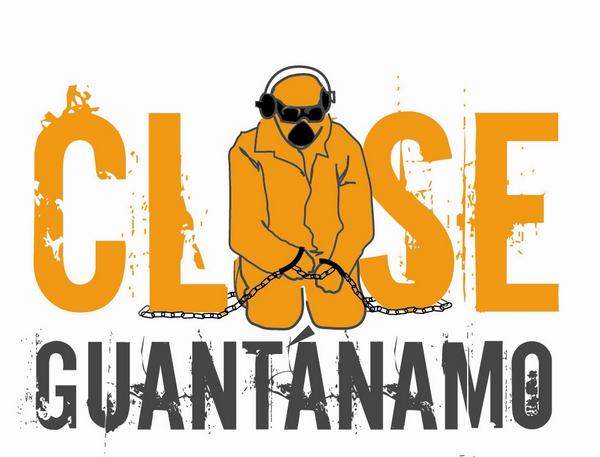
Russia denied entry to a former commander of the Guantanamo Bay detention camp in retaliation against U.S. moves to punish Russian human rights violators, Deputy Foreign Minister Andrei Denisov said.

Russia denied a visa to Rear Admiral Jeffrey Harbeson, former commander at the Guantanamo U.S. Naval Base in Cuba who now oversees Europe, NATO and Russia affairs at the U.S. Joint Chiefs of Staff, a state-linked newspaper said in December.


"We have already denied entry to some American general, who was commander at the Guantanamo base," Denisov said in response to a question about blacklisted Americans, Interfax news agency said. He did not specify the timing or give the general's name.
In response to the Magnitsky Act, Russia rushed through a law introducing similar measures against Americans it accuses of violating the rights of Russians abroad.
"It includes judges, agents, representatives of security services, prosecutors ... as well as congressmen who were the authors of the Magnitsky Act and Americans who have violated the rights of children adopted from Russia," he said on Friday.
Pushkov said the first such list had appeared in October 2012 and included 11 Americans linked to the Guantanamo U.S. Naval Base in Cuba and alleged secret CIA prisons in Europe.
Campaigners say the indefinite detentions of inmates at the U.S. base, including alleged September 11 conspirators, are illegal. 
Putin, has repeatedly criticized Washington for its treatment of Guantanamo inmates, suggesting the United States had no moral right to lecture Russia on human rights.
Via: "Reuters"

Friday, November 23, 2012

Condition Israel Military Aid On Human Rights Compliance


Christian Religious Leaders To Congress

Fifteen religious leaders representing many major faith groups in the country, have written a letter to Congress seeking to make U.S. military aid to Israel contingent upon its government’s “compliance with applicable U.S. laws and policies.”
Signers of the letter include Presbyterian Church (U.S.A.) General Assembly Stated Clerk Gradye Parsons.
The signers say they “have worked for decades to support both Israelis and Palestinians in their desire to live in peace and well-being” and “have witnessed the pain and suffering of Israelis as a result of Palestinian actions and of Palestinians as a result of Israeli actions.”
Though they recognize that both Israelis and Palestinians bear responsibility for the prolonged violence in the region,   “unconditional U.S. military assistance to Israel has contributed to deteriorating conditions in Israel and the occupied Palestinian territories which threaten to lead the region further away from the realization of a just peace. Furthermore, such aid sustains the conflict and undermines the long-term security interests of both Israelis and Palestinians.”
The signers urge an immediate investigation into possible violations by Israel of the U.S. Foreign Assistance Act and the U.S. Arms Export Control Act, which respectively prohibit assistance to any country which engages in a consistent pattern of human rights violations and limit the use of U.S. weapons to “internal security” or “legitimate self-defense.”   
They urge Congress to hold hearings to examine Israel’s compliance, and request regular reporting on compliance and the withholding of military aid for non-compliance.
The signers see a troubling and consistent pattern of disregard by the government of Israel for U.S. policies that support a just and lasting peace, particularly unbridled settlement construction in the West Bank. This year has also seen a dramatic rise in settler attacks against Palestinians with seeming impunity, they say.  
“Continued U.S. military assistance to Israel offered without conditions or accountability,” the signers conclude, “will only serve to sustain the status quo and Israel’s military occupation of the Palestinian territories.”

The full text of the letter, dated Oct. 5:
Dear Member of Congress,
We write to you as Christian leaders representing U.S. churches and religious organizations committed to seeking a just peace for Israelis and Palestinians. Our organizations have been deeply involved in this pursuit for decades, inspired by the call and promise of Jesus Christ who said, “Blessed are the peacemakers, for they will be called children of God.”
In response to our Christian call to be peacemakers, we have worked for decades to support both Israelis and Palestinians in their desire to live in peace and well-being. We have worked alongside our Palestinian Christian sisters and brothers to help build a peaceful and resilient Palestinian civil society by supporting hospitals, schools, clinics, and social service agencies. These ministries include cooperative efforts with Israelis and Palestinians as well as with Jews, Muslims, and other neighbors here in the United States. Through our presence in the region, and regular visits to our partners there, we see first-hand the impacts of the conflict on both Palestinians and Israelis and hear from them directly about the reality of their lives.
Through this direct experience we have witnessed the pain and suffering of Israelis as a result of Palestinian actions and of Palestinians as a result of Israeli actions. In addition to the horror and loss of life from rocket attacks from Gaza and past suicide bombings, we have witnessed the broad impact that a sense of insecurity and fear has had on Israeli society.
We have also witnessed widespread Israeli human rights violations committed against Palestinians, including killing of civilians, home demolitions and forced displacement, and restrictions on Palestinian movement, among others. We recognize that each party—Israeli and Palestinian—bears responsibilities for its actions and we therefore continue to stand against all violence regardless of its source. Our stand against violence is complemented by our commitment to the rights of all Israelis, as well as all Palestinians, to live in peace and security.
It is this experience and these commitments that lead us to write to you today to express our grave concern about the deteriorating conditions in Israel and the occupied Palestinian territories which threaten to lead the region further away from the realization of a just peace.
Unfortunately, unconditional U.S. military assistance to Israel has contributed to this deterioration, sustaining the conflict and undermining the long-term security interests of both Israelis and Palestinians. This is made clear in the most recent 2011 State Department Country Report on Human Rights Practices covering Israel and the Occupied Territories, which details widespread Israeli human rights violations committed against Palestinian civilians, many of which involve the misuse of U.S.-supplied weapons.
(Weapons in this instance include “crowd control” items such as tear gas. The Consolidated Appropriations Act, 2012 (P.L. 112-74) which is included in the US Foreign Military Financing regulations stipulates that “not later than 90 days after enactment of this act and 6 months thereafter, the Secretary of State shall submit a report to the Committees on Appropriations detailing any crowd control items, including tear gas, made available with appropriated funds or through export licenses to foreign security forces that the Secretary of State has credible information have repeatedly used excessive force to repress peaceful, lawful, and organized dissent.” )
Accordingly, we urge an immediate investigation into possible violations by Israel of the U.S. Foreign Assistance Act and the U.S. Arms Export Control Act which respectively prohibit assistance to any country which engages in a consistent pattern of human rights violations and limit the use of U.S. weapons to “internal security” or “legitimate self-defense.”
(While this letter focuses on US-Israel relations and the Israel-Palestine conflict, these are laws that we believe should be enforced in all instances regardless of location. All allegations regarding the misuse of US supplied arms should be investigated.)More broadly, we urge Congress to undertake careful scrutiny to ensure that our aid is not supporting actions by the government of Israel that undermine prospects for peace. We urge Congress to hold hearings to examine Israel’s compliance, and we request regular reporting on compliance and the withholding of military aid for non-compliance.  
In addition to specific rights violations, we see a troubling and consistent pattern of disregard by the government of Israel for U.S. policies that support a just and lasting peace. Specifically, repeated demands by the U.S. government that Israel halt all settlement activity have been ignored. Since 1967, every U.S. administration has decried Israeli settlements in the occupied Palestinian territories as obstacles to peace. Despite this stance, Israel continues to expand its settlements in the West Bank and East Jerusalem, claiming territory that under international law and U.S. policy should belong to a future Palestinian state. The Oslo peace process, which began in 1993, was publicly promoted as leading Israelis and Palestinians to a just peace based on a two-state solution. Instead, since 1993, the number of Israeli settlers in the West Bank, including East Jerusalem, has more than doubled. Rights violations resulting from Israeli settlement activity include separate and unequal legal systems for Palestinians and settlers, confiscation of Palestinian land and natural resources for the benefit of settlers, and violence by settlers against Palestinians.
According to the Israeli human rights group B'Tselem and the U.N. Office for the Coordination of Humanitarian Affairs, there has been a dramatic rise in settler attacks against Palestinians this year. They report that these attacks are often intended to drive Palestinians from areas the settlers wish to take over, and that Israeli authorities have failed to take significant action to stop the violence or hold the perpetrators accountable. We believe that these actions directly undermine peace efforts and threaten, rather than support, Israel’s long-term security interests.
We want to be clear that we recognize that Israel faces real security threats and that it has both a right and a duty to protect both the state and its citizens. However, the measures that it uses to protect itself and its citizens, as in the case with any other nation, must conform to international humanitarian and human rights law.As Christian leaders in the United States, it is our moral responsibility to question the continuation of unconditional U.S. financial assistance to the government of Israel. Realizing a just and lasting peace will require this accountability, as continued U.S. military assistance to Israel -- offered without conditions or accountability -- will only serve to sustain the status quo and Israel’s military occupation of the Palestinian territories.
We request, therefore, that Congress hold Israel accountable to these standards by making the disbursement of U.S. military assistance to Israel contingent on the Israeli government’s compliance with applicable U.S. laws and policies.
As Israel is the single largest recipient of U.S. foreign aid since World War II, it is especially critical for Israel to comply with the specific U.S. laws that regulate the use of U.S.-supplied weapons. We also encourage Congress to support inclusive, comprehensive, and robust regional diplomacy to secure a just and lasting peace that will benefit Israelis, Palestinians, and all the peoples of the region, and the world.
With respect and gratitude, we offer you our prayers.
In addition to Parsons, the letter was signed by Presiding Bishop Mark Hanson of the Evangelical Lutheran Church in America; United Methodist Council of Bishops President Rosemarie Wenner; Peg Birk, transitional general secretary of the National Council of Churches; Shan Cretin, general secretary of the American Friends Service Committee; J. Ron Byler, executive director of the Mennonite Central Committee U.S.; and Alexander Patico, North American secretary for the Orthodox Peace Fellowship.
Also, Diane Randall, executive secretary of the Friends Committee on Legislation; American Baptist Churches General Secretary A. Roy Medley; United Church of Christ General Minister and President Geoffrey A. Black; the Rev. Sharon Watkins, general minister and president of the Christian Church (Disciples of Christ); the Rev. Julia Brown Karimu, president of the Christian Church (Disciples of Christ) Division of Overseas Ministries; the Rev. James A. Moos, executive minister for the United Church of Christ’s Wider Church Ministries; Eli S. McCarthy, justice and peace director for the Conference of Major Superiors of Men; and Kathy McKneely, acting director of the Maryknoll Office for Global Concerns.
Via: "PC USA"

Sunday, September 30, 2012

German Expulsion From Eastern Europe

While German aggression has been well documented, comparatively little attention has been paid to the expulsion of ethnic Germans living in Eastern Europe after the war, somewhat vindicating the saying that "history is a tale told by the victors".

The Allies oversaw the largest forced population transfer in history: 12 million German-speaking civilians living in Czechoslovakia, Hungary and Poland were forced to leave their homes and made to resettle in defeated Germany. Figures vary, but between 500,000 and 1.5 million of these expellees died, of maltreatment in the holding camps before they left, of starvation on the expulsion trains, or of disease when they arrived in the Fatherland.

In spite of the wording of the Potsdam Agreement, which declared that the expulsions should be carried out in an "orderly and humane" fashion, Douglas convincingly shows that the Allies had a very clear idea of the scale of suffering that implementing such a policy would bring.

As early as 1942, a Foreign Office think-tank investigated the implications of a mass expulsion of ethnic Germans. The report concluded that "If the Allies did not wish to see central Europe's road and rail network congested with expellees, a timescale of five to ten years would be required." It went on to say that because it was unlikely that the expelling states would wait that long "the surviving Germans would have to be herded into concentration camps in Germany" while adequate settlement plans were organised.

These findings, it seems, were far too negative for the politicians, who were determined to pursue the policy irrespective of the human cost. The Allies knowingly pursued this course of action in the firm belief that the consequent suffering would have an educational effect on the defeated Germans.

Even before the war was over, Eastern Europeans took matters into their own hands, expelling ethnic Germans from their territories. With little warning, they were forced from their homes and pointed west. Taking no more provisions than they could carry, expellees were forced to beg and steal. Even this did not ensure their survival.

A number of occupation troops stationed in Germany voiced their shock at the terrible state of the refugees arriving from the East. One soldier declared that "the removal of the dead in carts from the railway stations was a grim reminder of what I saw in Belsen".

In overseeing the expulsion of ethnic Germans, the Allies soon found that they had created a humanitarian crisis in which refugees were pouring into bomb-ravaged Germany with little more than the clothes on their backs. At the end of 1947 the Allied Control Council declared "opposition to all future compulsory population transfers, particularly the forcible removal of persons from places which have been their homes for generations."

The expulsion of Germans is understandably a politically-charged topic. Until recently it has been taboo to examine the depths of German suffering after 1945, because of the suffering they themselves had caused.

Via: "The Independent"

Wednesday, August 22, 2012

EU-Israel: One Hand Whitewashes The Other


The European Union Is Being Duplicitous By Condemning Israel's Human Rights Abuses While Increasing Trade Links.

Ben White reports:


How Israel can breach international law, commit systematic human rights abuses and colonise Palestine with impunity is typically blamed on the role of the US, for which there is plenty of supporting evidence: from the UN Security Council veto to significant financial and military support.

But the strength and high-profile of the US-Israel relationship has meant that the role of other parties in shielding Israel's apartheid regime has not been subjected to the critical scrutiny it deserves, particularly the case with the European Union.

While those on the hard right portray the EU as representing a continent of anti-Semitic Israel-bashers on the path to "Eurabia", the reality is that the EU is one of Israel's most important allies - whose policies are playing a crucial role in frustrating the Palestinian struggle for justice.

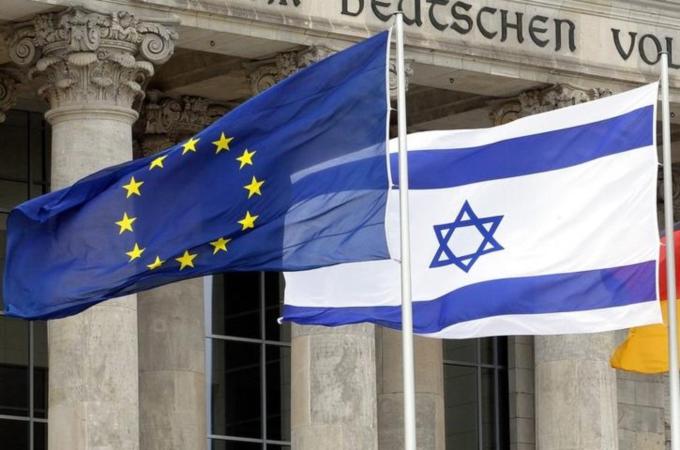
The problem in a nutshell - a gaping disparity between rhetoric and deeds - was exemplified recently by the contrast between a European Parliament resolution on the one hand, and plans to enhance economic ties on the other.

Last month, Members of the European Parliament (MEPs) voted 291 to 274 (with 39 abstentions) in favour of a resolution covering a wide number of issues related to the peace process, and events on the ground in Palestine/Israel.

The resolution noted a range of human rights abuses experienced by Palestinians under occupation, including "planning restrictions and the consequent acute house shortage, house demolitions, evictions and displacements, [and] confiscation of land". It emphasised that Israel's illegal settlements "are subsidised by the Israeli Government with considerable incentives".

The Parliament went as far as saying that the very "Palestinian presence" in the West Bank "has been undermined by Israeli Government policies", and made an unprecedented linkage between the "forced transfer" of "Arab Bedouin communities" in both "the occupied Palestinian Territory and in the Negev".

The resolution also stressed "that Israel's commitment to respect its obligations under international human rights and humanitarian law towards the Palestinian population must be taken into full consideration in the EU's bilateral relations with the country".

Yet less than three weeks later, the EU decided to upgrade relations with Israel in a host of areas, drawing widespread condemnation from those who, like Caabu Director Chris Doyle, felt that such a decision "rewards criminal activity and will only encourage more", thus "undermin[ing] the EU's reputation in the Middle East and any claims to support human rights".

Youth activist group Palestinians for Dignity condemned the move, saying they would protest the EU's "complicity" in Israel's occupation until the upgrade is halted. Three Israeli NGOs (Adalah, Physicians for Human Rights-Israel and the Public Committee Against Torture in Israel) released a joint statement emphasising that "concrete improvements in Israel's human rights conduct on the ground must steer any enhancement of its trade relations with Israel".

The EU's approach makes a mockery of the way in which "the observance of human rights and democracy" are said to "form the very basis" of the EU-Israel Association Agreement. This inability to sanction Israel for routine breaches of international law is a microcosm of the approach of the self-appointed guardians of negotiations, the Quartet.

The EU remains deeply wedded to the discredited, flawed peace process, repeating ad nauseam the need for a return to talks, even as its officials and MEPs sign off on report after report, documenting Israeli policies of ethnic cleansing, segregation and discrimination.

Part of that means EU support for the Palestinian Authority (PA), the financially unviable, donor-reliant, security "partner" for the Israeli military. European Commission President Jose Barroso opened a college for "police sciences" in Jericho in July, days after Palestinian security forces had beaten protesters angry at Mahmoud Abbas' invite to Shaul Mofaz. During this trip to the region, Barroso told an audience in Haifa that "Europe and Israel" are both "staunchly committed to a vibrant civil society, respect for human rights and rights of people belonging to minorities".

While the recent European Parliament resolution correctly recorded many of Israel's crimes, votes in Strasbourg and Brussels are meaningless - or even counter-productive - when not backed up by action. The EU represents 35 per cent of Israel's total imports and is the second largest market for exports behind the USA. There is room for significant leverage here (and the EU is also the largest donor to the PA).

For now, the EU's foreign policy is an obstacle to a just peace and the realisation of the Palestinian people's basic rights, a sad reality that is unlikely to change without significant pressure from the citizens of member states.

Via: "Al-Jazeera"