Showing posts with label Britain. Show all posts

Sunday, December 21, 2014

Infiltration


There is ample evidence that the British State spies on Muslims under the excuse of countering terrorism. But has this covert infiltration been a success in winning the war on terror? Or has it made the general public lose its confidence in the British police and MI5 for gratuitously targeting the whole Muslim community rather than the extremist groups? 

In 2007 when the UK troops were bogged down in the quagmire of Iraq and Afghanistan, the government put into place the counter-terrorism strategy called Preventing Violent Extremism - Prevent in short. 

In 2010, the strategy gained momentum to aggressively confront Islamist ideology. This allowed the State to freely go around, intercept, investigate or scrutinize anybody they wish based on the fine grain of intelligence that they may pose a likely threat to the State national security. 

This way in today’s UK, the innocent people who have had no involvement in terrorism fall victim to intrusive surveillance, deportation or incarceration without charge or trial.

Sunday, November 30, 2014

Letter Bombs Sent To Prominent Britons By Jewish Terrorists


The King David Hotel Jewish Terror Attack Against British Troops

Jewish terrorists have admitted sending letter bombs to, prominent Britons. The Stern gang said operations were being carried out by the European branch of the -."fighters for the freedom of Israel."

British Military Intelligence and Scotland Yard believe the letters have been, coming from Italy, and officers are be flying there in an attempt to break down the gang.

According to Reuters, Italian inquiries are now, centred in Milan.

A private secretary; at the Foreign Office received one of the letters addressed to the Foreign Minister (Mr. Bevin) and handed it to Scotland Yard. It was expected that an attempt would be made to injure Mr. Bevin and a special watch was being kept.

Mr. Anthony Eden, former Foreign Secretary, also received one of the letters, says, the "Daily Express." It was delivered at the House of Commons, but he carried it home unopened with other mail.

Next morning he kept an appointment without opening what appeared to be less urgent letters. When he arrived home, Scotland Yard warning was awaiting him.

Today Dr. H. E. Watts, chief surveyor of explosives at the Home Office, carried out experiments with bomb letters. They' consisted of two envelopes, the outer one of normal type and the inner. one of thin cardboard. Inside the inner envelope is an explosive like gelignite and a battery shaped like a pencil, wired to a detonator. The sides of the f cardboard envelope, keep a little, string colija pressed. . Anyone tearing open the envelope would release the spring and set off the detonator and possibly suffer enough wounds, from the gelignite to cause death.

Source: The National Library Of Australia


Wednesday, June 04, 2014

GCHQ's BEYOND TOP SECRET Middle Eastern INTERNET SPY BASE

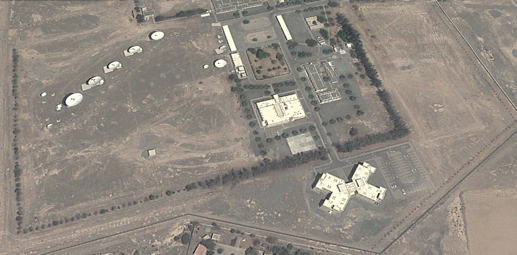
The secret British spy base is part of a programme codenamed “CIRCUIT” and also referred to as Overseas Processing Centre 1 (OPC-1). It is located at Seeb, on the northern coast of Oman, where it taps in to various undersea cables passing through the Strait of Hormuz into the Persian/Arabian Gulf. Seeb is one of a three site GCHQ network in Oman, at locations codenamed “TIMPANI”, “GUITAR” and “CLARINET”. TIMPANI, near the Strait of Hormuz, can monitor Iraqi communications. CLARINET, in the south of Oman, is strategically close to Yemen.

British national telco BT, referred to within GCHQ and the American NSA under the ultra-classified codename “REMEDY”, and Vodafone Cable (which owns the former Cable & Wireless company, aka “GERONTIC”) are the two top earners of secret GCHQ payments running into tens of millions of pounds annually.
The Seeb spy base. Not in your name? My dear boy, that's the whole point

The actual locations of such codenamed “access points” into the worldwide cable backbone are classified 3 levels above Top Secret and labelled “Strap 3”. The true identities of the companies hidden behind codenames such as “REMEDY”, “GERONTIC”, “STREETCAR” or “PINNAGE” are classified one level below this, at “Strap 2”.

After these details were withheld, the government opted not to move against the Guardian newspaper last year for publishing above-top-secret information at the lower level designated “Strap 1”. This included details of the billion-pound interception storage system, Project TEMPORA, which were revealed in 2013 and which have triggered Parliamentary enquiries in Britain and Europe, and cases at the European Court of Human Rights. 

The Guardian was forced to destroy hard drives of leaked information to prevent political embarrassment over extensive commercial arrangements with these and other telecommunications companies who have secretly agreed to tap their own and their customers’ or partners’ overseas cables for the intelligence agency GCHQ. Intelligence chiefs also wished to conceal the identities of countries helping GCHQ and its US partner the NSA by sharing information or providing facilities.

... the intelligence agency annually pays selected companies tens of millions of pounds to run secret teams which install hidden connections which copy customers' data and messages to the spooks’ processing centres. The GCHQ-contracted companies also install optical fibre taps or “probes” into equipment belonging to other companies without their knowledge or consent. Within GCHQ, each company has a special section called a “Sensitive Relationship Team” or SRT.

BT and Vodafone/C&W also operate extensive long distance optical fibre communications networks throughout the UK, installed and paid for by GCHQ, NSA, or by a third and little known UK intelligence support organization called the National Technical Assistance Centre (NTAC).

... every time GCHQ wanted to tap a new international optical fibre cable, engineers from “REMEDY” (BT) would usually be called in to plan where the taps or “probe” would physically be connected to incoming optical fibre cables, and to agree how much BT should be paid. 

The spooks' secret UK access network feeds Internet data from more than 18 submarine cables coming into different parts of Britain either direct to GCHQ in Cheltenham or to its remote processing station at Bude in Cornwall.

Among the cables specifically identified in one document as currently being intercepted or “on cover” are an Irish connection, Hibernia Atlantic, landing in Southport, and three European connections landing at Yarmouth, Dover, and Brighton.

Wednesday, May 07, 2014

My Blackberry Is Not Working!


Ronnie Corbett and Harry Enfield star in this fruity sketch from The One Ronnie, written by Dawson Bros.

Wednesday, April 30, 2014

Tony Blair's 'I Say Lies' MashUp


Mashup artist Cassetteboy edits the former prime minister-turned-peace-envoy's speech and imagines what Blair was really trying to say

Monday, April 28, 2014

The British Muslim Is Truly One Among Us – and Proud To Be So

History of harmony: Dr George Carey, the former Archbishop of Canterbury, meets Muslim elders at an east London mosque

Those who believe in a clash of civilisations, in which British values are pitted against those of the Muslim world, have not been short of examples in the past few days. The BBC reports on an “Islamic takeover plot” by hardliners to seize control of several Birmingham state schools. Two Morrisons workers are suing the supermarket for not being able to take holiday during Ramadan, after being told that they submitted their applications too late. Such stories do make the blood boil, and may lead the less charitable to ask if such people should move to a country that better reflects their prejudices.
But one hears such complaints rarely, and this is what marks us out in a Europe that is paranoid about Islam and identity. Britain is, through empire, the original multi-ethnic state. When Churchill was writing for The Daily Telegraph as a war correspondent, his criticism of the Afghan tribesmen was that their behaviour was un-Islamic. “Their religion – fanatic though they are – is only respected when it incites to bloodshed and murder,” he wrote in December 1897. Then, the Queen had tens of millions of Islamic subjects and her ministers boasted of running the greatest Muslim power on earth.
The integration of Muslims can now be seen as one of the great success stories of modern Britain. While the Dutch and the French have huge troubles with integration, and are caught in agonised struggles about their national identities, Britain is marked out by the trouble that we are not having. Dig a little deeper, and the real story is the striking amount of harmony.
Last year, for example, the Jews of Bradford were facing the closure of their synagogue. Its roof was leaking, and the few dozen remaining regulars could not afford the repairs. Its chairman, Rudi Leavor, made the decision to sell the building and face up to it being transformed into luxury flats. As things turned out, the synagogue was saved after a fundraising campaign led by a local mosque. Zulfi Karim, the secretary of Bradford’s Council of Mosques, now refers to Leavor – who fled the Nazis – as his “newfound brother”. He gave his support, he says, to protect the diversity of Bradford.
After the murder of Drummer Lee Rigby in Woolwich last year, skinheads went on the march in hope of stirring up a reaction against Muslims. It was the perfect moment, given how high feelings were running. The next week, a mosque in Muswell Hill, north London, was burnt down – an act that might, in other places, have started a cycle of reprisals. But here, the Muslims were given shelter by the local Jewish community, who offered space, laptops and whatever support was needed. Rabbi Laura Janner-Klausner said she was proud to help “our brothers and sisters of the Muslim community, emotionally and physically”.
Such stories can be found the length and breadth of Britain, for those with an eye to see them. St John’s Episcopal Church in Aberdeen last year agreed to accommodate neighbouring Muslims, who had outgrown their mosque and had taken to worshipping outside it. The Rev Isaac Poobalan said that allowing Muslims to pray in the wind and rain would mean abandoning “what the Bible teaches us about how we should treat our neighbours”. He argued that his church was empty on a Friday lunchtime, when Muslims needed to pray.
Anyone serious about either religion will know that they both worship the same God – and their stronger ties are, in part, forged by the knowledge that they have a common enemy in secularism. The kind of secularism that would stop people wearing crucifixes and skullcaps in public, as well as the niqab. When the Council of Europe came out against religious circumcision, it was natural that Manchester’s sizeable Jewish community would protest. But less expected for Manchester’s Muslims to join them. Both have plenty to fear from the abridgment of religious freedom in a Britain that is – by some measures – the least religious country in the rich world.
Before he became pope, Cardinal Ratzinger spoke about the “dictatorship of relativism”, and the collapse of notions of right and wrong. He later came to see Muslims as an ally in this broader agenda, which emphasised freedom of worship. When the Coptic Christian church in Cairo came under attack from jihadis, Muslims formed a human chain to deter bombers. It was more than an act of fraternity: mainstream Islam faces a mighty threat from the well-organised jihadis, who seek to impose their own kind of coup.
The attempts by extremists to speak for Muslims in Britain is made a lot easier by the lack of an Islamic hierarchy – there’s no Muslim pope who can excommunicate psychos who praise jihad. It’s also made easier by the understandable reluctance of ordinary British Muslims to get involved in the political side of their religion – a world disproportionately occupied by old men with long beards and poor English. When Channel 4 said that its 2006 Christmas message would be given by a Muslim in a full-face veil, it fitted the BNP narrative of a clash of civilisations.
The BNP gave up on racism some years ago, and has since moved on to Islamophobia. It’s understandable – you can pick almost any country on the Continent to see a market for all of this. In the Netherlands, Geert Wilders is at large, likening the Koran to Mein Kampf and referring to Islam as a “Trojan horse in Europe”. His party, PVV, is now at the top of the opinion polls. Marine Le Pen’s Front National, which warns now and again that Islamic culture will subvert French civilisation, has just had a breakthrough in the recent elections.
But in Britain, Islamophobia simply does not exist as a political force. We just don’t have Muslim youths rioting in suburbs, as you see in Paris. When London riots, the city comes together like a Benetton advert. Next month’s Euro-elections are likely to bring about the burial of the BNP, as the protest vote goes to Ukip, a party whose extraordinary success has come due to its rejection of the prejudices for which the BNP is infamous.
This is all the more surprising given the serious problems that Britain still faces with integration. Our habit of giving asylum to the world’s least desirable jihadis means that London is still a hotbed of Islamist terrorism; the CV of any apprehended Islamist normally involves a spell in the capital. The 7/7 bombers were, as the Mayor of London said, as British as Y-fronts and Tizer – and yet there was no anti-Islamic backlash after the 2005 attacks. Too many of our cities still choose ghettoisation over integration, but the sense of Muslims as being alien, or un-British, is not widely felt.
British Muslims don’t really feel a sense of otherness. In fact, polls show they’re much more likely to identify with Britishness than the general population. The Citizenship Survey found that most Muslims agree with two propositions: that Islam is the most important thing in their life, and that their primary loyalty lies with the British state. Most are baffled by the idea of a tension between the two.
Perhaps this is why Britain has proven consistently unable to get into a lather about the idea of a Muslim enemy within – it’s just not the British way, and never has been.
Fraser Nelson is editor of 'The Spectator’

Saturday, April 26, 2014

EUROPE'S FRAGMENTED FUTURE

The specter of secession is haunting Europe. Since 2000 there have been three successful separations from existing states — by Montenegro, Kosovo and Crimea — and at the moment, several other regions are attempting to secede and create independent states. In March, Crimea first seceded from Ukraine and then voted, in a referendum, to rejoin the Russian Federation. At the same time, in an informal online referendum, voters of the Veneto region in northern Italy overwhelmingly favored independence and the restoration of the old Venetian republic. In September, the citizens of Scotland will vote in an independence referendum, and the government of the Spanish region of Catalonia plans to hold a referendum of the same kind two months later — despite a ruling by the Constitutional Court of Spain that such a referendum would be illegal (a similar referendum in the Basque region in 2008 was thwarted by the Spanish government). 

Why Now?

Why are these referendums all taking place in 2014? In fact, the Scottish and Catalan votes were planned several years ago, at a time when dissatisfaction with the “host states” among the citizens of these regions was the highest. Spain and Italy were experiencing a series of banking and fiscal crises and increasing unemployment; the Conservative government in the U.K., which had no electoral support at all in Scotland, was introducing unpopular austerity measures. It was only when repeated attempts to get the Veneto regional assembly to hold an independence referendum stalled that the Veneto secessionists proceeded on their own with the online referendum — and made it coincide with the Crimean one.  
The point of these referendums is to mobilize the dissatisfaction of those who strongly self-identify as Scots, Catalan or Venetian and who regard their current “host state” as foreign, burdensome, incompetent or corrupt. By leaving this state, literally, and creating another, better state, the secessionists hope to improve their lot in life. In contrast to these movements, the Crimean referendum was conceived and conducted within a few weeks: It was a response to the violent overthrow of the Ukrainian president, a popular figure in Crimea, and was used to channel the consequent fears among the majority Russian speakers into a vote to rejoin Russia as a safe haven from the new, (allegedly) hostile, anti-Russian Ukrainian government. The referendum was rushed, with the Russian military lurking in the background, before the new Ukrainian government was able to dispel voters’ fears or establish control over the autonomous republic. Within weeks after the region rejoined Russia, the pay of public employees and pensions in Crimea almost doubled; the reunification thus brought more benefits to some Crimeans than a mere secession from Ukraine would have. 

No Easy Way Out

Seceding from a country isn’t always as fast and (relatively) painless as Crimea made it seem. But there are other cases of secession that suggest these pains can be eased somewhat. First, the best strategy for any secessionists is to attempt to convince their host state that the secession of their territory won’t cause much harm. The potential secession of Scotland does not appear to be harmful to the U.K., so the U.K. government is prepared to recognize its independence. The secession of Montenegro in 2006, which the EU supported and supervised, did not appear to harm Serbia either; the Serbian government agreed to the secession of this federal unit.
If this tactic fails, a secessionist movement should try to find a powerful sponsor – a superpower, such as the U.S., or a neighbor more powerful than its host state (and not easily intimidated by a superpower), such as Russia. The Albanian secessionists in Kosovo gained U.S. sponsorship in 1998, when they led a large armed uprising against Serbia. And in 2008, when Kosovo, then a province of Serbia under U.N./NATO administration, formally seceded from Serbia in spite of Serbia’s vehement opposition, the U.S., Kosovo’s principal sponsor, along with most EU member states immediately recognized its independence. It is notable that Spain, Slovakia, Romania, Greece and Cyprus refused to recognize, on principle, a state, such as Kosovo, that unilaterally seceded against the opposition of its “host state”; not coincidentally, all these EU member states oppose separatist movements within their own borders.
This doesn’t lend much hope to the Catalan, Basque and Venetian secessionists — their host states oppose their aspirations, and they are not likely to gain powerful sponsors. Secessionists all over the globe face similar obstacles: Those in Tibet and Xinjiang (in China), the Caucasus (in Russia), Congo, Kurdistan (in Iraq) or Azawad (in Mali) — to mention, randomly, only a small selection of cases — have little chance of carving out an independent, internationally recognized state, however strong their movements may be. Quebec at least has the law on its side: If its secessionists ever succeed in winning over the majority of their province’s population, they may legally secede from Canada, thanks to a 1998 Canadian Supreme Court opinion. 
For secessionists, the state they currently live in is effectively foreign. 
The differences between secessionists in Europe and Quebec, on the one hand, and those elsewhere are quite obvious. Outside Europe and Quebec, the secessionists often face either a failing or a highly repressive state. Faced with the pervasive threat of violence, they aim to create a state structure that will protect the lives of its inhabitants. In some cases, such as that of Somaliland (in Somalia) or Kurdistan (in Iraq), they succeed in creating a separate, protective state that has, however, no international recognition as an independent state. In many others, they fail and are plunged into a cycle of violent civil conflict.
Secessionists in Europe and Quebec, by contrast, aren’t facing threats of violence; thus their aim is not protection but provision of perceived benefits. They claim that an independent state would advantage their constituents in all aspects of their lives much more than the current host state could; this includes a better standard of living. For them, independence serves to provide a variety of enhanced benefits to a group of people inhabiting a region within an existing state.
Many supporters of secession find it oppressive to live in a state whose rulers speak a language or dialect they consider foreign. State or cultural symbols (flags, anthems, coats of arms, popular songs) are to them also foreign: For them, the state they currently live in is effectively foreign. But these people are in the minority. As the opinion polls in Scotland, Quebec, Veneto and Catalonia suggest, identity secessionists do not form clear majorities in these regions, so would-be voters need to be convinced that independence would benefit them.
That’s not easy: In Quebec’s past two referendums, in 1981 and 1995, the veteran secessionist Parti Québécois failed to achieve even simple majorities to support independence. Pre-referendum opinion polls in Scotland, Catalonia andVeneto, while showing that the majority of voters in these regions are highly dissatisfied with the host state or central government, do not unequivocally show that the same majority would vote for independence.

Questionable Benefits

Who would benefit most from the secession of Scotland, Catalonia, Veneto or Quebec? The answer is simple: The beneficiaries would first and foremost be the leaders of secessionist parties whose aim is to take over the governments of the newly independent states. If they were rulers of independent and sovereign states, their policies and actions — including the use of coercion and force — as well as their remuneration would not be subject to any higher or “foreign” sovereign authority or oversight. In addition, as the new state takes over the functions of the old — including those of diplomacy — there would be lots of new job opportunities in the expanding state bureaucracy. Local small and medium businesses would profit, too, as their competitors from outside the region withdraw across new state borders.
It’s less clear how other citizens of the new states would fare. As many nonlocal or even local companies pull out of the region (as they did prior to the Quebec referendum in 1995), employment is likely to become a pressing issue. Perhaps an economic downturn may be avoided if the seceded state remains in a regional economic organization (such as the EU) of which its former host state is a member. But this, too, remains uncertain: The EU, for example, has no policies about, or obligation toward, states seceding from an EU member.
For most people in these regions of Europe — unlike those in Crimea — seceding now would bring uncertainty and anxiety about the future that secessionist leaders would not be able to allay. For this reason alone it is highly uncertain whether the planned referendums will produce majorities in favor of independence — and, even if they do, whether these regions will become independent states, or be recognized as such, anytime soon. 
Aleksandar Pavković is an associate professor of politics and international relations at Macquarie University in Sydney, Australia. He is the author of “Creating New States” (2007) and an editor of “The Ashgate Research Companion to Secession” (2011) and of “Separatism and Secessionism in Europe and Asia” (2013). 

Wednesday, April 16, 2014

Dismantling The British State: Strategy, Tactics and Ideology


On March 14, 2014, author Tariq Ali presented, as part of Edinburgh University Sociology Department's Independence Lectures series, "Dismantling the British State: Strategy, Tactics and Ideology". It was held in association with Pluto Press and WordPower Books.

Monday, April 14, 2014

British Armed Forces Could Be Given Immunity From Human Rights Laws


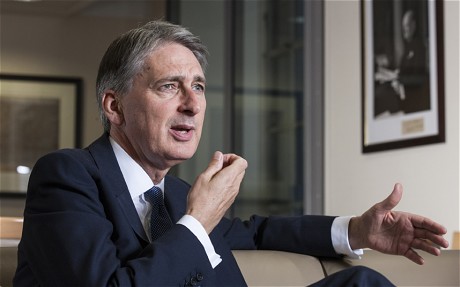
Philip Hammond, the Secretary of State for Defence Photo: Andrew Crowley for the Telegraph

Philip Hammond says he is prepared to introduce new powers to exempt armed forces from human rights laws which are hampering military operations 

The armed forces could be exempted from human rights laws because they are hampering British military operations in the field, Philip Hammond has said.


Mr Hammond said the government is prepared to introduce new legislation to protect the army from the "encroachment" of civil litigation on the battlefield.

His comments came amid concerns about the growing number of civil cases being brought against the Ministry of Defence.

Last year the Supreme Court ruled that damages claims could be launched by the families of soldiers killed in Iraq under human rights legislation.

A recent report by Policy Exchange found that the MoD has faced 5,827 claims since 2012, with litigation costing the ministry £36m a year. 

In the Commons yesterday, one MP warned that the "pernicious" human rights culture could lead to soldiers being barred from going out after dark.

Mr Hammond responded: "There are a number of cases currently before the courts or pending which could have a significant impact and we are watching them very closely.

"Once we commit our armed forces to combat they have to be able to carry out operations without fear of constant review in the civil courts.

"If we do find that the current cases develop in such a way that makes that difficult we will come back to the house with proposals to remedy the situation."

The report by Policy Exchange, published in October, found that recent judicial rulings showed a misunderstanding of how the armed forces work and were placing “impossible” bureaucratic burdens on troops.

The study warned a foreign power could in the future sponsor damage claims in order to paralyse the British armed forces through legal process.

Laura Croft, a military lawyer and retired US Army lieutenant colonel, who co-wrote the report, said: “[These rulings] are placing impossible burdens on the bureaucracy of military operations.

“By setting precedents which can barely be satisfied in today's limited conflicts the courts risk paralysing themselves and the military in a war of national survival.


“The paperwork alone would simply overwhelm the MoD even if the findings of the eventual inquiries ascribed no blame.” 

Tuesday, April 08, 2014

America's Planned War On Britain


War Plan Red

Joint Army and Navy Basic War Plan Red was a war plan created by the United States Army and Navy in the late 1920s and early 1930s to estimate the requirements for a hypothetical war with Great Britain (the "Red" forces).[1] War Plan Red discussed the potential for fighting a war with Britain and its Empire and outlined those steps necessary to defend the Atlantic coast against any attempted mainland invasion of the United States. It further discussed fighting a two-front war with both Japan and Britain simultaneously (as envisioned in War Plan Red-Orange). War Plan Red was not operationalized and did not have presidential or Congressional approval. In the U.S. only the Congress can declare war, and it made no war plans. President Herbert Hoover was known as a pacifist.[2]
War Plan Red was developed by the United States Army following the 1927 Geneva Naval Conference and approved in May 1930 by the Secretary of War and the Secretary of Navy and updated in 1934–35. In 1939 on the outbreak of World War II and Britain's war against Nazi Germany, a decision was taken that no further planning was required but that the plan be retained.[3] War Plan Red was not declassified until 1974.
The war plan outlined those actions that would be necessary to initiate war between Britain and the United States. The plan suggested that the British would initially have the upper hand by virtue of the strength of theRoyal Navy. The plan further assumed that Britain would probably use its Dominion in Canada as a springboard from which to initiate a retaliatory invasion of the United States. The assumption was taken that at first Britain would fight a defensive battle against invading American forces, but that the US would eventually defeat the British by blockading the United Kingdom and economically isolating it.[4]

Zones Of Operation

The main zones of operation discussed in the plan are:
  • Nova Scotia and New Brunswick:
    • Occupying Halifax, following a poison gas first strike, would deny the British a major naval base and cut links between Britain and Canada.
    • The plan considers several land and sea options for the attack and concludes that a landing at St. Margarets Bay, a then undeveloped bay near Halifax, would be superior to a direct assault via the longer overland route.
    • Failing to take Halifax, the U.S. could occupy New Brunswick by land to cut Nova Scotia off from the rest of Canada at the key railway junction at Moncton.
  • Quebec and the valley of the Saint Lawrence River:
    • Occupying Montreal and Quebec City would cut the remainder of Canada off from the Eastern seaboard, preventing the movement of soldiers and resources in both directions.
    • The routes from northern New York to Montreal and from Vermont to Quebec are both found satisfactory for an offensive, with Quebec being the more critical target.
  • Ontario and the Great Lakes area:
    • Occupying this region gains control of Toronto and most of Canada's industry, while also preventing Britain and Canada from using it for air or land attacks against the U.S. industrial heartland in the Midwest.
    • The plan proposes simultaneous offensives from Buffalo across the Niagara River, from Detroit into Windsor Ontario, and from Sault Ste. Marie into Sudbury. Controlling the Great Lakes for U.S. transport is considered logistically necessary for a continued invasion.
  • Winnipeg
    • Winnipeg is a central nexus of the Canadian rail system for connecting the country.
    • The plan sees no major obstacles to an offensive from Grand Forks, North Dakota, to Winnipeg.
  • Vancouver and Victoria:

Sunday, February 16, 2014

Britain's 100 Years Of Non-Stop War

British forces are set to withdraw from Afghanistan by the end of 2014. If 2015 is a year of peace for the UK, it will be the first for at least 100 years. Here the Guardian charts every conflict in which British forces have engaged since 1914

By Ian Cobain, Ewen MacAskill and Katy Stoddard

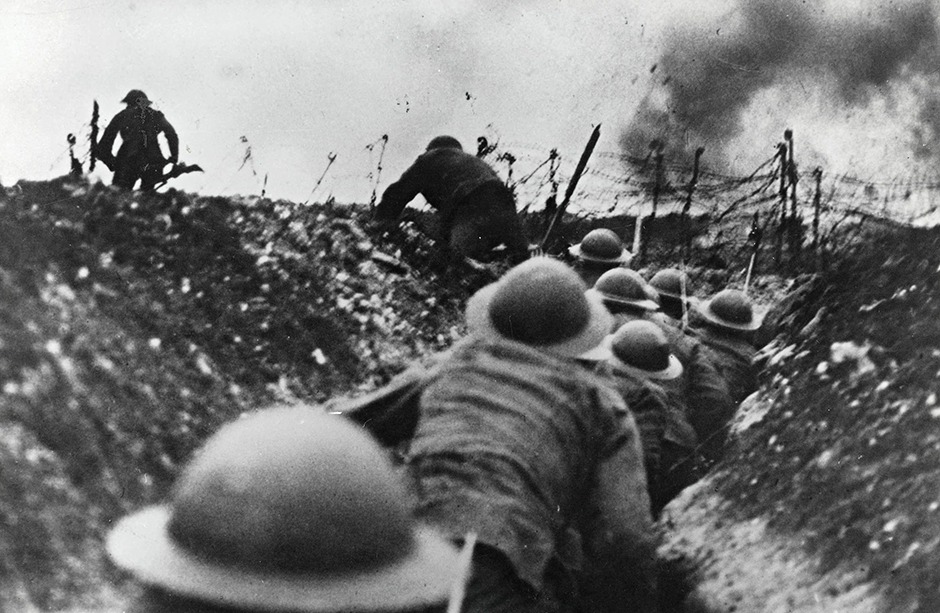
Britain declares war on Germany on August 4, 1914. Over the next four years, Britain mobilised nine million soldiers, fighting mainly on the Western Front. The fighting ranges from Mons in 1914 to the Second Battle of Ypres in 1916, from the Somme in 1916 to the Cambrai operations in 1917, and the Somme again in 1918. The British also fought at Gallipoli, in Iraq, in Palestine, Salonika and Italy. The war ended in November 1918. The British War Office listed the number of its dead or missing as 908,371, which included colonial soldiers. The Royal Navy dead and missing was put at 32,287.

Read the Guardian's original report of Great Britain's declaration of war on Germany.


1916

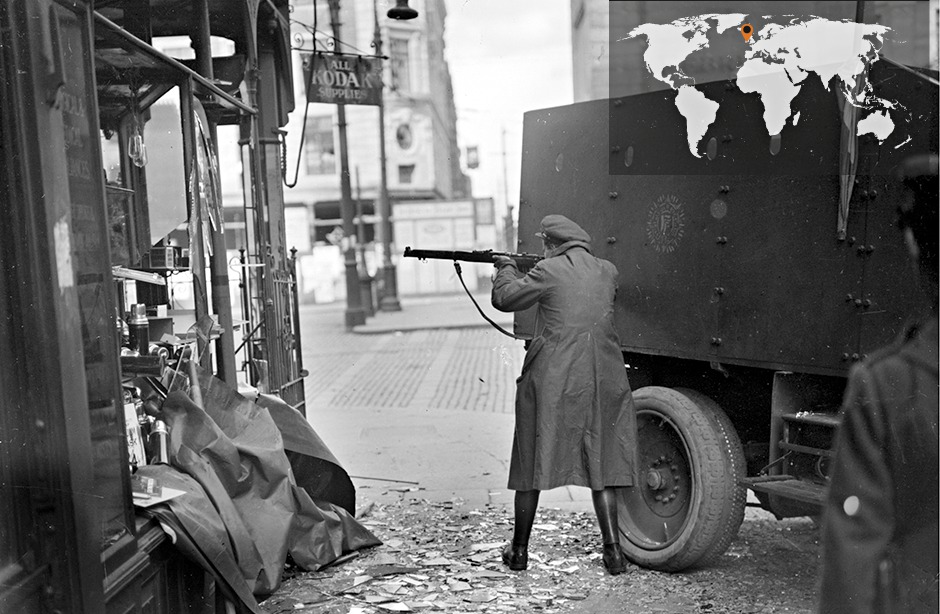
Easter Rising
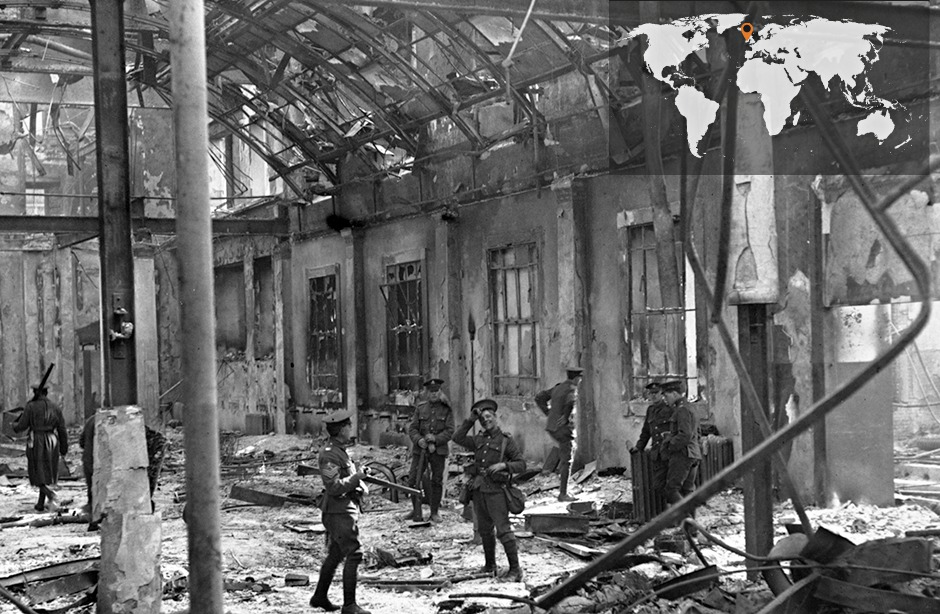
British troops put down the Easter Rising. More than 450 civilians, troops and members of the IRA are killed during the fighting or executed afterwards.

Read the Guardian's original report of the Easter Rising.


1918 — 1920

Russia

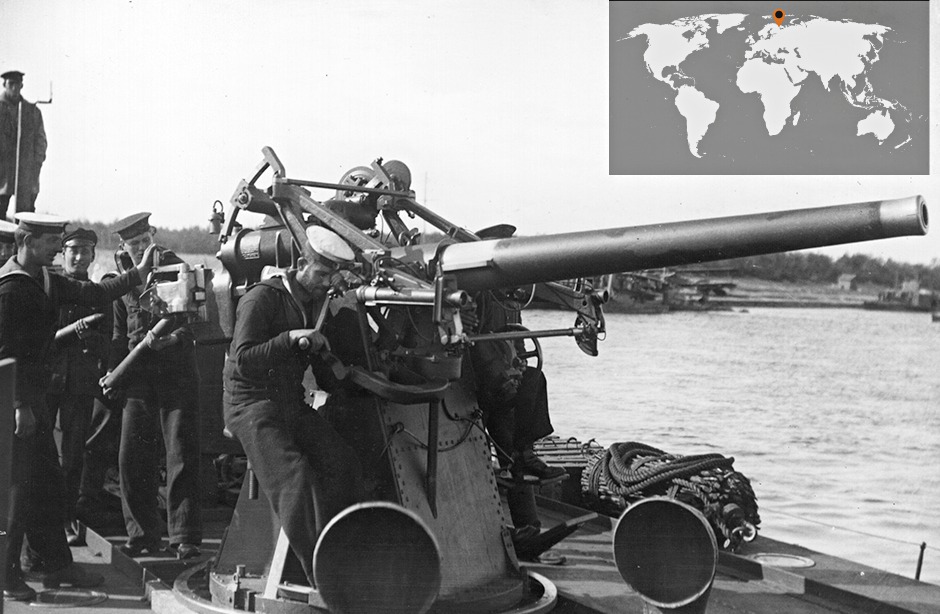
British navy and soldiers form part of international coalition engaged on the side of the ‘White’ Russians in civil war against the Bolsheviks. The Royal Navy, in a campaign named Operation Red Trek, lost 112 dead along with a cruiser, two destroyers and a submarine in clashes with Bolshevik navy. British troops were deployed in Murmansk, Archangel and Siberia. A British mission advised the Polish army during war with the Bolsheviks.

1919

Afghanistan

British forces blocked a 50,000-strong Afghanistan force from invading India. An RAF bomber flew from Peshawar over the mountains to bomb Kabul, scaring the Amir’s harem and leading half the capital’s population to be evacuated. British and Indian colonial forces suffered 1,751 killed, and the Afghans an estimated 1,000.

1919 — 1932

Southern Iraq

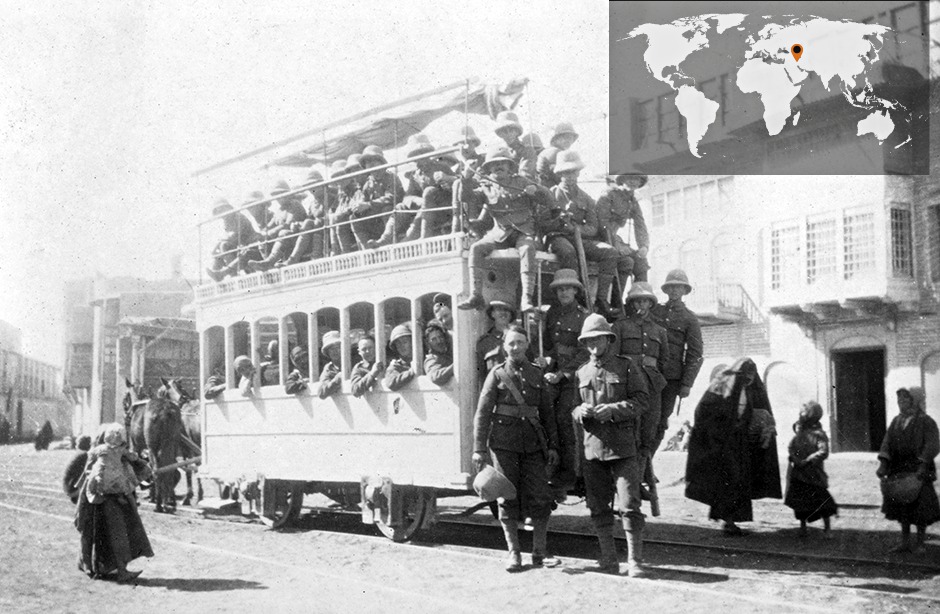
A force of 4,500 British soldiers and 30,000 Indians was stationed in Iraq, taken from the Ottoman Empire after World War One. A British decision to make Iraqi soldiers redundant contributed to an uprising in 1920, a prelude to the US disbandment of the Iraqi army after the 2003 invasion. Aircraft were used to sow terror among the villages of the Marsh Arabs and others involved in uprisings elsewhere. Bombing villages by airplanes was described by one British officer as “unsporting”.

1919 — 1924

Northern Iraq

The British reneged on a promise of independent Kurdish homeland in northern Iraq, resulting in unrest that was put down with the help of the RAF using (non-lethal) poison gas against villages. Churchill was not squeamish about this, writing in 1919: “I am strongly in favour of using poisoned gas against uncivilised tribes.” British forces also engaged in fighting against Turkish troops. Hostilities ran from 1919-1924, and again from 1930-1932.

1919 — 1921

Anglo-Irish War

After the declaration of Irish independence by the Dail, the British army - backed by a paramilitary police force, the “Black and Tans", made up mainly of former soldiers - fought the IRA. British forces pulled out of the Free State in 1922.

1919 — 1939

North West Frontier

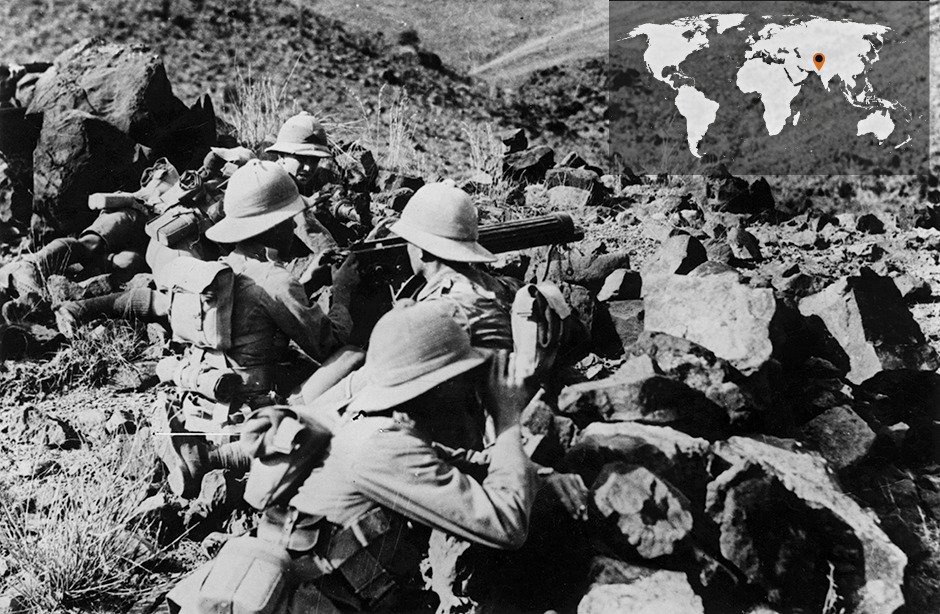
There were repeated clashes throughout the interwar years on the borderland between Afghanistan and India, the North-West Frontier. The British Army and its Indian colonial force were engaged against both the Afghans and tribes in Waziristan. One of the biggest conflicts came in 1919 when British forces stopped a 50,000-strong Afghanistan force posing a threat to India. British and Indian colonial forces suffered 1,751 killed, and the Afghans an estimated 1,000. There were further outbreaks of fighting, mainly involving Waziristan, between 1919 and 1925;1927; 1930-1; 1933; 1935; and 1936-9.

1919 — 1920

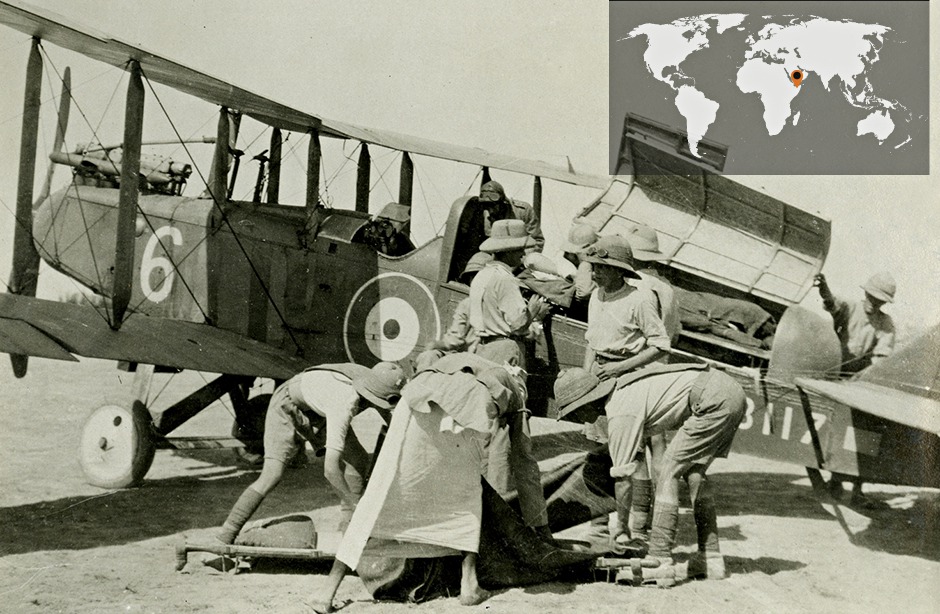
Somaliland

The resurgence of the Dervish revolt was led by Mohammed bin Abdullah, known as the ‘Mad Mullah’ (he was neither mad nor a mullah). The British dispatched the world’s first aircraft carrier, the Ark Royal, plus six bomber aircraft. They were complemented by a quick-reaction force of 700 men, the Somaliland Camel Corps. British success against the Dervishes was attributed to the air attacks. The picture shows wounded men ('cot cases') being evacuated by plane.

1927 — 1939

China

British forces joined an international coalition to protect Shanghai’s European Quarter at the start of the Chinese civil war in 1927 between the nationalist Kuomintang and the Communists. The Kuomintang carried out a massacre of Communists in the city in 1927.

1928

Sudan

A great many air sorties are flown against tribes, including an attack on Bahr al-Jabul that left an estimated 200 dead.

1928

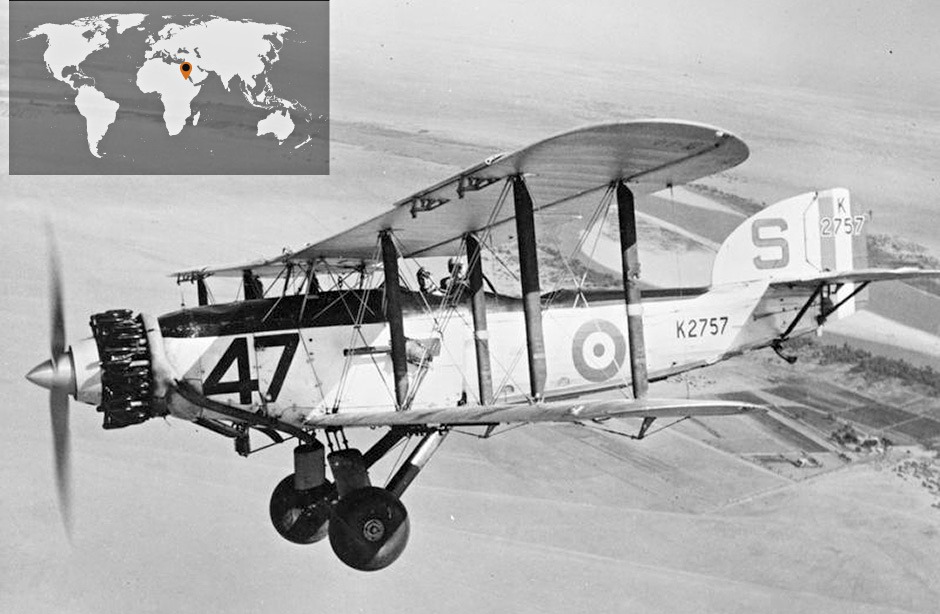
Aden

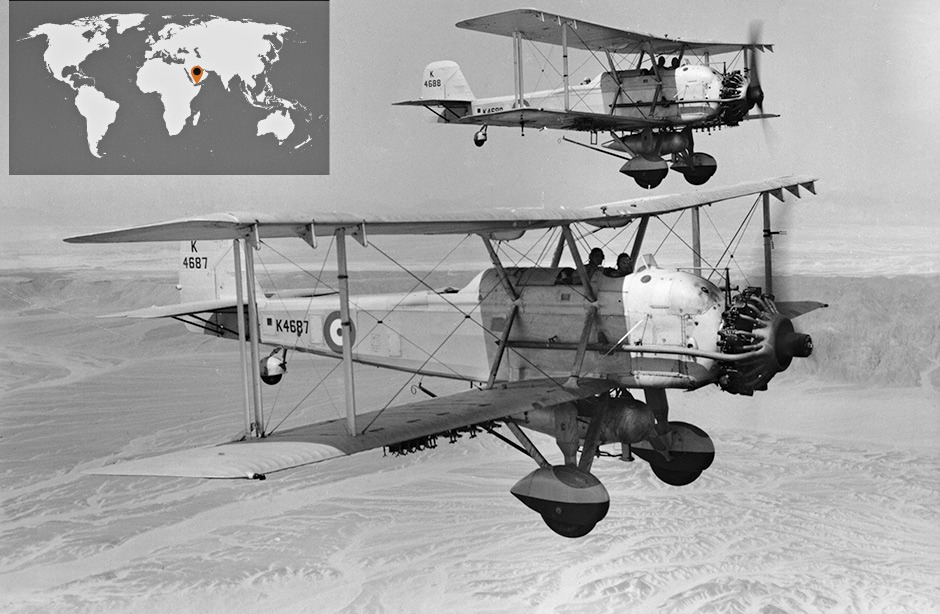
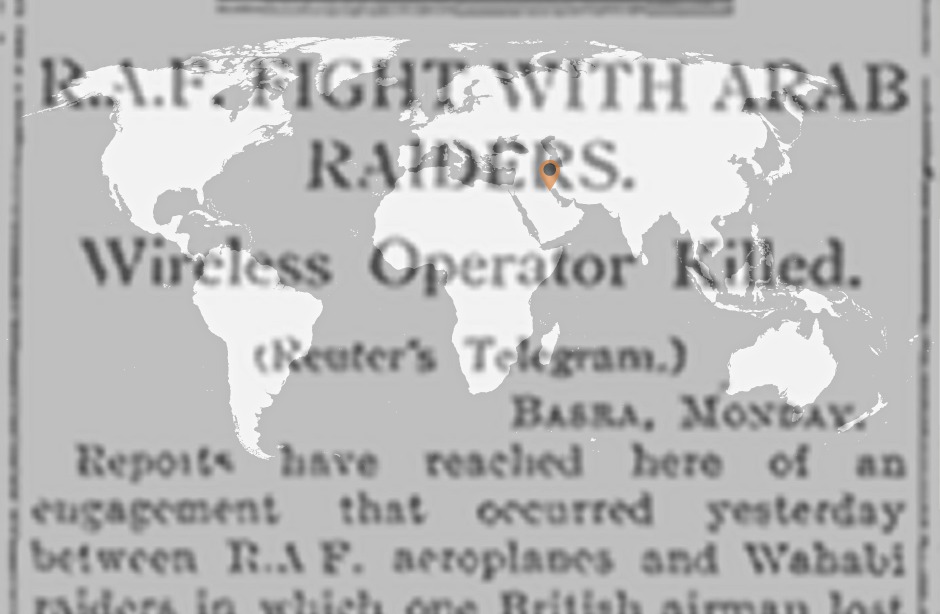
RAF in action after unrest encouraged by Imam of Yemen. Two-thirds of the population of Sana flee.

1929

Kuwait

Royal Navy intervenes to help embattled Sheikh of Kuwait.

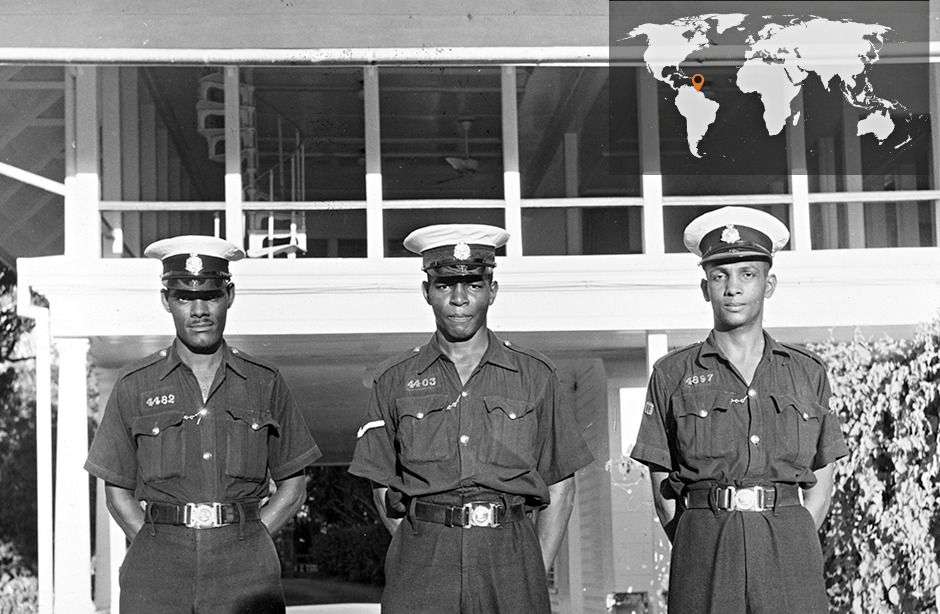
1929 — 1938

Palestine

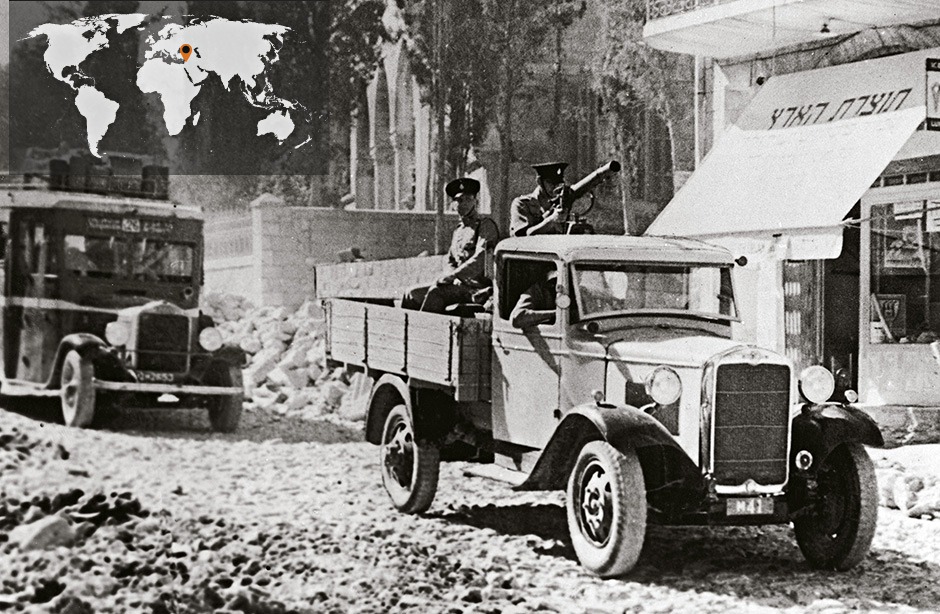
Following the defeat of the Ottoman Empire, Palestine and Trans-Jordan are mandated to Britain. The British maintained a garrison of more than 7,000 troops, mainly to keep the peace amid tensions between Palestinan Arabs and Jews. There were British naval landings in 1929. But hostilities began in earnest in 1936 when there was an Arab revolt that continued through to 1939. By 1938, about 20,000 soldiers were stationed in Palestine.

1939 — 1945

Second world war

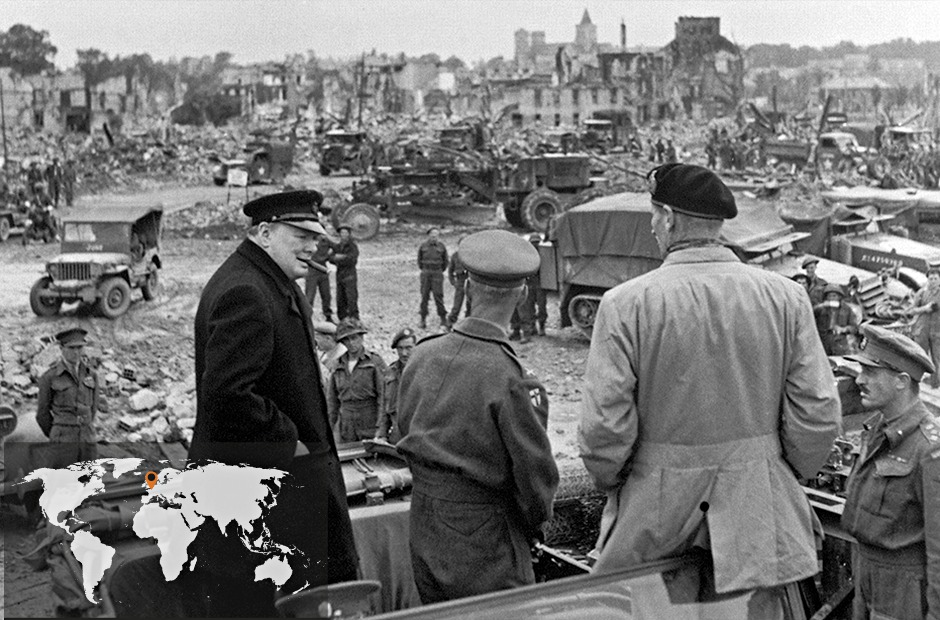
In September 1939, the British government mobilises armed forces in anticipation of German air raids. After initial setbacks, culminating in evacuation from Dunkirk in 1940, the British began to see a change in fortune, with the Battle of El Alamein in 1942. British forces were engaged all round the world, from the Arctic campaign to the Battle of Atlantic, from Italy and France, from Singapore to the Pacific. At its height, more than 3.5 million served in the army. The British army death toll, including those from the Commonwealth, amounted to 383,000.

Read the Guardian's original report of Britain's declaration of war on Germany.

Read the Guardian's original report of the fighting in northern France following D-day.

Read the Guardian's original report of an airborne attack by British parachute troops the day after D-day.

1944 — 1946

Greek Civil War

Anxious to dominate the eastern Mediterranean at the end of WWII, Churchill agreed with Stalin that the Soviets could dominate Hungary and the Balkans if Britain could dominate Greece. Around 26,000 troops were dispatched in October 1944, as German forces retreated. Soon fighting broke out between Royalists and right-wingers, and the Communist-dominated resistance movement, the EAM. British troops fought alongside the anti-Communist forces – their allies against Germany just weeks before - with RAF Wellingtons bombing targets in Athens. After flying to Athens on Christmas Day 1944, to help the Greek general Nikolaos Plastiras broker peace talks, Winston Churchill quipped: “Let's hope General Plaster-Arse doesn't have feet of clay...” The civil war continued until 1949.

1945 — 1946

French Indo-China

The British wished to see the French and Dutch repossess their imperial possessions in the Far East. The French had no ships and few troops to send to Indo-China, so London sent British troops and a division of the Indian Army to occupy the country. As fighting with Viet-Minh forces quickly escalated, Japanese prisoners were rearmed, placed under British command and compelled to join the conflict. The British held the ring until large numbers of French forces arrived in early 1946.

1945 — 1946

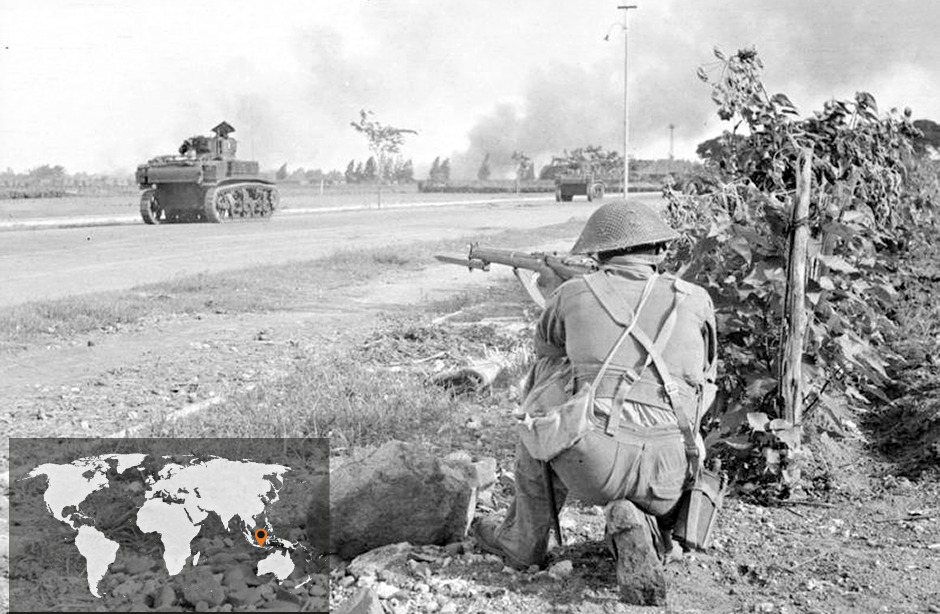
Dutch East Indies

In their attempts to help the Dutch repossess their Indonesian colony, the British suffered far more casualties than in Indo-China, and inflicted far more casualties upon a local population that was determined to win its freedom and independence. In one battle for control of the port of Surabaya, one and a half divisions of troops backed by aerial and naval bombardment found themselves fighting the city's population. An estimated 15,000 civilians were killed. There were mutinies among British troops who were sickened by the ferocity of their Dutch allies. In February 1946, British and Indian troops threatened to turn on the Dutch if the slaughter of civilians continued. Later that year, the last British troops to leave the country greeted disembarking Dutch conscripts with raised fists and the Indonesian battle cry Merdeka - Freedom!

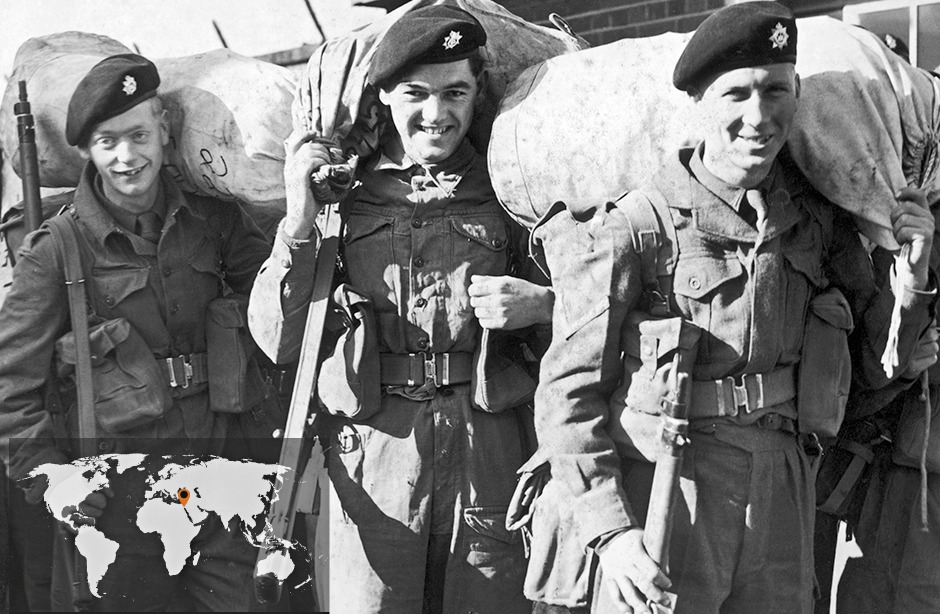
1945 — 1948

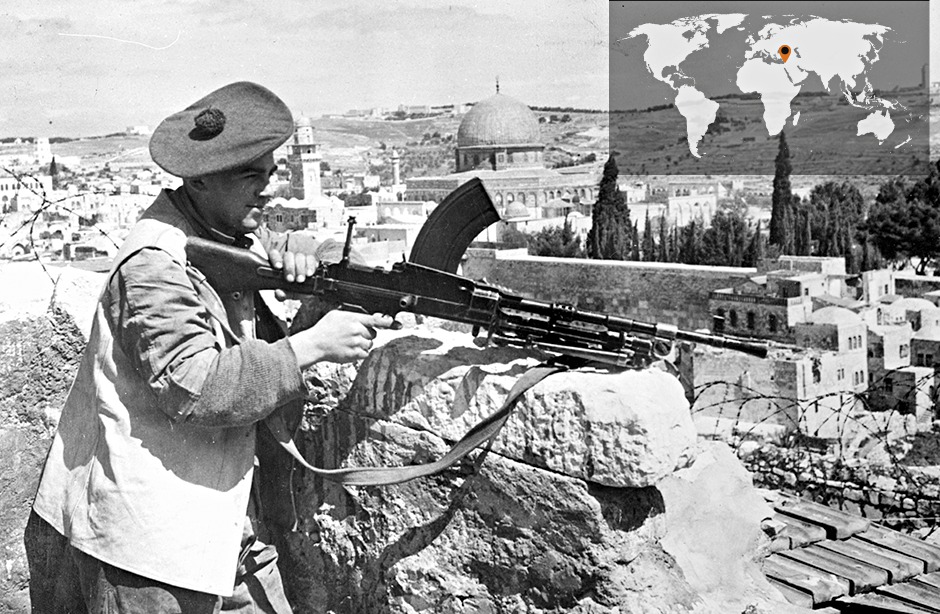
Palestine

Thousands of British troops were stationed in Palestine when the Jewish insurgency began in October 1945. Within two years, two divisions of British troops were engaged in a conflict which was deeply unpopular, both at home and abroad. London decided to pass the problem to the United Nations and announced that the British Mandate would end in May 1948. Some British forces withdrew overland to Egypt, passing elements of the Egyptian army that were travelling in the opposite direction to invade the newly-declared state of Israel.

Read Alistair Cooke's original report for the Guardian on the Arab states' rejection of a UN plan to partition Palestine.

1948 — 1951

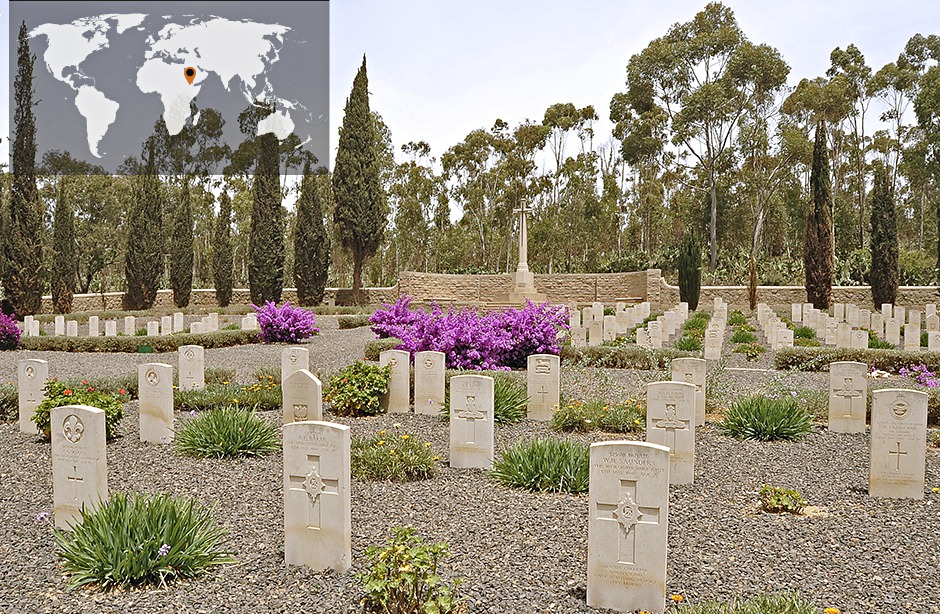
Eritrea

British troops ousted Italian forces from their east African colony in 1941. After the war, London continued to administer the country under a UN mandate, and British troops spent several years skirmishing with Eritrean guerillas who favoured unification with Ethiopia.

1948 — 1960

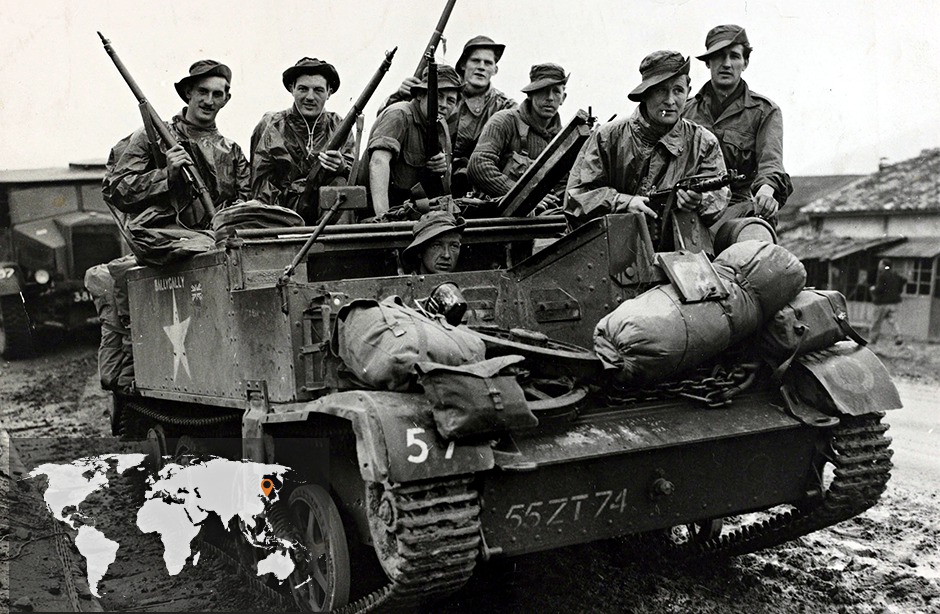
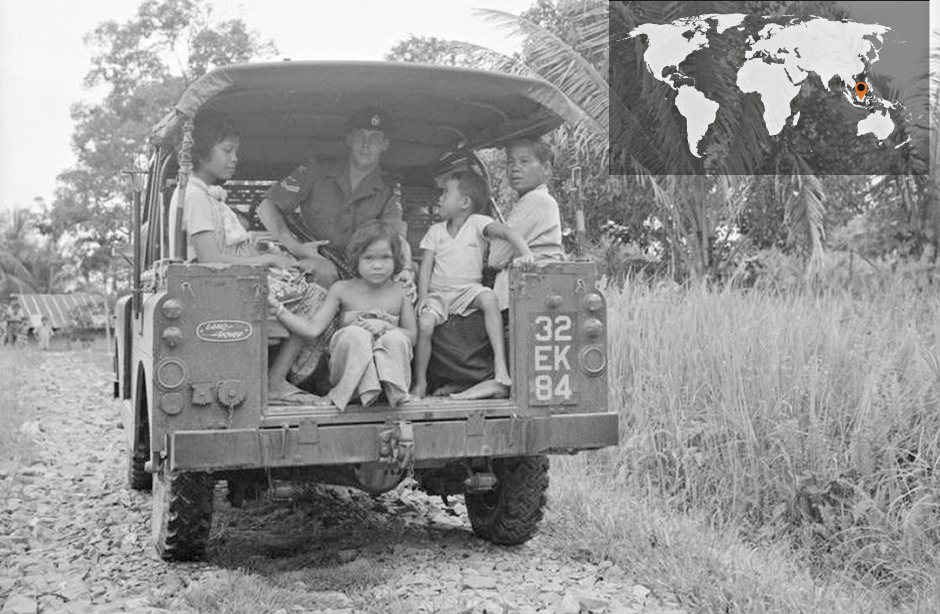
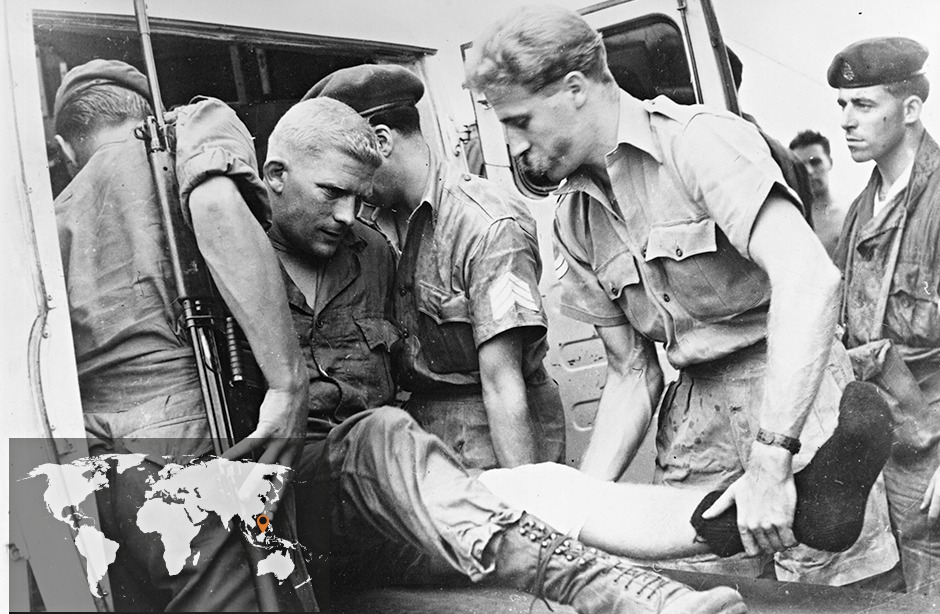
Malaya

Although the Malayan Emergency lasted 12 years, the British were always confident of eventual victory. “By far the easiest problem I have ever tackled,” said the British commander, when hostilities began. His communist opponents were almost all ethnically Chinese, and faced opposition from most Malays as well as the colonial authorities. It was the first modern counter-insurgency campaign in which the “winning of hearts and minds” was said to be critical to success, and it ended in defeat for the communists. At the outset, however, villages were torched by police and villagers massacred by British troops. According to official figures, 10,700 insurgents were killed, captured or surrendered during the war. Some 519 members of the military and 1,346 police lost their lives, along with 3,283 civilians.

1949

China

While steaming up the Yangtze River in April 1949 to evacuate British and Commonwealth citizens from Nanking during the Chinese civil war, HMS Amethyst came under fire from shore batteries of the People's Liberation Army. The ship's commander was among those killed, and the vessel ran aground. It was trapped for three months, and other ships that attempted to come to its rescue also came under fire. Forty six sailors died and dozens were wounded.

1950 — 1953

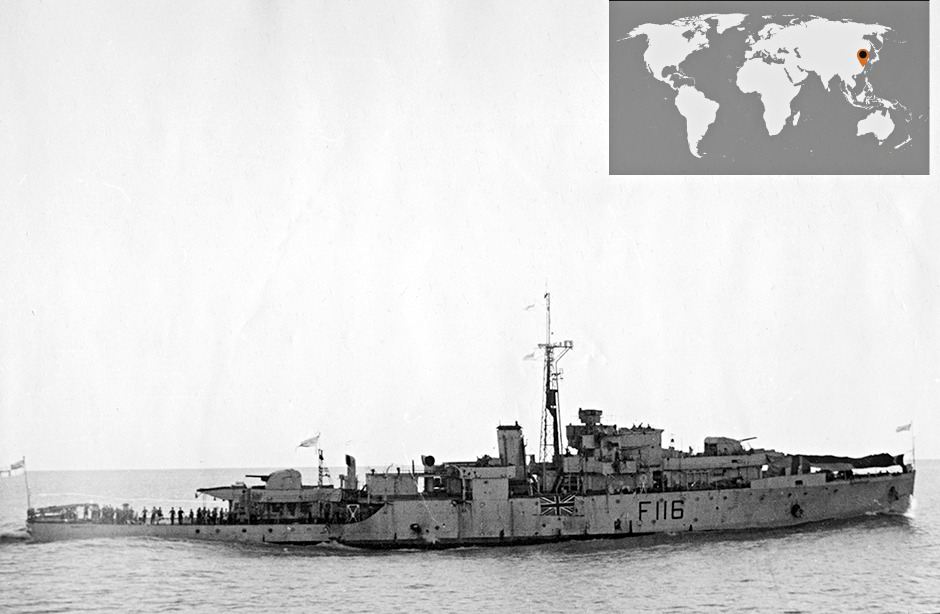
Korea

The Cold War turned hot in June 1950 when North Korean forces mounted a surprise assault across the border. Britain and 13 other countries agreed to reinforce US and South Korean forces, and pushed so far north that China also entered the war. By the time an armistice was signed in July 1953, up to four million people were dead, most of them civilians.

1951 — 1954

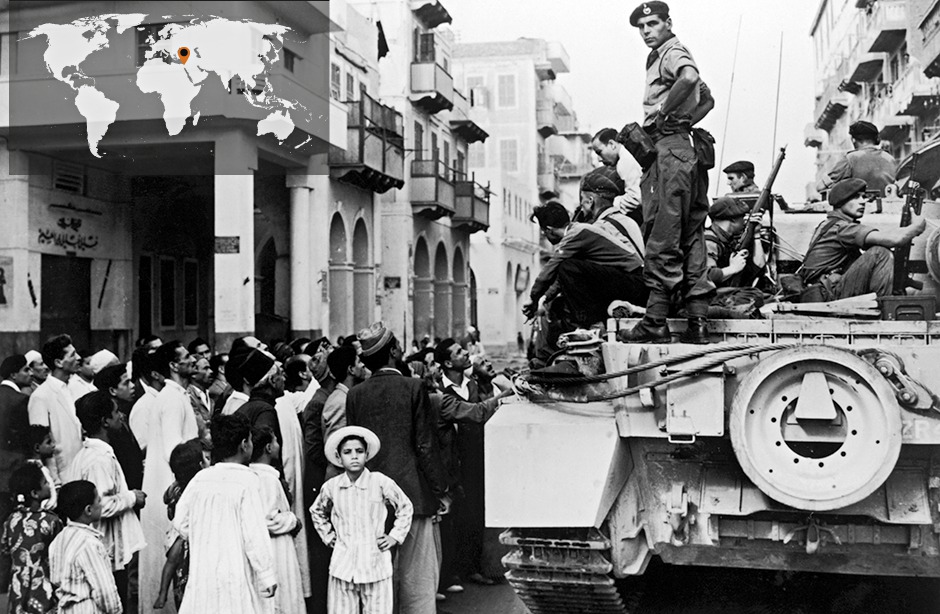
Suez Canal Zone

Tens of thousands of British troops faced three years of sporadic attacks by the Egyptian army and police after the Egyptian government abrogated a treaty that permitted London to base forces along the Suez canal. Eventually Britain agreed to withdraw its forces; the Egyptian government agreed they could return if the canal was threatened by an outside power.

1952 — 1960

Kenya

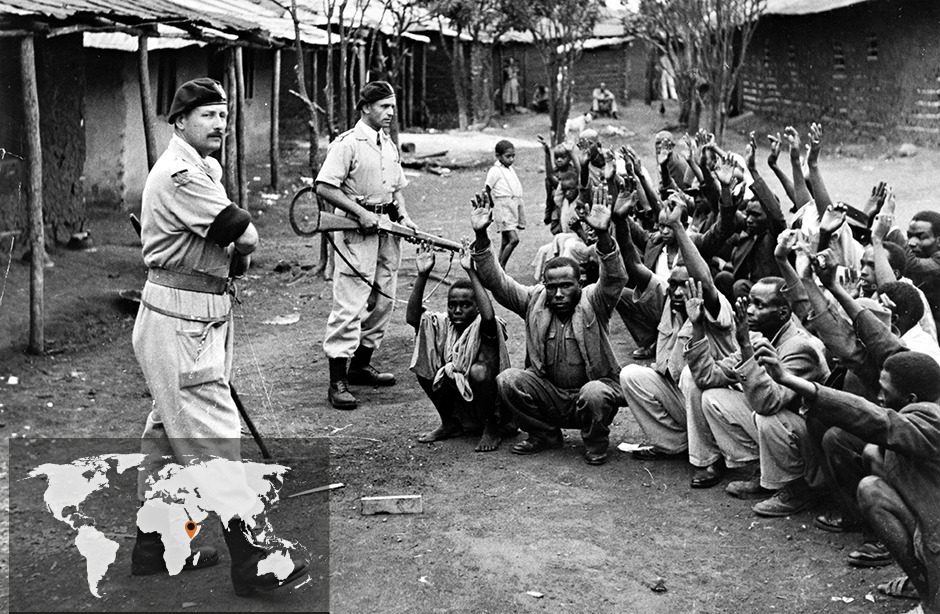
By far the most bloody and controversial of Britain's war of decolonisation, the Mau Mau insurgency was characterised by savage conduct on both sides. The colonial authorities failed to understand the cause of conflict, with some officials believing the Kikuyu people were suffering a form of mass breakdown. It is now accepted that they were reacting to the expropriation of their land. Thousands of people were detained in a vast network of prison camps, and while the abuses they suffered were officially denied, the massacre of one group of prisoners caused such revulsion in Britain that independence became inevitable. The numbers of casualties are disputed: the British and African security forces suffered around 200 deaths, while estimates of the number of civilians and Mau Mau fighters who died vary from the official count of 12,000 to as high as 100,000. Last year the British government settled a claim that a group of elderly Kenyans brought at the high court in London by expressing its “sincere regret” the use of torture during the insurgency, paying £19.9 million to 5,000 former prisoners.
1953 — 1954

British Guiana

After the the left-leaning People's Progressive Party won a general election in 1953, Churchill wrote to the foreign office suggesting it was time to ask for US assistance to topple the newly-elected government. “We ought to get American support in doing all that we can to break the Communist teeth in British Guiana.” Five months later British troops were despatched to topple the government. The following year a number of demonstrators were shot dead.

1955 — 1959

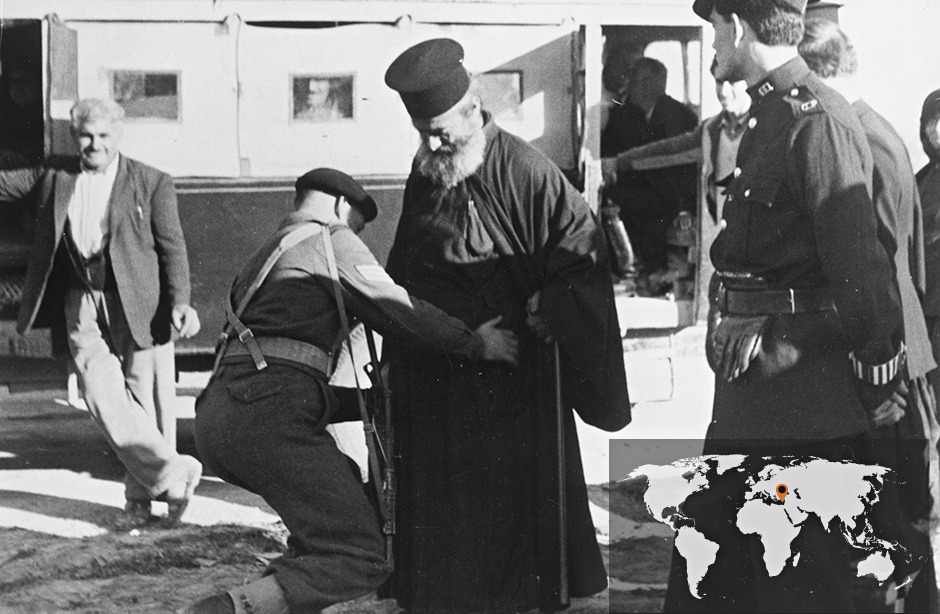
Cyprus

The British colonial authorities were taken by surprise when insurgents from the Greek nationalist organisation Eoka launched their first attack in April 1955, initially assuming them to be communists. Fighting continued until 1959, and Cyprus gained independence the following year. Some 370 British servicemen died along with more than 40 police officers, and hundreds of Greek and Turkish Cypriot civilians.

Read an original Guardian report on fears that EOKA fighters were disguising themselves as priests.

1956

Suez Crisis

When the Egyptians nationalised the Anglo-French Suez Canal Company, London and Paris conspired with Israel to attack – an Israeli invasion providing the justification for British and French intervention. The war was halted on the insistence of the United Nations after it triggered international outrage.

Read an original Guardian report on the start of British and French bombing of Egypt.

Read an original Guardian piece published after the UN ceasefire.

1957 — 1959

Muscat and Oman

When a Saudi-backed insurgency threatened the UK-backed sultan of oil-rich Muscat and Oman, British forces including SAS troops were landed. During just a few months of the campaign against tribal fighters from mountain-top villages, the RAF dropped twice the weight of bombs that the Luftwaffe had dropped on Coventry in November 1940.

1960 — 1961

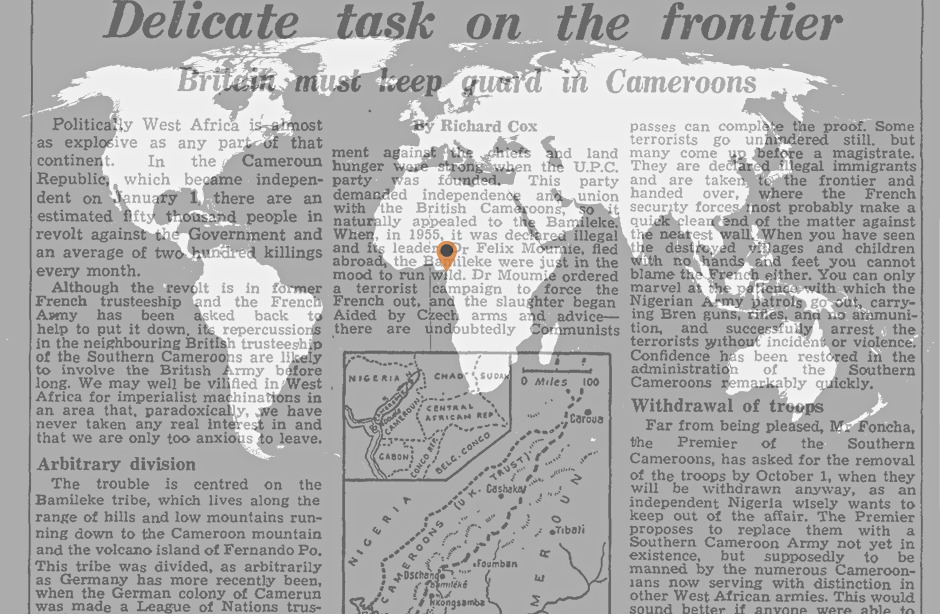
Cameroon

In the run up to a referendum in which the people from the north of British Cameroons voted to join Nigeria, while those from the south voted to merge with Cameroun Republic, British troops engaged with rebels from the Chinese-backed Armee de Liberation Kamerounaise, twice crossing the border to attack their camps.

1961

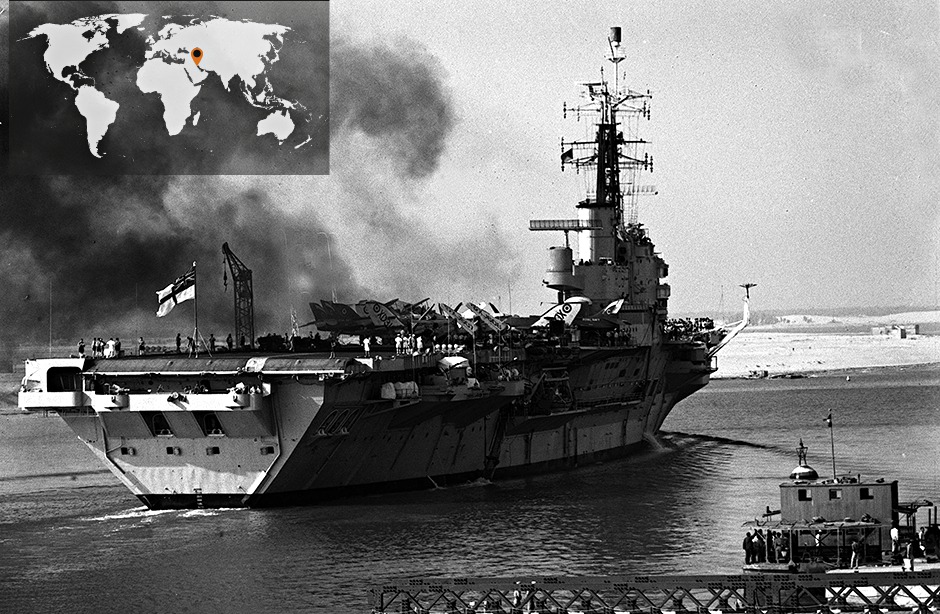
Kuwait

When the Iraqis laid claim to newly-independent Kuwait, a British task force of an aircraft carrier, several destroyers and half a brigade of troops was sent to the country. No shots were fired. It was the first major operation after Suez, and helped to develop the military concept of rapid deployment.

1962

Brunei

As Britain attempted to divest itself of its colonies on Borneo, a three-way conflict over the future of Brunei – between its sultan, Malaysia and Indonesia – resulted in an uprising by pro-Indonesia militiamen. The British were taken by surprise: one of the army units dispatched to put down the rebellion found that it had no maps of Brunei, and was forced to break into its ammunition stores as the man with the key was on holiday. The insurrection was soon followed by war with Indonesia.

1963 — 1966

Borneo

The undeclared four-year war that Britain and its Commonwealth allies fought against Indonesia was one of the least-reported conflicts of the last 50 years. It was fought by small companies of men, strung out along the border between Indonesian and Malaysian Borneo. British forces secretly carried out attacks deep inside Indonesia territory. British and Commonwealth losses numbered 114, while the Indonesians suffered at least 600 deaths in combat, and hundreds more as a result of starvation. A change of government in Jakarta brought the war to an end.

1963 — 1976

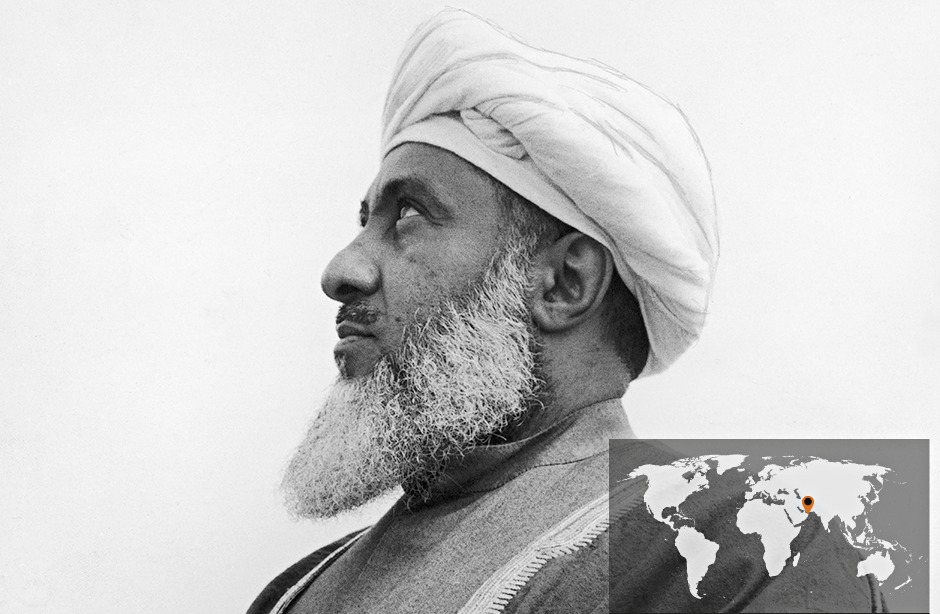
Oman

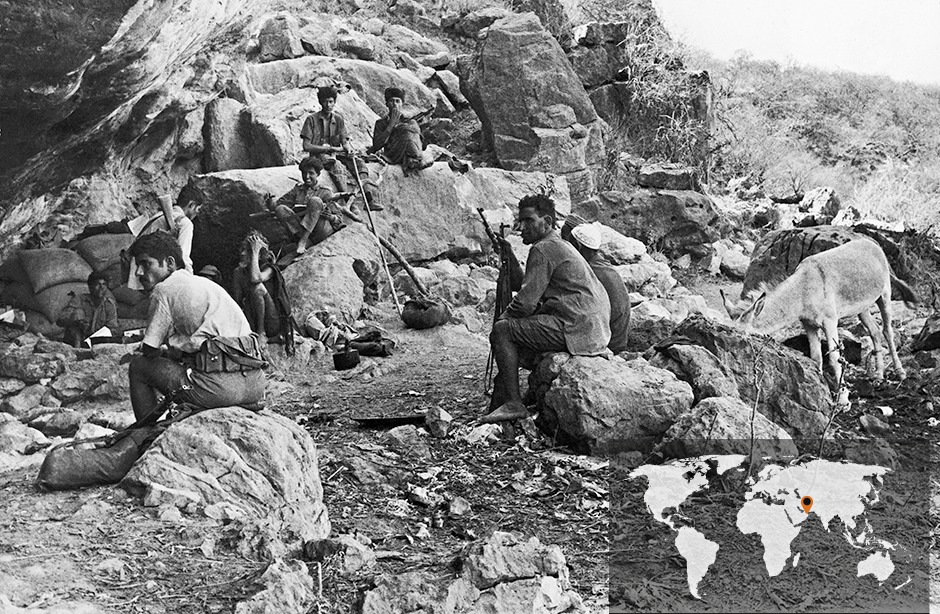
Said bin Taimur, the reactionary and repressive ruler of Oman who kept slaves and banned his people from wearing sunglasses or listening to the radio, had faced repeated rebellions in the Dhofar region of the south of the country. He could rely on British support to suppress them. By the late 60s, the sporadic attacks had developed into a well-organised insurgency, with both Russian and Chinese support. Determined to protect the narrow Straits of Hormuz, through which a giant oil tanker passed every ten minutes, the British placed the Sultan's armed forces under British command and drafted in young British officers. One of them was a young Ranulph Fiennes, who later wrote: “The people were oppressed and poverty stricken. The Sultan had no friends but the British. ” Later SAS troops were dispatched, and the Shah of Iran also sent forces. British-led counter-insurgency operations lasted more than a decade, and for most of that time were conducted in complete secrecy. Just 24 British soldiers were killed, alongside around 900 Omanis and Iranian. There are believed to have been several thousand insurgent and civilian deaths. The campaign is regarded as a model of its kind and is still taught at the British military staff college.
1963 — 1967

Aden

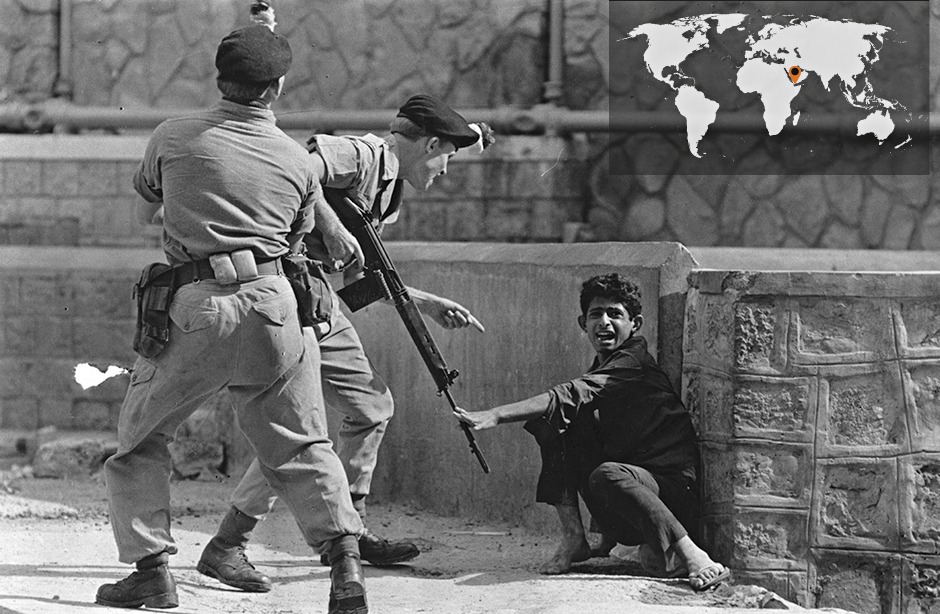
The insurgency against British rule in the south Arabian colony of Aden began in December 1963, when a hand-grenade was hurled at a group of British diplomates at the airport. Over the next three years the British struggled to suppress the mounting violence. Two insurgent groups, the Marxist National Liberation Front and the Arab nationalist Front for the Liberation of Occupied South Yemen, fought both the British and each other. In 1964 Britain found itself facing a second insurrection in the Radfan mountains near the border with Yemen. By 1967, the British were retreating behind a steadily-shrinking perimeter, eventually controlling just the harbour and the airport. One reporter described how the grounds of his hotel became a battlefield. “Gun battles raged furiously with thousands of rounds of ammunition whining and pinging around every building as NLF gunmen poured concentrated fire into every British position on a front of 400 yards.” When the British departed at the end of the year they left behind 125 dead, including several British civilians shot at their homes or offices. Dozens of soldiers and police loyal to the British also died, along with an estimated 1,900 civilians and insurgents.

Read an original Guardian report from 1967 of the deteriorating security situation in Aden.
1969 — 1998

Northern Ireland

The British army was deployed on the streets of Northern Ireland in 1969, initially to help restore order amid widespread sectarian rioting. Operation Banner, as the British military calls its campaign in Northern Ireland, was officially declared to be at an end in 2007, although the conflict subsided dramatically with the signing of the 1998 Good Friday Agreement. The campaign had lasted 38 years: the longest uninterrupted operation ever conducted by UK forces. More than 500 soldiers died, along with 509 police and members of the security forces, 562 paramilitaries and 2,074 civilians, most of them Catholic.
Read original Guardian dispatches by Simon Hoggart and Simon Winchester from Derry in the aftermath of Bloody Sunday.

Read the Guardian's original report of the British government's decision to deploy the SAS to County Armagh in 1976.

1982

Falklands

The ten-week war between Britain and Argentina over control of the long-disputed Falkland Islands and South Georgia resulted in the deaths of 255 British servicemen, 649 Argentinians, and three civilians. More than 2,400 were wounded. Mary Watson spent the war worrying that her only son Tony, a sailor on HMS Glamorgan, might never return home. When he did, she was there to greet him off the ship. "It was good to hold him," she said later. "It was a sad occasion as well. As we were crying with joy, others would be crying with sorrow, because some of the boys hadn't come back. The whole experience of the Falkland War changed my life - I'm frightened of what's around the corner."

Read the Guardian's original report of domestic political recriminations in Britain following Argentina's invasion of the Falkland Islands.

Read Gareth Parry's original first-hand report for the Guardian of the task force landing at San Carlos Bay and his reflections on reporting the conflict alongside British forces.

Read the Guardian's 
original report of the Argentinian surrender and leader article on the end of the war.

1990 — 1991

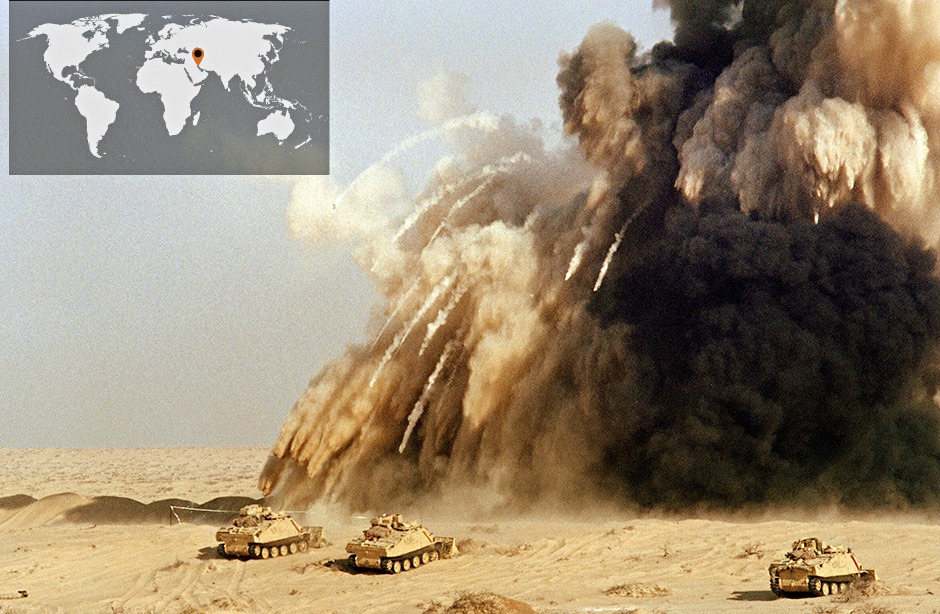
First Gulf war

More than 50,000 British troops, 6,000 RAF personnel, an aircraft acarrier and several destroyers were deployed to the Gulf after the Iraqi invasion of Kuwait in August 1990, to serve alongside forces from 11 other nations. UK special forces, meanwhile, began operating inside Kuwait and Iraq's Western Desert shortly after the invasion. Forty seven British servicemen were among the 400-plus coalition personnel who lost their lives, along with thousands of Iraqis. Nine British soldiers were killed in a “friendly fire” incident when their armoured convoy was attacked by a US aircraft. One, Conrad Cole, was just 17.

Read the Guardian's original report of international reaction to the Iraqi invasion of Kuwait.

1992 — 1995

Bosnia

British forces joined the UN peacekeeping mission in 1992 when war broke out between the Bosnians - who declared independence after the break-up of Yugoslavia – and Bosnian Serbs and Croats. Although the conflict largely ended in 1995, British troops weren't fully withdrawn until 2007; 59 died in total.

Read Maggie O'Kane's original account for the Guardian of her escape from a besieged Sarajevo.

1999

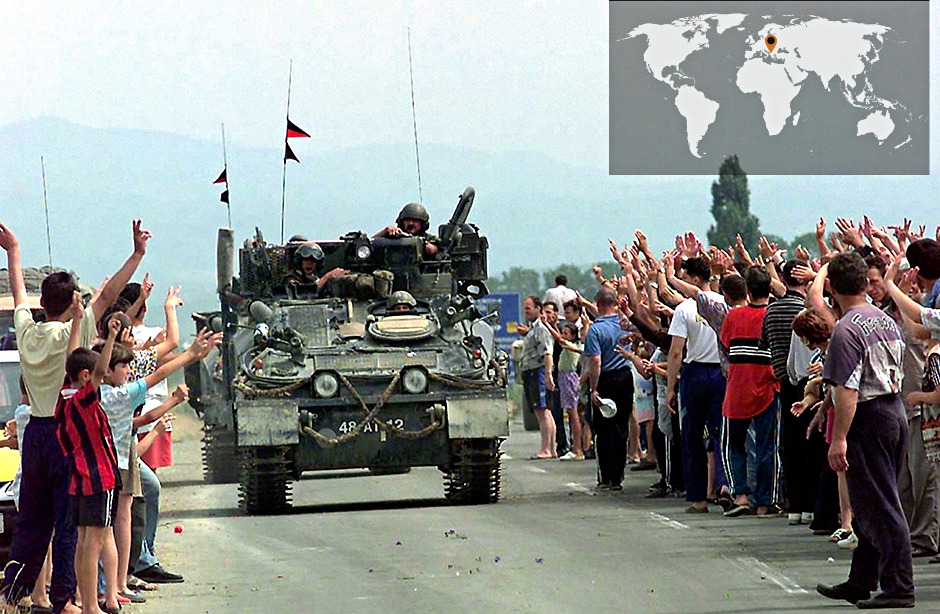
Kosovo

Amid the continuing break-up of the former Yugoslavia and the murder and mass deportation of Albanians in Kosovo by Serb forces, the UK joined Nato's 78-day air campaign against Serbia and then contributed to the peacekeeping force that occupied the country.

Read an original Guardian analysis of the military situation in Kosovo, published the day after Nato airstrikes began.

2000

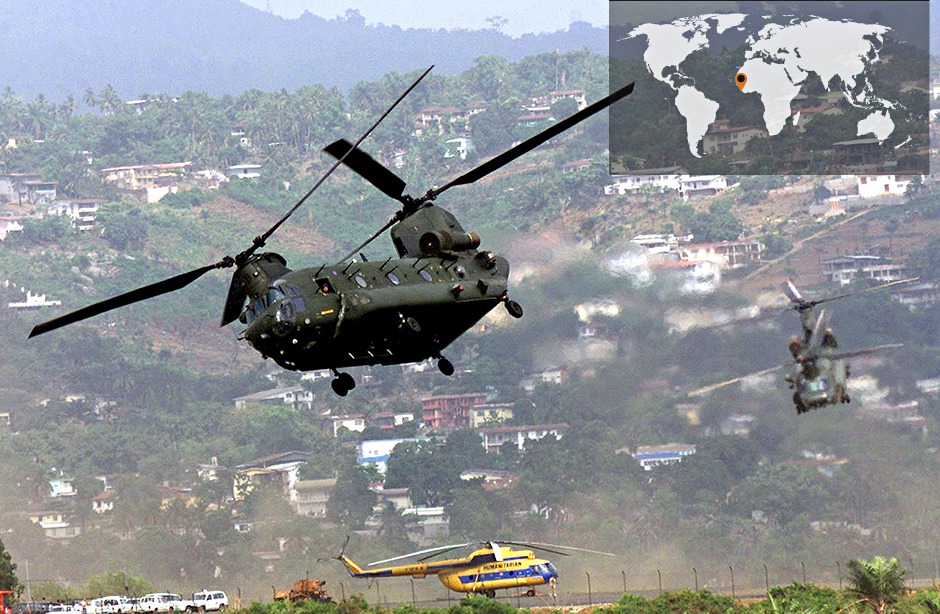
Sierra Leone

A peace accord was signed in 1999 following almost a decade of civil war, but a year later Revolutionary United Front rebels renewed fighting and advanced towards Freetown. In May 2000 British troops were sent to support the Sierra Leone Army against the RUF. One paratrooper was killed during Operation Barras, a mission to rescue soldiers held hostage by the West Side Boys militia. A ceasefire was called in November 2000 and peace declared in January 2002. A small number of British troops remain in the country to train Sierra Leone's forces.

2001 — 2014

Afghanistan

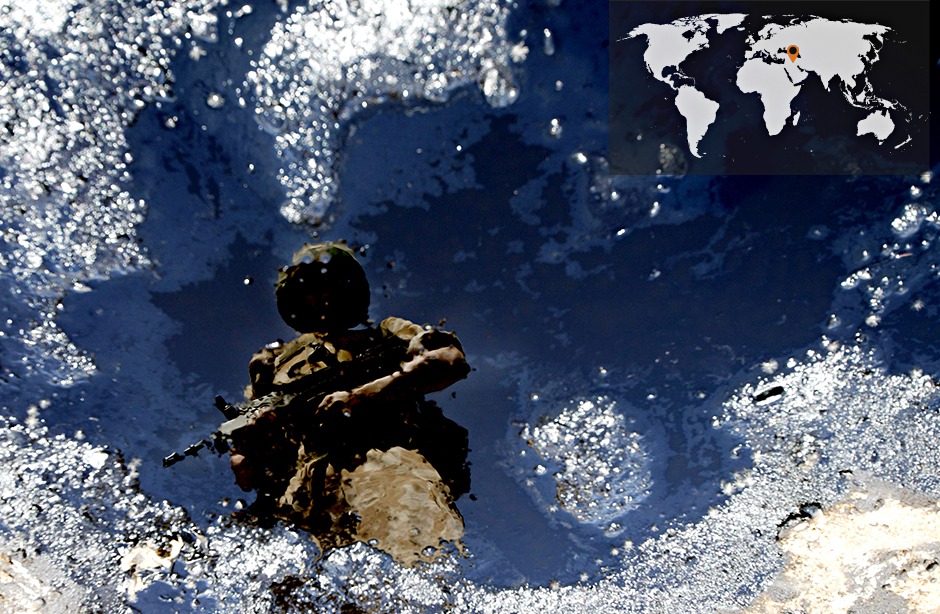
Thirteen years of war began with the UK assisting military operations to topple the Taliban regime that had given al-Qaida the space to plot the attacks of 9/11, then contributing to peace-keeping operations around Kabul. In 2006, the Ministry of Defence announced it was sending 3,300 personnel into Helmand province in the south of the country, and 2,500 more were dispatched the following year. By the end of last year, 447 British soldiers and civilians had been killed and 2,171 wounded in action. Civilian deaths are running at more than 2,000 each year across Afghanistan, and parts of Helmand remain the most contested areas of the country.

2003 — 2008

Iraq

The decision to join the US-led invasion of Iraq in 2003 has been condemned by some as Britain's biggest foreign policy disaster since Suez. During the six years that the British were present in the south east of the country, some 179 British servicemen and women died.The civilian death toll in Basra as a result of the conflict is estimated at between 3,300 and 3,760.

2011

Libya

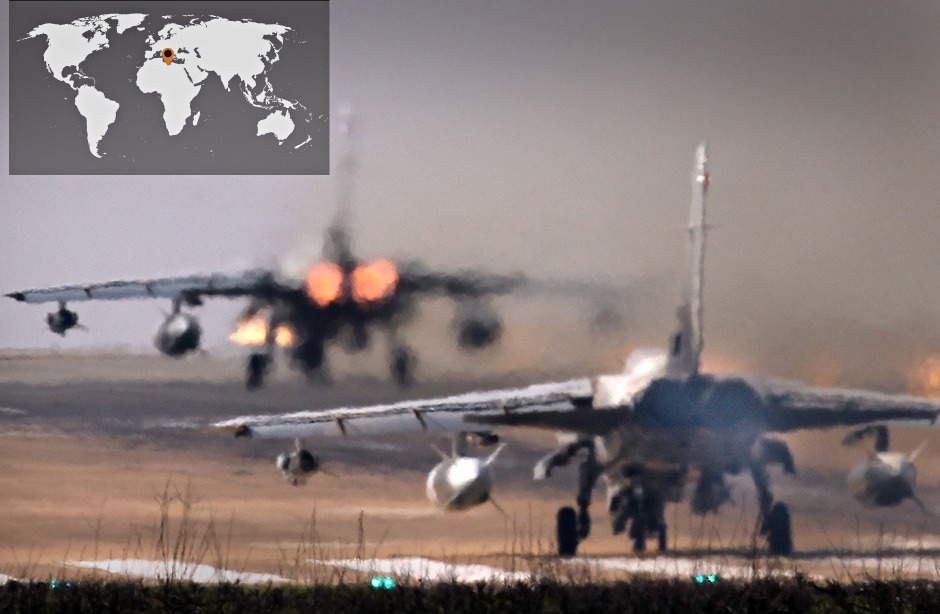
Britain was involved in international operations against Muammar Gaddafi's forces, with the RAF and Navy taking part in Nato strikes. Special forces also provided clandestine on-the-ground training and support to opposition rebels. Gaddafi was captured and killed on 20 October 2011, and Nato forces withdrew at the end of that month.