Showing posts with label Middle East. Show all posts

Wednesday, June 04, 2014

GCHQ's BEYOND TOP SECRET Middle Eastern INTERNET SPY BASE

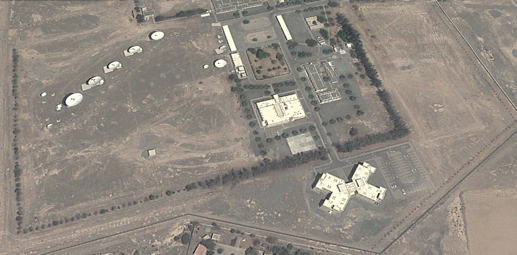
The secret British spy base is part of a programme codenamed “CIRCUIT” and also referred to as Overseas Processing Centre 1 (OPC-1). It is located at Seeb, on the northern coast of Oman, where it taps in to various undersea cables passing through the Strait of Hormuz into the Persian/Arabian Gulf. Seeb is one of a three site GCHQ network in Oman, at locations codenamed “TIMPANI”, “GUITAR” and “CLARINET”. TIMPANI, near the Strait of Hormuz, can monitor Iraqi communications. CLARINET, in the south of Oman, is strategically close to Yemen.

British national telco BT, referred to within GCHQ and the American NSA under the ultra-classified codename “REMEDY”, and Vodafone Cable (which owns the former Cable & Wireless company, aka “GERONTIC”) are the two top earners of secret GCHQ payments running into tens of millions of pounds annually.
The Seeb spy base. Not in your name? My dear boy, that's the whole point

The actual locations of such codenamed “access points” into the worldwide cable backbone are classified 3 levels above Top Secret and labelled “Strap 3”. The true identities of the companies hidden behind codenames such as “REMEDY”, “GERONTIC”, “STREETCAR” or “PINNAGE” are classified one level below this, at “Strap 2”.

After these details were withheld, the government opted not to move against the Guardian newspaper last year for publishing above-top-secret information at the lower level designated “Strap 1”. This included details of the billion-pound interception storage system, Project TEMPORA, which were revealed in 2013 and which have triggered Parliamentary enquiries in Britain and Europe, and cases at the European Court of Human Rights. 

The Guardian was forced to destroy hard drives of leaked information to prevent political embarrassment over extensive commercial arrangements with these and other telecommunications companies who have secretly agreed to tap their own and their customers’ or partners’ overseas cables for the intelligence agency GCHQ. Intelligence chiefs also wished to conceal the identities of countries helping GCHQ and its US partner the NSA by sharing information or providing facilities.

... the intelligence agency annually pays selected companies tens of millions of pounds to run secret teams which install hidden connections which copy customers' data and messages to the spooks’ processing centres. The GCHQ-contracted companies also install optical fibre taps or “probes” into equipment belonging to other companies without their knowledge or consent. Within GCHQ, each company has a special section called a “Sensitive Relationship Team” or SRT.

BT and Vodafone/C&W also operate extensive long distance optical fibre communications networks throughout the UK, installed and paid for by GCHQ, NSA, or by a third and little known UK intelligence support organization called the National Technical Assistance Centre (NTAC).

... every time GCHQ wanted to tap a new international optical fibre cable, engineers from “REMEDY” (BT) would usually be called in to plan where the taps or “probe” would physically be connected to incoming optical fibre cables, and to agree how much BT should be paid. 

The spooks' secret UK access network feeds Internet data from more than 18 submarine cables coming into different parts of Britain either direct to GCHQ in Cheltenham or to its remote processing station at Bude in Cornwall.

Among the cables specifically identified in one document as currently being intercepted or “on cover” are an Irish connection, Hibernia Atlantic, landing in Southport, and three European connections landing at Yarmouth, Dover, and Brighton.

Monday, May 05, 2014

American Death Spiral In The Middle East


President Obama speaking with Iran’s President Hassan Rouhani. (Photo: White House photo by Pete Souza)

A Field Guide to Losing Friends, Influencing No One, and Alienating the Middle East (or How Obama’s Washington Is the Rodney Dangerfield of the Region)

By Bob Dreyfuss

Put in context, the simultaneous raids in Libya and Somalia last month, targeting an alleged al-Qaeda fugitive and an alleged kingpin of the al-Shabab Islamist movement, were less a sign of America’s awesome might than two minor exceptions that proved an emerging rule: namely, that the power, prestige, and influence of the United States in the broader Middle East and its ability to shape events there is in a death spiral.
Twelve years after the U.S. invaded Afghanistan to topple the Taliban and a decade after the misguided invasion of Iraq -- both designed to consolidate and expand America’s regional clout by removing adversaries -- Washington’s actual standing in country after country, including its chief allies in the region, has never been weaker. Though President Obama can order raids virtually anywhere using Special Operations forces, and though he can strike willy-nilly in targeted killing actions by calling in the Predator and Reaper drones, he has become the Rodney Dangerfield of the Middle East. Not only does no one there respect the United States, but no one really fears it, either -- and increasingly, no one pays it any mind at all.
There are plenty of reasons why America’s previously unchallenged hegemony in the Middle East is in free fall. The disastrous invasions of Afghanistan and Iraq generated anti-American fervor in the streets and in the elites. America’s economic crisis since 2008 has convinced many that the United States no longer has the wherewithal to sustain an imperial presence. The Arab Spring, for all its ups and downs, has challenged the status quo everywhere, leading to enormous uncertainty while empowering political forces unwilling to march in lockstep with Washington. In addition, oil-consuming nations like China and India have become more engaged with their suppliers, including Saudi Arabia, Iran, and Iraq. The result: throughout the region, things are fast becoming unglued for the United States.
Its two closest allies, Israel and Saudi Arabia, are sullenly hostile, routinely ignore Obama’s advice, and openly oppose American policies. Iraq and Afghanistan, one formerly occupied and one about to be evacuated, are led, respectively, by Prime Minister Nouri al-Maliki, an inflexible sectarian Shiite closely tied to Iran, and President Hamid Karzai, a corrupt, mercurial leader who periodically threatens to join the Taliban. In Egypt, three successive regimes -- those of President Hosni Mubarak, Mohammad Morsi of the Muslim Brotherhood, and the chieftains of the July 2013 military coup -- have insouciantly flouted U.S. wishes.
Turkey, ostensibly a NATO ally but led by a quirky Islamist, is miffed over Obama’s back-and-forth policy in Syria and has shocked the U.S. by deciding to buy a non-NATO-compatible missile defense system from China. Libya, Somalia, and Yemen have little or no government at all. They have essentially devolved into a mosaic of armed gangs, many implacably opposed to the United States.
This downward spiral has hardly escaped attention. In a recent address to the National Council on U.S.-Arab Relations, Chas Freeman, the former American ambassador to Saudi Arabia, described it in some detail. “We have lost intellectual command and practical control of the many situations unfolding there,” said Freeman, whose nomination by Obama in 2009 to serve as head of the National Intelligence Council was shot down by the Israel Lobby. “We must acknowledge the reality that we no longer have or can expect to have the clout we once did in the region.”
In an editorial on October 29th, the New York Times ruefully concluded: “It is not every day that America finds itself facing open rebellion from its allies, yet that is what is happening with Saudi Arabia, Turkey, and Israel.” And in a front-page story on the administration's internal deliberations, the Times’s Mark Landler reported that, over the summer, the White House had decided to scale back its role in the Middle East because many objectives “lie outside [its] reach,” and henceforth would adopt a “more modest strategy” in the region.
Perhaps the most profound irony embedded in Washington’s current predicament is this: Iran, for decades the supposed epicenter of anti-Americanism in the region, is the country where the United States has perhaps its last opportunity to salvage its position. If Washington and Tehran can negotiate a détente -- and it’s a big if, given the domestic political power of hawks in both countries -- that accord might go a long way toward stabilizing Washington’s regional credibility.
Debacle in Syria
Let’s begin our survey of America’s Greater Middle Eastern fecklessness with Exhibit A: Syria. It is there, where a movement to oust President Bashar al-Assad devolved into a civil war, that the United States has demonstrated its utter inability to guide events. Back in the summer of 2011 -- at the very dawn of the conflict -- Obama demanded that Assad step down.  There was only one problem: short of an Iraq-style invasion of Syria, he had no power to make that happen. Assad promptly called his bluff, escalated the conflict, and rallied support from Russia and Iran. Obama’s clarion call for his resignation only made things worse by convincing Syrian rebels that the United States would come to their aid.
A year later, Obama drew a “red line” in the sand, suggesting that any use of chemical weapons by Syrian forces would precipitate a U.S. military response. Again Assad ignored him, and many hundreds of civilians were gassed to death in multiple uses of the dreaded weapons.
The crowning catastrophe of Obama’s Syria policy came when he threatened a devastating strike on Assad’s military facilities using Tomahawk cruise missiles and other weaponry. Instead of finding himself leading a George W. Bush-style “coalition of the willing” with domestic support, Obama watched as allies scattered, including the usually reliable Britishand the Arab League. At home, political support was nearly nil and evaporated from there. Polls showed Americans overwhelmingly opposed to a war with or attack on Syria.
When, in desperation, the president appealed to Congress for a resolution to authorize the use of military force against that country, the White House found (to its surprise) that Congress, which normally rubber-stamps such proposals, would have none of it. Paralyzed, reluctant to choose between backing down and striking Syria by presidential fiat, Obama was rescued in humiliating fashion by a proposal from Syria’s chief ally, Russia, to dismantle and destroy that country’s chemical weapons arsenal.
Adding insult to injury, as Secretary of State John Kerry scrambles to organize a long-postponed peace conference in Geneva aimed at reaching a political settlement of the civil war, he is faced with a sad paradox: while the Syrian government has agreed to attend the Geneva meeting, also sponsored by Russia, America’s allies, the anti-Assad rebels, haveflatly refused to go.
Laughingstock in Egypt
Don’t think for a second that Washington’s ineffectiveness stops with the ongoing Syrian fiasco.
Next door, in a country whose government was installed by the United States after the 2003 invasion, the Obama administration notoriously failed to convince the Iraqis to allow even a small contingent of American troops to remain there past 2011. Since then, that country has moved ever more firmly into Iran’s orbit and has virtually broken with Washington over Syria.
Since the start of the civil war in Syria, Shiite-led Iraq has joined Shiite Iran in supporting Assad, whose ruling minority Alawite sect is an offshoot of Shiism. There have beenwidespread reports that pro-Assad Iraqi Shiite militias are traveling to Syria, presumably with the support or at least acquiescence of the government. Ignoring Washington’s entreaties, it has also allowed Iran to conduct a virtual Berlin Airlift-style aerial resupply effort for Syria’s armed forces through Iraqi air space. Last month, in an appearance before the Council on Foreign Relations in New York during the United Nations General Assembly session, Iraqi Foreign Minister Hoshyar Zebari undiplomatically warned Obama that his government stands against the U.S. decision -- taken in a secret presidential finding in April and only made public last summer -- to provide arms to Syria’s rebels. (“We oppose providing military assistance to any [Syrian] rebel groups.”)
Meanwhile, Washington is also flailing in its policy toward Egypt, where the Obama administration has been singularly hapless.  In a rare feat, it has managed to anger and alienate every conceivable faction in that politically divided country. In July, when Egypt’s military ousted President Mohammad Morsi and violently clamped down on the Muslim Brotherhood, the Obama administration made itself look ridiculous to Egyptians (and to the rest of the Middle East) by refusing to call what happened a coup d’état, since under U.S. law that would have meant suspending aid to the Egyptian military.
As it happened, however, American aid figured little in the calculations of Egypt’s new military leaders. The reason was simple enough: Saudi Arabia and the Arab states of the Persian Gulf, bitter opponents of the Morsi government, applauded the coup and poured at least $12 billion in cash into the country’s near-empty coffers.  In the end, making no one happy, the administration tried to split the difference: Obama declared that he would suspend the delivery of some big-ticket military items like Apache attack helicopters, Harpoon missiles, M1-A1 tank parts, and F-16 fighter planes, but let other aid to the military continue, including counterterrorism assistance and the sale of border security items. Such a split decision only served to underscore the administration’s lack of leverage in Cairo. Meanwhile, there arereports that Egypt’s new rulers may turn to Russia for arms in open defiance of a horrified Washington’s wishes.
Saudi and Israeli Punching Bag
The most surprising defection from the pro-American coalition in the Middle East is, however, Saudi Arabia. In part, that kingdom’s erratic behavior may result from a growing awareness among its ultraconservative, kleptocratic princelings that they face an increasingly uncertain future. Christopher Davidson’s new bookAfter the Sheikhs: The Coming Collapse of the Gulf Monarchies, outlines the many pressures building on the country.
One significant cause of instability, claims Davidson, is the “existence of substantial Western military bases on the Arabian Peninsula, [which are considered] an affront to Islam and to national sovereignty.” For decades, such an American military presence in the region provided a security blanket for the Saudi royals, making the country a virtual U.S. protectorate. Now, amid the turmoil that has followed the war in Iraq, the Arab Spring, and the rise of an assertive Iran, Saudi Arabia isn’t sure which way to turn, or whether the United States is friend or foe.
Since 2003, the Saudi rulers have found themselves increasingly unhappy with American policy. Riyadh, the area’s chief Sunni power, was apoplectic when the United States toppled Iraq’s Sunni leader Saddam Hussein and allowed Iran to vastly increase its influence in Baghdad. In 2011, the Saudi royal family blamed Washington for not doing more to prevent the collapse of the conservative and pro-Saudi Mubarak government in Egypt.
Now, the Saudis are on the verge of a complete break over Washington’s policies toward Syria and Iran. As the chief backers of the rebels in Syria, they were dismayed when Obama chose not to bomb military sites around Damascus. Because it views Iran through the lens of a regional Sunni-Shiite struggle for dominance, it is no less dismayed by the possible emergence of a U.S.-Iran accord from renewed negotiations over that country’s nuclear program.
To express its pique, its foreign minister abruptly canceled his address to the United Nations General Assembly in September, shocking U.N. members. Then, adding insult to injury, Saudi Arabia turned down a prestigious seat on the Security Council, a post for which it had long campaigned. “Upset at President Barack Obama's policies on Iran and Syria,” reported Reuters, “members of Saudi Arabia's ruling family are threatening a rift with the United States that could take the alliance between Washington and the kingdom to its lowest point in years.”
That news service quoted Saudi Arabia’s intelligence chief, Prince Bandar bin Sultan, as saying that his country was on the verge of a “major shift” in its relations with the U.S. Former head of Saudi intelligence Prince Turki al-Faisal lambasted America’s Syria policy this way: “The current charade of international control over Bashar's chemical arsenal would be funny if it were not so blatantly perfidious. [It is] designed not only to give Mr. Obama an opportunity to back down [from military strikes], but also to help Assad to butcher his people.”
This is shocking stuff from America’s second most reliable ally in the region. As for reliable ally number one, Israeli Prime Minister Benjamin Netanyahu has visibly decided to be anything but a cooperative partner in the region, making Obama’s job more difficult at every turn. Since 2009, he has gleefully defied the American president, starting with his refusal to impose a freeze on illegal settlements in the occupied West Bank when specifically asked to do so by the president at the start of his first term. Meanwhile, most of the world has spent the past half-decade on tenterhooks over the possibility that his country might actually launch a much-threatened military strike on Iran’s nuclear facilities.
Since Hassan Rouhani was elected president of Iran and indicated his interest in reorienting policy to make a deal with the Western powers over its nuclear program, Israeli statements have become ever more shrill. In a September speech to the U.N. General Assembly, for instance, Netanyahu rolled out extreme rhetoric, claiming that Israel is “challenged by a nuclear-armed Iran that seeks our destruction.” This despite the fact that Iran possesses no nuclear weapons, has enriched not an ounce of uranium to weapons-grade level, and has probably not mastered the technology to manufacture a bomb. According to American intelligence reports, it has not yet even militarized its nuclear research.
Netanyahu’s speech was so full of hyperbole that observers concluded Israel was isolating itself from the rest of the world. “He was so anxious to make everything look as negative as possible he actually pushed the limits of credibility,” said Gary Sick, a former senior official in the Carter administration and an Iran expert. “He did himself harm by his exaggerations.”
Iran: Obama’s Ironic Beacon of Hope
Both Israel and Saudi Arabia are fearful that the Middle Eastern balance of power could be tipped against them if the United States and Iran are able to strike a deal. Seeking to throw the proverbial monkey wrench into the talks between Iran, the U.S., and the P5+1 powers (the permanent members of the U.N. security Council plus Germany), Israel has put forward a series of demands that go far beyond anything Iran would accept, or that the other countries would go along with. Before supporting the removal of international economic sanctions against Iran, Israel wants that country to suspend all enrichment of uranium, shut down its nuclear facilities, not be allowed any centrifuges to enrich uranium, abandon the heavy-water plant it is constructing to produce plutonium, permanently close its fortified underground installation at Fordo, and ship its stockpile of enriched uranium out of the country.
In contrast, it’s widely believed that the United States is ready to allow Iran to continue to enrich uranium, maintain some of its existing facilities, and retain a partial stockpile of enriched uranium for fuel under stricter and more intrusive inspection by the International Atomic Energy Agency.
Ironically, a U.S.-Iran détente is the one thing that could slow down or reverse the death spiral of American influence in the region. Iran, for instance, could be helpful in convincing President Assad of Syria to leave office in 2014, in advance of elections there, if radical Sunni Islamic organizations, including allies of al-Qaeda, are suppressed. Enormously influential in Afghanistan, Iran could also help stabilize that country after the departure of U.S. combat forces in 2014. And it could be enlisted to work alongside the United States and regional powers to stabilize Iraq.
More broadly, a U.S.-Iran entente might lead to a gradual de-escalation of the U.S. military presence in the Persian Gulf, including its huge naval forces, bases, and other facilities in Qatar, Bahrain, and Kuwait. It’s even conceivable that Iran could be persuaded to join other regional and global powers in seeking a just and lasting negotiated deal between Israel and the Palestinians. The United States and Iran have a number of common interests, including opposing al-Qaeda-style terrorism and cracking down on drug smuggling.
Of course, such a deal will be exceedingly difficult to nail down, if for no other reason than that the hardliners in both countries are determined to prevent it.
Right now, imagine the Obama administration as one of those vaudeville acts that keep a dozen plates spinning atop vibrating poles.  At just this moment in the Middle East, those “plates” are tipping in every direction. There’s still time to prevent them all from crashing to the ground, but it would take a masterful effort from the White House -- and it’s far from clear that anyone there is up to the task.

Friday, March 28, 2014

Egypt Becomes Battleground For Arab world

The Saudi monarchy has declared war on the Muslim Brotherhood, an immensely popular Sunni Islamic movement with branches and businesses throughout the world. Not only has the monarchy labeled the Brotherhood a terrorist organization, but a photo chart of the major terrorist groups offered by the Saudi press gives the Brotherhood top billing. Not even al-Qaeda outshines the Brotherhood in the eyes of the Saudi regime. 

Perhaps the Saudi monarchy had little choice in the matter. The Muslim Brotherhood swept to power in Egypt and Tunisia following the 2011 Arab Spring revolutions, and the Saudi monarchy openly worried that its kingdom would be next. Such is the price of being rich, weak, and unwilling to test the support of the masses in elections or a free press. 


The Saudi monarchy's chosen battlefield for its war on the Muslim Brotherhood is Egypt. It is difficult to argue with its choice. The Brotherhood was founded in Egypt, its Supreme Guides have all been Egyptian, and Egypt is the center of the Brotherhood's global operations. Branches of the Brotherhood are guided by General Secretaries from their respective regions, but key policy decisions flow from Egypt. 

The Saudis knew that attempts to destroy Brotherhood branches in the region would be futile as long as the Brotherhood leadership ruled from Egypt. Attacking Brotherhood branches would threaten the stability of Jordan, Kuwait and other Saudi allies with deeply entrenched Brotherhood movements. To crush the Brotherhood in Egypt, by contrast, would be to sever its head and soul. The battle would also transpire far from the Gulf and leave the Saudi monarchy, the self-proclaimed protector of Islam without blood on its hands. In fact, they could avoid fighting altogether by outsourcing the job to the Egyptian generals. 

It wasn't merely the popularity of the Brotherhood that alarmed the Saudi monarchy, but also the policies that the Brotherhood pursued upon being elected into office. The Brotherhood, or so it seemed to the monarchy, was intent on using the Egyptian government as a pulpit for spreading its seductive vision of pragmatic progressive Islam throughout the Arab world. 

This posed a direct threat to both the Saudi monarchy and to the extremist Wahhabi vision of Islamic purity upon which its claim to religious legitimacy rests. The security of the monarchy demanded Wahhabi dominance of the Sunni Islamic world. The more the seductive moderation and pragmatism of the Brotherhood spread, the weaker the Saudis would become. 

Particularly dangerous to Saudi control of the Sunni Islamic world were the Brotherhood's efforts to convert Al-Azhar, the oldest Islamic university in the world, to the Brotherhood's pragmatic and progressive vision of Islam. 

The Saudis controlled Mecca and Medina, the two holiest shrines in Islam, but the Brotherhood was on the verge of controlling Al-Azhar, the reigning authority on Sunni Islamic theology in the Muslim world. 

Qatar, to Saudi anguish, was joined by the government of Turkey in an effort to make Egypt the centerpiece of a Sunni Arab world ruled by a moderate and pragmatic vision of Islam capable of coexisting with the west to the benefit of both parties. Both Qatar and Turkey also viewed this new Islamic world as the foundation for reconciling the centuries old conflict between the Sunni and Shia. 

This was a dire threat to a Saudi monarchy locked in a bitter cold war with Shia Iran. It was equally a threat to Saudi Wahhabi doctrine that views the Shia as apostates. Egypt's Saudi financed opposition press responded on cue with frantic warnings that the Brotherhood was going to convert Egypt to Shi'ite Islam. 

Perhaps responding to Turkish influence, the Brotherhood pursued a remarkably democratic strategy in Egypt during its lone year in office. The press was free if irresponsible, demonstrations un-fettered, and all political groups, including the jihadists and extreme leftists, were allowed to establish political parties. Far worse, the Brotherhood threw down the gauntlet to the Saudis by calling for freedom and democracy throughout the region. 

Clearly, democracy had become the weapon of the Brotherhood for conquering the Arab world, and there was no weapon that the Saudis feared more. One fair election, if Egypt and Tunisia were any guide, and the Saudi monarchy would become a footnote in history. Brotherhood branches in Kuwait and Jordan picked up the call, throwing the two faux democracies into a state of confusion. 

... the Brotherhood's pragmatism offered the West an alternative to a Saudi Wahhabi doctrine condemned by Washington for breeding extremism and terror. 
The US and EU were also realizing that Islam was so deeply embedded in the Arab psyche that there could not be a stable government in the Arab world without Islamic representation, a topic treated at length in my book The Arab Psyche and American Frustrations

Like it or not, Brotherhood doctrine inclining toward the moderation of Turkish Lite was their best option. Not only had the Brotherhood placed the Saudi monarchy's Islamic legitimacy at risk, but it was also on the verge of weakening the monarchy's ties with the United States, its major patron. 

A counter-revolution supported by Saudi Arabia toppled the Brotherhood regime in Egypt, but did little to calm the monarchy's fears. To the contrary, the Brotherhood's resistance to the military coup in Egypt displayed a passion and organizational capacity that has thrown the country into chaos and casts severe doubts on the ability of Egypt's revived Mubarak regime to stay the course. This is all the more the case because various jihadist groups hostile to the Brotherhood have joined the fray by assassinating officers and establishing mini-caliphates in the Sinai and elsewhere. 

It is unlikely that the Saudi regime could survive in the face of a parallel uprising by domestic supporters of the Brotherhood and Wahhabi jihadists returning from Syria and elsewhere. The Saudis claim that there are some 600 returnees from Syria. The Kuwaitis place the figure at 20,000. Whatever the number of Brotherhood supporters and jihadists in the kingdom, the king's warnings of sedition and terrorism have become commonplace as the monarchy's fears mount. 

Putting their money where their fear is, Saudi Arabia and its Gulf allies have pumped billions of dollars into Egypt with the hope that Egypt's latest military dictator will be able to crush the Brotherhood in its home base. Billions more are promised. 

If the Egyptian military can crush the Brotherhood, everything in the Saudi plan should fall in place. Egypt will be firmly established as the centerpiece of a Saudi-Israeli-Egyptian alliance designed to return the Arab world to the era of tyrants that reigned before the Arab Spring revolutions of 2011. 

Along the way, Egyptian authorities will promote stability in the region by severing the Brotherhood's lifelines to Hamas and stamping out jihadist and Brotherhood sanctuaries in Yemen, Libya and other areas within reach of Egypt's Saudi financed army. Democratic aspirations in the region will fade without inspiration from Egypt, and Saudi Wahhabi doctrine will find its way into Al-Azhar. 

With the Muslim Brotherhood gone, the US and the EU will return to their traditional role of supporting tyrants and the Saudi monarchy will have returned the Middle East to the era of peaceful oppression. 

The question is can Saudi money convert a poverty-stricken dictatorship teetering between chaos and civil war into the foundation of its war against the Muslim Brotherhood? If so, Saudi Arabia and its Gulf allies should be able to buy the entire region. 

Thus far, all the Saudi monarchy has bought is civil war and chaos in Iraq, Syria, Lebanon, Yemen, and Pakistan. Egypt is following suit. Even Field Marshal Sisi, Egypt's latest pharaoh, yet uncrowned, warns that things will get worse before they get better, much worse. 

Monte Palmer is Professor Emeritus at Florida State University, a former Director of the Center for Arab and Middle Eastern Studies at the American University of Beirut, and a senior fellow at the Al-Ahram Center for Political and Strategic Studies. His recent books include The Arab Psyche and American Frustrations, The Politics of the Middle East, Islamic Extremism(with Princess Palmer), Political Development: Dilemmas and Challenges, and Egypt and the Game of Terror (a novel). 

(Copyright 2014 Monte Palmer) 

Thursday, December 05, 2013

A Remapped Middle East


By ROBIN WRIGHT

THE map of the modern Middle East, a political and economic pivot in the international order, is in tatters. Syria’s ruinous war is the turning point. But the centrifugal forces of rival beliefs, tribes and ethnicities — empowered by unintended consequences of the Arab Spring — are also pulling apart a region defined by European colonial powers a century ago and defended by Arab autocrats ever since.


A different map would be a strategic game changer for just about everybody, potentially reconfiguring alliances, security challenges, trade and energy flows for much of the world, too.
Syria’s prime location and muscle make it the strategic center of the Middle East. But it is a complex country, rich in religious and ethnic variety, and therefore fragile. After independence, Syria reeled from more than a half-dozen coups between 1949 and 1970, when the Assad dynasty seized full control. Now, after 30 months of bloodletting, diversity has turned deadly, killing both people and country. Syria has crumbled into three identifiable regions, each with its own flag and security forces. A different future is taking shape: a narrow statelet along a corridor from the south through Damascus, Homs and Hama to the northern Mediterranean coast controlled by the Assads’ minority Alawite sect. In the north, a small Kurdistan, largely autonomous since mid-2012. The biggest chunk is the Sunni-dominated heartland.
Syria’s unraveling would set precedents for the region, beginning next door. Until now, Iraq resisted falling apart because of foreign pressure, regional fear of going it alone and oil wealth that bought loyalty, at least on paper. But Syria is now sucking Iraq into its maelstrom.
The battlefields are merging,” the United Nations envoy Martin Kobler told the Security Council in July. “Iraq is the fault line between the Shia and the Sunni world and everything which happens in Syria, of course, has repercussions on the political landscape in Iraq.”
Over time, Iraq’s Sunni minority — notably in western Anbar Province, site of anti-government protests — may feel more commonality with eastern Syria’s Sunni majority. Tribal ties and smuggling span the border. Together, they could form a de facto or formal Sunnistan. Iraq’s south would effectively become Shiitestan, although separation is not likely to be that neat.
The dominant political parties in the two Kurdish regions of Syria and Iraq have longstanding differences, but when the border opened in August, more than 50,000 Syrian Kurds fled to Iraqi Kurdistan, creating new cross-border communities. Massoud Barzani, president of Iraqi Kurdistan, has also announced plans for the first summit meeting of 600 Kurds from some 40 parties in Iraq, Syria, Turkey and Iran this fall.
“We feel that conditions are now appropriate,” said Kamal Kirkuki, the former speaker of Iraq’s Kurdish Parliament, about trying to mobilize disparate Kurds to discuss their future.
Outsiders have long gamed the Middle East: What if the Ottoman Empire hadn’t been divvied up by outsiders after World War I? Or the map reflected geographic realities or identities? Reconfigured maps infuriated Arabs who suspected foreign plots to divide and weaken them all over again.
I had never been a map gamer. I lived in Lebanon during the 15-year civil war and thought it could survive splits among 18 sects. I also didn’t think Iraq would splinter during its nastiest fighting in 2006-7. But twin triggers changed my thinking.
The Arab Spring was the kindling. Arabs not only wanted to oust dictators, they wanted power decentralized to reflect local identity or rights to resources. Syria then set the match to itself and conventional wisdom about geography.
New borders may be drawn in disparate, and potentially chaotic, ways. Countries could unravel through phases of federation, soft partition or autonomy, ending in geographic divorce.
Libya’s uprising was partly against the rule of Col. Muammar el-Qaddafi. But it also reflected Benghazi’s quest to separate from domineering Tripoli. Tribes differ. Tripolitanians look to the Maghreb, or western Islamic world, while Cyrenaicans look to the Mashriq, or eastern Islamic world. Plus, the capital hogs oil revenues, even though the east supplies 80 percent of it.
So Libya could devolve into two or even three pieces. The Cyrenaica National Council in eastern Libya declared autonomy in June. Southern Fezzan also has separate tribal and geographic identities. More Sahelian than North African in culture, tribes and identity, it could split off too.
Other states lacking a sense of common good or identity, the political glue, are vulnerable, particularly budding democracies straining to accommodate disparate constituencies with new expectations.
After ousting its longtime dictator, Yemen launched a fitful National Dialogue in March to hash out a new order. But in a country long rived by a northern rebellion and southern separatists, enduring success may depend on embracing the idea of federation — and promises to let the south vote on secession.
A new map might get even more intriguing. Arabs are abuzz about part of South Yemen’s eventually merging with Saudi Arabia. Most southerners are Sunni, as is most of Saudi Arabia; many have family in the kingdom. The poorest Arabs, Yemenis could benefit from Saudi riches. In turn, Saudis would gain access to the Arabian Sea for trade, diminishing dependence on the Persian Gulf and fear of Iran’s virtual control over the Strait of Hormuz.
The most fantastical ideas involve the Balkanization of Saudi Arabia, already in the third iteration of a country that merged rival tribes by force under rigid Wahhabi Islam. The kingdom seems physically secured in glass high-rises and eight-lane highways, but it still has disparate cultures, distinct tribal identities and tensions between a Sunni majority and a Shiite minority, notably in the oil-rich east.
Social strains are deepening from rampant corruption and about 30 percent youth unemployment in a self-indulgent country that may have to import oil in two decades. As the monarchy moves to a new generation, the House of Saud will almost have to create a new ruling family from thousands of princes, a contentious process.
Other changes may be de facto. City-states — oases of multiple identities like Baghdad, well-armed enclaves like Misurata, Libya’s third largest city, or homogeneous zones like Jabal al-Druze in southern Syria — might make a comeback, even if technically inside countries.
A century after the British adventurer-cum-diplomat Sir Mark Sykes and the French envoy François Georges-Picot carved up the region, nationalism is rooted in varying degrees in countries initially defined by imperial tastes and trade rather than logic. The question now is whether nationalism is stronger than older sources of identity during conflict or tough transitions.
Syrians like to claim that nationalism will prevail whenever the war ends. The problem is that Syria now has multiple nationalisms. “Cleansing” is a growing problem. And guns exacerbate differences. Sectarian strife generally is now territorializing the split between Sunnis and Shiites in ways not seen in the modern Middle East.  
But other factors could keep the Middle East from fraying — good governance, decent services and security, fair justice, jobs and equitably shared resources, or even a common enemy. Countries are effectively mini-alliances. But those factors seem far off in the Arab world. And the longer Syria’s war rages on, the greater the instability and dangers for the whole region.

Friday, August 09, 2013

World War III Began In May 2006

Building The New Map Of The Middle East In Real Time

By Chycho

I. Beginnings Of Conflicts


Usually there are disagreements as to the exact dates of beginnings of conflicts, especially when those conflicts are global. 

The beginnings of wars are often hard to identify. Which act lit the spark on the tinderbox? Which straw was the final one? Like peak oilitself, the beginnings of war are often visible only in retrospect.” 

For example, some would argue that World War II began in 1939 withthe German invasion of Poland. Others would pick the 1931Japanese invasion of Manchuria, or maybe even the 1933 Reichstag Fire. The only consensus regarding World War II is that it was devastating. 

As for World War III, some believe that it was the Cold War and that we are in the beginning stages of World War IV. They believe that it started with the invasion of Iraq, and will be completely realized when the United States and Israel begin their attack on Iran and Syria (12)

Some reference the confrontation between Israel and Palestine at the turn of the century as the start. Others state that the First Gulf War was the “opening guns of World War III”, while some declare that “the most significant feature of this New World Order/World War III is that the target of war is no longer so much a state institution as it is the citizenry of states. Since this majority is working class, World War III is really a war upon the working class, designed to increase the rate of its economic exploitation.” 

There is even a belief that the root cause is the Shanghai Cooperation Organisation (SCO) which is “creating worldwide tensions similar to the standoff before the Second World War.” 

Others, specifically, Miles Copeland, Jr. who was one of the founding members of the Office of Strategic Services, the predecessor of the Central Intelligence Agency (CIA), predicted in 1989 that World War III would begin when the United States and Israel get duped by Russia into starting a self-destructive war - referred to as a crusade by some - with the Muslim world:

But even with the help of the Israelis - especially with the help of the Israelis! - we couldn't defeat the Iranians, the 'Arabs', the world of Islam or the whole Third World if it should turn against us. We [the CIA] have reason to believe that Soviet strategists well understand this, and that the Third World War that they envision will be one of ourselves against shapeless forces of the Third World, with Soviet Russia ostensibly aloof from it...The U.S Government was sinking into exactly the dilemma that best suited the purposes of Moscow's Leninists as they've begun to blossom under Gorbachev. In materials easily available to the U.S government without recourse to espionage, they had made it clear enough that in their version of the Third World War the United States would be forced into a variety of situations in which it would feel compelled to play the role of a powerful nation but, for all the world to see on it television sets, it would in fact, be powerless." The Game Player: Confessions of the CIA's Original Political Operative, London: Aurum Press, 1989

II. Start of World War III


Whichever truth you choose to believe, since they are all relevant and valid in their own right, the fact is that according to the mainstream media, World War III (or IV) has already begun

Considering that the players involved in starting this war are so conveniently, on our behalf, declaring that World War III (or IV) has already started, I thought it would be a good idea to narrow the timeline and pick a date which will be marked as the commencement of the demise of our civilization. 

So when exactly did World War III start? 

In early May of 2006, the president of the United States, George W Bush, the commander in chief of the United States Military, stated that 2001 was the beginning of World War III. His remarks were confirmed by Dan Gillerman, at the time Israel's UN Ambassador, when he also acknowledged during a routine UN Security Council meeting on 30 May 2006 that World War III had already begun. Many consider these two statements from two of the main nuclear powers in the world to be the declaration of War, indicating that World War III has already started. 

So even though 11 September 2001 is the key to understanding why this conflict has begun, and considered by the United States to be the event that triggered World War III, I believe that May 2006 is really the beginning of this global conflict. This is when the two major parties, who each individually is capable of starting World War III, declared war

III. Map Of The New Middle East


As to what the objective of this war is for some of its conspirators? The most likely purpose is twofold: to create the New Map of the Middle East, and to maintain the status quo of Western economic dominance over global financial markets. A lot more on theeconomics of war later, for now, let’s focus on the new map of the Middle East. 

The boundaries of countries were redrawn after World War I and World War II (12), and that is exactly what the end resulted will be once the dust settles after this world war. 

What is happening right now is very likely related to US plans to create aNew Middle East, the plans for which were revealed in 2006 by retired Lieutenant-Colonel Ralph Peters. The map, presented below, with the redrawn borders of the Middle East, indicates that Turkey would lose a large portion of its territory while Iraq would be split into three autonomous regions. This map also shows plans to partition Pakistan and reduce Iran’s territory, along with numerous other imperial agendas. 

Present Middle East


IV. The Human Toll


As to the human toll of this global war, a conservative estimate of how many people would die can be obtained by assuming that the same percentage of people that died in World War II would also die in World War III. 

In the 1940’s the world population was approximately 2.3 billion. World War II resulted in 60 to 80 million deaths (38 to 55 million of which were civilian casualties). This means that approximately 4% of the world’s population was killed. 

At present, the world population is approximately 7 billion. If we assume that the same percentage of people will die during this world war than the last, it would mean that over 280 million people will be dead in the next few years. This is a conservative estimate since nuclear weapons were introduced at the end of World War II, while they are being proposed at the beginning of World War III. The number of wounded will be approximately 1.5 billion if we assume a kill to wounded ratio of 1 to 5.

Monday, May 27, 2013

A Consequence Of Middle East Mass Slaughter Ny UK & US Governments


By Jason Liosatos
The London Woolwich murder was a direct consequence and feedback loop resulting from continual murder and abuse of people in the Middle East by Western governments. This was confirmed by the announcement of the attacker on a video just after he had killed the young soldier.

These consequences and feedback loops from government actions without vision and wisdom, fueled by an insatiable lust for power and control regardless of cost, suffering and loss of life, are beginning to feed back like an accelerated tsunami at the Western government perpetrators and their populations, with hatred and resentment naturally gathering momentum in response to the crimes against humanity by the West in their continual destruction, warmongering and virtual genocide across the Middle East, and a continuance now moving further into Africa, like an aggressive cancer, in the form of Africom (another word for NATO) creating further hatred, suicide bombings and retaliations, as the US and Western war machine rampages its way wherever it can, fueled by an urgency to usurp China in the region, and greed, money, land grabs, gold, uranium, minerals and strategic positioning.

Imagine a scenario whereby Middle Eastern countries were taking over and bombing the United States and UK, killing up to 1 million innocent women, ‘suspects’ and children, and  almost daily terrorizing people with Drones and soldiers on the ground. Imagine an occupation of the USA and UK,  causing chaos and bloodshed on a daily basis. 

Imagine how US and UK citizens would feel if Syrian, Iraqi, Afghan soldiers were kicking their doors down on a daily basis and destroying their culture, heritage, peace, family life and stealing their land and oil, with Predator Drones overhead watching them daily, dropping bombs on their families and friends who were simply suspects. How would we feel our innocent family, brothers, fathers and friends in Guantanamo, were being tortured and abused daily, how would we feel?

Imagine US and UK citizens having birth defects from hundreds of tons of depleted uranium nuclear weapons used on them causing cancers and birth defects for generations, and contamination from the uranium nuclear dust in the country for 4.5 billion years. 

Imagine how angry US citizens would be if these other countries were murdering and hanging our elected governments, and do we think that there would be retaliation by US citizens towards the Muslim world? And towards people of the Middle East? Like they are to us?

So let us not be surprised that people are attacking British soldiers in revenge (horrific though it is) because it is very likely that US or UK citizens would do the same or even much worse to Muslim soldiers if they were killing US and UK citizens, our families, our children, our history, happiness, our infrastructure, and our very future. Let us put our arrogant, superior, Western selves in someone else’s shoes and ponder these things before we wave our flags and vote for our governments who are murdering and torturing innocent people.