Showing posts with label Big Brother. Show all posts

Thursday, December 04, 2014

Cops Are An Occupying Army and We Are The Enemy


The war on terror has essentially turned police into occupying armies in some American communities of color.

“I remember it being drilled into me as a police officer, as a sergeant and then as a lieutenant: partnership, problem-solving, and prevention – the three Ps,” 
“In the early 2000s, particularly after 9/11, we saw a paradigm shift from community policing and problem-oriented principles to the war on terror, and we became Homeland Security police.
This shift toward “homeland security” had quickly destroyed the relationships police had worked nearly two decades to build.
“I think what has happened as a direct result of that, is that those relationships that we forged, and worked so hard to attain and to maintain in the late 1980s and early 1990s, began to erode because the police were seen, particularly in communities of color, as an army of occupation.”
“If you dress police officers up as soldiers and you put them in military vehicles and you give them military weapons, they adopt a warrior mentality.” 
“We fight wars against enemies, and the enemies are the people who live in our cities – particularly in communities of color.”
“We weren’t included in the discussion, we didn’t know anything about it, and I think Ferguson has brought that into the glare of the public spotlight.”
“I see the police conducting themselves in a highly militaristic fashion on routine patrol activities — and I know that’s what they’re doing because I come from that world.” 
“What I experience and what people on the street experience is a palpable, tangible sense of fear, and that is that we are unsafe if police need semiautomatic rifles to protect us and to keep us safe.”
“What we saw in that aftermath was the unilateral suspension of the United States Constitution, and particularly the Fourth Amendment.”
“We saw for the first time that I can recall in the United States of America house-to-house searches.”
“and what I said to some colleagues of mine, who work in the news media, that when we fail to object to what’s going on now, and we did, we forfeited our right to do so in the future — and we have.”

Wednesday, June 04, 2014

GCHQ's BEYOND TOP SECRET Middle Eastern INTERNET SPY BASE

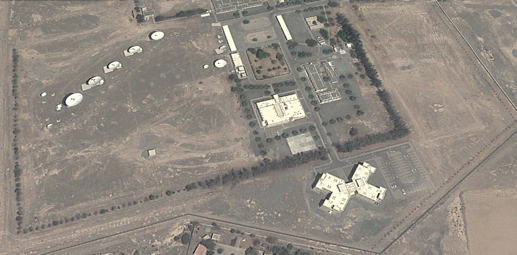
The secret British spy base is part of a programme codenamed “CIRCUIT” and also referred to as Overseas Processing Centre 1 (OPC-1). It is located at Seeb, on the northern coast of Oman, where it taps in to various undersea cables passing through the Strait of Hormuz into the Persian/Arabian Gulf. Seeb is one of a three site GCHQ network in Oman, at locations codenamed “TIMPANI”, “GUITAR” and “CLARINET”. TIMPANI, near the Strait of Hormuz, can monitor Iraqi communications. CLARINET, in the south of Oman, is strategically close to Yemen.

British national telco BT, referred to within GCHQ and the American NSA under the ultra-classified codename “REMEDY”, and Vodafone Cable (which owns the former Cable & Wireless company, aka “GERONTIC”) are the two top earners of secret GCHQ payments running into tens of millions of pounds annually.
The Seeb spy base. Not in your name? My dear boy, that's the whole point

The actual locations of such codenamed “access points” into the worldwide cable backbone are classified 3 levels above Top Secret and labelled “Strap 3”. The true identities of the companies hidden behind codenames such as “REMEDY”, “GERONTIC”, “STREETCAR” or “PINNAGE” are classified one level below this, at “Strap 2”.

After these details were withheld, the government opted not to move against the Guardian newspaper last year for publishing above-top-secret information at the lower level designated “Strap 1”. This included details of the billion-pound interception storage system, Project TEMPORA, which were revealed in 2013 and which have triggered Parliamentary enquiries in Britain and Europe, and cases at the European Court of Human Rights. 

The Guardian was forced to destroy hard drives of leaked information to prevent political embarrassment over extensive commercial arrangements with these and other telecommunications companies who have secretly agreed to tap their own and their customers’ or partners’ overseas cables for the intelligence agency GCHQ. Intelligence chiefs also wished to conceal the identities of countries helping GCHQ and its US partner the NSA by sharing information or providing facilities.

... the intelligence agency annually pays selected companies tens of millions of pounds to run secret teams which install hidden connections which copy customers' data and messages to the spooks’ processing centres. The GCHQ-contracted companies also install optical fibre taps or “probes” into equipment belonging to other companies without their knowledge or consent. Within GCHQ, each company has a special section called a “Sensitive Relationship Team” or SRT.

BT and Vodafone/C&W also operate extensive long distance optical fibre communications networks throughout the UK, installed and paid for by GCHQ, NSA, or by a third and little known UK intelligence support organization called the National Technical Assistance Centre (NTAC).

... every time GCHQ wanted to tap a new international optical fibre cable, engineers from “REMEDY” (BT) would usually be called in to plan where the taps or “probe” would physically be connected to incoming optical fibre cables, and to agree how much BT should be paid. 

The spooks' secret UK access network feeds Internet data from more than 18 submarine cables coming into different parts of Britain either direct to GCHQ in Cheltenham or to its remote processing station at Bude in Cornwall.

Among the cables specifically identified in one document as currently being intercepted or “on cover” are an Irish connection, Hibernia Atlantic, landing in Southport, and three European connections landing at Yarmouth, Dover, and Brighton.

Wednesday, March 19, 2014

Who Really Calls The Shots


Julian Assange: "We Are Headed Towards A Transnational Dystopian Total Surveillance Society" 

Saturday, August 31, 2013

The Surveillance-Marketing Complex


Credit: sweeticons/Shutterstock

By Kevin Drum

Here's a quote that should probably scare you:
"We are all in these Big Data business models."
Why scary? Because the "we" in this case is Silicon Valley and the American intelligence community. As James Risen and Nick Wingfield reported yesterday in the New York Times, the interests of tech companies and the NSA have been converging over the past decade in two ways. 
The first way is fairly prosaic: Lots of Silicon Valley companies are in the business of selling stuff to the NSA: storage hardware, sophisticated communications equipment, data analytics software, and more. But while this may have increased recently, it's not fundamentally new. It's just the latest high-tech twist on the good old military-industrial complex.
But there's a second way that the interests of Fort Meade and Santa Clara County have converged: These days, they're fundamentally in the same business. The NSA calls it surveillance, and all the rest of us just call it spying. Silicon Valley, conversely, wouldn't be caught dead calling it that. They call it "targeted advertising" or "monetizing the social network." But it's pretty much the same thing.
When your local grocery chain gives you a loyalty card, do you think they're doing it in order to make you a loyal customer? Of course not. After all, every other supermarket offers loyalty cards too. So why are they willing to offer such eye-watering discounts if you use one? Because it allows them to track every single purchase you make and dump the information into a gigantic database. That's useful to them, and, more importantly, it's valuable data to sell to others. That's why they want it so badly.
Online, of course, similar things are happening. High-tech marketing firms are busily figuring out ways to merge data from lots of different sources to build a profile of you that would probably put your own mother to shame. Why? Because it's worth a lot of money. Advertisers are willing to pay huge amounts of money to be able to target the 1 percent of prospects who are actually likely to buy their wares, instead of simply blasting their message out to everyone. Target, for example, figured out the shopping habits of pregnant women and used that to create highly effective advertising campaigns aimed at expectant mothers. That's a lucrative market.
Combine that with Facebook likes, Google searches, phone records, pharmacy records, and every other digital trail that all of us leave behind us, and what can't you predict? We don't know yet, but there are sure plenty of people beavering away to find out.
Needless to say, spy agencies have exactly the same goals. They might not be interested in whether you're pregnant—though, then again, they might be—but they're keenly interested in trying to predict future actions based on past events. So when Risen and Wingfield report that Facebook's chief security officer decamped for a job with the NSA a couple of years ago, should we be surprised? Not a bit. They're both in the same business, after all.
We can all decide for ourselves whether we think the NSA should have access to all our phone records. But the surveillance state doesn't end there. Keep in mind that DARPA's first crack at this stuff in the wake of 9/11 was called Total Information Awareness, and its goal was precisely what the name implied: a wide-ranging database that included personal emails, social networks, credit card records, phone calls, medical records, shopping records, travel data, and anything else that the marriage of high tech and modern marketing made possible. TIA got killed after public outcry, but it never really went away. How could it? The merger of public and private spying is just too powerful to ignore.
So even if you're not too worried about NSA's collection of phone records, you'd do well to think about where this is likely to go. There will be other terrorist attacks, and in their aftermath the public will be less likely to object to things like TIA than they were the first time around. After all, we're all used to Facebook spying on us these days. (There's no need to mince words about what they do, is there?) So as scary as a surveillance state may be, it's not the worst thing that could happen. That's because the private sector spies on us too, and they do it so charmingly that not only don't we object, we practically beg them to do more. Instead of a military-industrial complex, we're rapidly moving toward a marriage so perfect that eHarmony could only dream of it: the surveillance-marketing complex.

Thursday, August 29, 2013

An Analysis Of The One Party State


At The Top Of The Political Pyramid, There Is Not Constant Trade Off Between Liberal and Conservative Agendas, There Is Only THE Agenda.


By Morgan Martell


The most widely proliferated truism of American patriotism is that the the two-party system is a beacon of democracy. Surely, our system is better than that of Iran, where presidential candidates must be approved by a religious council, or perhaps that of Venezuela, where the partly state-owned media disseminates propaganda in each election.

Democrats and Republicans are widely different, it seems, at least that is what their hyper-partisan bickering would imply. Bill Clinton must have been an unabashed liberal, otherwise why would the Republicans despise him so much?

But the reality is that Republican and Democrat presidents have followed the same agenda for half a century. The idea that American governance alternates as a sort of give-and-take between liberalism and conservatism is nothing more than a fantasy. I do not discount that there may be serious and significant differences between democrat and republican individuals, many of them Congressman, or perhaps state legislatures. But at the top of the pyramid, where the power to set agendas resides, there is only the Agenda.

It is fascinating how Bill Clinton began his presidential campaign with playing a Saxophone on live television, talking about his foray into Marijuana (although he claimed to have never inhaled), reminiscing about his protest of the Vietnam war, and ended up with perhaps the most reactionary (meaning maintaining the status quo) administration of any president in modern history. And Obama entered the stage as a candidate of change, only to accelerate political elite hegemony faster than any predecessor.

The scope of this article will mostly cover the period from Reagan to present, with a special emphasis on the Clinton and Obama administrations, and will address issue by issue how Democratic and Republican presidents have set the same course on a wide variety of important issues.

Crime

At the end of Reagan's administration, the incarceration rate was 247 per 100,000 citizens. The demand for prison space had been steadily increasing since the War on Drugs began. Under George H.W. Bush the incarceration rate had increased to 332 per 100,000. It is a common misconception that it is Republicans have the more punitive crime policies. Under Clinton, the incarceration rate skyrocketing to 476 per 100,000 over the next 8 years. The Clinton administration gave 30 billion dollars to states to fund their prisons, and under the Violent Crime Control and Law Enforcement Act added 100,000 new police officers. The bill was written by current Vice President Joe Biden. The act also expanded the death penalty to fall under 60 more offenses, including drug trafficking, and eliminated funding for inmate education.

Private prisons flourished under Clinton. The ACLU in 2011 published a fascinating review of the private prison system you can read here. Since 1990, the private prison population has increased by 1600%. The number of private prison systems actually peaked in the year 2000 with 153 facilities.

The policy that began under Reagan and has been flourishing through both Bushes, Clinton and Obama, can only be referred to as 'mass incarceration'. As of 2013, the United States holds more prisoners than any other country in the world, including China, as well as a larger percentage of prisoners per population than any other country. For an even more sobering comparison, consider that the United States has more people imprisoned today than Stalin had under his archipelago of gulags.

Arms Sales

On the campaign trail, Bill Clinton made this promise: “I expect to review our arms sales policy and to take it up with the other major arms sellers of the world as a part of a long-term effort to reduce the proliferation of weapons.”

And then, in some astounding turn of events (or predictable, for those who have been watching closely),United States arms sales doubled in Clinton's first year in office alone.

In 2006, the United Nations convened in order to create a 'comprehensive, legally binding instrument establishing common international standards for the import, export and transfer of conventional arms.' The United States was the only country to vote against the measure. In 2008, Obama signaled that he would change the course from the Bush administration and take steps to limit arms sales internationally. And just like 2 decades earlier, United States arms sales tripled in 2011 By 2012, Obama had ended negotiations on the treaty. Is it any surprise, considering Obama received more campaign donations from the Defense Industry than McCain?

And as of a week ago from the publishing of this article, Obama has begun arming terrorist organizations in Syria.

War

It is another common misconception that during Republican presidencies we have periods of war, and during Democratic presidencies we have periods of peace. Of 'official' wars it is certainly the case that the Gulf War, Afghanistan and Iraq war were begun by H.W. and W. Bush. Though it is important to quantify 'official' because there has not been an official declaration of war since World War II. But Bill Clinton dropped bombs on no less than 4 sovereign countries: Iraq, Serbia, Afghanistan, and Sudan.

Some of his international military endeavors were exceptionally gruesome. My personal favorite (in other terms, the one that disgusts me the most) is the bombing of a pharmaceutical factory in Sudan. It is estimated that tens of thousands of civilians died once the supply of medicine was cut off.

And Clinton was able to get away with maintaining one of the darkest stains on America's soiled history, the full-force economic sanctions against Iraq that began with the first Gulf war and ended after Saddam's fall in 2003. The sanctions killed 567,000 children according to the British Medical Societies Lancet. (Later studies have argued the number 350,000 children to be more accurate, for full transparency).

United Nations ambassador Madeline Albright, when asked about these numbers, coldly stated “The price is worth it.”

Obama's first major act of war was a No-Fly zone over Libya which resulted in the removal of Muammar Gaddafi. The media had a well orchestrated propaganda campaign that garnered significant public support for this act.

His second major act of war was the arming of Syrian rebels mentioned earlier, undoubtedly prolonging the horrific civil war. Some of the groups that form the opposition group are terrorist organizations, which makes one recall the policy of Carter and Reagan arming terrorist groups in Afghanistan under Operation Cyclone.

And this section would be incomplete without mentioning the prolonging of the Afghanistan and Iraq wars, and their extensive use of private contractors.

But the true depths of Obama's war mongering resides in his constant and silent drone war. A policy that started under W. Bush, Obama has expanded the use of drones extensively. He has allowed the usage ofSignature Strikes, whereby drone operators bomb people they do not know, based on movements they find suspicious. Worst of all is the policy of double tapping, bombing the same scene twice after rescuers have come to try and help their fellow citizens. Obama's drones have even bombed funerals.

While the death toll of the Drone war may not be as high as the conventional wars of the Bush family, the moral depravity certainly gives them a run for their money.

Private Military and Intelligence Contractors

In the last section I mentioned Obama's extensive use of private contractors in military and intelligence operations.

It has always been hard to tell exactly how many private contractors are employed by the Federal government, and how many of those are under the umbrella of the Defense Industry. It was under Reagan that the Pentagon's privatization agenda began, and it has continued ever since. An NYU study on the size of government shows that the use of private contractors increased under the Clinton administration by about 25%. It is known that Clinton hired KBR, at the time owned by Halliburton, to build military bases and support troops in Kosovo.

Under Bush, with the Iraq war, was when the use of private contractors skyrocketed. By 2008, the number of private contractors in use in Iraq was 155,000, more than the number of troops, a degree of privatization unprecedented in modern warfare. The public became acquainted with the likes of Blackwater under the Bush administration, with events such as the unprovoked massacres in Baghdad and Fallujah.

I cannot recommend enough the work of investigative journalist Jeremy Scahill regarding Blackwater. If you don't have time for his book, check out his talk on the subject.

During his campaign, Obama promised to cut federal spending on private contractors. It soon became clear, however, that much of the stimulus money would go straight to their pockets. His Afghanistan surge was primarily accomplished through contractors, which made up half of the military forces in the country by 2009. The total number of contractors in Iraq and Afghanistan quickly reached 250,000. Security contractors (i.e. private military forces) increased by over 400% under Obama and represent a quarter of all contractors employed by the Pentagon.

The most shocking use of contractors has only recently been revealed. It turns out that they represent a significant amount of the NSA workforce. 483,000 people are employed by private contractors and have 'Top Secret' access. The potential for illicit spying and extortion represented by these numbers is so high as to reach certainty. This is completely mind-blowing and perhaps the most significant threat the American people face today.

Renditions

By now, everyone is familiar with the CIA's policy of rendition, whereby they send suspected terrorists to be interrogated in foreign countries. The process was used extensively during George W. Bush's administration.

But did you know that the process began under Clinton? This PBS Frontline report confirms that the rendition process began in 1995.

In 2007, Obama wrote an article in Foreign Affairs journal stating: “To build a better, freer world, we must first behave in ways that reflect the decency and aspirations of the American people… This means ending the practices of shipping away prisoners in the dead of night to be tortured in far-off countries, of detaining thousands without charge or trial, of maintaining a network of secret prisons to jail people beyond the reach of the law.”

But by 2013 it has become clear that the process of rendition has continued. The Washington Post has reported on some specific cases and I highly recommend checking out The Rendition Project which has been tracking the global rendition system extensively.

Globalization

A key process in globalization involves removing national sovereignty in favor of trade agreements that favor the rights of corporations. Bill Clinton championed the NAFTA agreement, which among other issues superseded articles in the Mexican constitution, water rights in Canada, and allows corporations to sue nations when they are in violation of the trade act.

Regardless of your opinion on NAFTA and other trade agreements, Obama has taken the concept of corporate power over national sovereignty to a whole new mind-blowing level with the Trans-Pacific Partnership agreement, a trade proposal that we only know about because the documents were leaked to the public. You can read the leaked document here. Why the secrecy? The TPP agreement would bestow radical new powers on corporations, including establishing an international tribunal that would override domestic law and would have the power to issue sanctions against governments for failing to abide by their ruling.

The TPP runs contrary to Obama's statement: "We will not negotiate bilateral trade agreements that stop the government from protecting the environment, food safety, or the health of its citizens; give greater rights to foreign investors than to U.S. investors; require the privatization of our vital public services; or prevent developing country governments from adopting humanitarian licensing policies to improve access to life-saving medications.”

And to me the biggest concern is that Congress was kept in the dark along with American citizens, the treaty was negotiated between the Executive branch and corporate executives.

Congressman Alan Grayson summed it up nicely: “It's all about tying the hands of democratically elected governments, and shunting authority over to the non-elected for the benefit of multinational corporations. It's an assault on democratic government.”

But what about taxes? Gay marriage? Abortion? Marijuana?

The crux of the one-party state issue is that the issues involved are the issues that affect the political elite. Issues like gay marriage and abortion can be likened to a pressure valve: the people are forced to exert tremendous amounts of effort to affect social change, essentially utilizing all of the available activism. The minds of the populace are focused on these issues instead of the problems that are actually effecting their lives, such as predatory banks and the steady erosion of civil liberties. And what is the end result? It isn't even federal politicians that affect gay marriage or abortion in the first place, it is the courts and on a state level. Activists go home happy and pat themselves on the back for their 'symbolic victory' when their newly elected president comments on gay marriage. But what is the tangible change?

An issue such as taxes falls under the same category. Ever since Reagan slashed the top tax bracket, the tax burden has been solidly on the middle class. A few percent bump under Obama does not change this, it is simply another pressure valve. The true one percent are unaffected by a small tax increase, their wealth comes from investments and assets.

This is all part of the illusion. Our political system is designed to make us think we have choices when in reality our voice is limited to a couple issues that are unimportant relative to the big picture.

Conclusion

In no uncertain terms, our democracy is an illusion. It is as real as 'Professional Wrestling'. The two parties have consistently followed the same policies, giving American citizens only the illusion of choice. If you took the records of Clinton and Obama and put them under a Republican name, conservatives would cheer their legacy. It is the vitriol and mud-slinging of politics that contributes most to the illusion; without the constant name calling Obama would have long ago ceased to resemble a liberal. When campaigns are in full swing, candidates will refrain from the biggest gun, such as George W. Bush commuting the sentence of only one of the 151 death row cases sent to his desk as Texas Governor: serial killer Henry Lee Lucas, responsible for between 300 and 600 deaths, never brought up on the campaign trail. And at the end of a campaign candidates will become best friends again, when only days earlier they would refer to each other as harbingers of the apocalypse.

There is no trade-off of liberal and conservative agendas in the Executive branch, as the public is led to believe. Rather, Democrat presidencies are designed to placate the populace and give cover for some of the more covert aspects of The Agenda, such as Obama's continuous erosion of civil liberties.

The political elite understand that American 'democracy' is just a game. At the end of the day, they all follow the same agenda. Who is the 'man behind the curtain?'

Wednesday, August 21, 2013

The Government Is Cracking Down On Privacy Tools!

Now the government's cracking down on privacy tools!
General Keith Alexander (Credit: Reuters/Yuri Gripas)

BY ANDREW LEONARD

Use privacy tools, go directly to jail. OK, that’s not exactly the bombshell revealed by Thursday’s installment of leaked NSA documents, but the truth is close enough for serious discomfort. According to the documents, using privacy tools that encrypt your communications and hide your identity is like waving a red flag in front of the surveillance state bull.
Within minutes of the release of two new documents describing the NSA’s policies on what communications data can be gathered without a warrant, privacy geeks seized upon one particular passage:
In the context of a cryptanalytic effort, maintenance of technical data bases requires retention of all communications that are enciphered or reasonably believed to contain secret meaning, and sufficient duration may consist of any period of time during which encrypted material is subject to, or of use in, cryptanalysis….
In other words, as Cato fellow Julian Sanchez tweeted, if you use encryption to make your communications private, and the NSA discovers that, it can grab your data and hold on to it until it cracks the code.
Julian Sanchez 
@normative
So any encrypted U.S. person communications, once acquired, can be retained indefinitely pending decrypt. Lovely.
It gets worse. Defenders of the NSA’s snooping program have gone to great lengths to assure American citizens that the ability to gather data is restricted to foreign targets. But if the NSA can’t figure out who or where you are, because you’re using privacy tools, it assumes you are a foreign citizen by default.
A person… whose location is unknown will not be treated as a United States person, unless such person can be positively identified as such, or the nature or circumstances of the person’s communications give rise to a reasonable belief that such person is a United States person.
 So to recap, if you use privacy tools that hide your identity, the NSA assumes you are not a U.S. citizen, which gives it the authority to surveil your communications. And the sheer fact that you are encrypting your data in the first place means the government can hold on to that data as long as it wants.
So go ahead! Use that Tor browser and PGP encryption. But make sure to wave hello to the NSA spook watching you when you take your privacy tools out for a spin.
(For more information on the NSA leaked documents, Forbes’ Andy Greenberg has an excellent rundown.)

Sunday, August 18, 2013

The Making Of A Global Security State


The Five Uncontrollable Urges Of A Secrecy-Surveillance World

By Tom Engelhardt

As happens with so much news these days, the Edward Snowden revelations about National Security Agency (NSA) spying and just how far we’ve come in the building of a surveillance state have swept over us 24/7 -- waves of leaksvideos, charges, claims, counterclaims, skullduggery, and government threats.  When a flood sweeps you away, it’s always hard to find a little dry land to survey the extent and nature of the damage.  Here’s my attempt to look beyond the daily drumbeat of this developing story (which, it is promised, will go on for weeks, if not months) and identify five urges essential to understanding the world Edward Snowden has helped us glimpse.   
1. The Urge To Be Global
Corporately speaking, globalization has been ballyhooed since at least the 1990s, but in governmental terms only in the twenty-first century has that globalizing urge fully infected the workings of the American state itself.  It’s become common since 9/11 to speak of a “national security state.”  But if a week of ongoing revelations about NSA surveillance practices has revealed anything, it’s that the term is already grossly outdated.  Based on what we now know, we should be talking about an American global security state. 
Much attention has, understandably enough, been lavished on the phone and other metadata about American citizens that the NSA is now sweeping up and about the ways in which such activities may be abrogating the First and Fourth Amendments of the U.S. Constitution.  Far less attention has been paid to the ways in which the NSA (and other U.S. intelligence outfits) are sweeping up global data in part via the just-revealed Prism and other surveillance programs.
Sometimes, naming practices are revealing in themselves, and the National Security Agency’s key data mining tool, capable in March 2013 of gathering “97 billion pieces of intelligence from computer networks worldwide,” has been named “boundless informant.”  If you want a sense of where the U.S. Intelligence Community imagines itself going, you couldn’t ask for a better hint than that word “boundless.”  It seems that for our spooks, there are, conceptually speaking, no limits left on this planet.
Today, that "community" seeks to put not just the U.S., but the world fully under its penetrating gaze.  By now, the first “heat map” has been published showing where such information is being sucked up from monthly: Iran tops the list (14 billion pieces of intelligence); then come Pakistan (13.5 billion), Jordan (12.7 billion), Egypt (7.6 billion), and India (6.3 billion).  Whether you realize this or not, even for a superpower that has unprecedented numbers of military bases scatteredacross the planet and has divided the world into six military commands, this represents something new under the sun.  The only question is what?
The twentieth century was the century of “totalitarianisms.”  We don’t yet have a name, a term, for the surveillance structures Washington is building in this century, but there can be no question that, whatever the present constraints on the system, “total” has something to do with it and that we are being ushered into a new world. Despite the recent leaks, we still undoubtedly have a very limited picture of just what the present American surveillance world really looks like and what it plans for our future.  One thing is clear, however: the ambitions behind it are staggering and global.
In the classic totalitarian regimes of the previous century, a secret police/surveillance force attempted, via every imaginable method, including informers, wire tappers, torture techniques, imprisonment, and so on to take total control of a national environment, to turn every citizen’s life into the equivalent of an open book, or more accurately a closed, secret file lodged somewhere in that police system.  The most impressive of these efforts, the most global, was the Soviet one simply because the USSR was an imperial power with a set of disparate almost-states -- those SSRs of the Caucasus and Central Asia  -- within its borders, and a series of Eastern European satellite states under its control as well.  None of the twentieth-century totalitarian regimes, however, ever imagined doing the same thing on a genuinely global basis.  There was no way to do so.
Washington’s urge to take control of the global communications environment, lock, stock, and chat room, to gather its “data” -- billions and billions of pieces of it -- and via inconceivably powerful computer systems, mine and arrange it, find patterns in it, and so turn the world into a secret set of connections, represents a remarkable development.  For the first time, a great power wants to know, up close and personal, not just what its own citizens are doing, but those of distant lands as well: who they are communicating with, and how, and why, and what they are buying, and where they are travelling, and who they are bumping into (online and over the phone).
Until recently, once you left the environs of science fiction, that was simply beyond imagining.  You could certainly find precursors for such a development in, for instance, the Cold War intelligence community’s urge to create a global satellite system that would bring every inch of the planet under a new kind of surveillance regime, that would map it thoroughly and identify what was being mappeddown to the square inch, but nothing so globally up close and personal.
The next two urges are intertwined in such a way that they might be thought as a single category: your codes and theirs.
2. The Urge To Make You Transparent
The urge to possess you, or everything that can be known about you, has clearly taken possession of our global security state.  With this, it’s become increasingly apparent, go other disturbing trends.  Take something seemingly unrelated: the recent Supreme Court decision that allows the police to take a DNA swab from an arrestee (if the crime he or she is charged with is “serious”).  Theoretically, this is being done for “identification” purposes, but in fact it's already being put to other uses entirely, especially in the solving of separate crimes.
If you stop to think about it, this development, in turn, represents a remarkable new level of state intrusion on private life, on your self.  It means that, for the first time, in a sure-to-widen set of circumstances, the state increasingly has access not just -- as with NSA surveillance -- to your Internet codes and modes of communication, but to your most basic code of all, your DNA.  As Justice Antonin Scalia put it in his dissent in the case, “Make no mistake about it: As an entirely predictable consequence of today’s decision, your DNA can be taken and entered into a national DNA database if you are ever arrested, rightly or wrongly, and for whatever reason.”  Can global DNA databases be far behind?
If your DNA becomes the possession of the state, then you are a transparent human being at the most basic level imaginable.  At every level, however, the pattern, the trend, the direction is the same (and it’s the same whether you’re talking about the government or giant corporations).  Increasingly, access to you, your codes, your communications, your purchases, your credit card transactions, your location, your travels, your exchanges with friends, your tastes, your likes and dislikes is what’s wanted -- for what’s called your “safety” in the case of government and your business in the case of corporations.
Both want access to everything that can be known about you, because who knows until later what may prove the crucial piece of information to uncover a terrorist network or lure in a new network of customers.  They want everything, at least, that can be run through a system of massive computers and sorted into patterns of various potentially useful kinds.  You are to be, in this sense, the transparent man or transparent woman.  Your acts, your life patterns, your rights, your codes are to be an open book to them -- and increasingly a closed book to you.  You are to be their secret and that “you” is an ever more global one.
3. The Urge To Make Themselves Opaque
With this goes another reality.  They are to become ever less accessible, ever more impenetrable, ever less knowable to you (except in the forms in which they would prefer you to know them).  None of their codes or secrets are to be accessed by you on pain of imprisonment.  Everything in the government -- which once was thought to be “your” government -- is increasingly disappearing into a professional universe of secrecy.  In 2011, the last year for which figures are available, the government classified 92 million documents.  And they did so on the same principle that they use in collecting seemingly meaningless or harmless information from you: that only in retrospect can anyone know whether a benign-looking document might prove anything but.  Better to deny access to everything.

In the process, they are finding new ways of imposing silence on you, even when it comes to yourself.  Since 2001, for instance, it has become possible for the FBI to present you with aNational Security Letter which forces you to turn over information to them, but far more strikingly gags you from ever mentioning publicly that you got such a letter.  Those who have received such letters (and 15,000 of them were issued in 2012) are legally enjoined from discussing or even acknowledging what’s happening to them; their lives, that is, are no longer theirs to discuss.  If that isn’t Orwellian, what is?
President Obama offered this reassurance in the wake of the Snowden leaks: the National Security Agency, he insisted, is operating under the supervision of all three branches of the government.  In fact, the opposite could be said to be true.  All three branches, especially in their oversight roles, have been brought within the penumbra of secrecy of the global security state and so effectively coopted or muzzled.  This is obviously true with our ex-professor of Constitutional law and the executive branch he presides over, which has in recent years been ramping up its own secret operations.
When it comes to Congress, the people’s representatives who are to perform oversight on the secret world have been presented with the equivalent of National Security Letters; that is, when let in on some of the secrets of that world, they find they can’t discuss them, can’t tell the American people about them, can’t openly debate them in Congress.  In public sessions with Congress, we now know that those who run our most secret outfits, if pushed to the wall by difficult questions, will as a concession respond in the “least untruthful manner” possible, as Director of National Intelligence James Clapper put it last week. 
Given the secret world’s control over Congress, representatives who are horrified by what they’ve learned about our government’s secrecy and surveillance practices, like Democratic Senators Ron Wyden and Mark Udall, can only hint at their worries and fears.  They can, in essence, wink at you, signal to you in obscure ways that something is out of whack, but they can’t tell you directly. Secrecy, after all.
Similarly, the judiciary, that third branch of government and other body of oversight, has, in the twenty-first century, been fully welcomed into the global security state’s atmosphere of total secrecy.  So when the surveillance crews go to the judiciary for permission to listen in on the world, they go to a secret court, a Foreign Intelligence Surveillance (FISA) court, locked within that secret world.  It, in turn, notoriously rubberstamps whatever it is they want to do, evidently offering no resistance whatsoever to their desires.  (Of the 6,556 electronic surveillance requests submitted to the court in Obama’s first term in office, for instance, only one was denied.)  In addition, unlike any other court in America, we, the American people, the transparent and ignorant public, can know next to nothing about it.  And you know perfectly well why: the overriding needs of secrecy.
What, though, is the point of “oversight” if you can’t do anything other than what that secret world wants you to do?
We are, in other words, increasingly open to them and they are increasingly closed to us. 
4. The Urge To Expand
As we’ve known at least since Dana Priest and William Arkin published their stunning series, “Top Secret America,” in the Washington Post in 2010, the U.S. Intelligence Community has expanded post-9/11 to levels unimaginable even in the Cold War era.  Then, of course, it faced another superpower, not a small set of jihadis largely located in the backlands of the planet.  It now exists on, as Arkin says, an “industrial scale.”  And its urge to continue growing, to build yet more structures for surveillance, including a vast $2 billion NSA repository in Bluffdale, Utah, that will be capable of holding an almost unimaginable yottabyte of data, is increasingly written into its DNA.
For this vast, restless, endless expansion of surveillance of every sort and at every level, for thenearly half-million or possibly far more private contractors, aka “digital Blackwater,” now in the government surveillance business -- about 70% of the national intelligence budget reportedly goes to the private sector these days -- and the nearly five million Americans with security clearances (1.4 million with top security clearances, more than a third of them private contractors), the official explanation is "terrorism."  It matters little that terrorism as a phenomenon is one of the lesser dangers Americans face in their daily lives and that, for some of the larger ones, ranging from food-borne illnesses to cars, guns, and what’s now called “extreme weather,” no one would think about building vast bureaucratic structures shrouded in secrecy, funded to the hilt, and offering Americans promises of ultimate safety.
Terrorism certainly rears its ugly head from time to time and there’s no question that the fear of some operation getting through the vast U.S. security net drives the employees of our global security state.  As an explanation for the phenomenal growth of that state, however, it simply doesn’t hold water.  In truth, compared to the previous century, U.S. enemies are remarkably scarce on this planet. So forget the official explanation and imagine our global-security-state-in-the-making in the grips of a kind of compulsive disorder in which the urge to go global, make the most private information of the citizen everywhere the property of the American state, and expand surveillance endlessly simply trumps any other way of doing things.
In other words, they can’t help themselves.  The process, the phenomenon, has them by the throat, so much so that they can imagine no other way of being.  In this mood, they are paving the way for a new global security -- or rather insecurity -- world.  They are, for instance, hiking spending on “cybersecurity,” have already secretly launched the planet’s first cyberwar, are planning for more of them, intend to dominate the future cyber-landscape in a staggering fashion, continue to gather global data of every sort on a massive scale, and more generally are acting in ways that they would consider criminal if other countries engaged in them.
5. The Urge To Leak
The massive leaks of documents by Bradley Manning and Edward Snowden have few precedents in American history.  Daniel Ellsberg’s Pentagon Papers leak is their only obvious predecessor.  They are not, however, happenstances of our moment.  They are signs of what’s to come.  If, in surveillance terms, the urge to go global and impose ultimate secrecy on both the state’s secrets and yours, to prosecute whistleblowers to the maximum (at this point usually via the Espionage Act or, in the case of Manning, via the charge of “aiding the enemy,” and with calls of “treason” already in the air when it comes to Snowden), it’s natural that the urge to leak will rise as well.
If the surveillance state has reached an industrial level of operations, and ever more secrets are being brought into computer systems, then vast troves of secrets exist to be revealed, already cached, organized, and ready for the plucking.  If the security state itself goes global, then the urge to leak will go global, too.
In fact, it already has.  It’s easy to forget that WikiLeaks was originally created not just for American secrets but any secrets.  Similarly, Manning uploaded his vast trove of secrets from Iraq, and Snowden, who had already traveled the world in the service of secrecy, leaked to an American columnist living in Brazil and writing for a British newspaper.  His flight to Hong Kong and dream ofIcelandic citizenship could be considered another version of the globalizing impulse. 
Rest assured, they will not be the last.  An all-enveloping atmosphere of secrecy is not a natural state of being.  Just look at us individually.  We love to tell stories about each other.  Gossiping is one of the most basic of human activities.  Revealing what others don’t know is an essential urge.  The urge, that is, to open it all up is at least as powerful as the urge to shut it all down.
So in our age, considering the gigantism of the U.S. surveillance and intelligence apparatus and the secrets it holds, it’s a given that the leak, too, will become more gigantic, that leaked documents will multiply in droves, and that resistance to regimes of secrecy and the invasion of private life that goes with them will also become more global.  It’s hard from within the U.S. to imagine the shock in Pakistan, or Germany, or India, on discovering that your private life may now be the property of the U.S. government.  (Imagine for a second the reaction here if Snowden had revealed that the Pakistani or Iranian or Chinese government was gathering and storing vast quantities of private emails, texts, phone calls, and credit card transactions from American citizens.  The uproar would have been staggering.)
As a result of all this, we face a strangely contradictory future in which ever more draconian regimes of secrecy will confront the urge for ever greater transparency.  President Obama came into officepromising a “sunshine” administration that would open the workings of the government to the American people.  He didn’t deliver, but Bradley Manning, Edward Snowden, and other leakers have, and no matter how difficult the government makes it to leak or how hard it cracks down on leakers, the urge is almost as unstoppable as the urge not to be your government’s property.
You may have secrets, but you are not a secret -- and you know it.
Tom Engelhardt, co-founder of the American Empire Project and author of The United States of Fear as well as a history of the Cold War, The End of Victory Culture (just published in aKindle edition), runs the Nation Institute's TomDispatch.com. His latest book, co-authored with Nick Turse, is Terminator Planet: The First History of Drone Warfare, 2001-2050
Follow TomDispatch on Twitter and join us on Facebook or Tumblr. Check out the newest Dispatch book, Nick Turse’s The Changing Face of Empire: Special Ops, Drones, Proxy Fighters, Secret Bases, and Cyberwarfare.
Copyright 2013 Tom Engelhardt