Showing posts with label Obama. Show all posts

Saturday, December 27, 2014

The Peacemaker and The Warmonger


Boxer Muhammad Ali went to jail rather than be drafted in the US Army to fight in Vietnam: 

“My conscious won’t let me go shoot my brother, or some darker people, or some poor hungry people in the mud for big powerful America. And shoot them for what? They never called me nigger, they never lynched me, they didn’t put no dogs on me, they didn’t rob me of my nationality, rape and kill my mother and father… Shoot them for what? …How can I shoot them poor people, Just take me to jail.”
What Muhammad Ali said about the Vietnam war could be applied just as much to the wars Barack Obama is fighting in Iraq, Afghanistan, Pakistan and elsewhere.

Wednesday, October 01, 2014

Preventing Civilian Casualties Doesn't Cover Iraq & Syria


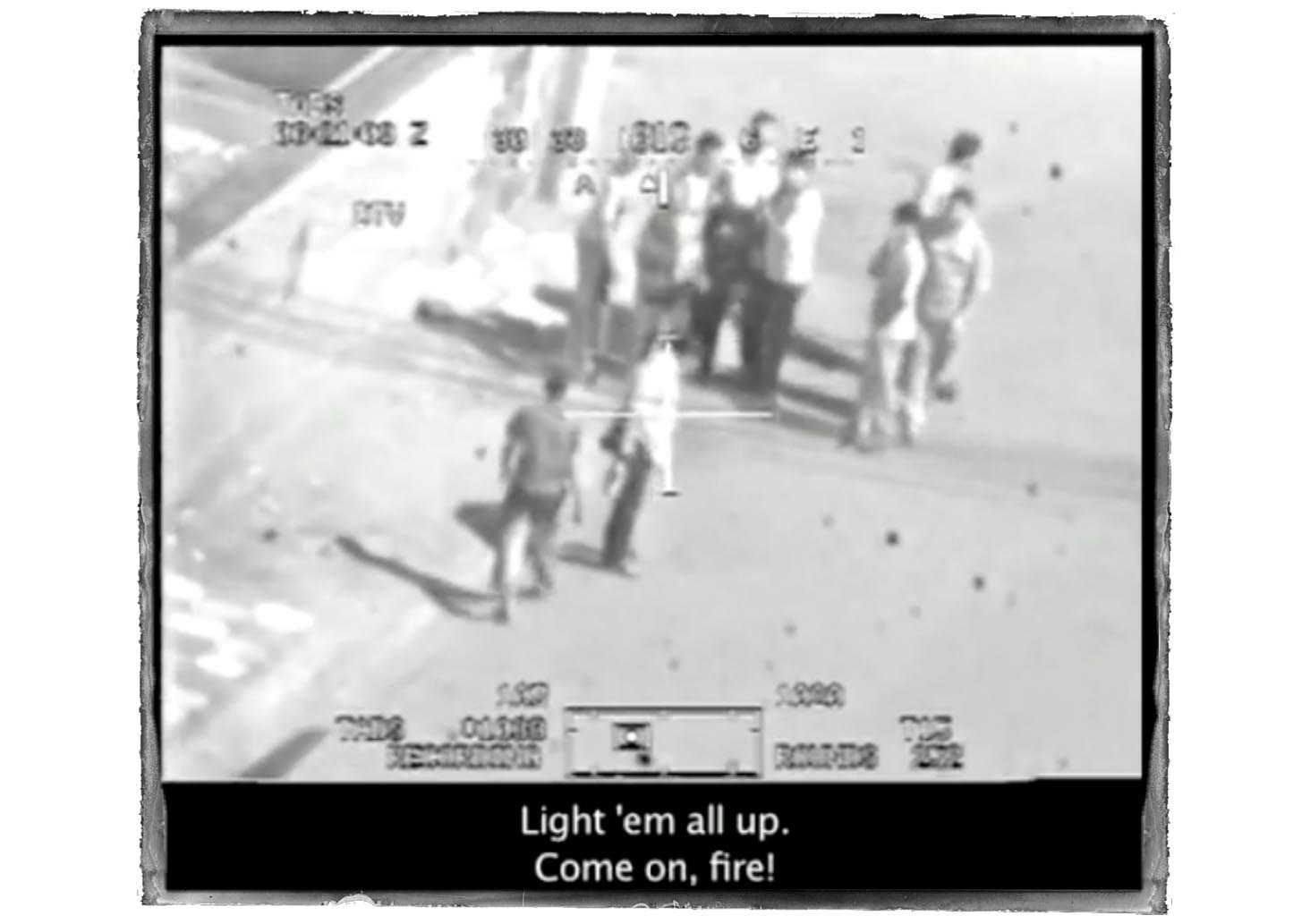
Above image: U.S. Apache helicopters killing Iraqi civilians after the U.S. had occupied that nation.

The White House has acknowledged for the first time that strict standards President Obama imposed last year to prevent civilian deaths from U.S. drone strikes will not apply to U.S. military operations in Syria and Iraq.
A White House statement to Yahoo News confirming the looser policy came in response to questions about reports that as many as a dozen civilians, including women and young children, were killed when a Tomahawk missile struck the village of Kafr Daryan in Syria's Idlib province on the morning of Sept. 23.
At a briefing for members and staffers of the House Foreign Affairs Committee late last week, Syrian rebel commanders described women and children being hauled from the rubble after a cruise missile destroyed a home for displaced civilians. Images of badly injured children also appeared on YouTube, helping to fuel anti-U.S. protests in a number of Syrian villages last week.
“They were carrying bodies out the rubble. … I saw seven or eight ambulances coming out of there,” said Abu Abdo Salabman, a political member of one of the Free Syria Army factions, who attended the briefing for Foreign Affairs Committee members and staff.


Residents inspect damaged buildings in what activists say was a U.S. strike, in Kfredrian, Idlib province September 23, 2014. (REUTERS/Abdalghne Karoof)

Residents inspect damaged buildings in what activists say was a U.S. strike, in Kfredrian, Idlib province September …
Hayden said that a much-publicized White House policy that President Obama announced last year barring U.S. drone strikes unless there is a “near certainty” there will be no civilian casualties does not cover the current U.S. air strikes in Syria and Iraq.


The “near certainty” standard was intended to apply “only when we take direct action ‘outside areas of active hostilities,’ as we noted at the time,” Hayden said in an email. “That description — outside areas of active hostilities — simply does not fit what we are seeing on the ground in Iraq and Syria right now.” 
The laws of armed conflict prohibit the deliberate targeting of civilian areas and require armed forces to take precautions to prevent inadvertent civilian deaths as much as possible.
But one former Obama administration official said the new White House statement raises questions about how the U.S. intends to proceed in the conflict in Syria and Iraq, and under what legal authorities.


View gallery
.
A man inspects a damaged site in what activists say was a U.S. strike, in Kfredrian, Idlib province September 23, 2014. (REUTERS/Abdalghne Karoof)

A man inspects a damaged site in what activists say was a U.S. strike, in Kfredrian, Idlib province September 23, …


“They seem to be creating this grey zone” for the conflict, said Harold Koh, who served as the State Department’s top lawyer during President Obama’s first term. “If we’re not applying the strict rules [to prevent civilian casualties] to Syria and Iraq, then they are of relatively limited value."
The issue arose during last week’s briefing for two House Foreign Affairs Committee members and two staffers when rebel leaders associated with factions of the Free Syria Army complained about the civilian deaths — and the fact that the targets were in territory controlled by the Nusra Front, a sometimes ally of the U.S.-backed rebels in its war with the Islamic State and the Syrian regime.
But at least one of the House members present, Rep. Adam Kinzinger, an Illinois Republican who supports stronger U.S. action in Syria, said he was not overly concerned
“I did hear them say there were civilian casualties, but I didn’t get details,” Kinzinger said in an interview with Yahoo News. “But nothing is perfect,” and whatever civilian deaths resulted from the U.S. strikes are “much less than the brutality of the Assad regime.”
Source: Yahoo News

Monday, September 29, 2014

Help Obama Kickstart World War 3


Our president can’t launch into another war without you. And remember: when we voted for him in 2008 and 2012, we promised to support him no matter what.
And America is dead-ass broke, so our goal is to raise $1.6 trillion on behalf of the U.S. government.
That’s where you come in.
Even a small donation will make all the difference.
World War III is a very important, very progressive war that Obama tells me is very important. So it must be.
World War III is not going to be like those other Republican wars fought on just 1 percent of the world; this war is going to be fought on 99 percent of the world.
It will be everywhere: Russia, China, Africa, Cincinnati, your favorite brunch spot — the one with those kickass ranchero breakfast burritos.
As an incentive, those pledging $25 a piece of rubble from a war-torn Middle Eastern country, kissed by Sen. Lindsey Graham, while $100 donations gets donors a day pass to leave their local refugee camp.
It’ll be all over Twitter, Facebook, Vine, Pinterest, and whatever eventually replaces Pinterest, and I mean, just think of all the hilarious skits we can make of cats reacting to their owners’ homes being obliterated,” the video says. Lots of shock, but tons of awww.
Ten dollars gets one a “shout out” on social media. In fact, the video promises that World War III will be the most social media-focused war in history.
So please, help us reach our goal of $1.6 trillion so we can make World War III a reality. Why? Because Obama.
Let’s make World War 3 a reality!
By The Second City Network

Monday, May 05, 2014

American Death Spiral In The Middle East


President Obama speaking with Iran’s President Hassan Rouhani. (Photo: White House photo by Pete Souza)

A Field Guide to Losing Friends, Influencing No One, and Alienating the Middle East (or How Obama’s Washington Is the Rodney Dangerfield of the Region)

By Bob Dreyfuss

Put in context, the simultaneous raids in Libya and Somalia last month, targeting an alleged al-Qaeda fugitive and an alleged kingpin of the al-Shabab Islamist movement, were less a sign of America’s awesome might than two minor exceptions that proved an emerging rule: namely, that the power, prestige, and influence of the United States in the broader Middle East and its ability to shape events there is in a death spiral.
Twelve years after the U.S. invaded Afghanistan to topple the Taliban and a decade after the misguided invasion of Iraq -- both designed to consolidate and expand America’s regional clout by removing adversaries -- Washington’s actual standing in country after country, including its chief allies in the region, has never been weaker. Though President Obama can order raids virtually anywhere using Special Operations forces, and though he can strike willy-nilly in targeted killing actions by calling in the Predator and Reaper drones, he has become the Rodney Dangerfield of the Middle East. Not only does no one there respect the United States, but no one really fears it, either -- and increasingly, no one pays it any mind at all.
There are plenty of reasons why America’s previously unchallenged hegemony in the Middle East is in free fall. The disastrous invasions of Afghanistan and Iraq generated anti-American fervor in the streets and in the elites. America’s economic crisis since 2008 has convinced many that the United States no longer has the wherewithal to sustain an imperial presence. The Arab Spring, for all its ups and downs, has challenged the status quo everywhere, leading to enormous uncertainty while empowering political forces unwilling to march in lockstep with Washington. In addition, oil-consuming nations like China and India have become more engaged with their suppliers, including Saudi Arabia, Iran, and Iraq. The result: throughout the region, things are fast becoming unglued for the United States.
Its two closest allies, Israel and Saudi Arabia, are sullenly hostile, routinely ignore Obama’s advice, and openly oppose American policies. Iraq and Afghanistan, one formerly occupied and one about to be evacuated, are led, respectively, by Prime Minister Nouri al-Maliki, an inflexible sectarian Shiite closely tied to Iran, and President Hamid Karzai, a corrupt, mercurial leader who periodically threatens to join the Taliban. In Egypt, three successive regimes -- those of President Hosni Mubarak, Mohammad Morsi of the Muslim Brotherhood, and the chieftains of the July 2013 military coup -- have insouciantly flouted U.S. wishes.
Turkey, ostensibly a NATO ally but led by a quirky Islamist, is miffed over Obama’s back-and-forth policy in Syria and has shocked the U.S. by deciding to buy a non-NATO-compatible missile defense system from China. Libya, Somalia, and Yemen have little or no government at all. They have essentially devolved into a mosaic of armed gangs, many implacably opposed to the United States.
This downward spiral has hardly escaped attention. In a recent address to the National Council on U.S.-Arab Relations, Chas Freeman, the former American ambassador to Saudi Arabia, described it in some detail. “We have lost intellectual command and practical control of the many situations unfolding there,” said Freeman, whose nomination by Obama in 2009 to serve as head of the National Intelligence Council was shot down by the Israel Lobby. “We must acknowledge the reality that we no longer have or can expect to have the clout we once did in the region.”
In an editorial on October 29th, the New York Times ruefully concluded: “It is not every day that America finds itself facing open rebellion from its allies, yet that is what is happening with Saudi Arabia, Turkey, and Israel.” And in a front-page story on the administration's internal deliberations, the Times’s Mark Landler reported that, over the summer, the White House had decided to scale back its role in the Middle East because many objectives “lie outside [its] reach,” and henceforth would adopt a “more modest strategy” in the region.
Perhaps the most profound irony embedded in Washington’s current predicament is this: Iran, for decades the supposed epicenter of anti-Americanism in the region, is the country where the United States has perhaps its last opportunity to salvage its position. If Washington and Tehran can negotiate a détente -- and it’s a big if, given the domestic political power of hawks in both countries -- that accord might go a long way toward stabilizing Washington’s regional credibility.
Debacle in Syria
Let’s begin our survey of America’s Greater Middle Eastern fecklessness with Exhibit A: Syria. It is there, where a movement to oust President Bashar al-Assad devolved into a civil war, that the United States has demonstrated its utter inability to guide events. Back in the summer of 2011 -- at the very dawn of the conflict -- Obama demanded that Assad step down.  There was only one problem: short of an Iraq-style invasion of Syria, he had no power to make that happen. Assad promptly called his bluff, escalated the conflict, and rallied support from Russia and Iran. Obama’s clarion call for his resignation only made things worse by convincing Syrian rebels that the United States would come to their aid.
A year later, Obama drew a “red line” in the sand, suggesting that any use of chemical weapons by Syrian forces would precipitate a U.S. military response. Again Assad ignored him, and many hundreds of civilians were gassed to death in multiple uses of the dreaded weapons.
The crowning catastrophe of Obama’s Syria policy came when he threatened a devastating strike on Assad’s military facilities using Tomahawk cruise missiles and other weaponry. Instead of finding himself leading a George W. Bush-style “coalition of the willing” with domestic support, Obama watched as allies scattered, including the usually reliable Britishand the Arab League. At home, political support was nearly nil and evaporated from there. Polls showed Americans overwhelmingly opposed to a war with or attack on Syria.
When, in desperation, the president appealed to Congress for a resolution to authorize the use of military force against that country, the White House found (to its surprise) that Congress, which normally rubber-stamps such proposals, would have none of it. Paralyzed, reluctant to choose between backing down and striking Syria by presidential fiat, Obama was rescued in humiliating fashion by a proposal from Syria’s chief ally, Russia, to dismantle and destroy that country’s chemical weapons arsenal.
Adding insult to injury, as Secretary of State John Kerry scrambles to organize a long-postponed peace conference in Geneva aimed at reaching a political settlement of the civil war, he is faced with a sad paradox: while the Syrian government has agreed to attend the Geneva meeting, also sponsored by Russia, America’s allies, the anti-Assad rebels, haveflatly refused to go.
Laughingstock in Egypt
Don’t think for a second that Washington’s ineffectiveness stops with the ongoing Syrian fiasco.
Next door, in a country whose government was installed by the United States after the 2003 invasion, the Obama administration notoriously failed to convince the Iraqis to allow even a small contingent of American troops to remain there past 2011. Since then, that country has moved ever more firmly into Iran’s orbit and has virtually broken with Washington over Syria.
Since the start of the civil war in Syria, Shiite-led Iraq has joined Shiite Iran in supporting Assad, whose ruling minority Alawite sect is an offshoot of Shiism. There have beenwidespread reports that pro-Assad Iraqi Shiite militias are traveling to Syria, presumably with the support or at least acquiescence of the government. Ignoring Washington’s entreaties, it has also allowed Iran to conduct a virtual Berlin Airlift-style aerial resupply effort for Syria’s armed forces through Iraqi air space. Last month, in an appearance before the Council on Foreign Relations in New York during the United Nations General Assembly session, Iraqi Foreign Minister Hoshyar Zebari undiplomatically warned Obama that his government stands against the U.S. decision -- taken in a secret presidential finding in April and only made public last summer -- to provide arms to Syria’s rebels. (“We oppose providing military assistance to any [Syrian] rebel groups.”)
Meanwhile, Washington is also flailing in its policy toward Egypt, where the Obama administration has been singularly hapless.  In a rare feat, it has managed to anger and alienate every conceivable faction in that politically divided country. In July, when Egypt’s military ousted President Mohammad Morsi and violently clamped down on the Muslim Brotherhood, the Obama administration made itself look ridiculous to Egyptians (and to the rest of the Middle East) by refusing to call what happened a coup d’état, since under U.S. law that would have meant suspending aid to the Egyptian military.
As it happened, however, American aid figured little in the calculations of Egypt’s new military leaders. The reason was simple enough: Saudi Arabia and the Arab states of the Persian Gulf, bitter opponents of the Morsi government, applauded the coup and poured at least $12 billion in cash into the country’s near-empty coffers.  In the end, making no one happy, the administration tried to split the difference: Obama declared that he would suspend the delivery of some big-ticket military items like Apache attack helicopters, Harpoon missiles, M1-A1 tank parts, and F-16 fighter planes, but let other aid to the military continue, including counterterrorism assistance and the sale of border security items. Such a split decision only served to underscore the administration’s lack of leverage in Cairo. Meanwhile, there arereports that Egypt’s new rulers may turn to Russia for arms in open defiance of a horrified Washington’s wishes.
Saudi and Israeli Punching Bag
The most surprising defection from the pro-American coalition in the Middle East is, however, Saudi Arabia. In part, that kingdom’s erratic behavior may result from a growing awareness among its ultraconservative, kleptocratic princelings that they face an increasingly uncertain future. Christopher Davidson’s new bookAfter the Sheikhs: The Coming Collapse of the Gulf Monarchies, outlines the many pressures building on the country.
One significant cause of instability, claims Davidson, is the “existence of substantial Western military bases on the Arabian Peninsula, [which are considered] an affront to Islam and to national sovereignty.” For decades, such an American military presence in the region provided a security blanket for the Saudi royals, making the country a virtual U.S. protectorate. Now, amid the turmoil that has followed the war in Iraq, the Arab Spring, and the rise of an assertive Iran, Saudi Arabia isn’t sure which way to turn, or whether the United States is friend or foe.
Since 2003, the Saudi rulers have found themselves increasingly unhappy with American policy. Riyadh, the area’s chief Sunni power, was apoplectic when the United States toppled Iraq’s Sunni leader Saddam Hussein and allowed Iran to vastly increase its influence in Baghdad. In 2011, the Saudi royal family blamed Washington for not doing more to prevent the collapse of the conservative and pro-Saudi Mubarak government in Egypt.
Now, the Saudis are on the verge of a complete break over Washington’s policies toward Syria and Iran. As the chief backers of the rebels in Syria, they were dismayed when Obama chose not to bomb military sites around Damascus. Because it views Iran through the lens of a regional Sunni-Shiite struggle for dominance, it is no less dismayed by the possible emergence of a U.S.-Iran accord from renewed negotiations over that country’s nuclear program.
To express its pique, its foreign minister abruptly canceled his address to the United Nations General Assembly in September, shocking U.N. members. Then, adding insult to injury, Saudi Arabia turned down a prestigious seat on the Security Council, a post for which it had long campaigned. “Upset at President Barack Obama's policies on Iran and Syria,” reported Reuters, “members of Saudi Arabia's ruling family are threatening a rift with the United States that could take the alliance between Washington and the kingdom to its lowest point in years.”
That news service quoted Saudi Arabia’s intelligence chief, Prince Bandar bin Sultan, as saying that his country was on the verge of a “major shift” in its relations with the U.S. Former head of Saudi intelligence Prince Turki al-Faisal lambasted America’s Syria policy this way: “The current charade of international control over Bashar's chemical arsenal would be funny if it were not so blatantly perfidious. [It is] designed not only to give Mr. Obama an opportunity to back down [from military strikes], but also to help Assad to butcher his people.”
This is shocking stuff from America’s second most reliable ally in the region. As for reliable ally number one, Israeli Prime Minister Benjamin Netanyahu has visibly decided to be anything but a cooperative partner in the region, making Obama’s job more difficult at every turn. Since 2009, he has gleefully defied the American president, starting with his refusal to impose a freeze on illegal settlements in the occupied West Bank when specifically asked to do so by the president at the start of his first term. Meanwhile, most of the world has spent the past half-decade on tenterhooks over the possibility that his country might actually launch a much-threatened military strike on Iran’s nuclear facilities.
Since Hassan Rouhani was elected president of Iran and indicated his interest in reorienting policy to make a deal with the Western powers over its nuclear program, Israeli statements have become ever more shrill. In a September speech to the U.N. General Assembly, for instance, Netanyahu rolled out extreme rhetoric, claiming that Israel is “challenged by a nuclear-armed Iran that seeks our destruction.” This despite the fact that Iran possesses no nuclear weapons, has enriched not an ounce of uranium to weapons-grade level, and has probably not mastered the technology to manufacture a bomb. According to American intelligence reports, it has not yet even militarized its nuclear research.
Netanyahu’s speech was so full of hyperbole that observers concluded Israel was isolating itself from the rest of the world. “He was so anxious to make everything look as negative as possible he actually pushed the limits of credibility,” said Gary Sick, a former senior official in the Carter administration and an Iran expert. “He did himself harm by his exaggerations.”
Iran: Obama’s Ironic Beacon of Hope
Both Israel and Saudi Arabia are fearful that the Middle Eastern balance of power could be tipped against them if the United States and Iran are able to strike a deal. Seeking to throw the proverbial monkey wrench into the talks between Iran, the U.S., and the P5+1 powers (the permanent members of the U.N. security Council plus Germany), Israel has put forward a series of demands that go far beyond anything Iran would accept, or that the other countries would go along with. Before supporting the removal of international economic sanctions against Iran, Israel wants that country to suspend all enrichment of uranium, shut down its nuclear facilities, not be allowed any centrifuges to enrich uranium, abandon the heavy-water plant it is constructing to produce plutonium, permanently close its fortified underground installation at Fordo, and ship its stockpile of enriched uranium out of the country.
In contrast, it’s widely believed that the United States is ready to allow Iran to continue to enrich uranium, maintain some of its existing facilities, and retain a partial stockpile of enriched uranium for fuel under stricter and more intrusive inspection by the International Atomic Energy Agency.
Ironically, a U.S.-Iran détente is the one thing that could slow down or reverse the death spiral of American influence in the region. Iran, for instance, could be helpful in convincing President Assad of Syria to leave office in 2014, in advance of elections there, if radical Sunni Islamic organizations, including allies of al-Qaeda, are suppressed. Enormously influential in Afghanistan, Iran could also help stabilize that country after the departure of U.S. combat forces in 2014. And it could be enlisted to work alongside the United States and regional powers to stabilize Iraq.
More broadly, a U.S.-Iran entente might lead to a gradual de-escalation of the U.S. military presence in the Persian Gulf, including its huge naval forces, bases, and other facilities in Qatar, Bahrain, and Kuwait. It’s even conceivable that Iran could be persuaded to join other regional and global powers in seeking a just and lasting negotiated deal between Israel and the Palestinians. The United States and Iran have a number of common interests, including opposing al-Qaeda-style terrorism and cracking down on drug smuggling.
Of course, such a deal will be exceedingly difficult to nail down, if for no other reason than that the hardliners in both countries are determined to prevent it.
Right now, imagine the Obama administration as one of those vaudeville acts that keep a dozen plates spinning atop vibrating poles.  At just this moment in the Middle East, those “plates” are tipping in every direction. There’s still time to prevent them all from crashing to the ground, but it would take a masterful effort from the White House -- and it’s far from clear that anyone there is up to the task.

Tuesday, September 10, 2013

A Military Coup Against US President Obama


This animation applies the Egyptian military coup model to America, where the Pentagon intervenes to back a fabricated "popular demand" and removes the legal and democratically elected president.

"What do you call this? Yes, a brutal military coup ad a democratic nightmare. Why call it anything different when it takes place in Egypt. Wake up human race. It's time to respect every vote. Support Egypt. Support democracy."

Wednesday, August 28, 2013

US Covert Actions In Pakistan, Yemen and Somalia


By Jack Serle and Chris Woods

Bureau data suggests the CIA is killing fewer people in each strike in Pakistan.
Lack of official transparency means it remains unclear who is carrying out strikes in Yemen.
No reports of US operations in Somalia but al Shabaab continues to launch attacks.
Pakistan
June 2013 actions
Total CIA strikes in June: 1
Total killed in US strikes in June: 7-9, of whom 0 were reportedly civilians

All actions 2004 – June 30 2013
Total Obama strikes: 318
Total US strikes since 2004: 370
Total reported killed: 2,548-3,549
Civilians reported killed: 411-890
Children reported killed: 168-197
Total reported injured: 1,177-1,480
For the Bureau’s full Pakistan databases click here.

A single CIA drone strike hit Pakistan in June. The attack, on June 7, killed seven including Mutaqi(aka Bahadar Khan), described by some sources as a ‘key Pakistan Taliban commander’.
The attack came two days after new prime minister Nawaz Sharif used his inaugural address to demand an end to US drone strikes. After the attack, the Ministry of Foreign Affairs summoned deputy US ambassador Richard Hoagland to protest.
Tensions in the region continue to grow after the killing of Pakistan Taliban (TTP) deputy leader Wali Ur Rehman in a drone attack in May hardened the stance of the militant group. Rehman’s death dashed hopes of peace talks between the militant group and Pakistan authorities in Islamabad. The TTP has since claimed that a spate of bloody attacks were in retaliation for Rehman’s death, including the murder of ten climbers and their guide in the mountainous north of the country.
While peace negotiations have faltered in Pakistan, across the border the US is trying to negotiate peace talks with the Afghan Taliban. The militant group opened its political office in Qatar – a move that provoked a visceral response from the Afghan government.
Six-monthly trendsMuch has been written about the steep decline in the number of US drone strikes in Pakistan: strikes are now at their lowest level since early 2008. The number of reported civilian deaths is also at an all-time low, a trend first high-lighted by the Bureau in 2012.
The average number of people being killed in each drone strike has fallen sharply too, an analysis of the Bureau’s data shows. An average of four people now die in each attack – just a third of the rate in the first six months of 2010.
Research by the Bureau and others indicates that some of the highest casualties in the US drone war occur when the CIA carries out ‘signature strikes’ – attacks on groups of men judged to be behaving in a suspicious manner.
People killed per strike in PakistanThe rate CIA drones kill people per strike has continued to fall since the first half of 2009.
The smaller death tolls seen in recent months suggest the CIA may be limiting its use of the controversial tactic.
The Bureau showed its analysis in the graph above to law professor Rosa Brooks who recently testified before a Senate committee on the constitutional and counterterrorism implications of the US drone wars. She said the White House’s use of drones has come under pressure and the drop in the casualty rate is ‘almost certainly an effort to respond to the criticisms’. However, she added, this is ‘the optimistic theory’. ‘The less optimistic theory would simply be they have started running out of targets.’
The first half of 2013 began with a flurry of strikes in January before the CIA scaled back operations. This coincided with a move by the White House to more transparency about the drone programme. In February new CIA director John Brennan discussed the Agency’s targeted killing programme with the US Senate during his confirmation hearing. And in May President Obama for the first time acknowledged US drone strikes have killed civilians, in a major foreign policy speech.
The past six months have been bookended with the death of two significant militant leaders.Maulvi Nazir, one of the most senior commanders of the so-called ‘Good Taliban’, was killed in January. And Wali Ur Rehman, deputy leader of the Pakistan Taliban (TTP) was killed in May.
In February a leak to NBC provided a summary of the secret legal justification that allows the US to kill its own citizens in drone strikes. In April another leak to the McClatchy news agency was reported as showing the that US is not clear who it has been killing in Pakistan. According to the leaked secret documents many killed by drones were merely classified as ‘unknown‘.
Yemen
June 2013 actions
Confirmed US drone strikes: 0
Further reported/possible US strike events: 2
Total reported killed in US operations: 0-15
Civilians reported killed in US strikes: 0-1

All actions 2002 – June 30 2013*
Confirmed US drone strikes: 46-56
Total reported killed: 240-349
Civilians reported killed: 14-49
Children reported killed: 2
Reported injured: 62-144
Possible extra US drone strikes: 80-99
Total reported killed: 284-454
Civilians reported killed: 25-50
Children reported killed: 9-11
Reported injured: 78-101
All other US covert operations: 12-77
Total reported killed: 148-377
Civilians reported killed: 60-88
Children reported killed: 25-26
Reported injured: 22-111
Click here for the full Yemen data.

10-year-old boy reportedly died in a suspected US drone strike in June, alongside up to six alleged al Qaeda in the Arabian Peninsula (AQAP) militants. The boy, Abdulaziz, was the younger brother of alleged AQAP commander Hassan al-Saleh Huraydan - described as a key figure in enabling the movement of money and fighters from Saudi Arabia to Yemen. They were killed, reportedly along with Saudi nationals, in a vehicle as they travelled through the northern province of al Jawf on June 9.
The strike was the second of the month. The first hit Abyan province on June 1, killing alleged senior AQAP militant Awadh Ali Lakra and a second alleged militant, Lawar.
There was strong evidence to suggest both were drone strikes. Yemen Air Force commander Rashid al Janad said he was ‘unaware of any air strikes that have been launched’ by Yemeni planes. And June’s second attack targeted a moving vehicle which is potentially beyond the Yemen Air Force’s capability. However the Bureau could not confirm US involvement – or the use of drones - in either.
Six-monthly trendsThe covert drone war has been openly discussed by senior figures in the US administration. So too has President Obama’s wish to become more transparent about the drone programme – an effort to ‘push back against a lot of these allegations that are not true‘. And Brennan hinted at giving the Pentagon control of drone strikes outside Pakistan during his Senate hearing. Some suggest this would make the programme more transparent because unlike CIA strikes, Pentagon drone strikes can be publicly acknowledged by the government.
Moving the programme to military control is not a guarantee of more transparency. Earlier this year the US military significantly reduced its openness about its use of drones in Afghanistan, reversing an earlier decision to regularly publish data about the use of drones. It had originally agreed to declassify the data following months of discussions with the Bureau, but reclassified the data, claiming attention had ‘disproportionately focused’ on drones.
In Yemen the Pentagon has also run a targeted killing programme for four years or more, and does not publish details of these operations.
So far this year the Bureau has recorded four confirmed US strikes on Yemen. However it is not clear who carried out up to 12 other reported strikes. In the first half of 2012 this pattern was more pronounced – the Bureau recorded at least 21 confirmed US drone strikes, but cannot confirm US involvement in 42 more reported attacks.
Confirmed and possible US drone strikes in YemenUS involvement cannot be confirmed in the majority of reported drone strikes.
The Yemen government has claimed its airforce carried out many of the ‘other’ attacks. But the Yemen Air Force is incapable of flying missions at night, let alone carrying out precision strikes such as many of those reported in Yemen.
At least 183 people died in these unconfirmed drone attacks in the first half of 2012 – more than double the dead from confirmed US operations. And at least 28 people have died in possible drone strikes so far in 2013, double those killed in confirmed US attacks.
Journalists have struggled at times to investigate reported drone strikes, particularly in 2012 when neither government nor AQAP forces would allow journalists into areas under al Qaeda’s control. Retrospective investigations have uncovered evidence of US involvement in strikes, and discovered previously unreported civilian casualties.
This year investigators from human rights charities HOOD and al Karama and, independently, journalists from a Swedish radio programme visited the site of a January strike. They found fragments of Hellfire missiles, confirming it was a US attack. And they discovered the Yemeni government had acknowledged the deaths of two civilians in the strike, a university student and a teacher. This is despite anonymous government sources previously naming all the dead as al Qaeda militants.
More than half of this year’s reported strikes took place in January, before an 85-day pause while Yemen’s numerous tribes convened for the start of reconciliation talks in the capital. As this conference continued the drones returned in April killing at least four people in Wessab. A week later journalist and activist Farea al Muslimi, who was born in Wessab, testified before the US Congress about the effect of drones on Yemen and its people.
* All but one of these actions have taken place during Obama’s presidency. Reports of incidents in Yemen often conflate individual strikes. The range in the total strikes and total drone strikes we have recorded reflects this.
Somalia
June 2013 actions
Total reported US operations: 0

All actions 2007 – June 30 2013
US drone strikes: 3-9
Total reported killed: 7-27
Civilians reported killed: 0-15
Children reported killed: 0
Reported injured: 2-24
All other US covert operations: 7-14
Total reported killed: 47-143
Civilians reported killed: 7-42
Children reported killed: 1-3
Reported injured: 12-20
Click here for the Bureau’s full data on Somalia.

Once again there were no US drone strikes reported in Somalia in June – the tenth consecutive month with no reported US operations in the country. However al Shabaab continues to threaten Somali security. The militant group once again successfully penetrated the heightened security area around Mogadishu airport to attack the UN Development Programme offices on June 19. As many as 22 people were killed in the assault and ensuing 90-minute gun battle.
Al Shabaab militants were driven from Kismayo late last year by a combination of Kenyan soldiers and local militia. Yet the government in Mogadishu has failed to exert sufficient influence on the southern port, and fighting between competing clans and militia on June 7 and 8 left 31 civilians dead and 38 injured, according to the World Health Organisation. At least seven were killed infurther clashes on June 26 and 27.
It emerged that the US operates its drones over Somalia using a satellite relay station in Ramstein, Germany.
Another drone reportedly crashed in Somalia, this time in the north of the country in the autonomous region of Puntland. It is unclear who the drone belonged to, in contrast with an earlier incident in May when the Pentagon unusually claimed a crashed surveillance drone as its own.
Six-monthly trends
The Bureau has not recorded a single US drone attack or other covert operation in Somalia in the first half of 2013. Whether this is due to poor reporting from the region or an absence of attacks is unclear.
This is in contrast to 2012 when there were a number of reports of US drone strikes in the African country including two that killed British citizens. This was reported on in a major Bureau investigation published by the Independent in February which revealed that two former British citizens died in US drone strikes in Somalia in 2012 after having their British citizenships removed. Bilal al Berjawi was killed by a drone in January 2012, with his childhood friend and fellow alleged militant Mohammed Sakr dying in a US drone strike the following month.
Both were UK citizens until Home Secretary Theresa May signed an order in 2010 removing their UK nationality while they were out of the country. May has the power to remove someone’s citizenship on national security grounds. Only individuals with dual nationality can be deprived of their British citizenship. But being born in the UK is not a protection. The Bureau has identified five dual nations who were born in the UK who have been deprived of their British nationality - including Mohamed Sakr. 
Sakr’s lawyer Saghir Hussain told the Bureau there appeared to be a link between thedeprivation of citizenship and subsequent US action. Leading immigration lawyer Ian McDonald QC said that stripping people of their citizenship ‘means that the British government cancompletely wash their hands if the security services give information to the Americans who use their drones to track someone and kill them’.