Showing posts with label Cold War. Show all posts

Monday, September 29, 2014

Help Obama Kickstart World War 3


Our president can’t launch into another war without you. And remember: when we voted for him in 2008 and 2012, we promised to support him no matter what.
And America is dead-ass broke, so our goal is to raise $1.6 trillion on behalf of the U.S. government.
That’s where you come in.
Even a small donation will make all the difference.
World War III is a very important, very progressive war that Obama tells me is very important. So it must be.
World War III is not going to be like those other Republican wars fought on just 1 percent of the world; this war is going to be fought on 99 percent of the world.
It will be everywhere: Russia, China, Africa, Cincinnati, your favorite brunch spot — the one with those kickass ranchero breakfast burritos.
As an incentive, those pledging $25 a piece of rubble from a war-torn Middle Eastern country, kissed by Sen. Lindsey Graham, while $100 donations gets donors a day pass to leave their local refugee camp.
It’ll be all over Twitter, Facebook, Vine, Pinterest, and whatever eventually replaces Pinterest, and I mean, just think of all the hilarious skits we can make of cats reacting to their owners’ homes being obliterated,” the video says. Lots of shock, but tons of awww.
Ten dollars gets one a “shout out” on social media. In fact, the video promises that World War III will be the most social media-focused war in history.
So please, help us reach our goal of $1.6 trillion so we can make World War III a reality. Why? Because Obama.
Let’s make World War 3 a reality!
By The Second City Network

Friday, September 26, 2014

Countdown To Looking Glass


Docudrama uses fictional reports of a crisis in the Middle East, which leads to a nuclear confrontation between the US and the USSR. "Looking Glass" is the code word for the Strategic Air Command's control plane which is to be used in the case of nuclear war.

Mention the similarities between the story and today's Geo-political situation.

Starring: Scott Glenn, Michael Murphy, Helen Shaver, Patrick Watson. 

Operation Looking Glass

s the code name for an airborne command center operated by the United States. It provides command and control of U.S. nuclear forces in the event that ground-based command centers are destroyed or otherwise rendered inoperable. In such an event, the general officer serving as the Airborne Emergency Action Officer (AEAO) on Looking Glass assumes by devolution the authority of the National Command Authorities and can command execution of nuclear attacks. The AEAO is supported by a battle staff of approximately 20 people, with another dozen responsible for the operation of the aircraft systems.

The Looking Glass was initiated by the U.S. Air Force's Strategic Air Command in 1961 and operated by the 34th Air Refueling SquadronOffutt AFBNebraska. In August 1966 the mission transferred to the 38th Strategic Reconnaissance Squadron, the 2d Airborne Command and Control Squadron in April 1970, to the 7th Airborne Command and Control Squadron in July 1994, and to the U.S. Navy in October 1998.

The Strategic Air Command began the Looking Glass mission on February 3, 1961, using EC-135C[1] From the Airborne Command Post (ABNCP) conception aircraft based at its headquarters at Offutt AFBNebraska backed up by aircraft flying with the Second Air Force / 913th Air Refueling Squadron at Barksdale AFB Louisiana, Eighth Air Force / 99th Air Refueling Squadron at Westover AFB, Massachusetts, and Fifteenth Air Force / 22d Air Refueling SquadronMarch AFB, California.

EC-135 Looking Glass aircraft were airborne 24 hours a day for over 29 years,[2] until July 24, 1990, when "The Glass" ceased continuous airborne alert, but remained on ground or airborne alert 24 hours a day. The one break in the schedule occurred March 4, 1980, when a 1st Airborne Command and Control Squadron E-4 operated a combined Nightwatch / Looking Glass mission, Scheduled for an eight-hour mission, it ended up flying a double (16 hours) due to bad weather at both Offutt and Ellsworth.

The airborne command post is referred to as Looking Glass because its mission "mirrors" ground-based command, control, and communications located at the USSTRATCOM Global Operations Center (GOC) at Offutt Air Force Base. It has also been called the "Doomsday Plane," since its role would only be necessary in the event that the ground nuclear command centers at Offutt, the National Military Command Center, and Site R were destroyed. The Looking Glass is equipped with the Airborne Launch Control System, capable of transmitting launch commands to U.S. ground-based ICBMs in the event that the ground launch control centers are rendered inoperable.

At DEFCON 2 or higher, the Looking Glass pilot and co-pilot were both required to wear an eye patch, retrieved from theirEmergency War Order (EWO) kit. In the event of a surprise blinding flash from a nuclear detonation, the eye patch would prevent blindness in the covered eye, thus enabling them to see in at least one eye and continue flying. Later, the eye patch was replaced by goggles that would instantaneously turn opaque when exposed to a nuclear flash, then rapidly clear for normal vision.

The Looking Glass is also designed to help ensure continuity and reconstitution of the US government in the event of anuclear attack on North America. Although the two types of aircraft are distinct, the Doomsday Plane nickname is also frequently associated with the E-4 "Nightwatch" Advanced Airborne Command Post mission and aircraft.

The Looking Glass was the anchor in what was known as the World Wide Airborne Command Post (WWABNCP) network. This network of specially equipped EC-135 aircraft would launch from ground alert status and establish air-to-air wireless network connections in the event of a U.S. national emergency. Members of the WWABNCP network included:

  • (1) Operation "Silk Purse" for the Commander in Chief, U.S. European Command (USCINCEUR), based at RAF Mildenhall in the United Kingdom;
  • (2) Operation "Scope Light" for the Commander in Chief, U.S. Atlantic Forces (CINCLANT), based at Langley AFB, VA;
  • (3) Operation "Blue Eagle" for the Commander in Chief, U.S. Pacific Command (USCINCPAC), based at Hickam AFB, HI; and
  • (4) Operation "Nightwatch" which supported the President of the United States and were based at Andrews AFB, Maryland. In the early 1970s the E-4B aircraft replaced the EC-135s on this mission.

The Eastern Auxiliary (EAST Aux) and Western Auxiliary (West Aux) Command Posts were also part of the WWABNCP ("wah-bin-cop") network and were capable of assuming responsibility for Looking Glass as the anchor. The West Aux 906th Air Refueling Squadron was based at Minot AFBNorth Dakota and moved to the 4th Airborne Command & Control Squadron at Ellsworth AFBSouth Dakota in April 1970 and the East Aux mission 301st Air Refueling Squadron was based at Lockbourne AFBOhio and moved to the 3rd Airborne Command & Control Squadron at Grissom AFBIndiana in April 1970. After 1975 East Aux would be assumed from the Looking Glass backup ground alert aircraft launched from Offutt AFB.

Sunday, May 04, 2014

CIA Secret Experiments


Courtesy Of The National Geographic Channel


"It's the height of the Cold War and the United States government is desperate to combat the spread of Communism. The CIA launches a highly classified, top secret research program into the covert use of biological and chemical agents. In simulated attacks on enemy populations, entire cities in America are contaminated with bacteria, exposing millions of Americans to germ warfare. But the real focus of the research is on mastering the art of mind control.

"Psychiatrists at top academic institutions work under secret contract with the agency. Psychiatric patients, prisoners, even unwitting members of the public are exposed to a startling array of experiments designed to facilitate interrogations, induce amnesia and program in new behavior. Every psychological technique is explored, including hypnosis, electroshock therapy and lethal cocktails of drugs. What was the extent of these brainwashing experiments? How did the CIA become involved in such far-reaching and disturbing research? Join us as National Geographic presents: CIA Secret Experiments."

This powerful National Geographic video documents how for decades, top secret government projects worked virtually non-stop to perfect means of controlling the human mind. Though for many years the government denied that these projects even existed, the details have long been preserved in thousands of pages of now declassified government documents reluctantly released through the Freedom of Information Act. LSD and electroshock therapy in huge doses given to unsuspecting citizens are only a part of this unbelievable program.

CIA Secret Experiments blows the lid off years of chilling experiments, drawing on the above-mentioned declassified documents and interviews with some of the victims. Hear from John Marks, the author of In Search of the Manchurian Candidate, who originally broke the story of the CIA's abuses by unraveling the mysteries contained in the declassified documents. Learn how many of the most important records pertaining to the mind control experiments were destroyed by the director of the CIA in an attempt to prevent the details from ever being known.

The projects involved brutal, at times lethal experiments on thousands of unsuspecting citizens in direct defiance of law, all ethical codes, and basic human rights. Interviews with top psychiatrists, lawyers, and victims send chills up the spine. U.S. intelligence agencies spent millions on these mind control projects with a goal of creating programmable human spies. A former head of the American Psychiatric Association, Dr. Ewen Cameron, is one of many highly respected doctors who erased the personalities of thousands of unsuspecting victims, while many in the profession simply turned a blind eye.

Friday, March 07, 2014

US A Full Partner In Ukraine Debacle


FROM THE moment the Soviet Union collapsed in 1991, the United States has relentlessly pursued a strategy of encircling Russia, just as it has with other perceived enemies like China and Iran. It has brought 12 countries in central Europe, all of them formerly allied with Moscow, into the NATO alliance. US military power is now directly on Russia’s borders.
“I think it is the beginning of a new cold war,” warned George Kennan, the renowned diplomat and Russia-watcher, as NATO began expanding eastward. “I think the Russians will gradually react quite adversely, and it will affect their policies.”
... policy makers in Washington have been congratulating each other for a successful American-aided regime change operation in Ukraine.
Russia is not powerful enough to emerge from the Ukraine/Crimea crisis with a full victory, neither is the United States. Diplomatic pressure and covert action supporting pro-Western factions in Ukraine will continue, but President Obama will not risk military confrontation with Russia. This crisis will not produce the grand westward realignment of which many in Washington dream.
Any solution short of partition will have to take Russia’s interests into account. Thus far the United States has shown no interest in doing that. The likely geopolitical outcome, therefore, is a stalemate.
This crisis is in part the result of a zero-sum calculation that has shaped US policy toward Moscow since the Cold War: Any loss for Russia is an American victory, and anything positive that happens to, for, or in Russia is bad for the United States. This is an approach that intensifies confrontation, rather than soothing it.

Wednesday, January 29, 2014

ALMOST EVERYTHING IN “DR. STRANGELOVE” WAS TRUE

dr-strangelove-still-580.jpg

POSTED BY ERIC SCHLOSSER

This month marks the fiftieth anniversary of Stanley Kubrick’s black comedy about nuclear weapons, “Dr. Strangelove or: How I Learned to Stop Worrying and Love the Bomb.” Released on January 29, 1964, the film caused a good deal of controversy. Its plot suggested that a mentally deranged American general could order a nuclear attack on the Soviet Union, without consulting the President. One reviewer described the film as “dangerous … an evil thing about an evil thing.” Another compared it to Soviet propaganda. Although “Strangelove” was clearly a farce, with the comedian Peter Sellers playing three roles, it was criticized for being implausible. An expert at the Institute for Strategic Studies called the events in the film “impossible on a dozen counts.” A former Deputy Secretary of Defense dismissed the idea that someone could authorize the use of a nuclear weapon without the President’s approval: “Nothing, in fact, could be further from the truth.” (See a compendium of clips from the film.) When “Fail-Safe”—a Hollywood thriller with a similar plot, directed by Sidney Lumet—opened, later that year, it was criticized in much the same way. “The incidents in ‘Fail-Safe’ are deliberate lies!” General Curtis LeMay, the Air Force chief of staff, said. “Nothing like that could happen.”
 The first casualty of every war is the truth—and the Cold War was no exception to that dictum. Half a century after Kubrick’s mad general, Jack D. Ripper, launched a nuclear strike on the Soviets to defend the purity of “our precious bodily fluids” from Communist subversion, we now know that American officers did indeed have the ability to start a Third World War on their own. And despite the introduction of rigorous safeguards in the years since then, the risk of an accidental or unauthorized nuclear detonation hasn’t been completely eliminated.
The command and control of nuclear weapons has long been plagued by an “always/never” dilemma. The administrative and technological systems that are necessary to insure that nuclear weapons are always available for use in wartime may be quite different from those necessary to guarantee that such weapons can never be used, without proper authorization, in peacetime. During the nineteen-fifties and sixties, the “always” in American war planning was given far greater precedence than the “never.” Through two terms in office, beginning in 1953, President Dwight D. Eisenhower struggled with this dilemma. He wanted to retain Presidential control of nuclear weapons while defending America and its allies from attack. But, in a crisis, those two goals might prove contradictory, raising all sorts of difficult questions. What if Soviet bombers were en route to the United States but the President somehow couldn’t be reached? What if Soviet tanks were rolling into West Germany but a communications breakdown prevented NATOofficers from contacting the White House? What if the President were killed during a surprise attack on Washington, D.C., along with the rest of the nation’s civilian leadership? Who would order a nuclear retaliation then?
With great reluctance, Eisenhower agreed to let American officers use their nuclear weapons, in an emergency, if there were no time or no means to contact the President. Air Force pilots were allowed to fire their nuclear anti-aircraft rockets to shoot down Soviet bombers heading toward the United States. And about half a dozen high-level American commanders were allowed to use far more powerful nuclear weapons, without contacting the White House first, when their forces were under attack and “the urgency of time and circumstances clearly does not permit a specific decision by the President, or other person empowered to act in his stead.” Eisenhower worried that providing that sort of authorization in advance could make it possible for someone to do “something foolish down the chain of command” and start an all-out nuclear war. But the alternative—allowing an attack on the United States to go unanswered or NATO forces to be overrun—seemed a lot worse. Aware that his decision might create public unease about who really controlled America’s nuclear arsenal, Eisenhower insisted that his delegation of Presidential authority be kept secret. At a meeting with the Joint Chiefs of Staff, he confessed to being “very fearful of having written papers on this matter.”
President John F. Kennedy was surprised to learn, just a few weeks after taking office, about this secret delegation of power. “A subordinate commander faced with a substantial military action,” Kennedy was told in a top-secret memo, “could start the thermonuclear holocaust on his own initiative if he could not reach you.” Kennedy and his national-security advisers were shocked not only by the wide latitude given to American officers but also by the loose custody of the roughly three thousand American nuclear weapons stored in Europe. Few of the weapons had locks on them. Anyone who got hold of them could detonate them. And there was little to prevent NATO officers from Turkey, Holland, Italy, Great Britain, and Germany from using them without the approval of the United States.
In December, 1960, fifteen members of Congress serving on the Joint Committee on Atomic Energy had toured NATO bases to investigate how American nuclear weapons were being deployed. They found that the weapons—some of them about a hundred times more powerful than the bomb that destroyed Hiroshima—were routinely guarded, transported, and handled by foreign military personnel. American control of the weapons was practically nonexistent. Harold Agnew, a Los Alamos physicist who accompanied the group, was especially concerned to see German pilots sitting in German planes that were decorated with Iron Crosses—and carrying American atomic bombs. Agnew, in his own words, “nearly wet his pants” when he realized that a lone American sentry with a rifle was all that prevented someone from taking off in one of those planes and bombing the Soviet Union.
* * *
The Kennedy Administration soon decided to put locking devices inside NATO’s nuclear weapons. The coded electromechanical switches, known as “permissive action links” (PALs), would be placed on the arming lines. The weapons would be inoperable without the proper code—and that code would be shared with NATO allies only when the White House was prepared to fight the Soviets. The American military didn’t like the idea of these coded switches, fearing that mechanical devices installed to improve weapon safety would diminish weapon reliability. A top-secret State Department memo summarized the view of the Joint Chiefs of Staff in 1961: “all is well with the atomic stockpile program and there is no need for any changes.”
After a crash program to develop the new control technology, during the mid-nineteen-sixties, permissive action links were finally placed inside most of the nuclear weapons deployed byNATO forces. But Kennedy’s directive applied only to the NATO arsenal. For years, the Air Force and the Navy blocked attempts to add coded switches to the weapons solely in their custody. During a national emergency, they argued, the consequences of not receiving the proper code from the White House might be disastrous. And locked weapons might play into the hands of Communist saboteurs. “The very existence of the lock capability,” a top Air Force general claimed, “would create a fail-disable potential for knowledgeable agents to ‘dud’ the entire Minuteman [missile] force.” The Joint Chiefs thought that strict military discipline was the best safeguard against an unauthorized nuclear strike. A two-man rule was instituted to make it more difficult for someone to use a nuclear weapon without permission. And a new screening program, the Human Reliability Program, was created to stop people with emotional, psychological, and substance-abuse problems from gaining access to nuclear weapons.
Despite public assurances that everything was fully under control, in the winter of 1964, while “Dr. Strangelove” was playing in theatres and being condemned as Soviet propaganda, there was nothing to prevent an American bomber crew or missile launch crew from using their weapons against the Soviets. Kubrick had researched the subject for years, consulted experts, and worked closely with a former R.A.F. pilot, Peter George, on the screenplay of the film. George’s novel about the risk of accidental nuclear war, “Red Alert,” was the source for most of “Strangelove” ’s plot. Unbeknownst to both Kubrick and George, a top official at the Department of Defense had already sent a copy of “Red Alert” to every member of the Pentagon’s Scientific Advisory Committee for Ballistic Missiles. At the Pentagon, the book was taken seriously as a cautionary tale about what might go wrong. Even Secretary of Defense Robert S. McNamara privately worried that an accident, a mistake, or a rogue American officer could start a nuclear war.
Coded switches to prevent the unauthorized use of nuclear weapons were finally added to the control systems of American missiles and bombers in the early nineteen-seventies. The Air Force was not pleased, and considered the new security measures to be an insult, a lack of confidence in its personnel. Although the Air Force now denies this claim, according to more than one source I contacted, the code necessary to launch a missile was set to be the same at every Minuteman site: 00000000.
* * *
The early permissive action links were rudimentary. Placed in NATO weapons during the nineteen-sixties and known as Category A PALs, the switches relied on a split four-digit code, with ten thousand possible combinations. If the United States went to war, two people would be necessary to unlock a nuclear weapon, each of them provided with half the code. Category APALs were useful mainly to delay unauthorized use, to buy time after a weapon had been taken or to thwart an individual psychotic hoping to cause a large explosion. A skilled technician could open a stolen weapon and unlock it within a few hours. Today’s Category D PALs, installed in the Air Force’s hydrogen bombs, are more sophisticated. They require a six-digit code, with a million possible combinations, and have a limited-try feature that disables a weapon when the wrong code is repeatedly entered.
The Air Force’s land-based Minuteman III missiles and the Navy’s submarine-based Trident II missiles now require an eight-digit code—which is no longer 00000000—in order to be launched. The Minuteman crews receive the code via underground cables or an aboveground radio antenna. Sending the launch code to submarines deep underwater presents a greater challenge. Trident submarines contain two safes. One holds the keys necessary to launch a missile; the other holds the combination to the safe with the keys; and the combination to the safe holding the combination must be transmitted to the sub by very-low-frequency or extremely-low-frequency radio. In a pinch, if Washington, D.C., has been destroyed and the launch code doesn’t arrive, the sub’s crew can open the safes with a blowtorch.
The security measures now used to control America’s nuclear weapons are a vast improvement over those of 1964. But, like all human endeavors, they are inherently flawed. The Department of Defense’s Personnel Reliability Program is supposed to keep people with serious emotional or psychological issues away from nuclear weapons—and yet two of the nation’s top nuclear commanders were recently removed from their posts. Neither appears to be the sort of calm, stable person you want with a finger on the button. In fact, their misbehavior seems straight out of “Strangelove.”
Vice Admiral Tim Giardina, the second-highest-ranking officer at the U.S. Strategic Command—the organization responsible for all of America’s nuclear forces—-was investigated last summer for allegedly using counterfeit gambling chips at the Horseshoe Casino in Council Bluffs, Iowa. According to the Iowa Division of Criminal Investigation, “a significant monetary amount” of counterfeit chips was involved. Giardina was relieved of his command on October 3, 2013. A few days later, Major General Michael Carey, the Air Force commander in charge of America’s intercontinental ballistic missiles, was fired for conduct “unbecoming an officer and a gentleman.”According to a report by the Inspector General of the Air Force, Carey had consumed too much alcohol during an official trip to Russia, behaved rudely toward Russian officers, spent time with “suspect” young foreign women in Moscow, loudly discussed sensitive information in a public hotel lounge there, and drunkenly pleaded to get onstage and sing with a Beatles cover band at La Cantina, a Mexican restaurant near Red Square. Despite his requests, the band wouldn’t let Carey onstage to sing or to play the guitar.
While drinking beer in the executive lounge at Moscow’s Marriott Aurora during that visit, General Carey made an admission with serious public-policy implications. He off-handedly told a delegation of U.S. national-security officials that his missile-launch officers have the “worst morale in the Air Force.” Recent events suggest that may be true. In the spring of 2013, nineteen launch officers at Minot Air Force base in North Dakota were decertified for violating safety rules and poor discipline. In August, 2013, the entire missile wing at Malmstrom Air Force base in Montana failed its safety inspection. Last week, the Air Force revealed that thirty-four launch officers at Malmstrom had been decertified for cheating on proficiency exams—and that at least three launch officers are being investigated for illegal drug use. The findings of a report by the RAND Corporation, leaked to the A.P., were equally disturbing. The study found that the rates of spousal abuse and court martials among Air Force personnel with nuclear responsibilities are much higher than those among people with other jobs in the Air Force. “We don’t care if things go properly,” a launch officer told RAND. “We just don’t want to get in trouble.”
The most unlikely and absurd plot element in “Strangelove” is the existence of a Soviet “Doomsday Machine.” The device would trigger itself, automatically, if the Soviet Union were attacked with nuclear weapons. It was meant to be the ultimate deterrent, a threat to destroy the world in order to prevent an American nuclear strike. But the failure of the Soviets to tell the United States about the contraption defeats its purpose and, at the end of the film, inadvertently causes a nuclear Armageddon. “The whole point of the Doomsday Machine is lost,” Dr. Strangelove, the President’s science adviser, explains to the Soviet Ambassador, “if you keep it a secret!”
A decade after the release of “Strangelove,” the Soviet Union began work on the Perimeter system—-a network of sensors and computers that could allow junior military officials to launch missiles without oversight from the Soviet leadership. Perhaps nobody at the Kremlin had seen the film. Completed in 1985, the system was known as the Dead Hand. Once it was activated, Perimeter would order the launch of long-range missiles at the United States if it detected nuclear detonations on Soviet soil and Soviet leaders couldn’t be reached. Like the Doomsday Machine in “Strangelove,” Perimeter was kept secret from the United States; its existence was not revealed until years after the Cold War ended.
In retrospect, Kubrick’s black comedy provided a far more accurate description of the dangers inherent in nuclear command-and-control systems than the ones that the American people got from the White House, the Pentagon, and the mainstream media.
“This is absolute madness, Ambassador,” President Merkin Muffley says in the film, after being told about the Soviets’ automated retaliatory system. “Why should you build such a thing?” Fifty years later, that question remains unanswered, and “Strangelove” seems all the more brilliant, bleak, and terrifyingly on the mark.

Thursday, May 30, 2013

How A 1980s Nuclear War Scare Became A Full-Blown Crisis


During 10 days in November 1983, the United States and the Soviet Union nearly started a nuclear war. Newly declassified documents from the CIA, NSA, KGB, and senior officials in both countries reveal just how close we came to mutually assured destruction — over a military exercise.
That exercise, Able Archer 83, simulated the transition by NATO from a conventional war to a nuclear war, culminating in the simulated release of warheads against the Soviet Union. NATO changed its readiness condition during Able Archer to DEFCON 1, the highest level. The Soviets interpreted the simulation as a ruse to conceal a first strike and readied their nukes. At this period in history, and especially during the exercise, a single false alarm or miscalculation could have brought Armageddon.
According to a diplomatic memo obtained through a Freedom of Information Act request by National Security Archives researcher Nate Jones, Soviet General Secretary Yuri Adroprov warned U.S. ambassador Averell Harriman six months before the crisis that both countries “may be moving toward a red line” in which a miscalculation could spark a nuclear war. Harriman later wrote that he believed Andropov was concerned “over the state of U.S.-Soviet relations and his desire to see them at least ‘normalized,’ if not improved.”
The early 1980s was a “crisis period, a pre-wartime period,” said Gen. Varfolomei Korobushin, the former deputy chief of staff of the Soviet nuclear Strategic Rocket Forces, according to an interview conducted by the Pentagon in the early 1990s and obtained by Jones. The Kremlin’s Central Committee slept in shifts. There were fears the deployment of Pershing II ballistic missiles to Europe (also in November 1983) could tip the balance. If a conventional war erupted, Soviet planners worried their troops would come close to capturing the nuclear-tipped missiles, prompting the United States to fire them.
The Soviet Union, according to an unclassified article written for the CIA’s classified Studies in Intelligence journal and provided to Jones, notes that Soviet fears of a preemptive American nuclear attack “while exaggerated, were scarcely insane.” This stemmed from the Soviet experience during World War II, when the Third Reich launched Operation Barbarossa, the largest invasion in human history. Soviet officials worried history might be repeated by NATO.
Oleg Gordievsky, a CIA and MI6 source during the Cold War, was previously known to have warned the West about these fears,  but the CIA article identifies a second source of this information: a Czech intelligence officer with ties to the KGB who “noted that his counterparts were obsessed with the historical parallel between 1941 and 1983. He believed this feeling was almost visceral, not intellectual, and deeply affected Soviet thinking.”
(The complete list of unclassified documents are collected at the Archives’ website, with two more sets of documents to follow.) The NSA had 81 more documents, but did not release them. However, it did “review, approve for release, stamp, and send a printout of a Wikipedia article,” he noted.
Still, we do have more evidence of serious Soviet preparations. Documents obtained by Jones detail a massive KGB intelligence-gathering mission called Operation RYaN. (The name is a Russian acronym for “nuclear missile attack.”) According to the CIA article, RYaN was “for real” and accelerated in the early 1980s during the scare. The goal was to find out if and when the United States and NATO would attack. According to KGB instructions sent to agents in London, Soviet spies were to monitor bomb shelters, blood banks, military bases and key financial and religious leaders for signs of war preparations. “Many of the assigned observations would have been very poor indicators of a nuclear attack,” Jones warns.
But in another sense, the scrambling for any scrap of intelligence — whether good or bad — reflected a feverish belief among some quarters that war was just around the corner. “[T]he Reagan administration marked the height of the Cold War,” notes one declassified history published by the National Security Agency. “The president referred to the Soviet Union as the Evil Empire, and was determined to spend it into the ground. The Politburo reciprocated, and the rhetoric on both sides, especially during the first Reagan administration, drove the hysteria. Some called it the Second Cold War. The period 1982-1984 marked the most dangerous Soviet-American confrontation since the Cuban Missile Crisis.”
Source: Wired

Sunday, April 21, 2013

The Fog of War


11 Lessons From The Life Of Robert S. McNamara

 A 2003 American documentary film about the life and times of former U.S. Secretary of Defense Robert S. McNamara as well as illustrating his observations of the nature of modern warfare. The film was directed by Errol Morris and the original score is by Philip Glass. The title is related to the military phrase "Fog of War", describing the difficulty of making decisions in the midst of conflict.


The film won the 2003 Academy Award for Best Documentary Feature and the Independent Spirit Award for Best Documentary Feature. It was non-competitively screened at the Cannes Film Festival.


Using archival footage, United States Cabinet conversation recordings, and an interview of the then eighty-five-year-old Robert McNamara, The Fog of War depicts his life, from his birth during the First World War remembering the time American troops returned from Europe, to working as a World War II Whiz Kid military officer, to being the Ford Motor Company's president, to serving as Secretary of Defense for presidents Kennedy and Johnson (including his involvement in the Cuban Missile Crisis and the Vietnam War).

In a 2004 appearance at U.C. Berkeley, Errol Morris said his inspiration for the documentary derived from McNamara's book (with James G. Blight), Wilson's Ghost: Reducing the Risk of Conflict, Killing, and Catastrophe in the 21st Century (2001).[3] Morris interviewed McNamara for some twenty hours; the two-hour documentary comprises eleven lessons from In Retrospect: The Tragedy and Lessons of Vietnam (1995). He posits, discourses upon, and propounds the lessons in the interview that is The Fog of War. Moreover, at the U.C. Berkeley event, McNamara disagreed with Morris's interpretations in The Fog of War, yet, on completion, McNamara supplemented the original eleven lessons with an additional ten lessons; they are in The Fog of War DVD.

When asked to apply the eleven lessons from In Retrospect to the U.S. invasion of Iraq, McNamara refused, arguing that ex-secretaries of defense must not comment upon the incumbent defense secretary's policies. He suggested other people could apply the eleven lessons to the war in Iraq, but that he would not, noting that the lessons are about war in general, not a specific war.

The overall plot of the film focuses on the interviews of former Secretary of defense, Robert McNamara, who has been interviewed for about 20 hours by the director of the documentary, Errol Morris, through a special device called "Interrotron" which allows the interviewee to look directly in the camera which is believed to bring more life into the abstract idea of the interview. Robert McNamara talks about different aspects of international security and how and by what means it can be influenced due to certain circumstances. The documentary not only explores the events of the American history that occurred in the past several years, but it also focuses on the life of McNamara and how he arose from the humble American family to the significant politician who has achieved enormous power and who later became one of the most influential people in the world of politics. Robert McNamara has worked with presidents John F. Kennedy and Lyndon B. Johnson, general Curtis LeMay, and had a direct access to many governmental documents; Therefore, his opinion and his personal experiences and lessons that he has learned while serving as a Secretary of Defense can provide the audience with a very enlightening philosophy and an overall outlook on American politics. The documentary covers such important events as World War II,Vietnam WarCuban Missile Crisis, and many others that McNamara witnessed himself. McNamara is believed to be the "architect" of the Vietnam war; a war that cost an enormous number of lives against a foe whose resolve he seriously underestimated. McNamara's interview, along with archival footage, offers a close look at international security and the international relations of the US, and an insight into why certain conflicts occur and lessons that can be learned from these conflicts.


McNamara: LeMay was focused on only one thing: target destruction. Most Air Force Generals can tell you how many planes they had, how many tons of bombs they dropped, or whatever the hell it was. But, he was the only person that I knew in the senior command of the Air Force who focused solely on the loss of his crews per unit of target destruction. I was on the island of Guam in his command in March 1945 ...in that single night, we burned to death 100,000 Japanese civilians in Tokyo: men, women, and children. Well, I was part of a mechanism that in a sense recommended it. I analyzed bombing operations, and how to make them more efficient. i.e. Not more efficient in the sense of killing more, but more efficient in weakening the adversary. I remember reading that General Sherman in the Civil War ...the mayor of Atlanta pleaded with him to save the city. And Sherman essentially said to the mayor just before he torched it and burned it down: "War is cruel. War is cruelty." That was the way LeMay felt.
McNamara: It's almost impossible for our people today to put themselves back into that period. In my 7 years as Secretary, we came within a hair's breadth of war with the Soviet Union on three different occasions. 24 hours a day, 365 days a year for 7 years as Secretary of Defense, I lived the Cold War ...Hell, it was a hot war!
McNamara: I was serving at the request of the President [Johnson], who had been elected by the American people. And it was my responsibility to try to help him to carry out the office as he believed was in the interest of our people. We have certain ideals, certain responsibilities. What is morally appropriate in a wartime environment? How much evil must we do in order to do good? Recognize that at times you will have to engage in evil, but minimize it. People did not understand at that time there were recommendations and pressures that would carry the risk of war with China and carry the risk of nuclear war. And he [Johnson] was determined to prevent it. I'm arguing that he had a reason in his mind for doing what he did.
EM: How was your thinking changing during this [Vietnam War] period?
McNamara: I don't think my thinking was changing. We were in the Cold War and this was a Cold war activity.
EM: When you talk about the responsibility for something like the Vietnam War, whose responsibility is it?
McNamara: It's the president's responsibility.
EM: After you left the Johnson administration, why didn't you speak out against the Vietnam War?
McNamara: I'm not going to say any more than I have. These are the kinds of questions that get me in trouble. You don't know what I know about how inflammatory my words can appear. A lot of people misunderstand the war, misunderstand me. A lot of people think I'm a son of a bitch.
EM: And at this point, how many Americans had been killed in Vietnam?
McNamara: About 25,000. Less than half of the number ultimately killed: 58,000.
EM: Do you feel in any way responsible for the War? Do you feel guilty?
McNamara: I don't want to go any further with this discussion. It just opens up more controversy. I don't want to add anything to Vietnam. It is so complex that anything I say will require additions and qualifications.
EM: Is it the feeling that you're damned if you do, and if you don't, no matter what?
McNamara: Yeah, that's right. And I'd rather be damned if I don't.
(Infor via: Wikipedia)

Friday, February 22, 2013

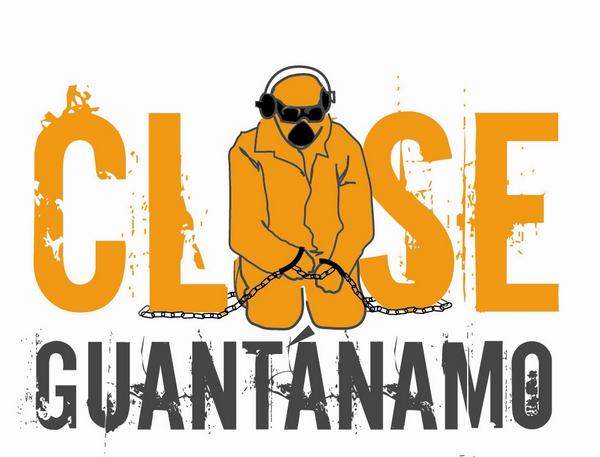
Russia Denies Visa's To U.S. Human Rights Violators


Image via: Griid.org

Russia denied entry to a former commander of the Guantanamo Bay detention camp in retaliation against U.S. moves to punish Russian human rights violators, Deputy Foreign Minister Andrei Denisov said.

Russia denied a visa to Rear Admiral Jeffrey Harbeson, former commander at the Guantanamo U.S. Naval Base in Cuba who now oversees Europe, NATO and Russia affairs at the U.S. Joint Chiefs of Staff, a state-linked newspaper said in December.


"We have already denied entry to some American general, who was commander at the Guantanamo base," Denisov said in response to a question about blacklisted Americans, Interfax news agency said. He did not specify the timing or give the general's name.
In response to the Magnitsky Act, Russia rushed through a law introducing similar measures against Americans it accuses of violating the rights of Russians abroad.
"It includes judges, agents, representatives of security services, prosecutors ... as well as congressmen who were the authors of the Magnitsky Act and Americans who have violated the rights of children adopted from Russia," he said on Friday.
Pushkov said the first such list had appeared in October 2012 and included 11 Americans linked to the Guantanamo U.S. Naval Base in Cuba and alleged secret CIA prisons in Europe.
Campaigners say the indefinite detentions of inmates at the U.S. base, including alleged September 11 conspirators, are illegal. 
Putin, has repeatedly criticized Washington for its treatment of Guantanamo inmates, suggesting the United States had no moral right to lecture Russia on human rights.
Via: "Reuters"

Sunday, December 23, 2012

OPERATION DELIRIUM


Edvard Munch’s The Scream by Sebastian Cosor Vimeo
"This Shall Be The Story Of The Fall Of A Human Soul— A Fall Which Is Great."

BY RAFFI KHATCHADOURIAN

Courtesy Of  "The New Yorker"

Colonel James S. Ketchum dreamed of war without killing. He joined the Army in 1956 and left it in 1976, and in that time he did not fight in Vietnam; he did not invade the Bay of Pigs; he did not guard Western Europe with tanks, or help build nuclear launch sites beneath the Arctic ice. Instead, he became the military’s leading expert in a secret Cold War experiment: to fight enemies with clouds of psychochemicals that temporarily incapacitate the mind—causing, in the words of one ranking officer, a “selective malfunctioning of the human machine.” 

For nearly a decade, Ketchum, a psychiatrist, went about his work in the belief that chemicals are more humane instruments of warfare than bullets and shrapnel—or, at least, he told himself such things. To achieve his dream, he worked tirelessly at a secluded Army research facility, testing chemical weapons on hundreds of healthy soldiers, and thinking all along that he was doing good

Within the Army, and in the world of medical research, the secret clinical trials are a faint memory. But for some of the surviving test subjects, and for the doctors who tested them, what happened at Edgewood remains deeply unresolved. Were the human experiments there a Dachau-like horror, or were they sound and necessary science? As veterans of the tests have come forward, their unanswered questions have slowly gathered into a kind of historical undertow, and Ketchum, more than anyone else, has been caught in its pull. In 2006, he self-published a memoir, “Chemical Warfare: Secrets Almost Forgotten,” which defended the research. Next year, a class-action lawsuit brought against the federal government by former test subjects will go to trial, and Ketchum is expected to be the star witness.

The drugs under review ranged from tear gas and LSD to highly lethal nerve agents, like VX, a substance developed at Edgewood. Ketchum’s specialty was a family of molecules that block a key neurotransmitter, causing delirium. The drugs were known mainly by Army codes, with their true formulas classified. The soldiers were never told what they were given, or what the specific effects might be, and the Army made no effort to track how they did afterward. Edgewood’s most extreme critics raise the spectre of mass injury—a hidden American tragedy

Ketchum, an unreconstructed advocate of chemical warfare, believes that people who fear gaseous weapons more than guns and mortars are irrational. He cites approvingly the Russian government’s decision, in 2002, to flood a theatre in Moscow with a potent incapacitating drug when Chechen guerrillas seized the building and took eight hundred theatregoers hostage. The gas debilitated the hostage takers, allowing special forces to sweep in and kill them. But many innocent people died, too. “It’s been looked at by some skeptics as a kind of tragedy,” Ketchum has said. “They say, ‘Look, a hundred and thirty people died.’ Well, I think that a hundred and thirty is better than eight hundred, and it’s also better, as a secondary consideration, not to have to blow up a beautiful theatre.”


Edgewood had been built in a fit of urgency during the First World War, when weaponized gas—chlorine and, later, mustard—was used to devastating effect in the trenches of Europe. Fritz Haber, the German scientist who pioneered the rise of chemical weapons, proclaimed, “In no future war will the military be able to ignore poison gas. It is a higher form of killing.” The U.S. Army took the threat seriously, and launched a program to study the chemicals, building laboratories and gas chambers in order to test human subjects. “We began to hear about the terrors of this place,” a private wrote in 1918. “Everyone we talked to on the way out here said we were coming to the place God forgot! They tell tales about men being gassed and burned.”

After the Second World War, intelligence reports emerged from Germany of chemical weapons far deadlier than mustard or chlorine. The new compounds, which had evolved out of research into insecticides, were called nerve gases, because they created a body-wide overflow of the neurotransmitter acetylcholine, often triggering organ failure and near-sudden death. The Reich had invested primarily in three—tabun, soman, and sarin—and the victorious powers rushed to obtain them. The Soviet Union secretly dismantled an entire nerve-gas plant and relocated the technology behind the Iron Curtain. The American government, for its part, acquired the Nazi chemical formulas—and, in some cases, the scientists who developed them—and brought them to Edgewood.

The Army decided to pursue sarin. The chemical was about twenty-five times as deadly as cyanide, and readily made into an aerosol. It was virtually impossible to handle without casualties; in one year, seven technicians required immediate treatment following accidental exposure. As the vapor was released after tests, birds passing over the flue of the gas chambers fell dead, and had to be cleared off the roof. In experiments that the arsenal contracted at Johns Hopkins University, researchers gave sarin to healthy volunteers in cups of water over three days. Some of the subjects were severely poisoned; they twitched, vomited, and had trouble breathing.

Early nerve-gas experiments focussed on the extreme lethality of the chemicals, and on antidotes, but researchers at Edgewood also began to take note of the chemicals’ cognitive side effects. Subjects often felt giddy at first, then deeply anxious. Some had nightmares or lost sleep and became depressed. A secret 1948 study on the poisoned Edgewood technicians noted that “the outstanding feature of these cases appears to be the psychological reactions,” and its author wondered how “young men having no experience or knowledge” of the chemicals would react. A senior official at the arsenal had observed that men exposed to highly diluted tabun “were partially disabled for from one to three weeks with fatigue, lassitude, complete loss of initiative and interest, and apathy.”

I spoke to a former Edgewood test subject who was given the nerve agent VX, which, when applied to the skin, is a hundred times as deadly as sarin. An officer came to his bedside to draw a small circle on his arm, and then a doctor with a syringe squirted on a drop of liquid. The effect was rapid. The subject heard other people groaning—one man said, “Oh, shit”—but he felt only a calm disassociation from his environment. There was a radio on in the room, but the words made little sense. When he was given food, he didn’t know what to do with his utensils. “I was not in control,” he told me. “It was incredible. This tiny drop had rendered me helpless.” As the test continued, he was seized by an agonizing wave of tension, as if each nerve ending were being crushed in a vise. “It was intense,” he told me. “My body was clenched. All of my nerves were tight, physically and mentally.”

In 1949, L. Wilson Greene, Edge wood’s scientific director, typed up a classified report, “Psychochemical Warfare: A New Concept of War,” that called for a search for compounds that would create the same debilitating mental side effects as nerve gas, but without the lethality. “Throughout recorded history, wars have been characterized by death, human misery, and the destruction of property; each major conflict being more catastrophic than the one preceding it,” Greene argued. “I am convinced that it is possible, by means of the techniques of psychochemical warfare, to conquer an enemy without the wholesale killing of his people or the mass destruction of his property.”

In its broad strokes, “Psychochemical Warfare” fit within the evolving ethos at Edgewood: better fighting through chemistry. The first commanding general of the Army’s Chemical Warfare Service had extolled the “effectiveness and humaneness” of gases: they killed quickly, and kept infrastructure intact. Psychochemical warfare certainly promised a form of conflict less deadly than clouds of sarin—even more humane, in that sense, perhaps. But Greene did not want to elevate consciousness; he wanted to debilitate, in ways that would inspire terror. As he put it, “The symptoms which are considered to be of value in strategic and tactical operations include the following: fits or seizures, dizziness, fear, panic, hysteria, hallucinations, migraine, delirium, extreme depression, notions of hopelessness, lack of initiative to do even simple things, suicidal mania.”

Greene drew up a list of chemicals to investigate, ranging from barbiturates to carbon monoxide, and he urged a deeper inquiry into the psychological effects of nerve gas. Enoch Callaway, a Navy psychiatrist who arrived at Edgewood in 1950, recalled, “I was told that I needed to measure ‘nervousness,’ because nerve gas was supposed to make you nervous.” So he designed a test: people given sarin were blasted with noise to measure how much they jumped. “We figured out that nerve gas actually reduced anxiety in doses that did not cause convulsions.” The work, he insisted, was conducted responsibly, with a sense of urgency now hard to understand: “We didn’t know that chemical warfare was going to disappear so thoroughly.”

In the mid-nineteen-fifties, psychochemical warfare was formally added to Edgewood’s clinical research, and approval was granted to recruit soldiers from around the country for the experiments, in a systematic effort called the Medical Research Volunteer Program. The Army assured Congress that the chemicals were “perfectly safe” and offered “a new vista of controlling people without any deaths”—even though early efforts to make weapons from mescaline and LSD were dropped, because the drugs were too unsafe or too unpredictable. Congressional overseers, terrified of Soviet military superiority, were ready to lend support. The Red Army had an extensive chemical-warfare program, and evidence suggested that it had an interest in “psychic poisons,” used to trigger mental illness. “Some foreign enemy could already be subjecting us in the United States to such things,” one panicky legislator proclaimed during a hearing. “Are we the ones receiving it now? Are we the rabbits and guinea pigs?”

Edgewood began reviewing hundreds of chemicals, many provided by pharmaceutical companies. One officer remarked, “The characteristics we are looking for in these agents are in general exactly opposite to what the pharmaceutical firms want in drugs, that is the undesirable side effects.” Starting in 1959, the arsenal aggressively pursued phencyclidine—or PCP—which Parke, Davis & Company had marketed as an anesthetic but abandoned because patients were having hallucinations and delusions. Edgewood doctors tested it as an aerosol and surreptitiously gave it to soldiers to see if they could then “maintain physical security over simulated classified material.” One subject—who had been exposed to sarin gas a week earlier—was handed a glass of whiskey laced with twenty milligrams of PCP. “Manic reaction and much hostility,” a doctor observed. The subject passed out, and began breathing in a pattern associated with neurological trauma or cardiac stress.

Rioch told Ketchum that another volunteer had ended up in the hospital for six weeks. “He had a paranoid reaction that didn’t go away after the drug wore off,” Ketchum recalled. The trials with PCP were eventually dropped, but stories of other problem cases circulated. A military advisory council decided that the arsenal was ill equipped for the newer line of research. “It seems important to undertake immediately a program to develop sound, fundamental techniques of assessing abnormal behavior,” its members noted. “The services of people trained in this field, such as psychologists, psychiatrists and neuro-physiologists should be obtained.” Edgewood, in other words, needed young doctors just like Jim Ketchum.

The psychochemical-warfare program was a small part of the over-all research, and in many respects it was the strangest. Once, Ketchum walked into his office and found a barrel the size of an oil drum standing in a corner. No one explained why it was in his office, or who had put it there. After a couple of days, he waited until evening and opened it. Inside, he found dozens of small glass vials, each containing a precisely measured amount of pure LSD; he figured there was enough to make several hundred million people go bonkers—and later calculated the street value of the barrel to be roughly a billion dollars. At the end of the week, the barrel vanished just as mysteriously as it had appeared. No one spoke about it. He never learned what it was for.

After receiving a security clearance, Ketchum was told that EA 2277 was 3-quinuclidinyl benzilate, or BZ—a pharmaceutical, intended as an ulcer therapy, that was rejected after tests found it unsuitable. Infinitesimal amounts could send people into total mental disorder. BZ is an anticholinergic, similar to atropine or scopolamine, which are used in medicine today. At high doses, such drugs trigger delirium—a dreamlike insanity usually forgotten after it subsides. Sim, one of the first doctors to try BZ, later proclaimed that it “zonked” him for three days. “I kept falling down,” he said. “The people at the lab assigned someone to follow me around with a mattress.”

For years, Sim had been overseeing secret intelligence experiments at Edgewood. At one point, he did research for the C.I.A. on a BZ-type drug, called the Boomer, that causes delirium for as long as two weeks. The agency wanted to know if it could be administered through the skin. Could a Soviet agent brush some on silverware at a diplomatic party and cause an American official to go crazy? Could an operative dose an adversary with a handshake? Sim initiated trials at the arsenal and at Holmesburg Prison, in Pennsylvania, with which Edgewood had contracted to conduct experiments on inmates.

Testing psychochemicals for intelligence purposes, Sim appeared to believe, required a uniquely loose protocol: the goal was to control the mind, and the subject’s expectations of the drug’s effect mattered. He often gave LSD to people without warning.

Not long after arriving at Edgewood, Ketchum took to playing tennis with a commanding officer at the arsenal, who, after a match one day, described how Sim had spiked his morning coffee with LSD. “He was pissed off as hell,” Ketchum told me. LSD had been mixed into cocktails at a party, and into an Army unit’s water supply. Some men handled it fine; some went berserk. A test subject in 1957 exhibited “euphoria followed by severe depression, anxiety, and panic—feeling he was going to die,” according to his chart. Another test involved intelligence specialists who were blindfolded and placed in an isolation chamber. “Only one subject was in a condition to undergo extended interrogation,” a report concluded. “A second subject fled from interrogation in panic.”

Ketchum later wrote of Sim’s “hare-brained experiments” and his “lack of scientific (and ethical) judgment.” The Army had apparently reached the same conclusion. In 1959, responsibility for the volunteers was taken from Sim—who was eventually given the new title of chief scientist—and transferred to Lindsey, a more capable leader, though not immune to bouts of recklessness himself. To demonstrate the effects of VX, he was known to dip his finger in a beaker containing the lethal agent, then rub it on the back of a shaved rabbit; as the animal convulsed and died, he would casually walk across the room and bathe his finger in a Martini to wash off the VX. “I thought they were crazy,” a doctor who served under him told me. “I was going to New York, and Colonel Lindsey tells me, ‘How about taking a vial of nerve gas to New York to make a demonstration.’ And I am looking at the guy and thinking, If I have an accident on the Thruway, I could kill thousands of people—thousands of people. I said, ‘No. It’s that simple.’ ”

Sim appeared to believe that personally sampling every chemical agent made him free to circumvent conventional standards; “I have to live with myself,” he once said. Lindsey had an officer’s protectiveness for the enlisted men. Many of the Army doctors—draftees, like the volunteers—who worked under both men strove to reconcile their military obligations with their medical commitments. “As doctors, we are used to treating people who are sick, not making them sick,” one told me. “I did not like the idea of what I was doing with individual human beings. But I understood what I was doing in the context of the defense of this country.”

Exposed soldiers exhibited bizarre symptoms: rapid mumbling, or picking obsessively at bedclothes and other objects, real or imaginary. “Subjects sometimes display something approaching wit, not in the form of word-play, but as a kind of sarcasm or unexpected frankness,” he wrote in a report for Sim. The drug’s effect lasted for days. At its peak, volunteers were totally cut off in their own minds, jolting from one fragmented existence to the next. They saw visions: Lilliputian baseball players competing on a tabletop diamond; animals or people or objects that materialized and vanished. “I had a great urge to smoke and, when I thought about it, a lit cigarette appeared in my hand,” a volunteer given a drug similar to BZ recalled shortly after the experiment. “I could actually smoke the cigarette.”

Soldiers on BZ could remember only fragments of the experience afterward. As the drug wore off, and the subjects had trouble discerning what was real, many experienced anxiety, aggression, even terror. Ketchum built padded cells to prevent injuries, but at times the subjects couldn’t be contained. One escaped, running from imagined murderers. Another, on a drug similar to BZ, saw “bugs, worms, one snake, a monkey and numerous rats,” and thought his skin was covered in blood. “Subject broke a wooden chair and smashed a hole in the wall after tearing down a 4-by-7-ft panel of padding,” his chart noted. Ketchum and three assistants piled on top of the soldier to subdue him. “He was clearly terrified and convinced we were intending to kill him,” his chart said.

“These soldiers are not really informed at all,” he told Malcolm Bowers, an Edgewood medical officer who later became a professor at Yale. Little was known about the long-term effects of the experiments, and yet the volunteers, after a stay at the arsenal, were blindly pushed back into the Army at large, with no follow-up care. In a self-published memoir, “Men and Poisons,” Bowers recalls Lindsey wondering if the lack of follow-up stemmed from the Army’s fear that such a program would disclose concern about lasting health effects. Sim later offered a more mundane reason: insufficient funding

The Medical Research Volunteer Program initially had difficulty attracting volunteers, so monthly quotas were established to insure a steady supply of research subjects. Recruiters fanned out to Army facilities across the country; some commanders even ordered men to attend the sessions. People who attended the sessions came away with an uncertain sense of what they were being asked to do. 

A number of them told me that recruiters advertised the program in vague terms, as human behavioral studies, or equipment testing, or medical research. Inducements were offered, too. Soldiers could spend time near several large East Coast cities, and would be given three-day weekend passes to explore them. There would be extra pay, and few responsibilities, aside from showing up at a test. Many men spent much of their stay playing Ping-Pong and watching movies. When it came time for volunteers to leave—at first, they were asked to serve for a month, later two months—a letter of commendation would enter their file. In the sixties, the arsenal offered an even more powerful incentive: time away from Vietnam.


Once the volunteers arrived at Edgewood, they were given medical and psychological examinations, and were divided into four groups. The least healthy would be used to test equipment. The top twenty-five per cent—the Astronaut Class, as Ketchum once called them—would typically be prepared for the most dangerous chemicals. Doctors informed the volunteers in generalities and asked them to sign a consent form—usually long before any specific test was announced. The forms were designed to offer few details; as one version was drafted, the words “mental disturbance or unconsciousness” were replaced with “discomfiture.” Sometimes a little more information would be provided just before the test began, but not always. Van Sim later confessed that researchers testing nerve gas would tell volunteers that the drug might give them a “runny nose” or a “slight tightness of the chest.” In 1961, a volunteer from Kansas, named John Ross, was given soman, a highly persistent nerve agent. Only when the needle was in his arm did he overhear the doctors saying that he had been given something lethal. “I started having convulsions,” he told me. “I started vomiting. One of the guys standing over me said, ‘We gave you a little too much.’ They told me to walk it off. I started to panic. I thought I was going to die.” Ross became rigid and was rushed to Walter Reed. For years afterward, he suffered from insomnia and depression.

Test subjects had a right to decline an experiment—assuming that they knew they were part of one—but they almost never did. “There was no question that they would participate,” Bowers recalled. Withdrawing from a test required backing down from a commitment to one’s superior, which was anathema in the Army. “In the military, if you don’t do something you will be ostracized,” a soldier given LSD in 1958 told me. “I believe they did give us the option to leave, at first, but you didn’t really have a choice once you were in.”


The same day Elbin was given BZ, Ketchum gave the drug to Teddie Osborne, who had been stationed at the Yuma Test Center, in Arizona, where he was using a crude detector and a caged rabbit to look for chemical leaks. Osborne thought that his work would not change much at Edgewood. “It wasn’t really explained,” he told me. At the arsenal, he was assigned to help manage the recruits; he liked the work and volunteered again.

The second time, he was told that he was going to be a subject. He felt tricked. “I could not have said no,” he told me. “You are dealing with professionals. We were very gullible.” One Wednesday, Osborne was injected with BZ, and ushered into a padded room. He had no idea what the drug was or what it would do. “I don’t remember anything until Saturday,” he told me. “That was so disturbing. Later, it still haunted me.”

By this time, the Army was running a “crash program” to turn BZ into an operational weapon.

Even as it became reasonable to suspect that BZ could cause serious injury on the battlefield, the military was pushing to put it into use. In November, 1964, an Army major travelled to Edgewood on an urgent mission from Lieutenant General William Dick, the chief of Army research. Soviet trawlers had been spotted off the coast of Alaska, and Dick wanted to know if a projected cloud of BZ could disable the crew. Senior officers at the arsenal told the major that such a thing was out of the question—the chemical had not even been field-tested. Eventually, the major came to see Ketchum, who was leading a newly created group called the Psychopharmacology Branch. “The plan didn’t make a whole lot of sense, and it offended me on a rational level,” he wrote in his memoir. “On the other hand, the challenge ruthlessly tickled my imagination.

The Soviets were not ignorant of BZ, after all. Vil Mirzayanov, a chemist who conducted secret weapons research for the Soviet Union, told me that Moscow never had more than a halfhearted interest in LSD, and that its interest in BZ was strictly to keep up with Ketchum’s program. “We knew the West had developed this weapon, and we were trying to copy it,” he said. Soviet scientists, who called the formula Substance 78, conducted their own clinical trials with it and manufactured tons of the drug at a plant in Volsk. 

By the late sixties, the high point of the Cold War had sloped into a murkier geopolitical condition; half a million Americans were in Vietnam, and though the Army had freely used defoliants and tear gas there, it decided not to use BZ. Popular sentiment was turning against the idea of deploying psychochemicals in war. “There are moral imponderables, such as whether insanity, temporary or permanent, is a more ‘humane’ military threat than the usual afflictions of war,” E. James Lieberman, a psychiatric resident at Harvard, wrote in The Bulletin of the Atomic Scientists. In 1965, Sidney Cohen, a well-regarded LSD researcher, argued that “such degradation of a person’s mind is worse than his physical death and can hardly be considered humane warfare.”
A physician named Mark Needle told me that he thought Ketchum’s human experiments were run like the Keystone Kops. “There was nobody qualified,” he said. “And the fact that they were allowed to do it without people who knew what they were doing was very, very scary. There was no humanity in it. There was no morality in it. If anything happened to the volunteers, we could say, ‘You were offered an out,’ but then we were also telling them, ‘Listen, this is the Army, and we are at war.’ Our view was that this was a terrible thing to do to these kids, because who the hell knew what could happen?”

When Ketchum sought to orchestrate a field test with a new version of BZ, four doctors wrote in dissent. He overruled them. Another version, called EA 3834, appeared to cause microscopic hematuria—tiny amounts of blood in urine—and other renal problems. One soldier was sent to Walter Reed. “This is a dangerous drug,” a psychiatrist named George Leib insisted. Leib, who worked on the arsenal’s annual budget, had come to think that tests of a baroque nature and questionable design were being funded merely to sustain the program. His office was across from the toxic-aid station, and he was sure that records were being manipulated to disguise problem cases.

In April, Matthew Meselson, a Harvard biologist, argued in congressional testimony that non-lethal chemical weapons would only make war more savage, because armies would use them to flush out enemies and then slaughter them. 

The lasting health effects of the research were difficult to judge. Records were either messy or incomplete, and no experiment had collected data to determine how a drug might affect lives in the long term
.

The Nuremberg Code established an ethical framework for medical experiments. The code begins with a clear premise: 
“The voluntary consent of the human subject is absolutely essential.” That consent must flow from an “enlightened decision,” shaped by a true understanding of the test’s medical risks. Moreover, human experiments must be preceded by animal studies, and conducted in pursuit of a greater social good—with risks never exceeding “the humanitarian importance of the problem.” If a subject is unable to endure the experiment, or if a researcher believes there is a probability of injury, the test must end.