This is the point from which I could never return,
And if I back down now then forever I burn.
This is the point from which I could never retreat,
Cause If I turn back now there can never be peace.
This is the point from which I will die and succeed,
Living the struggle, I know I'm alive when I bleed.
From now on it can never be the same as before,
Cause the place I'm from doesn't exist anymore
[Immortal Technique]
"Terrorist"
"Terrorist"
Just a Word...
'Terrorist' is just a word, one I wish I'd never heard...
When it's used to vilify, without the need to question why...
Only fools would swift condemn, that which has not befallen them...
Until you know what lies behind, the actions of a tortured mind...
Thank your God for sparing you, the suffering others have lived through...
Where are the cries of just demand, for Arabs driven from their land?...
Blame the victim, turn the cheek, praise the bully, kick the weak!...
Mock the man who truth does speak...
Tinker, tailor, soldier, spy, greed, corruption, torture, lies!...
Blair invasion, sly persuasion, annihilation, massacred nation...
Keep on running, karma's coming!...
Money talks, truth walks, oil spills, greed kills...
Tide is turning, London's burning!...
Bombs will fall and blood will flow, as sure as my own name I know...
Until corrupt dictators go, brutal, rotten, to the core...
Their day has come, they rule no more...
Show me the man who will not fight, to save his child, his home, his right!...
You can call him what you like, you're not in his sorry plight...
Cowards stay and Martyrs go, I know not where, but this I know...
Speak your truth and stand your ground, fight your corner...
When all around, point the finger, purse the lips, pin the label, 'Terrorist'!...
Just a word, but one that sticks, even when the cap don't fit...
But for the grace of God go I, remember that, before you cry...
False accusation, names of shame, at those who may not be to blame,...
Their crime, refused to play the game, of meek acceptance, dumbing down,...
Your life, your choice; Warrior / Clown...
It's September of 2014, the world is caught up in a whirlwind of terraranoia while global leaders posture and position themselves in preparation for the final stages in the agenda for a New World Order...with the 13th anniversary of 911 coming up right around the corner it is imperative now more than ever that we expose this event for what it was...a false flag operation designed to advance the agenda of the global elite
The biggest threat to our freedoms is the state itself!
Manitoba First Nation Elder Dave Courchene explains the origins and lessons of the First Nation Seven Teachings. The lessons of the Bear Spirit (Courage), the Beaver Spirit (Wisdom), the Eagle Spirit (Love), the Buffalo Spirit (Respect), the Sasquatch Spirit (Honesty), the Wolf Spirit (Humility) and the Turtle Spirit (Truth). At Sagkeeng Child and Family Services (in Sagkeeng First Nation and Winnipeg, Manitoba) we support and empower our families and community. Services we provide include workshops in parenting, traditional skills like making star blankets, moccasins, hand drums, ribbon shirts and harvesting wild rice. Learn more at: sagkeengcfs.org
A tragedy in Ottawa, Canada shows us just how different US and Canadian media are.
“Because today we live in a society in which spurious realities are manufactured by the media, by governments, by big corporations, by religious groups, political groups... So I ask, in my writing, What is real? Because unceasingly we are bombarded with pseudo-realities manufactured by very sophisticated people using very sophisticated electronic mechanisms. I distrust their motives; I distrust their power. They have a lot of it. And it is an astonishing power: that of creating whole universes, universes of the mind.”
Joint Army and Navy Basic War Plan Red was a war plan created by the United States Army and Navy in the late 1920s and early 1930s to estimate the requirements for a hypothetical war with Great Britain (the "Red" forces).[1] War Plan Red discussed the potential for fighting a war with Britain and its Empire and outlined those steps necessary to defend the Atlantic coast against any attempted mainland invasion of the United States. It further discussed fighting a two-front war with both Japan and Britain simultaneously (as envisioned in War Plan Red-Orange). War Plan Red was not operationalized and did not have presidential or Congressional approval. In the U.S. only the Congress can declare war, and it made no war plans. President Herbert Hoover was known as a pacifist.[2]
War Plan Red was developed by the United States Army following the 1927 Geneva Naval Conference and approved in May 1930 by the Secretary of War and the Secretary of Navy and updated in 1934–35. In 1939 on the outbreak of World War II and Britain's war against Nazi Germany, a decision was taken that no further planning was required but that the plan be retained.[3] War Plan Red was not declassified until 1974.
The war plan outlined those actions that would be necessary to initiate war between Britain and the United States. The plan suggested that the British would initially have the upper hand by virtue of the strength of theRoyal Navy. The plan further assumed that Britain would probably use its Dominion in Canada as a springboard from which to initiate a retaliatory invasion of the United States. The assumption was taken that at first Britain would fight a defensive battle against invading American forces, but that the US would eventually defeat the British by blockading the United Kingdom and economically isolating it.[4]
Zones Of Operation
The main zones of operation discussed in the plan are:
Occupying Halifax, following a poison gas first strike, would deny the British a major naval base and cut links between Britain and Canada.
The plan considers several land and sea options for the attack and concludes that a landing at St. Margarets Bay, a then undeveloped bay near Halifax, would be superior to a direct assault via the longer overland route.
Failing to take Halifax, the U.S. could occupy New Brunswick by land to cut Nova Scotia off from the rest of Canada at the key railway junction at Moncton.
Occupying Montreal and Quebec City would cut the remainder of Canada off from the Eastern seaboard, preventing the movement of soldiers and resources in both directions.
The routes from northern New York to Montreal and from Vermont to Quebec are both found satisfactory for an offensive, with Quebec being the more critical target.
Occupying this region gains control of Toronto and most of Canada's industry, while also preventing Britain and Canada from using it for air or land attacks against the U.S. industrial heartland in the Midwest.
The plan proposes simultaneous offensives from Buffalo across the Niagara River, from Detroit into Windsor Ontario, and from Sault Ste. Marie into Sudbury. Controlling the Great Lakes for U.S. transport is considered logistically necessary for a continued invasion.
Although Vancouver's distance from Europe reduces its importance, occupying it would deny Britain a naval base and cut Canada off from the Pacific Ocean.
Study how water flows in a valley stream, smoothly and freely between the rocks. Also learn from holy books and wise people. Everything – even mountains, rivers, plants and trees – should be your teacher.
There is a pleasure in the pathless woods, There is a rapture on the lonely shore, There is society, where none intrudes, By the deep sea, and music in its roar: I love not man the less, but Nature more.
[Poem by George Gordon Byron... Provided by CZ]
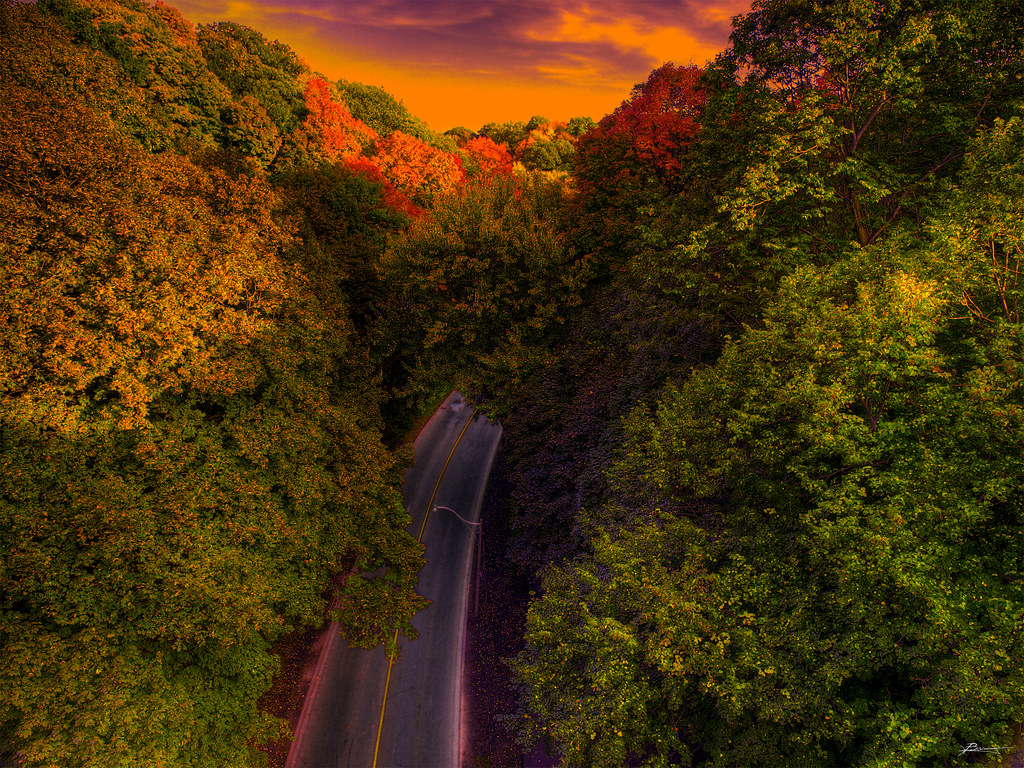
Photo by Paul Bica Taken on: January 19, 2013 Location: St Jamestown, Toronto, ON, CA
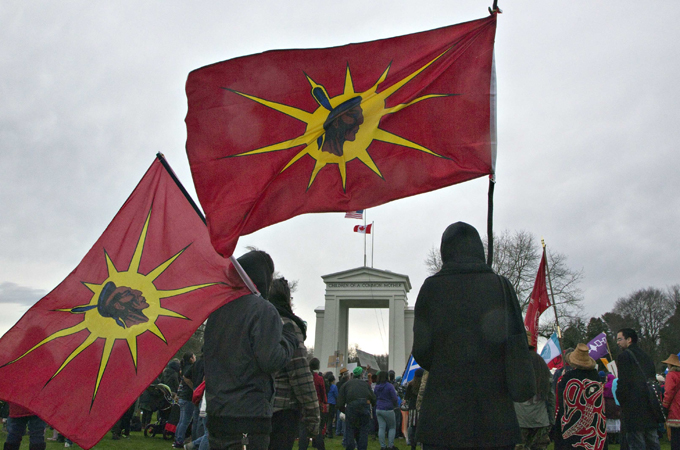
... According to a new report penned by a former Canadian military officer for the MacDonald Laurier Institute, a think-tank supported by corporate executives.
"For many Aboriginal people in Canada, but especially for First Nations women and children, life on-reserve is dreary, dark and dangerous," wrote Douglas Bland in the report, Canada and the first Nations: Cooperation or Conflict? "Social fractionalisation significantly increases the risk of social conflict. The phenomenon provides motives for an insurgency," read the report, issued in May.
"The Canadian right-wing establishment is seizing on this to justify its own agenda of stricter controls and the continued criminalisation of native people who defend their rights," Taiaiake Alfred, chair of the centre for indigenous governance at the University of Victoria, and one of Canada's most influential aboriginal intellectuals, told Al Jazeera. "The positive elements of Canadian society - progressive values and social justice - are founded on the ongoing injustice of land theft and murder of indigenous people."
In November, Paul Martin, Canada's former prime minister and a business tycoon, echoed Alfred's comments, albeit in a softer tone. "We have never admitted to ourselves that we were, and still are, a colonial power," he said.
One of the world's most developed countries, Canada is home to about 1.2 million indigenous people out of a population of 34.5 million. The indigenous population is rising faster than other demographic groups, despite drastically higher rates of poverty, incarceration and substance abuse.
If indigenous Canadians were ranked as a country according to the United Nations Human Development Index, which measures living standards and life expectancy, they would have social outcomes comparable to residents of Kazakhstan and Albania.
Across Canada's prairies, the heartland of the country's agricultural industry and a centre for mining, about 42 percent of the indigenous population will be under the age of 30 by 2016, more than twice the youth rate in the non-indigenous community.
"The fact that Canada's natural wealth flows unfairly from Aboriginal lands and peoples to non-Aboriginal Canadians is a long-standing and justifiable grievance," the report said.
A large number of poorly educated, unemployed young men - a "warrior cohort", as Bland put it - provide fertile recruits for militant groups, the report says.
Using a formula first developed by researchers at Oxford University, Bland argued that the "feasibility" of unrest, rather than just root causes, could determine outcomes.
Most of Canada's resource industries, including mines, dams and oil facilities, are located on land claimed by indigenous people - and attacking such facilities is easily feasible, the report said. Comprising about four percent of the population, indigenous people make up 23 percent of Canada's prisoners, a 43 percent increase during the five years prior to 2013, according to a government report released in March.
In the wake of a dramatic RCMP reveal of two people arrested in Canada in connection with a plot to derail a passenger train, Canadians may have questioned why the United States Department of Homeland Security and the US Federal Bureau of Investigation were involved in the operation.
Law enforcement agencies in Canada and the US are now working together in an unprecedented way, says the RCMP—and the two countries are hammering out a plan to let agents in both countries drive back and forth across the border as though it wasn’t there.
Canadian and American police agencies are currently locked in private talks over how to effectively launch pilot projects that would allow American agents from organizations like the FBI and the US Drug Enforcement Administration to be accredited as police officers in Canada, with the power to arrest individuals on the street like any Canadian cop.
Specially-designated police can already conduct such operations in shared waterways, after the Harper government’s spring 2012 budget implementation legislation changed several Canadian laws to make permanent a program to accredit such maritime-based US and Canadian agents.
Certain designated members of the RCMP and US Coast Guard undergo specialized training, and when they head out on an operation, they are overseen by the host country’s officers, and operate under the host country’s criminal justice system.
The Canada-US Beyond the Border perimeter security plan, laid out in December 2011, calls for the “next generation” of this type of policing: moving the concept to land. But doing so hasn’t been easy: two pilot projects that were supposed to have been launched by last summer are still in legal limbo.
“We’re still trying to negotiate...the challenge is, in the land environment, it’s much more complex,” said Mr. Oliver.
“The possibility of having contact with the general public is greater, because of interaction with streets...it’s the visibility with the public,” he said.
“The other thing is that, in the maritime environment, you have a very fixed geographical area...in the land environment, where do you set the limit? Is it 10 kilometres from the border? Is it 20 kilometres from the border? Is it 25 kilometres?”
But what the force is looking for is to allow its agents to work across the border in operations that require it—so it wouldn’t necessarily want Canadian agents to be accredited throughout the entire US, or vice versa.
“In terms of the vision, I don’t see Canadian officers being cross-designated and working in Los Angeles on a full-time basis. I mean, there are protocols, and we work joint investigations, but we don’t need that tool there,” he said.
“I think in terms of the next decade or so, we’d certainly like to see the evolution of integrated cross-border law enforcement. We’d take our crime-fighting capability to the next level, which is bringing the [maritime] concept to the land environment.”
After 9/11, Canada and the US signed the Smart Border Declaration, which has an accompanying plan describing how police agents should co-operate closer and share more information. As part of that plan, Mr. Oliver said, IBETs were multiplied along the border.
At this point, the two countries were sharing information and decisions within the IBETs, and operating under a “strategic layer” that involved American agents at RCMP headquarters in Ottawa. The US Coast Guard and US Immigration and Customs Enforcement are both in Ottawa, he said, sharing intelligence and helping identify targets for the IBET teams to go after.
The IBET collaboration revealed some data. There were “113 organized crime groups” and “115 criminal entrepreneurs” that operate along the border, said Mr. Oliver. They were also able to gather data on drug and human smuggling.
The two governments decided to move to entrench the concept permanently, drawing up a framework that was eventually signed in May 2009. The framework, said Mr. Oliver, lays out everything about how cross-border policing works, such as who has the authority to designate cross-border officers, the type of training they receive, what equipment they can use, how officers get accredited in each country, and which laws and rules apply where. It also lays out civilian oversight, and police discipline, he added.
3,000+ Deaths Linked To Indian Residential Schools
At least 3,000 children, including four under the age of 10 found huddled together in frozen embrace, are now known to have died during attendance at Canada’s Indian residential schools, according to new unpublished research.
While deaths have long been documented as part of the disgraced residential school system, the findings are the result of the first systematic search of government, school and other records.
“These are actual confirmed numbers,” Alex Maass, research manager with the Missing Children Project, told The Canadian Press from Vancouver.
“All of them have primary documentation that indicates that there’s been a death, when it occurred, what the circumstances were.”
The number could rise further as more documents — especially from government archives — come to light.
The largest single killer, by far, was disease.
For decades starting in about 1910, tuberculosis was a consistent killer — in part because of widespread ignorance over how diseases were spread.
“The schools were a particular breeding ground for (TB),” Maass said. “Dormitories were incubation wards.”
The Spanish flu epidemic in 1918-1919 also took a devastating toll on students — and in some cases staff. For example, in one grim three-month period, the disease killed 20 children at a residential school in Spanish, Ont., the records show.
While a statistical analysis has yet to be done, the records examined over the past few years also show children also died of malnutrition or accidents. Schools consistently burned down, killing students and staff. Drownings or exposure were another cause.
In all, about 150,000 First Nations children went through the church-run residential school system, which ran from the 1870s until the 1990s. In many cases, native kids were forced to attend under a deliberate federal policy of “civilizing” Aboriginal Peoples.
Many students were physically, mentally and sexually abused. Some committed suicide. Some died fleeing their schools.
One heart-breaking incident that drew rare media attention at the time involved the deaths of four boys — two aged 8 and two aged 9 — in early January 1937.
A Canadian Press report from Vanderhoof, B.C., describes how the four bodies were found frozen together in slush ice on Fraser Lake, barely a kilometre from home.
The “capless and lightly clad” boys had left an Indian school on the south end of the lake “apparently intent on trekking home to the Nautley Reserve,” the article states.
A coroner’s inquest later recommended “excessive corporal discipline” of students be “limited.”
The records reveal the number of deaths only fell off dramatically after the 1950s, although some fatalities occurred into the 1970s.
“The question I ask myself is: Would I send my child to a private school where there were even a couple of deaths the previous year without looking at it a little bit more closely?” Maass said.
“One wouldn’t expect any death rates in private residential schools.”
In fact, Maass said, student deaths were so much part of the system, architectural plans for many schools included cemeteries that were laid out in advance of the building.
Maass, who has a background in archeology, said researchers had identified 50 burial sites as part of the project.
About 500 of the victims remain nameless. Documentation of their deaths was contained in Department of Indian Affairs year-end reports based on information from school principals.
The annual death reports were consistently done until 1917, when they abruptly stopped.
“It was obviously a policy not to report them,” Maass said.
In the 1990s, thousands of victims sued the churches that ran the 140 schools and the Canadian government. A $1.9-billion settlement of the lawsuit in 2007 prompted an apology from Prime Minister Stephen Harper, and the creation of the Truth and Reconciliation Commission.
The research — carried out under the auspices of the commission — has involved combing through more than one million government and other records, including nuns’ journal entries.
The longer-term goal is to make the information available at national research centre.
These estimates are extremely low. These attempts to Christianize & “civilize” this group of children irreversibly scarred thousands of people in Canada, stripping them of their language, traditions & heritage.
Sadly, Canada isn’t the only country that had these kinds of schools; so did the US. I’d recommend reading “Ojibwa Warrior” by Dennis Banks for more on the boarding schools Indian children were sent to in order to become “civilized.”
Thousands of girls and boys were raped and tortured, and many were murdered, in Canada's aboriginal boarding schools. In Canada, up until 1985, Christian churches ran around 100 boarding schools for aboriginal children. Between 100,000 and 200,000 children were forced to attend these boarding schools. Reportedly, around 50,000 aboriginal children died in these schools. Documents show a death rate of 50%.
“The report says church officials killed children by beating, poisoning, electric shock, starvation, prolonged exposure to sub-zero cold while naked, and medical experimentation, including the removal of organs and radiation exposure.” […] Children also suffered forced sterilization, medical experimentation, starvation, rape as well as various other forms of sexual abuse, and murder….. Some spoke of young girls becoming pregnant as a result of rape, or nuns becoming pregnant after sexually abusing boys…’”
In British Columbia, the first Indian Residential School was established in 1861 at Mission and was operated by the Roman Catholic Church. It would also become the last operating school in the province, finally closing in 1984.
Elsewhere in Canada, Indian Residential Schools dotted the nation. Around 130 residential schools herded aboriginal children like cattle to teach them how to become productive members of “white society.” The former Grand Chief of the Assembly of First Nations, Matthew Coon Come, calls this system genocide.
“Basically, the goal was to take the Indian out of the Indian,” he says.
This bold state-funded enterprise was for the most part carried out in western Canada with tremendous bureaucratic and missionary zeal for over a century. Christian ideology insisted it was acceptable to “obliterate” indigenous peoples’ distinct cultural “habits and associations” while simultaneously fostering the colonial “process of nation building.”
“After a lifetime of beatings, going hungry, standing in a corridor on one leg, and walking in the snow with no shoes for speaking Inuvialuktun, and having a heavy, stinging paste rubbed on my face, which they did to stop us from expressing our Eskimo custom of raising our eyebrows for ‘yes’ and wrinkling our noses for ‘no’, I soon lost the ability to speak my mother tongue. When a language dies, the world it was generated from is broken down too.”
Mary Carpenter 1995
Department of Indian Affairs’ policy that aboriginal children must not be educated “above the possibilities of their station”, were upheld. As such, the schools’ curriculum included moral training (through physical labour), academic training (although many teachers were insufficiently educated) and industrial training (for farming and menial jobs). Engaged in the classroom for only half a day, the children were responsible for the complete maintenance (cooking, cleaning, laundry, grounds keeping, farming, etc.) of the school for the remainder of their day. Grade three was the acceptable standard of education.
Psychological and emotional abuses were constant: shaming by public beatings of naked children, vilification of native culture, constant racism, public strip and genital searches, withholding presents and letters from family, locking children in closets and cages, segregation of sexes, separation of brothers and sisters, proscription of native languages and spirituality. In addition, the schools were places of profound physical and sexual violence: sexual assaults, forced abortions of staff-impregnated girls, needles inserted into tongues for speaking a native language, burning, scalding, beating until unconscious and/or inflicting permanent injury.
They also endured electrical shock, force-feeding of their own vomit when sick, exposure to freezing outside temperatures, withholding of medical attention, shaved heads (a cultural and social violation), starvation (as punishment), forced labour in unsafe work situations, intentional contamination with diseased blankets, insufficient food for basic nutrition and/or spoiled food. Estimates suggest that as many as 60% of the students died (due to illness, beatings, attempts to escape, or suicide) while in the schools.
“The Sisters didn’t treat me good. They gave me rotten food to eat and punished me for not eating it. I was locked in a room, fed bread and water and beaten with a strap, sometimes on the face, and sometimes [they] took my clothes off and beat me. This is the reason I ran away.”
Christine Haines, St. Joseph’s 1995
Despite having signed the United Nations genocide convention 40 years before the last residential school closed, Canada continued to commit acts of genocide:
“with the intent to destroy in whole or part, a national, ethnical, racial or religious group, as such: … (e) forcibly transferring children of the group to another group.” (United Nations Convention on Genocide, 1946)
In 1948, despite a joint (House of Commons and Senate) committee recommendation that the schools be abolished, the churches’ vigourous lobbying for the system to continue and the fact that it was being used as a social welfare placement kept the schools alive for 40 more years. By the 1970s, when the Native Indian Brotherhood called for native control of native education, the federal government had begun to wind down the residential school system.
Today, approximately 90,000 survivors in their thirties and older are trying to understand, heal from, and move beyond this devastating experience. About 14% are involved in some form of litigation while the other 86% are living out their lives as best they can.
“What I remember of that time was passing Muncho Lake on the trip up north, [to residential school] and imagining I was drowning. That is where I left my life; I drowned in Muncho Lake. I haven’t forgiven my parents to this day because…they weren’t there to protect me.”
Survivor, Kamloops School 2000
It is generally accepted that the forced removal of children from their families was devastating for Aboriginal individuals, families, communities and cultures. This is regularly being confirmed by researchers today.
First Nation communities experience higher rates of violence: physical, domestic abuse (3x higher than mainstream society); sexual abuse: rape, incest, etc. (4-6x higher); lack of family and community cohesion; suicide (6x higher); addictions: drugs, alcohol, food; health problems: diabetes (3x higher), heart disease, obesity; poverty; unemployment; illiteracy; high school dropout (63% do not graduate); despair; hopelessness; and more.
Invading Canada won't be like invading Iraq: When we invade Canada, nobody will be able to grumble that we didn't have a plan.
The United States government does have a plan to invade Canada. It's a 94-page document called "Joint Army and Navy Basic War Plan -- Red," with the word SECRET stamped on the cover. It's a bold plan, a bodacious plan, a step-by-step plan to invade, seize and annex our neighbor to the north. It goes like this:
First, we send a joint Army-Navy overseas force to capture the port city of Halifax, cutting the Canadians off from their British allies.
Then we seize Canadian power plants near Niagara Falls, so they freeze in the dark.
Then the U.S. Army invades on three fronts -- marching from Vermont to take Montreal and Quebec, charging out of North Dakota to grab the railroad center at Winnipeg, and storming out of the Midwest to capture the strategic nickel mines of Ontario.
Meanwhile, the U.S. Navy seizes the Great Lakes and blockades Canada's Atlantic and Pacific ports.
At that point, it's only a matter of time before we bring these Molson-swigging, maple-mongering Zamboni drivers to theirknees! Or, as the official planners wrote, stating their objective in bold capital letters: "ULTIMATELY TO GAIN COMPLETE CONTROL."
It sounds like a joke but it's not. War Plan Red is real. It was drawn up and approved by the War Department in 1930, then updated in 1934 and 1935. It was declassified in 1974 and the word "SECRET" crossed out with a heavy pencil. Now it sits in a little gray box in the National Archives in College Park, available to anybody, even Canadian spies. They can photocopy it for 15 cents a page.
War Plan Red was actually designed for a war with England. In the late 1920s, American military strategists developed plans for a war with Japan (code name Orange), Germany (Black), Mexico (Green) and England (Red). The Americans imagined a conflict between the United States (Blue) and England over international trade: "The war aim of RED in a war with BLUE is conceived to be the definite elimination of BLUE as an important economic and commercial rival."
In the event of war, the American planners figured that England would use Canada (Crimson) -- then a quasi-pseudo-semi-independent British dominion -- as a launching pad for "a direct invasion of BLUE territory." That invasion might come overland, with British and Canadian troops attacking Buffalo, Detroit and Albany. Or it might come by sea, with amphibious landings on various American beaches -- including Rehoboth and Ocean City, both of which were identified by the planners as "excellent" sites for a Brit beachhead.
The planners anticipated a war "of long duration" because "the RED race" is "more or less phlegmatic" but "noted for its ability to fight to a finish." Also, the Brits could be reinforced by "colored" troops from their colonies: "Some of the colored races however come of good fighting stock, and, under white leadership, can be made into very efficient troops."
The stakes were high: If the British and Canadians won the war, the planners predicted, "CRIMSON will demand that Alaska be awarded to her."
Imagine that! Canada demanding a huge chunk of U.S. territory! Them's fightin' words! And so the American strategists planned to fight England by seizing Canada. (Also Jamaica, Barbados and Bermuda.) And they didn't plan to give them back.
"Blue intentions are to hold in perpetuity all CRIMSON and RED territory gained," Army planners wrote in an appendix to the war plan. "The policy will be to prepare the provinces and territories of CRIMSON and RED to become states and territories of the BLUE union upon the declaration of peace."
The Sudbury Offensive
None of this information is new. After the plan was declassified in 1974, several historians and journalists wrote about War Plan Red. But still it remains virtually unknown on both sides of the world's largest undefended border.
"I've never heard of it," said David Biette, director of the Canada Institute in Washington, which thinks about Canada.
"I remember sort of hearing about this," said Bernard Etzinger, spokesman for the Canadian Embassy in Washington.
"It's the first I've heard of it," said David Courtemanche, mayor of Sudbury, Ontario, whose nickel mines were targeted in the war plan.
Pentagon spokesman Bryan Whitman said he'd never heard of the plan. He also said he wouldn't admit to knowing about such a plan if he did.
"We don't talk about any of our contingency plans," he said.
Has the Pentagon updated War Plan Red since the '30s?
"The Defense Department never talks about its contingency plans for any countries," Whitman said. "We don't acknowledge which countries we have contingency plans for."
Out in Winnipeg -- the Manitoba capital, whose rail yards were slated to be seized in the plan -- Brad Salyn, the city's director of communications, said he didn't think Winnipeg Mayor Sam Katz knew anything about War Plan Red: "You know he would have no clue about what you're talking about, eh?"
"I'm sure Winnipeggers will stand up tall in defense of our country," Mayor Katz said later. "We have many, many weapons."
What kind of weapons?
"We have peashooters, slingshots and snowballs," he said, laughing.
But the Canadians' best weapon, Katz added, is their weather. "It gets to about minus-50 Celsius with a wind chill," he said. "It will be like Napoleon's invasion of Russia. I'm quite convinced that you'll meet your Waterloo on the banks of the Assiniboine River."
Gas Station Strategy
As it turns out, Katz isn't the first Canadian to speculate on how to fight the U.S.A. In fact, Canadian military strategists developed a plan to invade the United States in 1921 -- nine years before their American counterparts created War Plan Red.
The Canadian plan was developed by the country's director of military operations and intelligence, a World War I hero named James Sutherland "Buster" Brown.
Apparently Buster believed that the best defense was a good offense: His
"Defence Scheme No. 1" called for Canadian soldiers to invade the United States, charging toward Albany, Minneapolis, Seattle and Great Falls, Mont., at the first signs of a possible U.S. invasion.
"His plan was to start sending people south quickly because surprise would be more important than preparation," said Floyd Rudmin, a Canadian psychology professor and author of "Bordering on Aggression: Evidence of U.S. Military Preparations Against Canada," a 1993 book about both nations' war plans. "At a certain point, he figured they'd be stopped and then retreat, blowing up bridges and tearing up railroad tracks to slow the Americans down."
Brown's idea was to buy time for the British to come to Canada's rescue. Buster even entered the United States in civilian clothing to do some reconnaissance.
"He had a total annual budget of $1,200," said Rudmin, "so he himself would drive to the areas where they were going to invade and take pictures and pick up free maps at gas stations."
Rudmin got interested in these war plans in the 1980s when he was living in Kingston, Ontario, just across the St. Lawrence River from Fort Drum, the huge Army base in Upstate New York. Whywould the Americans put an Army base in such a wretched, frigidwilderness? he wondered. Could it be there to . . . fight Canada?
He did some digging. He found "War Plan Red" and "Defence Scheme No. 1."At the Army War College in Carlisle, Pa., he found a 1935 update of War Plan Red, which specified which roads to use in the invasion ("The best practicable route to Vancouver is via Route 99").
Rudmin also learned about an American plan from 1935 to build three military airfields near the Canadian border and disguise them as civilian airports. The secret scheme was revealed after the testimony of two generals in a closed-door session of the House Military Affairs Committee was published by mistake. When the Canadian government protested the plan, President Franklin Roosevelt reassured it that he wasn't contemplating war. The whole brouhaha made the front page of the New York Times on May 1, 1935.
That summer, however, the Army held what were the biggest war games in American history on the site of what is now Fort Drum, Rudmin said.
Is he worried that the Yanks will invade his country from Fort Drum?
"Not now ," he said. "Now the U.S. is kind of busy in Iraq. But I wouldn't put it past them."
He's not paranoid, he hastened to add, and he doesn't think the States will simply invade Canada the way Hitler invaded Russia.
But if some kind of crisis -- perhaps something involving the perennially grumpy French Canadians -- destabilized Canada, then . . . well, Fort Drum is just across the river.
"We most certainly are not preparing to invade Canada," said Ben Abel, the official spokesman for Fort Drum.
The fort, he added, is home to the legendary 10th Mountain Division, which is training for its third deployment in Afghanistan. There are also 1,200 Canadian troops in
Afghanistan.
"I find it very hard to believe that we'd be planning to invade Canada," Abel said. "We have a lot of Canadian soldiers training here. I bumped into a Canadian officer in the bathroom the other day."
Going North, Heading South
Invading Canada is an old American tradition. Invading Canada successfully is not.
During the American Revolution, Benedict Arnold -- then in his pre-traitor days -- led an invasion of Canada from Maine. It failed.
During the War of 1812, American troops invaded Canada several times. They were driven back.
In 1839, Americans from Maine confronted Canadians in a border dispute known as the Aroostook War.
"There were never any shots fired," said Etzinger, the Canadian Embassy spokesman, "but I think an American cow was injured -- and a Canadian pig."
In 1866, about 800 Irish Americans in the Fenian Brotherhood decided to strike a blow for Irish independence by invading Canada. They crossed the Niagara River into Ontario, where they defeated a Canadian militia. But when British troops approached, the Fenians fled back to the United States, where many were arrested.
After that, Americans stopped invading Canada and took up other hobbies, such as invading Mexico, Haiti, Nicaragua, Grenada and, of course, Iraq.
But the dream of invading Canada lives on in the American psyche, occasionally manifesting itself in bizarre ways. Movies, for instance.
In the 1995 movie "Canadian Bacon," the U.S. president, played by Alan Alda, decides to jump-start the economy by picking a fight with Canada. His battle cry:
"Surrender pronto or we'll level Toronto."
In the 1999 movie "South Park: Bigger, Longer & Uncut," Americans, angered that their kids have been corrupted by a pair of foulmouthed, flatulent Canadian comedians, go to war. Canada responds by sending its air force to bomb the Hollywood home of the Baldwin brothers -- a far more popular defensive strategy than anything Buster Brown devised. Moviegoers left theaters humming the film's theme:
Blame Canada! Blame Canada!
With all their hockey hullabaloo
And that bitch Anne Murray too!
Blame Canada! Shame on Canada!
But it's not just movies. The urge to invade Canada comes in myriad forms.
In 2002, the conservative magazine National Review published an essay called "Bomb Canada: The Case for War." The author, Jonah Goldberg, suggested that the United States "launch a quick raid into Canada" and blow something up -- "perhaps an empty hockey stadium." That would cause Canada to stop wasting its money on universal health insurance and instead fund a military worthy of the name, so that "Canada's neurotic anti-Americanism would be transformed into manly resolve."
And let's not forget the Web site http://invadecanada.us/ , which lists many compelling reasons for doing do: "let's make Alaska actually connected to the U.S. again!" and "they're just a little too proud" and "the surrender will come quickly, they're French after all."
The site also sells T-shirts, buttons, teddy bears and thong underwear, all of them decorated with the classic picture of Uncle Sam atop the slogan "I WANT YOU to Invade Canada."
What's going on here? Why do Americans love to joke about invading Canada?
Because Americans see Canadians as goody-goodies, said Biette, the Canada Institute director. Canadians didn't rebel against the British, remaining loyal colonial subjects. They didn't have a Wild West, settling their land without the kind of theatrical gunfights that make for good movies. And they like to hector us about our misbehavior.
"We're 'life, liberty and the pursuit of happiness' and they're 'peace, order and good government,' " Biette said. "So if you're a wild American, you look at them and say, 'They're just a bunch of Boy Scouts.' "
The C-Bomb
Canadians are well aware of our invasion talk. Not surprisingly, they take it a bit more seriously than we do.
When "The West Wing" had a subplot last winter about a U.S.-Canada border incident, Canadian newspapers took note.
When Jon Stewart joked about invading Canada on "The Daily Show" last March, Canadian newspapers covered the story.
When the Toronto Star interviewed comedian Jimmy Kimmel last year, the reporter asked him: "Is it only a matter of time before America invades Canada?"
"I'm not sure," Kimmel replied.
In 2003, the Canadian army set up an Internet chat room where soldiers and civilians could discuss defense issues. "One of the hottest topics on the site discusses whether the U.S. will invade Canada to seize its natural resources,"
the Ottawa Citizen reported. "If the attack did come, Canada could rely on a scorched-earth policy similar to what Russia did when invaded by Nazi Germany, one participant recommends. 'With such emmense [sic] land, and with our cold climates, we may be able to hold them off, even though we have the much weaker military,' the individual concludes."
Etzinger, the Canadian Embassy spokesman, isn't worried about an American invasion because Canada has a secret weapon -- actually thousands of secret weapons.
"We've got thousands of Canadians in the U.S. right now, in place secretly," he said.
"They could be on your street. We've sent people like Celine Dion and Mike Myers to secretly infiltrate American society."
Pretty funny, Mr. Etzinger. But the strategists who wrote War Plan Red were prepared for that problem. They noted that "it would be necessary to deal internally" with the "large number" of Brits and Canadians living in the United States -- and also with "a small number of professional pacifists and communists."
The planners did not specify exactly what would be done with those undesirables. But it would be kinda fun to see Celine Dion and Mike Myers wearing orange jumpsuits down in Guantanamo.