


Showing posts with label Full Spectrum Dominance. Show all posts
Showing posts with label Full Spectrum Dominance. Show all posts
Wednesday, December 17, 2014
The Truth About 911
It's September of 2014, the world is caught up in a whirlwind of terraranoia while global leaders posture and position themselves in preparation for the final stages in the agenda for a New World Order...with the 13th anniversary of 911 coming up right around the corner it is imperative now more than ever that we expose this event for what it was...a false flag operation designed to advance the agenda of the global elite
The biggest threat to our freedoms is the state itself!


Saturday, January 05, 2013
United States Imperialism Unleashed

By BEN SCHREINER
Courtesy Of "CounterPunch"
With signs of a global economic downturn mounting, US aggression across the Middle East and North Africa ratchets up. And once again, US imperialism stands poised to swing open the gates of Hell.
The choice presently confronting humanity, then, is one between imperialism on the one hand, and the struggle against imperialism on the other.
Global Capitalism Imperiled
According to the IMF’s World Economic Outlook report released last week, the “risks for a serious global slowdown are alarmingly high.” The report projects the world economy to expand just 3.3 percent this year and 3.6 percent in 2013—both projections down from the IMF’s July forecast. As Joseph Davis, chief economist at the Vanguard Group, cautioned to the Wall Street Journal, “The odds of a global recession are not fully appreciated.”
Indeed, for as the Financial Times reports, the Tracking Indices for the Global Economic Recovery, the Brookings Institution-Financial Timesindex of the world economy, finds severe problems “in both advanced and emerging markets.”
“The global economic recovery,” Brookings’ senior fellow and index creator Eswar Prasad warned, “is on the ropes.”
And though in its latest report the IMF continued to peddle the harsh elixir of austerity for the depressed economies of the euro zone periphery, the Fund also came to tacitly acknowledge the limits of austerity.
“The IMF now says global efforts to slash deficits and debt may have hurt growth because they occurred too quickly and too widely,” the Wall Street Journal reported.
But with the limits of austerity as a means of resolving the present crisis apparent, the last remaining card for the capitalist elite to play in their attempt to regenerate global capitalism appears to be in unleashing the forces of “creative destruction” wrought by military aggression. As Henryk Grossman warned in his Law of Accumulation, “The destructions and devaluations of war are a means of warding off the immanent collapse [of capitalism], of creating a breathing space for the accumulation of capital.”
It is thus out of the need to renew the impetus for capital accumulation that the iron fist of US imperialism gains free rein once more across the full spectrum of what American neo-conservatives deem the “arc of instability.”
US Imperialism On The March
According to the New York Times, the Pentagon is readying military strikes in Libya in retaliation for the September attack on the US compound in Benghazi. As the paper reports, “The top-secret Joint Special Operations Command is compiling so-called target packages of detailed information about the suspects.”
“Potential military options could include drone strikes, Special Operations raids like the one that killed Osama bin Laden and joint missions with Libyan authorities.”
The Times goes on to report that the Pentagon is also rushing to train and equip a 500 member Libyan commando force to be used to combat “Islamic extremists” within the country.
At the same time, the Pentagon has reportedly dispatched a task force of 150 military “planners” and “specialists” (i.e., special operations troops) to a Jordanian military base along the Jordan-Syria border. Speaking at a NATO conference in Brussels last week, US Defense Secretary Leon Panetta claimed that the task force was sent to help Jordan “monitor chemical and biological weapons sites in Syria.”
The specter of chemical weapons has been increasingly used as a pretext by the Atlantic powers to threaten military intervention into Syria. As President Obama declared in August, the use of chemical weapons by Syrian forces would be a “red line,” which would force him to change his “calculus” on intervention.
“Once again, Western powers are digging deep for excuses to intervene militarily in another conflict-torn Middle East country,” an editorial in the state-run Xinhua news agency of China read in response to Obama’s threat.
Sure enough, as the New York Times reported, discussions have already taken place over using the Jordanian-stationed US task force to help establish a buffer zone within Syrian territory.
(In addition to the deployment of troops along the Jordan-Syria border, CIA operatives are presently active along the Syria-Turkey border, facilitating the flow of arms to rebel forces. Meanwhile, a recent report in the Los Angeles Times noted that the US military is currently using aerial surveillance drones to monitor Syrian chemical weapon stockpiles.)
Of course, the stepped up targeting of Syria cannot be decoupled from the joint Israel-US campaign against Iran. After all, as hawks Michael Doran and Max Boot argue in a New York Times op-ed, the first reason American intervention in Syria is now merited is because it “would diminish Iran’s influence in the Arab world.”
The road to Tehran, we see, may very well lead through Damascus; although, the urge to fly non-stop to Tehran may just prove too strong to resist.
Marching Toward Tehran
With Iran clearly in mind, the US and Israel are set to begin a massive three-week joint missile and air defense exercise later this month. The exercise, Business Week reports, will include 3,500 US personnel and 1,000 members of the Israel Defense Forces, making it the largest joint military exercise held between the two nations. The planned war game also occurs amid mounting speculation of a looming strike against Iran.
According to a report in Foreign Policy by David Rothkopf, the US and Israel are actively planning a joint “surgical strike targeting Iranian enrichment facilities.” Rothkopf, a former Clinton administration official and Editor-at-Large of Foreign Policy, cites his source as stating that “the strike might take only ‘a couple of hours’ in the best case and only would involve a ‘day or two’ overall.”
The strike, Rothkopf quotes an “advocate” of an attack as stating, would have a “transformative outcome: saving Iraq, Syria, Lebanon, reanimating the peace process, securing the Gulf, sending an unequivocal message to Russia and China, and assuring American ascendancy in the region for a decade to come.” This, of course, being the essence of the proverbial neo-con wet dream.
Remarkably, Rothkopf even goes as far as to triumph the idea of a “surgical strike” as a potential October Surprise Obama could use to propel himself back to the White House.
It appears now, however, that Rothkopf’s “report” may have been little more than a plant by the Israeli embassy in Washington. A move, perhaps, intended to further coerce Obama into adopting a more hawkish stance on Iran, while simultaneously serving to downplay the risks of an attack.
Of course, peddling the notion of a so-called “surgical strike” on Iran is nothing particularly new. In March, Jeffrey Goldberg reported forBloomberg that Israeli talk of striking Iran had assumed a rather optimistic tenor.
“One conclusion key [Israeli] officials have reached,” Goldberg wrote after a trip to Israel, “is that a strike on six or eight Iranian facilities will not lead, as is generally assumed, to all-out war.”
(One cannot help wonder if the Rothkopf and Goldberg share the same source.)
Such assessments, though, are rather dubious, given that they directly contradict numerous assessments determining that any strike against Iran would quickly spiral into a regional conflict. A report earlier this year in the New York Times, for instance, noted a war game simulation run by the Pentagon forecast that an Israeli strike “would lead to a wider regional war, which could draw in the United States and leave hundreds of Americans dead.”
Likewise, a September war game organized by Kenneth Pollack, a senior fellow at the Brookings Institution’s Saban Center for Middle East Policy, resulted in a dangerous escalation from both sides. As the Washington Post’s David Ignatius reported, “The game showed how easy it was for each side to misread the other’s signals.”
“Misjudgment was the essence of this game,” Ignatius continued. “Each side thought it was choosing limited options, but their moves were interpreted as crossing red lines. Attacks proved more deadly than expected; signals were not understood; attempts to open channels of communication were ignored; the desire to look tough compelled actions that produced results neither side wanted.”
“War,” as Clausewitz wrote, “is the province of danger.”
Toward Barbarism
US imperial dreams, however, are hardly confined to setting the Middle East ablaze. Imperial ambitions—rooted in the capitalist logic of endless expansion—are inherently limitless. Thus, we see the US today readying to propel the greater Middle East into the abyss, while simultaneously “pivoting” to the Asia-Pacific in order to “contain” a rising China.
US imperialism, however, is destined for defeat (and sooner rather than later). The US, after all, can only use its immense military power to keep potential competitors in check for so long. The universal law of change cannot be held at bay by the barrel of a gun in perpetuity. As Lenin asked and answered in his pamphlet Imperialism: “Is it ‘conceivable’ that in ten or twenty years’ time the relative strength of the imperialist powers will have remained unchanged? Absolutely inconceivable.”
But imperial powers are always dangerously deluded by the strength of their power—impervious to its ultimate limits. As a George W. Bush administration official once remarked to the journalist Ron Suskind: “’We’re an empire now, and when we act, we create our own reality. And while you’re studying that reality—judiciously, as you will—we’ll act again, creating other new realities, which you can study too, and that’s how things will sort out. We’re history’s actors…and you, all of you, will be left to just study what we do.”
(One would be mistaken to believe that such hubris is not as present in the Obama White House as it was in the Bush administration.)
Such arrogance from the power elite—indicative of imperial rot—is but a byproduct of the imperialist imperative of endless expansion and conquest. And it is this very imperative that today compels US imperialism towards igniting a military conflagration in the Middle East threatening to ensnare the global powers. “A great cemetery,” as Luxemburg warned nearly a century ago, awaits such a triumph of barbarism.
The only means with which to elude such a miserable fate is found in the revolutionary power of working people to resist. As Luxemburg argued, escape from barbarism is only possible once the working class comes to seize “its own destiny and escape the role of the lackey to the ruling classes.”
Saturday, December 15, 2012
The Myth of American Military Superiority

By WINSLOW T. WHEELER
Courtesy Of "CounterPunch"
You hear it routinely during congressional events involving defense issues, when a defense secretary wants to protect his budget (or his legacy), and when candidate Barack Obama or his operatives defend the administration’s national security record: The American armed forces are “the best in the world.” It has become such an unremarkable bit of conventional wisdom that the comment is usually prologue to some other point the speaker wants to make.
Many think that because the United States spends multiples of any conceivable opponent or even combinations of them, has the largest modern navy and air force, and can operate all over the world, there is no conceivable enemy or enemies that can take on America successfully. The history of warfare is full of this kind of arrogance before the fall; it has occurred from the beginnings of recorded warfare until today. Consider Xerxes and Darius against Greece in antiquity, the British in America in 1775, the Russians before their war with Japan in 1904, and the United States in 1964 facing Vietnam.
History has recorded these and numerous other conflicts when the “wrong” side won the war, and there are still more examples from campaigns and individual battles. If spending or the size and breadth of forces were the sole determinants of success, the British and French would have won in 1940, the Russians would have repelled the Germans in 1941, the British would have won in Malaysia in 1942, and the wars in Iraq and Afghanistan would not have been the disasters they are.
When I have suggested that America’s military might not be “the best,” the inevitable question is, “Against whom? Name an opponent who can beat us.” History is not kind to those who are so sure they know the future, and in today’s vapid culture the confident prediction of supremacy is articulated in the absence of anything beyond a superficial bean count of forces and hardware — sometimes not even that.
There are far more subtle and supremely powerful forces at play in deciding who wins in warfare than the stuff that occupies the hollow defense debates in the American political spectrum. As a nation, Americans mostly ignore those deciding elements. As American strategist John Boyd explained cogently, material elements come in a poor third in deciding which side wins in conflict — after moral and mental factors.
Instead, in the debate that today dominates the American political-military system on both sides of the political spectrum, two main props sustain the “we are the best” advocates. The first is America’s spectacular performance on the battlefield when, even after the post-Cold War budget reductions of George H.W. Bush’s and Bill Clinton’s administrations, U.S. armed forces “used Saddam Hussein as a speed bump” in 2003. The second, they say, is America’s vastly superior military technology, which, while expensive, gives the country the essential winning edge that no one can match.
The example of America’s victory over Saddam is particularly inapt. Iraq’s armed forces were a speed bump: Their leadership was hopelessly politicized and grossly incompetent, and their uniformed combat personnel were demoralized and unwilling to fight even before the first bombs were dropped. They were assessed as literally the worst in the world by the Center for Strategic and International Studies, and as some have noted, the performance of the U.S. military leadership — even at the field-command level — in that war was an embarrassment.
In Iraq and Afghanistan, U.S. forces often showed real guts and skill at the tactical level, but the heroism of soldiers and Marines notwithstanding, it should be remembered that they have fought enemies with no air force or navy and not much infantry equipment beyond home-built road mines, AK-47 rifles, and rocket-propelled grenades.
We also heard a lot of bombast after the first war with Iraq, Operation Desert Storm in 1991; then, the technologists declared a “revolution in military affairs.” The Government Accountability Office (GAO) spent two years looking at that: The air campaign should more accurately becharacterized as bombing a tethered goat led by a military jackass, and even then, the air campaign did not live up to the hype. The high-cost “silver bullet” of the war, the F-117 stealth light bomber, badly underperformed its puffery. For example, in contrast to claims that “alone and unafraid” it destroyed Saddam’s air defense system in the first hours of the first night, the F-117s actually had help from 167 non-stealthy aircraft and were confirmed by the Defense Intelligence Agency’s bomb-damage assessments to have effectively destroyed only two of the 15 air defense targets assigned to them that first night. Overall, the GAO found that effectiveness did not correlate with cost and that on many dimensions the ultralow-cost A-10 close-combat attack aircraft was the top performer.
Nothing is changed today; the bluster is as frequent and hollow. Typical examples are unmanned drones, such as the MQ-9 Reaper and the Air Force’s F-22 fighter.
The real-world performance of the MQ-9 Reaper is actually rather pathetic. With a tiny payload of an extremely limited selection of weapons and very poor ability to find targets to which it is not preciselyshepherded, the Reaper is incapable of defending itself, and it is several times more expensive than manned aircraft that are more effective, such as the A-10. Also, it crashes so routinely that the Air Force appears to not even report all “mishaps” on the appropriate website. Yet, such drones are slavishly characterized as a revolution in warfare, yet again, and technologists are talking proudly about future nuclear bombers that are “optionally manned.”
The F-22 fighter is described by the Air Force as an “exponential leap in warfighting capabilities.” A review of the data shows the F-22 to be more expensive and less impressive than the hype would have you believe. For one thing, the cost for each F-22 is not the $143 million the Air Forceasserts but rather a whopping $412 million, according to the GAO. The plane was supposed to be less expensive to operate than the F-15C; instead, it is 50 percent more. For another, its radar-evading “stealth” capability is significantly limited, as we know from two F-117 “stealth”casualties in the 1999 Kosovo air war, and its ability to detect, identify, and engage enemy aircraft at very long range with radar-controlled missiles relies on a technology that has repeatedly failed in combat. Finally, the F-22 compares roughly in close-in air combat to early versions of the F-15 and F-16. This June, that unexceptional agility was on display when German pilots flew Eurofighter Typhoons successfullyagainst F-22s in mock dogfights.
Because the F-22 is so expensive to fly and difficult to maintain, its pilots get too few hours in the air to train — half of what fighter pilots got in previous decades. Worse, a controversy has raged over how safe the F-22 is to its own pilots. Powerful toxins populate the areas where the F-22 derives its oxygen for the pilot, and despite an Air Force explanation that “contamination” has nothing to do with the physiological problems pilots have experienced, some observers are deeply skeptical that the Air Force is taking the proper care to protect F-22 pilots. Already two pilotshave been killed in accidents in which those toxins are very possibly at play. Even though pilot skill is a dominating factor in air combat, the U.S. Air Force provides few in-air training hours and requires pilots to fly aircraft that are not free of potential poisons. These are not the signs of a first-rate military organization.
That it is people, not hardware, that provide the winning edge in warfare was clearly expressed at the end of the first Iraq war when the U.S. commander, Gen. Norman Schwarzkopf, stated that had the two sides switched equipment, the United States still would have won its lopsided victory. There are many veterans of other wars who agree. Indeed, Napoleon said it succinctly 200 years ago: “The moral is to the physical as three to one.”
Just as those F-22 pilots had difficulties against some highly skilled Typhoon aircrew, the United States can expect to encounter smart, skillful enemies in the future. The country has been surprised by opponents it had assumed were inferior — for example in the Vietnam War — and by crude but highly effective technology it failed to anticipate, such as handmade road mines (decorously called improvised explosive devices) in Iraq and Afghanistan. The “we are the best in the world” foolishness is prologue to wars of choice making America pay dearly, just as the country discovered immediately after the arrogantlypredicted “cakewalk” against Iraq — a prediction that contemplated no “after.”
Both sides of the American political spectrum persistently cheapen this debate.
Republican presidential candidate Mitt Romney spoke for the right when he attacked Obama for “deep and arbitrary” cuts in the defense budget (cuts that actually were neither deep nor arbitrary) at the Virginia Military Institute (VMI) on Oct. 8. He also alleged that Obama is responsible for reducing the size of the U.S. Navy to a post-World War II low and for putting the Air Force “out of business.” To fix all this, Romney will do things like spend more money and put the F-22 back into production. He ignores that Obama is spending on defense at a rate well above any other post-World War II president, and Romney doesn’t mention that Obama inherited a U.S. Navy and an Air Force from George W. Bush that were already at post-World War II lows. Most significantly, Romney is oblivious to the fact that the shrinkage has been occurring as the non-war parts of the defense budget increased by a trillion dollars from 2001 to 2010.
Romney’s proposal to put the very disappointing F-22 back into production is a classic example of “solving” the problem by making it worse: At many times the price of the F-15 it replaces, the F-22 can only be bought in such small numbers — at greatly increased total cost — that the overall inventory shrinks and ages as the Pentagon is forced to retire as few ancient F-15s as possible. The disingenuousness of Romney’s cheap shot on defense spending is exceeded only by the ignorance of his solution and silly pander to ill-informed conventional wisdom.
In his VMI speech, Romney also made a seemingly conscious attempt to walk his previously expressed adventurism into the closest; some hostile rhetorical flourishes aside, he sounded a lot like Obama. It remains entirely unclear, however, whether Romney is merely Etch-A-Sketching away the neoconservative premise that, with U.S. armed forces being the best in the world, the United States can and should use them in still more adventures, such as Iran. He may be asking for even more future trouble than does Obama.
Many on the left do not exactly distinguish themselves in the overall debate. While they are typically far more accurate in characterizing what increases or decreases have or have not occurred in the defense budget, most Democrats persist in the notion that Obama has husbanded a U.S. military that remains the best in the world. The shrinkage is OK because the newer — even if preposterously expensive — equipment is more capable, both individually and collectively. It has all the hallmarks of a political argument of convenience, and it ignores as much evidence as the right does when it asserts that the amount of money spent measures thehealth of overall U.S. forces.
Were Romney running for reelection to a second term, he too would be crowing the “best in the world” rhetoric, and it would be in the face of still further shrinkage and aging despite the heaps of extra money he would strain to pile on to America’s less-bang-for-more-bucks defenses.
The empty rhetoric that U.S. armed forces are the best masks serious problems that have been festering for decades. Obama tolerates the problems; candidate Romney would make them even worse. All of it will continue until leaders emerge who understand that more money has meant more decay, and less money can mean the start of reform.
Winslow T. Wheeler is director of the Straus Military Reform Project of the Center for Defense Information, which recently moved to the Project on Government Oversight. For 31 years he worked on national security issues for U.S. senators from both political parties and for the Government Accountability Office.
Sunday, December 09, 2012
New Weapons Systems Could Give Pentagon Unprecedented Power Over The Plane
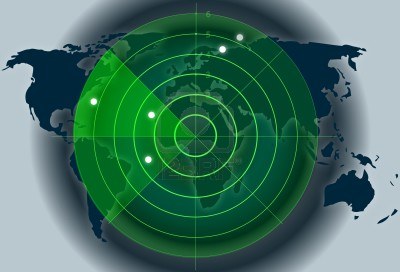
Combining Biometrics, Cyberwarfare, and A Potential Future Aerospace Shield, The Pentagon Is Rushing Toward Uncharted Territory, and Domination.
By Alfred W. McCoy,
Courtesy Of "Alter-Net"
It’s 2025 and an American “triple canopy” of advanced surveillance and armed drones fills the heavens from the lower- to the exo-atmosphere. A wonder of the modern age, it can deliver its weaponry anywhere on the planet with staggering speed, knock out an enemy’s satellite communications system, or follow individuals biometrically for great distances. Along with the country’s advanced cyberwar capacity, it’s also the most sophisticated militarized information system ever created and an insurance policy for U.S. global dominion deep into the twenty-first century. It’s the future as the Pentagon imagines it; it’s under development; and Americans know nothing about it.
They are still operating in another age. “Our Navy is smaller now than at any time since 1917,” complained Republican candidate Mitt Romney during the last presidential debate.
With words of withering mockery, President Obama shot back: “Well, Governor, we also have fewer horses and bayonets, because the nature of our military's changed... the question is not a game of Battleship, where we're counting ships. It's what are our capabilities.”
Obama later offered just a hint of what those capabilities might be: “What I did was work with our joint chiefs of staff to think about, what are we going to need in the future to make sure that we are safe?... We need to be thinking about cyber security. We need to be talking about space.”
Amid all the post-debate media chatter, however, not a single commentator seemed to have a clue when it came to the profound strategic changes encoded in the president’s sparse words. Yet for the past four years, working in silence and secrecy, the Obama administration has presided over a technological revolution in defense planning, moving the nation far beyond bayonets and battleships to cyberwarfare and the full-scale weaponization of space. In the face of waning economic influence, this bold new breakthrough in what’s called “information warfare” may prove significantly responsible should U.S. global dominion somehow continue far into the twenty-first century.
While the technological changes involved are nothing less than revolutionary, they have deep historical roots in a distinctive style of American global power. It’s been evident from the moment this nation first stepped onto the world stage with its conquest of the Philippines in 1898. Over the span of a century, plunged into three Asian crucibles of counterinsurgency -- in the Philippines, Vietnam, and Afghanistan -- the U.S. military has repeatedly been pushed to the breaking point. It has repeatedly responded by fusing the nation’s most advanced technologies into new information infrastructures of unprecedented power.
That military first created a manual information regime for Philippine pacification, then a computerized apparatus to fight communist guerrillas in Vietnam. Finally, during its decade-plus in Afghanistan (and its years in Iraq), the Pentagon has begun to fuse biometrics, cyberwarfare, and a potential future triple canopy aerospace shield into a robotic information regime that could produce a platform of unprecedented power for the exercise of global dominion -- or for future military disaster.
America’s First Information Revolution
This distinctive U.S. system of imperial information gathering (and the surveillance and war-making practices that go with it) traces its origins to some brilliant American innovations in the management of textual, statistical, and visual data. Their sum was nothing less than a new information infrastructure with an unprecedented capacity for mass surveillance.
During two extraordinary decades, American inventions like Thomas Alva Edison’s quadruplex telegraph (1874), Philo Remington’s commercial typewriter (1874), Melvil Dewey’s library decimal system (1876), and Herman Hollerith’s patented punch card (1889) created synergies that led to the militarized application of America’s first information revolution. To pacify a determined guerrilla resistance that persisted in the Philippines for a decade after 1898, the U.S. colonial regime -- unlike European empires with their cultural studies of “Oriental civilizations” -- used these advanced information technologies to amass detailed empirical data on Philippine society. In this way, they forged an Argus-eyed security apparatus that played a major role in crushing the Filipino nationalist movement. The resulting colonial policing and surveillance system would also leave a lasting institutional imprint on the emerging American state.
When the U.S. entered World War I in 1917, the “father of U.S. military intelligence” Colonel Ralph Van Deman drew upon security methods he had developed years before in the Philippines to found the Army’s Military Intelligence Division. He recruited a staff that quickly grew from one (himself) to 1,700, deployed some 300,000 citizen-operatives to compile more than a million pages of surveillance reports on American citizens, and laid the foundations for a permanent domestic surveillance apparatus.
A version of this system rose to unparalleled success during World War II when Washington established the Office of Strategic Services (OSS) as the nation’s first worldwide espionage agency. Among its nine branches, Research & Analysis recruited a staff of nearly 2,000 academics who amassed 300,000 photographs, a million maps, and three million file cards, which they deployed in an information system via “indexing, cross-indexing, and counter-indexing” to answer countless tactical questions.
Yet by early 1944, the OSS found itself, in the words of historian Robin Winks, “drowning under the flow of information.” Many of the materials it had so carefully collected were left to molder in storage, unread and unprocessed. Despite its ambitious global reach, this first U.S. information regime, absent technological change, might well have collapsed under its own weight, slowing the flow of foreign intelligence that would prove so crucial for America’s exercise of global dominion after World War II.
Computerizing Vietnam
Under the pressures of a never-ending war in Vietnam, those running the U.S. information infrastructure turned to computerized data management, launching a second American information regime. Powered by the most advanced IBM mainframe computers, the U.S. military compiled monthly tabulations of security in all of South Vietnam’s 12,000 villages and filed the three million enemy documents its soldiers captured annually on giant reels of bar-coded film. At the same time, the CIA collated and computerized diverse data on the communist civilian infrastructure as part of its infamous Phoenix Program. This, in turn, became the basis for its systematic tortures and 41,000 “extra-judicial executions” (which, based on disinformation from petty local grudges and communist counterintelligence, killed many but failed to capture more than a handfull of top communist cadres).
Most ambitiously, the U.S. Air Force spent $800 million a year to lace southern Laos with a network of 20,000 acoustic, seismic, thermal, and ammonia-sensitive sensors to pinpoint Hanoi’s truck convoys coming down the Ho Chi Minh Trail under a heavy jungle canopy. The information these provided was then gathered on computerized systems for the targeting of incessant bombing runs. After 100,000 North Vietnamese troops passed right through this electronic grid undetected with trucks, tanks, and heavy artillery to launch the Nguyen Hue Offensive in 1972, the U.S. Pacific Air Force pronounced this bold attempt to build an “electronic battlefield” an unqualified failure.
In this pressure cooker of what became history’s largest air war, the Air Force also accelerated the transformation of a new information system that would rise to significance three decades later: the Firebee target drone. By war’s end, it had morphed into an increasingly agile unmanned aircraft that would make 3,500 top-secret surveillance sorties over China, North Vietnam, and Laos. By 1972, the SC/TV drone, with a camera in its nose, was capable of flying 2,400 miles while navigating via a low-resolution television image.
On balance, all this computerized data helped foster the illusion that American “pacification” programs in the countryside were winning over the inhabitants of Vietnam’s villages, and the delusion that the air war was successfully destroying North Vietnam’s supply effort. Despite a dismal succession of short-term failures that helped deliver a soul-searing blow to American power, all this computerized data-gathering proved a seminal experiment, even if its advances would not become evident for another 30 years until the U.S. began creating a third -- robotic -- information regime.
The Global War On Terror
As it found itself at the edge of defeat in the attempted pacification of two complex societies, Afghanistan and Iraq, Washington responded in part by adapting new technologies of electronic surveillance, biometric identification, and drone warfare -- all of which are now melding into what may become an information regime far more powerful and destructive than anything that has come before.
After six years of a failing counterinsurgency effort in Iraq, the Pentagon discovered the power of biometric identification and electronic surveillance to pacify the country’s sprawling cities. It then built a biometric database with more than a million Iraqi fingerprints and iris scans that U.S. patrols on the streets of Baghdad could access instantaneously by satellite link to a computer center in West Virginia.
When President Obama took office and launched his “surge,” escalating the U.S. war effort in Afghanistan, that country became a new frontier for testing and perfecting such biometric databases, as well as for full-scale drone war in both that country and the Pakistani tribal borderlands, the latest wrinkle in a technowar already loosed by the Bush administration. This meant accelerating technological developments in drone warfare that had largely been suspended for two decades after the Vietnam War.
Launched as an experimental, unarmed surveillance aircraft in 1994, the Predator drone was first deployed in 2000 for combat surveillance under the CIA’s “Operation Afghan Eyes.” By 2011, the advanced MQ-9 Reaper drone, with “persistent hunter killer” capabilities, was heavily armed with missiles and bombs as well as sensors that could read disturbed dirt at 5,000 feet and track footprints back to enemy installations. Indicating the torrid pace of drone development, between 2004 and 2010 total flying time for all unmanned vehicles rose from just 71 hours to 250,000 hours.
By 2009, the Air Force and the CIA were already deploying a drone armada of at least 195 Predators and 28 Reapers inside Afghanistan, Iraq, and Pakistan -- and it’s only grown since. These collected and transmitted 16,000 hours of video daily, and from 2006-2012 fired hundreds of Hellfire missiles that killedan estimated 2,600 supposed insurgents inside Pakistan’s tribal areas. Though the second-generation Reaper drones might seem stunningly sophisticated, one defense analyst has called them “very much Model T Fords.” Beyond the battlefield, there are now some 7,000 drones in the U.S. armada of unmanned aircraft, including 800 larger missile-firing drones. By funding its own fleet of 35 drones and borrowing others from the Air Force, the CIA has moved beyond passive intelligence collection to build a permanent robotic paramilitary capacity.
In the same years, another form of information warfare came, quite literally, online. Over two administrations, there has been continuity in the development of a cyberwarfare capability at home and abroad. Starting in 2002, President George W. Bush illegally authorized the National Security Agency to scan countless millions of electronic messages with its top-secret “Pinwale” database. Similarly, the FBI started an Investigative Data Warehouse that, by 2009, held a billion individual records.
Under Presidents Bush and Obama, defensive digital surveillance has grown into an offensive “cyberwarfare” capacity, which has already been deployed against Iran in history’s first significant cyberwar. In 2009, the Pentagon formed U.S. Cyber Command (CYBERCOM), with headquarters at Ft. Meade, Maryland, and a cyberwarfare center at Lackland Air Base in Texas,staffed by 7,000 Air Force employees. Two years later, it declared cyberspace an “operational domain” like air, land, or sea, and began putting its energy into developing a cadre of cyber-warriors capable of launching offensive operations, such as a variety of attacks on the computerized centrifuges in Iran’s nuclear facilities and Middle Eastern banks handling Iranian money.
A Robotic Information Regime
As with the Philippine Insurrection and the Vietnam War, the occupations of Iraq and Afghanistan have served as the catalyst for a new information regime, fusing aerospace, cyberspace, biometrics, and robotics into an apparatus of potentially unprecedented power. In 2012, after years of ground warfare in both countries and the continuous expansion of the Pentagon budget, the Obama administration announced a leaner future defense strategy. It included a 14% cut in future infantry strength to be compensated for by an increased emphasis on investments in the dominions of outer space and cyberspace, particularly in what the administration calls “critical space-based capabilities.”
By 2020, this new defense architecture should theoretically be able to integrate space, cyberspace, and terrestrial combat through robotics for -- so the claims go -- the delivery of seamless information for lethal action. Significantly, both space and cyberspace are new, unregulated domains of military conflict, largely beyond international law. And Washington hopes to use both, without limitation, as Archimedean levers to exercise new forms of global dominion far into the twenty-first century, just as the British Empire once ruled from the seas and the Cold War American imperium exercised its global reach via airpower.
As Washington seeks to surveil the globe from space, the world might well ask: Just how high is national sovereignty? Absent any international agreement about the vertical extent of sovereign airspace (since a conference on international air law, convened in Paris in 1910, failed), some puckish Pentagon lawyer might reply: only as high as you can enforce it. And Washington has filled this legal void with a secret executive matrix -- operated by the CIA and the clandestine Special Operations Command -- that assigns names arbitrarily, without any judicial oversight, to a classified “kill list” that means silent, sudden death from the sky for terror suspects across the Muslim world.
Although U.S. plans for space warfare remain highly classified, it is possible to assemble the pieces of this aerospace puzzle by trolling the Pentagon’s websites, and finding many of the key components in technical descriptions at the Defense Advanced Research Projects Agency (DARPA). As early as 2020, the Pentagon hopes to patrol the entire globe ceaselessly, relentlessly via a triple canopy space shield reaching from stratosphere to exosphere, driven by drones armed with agile missiles, linked by a resilient modular satellite system, monitored through a telescopic panopticon, and operated by robotic controls.
At the lowest tier of this emerging U.S. aerospace shield, within striking distance of Earth in the lower stratosphere, the Pentagon is building an armada of 99 Global Hawk drones equipped with high-resolution cameras capable of surveilling all terrain within a 100-mile radius, electronic sensors to intercept communications, efficient engines for continuous 24-hour flights, and eventually Triple Terminator missiles to destroy targets below. By late 2011, the Air Force and the CIA had already ringed the Eurasian land mass with a network of 60 bases for drones armed with Hellfire missiles and GBU-30 bombs, allowing air strikes against targets just about anywhere in Europe, Africa, or Asia.
The sophistication of the technology at this level was exposed in December 2011 when one of the CIA’s RQ-170 Sentinels came down in Iran. Revealed was a bat-winged drone equipped with radar-evading stealth capacity, active electronically scanned array radar, and advanced optics “that allow operators to positively identify terror suspects from tens of thousands of feet in the air.”
If things go according to plan, in this same lower tier at altitudes up to 12 miles unmanned aircraft such as the “Vulture,” with solar panels covering its massive 400-foot wingspan, will be patrolling the globe ceaselessly for up to five years at a time with sensors for “unblinking” surveillance, and possibly missiles for lethal strikes. Establishing the viability of this new technology, NASA’s solar-powered aircraft Pathfinder, with a 100-foot wingspan, reached an altitude of 71,500 feet altitude in 1997, and its fourth-generation successor the “Helios” flew at 97,000 feet with a 247-foot wingspan in 2001, two miles higher than any previous aircraft.
For the next tier above the Earth, in the upper stratosphere, DARPA and the Air Force are collaborating in the development of the Falcon Hypersonic Cruise Vehicle. Flying at an altitude of 20 miles, it is expected to “deliver 12,000 pounds of payload at a distance of 9,000 nautical miles from the continental United States in less than two hours.” Although the first test launches in April 2010 and August 2011 crashed midflight, they did reach an amazing 13,000 miles per hour, 22 times the speed of sound, and sent back“unique data” that should help resolve remaining aerodynamic problems.
At the outer level of this triple-tier aerospace canopy, the age of space warfare dawned in April 2010 when the Pentagon quietly launched the X-37B space drone, an unmanned craft just 29 feet long, into an orbit 250 miles above the Earth. By the time its second prototype landed at Vandenberg Air Force Base in June 2012 after a 15-month flight, this classified mission represented a successful test of “robotically controlled reusable spacecraft” and established the viability of unmanned space drones in the exosphere.
At this apex of the triple canopy, 200 miles above Earth where the space drones will soon roam, orbital satellites are the prime targets, a vulnerability that became obvious in 2007 when China used a ground-to-air missile to shoot down one of its own satellites. In response, the Pentagon is now developing the F-6 satellite system that will “decompose a large monolithic spacecraft into a group of wirelessly linked elements, or nodes [that increases] resistance to... a bad part breaking or an adversary attacking.” And keep in mind that the X-37B has a capacious cargo bay to carry missiles or future laser weaponry to knock out enemy satellites -- in other words, the potential capability to cripple the communications of a future military rival like China, which will have its own global satellite system operational by 2020.
Ultimately, the impact of this third information regime will be shaped by the ability of the U.S. military to integrate its array of global aerospace weaponry into a robotic command structure that would be capable of coordinating operations across all combat domains: space, cyberspace, sky, sea, and land. To manage the surging torrent of information within this delicately balanced triple canopy, the system would, in the end, have to become self-maintaining through “robotic manipulator technologies,” such as the Pentagon’s FREND system that someday could potentially deliver fuel, provide repairs, or reposition satellites.
For a new global optic, DARPA is building the wide-angle Space Surveillance Telescope (SST), which could be sited at bases ringing the globe for a quantum leap in "space surveillance.” The system would allow future space warriors to see the whole sky wrapped around the entire planet while seated before a single screen, making it possible to track every object in Earth orbit.
Operation of this complex worldwide apparatus will require, as one DARPA official explained in 2007, "an integrated collection of space surveillance systems -- an architecture -- that is leak-proof." Thus, by 2010, the National Geospatial-Intelligence Agency had 16,000 employees, a $5 billion budget, and a massive $2 billion headquarters at Fort Belvoir, Virginia, with 8,500 staffers wrapped in electronic security -- all aimed at coordinating the flood of surveillance data pouring in from Predators, Reapers, U-2 spy planes, Global Hawks, X-37B space drones, Google Earth, Space Surveillance Telescopes, and orbiting satellites. By 2020 or thereafter -- such a complex techno-system is unlikely to respect schedules -- this triple canopy should be able to atomize a single “terrorist” with a missile strike after tracking his eyeball, facial image, or heat signature for hundreds of miles through field and favela, or blind an entire army by knocking out all ground communications, avionics, and naval navigation.
Technological Dominion Or Techno-Disaster?
Peering into the future, a still uncertain balance of forces offers two competing scenarios for the continuation of U.S. global power. If all or much goes according to plan, sometime in the third decade of this century the Pentagon will complete a comprehensive global surveillance system for Earth, sky, and space using robotics to coordinate a veritable flood of data from biometric street-level monitoring, cyber-data mining, a worldwide network of Space Surveillance Telescopes, and triple canopy aeronautic patrols. Through agile data management of exceptional power, this system might allow the United States a veto of global lethality, an equalizer for any further loss of economic strength.
However, as in Vietnam, history offers some pessimistic parallels when it comes to the U.S. preserving its global hegemony by militarized technology alone. Even if this robotic information regime could somehow check China’s growing military power, the U.S. might still have the same chance of controlling wider geopolitical forces with aerospace technology as the Third Reich had of winning World War II with its “super weapons” -- V-2 rockets that rained death on London and Messerschmitt Me-262 jets that blasted allied bombers from Europe’s skies. Complicating the future further, the illusion of information omniscience might incline Washington to more military misadventures akin to Vietnam or Iraq, creating the possibility of yet more expensive, draining conflicts, from Iran to the South China Sea.
If the future of America’s world power is shaped by actual events rather than long-term economic trends, then its fate might well be determined by which comes first in this century-long cycle: military debacle from the illusion of technological mastery, or a new technological regime powerful enough to perpetuate U.S. global dominion.
Friday, November 30, 2012
WW III: The Unthinkable Cost Of Preserving The Petrodollar
As noted by many of our readers, one of the key topics omitted from our article on the inevitability of economic collapse was the petrodollar system. Due to its significance, we felt that this subject deserves its own article. If you have never heard of the petrodollar, don’t be surprised. There’s a good reason for this. No major news network will dare touch this subject because if this information was ever to become public knowledge, politicians would find it next to impossible to convince American people to support any more wars. Public approval of wars is only possible as long as people remain ignorant of the primary driving force behind our foreign policy. The reason you haven’t heard of the petrodollar system is because our government wants you to think that we start wars to spread democracy.

In July of 1944, as World War II was still raging, 730 delegates from all 44 Allied nations gathered in Bretton Woods, New Hampshire, to setup institutions and procedures to regulate the international monetary system and to establish the rules for commercial and financial relations among the world’s major industrial states.
The Bretton Woods Agreement established the dollar as the world’s reserve currency, which meant that international commodities were priced in dollars. The agreement which gave the United States a distinct financial advantage, was made under the condition that those dollars would remain redeemable for gold at a consistent rate of $35 per ounce. The fixed dollar to gold convertibility rate established a stable platform for global economic growth.
As the issuer of the world’s reserve currency, the United States promised to print dollars in direct proportion to its gold reserves. However, this promise was based on “the honor system” since the Federal Reserve refused to allow any audits or supervision of its printing presses.

This was obviously not a temporary suspension as Nixon claimed, but rather a permanent default. For the nations of the world who entrusted the United States with their gold, this action was outright theft. Overnight, dollars transformed into fiat currency and the Federal Reserve was now free to print away. By abandoning the gold standard, the U.S. government removed all restrictions from the Federal Reserve. However, the ability to print money out of thin air comes with a pitfall.
This is because each new printed dollar devalues the existing money supply already in circulation.
That is unless there is a growing demand for dollars to counterbalance the newly issued currency.
So, under the direction of the Secretary of State Henry Kissinger, a brilliant political and economic idea was soon devised referred to as the petrodollar system.

While other countries exchanged their currency for the dollar (forfeiting value in the process), the U.S. simply printed more money to match their needs and purchase their oil – essentially for free.
Of course rather than exchange currencies, many countries focused on exporting goods to the U.S. to maintain their constant supply of the Federal Reserve paper. Paper went out, while everything America needed came in and in the process the United States got very, very rich. It was the largest financial con in recorded history.
As the coffers got fatter and fatter, the U.S. military machine continued to expand at an accelerated rate. The arms race of the Cold War was a game of poker. Military expenditures were the chips and the U.S. had an endless supply of chips. With the Petrodollar under its belt, the U.S. was able to raise the stakes higher and higher, outspending every other county on the planet. Until, eventually, U.S. military expenditure surpassed that of all other nations in the world combined. The Soviet Union never had a chance.
The collapse of the Communist block in 1991 removed the last counterbalance to America’s military might. The United States was now an undisputed super power with no rival. Many hoped that this would mark the beginning of a new era of peace and stability. Unfortunately, there were those in high places who had other ideas.

What exactly was it that was worth killing 500,000 kids for? Let’s see if you can spot a pattern here.
Iraq… In November 2000, Iraq began selling its oil exclusively in euros. This was a direct attack on the petrodollar and it wasn’t going to be tolerated. In response, the U.S. government with the assistance of the mainstream media began to build up a massive propaganda campaign, claiming that Iraq had weapons of mass destruction and was planning to use them.
In 2003, the U.S. invaded Iraq. Once the U.S. had control of the country, oil sales were immediately switched back to dollars. This is particularly notable due to the fact that switching back to the dollar meant a 15-20% loss in revenue due to the euro’s higher value. It doesn’t make any sense at all unless you take the Petrodollar into account.

Libya… Muammar Gaddafi harbored the Lockerbie Bombers and allowed various terrorist organizations establish training camps in Libya. He tried to buy a nuke from China in 1972. In 1977, he approached Pakistan, then India. He sought nerve gas from Thailand. Then he did something totally insane. Gaddafi decided to move away from the petrodollar in favor of a gold-based currency. Seeking nukes and harboring terrorists is one thing, but threatening the petrodollar is quite another. Within a year, ‘internal’ elements rose up in rebellion against Gaddafi.
After taking control of the region, U.S. and NATO armed rebels executed Gaddafi in cold blood and immediately setup the Libyan Central Bank.

Iran… In 2005, Iran sought to create an Iranian Oil Exchange, thus bypassing the US controlled petrodollar. Fear that western powers would freeze accounts in European and London banks put an end to that plan. More recently however, Iran was able to secure agreements to begin trading its oil in exchange for gold. In response, the U.S. government, with mainstream media assistance has been attempting to build international support for military strikes on the pretext of preventing Iran from building a nuclear weapon. In his recent State of the Union address, Obama went as far as to say that when it comes to Iran and the insistence they dismantle their nuclear program, “no options are off the table”. By stating ‘no options’ this would include nuclear deployment as a deterrent. In the meantime, the U.S. established sanctions that, U.S. officials openly admit, are aimed at causing a collapse of the Iranian economy.
Syria… Syria is Iran’s closest ally and they’re bound by mutual defense agreements. Syria is currently being destabilized from within by the “Free Syrian Army” (FSA), in its intensifying effort to topple Assad. It is a well known fact that FSA consists of multiple terrorist factions from Afghanistan to Chechnya, most notably Al Qaeda. Yet this is not stopping United States or NATO from providing covert assistance to FSA. Despite warning from Russia and China to the United States, the White House has made statements within the past month indicating that the U.S. is considering military intervention.
However, it should be clear, that military intervention in Syria and Iran isn’t being considered. It’s a forgone conclusion, just as it was in Iraq and Libya.
The petrodollar paradigm is saving the dollar from crashing by accomplishing two things. First, it creates a mandatory international demand for the Federal Reserve paper, preventing dollar inflation from going into hyperinflation. Second, the oil profits from OPEC pay for a portion of our ever expanding national debt, helping perpetuate a giant Ponzi scheme in the U.S. treasury market. Those who control the United States understand that even if only a few countries begin to sell their oil in another currency it will set off a chain reaction and the dollar will collapse. They understand that there’s absolutely nothing else holding up the value of the dollar at this point, and so does the rest of the world.

But rather than accepting the fact that the dollar is nearing the end of its lifespan, the powers that be have made a calculated gambit. They have decided to use the brute force of the U.S. military to crush each and every resistant state in the Middle East and Africa.
That, in and of itself, would be bad enough. But what you need to understand is that this is not going to end with Iran. China and Russia have stated publicly and in no uncertain terms that they will not tolerate an attack on Iran or Syria. Iran is one of their key allies, one of the last in independent oil producers in the region. And they understand that if Iran falls, then they will have no way to escape the dollar without going to war. And yet, the United States is pushing forward despite the warnings.
What we’re witnessing here is a trajectory that leads straight to the unthinkable.
It’s a trajectory that was mapped out years ago, in full awareness of the human consequences.
It obviously isn’t the president. The decision to invade Libya, Syria and Iran was made long before Obama had risen to the national spotlight. And yet he’s carrying out his duty just like the puppets that preceded him. So who is it that pulls the strings?

Often the best answer to questions like these are found by asking another question. Cui bono? Who benefits?
Obviously, those who have the power to print the dollar out of thin air have the most to lose if the dollar was to fall. Since 1913, that power has been held by the Federal Reserve.
The Federal Reserve is a PRIVATE entity, owned by a conglomerate of the most powerful banks in the world. And the men who control those banks are the ones who pull the strings. To them, this is just a game. Your life and the lives of those you love are just pawns on their chess board. And like a spoiled four year old who tips the board on to the floor when he starts to lose, the powers that be are willing to start World War III to keep control of the global financial system.
Remember this when these wars extend and accelerate. Remember this when your son or your daughter comes back home in a flag draped coffin. Remember this when they point the finger at the new boogeyman.

However, if you want to distinguish truth from propaganda, if you want to know the real reasons behind the global conflicts in our recent history, you must first learn about the petrodollar system. Without this crucial piece of info, you will have a hard time understanding what really happened in Libya, what’s happening in Syria right now and what’s going to happen in Iran next.
Why did NATO and the U.S. aid Libyan “rebels” in killing Gaddafi? Why was our government willing to support and arm the same terrorists that would later turn on our embassy and murder US Ambassador to Libya, Chris Stevens? Why was killing Gaddafi so absolutely imperative?
Why are we now doing the same thing in Syria? Why are U.S. operatives currently on the ground in Syria aiding Al Qaeda to topple Assad? Why are we willing to work along side known terrorists just to destabilize Syria and overthrow the regime there?
Why are we willing to risk World War 3 by attacking Iran, a key ally to Russia and China?
Pakistan and North Korea already possess a nuclear stockpile, but Iran is years away from developing a nuclear weapon. Iran has no military capability to target the U.S. and it has not attacked another country since 1798. Yet the media is trying to convince us that we are weeks away from Ahmedinajad unleashing his non-existent weapons of mass destruction. Sound a little familiar? Have we heard this before, maybe?
So what is the petrodollar system and why is it so important? Why is the United States willing to trigger a new world war just to maintain the hegemony of the petrodollar? To get a proper perspective we need to start with a quick historical background:
Why are we now doing the same thing in Syria? Why are U.S. operatives currently on the ground in Syria aiding Al Qaeda to topple Assad? Why are we willing to work along side known terrorists just to destabilize Syria and overthrow the regime there?
Why are we willing to risk World War 3 by attacking Iran, a key ally to Russia and China?
Pakistan and North Korea already possess a nuclear stockpile, but Iran is years away from developing a nuclear weapon. Iran has no military capability to target the U.S. and it has not attacked another country since 1798. Yet the media is trying to convince us that we are weeks away from Ahmedinajad unleashing his non-existent weapons of mass destruction. Sound a little familiar? Have we heard this before, maybe?
So what is the petrodollar system and why is it so important? Why is the United States willing to trigger a new world war just to maintain the hegemony of the petrodollar? To get a proper perspective we need to start with a quick historical background:
Bretton Woods Conference
In July of 1944, as World War II was still raging, 730 delegates from all 44 Allied nations gathered in Bretton Woods, New Hampshire, to setup institutions and procedures to regulate the international monetary system and to establish the rules for commercial and financial relations among the world’s major industrial states.
The Bretton Woods Agreement established the dollar as the world’s reserve currency, which meant that international commodities were priced in dollars. The agreement which gave the United States a distinct financial advantage, was made under the condition that those dollars would remain redeemable for gold at a consistent rate of $35 per ounce. The fixed dollar to gold convertibility rate established a stable platform for global economic growth.
As the issuer of the world’s reserve currency, the United States promised to print dollars in direct proportion to its gold reserves. However, this promise was based on “the honor system” since the Federal Reserve refused to allow any audits or supervision of its printing presses.
The U.S. Defaults On Its Obligation To Convert Dollars To Gold
In the years leading up to 1970, expenditures on the Vietnam war made it clear to many countries that the U.S. was printing far more money than it had gold. In response to this and the negative U.S. trade balance, nations began demanding fulfillment of America’s “promise to pay” – that is, the redemption of their dollars for gold. This of course set off a rapid decline in the value of the dollar. The situation climaxed in 1971 when France attempted to withdraw its gold and Nixon refused.On August 15, President Nixon made a televised announcement
referred to as the Nixon shock, stating the following:
“I have directed the Secretary of the Treasury to
take the action necessary to defend the dollar
against the speculators. I have directed Secretary
Connolly to suspend temporarily the convertibility
of the dollar into gold or other reserve assets,
except in amounts and conditions determined to be
in the interest of monetary stability and in the
best interest of United States.”
This is because each new printed dollar devalues the existing money supply already in circulation.
That is unless there is a growing demand for dollars to counterbalance the newly issued currency.
So, under the direction of the Secretary of State Henry Kissinger, a brilliant political and economic idea was soon devised referred to as the petrodollar system.
The Birth Of The Petrodollar Leads To Global Domination
In 1973, President Nixon promised King Faisal of Saudi Arabia that the US would protect Saudi Arabian oilfields from any and all invaders. In return, Saudi Arabia and by extension OPEC, agreed to sell their oil in US dollars only. Essentially, this meant that all countries purchasing oil from OPEC had to do so in US dollars, or ‘petrodollars’. This forced the world’s oil money to flow through the US Federal Reserve, creating ever-growing international demand for U.S. dollars. As if that weren’t sweet enough, as part of the deal, OPEC countries were required to invest their profits in US treasuries, bonds and bills. This strengthened the US dollar, resulting in a steady US economic growth.While other countries exchanged their currency for the dollar (forfeiting value in the process), the U.S. simply printed more money to match their needs and purchase their oil – essentially for free.
Of course rather than exchange currencies, many countries focused on exporting goods to the U.S. to maintain their constant supply of the Federal Reserve paper. Paper went out, while everything America needed came in and in the process the United States got very, very rich. It was the largest financial con in recorded history.
As the coffers got fatter and fatter, the U.S. military machine continued to expand at an accelerated rate. The arms race of the Cold War was a game of poker. Military expenditures were the chips and the U.S. had an endless supply of chips. With the Petrodollar under its belt, the U.S. was able to raise the stakes higher and higher, outspending every other county on the planet. Until, eventually, U.S. military expenditure surpassed that of all other nations in the world combined. The Soviet Union never had a chance.
The collapse of the Communist block in 1991 removed the last counterbalance to America’s military might. The United States was now an undisputed super power with no rival. Many hoped that this would mark the beginning of a new era of peace and stability. Unfortunately, there were those in high places who had other ideas.
Petrodollar System Must Be Maintained At Any Cost
That same year, the U.S. invaded Iraq in the first Gulf War. And after crushing the Iraqi military and destroying their infrastructure, including water purification plants and hospitals, crippling sanctions were imposed on Iraq, which prevented its infrastructure from being rebuilt. These sanctions, which were initiated by Bush Sr. and sustained throughout the entire Clinton administration, lasted for over a decade and were estimated to have killed over 500,000 children. The Clinton administration was fully aware of these figures.Excerpt from a May 5, 1996 interview:
Lesley Stahl from 60 Minutes show, asks Secretary of State
Madeleine Albright about the U.S. sanctions against Iraq:
“We have heard that a half million children have died.
I mean, that’s more children than died in Hiroshima.
And, you know, is the price worth it?“
Secretary of State Madeleine Albright replies:
“I think this is a very hard choice,
but the price–we think the price is worth it.”
Iraq… In November 2000, Iraq began selling its oil exclusively in euros. This was a direct attack on the petrodollar and it wasn’t going to be tolerated. In response, the U.S. government with the assistance of the mainstream media began to build up a massive propaganda campaign, claiming that Iraq had weapons of mass destruction and was planning to use them.
In 2003, the U.S. invaded Iraq. Once the U.S. had control of the country, oil sales were immediately switched back to dollars. This is particularly notable due to the fact that switching back to the dollar meant a 15-20% loss in revenue due to the euro’s higher value. It doesn’t make any sense at all unless you take the Petrodollar into account.
Excerpt from a March 2, 2007 DemocracyNow interview:
So I came back to see him a few weeks later and by that time we were bombing in Afghanistan. I said “Are we still going to war with Iraq?” and he said, “Oh, it’s worse than that”, he reached over on his desk, picked a piece of paper and he said:
“I just got this down from upstairs today (meaning secretary of defense office) today. This is a memo that describes how we’re going take out 7 countries in 5 years, starting with Iraq and then Syria, Lebanon, Libya, Somalia, Sudan and finishing of Iran.”
– Wesley Clark, Retired 4-Star General and Supreme Allied Commander Europe of NATO from 1997 to 2000
After taking control of the region, U.S. and NATO armed rebels executed Gaddafi in cold blood and immediately setup the Libyan Central Bank.
Iran… In 2005, Iran sought to create an Iranian Oil Exchange, thus bypassing the US controlled petrodollar. Fear that western powers would freeze accounts in European and London banks put an end to that plan. More recently however, Iran was able to secure agreements to begin trading its oil in exchange for gold. In response, the U.S. government, with mainstream media assistance has been attempting to build international support for military strikes on the pretext of preventing Iran from building a nuclear weapon. In his recent State of the Union address, Obama went as far as to say that when it comes to Iran and the insistence they dismantle their nuclear program, “no options are off the table”. By stating ‘no options’ this would include nuclear deployment as a deterrent. In the meantime, the U.S. established sanctions that, U.S. officials openly admit, are aimed at causing a collapse of the Iranian economy.
Syria… Syria is Iran’s closest ally and they’re bound by mutual defense agreements. Syria is currently being destabilized from within by the “Free Syrian Army” (FSA), in its intensifying effort to topple Assad. It is a well known fact that FSA consists of multiple terrorist factions from Afghanistan to Chechnya, most notably Al Qaeda. Yet this is not stopping United States or NATO from providing covert assistance to FSA. Despite warning from Russia and China to the United States, the White House has made statements within the past month indicating that the U.S. is considering military intervention.
However, it should be clear, that military intervention in Syria and Iran isn’t being considered. It’s a forgone conclusion, just as it was in Iraq and Libya.
World War 3: A Calculated Risk To Preserve The Petrodollar
The U.S. is actively working to create the context which gives them diplomatic cover to do what they already have planned. The motive for these invasions and covert actions becomes clear when we look at them in full context and connect the dots.The petrodollar paradigm is saving the dollar from crashing by accomplishing two things. First, it creates a mandatory international demand for the Federal Reserve paper, preventing dollar inflation from going into hyperinflation. Second, the oil profits from OPEC pay for a portion of our ever expanding national debt, helping perpetuate a giant Ponzi scheme in the U.S. treasury market. Those who control the United States understand that even if only a few countries begin to sell their oil in another currency it will set off a chain reaction and the dollar will collapse. They understand that there’s absolutely nothing else holding up the value of the dollar at this point, and so does the rest of the world.
But rather than accepting the fact that the dollar is nearing the end of its lifespan, the powers that be have made a calculated gambit. They have decided to use the brute force of the U.S. military to crush each and every resistant state in the Middle East and Africa.
That, in and of itself, would be bad enough. But what you need to understand is that this is not going to end with Iran. China and Russia have stated publicly and in no uncertain terms that they will not tolerate an attack on Iran or Syria. Iran is one of their key allies, one of the last in independent oil producers in the region. And they understand that if Iran falls, then they will have no way to escape the dollar without going to war. And yet, the United States is pushing forward despite the warnings.
What we’re witnessing here is a trajectory that leads straight to the unthinkable.
It’s a trajectory that was mapped out years ago, in full awareness of the human consequences.
Who Is Pulling The Strings?
But who was it that put us on this course? What kind of psychopath is willing to intentionally set off a global conflict that would lead to millions of deaths just to protect the value of a paper currency?It obviously isn’t the president. The decision to invade Libya, Syria and Iran was made long before Obama had risen to the national spotlight. And yet he’s carrying out his duty just like the puppets that preceded him. So who is it that pulls the strings?
Often the best answer to questions like these are found by asking another question. Cui bono? Who benefits?
Obviously, those who have the power to print the dollar out of thin air have the most to lose if the dollar was to fall. Since 1913, that power has been held by the Federal Reserve.
The Federal Reserve is a PRIVATE entity, owned by a conglomerate of the most powerful banks in the world. And the men who control those banks are the ones who pull the strings. To them, this is just a game. Your life and the lives of those you love are just pawns on their chess board. And like a spoiled four year old who tips the board on to the floor when he starts to lose, the powers that be are willing to start World War III to keep control of the global financial system.
Remember this when these wars extend and accelerate. Remember this when your son or your daughter comes back home in a flag draped coffin. Remember this when they point the finger at the new boogeyman.
So, What Can We Do About All This?
Today’s Geo-political climate, coupled with the desperation of the banking cartel to save the petrodollar, makes World War III a legitimate concern more than ever. If we’re lucky enough, maybe we will avoid a global military showdown between Russia, China and the West. But, we cannot avoid an economic collapse, regardless of whether WWW III is triggered or not. This is because no matter how many Mideast regimes we topple, we simply cannot stop China and Russia from dropping the dollar in the near future. Both of these countries have already signed significant agreements purposed to move them away from the dollar. Despite the best efforts of the banking cartel to preserve the petrodollar, this paradigm is starting to crumble.
So what can we do about all this? First, let’s admit the obvious. The power to prevent any of this is not in our hands. But, at the same time, we don’t have to just sit idly while the dollar is circling the drain. There are specific things we can and should do.
1. BE MORE DISCERNING
Critical thinking and common sense are in decline these days.
Rather than just swallow what we’re fed by the mainstream media, we need to question it.
Most people are just unaware that 90% of all American media is controlled by six global conglomerates that also hold assets in the military complex and oil industry, and are interconnected with major banking interests.
2. GET THE FACTS
Read both of the articles linked below and make sure to watch the videos on those pages.
Remember, be discerning. So crosscheck the info in these articles to make sure the facts are accurate.
The first article will convince you just how deep of a hole we’re in. The second will help you understand that we can’t depend on the government to get us out of this mess.
3. SPREAD THE TRUTH
Individually we are ineffective. But together we have a chance. The powers that be count on the sheeple to be asleep. They also count on our willful ignorance, because they know that rather than accept the unpleasant reality, people readily deny the obvious.
Still, the internet gives us a distinct advantage over the system. Social media makes it possible for information to spread among millions of people in a matter of days. We need to make articles and videos like this go viral by Tweeting, posting on Facebook, emailing everybody we know, posting on forums, etc. You can do your part right now by clicking on the floating “Share” button on the right and using some of the social media icons on that menu to share this information.
4. GET READY NOW
There’s a ton of online resources on this subject. Sometimes the information is helpful and practical, and other times it’s outdated or incomplete. Also, beware of the sites out there that try to scare the crap out of you just to sell you their eBooks on emergency preparedness. Still, if you take your time, you can find lots of good info online.
With that said, we are currently working on a free “how to” guide with an easy to follow step by step action plan. It will outline practical but critical actions you should take right now to get ready for the ensuing chaos, along with financial advice to safeguard whatever savings you may have. FYI, CrisisHQ.com does not sell gold or bunkers or anything else for that matter. Our single mission is to help you be prepared instead of scared.
To be notified when we publish the article on “How to prepare for the coming crisis,” please subscribe to our article notification list using the form in the box on the right. We hate spam just as much as you do, so we don’t sell or share your email or ever send out spam. Your info is kept absolutely private and safe.
Via: "Crisis HQ"
Subscribe to:
Posts (Atom)
