Showing posts with label Iran. Show all posts

Sunday, October 05, 2014

All The Ayatollah's Men


Iraq's Shiite Militias Are Becoming As Great A Danger As The Islamic State.

Armed men posing with severed heads, massacres of mosque-goers during Friday prayers, massive reliance on transnational jihadists -- these are crimes that are usually associated with the Islamic State (IS). However, they're also the actions of some of Iraq's growing Shiite militia organizations, which are playing an increasingly prominent role in fighting the Sunni jihadists. These groups, many of which have deep ideological and organizational links to Iran, are sweeping away what is left of any notion of the Baghdad government's authority -- and represent a massive challenge to President Barack Obama's stated goal of working with an inclusive Iraqi government to push back IS.
Over 50 Shiite militias are now recruiting and fighting in Iraq. These groups are actively recruiting -- drawing potential soldiers away from the Iraqi army and police and bringing fighters into highly ideological, anti-American, and rabidly sectarian organizations. Many of these trainees are not simply being used to push back Sunni jihadists, but in many cases form a rear guard used to control districts that are supposedly under Baghdad's control. 
Shiite militias have embedded themselves within the structures of the Iraqi government, which has become far too reliant on their power to contemplate cracking down on them. Together, they have committed horrifying human rights abuses: In early June, Shiite militias, along with Iraqi security forces, reportedly executed around 255 prisoners, including children. An Amnesty International report from June detailed how Shiite militias regularly carried out extrajudicial summary executions, and reported that dozens of Sunni prisoners were killed in government buildings.
The militias also played a leading role in the liberation of the besieged Shiite Turkmen town of Amerli. Kataib Hezbollah, a U.S.-designated terrorist group and direct Iranian proxy, even used Iraqi government helicopters to deliver arms and other supplies during the battle. Just as IS has captured and used U.S.-supplied vehicles, U.S.-made M1A1 Abrams tanks provided to the Iraqi governmenthave flown sectarian Shiite banners and supported Kataib Hezbollah operations. Those tanks are not alone: U.S.-made armored Humvees, which Kataib Hezbollah once targeted during the Iraq War with rocket-propelled grenades (when driven by Americans), have also been taken by the militia and used in operations.
Iran has led the way in developing Iraq's Shiite militias. Since May 2013, Tehran has bolstered its network of new and old Iraqi proxy groups to provide a steady flow of fighters to Syria. Some of these Iraqi forces, who had been fighting on behalf of President Bashar al-Assad's regime, redeployed back to Iraq and form the nucleus of newer militia groups which are currently fighting the Baghdad government's Sunni enemies.
Due to Iran's Syria-focused recruitment efforts, Tehran's proxies also had a leg up on pulling in new fighters for the Iraq front. In April, Iran-backed groups such as Kataib Hezbollah, Badr, and Asaib Ahl al-Haq called for fresh recruits to fight in IraqEventually, these calls morphed into Iraqi Shiite militias spinning off popular committee-based militias under their command. While the creation of so many groups may seem unnecessarily complicated, it actually helps create the image of wide-ranging popular support for militias promoting Iran's policies and ideology. Furthermore, it allows established groups to more easily separate new, less-experienced volunteers from career militiamen.
For example, Kataib Hezbollah -- a militia formed with the help of Lebanon's Hezbollah in 2007 -- recently announced the creation of the Popular Defense Companies. The new group was crafted to take Iraqi Shiite volunteers under Kataib Hezbollah's management, and today it boasts large deployments south of the cities of Baghdad, Diyala, and Amerli.
The Badr Organization, an armed group in the thousands and one of Iran's primary clients in Iraq, is another pillar of Tehran's efforts to develop Shiite militias. During the Iraq War, through its domination of government offices, the group ran a number of sectarian death squads. Badr has also been involved in the fighting in Syria, creatingthe Martyr Baqir al-Sadr Force for that purpose. 
But it is in Baghdad where the Badr Organization's influence is strongest.
The group's sway extends deep into Iraq's Internal Security Forces, where it is said to directly manage many police and special operations-type groups. Badr also has great influence in the political sphere: It has secured key positions within the Iraqi government, and is part of Prime Minister Haider al-Abadi's State of Law alliance -- Abadi even wants to appoint its leader, Hadi al-Amiri, as the country's interior minister. 
Badr's militiamen have spread far and wide among the constellation of Iraq's Iranian proxies. Its alumni include Kataib Hezbollah leaderJamal al-IbrahimiAli al-Yasiri, the leader of a Shiite militia fighting in Syria called the Khurasani Unit; and Wathiq al-Battat, leader of the Mukhtar Army, a hyper-sectarian group that once launched a rocket attack against Iranian dissidents at Camp Liberty.  
Former Badr militiamen are also deeply embedded within Iraq's political leadership. Sheikh Adnan al-Shahmani, an Iraqi parliamentarian and member of the Iraqi parliament's National and Defense Committee, is himself a former Badr fighter and leader of the Tayyar al-Rasuli political party, which also has a militia. As early as September 2013, he had called for sectarian militias to protect Shiites living in Sunni areas. The parent parties of Khurasani Unit and Tayyar al-Rasuli are both members of the State of Law coalition -- portions of a nebula of allied organizations created to impose Iran's will within Iraq.
Iran's most powerful proxies in Iraq have worked closely together to prop up the Assad regime in Damascus. Kataib Hezbollah and Badrformed the Kataib Sayyid al-Shuhada ("The Master of the Martyrs Brigade," or KSS) in early 2013 to fight in Syria. KSS is led in part by Abu Mustafa al-Sheibani, a commander affiliated with both Badr and the Iranian Islamic Revolutionary Guard Corps' Quds Force. The group's secretary-general, Mustafa al-Khazali, deployed to Syria andwas wounded in the suburbs of Damascus.
Now, the commanders who cut their teeth in Syria are returning home to play a political and military role in the struggle for Iraq. Khazali went on to win a seat in parliament during Iraq's parliamentary election in April, when his group took on the role of political party and ran in the city of Basra on then Prime Minister Nouri al-Maliki's State of Law electoral list. KSS commanders are also engaged in fighting against their domestic enemies: Abu Mujahid al-Maliki, a KSS veteran from Syria and Khazali's campaign manager,was killed fighting in Iraq in August.
Asaib Ahl al-Haq ("The League of the Righteous," or AAH) has been another major Iranian proxy in Iraq. The group began during the Iraq War as an Iranian-backed splinter from radical cleric Moqtada al-Sadr's Mahdi Army, and quickly grew into a formidable fighting group. During the war, it gained a degree of infamy for itskidnappings and executions of British contractors and American soldiers. The group has sent many fighters to Syria, and in early 2014started to deploy in Iraq's restive Anbar province to combat the government's Sunni enemies.
The growth of these pro-Iranian Shiite militias, and many more like them, helps demonstrate Iran's goals for the domination of Shiite Iraq. These groups not only benefit from Iran's patronage and organizational capabilities -- they also all march to Tehran's ideological tune. They are loyal to Iran's Supreme Leader Ayatollah Khamenei and Iran's ideology of absolute wilayat-e faqih, which grants the supreme leader ultimate political and religious authority. They also follow the model of Iran's Lebanese proxy, Hezbollah, and are intent on executing Iran's will in the region and furthering Iran's "Islamic Revolution."
Just as IS's stated aim is to erase the borders that were drawn in the Middle East following the end of World War I, Iranian-backed Shiite militias are also taking part in this process. The cross-pollination between Syrian and Iraqi Shiite militias has eroded national boundaries as surely as the Sunni jihadist campaign: From the beginning of their involvement in both conflicts, Shiite militias have adopted a narrative that they will "defend shrines" or "defend Shiites," no matter their geographic location.
Damascus's oldest and most prominent Shiite foreign fighter militia, the Abu Fadl al-Abbas Brigade (LAFA), has played a key role in promoting this grander notion of sectarian war. In August, the pro-Iranian organization announced its own Iraq-based organization, which claims to be deployed south of Baghdad and possibly near Amerli. Abu Ali al-Darraji, one of its former commanders from Damascus, also started his own LAFA affiliate with fighters who had previously been engaged in Syria. Often, these LAFA offshoots have been hazy regarding their own ideology, but their links to Iran's networks certainly suggest that Tehran exerts a strong pull on them.
While Iran has extensive links to most, if not all, of Iraq's Shiite militias, other powerful
Iraqi Shiite elements that do not share Iran's absolutist ideology have also invested in their own groups.
Moqtada al-Sadr's Saraya al-Salam ("The Peace Brigade") was established this June, at around the same time Grand Ayatollah Ali al-Sistani issued a fatwa calling for a jihad against the Islamic State. Sistani's fatwa, however, was clarified to say that Iraqis should join the Iraqi army, whereas the fighters in Sadr's new brigade have no loyalty to Sistani. Nevertheless, with the ability to draw on tens of thousands of Sadrist supporters, Saraya al-Salam certainly will not lack for fighters.
Despite reported cooperation on some levels with Iranian proxies, Sadr's forces have had years of conflict with AAH, Badr, and other groups. Additionally, his political party is currently in an alliance with a political bloc that opposes the State of Law coalition.
When Saraya al-Salam was initially formed, Sadr called for it to engage mainly in defensive actions. In the past month, however, the group has been more heavily invested in offensive actions. Today, its deployments have occurred across Iraq, from the shrine city ofSamarra, to the recently liberated Amerli, to the city of Jurf al-Sakhr, to Diyala in the east. Saraya al-Salaam's large numbers, increasing activity in the conflict, and Mahdi Army background suggest the group could re-engage in sectarian mass killings.
Following Sistani's fatwa, Ammar al-Hakim's Islamic Supreme Council of Iraq (ISCI) established the Ashura Brigades. The group has engaged in recruitment efforts using ISCI's media and political apparatus, and its forces have deployed to Baghdad and Samarra. In July, the group's recruits from the southeastern province of Maysan suffered heavy casualties during fighting in Anbar Province.*
As political and clerical leaders have established their own militias throughout Iraq, fringe groups have at times come in conflict with the government. One of the more unusual cases was that of the marginal Shiite cleric Mahmoud al-Sarkhi. His supporters engaged in firefights with members of Iraq's internal security forces in southern Iraq, resulting in seven deaths. While the example of Sarkhi is unique, the risk of intra-Shiite conflicts rearing their head is very real.
Iraqi Shiite militias are also on a collision course with the Kurdish community, a major U.S. ally in the fight against the Islamic State.Harakat Hizballah al-Nujaba, another Iranian proxy group spun off of AAH, and Kataib Hezbollah both accused Kurdistan President Masoud Barzani of coordinating with IS and Baathist groups, and issued stern warnings against any Kurdish moves in Kirkuk. Harakat Hizballah al-Nujaba's spokesman went so far as to say, "the rockets of the Islamic Resistance will strike at Erbil" if Barzani continued to "coordinate" with the jihadists.
The growing power of these militias is a sign that, despite Maliki's removal as prime minister, the Iraqi government remains beholden to deeply sectarian forces. These militias have generally retained their operational independence from Baghdad, even as they exploit the country's nascent democratic system to gain support through their domination of official bodies. They are not simply addendums to the state -- they are the state, and do not answer to any authority in Baghdad, but only to their own clerical leaders or Tehran.
While ostensibly focused on defeating the Islamic State, these armed factions also promise to be hugely influential in shaping the future of Iraq's Shiite community. Their radical ideology and organizational ties suggest that they will allow Iran a greater influence in Iraq than ever before. If Washington does not take steps now to check their growth, it may discover too late that it has effectively ceded Baghdad to Tehran -- and that there is no going back.

Sunday, June 22, 2014

Iraq’s Iranian Ruler: General Qasem Soleimani


"He is the most powerful man in Iraq without question, Nothing gets done without him."

[Iraq's former national security minister, Mowaffak al-Rubaie, told the newspaper al-Sharq al-Awsat]

Soleimani is in charge of Iran's foreign policy in the following nations: Lebanon, Iraq, Afghanistan, Iraq and Syria. He is the commander of the "Quds Force" which are part of Iran's Revolutionary Guards Corps.

He has deployed 3 battalions of Quds Force to Iraq. Each battalion is 500 men and above.

Soleimani always resorts to the military option, instead of a peaceful political resolution to solve any problem.

Which ever nation he is interferes in, destabilization, death, destruction and terror follows. 

Tuesday, June 17, 2014

Iran Deploys Quds Force To Save Iraq's Shia-Led Regime


This video shows a Sunni tribal fighter explaining how the capture of 2 Iranians attempting to infiltrate into Fallujah.

The threat of Sunnis eclipsing the power of its Shiite-dominated Arab ally presents Iran with the biggest security and strategic challenge it has faced since the U.S.-led invasion of Iraq in 2003.
Iran deployed Revolutionary Guards units to Iraq, according to Iranian security officials.
Iran has invested considerable financial, political and military resources over the past decade to ensure Iraq emerged from U.S. war as a strong Shiite-led state. The so-called Shiite crescent—stretching from Iran to Iraq, Lebanon and Syria—was forged largely as a result of this effort.
Two Guards' units, dispatched from Iran's western border provinces on Wednesday, were tasked with protecting Baghdad and the holy Shiite cities of Karbala and Najaf, these security sources said.
Syria's conflict has turned Iraq into an important operational base for Iran to aid another ally, the Assad regime, which is dominated by an offshoot of Shiite Islam. Shiite militia trained by Iran, weapons and cash have flowed from Iran to Syria via Iraq.
"Iraq is viewed as a vital priority in Iran's foreign policy in the region and they go to any length to protect this interest," said Roozbeh Miribrahimi, an independent Iran expert based in New York.
Iran has also positioned troops on full alert along its border with Iraq and has given clearance to its air force to bomb rebel forces, according to an Iranian army general.
The two IRGC battalions that moved to Iraq on Wednesday were shifted from the Iranian border provinces of Urumieh and Lorestan, the Iranian security officials said.
Revolutionary Guards units that serve in Iran's border provinces are the most experienced fighters in guerrilla warfare because of separatist ethnic uprisings in those regions. IRGC commanders dispatched to Syria also often come from those provinces as well.
Iran was also considering the transfer to Iraq of Shiite volunteer troops in Syria, if the initial deployments fail to turn the tide of battle in favor of Mr. Maliki's government, the Iranian security officials said.

Friday, April 25, 2014

Imam Khomeini Space Center - Iran


Courtesy Of The: Nuclear Threat Initiative (NTI)

Iran inaugurated the Semnan Spaceport (now known as the Imam Khomeini Space Center) in early 2008, with a test launch of the Kavoshgar 1 (Explorer 1) rocket, which appeared to be a modified Shahab-3B. [1] Construction of the complex reportedly began in 2003. [2] Satellite images taken of the site in 2009 show extensive infrastructure development including the construction of a horizontal rocket assembly and checkout building, and an engine test stand. [3]
The older launch complex is comprised of a circular pad, which replaced the original dirt patch. It has a collapsible umbilical tower to support the Safir space launch vehicle (SLV) and other rockets. In February 2009, Iran successfully launched an 'Omid' satellite weighing 27kg into orbit from the Semnan site using the Safir two-stage rocket. [4] In May 2009, Iran successfully tested a Sejil 2 medium-range surface-to-surface missile launched from or close to the Semnan site. [5]
In March 2010, satellite images revealed the construction of a second launch pad roughly 3km east of the original site. [6] It includes a gantry tower, an umbilical tower, and two flame trenches. The gantry tower is aproximately 45m tall, which far exceeds the needs of the Safir or Simorgh SLVs.
Iran also constructed an engine test stand, suggesting it will test new or indigionous designs.
Sources:
[1] Aresu Eqbali, "Iran Opens First Space Centre, Launches Rocket," AFP, 4 February 2008; James Hackett, "Iran's Great Missile Leap," The Washington Times, 25 February 2008, www.washingtontimes.com.
[2] "Nuclear Iran, Production Capability," Jane's CBRN Assessments, 1 October 2009, www.janes.com.
[3] "Massive Construction Visible at Iran's Missile and Space Center at Semnan," Defense Update, 5 November 2009, www.defense-update.com.
[4] Geoffrey Forden, "Congratulations Iran!" Arms Control Wonk Blog, 3 February 2009, www.armscontrolwonk.com.
[5] Ali Akbar Dareini, "Iran Tests Missile with Range that Can Hit Israel," AP Online, 21 May 2009; "Iran Missile Test Appears 'Successful,' U.S. Officials," AFP, 20 May 2009.
[6] Yaakov Katz, "New Iranian Missile Launch Pad Revealed," The Jerusalem Post, 7 March 2010, www.jpost.com.

Tuesday, December 10, 2013

Israel Helped Start The Shah Of Iran's Nuclear Program

Israelis dancing at a Purim party in the Israeli Embassy in Tehran in the late 1970s. (photo credit: screenshot from 'Before the Revolution,' courtesy Journeyman Pictures)

A new documentary recalls the ‘paradise in a bubble’ of Israelis in Iran before 1979. It also suggests they played an initial role in setting Iran on the nuclear path

By Raphael Ahren

Sometime in the late 1970s, Yaakov Nimrodi, who served as military attaché in Israel’s unofficial embassy in Iran, hosted a number of high-ranking army officers at his Tehran home. Trying to impress his esteemed guests, Nimrodi asked his son Ofer to show them his skills on the piano. At first the child hesitated, but his father insisted, so he played a little bit. The Iranian generals loved the performance, and applauded heartily. Then Iran’s chief of staff, Gen. Fereydoun Djam, speaking in Persian, called little Ofer over to him.

“He took off his gold watch and gave it to me as a present,” Ofer Nimrodi, now 56, remembered. “I’m an 8-year-old boy, I have no idea what’s happening. But [Djam] said, ‘You played really nicely, you deserve it.’ I looked at my dad and he said, ‘No, General Djam, this is inappropriate, please.’ But the Iranian general insisted, and more than 30 years later Nimrodi, a prominent businessman and former publisher of the Maariv daily, still possesses the watch.


There are countless such anecdotes that illustrate the close ties between the State of Israel and the Iranian regime of Shah Mohammad Reza Pahlavi before he was deposed in 1979 — a relationship utterly unthinkable in the current political climate.
Before the Islamic Revolution, thousands of Israelis, mostly diplomats and businessmen, sought and found their fortunes in Iran. A gripping documentary, by Dan Shadur and Barak Heyman, tells this “untold story of the Israeli paradise in Iran.”
Before the Revolution” reminds viewers that there used to be daily El Al flights connecting Tehran with Tel Aviv; that there was an Israeli school in the Iranian capital — one of only two outside Israel; and that some Israelis made so much money in Iran in a few years that upon their return they could afford to buy large houses in fancy Tel Aviv suburbs without mortgages. Over 8mm video footage from the 1970s, the 54-minute film quotes Israelis saying their years in Iran were “the happiest times in our lives.” They recall Purim parties in Tehran that “felt like Tel Aviv.” Former kibbutzniks talk of suddenly having maids to cook and clean for them.
Mohammad Reza Pahlavi, the late shah of Iran photo credit: Ghazarians/Wikipedia Commons)
Mohammad Reza Pahlavi, the late shah of Iran (photo credit: Wikimedia Commons/Ghazarians)
“Before the Revolution” — which is now being screened at film festivals, was shown on Israel’s YES satellite TV, and will hit international television screens later this year — does not ignore the more dubious aspects of Israel’s close ties with the dictatorial regime.The film contains some chilling quotes of Israelis who say they were aware of the regime’s human rights abuses (including torture of dissidents) but couldn’t be bothered with that, as they were busy making money and partying in the shah’s splendid palaces. It details the massive arms deals (Yaacov Nimrodi sold the Iranians advanced missile systems and 50,000 Uzi submachine guns). And it depicts a controversial framework of military and intelligence cooperation that likely included helping set up what became Tehran’s rogue nuclear program.
In one of the film’s many intriguing moments, Nachik Navot, who headed the Mossad’s branch in Tehran from 1969 to 1972, explains that the shah started Iran’s nuclear program as a means of deterrence against Iraq. Asked by filmmaker Shadur — an Israeli who grew up in Iran — who helped the Iranians develop their nuclear program, Navot quickly replies, “The heavens,” and then awkwardly averts his look away from the camera, clearly uncomfortable with the question.
Asked by The Times of Israel this week to expand on that topic, and whether he could state which countries or individuals assisted Iran with what became the rogue nuclear program, believed by Israel and others to be aimed at attaining nuclear weapons, Navot replied warily that he could comment “only on issues I am familiar with or was involved in.”
(Iran had formally launched a peaceful nuclear program in 1957, with the announcement of plans for cooperation with the US “in research in the peaceful uses of atomic energy.” Iran opened a nuclear research center in Tehran a decade later, with a US-supplied research reactor. It signed the Nuclear Non-Proliferation Treaty (NPT) in 1968 and ratified it in 1970. All formal US and European cooperation in this area ended with the 1979 Islamic Revolution. )

‘Relations Of Love, Without A Marriage Contract’


The Israeli-Iranian friendship was mutually beneficial. In Iran, a non-Arab country that in the 1970s underwent a tremendous economic boom, Israel had an important ally in a hostile region. Jerusalem imported Iranian oil. Tehran profited from Israel’s know-how in agriculture, business and, especially, the military.
“The Arab countries continue to be concerned with the close relations prevailing between Iran and Israel. A special grievance was the reported export of oil from Iran to Israel,” read a report in the 1961 issue of the Middle East Record, a journal published annually by Tel Aviv University. The Arab League’s secretary-general at the time worried that “Zionist penetration and influence in Iran were increasing daily,” the journal reported, adding that the group recommended that “all Arab nations break off diplomatic relations with Iran, whose activity defeated the aim of economic boycott of Israel.”
The shah admired Israel mainly because of its military success. “The cooperation with Israel was tremendous. Every Iranian general visited Israel and we visited them,” Gen. Yitzhak Segev, Israel’s military attaché from 1977 to 1979, says in “Before the Revolution.”

Top Iranian military officials Hasan Toofanian and Bahram Ariana meet with Israeli officers in the headquarters of the Israel Defense Forces, 1975 ((Photo credit: public domain, Wikimedia commons)
Top Iranian military officials Hasan Toofanian and Bahram Ariana (left), meet with Israeli officers in the headquarters of the Israel Defense Forces, 1975. (photo credit: public domain, Wikimedia Commons)
Since the Islamists came to power, of course, the Iranian regime has relentlessly denounced Israel and repeatedly expressed a yearning for, and a confidence in, the Jewish state’s rapid disappearance. Israel, for its part, has been tirelessly calling on the international community to force the regime to abandon its rogue nuclear program,threatening a military strike if all else fails to prevent Iran from reaching nuclear weapons capacity. But Benjamin Netanyahu, who has made thwarting a nuclear Iran the defining mission of his prime ministerial life, also well remembers the two nations’ past friendly relations.
“Today, our hope for the future is challenged by a nuclear-armed Iran that seeks our destruction. But I want you to know: that wasn’t always the case,” Netanyahu said during his October 1 address at the United Nations General Assembly. He went so far back as to mention that Persian King Cyrus ended the Babylonian exile of the Jewish people 2,500 years ago. “He issued a famous edict in which he proclaimed the right of the Jews to return to the Land of Israel and rebuild the Jewish Temple in Jerusalem. That’s a Persian decree, and thus began an historic friendship between the Jews and the Persians that lasted until modern times.”
Back in 1942, before the State of Israel was founded, the Jewish Agency opened a “Palestine Office” in Tehran. In an ironic twist of history, that very same office, which served as Israel’s diplomatic mission until 1979, was handed to Yasser Arafat’s Palestine Liberation Organization that year, after the Israelis were chased out of the country by the Islamic Revolution.

Yasser Arafat at the building that used to house the Israeli embassy (photo credit: screen shot 'Before the Revolution,' courtesy Journeyman Pictures)
PLO leader Yasser Arafat at the building that used to house the Israel Embassy. (photo credit: screenshot ‘Before the Revolution,’ courtesy Journeyman Pictures)
(photo credit: screenshot from ‘Before the Revolution,’ courtesy Journeyman Pictures)
The Imperial State of Iran officially extended de facto recognition to Israel in March 1950, being the second Middle Eastern country to do so (after Turkey). Three months later, Iranian minister plenipotentiary Reza Safinia, who represented Tehran in Israel, hosted an official reception in Jerusalem, which marked “the first such function to be held by a foreign diplomat in Jerusalem since it was proclaimed Israel’s capital,” according to a JTA report at the time. The event was attended by prime minister David Ben-Gurion, several ministers and both chief rabbis.
“After the Suez campaign, from 1956 onward, we began working in Iran, attempting, eventually succeeding, to purchase oil, which was denied to us by the Arabs and the West,” Aryeh Levin, the No. 2 official in Israel’s diplomatic mission in Tehran from 1973 to 1977, told The Times of Israel.

Iranian Minister Plenipotentiary Reza Safinia, center, who represented Tehran in Israel, chats with then-prime minister David Ben-Gurion at a party in Jerusalem, June 1, 1950 (photo credit: Teddy Brauner/GPO)
Iranian Minister Plenipotentiary Reza Safinia, center, who represented Tehran in Israel, chats with then-prime minister David Ben-Gurion at a party in Jerusalem, June 1, 1950. (photo credit: Teddy Brauner/GPO)
Israel contributed greatly to Iran’s agriculture, town planning, and other fields, he added. “Israelis were considered devoted, hard-working and supportive — especially, for instance, after the tragic 1962 earthquake in the Qazvin area, where we eventually planned and remade their agriculture, village construction and communal organization,” noted Levin, whose official title was minister plenipotentiary. “In agriculture, we had a number of talented and experienced experts who helped and guided the Iranians, excellent agriculturists themselves, toward modern methods of production and husbandry.”
Besides flourishing trade relations, the Israeli officialdom was also very close to the Iranian government and the shah himself.
In “Before the Revolution,” Israeli businessman Yehuda Artziele reminisces about a lavish dinner he attended at the royal palace. As classical music played in the background, he recalls, the shah told him that, in the ballroom, the rules of Islam do not exist. “Drink as much as you want. Feel free, do whatever you wish,” he was urged by the Iranian ruler. “I hadn’t seen such wealth even in Europe, where people know how to be wealthy without showing off.”
‘It’s better to have love relations without a contract, then having a contract that doesn’t mean much’
Yet even then, Iran’s relationship with Israel was not entirely uncomplicated. No flag fluttered outside the Israeli diplomatic mission in Tehran, which was never officially recognized as embassy.
David Menshari, who spent two years conducting a field study in Iran on the eve of the Islamic Revolution, once asked an Iranian Foreign Ministry official why Tehran could not formally recognize Israel, given that bilateral relations were so cordial. “He told me: ‘This is like relations of love without a marriage contract.’ He said it’s better to have love relations without a contract, than having a contract that doesn’t mean much.”
Today a Tel Aviv University professor focusing on the history of modern Iran, Menashri said that even El Al’s daily flights in and out of Tehran were not officially listed. Arab League Secretary-General Mahmoud Riad once arrived in Iran and was surprised to see an Israeli plane at the airport, according to Menashri. Riad asked the Iranian foreign minister how such a thing was possible. “The minister said: ‘As far as I know there are no flights from Tel Aviv to Iran, but I will check with his majesty the shah.’ Before he left Iran, Riad asked the foreign minister if he had checked. ‘Yes, I checked, and we don’t have El Al planes landing in Iran,’ the foreign minister said. ‘But I saw it with my own eyes,’ Riad insisted. The foreign minister replied: ‘Do you want me to believe your eyes or the word of the shah?’”

El Al's office in Tehran, after it was ransacked by anti-shah protestors in 1979 (photo credit: screen shot 'Before the Revolution,' courtesy Journeyman Pictures)
El Al’s office in Tehran, after it was ransacked by anti-shah protestors in 1979. (photo credit: screenshot from ‘Before the Revolution,’ courtesy Journeyman Pictures
But who needs official recognition when life is good? In upscale northern Tehran, Israelis lived in a bubble of comfort and wealth that apparently prevented them from noticing both the misery all around them and, later on, the dangers of the looming Islamic Revolution — which was initially motivated less by religious zeal than social injustice.
“I didn’t really understand that there was a terrible injustice, of so few rich and so many poor that were really suffering,” admits Rebecca Meromi, a dance teacher who gushes in the film that their in-house maid washed their dirty laundry by hand. “We weren’t aware of it,” adds her husband Eylon Meromi, an architect, in the movie. “We thought we were helping them. We really thought to ourselves that we’re helping the Persian people — building them apartments, strengthening their army and protecting their country. It was clear that there was a huge social gap, but that was out of our hands.”
Nili Yanir says in the documentary: “We lived on a different planet, we really didn’t know. We weren’t really involved in their domestic policies. I also don’t think that really interested us. We were young.”
‘Of course the Iranians suffered. But if you ask me if it bothered us, the answer is no’
Perhaps more problematic than merely living the high life while being oblivious to the local population’s suffering, the Israelis in Iran also were fully aware of the repression by Savak, the autocratic regime’s notorious secret police. Critics of the shah often mysteriously disappeared. There were no Xerox machines on university campuses because the Savak feared the dissemination of anti-regime propaganda. But the Mossad maintained excellent relations with the Savak, and everyone knew it. It was even rumored among Israelis that the Mossad helped set up the Savak, teaching it how to torture people, the film reports — an allegation other experts reject.
“Of course the Iranians suffered, I won’t say they didn’t. But if you ask me if it bothered us, if it was subject for day-to-day conversation, the answer is no,” says Nathan Frenkiel, who directed a construction group in Tehran, in “Before the Revolution.” “They didn’t complain and we didn’t intervene. We’re not blind; we knew what kind of reality we were living in — but it’s not our bloody business.”
Menashri is forgiving: “As much as they [Israelis] benefited from Iran, Iran benefited from them coming to Iran. Iran needed expertise,” he said. Israel was ready to extend even altruistic help, for instance when it sent aid to Iran after the devastating 1962 earthquake. “Iranians have the tendency to blame everything on the foreigners. But the Iranians invited them.”
Before the Revolution
‘Before the Revolution’
Meir Javedanfar, an Iranian-born Israeli Middle East analyst, says Israelis in Iran should not be accused of abetting the regime’s brutal repression of dissent. The Savak did not need Israeli training to know how to beat people up, he said. “Probably they [the Mossad] helped the Savak in other areas,” he said, “but it wasn’t in torturing people.”
All kinds of people live in undemocratic countries and don’t intervene lest they be accused of interfering in the state’s internal affairs, continued Javedanfar, who left Iran in 1987 and now teaches contemporary Iranian politics at the Interdisciplinary Center in Herzliya. Either way, he argued, they wouldn’t have been able to do much about the ordinary Iranian’s plight. “The shah certainly wasn’t going to take lessons from Israelis. [Then-US President Jimmy] Carter was having enough trouble convincing the shah to respect human rights. I don’t think Israel would have had any chance whatsoever.”
According to Levin, Israel’s No. 2 at the embassy in Tehran, Israel’s close ties to the Savak did contribute to the fact that many ordinary Iranians weren’t too fond of Israelis. “Identifying Israel’s activities with the Savak was not totally justified, however, since we did not help the intelligence agencies in tracking the opposition, but rather worked hand in hand with them on intelligence-related matters that dealt with the Arab world,” he said.

‘We Didn’t Want To Leave; We Had A Lot To Lose’


“Before the Revolution” documents how oblivious many Israelis were to the beginning of the Islamic takeover in 1979. After the first anti-shah demonstrations turned violent, there were tanks in the streets and a nightly curfew was imposed. Yet most Israelis, while worried, stayed put, expecting the uprising would soon be crushed and life would continue as usual. As the protests grew more intense, some of the Israeli security staff started to think about evacuation, but the powers-that-be hesitated.
“We had an emergency plan which said that we would not leave too soon, because we had a lot to lose, strategically and economically, in Iran,” recalls Eliezer “Geizi” Tzafrir, who headed the Mossad station in Tehran at the time, in the film. “If we left too soon and order was restored, we would never be able to get back to Tehran.”
But as the weeks passed by and the revolt turned into a full-blown revolution, the Israelis finally realized it was time to send the embassy staff home. “I didn’t leave thinking we’d never come back. I thought we were leaving for a little bit, until they get things into order, and that we’d return,” a former employee remembers.
Ayatollah Ruhollah Khomeini returned from exile to Iran on February 1, 1979; the Islamic Revolution was now in full swing and the remaining Israeli diplomats and security officials feared for their lives. They changed locations several times in order not to be detected by the Revolutionary Guards, who happened to be headquartered right next to the Israeli embassy.
“Outside, people were shooting like mad in every direction,” recounts David Nachshol, a security guard at the embassy, in the film. “On the streets we saw a graffiti. It was written there: ‘Don’t hurt the Jews — but any Israeli you meet, kill him.’”

The Israeli embassy after it was ransacked by anti-shah protestors in 1979 (photo credit: screen shot 'Before the Revolution,' courtesy Journeyman Pictures)
The Israeli Embassy after it was ransacked by anti-shah protestors in 1979. (photo credit: screenshot from ‘Before the Revolution,’ courtesy Journeyman Pictures)
Nearly all Israelis left Iran before the Islamic Revolution was completed. The embassy and the El Al office were ransacked in mid-February, and soon after, on February 18, the last Israelis were smuggled out of the country with the help of the Americans.
Was Israel loathed even before the ayatollahs made it the Islamic Republic’s state doctrine? Experts differ.
The “vast majority of Iranians, who are Shiite Muslims, while not actively involved in anti-Israel activity, certainly identified with the Arab-Palestinian-Muslim camp and were not friends of Israel,” Ze’ev Maghen, a professor of Islamic history and expert on revolutionary Iran and Islamic fundamentalism, told The Times of Israel. Levin likewise said he had “always had the feeling that ordinary Iranians were not great Israel lovers.”
Menashri, on the other hand, asserted that he never sensed hostility to Israelis. On the contrary, he added, “being an Israeli made you more secure in many ways” before 1979, partially because people knew that the shah was a good friend of Israel. “We traveled all over the country; I always identified myself as an Israeli, and there was never a case or an incident in which I felt danger or lack of security.”
Iran’s 100,000 or so Jews, however, plainly felt deep unease about Khomeini’s rise, fearing a revolution taking religious colors was doomed to harm their community. Sixty thousand of them fled; today, there are only some 10,000-20,000 left, according to most estimates.
“For one thing, this was revolution against the shah and the Jews were considered to be friendly with the shah. So whoever is the friend of the shah is the enemy of the revolution,” Menashri said. “This was also a revolution against gaps in society, between rich and poor, and Iranian Jews were on the wrong side again, they were on the wealthier side.”
The young leaders of the community approached the supreme leader to explain to him that they were Jews but not Zionists. “Therefore the slogan, the official attitude, was: Jews are Iranian citizens and they are part of our movement; they are protected. Israelis and Zionists are totally bad,” Menashri explained.
And so it has remained: Israelis and Zionists “totally bad.” How different from those halycon days in the bubble under the shah.
"Before The Revolution"

Saturday, November 30, 2013

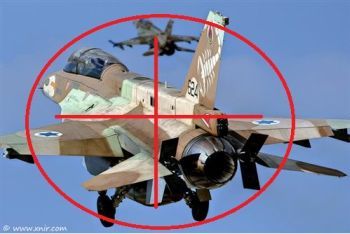
Tell Israel U.S. Will Attack Israeli Jets If They Try To Attack Iran


The national security adviser for former President Jimmy Carter, Zbigniew Brzezinskigave an interview to The Daily Beast in which he suggested President Obama should make it clear to Israel that if they attempt to attack Iran's nuclear weapons sites the U.S. Air Force will stop them.
"We are not exactly impotent little babies," ... "They have to fly over our airspace in Iraq. Are we just going to sit there and watch? … We have to be serious about denying them that right. That means a denial where you aren’t just saying it. If they fly over, you go up and confront them. They have the choice of turning back or not. No one wishes for this but it could be a 'Liberty' in reverse." [Brzezinski said]
The USS Liberty was a U.S. Navy technical research ship that the Israeli Air Force mistakenly attacked during the Six Day War in 1967.

Saturday, October 12, 2013

Odd Couple: Israel, Saudi Arabia Negotiate Union Against Iran


A surprising alliance is forming in the Middle East - between Israel and Saudi Arabia, as reports say the countries are negotiating a union, against Iran. Despite sharing common rivals, there's no official diplomatic relations between the states, and the two clash when it comes to Saudi Arabia's support of the Palestinians. 

Tuesday, August 27, 2013

Iran: The Real Cost Of Sanctions


Courtesy Of Al-Jazeera

The United States has unveiled aggressive new sanctions targeting Iran's currency and car industry that are among the toughest yet. They are aimed at making Iranian money all but unusable outside the country.

The latest measures mark the first time Iran's currency, the rial, has been directly targeted by sanctions.
The sanctions apply to foreign financial institutions making what is described as significant transactions in the rial, and those holding significant amounts of the currency outside Iran. However, the meaning of 'significant' in this case, has not been made clear. The sanctions also ban the sale of goods and services to Iran's car industry, the second largest employer after the energy sector. Iran's currency has been in free fall for some time, losing two thirds of its value in the past two years.

The sharpest drop came at the end of September 2012. On September 24, it would have taken 24,600 rials to buy one US dollar. By October 2, the cost of a dollar had risen to 39,000 rials - a 59 percent drop in the value of the currency in just one week.

These latest sanctions are the ninth round of restrictions imposed by the US. Diplomatic ties were broken in 1980 following the storming of the US embassy in Tehran. Successive US measures have prohibited almost all trade with Iran.

The United Nations ratified four rounds of sanctions between 2006 and 2010, over Iran's uranium, enrichment programme.

The European Union has also imposed its own restrictions, most notably, bans on the import, purchase and transport of Iranian crude oil and natural gas in 2012.
The UN imposed a near-total financial and trade embargo against Iraq in 1990. But 13 years of sanctions resulted in malnutrition, disease and a lack of clean water and medical supplies.
So, what is the human cost of sanctions against Iran?

To discuss this, Inside Story with presenter Veronica Pedrosa is joined by guests: Bahman Farmanara, the owner of a family-run textile business in Tehran, Raymond Tanter, the founder of the Iran Policy Committee, and author of the book: Arab Rebels and Iranian dissidents; and Shashank Joshi, a research fellow of the Royal United Services Institute, who has also written the book: Permanent Crisis: Iran's Nuclear Trajectory.