Showing posts with label Death Squads. Show all posts

Monday, November 17, 2014

There Is No War On Terror. There Is A War OF Terror


Statistically, the majority of terrorism is our terrorism, it is state terrorism. 
The greatest victims of terrorism are Muslims.
The whole understanding of terrorism is upside down.
Now there is as opposed to state terrorism,  privatized terrorism, it's very tiny. It's run by organizations like Al-Qaeda.
There is a study from the University of Chicago a study that found of this privatized terrorism in the last 30-odd years, something like 20,000 people had died,  a very tiny figure compared to the millions who have died as result of state terrorism. 
The attacks on 9/11 were appropriated by a clique in the U.S. establishment in order to further its aims around the world. 
There is no war on terror. There is a war of terror.
[John Pilger]


Thursday, November 06, 2014

How Much Moral High Ground Does The US Have Over ISIS?


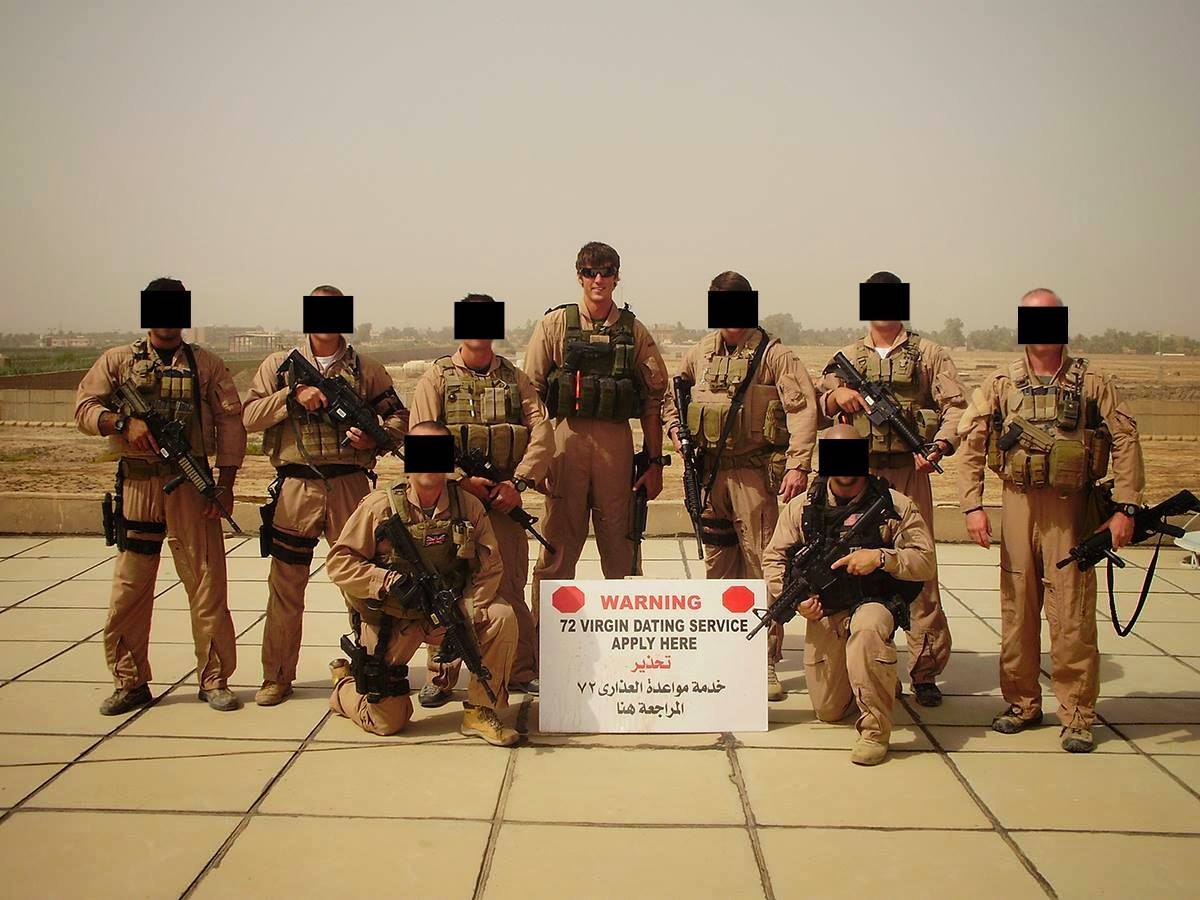
Warning: 72 virgin dating service. Apply here


The United States' war on sexual violence, mass murder and religious persecution should begin at home.
Without question, ISIS is an abomination. However, it is unclear whether America is the right agent to see this through. Part of the trouble relates to the Obama administration's strategy, which seems likely to empower ISIS even as it undermines the security and interests of the Unted States and its allies - but there is an ethical dimension as well.
While ISIS poses a serious (although likely overstated) threat to the governments of Iraq and Syria, over the last two administrations, the United States has itself forcibly overthrown the governments of Iraq and Libya - each time in defiance of international law. And along with ISIS, the United States has spent the last three years seeking to undermine the Syrian government. Additionally, it has sheltered Israel from meaningful accountability to the international community, allowing the crisis in Palestine to fester.
It would not be a stretch to say that the United States is actually a greater threat to peace and stability in the region than ISIS - not least because US policies in Iraq, Libya and Syria have largely paved the way for ISIS's emergence as a major regional actor.
But perhaps more disturbingly, many of the same behaviors condemned by the Obama administration and used to justify its most recent campaign into Iraq and Syria are commonly perpetrated by US troops and are ubiquitous in the broader American society. Until these problems are better addressed, United States' efforts to undermine ISIS will be akin to using a dirty rag to clean an infected wound.
Sexual Violence
The initial driver of US involvement was the outrage over ISIS' capture of thousands of Yazidi women and the sexual violence subsequently exercised against them - horrors which provided moral credence to the war against ISIS in much the same way that the 2001 US war against the Taliban was justified in part by highlighting the plight of Afghan women living under their rule.
However, over the course of that war, and the subsequent 2003 war in Iraq, US soldiers and contractors repeatedly used rape as a weapon of war, both against prisoners and the local civilian population. But perhaps more disturbing than the crimes committed by US personnel against Iraqis and Afghans were the atrocities committed by servicemen against their fellow soldiers.
As many as one out of three female soldiers are raped over the course of their military careers. Up to 80 percent of these assaults go unreported, in large part because reported cases rarely result in convictions or proportional punishment. In fact, the victims are frequently punished socially and professionally for reporting abuse, and they are barred from suing the government for reparations even when wrongdoing is proven.
The stats are not much better in the broader population. As many as one in five women who attend college in America are sexually assaulted over the course of their academic career, often with no justice even when the crimes are reported. This is commensurate with the broader trend in America - according to White House estimates, roughly a fifth of all American women are raped at some point in their lives.
As in the military, most of these crimes are not reported to the police, and most reported rapes are never prosecuted - let alone result in convictions for the perpetrators.
If the crimes against thousands of women in Iraq and Syria justify a US mobilization that costs nearly $10 million per day, how much more militant should Americans be about resolving the tens of thousands of cases of sexual violence that go unpunished and largely unnoticed in the United States each year?
Astonishing Cruelty
In addition to sexual violence, there was widespread outrage over ISIS's uncompromising brutality and the pornographic way they record and broadcast these acts - which include beheadings, crucifixions, and occasional incidences of cannibalism.
Of course, US soldiers and contractors have and continue to torture their enemies, often taking obscene photos to brag about and reminisce upon their acts. The contractors who were implicated in these abuses have never been prosecuted. Instead, one whistleblower who initially exposed these crimes, Chelsea Manning, has been sentenced to 35 years in prison.
There are further reports of US servicemen committing massacres, desecrating the corpses of their enemies, or even hunting the locals for sport while collecting photos, and even body parts, as trophies. And these are just a sampling of the acts which have been picked up by war correspondents and detailed in the media - many more crimes have never received exposure abroad, with crimes committed against Iraqis and Afghans by US servicemen going largely under-prosecuted or altogether unprosecuted.
Because these atrocities are not sufficiently dealt with by the United States, the governments of Iraq and Afghanistan have demanded the right to try Americans in their own courts. However, as protecting US politicians and soldiers from international accountability formed the basis of US opposition to establishing or joining the International Criminal Court, the Obama Administration refused to cede anything to these nascent states. 
As a result, concerns about accountability proved to be the main obstacle in the US reaching a security agreement with Afghanistan - and Iraq's refusal to grant US soldiers immunity was the reason the US ultimately abandoned the pursuit of a status of forces agreement there, contributing significantly to the security vacuum that allowed ISIS to rebuild in Iraq and expand into Syria. That is, ISIS's crimes were largely enabled by America's refusal to face up to its own.
Americans should bear this in mind as the Obama Administration loosens its already overly permissive standards vis à vis collateral damage and targeting civilians in its current campaign. The killing of innocents is not somehow morally superior if committed remotely by a drone or missile rather than the tools at ISIS' disposal.
Religious Persecution
Finally, many Westerners have been horrified by ISIS's persecution of religious minorities (especially crimes against Christians). However, the United States is complicit in this as well: US policies in Iraq helped spark this cycle of sectarian violence.
Meanwhile, its own armed forces were indoctrinated with anti-Muslim propaganda - complete with recommendations for servicemen to resort to "Hiroshima tactics," in a "total war against Islam," in which protections for civilians were "no longer relevant." 
Reflective of this mentality, the armed forces have been heavily infiltrated by white-supremacists, neo-Nazis and other hate groups who believe and act as though they are engaged in a holy war to begin in the Middle East and then be carried back into America. This institutionalized misrepresentation of Islam and dehumanization of Muslims probably played a significant role in the aforementioned atrocities.
However, this is hardly just an issue in the Army. Anti-Muslim discrimination and hate crimes are pervasive in America, from the classroom to the boardroom. In the popular culture, Islamophobia transcends the political spectrum and is fairly mainstream - to the point where pundits and politicians can openly call for Muslim internment camps, or push for laws restricting or altogether banning Muslims from practicing their faith, even as many of these same people work to obliterate the lines between the (Christian) church and state.
Muslim voices which could unapologetically challenge these tropes are largely excluded from the public discourse in favor of "house-Muslims" who will nod their heads in condemnation of terrorism (emphasizing that most Muslims are "moderates") while uncritically calling for (liberal) reform and revolution in Muslim lands of which they are no longer residents (if they ever were) - and all without voicing much (if any) substantive criticism of the Western countries in which they reside, beyond the narrow concerns about discrimination and persecution.
And yet despite these compliant spokespeople, and the fact that only 6 percent of terror incidents in the United States have been carried out by Muslims over the last 30 years (and the threat of terrorism is itself overblown), Muslims are frequently subjected to arbitrary surveillance and detention, as well as legal entrapment
All of these practices are considered crimes against humanity according to the Universal Declaration of Human Rights, which the US ostensibly champions everywhere else in the world . . . perhaps nowhere more than in Muslim-majority countries - seven of which the US has bombed in the last 6 years, almost always under the auspices of "humanitarian intervention."
Authentic Outrage, Authentic Patriotism
Criticisms like these invariably evoke charges of anti-Americanism among reactionary readers - unduly. If one were truly committed to defending America and promoting its values, if sincerely outraged by the sorts of atrocities committed by ISIS - rather than sanctioning condescending and counterproductive incursions abroad, Americans should dedicate much more time and energy to responding to these same problems within the United States and its institutions abroad. 
In this way, the United States could respond to the ISIS challenge by growing better and stronger, rather than undermining American's interests and freedoms in the name of "security." 
By Musa al-Gharbi

Wednesday, October 29, 2014

6 Million People Killed In CIA Wars Against 3rd World Countries


This is a 6:26 minute teaser

John Stockwell, former CIA Station Chief in Angola in 1976, working for then Director of the CIA, George Bush. He spent 13 years in the agency. John Stockwell is the highest-ranking CIA official ever to leave the agency and go public. He ran a CIA intelligence-gathering post in Vietnam, was the task-force commander of the CIA's secret war in Angola in 1975 and 1976, and was awarded the Medal of Merit before he resigned.

The clip is showing parts of a lecture that Stockwell gave in 1987, explaining the CIA's secret war. A war he describes as 'The Third World War'. Not because it is the thermonuclear exchange that is commonly meant, but because it was mainly waged against people in the third world countries. In Stockwell's own words: 
The six million people the CIA has helped to kill are people of the Mitumba Mountains of the Congo, the jungles of Southeast Asia, and the hills of northern Nicaragua. They are people without ICBMs or armies or navies, incapable of doing physical damage to the United States the 22,000 killed in Nicaragua, for example, are not Russians; they are not Cuban soldiers or advisors; they are not even mostly Sandinistas. A majority are rag-poor peasants, including large numbers of women and children.
Since its creation in 1947, the CIA has mounted approximately 3,000 major operations and 10,000 minor operations of this nature, every one of them illegal and many of them "bloody and gory beyond comprehension". 

Below is the complete lecture:


Tuesday, October 28, 2014

The Persecution Of Iraq's Sunni Muslims


This is a video of a young Sunni Muslim from Iraq. The shia rafidah (rejectors) murdered him in cold blood, then dragged him by the neck with a rope, at the same time, other shia animals repeatedly kick him, some hurl rocks at his head until part of his head caves in. Finally, they douse  him gasoline and set him on fire.

The reason this Sunni teen was murdered, was because his name was "Omar," after the Sahabi (Companion) of the Prophet Muhammed, and the Second Caliph of the Muslim nation.

This is what the Sunni Muslims have been dealing with, since America Saddam and handed the country to the Iraqi shia and Iran.


تمت الجريمة في مدينة الشعلة ببغداد، والتي تعد معقلا ومنطلقًا للمليشيات الشيعية الطائفية التي نشطت مؤخرًا لتنفيذ اعتداءات طائفية ضد أهل السنة في بغداد.

ويُظهر الفيديو عددًا كبيرًا من شباب الشيعة وهم يتناوبون على جثمان الشاب "عمر المفرجي" بمختلف صنوف الضرب والركل والتنكيل، وقد ربطوه من عنقه بحبل وسحلوا جثمانه، حتى انتهى بهم الأمر إلى إضرام النار في جسده.

وكشف المقطع المصور أن الجريمة تمت بجميع تفاصيلها تحت أعين عناصر الشرطة، التي تغض الطرف بشكل واسع عن هذه الجرائم الطائفية، فضلاً عن تورطها نفسها في العديد من تلك الجرائم.


 إن عملية قتل هذا الشاب والتنكيل بجثته جرت على خلفية كون اسمه (عمر)؛ ما يشير إلى أن طائفية الجريمة وأن عملية القتل تمت على الهوية كونه سنيًّا يحمل اسم أمير المؤمنين (عمر بن الخطاب) الذي فتح بلاد فارس وأطفأ نيران مجوسيتهم؛ الأمر الذي جعل الشيعة يحملون حقدًا وبغضًا لكل من يحمل اسمه رضوان الله عليه. وقد شهد العراق العديد من الجرائم الطائفية التي تمت فيها عمليات القتل على الهوية، ولمجرد أن الضحية يحمل اسم (عمر) أو (عائشة).

Tuesday, October 07, 2014

Boko Haram A Blessing For Imperialism In Africa:


The Americans now admit they are training battalions of African Rangers and counterinsurgency troops. The next step is the proliferation of death squads in West Africa, as the U.S. did in Southeast Asia and Latin America. Nigeria’s schoolgirls may or may not be rescued, but U.S. and European “humanitarian” military interventionists have already gained more than they could have imagined.

NATO’s aggression against Libya begat the sub-Saharan chaos that justified the French and U.S. occupation of Mali and Niger.”

Militarily, Africa is fast becoming an American continent. Barack Obama, who has been president for all but the first year of AFRICOM’s existence, has succeeded in integrating U.S. fighting units, bases, training regimens, equipment and financing into the military structures of all but a handful of African nations. The great pan-Africanist and former Ghanaian president Kwame Nkrumah’s dream of a militarily united Africa has been all but realized – with Americans and Europeans in charge. Under the guise of “humanitarian” intervention, Obama has vastly expanded Bill Clinton and George Bush’s African footprints, so that only a few patches on the continental map lie outside Washington’s sphere of operations. Eritrea and Zimbabwe are the notable exceptions – and, therefore, future targets.
Africa is occupied territory. The African Union doesn’t even pretend to be in charge of its own nominal peace-keeping missions, which are little more than opportunities for African militaries to get paid for doing the West’s bidding. China and Brazil may be garnering the lion’s share of trade with Africa, but the men with the guns are loyal to AFRICOM – the sugar daddy to the continent’s military class. U.S. troops now sleep in African barracks, brothers in arms with African officers who can determine who will sleep next week in the presidential mansion.
The pace of U.S. penetration of West Africa has quickened dramatically since 2011, when Obama bombed Muammar Gaddafi’s Libyan government out of existence, setting a flood of jihadists and weapons streaming east to Syria and south to destabilize the nations of the Sahel. Chaos ensued – beautiful chaos, if you are a U.S. military planner seeking justification for ever-larger missions. NATO’s aggression against Libya begat the sub-Saharan chaos that justified the French and U.S. occupation of Mali and Niger. Hyperactive North African jihadists, empowered by American bombs, weapons and money, trained and outfitted their brethren on the continent, including elements of Nigeria’s Boko Haram. The Hausa-speaking Islamic warriors then bequeathed AFRICOM a priceless gift: nearly 300 schoolgirls in need of rescuing, perfect fodder for “humanitarian” intervention.
Nobody had to ask twice that Obama “Do something!”
The heads of Nigeria, Chad, Niger, Benin and Cameroon were summoned to Paris (pretending it was their idea) where they declared “total war” on Boko Haram, as “observers” from the U.S., France, Britain and the European Union (Africa’s past and future stakeholders) looked on. French President Francois Hollande said “a global and regional action plan” would come out of the conference.
The heads of Nigeria, Chad, Niger, Benin and Cameroon were summoned to Paris where they declared ‘total war’ on Boko Haram.”
Of course, the five African states have neither the money, training, equipment nor intelligence gathering capacity for such a plan. It will be a Euro-American plan for the defense and security of West Africa – against other Africans. Immediately, the U.S. sent 80 troops to Chad (whose military has long been a mercenary asset of France) to open up a new drone base, joining previously existing U.S. drone fields in Niger, Burkina Faso, Ethiopia, Somalia, the Seychelles Islands, Djibouti (home to a huge French and American base), and CIA sites that need not be disclosed.
The new West African security grouping became an instant imprint of NATO, an appendage to be shaped by imperial military planners to confront enemies chosen by Washington and Paris.
What a miracle of humanitarian military momentum! The girls had only been missing for a month, and might not be rescued alive, but five neighboring African countries – one of them the biggest economy on the continent – had already been dragooned into a NATO-dominated military alliance with other subordinate African states.
It soon turned out that AFRICOM already had a special relationship with the Nigerian military that was not announced until after the schoolgirls’ abduction. AFRICOM will train a battalion of Nigerian Rangers in counterinsurgency warfare, the first time that the Command has provided “full spectrum” training to Africans on such a scale.
With the American public in a “Save our girls” interventionist frame of mind, operations that were secret suddenly became public. The New York Times reveals that the U.S. has been running a secret program to train counterterrorism battalions for Niger and Mauritania. Elite Green Berets and Delta Force killers are instructing handpicked commandos in counterinsurgency in Mali, as well. The identity of one Times source leaves little doubt that the previously secret operations are designed to blanket the region with U.S. trained death squads. Michael Sheehan was until last year in charge of Special Operations at the Pentagon – Death Squads Central – where he pushed for more Special Ops trainers for African armies. Sheehan now holds the “distinguished chair” at West Point’s Combating Terrorism Center. In the 1980s, he was a Special Forces commander in Latin America – which can only mean death squads.
AFRICOM will train a battalion of Nigerian Rangers in counterinsurgency warfare.”
U.S. Army Special Forces have always been political killers, most often operating with the CIA. The Phoenix Program, in Vietnam, which murdered between 26,000 and 41,000 people and tortured many more, was a CIA-Special Forces war crime. From 1975 to deep into the 80s, the CIA and its Special Forces muscle provided technical support and weapons to killers for Operation Condor, the death squads run by a consortium of military governments in Argentina, Chile, Uruguay, Paraguay, Bolivia and Brazil, believed responsible for 60,000 murders. Sheehan was probably involved in Operation Condor and its Central American component, Operation Charly, and has perfected the art of political murder, ever since. If he is happy and feeling vindicated by events in Africa, then U.S.-trained death squads are about to proliferate in that part of the world.
There is no question that Obama is enamored of Special Ops, since small unit murders by professional killers at midnight look less like war – and can, if convenient, be blamed on (other) “terrorists.” However, history – recent history – proves the U.S. can get away with almost limitless carnage in Africa. Ethiopia’s 2006 invasion of Somalia, backed by U.S. forces on land, air and sea, resulted in “the worst humanitarian crisis in Africa” at the time, “worse than Darfur,” according to UN observers, with hundreds of thousands dead. The U.S. then withheld food aid to starve out Somali Shabaab fighters, leading to even more catastrophic loss of life. But, most Americans are oblivious to such crimes againstBlack humanity.
U.S. ally Ethiopia commits genocide against ethnic Somalis in its Ogaden region with absolute impunity, and bars the international media from the region. Presidents Clinton, Bush and Obama – each of them with help from Susan Rice – have collectively killed six million Congolese since 1996. The greatest genocide since World War Two was the premeditated result of the chaos deliberately imposed on mineral-rich Congo by the U.S. and its henchmen in neighboring Rwanda and Uganda. Paul Kagame, the current leader of Rwanda, shot down a plane with two presidents aboard in 1994, sparking the mass killings that brought Kagame to power and started neighboring Congo on the road to hell. America celebrates Kagame as a hero, although the Tutsi tribal dictator sends death squads all over the world to snuff out those who oppose him.
The U.S. can get away with almost limitless carnage in Africa.”
Ugandan leader Yoweri Museveni, a friend of the U.S. since Ronald Reagan, committed genocidal acts against his rivals from the Acholi tribe, throwing them into concentration camps. Joseph Kony was one of these Acholis, who apparently went crazy. Kony hasn’t been a threat to Uganda or any other country in the region for years, but President Obama used a supposed sighting of remnants of his Lords Resistance Army to send 100 Green Berets to the Democratic Republic of Congo, Uganda, Rwanda, the Central African Republic, and South Sudan. Just last month, Obama sent 150 more troops and four aircraft to central Africa, again claiming that Kony was lurking, somewhere.
Actually, the American troops were deployed near South Sudan, which the U.S, Britain and Israel had destabilized for decades in an effort to split it off from the larger nation of Sudan. South Sudan became independent, but it remained unstable – not a nation, but a place with oil that the U.S. coveted. Many tens of thousands more are certain to die in fighting in South Sudan, but few Americans will blame their own country.
As the carnage in Congo demonstrates, whole populations can be made to disappear in Africa without most people in the West noticing. The death squads the Americans are training in Nigeria, Niger, Mauretania and Mali, and those that will soon be stalking victims in Cameroon and Benin, will not be limited to hunting Boko Haram. Death squads are, by definition, destabilizing; they poison the political and social environment beyond repair, as Central Americans who lived through the 80s can attest.
Yet, that is U.S. imperialism’s preferred method of conquest in the non-white world. It’s what the Americans actually do, when folks demand that they “Do something.”

Monday, October 06, 2014

US-Trained Death Squads


These are just a few examples of what our government does in our names and the risk it puts us at:


1) 
“After one year in Iraq the US government secretly enlisted retired Special Forces operatives to train Shia militia in the art of torture and other war crimes that fueled the Iraqi civil war, according to a new report.
Just over year into the Iraq War a desperate US government secretly organized and funded small militia groups to set up torture camps across the Middle Eastern country under the direction of a retired US Special Forces commander, according to a new report. 
James Steele, who came out of retirement in 2003 after guiding US-backed commandos in El Salvador in the 1980s, was deployed to Iraq as an “energy consultant” not long after the invasion began. A member of General David Petraeus’ inner circle, Steele quietly trained a Iraqi paramilitary force numbering in the thousands. With the help of Col. James Coffman, another Special Forces operative, he freely dispatched Shia militias to tortureSaddam Hussein’s Sunni soldiers in order to learn the details of the insurgency. ” RT 2013

2) In January 2005, the Pentagon, confirmed that it was considering:
” forming hit squads of Kurdish and Shia fighters to target leaders of the Iraqi insurgency [Resistance] in a strategic shift borrowed from the American struggle against left-wing guerrillas in Central America 20 years ago”.
Under the so-called “El Salvador option”, Iraqi and American forces would be sent to kill or kidnap insurgency leaders, even in Syria, where some are thought to shelter. …
Hit squads would be controversial and would probably be kept secret.
The experience of the so-called “death squads” in Central America remains raw for many even now and helped to sully the image of the United States in the region.
Then, the Reagan Administration funded and trained teams of nationalist forces to neutralise Salvadorean rebel leaders and sympathisers. …
John Negroponte, the US Ambassador in Baghdad, had a front-row seat at the time as Ambassador to Honduras from 1981-85.
Death squads were a brutal feature of Latin American politics of the time. …
In the early 1980s President Reagan’s Administration funded and helped to train Nicaraguan contras based in Honduras with the aim of ousting Nicaragua’s Sandinista regime. The Contras were equipped using money from illegal American arms sales to Iran, a scandal that could have toppled Mr Reagan.
The thrust of the Pentagon proposal in Iraq, … is to follow that model …
It is unclear whether the main aim of the missions would be to assassinate the rebels or kidnap them and take them away for interrogation. Any mission in Syria would probably be undertaken by US Special Forces.
Nor is it clear who would take responsibility for such a programme — the Pentagon or the Central Intelligence Agency. Such covert operations have traditionally been run by the CIA at arm’s length from the administration in power, giving US officials the ability to deny knowledge of it.  (El Salvador-style ‘death squads’ to be deployed by US against Iraq militants – Times Online, January 10, 2005, emphasis added)
3) Under the “Salvador Option,” “Negroponte had assistance from his colleague from his days in Central America during the 1980′s, Ret. Col James Steele. Steele, whose title in Baghdad was Counselor for Iraqi Security Forces supervised the selection and training of members of the Badr Organization and Mehdi Army, the two largest Shi’ite militias in Iraq, in order to target the leadership and support networks of a primarily Sunni resistance. Planned or not, these death squads promptly spiralled out of control to become the leading cause of death in Iraq.
Intentional or not, the scores of tortured, mutilated bodies which turn up on the streets of Baghdad each day are generated by the death squads whose impetus was John Negroponte. And it is this U.S.-backed sectarian violence which largely led to the hell-disaster that Iraq is today. (Dahr Jamail, Managing Escalation: Negroponte and Bush’s New Iraq Team,. Antiwar.com, January 7, 2007)
4) The appearance of death squads was first highlighted in May this year [2005], …dozens of bodies were found casually disposed … in vacant areas around Baghdad. All of the victims had been handcuffed, blindfolded and shot in the head and many of them also showed signs of having been brutally tortured.  …
The evidence was sufficiently compelling for the Association of Muslim Scholars (AMS), a leading Sunni organisation, to issue public statements in which they accused the security forces attached to the Ministry of the Interior as well as the Badr Brigade, the former armed wing of the Supreme Council for Islamic Revolution in Iraq (SCIRI), of being behind the killings. They also accused the Ministry of the Interior of conducting state terrorism (Financial Times).
5) The Police Commandos were formed under the experienced tutelage and oversight of veteran US counterinsurgency fighters, and from the outset conducted joint-force operations with elite and highly secretive US special-forces units (ReutersNational Review Online).
6) …A key figure in the development of the Special Police Commandos was James Steele, a former US Army special forces operative who cut his teeth in Vietnam before moving on to direct the US military mission in El Salvador at the height of that country’s civil war. …
Another US contributor was the same Steven Casteel who as the most senior US advisor within the Interior Ministry brushed off serious and well-substantiated accusations of appalling human right violations as ‘rumor and innuendo’. Like Steele, Casteel gained considerable experience in Latin America, in his case participating in the hunt for the cocaine baron Pablo Escobar in Colombia’s Drugs Wars of the 1990s …
Casteel’s background is significant because this kind of intelligence-gathering support role and the production of death lists are characteristic of US involvement in counterinsurgency programs and constitute the underlying thread in what can appear to be random, disjointed killing sprees.
Such centrally planned genocides are entirely consistent with what is taking place in Iraq today [2005] …It is also consistent with what little we know about the Special Police Commandos, which was tailored to provide the Interior Ministry with a special-forces strike capability (US Department of Defense). In keeping with such a role, the Police Commando headquarters has become the hub of a nationwide command, control, communications, computer and intelligence operations centre, courtesy of the US. (Max Fuller, op cit)
7) In Afghanistan on Sunday, President Hamid Karzai alleged that the US is doing something much worse: not merely standing by and watching their trained forces torture and kill, but actively and systematically participating. As the Guardian’s Golnar Motevalli reported:
“The Afghan government has ordered US special forces to leave one of Afghanistan’s most restive provinces, Maidan Wardak, after receiving reports from local officials claiming that the elite units had been involved in the torture and disappearance of Afghan civilians. . . .
“The provincial governor and other officials from Maidan Wardak presented evidence against US forces at the national security council meeting. The presidential palace later issued a statement saying: ‘After a thorough discussion, it became clear that armed individuals named as US special forces stationed in Wardak province engage in harassing, annoying, torturing and even murdering innocent people.
“‘A recent example in the province is an incident in which nine people were disappeared in an operation by this suspicious force and in a separate incident a student was taken away at night from his home, whose tortured body with throat cut was found two days later under a bridge,’ the statement added” . . . .
“Aimal Faizi, spokesman for Karzai, said the decision came after of months of reports of abuse.
“‘People have been complaining about US special forces units torturing people, killing people in that province, and nine individuals were taken from their homes recently and they have just disappeared and no one knows where they have gone,’ Faizi said.”
8) The training of foreign militaries to serve the interests of the American state goes all the way back to at least the Cold War. The U.S. used taxpayer money and weapons to subsidize foreign governments and militaries that were “anti-communist” even if the regimes were incredibly brutal and ruthless. All an authoritarian had to do was refer to his political opponents as “communists” and the Americans came rushing in.
In nearly every continent, the U.S. taught extremely fascistic, right-wing governments the art of cracking down on domestic dissent, jailing and torturing political opponents, centralizing power, making deals beneficial to American corporations, and employing death squads. Cheaper and less visible than directly invading and overthrowing governments the U.S. didn’t like, sock puppet dictators were the preferred means of implementing policy.
The fall of the Soviet Union in 1991 left very little justification for an American imperial position throughout the globe, yet those same Cold War policies were not only not discarded, but expanded upon. Back in 2010, President Obama and the Pentagon began implementing a strategy with a larger emphasis on “combat operations” and military-to-military coordination. U.S. Special Forces are now operating in (at least) 75 countries, teaching their governments more efficient means of subjugating their populations, creating chaos, and serving the interests of the American empire.

Sunday, October 05, 2014

All The Ayatollah's Men


Iraq's Shiite Militias Are Becoming As Great A Danger As The Islamic State.

Armed men posing with severed heads, massacres of mosque-goers during Friday prayers, massive reliance on transnational jihadists -- these are crimes that are usually associated with the Islamic State (IS). However, they're also the actions of some of Iraq's growing Shiite militia organizations, which are playing an increasingly prominent role in fighting the Sunni jihadists. These groups, many of which have deep ideological and organizational links to Iran, are sweeping away what is left of any notion of the Baghdad government's authority -- and represent a massive challenge to President Barack Obama's stated goal of working with an inclusive Iraqi government to push back IS.
Over 50 Shiite militias are now recruiting and fighting in Iraq. These groups are actively recruiting -- drawing potential soldiers away from the Iraqi army and police and bringing fighters into highly ideological, anti-American, and rabidly sectarian organizations. Many of these trainees are not simply being used to push back Sunni jihadists, but in many cases form a rear guard used to control districts that are supposedly under Baghdad's control. 
Shiite militias have embedded themselves within the structures of the Iraqi government, which has become far too reliant on their power to contemplate cracking down on them. Together, they have committed horrifying human rights abuses: In early June, Shiite militias, along with Iraqi security forces, reportedly executed around 255 prisoners, including children. An Amnesty International report from June detailed how Shiite militias regularly carried out extrajudicial summary executions, and reported that dozens of Sunni prisoners were killed in government buildings.
The militias also played a leading role in the liberation of the besieged Shiite Turkmen town of Amerli. Kataib Hezbollah, a U.S.-designated terrorist group and direct Iranian proxy, even used Iraqi government helicopters to deliver arms and other supplies during the battle. Just as IS has captured and used U.S.-supplied vehicles, U.S.-made M1A1 Abrams tanks provided to the Iraqi governmenthave flown sectarian Shiite banners and supported Kataib Hezbollah operations. Those tanks are not alone: U.S.-made armored Humvees, which Kataib Hezbollah once targeted during the Iraq War with rocket-propelled grenades (when driven by Americans), have also been taken by the militia and used in operations.
Iran has led the way in developing Iraq's Shiite militias. Since May 2013, Tehran has bolstered its network of new and old Iraqi proxy groups to provide a steady flow of fighters to Syria. Some of these Iraqi forces, who had been fighting on behalf of President Bashar al-Assad's regime, redeployed back to Iraq and form the nucleus of newer militia groups which are currently fighting the Baghdad government's Sunni enemies.
Due to Iran's Syria-focused recruitment efforts, Tehran's proxies also had a leg up on pulling in new fighters for the Iraq front. In April, Iran-backed groups such as Kataib Hezbollah, Badr, and Asaib Ahl al-Haq called for fresh recruits to fight in IraqEventually, these calls morphed into Iraqi Shiite militias spinning off popular committee-based militias under their command. While the creation of so many groups may seem unnecessarily complicated, it actually helps create the image of wide-ranging popular support for militias promoting Iran's policies and ideology. Furthermore, it allows established groups to more easily separate new, less-experienced volunteers from career militiamen.
For example, Kataib Hezbollah -- a militia formed with the help of Lebanon's Hezbollah in 2007 -- recently announced the creation of the Popular Defense Companies. The new group was crafted to take Iraqi Shiite volunteers under Kataib Hezbollah's management, and today it boasts large deployments south of the cities of Baghdad, Diyala, and Amerli.
The Badr Organization, an armed group in the thousands and one of Iran's primary clients in Iraq, is another pillar of Tehran's efforts to develop Shiite militias. During the Iraq War, through its domination of government offices, the group ran a number of sectarian death squads. Badr has also been involved in the fighting in Syria, creatingthe Martyr Baqir al-Sadr Force for that purpose. 
But it is in Baghdad where the Badr Organization's influence is strongest.
The group's sway extends deep into Iraq's Internal Security Forces, where it is said to directly manage many police and special operations-type groups. Badr also has great influence in the political sphere: It has secured key positions within the Iraqi government, and is part of Prime Minister Haider al-Abadi's State of Law alliance -- Abadi even wants to appoint its leader, Hadi al-Amiri, as the country's interior minister. 
Badr's militiamen have spread far and wide among the constellation of Iraq's Iranian proxies. Its alumni include Kataib Hezbollah leaderJamal al-IbrahimiAli al-Yasiri, the leader of a Shiite militia fighting in Syria called the Khurasani Unit; and Wathiq al-Battat, leader of the Mukhtar Army, a hyper-sectarian group that once launched a rocket attack against Iranian dissidents at Camp Liberty.  
Former Badr militiamen are also deeply embedded within Iraq's political leadership. Sheikh Adnan al-Shahmani, an Iraqi parliamentarian and member of the Iraqi parliament's National and Defense Committee, is himself a former Badr fighter and leader of the Tayyar al-Rasuli political party, which also has a militia. As early as September 2013, he had called for sectarian militias to protect Shiites living in Sunni areas. The parent parties of Khurasani Unit and Tayyar al-Rasuli are both members of the State of Law coalition -- portions of a nebula of allied organizations created to impose Iran's will within Iraq.
Iran's most powerful proxies in Iraq have worked closely together to prop up the Assad regime in Damascus. Kataib Hezbollah and Badrformed the Kataib Sayyid al-Shuhada ("The Master of the Martyrs Brigade," or KSS) in early 2013 to fight in Syria. KSS is led in part by Abu Mustafa al-Sheibani, a commander affiliated with both Badr and the Iranian Islamic Revolutionary Guard Corps' Quds Force. The group's secretary-general, Mustafa al-Khazali, deployed to Syria andwas wounded in the suburbs of Damascus.
Now, the commanders who cut their teeth in Syria are returning home to play a political and military role in the struggle for Iraq. Khazali went on to win a seat in parliament during Iraq's parliamentary election in April, when his group took on the role of political party and ran in the city of Basra on then Prime Minister Nouri al-Maliki's State of Law electoral list. KSS commanders are also engaged in fighting against their domestic enemies: Abu Mujahid al-Maliki, a KSS veteran from Syria and Khazali's campaign manager,was killed fighting in Iraq in August.
Asaib Ahl al-Haq ("The League of the Righteous," or AAH) has been another major Iranian proxy in Iraq. The group began during the Iraq War as an Iranian-backed splinter from radical cleric Moqtada al-Sadr's Mahdi Army, and quickly grew into a formidable fighting group. During the war, it gained a degree of infamy for itskidnappings and executions of British contractors and American soldiers. The group has sent many fighters to Syria, and in early 2014started to deploy in Iraq's restive Anbar province to combat the government's Sunni enemies.
The growth of these pro-Iranian Shiite militias, and many more like them, helps demonstrate Iran's goals for the domination of Shiite Iraq. These groups not only benefit from Iran's patronage and organizational capabilities -- they also all march to Tehran's ideological tune. They are loyal to Iran's Supreme Leader Ayatollah Khamenei and Iran's ideology of absolute wilayat-e faqih, which grants the supreme leader ultimate political and religious authority. They also follow the model of Iran's Lebanese proxy, Hezbollah, and are intent on executing Iran's will in the region and furthering Iran's "Islamic Revolution."
Just as IS's stated aim is to erase the borders that were drawn in the Middle East following the end of World War I, Iranian-backed Shiite militias are also taking part in this process. The cross-pollination between Syrian and Iraqi Shiite militias has eroded national boundaries as surely as the Sunni jihadist campaign: From the beginning of their involvement in both conflicts, Shiite militias have adopted a narrative that they will "defend shrines" or "defend Shiites," no matter their geographic location.
Damascus's oldest and most prominent Shiite foreign fighter militia, the Abu Fadl al-Abbas Brigade (LAFA), has played a key role in promoting this grander notion of sectarian war. In August, the pro-Iranian organization announced its own Iraq-based organization, which claims to be deployed south of Baghdad and possibly near Amerli. Abu Ali al-Darraji, one of its former commanders from Damascus, also started his own LAFA affiliate with fighters who had previously been engaged in Syria. Often, these LAFA offshoots have been hazy regarding their own ideology, but their links to Iran's networks certainly suggest that Tehran exerts a strong pull on them.
While Iran has extensive links to most, if not all, of Iraq's Shiite militias, other powerful
Iraqi Shiite elements that do not share Iran's absolutist ideology have also invested in their own groups.
Moqtada al-Sadr's Saraya al-Salam ("The Peace Brigade") was established this June, at around the same time Grand Ayatollah Ali al-Sistani issued a fatwa calling for a jihad against the Islamic State. Sistani's fatwa, however, was clarified to say that Iraqis should join the Iraqi army, whereas the fighters in Sadr's new brigade have no loyalty to Sistani. Nevertheless, with the ability to draw on tens of thousands of Sadrist supporters, Saraya al-Salam certainly will not lack for fighters.
Despite reported cooperation on some levels with Iranian proxies, Sadr's forces have had years of conflict with AAH, Badr, and other groups. Additionally, his political party is currently in an alliance with a political bloc that opposes the State of Law coalition.
When Saraya al-Salam was initially formed, Sadr called for it to engage mainly in defensive actions. In the past month, however, the group has been more heavily invested in offensive actions. Today, its deployments have occurred across Iraq, from the shrine city ofSamarra, to the recently liberated Amerli, to the city of Jurf al-Sakhr, to Diyala in the east. Saraya al-Salaam's large numbers, increasing activity in the conflict, and Mahdi Army background suggest the group could re-engage in sectarian mass killings.
Following Sistani's fatwa, Ammar al-Hakim's Islamic Supreme Council of Iraq (ISCI) established the Ashura Brigades. The group has engaged in recruitment efforts using ISCI's media and political apparatus, and its forces have deployed to Baghdad and Samarra. In July, the group's recruits from the southeastern province of Maysan suffered heavy casualties during fighting in Anbar Province.*
As political and clerical leaders have established their own militias throughout Iraq, fringe groups have at times come in conflict with the government. One of the more unusual cases was that of the marginal Shiite cleric Mahmoud al-Sarkhi. His supporters engaged in firefights with members of Iraq's internal security forces in southern Iraq, resulting in seven deaths. While the example of Sarkhi is unique, the risk of intra-Shiite conflicts rearing their head is very real.
Iraqi Shiite militias are also on a collision course with the Kurdish community, a major U.S. ally in the fight against the Islamic State.Harakat Hizballah al-Nujaba, another Iranian proxy group spun off of AAH, and Kataib Hezbollah both accused Kurdistan President Masoud Barzani of coordinating with IS and Baathist groups, and issued stern warnings against any Kurdish moves in Kirkuk. Harakat Hizballah al-Nujaba's spokesman went so far as to say, "the rockets of the Islamic Resistance will strike at Erbil" if Barzani continued to "coordinate" with the jihadists.
The growing power of these militias is a sign that, despite Maliki's removal as prime minister, the Iraqi government remains beholden to deeply sectarian forces. These militias have generally retained their operational independence from Baghdad, even as they exploit the country's nascent democratic system to gain support through their domination of official bodies. They are not simply addendums to the state -- they are the state, and do not answer to any authority in Baghdad, but only to their own clerical leaders or Tehran.
While ostensibly focused on defeating the Islamic State, these armed factions also promise to be hugely influential in shaping the future of Iraq's Shiite community. Their radical ideology and organizational ties suggest that they will allow Iran a greater influence in Iraq than ever before. If Washington does not take steps now to check their growth, it may discover too late that it has effectively ceded Baghdad to Tehran -- and that there is no going back.