Showing posts with label Fallujah. Show all posts

Tuesday, June 17, 2014

Iran Deploys Quds Force To Save Iraq's Shia-Led Regime


This video shows a Sunni tribal fighter explaining how the capture of 2 Iranians attempting to infiltrate into Fallujah.

The threat of Sunnis eclipsing the power of its Shiite-dominated Arab ally presents Iran with the biggest security and strategic challenge it has faced since the U.S.-led invasion of Iraq in 2003.
Iran deployed Revolutionary Guards units to Iraq, according to Iranian security officials.
Iran has invested considerable financial, political and military resources over the past decade to ensure Iraq emerged from U.S. war as a strong Shiite-led state. The so-called Shiite crescent—stretching from Iran to Iraq, Lebanon and Syria—was forged largely as a result of this effort.
Two Guards' units, dispatched from Iran's western border provinces on Wednesday, were tasked with protecting Baghdad and the holy Shiite cities of Karbala and Najaf, these security sources said.
Syria's conflict has turned Iraq into an important operational base for Iran to aid another ally, the Assad regime, which is dominated by an offshoot of Shiite Islam. Shiite militia trained by Iran, weapons and cash have flowed from Iran to Syria via Iraq.
"Iraq is viewed as a vital priority in Iran's foreign policy in the region and they go to any length to protect this interest," said Roozbeh Miribrahimi, an independent Iran expert based in New York.
Iran has also positioned troops on full alert along its border with Iraq and has given clearance to its air force to bomb rebel forces, according to an Iranian army general.
The two IRGC battalions that moved to Iraq on Wednesday were shifted from the Iranian border provinces of Urumieh and Lorestan, the Iranian security officials said.
Revolutionary Guards units that serve in Iran's border provinces are the most experienced fighters in guerrilla warfare because of separatist ethnic uprisings in those regions. IRGC commanders dispatched to Syria also often come from those provinces as well.
Iran was also considering the transfer to Iraq of Shiite volunteer troops in Syria, if the initial deployments fail to turn the tide of battle in favor of Mr. Maliki's government, the Iranian security officials said.

Wednesday, November 27, 2013

Fear Not The Path Of Truth


This documentary follows Ross Caputi, veteran of the 2nd siege of Fallujah, as he investigates the atrocities that he participated in and the legacy of US foreign policy in Fallujah, Iraq.

Tuesday, July 09, 2013

WHO Report On Iraqi Birth Defects Kept Secret


By Mozhgan Savabieasfahani

Iraq is poisoned. Thirty-five million Iraqis wake up every morning to a living nightmare of childhood cancers, adult cancers and birth defects. Familial cancers, cluster cancers and multiple cancers in the same individual have become frequent in Iraq.  

Sterility, repeated miscarriages, stillbirths and severe birth defects - some never described in any medical books - are all around, in increasing numbers. Trapped in this hellish nightmare, millions of Iraqis struggle to survive, and they call for help

At long last, public pressure and media attention to this public health catastrophe prompted a joint study by the World Health Organization (WHO) and the Iraqi Ministry of Health to determine the prevalence of birth defects in Iraq. This study began in May-June 2012 and was completed in early October 2012. 
The WHO website says that this large-scale study was conducted in Baghdad (Karkh and Rasafa), Diyala, Anbar, Sulaymaniyah, Babel, Basrah, Mosul and Thi-Qar, with 10,800 households from 18 districts and a sample size of 600 households per district.  

The Independent (UK) reported that this study was due to be released in November 2012. But the report has not yet come out.

Report Kept Secret

In March 2013, a high-ranking official at the Iraqi Ministry of Health in Baghdad discussed the issue with the BBC and said that "all studies done by the Ministry of Health prove with damning evidence that there has been a rise in birth defects and cancers" in Iraq. 

During the same BBC documentary, called "Born under a bad sign", two other Ministry of Health researchers discussed the unpublished study. They confirmed that that cancers and birth defects constitute a major crisis for the next generation of Iraqi children. They specifically confirmed simultaneous increases in cancers and congenital anomalies in three governorates - Nineveh, Anbar and Najaf - linking those increases to munitions used during the war.

Why should such an important report be kept secret?


In a serious health emergency, as we see in Iraq, such an extensive survey of public health must be widely publicised to attract international support and expertise. Medical experts, epidemiologists, environmental toxicologists, remediation staff and environmental cleanup specialists must be summoned to address this crisis and save lives.

A delay of six months in the release of such a critical report has left many of us anxious and fearful that it may be suppressed. 

In response to this costly delay in releasing the WHO report, 58 scientists, health professionals and human rights advocates recently wrote to the WHO and the Iraqi Health Ministry, asking for the immediate release of their report. We requested that this globally significant report be released at once. We received no response to this letter. 

The letter was signed by Iraqi, Iranian, Lebanese, Japanese, European, Australian and North American academics and public figures. They included Noam Chomsky, Ken Loach, John Tirman, Human Rights Now (Japan), Health Alliance International and a board member of BlackCommentator.com. 

We are still waiting for an answer from the WHO. Why is this important report being held up? 

One possible answer was suggested on May 26 by the Guardian. It reported the recent comments of Hans von Sponeck, the former assistant secretary general of the United Nations:
"The US government sought to prevent WHO from surveying ares in southern Iraq where depleted uranium had been used and caused serious health and environmental dangers." 
It would be deeply distressing if this WHO report is delayed for any such reason. After so many years of sanctions and war, the public health of 35 million Iraqis must not be held hostage. Instead, we must strive to save lives today and prevent any further contamination of the earth with war pollutants.

Deadly UN Sanctions On Iraq

Recall the deadly UN sanctions on Iraq. By 1995, those sanctions had devastated the Iraqi public health infrastructure and may have killed as many as 576,000 children, according to UN Food and Agriculture Organization scientists. 

In that vulnerable state, Iraq was invaded. MSNBC reported: "Between 2002 and 2005, US forces shot off 6 billion bullets in Iraq (something like 300,000 for every person killed). They also dropped 2,000 to 4,000 tonnes of bombs on Iraqi cities, leaving behind a witch’s brew of contaminants and toxic metals, including the neurotoxins lead and mercury." 

Since 2003, mother-and-child health has further deteriorated in Iraq, and the country's health indicators are now among the poorest in the world. The current state of mother-and-child health in Iraq will be further damaged if the WHO report on congenital birth defects continues to be inaccessible to the public.

The WHO report will clarify the magnitude and trend of congenital birth defects in several Iraqi governorates, identify possible risk factors for these birth defects, and assess the public burden of these conditions on the Iraqi nation. The information contained in this report is essential to inform and prioritise public health policy in Iraq and in the region at large.

Immediate release of this report will be the first step towards mobilising global efforts to protect public health from further degradation in Iraq and in the entire region. Once released, the report will enable researchers to collaborate, ask the most relevant questions and spearhead research to remedy this health emergency. 

Dr Mozhgan Savabieasfahani is an environmental toxicologist based in Michigan. She is the author of over two dozen peer-reviewed articles and a book, Pollution and Reproductive Damage (DVM 2009).

Tuesday, December 25, 2012

‘Iraqis Cannot Forget What Americans Have Done Here’


Kathy Breen relays the follwoing:

“It is not written in our hearts, it is carved in our hearts.” I awoke this morning still shaken with these words in my head.

I sat in on a lecture, given in English, to maybe fifty or more young men and women at a college in Ramadi. They were all about 22 and 23 years of age, in their last year of a 5-year program. That means they were about 13 or 14 years old during the U.S. led invasion and beginning of the occupation.

An impassioned young woman from the middle of the lecture hall spoke up. It was obviously not easy for her. “It is not,” she said, “about lack of water and electricity [something I had mentioned]. You have destroyed everything. You have destroyed our country. You have destroyed what is inside of us! You have destroyed our ancient civilization. You have taken our smiles from us. You have
taken our dreams!”

Someone asked, “Why did you this? What did we do to you that you would do this to us?”

“Iraqis cannot forget what Americans have done here,” said another. “They destroyed the childhood. You don’t destroy everything and then say ‘We’re sorry.’ “You don’t commit crimes and then say ‘Sorry.’”

“To bomb us and then send teams to do investigations on the effects of the bombs…No, it will not be forgotten. It is not written on our hearts, it is carved in our hearts.”

We are happy to make bridges between people, but we will not forget. In Fallujah 30% of the babies are born deformed.”

He spoke of how he’d met an American soldier in the airport. He was part of the Special Forces in Iraq. The soldier told him “But we were taught to kill, to kill for nothing. Just kill. I am so sorry.”

“Build bridges? the president repeated. Apologize? he said. What can you do?” There was no rancor in his tone or demeanor, only anger and deep pain.

A young man said….The U.S. is still here. There are fifteen thousand people at the U.S. embassy in Baghdad. [and 5,000 security personal to protect them]. They have their collaborators. The war is not over.

We later visited a Sheik in Fallujah in his home. He and Sami embraced warmly and he welcomed us into the sitting area. In the course of our sharing we spoke of our visit to nearby Ramadi, of what was said there. “War always results in two losers,” he said sorrowfully.

Via: "Global Research"

Monday, August 13, 2012

Did the US Cause Fallujah's Birth Defects?

As Deformities Spike In The Iraqi City, We Ask If The US Has Been Honest About Weaponry Used During The 2004 Assaults.


New research is underway on the alarming increase in birth defects in the Iraqi city of Fallujah.

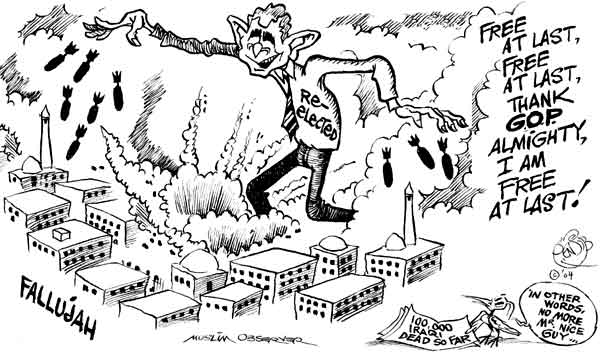
In November 2004, the US led an assault on Fallujah - a stronghold of opposition against the US occupation, west of Baghdad. Intense bombardment left many of its buildings destroyed and displaced much of the 300,000-strong population.


Eventually, the US was forced to admit that amongst its arsenal was white phosphorus - a substance the Pentagon described as a 'chemical weapon' when it was used by Saddam Hussein against the Kurds. In addition, eyewitnesses claimed the US military used "unusual weapons".

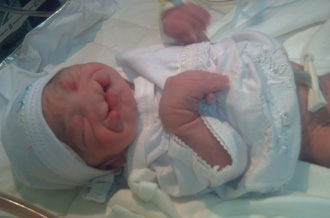
Subsequent investigations have focused on the possible use of depleted uranium by the US for its armour-piercing qualities. The US, however, denies using such weaponry. Research has shown elevated levels of radioactivity in Fallujah and across Iraq. Iraqi physicians have also long reported a spike in cases involving severe birth defects in Fallujah since 2004. They have reported children born with multiple heads, serious brain damage, missing limbs and with extra fingers and toes.

A report published in 2011 on the level of uranium and other contaminants in hair from the parents of children with congenital anomalies in Fallujah partly concluded that:

"Whilst caution must be exercised about ruling out other possibilities, because none of the elements found in excess are reported to cause congenital diseases and cancer except uranium, these findings suggest the enriched uranium exposure is either a primary cause or related to the cause of the congenital anomaly and cancer increases. Questions are thus raised about the characteristics and composition of weapons now being deployed in modern battlefields."

Al Jazeera's Sebastian Walker reporting for the programme Fault Linesexamined the legacy of the US occupation in Iraq and described what he saw on a road trip across Iraq after the withdrawal of US troops.

"What we found by visiting the general hospital there is that there are extremely high rates of birth defects, some five times the international norm, and many of the doctors who work in those hospitals believe that this is a direct result of the kind of weapons the US forces were using in those campaigns." 

Many researchers say uranium from the shelling may be to blame. However, no conclusive proof of a link has been established. In this episode Inside Story Americas asks: Is the US being honest about the use of unconventional weapons, and the possible link with the rising incidence of birth defects in Fallujah?

Joining the discussion with presenter Shihab Rattansi are guests: Ross Caputi, a former US marine who fought in the battle for Fallujah in November 2004 and co-founder of the Justice for Fallujah Project; Dai Williams, a weapons researcher whose work focuses on community health in conflict zones associated with new types of weapons; and Raed Jarrar, an Iraq analyst and the executive director for a Washington-based global strategy firm.

"The promises at that time were that the US will go in and get rid of all the bad guys and rebuild the city, [but] that did not happen. We saw a total destruction of Fallujah and the use of so many unconventional weapons ...."
Raed Jarrar, a Middle East and North Africa expert

WHITE PHOSPHORUS IN FALLUJAH:

US forces used the chemical in the Iraqi city in November 2004, purportedly to light up the battlefield.
Its use is legal as long as civilians are not targeted.
The US has used white phosphorus in some form or another since World War I.
US officials initially denied its use in Fallujah, but in 2005 General Peter Pace confirmed it.
White phosphorus particles burn through clothes to the bone, stick to skin and cannot be relieved by water.
The substance spontaneously ignites at about 30 Celcius, and continues to burn until it is deprived of oxygen.
Depleted uranium bullets were used heavily in the second battle for Fallujah, in tank armour and to reinforce steel. They were also used in Iraq in 1991 and again in 2003.

Sunday, January 08, 2012

US Weapons and Fallujah's Birth Defects

Fallujah babies: Under A New Kind Of Siege 

Doctors and Residents Blame US Weapons For Catastrophic Levels Of Birth Defects In Fallujah's Newborns. 

By Dahr Jamail 
Last Modified: 06 Jan 2012 11:25 
Courtesy Of "Al-Jazeera"


Fallujah, Iraq - While the US military has formally withdrawn from Iraq, doctors and residents of Fallujah are blaming weapons like depleted uranium and white phosphorous used during two devastating US attacks on Fallujah in 2004 for what are being described as "catastrophic" levels of birth defects and abnormalities.

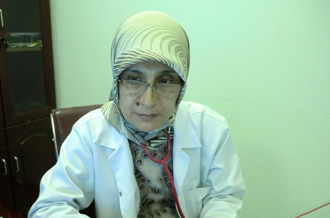
Dr Samira Alani, a paediatric specialist at Fallujah General Hospital, has taken a personal interest in investigating an explosion of congenital abnormalities that have mushroomed in the wake of the US sieges since 2005.

 US invasion leaves lasting Iraq scars
"We have all kinds of defects now, ranging from congenital heart disease to severe physical abnormalities, both in numbers you cannot imagine," Alani told Al Jazeera at her office in the hospital, while showing countless photos of shocking birth defects.

As of December 21, Alani, who has worked at the hospital since 1997, told Al Jazeera she had personally logged 677 cases of birth defects since October 2009. Just eight days later when Al Jazeera visited the city on December 29, that number had already risen to 699.

"There are not even medical terms to describe some of these conditions because we've never seen them until now," she said. "So when I describe it all I can do is describe the physical defects, but I'm unable to provide a medical term."

'Incompatible With Life'

Most of these babies in Fallujah die within 20 to 30 minutes after being born, but not all.

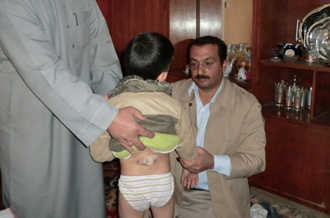
Four-year-old Abdul Jaleel Mohammed was born in October 2007. His clinical diagnosis includes dilation of two heart ventricles, and a growth on his lower back that doctors have not been able to remove.

Four-year-old Abdul Jaleel Mohammed has birth defects and health problems that his family blames on depleted uranium exposure from the 2004 US military attacks on Fallujah [Dahr Jamail/Al Jazeera]
Abdul has trouble controlling his muscles, struggles to walk, cannot control his bladder, and weakens easily. 

Doctors told his father, Mohamed Jaleel Abdul Rahim, that his son has severe nervous system problems, and could develop fluid build-up in his brain as he ages, which could prove fatal.

"This is the first instance of something like this in all our family," Rahim told Al Jazeera. "We lived in an area that was heavily bombed by the Americans in 2004, and a missile landed right in front of our home. What else could cause these health problems besides this?"

Dr Alani told Al Jazeera that in the vast majority of cases she has documented, the family had no prior history of congenital abnormalities.

Alani showed Al Jazeera hundreds of photos of babies born with cleft palates, elongated heads, a baby born with one eye in the centre of its face, overgrown limbs, short limbs, and malformed ears, noses and spines.

She told Al Jazeera of cases of "thanatophoric dysplasia", an abnormality in bones and the thoracic cage that "render the newborn incompatible with life".

Rahim said many of his relatives that have had babies after 2004 are having problems as well.

"One of them was born and looks like a fish," Rahim said. "I also personally know of at least three other families who live near us who have these problems also."

For now, the family is worried how Abdul will fare in school when he is enrolled next year. Maloud Ahmed Jassim, Abdul's grandfather, added, "We've seen so many miscarriages happen, and we don't know why."

"The growth on his back is so sensitive and painful for him," Rahim said. "What will happen in school?"

Jassim is angered by a lack of thorough investigations into the health crisis.

"Why is the government not investigating this," he asked. "Western media seem interested, but neither our local media nor the government are. Why not?"

In April 2011, Iraqi lawmakers debated whether the US attacks on the city constituted genocide. Resolutions that called for international prosecution, however, went nowhere.

Scientific Proof

Alani, along with Dr Christopher Busby, a British scientist and activist who has carried out research into the risks of radioactive pollution, collected hair samples from 25 parents of families with children who have birth defects and sent them to a laboratory in Germany for analysis.

Alani and Busby, along with other doctors and researchers, published a study in September 2011 from data obtained by analysing the hair samples, as well as soil and water samples from the city.

Mercury, Uranium, Bizmuth and other trace elements were found.

The report's conclusion states:

"Whilst caution must be exercised about ruling out other possibilities, because none of the elements found in excess are reported to cause congenital diseases and cancer except Uranium, these findings suggest the enriched Uranium exposure is either a primary cause or related to the cause of the congenital anomaly and cancer increases. Questions are thus raised about the characteristics and composition of weapons now being deployed in modern battlefields."

"As doctors, we know Mercury, Uranium and Bismuth can contribute to the development of congenital abnormalities, and we think it could be related to the use of prohibited weapons by the Americans during these battles," Alani said.

"Findings suggest the enriched Uranium exposure is either a primary cause or related to the cause of the congenital anomaly and cancer increases," says a recent scientific report on the incidence of birth defects in Fallujah [Dr Samira Alani]
"I made this link to a coroner's inquest in the West Midlands into the death of a Gulf War One veteran... and a coroner's jury accepted my evidence," he told Al Jazeera.

"It's been found by a coroner's court that cancer was caused by an exposure to depleted uranium," Busby added, "In the last 10 years, research has emerged that has made it quite clear that uranium is one of the most dangerous substances known to man, certainly in the form that it takes when used in these wars."

In July 2010, Busby released a study that showed a 12-fold increase in childhood cancer in Fallujah since the 2004 attacks. The report also showed the sex ratio had declined from normal to 86 boys to 100 girls, together with a spread of diseases indicative of genetic damage similar to but of far greater incidence than Hiroshima.

Dr Alani visited Japan recently, where she met with Japanese doctors who study birth defect rates they believe related to radiation from the US nuclear bombings of Hiroshima and Nagasaki.

She was told birth defect incidence rates there are between 1-2 per cent. Alani's log of cases of birth defects amounts to a rate of 14.7 per cent of all babies born in Fallujah, more than 14 times the rate in the affected areas of Japan.

A Contaminated Country?

In Babil Province in southern Iraq, the head of the Babil Cancer Centre, Dr Sharif al-Alwachi, said cancer rates have been escalating at alarming rates since 2003, for which he blames the use of depleted uranium weapons by US forces during and following the 2003 invasion. 

"The environment could be contaminated by chemical weapons and depleted uranium from the aftermath of the war on Iraq," Dr Alwachi told Al Jazeera. "The air, soil and water are all polluted by these weapons, and as they come into contact with human beings they become poisonous. This is new to our region, and people are suffering here."

The US and UK militaries have sent mixed signals about the effects of depleted uranium, but Iraqi doctors like Alwachi and Alani, and along with researchers, blame the increasing cancer and birth defect rates on the weapon.

Abdulhaq Al-Ani, author of Uranium in Iraq, has been researching the effects of depleted uranium on Iraqis since 1991. He told Al Jazeera he personally measured radiation levels in the city of Kerbala, as well as in Basra, and his Geiger counter was "screaming" because "the indicator went beyond the range".

Alani explained that she is the only doctor in Fallujah registering cases of congenital abnormalities.
Dr Samira Alani, who has been working as a pediatrician at Fallujah General Hospital since 1997, has registered 699 cases of birth defects in Fallujah babies since late 2009 [Dahr Jamail/Al Jazeera]

"We have no system to register all of them, so we have so many cases we are missing," she said. "Just yesterday a colleague told me of a newborn with thanatophoric dysplasia and she did not register it. I think I only know of 40-50 per cent of the cases because so many families have their babies at home and we never know of these, and other clinics are not registering them either."

The hospital where Alani does her work was constructed in the Dhubadh district of Fallujah in 2008. According to Alani, the district was bombed heavily during the November 2004 siege.

"There is also a primary school that was built nearby, and from that school alone three teachers developed breast cancer, and now two of them are dead," Alani said. "We get so many cases from this area, right where the hospital is."

Even with a vast amount of anecdotal evidence, the exact cause of the health crisis in Fallujah is currently inconclusive without an in-depth, comprehensive study, which has yet to be carried out.        

But despite lack of governmental support, and very little support from outside Iraq, Alani is determined to continue her work.

"I will not leave this subject", she told Al Jazeera. "I will not stop."

Tuesday, January 03, 2012

The Lies Of War

Leaving Iraq, Remembering Vietnam 

By Jack Random 
December 30, 2011 
Courtesy Of "Information Clearing House"


You are part of an unbroken line of heroes spanning two centuries — from the colonists who overthrew an empire, to your grandparents and parents who faced down fascism and communism, to you — men and women who fought for the same principles in Fallujah and Kandahar, and delivered justice to those who attacked us on 9/11.
The most important lesson that we can take from you is not about military strategy –- it’s a lesson about our national character. Because of you, we are ending these wars in a way that will make America stronger and the world more secure."
— President Barack Obama, Address to Troops at Fort Bragg, December 14, 2011
The lies of war are forgotten as easily and readily as the wrappings of Christmas or the resolutions of a new year.  Like a child still in diapers, the lessons of war must be learned again and again until finally they are taken to heart.

The lies of the war in Iraq are so easily buried that six out of seven Republican candidates for president of the United States have publicly pledged to go to war in Iran based on the identical unsubstantiated claims that led us to war in Iraq.  The lessons of that ill-fated war, the largest strategic blunder since Vietnam, are so readily put behind us that even before that colossal disaster officially ended, six of seven Republican candidates pledged his and her allegiance to the same neoconservative brain trust that guided us into the snake pit.  And the White House is not far behind.

Those of us who remember the war in Vietnam and the years we committed to ending it will find the bipartisan rationalizations of the Iraq War all too familiar and profoundly disturbing.

The lie that drove the Vietnam War was the Domino Theory:  If we lose one nation to the red menace of communism, then we will lose them all.  On that basis, three generations of western powers (Britain, France and America) chose a little country on the doorstep of China as their playground of war.

It required over three million lives to prove that a child’s game was not a legitimate basis for a foreign policy.  It only made sense because it fit on a bumper sticker and because our leaders were dominated by military minds in search of power, glory and the spoils of empire.

The great postwar lie of Vietnam was that we lost the war because we were never fully committed.  The politicians in Washington held our generals back.  Between 1965 and 1968 we dropped over a million tons of missiles, bombs and rockets on North Vietnam, Laos and Cambodia but we were never fully committed.  We sprayed 12 million gallons of the deadly chemical defoliant Agent Orange over wide swaths of Southeast Asia but we were not fully committed.  At the height of the war in 1968 we deployed over half a million soldiers, including the first conscripts since the Korean War, but we were not fully committed.

Short of nuclear bombs, we were as committed to that unjustifiable war as any nation could have been yet the lies of war survive.  The lies of war take on mythological characteristics and believing them becomes a ritual of patriotism.

Little wonder we commit the same strategic mistakes, the same errors in judgment, the same acts of criminal inhumanity, the same ultimately desperate and self-destroying measures over and over again.

In the wake of Vietnam, America’s leaders were confined to small-scale interventions until George Herbert Walker Bush, former Director of the CIA, conspired to wage war in Iraq.  Though the Gulf War was short-lived, its military success inspired President Bush to announce: “The specter of Vietnam has been buried forever in the desert sands of the Arabian Peninsula.”

Forever was not a long time as his eldest son was to initiate two wars that brought the specter of Vietnam back into focus.  One was the ongoing ten-year war in Afghanistan and the other was a return to his father’s war in Iraq.

Few will recall the lies of the father but the lies of the son are too fresh to be so soon forgotten.  They include not only the infamous weapons of mass destruction but also the later claim that virtually all the world believed the lie.  For the record, we lost our appeal before the United Nations Security Council to justify military action on the basis of Iraq’s weapons of mass destruction.  The International Atomic Energy Agency thoroughly debunked our claims and the measure was withdrawn when it became clear that the Council would vote overwhelmingly against our cause for war.

Members of the Bush administration falsely claimed that Saddam Hussein was a party to the terrorist attack of September 11, 2001.  They falsely claimed that Iraq harbored and worked with Al Qaeda operatives.  These claims were so clearly and demonstrably false that even President Bush was forced ultimately to disavow them.

The lies of war had served their purpose.  Once the first bombs lit up the Baghdad skyline, supporting the war became a matter of patriotism.

The next lie was that our actions had nothing to do with Iraqi oil and everything to do with establishing democracy in the Arab world.  That lie was exposed when our first action was to protect the oil fields.  Well before an Iraqi government could be established we contracted Iraqi oil to the highest corporate bidders.  Mission accomplished.

The lies of war are really not that difficult to detect.  It only requires an open mind, an appetite for facts, and a willingness to think.

The lies of the Iraq War will survive unless those of us who witnessed them, from the soldiers who sacrificed to the citizens who supported and opposed them, unless each of us vows to accept the truth and pass that horrid account forward to future generations.
We can be grateful that a president elected largely on the promise of ending the Iraq War has officially done so, though we remain mindful that thousands of American-hired mercenaries remain behind to guard the largest diplomatic embassy on earth.

We understand at our stage of development that a president cannot apologize for the harm done in the name of our nation.

We understand the wisdom of separating the war from the warrior.

We know the president cannot inform our soldiers that they were fighting the wrong war for the wrong reasons.

But when the president announces that we have created an opportunity for the Iraqis to thrive and prosper as a democratic nation, he is not only being disingenuous; he is perpetuating the lies of war.  When the president declares that our fight in Iraq was for Iraqi freedom and international justice, he is paving the way for another unjust war in America’s future.  He is attempting to bury the specter of Vietnam.

Leaving Afghanistan for another day, we should all agree that the Iraq War was wrong from its inception.  It was never about democracy.  It was never about justice.  It was always about oil and strategic advantage.

Wrong is wrong.

Jack Random is the author of Ghost Dance Insurrection (Dry Bones Press) the Jazzman Chronicles, Volumes I and II (City Lights Books).

Sunday, December 18, 2011

The Under-Examined Story Of Fallujah

By Hannah Gurman, 
November 26, 2011 
Courtesy Of "Anti-War"


Seven years after the U.S. invasion of Fallujah, there are reports of an alarming rise in the rates of birth defects and cancer. But the crisis, and its possible connection to weapons deployed by the United States during the war, remains woefully under-examined.
On November 8, 2004, U.S. military forces launched Operation Phantom Fury 50 miles west of Baghdad in Fallujah, a city of 350,000 people known for its opposition to the Saddam regime.
The United States did not expect to encounter resistance in Fallujah, nor did it initially face any in the early days of the war. The first sign of serious hostility appeared in April 2003, after U.S. soldiers from the 82nd Airborne division fired into a crowd of protesters demonstrating against the occupation and the closure of their local school building, killing 17 civilians and injuring 70. The following February, amid mounting tensions, a local militia beheaded four Blackwater employees and strung their bodies from a bridge across the Euphrates River. U.S. forces temporarily withdrew from Fallujah and planned for a full onslaught.
Following the evacuation of civilians, Marines cordoned off the city, even as some residents scrambled to escape. Thirty to fifty thousand people were still inside the city when the U.S. military launched a series of airstrikes, dropping incendiary bombs on suspected insurgent hideouts. Ground forces then combed through targeted neighborhoods house by house. Ross Caputi, who served as a first private Marine during the siege, has said that his squad and others employed "reconnaissance by fire," firing into dwellings before entering to make sure nobody inside was still alive. Caputi later co-founded the group Justice for Fallujah, which dedicated the week of November 14 to a public awareness campaign about the impact of the war on the city’s people.
By the end of the campaign, Fallujah was a ghost town. Though the military did not tally civilian casualties, independent reports put the number somewhere between 800 and 6,000. As The Washington Post reported in April 2005, more than half of Fallujah’s 39,000 homes were damaged, of which 10,000 were no longer habitable. Five months after the campaign, only 90,000 of the city’s evacuated residents had returned. The majority still lacked electricity, and the city’s sewage and water systems, badly damaged in the campaign, were not functional. A mounting unemployment crisis — exacerbated by security checkpoints, which blocked the flow of people and goods into and out of the city — left young residents of Fallujah especially vulnerable to recruitment by the resistance. 
The Official Success Story
Although the initial picture of the devastated city looked grim, by 2007 Fallujah had become a key part of the emerging narrative of successful counterinsurgency in Iraq. At a press conference in April of that year, Marine Colonel Richard Simcock declared that progress was "phenomenal" and that Fallujah was an "economically strong and flourishing city." According to the official narrative that has since crystallized, the second siege of Fallujah turned out to be a major turning point in the war. "By taking down Fallujah, the Marines denied a sanctuary for the insurgents," said Richard Natonski, commander of the 1st Marine Division during Phantom Fury, in an oral history published by the Marines in 2009. In contrast to the insurgents who relied on "brutal tactics," he explained, the Marines were able to win over the good will of the people. This contributed to the larger "Awakening" in Anbar province, the linchpin of counterinsurgency’s "success" in Iraq.
Official "progress" narratives of war rarely tell the whole story, especially when it comes to the war’s long-term effects on the civilian population. Seven years after the second siege of Fallujah, despite lucrative U.S.-funded contracts to rebuild infrastructure, much of the city is still in ruins, and unemployment remains high. As terrorist attacks in Anbar and across the country have risen in the past year, security is increasingly tenuous. In August, a car bomb exploded at a police station near Fallujah, killing five officers and wounding six more.
Of the current problems in Fallujah, the most alarming is a mounting public health crisis. In the years since the invasion, doctors in Fallujah have reported drastic increases in the number of premature births, infant mortality, and birth defects — babies born without skulls, missing organs, or with stumps for arms and legs. Fallujah General Hospital reported that, out of 170 babies born in September 2009, 24 percent died within the first seven days, of which 75 percent were deformed — as compared to August 2002, when there were 530 babies born, only six deaths, and one deformity. As the years go by, the problem seems to be getting worse, and doctors are increasingly warning women not to have children.
Many residents have suspected a link between the drastic rise in birth defects and the weapons deployed by U.S. military during the war. The United States has admitted to using white phosphorus in Fallujah, a toxin in incendiary bombs that causes severe burns. But it denies targeting civilians or employing a class of armor-piercing weapons that contain depleted uranium, a byproduct of nuclear weapons used in the production of munitions and armory and known to cause mutagenic illnesses.
The Science and Its Critics
Two recent studies led by Dr. Christopher Busby, a chemistry professor at the University of Ulster who specializes in environmental toxicology, have attempted to document and explain Fallujah’s health crisis. The first was an epidemiological study conducted by a team of 11 researchers who visited 711 households in Fallujah. Published in the December 2010 issue of the International Journal of Environmental Research and Public Health, it found that congenital birth defects, including neural tube, cardiac, and skeletal malformations, were 11 times higher than normal rates, and rose to their highest levels in 2010. The study also found a seven-to-38-fold increase in several site-specific cancers, as well as a drastic shift in the ratio of female-to-male births, with 15 percent fewer boys born in the study period.
In a follow-up study, Busby and his team tested hair samples from 25 mothers and fathers of children with genetic abnormalities in Fallujah. In addition to normally occurring elements, they found uranium. The study, published in the October 2011 issue of the Journal of Conflict and Health, concluded that this was a "primary" or "related cause" of the increase in birth defects and cancer in Fallujah. In a recent interview on Russia TodayBusby explained that, although the research team expected to find depleted uranium, they actually found a slightly enriched form of the element. This has led him to speculate that a "whole new set of anti-personnel weapons" was secretly deployed in Fallujah and possibly elsewhere.
Busby, who wears a black beret and speaks with a burning intensity in his voice, is not your typical laboratory scientist prone to avoid superlatives or qualify claims. "This is like nothing we’ve ever found in any epidemiological study ever," he said. Yet the journal Lancet rejected his studies without explanationBusby believes it is part of an intentional sabotage: "There are some serious operators out there," he says, "and they don’t want the story to get out." These stark conclusions and provocative conspiracy theories deliberately blur the line between science and politics. In a world in which these two realms are generally sharply divided, there is something refreshing about a scientist who is not afraid to get political.
Yet, as experts at NYU Medical Center confirmed in their response to my queries about the quality of these studies, Busby’s findings are not without their problems.
In their assessment of the epidemiology study, NYU Professors Paolo Toniolo, Judith Zelikoff, and George Friedman-Jimenez were critical of the study’s methodology and cast doubt on the accuracy of its conclusions. They acknowledged the challenge of conducting epidemiological research in wartime and postwar conditions, but argued that the study did not adequately address the inevitable biases involved. Toniolo questioned the report’s claim that the researchers conducted a random sampling of houses in the study area and observed that, among other biases, the study did not address socioeconomics as a factor in the health of the population still living in Fallujah. Zelikoff explained that the findings omitted important information concerning the background of the individuals in the study, including smoking, contagious disease, and the quality of maternal health care.
Friedman-Jimenez noted that, especially in a climate of fear and mistrust, the method of gathering information through questionnaires to households would likely result in an overestimate of risk. "The magnitude of these biases, however, is not likely to be big enough to completely explain the extraordinarily large observed relative risks," he said. "What fraction of the increased risk is due to these and other biases is very unclear. The role of ‘quick and dirty’ studies like this one, conducted under difficult conditions, is not to inform policy, but rather to generate hypotheses about important questions when resources are not yet available and other research methods are not possible."
Terry Gordon, a professor in NYU’s Department of Environmental Medicine, referred to the toxicology study as both "strange" and "interesting." He too cited methodological issues, including the lack of a baseline for local levels of uranium. (The study compared levels in Fallujah to those in southern Israel, Japan, Brazil, Sweden, and Slovenia.) Several of the experts challenged the study’s conclusion that the discovery of mutagens can be indisputably linked to a rise in cancers. Zelikoff explained that the study does not address the lack of information about duration or amounts of exposure. Gordon also noted that, "While congenital effects can be seen after such short term exposures, it is unlikely that cancers would be elevated 6 or 7 years after the war." Toniolo was critical of the statement that the goal of this second study was to determine "the cause of the increased risk" and its specific connection to U.S. weaponry deployed during the war. "This is a statement that most scientists would not have the guts to make. One cannot determine the cause of anything."
Despite the serious problems with Busby’s findings, the respondents generally agreed that the studies should not be dismissed but instead should be regarded as prompts for more investigation and attention to the issue
Further Investigation
Unfortunately, the situation in Fallujah today makes further investigation difficult. The Fallujah Hospital is understaffed and lacking in research capacity. The Shia-dominated Iraqi government has not made studies of health risks in Fallujah, a center of the Sunni-based insurgency, a priority.
According to Busby, his own team had barely completed gathering their data when the government declared them terrorists and threatened to jail anyone who responded to further questionnaires. For obvious reasons, the U.S. Defense Department isn’t lining up to support any further study of the issue and routinely rejects or ignores any claim that there is a serious health crisis in Fallujah or that the U.S. military is responsible for it.
In November 2009, British and Iraqi doctors petitioned the UN to investigate the cause of Fallujah’s health crisis. In response, the World Health Organization (WHO) agreed to conduct its own investigation, although it too has been delayed. A WHO representative in Iraq said the delay was due to changes in methodological design and informed me that the Iraqi Ministry of Health will gather data from households in 18 districts from January-February 2012.  Meanwhile, the United States has simply dismissed the petitions as "anecdotal" and "inconclusive."
Media Response
Scientists are not the only ones with a role to play here. It is also the job of the media and other public commentators to report on the situation. In addition to giving us a better picture of what is happening from the perspective of the population living in Fallujah, they should draw attention to the Iraqi and U.S. governments’ obfuscations as well as convey the strengths and weaknesses of the studies done thus far. The issue demands principled, critical journalism.
So far, the media’s coverage of the birth defects and cancer epidemic in Fallujah has been disappointing, to say the least. In 2010, major British newspapers — including the Guardian, the Telegraph, and the Independent — ran brief, suggestive stories on Busby’s first study. These simply reported the study’s conclusions without addressing the methodological problems or framing the political challenges. In the short run, these kinds of reports are valuable for drawing attention to the issue. In the long run, however, such superficial reportage fails both to inform readers and to advance the possibility of formal justice for the population of Fallujah. None of these newspapers has covered the second study at all.
Feurat Alani’s 2011 documentary, Fallujah: A Lost Generation?, shown on French television earlier this year and screened in New York, Boston, and Los Angeles as part of Justice for Fallujah’s awareness campaign, offers one of the few in-depth reports on the evolving issue. Alani is French, with parents from Fallujah. In the film, he interviews doctors and parents of deformed children in Fallujah and Iraqi and American participants in the 2004 battle, as well as researchers and activists. Although the film also glosses over the problems concerning the current science, it is nonetheless extremely informative and an invaluable tool for raising public consciousness.
So far, the mainstream press in the United States has been completely silent. As far as I can tell, no major U.S. news outlet has devoted even a single article or segment to the issue.
A generous explanation of this U.S. media blackout might grant that, in light of questions about the quality of the scientific evidence backing the anecdotal claims, American journalists are just being cautious. But considering the huge stakes, there is no reason they could not report on the studies with a tentative critical eye, just as the researchers who responded to my query did. And given the kind of rampant speculation that regularly peppers mainstream news in the United States, caution is probably not the main factor here. It is more likely that this is yet another example of the U.S. media’s complicity when it comes to America’s wars.
As long as the U.S. press continues to ignore the issue, the U.S. government will feel free to do the same, and the chances of making much progress on the interrelated fronts of scientific investigation, international law, and policy will remain slim.
Illusory Visions of a Post-American Iraq
The current silence of the U.S. press on the health crisis in Fallujah reflects an understandable, though problematic, desire to leave behind a shameful chapter in the history of U.S. foreign policy. If we give in to that desire, we risk losing sight of what is actually happening in Iraq right now. This has implications not only for how we understand the ongoing health crisis in Fallujah but also for how we understand the current and future role of the United States in Iraq more broadly.
Since Obama’s election, coverage of Iraq has followed the administration’s public emphasis on the drawing down of the war. Following the announcement in October of a full withdrawal of U.S. troops by the end of the year, reports in major U.S. newspapers have focused on issues of security in Iraq after the U.S. military’s departure from the country. On November 6, for example, The New York Times ran a front-page story with the title, "Leaving Iraq, U.S. Fears New Surge of Qaeda Terror." This echoed a news analysis piece published two weeks earlier, which focused on the scaling back of plans to build huge U.S. consulates in politically and economically important cities in Iraq.
This picture of an Iraq emptied of U.S. influence is illusory. In the end, the neocon dream of Iraq as a U.S. client state didn’t come true. But long after December 31, 2011, the United States will continue to have a significant diplomatic and military presence there. Although the Iraqi parliament rejected the U.S. proposal to allow 5-10,000 U.S. troops to remain in Iraq, Obama and Prime Minister Maliki are scheduled to meet in December to continue discussing the issue. Meanwhile, the United States has already established an agreement to keep at least that many troops in neighboring Kuwait. Within Iraq, there will be private security contractors, and Baghdad will be host to the largest embassy in the world – the main base for an army of diplomatic personnel that will carry out security and covert intelligence operations throughout the country.
For Americans who opposed the war, visions of a post-American Iraq are especially tempting. But they are also deceptive. In addition to sparking our consciousness about the health and environmental impact of the war, the ongoing crisis in Fallujah should wake us up to the fact that in multiple ways   — most of which are currently ignored or suppressed by the U.S. spin machine — the legacy of the U.S. war in Iraq is far from over.
Reprinted with permission courtesy of Foreign Policy in Focus.