


Social media and mobile communication tools have come under increased scrutiny after web-savvy protesters took to Twitter, Facebook and BBM (BlackBerry Messenger) to organise demonstrations, riots, and even looting.
BBM, the private mobile phone messaging service, was targeted in particular because looters and rioters used it to organise acts of violence and theft in several UK cities.
In response, governments and civil-service authorities in the UK and US have begun to consider measures that would allow them to restrict access to internet and mobile networks, as well as services and applications in times of civil disturbance.
British Prime Minister David Cameron proposed measures that would allow the government to restrict users’ access to websites and services if they are being used to incite violence.
In San Francisco last week, BART (Bay Area Rapid Transit) authorities unilaterally shut down mobile phone reception in underground stations to hinder would-be protesters. Crowds had assembled in the stations protest a BART officer’s fatal shooting of a man authorities claimed was armed with a knife.
Australia is also considering measures that include ISP filtering, a minimum age for Facebook users, and mandatory parental access to kids’ online social network profiles to protect minors from online predators.
Supporters of such restrictions argue that abuse of communication tools like Twitter and BBM threatens public safety.
But opponents counter that restrictions on digital communications tools, including social networking sites and mobile networks, restrict civil liberties and are fundamentally undemocratic.
Today on The Stream, John Perry Barlow will join the show via Skype to discuss censorship. He is the co-founder of the Electronic Frontier Foundation and is an author and expert on cyberspace and digital rights. Also on the programme is Mike Butcher of the technology news website Tech Crunch. Butcher advises the mayor of London on technology issues.
These are some of the social media elements featured in this episode of The Stream.
Showing posts with label Social Control. Show all posts
Showing posts with label Social Control. Show all posts
Saturday, December 20, 2014
The Stanford Prison Experiment
The Stanford prison experiment (SPE) was a study of the psychological effects of becoming a prisoner or prison guard. The experiment was conducted at Stanford University from August 14–20, 1971, by a team of researchers led by psychology professor Philip Zimbardo.[1] It was funded by the US Office of Naval Research[2] and was of interest to both the US Navy and Marine Corps as an investigation into the causes of conflict between military guards and prisoners.
Twenty-four male students out of seventy-five were selected to take on randomly assigned roles of prisoners and guards in a mock prison situated in the basement of the Stanford psychology building. The participants adapted to their roles well beyond Zimbardo's expectations, as the guards enforced authoritarian measures and ultimately subjected some of the prisoners to psychological torture. Many of the prisoners passively accepted psychological abuse and, at the request of the guards, readily harassed other prisoners who attempted to prevent it. The experiment even affected Zimbardo himself, who, in his role as the superintendent, permitted the abuse to continue. Two of the prisoners quit the experiment early and the entire experiment was abruptly stopped after only six days. Certain portions of the experiment were filmed and excerpts of footage are publicly available.
Friday, December 19, 2014
The Milgram Obedience Experiment
Milgram summarized the experiment in his 1974 article, "The Perils of Obedience", writing:
| “ | The legal and philosophic aspects of obedience are of enormous importance, but they say very little about how most people behave in concrete situations. I set up a simple experiment at Yale University to test how much pain an ordinary citizen would inflict on another person simply because he was ordered to by an experimental scientist. Stark authority was pitted against the subjects' [participants'] strongest moral imperatives against hurting others, and, with the subjects' [participants'] ears ringing with the screams of the victims, authority won more often than not. The extreme willingness of adults to go to almost any lengths on the command of an authority constitutes the chief finding of the study and the fact most urgently demanding explanation.
Ordinary people, simply doing their jobs, and without any particular hostility on their part, can become agents in a terrible destructive process. Moreover, even when the destructive effects of their work become patently clear, and they are asked to carry out actions incompatible with fundamental standards of morality, relatively few people have the resources needed to resist authority
|
Most participants asked the experimenter whether they should continue. The experimenter issued a series of commands to prod the participant along:
- "Please continue."
- "The experiment requires that you continue."
- "It is absolutely essential that you continue."
- "You have no other choice, you must go on."
Why did so many of the participants in this experiment perform a seemingly sadistic act on the instruction of an authority figure? According to Milgram, there are a number of situational factors that can explain such high levels of obedience:
- The physical presence of an authority figure dramatically increased compliance.
- The fact that the study was sponsored by Yale (a trusted and authoritative academic institution) led many participants to believe that the experiment must be safe.
- The selection of teacher and learner status seemed random.
- Participants assumed that the experimenter was a competent
- expert.
- The shocks were said to be painful, not dangerous.
Later experiments conducted by Milgram indicated that the presence of rebellious peers dramatically reduced obedience levels. When other people refused to go along with the experimenters orders, 36 out of 40 participants refused to deliver the maximum shocks.
"Ordinary people, simply doing their jobs, and without any particular hostility on their part, can become agents in a terrible destructive process. Moreover, even when the destructive effects of their work become patently clear, and they are asked to carry out actions incompatible with fundamental standards of morality, relatively few people have the resources needed to resist authority" (Milgram, 1974).
Milgram’s experiment has become a classic in psychology, demonstrating the dangers of obedience. While this experiment suggests that situational variables have a stronger sway than personality factors in determining obedience, other psychologists argue that obedience is heavily influenced by both external and internal factors, such as personal beliefs and overall temperament.
Saturday, December 06, 2014
Your Lifestyle Has Already Been Designed
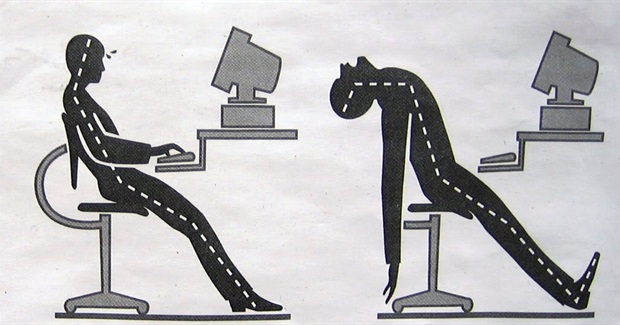
The Real Reason For The Forty-Hour Workweek
Well I’m in the working world again. I’ve found myself a well-paying gig in the engineering industry, and life finally feels like it’s returning to normal after my nine months of traveling.
Because I had been living quite a different lifestyle while I was away, this sudden transition to 9-to-5 existence has exposed something about it that I overlooked before.
Since the moment I was offered the job, I’ve been markedly more careless with my money. Not stupid, just a little quick to pull out my wallet. As a small example, I’m buying expensive coffees again, even though they aren’t nearly as good as New Zealand’s exceptional flat whites, and I don’t get to savor the experience of drinking them on a sunny café patio. When I was away these purchases were less off-handed, and I enjoyed them more.
I’m not talking about big, extravagant purchases. I’m talking about small-scale, casual, promiscuous spending on stuff that doesn’t really add a whole lot to my life. And I won’t actually get paid for another two weeks.
In hindsight I think I’ve always done this when I’ve been well-employed — spending happily during the “flush times.” Having spent nine months living a no-income backpacking lifestyle, I can’t help but be a little more aware of this phenomenon as it happens.
I suppose I do it because I feel I’ve regained a certain stature, now that I am again an amply-paid professional, which seems to entitle me to a certain level of wastefulness. There is a curious feeling of power you get when you drop a couple of twenties without a trace of critical thinking. It feels good to exercise that power of the dollar when you know it will “grow back” pretty quickly anyway.
What I’m doing isn’t unusual at all. Everyone else seems to do this. In fact, I think I’ve only returned to the normal consumer mentality after having spent some time away from it.
One of the most surprising discoveries I made during my trip was that I spent much less per month traveling foreign counties (including countries more expensive than Canada) than I did as a regular working joe back home. I had much more free time, I was visiting some of the most beautiful places in the world, I was meeting new people left and right, I was calm and peaceful and otherwise having an unforgettable time, and somehow it cost me much less than my humble 9-5 lifestyle here in one of Canada’s least expensive cities.
It seems I got much more for my dollar when I was traveling. Why?
A Culture Of Unnecessaries
Here in the West, a lifestyle of unnecessary spending has been deliberately cultivated and nurtured in the public by big business. Companies in all kinds of industries have a huge stake in the public’s penchant to be careless with their money. They will seek to encourage the public’s habit of casual or non-essential spending whenever they can.
In the documentary The Corporation, a marketing psychologist discussed one of the methods she used to increase sales. Her staff carried out a study on what effect the nagging of children had on their parents’ likelihood of buying a toy for them. They found out that 20% to 40% of the purchases of their toys would not have occurred if the child didn’t nag its parents. One in four visits to theme parks would not have taken place. They used these studies to market their products directly to children, encouraging them to nag their parents to buy.
This marketing campaign alone represents many millions of dollars that were spent because of demand that was completely manufactured.
“You can manipulate consumers into wanting, and therefore buying, your products. It’s a game.” ~ Lucy Hughes, co-creator of “The Nag Factor”
This is only one small example of something that has been going on for a very long time. Big companies didn’t make their millions by earnestly promoting the virtues of their products, they made it by creating a culture of hundreds of millions of people that buy way more than they need and try to chase away dissatisfaction with money.
We buy stuff to cheer ourselves up, to keep up with the Joneses, to fulfill our childhood vision of what our adulthood would be like, to broadcast our status to the world, and for a lot of other psychological reasons that have very little to do with how useful the product really is. How much stuff is in your basement or garage that you haven’t used in the past year?
The Real Reason For The Forty-Hour Workweek
The ultimate tool for corporations to sustain a culture of this sort is to develop the 40-hour workweek as the normal lifestyle. Under these working conditions people have to build a life in the evenings and on weekends. This arrangement makes us naturally more inclined to spend heavily on entertainment and conveniences because our free time is so scarce.
I’ve only been back at work for a few days, but already I’m noticing that the more wholesome activities are quickly dropping out of my life: walking, exercising, reading, meditating, and extra writing.
The one conspicuous similarity between these activities is that they cost little or no money, but they take time.
Suddenly I have a lot more money and a lot less time, which means I have a lot more in common with the typical working North American than I did a few months ago. While I was abroad I wouldn’t have thought twice about spending the day wandering through a national park or reading my book on the beach for a few hours. Now that kind of stuff feels like it’s out of the question. Doing either one would take most of one of my precious weekend days!
The last thing I want to do when I get home from work is exercise. It’s also the last thing I want to do after dinner or before bed or as soon as I wake, and that’s really all the time I have on a weekday.
This seems like a problem with a simple answer: work less so I’d have more free time. I’ve already proven to myself that I can live a fulfilling lifestyle with less than I make right now. Unfortunately, this is close to impossible in my industry, and most others. You work 40-plus hours or you work zero. My clients and contractors are all firmly entrenched in the standard-workday culture, so it isn’t practical to ask them not to ask anything of me after 1pm, even if I could convince my employer not to.
The eight-hour workday developed during the industrial revolution in Britain in the 19th century, as a respite for factory workers who were being exploited with 14- or 16-hour workdays.
As technologies and methods advanced, workers in all industries became able to produce much more value in a shorter amount of time. You’d think this would lead to shorter workdays.
But the 8-hour workday is too profitable for big business, not because of the amount of work people get done in eight hours (the average office worker gets less than three hours of actual work done in 8 hours) but because it makes for such a purchase-happy public. Keeping free time scarce means people pay a lot more for convenience, gratification, and any other relief they can buy. It keeps them watching television, and its commercials. It keeps them unambitious outside of work.
We’ve been led into a culture that has been engineered to leave us tired, hungry for indulgence, willing to pay a lot for convenience and entertainment, and most importantly, vaguely dissatisfied with our lives so that we continue wanting things we don’t have. We buy so much because it always seems like something is still missing.
Western economies, particularly that of the United States, have been built in a very calculated manner on gratification, addiction, and unnecessary spending. We spend to cheer ourselves up, to reward ourselves, to celebrate, to fix problems, to elevate our status, and to alleviate boredom.
Can you imagine what would happen if all of America stopped buying so much unnecessary fluff that doesn’t add a lot of lasting value to our lives?
The economy would collapse and never recover.
All of America’s well-publicized problems, including obesity, depression, pollution and corruption are what it costs to create and sustain a trillion-dollar economy. For the economy to be “healthy”, America has to remain unhealthy. Healthy, happy people don’t feel like they need much they don’t already have, and that means they don’t buy a lot of junk, don’t need to be entertained as much, and they don’t end up watching a lot of commercials.
The culture of the eight-hour workday is big business’ most powerful tool for keeping people in this same dissatisfied state where the answer to every problem is to buy something.
You may have heard of Parkinson’s Law. It is often used in reference to time usage: the more time you’ve been given to do something, the more time it will take you to do it. It’s amazing how much you can get done in twenty minutes if twenty minutes is all you have. But if you have all afternoon, it would probably take way longer.
Most of us treat our money this way. The more we make, the more we spend. It’s not that we suddenly need to buy more just because we make more, only that we can, so we do. In fact, it’s quite difficult for us to avoid increasing our standard of living (or at least our rate of spending) every time we get a raise.
I don’t think it’s necessary to shun the whole ugly system and go live in the woods, pretending to be a deaf-mute, as Holden Caulfield often fantasized. But we could certainly do well to understand what big commerce really wants us to be. They’ve been working for decades to create millions of ideal consumers, and they have succeeded. Unless you’re a real anomaly, your lifestyle has already been designed.
The perfect customer is dissatisfied but hopeful, uninterested in serious personal development, highly habituated to the television, working full-time, earning a fair amount, indulging during their free time, and somehow just getting by.
Is this you?
Two weeks ago I would have said hell no, that’s not me, but if all my weeks were like this one has been, that might be wishful thinking.
By David Cain
Wednesday, November 05, 2014
Science Of Persuasion
Animation describing the Universal Principles of Persuasion based on the research of Dr. Robert Cialdini, Professor Emeritus of Psychology and Marketing, Arizona State University.
Dr. Robert Cialdini & Steve Martin are co-authors (together with Dr. Noah Goldstein) of the New York Times, 50 Scientifically Proven Ways to be Persuasive.
Sunday, October 12, 2014
Muslim Hate In Australia
This Social Experiment is proof that hate against Muslims is not welcome in Australia. Almost every person interfered to stop the hate filled attacks. Truly inspirational.
NOTE: This video is copyright. No one is allowed to re-upload it, nor use it nor broadcast it anywhere without the content creator's permission.
There is no doubt Islamophobia occurs in Australia (as we've already seen countless times), whether promoted by the media, politicians or the rare bigoted inidividual - however after shooting this experiment we are certain that the Australian public do not welcome hate against Muslims and it must be stopped.
Video made by Macquarie University Muslim students Association for Islamic Awareness Week 2014 "iSlamPhobia”.
Thursday, December 06, 2012
Online Freedom: Who Should Control What?
Delegates from 193 countries are meeting in Dubai to discuss the future of the internet. They will be negotiating a new International Telecommunications Treaty - which has not been updated since 1988.
The main debate at the conference is over internet freedom. The US and Europe want less internet regulation, while countries like Russia and China are accused of wanting more.
But the possibly bigger question of who controls the internet is also in play. The US in particular is criticised for dominating the way the internet is run.
Since 1947 a UN body called the International Telecommunication Union (ITU) has been in charge of international technical standards.
Delegates from 193 countries have regulated everything from radio frequencies to satellite orbits. Their mission is to make sure networks and technologies easily interconnect. But according to internet giant Google, the ITU could be about to take steps to reduce the free flow of information on the web.
| "There is a mood to change the governance structure of the internet from one that is multi-stakeholder system to one that is inter-governmental. And I think the fear is that the internet repression and censorship that is already going and the throttling of the speed of communication and widespread surveillance in certain countries will be legitimised if they change the system." - Richard Rogers, University of Amsterdam |
It says if proposals being heard at the ITU conference in Dubai are accepted, there will be an increase in censorship and national regulation.
But other countries censor content on the internet as well.
Known as the 'Great Firewall of China', the People's Republic has perhaps the world's most impressive example of online control. In addition to banning social networking sites, China also has tens of thousands of monitors who snoop and often hack into people's emails.
Following protests in 2009, the Iranian government intensified its efforts to censor the web. It has rounded up and jailed bloggers and internet dissidents. The country also often shuts down access to the internet when it expects anti-government protests.
In Belarus, the government has also noticed the opposition's use of the internet. Websites are sometimes blacked out, opposition voices are monitored and the government even uses websites like Twitter to intimidate journalists and activists.
And last month, the United Arab Emirates showed where it stands on internet censorship. It issued a decree making it a crime to insult or criticise the country's leaders online.
We ask should limits be placed on the web? And if so, how and by whom? What does it all mean for freedom of speech online and is it being threatened with over-regulation?
Saturday, November 03, 2012
The Plutocracy Will Go To Extremes To Keep The 1% In Control
The One Percent is not only increasing their share of wealth — they’re using it to spread millions among political candidates who serve their interests. Example: Goldman Sachs, which gave more money than any other major American corporation to Barack Obama in 2008, is switching alliances this year; their employees have given $900,000 both to Mitt Romney’s campaign and to the pro-Romney super PAC Restore Our Future. Why?
Because, says the Wall Street Journal, the Goldman Sachs gang felt betrayed by President Obama’s modest attempts at financial reform. To discuss how the super-rich have willfully confused their self-interest with America’s interest, Bill is joined by Rolling Stone magazine’s Matt Taibbi, who regularly shines his spotlight on scandals involving big business and government, and journalist Chrystia Freeland, author of the new book Plutocrats: The Rise of the New Global Super-Rich and the Fall of Everyone Else.
BILL MOYERS: The new Gilded Age is roaring down on us, an uncaged tiger on a rampage. Walk out to the street in front of our office and turn right and you can see the symbol of it: a fancy new skyscraper going up two blocks away. When finished, this high rise among high rises will tower a thousand feet, the tallest residential building in the city.
The New York Times has dubbed it "the global billionaires club," and for good reason. At least of two of the apartments are under contract for more than $90 million each. Others, more modest, range in price from $45 million to more than 50 million.
Simultaneously, the powers-that-be have just awarded Donald Trump -- yes, that Donald Trump -- the right to run a golf course in the Bronx which taxpayers are spending at least $97 million to build. What “amounts to a public subsidy,” says the indignant city comptroller, "for a luxury golf course." Good grief. A handout to the plutocrat's plutocrat.
This, in a city where economic inequality rivals that of a third-world country. Of America's 25 largest cities, New York is now the most unequal. The median income for the bottom 20% last year was less than $9,000, while the top one percent of New Yorkers has an average annual income of $2.2 million.
Across America, this divide between the superrich and everyone else has become a yawning chasm and studies indicate it may stifle jobs and growth for years to come. At no time in modern history has the top one hundredth of one percent owned more of our wealth or paid so low a tax rate. But in neither of the two presidential debates so far has the vastness of this astounding inequality gap been discussed. Not by Mitt Romney, who is the embodiment of the predatory world of financial capitalism. And not even by Barack Obama, whose party once fought for working men and women against the economic royalists.
Via: "Alter-Net"
Thursday, June 07, 2012
Consent Of The Networked
By Julia Heath,
May 28, 2012
Courtesy Of "Foreign Policy In Focus"
 Internet policy-making is fraught with contradiction, corruption, and colonialism. In Consent of the Networked, Rebecca MacKinnon has produced an incredibly well-researched account of these dilemmas, which is as deep as it is vast. She uses case studies from around the globe, illuminates essential human rights issues, and names key stakeholders and their positions.
May 28, 2012
Courtesy Of "Foreign Policy In Focus"
Internet policy-making is fraught with contradiction, corruption, and colonialism. In Consent of the Networked, Rebecca MacKinnon has produced an incredibly well-researched account of these dilemmas, which is as deep as it is vast. She uses case studies from around the globe, illuminates essential human rights issues, and names key stakeholders and their positions.
Many of us use Facebook to keep in touch with friends or make business connections. We rarely read the terms of service or think of the ramifications they could have for others. Facebook requires users, for example, to use their real names. Their argument is that people behave better when they can be identified. Bad behavior could include cyberharassment, spamming, or spreading false rumors. However, in totalitarian countries, users often wish to remain anonymous in order to safely discuss political or religious issues. In the former Soviet republics and Iran, for instance, users can be monitored specifically and arrested for making anti-government comments. Anonymity could also be necessary in situations where users discuss domestic violence, drug abuse, gender or sexuality, or other sensitive private topics.
In response to these shortcomings, new products like Tor, which enables users to upload and download without being traced, are becoming popular in places like China, Iran, and Egypt. Diaspora, Crabgrass, FreedomBox, and StatusNet are decentralized social media platforms that provide users local control and anonymity, which makes them better suited for activists.
In Egypt and other countries, the government has the ability to shut down mobile phone and Internet service. In the United States, mobile service providers like T-Mobile can decide to block content based on their preferences. Therefore, groups like Detroit’s Digital Justice Coalition have created community-owned broadband and wireless networks to promote local innovation and civic involvement. Users are rapidly shaping technology to meet their needs.
Intellectual property rights are another major driver of Internet policy, especially in the West. In the United States, the Recording Industry Association of America spent $17.5 million on congressional lobbying in 2009. MacKinnon argues that technical innovators and not lobbyists must create Internet policy. This is becoming more evident in Europe, with Sweden’s Pirate Party (which defends the right of citizens to share files) winning two seats in the European Parliament with 7 percent of the Swedish vote.
A final example is the colonial or western centric approach to Internet innovation and policy. Large technical firms like Microsoft, Apple, and Google produce and manage much of the information we see on the Internet. MacKinnon says the amount of traffic you produce dictates your visibility on the net. Therefore, because Africa only produces 2 percent of the traffic on the net, African sources are essentially invisible.
MacKinnon recommends net neutrality, transparency, accountability, local control suited to local conditions, and a balance between protecting producer and consumer rights. "There can be no cyberliberty," she quotes Internet scholar Milton Mueller, "without a political movement to define, defend, and institutionalize individual rights and freedoms on a transnational scale.”
Sunday, May 06, 2012
Building The Pentagon's ‘Like Me’ Weapon

(Copyright: Getty Images)
The Pentagon wants to understand the science behind what makes people violent. The question is what do they plan to do with it?
By Sharon Weinberger
2 May 2012
Courtesy Of "The BBC"
In February this year, the US government was forced into full damage limitation mode. News that US troops in Afghanistan had sent copies of the Koran to be incinerated, sparked a wave of deadly protests that left 36 people dead and more than 200 injured. Despite an apology from President Barack Obama and assurances that the burning was accidental, the public relations offensive launched to counter the damage done to the military’s reputation and stem the violence showed little sign of success.
Now imagine that instead of employing public relations experts to advise on the best strategy, US officials had a device that could advise them what to say, generating a story based on a scientific understanding of the brain’s inner workings to soothe tempers and calm the mood of the population. It sounds like something from a science fiction blockbuster, but is in fact the premise behind the Pentagon’s growing interest in the neurobiology of political violence, a relatively new field that combines neuroscience with more traditional social science-based approaches to understanding human behaviour.
One programme, started last year by the Pentagon’s Defense Advanced Research Projects Agency (Darpa), even looks at finding ways to generate versions of events that could be used in attempts to persuade people not to support the enemy. Known as Narrative Networks, it seeks to "understand how narratives influence human thoughts and behaviour, then apply those findings to a security context in order to address security challenges such as radicalization, violent social mobilization, insurgency and terrorism, and conflict prevention and resolution,” says William Casebeer, the Darpa official leading the work.
The idea is straightforward: scientists have long known that narratives exert a powerful force on the human mind, helping to shape people’s concept of individual and group identities, even motivating them to conduct violent acts. Some bloggers and people posting on Twitter have suggested the Pentagon is seeking to elevate brainwashing to a science. "Darpa looking to master propaganda via Narrative Networks,'" read the headline of a report on the science news website Phys.org, for example, alongside countless similar blog posts and tweets.
Those involved in the research disagree. “None of the work we are doing, nor anyone else I know in the Narrative Networks group, is about increasing the ability of soldiers or sailors to kill people or to brainwash people,” says Paul Zak, a professor at Claremont Graduate University in Claremont, California, who specializes in neuroeconomics, and whose work has been funded by the Darpa program.
Zak and others see this type of research being used in the shaping of messages that shows the US military in the best possible light, such as by highlighting its humanitarian work abroad. “Is there a way to hold events that might publicise things like healthcare, public health factors, [or] tooth brushing for children and you could give away half a million toothbrushes,” he says. “There could be things that help countries understand that most of the time what we want to do is get along with everybody.”
Zak’s work involves trying to understand how listening to stories affects the brain’s natural release of oxytocin, sometimes called the trust hormone. “Why are we grabbed by some stories and not others?’ he says. “It just seems like a great question to ask.”
To test his theories, Zak uses an experiment that involves involves university students watching a short video featuring a father describing his son’s battle with brain cancer. After watching the video, Zak measures oxytocin levels in the blood of the participants, as well as their willingness to give the money they’ve earned from participating in the experiment to charity. “Our hypothesis is that this connection system that human beings have, which utilizes oxytocin, is activated by these same kinds of narratives, these same kinds of stories,” he says.
But stories aren’t the only way to increase trust. Zak has also experimented with having subjects spray oxytocin into their nose, but it's not an approach that would have practical applications for the military, he cautions. The government is not looking to “just spray oxytocin into the crowds,” he says. “That, first of all, would be highly unethical and illegal, and it wouldn’t work anyway. You have to get a lot into the brain.“
War stories
While Zak is focusing on oxytocin, other researchers working with Darpa’s support are trying to understand the parts of the brain responsible for values and ideals. Emory University professor Greg Berns, a neuroeconomist, recently conducted an experiment that involved paying people to give up their fundamental ideals and beliefs. Participants were placed in a functional magnetic resonance imaging (fMRI) scanner while statements based on answers they had previously given on a questionnaire were presented on a screen. Topics related to either core beliefs such as views on gay marriage, sex with children and the sterilization of people with genetic conditions, or less fundamental matters such as preference for PCs or Macs.
The volunteers were then offered up to $100 to sign statements disavowing their previous views. Perhaps unsurprisingly, more were willing to take money to change position on things like whether they were a cat person rather than a dog person than were willing to do so to shift their stances on whether they would accept money for sex, for example. More interestingly, Berns found that fundamental values, such as those concerning sex and belief in God, triggered activity in a part of the brain called the left temporoparietal junction, while more every-day belief statements stimulated activity in the entirely separate left and right inferior parietal lobes.
These findings, suggests Berns, means there is a biological basis for ethnic conflict. “Many of the conflicts that we currently face internationally are ultimately about control of biology,” says Berns. People may say they are fighting for ideas, but what they are really fighting for, according to Berns, is for values connected to survival, such as reproductive rights. “Things like religion are placeholders for that; what we’re seeing is a very Darwinian struggle for limited resources,” he says.
Berns, like the other researchers involved, says the Darpa program is about finding ways to stop people from fighting, not controlling them. “It’s not about brainwashing people," he says. "We’re not in the business of reading people’s minds, or implanting thoughts. By understanding the biology of what causes people go to war, we might begin to understand how to mitigate it.”
Whether creating better narratives can help reduce conflict is still an open question, however. Neuroscientists at the Massachusetts Institute of Technology (MIT), in Cambridge, Massachusetts, have been studying the role of stories and dialogue on those involved the Arab-Israeli conflict, and in particular, how stories affect sympathy for others.
“I think there’s a perception out there that if someone commits these horrible atrocities to another group that they must be sociopaths, they must be psychopaths that lack empathy for other people,” says Emile Bruneau, a post-doctoral fellow at the Saxe Lab at MIT, which is not funded by the Darpa programme. “But, I think it might be very different, that they might actually be highly empathic people, but their empathy is highly regulated so that it’s applied strongly to in-group members but not at all to out-group members.”
In a study published last year, Bruneau and his colleagues looked at what happens in the brain when Jewish Israelis and Arabs read stories intended to evoke sympathy about members of each other's group. Participants read about children suffering physical or emotional pain such as by cutting themselves with a knife or losing a parent, for example. Brain scans carried out with fMRI machines showed these stories elicited similar patterns of activation in the medial prefrontal cortex, the brain region associated with sympathy, whether subjects read about members of their own group or about "the enemy". Interestingly, reading the same stories about the suffering of South Americans triggered a noticeably different response in this brain region and others involved in thinking about others' emotions. “The most poetic interpretation of that is these are the brain regions where the opposite of love is not hate, but indifference,” says Bruneau.
In a separate study, Bruneau and colleagues asked Israelis and Palestinians to write about the difficulties they faced because of the ongoing conflict. The accounts were then read by members of the opposing group, and feelings such as empathy, trust and warmth were measured using a survey. The researchers found the attitudes of the Palestinians towards the Israelis improved more when they were allowed to tell their stories, rather than listening, whereas Israelis' attitudes about Palestinians improved more after they listened to Palestinians describing their experiences.
The MIT research could hold some lessons for the US government, which spends over a billion dollars a year on trying to convince foreign audiences of its point of view, whether via radio broadcasting, or through the Pentagon’s foreign language news sites. “It’s interesting that we spend a lot of money as a country on the Voice of America [radio station],” Bruneau says, “when this research is starting to show that what might be most effective would be the ear of America.”
Line of defence
Beyond the question of better storytelling is a fundamental question about whether such research will actually help the Pentagon convince people that the US military is really there to help them. Tom Pyszczynski, a social psychologist at the University of Colorado who studies terrorism, says it’s not clear that understanding the neuroscience of violence, while an interesting scientific endeavor, will lead on its own to solutions to terrorism.
“We need to understand those things, no doubt about it, but, in terms of promoting peace I’m not sure that knowing where in the brain the anger that leads to violence is happening is going to help us discourage war,” says Pyszczynski, who has been studying the effects of the recent Arab Spring uprisings on attitudes towards the West. “We’re not going to be able to go in and zap people’s amygdalae or anesthetize them or do whatever,” he says. “We’re going to need to change the way they interpret things that happen and we’re going to need to stop doing things that people interpret as insulting or challenging to their way of life.”
For Pyszczynski, the potential for such work also raises an interesting ethical question reminiscent of the issues addressed A Clockwork Orange, both the 1971 film and the book on which it was based. “If you could somehow reliably change peoples’ minds so that they didn’t want to kill anymore, should that be done?” he asks. “Well, you’re impinging on their freedom in a way, but on the other hand you’re saving a lot of lives.”
But shaping public relations campaigns – and people’s minds - isn’t necessarily the only military application for such research. David Matsumoto, a professor of psychology and director of the Culture and Emotion Research Laboratory at San Francisco State University, is being funded by another Pentagon initiative, called Minerva, to conduct scientific research on the role of emotions in inciting political violence. Matsumoto and his colleagues are studying language and facial expressions used by political leaders to see if those can be used to predict future violence.
“I think that one of the most logical direct applications of this kind of finding and this line of research [is] to develop sensors that can watch, either monitor the words that are being spoken and/or the non-verbal behaviors that are expressive of those emotions,” he says of the Pentagon’s interest in his work. “I think the development of sensors like that ... would be sort of an early warning signal or system [to detect violence].”
Of course, some might question whether the vision of a machine that spits out story lines at the flip of a switch, or provides an early warning “emotion” sensor for war, is blue sky dreaming. But Read Montague, a neuroscientist at the Virginia Tech Carilion Research Institute in Roanoke, Virginia, sees the possibility of technology that could come into play in cases like the Koran-burning protests in Afghanistan.
“I see a device coming that’s going to make suggestions to you, like, a, this situation is getting tense, and, b, here are things you need to do now, I’ll help you as you start talking,” says Montague, who is part of the Darpa Narrative Networks project. “That could be really useful.”
Montague points out that people also once doubted that a computer could beat a chess master, but as technology advanced, computers eventually became good enough that they could out manoeuvre even the best chess players. Of course, the idea of Big Blue-style computer that taps the mind’s biology to generate stories sounds less like a feel-good storytelling machine than a military weapon designed to manipulate people’s mental state. “It’s a weapon,” says Montague, “but it’s a defensive weapon.”
Wednesday, November 09, 2011
Tracking Your Every Move
Escape The Web: Every Click Online Thralls Privacy
Every day we use mobile phones. Computers became part of our life. Some people even can't live without those devices. It's fashionable now to have an account on Facebook or on some other social sites. We provide our personal data online never thinking about probable consequences...
Every day we use mobile phones. Computers became part of our life. Some people even can't live without those devices. It's fashionable now to have an account on Facebook or on some other social sites. We provide our personal data online never thinking about probable consequences...
Monday, September 12, 2011
Klout and The Evolution Of Digital Diplomacy

Alexandre Meneghini/AP - A man, wearing a t-shirt with the design of U.S. flag painted on, takes part on Friday prayers at the main square of the rebel-held town of Benghazi, Libya, Friday, Aug. 12, 2011.
By Brian D. Fung,
Published: August 22, 2011
Courtesy Of "The Washington Post"
If there’s one thing the Internet has given us, it’s a treasure trove of data about ourselves. We now have access to terabytes of information on the way we interact with our favorite brands. All this information is crunchable in countless ways — and, for better or for worse, collected automatically. For years, few people cared, aside from marketers and advertisers. But that may be changing, as U.S. officials shift gears to a digital-first diplomatic strategy in the face of rising anti-Americanism worldwide.
America’s reputation abroad has reached a new low. In the Middle East, America is evenless popular now than when President George W. Bush occupied the White House. Washington’s image has suffered the most in Turkey, plummeting from a high of 52 percent in 2000 to a dismal 10 percent in 2011. In Asia this past week, Vice President Joe Biden tried to build bridges with Chinese President Hu Jintao’s presumptive successor, but the visit was clouded by doubts about the U.S. deficit.
With a rash of pressing issues on the domestic front, President Obama has mostly left the unenviable task of repairing America’s image to State Department diplomats. Since 2009, much of that work has been done through social media channels as part of the Obama administration’s drive toward digital diplomacy. U.S. State Department officials now operate some 230 Facebook accounts, 80 Twitter feeds, 55 YouTube channels and 40 pages on Flickr, according to the Lowy Institute for International Policy. Digital diplomats broadcast messages and multimedia, attract commenters to specially designed forums in foreign languages and monitor trending topics in an attempt to take the world’s pulse. But whether conducted online or off, public diplomacy has always been an inexact science. How do diplomats know whether their efforts are paying off?
While we’re still a ways from being able to identify a direct relationship between specific public diplomacy campaigns and changes in foreign opinion, social analytics applications like Klout may soon become a vital tool for digital diplomats. Klout, whichTime magazine included in a list of the year’s 50 best Web sites on August 16, gives its users a score based on how influential they are across a range of social networks. Contributing to the social savviness readout is a wealth of information about users’ most engaged followers and the topics they respond to best.
It’s not hard to see how diplomats can turn this data to their advantage. In an environment that often rewards targeted communication over indiscriminate broadcasting, diplomats have an interest in finding out who their followers are and what they like. Posting content that influencers will spread themselves can maximize the State Department’s impact via network effects while economizing effort. And by learning about their audience, diplomats will be able to tailor their engagement strategy and make course corrections, just as commercial brands do in the private sector.
Of course, Klout isn’t the only company in the burgeoning social analytics industry. For years, Facebook’s Insights feature has given fan page managers access to demographic and behavioral information that helps them promote content more effectively. And Twitter isreportedly is working on its own analytics application, which is currently in private testing.
Social analytics services don’t solve everything. They tell us little about how digital diplomacy advances U.S. foreign policy goals, for example. But they do provide an innovative medium-term solution to the traditional challenge associated with public diplomacy: defining and measuring success.
Brian D. Fung is a freelance journalist who writes about politics and technology. He has worked previously at Foreign Policy magazine, CBS News, NBC and on Capitol Hill. A graduate student at the London School of Economics, Brian holds a degree in political science from Middlebury College. He can be reached via Twitter at @b_fung.
Monday, August 29, 2011
A New History Of Censorship In The West?
The Stream Looks At The Debate Over Freedom vs. Safety On The Net. Should Governments Be Allowed To Cut Off Social Networks Or Cell Service In The Interest Of Public Order?
Courtesy Of "Al-Jazeera"
Courtesy Of "Al-Jazeera"
- A video released by the BART includes footage of demonstrators disrupting access to trains and eventually leading to a temporary shutdown of one transit station on Aug. 15. This time around, BART says their response did not involve disabling mobile communications.
- BART's decision to cut off phone service in tunnels drew comparisons to former Egyptian president Hosni Mubarak's crackdown on pro-democracy activists earlier this year.
- In Egypt, it takes a mass uprising to bring down a phone network - in the US, it takes rumors of a protest. #OpBART
- In the UK, looters organising via social media and mobile networks prompted Prime Minister David Cameron to consider initiatives that could give the government power to block or limit access to social media.
Below, is a mashup video, including music, of on-the-ground footage of the London riots. - Additional scenes of looting at night:
- Some Twitter users supported shutting down BlackBerry Messenger during the London riots, saying that the heavily encrypted mobile messaging service was being used by rioters and looters to target shops and neighbourhoods.
Below, a self-described "crime blogger" solicited support from Twitter users. Hundreds re-tweeted the message. - Please RT to get @UK_blackberry to shut down #BBM till riots end#BlockBBM let's get it trending #LondonRiots
- Critics of such proposals say the BBM platform shouldn't be blamed for the crimes themselves.
- No point in blaming #BBM for arranging #LondonRiots. Its patheticness like someone blaming roads if the enemy came via them
- I have a Blackberry and I use BBM, I don't loot and riot like the scum. It's not always used for bad things. Don't block BBM. #BlockBBM
- Others question what else might be blocked if the BBM service is blamed for events in London.
- blockbbm? If that doesn't work, maybe #blocktwitter, #blocksms,#blockfacebook, #blockgoogle, #blockphone, #blockspeech? Hmmm.
- In China, the government has a history of restricting citizens' access to mobile and web services with the intent to suppress political dissent.
- Chinese censors blocked mobile services and internet access to reports about dangers at a chemical plant in the north-east city of Dailin on Saturday at the same time the official Xinhua news agency endorsed British Prime Minister, David Cameron’s, suggestion that some people be banned from social media sites in the UK.
- Thumbnail image: A protester uses a mobile phone during a demonstration at the Bay Area Rapid Transit (BART) Civic Center Station in San Francisco, California August 15, 2011. Protesters demonstrated on Monday against the subway system after BART turned off cell phone service in stations last week to foil a protest over a police shooting. REUTERS/Robert Galbraith (UNITED STATES - Tags: CIVIL UNREST CRIME LAW BUSINESS TRANSPORT)




Subscribe to:
Posts (Atom)
