


Showing posts with label Brain Washing. Show all posts
Showing posts with label Brain Washing. Show all posts
Wednesday, January 21, 2015
How Do They Manipulate Us?
By Lucien Cerise
• Summary:
1. What is Social Engineering ?
2. Human brain’s manipulation & computers’ system: formatting human brain.
3. From Management to Social Engineering: optimizing the control of the society.
4. Structuralism, French Theory, The Gender Theory & the Deconstruction of the Human dehumanization: Formatting the Human.
5. Dehumanization part two: future of the Human.
6. Frauds on the vote for the Taubira’s law in France ? Gay mariage law in France.


Sunday, December 28, 2014
The Psychology Of Authority
What percentage of people would obey if they were ordered to commit murder? The answer might surprise you.
How is it that one man in a uniform can order another man to kill a person that they have never met and has never done them any harm and can have that order followed over and over and over again….?
Monday, December 22, 2014
Asking Muslims To Condemn Terrorism Must Stop
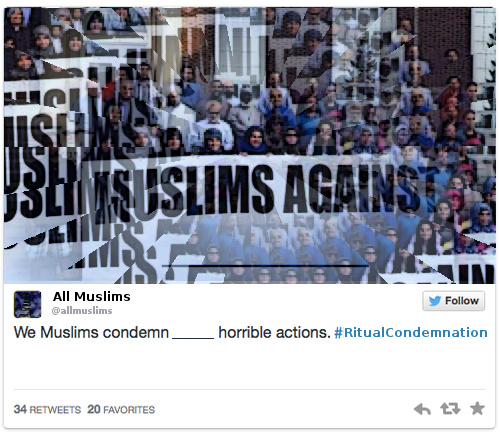
There's a certain ritual that each and every one of the world's billion-plus Muslims, especially those living in Western countries, is expected to go through immediately following any incident of violence involving a Muslim perpetrator. It's a ritual that is continuing now with the Sydney hostage crisis, in which a deranged self-styled sheikh named Man Haron Monis took several people hostage in a downtown café.
Here is what Muslims and Muslim organizations are expected to say: "As a Muslim, I condemn this attack and terrorism in any form."
This expectation we place on Muslims, to be absolutely clear, is Islamophobic and bigoted. The denunciation is a form of apology: an apology for Islam and for Muslims.
The implication is that every Muslim is under suspicion of being sympathetic to terrorism unless he or she explicitly says otherwise. The implication is also that any crime committed by a Muslim is the responsibility of all Muslims simply by virtue of their shared religion.
This sort of thinking — blaming an entire group for the actions of a few individuals, assuming the worst about a person just because of their identity — is the very definition of bigotry.
It is time for that ritual to end: non-Muslims in all countries, and today especially those in Australia, should finally take on the correct assumption that Muslims hate terrorism just as much as they do, and cease expecting Muslims to prove their innocence just because of their faith.
Bigoted assumptions are the only plausible reason for this ritual to exist, which means that maintaining the ritual is maintaining bigotry. Otherwise, we wouldn't expect Muslims to condemn Haron Monis — who is clearly a crazy person who has no affiliations with formal religious groups — any more than we would expect Christians to condemn Timothy McVeigh. Similarly, if someone blames all Jews for the act of, say, extremist Israeli settlers in the West Bank, we immediately and correctly reject that position as prejudiced. We understand that such an accusation is hateful and wrong — but not when it is applied to Muslims.
This is, quite literally, a different set of standards that we apply only to Muslims. Hend Amry, who is Libyan-American, brilliantly satirized this expectation with this tweet, highlighting the arbitrary expectations about what Muslims are and are not expected to condemn:
Hend @LibyaLibertyAs a Muslim, I condemn acts of sexual assault following time spent as a self-proclaimed spiritual healer specializing in black magic.10:50 AM - 15 Dec 2014
This ritual began shortly after September 2001. American Muslims, as well as Muslims in other Western countries, feared that they could be victims to a public backlash against people of their religion. While the short-term need to guard against a backlash was real, that moment has passed, and the ritual's persistence is perpetuating Islamophobia rather than reducing it, by constantly reminding us of our assumption that Muslims are guilty until proven innocent.
The media has played a significant role in maintaining this ritual and thus the prejudiced ideas behind it. Yes, that includes openly Islamophobic cable news hosts like those in the US. But it also includes even well-intentioned media outlets and reporters who broadcast Muslims' and Muslim organizations' condemnation of acts of extremist violence, like the hostage crisis in Sydney.
There is no question that this coverage is explicitly and earnestly designed to combat Islamophobia and promote equal treatment of Muslims. No question. All the same, this coverage ends up cementing the ritual condemnation as a necessary act, and thus cementing as well the racist implications of that ritual.
By treating it as news every time, the media is reminding its readers and viewers that Muslims are held to a different standard; it is implicitly if unintentionally reiterating the idea that they are guilty until proven innocent, that maybe there is something to the idea of collective Muslim responsibility for lone criminals who happen to share their religion.
Instead, we should treat the assumptions that compel this ritual — that Muslims bear collective responsibility, that they are presumed terrorist-sympathizers until proven otherwise — as flatly bigoted ideas with no place in our society. There is no legitimate reason for Muslim groups to need to condemn Haron Monis, nor is there any legitimate reason to treat those condemnations as news. So we should stop.
We should treat people like Haron Monis as what he is: a deranged lunatic. And we should treat Muslims as what they are: normal people who of course reject terrorism, rather than as a lesser form of humanity that is expected to reject violence every time it happens.
By Max Fisher
Saturday, December 06, 2014
Your Lifestyle Has Already Been Designed
The Real Reason For The Forty-Hour Workweek
Well I’m in the working world again. I’ve found myself a well-paying gig in the engineering industry, and life finally feels like it’s returning to normal after my nine months of traveling.
Because I had been living quite a different lifestyle while I was away, this sudden transition to 9-to-5 existence has exposed something about it that I overlooked before.
Since the moment I was offered the job, I’ve been markedly more careless with my money. Not stupid, just a little quick to pull out my wallet. As a small example, I’m buying expensive coffees again, even though they aren’t nearly as good as New Zealand’s exceptional flat whites, and I don’t get to savor the experience of drinking them on a sunny café patio. When I was away these purchases were less off-handed, and I enjoyed them more.
I’m not talking about big, extravagant purchases. I’m talking about small-scale, casual, promiscuous spending on stuff that doesn’t really add a whole lot to my life. And I won’t actually get paid for another two weeks.
In hindsight I think I’ve always done this when I’ve been well-employed — spending happily during the “flush times.” Having spent nine months living a no-income backpacking lifestyle, I can’t help but be a little more aware of this phenomenon as it happens.
I suppose I do it because I feel I’ve regained a certain stature, now that I am again an amply-paid professional, which seems to entitle me to a certain level of wastefulness. There is a curious feeling of power you get when you drop a couple of twenties without a trace of critical thinking. It feels good to exercise that power of the dollar when you know it will “grow back” pretty quickly anyway.
What I’m doing isn’t unusual at all. Everyone else seems to do this. In fact, I think I’ve only returned to the normal consumer mentality after having spent some time away from it.
One of the most surprising discoveries I made during my trip was that I spent much less per month traveling foreign counties (including countries more expensive than Canada) than I did as a regular working joe back home. I had much more free time, I was visiting some of the most beautiful places in the world, I was meeting new people left and right, I was calm and peaceful and otherwise having an unforgettable time, and somehow it cost me much less than my humble 9-5 lifestyle here in one of Canada’s least expensive cities.
It seems I got much more for my dollar when I was traveling. Why?
A Culture Of Unnecessaries
Here in the West, a lifestyle of unnecessary spending has been deliberately cultivated and nurtured in the public by big business. Companies in all kinds of industries have a huge stake in the public’s penchant to be careless with their money. They will seek to encourage the public’s habit of casual or non-essential spending whenever they can.
In the documentary The Corporation, a marketing psychologist discussed one of the methods she used to increase sales. Her staff carried out a study on what effect the nagging of children had on their parents’ likelihood of buying a toy for them. They found out that 20% to 40% of the purchases of their toys would not have occurred if the child didn’t nag its parents. One in four visits to theme parks would not have taken place. They used these studies to market their products directly to children, encouraging them to nag their parents to buy.
This marketing campaign alone represents many millions of dollars that were spent because of demand that was completely manufactured.
“You can manipulate consumers into wanting, and therefore buying, your products. It’s a game.” ~ Lucy Hughes, co-creator of “The Nag Factor”
This is only one small example of something that has been going on for a very long time. Big companies didn’t make their millions by earnestly promoting the virtues of their products, they made it by creating a culture of hundreds of millions of people that buy way more than they need and try to chase away dissatisfaction with money.
We buy stuff to cheer ourselves up, to keep up with the Joneses, to fulfill our childhood vision of what our adulthood would be like, to broadcast our status to the world, and for a lot of other psychological reasons that have very little to do with how useful the product really is. How much stuff is in your basement or garage that you haven’t used in the past year?
The Real Reason For The Forty-Hour Workweek
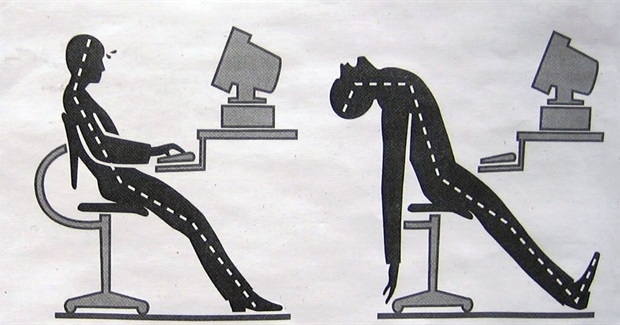
The ultimate tool for corporations to sustain a culture of this sort is to develop the 40-hour workweek as the normal lifestyle. Under these working conditions people have to build a life in the evenings and on weekends. This arrangement makes us naturally more inclined to spend heavily on entertainment and conveniences because our free time is so scarce.
I’ve only been back at work for a few days, but already I’m noticing that the more wholesome activities are quickly dropping out of my life: walking, exercising, reading, meditating, and extra writing.
The one conspicuous similarity between these activities is that they cost little or no money, but they take time.
Suddenly I have a lot more money and a lot less time, which means I have a lot more in common with the typical working North American than I did a few months ago. While I was abroad I wouldn’t have thought twice about spending the day wandering through a national park or reading my book on the beach for a few hours. Now that kind of stuff feels like it’s out of the question. Doing either one would take most of one of my precious weekend days!
The last thing I want to do when I get home from work is exercise. It’s also the last thing I want to do after dinner or before bed or as soon as I wake, and that’s really all the time I have on a weekday.
This seems like a problem with a simple answer: work less so I’d have more free time. I’ve already proven to myself that I can live a fulfilling lifestyle with less than I make right now. Unfortunately, this is close to impossible in my industry, and most others. You work 40-plus hours or you work zero. My clients and contractors are all firmly entrenched in the standard-workday culture, so it isn’t practical to ask them not to ask anything of me after 1pm, even if I could convince my employer not to.
The eight-hour workday developed during the industrial revolution in Britain in the 19th century, as a respite for factory workers who were being exploited with 14- or 16-hour workdays.
As technologies and methods advanced, workers in all industries became able to produce much more value in a shorter amount of time. You’d think this would lead to shorter workdays.
But the 8-hour workday is too profitable for big business, not because of the amount of work people get done in eight hours (the average office worker gets less than three hours of actual work done in 8 hours) but because it makes for such a purchase-happy public. Keeping free time scarce means people pay a lot more for convenience, gratification, and any other relief they can buy. It keeps them watching television, and its commercials. It keeps them unambitious outside of work.
We’ve been led into a culture that has been engineered to leave us tired, hungry for indulgence, willing to pay a lot for convenience and entertainment, and most importantly, vaguely dissatisfied with our lives so that we continue wanting things we don’t have. We buy so much because it always seems like something is still missing.
Western economies, particularly that of the United States, have been built in a very calculated manner on gratification, addiction, and unnecessary spending. We spend to cheer ourselves up, to reward ourselves, to celebrate, to fix problems, to elevate our status, and to alleviate boredom.
Can you imagine what would happen if all of America stopped buying so much unnecessary fluff that doesn’t add a lot of lasting value to our lives?
The economy would collapse and never recover.
All of America’s well-publicized problems, including obesity, depression, pollution and corruption are what it costs to create and sustain a trillion-dollar economy. For the economy to be “healthy”, America has to remain unhealthy. Healthy, happy people don’t feel like they need much they don’t already have, and that means they don’t buy a lot of junk, don’t need to be entertained as much, and they don’t end up watching a lot of commercials.
The culture of the eight-hour workday is big business’ most powerful tool for keeping people in this same dissatisfied state where the answer to every problem is to buy something.
You may have heard of Parkinson’s Law. It is often used in reference to time usage: the more time you’ve been given to do something, the more time it will take you to do it. It’s amazing how much you can get done in twenty minutes if twenty minutes is all you have. But if you have all afternoon, it would probably take way longer.
Most of us treat our money this way. The more we make, the more we spend. It’s not that we suddenly need to buy more just because we make more, only that we can, so we do. In fact, it’s quite difficult for us to avoid increasing our standard of living (or at least our rate of spending) every time we get a raise.
I don’t think it’s necessary to shun the whole ugly system and go live in the woods, pretending to be a deaf-mute, as Holden Caulfield often fantasized. But we could certainly do well to understand what big commerce really wants us to be. They’ve been working for decades to create millions of ideal consumers, and they have succeeded. Unless you’re a real anomaly, your lifestyle has already been designed.
The perfect customer is dissatisfied but hopeful, uninterested in serious personal development, highly habituated to the television, working full-time, earning a fair amount, indulging during their free time, and somehow just getting by.
Is this you?
Two weeks ago I would have said hell no, that’s not me, but if all my weeks were like this one has been, that might be wishful thinking.
By David Cain
Tuesday, January 21, 2014
Truth: The Enemy Of The State

The political establishment has implicitly embraced the mindset of Hitler’s Propaganda Minister, Dr. Joseph Goebbels:
The lie can be maintained only for such time as the State
|
can shield the people from the political, economic and/or
|
military consequences of the lie. It thus becomes vitally
|
important for the State to use all of its powers to
|
repress dissent, for the truth is the mortal enemy of the
|
lie, and thus by extension the truth becomes the greatest
|
enemy of the State.
|
This is why the state is so threatened by such modern technologies as the Internet, as well as by the “whistleblowers” who insist on exposing the state’s embarrassing truths to the general public.
Our institutionalized world is increasingly hostile to any utterances of truth that would be upsetting to the status quo.
The mainstream media and most of academia long ago gave themselves over to propagandizing on behalf of defending and/or enhancing the coercive power structure of the state. When war policies are under discussion, retired Army generals or officials from “think-tanks” funded by the national defense industry, are trotted out to “debate” such non-issues as how many troops to send in, who to attack, etc., etc., all to maintain the pretense of having a “fully-informed” public.
But when was the last time you saw a Robert Higgs, Noam Chomsky, Lew Rockwell, Amy Goodman, Justin Raimondo, Angela Keaton, Karen Kwiatkowski, Chris Hedges, or other critic of the war system allowed to raise the kinds of questions that are not supposed to be asked in this best of all possible worlds?
[Butler Shaffer]
Wednesday, October 31, 2012
The U.S. Corporate Media’s Conspiracy Of Silence

By Larry Pinkney,
“The media’s the most powerful entity on earth. They have the power to make the innocent guilty and to make the guilty innocent, and that’s power. Because they control the minds of the masses.”
—Malcolm X [el-Hajj Malik el-Shabazz]
“We need to decide that we will not go to war, whatever reason is conjured up by the politicians or the media, because war in our time is always indiscriminate, a war against innocents, a war against children."
—Howard Zinn
The late South African political activist Steve Biko correctly said that, “The greatest weapon in the hand of the oppressor is the mind of the oppressed.”
The 21st century U.S. corporate-stream media has irrefutably proven this to be accurate. This media is both the bane and the deadly novocaine of the masses of everyday ordinary Black, White, Brown, Red, and Yellow people in this nation and worldwide.
The silence of the corporate-stream media as pertains to an honest critical historical and contemporary political and social analysis is both deliberate and criminal. The ordinary people of the United States are NOT the enemies of the ordinary peoples of the world. It is the corporate-controlled U.S. government and the U.S. corporate-stream that are the actual enemies of not only the world, but of everyday people in this nation itself.
The corporate gangs, i.e., the Crypts and the Bloods, otherwise known as the Democrats and Republicans, are the murderous bloodsuckers of this nation and of our Mother Earth as a whole! It is no mere coincidence that Comcast (51%) and the giant multi-national General Electric, weapons manufacturer, (49%) outright own NBC (the National Broadcasting Company). Yet, all of the the so-called ‘mainstream’ media is in fact not simply ‘sponsored’ by, but in reality, insidiously owned, by giant bloodsucking corporations. Wake up!
Despite the fact that there is a worldwide Internet, the U.S. corporate-government and their corporate partners are engaged in an intense daily battle to censor, control, and manipulate what we can find and read on it. Moreover, corporate-government ‘trolls’ infest the Internet, interfering with, distorting, and, thereby, subverting information on the Internet on a daily basis. Make no mistake about this. Due to this reality, whether you know it or not, it is a constant struggle to disseminate and share pertinent and crucial information in a timely fashion even on the Internet.
Expect nothing other than distortion, distraction, and manipulation from the corporate media, for that is why it exists!
As conscious people of goodwill, we must disregard the corporate-stream (so-called ‘mainstream’) media. We cannot plead ignorance in this regard. STOP being manipulated by this corporate media. Stop going for the ghost! Grow up and regain your humanity! Make the only relevant media that of everyday people from ordinary, everyday sources; not CBS, NBC, MSNBC, ABC, FOX, PBS, etc.!
It is time for a revolution of the mind—a revolution of consciousness!
Via: "The Intrepid Report"
Saturday, August 25, 2012
Psywar
The Real Battlefield Is Your Mind
How did the land of the free and the home of the brave arrive at a place where citizens could be manipulated with such efficiency and on such a massive scale?
This film explores the evolution of propaganda and public relations in the United States, with an emphasis on the "elitist theory of democracy" and the relationship between war, propaganda and class.
Includes original interviews with a number of dissident scholars including Noam Chomsky, Howard Zinn, Michael Parenti, Peter Phillips (“Project Censored”), John Stauber (“PR Watch”), Christopher Simpson (“The Science of Coercion”) and others
Friday, August 17, 2012
Architects Of Control
Mass Control and Future Of Mankind
Will the “perfect” human be a dumbed down, regimented inhabitant of a cyber purgatory created by a small group of people? Will the children of tomorrow be smiling depressives of a technocratic dystopia?
Monday, August 13, 2012
The Power Of War Propaganda and How It Works

80% Of Americans Think Iran’s Nuclear Program Threatens The US
A new poll finds 80% of Americans think Iran has a nuclear weapons program and that it is a threat to the US and its NATO allies. The poll, commissioned by The Israel Project, asked likely voters and found “72% of Democrats, 81% of independents and 89% of Republicans were convinced the Iranians were building nuclear weapons.”
This is a monumental success of war propaganda. And these results are largely consistent with other recent polls: one produced back in February by the Council on Foreign Relations and the Program on International Policy Attitudes found “An overwhelming majority of U.S. citizens believe that Iran is pursuing nuclear weapons and poses a serious threat to U.S. national security.”
Contrast these beliefs with the facts: The consensus in the whole of the intelligence community in the US (and Israel) is that Iran has no nuclear weapons program and has yet to demonstrate any intention of starting one anytime soon.
But false beliefs persist even when there has been ample reassurances from elite sources in politics, the military, and the news media that Iran has no weapons program. A matter of months ago, the Obama administration marched out their minions, from Defense Secretary Leon Panetta to Director of National Intelligence James Clapper to Chairman of the Joint Chiefs of Staff Gen. Martin Dempsey, all of whom reiterated the fact that Iran has no nuclear weapons program, despite constant rhetoric to the contrary.
In February the New York Times ran a front page story entitled “U.S. Agencies See No Move by Iran to Build a Bomb.” It reported: “Recent assessments by American spy agencies are broadly consistent with a 2007 intelligence finding that concluded that Iran had abandoned its nuclear weapons program years earlier. The officials said that assessment was largely reaffirmed in a 2010 National Intelligence Estimate, and that it remains the consensus view of America’s 16 intelligence agencies.” Again in March, they reported “top administration officials have said that Iran still has not decided to pursue a weapon, reflecting the intelligence community’s secret analysis.” Another in the Los Angeles Times was similarly headlined, “U.S. does not believe Iran is trying to build nuclear bomb.”
Furthermore, even if Iran did have nuclear weapons, there is broad consensus that it would not translate to nuclear war. Officials and elite analysts constantly explain Iran’s leaders are rational, unlikely to provoke a conflict, and have no interest in suicide as a result of nuclear retaliation by the US. The threat from Iran is manufactured.
So can the politicians and the media still be blamed for spreading falsehoods about Iran? In a word, yes. Former CIA officer Paul Pillar, when writing about the misinformation campaign to sell the Iraq war, explained it was “less a matter of instilling any specific mistaken belief than of instilling a mood and momentum.” It was “at least as much a matter of rhetorical themes as of manipulated evidence. The belief was cultivated by repeatedly uttering ‘Iraq,’ ’9/11′ and ‘war on terror’ in the same breath.” Despite the official position that Iran has no weapons program and has not demonstrated an intention to build one, the whole of the political, military, and media elite are constantly regurgitating lines about blocking “Iran” from obtaining “nuclear weapons.” In Obama’s statement yesterday following his latest Executive Order imposing additional sanctions on Iran, he talked about the “Iranian government” and “its defiance” in its nuclear program. A Romney spokesman then came out and said Obama “has allowed Iran’s nuclear ambitions to proceed unimpeded,” and that Obama’s policy and Iran’s ongoing program “has imperiled our allies and jeopardized our national security.”
The administration officials that came out to reiterate the intelligence consensus did so in boring Congressional testimony, which no one watches. The more vociferous and rhetorical politicians going on tirades on the Senate floor or demagoguing on television and reinforcing the belief in Iranian weapons programs get the attention of the electorate. And far fewer Americans read the New York Times frequently enough that they may have caught those few articles dispelling the myth of Iranian nukes, than watch pundits network news like Fox, CNN, and NBC, for example, whichconstantly mislead on this question.
Trevor Thrall, also writing in the National Interest in a follow-up post to Pillar’s piece on Iraq war propaganda, said much of the reason such false beliefs persist is because the American people are substantially ignorant of “what’s going on in the United States, much less the rest of the world.”
The 2008 civic literacy survey conducted by the Intercollegiate Studies Institute, for example, found that fewer than half of all Americans can name all three branches of government and that almost 40 percent of Americans believe the president has the power to declare war. Just 27 percent know that the Bill of Rights expressly prohibits the establishment of an official U.S. religion. The Pew Research Center, which tracks such things in a fruitless effort to find that news consumption improves political knowledge, found ample evidence of American ignorance in its 2007 survey: 31 percent could not name the current vice president (Cheney); 68 percent did not know that Sunni and Shia are two branches of Islam..[etc.]
And when briefly-appearing facts are explained in Washington and the media, it actually doesn’t hold much sway. Back in 2010, Joe Keohane wrote a piece in the Boston Globe about how political science research shows that “facts don’t necessarily have the power to change our minds.” He cited recent studies which found that
when misinformed people, particularly political partisans, were exposed to corrected facts in news stories, they rarely changed their minds. In fact, they often became even more strongly set in their beliefs. Facts, they found, were not curing misinformation. Like an underpowered antibiotic, facts could actually make misinformation even stronger.
People are not just ignorant, they’re ideological. They’ll believe what they want to believe. Unfortunately, such widespread and impenetrable false beliefs in the realm of foreign policy, means that the political leadership can pretty easily launch a war if and when they decide to do so and whether it is warranted or not.
Via: "Anti-War"
Sunday, August 12, 2012
Extremism Normalized
How Americans Are Efficiently Trained To Acquiesce To Ideas Once Deemed So Radical As To Be Unthinkable
BY GLENN GREENWALD
TUESDAY, JUL 31, 2012 06:19 AM EDT
Courtesy Of "Salon"
Remember when, in the wake of the 9/11 attack, the Patriot Act was controversial, held up as the symbolic face of Bush/Cheney radicalism and widely lamented as a threat to core American liberties and restraints on federal surveillance and detention powers? Yet now, the Patriot Act is quietly renewed every four years by overwhelming majorities in both parties (despite substantial evidence of serious abuse), and almost nobody is bothered by it any longer. That’s how extremist powers become normalized: they just become such a fixture in our political culture that we are trained to take them for granted, to view the warped as normal. Here are several examples from the last couple of days illustrating that same dynamic; none seems overwhelmingly significant on its own, but that’s the point:
After Dick Cheney criticized John McCain this weekend for having chosen Sarah Palin as his running mate, this was McCain’s retort:
Look, I respect the vice president. He and I had strong disagreements as to whether we should torture people or not. I don’t think we should have.
Isn’t it amazing that the first sentence there (“I respect the vice president”) can precede the next one (“He and I had strong disagreements as to whether we should torture people or not”) without any notice or controversy? I realize insincere expressions of respect are rote ritualism among American political elites, but still, McCain’s statement amounts to this pronouncement:Dick Cheney authorized torture — he is a torturer — and I respect him. How can that be an acceptable sentiment to express? Of course, it’s even more notable that political officials whom everyone knows authorized torture are walking around free,respected and prosperous, completely shielded from all criminal accountability. “Torture” has been permanently transformed from an unspeakable taboo into a garden-variety political controversy, where it shall long remain.


Subscribe to:
Posts (Atom)
