This is the point from which I could never return,
And if I back down now then forever I burn.
This is the point from which I could never retreat,
Cause If I turn back now there can never be peace.
This is the point from which I will die and succeed,
Living the struggle, I know I'm alive when I bleed.
From now on it can never be the same as before,
Cause the place I'm from doesn't exist anymore
[Immortal Technique]
"Terrorist"
"Terrorist"
Just a Word...
'Terrorist' is just a word, one I wish I'd never heard...
When it's used to vilify, without the need to question why...
Only fools would swift condemn, that which has not befallen them...
Until you know what lies behind, the actions of a tortured mind...
Thank your God for sparing you, the suffering others have lived through...
Where are the cries of just demand, for Arabs driven from their land?...
Blame the victim, turn the cheek, praise the bully, kick the weak!...
Mock the man who truth does speak...
Tinker, tailor, soldier, spy, greed, corruption, torture, lies!...
Blair invasion, sly persuasion, annihilation, massacred nation...
Keep on running, karma's coming!...
Money talks, truth walks, oil spills, greed kills...
Tide is turning, London's burning!...
Bombs will fall and blood will flow, as sure as my own name I know...
Until corrupt dictators go, brutal, rotten, to the core...
Their day has come, they rule no more...
Show me the man who will not fight, to save his child, his home, his right!...
You can call him what you like, you're not in his sorry plight...
Cowards stay and Martyrs go, I know not where, but this I know...
Speak your truth and stand your ground, fight your corner...
When all around, point the finger, purse the lips, pin the label, 'Terrorist'!...
Just a word, but one that sticks, even when the cap don't fit...
But for the grace of God go I, remember that, before you cry...
False accusation, names of shame, at those who may not be to blame,...
Their crime, refused to play the game, of meek acceptance, dumbing down,...
Your life, your choice; Warrior / Clown...
The decision by the European Court of Human Rights last week to refuse to block the extradition of the radical Muslim cleric Abu Hamza al-Masri and four others to the United States on terrorism charges removes one of the last external checks on our emerging gulag state.
Masri and the four others, all held in British jails, will soon join hundreds of other Muslims tried in Article III federal courts in the United States over the last decade. Fair trials are unlikely. A disturbing pattern of gross infringements on basic civil liberties, put in place in the name of national security, has poisoned our legal system. These infringements include intrusive surveillance, vague material support charges, the use of prolonged pretrial solitary confinement, classified evidence that the accused cannot review, and the use of political activities, normally protected under the First Amendment, to demonstrate mind-set and intent.
Muslims caught up in the Article III courts are denied the opportunity to confront their accusers and to have their religious and political associations protected, and they rarely find a judge courageous enough to protect their rights. These violations of fundamental civil liberties will not, in the end, be reserved exclusively for Muslims once the corporate state feels under siege. What is happening to them will happen to the rest of us.
"One of the misapprehensions of the last decade is that the government had to go outside the law to places like Guantanamo or Bagram to abridge the rights of suspects in the name of national security," said Jeanne Theoharis, a professor of political science at Brooklyn College who has been an outspoken critic of the rights abridgement occurring in Article III courts...
"But this is not the case. A similar degradation of rights that has characterized the prison at Guantanamo has also affected the judicial system within the United States. The right to dissent, the right to see the evidence against you, the right to due process, the right to fair and speedy trial, the right to have a judge who will be impartial, the right to fair and not disproportionate punishment, and the right not to be punished before you are convicted have been taken from us in the name of national security. It is not just in special secret prisons that this occurs, but also -- dismayingly -- within the U.S. federal courts."
This is not about the guilt or innocence of Masri, an Egyptian who lost an eye and a hand as a mujahedeen fighting in Central Asia and who has repeatedly called for violence against the United States and allegedly helped orchestrate violence. This is about the right of all accused to a fair defense and humane detention conditions.
Once Masri arrives on U.S. soil he will receive neither. He will, even before he is tried or convicted, endure prison conditions that replicate the brutality suffered by those in our offshore penal colonies, including the one at Guantanamo Bay. He will enter a world of prolonged and psychologically crippling isolation, made worse by the likely application of so-called special administrative measures. He will spend his days in a tiny cell under constant electronic surveillance. At New York's Metropolitan Correction Center, where Masri and the other men will most likely first be incarcerated, he will never be allowed outdoors. He will be permitted to spend only one hour a day outside his cell, alone in a cage. Masri and the four other suspects could spend years in these conditions before trial. Because of security restrictions, it will take as long as six months for letters from his family to reach him. His lawyers can be prosecuted if they repeat in public what he tells them, especially about the conditions of his incarceration.
And, once he goes on trial, he will be in an Article III court, where national security provisions will almost certainly guarantee his conviction. Once convicted, he and the others are likely to be sent to the federal Administrative Maximum facility (known as ADX), in Florence, Colo., to spend, potentially, a lifetime in solitary confinement. There he will be permitted, at most, an hour a day out of his cell, in a cramped cage nicknamed "the dog run" because it looks like a dog kennel. His meals will be delivered to his cell through a slot. He will not be permitted to work in prison industries or have congregational prayer, an essential tenet of the Muslim faith.
"Torture is legal in the United States in the form of years of solitary confinement and the use of special administrative measures," Theoharis said when we spoke by phone. "The Obama administration has not only refused to hold Bush officials accountable for torture, but maintains torturous conditions in federal prisons. And the Obama administration willfully misled the European Court about the conditions these prisoners face."
Nearly every state now has a "supermax" prison similar to the federal prison at Florence, which former ADX Warden Robert Hood once called "a clean version of hell." These prisons presage a dystopian world where disobedient citizens are seized, stripped of rights and broken psychologically. Law professor Laura Rovner and Theoharis -- who is an outspoken advocate for her former student Fahad Hashmi, being held in the Florence supermax -- detailed the corrosion of justice within federal courts in an article in the American University Law Review.
They noted that the distortion within the federal legal system "represents a particular way of seeing the Constitution, of constructing the landscape as a murky terrain of lurking enemies where rights must have substantial limits and the courts must be steadfast against such dangers." The two professors went on to argue that while legal scholars and human rights advocates have examined the dangers of these paradigms in Guantanamo, they have generally failed to acknowledge that "the federal system is similarly infected by such paradigms."
There are currently an estimated 25,000 prisoners imprisoned in supermax facilities. They are disproportionately Muslims and people of color. Many, including Hashmi, Dritan Duka, Oussama Kassir and Seifullah Chapman, were not found by the courts to be involved in specific terrorist plots but instead were incarcerated under these conditions for their "material support" to terrorism. The prisons are equipped with special housing units for those who do not show a proper deference to authority. These "H-units" hold prisoners under special administration measures, or SAMs. They live in cells of only 75 to 85 square feet. They endure almost complete social isolation and sensory deprivation as well as round-the-clock electronic surveillance. And it is in these units that even the most resilient are psychologically destroyed.
Prolonged isolation, says Craig Haney, a psychologist at the University of California at Santa Cruz who has studied the effects of solitary confinement, eventually induces "appetite and sleep disturbances, anxiety, panic, rage, loss of control, paranoia, hallucinations and self-mutilations" as well as "cognitive dysfunction ... hopelessness, a sense of emotional breakdown ... and suicidal ideation and behavior." Haney found that "many of the negative effects of solitary confinement are analogous to the acute reactions suffered by torture and trauma victims."
Masri, a burly man who once was a bouncer in a nightclub, is accused of 11 terrorism charges, including attempting to set up a terrorism training camp in a remote area of Oregon and involvement in a kidnapping in Yemen in 1999 in which three British tourists were killed. He was based at north London's Finsbury Park mosque, which I visited several times when I was covering al-Qaida for The New York Times. His rhetoric was always incendiary and conspiratorial, assuring him press coverage, which I suspected he coveted. He called the 9/11 attacks a Jewish plot and the Columbia space shuttle explosion "punishment from God." Richard Reid, the hapless shoe bomber, whose past associations I was investigating in London, attended the mosque. Masri was never an important Muslim leader in Britain or abroad. He made headlines mostly because he sought them. He was jailed last year in Britain on charges of soliciting murder and inciting racial hatred. And at that point the U.S. began the process of extradition.
Masri faces the possibility of life imprisonment. He will be extradited with four others, including Khaled al-Fawwaz, a Saudi national; and Adel Abdul Bary, another Egyptian. These two men are accused of having been aides to Osama bin Laden in London and allegedly taking part in the 1998 U.S. embassy bombings in East Africa in which more than 200 people were killed and thousands injured. Babar Ahmad, a British citizen in detention since 2004, will also be extradited. He, along with Talha Ahsan, is accused of using his now-closed website, Azzam.com, to support terrorism. Ahmad has been held in custody in Britain without trial for nearly eight years.
The ruling of the European Court of Human Rights, handed down Sept. 24 after the men requested that the court block their extradition, in essence certifies that U.S. prison standards are compatible with European human rights. This opens the door for any European nation receiving extradition requests from the U.S. to swiftly turn prisoners over to U.S. authorities. The ruling came despite the fact that 26 human rights groups including the ACLU, the Center for Constitutional Rights, and Human Rights First supported the prisoners' contention that they would be housed in inhuman conditions in the United States. The human rights groups predicted that the court's ruling would have "serious implications ... for legitimizing the use of conditions of confinement that violate human rights."
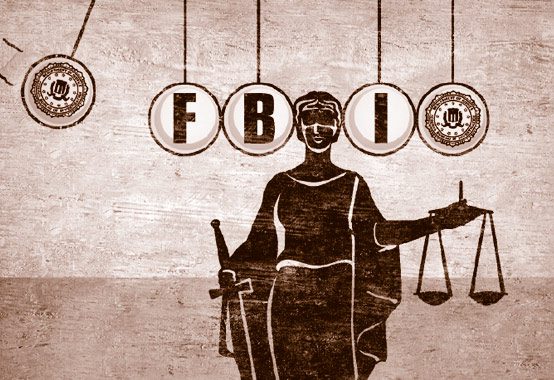
A ripple of protest swept across the Internet in late March after the disclosure that the Federal Bureau of Investigation was teaching its agents that “the FBI has the ability to bend or suspend the law to impinge on the freedom of others.” This maxim was inculcated as part of FBI counterterrorism training. The exposure of the training material—sparked by a series of articles by Wired.com’s Spencer Ackerman—spurred the ritual declaration by an FBI spokesman that “mistakes were made, and we are correcting those mistakes.” No FBI officials were sanctioned or fired for teaching lawmen that they were above the law.
At least the FBI has been consistent. Since its founding in 1908, the bureau has rarely let either the statute book or the Constitution impede its public service. Tim Weiner, the author of a superb exposé of the CIA (Legacy of Ashes) has delivered a riveting chronology of some of the FBI’s biggest crimes with his new book, Enemies.
The FBI was born in deceit. Congress had prohibited Theodore Roosevelt’s administration from creating a separate agency of federal investigators for fear that the new hirees would trample the Constitution. Rep. George Waldo, a New York Republican, warned that it would be a “great blow to freedom if there should arise in this country any such great central secret service bureau as there is in Russia.” But Attorney General Charles Bonaparte—a direct descendent of the French dictator—created the bureau by his own edict, shuffling funds from the Justice Department’s expense account to bankroll the new operation.
The bureau was small potatoes until Woodrow Wilson dragged the U.S. into World War I. With one fell swoop, the number of dangerous Americans increased by perhaps twentyfold. The Espionage Act of 1917 made it easy to jail anyone who criticized the war or the government. In September 1918, the bureau, working with local police and private vigilantes, seized more than 50,000 suspected draft dodgers off the streets and out of the restaurants of New York, Newark, and Jersey City. The Justice Department was embarrassed when the vast majority of young men who had been arrested turned out to be innocent.
In January 1920, J. Edgar Hoover—the 25-year-old chief of the bureau’s Radical Division—was the point man for the “Palmer Raids.” Up to 10,000 suspected Reds and radicals were seized. (The bureau carefully avoided keeping an accurate count of detainees.) Attorney General Palmer used the massive roundups to propel his presidential candidacy. The operation took a drubbing, however, after an insolent judge demanded that the Justice Department provide evidence as to why individuals were arrested. Federal judge George Anderson complained that the government had created a “spy system” that “destroys trust and confidence and propagates hate. A mob is a mob whether made up of government officials acting under instructions from the Department of Justice, or of criminals, loafers, and the vicious classes.”
After the debacle of the Palmer raids, the bureau devoted its attention to the nation’s real enemies: the U.S. Congress. The bureau targeted “senators whom the Attorney General saw as threats to America. The Bureau was breaking into their offices and homes, intercepting their mail, and tapping their telephones.” The chairman of the Senate Foreign Relations Committee was illegally targeted because the bureau feared he might support diplomatic recognition of Soviet Russia.
After President Warren Harding died in August 1923, the bureau’s political espionage was exposed. The chief of the Justice Department’s criminal division urged Congress to “get rid of this Bureau of Investigation as organized.” The new attorney general, Harlan Fiske Stone, warned, “A secret police system may become a menace to free government and free institutions because it carries with it the possibility of abuses of power which are not always quickly comprehended or understood.” Stone fired the bureau’s chief, and Hoover, who was number two in the agency, pledged to cease the abuses. But the FBI soon resumed its machinations.
Hollywood teamed with the Roosevelt adminsitration to whip up support for a war on crime in the 1930s, and Hoover became the face of federal law enforcement. While Hoover stood as an icon of law and order, his men became experts at installing wiretaps and conducting “black bag” burglaries, often including the planting of listening devices. By the late 1930s, Weiner notes, “At the highest levels of power in Washington, an awareness dawned that Hoover might be listening to private conversations. This sense that the FBI was omnipresent was its own kind of power.” After the FBI tapped the home telephone of a Supreme Court clerk, “Chief Justice Charles Evans Hughes suspected that Hoover had wired the conference room where the justices met to decide cases.”
While FDR welcomed the dirt the FBI delivered to him, Attorney General Robert Jackson noted in a secret memo, “The FBI is the subject of frequent attack as a Gestapo.” Shortly after taking office, President Harry Truman made a similar comment in his diary: “We want no Gestapo or Secret Police. FBI is tending in that direction. They are dabbling in sex-life scandals and plain blackmail… . This must stop.” But Hoover outfoxed Truman and continued building his empire. Hoover correctly perceived that the Roosevelt and Truman administrations—especially the State Department—had been heavily infiltrated by Soviet spies. The FBI nailed some of the double-agents who provided Stalin with key information to build atomic weapons.
In 1950, three months after the start of the Korean War, Congress passed the Internal Security Act, which authorized mass detentions of suspected subversives. Hoover compiled a list of more than 20,000 “potentially or actually dangerous” Americans who could be seized and locked away at the president’s command. “Congress secretly financed the creation of six of these [detention] camps in the 1950s,” Weiner notes. Hoover specified that “the hearing procedure” for the detentions “will not be bound by the rules of evidence.”
The more power the FBI captured, the more craven Congress became. “Congress fawned over Hoover during his annual appearances before the leaders of the judiciary and appropriations committees,” Weiner notes. Hoover fed buckets of leaks to favored politicians, helping spur the rise of Richard Nixon and Joseph McCarthy.
From 1956 through 1971, the FBI’s COINTELPRO program conducted thousands of covert operations to incite street warfare between violent groups, to get people fired, to smear innocent people by portraying them as government informants, to sic the IRS on people, and to cripple or destroy left-wing, black, communist, white racist, and other organizations. FBI agents also busied themselves forging “poison pen” letters to wreck activists’ marriages. FBI agents were encouraged to conduct interviews with antiwar protestors to “enhance the paranoia endemic in these circles and further serve to get the point across that there is an FBI agent behind every mailbox.” COINTELPRO was only exposed after a handful of activists burglarized an FBI office in a Philadelphia suburb, seized FBI files, and leaked the damning documents to the media.
While Weiner’s history of the FBI’s first half-century is masterful, he downplays or excludes some of the bureau’s worst modern abuses. His less-than-a-paragraph thumbnail summary of Waco could have been written by the FBI Office of Public Affairs: “The FBI had used tear gas against the barricaded and heavily armed group, giving its leader the apocalypse he desired.” Weiner notes that 80 Davidians “died in the fire that followed.”
He neglects to mention that the CS gas was delivered via 54-ton tanks driven by FBI agents. The tanks smashed through much of the Davidians’ home and intentionally collapsed 25 percent of the building on top of the huddled residents. The FBI knew the Davidians were lighting and heating their residence with candles and kerosene lamps and had bales of hay stacked around the windows. The FBI also knew that “accumulating [CS] dust may explode when exposed to spark or open flame,” as a U.S. Army field manual warned. Six years after the assault, news leaked that the FBI had fired incendiary tear gas cartridges into the Davidians’ home prior to a fire erupting. Attorney General Janet Reno, furious over the FBI’s deceit on this key issue, sent U.S. marshals to raid FBI headquarters to search for more Waco evidence. From start to finish, the FBI brazenly lied about what it did at Waco—with one exception. On the day after the Waco fire, FBI on-scene commander Larry Potts explained the rationale for the FBI’s final assault: “Those people thumbed their nose at law enforcement.”
Weiner justly excoriates Louis Freeh as one of the FBI’s most inept directors. The FBI’s pervasive failures prior to 9/11 “contributed to the United States becoming, in effect, a sanctuary for radical terrorists,” according to a congressional investigation. Freeh had promised Congress in 1997 that he would “double the ‘shoe leather’” for counterterrorism investigations. But walking was no substitute for thinking.
The FBI’s ability to decipher terrorist plots was thwarted by its profound aversion toward modern technology. Though Congress had deluged the FBI with almost $2 billion to upgrade its computers, many FBI agents on 9/11 had eight-year-old machines that were incapable of searching the web or sending email. One FBI agent observed that the bureau ethos is that “real men don’t type. The only thing a real agent needs is a notebook, a pen and gun, and with those three things you can conquer the world… . The computer revolution just passed us by” because of that mindset. (FBI computer upgrades continue to flounder, billions of dollars and a decade later.) As usual, the FBI’s failures did not prevent the agency from receiving vastly more power and funding after the disastrous attacks.
At times, Weiner is like a prosecuting attorney who marshals a vast array of evidence of perfidy—and then suddenly announces that the defendant’s good intentions absolve all his crimes. Weiner declares, “Over the decades, the Bureau has best served the cause of national security by bending and breaking the law.”
But many of the FBI’s illicit operations were complete disasters. Hoover perpetually falsely assured presidents that the Soviets or other communist regimes were bankrolling the civil rights movement. Hoover’s reports also fed the fantasies and paranoia of both LBJ and Nixon that the communists were behind the antiwar movement, thereby helping deepen and perpetuate the Vietnam quagmire.
Hoover pioneered the art of assuming that the bureau was entitled to use any powers that had been delegated to it by a president or attorney general. The Supreme Court repeatedly ruled that warrantless wiretaps were unconstitutional. Hoover found one shady pretext after another to continue breaking the law. FDR authorized Hoover to use any means necessary to go after fascists, communists, or other subversives, and Hoover ever after cited that “authority” for black-bag jobs, bugging bedrooms, and other abuses.
Former Attorney General Nicholas Katzenbach explained to a Senate Committee in 1975 how the FBI justified scorning the law:
As far as Mr. Hoover was concerned, it was sufficient for the Bureau if at any time any Attorney General had authorized [a particular] activity in any circumstances. In fact, it was often sufficient if any Attorney General had written something which could be construed to authorize it or had been informed in some one of hundreds of memoranda of some facts from which he could conceivably have inferred the possibility of such an activity.
Hoover conveyed this attitude to his agents, and they acted accordingly. After COINTELPRO abuses were exposed, two top FBI officials were convicted for “black bag” jobs and other abuses. (President Reagan gave them full pardons.) Weiner recounts the justification offered by the FBI’s chief of intelligence, Edward Miller, who “took his argument from the common law of centuries gone by. A man’s home is his castle, he conceded. But no man can maintain a castle against the King.”
It was bizarre that any American could attribute such a doctrine to the common law. The English in the 1600s fought a civil war, executed one king, and deposed another to banish that notion from their land. William Pitt, speaking in Parliament in 1763, famously declared: “The poorest man may in his cottage bid defiance to all the forces of the crown. … [T]he storm may enter—the rain may enter—but the King of England cannot enter.” The English common law was adapted as the foundation of American jurisprudence at the time of this nation’s founding, and Pitt’s dicta helped guide American courts.
But the FBI long operated on a presumption that the law did not apply to the king—or anyone the king designated to break the law. FBI badges were presumed to provide the same exoneration that Cardinal Richelieu reputedly gave agents sent on dastardly deeds: “The Bearer of This Letter Has Acted Under My Orders and for the Good of the State.”
The “except for the king” theory of law has mightily expanded since 9/11. Justice Department lawyer John Yoo assured the Bush White House that the president was “free from the constraints of the Fourth Amendment” and its prohibition of unreasonable, warrantless searches. The Obama administration has taken up the same tune with its contortions on the president’s prerogative to order the killing of Americans without a trial or other judicial niceties.
The biggest surprise in Enemies is Weiner’s lionization of current FBI director Robert Mueller, who took over in 2001. Mueller earned his halo from Weiner for his refusal in April 2004 to rubberstamp the extension of the post-9/11 wiretapping regime. Bush purportedly modified his “Terrorist Surveillance Program,” and Mueller stayed contentedly on the job. Without knowing the details of the policy change, it is unclear why Mueller is sainted. The revised system continued vacuuming up thousands of Americans’ phone calls and emails and was widely condemned as illegal after the New York Times exposed it in December 2005.
Mueller is portrayed as a steadfast defender of liberty in part because of the just-released 460-page FBI guideline for running intelligence operations, which Weiner labels the “first realistic operating manual for running a secret intelligence service in an open democracy.” The new rules require “rigorous obedience to constitutional principles.” Sounds good—but at the same time, the FBI was teaching its agents behind closed doors that they have “the ability to bend or suspend the law.”
We have probably not seen the tip of the iceberg of the FBI’s post-9/11 abuses. The FBI has almost always been more abusive than it appeared. It took decades before Americans learned of Hoover’s secret list with the names of tens of thousands of people who would vanish into federal stockades at the drop of a presidential memo. Americans did not learn of the breadth of COINTELPRO’s outrages until almost 20 years after the program started. We have no idea what personal info has been vacuumed up by the 400,000-plus National Security Letters the FBI issued in the past decade. Weiner notes that the FBI has more than 700 million terrorism-related records and a suspected terrorist list with more than a million names.
For most of its history, the FBI has been one of the most venerated of federal agencies. The FBI has always used its “good guys” image to keep a lid on its crimes. There are many competent, courageous FBI agents who do fine work and make America a safer place. But the bureau’s vast power and pervasive secrecy guarantee that more FBI scandals are just around the bend.
It’s a stark quote made all the starker by coming during an immigration committee meeting in the Israeli parliament, the Knesset. The quote is from MP Yulia Shamalov-Berkovich, a member of the ruling coalition with the Kadima Party.
And this is where Shamalov-Berkovich enters into things, as a member of the “Lobby for Citizens Affected by Illegal Infiltrators.” She blasted human rights groups today on the floor of the Knesset who have been criticizing both the camps and the riots, terming them “hypocrites” and insisting that given half a chance they’d create a massive work camp system of their own to imprison the Ultra-Orthodox. “I would imprison them all for incitement and for pitting Jews against Jews,” she added.
Shamalov-Berkovich insisted that Israel’s illegal blacks “are living like animals” and that they are “compromising the security of the state and its citizens.” Even given the Israeli government’s extremely far-right positions, it would be politically difficult (and diplomatically costly) for them to mass arrest every single human rights activist and force them into work camps.
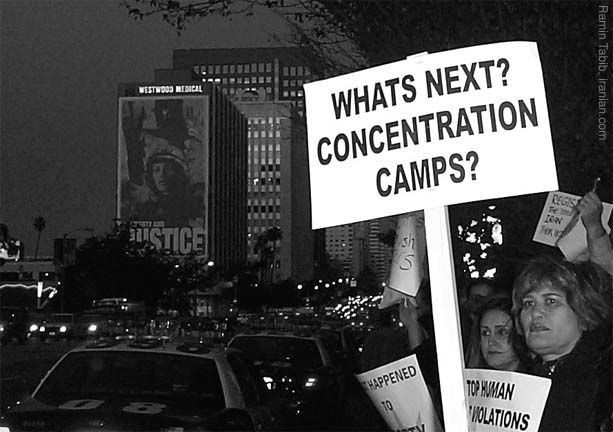
Army Manual For Re-Education Camps Applies To US Citizens
By "Russia Today"
Posted by "Sayf Maslul"
After reporting this week on a Pentagon-created plan for interning activists at re-education camps, questions were asked about the US Army manual that allegedly outlines the resettling of US citizens. Can Americans be sent to propaganda prisons?
Now as more and more news organizations are investigating the recently unearthed military manual, FM 3-39.40 Internment and Resettlement Operations, verification is coming in that the callous plans to populate military camps in the US and abroad are not only authentic, but indeed establishes blueprints for putting the country’s own citizens into guarded Army detainment centers.
“They always tell the media that it’s for disasters — domestically — or foreign wars and putting people in camps like Abu Ghraib in Iraq or Camp X-Ray in Cuba, but now more and more documents are coming out confirming what I’ve already had from sources and my researching into this,” radio host Alex Jones tells RT. According to Jones, he has seen the Pentagon refit old military bases into camps through the Emergency Centers Establishment Act “to prepare them for, quote, ‘emergencies,’” but there is way more than the government isn’t saying.
“I’ve been to the drills and I noticed that they were training with the role players to put American political dissidents in them,” Jones says about sending US civilians into the camps.
“I witnessed marines training to confiscate firearms on the West Coast and to put Americans both on the left and the right into camps and even segregate them according to their different political persuasions,”adds Jones.
Jones continues that Pentagon officials have informed him in the past about plans to re-educate political activists by armed enforcers, but the leaking of the elusive document confirms what he has been cautioned of in the past.
“Now we have an Army document that dovetails with huge increased spending, hiring tens of thousands of people in the military to specifically be internment camp officers.”
After combing through the 300-plus pages of 3-39.40, the website Infowars also addresses questions over whether or not the manual would make it so that the US government could send its own citizens to reeducation camps. In their own analysis, the site singles out certain sections of the manual that specifically discuss not just “The authority to approve resettlement such operations within US territories,” but how, also, “US citizens will be confined separately from detainees” by being booked and processed according to their Social Security number.
“Last time I checked, the United States Social Security Administration was not responsible for handing out social security numbers to people in Afghanistan or Iraq,” explains Infowar’s Paul Joseph Watson.
As if the text of the paper wasn’t enough, Watson breaks it down for those that are still skeptic that the American military would want to imprison its own citizens and install in them an “appreciation of US policies and actions.”
“The time for denial is over. People spent weeks arguing over the ‘indefinite detention’ provisions of the National Defense Authorization Act, ignoring assertions by top scholars and legal experts that the kidnapping provisions did apply to U.S. citizens,” writes Watson. Sure enough, when US President Barack Obama signed the NDAA into law on December 31, he acknowledged that he had his own reservations about the provisions that provide for the indefinite detention of his own citizens without charge.
Now coupled with a leaked copy of the Internment and Resettlement Operations guide, it looks as if not only can the US imprison its own citizens that disagree with the government — but it has already laid out the rules.
“This isn’t just some contingency plan,” Alex Jones tells RT. “This is the manual.”
---
US military Camp Carroll in Chilgo (AFP Photo / Jung Yeon-Je)
Alleged US Army Doc: Re-Education Camps and Psy-Op Missions Aimed At Activists
An American military document just uncovered appears to detail an US Army plan that calls for detaining “political activists” at re-education camps staffed by military-hired “PSYOP officers” in both America and abroad.
The website Infowars.com has unearthed the smoking gun, a copy of a United States military manual entitled FM 3-39.40 Internment and Resettlement Operations, which appears to offer Defense Department insiders instructions on dealing with the imprisonment of anyone considered an enemy to the American way of life and how to go about indoctrination them with an “appreciation of US policies and actions” through psychological warfare.
The PDF made available is dated February 2010 but has only now been leaked online. A copy of the document has been uploaded to the website PublicIntelligence.net for viewing, and additionally a version appears to be hosted on the US Military’s Doctrine and Training Publications page at armypubs.us.army.mil, although access to papers published there are unavailable to those without the Pentagon’s authorization, therefore making it impossible to verify the authenticity of the manual at this time. The military site that appears to host a copy has also implemented security measures on its servers that it cautions visitors are “not for your personal benefit or privacy.”
Further, the title page of the manual warns that the material contained in its 326 pages is be distributed to US Defense Department and its contractors only, and that must be “destroy[ed] by any method that will prevent disclosure of contents or construction of the document.”
“This manual addresses I/R [Internment and Resettlement] operations across the spectrum of conflict, specifically the doctrinal paradigm shift from traditional enemy prisoner of war (EPW) operations to the broader and more inclusive requirements of detainee operations,” the paper’s authors explain in the first paragraph of the documents preface. From there, it goes on to explain that the methods of psychological warfare and brainwashing of persons applies to“US military prisoners, and multiple categories of detainees (civilian internees [CIs], retained personnel [RP], and enemy combatants), while resettlement operations are focused on multiple categories of dislocated civilians (DCs).”
The manual continues by describing categories of personnel whom are certain guidelines of the manual apply. A detainee, for example, is any person captured by an armed force, but does not include personnel held for law enforcement purposes — except where the US is the occupying power. Civilian internees are described as anyone“interned during armed conflict, occupation, or other military operation for security reasons, for protection, or because he or she committed an offense against the detaining power.”
“An adaptive enemy will manipulate populations that are hostile to US intent by instigating mass civil disobedience, directing criminal activity, masking their operations in urban and other complex terrain, maintaining an indistinguishable presence through cultural anonymity and actively seeking the raditional sanctuary of protected areas as defined by the rules of land warfare,” reads the paper. “Commanders will use technology and conduct police intelligence operations to influence and control populations, evacuate detainees and, conclusively, transition rehabilitative and reconciliation operations to other functional agencies.”
On their own part, Infowars.com details the manual by writing, “We have exhaustively documented preparations for the mass internment of citizens inside America, but this is the first time that language concerning the re-education of detainees, in particular political activists, has cropped up in our research.”
Throughout the manual, the DoD outlines methods to go about detaining US military prisoners captured for both“battlefield and nonbattlefield confinement,” how to rehabilitate them to “ensure a successful return to society” and “psychological operations (PSYOP), practices and procedures to support I/R operations.”
Fifty-six pages into the manual, its authors explain the role of psychological operations officers regarding internment and resettlement, and explain that they will be responsible for developing methods designed “to pacify and acclimate detainees or DCs to accept U.S. I/R facility authority and regulations.” PSYOP officers, the manual adds, identify “malcontents, trained agitators, and political leaders within the facility who may try to organize resistance or create disturbances.”
The manual also demands that the PSYOP officers overseeing the detainment camps identify “political activists” for indoctrination.
Several dozen teens between ages of 16-18 take part in project meant to boost security in Modi'in area; Ministry of Education does not recognize program.
By Talila Nesher Published 12:18 02.01.12 Latest update 12:18 02.01.12 Courtesy Of "Haaretz Newspaper"
...The initiative is financed by the Public Security Minister of Israel and the Modi’in Regional Council, without any knowledge on the part of Ministry of Education.
Approximately 36 teenagers between the ages of 16-18 take part in the project. In their spare time, they help catch “illegal residents”, or stand at checkpoints and help guard the neighboring settlements. According to the regional council, the teenagers have been able to catch dozens of illegal aliens, mostly Palestinian workers who lack Israeli work permits, in the past couple weeks...
"...The point is to catch them and return them back where they belong.” says Reut. ...
The official purpose of the Border Police Youth is to aid and strengthen security in the Modi’in area. The presence of teenagers with M-16s is meant to scare away thieves and other threats in the region.
“Obviously it’s a good thing that teenagers do this,” says Reut. ...
The youth’s training lasts several days, during which they participate in workshops regarding the activities they will partake in, as well as visit shooting ranges.
“They teach us how operations work, what is allowed and what is not,” explains Liad. “Before we go out for an operation, we gather in one spot for a briefing on how to use weapons, listen to security measures, and then go out to catch illegal workers.”
Corinne Chaim, the group’s coordinator, explains that “these teenagers go out, accompanied by Border Police, in order to work at the checkpoints, to check vehicles for illegal workers. They search buildings. A month ago, at a checkpoint on Highway 443, they aided in stopping and searching a bus for suspicious individuals.”
Another Border Police Youth course is set to open in a month or so, to the tune of close to 30 new members. “We are bringing presentations to different high schools, hosting conferences in different towns, and sometimes at private homes,” says Chaim. Every teenager that is interested in the project must get permission from both parents and a doctor.
According to the head of the Modi’in Regional Council Yossi Elimelech, the project is intended to “occupy the teenagers, strengthen the Border Police, enlarge the percentage of volunteers among the general population and consolidate a feeling of camaraderie among the teens.”
Dr. Nir Michaeli, head of the Education Department at Tel Aviv’s Kibbutzim College, says that “it is sad that these teenagers are taught militaristic principles rather than instilling in them a sense of balance that could serve them during their upcoming military service.”
“Non-formal education needs to emphasize giving back to society, but in a constructive rather than a militaristic way,” says Michaeli.
According to the Ministry of Education, the project is “not recognized”, and will be investigated.
Deterrence In The Allied Occupations Of Germany and Japan
By Melissa Willard-Foster
What exactly did the United States plan to do in the case of resistance? This study seeks to address the gap in both the historical and political-science literature by examining policy designed for the initial period of occupation in Germany and Japan.
Journal of Interdisciplinary History, xl:1 (Summer, 2009)
g Students who learn history by watching historically based blockbuster movies may be doomed to repeat the historical mistakes portrayed within them, suggests a new study from Washington University in St. Louis.
The study, forthcoming in the journal Psychological Science, suggests that showing popular history movies in a classroom setting can be a double-edged sword when it comes to helping students learn and retain factual information in associated textbooks.
Butler
"We found that when information in the film was consistent with information in the text, watching the film clips increased correct recall by about 50 percent relative to reading the text alone," explains Andrew Butler, a psychology doctoral student in Arts & Sciences.
"In contrast, when information in the film directly contradicted the text, people often falsely recalled the misinformation portrayed in the film, sometimes as much as 50 percent of the time."
Butler, whose research focuses on how cognitive psychology can be applied to enhance educational practice, notes that teachers can guard against the adverse impact of movies that play fast and loose with historical fact, although a general admonition may not be sufficient.
"The misleading effect occurred even when people were reminded of the potentially inaccurate nature of popular films right before viewing the film," Butler says. "However, the effect was completely negated when a specific warning about the particular inaccuracy was provided before the film."
Butler conducted the study with colleagues in the Department of Psychology's Memory Lab. Co-authors include fellow doctoral student Franklin M. Zaromb, postdoctoral researcher Keith B. Lyle and Henry L. "Roddy" Roediger III, the Lab's principal investigator and the James S. McDonnell Distinguished University Professor of Psychology.
"These results have implications for the common educational practice of using popular films as an instructional aid," Butler concludes.
"Although films may increase learning and interest in the classroom, educators should be aware that students might learn inaccurate information, too, even if the correct information has been presented in a text. More broadly, these same positive and negative effects apply to the consumption of popular history films by the general public."
Historical Inaccuracies in Popular Films
Popular films increase interest in history and contain much accurate information, but producers of these films often take liberties with facts to tell a more entertaining story.
Such is the case with the movie Amadeus, a historical drama about the life of composer Wolfgang Amadeus Mozart.
Released in 1984, the film delighted moviegoers and critics alike, eventually winning eight Academy Awards, including Best Picture. Although the film is credited with increasing the popularity of Mozart's music, it may also have created a misleading impression of Mozart.
Click throught this slide show for short summaries of historical inaccuracies included in Amadeus and other historical movies used in this experiment.
AMISTAD (1997) Topic: Mutiny on the Spanish Ship Amistad The 1997 film clip depicts Cinque is sitting in shackles before the Supreme Court during the trial. In fact, Cinque was imprisoned in Connecticut during the trial.
A few miles down the road from Colorado Springs [a home to James Dobson's Focus on the Family], in the quiet bedroom community of Eldredge, a deeply disturbed young man named Matthew Murray followed the unfolding debacle at New Life Church [once under the stewardship of Pastor Ted Haggard] with an interest that bordered on obsession. Murray, a sallow-faced, bespectacled 24-year-old, had been indelibly scarred by a lifetime of psychological abuse at the hands of his charismatic Pentecostal parents. Murray's mind became crowded with thoughts of death, destruction, and the killings he would soon carry out in the name of avenging what he called his "nightmare of Christianity."
On an online chat room for former Pentecostals, Murray heaped contempt on his mother, Loretta, a physical therapist who homeschooled him to ensure that his contact with the outside world was severely limited. "My 'mother,'" Murray wrote, "is just a brainswashed [sic] church agent cun,t [sic]. The only reason she had me was because she wanted a body/soul she could train into being the next Billy Graham..."
He went on:
...my mother was into all the charismatic "fanatical evangelical" insanity. Her and her church believed that Satan and demons were everywhere in everything. The rules were VERY strict all the time. We couldn't have ANY christian or non-christian music at all except for a few charismatic worship CDs. There was physical abuse in my home. My mother although used psychotropic drugs because she somehow thought it would make it easier to control me (I've never been diagnosed with any mental illness either). Pastors would always come and interrogate me over video games or TV watching or other things. There were NO FRIENDS outside the church and family and even then only family members who were in the church. You could not trust anyone at all because anyone might be a spy.
An authoritarian Christian-right self-help guru named Bill Gothard created the home-schooling regimen implemented by Murray's parents. Like his ally James Dobson, Gothard first grew popular during the 1960s by marketing his program to worried evangelical parents as anti-hippie insurance for adolescent children. Based on the theocratic teachings of R. J. Rushdoony, who devised Christian schools and home-schooling as the foundation of his Dominionist empire, Gothard's Basic Life Principles outlined an all-consuming environment that followers could embrace for the whole of their lives. According to Ron Henzel, a one-time Gothard follower who co-authored a devastating exposé about his former guru called A Matter of Basic Principles, under the rules, "large homeschooling families abstain from television, midwives are more important than doctors, traditional dating is forbidden, unmarried adults are 'under the authority of their parents' and live with them, divorced people can't remarry under any circumstance, and music has hardly changed at all since the late nineteenth century."
At the Charter School for Excellence, a school in South Florida inspired by Gothard's draconian principles that receives $800,000 in state funds each year, children are indoctrinated into a culture of absolute submission to authority almost as soon as they learn to speak. A song that the school's first-graders are required to recite goes as follows:
Obedience is listening attentively, Obedience will take instructions joyfully, Obedience heeds wishes of authorities, Obedience will follow orders instantly. For when I am busy at my work or play, And someone calls my name, I'll answer right away! I'll be ready with a smile to go the extra mile As soon as I can say "Yes, sir!" "Yes ma am!" Hup, two, three!
Former Arkansas governor and Republican presidential candidate Mike Huckabee is among the 2.5 million Americans who have attended Gothard's Basic Seminar. According to Huckabee, who once earmarked state funds to distribute Gothard's literature in Arkansas prisons, Gothard was responsible for "some of the best programs for instilling character into people." But to the deeply alienated Murray, Gothard was the original source of his pathology. "I believe that the truth needs to be exposed," Murray wrote in a September 2006 discussion forum of recovering Gothard followers. "People need to see through errornious [sic] and destructive doctrines and teachings including Bill Gothard's."
After graduating from Gothard's home-schooling seminars, which constituted the bulk of his education (Colorado has no educational records for Murray after third grade), he was presented by his parents with two options for higher education. The first choice was Haggard's alma mater, Oral Roberts University. ORU at the time was beginning to unravel under the weight of scandalous revelations that its new president, Richard Roberts--the scion of its beloved founder--had allegedly looted university coffers to pay for his daughter's junkets to the Bahamas and bankroll his wife's shopping sprees. (Oral Roberts's other son, Ronnie, was a cocaine-addicted closet homosexual who committed suicide in 1982). Murray's second option was the "Discipleship Training School" of Youth with a Mission (YWAM), a Christian Reconstructionist-inspired missionary group that trained bright-eyed youngsters to spread the gospel of Colorado Springs to under-evangelized Third World nations. Desperate to escape his parents' rigid order, Murray joined YWAM.
But as soon as Murray enrolled at YWAM's training center in nearby Arvada in 2002, he found himself trapped in an authoritarian culture even more restrictive than home. He realized that, as another student of YWAM bluntly put it, the school's training methods resembled "cult mind-controlling techniques." Murray became paranoid, speaking aloud to voices only he could hear, according to a former roommate. He complained that six of his male peers had made a gay sex video and that others routinely abused drugs. Hypocrisy seemed to be all around him, or at least dark mirages of it. A week before Murray was scheduled to embark on his first mission, YWAM dismissed him from the program for unspecified "health reasons." "They admitted that I hadn't done anything wrong, just that they had prayed and felt I wasn't popular/'connected' and talkative enough," he recalled.
Two years later, Murray raged at two YWAM administrators during a Pentecostal conference his mother had dragged him to attend. The shocked staffers promptly warned Loretta Murray that her son "wasn't walking with the Lord and could be planning violence." Within days, an ornery local pastor was allowed to burst into the young Murray's room, rifle through his belongings, and leave with a satchel full of secular DVDs and CDs--apparent evidence of his depravity. Murray's mother searched his room for satanic material every day afterward for three months, stripping him of his privacy and whatever was left of his love for her. After the trauma-inducing raids, in which Murray estimated his mother and her friends destroyed $900 worth of his property, he concluded, "Christianity is one big lie."
Murray lurched to the polar opposite edge of his parents' fanatical faith, replacing their Bible as his inspiration with the writings of Aleister Crowley, a flamboyant, self-proclaimed Satanist. The fin de siècle British sensationalist declared himself the "Great Beast of Revelation" and claimed his birth was foretold in the Apocalypse of St. John. For two years Murray attended ceremonies of Crowley's mock-religious order, Ordo Templi Orientis, following in the footsteps of famous Crowley followers such as Scientology cult founder L. Ron Hubbard and Jack Parsons, the eccentric rocket fuel inventor who prayed to the Greek god Pan after each successful launch. "This man is like the antidote to what I was raised in," Murray wrote of his new hero Crowley. Murray was especially compelled by the fact that Crowley, like him, was raised by fundamentalist Christian parents he loathed.
Murray had been indoctrinated so thoroughly into charismatic Pentecostal culture, however, that even while he railed against his religious upbringing, he could not abandon his ingrained attraction to religiosity. So instead of fleeing hardcore Christian culture for secular humanism, a natural position for jaded skeptics like him, he traded his former faith for Crowley's occultism. Crowley's philosophy of sex "magick," narcotic hallucination and self-degradation (he allegedly ordered his followers to have oral sex with goats and drink the blood of cats) was forged in reaction to his parents' Puritanism and, in fact, was first practiced in English boarding schools, where homosexual experimentation was practically de rigueur. Crowley became Murray's new lodestar. Like Jesus, who was so impressed by the ardor of a pagan Roman centurion whom he met that he remarked, "I have not found such great faith, even in Israel," Murray yearned for spiritual practice in its purest form.
Now he practiced Crowley's faux faith as fervently as his parents wished he had worshipped their neo-evangelical macho Christ. But the occult only led Murray into a confusing new world of cheap thrills. By his own account, he engaged in "every sort of sexual pervrsion [sic]...that's legal," from anonymous gay sex to bestiality. He boasted of his proclivity for binge drinking, his love for death metal bands, and his penchant for spewing "blasphemy." He envisioned his new experiences as positively transcendent. "In a way it's like I'm just about completely rebelling against christianity [sic] in any way that I can," the enragé mused, "but this is a little different of a rebellion."
But as Murray's detachment from his family and community intensified, so did his yearning for the interpersonal solidarity increasingly denied to him. In May 2007, Dr. Marlene Winell, a leading expert on treating ex-fundamentalists traumatized by the experience of leaving their faith, was notified about Murray's tortured online postings. Winell immediately posted a response to Murray. "I can see that you are in a great deal of pain and I'd like to invite you to contact me," she wrote on a website where he frequently posted. "I'd like to be helpful if I can. People do care about you and there is hope."
Murray recoiled. "It's so funny how many people want to help you and love you and counsel you when there is money involved," he replied.
Having refused one of the last means of human contact available to him, Murray plunged into a sinkhole of loneliness. His online postings now read like death wishes. In one of his final screeds, dated July 7, 2007, Murray offered a garbled attempt at death metal lyrics that captured his sense of complete despondency:
... I am crying here in a buried kennel
I have never felt so final Someone help me please, losing all reserve I am f***ing gone, I think I am fu**ing dying HANDSONMYFACEOVERBEARINGICAN'TGETOUT! You all stare, but you ll never see There is something inside me ... Cut me! beat me! molest me! abuse me! @#%$ me! hate me! break me! Rape me! kill me! show me! Here is my purity ...... Enter this nightmare....
Murray's desire to realize his emotional and intellectual aspirations had become completely blocked. His self-esteem and sense of spontaneity evaporated into a heavy cloud of hopelessness. At the same time, his destructive impulses grew. The self-described "rejected sheltered Christian boy" openly contemplated suicide, cutting his arms with sharp objects when his anxiety seemed unbearable. He burrowed himself into the mass-marketed aesthetic of goth culture, from Satanist screeds to plastic pagan chum to the calculated gloom of commercial death metal, still finding time to download literally thousands of fetishistic porn images on his computer. Murray had become what Erich Fromm called the "necrophilious character," a personality whose fixation on death leads them to acts of malignant destructiveness.
As Murray nourished his death obsession, his behavior grew increasingly aggressive. On July 22, he posted a diary entry boasting about haranguing his mother and mocking her "favorite pastor," Ted Haggard, or, as he called him, "Ted Faggard." "Hey, bit,ch [sic]," Murray said he barked in his mother's face, "using drugs, alcohol and having gay sex, I'm just trying to do what any Christian pastor would do, at least I'm not doing meth like Ted Haggard...but maybe I will try it and maybe I'll just OD on stuff just so I don't have to deal with you anymore..."
The violent rage roiling inside Murray overwhelmed his sense of self-pity. He was intent on suicide, but first Murray wanted to kill as many tongue-talking Pentecostal zealots as he could. Those who constantly invoked the wiles of Satan to frighten him into submission, or impelled him to wage "spiritual warfare" against the secular Enemy were the true spawn of the Devil. "You Christians brought this on yourselves," Murray proclaimed. "All I want to do is kill and injure as many of you...as I can especially Christians who are to blame for most of the problems in the world."
As winter approached, Murray acquired a fearsome arsenal of assault rifles, including a Bushmaster XM-15 ("Beltway Sniper" John Lee Malvo's weapon of choice) and an AK-47. At a local UPS store where Murray maintained a mailbox, employees observed that he was ordering "boxes and boxes" of ammunition. Murray's bogus tales of preparing to deploy with the Marines quelled whatever suspicions burned-out UPS employees might have had. Meanwhile, Murray's parents, who were adept at ferreting secular media material from his desk drawers, had no idea his stockpile even existed.
Late in the evening on December 8 (the same day that a psychotic young man named Mark David Chapman killed John Lennon in 1980), Murray suited up in black military fatigues, gathered two automatic rifles, three semiautomatic pistols and 1,000 rounds of ammo, then jumped in his car. Besides his weapons, Murray carried in his pants pocket Aleister Crowley's The Book of the Law, a tract the author claimed to have transcribed from messages dictated to him by ancient Egyptian gods, and which he summarized in one phrase: "Do as thou wilt shall be the whole of the law."
In the back seat of Murray's car was another of his favorite books. It was I Had to Say Something, by Mike Jones [a former escort who had an affair with Haggard].
Murray sped toward Arvada, where the Youth with a Mission complex stood. The time for spiritual warfare had come. Upon arriving at the complex, he stomped to the front desk and demanded to stay overnight. A receptionist calmly refused his demand. Without hesitation, Murray whipped out a .40 caliber semiautomatic Berretta pistol and opened fire on a group of staffers chatting away as they wandered out of a Christmas banquet.
Tiffany Johnson was caught in Murray's fusillade. An affable 24-year-old who said she spent one night every week ministering to adolescent skateboarders involved in "drugs, cutting, branding, and hurting others," Johnson fell and died instantly. A studious 26-year-old named Philip Crouse, who spent part of a summer vacation constructing a house for impoverished residents of the Crow Indian reservation in Montana, was also hit while rushing to stop Murray. Crouse crumpled to the floor and died beside Johnson. Murray fled the blood-soaked complex, fired up his car, and sped away to complete his mission. Days earlier he seethed, "God, I can't wait till I can kill you people. Feel no remorse, no sense of shame, I don't care if I live or die in the shoot-out."
Murray's next stop was the New Life Church.
While police fanned out through Arvada in a frantic search for the still-unidentified YWAM shooter, Murray pulled into the New Life parking lot. At 1 pm, as worshippers filed out of afternoon services, Murray sprayed a hail of bullets at the crowd with his Bushmaster rifle. He struck two teenaged sisters, Stephanie and Rachel Works, who had recently returned from missionary trips to Brazil and China, killing them instantly. He then charged into the church's main foyer, unaware that Haggard's replacement, Brady Boyd, had authorized as many as thirty parishioners to carry concealed weapons into his spiritual sanctuary, presumably to guard against hell-bent invaders like him. One of Boyd's volunteer guards, Jeanne Assam, an ex-cop who became born again after the Minneapolis police department fired her for lying, sprinted toward Murray, shouting, "Surrender!" again and again. Murray refused to comply. Assam leapt forward, directly in the line of Murray's fire, and peeled off a clip from her pistol, lightly wounding the black-clad shooter in the leg. He retreated. Moments later, he shot himself in the head and died.
All four of Murray's victims were youthful, mostly home-schooled and extremely idealistic. They could have been his roommates at YWAM or could have joined him in a Christian youth fellowship. They seemed so much like him, at least on the surface. So did he single them out? Although there is no conclusive answer, Murray's acknowledged grievances hint at his motives. Each of his victims represented to him the obedient, unquestioning religious automaton he was required to be but never could become. They had embarked on the exotic foreign missions he had been rejected for, discovering friendship and even (nonsexual) wholesome romance while he languished in his room--his "buried kennel." The blithe everyday existence of these shiny, happy Jesus people was Murray's "Christian nightmare."
Like the sadistic antagonists of William Golding's Lord of the Flies Murray's violent impulses had been constrained only by what Golding called the "invisible yet strong...taboo of the old life...the protection of parents and school and policemen and the law." When he mowed down his peers, Murray hoped to demonstrate his complete contempt for the civilization of adults, along with all its corruption, cruelty and internal contradictions. His victims, then, were no more than "littluns" he sacrificed to exact his revenge, to make Colorado Springs weep for the end of innocence long after order returned. Murray's real targets were his rigid parents, their draconian childrearing gurus and the prying pastor who raided his room--the architects of his "Christian nightmare."
The evangelical hierarchy's handling of the Haggard scandal had hardened Murray's murderous intentions. Both Murray and Haggard were unable to fulfill their essential selves within the strict confines of Pentecostal culture, so each of them sought an escape through drugs and illicit sex. But whereas Murray openly embraced his turn to decadence, Haggard concealed his secret life behind bombastic expressions of religious fervor. After Haggard was unmasked as a fraud, however, he was pronounced "completely heterosexual" by the movement's elders in only three weeks. Murray, who had been irrevocably rejected for abandoning his faith, was stung by this spectacle of cheap grace. "I want to know where was all the love, mercy and compassion for my supposed imperfections?" he wrote despairingly.
The mainstream media made little effort to analyze the trauma-wracked mentality that drove Murray to violence, opting instead for a tight focus on the more sensational aspects of his killings. When cable news arrived on the scene of the crime, it sketched a haphazard portrait of Murray hardly distinguishable from that of Eric Harris [one of the two Columbine High School shooters], Cho Seung-Hui [the Virginia Tech gunman], or John Lee Malvo. He was just another young male nutcase with a gun, or, according to CNN anchor Rick Sanchez, a killer motivated exclusively by "his hate for certain Christians." When Sanchez interviewed Marlene Winell, the psychiatrist who attempted to counsel Murray, her attempts to assess the impact that Murray's religious indoctrination had had in shaping his destructive behavior were brushed aside.
During the brief moments in which Sanchez allowed Winell to speak, she attempted to explain the obvious, that Murray's destructive actions were influenced at least in part by what she called "a crazy-making system that has all sorts of circular reasoning. It's got bottom line rules like, 'Don't think, don't respect your own feelings in any way.' Small children are told they're going to burn in Hell. And if it doesn't work for you...[you are told that] it's your fault."
Sanchez crinkled his brow in deep indignation. Finally, he cut in on his guest. "While I disagree with much of what you said as a Christian," he snapped at Winell, "I certainly respect your right to say it." Sanchez suddenly became exasperated. "You're not blaming the faith for this, are you?" he wanted to know. "I mean a man has free will!" Before Winell could respond, Sanchez terminated the interview.
By failing to explore the roots of Murray's violence, the mainstream media allowed the far right to seize the narrative. Relying on the insights of pastor Joe Schimmel, a sixties rock burnout who resolved after becoming born again "to show how Satanism can influence youth through music," the far-right web magazine WorldNetDaily reported that Murray "had sold his soul" to the occult and "another devil: rock and roll." An earlier WorldNetDaily report on Murray's killing spree buttressed its analysis with the conclusion of an anonymous commenter on a Rocky Mountain News forum: "Two words: DEMONIC POSSESSION."
The Rocky Mountain News channeled the movement's version, turning to none other than the evangelical anti-porn crusader Steve Arterburn as the arbiter on the impact of pornography on Murray. The newspaper reported, "Arterburn said Thursday he wasn't surprised to hear that pornography played a role in Murray's life. Not only does pornography dehumanize, but like any addiction, increasing amounts are needed to be satisfied--a deadly recipe for those prone to violence." But if porn breeds violence, then why had Ted Haggard, an avid porn consumer, never engaged in any act of physical brutality beyond lightly spanking the buttocks of a gay bodybuilder?
While the national press clamored for an exclusive interview with Murray's parents, the couple quietly arranged to meet with a psychologist who could help them prepare a satisfactory explanation for their son's acts--and one devoid of the hard truths Winell attempted to tell. On February 27, 2008, the Murrays were escorted onto Focus on the Family's compound, led into its lower recesses, and seated, in an elegantly appointed radio studio, at a table across from James Dobson. Now they poured forth their version of their son's descent into madness. "The lesson is that unforgiveness leads to this bitterness and then opens you up to the spirit of Satan, to the spirit of whatever, and when that occurs, it becomes a power that people cannot control," said Murray's father Ronald, a neurologist. Dobson was careful not to press the Murrays further for insights into their son's pathology. Blaming Satan was always safer than excessive reflection. "We can't explain it, we can't understand," Dobson declared. "We say, 'Lord, someday we will understand, but today we don't.' "
There was really little else Dobson could say. Murray's parents were not neglectful of their son, nor were they intentionally abusive. By all accounts, they raised him in faithful accordance with the teachings of the Christian right's leading self-help gurus. In their cloistered world, where home-schooling is viewed as an ideal alternative to "government schools," and where the rod is rarely spared, they were model parents. Murray's killing spree thus reflected less on his parents than on the all-encompassing authoritarian culture that Dobson had helped to shape. When practiced in the real world, the movement's "family values" sometimes produced some unusually dysfunctional families. Only by blaming Satan and his minions for Murray's acts could the Christian right avoid acknowledging this absolutely damning indictment of its ideology.
This sort of reasoning had been seen before, from figures ranging from Ted Bundy to Tom DeLay to Ted Haggard. When confronted with their own crimes and sins, these movement icons found that faulting the prince of darkness was far easier than accepting personal responsibility.
By the time Colorado Springs completed its mourning period, the Republican primary had begun in earnest. The primary field was a cast of deeply flawed figures, each one less attractive to the conservative movement than the last. Almost none of them boasted culture war bonafides, yet all campaigned as though their ambitions depended on "value voters." Ironically, the Republican politician most despised by the Christian right, Senator John McCain, a sworn enemy of conservative icons from Tom DeLay to Jerry Falwell, secured the nomination. McCain immediately lurched to the right, embarking on a doomed strategy that would ratify the self-destruction of his party.
Max Blumenthal is a senior writer for The Daily Beast and writing fellow at The Nation Institute, whose book, Republican Gomorrah (Basic/Nation Books), is forthcoming in Spring 2009. Contact him at maxblumenthal3000@yahoo.com.






 Buzz It


