


Showing posts with label Political Persecution. Show all posts
Showing posts with label Political Persecution. Show all posts
Sunday, June 22, 2014
This Why There Is A Sunni Uprising In Iraq
This is just one of the many violent acts that the Shia are doing to the Sunni's of Iraq on a daily basis.


Thursday, November 28, 2013
China Restricts Islam
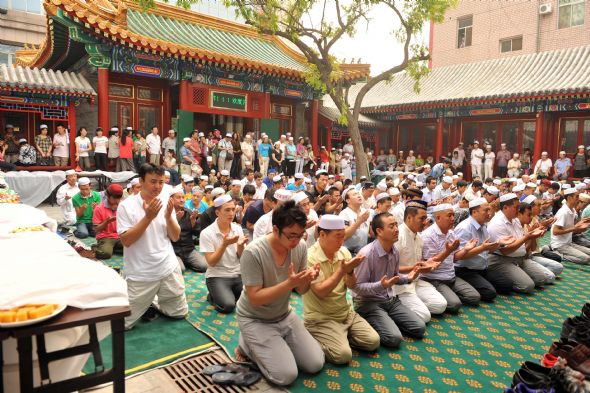
With prayers banned in public areas, private hajj trips not allowed, teaching of the Noble Qur'an not allowed in private and students and government officials forced to eat during Ramadan, China is enforcing laws and regulations restricting the practice of Islam.
"Of course this makes people angry," Mohammad, a teacher, told The New York Times on Sunday, October 19.
"Excitable people think the government is wrong in what it does. They say that government officials who are Muslims should also be allowed to pray."
In recent week, Chinese authorities have enforced laws restricting the ability of Muslims in the northwestern region of Xinjiang from practicing their faith.
In Khotan, signs posted in front of the grand mosque say the weekly Friday prayer sermon must not extend beyond than a half-hour.
Prayers in public areas outside the mosque is forbidden and residents are banned from worshipping at mosques outside their town.
Under the rules, imams are banned from teaching the Qur'an in private and only official versions of the Qur'an are allowed.
Studying Arabic is only allowed at special government schools.
Government workers are banned from showing the slightest sign of religious devotion.
For example, a Muslim civil servant could be sacked for donning hijab.
Many of the rules have been on the books for years, but local authorities have publicly highlighted them in recent weeks with banners hanged in towns.
They began posting regulations mandating women not to wear hijab and men to shave their beards.
Uighur Muslims are a Turkish-speaking minority of more than eight million in Xinjiang, a northwest vast area that borders Central Asia.
Atheist China recognizes five religions — Islam, Protestantism, Catholicism, Taoism and Buddhism — and tightly regulates their administration and practice.
Official Hajj
Under the rules, two of Islam's five pillars – the Ramadan fasting and hajj – are strictly controlled.
Students and government workers are compelled to eat during the holy fasting month of Ramadan.
China has also revived a law prohibiting Muslims from arranging their own trips to Saudi Arabia to perform hajj.
Signs painted on mud-brick walls in the winding alleyways of old Kashgar warn against making "illegal" hajj.
"Implement the policy of organized and planned pilgrimage; individual pilgrimage is forbidden," reads a red banner hanging on a large mosque in Urumqi, the regional capital of Xinjiang.
Authorities have also confiscated passports of Uighur Muslims across Xinjiang to force them to join government-run hajj tours rather than their own trips.
Once a person files an application, the authorities do a background check into the family.
If the applicant has children, the children must be old enough to be financially self-sufficient, and the applicant is required to show that he/she has substantial savings in the bank.
To get a passport to go on an official hajj or a business trip, applicants must leave a deposit of nearly $6,000.
Now virtually no Uighurs have passports, though they can apply for them for short trips.
This has made life especially difficult for businessmen who travel to neighboring countries.
Critics say the government is trying to restrict contacts with world Muslims, fearing that could highlight the sufferings of Muslims in Xinjiang and possibly build pressures on China.
[OnIslam.net]
Wednesday, November 27, 2013
China’s Forgotten Muslims
By Azizudin El-Kaissouni
Amnesty International recently issued an extensive report on the policies of the Chinese government towards the Uighur minority in Xinjiang Uighur Autonomous Region (XUAR).1 The 24-page document details the various legislative provisions recently introduced into Chinese law with a view to curbing “terrorist, separatist and illegal religious activities.” Loosely translated, China is attempting to create domestic legal sanctions for the post-September 11th crackdown on Muslims and Islam in XUAR.
By no means is a Chinese crackdown on organized religion unique; China has a long-standing antagonism towards religion, as evidenced by the highly publicized crack down on the Falun Gong sect a few years back, and the ongoing persecution of the Tibetans. However, unlike Falun Gong, Uighurs are not exceptionally popular in the West, and unlike the Buddhists of Tibet, have no charismatic leader in exile or celebrity converts in Hollywood to rally to their cause.
The report, however, is a poignant reminder of a persecuted Muslim community that has been ignored far too long.
China’s New Dominion
A note on names: Xinjiang Uighur Autonomous Region is the name given to Eastern Turkistan by the Chinese government, and is the cause of much resentment; Xinjiang is Chinese for “New Dominion,” or “New Frontier,” a legacy of their former Manchu rulers, who invaded Eastern Turkistan in 1759 and incorporated it into China. The reference, understandably, does not go down well with Uighur nationalists.
One feels the need to stress that, while this article focuses on Eastern Turkistan and the Uighur population thereof, this is in no way meant to denigrate or disregard the suffering of countless other Muslims at the hands of the Chinese government.
Who are the Uighurs?
 |
| Uighur girl in Kucha |
The Uighurs are not the only Muslims in China; the Hui Muslims are also a recognized minority of several millions, and minorities of Tajiks, Kyrgyz, and Kazakhs are to be found in Xinjiang.2Two percent of China’s population is Muslim; a deceptively small statistic until one realizes the reference is to a country with a population of 1.2 billion, leading to a total of 24 million.3The Uighurs, however, are distinct for various reasons.
Ethnically, the Uighurs are a Turkic people, their language being part of the larger Altaic family. Since their adoption of Islam in the 10th century, during the reign of the Karakhanid kings, the Uighurs used Arabic script until the Chinese forced them to adopt a new Latin-based alphabet. Eventually, the Uighurs were allowed, in one of the Chinese government’s parsimonious concessions to their “national” minorities, to return to their Arabic script in 1983.4
Eastern Turkistan Republics
 |
| Military of the Eastern Turkistan Republic (1944-1949) |
Historically, the Uighurs have a rich and distinct history, a fact official Chinese propaganda has long sought to bury. The Manchu rule of Eastern Turkistan was violently opposed by the Uighurs until they were successfully expelled in 1862. Independence was short-lived, however, with the Manchu reoccupying the land in 1876, and annexing it proper in 1884. Resistance to Chinese rule continued, regardless of whether the rulers were the Imperial Manchu dynasty or the Kuomintang nationalist government, culminating in the establishment of two republics in the 20th century, one of which was crushed with the assistance of Soviet troops in 1934. The second and more important state was the Eastern Turkistan Republic (ETR) established on November 12th, 1944. Coming under intense pressure from both the Kuomintang and the Communists, the leaders of the ETR accepted an invitation to Beijing for negotiations. Their plane never arrived at Beijing. It was announced months later that it had crashed en route in the Soviet Union. In October of 1949, People’s Liberation Army (PLA) troops marched into the Eastern Turkistan Republic, effectively ending the ETR.
Though lasting only five years before coming under the occupation of Mao Zedong’s PLA troops, the creation of the Republic was an epic moment for the Uighurs, the memory of which is cherished and marked by Uighur nationalists to this day.
Under Communist Rule (1949 - Present)
 |
Mao’s Cultural Revolution was a period of terrible suffering for the Uighurs. Religion was identified as a “bourgeois” conception and therefore bore the brunt of the Red Army’s wrath. A Human Rights Watch report, “Xinjiang, China’s Restive Northwest” tells of how the Uighurs were forced to breed pigs, and mosques were shut down and occasionally used as pork warehouses, to add terrible insult to devastating injury.5
Fast-forward a few decades. An aggressive population transfer policy has seen the rapid growth of the Han community in XUAR, from an original 6% in 1949 to 40% in 1978, and has effectively made the Uighurs second-class citizens in their country, discriminated against in both employment and education.
Animosity is rife between the Uighurs and the Hans; one reporter relates asking a group of Han children gathered near a statue of Chinese revolutionary Wang Zhen why he was considered a hero. The answer: “Because he killed many Uighurs.” Such a response from a ten year old is perhaps somewhat indicative of the feelings of the Han colonialists toward the indigenous Uighurs.
Tensions are also exacerbated by the fact that Han enterprises exercise a monopoly on most of the area’s scarce resources. All this, coupled with the obvious hatred and disdain the Chinese feel towards the Uighurs and their religion, mean that it comes as no surprise that some Uighurs have concluded that armed resistance is the only option available.
Human Rights Abuses
Violent opposition to Chinese rule in East Turkistan is sporadic; occasional bombings or shootings take place and are met with a terrible fury. Every so often, reports are issued about the arrest, trial and execution of “terrorists” or “ethnic splittists” as the Chinese insist on calling them. Even peaceful protests are met with excessive force.
On one notable occasion in 1997, the town of Ghulja was brought to a halt by large-scale Uighur demonstrations in Ramadan; in response, the Chinese government sealed off the town, imposed a press black-out, and proceeded to viciously quell the protests. The official count suggested 10 deaths and 198 injured, and 500 arrests, according to Human Rights Watch. Uighur sources insist the numbers were many times higher. A similar situation occurred in the town of Baren, where an alleged armed insurgency was quelled with military forces, reportedly leaving dozens, if not hundreds dead.
The Human Rights Watch report is also particularly illuminating. The report describes the various forms of repression and persecution suffered by the Muslims of Eastern Turkistan under Chinese rule.
It is particularly painful to hear of the draconian measures utilized by the Chinese to stamp out any manifestations of religious sentiment among the Uighurs in the aftermath of September 11. Examples of this are plentiful in Amnesty International,6Human Rights Watch, and the U.S. Department of State’s reports. These include but are not limited to nighttime patrols of student dormitories to ensure no prayers are taking place, the banning of fasting during Ramadan, outlawing of Qur’an study meetings and religious schools, the curbing of mosque building, the identification and surveillance of religious leaders, and the banning of history books that do not conform to the “accepted” version of history. There is also the ominous-sounding “political education” that Imams are subjected to. One is led to understand this consists of extensive indoctrination to, as it was put, provide them with “a clearer understanding of the Party’s ethnic and religious policies.”
 |
| Old Mosque in Urumci |
Eastern Turkistan is also home to the Lop Nur desert, the Chinese nuclear test grounds in the south of XUAR.7 China was, relatively speaking, one of the most aggressive states in terms of nuclear weapons acquisition policy, testing its first hydrogen bomb 32 months after its first fission bomb test. The fallout from these tests has resulted in the wide-scale contamination of water sources and land, in turn resulting in a disproportionately large number of cancer cases, congenital birth defects, and various other related diseases among the Uighur population.8
All the above, combined with China’s notoriously repressive birth control policies (including but not limited to forced abortions), would seem to suggest to the observer that Eastern Turkistan is one of the worst places in the world to be a Muslim right now. In the context of the ongoing global war on Islam, that says something.
It is of little surprise that China, like so many other countries, has chosen to take advantage of September 11th to further its own political agenda and silence - ruthlessly so- internal dissent. All recent human rights reports point to a drastic escalation of persecution and repression against the Uighur minority. UN High Commissioner Mary Robinson expressed her concern over the treatment of the Uighurs in a November visit to China. The Chinese government, predictably, responded that “terrorism,” that ephemeral and much-abused term, is an infringement of human rights and is a threat to international peace and security. Case closed.
Forgotten?
The question that inevitably comes to mind upon reading of such terrible persecution is: What can we do about it? Islamically, we are obliged to keep track of conditions of Muslim communities around the globe, particularly when said communities are the target of state-sponsored terror and persecution, numerous as they have become. However, our abilities and efficacy vary substantially depending, sadly enough, on location.
Here in the Arab world, our role is substantially limited by a government blatantly antagonistic to the concept of pan-Islamism or even just plain old concern for fellow Muslims, going so far as to arrest and try people who collect money for Chechnya or similar causes. It also virtually impossible to seek to influence government policy in any sense, due to the autocratic nature of the regimes.
Muslims in most places in the West, on the other hand, have more flexibility with regards to issues of this type. The minimum we can set out to do is seek to be aware of the situation in East Turkistan. Those who can should attempt to raise others’ awareness of the situation by any means possible, whether by a simple talk, or by trying to get something published in a local or campus paper. In this regard, The Uyghur Human Rights Coalition (www.uyghurs.org) has compiled a small, yet comprehensive list on how one can contribute to the support of the Uighurs. While the list is tailored for a Western audience, a number of the suggestions can be undertaken by Muslims anywhere.
In that regard, I would urge readers to explore and bookmark the links in this article, as a gateway to information on the plight of the Uighurs in China.
To conclude, one need not point out that we as Muslims are having our identity systematically erased. One minor way to counter this purposeful erasure is to ensure a consistent and dedicated effort to maintain and cultivate links to and an awareness of the larger community of Muslims around us.
We can longer afford to disregard Islam outside our borders. Where possible, we must aggressively lobby the media and the government to bring these issues to the forefront of domestic and international attention, not so much for the benefit of the Western audience, but rather for the benefit of the uninformed amongst us Muslims. And while it is only natural that the question of Palestine will be more central to many of us, we cannot allow it to completely overshadow the suffering of Muslims elsewhere, who have for years suffered in silence.
1- Amnesty International “China: Extensive crackdown on Uighurs to counter “terrorism” must stop”
2- China’s Official Gateway to News and Information “Ethnic Minorities”
4- Office of the High Commissioner for Human Rights: Universal Declaration of Human Rights (Uighur version)
5- Human Rights Watch“Xinjiang, China’s Restive Northwest”
7- Nuclear Threat Archive “Lop Nur Nuclear Weapons Test Base”
8- Uyghur Human Rights Coalition “China’s Violations of Uyghur Human Rights”
Tuesday, November 26, 2013
Uyghurs: When "Turning A Blind Eye" Lasts Forever

Interview With Mr. Alim Seytoff, President Of Uyghur American Association
East Turkestan, China, has been the home for a group of Muslim Turks for 4,000 years; what is also known as Xingijang Uyghur Autonomous Region first saw Islam in the middle of the tenth century.
Xinjiang witnessed in 1933 and 1944 the establishment of an independent Eastern Turkestan Republic, which is located along the famous "Silk Road."
By the rise of the Chinese Communist Party in 1949, the Eastern Turkestan Republic was cracked down to become a part of a government thataims at "diluting the religious environment" of Muslims by forcing them to accept the Chinese government brutal rule.
The Chinese government aims at pacifying Muslims to dissolve their dream of an independent Muslim state. Recently, it prominently positioned flags in mosques over the Mihrab — the traditional prayer niche that points the direction to Mecca.
OnIslam.net interviews Mr. Alim Seytoff on the status of Muslims in East Turkestan.
The prominent advocate for human rights in East Turkestan, Mr. Seytoff, is the President of Uyghur American Association (UAA) based in Washington DC and the Director of the Uyghur Human Rights Project (UHRP).
OnIslam.net (OI): What is nature of the conflict between the Uyghurs and the Chinese government?
Mr. Alim Seytoff: The nature of the conflict between the Uyghur people and the Chinese government is that the authoritarian Chinese state intends to wipe out the Muslim Uyghur people as a distinct and indigenous people with a separate language, culture, tradition, values, and certain ways of life, so that it eventually and forcibly assimilate the Uyghur people into the Chinese culture to make them disappear from our modern world, just like the Manchu's in today's China.
Uyghurs are a proud nation who have a civilization of more than 3,000 years of history and who had established states and empires in the past, and they simply do not want to accept China's ill-intentioned engineering for their future.
They want to remain who they are: Uyghurs and Muslims. Therefore, Uyghurs' ethnic and religious identity is demonized and attacked vehemently by the Chinese government.
OI: Would you say that the Chinese authority is fighting Uyghur for being Muslims, for standing for their freedom, for having a different ethnicity other than the Han, or for other reasons?
Mr. Seytoff: For all of the abovementioned reasons. China sees the Uyghur people's belief in Islam as a direct threat to its colonial rule in East Turkestan. Therefore, China attempts to criminalize Uyghurs' religious identity, banning Uyghur men from growing beards and women from wearing veils; banning women and minors from praying in the mosques; outlawing religious education for minors; labeling Uyghur religious opposition as "terrorism" and "extremism;" and allowing extrajudicial killing of praying men in a worship service at Uyghurs' houses.
The recent killings of Uyghur men are a good example. The Uyghur people are also under attack for demanding the very freedoms enshrined under China's Constitution and Regional Ethnic Autonomy Laws. Chinese authorities also do not like the Uyghur people very much because they do not resemble the Chinese culture. Instead, Uyghurs are not oriental people. They are a Turkic Muslim nation who resembles the peoples of Central Asia.
In the past, the Chinese directors used Uyghurs in Chinese movies as foreigners. Therefore, it is very hard for China to justify that East Turkestan (Xinjiang) was part of China since the people living there are not really Chinese.
OI: To what would you compare the suffering of the Uyghurs: Palestinians, Muslims under Ataturk, Blacks in South Africa, Jews under Hitler, or others?
China used its powerful propaganda machine to portray the Uyghurs as ungrateful and uncivilized barbarians to the Chinese people and demonized them as the enemy — terrorists, extremists and separatists — of the Chinese people.
|
Mr. Seytoff: I am not familiar with the suffering of Muslims under Ataturk. But, the suffering of Uyghurs closely resemble the suffering of Palestinians, Blacks in South Africa, and even the Jews under Hitler's rule before he started WWII. Uyghur suffering is like Palestinians, because we are under occupation and colonization, and treated as enemies by the Chinese security forces.
While Uyghurs rarely commit any act of terrorism, China labels them "terrorist" anyway for any kind of legitimate and even peaceful opposition. We are like Blacks in South Africa because we are facing apartheid enforced by the Chinese security forces. Chinese security forces patrol the Chinese neighborhoods in East Turkestan to protect them while they patrol Uyghur neighborhoods to crackdown on them.
The Chinese state, security forces, and courts protect the Han immigrants in East Turkestan while they use all state power to attack the Uyghurs.
Uyghurs are like the Jews under Hitler's rule before he started WWII because Chinese state incited ethnic Han hatred towards the Uyghur Muslims since the massacre of Uyghurs by the Chinese security forces on July 5, 2009 in Urumchi City.
China used its powerful propaganda machine to portray the Uyghurs as ungrateful and uncivilized barbarians to the Chinese people and demonized them as the enemy — terrorists, extremists, and separatists — of the Chinese people.
That is how the Chinese people see the Uyghur people today. Chinese laws are there to protect the Chinese immigrants and laws are used against the indigenous Muslim Uyghurs. If China does not change such demonization of Uyghur Muslims and continue to portray them as the enemy of Chinese people, then Uyghur Muslims may even face future genocide.
OI: The crackdown on Muslims through linking them to terrorism is a pattern that one can see repeated in several countries world-wide; how true is it the Chinese claim that Uyghur harbor terrorists in East Turkestan?
Mr. Seytoff: This is a complete fabrication by the Chinese state to justify its continuous occupation and colonization of East Turkestan and to justify the heavy-handed repressive policies against the Muslim Uyghurs. Prior to 9/11, China had never claimed it had faced any kind of terrorist threat from Uyghurs and had never used the word "East Turkestan" in public.
In fact, a week before 9/11, then Xinjiang Party Secretary Wang Lequan spoke to a group of Hong Kong businessmen that Xinjiang is stable and does not face any terrorist threat. Everything changed after 9/11.
China saw 9/11 as a historic opportunity to justify, otherwise unjustifiable, colonial rule as its own "War on Terror."
Overnight, China claimed itself a victim of "Uyghur terrorism" and supported the US War on Terror for its own purposes. Since then, all Uyghur opposition, peaceful or otherwise, has been labeled as terrorism, extremism, or separatism.
But we are seriously concerned that current heavy-handed Chinese policies against peaceful Uyghur Muslims will eventually radicalize some of them. In other words, Chinese policies in East Turkestan are counter-productive at the moment and will eventually backfire.
OI: What do you think is the entity that should be responsible for extending its hands to help Uyghurs in their struggle for freedom?
| We are like Blacks in South Africa because we are facing apartheid enforced by the Chinese security forces. Chinese security forces patrol the Chinese neighborhoods in East Turkestan to protect them while they patrol Uyghur neighborhoods to crackdown on them. |
Mr. Seytoff: The Uyghur people are an oppressed Turkic Muslim people fighting for their human rights, democracy, and self-determination under Chinese rule. Therefore, the Turkish world, the Muslim world, and the West should support the Uyghur people's legitimate struggle. Turkey and the Central Asian Turkic nations should support the Uyghur people.
The Arab and Muslim nations should raise this serious issue with China. Organization of Islamic Cooperation (OIC) should not allow China to commit cultural genocide in East Turkestan by forcibly assimilating Uyghur Muslims into Chinese culture.
The UN should put the Uyghur issue on the UN agenda as a priority and raise it directly with China since it is one of the five permanent Security Council Members. The US, as a leader of the free world, should also pursue a peaceful resolution to the Uyghur issue.
OI: How would you evaluate the position of the successive US presidents towards human rights violations in China in general, and the Uyghur case in particular?
Mr. Seytoff: The US is always concerned with human rights violation in China and raises it aggressively each year during the annual human rights dialogue. We deeply appreciate their strong support on the Uyghur issue. Since China takes the US position seriously, the strong stance of the US presidents is very important to support the Uyghur people.
We hope such deep concern of Uyghur issue by the US presidents will continue unabated until there is a peaceful solution to the Uyghur issue in East Turkestan.
OI: What makes you think that a soon-to-be superpower would give up part of what it believes to be its land for a minority like the Uyghur?
How long will the Muslims all over the world stay ignorant of China's cultural genocide of Uyghur Muslims and how long the Muslim countries will continue to turn a blind eye to Chinese atrocities against Uyghur Muslims?
|
Mr. Seytoff: No empire will give its colonized land back to the colonized people. No authoritarian government will give back the freedom of the oppressed. The colonized people should rightfully demand their land and the oppressed should continue to struggle for their freedom.
Therefore, it is important for us to make an international case about how China acquired our land and how its government is brutally ruling our people. China cannot simply commit genocide against the Uyghur Muslims in the 21stcentury. It must find a solution for its own long-term interest — which is to find a peaceful negotiated settlement.
OI: Do you have a final word for Muslims all over the world?
Mr. Seytoff: When the Muslims all over the world usually hear about the most oppressed Muslims in the world, they tend to think of the Palestinians. When the Muslims all over the world usually hear about China, they tend to think of China as a great country and friend of the Muslims. Both are not true. I believe the least known but most oppressed Muslim group in the world is the Uyghur Muslims under Chinese rule.
Whenever something happens in Palestine, it is either on CNN or Al-Jazeera. Whenever something happens to the Uyghur Muslims, China shuts the Internet, blocks the information communications, ban of foreign journalists and diplomats to visit East Turkestan, and then just blame the Uyghurs for the purported violence and execute them as "terrorists" and "extremists."
The entire Arab and Muslim countries are behind the Palestinians. There is not a single Arab and Muslim country that openly supports the Uyghur Muslims. Unfortunately, due to influential Chinese propaganda in the Muslim world, the Muslims have a romantic and distorted view of China.
China has never been a friend of Muslims. China is one of the most brutal persecutors of Muslims that attempts to wipe the Islamic identity of Uyghur Muslims. China courts Muslims countries for two things: cheap oil and silence on its severe persecution of Uyghur Muslims.
The question is: How long will the Muslims all over the world stay ignorant of China's cultural genocide of Uyghur Muslims and how long will the Muslim countries continue to turn a blind eye against Chinese atrocities of Uyghur Muslims?
And if you are real Muslim and have seen the suffering and oppression of another Muslim, what is your obligation as an individual Muslim and as a Muslim state? If China hears the roar of the Muslim World today the Uyghur issue will be peacefully resolved tomorrow.
[Source: OnIslam.net]
Tuesday, September 24, 2013
The Suppressed Speech Of Wamsutta
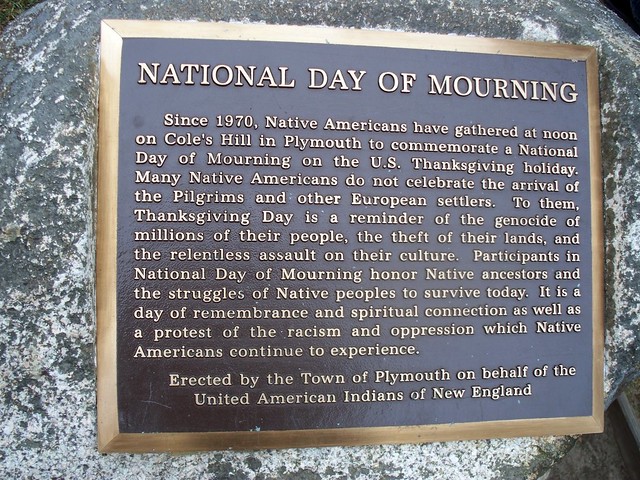
This is the Suppressed speech of Wamsutta (Frank B.) James, Wampanoag. that was to be delivered at Plymouth, Massachusetts, 1970.
The Massachusetts Department of Commerce asked the Wampanoag Indians to select a speaker to mark the 350th anniversary of the Pilgrims' arrival, and the first Thanksgiving.
Three hundred fifty years after the Pilgrims began their invasion of the land of the Wampanoag, their "American" descendants planned an anniversary celebration. Still clinging to the white schoolbook myth of friendly relations between their forefathers and the Wampanoag, the anniversary planners thought it would be nice to have an Indian make an appreciative and complimentary speech at their state dinner. Frank James was asked to speak at the celebration. He accepted. The planners, however , asked to see his speech in advance of the occasion, and it turned out that Frank James' views — based on history rather than mythology — were not what the Pilgrims' descendants wanted to hear. Frank James refused to deliver a speech written by a public relations person. Frank James did not speak at the anniversary celebration. If he had spoken, this is what he would have said:
I speak to you as a man -- a Wampanoag Man. I am a proud man, proud of my ancestry, my accomplishments won by a strict parental direction ("You must succeed - your face is a different color in this small Cape Cod community!"). I am a product of poverty and discrimination from these two social and economic diseases. I, and my brothers and sisters, have painfully overcome, and to some extent we have earned the respect of our community. We are Indians first - but we are termed "good citizens." Sometimes we are arrogant but only because society has pressured us to be so.
It is with mixed emotion that I stand here to share my thoughts. This is a time of celebration for you - celebrating an anniversary of a beginning for the white man in America. A time of looking back, of reflection. It is with a heavy heart that I look back upon what happened to my People.
Even before the Pilgrims landed it was common practice for explorers to capture Indians, take them to Europe and sell them as slaves for 220 shillings apiece. The Pilgrims had hardly explored the shores of Cape Cod for four days before they had robbed the graves of my ancestors and stolen their corn and beans. Mourt's Relation describes a searching party of sixteen men. Mourt goes on to say that this party took as much of the Indians' winter provisions as they were able to carry.
Massasoit, the great Sachem of the Wampanoag, knew these facts, yet he and his People welcomed and befriended the settlers of the Plymouth Plantation. Perhaps he did this because his Tribe had been depleted by an epidemic. Or his knowledge of the harsh oncoming winter was the reason for his peaceful acceptance of these acts. This action by Massasoit was perhaps our biggest mistake. We, the Wampanoag, welcomed you, the white man, with open arms, little knowing that it was the beginning of the end; that before 50 years were to pass, the Wampanoag would no longer be a free people.
What happened in those short 50 years? What has happened in the last 300 years? History gives us facts and there were atrocities; there were broken promises - and most of these centered around land ownership. Among ourselves we understood that there were boundaries, but never before had we had to deal with fences and stone walls. But the white man had a need to prove his worth by the amount of land that he owned. Only ten years later, when the Puritans came, they treated the Wampanoag with even less kindness in converting the souls of the so-called "savages." Although the Puritans were harsh to members of their own society, the Indian was pressed between stone slabs and hanged as quickly as any other "witch."
And so down through the years there is record after record of Indian lands taken and, in token, reservations set up for him upon which to live. The Indian, having been stripped of his power, could only stand by and watch while the white man took his land and used it for his personal gain. This the Indian could not understand; for to him, land was survival, to farm, to hunt, to be enjoyed.
It was not to be abused. We see incident after incident, where the white man sought to tame the "savage" and convert him to the Christian ways of life. The early Pilgrim settlers led the Indian to believe that if he did not behave, they would dig up the ground and unleash the great epidemic again.
The white man used the Indian's nautical skills and abilities. They let him be only a seaman -- but never a captain. Time and time again, in the white man's society, we Indians have been termed "low man on the totem pole."
Has the Wampanoag really disappeared? There is still an aura of mystery. We know there was an epidemic that took many Indian lives - some Wampanoags moved west and joined the Cherokee and Cheyenne. They were forced to move. Some even went north to Canada! Many Wampanoag put aside their Indian heritage and accepted the white man's way for their own survival. There are some Wampanoag who do not wish it known they are Indian for social or economic reasons.
What happened to those Wampanoags who chose to remain and live among the early settlers? What kind of existence did they live as "civilized" people? True, living was not as complex as life today, but they dealt with the confusion and the change. Honesty, trust, concern, pride, and politics wove themselves in and out of their [the Wampanoags'] daily living. Hence, he was termed crafty, cunning, rapacious, and dirty.
History wants us to believe that the Indian was a savage, illiterate, uncivilized animal. A history that was written by an organized, disciplined people, to expose us as an unorganized and undisciplined entity. Two distinctly different cultures met. One thought they must control life; the other believed life was to be enjoyed, because nature decreed it. Let us remember, the Indian is and was just as human as the white man. The Indian feels pain, gets hurt, and becomes defensive, has dreams, bears tragedy and failure, suffers from loneliness, needs to cry as well as laugh. He, too, is often misunderstood.
The white man in the presence of the Indian is still mystified by his uncanny ability to make him feel uncomfortable. This may be the image the white man has created of the Indian; his "savageness" has boomeranged and isn't a mystery; it is fear; fear of the Indian's temperament!
High on a hill, overlooking the famed Plymouth Rock, stands the statue of our great Sachem, Massasoit. Massasoit has stood there many years in silence. We the descendants of this great Sachem have been a silent people. The necessity of making a living in this materialistic society of the white man caused us to be silent. Today, I and many of my people are choosing to face the truth. We ARE Indians!
Although time has drained our culture, and our language is almost extinct, we the Wampanoags still walk the lands of Massachusetts. We may be fragmented, we may be confused. Many years have passed since we have been a people together. Our lands were invaded. We fought as hard to keep our land as you the whites did to take our land away from us. We were conquered, we became the American prisoners of war in many cases, and wards of the United States Government, until only recently.
Our spirit refuses to die. Yesterday we walked the woodland paths and sandy trails. Today we must walk the macadam highways and roads. We are uniting We're standing not in our wigwams but in your concrete tent. We stand tall and proud, and before too many moons pass we'll right the wrongs we have allowed to happen to us.
We forfeited our country. Our lands have fallen into the hands of the aggressor. We have allowed the white man to keep us on our knees. What has happened cannot be changed, but today we must work towards a more humane America, a more Indian America, where men and nature once again are important; where the Indian values of honor, truth, and brotherhood prevail.
You the white man are celebrating an anniversary. We the Wampanoags will help you celebrate in the concept of a beginning. It was the beginning of a new life for the Pilgrims. Now, 350 years later it is a beginning of a new determination for the original American: the American Indian.
There are some factors concerning the Wampanoags and other Indians across this vast nation. We now have 350 years of experience living amongst the white man. We can now speak his language. We can now think as a white man thinks. We can now compete with him for the top jobs. We're being heard; we are now being listened to. The important point is that along with these necessities of everyday living, we still have the spirit, we still have the unique culture, we still have the will and, most important of all, the determination to remain as Indians. We are determined, and our presence here this evening is living testimony that this is only the beginning of the American Indian, particularly the Wampanoag, to regain the position in this country that is rightfully ours.
Wamsutta September 10, 1970
Thursday, July 04, 2013
China's Bingtuan Occupy Muslim Xinjiang

In A Region Plagued By Ethnic Strife, The Growth Of Immigrant-Dominated Settlements Is Adding To The Tension
MANY hours’ drive along what was once the southern Silk Road, through a featureless desert landscape punctuated by swirling dust-devils and occasional gnarled trees, a curious sight eventually confronts the traveller: row upon row of apartment blocks with vivid red roofs, as if a piece of Shanghai suburbia has been planted in the wilderness (see picture). Following the military-style nomenclature of immigrant settlements in China’s far west, it calls itself 38th Regiment. It is home to thousands of people, in a spot where just a few years ago there was nothing but sand.
The town is the latest addition to a vast network of such communities in the Xinjiang Uighur Autonomous Region, China’s biggest province by land area and also its most ethnically troubled. Neighbouring Tibet has long been roiled by ethnic tension, too, but rarely has it witnessed the kind of violence that has troubled Xinjiang: a low-level insurgency involving ethnic Uighurs whose Muslim faith and Central Asian culture and language set them apart from the Han Chinese who dominate places like 38th Regiment. On April 23rd, 21 people were killed near Kashgar during an encounter between police and alleged separatists. An explosion of inter-ethnic violence in 2009 in the regional capital, Urumqi, that left nearly 200 dead, by official reckoning, exacerbated the divide. The expansion of the settlement network is deepening it further.
To use its full name, the 38th Regiment of the 2nd Agricultural Division is part of the Xinjiang Production and Construction Corps. This state-run organisation, usually referred to as the bingtuan (Chinese for a military corps) controls an area twice the size of Taiwan, broken into numerous parts scattered around the province (see map). A few bits are city-sized. Most are more like towns or villages. Of their total population of more than 2.6m people, 86% are ethnically Han Chinese. In Xinjiang as a whole, in contrast, Han officially make up just over 40% of the 22m inhabitants. The rest are Uighurs and a few other ethnic groups.
Guns and Ketchup

The bingtuan operates its own schools, hospitals and newspapers. It has its own courts, police and prisons as well as a 120,000-strong militia force which is the reason for its military-sounding names (though bingtuan towns look no more military than any others in China). It produces nearly one-sixth of Xinjiang’s GDP (see chart), including 40% of its cotton (one of the region’s main cash crops). The corps also prides itself on being one of the world’s biggest makers of tomato ketchup. Its exports made up more than 17% of global trade in ketchup in 2009, according to Sun Yanping, a Xinjiang-based economist. It also runs hundreds of enterprises in everything from processing dates to coalmining. Through its commercial arm it runs more than a dozen listed companies, one of which is Suntime International, described by China’s agriculture ministry as the biggest wine producer in Asia.
Many Uighurs are resentful of such a large, economically powerful and politically autonomous entity in Xinjiang that employs so few of their own ethnic group. To make matters worse, the bingtuan partly justifies its existence by saying it is needed to maintain stability in Xinjiang. That is party shorthand for keeping Uighurs quiet.
The bingtuan—eager to preserve its power at a time of growing criticism in China of the “vested interests” of large state-owned concerns—is at pains to convince ordinary Chinese that it plays a vital role. A museum in Shihezi, a city in northern Xinjiang controlled by the corps, displays a photograph of members of the bingtuan militia armed with rifles, crouching behind a wall during a 1990 uprising by Uighurs near the city of Kashgar. The militia, says the caption, played an important role in crushing the unrest. Amnesty International, a human-rights group, says 50 Uighurs were killed in the incident, including some who were shot while running away.
The military connections of the bingtuan give it swagger. “I’ve got a dozen big guns and a company of artillery troops; what about you?” the Oriental Morning News, a Shanghai newspaper, quoted the manager of a listed bingtuan firm in Shihezi boasting in 2010 to a visitor. His company, Xinjiang Tianye Group (whose businesses include ketchup-making) does indeed have a militia force of artillerymen.
The paramilitary role of the corps is just the latest in a series of attempts to settle Xinjiang dating back to the region’s conquest by China’s Qing dynasty emperors in the 18th century (many of the settlers then were Manchu soldiers). The bingtuan itself was founded in 1954, consisting mainly of demobilised Han soldiers. They were ordered to turn desert areas into farmland while keeping their guns to fend off potential incursions by the Soviet Union. In 1953 Han Chinese formed less than 10% of Xinjiang’s population. The corps, however, helped to even up the balance. Many more demobbed soldiers, prisoners, political malcontents and women (to keep the men happy and sustain the population) were sent to join the settlers.
In 1975, a year before he died, Mao Zedong abolished the corps, which was in tatters due to factional feuding in the Cultural Revolution and the ravages of central planning. In 1981 Deng Xiaoping re-established it, though there was no obvious economic reason for doing so. Grain and cotton output from former bingtuan farms had been recovering rapidly. But Uighur unrest, including what officials saw as anti-Han violence, had broken out in several places. Deng said the bingtuan should be at the “core of stabilising Xinjiang”.
Worried They Might Look West
After the collapse of the Soviet Union in 1991 China fretted that the newly independent Central Asian republics might inspire support in Xinjiang for an independent state of East Turkestan. Uighurs twice declared such a state in parts of Xinjiang in the 1930s and 1940s, when China was in chaos before the Communist Party’s victory in 1949. Officials also feared that radical Islam might spread into Xinjiang. American forces captured more than 20 Uighurs in Afghanistan in 2001, and China began alleging that Uighur separatists were forming links with al-Qaeda.
Bingtuan officials have been happy to play on such fears. Zhang Qingli, then Xinjiang’s deputy party chief, said in 2004: “As long as Xinjiang has ethnic separatist forces making a clamour and extremist religious forces kicking up a row, the bingtuan will exist forever.” He called critics “bad people” and “hostile Western forces”.
The corps does not spell out how the existence of a Han-dominated group based in Han-dominated enclaves with an ill-trained militia can help reinforce stability. Its aim is to have “emergency-response” units in every one of its nearly 180 “regiments”, but professional security forces are usually the first to be called out. Wang Lixiong, a Beijing writer known for his provocative analysis of western China, described the corps in a 2007 book (banned in China) as an “autonomous Han province” within Xinjiang. He said it was alienating itself from local governments in the region (which have no jurisdiction over bingtuan settlements in their areas) and from Uighurs. “Solving the Xinjiang problem is inseparable from solving thebingtuan problem,” he wrote.
Party leaders in Beijing appear to disagree. The 2009 rioting in Urumqi was clearly a shock to the central leadership. The following year it convened a meeting in Beijing to discuss ways of dealing with Xinjiang. Hu Jintao, president of China at the time, praised the corps for fulfilling its mission as a “mighty construction army” and announced that the bingtuan should be as much the focus of direct aid from richer provinces as other parts of Xinjiang.
Helped by this, the bingtuan has enjoyed a revival. It has called for 15% annual GDP growth in areas it controls between 2011 and 2015, compared with growth of 10% a year for Xinjiang as a whole. This spurt is being helped by what the corps calls “leapfrog development”: an urbanisation drive that is transforming the bingtuan’s hitherto agriculture-led economy, spurring on private enterprise and creating a frenzy of construction. Though the aim is to strengthen stability, it could do the opposite, as it boosts Han migration and exacerbates an already conspicuous racial divide.
This is apparent in Shihezi, the bingtuan’s showcase. Over the past year it has begun to build a satellite district. The grey shells of dozens of apartment blocks have sprouted on the dusty plain near the foothills of the Tianshan mountains. Officials say that by 2015 the new district’s population will reach 100,000. By 2030 it will be 350,000. Some will relocate from the old city, but many will be newcomers from farther east, attracted by work in new factories. Of Shihezi’s current population of 640,000, 95% are Han. Few expect that ratio to change much.
 Not part of the corps
Manifest Destiny
In southern Xinjiang, where Uighurs are still usually in the majority, the bingtuan is extending its reach: creating new settlements or upgrading existing ones. In 2004 it formed 224th Regiment in the desert about 75km (45 miles) west of Khotan, a city regarded by officials as a hotbed of Uighur separatism. The regiment now has a permanent population of 12,000, of whom 98% are Han (though Uighurs help pick its red dates at harvest-time). In 2010, 38th Regiment was launched. The town’s population has already grown from nothing to more than 4,800. Its aim is to triple that number. New residents come from the central province of Henan and from communities in neighbouring Gansu province whose villages were damaged by an earthquake in 2008. Some are given a new flat and land as an incentive to move. The bingtuan has spent hundreds of millions of dollars bringing water from the Molcha River 80km away. “I hope to live here for another 20 years,” says a young Han teacher with kibbutznik zeal. No Uighurs are to be seen.
The 38th Regiment (which also plants dates) describes itself as strategically located on a route into southern Xinjiang. In August it formed a militia battalion, which has been conducting counter-terrorism drills. It might do better to consider the impact of resettling Uighur nomads into a separate cluster of new houses a kilometre away. Even in the vastness of the Taklimakan desert, the divide is growing.
Subscribe to:
Posts (Atom)
