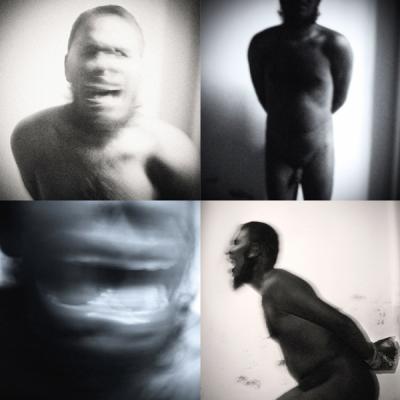
Showing posts with label Black Sites. Show all posts

Friday, October 03, 2014

Secret Insignias From The ‘Black Ops’ World

Like a Space-Phoenix From Hell

Like A Space-Phoenix From Hell

The Latin phrase below the Phoenix translates to "The Devil You Know." That's the rationale behind the spy-satellite operators at the National Reconnaissance Office, who peer into the workings of foreign military arsenals from hundreds of miles into space.
This patch, from National Reconnaissance Office Launch 49, puts a bold face on a failure: the Future Imagery Architecture, a $10-billion disaster in the guise of a satellite able to peer through heavy cloud cover.
The end of Future Imagery Architecture meant that NRO had to continue with its KH "Keyhole" satellite family, many of which the United States uses to spy on Russian nukes. Launch 49 of the KH-11 series supposedly used spare parts from Future Imagery Architecture -- hence the Phoenix design.
Image: Courtesy Trevor Paglen

Attack of the Radar-Toting Rat Wizards


 Confirmed: The Air Force Totally Hides Aliens From Us


Sunday, May 25, 2014

Revealed: Senate Report Contains New Details On CIA Black Sites

A Senate Intelligence Committee report provides the first official confirmation that the CIA secretly operated a black site prison out of Guantánamo Bay, two U.S. officials who have read portions of the report have told Al Jazeera.The officials — who spoke on condition of anonymity because the 6,600-page report on the CIA’s detention and interrogation program remains classified — said top-secret agency documents reveal that at least 10 high-value targets were secretly held and interrogated at Guantánamo’s Camp Echo at various times from late 2003 to 2004. They were then flown to Rabat, Morocco, before being officially sent to the U.S. military’s detention facility at Guantánamo in September 2006.

In September 2006, President George W. Bush formally announced that 14 CIA captives had beentransferred to Guantánamo and would be prosecuted before military tribunals. He then acknowledged for the first time that the CIA had been operating a secret network of prisons overseas to detain and interrogate high-value targets.

The Senate report, according to Al Jazeera’s sources, says that the CIA detained some high-value suspects on Diego Garcia, an Indian Ocean island controlled by the United Kingdom and leased to the United States. The classified CIA documents say the black site arrangement at Diego Garcia was made with the “full cooperation” of the British government. That would confirm long-standing claims by human rights investigators and journalists, whose allegations — based on flight logs and unnamed government sources — have routinely been denied by the CIA.

The CIA and State Department declined Al Jazeera’s requests for comment.
The Intelligence Committee last week voted 11 to 3 to declassify the report’s 480-page executive summaryand 20 conclusions and findings, which incorporate responses from Republican members of the committee and from the CIA. The executive summary will undergo a declassification review, led by the CIA, with input from the State Department and the Office of the Director of National Intelligence, the U.S. officials said.

The panel’s chairwoman, Democratic Sen. Dianne Feinstein, said in a statement last Thursday that the full 6,600-page report, with 37,000 footnotes, “will be held for declassification at a later time.”

Leaked details of the committee’s report have caused waves in countries like Poland, where the CIA is known to have operated a black site prison — which Polish officials continue to deny having known about.The U.S. officials who spoke to Al Jazeera said that the Senate report reveals 20 prisoners were secretly detained in Poland from 2002 to 2005. They added that Polish officials recently sought assurances from diplomats and visiting U.S. officials that the Senate report would conceal details about Poland’s role in allowing the CIA black site to be operated on Polish soil. Al Jazeera’s sources said U.S. officials reassured their Polish counterparts last year that it was almost certain that the declassified version of the report would not identify the countries that cooperated with the CIA’s detention and interrogation program.

According to the Senate report, Al Jazeera’s sources said, a majority of the more than 100 detainees held in CIA custody were detained in secret prisons in Afghanistan and Morocco, where they were subject to torture methods not sanctioned by the Justice Department. Those methods are recalled by the report in vivid narratives lifted from daily logs of the detention and interrogation of about 34 high-value prisoners. The report allegedly notes that about 85 detainees deemed low-value passed through the black sites and were later dumped at Guantánamo or handed off to foreign intelligence services. 

More than 10 of those handed over to foreign intelligence agencies “to face terrorism charges” are now “unaccounted for” and presumed dead, the U.S. officials said.

The Senate report says more than two dozen of these men designated low-value had, in fact, been wrongfully detained and rendered to other countries on the basis of intelligence obtained from CIA captives under torture and from information shared with CIA officials by other governments, both of which turned out to be false. The report allegedly singles out a top CIA official for botching a handful of renditions and outlines agency efforts to cover up the mistakes.

The Senate report allegedly accuses “senior CIA officials” of lying during multiple closed-session briefings to members of Congress from 2003 to 2005 about the use of certain “enhanced” interrogation techniques. The report says an agency official lied to Congress in 2005 when he insisted the U.S. was adhering to international treaties barring cruel and degrading treatment of prisoners, the U.S. officials told Al Jazeera.

The report not only accuses certain CIA officials of deliberately misleading Congress; Al Jazeera’s sources say it also suggests that the agency sanctioned leaks to selected journalists about phantom plots supposedly disrupted as a result of information gained through the program in order to craft a narrative of success.

The Senate report, like a 2009 Senate Armed Services Committee report (PDF), says Air Force psychologists under contract to the CIA reverse-engineered a decades-old resistance-training program taught to U.S. airmen known as survival evasion resistance escape (SERE).

According to a SERE training document obtained by Al Jazeera titled “Coercive Exploitation Techniques,” Air Force personnel were taught that communist regimes used “deprivations” of “food, water, sleep and medical care” as well as “the use of threats” in order to weaken a captive’s mental and physical ability to resist interrogation. “Isolation” would be used, according to the SERE program, to deprive the “recipient of all social support” so that he develops a “dependency” on his interrogator. And “physical duress, violence and torture” are used to weaken “mental and physical ability to resist exploitation.”

Ironically, perhaps, the SERE document (displayed below) notes that such techniques were used by the Soviet Union, China and North Korea to obtain false confessions.

Senate investigators allegedly obtained from the CIA a 2003 “business plan,” written by Air Force psychologists James Mitchell and Bruce Jessen, that contained erroneous details about the positive aspects of the enhanced interrogation program and the veracity of the intelligence its extracted from detainees. The “business plan” states that Al-Qaeda captives were “resistant” to “standard” interrogation techniques, an argument the Senate report found lacked merit because torture techniques were used before they were even questioned.

Neither Jessen, who lives in Spokane, Wash., nor Mitchell, who resides in Land o’ Lakes, Fla., responded to phone calls or emails for comment. Both men are featured prominently in the Senate’s report, according to U.S. officials.

The ‘Experiment’

According to Al Jazeera’s sources, Zain Abidin Mohammed Husain Abu Zubaydah was the only captive subjected to all 10 torture techniques identified in an August 2002 Justice Department memo. But the U.S. officials said the Senate report concludes that the methods applied to Abu Zubaydah went above and beyond the guidelines outlined in that memo and were used before the memo establishing their legality was written.The Senate report allegedly adopts part of a narrative from former FBI special agent Ali Soufan, who first interrogated Abu Zubaydah at the black site and wrote in his book “The Black Banners” that Mitchell was conducting an “experiment” on Abu Zubaydah.

For example, the August 2002 Justice Department legal memo authorized sleep deprivation for Abu Zubaydah for 11 consecutive days, but Mitchell kept him awake far longer, the U.S. officials said, citing classified CIA cables. Abu Zubaydah was stripped naked, strapped into a chair and doused with cold water to keep him awake. He was then interrogated and asked what he knew, at which point, his attorney told Al Jazeera, Abu Zubaydah was “psychotic” and would have admitted to anything.

Additionally, the report allegedly says that Abu Zubaydah was stuffed into a pet crate (the type used to transport dogs on airplanes) over the course of two weeks and routinely passed out, was shackled by his wrists to the ceiling of his cell and subjected to an endless loop of loud music. One former interrogator briefed about Abu Zubaydah’s interrogations from May to July 2002 told Al Jazeera that the music used to batter the detainee’s senses was by the Red Hot Chili Peppers.

Abu Zubaydah’s attorney, Brent Mickum, hopes the Senate report’s executive summary will vindicate what he has been saying for years. “My client was tortured brutally well before any legal memo was issued,” Mickum said. He expects the report to “show that my client was a nonmember of Al-Qaeda, contrary to all of the earlier reports by the Bush administration. I am also confident that the report will show that, after he was deemed to be compliant while he was held in Thailand, that he continued to be tortured on explicit orders from the Bush administration.”

The Senate report, according to Al Jazeera’s sources, says that CIA interrogators were under an enormous pressure from top agency officials, themselves under pressure from the White House, to use “enhanced” interrogation techniques to obtain information from detainees connecting Iraq and Al-Qaeda.

One interrogator who worked for the CIA and the U.S. military during Bush’s tenure and participated in the interrogations of two high-value CIA prisoners told Al Jazeera — speaking on condition of anonymity because he is still employed by the U.S. government — that the “enhanced” interrogation program was “nothing more than the Stanford Prison Experiment writ large.” (The 1971 Stanford University study shocked the public by demonstrating how easily people placed in authority over more vulnerable others resorted to cruelty.)

“Interrogators were being pressured — You have to get info from these people,’” the interrogator told Al Jazeera. “There was no consideration that the person we were interrogating may not know. That was always seen as a resistance technique. ‘They [the detainees] must be lying!’ There was pressure on us from above to produce what they wanted. Not a single person I worked with knew how to conduct an interrogation or [had] ever conducted an interrogation.”


Saturday, March 08, 2014

More Charges Of Forced Drugging At Guantanamo


By: Jeff Kaye


On February 21, attorneys for six former Guantanamo prisoners took their civil case against Donald Rumsfeld and a number of U.S. military officials to federal appeals court. Rumsfeld and the others are being sued “for the torture, religious abuse and other mistreatment of plaintiffs,” according to a press release from Center for Constitutional Rights (CCR).

Unremarked in the otherwise thin press coverage of this case was the fact that four of the six former prisoners charge the U.S. with forced drugging, via pills or injections. In one case, a special riot squad known as the “Extreme Reaction Force” entered the cell of one of the prisoners to restrain him and force medications upon him.

The former prisoners were from Turkey, Uzbekistan and Algeria. According to an Agence France-Presse account published at The Raw Story the day of the hearing, “the judges will make their ruling in several weeks, but one of them, Judge David Tatel, said military and civilian officials at the Pentagon had failed in their duty.

“‘Their job is to protect the detainees from abuse, they failed to do so,’ he said.”

A year ago, the case had been dismissed in the U.S. District Court for the District of Columbia, despite the fact that three of the plaintiffs were held prisoner at Guantanamo and subjected to torture and other cruel treatment even after a Pentagon-initiated review process had found them not to be “enemy combatants.”

According to CCR’s press release, the current appeal is based in part on the fact that immunity doctrines used to shield “the actions of government officials who abused Guantánamo detainees” were based on the fact these prisoners “were suspected of being enemy combatants.” The fact that the U.S. military tortured men who were not under the category of “enemy combatant” may undermine the government’s immunity argument, or perhaps allow for a Supreme Court ruling on the matter.

Drugging Led To Inspector General Investigation

The forced use of drugs at Guantanamo and other U.S. military sites is not a minor issue, for such use of drugs is both medically unethical and illegal according to both domestic and international law. Back in Spring 2008, the controversy over reports of such forced drugging was a front-page story in the American press, leading three U.S. senators — two of whom, Joseph Biden and Chuck Hagel, are now the Vice-President of the United States and the Secretary of Defense, respectively — to task the inspector generals (IG) of both the CIA and the Department of Defense to investigate the issue.

While the CIA report is still classified, DoD released a redacted copy of their IG report to me, and Jason Leopold and I published a thorough review of that report at Truthout in July 2012. Leopold and I found that the government admitted to interrogating prisoners while they were being medicated. The government maintained such prisoners were not specifically drugged for interrogation, but for other reasons. Indeed, the military admitted to forcibly drugging prisoners who they wished to be “chemically restrained.”

In a follow-up story at Truthout in September 2012, I noted various ways in which the DoD IG report was a cover-up regarding the extent of the drugging of the prisoners.

“But while the IG report was spurred by a June 2008 Washington Post article reporting a number of former detainees’ complaints of drugging and a subsequent letter to the IG from three US senators,” I wrote, “the IG report never interviewed any of the detainees mentioned in the Post story.

“The IG interviewed only three detainees, all of whom were still held at Guantanamo. ‘We did not attempt to interview detainees who had been repatriated,’ the IG stated, which would include any of the detainees who had previously made public statements to the press that they had been forcibly drugged.”

Indeed, many former detainees have charged Guantanamo officials with forced drugging. 

For instance, a military prosecutor admitted to former detainee David Hicks’s attorney that prison authorities put drugs in Hicks’s food, as they “periodically sedated [Hicks] for non-therapeutic reasons.”

In another example, after he was forcibly repatriated to Algeria from his cell at Guantanamo, Abdul Aziz Naji, who was sentenced to prison in Algeria after his release from U.S. custody, told an Algerian newspaper that some prisoners at Guantanamo were forced “to take some medicines for three months to drive them crazy, loosing [sic] memory and committing suicide.”

New Charges About “Unspecified Pills and Injections”

Four of the six men suing Rumsfeld and the others in the CCR case charge that they were forcibly drugged at Guantanamo.

According to court documents, Yuksel Celikgogus, a 39 year old Turkish citizen, “was repeatedly forced to take unspecified pills and injections. Mr. Celikgogus asked what type of medicine he was receiving, but the guards would neither let him refuse the medication nor tell him what they were giving him.”

Twenty-six year old Turkish citizen Ibrahim Sen “was forcibly given unspecified pills and injections. The guards would neither let him resist the medication nor respond to his inquiries as to its substance.”

Nuri Mert, who is a 35 year old Turkish citizen, released, like Ceilikgogus and Sen to Turkey some years ago, suffered physical attack when he tried to resist the forced drugging.

According to the court document, “Throughout his detention at Guantánamo, Mr. Mert was forcibly given unspecified pills and injections. The guards would neither let him resist the medication nor respond to his inquiries as to its substance. In multiple instances, when Mr. Mert refused the medication, he was forcibly medicated by an Extreme Reaction Force (“ERF”) team. As is typical in such instances, a group of soldiers in riot gear burst into his cell, threw him to the ground and restrained him, carried him out of the cell, and forced him to either take pills or an injection. During his time in Camp Delta, Mr. Mert became extremely ill; he experienced severe stomach and chest pains and regular vomiting. When Mr. Mert wanted medical care, he was often deprived of such care despite frequent requests.”

Zakirjan Hasam was the fourth of the former detainees who claimed he was “forcibly medicated with pills and injections repeatedly while in Guantánamo.” Hasam is an Uzbek refugee who transferred to Albania in 2006. Along with Abu Muhammad, the other Uzbek in the case, he currently lives in a refugee camp in Tirana.

All the former detainees are said to suffer terribly from their torture at the hands of the American armed forces. According to Shayana Kadidal, Senior Staff Attorney at the Center for Constitutional Rights, “These men’s lives were irreparably damaged at Guantánamo. The U.S. government acknowledges they were wrongly imprisoned for years yet refuses to compensate them and help them rebuild their lives.”

Besides Rumsfeld, the other defendants in the suit include former Chairmen of the Joint Chiefs of Staff General Richard Myers and General Peter Pace, former commanders of Joint Task Force-GTMO Major General Michael Dunlavey, Major General Geoffrey Miller and Brigadier General Jay Hood, as well as the former director of the Joint Intelligence Group at Guantanamo, Esteban Rodriguez, among many others.

Besides forced drugging with “unknown substances,” the former prisoners’ suit describes a panoply of tortuous treatment, including “beatings, short-shackling, sleep deprivation… subjection to extremes of cold or heat and light and dark, hooding, stress positions, isolation, forced shaving, forced nakedness, forced sexual contact and intimidation with vicious dogs and threats, many in concert with each other.”

Drugs and The Army Field Manual

While some of these “techniques” have now been banned by the military — such as hooding — others continue in use as official parts of the Army Field Manual, whose interrogation procedures have been propounded by President Obama’s January 22, 2009 executive order on “lawful interrogations.” These include sleep deprivation, manipulation of temperatures, isolation, and other so-called interrogation “approaches” and “techniques.”

While it is not commonly known, the Army Field Manual does allow use of drugs on detainees, so long as they do not “induce lasting or permanent mental alteration or damage.” This makes military use of drugs on prisoners even more permissive than John Yoo’s allowance to the CIA in his famous 2002 memos. Yoo had told the CIA it could not use on prisoners “mind-altering substances or other procedures calculated to disrupt profoundly the senses or the personality.” While Yoo’s stricture had a lot of room for possible abuse, the current version of the Army Field Manual allows almost any kind of drug to be used, lacking proof of “lasting or permanent mental alteration or damage.”

This is all a far cry from how the military once considered the issue of drugging prisoners. 

According to areport by the Congressional Research Service [CRS], earlier military doctrine “prohibited the use of any drugs on prisoners unless required for medical purposes.” The CRS report describes a 1961 opinion by the Army’s Judge Advocate General which stated, “’the suggested use of a chemical “truth serum” during the questioning of prisoners of war would be in violation of the obligations of the United States under the Geneva Convention Relative to the Treatment of Prisoners of War.’ From this opinion it seems clear that any attempt to extract information from an unwilling prisoner of war by the use of chemicals, drugs, physiological or psychological devices, which impair or deprive the prisoner of his free will without being in his interest, such as a bonafide medical treatment, will be deemed a violation of Articles 13 and 17 of the [Geneva] Convention.” [p. CRS-14]

Moreover, according to CRS, the 1987 version of the Army Field Manual on interrogation “suggested that the use of any drugs for interrogation purposes amounted to mental coercion.”

How far we have come since those days can be traced by how the U.S. treats the drugging of prisoners today. The full story of how the U.S. used drugs on prisoners at Guantanamo, if in fact such use is still not happening, remains to be uncovered. The military’s IG investigation was a whitewash. Meanwhile both Congress and the mainstream press have appeared to wash their hands of the matter. But the suffering of the prisoners remains, and their testimony may not be left lingering in limbo forever. Sooner or later these crimes will have their day in a court of law or other duly constituted tribunal.

Thursday, April 18, 2013

US Torture Of Prisoners Is 'Indisputable'

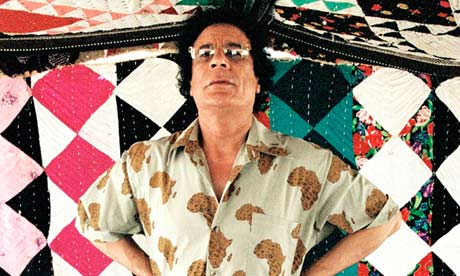
Muammar Gaddafi
The report found that dissidents were transferred to Libya in 2004 not to combat terrorism, but to buy favour with the Gaddafi regime. Photograph: Sipa Press/Rex Features

Ian Cobain reports in The Guardian that:

An independent examination of the US rendition programme after 9/11 has concluded that it is "indisputable" that America tortured prisoners, and that the country's highest officials were responsible.

A 580-page report published on Tuesday by the Constitution Project, a non-partisan Washington-based thinktank, concludes that the programme was unjustified and counterproductive, damaging to the country's reputation, and has placed US military personnel at risk of mistreatment if they are themselves taken prisoner.
In findings similar to those of a report published two months ago by the New York NGO Open Society Justice Initiative, the study concludes that the US rendition programme enjoyed widespread international co-operation, with the UK, Canada, Italy, Germany and Sweden identified as prominent supporters alongside Egypt, Syria, Morocco and Jordan.
The authors also conclude that the UK-Libyan rendition operations that resulted in the abduction of two dissidents who were taken to Tripoli along with their families in 2004 were intended not to combat international terrorism, but to "gain favour" with the Gaddafi regime.
"Apparently someone (almost certainly at the CIA) thought that since the United States was sending people all around the world in our secret rendition programme to combat terrorism aimed at the United States, it would be a good idea to take advantage of the system to transfer some people to Libya in an effort to gain favour with that country's rulers," the report says. "We and the British government thought we were buying favour with Gaddafi's secret service."
The report also concludes that the CIA operated secret prisons within three European countries: Poland and Lithuania, which have acknowledged their existence, and Romania, which continues to deny that such a facility existed.
The study was embarked upon following the decision by the US president, Barack Obama, on entering the White House in 2009 that there would be no official inquiry into the rendition programme, on the grounds that it would be politically unproductive to "look backwards" rather than forwards.
The Constitution Project enjoyed no access to classified material – unlike the Senate's Intelligence Committee, whose 6,000-page report remains secret – but is nevertheless the most detailed attempt yet to produce a public reckoning of the impact of the rendition programme.
In one of their most damning conclusions, the panel says: 
"In the course of the nation's many previous conflicts, there is little doubt that some US personnel committed brutal acts against captives, as have armies and governments throughout history. But there is no evidence there had ever before been the kind of considered and detailed discussions that occurred after 11 September, directly involving a president and his top advisers on the wisdom, propriety and legality of inflicting pain and torment on some detainees in our custody."
The report calls for the revision of the US army's field manual on interrogation, to prohibit interrogation lasting 40 hours, and to introduce unambiguous bans of the use of stress positions and sleep deprivation.
In an appendix, the authors dismiss arguments – which have frequently followed party lines in the US – that the mistreatment of detainees after 9/11 fell short of torture, citing cases in which comparable treatment was prosecuted as torture by the US in the past.

Sunday, March 03, 2013

Secret CIA Prisons In Europe


In Eastern Europe, people thought they became free when the German Wall and the iron Curtain fell. Freedom was the buzzword. After 9/11, however, the American based CIA began planting secret prisons in Poland and Lithuania. 

The Russian-based RT channel investigates two claims of the existence of these prisons and cam with a remarkable documentary as a result which the Babylon Observer presents to you with permission.

It's called "rendition": a nice little word which hides the true meaning. People are being kidnapped and brought to secret prisons all over the world, including several European countries. 

In Lithuania and Poland, for example. Government leaders fall over it, parliaments do not get the right information, and journalists trying to uncover the facts often engage people who are unwilling to speak about it. 

In this documentary, a crew from the Russian based RT station tries to unravel just what's been going on in the two mentioned countries.

Saturday, January 12, 2013

Torture: An All-American Nightmare


By Peter Van Buren
Courtesy Of "Common Dreams"

If you look backward you see a nightmare. If you look forward you become the nightmare.


There’s one particular nightmare that Americans need to face: in the first decade of the twenty-first century we tortured people as national policy. One day, we’re going to have to confront the reality of what that meant, of what effect it had on its victims and on us, too, we who condoned, supported, or at least allowed it to happen, either passively or with guilty (or guiltless) gusto. If not, torture won’t go away. It can’t be disappeared like the body of a political prisoner, or conveniently deep-sixed simply by wishing it elsewhere or pretending it never happened or closing our bureaucratic eyes. After the fact, torture can only be dealt with by staring directly into the nightmare that changed us -- that, like it or not, helped make us who we now are.
The president, a Nobel Peace Prize winner, has made it clear that no further investigations or inquiries will be made into America’s decade of torture. His Justice Department failed to prosecute a single torturer or any of those who helped cover up evidence of the torture practices.  But it did deliver a jail sentence to one ex-CIA officer who refused to be trained to torture and was among the first at the CIA to publicly admit that the torture program was real.
At what passes for trials at our prison camp in Guantanamo, Cuba, disclosure of the details of torture is forbidden, effectively preventing anyone from learning anything about what the CIA did with its victims. We are encouraged to do what’s best for America and, as Barack Obamaput it, “look forward, not backward,” with the same zeal as, after 9/11, we were encouraged to save America by going shopping.
Looking into the Eyes of the Tortured
Torture does not leave its victims, nor does it leave a nation that condones it. As an act, it is all about pain, but even more about degradation and humiliation. It destroys its victims, but also demeans those who perpetrate it. I know, because in the course of my 24 years as a State Department officer, I spoke with two men who had been tortured, both by allies of the United States and with at least the tacit approval of Washington. While these men were tortured, Americans in a position to know chose to look the other way for reasons of politics. These men were not movie characters, but complex flesh-and-blood human beings. Meet just one of them once and, I assure you, you’ll never follow the president’s guidance and move forward trying to forget.
The Korean Poet
The first victim was a Korean poet. I was in Korea at the time as a visa officer working for the State Department at the U.S. Embassy in Seoul. Persons with serious criminal records are normally ineligible to travel to the United States. There is, however, an exception in the law for political crimes. It was initially carved out for Soviet dissidents during the Cold War years. I spoke to the poet as he applied for a visa to determine if his arrest had indeed been “political” and so not a disqualification for his trip to the U.S.
Under the brutal military dictatorship of Park Chung Hee, the poet was tortured for writing anti-government verse. To younger Americans, South Korea is the land of “Gangnam Style,” of fashionable clothing and cool, cool electronics. However, within Psy’s lifetime, his nation was ruled by a series of military autocrats, supported by the United States in the interest of “national security.”
The poet quietly explained to me that, after his work came to the notice of the powers that be, he was taken from his apartment to a small underground cell. Soon, two men arrived and beat him repeatedly on his testicles and sodomized him with one of the tools they had used for the beating. They asked him no questions. In fact, he said, they barely spoke to him at all. Though the pain was beyond his ability to describe, even as a poet, he said that the humiliation of being left so utterly helpless was what remained with him for life, destroyed his marriage, sent him to the repeated empty comfort of alcohol, and kept him from ever putting pen to paper again.
The men who destroyed him, he told me, entered the room, did their work, and then departed, as if they had many others to visit that day and needed to get on with things. The Poet was released a few days later and politely driven back to his apartment by the police in a forward-looking gesture, as if the episode of torture was over and to be forgotten.
The Iraqi Tribal Leader
The second torture victim I met while I was stationed at a forward operating base in Iraq. He was a well-known SOI leader. The SOI, or Sons of Iraq, were Sunni tribesmen who, as part of Iraq War commander General David Petraeus’s much-discussed “Anbar Awakening” agreed to stop killing Americans and, in return for money we paid them, take up arms against al-Qaeda. That was 2007. By 2010, when I met the man, the Sons of Iraq, as Sunnis, had no friends in the Shia-dominated government of Nouri al-Maliki in Baghdad and the U.S. was expediently allowing its Sunni friendships to fade away.
Over dessert one sticky afternoon, the SOI leader told me that he had recently been released from prison. He explained that the government had wanted him off the street in the run-up to a recent election, so that he would not use his political pull to get in the way of a Shia victory. The prison that held him was a secret one, he told me, under the control of some shadowy part of the U.S.-trained Iraqi security forces.
He had been tortured by agents of the Maliki government, supported by the United States in the interest of national security. Masked men bound him at the wrists and ankles and hung him upside-down. He said that they neither asked him any questions nor demanded any information. They whipped his testicles with a leather strap, then beat the bottoms of his feet and the area around his kidneys. They slapped him. They broke the bones in his right foot with a steel rod, a piece of rebar that would ordinarily have been used to reinforce concrete.
It was painful, he told me, but he had felt pain before. What truly wounded him was the feeling of utter helplessness. A man like himself, he stated with an echo of pride, had never felt helpless. His strength was his ability to control things, to stand up to enemies, to fight, and if necessary, to order men to their deaths. Now, he no longer slept well at night, was less interested in life and its activities, and felt little pleasure. He showed me his blackened toenails, as well as the caved in portion of his foot, which still bore a rod-like indentation with faint signs of metal grooves. When he paused and looked across the room, I thought I could almost see the movie running in his head.
Alone in the Dark
I encountered those two tortured men, who described their experiences so similarly, several years and thousands of miles apart. All they really had in common was being tortured and meeting me. They could, of course, have been lying about, or exaggerating, what had happened to them. I have no way to verify their stories because in neither country were their torturers ever brought to justice. One man was tortured because he was considered a threat to South Korea, the other to Iraq. Those “threatened” governments were among the company the U.S. keeps, and they were known torturers, regularly justifying such horrific acts, as we would also do in the first years of the twenty-first century, in the name of security. In our case, actual torture techniques would reportedly be demonstrated to some of the highest officials in the land in the White House itself, then “legalized,” and carried out in global “black sites” and foreign prisons.
A widely praised new movie about the assassination of Osama bin Laden, Zero Dark Thirty, opens with a series of torture scenes. The victims are various Muslims and al-Qaeda suspects, and the torturers are members of the U.S. government working for the CIA. We see a prisoner strapped to the wall, bloody, with his pants pulled down in front of a female CIA officer. We see another having water poured into his mouth and lungs until he wretches in agony (in what during the Middle Ages was bluntly called “the Water Torture,” later “the water cure,” or more recently “waterboarding”). We see men shoved forcibly into tiny confinement boxes that do not allow them to sit, stand, or lie down.
These are were among the techniques of torture “lawfully” laid out in a CIA Inspector General's report, some of which would have been alarmingly familiar to the tortured men I spoke with, as they might be to Bradley Manning, held isolated, naked, and without sleep in U.S. military prisons in a bid to break his spirit.
The movie scenes are brutal, yet sanitized.  As difficult to watch as the images are, they show nothing beyond the infliction of pain. Horrific as it may be, pain fades, bones mend, bruises heal. No, don’t for a second think that the essence of torture is physical pain, no matter what Zero Dark Thirty implies. If, in many cases, the body heals, mental wounds are a far more difficult matter. Memory persists.
The obsessive debate in this country over the effectiveness of torture rings eternally false: torture does indeed work. After all, it’s not just about eliciting information -- sometimes, as in the case of the two men I met, it’s not about information at all. Torture is, however, invariably about shame and vengeance, humiliation, power, and control. We’re just slapping you now, but we control you and who knows what will happen next, what we’re capable of? “You lie to me, I hurt you,” says a CIA torturer in Zero Dark Thirty to his victim. The torture victim is left to imagine what form the hurt will take and just how severe it will be, almost always in the process assuming responsibility for creating his own terror. Yes, torture “works” -- to destroy people.
Khalid Sheik Mohammed, accused 9/11 “mastermind,” was waterboarded 183 times. Al-Jazeera journalist Sami al-Haj spent six years in the Guantanamo Bay prison, stating, “They used dogs on us, they beat me, sometimes they hung me from the ceiling and didn’t allow me to sleep for six days.” Brandon Neely, a U.S. military policeman and former Guantanamo guard, watched a medic there beat an inmate he was supposed to treat. CIA agents tortureda German citizen, a car salesman named Khaled el-Masri, who was picked up in a case of mistaken identity, sodomizing, shackling, and beating him, holding him in total sensory deprivation, as Macedonian state police looked on, so the European Court of Human Rights found last week.
Others, such as the Court of Human Rights or the Senate Intelligence Committee, may give us glimpses into the nightmare of official American policy in the first years of this century. Still, our president refuses to look backward and fully expose the deeds of that near-decade to sunlight; he refuses to truly look forward and unambiguously renounce forever the use of anything that could be seen as an “enhanced interrogation technique.”  Since he alsocontinues to support robustly the precursors to torture -- the “extraordinary rendition” of captured terror suspects to allied countries that are perfectly happy to torture them andindefinite detention by decree -- we cannot fully understand what men like the Korean poet and the Iraqi tribal leader already know on our behalf: we are torturers and unless we awaken to confront the nightmare of what we are continuing to become, it will eventually transform and so consume us.