Showing posts with label Information Warfare. Show all posts

Tuesday, September 02, 2014

Israel’s Information Ops

The David Project / cc

When Tel Aviv goes to war, universities and activists are organized to beat back the bad news.

The past few weeks have not been kind to Israel in the public relations department. The war against Gaza was so lopsided and obviously contrived that even in the United States pro-Israel sentiment began to soften. For those interested in fine points of national security there were three news articles of note. The first quoted from a document from the Edward Snowden haul citing a 2007 National Security Agency (NSA) assessment naming Israel as the “third most aggressive intelligence service against the U.S.” It ranked just behind perennial adversaries China and Russia in terms of aggressiveness and the persistence of its espionage effort. Israel was also cited as a “leading threat” to the infrastructure of U.S. financial institutions.
The second article reported how U.S. Secretary of State John Kerry had his cell phone communications intercepted by Israel in 2013 when he unsuccessfully sought to negotiate a peace agreement with the Palestinians. The Secretary of State certainly has access to cell phones with encryption, though Israeli snoopers might be able to defeat such measures, but it is possible that he was speaking on open lines at the time. It is an incident recalling both the NSA tapping of German Chancellor Angela Merkel’s cellphone and the notorious Victoria Nuland phone intercepts regarding Ukraine in which she colorfully expressed her opinion of the Europeans.
The third piece described how Israel was given weapons from a U.S. stockpile during its assault on Gaza, allegedly without either the White House or the State Department being informed about what was occurring. As the weapons were being used against mostly Palestinian civilians and included targeting United Nations facilities, the transfer should have been regarded as highly sensitive, politically speaking. One article discussing the confusion also cited an acrimonious phone call between the Israeli prime minister and the American president, noting drily that the administration clearly has “…little influence over the government of Prime Minister Benjamin Netanyahu” in spite of Tel Aviv being the leading recipient of U.S. aid dollars.
All of the above would be embarrassing enough, but Israel has also been extremely active in yet another enterprise that falls in the gray area between covert operations and overt governmental activity. Many governments seek to respond to negative commentary in the media, but they normally do it openly with an ambassador or press officer countering criticism by sending in a letter, writing an op-ed, or appearing on a talk show. Israel does indeed do that, but it also engages in other activities that are not so transparent.
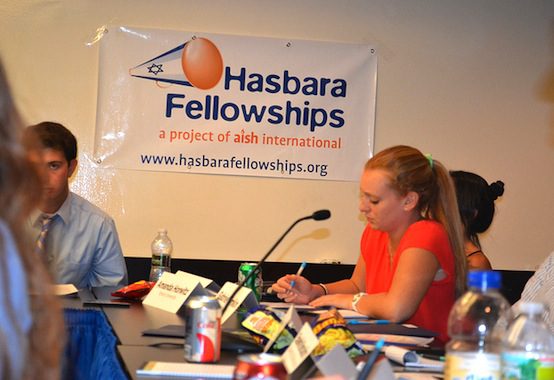
When an intelligence organization seeks to influence opinion by creating and deliberately circulating false information, it is referred to as a “disinformation operation.” Such activity is generally described as public diplomacy when it is done openly by a recognized government official and the information itself is both plausible and verifiable, at least within reasonable limits. But Israel has refined the art of something in between, what might be referred to more accurately as “perception management” or “influence operations” in which it only very rarely shows its hand overtly, in many cases paying students as part-time bloggers or exploiting diaspora Jews as volunteers to get its message out. The practice is sosystemic, involving recruitment, training, Foreign Ministry-prepared information sheets, and internet alerts to potential targets, that it is frequently described by its Hebrew name, hasbara, which means literally “public explanation.” It is essentially an internet-focused “information war” that parallels and supports the military action whenever Israel enters into conflict with any of its neighbors.
The hasbara onslaught inevitably cranks up when Israel is being strongly criticized. There were notable surges in activity when Israel attacked Gaza in 2009 and 2012, as well as when it hijacked the Turkish humanitarian relief ship the Mavi Marmarain 2011. The recent Gaza fighting has inevitably followed suit, producing a perfect storm of pro-Israel commentary. The comments tend to appear in large numbers on websites where moderation and registration requirements are minimal, including Yahoo! News, or Facebook and Twitter. Sites like TAC as well as leading national newspapers have much stricter management control over who comments, and are generally avoided.
The hasbara comments are noticeable as they tend to sound like boilerplate, and run contrary to or even ignore what other contributors to the site are writing. They often include spelling and syntactical hints that the writer is not natively fluent in English. As is the practice at corporate customer support call centers in Asia, the commenters generally go by American-sounding names and they never indicate that they are Israelis or working on behalf of the Israeli government. They tend to repeat over and over again sound bites of pseudo-information, most recently maintaining falsely that Hamas had started the “war” and that Israel was only defending itself. The commenters operate in the belief that if something is repeated often enough in many different places it will ipso facto gain some credibility and create doubts regarding contrary points of view.
That Israel is engaged in perception management on a large scale has more-or-less been admitted by the Israeli government, and some of its mechanisms have been identified. The Israeli Foreign Ministry even sent a letter out to a number of pro-Israel organizations emphasizing the “importance of the internet as the new battleground for Israel’s image.” Haaretz reported in 2013 how Prime Minister Netanyahu’s office collaborated with the National Union of Israeli Students to establish “covert units” at the seven national universities to be structured in a “semi-military” fashion and organized in situation rooms. Students are paid as much as $2,000 monthly to work the online targets.
The serious collaboration between government and volunteers actually began with Operation Cast Lead in early 2009, an incursion into Gaza that killed more than 1,800 Palestinians, when the Foreign Ministry pulled together a group of mostly young computer savvy soldiers supplemented by students both overseas and within Israel to post a number of government-crafted responses to international criticism.
Many of the volunteers worked through a website giyus.org (an acronym for Give Israel Your United Support). The website included a desktop tool called Megaphone that provided daily updates on articles appearing on the internet that had to be challenged or attacked. There were once believed to be 50,000 activists receiving the now-inactive Megaphone’s alerts.
There have also been reports about a pro-Israel American group called Committee for Accuracy in Middle East Reporting in America (CAMERA) preparing to enter its own version of developments in the Middle East on the popular online encyclopedia Wikipedia. E-mails from CAMERA reveal that the group sought volunteers in 2008 to edit material on Wikipedia “to help us keep Israel-related entries … from becoming tainted by anti-Israel editors,” while also recommending that articles on the Middle East be avoided initially by supporters so as not to arouse suspicions about their motives. Volunteers were also advised to use false names that did not hint at any Israeli or Jewish connection and to avoid any references to being organized by CAMERA. Fifty volunteers reportedly were actively engaged in the program when it was exposed in the media and the program was put on hold.
CAMERA is an Internal Revenue Service-approved 501(c)(3) organization, which means that contributions to it are tax exempt. Such exemptions are granted to organizations that are either charitable or educational in nature and they normally preclude any involvement in partisan political activity. As CAMERA would not appear to qualify as a charity, it is to be presumed that its application for special tax status stressed that it is educational. Whether its involvement in “un-tainting” Wikipedia truly falls within that definition might well be debated, particularly as it appears to have been carried out in semi-clandestine fashion. CAMERA might well also be considered to be a good candidate for registration under the Foreign Agents Registration Act of 1938 (FARA), as its activity is uniquely focused on promoting the perceived interests of a foreign government.
The use of the nation’s universities as propaganda mills by the Israeli government also raises other significant issues. The growing Boycott, Divestment, and Sanction movement (BDS) has included some universities as targets because of their alleged involvement with the government in the occupation of the West Bank. That the universities are also involved in possible government-sponsored information operations might be an additional convincing argument that BDS supporters might use to justify blacklisting at least some Israeli academic institutions.
Every government is engaged in selling a product, which is its own self-justifying view of what it does and how it does it. But the American public in particular should be aware of the extraordinary efforts that Israel and its supporters make to present a crafted and coordinated image through the media, particularly by way of the Internet. There are certainly many reasons why the United States uniquely views Israel favorably, but the skillful use of information manipulation and perception management certainly contributes to the process.
Philip Giraldi, a former CIA officer, is executive director of the Council for the National Interest.

Monday, January 07, 2013

Reminder For Journalist Responsible For Middle East Coverage


• Never forget that it is always the Arabs who attack, Israel is only defending itself and always acts in retaliation.
• When the Israeli army kill Arab civilians, it is always in self-defence. When Israeli civilians are killed, it’s called terrorism.
• The Israelis do not kidnapped Palestinian civilians, they capture them. Always mention security needs to explain these catches.
• Conversely, Palestinians and Lebanese are not authorized to capture Israeli military! If they do, the term to use is kidnapping.
• It is not appropriate to mention the number of Palestinian prisoners (11,000, including 300 children) currently captured. If, however, you need to state, call them terrorists or suspected terrorists.
• Use as little as possible the term Palestinian and prefer Arab, the Israeli government official term to describe non-Jewish inhabitants of both territories.
• When you mention the “Hezbollah”, always add the expression “supported by Syria and Iran”. But when you talk about Israel, it is superfluous to add supported by the U.S. and Europe. One might think that this is a unbalanced conflict.
• Do not use the term “occupied territories” but disputed territories. In this regard, it is better to say Judea and Samaria rather than West Bank.
• Never remind the various UN resolutions or Geneva Conventions that are unfavourable to Israel. Ditto for convictions by the Court of Justice in The Hague … This may disturb the reader, viewer or listener.
• It is best not to say Israeli army, but to use the nicer term Tsahal.
• It is good form to suggest that the “Hamas” is a terrorist group that does not recognize the State of Israel (The comment those Islamists who do not want Peace is welcome). Above all, make no mention of the acknowledgment made in 2002.
• It is not appropriate to mention Israel has always refused to set its boundaries and does not recognize Palestine.
• The word colonies must be rejected in your text, talk instead ofsettlements.
• To affirm the symmetry of the conflict, never bring Israeli expansionism but always talk about two people fighting over a territory.
• In case you need to discuss projects of nuclear development of Iran, it is not necessary to insist on the Israeli military nuclear arsenal … Neither to mention that it is the sixth world power in this field.
• When you need to report the Palestinian refusal to accept Israeli conditions for the cessation of hostilities, always add that “Israel considers that it has no partner for peace process” … If possible in a tone of regret.
• If you are asked to cite the “separation wall”, never mention it was established on annexed Palestinian lands, but always mention that this wallwas built to stop terrorist attacks … And especially avoid quoting the sentence of the “International Court of Justice” demanding its dismantling.
• For opponents of Israel, never use the words resistants or militants … Always talk about activists. Even if they demonstrate only for peace, they must be qualified of pro-Palestinians.
• In case you’d want to talk about “Cast Lead”, always take the Israeli thesis: it was Hamas who broke the truce (add “unilaterally” for a better understanding), and that Israel had warned Palestinians before the bombing (no need to quote phosphorus bombs).
• In case of a new operation aiming to break the blockade of Gaza, use expressions such as “this flotilla supposedly pacifist” or ” act of defiance” … and especially avoid comments like “illegal blockade of Israel, condemned by the UN.”
• If you have the opportunity, say that Israel is the only democracy in the Middle East. Do not, of course, add that this quality concerns only the white and  Jewish population of the country.
• Do not criticize the current government’s desire to transform the term Israel in Jewish state, thus excluding de facto the 20% Muslim population. Always avoid the religious reference in this regard.
• Israelis speaking better French than the Arabs, often give them the floor. They can better explain the above rules and you and your will therefore assert your journalistic neutrality.

Saturday, November 10, 2012

US Military To Fight Wars With Twitter


Students and researchers work inside a lab at the Naval Postgraduate School's Defense Analysis department. Image credit: IDG News Service/Kerry Davis


By Kerry Davis,
Courtesy Of "IT World"

Students at a U.S. military graduate school in California are mining social media with new methods that may change the way the armed forces collect intelligence overseas.
Students and researchers at the Naval Postgraduate School have tackled two projects that could begin the shift in the way intelligence is gathered.

The first is a piece of software they wrote that harnesses the Twitter API (application programming interface) and the second is a project focusing on Syria that uses many social networks to look at U.S. policy options there, though civil liberties experts say the technology concerns them.
The software for Twitter, called the Dynamic Twitter Network Analysis (DTNA), is now being field-tested by three Defense Department units overseas to help gauge public opinion in some of the world's hot spots.
The software pulls in data from the public Twitter feed, then sorts it, live, by phrases, keywords or hashtags. The program is continuously updated, integrating a mapping feature and geo-tagged information. Intelligence officers could use DTNA to understand people's moods about a topic, or hopefully prevent or simply respond faster in any future U.S. embassy attacks.
The group's second project incorporates the DTNA software but also pulls in public information from Facebook, YouTube, Google and other sources to protect potential weapon-of-mass-destruction sites in Syria while the conflict there continues.


The methodology Lucente and researchers are using is called sentiment analysis. It's been around for about 10 years, used primarily by consumer-facing companies to pull public information on social media streams and analyze it for trends. But this is the first known use of sentiment analysis by the military.
"In the commercial world, everyone is doing it," said Bing Liu, a computer science professor who works on sentiment analysis and data mining at the University of Illinois at Chicago. "I'm not aware of work in the military. But I'm sure they're using it."
So he's designed the Syria project to harness real-time social media streams as a test for the sort of fast intelligence gathering he'd like to do. Lucente's project started out broadly by researching use of social media in Syria. He found that, rather than the Assad regime, opposition forces are most active online.
Researchers were aided by the fact that Syrian opposition forces have to rely on social media to get the word out on their activities, since they are not traditionally funded. That means there is a wealth of information on public Facebook groups and Twitter profiles, including photos and videos, all ripe for analysis.
What opposition forces have is a massive online presence, detailing their every move. The "Syrian Revolution 2011" Facebook page has more than 647,000 likes. The affiliated Twitter handle, where attacks, death tolls and sometimes troop movements are routinely broadcast, has more than 78,000 followers.
Lucente says high-ranking U.S. military officials are surprised when he points out the extreme wealth of online information available on Syria. The most stunning thing to him is a Google map, updated every 24 hours by revolution forces, which he says would take roughly 100 U.S. intelligence officers to be able to update at the same pace using traditional methods. The map is scattered with pins, many of which have videos associated with air strikes, ground movement and other details, every day. (Take a look at the map yourself, found here.)
With the Syrian opposition activities targeted for sheer wealth of information for the project, Lucente narrowed the scope of his project to ask which areas of the country are most at risk for losing nuclear, biological or chemical weapons in the event that Syria's government falls. 
He and two CORE Lab researchers focused on a city called Homs, an important location with a major highway intersection hub. Lucente says it's in a key position for controlling the rest of the country because whichever group holds Homs controls the highways. Syrian websites that track deaths, like http://syrianshuhada.com, say that the Homs Province has the highest number of casualties.
Researchers then checked the Nuclear Threat Initiative, a nonprofit group founded to address risks related to weapons of mass destruction, for how many potential weapons-of-mass-destruction sites exist in the city. They found four: one chemical production site, a fertilizer company, an oil refinery and a uranium recovery plant.
To help protect those sites, the researchers culled through Facebook posts and YouTube videos to analyze opposition forces in the area. Their research culminated in a recommendation to talk with one particular Syrian opposition group near the city. Lucente proposed asking the Farouq Battalion, a group of men who fight for the Khalid bin Walid Battalion, to consider watching those four sites in case the Syrian government should fall. 
Rob Schroeder and Gregory Freeman, both research assistants at the CORE Lab, helped map and provide data visualization for the project. The DTNA software pulls Arabic and English information, which is already a step beyond much of the available, consumer-facing software that reads public opinion. But researchers say better foreign language use could crack social media analysis wide open.
"The major ridgeline to be crossed is going to be foreign language analysis," Schroeder said.
If the Syria project and the Twitter software go on to establish models that the military deems successful, they could bring about a shift in the way U.S. military intelligence is gathered, increasing speed by focusing on publicly available social media streams.

Saturday, August 04, 2012

How The Obama Admin Makes The Media Its Mouthpiece

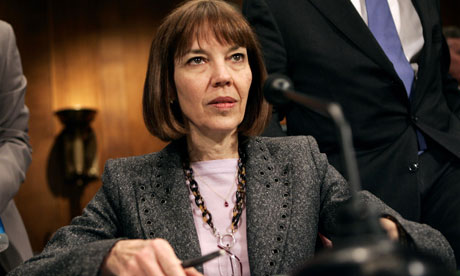
New York Times journalist Judith Miller at a Senate hearing in 2005
New York Times reporter Judith Miller testifying before the Senate judiciary committee, in 2005. In 2004, the New York Times issued a mea culpa about Miller's use of Bush administration anonymous briefing on WMD intelligence before the Iraq war. Photograph: Kevin Lamarque/Reuters


Spoonfed National Security Scoops Based On Anonymous Official Leaks – Did We Learn Nothing From Judith Miller's WMD Reporting

By Glenn Greenwald
Friday 8 June 2012 10.57 EDT
Courtesy Of "The Guardian"


Over the past several weeks in the US, there has been a series of high-profile media scoops exposing numerous details about President Obama's covert foreign policy and counterterrorism actions, stories appearing primarily in The New York Times. Americans, for the first time, have been told about Obama's personal role in compiling a secret "kill list", which determines who will be targeted for death in Pakistan andYemen; his ordering of sophisticated cyber-attacks on Iran's nuclear enrichment facilities; and operational details about the raid that killed Osama bin Laden.
Each of these stories revealed information clearly in the public interest and sparked important debates. But the way in which they were reported – specifically, their overwhelming reliance on Obama's own usually anonymous aides – raise longstanding and still troubling questions about the relationship between the establishment American media and the government over which it is supposed to serve as adversarial watchdog.
The Obama White House's extreme fixation on secrecy is shaped by a bizarre paradox. One the one hand, the current administration has prosecuted double the number of whistleblowers – government employees who leak classified information showing high-level official wrongdoing – than all previous administrations combined. Obama officials have also, as ACLU lawyers documented this week in the Guardian, resisted with unprecedented vigor any attempts to subject their conduct to judicial review or any form of public disclosure, by insisting to courts that these programs are so secretive that the US government cannot even confirm or deny their existence without damaging US national security.
But at the very same time that they invoke broad secrecy claims to shield their conduct from outside scrutiny, it is Obama officials themselves who have continuously and quite selectively leaked information about these same programs to the US media. Indeed, the high publicity-value New York Times scoops of the past two weeks about covert national security programs have come substantially from Obama aides themselves.
The Times' "kill list" article was based on interviews with "three dozen of his current and former advisers [who] described Mr Obama's" central role in choosing whom the CIA will kill. The paper's scoop that Obama ordered cyber-attacks on Iran cited, among others, "American officials", including "a senior administration official" who proudly touted the president's hands-on role in all measures used to cripple Tehran's nuclear research. 
Meanwhile, the same White House that insists in court that it cannot confirm the existence of the CIA's drone program spent this week anonymously boasting to US news outlets of the president's latest drone kill in Pakistan. And government emails ordered disclosed by a federal court last month revealed that at the same time as they were refusing to disclose information about the Bin Laden raid on the grounds that it is classified, the Obama administration was secretly meeting with, and shuffling sensitive information to, Hollywood filmmakers, who are producing what is certain to be a stirring and reverent film about that raid, originally scheduled to be released just weeks before the November presidential election.
The tactic driving all of this is as obvious as it is disturbing. Each of these election year leaks depicts Obama as a tough, hands-on, unflinching commander-in-chief: ruthlessly slaying America's enemies and keeping us all safe. They simultaneously portray him as a deep moral and intellectual leader, profoundly grappling with the "writings on war by Augustine and Thomas Aquinas", as he decides in secret who will live and die and which countries will be targeted with American aggression.
In sum, these anonymous leaks are classic political propaganda: devoted to glorifying the leader and his policies for political gain. Because the programs are shrouded in official secrecy, it is impossible for journalists to verify these selective disclosures. By design, the only means the public has to learn anything about what the president is doing is the partial, selective disclosures by Obama's own aides – those who work for him and are devoted to his political triumph.
But that process is a recipe for government deceit and propaganda. This was precisely the dynamic that, in the run-up to the attack on Iraq, co-opted America's largest media outlets as mindless purveyors of false government claims. The defining journalistic sin of Judith Miller, the New York Times' disgraced WMD reporter, was that she masqueraded the unverified assertions of anonymous Bush officials as reported fact.As the Times' editors put it in their 2004 mea culpa, assertions from anonymous sources were "insufficiently qualified or allowed to stand unchallenged".
These recent Times scoops about Obama's policies do not sink to the level of the Judy Miller debacle. For one thing, they contain some impressive reporting and even disturbing revelations about the conduct of Obama officials – most notably, that they manipulate casualty figures and hide civilian deaths from their drone attacks by "counting all military-age males in a strike zone as combatants".
For another, they include some internal criticism of Obama's practices, such as the indiscriminate nature of his "signature" drone strikes (when they see "three guys doing jumping jacks", the CIA concludes it's a terrorist training camp), and the deceit inherent in his radically broad definition of "militant". (One "official" is quoted as follows: "It bothers me when they say there were seven guys, so they must all be militants. They count the corpses and they're not really sure who they are.")
Moreover, these disclosures have real journalistic import. It's indisputably valuable for American citizens to know that their government convenes secret "kill list" meetings, and that it is launching cyber-attacks on Iran, attacks which the Pentagon considers (at least, when done to the US) to be an "act of war".
But despite those real differences with the Judy Miller travesty, the basic template is the same. These reporters rely overwhelmingly on government sources. Their reporting is shaped almost exclusively by the claims of underlings who are loyal to the president. The journalists have no means of verifying the assertions they are passing on as fact. And worst of all, they grant anonymity to Obama's aides who are doing little more than doing the president's bidding and promoting his political interests. 
It is pure "access journalism": these reporters are given scoops in exchange for their wholly unjustified promise to allow government officials to propagandize the citizenry without accountability (that is, from behind the protective shield of anonymity). By necessity, their journalistic storytelling is shaped by the perspective of these official sources.
And the journalistic product is predictably one that serves the president's political agenda. Obama's 2008 opponent, Republican Senator John McCain, complained, quite reasonably, that the intent of these recent leaks was to "enhance President Obama's image as a tough guy for the elections". Worse, as the Columbia Journalism Review and the media watchdog group FAIR both documented, these stories simply omitted any discussion of many of the most controversial aspects of Obama's policies, including the risks and possible illegality of cyber-attacks on Iran and drone strikes in Yemen, the number of civilian deaths caused by Obama's drone strikes, and the way those drone attacks have strengthened al-Qaida by increasing anti-American hatred.
Perhaps the most pernicious effect of this type of journalism is that it converts journalists into dutiful messengers of official decrees. Reporters are trained that they will be selected as scoop-receivers only if they demonstrate fealty to the agenda of official sources. 
In February, the Times' Scott Shane controversially granted anonymity to a "senior" Obama official to smear as al-Qaida sympathizers the Bureau of Investigative Journalism, after the BIJ documented the significant under-counting by Obama officials of civilian deaths from drone strikes as well as the Obama administration's horrifying and possibly criminal practice of targeting rescuers and funerals with drone attacks. It was Shane, along with Jo Becker, who was then provided with the scoop about Obama's "kill list".
Similarly, the Times' David Sanger has long been criticized for uncritical dissemination of misleading US government claims about the threat from Iran, almost always passed on with the shield of anonymity. It was unsurprising, then, that it was Sanger who was rewarded with the valuable scoop about Obama's ordering of cyber-attacks on Iran (a scoop he is using to sell his new book), and equally unsurprising that the article he produced was so flattering of Obama's role in this operation.
By revealing contrast, consider the treatment meted out to the Times' James Risen, who has produced scoops that are embarrassing to, rather than glorifying of, the US government. It was Risen who exposed the Bush administration's illegal NSA eavesdropping program in 2006, and he also exposed a highly inept and harmful CIA attempt to infiltrate Iran's nuclear program. 
As a result, the Obama justice department has relentlessly pursued Risen in court, serving him with subpoenas in an attempt to compel him to reveal his source for the Iran infiltration story, a process that could send him to prison if, as is likely, he refuses. Matt Apuzzo, the Pulitzer Prize-winning investigative journalist for Associated Press, explained the obvious lesson being taught by this episode:
"Sanger writes on successful Iran operation, gets wide access. Risen writes on botched Iranian operation, gets subpoenaed."
There is a fundamental tension between serving as adversarial watchdog over government officials and serving as the primary amplifiers of their propaganda. The US government has perfected the art of training American journalists to realize that they will be rewarded if they serve the latter role, and punished if they do not. Judging by these last several weeks of high-profile, government-disseminated scoops, it is a lesson that many journalists have learned all too eagerly.
• Follow Glenn Greenwald on Twitter
Editor's note: the article originally made reference to "cyber-attacks on Iraq", where the author's intention was Iran; this typographical error was amended at 12pm ET on 8 June.

Wednesday, August 01, 2012

The Pentagon Will "Monitor" National Media Reports


Defense reporters want the Pentagon’s assurance it’s not listening to their phone calls.
The request is in response to the Defense Department’s new policy of monitoring national media reports for unauthorized disclosures of classified information.
It’s the word “monitor” that set off alarm bells among journalists.
The word “could be interpreted by some as authorizing intrusive actions aimed at members of the news media who report on defense issues,” the Pentagon Press Association said in a letter to Defense Secretary Leon Panetta and Joint Chiefs of Staff Chairman Gen. Martin Dempsey.
The association, formed in 2010 to advocate for reporters who cover the Defense Department, has asked Pentagon leaders to clarify whether the department has the authority to tap their phone calls, intercept their emails or spy on their workspaces.
“Do you need probable cause before engaging in any of these activities and get a court’s authority to do so?” the letter asks.
The Pentagon’s new policy was announced on Thursday after Panetta and Dempsey met with the House Armed Services Committee in a closed-door hearing on how the recent spate of national-security leaks has affected military operations.
After the hearing, Armed Services Committee Chairman Buck McKeon (R-Calif.) said he didn’t believe the leaks, including information on alleged cyberattacks against Iran, had come from the Pentagon.
“A lot of people have a lot of information, and when you think about how much has been leaked, based on how many people have information, actually we’re doing pretty good,” McKeon told reporters.
UPDATE: Pentagon spokesman George Little sent the following response on Friday evening:
The Department will, of course, review this letter. We have great respect for the Pentagon press corps and its vital role in informing the American people. The key goal of the steps we announced is to ensure that Department officials honor their obligation to protect classified information.
Via: "Politico"

Thursday, May 26, 2011

NATO Targets Nicaragua For Regime Change


By Toni Solo*.
Axis of Logic exclusive
Thursday, May 19, 2011
Courtesy Of "Axis Of Logic"


North American and European media coverage of Nicaragua in recent years has followed the same template applied to other countries targeted by the US government and their NATO allies. The modus operandi is always the same : military encirclement, diplomatic isolation, media demonization, funding of local proxies and violent provocation. If that mixture fails to bring about regime change, the US government and its NATO and regional allies then apply economic sanctions and, where necessary, armed aggression.


¨Hennigan's article is almost 100% fact-free NATO psy-warfare.¨
Over the years, Nicaragua has been subject to coverage by media from across the whole gamut of NATO country psy-warfare assets. The latest adjunct to NATO's darkness-visible psy-warfare offensive against Nicaragua is Tom Hennigan's article “After the revolution” in the Irish Times. Hennigan's article is almost 100% fact-free NATO psy-warfare. It reaffirms the main NATO psy-warfare lie on Nicaragua – that President Daniel Ortega is a corrupt, repressive tyrant.


Nicaragua's general elections will be held on November 6th this year. Hennigan's version of NATO's regime change media template for Nicaragua confirms the main themes that will be used with increasing vehemence as the election campaign proceeds – bogus claims of electoral fraud and unconstitutional illegality. Those fake themes apart, omission too is a vital component of the regime-change psy-warfare NATO country media machine.


¨Omission is NATO's gagged phantom hostage, held forever in a kind of Guantanamo Bay Block Alpha Media¨
Omission is NATO's gagged phantom hostage, held forever in a kind of Guantanamo Bay Block Alpha Media for especially troublesome prisoners. On Nicaragua, a media-water-boarded Omission emits muffled lacunae signalling two information vacuums diligently maintained by NATO's psy-warfare propagandists. The first excludes facts exposing the Nicaraguan opposition's dishonesty and deceit.


The second negates the incredible success of President Ortega's Sandinista led government just four and a half years after taking office.


That second vacuum hermetically seals out extremely positive appraisals by numerous UN and other multilateral institutions. Along with many other organizations, UNICEF, the UN Food and Agriculture Organization, the Panamerican Health Organization, the InterAmerican Development Bank and the International Monetary Fund have all publicly praised the Nicaraguan government. Key motifs in their appraisals have been competence and probity.


¨NATO's psy-warfare propaganda template projects ex-Sandinistas like Dora Maria Tellez and Carlos Fernando Chamorro as heroic independent-minded democrats full of integrity.¨
Likewise, NATO's psy-warfare media assets never offer rational analysis of why opinion polls show President Ortega currently has around 50% popular support nationally, more than twice that of his nearest rival.


They avoid reporting that the economy grew by almost 6% from 2009 to 2010, a fact confirmed by the IMF. Foreign investment and exports are at record levels. Despite the setbacks of the international economic crisis, health and education indicators show steady improvements. 


Extreme poverty has been cut by more than 7%.


At the same time the NATO psy-warfare crew suppress the unquestionable success of President Ortega's government, they also suppress the deceit and dishonesty of the NATO country supported opposition. NATO's psy-warfare propaganda template projects ex-Sandinistas like Dora Maria Tellez and Carlos Fernando Chamorro as heroic independent-minded democrats full of integrity. But the record shows otherwise.


Tellez fooled international progressive supporters in 2008 by portraying a phoney protest she staged against the electoral authority as a principled stand for freedom. In fact, her protest was a smokescreen to cover up a grubby political agreement with the country's corrupt right wing. Soon after her theatrical protest, Tellez and her cronies urged their supporters to vote for Eduardo Montealegre who had cut a deal with Aleman to be the PLC's candidate for mayor of Managua.


Eduardo Montealegre has hidden behind his parliamentary immunity for years so as to avoid a standing indictment on charges of multi-million dollar corruption while a government minister. The charges are based on an investigation by Nicaragua's independent State audit body. Since the municipal election campaign in 2008, Tellez and Montealegre have rejected Aleman's PLC and are working together with extreme right wing presidential candidate Fabio Gadea.


¨Far from being an independent journalist (Carlos)Chamorro and his family have accepted hundreds of thousands of dollars from USAID and European Union sources.¨
Despite this appalling record of hypocritical opportunism, NATO psy-warfare disinformation assets invariably present Tellez as the perfect paradigm of political integrity. For his part, Carlos Fernando Chamorro has shown himself to be a cynical self-promoting opportunist. He was caught in 2008 prior to the municipal elections using his CINCO non-governmental organization to channel development cooperation funds under the table to fund activists in Tellez's Sandinista Renewal Movement (MRS) political alliance.


Far from being an independent journalist Chamorro and his family have accepted hundreds of thousands of dollars from USAID and European Union sources. The money is channelled through initiatives like Camtransparencia run by international corporate mercenary multinational Dyncorp and Programa Vida en Democracia, run by another of the oligarchic Chamorro family's own non-profits. Anxious to support the psy-warfare offensive against President Daniel Ortega, foreign donor institutions turn a blind eye to the Chamorro's family's incestuous use of their money.


Downright Falsehoods


The irredeemable cynicism of the NATO country psy-warfare media is self-evident from their downright falsehoods. In April this year, Tim Rogers filed a report entitled “Eyeing Middle East Nicaragua's Ortega quashes weekend protests” in which he falsely claimed that a tiny opposition march on April 2^nd was “blocked” from marching. The opposition supporters were not impeded in any way from marching along the route assigned to them by the authorities. They simply refused to follow the route assigned to them.


Having refused to comply with their assigned route, the opposition then viciously attacked a cordon of defenceless policewomen that separated them from a much larger demonstration by peaceful Sandinista demonstrators. In the end 18 police officers had to be taken to hospital and kept in overnight for treatment, several with very serious injuries. Aware of the deliberate nature of that violent provocation, the police showed extraordinary restraint. No opposition demonstrators were arrested or injured.


Tim Rogers deliberately failed to report these facts which render his article's tendentious dishonest headline completely ridiculous. NATO country psy-warfare writers like Rogers and Hennigan effortlessly spew out such articles based entirely on falsehood and omission. For anyone interested, a few random examples from Hennigan's “After the Revolution” piece are analyzed at the end of this article. Far more interesting than Rogers and Hennigan's dishonesty is the overall developing message of NATO's psy-warfare media assets prior to Nicaragua's general elections in November this year.


De-Legitimizing Sovereignty


A primary theme of the NATO country psy-warfare phoney-reporters is the alleged electoral fraud in the municipal elections of 2008 in which the FSLN increased the number of municipalities they governed from 93 to 104. Opinion polls had predicted that kind of result. The glib NATO psy-warfare claims of alleged fraud have never been supported by credible factual documentation.


Nor is the monitoring presence in those elections ever acknowledged of international election specialists from organizations throughout Latin America and the Caribbean. The NATO country psy-warfare correspondents invariably cite USAID funded election-disinformation body Etica y Transparencia as a source. Etica y Transparencia has a link to their report on the 2008 municipal elections on their web site.


But the link is empty and has been for months. So it has been impossible to check the incessant claims of fraud against freely available supporting evidence. That has not stopped NATO country psy-warfare troupers unscrupulously citing Etica y Transparencia as if it were authoritative, which it is not. The repeated insistence on electoral fraud in 2008 lacks credible supporting evidence, apart from self-interested claims by the Nicaraguan opposition.


¨Eduardo Montealegre incited the street violence in which a Sandinista journalist was attacked, stabbed and thrown into his vehicle after it had been set on fire.¨
NATO psy-warfare accounts of the aftermath of those municipal elections always suppresses the fact that Eduardo Montealegre incited the street violence in which a Sandinista journalist was attacked, stabbed and thrown into his vehicle after it had been set on fire. The NATO country media always talk about Sandinista “mobs” while persistently under-reporting repeated opposition violence. Nor do they ever acknowledge the determined efforts of the Nicaraguan police to maintain order with a minimum use of force.


Likewise Nicaraguan opposition claims of constitutional illegality blithely ignore the categorical authority of the country's Supreme Court. They also omit clear precedents set very recently in Costa Rica and Colombia, where the NATO psy-warfare media assets quietly accepted the re-election of Oscar Arias and Alvaro Uribe. These themes of electoral fraud and constitutional illegality have a simple propaganda objective. Regime change requires the target government to be smeared as illegitimate.


One way of doing that is for minority opposition groups to stage violent provocations – like the one falsely reported by Tim Rogers – so as to elicit a repressive response from the authorities, as has happened in Libya and Syria. The NATO psy-warfare media then grossly exaggerate and distort the consequent repression so as to justify NATO country or UN intervention. Another way to fabricate illegitimacy is to provoke a constitutional crisis by causing electoral chaos, as Alassane Outtara's bloodthirsty, UN-supported opposition did in the Ivory Coast prior to military intervention by France and the UN.


The Nicaraguan opposition almost achieved that second option in early 2010. They have a nominal majority in the National Assembly and deliberately forced a constitutional crisis by refusing to elect new authorities for the Supreme Elecotral Council and the Supreme Court. That proto-coup by opposition legislators was thwarted by a decisive Presidential decree confirming existing officials in their posts until such time as the National Assembly should meet its constitutional obligation to approve and elect new candidates. The decree was based on a never-revoked constitutional clause applied during the handover of power in 1990.


Tell-Tale Signs Of Regime Change Prepping


It is in this context that NATO country-funded Nicaraguan NGO representatives are now lobbying in Washington for US congressional support in their efforts to de-legitimize decisions by Nicaragua's legitimately elected government and its Supreme Court. NATO-country psy-warfare propaganda bears out the hypothesis of heightened preparation for attempts at regime-change. 


The psy-warfare offensive relies on false accusations and provocations by minority political forces and unrepresentative cliques to sustain their tissues of deceit.


¨The pattern used to destabilize Libya and Syria ... is the pattern used by NATO country psy-warfare media in Latin America too.¨
That has been the pattern used to destabilize Libya and Syria and is the pattern used by NATO country psy-warfare media in Latin America too.


In Nicaragua, the MRS - whose vociferous representatives are constantly quoted in the NATO country psy-warfare propaganda offensive - consistently registered levels of national support at around just 1% all through 2010 and to date. Now that same unrepresentative group of individuals are piggybacking their way to lucrative positions in the National Assembly via an alliance with a group of right wing movements that enjoy far more electoral support.


These unrepresentative individuals are the counterparts of the anti-democratic cliques and minorities supported by NATO countries around the world in their efforts to destabilize target governments. If one pays attention to NATO country psy-warfare reports on Nicaragua, a constant feature is a quote by some opposition figure or other advocating violence. Both Hennigan and Rogers use this trope as part of their psy-warfare armoury. But it is a regular feature of reports by all the other NATO country psy-warfare media outlets and of the infinite disinformation feedback loop linking those international media to local Nicaraguan media.


Hennigan quotes Dora Maria Tellez saying, “In Nicaragua, every time you close the door on a civic resolution to political conflict, the door that opens leads to war. This is a reality.” For his part, Rogers has a quote from another ex-Sandinista Moises Hassan, “Hassan says if the opposition’s initial effort to prevent 'Ortega’s illegal candidacy' fails to keep the president from remaining in power beyond 2011, there will come a 'second struggle to remove him from a false presidency.' ”


The psychopathic NATO modus operandi is the same in Latin America as it is in North Africa and the Middle East. The patterns are blatantly obvious and the techniques monotonously repetitive in Big Brother totalitarian style. All the signs are that despite the NATO country backed hate campaign, President Daniel Ortega will be re-elected in November 2011 with a much increased majority and quite possibly a working majority in the National Assembly. At that point, the countdown to regime change may well begin in earnest. That will be clear if and when the NATO psy-warfare media slip into frenetic overdrive as they did in their coverage of Libya.


Note:


A few random falsehoods from Tom Hennigan's article “After the Revolution” :


Hennigan: “Nicaragua is no nearer to escaping its ranking as the western hemisphere’s poorest nation after Haiti.”


/Fact : Nicaragua enjoys record exports and foreign investment levels. It is likely to be completely self-sufficient in food production by 2013 and 80% energy self-sufficient by 2017. The country is likely to be classified as a medium-income country within five years. Even opposition parties have had to accept an independent report confirming that extreme poverty in Nicaragua has been cut since 2005 from over 17% to just over 9%/


Hennigan : “Overseeing the November ballot will be the same Supreme Electoral Council that rubberstamped the fraud of 2008. At its head is Ortega ally Roberto Rivas. He is threatening to exclude foreign observers from the poll, saying they are unneeded in a democracy such as Nicaragua.”


/Fact : The Supreme Electoral Council (CSE) has been virtually unchanged since before 2001. This CSE oversaw numerous national, regional and local elections in Nicaragua with no claims of fraud prior to the municipal elections of 2008 and has always rejected the unsupported claims of fraud in those elections made by the losers in the hopelessly divided Nicaraguan opposition. Rivas has made clear that foreign delegations can be invited to the elections in 2011 once the CSE publishes in August the regulations that will apply to such visiting delegations. Foreign delegations are invited not by the CSE but by the government. See NICARAGUA : Interview with Roberto Rivas, President of the Supreme Electoral Council.


Hennigan : “But in 2009, a Supreme Court stacked with loyalists, as a result of Ortega’s pact with the Liberal leader Alemán, simply invalidated these constitutional breaks. It ruled they infringed Ortega’s human rights in a decision local jurists said went against all legal precedent and logic.”


/Fact: In 2010, Nicaragua's Supreme Court in plenary session with both Sandinista and opposition magistrates ratified a ruling to allow both the President and mayors in Nicaragua to be re-elected. The ruling follows various precedents in recent years in Latin America including very similar rulings by the Supreme Courts of Costa Rica and Colombia in favour of Oscar Arias and Alvaro Uribe respectively.


Hennigan: “To cement his entente with the Catholic hierarchy ahead of the 2006 election, Ortega ordered Sandinistas in the National Assembly to abandon long-standing policy and vote in support of a law banning abortion in all circumstances.”


/Fact : That vote in the National Assembly followed shortly after a huge demonstration of an estimated 200,000 people organized by the Roman Catholic Church in Nicaragua in favour of changing the law on abortion - a measure put before the legislature by the government of President Enrique Bolaños. The vote was a free vote. Of the 37 FSLN deputies, 26 voted to change the law, the others abstained or did not participate in the vote. The measure was passed by a large majority including politicians with whom those protesting that vote – like Sofia Montenegro of the Autonomous Women's Movement- are now effectively allied for the 2011 elections. Subsequently, the Nicaraguan Health Ministry has implemented administrative measures to protect the lives of mothers in danger from high risk pregnancy and to remove from any fear of prosecution on the part of doctors.


Hennigan remarks in passing on so many issues in Nicaragua, for example Venezuelan development cooperation via ALBA, the role of Rosario Murillo, or the Narvaez-Ortega controversy that only a very extensive rebuttal would serve to expose all the sly inaccuracies he deploys.


In mentioning the accusations of sexual abuse against Ortega, Hennigan himself abuses the request made by Zoilamerica Narvaez in a press conference in 2010 for media not to exploit the controversy for political purposes. After many years of anguish for all concerned, the family seem to have reconciled. Hennigan compounds his caricature of that controversy with a crude misogynist attack on Rosario Murillo, whose strategic acumen has played a leading role in the Nicaraguan government's extraordinary successful implementation of its programme.


On the false claims made by NATO country psy-warfare media assets like Hennigan about Nicaragua and ALBA see Prospero's baloney : COHA, ALBA and the propaganda war in Nicaragua and  ALBA : hope for the impoverished, a challenge to élites
The fundamental hypocrisy about ALBA is that the NATO psy-warfare media never question the handover of hundreds of millions of dollars every year with no oversight worth the name to their allies in Nicaragua's non-governmental sector which for years now has been the main political opposition in Nicaragua, funded with foreign taxpayers money with little obvious benefit to Nicaragua's impoverished majority. On the other hand Venezuelan development cooperation though private sector companies has been demonized despite the extensive self-evident benefits enjoyed by the most impoverished sectors of Nicaraguan society including a sharp drop in levels of extreme poverty.


*Toni Solo worked in construction in Europe for many years before getting involved in community and human rights activism in Central America. He is based in Nicaragua and has lived in different parts of the region for a total of over 20 years. A committed but critical supporter of the FSLN in Nicaragua, his articles have been widely published on the Internet. In 2008, together with Karla Jacobs, he launched the bilingual web siteTortilla con Sal, providing information and resources on Nicaragua and the region.


More essays and penetrating analyses by toni solo on Axis of Logic:
© Copyright 2011 by AxisofLogic.com

This material is available for republication as long as reprints include verbatim copy of the article in its entirety, respecting its integrity. Reprints must cite the author and Axis of Logic as the original source including a "live link" to the article. Thank you!