Showing posts with label Occupied Jerusalem. Show all posts

Sunday, February 01, 2015

Visiting Al-Aqsa Is 'Every Muslim's Right'


"Every other Muslim has the right to come here as well. I, and every other Muslim, have the right to pray at the mosque as well."

[Organization of Islamic Cooperation (OIC) Secretary-General Iyad Madani]

Tuesday, November 18, 2014

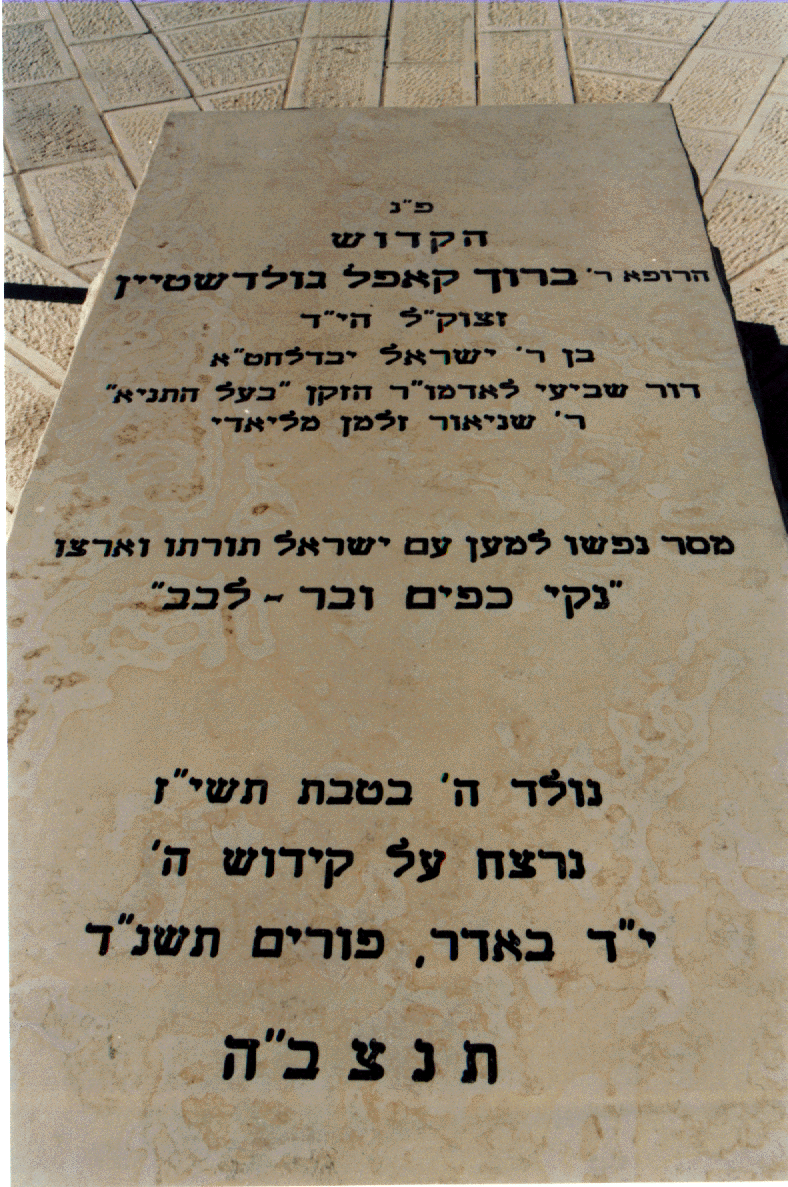
The Grave Of Jewish Mass-Murderer Baruch Goldstein

The grave of Baruch Goldstein, the Jewish extremist who gunned down 29 Muslims inside the Mosque of Ibrahim in Hebron in 1994.


On a hillside in the settlement of Kiryat Arba, overlooking the large West Bank Palestinian city of al-Khalil — known to Israeli Jews and most foreigners by its biblical name of  “Hebron” – is the grave monument of Dr. Baruch Goldstein.

On the Jewish holiday of Purim, February 25, 1994, Goldstein, then a reserve officer in the Israeli army, walked into the Mosque of Ibrahim (the traditional burial place of the Patriarch Abraham) in uniform and with his army-issued weapon, opening fire on the Muslim worshippers. 29 people were murdered outright and 125 wounded before the survivors managed to disarm Goldstein and kill him on the spot.

For many far-right Israeli Jews and especially the settler movement Goldstein was a martyr to the cause of religious Zionism.  His grave in a ceremonial plaza overlooking the Palestinian town became a place of pilgrimage and celebration – to the great embarrassment of the Israeli government and many of its supporters in the US. 

The Hebrew inscription on Goldstein’s grave monument reads, in part:
“The revered Dr. Baruch Kapel Goldstein… Son of Israel.  He gave his soul for the sake of the people of Israel, The Torah, and the Land.  His hands are clean and his heart good… He was assassinated for the Sanctity of God”
During the annual observance of the Purim holiday, settlers gather at Goldstein’s grave to celebrate his deed and sing songs in praise of the man they regard as a noble martyr.  One of the songs includes the verse:


“Dr. Goldstein, there is none other like you in the world. Dr. Goldstein, we all love you… he aimed at terrorists’ heads, squeezed the trigger hard, and shot bullets, and shot, and shot.
Then the settlers march down to pray at the Mosque/Synagogue of Abraham, accompanied by a  massive show of force by Israeli army troops. 


The 1994 Hebron Massacre launched a fierce outburst of violence in Israel and the Occupied Territories, which included the first suicide bombings carried out by Hamas within the 1948 borders.  

But in this case (Jewish) terrorism worked.  The ancient burial place of the Patriarchs, was now divided into a Muslim and a Jewish section and made accessible to Jewish worshipers and foreign tourists.  

Source: MondoWeiss

The above post is in response to the following post made by, "Ram Locke," from Google Plus, about the Synagogue attack that occurred in occupied Jerusalem:

Another picture from the brutal and cowardly attack this morning on a synagogue in Jerusalem.  No words are needed to describe the horror.
But the "majority of Palestinians want Peace" according to the administration.  Who is full of chickenshit now?  Somehow, we don't hear the statement from the administration (which is totally true) "the majority of Kurds want peace" followed by "and so they should be negotiated with for a free Kurdistan"! Are we only friends with our enemies and do not support our friends?

I do not condone attacks on civilians, but I am merely exposing the suffocating double standards and the "convenient" loss of memory by members of Israeli society, some followers of the Jewish faith and their supporters.


Israeli's conduct pilgrimages to the grave of an extremist and mass-murderer. An extremist and mass-murderer who is revered and honored, is a sign that they truly seek peace with the Palestinians. 
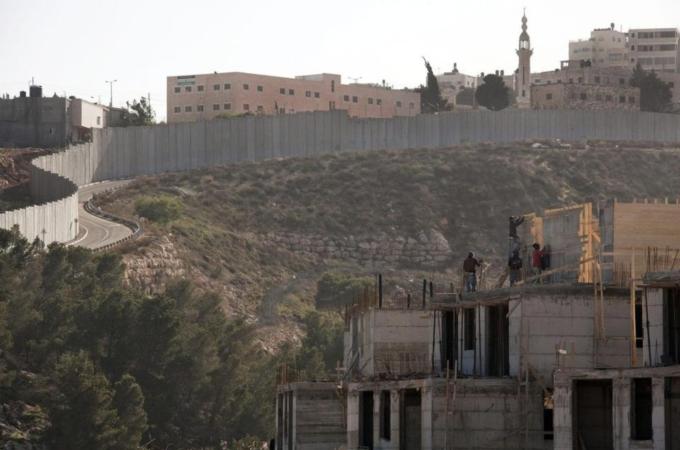
> Israel continues to steal land and build illegal settlements in the West Bank, which is a definitive sign that it seeks peace.
> Israel continues to arrest Palestinian children, which is a definitive sign that it seeks peace.
> Apartheid Wall, Apartheid buses, Apartheid roads, are a definitive sign that Israel seeks peace.
> Israel stymies every effort to unify the West Bank and Gaza, which is a definitive sign that most Israeli's want peace.
> Israel periodically assaults and devastates Gaza, which is yet another sign that it seeks peace.
> Israel starves over 1 million people in Gaza, which is a sign of it seeking peace. 
> Israel employed violence, terrorism and other military means to establish facts on the ground that led to its creation. Did they only resort to negotiations or did they let the gun speak for them?


Friday, November 07, 2014

Evil Minds That Plot Destruction


Image: Israeli Jews staring at the Qubbat As-Sakhra (Dome Of The Rock), and just to its front-left, is the small dome of the actual "Al-Aqsa Mosque," which is right next to "Ḥā'iṭ Al-Burāq" (The Buraq Wall), which is also known to the Jews as the wailing wall.

Partial lyrics from the song: War Pigs
Group: Black Sabbath

Saturday, August 16, 2014

Jerusalem: Jews, Muslims, Christians Living Under The Ottomans


Incredible footage of Palestine and Jerusalem from the year 1896. Muslims, Jews and Christians lived next to each other and peacefully under the auspices of the Ottoman (Uthmani) Caliphate/Empire.


Thursday, April 11, 2013

Two Muslims The Most Sacred Site In Christendom


By Gabriele Barbati

JERUSALEM -- Every Christian knows the holiest places in Christendom are in Jerusalem. The holiest of all, the Church of the Holy Sepulchre, was erected in 325, over the site where it is believed Jesus was crucified, buried and rose from the dead.


Yet, few know that it is a Muslim who opens and closes the only door to this holiest of Christian sites.
In fact, it's two Muslims: one man from the Joudeh family and another man from the Nuseibeh family, two Jerusalem Palestinian clans who have been the custodians of the entrance to the Holy Sepulchre since the 12th century.
Every morning, at 4:30, Adeeb Joudeh travels from his apartment outside the walls of the Old City to bring the cast-iron key to the church, just as his father and his forebears did before him.
Once there, he entrusts the key -- looking like a 12-inch (30-centimeter) long iron wedge -- to Wajeeh Nuseibeh, who knocks at the gate to call the priests and the pilgrims who spend the night praying inside. From inside the church, a wooden ladder is passed through a porthole to help him unlock the upper part of the enormous door.
Then, he unlocks the lower one before handing the precious key back to Joudeh. The ritual is reversed every evening at 7:30, after hundreds of tourists and pilgrims have left the church.
During holidays, such as Holy Week, which culminates Sunday with the Christian Easter, the elaborate opening and closing ceremonies take place several times a day.
Why the elaborate ritual? As often happens in Jerusalem, a city holy to several peoples and religions, there are different versions to explain why two Muslim families hold the key to the holiest site in Christendom.
“After the Muslim conquest in 637, the Caliph Omar guaranteed the Archbishop Sophronius that the Christian places of worship would be protected and so entrusted the custodianship to the Nuseibehs, a family who originated in Medina and had had relations with the Prophet Muhammad,” said Nuseibeh, a retired 63-year old electrician, while waiting in a nearby cafe to carry out his duties at the Holy Sepulchre.
“It happened again in 1187, after Saladin ended the Crusader Kingdom of Jerusalem. He chose our family again to look after the peace between the different Eastern and Western Christian confessions, which were at odds over control of the Sepulchre," he said with a gentle smile, sitting next to his son, Obadah.
To this day, coexistence among the several Christian churches sharing the Holy Sepulchre is a delicate one. Catholic, Greek, Armenian, Coptic, Syriac, and Ethiopian Orthodox monks have resorted to fists more than once to defend their respective denomination’s rights and privileges in the church, as defined in an decree by the Ottoman Empire, known as the Status Quo of 1853.
Such impious brawls between clergy proved Saladin’s prescience 1,000 years ago, when the sultan sealed the second front gate of the church and entrusted control of the remaining entrance to neutral custodians.
The Nuseibehs claim that the Joudehs entered this story only in the 16th century, after the Ottoman Turks gained control of Palestine and decided to charge a second family with the responsibility of guarding the key.
“Yes, we share the responsibility with the Joudehs, and sometimes we argue, as happens in a family,” Nuseibeh said.
Each Maundy Thursday since the end of the 19th century, the two Muslim families give the key to the Holy Sepulchre to the local Franciscan friars, for as long as it takes to walk to the church in a procession and to open the door after the morning liturgies. When those are completed, the friars return the key to the families.
This ceremony, which confirms in practice the validity of the Muslim families’ custodianship, is repeated with the Greek and Armenian communities, on Orthodox Good Friday and Holy Saturday, respectively.
“Right now, I have in my hands the keys to Christendom’s heart. This is a very important moment for us,” said the Rev. Artemio Vitores, the Spanish Franciscan who is the vicar Custodian of the Holy Land, during the Maundy Thursday procession.
“For centuries, Christian pilgrims were denied entry to the church, or had to pay huge sums to pray on the Sepulchre,” he said, all while holding the key.
At the head of the procession, Vitores was flanked on one side by Wajeeh Nusseibeh, his son Obadah and two cousins, all of whom were equally compensated by the friars for their services with the symbolic sum of $60.
On Vitores’ other side were Adeeb Joudeh, wearing an impeccable dark gray suit, and his 19-year-old son Jawad.
For about 20 minutes, Joudeh ceded control of the only existing key to the Holy Sepulchre. While there is another key, it is broken and no longer used. The functioning key is normally kept in a small office attached to the church and is guarded by an employee of the Joudeh family.
“This key has seen Saladin and every generation of my family since 1187. To me, it’s an honor to be in charge of the holiest of Christian places," Joudeh said, while walking the cobblestoned alley leading to the Holy Sepulchre.
He insisted on showing on his smartphone what he claimed are 165 official decrees confirming the Joudeh family’s role as custodian of the church over the centuries.
“My ancestor who was given the keys was a sheik, a highly respected person, who was not supposed to perform physical labor, such as climbing the ladder to open the gate,” Joudeh explained. “That’s why the Nuseibehs were called in to perform this duty. Unfortunately, they feel still ashamed of being just the doorkeepers.”
At the end of the procession, the key was welcomed by cheerful pilgrims waiting in front of the church.  
For a few minutes, everybody stared at the solemn opening of the gate before rushing in.
Moments later, Adeeb Joudeh walked home with his son, as did Wajeeh Nuseibeh. They will come back here, time and again, at the gate of the Holy Sepulchre: two Muslims, coming in peace to bear the key to the heart of Christianity.

Monday, March 04, 2013

Israel's 'Great Book Robbery' Unravelled


About 40,000 of these books were stolen from private homes in mostly affluent Arab neighbourhoods of Jerusalem; others from cities such as Jaffa, Nazareth and Haifa. Many were either recycled into paper (because they "incited" against the nascent Israeli state) or taken to the National Library, where some 6,000 remain with the letters AP - for "abandoned property" - labelled on their spines. 


The Great Book Robbery, a documentary recently shown in Ramallah, chronicles the large-scale pillage of these priceless pieces of Palestinian culture.

Prominent Israeli historian Ilan Pappé, who is featured throughout the documentary, identifies two sets of book robbers during this period: individuals acting alone who took their newly acquired possessions home, and collective or formal looters acting on behalf of the state who took the books to the National Library.

Library director Oren Weinberg told Al Jazeera that "the collection of books ... is stored in the library for the Custodian for Absentee Property. 

"The books are under the legal authority of the Custodian for Absentee Property in the Ministry of Finance, [which] holds decision-making authority regarding their use."

The Ministry of Finance did not respond to repeated requests for comment before the deadline for publication of this report. Similarly, no ministry spokesperson was made available to interview as part of the documentary.

The documentary - which has also aired in Tel Aviv, Haifa and Jerusalem over the past month - was based on the research of an Israeli PhD student named Gish Amit, who stumbled upon documents chronicling the "collection" of these books while carrying out research on his doctoral thesis.

Amit said he did not even know how important his accidental findings were until much later. "This was not a spontaneous act, nor was it a rescue," Amit told Al Jazeera. "It was based first and foremost on the library's organised plan to confiscate and to loot the Palestinian culture, and they really didn't think Palestinians were capable of keeping these cultural treasures."

The documentary paints a picture of a pre-1948 Palestine that was a hub for intellectuals, literary critics, writers and musicians before entire villages were destroyed, people were exiled or forced to flee, and Palestinian culture was decimated. Once a hub for art and culture aficionados, Palestine had a railway linking Haifa to Damascus and Cairo, and was frequented by acclaimed theatre troupes and poets.

Many renowned Palestinian authors and scholars, such as Khalil Al Sakakini and Nasser Eddin Nashashibi, spoke bitterly of the loss of their books, items of irreplaceable historical and religious significance.

Others, such as Mohammad Batrwai, tearfully recounted having been forced by the Haganah (the Jewish militia that transformed into the Israeli military after 1948) to loot other Palestinians' homes and, in one case, his very own.

Nothing was spared: musical instruments, newspapers and even carpets. In some cases, books that were looted were sold back to Palestinians at auction.

'Colonial Mindset'

The documentary also has an associated website with a special section that aims to identify the original owners of the looted books, thus restoring pieces of cultural heritage lost. According to the director, Benny Brunner - who served in the Israeli army and fought in the 1973 war, before shedding his Zionist beliefs - this is part of a larger project to carry on the vibrant legacy of Palestinian academia and intellectualism.

"I'm so bitter that he lost so much, that we have lost so much."
- Rasha Al Barghouti 
In a thoughtful summation of the events depicted in the film, Pappé claimed the pillage took place to "defeat the Palestinian narrative", and to "erase Palestinians out of history".

Amit stated a similar theory. He believed the looting took place in part because of a colonialist mindset possessed by Israelis in which Palestinians were incapable of appreciating or safeguarding their own cultural heritage. "As Westerners who came from Europe, professors at Hebrew University felt they understood and appreciated these assets better than the Palestinians themselves," he said.

Further, Amit added that some believed they were rescuing these assets from destruction. "No doubt there was an act of looting and confiscation, but on the other hand some did believe that they had to take care of these books, because otherwise they would be lost," he said.

Uri Palit, a former librarian, echoed a similar sentiment in the documentary. "These books were not looted but collected. The owners were absent," Palit said.

For years, many Palestinians such as Rasha searched far and wide for the beloved books of their relatives. Today, she only has a handful of books belonging to her grandfather, who later returned to live in Ramallah. A renowned lawyer and author, who at one point served as a minister in Jordan, Omar Saleh Al Barghouthi wrote personal memoirs every day until his death in 1965.

While his 1919-1948 diaries were pillaged, his memoirs recording political and cultural life between 1950 and 1965 remained. In them, "he wrote about the pain he felt over the loss of the land and his precious books", Rasha said. "I'm so bitter that he lost so much, that we have lost so much."


Wednesday, January 23, 2013

Christians Want Jews To Stop Spitting On Them


A few weeks ago, a senior Greek Orthodox clergyman in Israel attended a meeting at a government office in Jerusalem's Givat Shaul quarter. When he returned to his car, an elderly man wearing a skullcap came and knocked on the window. When the clergyman let the window down, the passerby spat in his face.

The clergyman prefered not to lodge a complaint with the police and told an acquaintance that he was used to being spat at by Jews. Many Jerusalem clergy have been subjected to abuse of this kind. For the most part, they ignore it but sometimes they cannot.

On Sunday, a fracas developed when a yeshiva student spat at the cross being carried by the Armenian Archbishop during a procession near the Holy Sepulchre in the Old City. The archbishop's 17th-century cross was broken during the brawl and he slapped the yeshiva student.

Both were questioned by police and the yeshiva student will be brought to trial. The Jerusalem District Court has meanwhile banned the student from approaching the Old City for 75 days.

But the Armenians are far from satisfied by the police action and say this sort of thing has been going on for years. Archbishop Nourhan Manougian says he expects the education minister to say something.

"When there is an attack against Jews anywhere in the world, the Israeli government is incensed, so why when our religion and pride are hurt, don't they take harsher measures?" he asks.

According to Daniel Rossing, former adviser to the Religious Affairs Ministry on Christian affairs and director of a Jerusalem center for Christian-Jewish dialogue, there has been an increase in the number of such incidents recently, "as part of a general atmosphere of lack of tolerance in the country."

There are an increased number at certain times of year, such as during the Purim holiday."I know Christians who lock themselves indoors during the entire Purim holiday," he says.

Evyatar says he himself was spat at while walking with a Serbian bishop in the Jewish quarter, near his home. "A group of yeshiva students spat at us and their teacher just stood by and watched."

Via: "Haaretz"

Sunday, January 20, 2013

"Blow Up Al-Aqsa Mosque"


US-Born Jeremy Gimpel, Jewish Home Party Candidate, Relishing Prospect Of Jewish Temple Replacing Dome Of The Rock.
In A 2011 speech in Florida by American-born Jeremy Gimpel,  urges his audience in a Florida church to imagine “the golden dome” — the 1,300-year-old Muslim shrine atop the mount, the site of the biblical Jewish temples in Jerusalem’s Old City. “Let’s say the dome was blown up and we laid the cornerstone of the temple,” Gimpel says with enthusiasm. He tells the Christian audience that they’d surely all rush to be in Israel if that happened. He adds that since he is being recorded, he is refraining from expressing more radical sentiments.
Via: "Times Of Israel"

Saturday, December 29, 2012

ISRAEL’S ‘FINAL SOLUTION’ HAS BEEN IN THE MAKING FOR DECADES


Supporting a two-state solution for the Israeli-Palestinian conflict feels increasingly like clinging onto a cliff edge while someone with heavy boots stamps on your fingers. The boots were Israeli. 

Having spun the line that European governments had misunderstood Israel's plan to create a settlement that would cut the West Bank in two and separate it from East Jerusalem, the prime minister's office vowed that nothing would alter their decision

The European diplomatic protest was, by its meek standards, unprecedented. Israeli ambassadors were summoned in Britain, France, Sweden and Spain but none of the four threatened any concrete measures to punish Israel. They should have.


From their inception, the West Bank settlements have been a cumulative study in opportunism. It matters not whether the horrified US secretary of state is a Republican or a Democrat. Condoleezza Rice said in 2007 that Har Homa should not be built. Five years later it is a fact on the ground, "the last brick in the wall of Jerusalem", and never be surrendered. The same is about to happen to an area of land called E1, which lies between another egregious act of occupation, Ma'aleh Adumim, and Jerusalem.
The Israeli NGO B'Tselem says the plan dates back to 1999. Every US administration since has condemned it, because it would sever the Palestinian state from its capital in East Jerusalem. Although European diplomats call it a red line, it should have surprised no one that it is now to be crossed. Each piece in the jigsaw of settlement planning had been laid by previous Israeli administrations. Sealing the West Bank off from Jerusalem had been their purpose from the start.
One thing is clear. Binyamin Netanyahu continues to act with impunity. Until the US callibrates its relationship with Israel, until its leaders feel there is a price to pay for settlements, the plan for a two-state solution will remain a pipedream.
Monday, December 03, 2012

Telling Truths About Israel/Palestine

False national narratives play key roles in controlling human behavior, especially when enforced by an aggressive propaganda system that demonizes factual counter-narratives. That has long been the case as Israel minimized its harsh treatment of Palestinians, but the truth has begun to break through.

By Lawrence Davidson,
Courtesy Of "Consortium News"


On Oct. 16, the Israeli organization Yazkern hosted dozens of veterans of Israel’s 1948 “War of Independence” for a look at what that struggle really entailed. The veterans testified to what can only be called a conscious effort at ethnic cleansing – the systematic destruction of entire Palestinian villages and numerous massacres.

The aim of Yazkern’s effort at truth-telling was to break through the  sanitized “mainstream nationalistic narrative” of 1948  and the accompanying denial of any legitimate Palestinian counter-narrative.
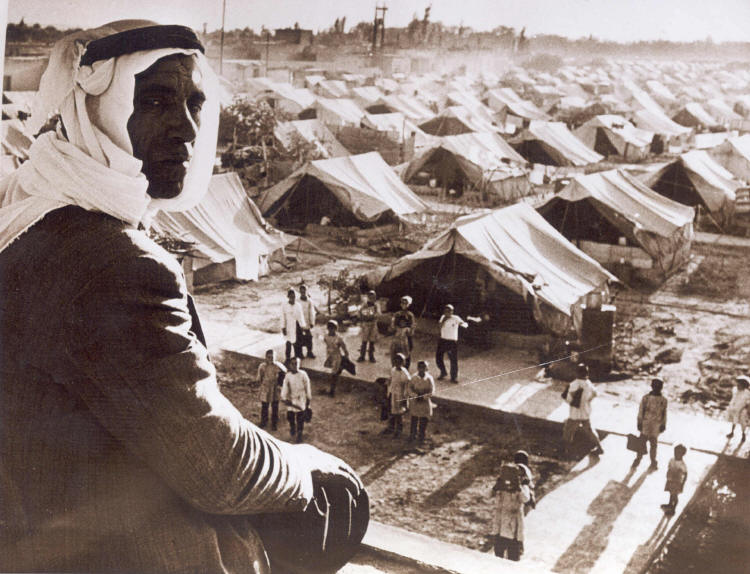
In 1948, some Palestinians, uprooted by Israel’s claims to their lands, relocated to the Jaramana Refugee Camp in Damascus, Syria
documentary film by Israeli-Russian journalist Lia Tarachansky, dealing with this same subject, the Palestinian “Nakba” or catastrophe, is nearing  completion. It too has the testimony of Israeli soldiers of the 1948 war.

These latest revelations lend credence to the claims of Israel’s “new historians,” such as Ilan Pappe, who have written books based on evidence gleamed from government archives showing that, even before the outbreak of hostilities leading to the creation of the State of Israel, the Zionist authorities planned to ethnically cleanse as much of Palestine as possible of non-Jews.

OK, you might say, the Israelis behaved savagely in 1948 – and only a small minority will admit it – but what about after “the War of Independence”? As it turns out, the ethnic cleansing never stopped. Conveniently, the longstanding denial that it ever started has helped to hide the fact that it’s ongoing.

Just this week, we received the news that Defense Minister Ehud Barak has given the order to demolish eight Palestinian villages with some 1,500 residents in the south Hebron hills. The excuse offered by Barak is that the land is needed for military training exercises.

According to the “new historians,” this is a standard Israeli government cover for ethnic cleansing. Sure, for a couple of years the Israeli army will use the land that held the demolished villages. Then, almost inevitably, the area becomes the site of a new Israeli Jewish settlement.

On Oct. 20, Al-Jazeera reported on Israeli documents showing that between 2008 and 2010 the Israeli army allowed food supplies into the Gaza Strip based on a daily calorie count that held the basic diet of a 1.5 million people to a point just short of malnutrition.

According to the Israeli human rights organization Gisha Legal Center for Freedom of Movement, “the official goal of the policy was to wage economic warfare which would paralyze Gaza’s economy and, according to the Defense Ministry, create pressure on the Hamas government.” Actually, this bit of savagery predates 2008.

Back in 2006, Dov Weissglass, then an adviser to Prime Minister Ariel Sharon, stated that “the idea is to put the Palestinians on a diet, but not to make them die of hunger.” Of course, precedents for this can be found in the treatment of European Jews in the 1930s and 1940s. One assumes that Mr. Weissglass was aware of this.

However, just as with the barbarism practiced in the “War of Independence,” in this case too there is a well-practiced capacity for national denial. According to Gideon Levy writing in Haaretz, “the country has plenty of ways … of burying skeletons deep in the closet so that Israelis shouldn’t be overly disturbed.”

The military authors of the document that turned Weissglass’s hideous “idea” into savage practice, operated in a country afflicted with blindness. Just so the present Israeli government does not worry about public unease over the fact that it is slowly but surely destroying the Gaza sewage system and rendering its water supply undrinkable.

Then there are the petty acts of cruelty that can be considered telltale signs of an underlying savagery. For instance, the fact that Israeli customs officials held back the the exam sheets for the October 2012 College Board tests bound for the West Bank graduating high school seniors.

AMIDEAST, the organization that serves as the testing agency for the Palestinian territories, had made sure the Israeli authorities had the tests in their hands weeks in advance. Nonetheless, in an apparent act of vindictiveness, the customs officials held on to them until AMIDEAST had to cancel the exam.

One observer has asked the question, “what has the SAT [tests] have to do with Israeli security?”  Well it might be that, in the mind of a cruel customs official, the more college-bound Palestinians from the Occupied Territories, the more articulate witnesses to Israeli oppression.

On the Gaza side of the equation, the U.S. was forced to cancel a small scholarship program for Gaza college students because the Israelis refused to let the students leave their open-air prison, even if only to go to a West Bank school.  (For anyone who might want to follow the grim procession of Israeli oppressive acts on a day-to-day basis, I recommend the web site Today In Palestine.)

Challenge and Denial

In the face of this behavior on the part of Israel, that country’s public support in the United States has finally begun to slip.

Most recently, 15 prominent church leaders, representing major Christian denominations, wrote an open letter to Congress calling for “an immediate investigation into possible violations by Israel of the U.S. Foreign Assistance Act and the U.S. Arms Export Control Act which respectively prohibit assistance to any country which engages in a consistent pattern of human rights violations. … We urge Congress to hold hearings to examine Israel’s compliance, and we request regular reporting on compliance and the withholding of military aid for non-compliance.”

So far, Congress has turned a deaf-ear to this request, but the Zionist reaction was loud and clear. Leading the way in this effort was the head of the misnamed Anti-Defamation League (ADL), Abraham Foxman. Charging the Christian leaders with a “blatant lack of sensitivity” (one might ask just how sensitive one is suppose to be to an oppressor?) Foxman decided to punish the offending clergy by refusing to engage in ongoing “interfaith dialogue.”

Having “big brains” is a two-edge sword for human beings. It means we can think all manner of creative thoughts and even exercise some self-control over our own inappropriate impulses if we care to try. However, it also means that we can be manipulated into thinking that we need not try – that we are the victims even as we are oppressing others and that any criticism of our actions is just another example of our victimization.

Israeli culture – and indeed the culture of Zionism generally – is one ongoing project of self-manipulation to achieve just such a state of mind. And, to a great extent, it has succeeded. A recent poll taken in Israel shows that “a majority of the [Israeli Jewish] public wants the state to discriminate against Palestinians … revealing a deeply rooted racism in Israeli society.”

The Zionists are not the only experts in denial. The United States, Israel’s chief ally, has always been good at this gambit as well. After the 9/11 attacks, any consideration of the possibility that United States foreign policy in the Middle East might have helped motivate the terrorism was anathema – and it still is over a decade later.

Instead of taking a hard look at our own behavior, we are simply expanding our capacity to kill outright anyone who would challenge our policies in a violent fashion. Our answer is targeted killings by drone or otherwise, a bit of savagery we copied from the Israelis.

Machiavelli, who can always be relied upon to see the darker side of things, once said, “Whoever wishes to foresee the future must consult the past; for human events resemble those of preceding times. This arises from the fact that they are produced by men who ever have been, and ever shall be, animated by the same passions, and thus they necessarily have the same results.”

But is it really inevitable?  

Thursday, November 29, 2012

Israeli's Want Apartheid Without Guilt Or Shame

welcome to apartheid1

By Allison Deger,

... according to a new poll by an Israeli data firm a majority of Israelis don’t want to play—or study, live, eat or drive anywhere near an Arab. Rather, they want an Apartheid state.


In two articles by Gideon Levypublished today in Haaretz the results of a survey by Dialog are presented: 58% of Israeli Jews believe Israel practices apartheid in the West Bank, and they are fine with that. In fact Israelis are so comfortable with institutionalized discrimination that a third said they do not want Palestinians citizens of Israel to have the right to vote and 69% do not think Palestinians in the West Bank deserve to vote in the case of Israel annexing the occupied territory.
Such displays of racism, or the desire to live separately from Palestinians, or even transfer them (code for ethnic cleansing) is not new to Israeli society—or survey results. Over the past decade Israeli universities have published data showing a rise from around 60% of Israelis wanting Palestinians to disappear to 68% today. Even back in 1991 during the height of the first Intifada, a quarter of Israeli-Jews said they wanted to transfer the Palestinians citizens of Israel.
But what makes me feel like I’m being whacked across the face when reading both of Levy's articles is not the percentages, it's the arrogance. In great numbers, of the 503 interviewed, around half think they deserve to be treated "better."
59 percent, wants preference for Jews over Arabs in admission to jobs in government ministries. Almost half the Jews, 49 percent, want the state to treat Jewish citizens better than Arab ones; 42 percent don't want to live in the same building with Arabs and 42 percent don't want their children in the same class with Arab children.
In his op-ed Levy calls this comfort and desire for Jewish privilege at the expense of Palestinians "apartheid without shame or guilt." Where his first article, the reported piece, is all facts and figures, his second is his heart, which too is having an arrhythmia over the "certain innocent candor" expressed in the survey results:
Among its terrifying results, the survey discovers a certain innocent candor. The Israelis admit this is what they are and they're not ashamed of it. Such surveys have been held before, but Israelis have never appeared so pleased with themselves, even when they admit their racism. Most of them think Israel is a good place to live in and most of them think this is a racist state.
It's good to live in this country, most Israelis say, not despite its racism, but perhaps because of it. If such a survey were released about the attitude to Jews in a European state, Israel would have raised hell. When it comes to us, the rules don't apply.
Or to put it more bluntly, Levy says the survey tells the world "We're racists," continuing, "we practice apartheid and we even want to live in an apartheid state. Yes, this is Israel."

Wednesday, November 28, 2012

Silencing A Christian Appeal For Human Rights


By James Zogby,
Courtesy Of "The Huffington Post"


Two weeks ago, fifteen religious leaders representing major Protestant denominations dared to challenge one of Washington's most powerful taboos. They wrote a letter urging Congress to investigate whether unconditional U.S. military assistance to Israel is contributing to violations of Palestinian human rights.
Noting that U.S. law specifically limits the use of U.S. supplied weapons to countries for "internal security" or "legitimate self-defense" and "prohibits assistance to any country which engages in a consistent pattern of human rights violations," the signatories expressed the concern that U.S. law may be being violated by Israel.
It was an impressive group that came together to sign the letter, including Evangelical, Lutheran, Baptist, Presbyterian, United Church of Christ, Mennonite, and Methodist church leaders.
The letter, itself, was also quite impressive. It was temperate in tone and extraordinarily balanced in content. The Christian leaders expressed compassion for the "pain and suffering" of Israelis and Palestinians, "the insecurity and fear" that impacts the lives of many Israelis and their right to legitimate self-defense. But they went on to note how the daily lives of Palestinians are marked by the "killing of civilians, home demolitions [...] forced displacement and restrictions of Palestinian movement." After detailing these abuses, the leaders called on Congress to hold hearings to determine the degree to which U.S. assistance is contributing to these Israeli behaviors. They concluded noting that if Israel were found to be in non-compliance with the U.S. human rights provisions, then the law should be enforced and aid should be cut.
The reaction was both hysterical and predictable. Using excessive and abusive language, some major Jewish groups denounced the letter and the churches represented by the signatories, charging them with "participation... in yet another one-sided anti-Israel campaign" and "vicious anti-Zionism" and accusing them of "stony silence to the use of anti-Judaism and relentless attacks on the Jewish state." The Jewish groups coupled this attack with an announcement that they would boycott a regularly scheduled "Jewish-Christian dialogue" session that was to have met next week. They countered with a call for an inter-faith summit to discuss the pain caused by the letter. Some leaders went so far as to suggest that they might go to friends in Congress and request a hearing into the behavior of the Christian groups.
Now while this flare-up is new, the underlying tensions have been with us for a generation. So too has the bullying behavior of some of the mainstream Jewish organizations.
It was 34 years ago that we formed the Palestine Human Rights Committee (PHRC). The PHRC had as its principle objectives the defense of Palestinian human rights victims and the application of provisions of U.S. law requiring that recipients of U.S. assistance not use that aid to violate human rights. Bringing together Arab Americans, African American civil rights leaders, leaders of the peace movement, and leaders from many of the same Christian churches who signed the recent letter to Congress, the PHRC achieved some success in elevating human rights concerns, but incurred the wrath of some major Jewish organizations. We were subjected to exclusion and defamation. We were denounced as "pro-terrorist" and our efforts to join a major progressive peace coalition were blocked. Despite winning the support of over 90% of the coalition's members, two Jewish groups threatened to abandon the group if we were allowed to join. The executive committee of the coalition was cowed by these threats and twice rejected our application for membership.
There have been many other examples of this behavior but it all boils down to the same modus operandi: the use of hysterical and exaggerated rhetoric in an effort to intimidate opponents, coupled with the ultimate threat to "take my ball and not play anymore."
What all these childish and bullying antics attempt to do is to obscure the real issues being raised (in this case, the charge that U.S. aid enables Israel to violate Palestinian human rights in contravention of U.S. law) and to substitute the "pretend" insult (in this case, that the letter signed by the Christian groups is a form of anti-Zionism or anti-Judaism) as the issue that takes precedence and must be discussed first.
The net results of these tactics are: a silencing of any discussion or examination of Israel's treatment of the Palestinians; aid to Israel continues to be delivered without questions, oversight, or any conditions; the very meaning of anti-Semitism or, in this recent case, "anti-Judaism" is cheapened and equated not just with criticism of Israeli policy, but even with the mere call to examine that policy; Palestinians continue to suffer; Israelis who support peace and human rights for Palestinians find they have no allies in the U.S. government; and U.S. credibility in the Middle East continues to suffer.
It is, to be sure, bullying. It is counter-productive and damaging to discourse and respect amongst peoples. These tactics have worked in the past. Will it work again? We'll wait to see how the Christian groups respond, but I, for one, hope that the church leaders stand their ground. They do not owe anyone an apology for their letter. Instead they deserve to be commended by all Americans for their brave and balanced commitment to peace, justice, and human rights.
 

Israel Creating ‘Catastrophic’ Situation With Palestinians


Former U.S. President Jimmy Carter said Monday during a visit to Jerusalem that the prospect of an Israel-Palestinian peace accord is “vanishing,” blaming Israeli settlement of the West Bank.

Carter, called the current situation “catastrophic” and blamed Israel for the growing isolation of east Jerusalem from the West Bank. He said a Palestinian state has become “unviable.”

“We’ve reached a crisis stage,” said Carter, 88. “The two-state solution is the only realistic path to peace and security for Israel and the Palestinians.”

The Palestinians say they will only return to the negotiating table if Israel freezes settlement construction on occupied lands claimed by the Palestinians.

Via: "CBS-DC"

Saturday, October 27, 2012

Palestinian Refugees: Time To Return NOW


10 million Palestinians. Almost 5 million of them are refugees. And half of those are still living in camps. It is in Lebanon that the Palestinian refugees live under the worst conditions. We visited the camps of Chatila, Borj Al Barajneh, Marelias, Nahr Al Bared, Badawi, Ain El Hilweh et Rachidiya.

Everywhere we find great poverty, a dense population, narrow lanes, a maze of electric wires all connected to each other, workshops for small manual jobs... but everywhere also the same steadfast will to return to their country, Palestine.

'Palestinian Refuges' is now converted to TV format and is available for any Public Access TV station in America (and the World) to download and broadcast.

To get Public Access TV Stations to broadcast - 'Palestinian Refuges' people can phone their local Public Access TV station and request the film be broadcast to their local community. The TV station can download the show from PEGMedia.org and then broadcast it.

Saturday, August 11, 2012

Israel's Apartheid Wall Used For Segregation, Not Just Security


In East Jerusalem, the separation wall forces many Palestinians to pass through checkpoints every day [EPA]


Israel's Separation Wall Is Unjustly Disassociating Palestinian Neighbourhoods From The City Of Jerusalem.

Ben White writes,


It was recently revealed that a senior official in the Jerusalem municipality has asked the Israeli military "to take responsibility for handling civilian matters pertaining to Jerusalem residents east of the separation fence".

Jerusalem municipality's director-general Yossi Heiman told the meeting a few weeks ago that the city "wants the IDF [Israeli Defence Forces] to take responsibility for monitoring construction and providing sanitation services".

Ha'aretz reported that "the meeting concluded with a decision to form a committee that will present a plan to the government".

Tens of thousands of East Jerusalem residents with blue Israeli identity cards living in Palestinian neighbourhoods beyond the Separation Wall are "cut off from the bulk of the city" and forced "to pass through checkpoints on a daily basis in order to get to work, attend school, obtain medical services, visit family, etc". 

This "physical separation", in the words of the UN's OCHA, means "residents suffer from impeded access to services on the 'Jerusalem' side of the Barrier, the lack of municipal services in situ, a security vacuum and increasing lawlessness and crime".

"In a few years, Israel can turn around and say that those on the other side of the Wall are no longer part of the city."
- Salim Anati, local doctor
Behind a new checkpoint, and hemmed in by the Wall and Israel's colonies, Shuafat refugee camp typifies the bitter irony behind Jerusalem Mayor Nir Barkat's hollow claim to oversee a "united" city. 

Household waste gathers in piles, construction is unregulated, and crime is unchecked.

As local doctor Salim Anati told me during one of my visits to the camp in 2010, Shuafat camp is "a problem" for the Israeli plan of making "a continuity of settlements on the east side of Jerusalem" - thus the camp is "on the wrong side" of the Wall. He predicted that "in a few years, Israel can turn around and say that those on the other side of the Wall are no longer part of the city".

That same year, Jerusalem city councillor Yakir Segev made a speech in which he said that the Palestinian areas east of the Wall were "no longer part of the city", noting that the "separation fence… was built for political and demographic reasons - not just security concerns". In December 2011, Mayor Barkat publicly proposed "relinquish[ing] areas of the municipality that are located outside of the fence", adjustments that, "according to a municipal source", would mean "a very small territorial gain for Jerusalem, with a loss of approximately 40,000 Arab residents".

It is a familiar story. Speaking to BBC's Hardtalk in July 2011, Mayor Barkat confirmed that he wants to maintain a Jewish majority in the city. A 2010 US diplomatic cable records Barkat's belief that the natural growth of Jerusalem's Palestinians is a "strategic threat" (comments that the cable notes "reflect long-standing GOI [Government of Israel] policy regarding the desired demographic balance in Jerusalem"). A previous mayor of Jerusalem, Ehud Olmert, said while in office that it is "a matter of concern when non-Jewish population rises a lot faster than Jewish population".

The desire to be rid of Palestinian neighbourhoods east of the Wall thus shatter two persistent myths. The first is that the route of the Wall was designed for "security", rather than as an element in a regime of colonial segregation. The second myth is that Jerusalem - where, in the words of Deputy Mayor Meron Benvenisti, "an ethnic population ratioserves as a philosophy" - is a city whose residents enjoy equality. In other words, the myth and reality is a microcosm of Israel as a whole, where the motto continues to be "maximum land with minimum Palestinians, maximum Palestinians on minimum land".

Friday, January 20, 2012

Jerusalem SOS

In Jerusalem, Jewish and Arab paramedics cross psychological and geographical divisions between the city's residents. 

By Witness 
Last Modified: 17 Jan 2012 15:19 
Courtesy Of "Al-Jazeera"


Filmmaker: Keren Ghitis

Between 1948 and 1967 a border separated Arabs living in East Jerusalem from Jews living in the rest of the city.
Today, much of the city's Arab population remains in the east, while the majority of its Jewish population lives in the west.

Although they are free to do so, few residents move between the city's Arab and Jewish areas. In the minds of most, the border that separated Jews and Arabs 40 years ago still exists today.

Witness follows Jewish and Arab volunteer paramedics who choose to cross these boundaries. 

Hezi, a Hassidic Jew, has been working for United Hatzalah, an emergency service run by orthodox Jews in Jerusalem, for more than 15 years. In 2010, the organisation started employing Arab paramedics and Fadi joined to improve first aid services in Jerusalem's Arab neighbourhoods.

In Jerusalem SOS, we follow Fadi and Hezi as they traverse Jerusalem, providing first aid at all hours to the city's residents.

Saturday, January 07, 2012

Israeli Rabbinite Edits Out Mosque From Temple Mount

The Dome of the Rock mosque has been the center of Jerusalem's skyline for centuries. (Reuters)
 The Dome of the Rock mosque has been the center of Jerusalem's skyline for centuries. (Reuters)

January 05, 2012 04:37 PM 
Courtesy Of "The Daily Star"


BEIRUT: The Israeli Military Rabbinite released a photo of the Temple Mount with the iconic Dome of the Rock mosque edited out, Haaretz reported Thursday.

The photo was distributed last month as part of an educational document for the Israeli army ahead of the Jewish holiday of Hanukkah. The Military Rabbinite oversees religious affairs within the army.

A spokesman for the Israeli army defended the picture, saying that it was meant to depict the Jewish revolt against Hellenistic rule, a period before Islam existed.

One reserves officer, who didn’t give his name, told Haaretz that when he “received the materials from the battalion rabbi something seemed strange about that picture.”

He added that the edited picture was part of an “official release, which is why it’s problematic the army is distributing it.”

The Israeli army’s official public relations office told Haaretz that “the Dome of the Rock did not exist at that time, so there was no need for it to appear in the picture.”

But the officer didn’t appear to be satisfied with the rabbinite’s response, saying that “the Military Rabbinate [needs] to be more alert about the educational messages it passes on, especially considering the Temple Mount’s history... It’s infuriating that the rabbinate isn’t being more responsible about this.”