How US Proxy Wars Helped Create A Militant Islamist Threat.
By Jeremy Scahill
September 7, 2011
Courtesy Of "The Nation Magazine"
The notorious Somali paramilitary warlord who goes by the nom de guerre Indha Adde, or White Eyes, walks alongside trenches on the outskirts of Mogadishu’s Bakara Market once occupied by fighters from the Shabab, the Islamic militant group that has pledged allegiance to Al Qaeda. In one of the trenches, the foot of a corpse pokes out from a makeshift grave consisting of some sand dumped loosely over the body. One of Indha Adde’s militiamen says the body is that of a foreigner who fought alongside the Shabab. “We bury their dead, and we also capture them alive,” says Indha Adde in a low, raspy voice. “We take care of them if they are Somali, but if we capture a foreigner we execute them so that others will see we have no mercy.”
Despite such thug talk, Indha Adde is not simply a warlord, at least not officially, anymore. Nowadays, he is addressed as Gen. Yusuf Mohamed Siad, and he wears a Somali military uniform, complete with red beret and three stars on his shoulder. His weapons and his newfound legitimacy were bestowed upon him by the US-sponsored African Union force, known as AMISOM, that currently occupies large swaths of Mogadishu.
It is quite a turnabout. Five years ago, Indha Adde was one of Al Qaeda and the Shabab’s key paramilitary allies and a commander of one of the most powerful Islamic factions in Somalia fighting against foreign forces and the US-backed Somali government. He openly admits to having sheltered some of the most notorious Al Qaeda figures—including Fazul Abdullah Mohammed, the alleged mastermind of the 1998 bombings of the US Embassies in Kenya and Tanzania—and to deceiving the CIA in order to protect the men. (Fazul was killed in June in Mogadishu.)
“The CIA failed to convince me to work with them,” Indha Adde recalls of his meetings in Somalia, Kenya and Dubai with agency operatives beginning in 2004, when, he says, he met the CIA’s East Africa chief in the Emirates. “They offered me money, they offered funding for the region I was controlling, they offered me influence and power in Somalia through US cooperation, but I refused all those offers.” At the time, Indha Adde—like many Muslims around the globe—viewed the United States as “arrogant” and on a crusade against Islam. “Personally, I thought of even Osama [bin Laden] himself as a good man who only wanted the implementation of Islamic law,” he tells me at one of his homes in Mogadishu.
Yusuf Mohamed Siad was not always known just as Indha Adde. As one of the main warlords who divided and destroyed Somalia during the civil war that raged through the 1990s, he brutally took control of the Lower Shabelle region, which was overwhelmingly populated by a rival clan, earning him the moniker “The Butcher.” There are allegations that he ran drug and weapons trafficking operations from the Merca port. Then, as the religious and political winds began to shift in Somalia after 9/11, he remade himself into an Islamic sheik of sorts in the mid-2000s and vowed to fight foreign invaders, including rival warlords funded and directed by the CIA.
Perhaps more than any other figure, Indha Adde embodies the mind-boggling constellation of allegiances and double-crosses that has marked Somalia since its last stable government fell in 1991. And his current role encapsulates the contradictions of the country’s present: he is a warlord who believes in Sharia law, is friendly with the CIA, and takes money and weapons from AMISOM. There are large parts of Mogadishu that are not accessible without his permission, and he controls one of the largest militias and possesses more technicals (truck-mounted heavy automatic weapons) in the city than any other warlord.
While the United States and other Western powers have spent hundreds of millions of dollars on arms, training and equipment for the Ugandan and Burundian militaries under the auspices of AMISOM, the Somali military remains underfunded and under-armed. Its soldiers are poorly paid, highly undisciplined and, at the end of the day, more loyal to their clans than to the central government. That’s where Indha Adde’s rent-a-militia comes in.
Over the past year, the Somali government and AMISOM have turned to some unsavory characters in a dual effort to build something resembling a national army and, as the United States attempted to do with its Awakening Councils in the Sunni areas of Iraq in 2006, to purchase strategic loyalty from former allies of the current enemy—in this case, the Shabab. Some warlords, like Indha Adde, have been given government ministries or military rank in return for allocating their forces to the fight against the Shabab. Several are former allies of Al Qaeda or the Shabab, and many fought against the US-sponsored Ethiopian invasion in 2006 or against the US-led mission in Somalia in the early 1990s that culminated in the infamous “Black Hawk Down” incident.
Somali President Sheik Sharif Sheik Ahmed claims that Indha Adde and other warlords have sworn allegiance to the government, but it is abundantly clear from traveling extensively through Mogadishu with Indha Adde that his men are loyal to him above all else. President Sharif seemed almost detached from this reality when I met him at his offices in Mogadishu. “As more territory is gained, it will be easier to unite [the various militias] under one umbrella,” he says.
Not everyone in the Somali government sees it that way. “These people are not supposed to have any role in this government,” says Ahmed Nur Mohamed, the mayor of Mogadishu. “They are not supporting the government, but they are waiting. It’s a time bomb: they are waiting, they want to weaken the government, and they are waiting any time that the government falls, so that each one will grab an area.”
Mohamed Afrah Qanyare, an infamous warlord who for years was backed by the CIA, concurs with that assessment. Interviewed over coffee at one of his homes in Mogadishu, Qanyare expresses his displeasure that the CIA has stopped pursuing a relationship with him, and he refuses to believe that I am not in the agency. “You guys are usually Irish-American,” he tells me as he laughs and slaps the knee of a member of the Somali Parliament who has come to pay his respects to Qanyare. He continues, “In any case, you are making a huge mistake” in backing the former Shabab- and Al Qaeda–allied warlords like Indha Adde. “There is a difference between conflict of ideology and conflict of interest,” he declares. “The warlords being backed by you [America] have only a conflict of interest with the Shabab, not of ideology. That’s why [arming and supporting them] is a dangerous game.”
* * *
After the 9/11 attacks and President Bush’s “You’re either with us or you’re with the terrorists” declaration, Somalia was quick to pledge its support for the United States. At the time, the Somali government had virtually no control over the country, which had been ruled by warlords since the early ’90s. Nonetheless, its foreign minister, Ismail Mahmoud “Buubaa” Hurre, swiftly penned a letter to the US secretary of state. “We are with you, and we are as much concerned with the possibility of Al Qaeda moving into [Somalia] as you are,” Buubaa recalls writing. “But the response was lukewarm.” He says it took Washington “a long time” to “decide to move in,” and when it did, Buubaa says, it “backfired.” Spectacularly.
As the “global war on terror” kicked off, the United States established a Combined Joint Task Force for the Horn of Africa. In 2002 some 900 military and intelligence personnel were deployed to the former French military outpost, Camp Lemonier, in the African nation of Djibouti. The secretive base would soon serve as a command center for covert US action in the Horn of Africa and the Arabian Peninsula, and as the launch pad for operations by the CIA and the elite Joint Special Operations Command (JSOC) to strike Al Qaeda targets outside the declared battlefield of Afghanistan, as part of the Bush administration’s borderless war strategy.
While there were rumblings early on that the United States intended to hit in Somalia, seasoned US experts on the region spoke out against it. “There’s no need to be rushing into Somalia,” former US ambassador to Ethiopia David Shinn said. “If you think about military targets, I doubt they exist.” Ken Menkhaus, a Somalia scholar at Davidson College and a former political adviser to the United Nations in Somalia, has written several papers on the absence of a radical political Islamic tradition in Somalia. In early 2002 he estimated the number of Somali nationals with “significant links” to Al Qaeda at ten to twelve people, along with a few foreign fighters. Because of a dearth of intelligence—Shinn referred to it as “abysmal”—“snatch and grab”–type tactics were ill advised at the time.
The United States did not directly conduct such operations, but it initiated a proxy war that relied heavily on those very tactics. Rather than working with the Somali government to address what Somalia experts considered a relatively minor threat, the United States turned to warlords like Qanyare, and went down a path that would lead to an almost unthinkable rise in the influence and power of Al Qaeda and the Shabab.
Qanyare is a striking presence, physically and intellectually. He is tall, and his eyes, ringed with wrinkles, gleam with intensity. As he tells it, he grew up “in the bush” in Somalia and conned his way into an education by Mennonite missionaries, who taught him the trade of accounting. As a young man, Qanyare parlayed that skill into a job doing the books for the Somali secret police, which kicked off his career in Somali war politics. He often dresses in guayabera suits, perfectly pressed, though his unkempt mane gives him a rougher edge.
When I first met Qanyare, in Nairobi, he was living at the Laico Regency Hotel, owned by then–Libyan dictator Muammar el-Qaddafi. Qanyare has made millions of dollars over the decades on real estate investments in Nairobi and uses the city as a base to plot his return to Somali politics. He retains a seat in the Somali Parliament, but that is a pro forma designation, allocated by the country’s clan-based system of representation. He tells me that he intends to run for president if the country ever has an election. That was supposed to happen in August, but an intervention by the Ugandan president postponed elections, extending the current government’s mandate for another year. “My agenda is very clear,” he says. “I know Al Qaeda and Al Shabab. What we need is to fight with them mercilessly.”
In December 2002, Qanyare was approached by a friend who told him that some agents from the CIA wanted to talk with him. The day after Christmas, he met them at a hotel in Nairobi. Qanyare had certain assets that were of strategic value to the United States. After 9/11 the Bush administration was concerned about Al Qaeda members fleeing Afghanistan in the aftermath of the US invasion and using Somalia as a base from which to plot attacks against US interests in East Africa. Indeed, on November 28, 2002, a month before Qanyare met with the CIA, Al Qaeda operatives had carried out simultaneous attacks in Mombasa, Kenya. One was on a vacation resort, the other was on an Israeli jetliner at Mombasa’s Moi International Airport. Details emerged that implicated suspects in the 1998 US Embassy bombings.
At the time, Qanyare was known as a secular warlord who commanded a militia of about 1,500 men. More important, he had his own airport outside Mogadishu. “The airport is inland, inside the bush. So the airport itself is very secretive,” he boasts. “We designed it not to expose or to see easily who is landing.” The Americans, he says, “enjoy that.” On January 5, 2003, a small group of US agents flew into Qanyare’s airfield, where he greeted them and took them to one of his homes. The men, he says, were “special military intelligence and CIA.” That meeting kicked off a three-year relationship between Qanyare and US intelligence agents.
Qanyare says agents would fly in to see him at least once or twice a week. The CIA, he says, began paying him in the ballpark of $100,000 to $150,000 a month to use his airport. At times, he would take agents around Mogadishu, pointing out various headquarters or houses he said were occupied by Al Qaeda figures. Qanyare soon became Washington’s man in Mogadishu.
But Qanyare complains that the Americans didn’t give him sufficient money to build a force capable of targeting Al Qaeda, saying the CIA gave him only “pocket money.” “Pocket money and a war fund [are] vastly different,” he says. He also asserts that in the beginning the agents were reluctant to pull the trigger on any targeted-killing operations in Mogadishu, saying they preferred to capture their targets. He claims he even gave them GPS coordinates for a house used by Saleh Ali Nabhan, who was wanted by the United States. “They were worried that innocent people would die because of their action, [but] to arrest them is not easy because they got protection from other local Al Qaeda people. They were not using force. They were only collecting information.” (Nabhan was ultimately killed in a September 2009 strike authorized by President Obama.)
While the Americans, according to Qanyare, were reluctant at the time to conduct the type of targeted-killing operations in Somalia that have become the norm in Afghanistan, Pakistan, Yemen and, eventually, Somalia, the program was hardly one of passive intelligence-gathering. Believing they had the backing of Washington, Qanyare and other secular warlords began hunting down people the United States had identified, as well as those the warlords deemed worthy of Washington’s attention. Although there was certainly a small Al Qaeda presence in Somalia before the United States launched its operations—and Islamic militants did carry out assassinations, including the killing of four foreign aid workers in the relatively peaceful Somaliland region in late 2003 and early 2004—the actions of Qanyare and his fellow CIA-backed warlords gave the Islamic militants fodder for an effective propaganda and recruitment campaign.
Qanyare and his allied warlords engaged in a targeted kill-and-capture campaign against individuals they suspected of supporting Islamic radicals. “These people were already heinous warlords; they were widely reviled in Mogadishu. And then they start assassinating imams and local prayer leaders who had nothing to do with terror,” says Abdirahman “Aynte” Ali, a Somali analyst who has written extensively on the history of the Shabab and warlord politics. “They were either capturing them and then renditioning them to Djibouti, where there is a major American base, or in many cases they were chopping their head off and taking the head to the Americans or whoever. And telling them, ‘We killed this guy.’”
In a handful of cases, the warlords caught someone the United States considered to be of value, like Suleiman Ahmed Hemed Salim, captured in March 2003. One of Qanyare’s fellow warlords, Mohamed Dheere, seized Salim and rendered him into US custody. Salim was reportedly later held in two secret prisons in Afghanistan. Scores of other “suspects” were abducted by the CIA-backed warlords and handed over to American agents. In many cases, the United States would determine they had no intelligence value and repatriate them to Somalia. Sometimes, according to several former senior Somali government and military officials, they would be executed by the warlords so that they could not speak of what had happened to them.
The “US government was not helping the [Somali] government but was helping the warlords that were against the government,” Buubaa, the former foreign minister, tells me. Washington “thought that the warlords were strong enough to chase away the Islamists or get rid of them. But it did completely the opposite. Completely the opposite.”
While the CIA was working with the warlords in Mogadishu, who grew more brutal and powerful by the day, Somalia’s internationally recognized Transitional Federal Government (TFG) was powerless in exile. “The whole mess started from that point,” says Ali Mohamed Gedi, who served as Somalia’s prime minister from 2004 to 2007. Qanyare and the other warlords, Gedi says, “were misinforming the US government” and in the process weakening the newly formed government while strengthening and encouraging individual warlords.
By the beginning of 2006 (if not well before), the CIA’s warlords had become universally despised in Mogadishu. Nearly everyone I interviewed in Mogadishu about this period characterized them as murderers and criminals. The warlords formed a formal coalition whose title reeked of CIA influence: the Alliance for the Restoration of Peace and Counterterrorism.
“This was a turning point in Somalia,” says Aynte. At the time, he explains, the Islamic courts were little more than small groups of poorly armed, autonomous militias who supported the implementation of Sharia law and the provision of social services in their regions as a counterbalance to the warlord-sponsored lawlessness that infected the country. They had no central authority. “But they realized that the sooner they unite, the sooner they can defend these innocent people who have been murdered across the city.” And so they formed the Islamic Courts Union, and local businessmen funded it, allowing the ICU to purchase weapons to take on the warlords. “People started siding with the Islamic courts,” says Buubaa. The ICU “brought about some semblance of order and stability to Mogadishu. And a lot of people in Mogadishu appreciated that.”
In the summer of 2006 the ICU, along with fighters from the Shabab, ran the CIA’s men out of town. “The warlords were ejected out of Mogadishu for the first time in sixteen years. No one thought this was possible,” recalls Aynte. From June to December 2006, the ICU “brought a modicum of stability that’s unprecedented in Mogadishu,” reopening the airport and the seaport. “You could drive in Mogadishu at midnight, no problem, no guards. You could be a foreigner or Somali. It was at total peace.”
Qanyare and the other warlords were forced to flee to bases outside Mogadishu or outside Somalia. I ask Qanyare why the Counterterrorism Alliance failed. Lack of money and willpower from Washington, he replies. “If they funded it, we should win. We should defeat them,” he says. “But that did not happen.” He says that at the time, he warned his US handlers that if they failed to eliminate Al Qaeda and its allies, “it would be too expensive to defeat them in the future.”
“I was right,” he concludes. In the Horn of Africa, Qanyare says, “Al Qaeda is growing rapidly, and they are recruiting. And they have a foothold, safe haven—vast land, all sorts of money that they have got. Taxing, getting revenues, growing, training.”
Indha Adde, who had cast his lot with the ICU and the regional militias, says the ICU had two goals. “One was to rule Somalia according to the Holy Koran. The other goal was to defeat the warlords,” he recalls. “We disarmed the warlords, but we didn’t reach our first goal. Outside intervention blocked Islamic rule in Somalia.”
Most of the entities that made up the Islamic Courts Union did not have anything resembling a global jihadist agenda. Nor did they take their orders from Al Qaeda. The Shabab was a different story, but it was not the most influential or powerful of the ICU groups. Moreover, clan politics in Somalia held the foreign operatives in check. “We deployed our fighters to Mogadishu with the intent of ceasing the civil war and bringing an end to the warlords’ ruthlessness,” says Sheik Ahmed Mohammed Islam, whose Ras Kamboni militia, based in the Jubba region of southern Somalia, joined the ICU in 2006. “Those of us within the ICU were people with different views; moderates, midlevel and extremists.” Other than expelling the warlords and stabilizing the country through Sharia law, he says, there was “no commonly shared political agenda.”
Sheik Islam says that almost immediately there were deep divisions within the ICU, and no one seemed to have a plan to govern beyond the revolution. Buubaa and other former Somali government officials told me that if the ICU had made overtures, a power-sharing deal could have been reached. Instead of capitalizing on the good will generated by expelling the warlords and working with officials from Somalia’s transitional government under the banner of national unity, the ICU leaders “started behaving like the warlords,” alleges Buubaa, saying they wanted to “squash” the government, the only “remaining national symbol of the Somali state.”
The Bush administration considered the ICU unreconcilable. It was viewed as a de facto Al Qaeda–supporting government taking control of an African capital. Many in the administration believed the ICU represented a dramatic reascension of al-Itihaad al-Islami (AIAI), a small jihadist group that had peaked in influence in Somalia in the 1990s during the civil war. Two weeks after 9/11, AIAI was declared a terrorist entity by the US government, but the group crumbled soon thereafter as more powerful militias overran Mogadishu. AIAI’s military commander, Hassan Dahir Aweys, a former Somali air force colonel, later rebranded as “Sheik” Aweys, became a leader of the ICU. The ICU also counted among its associates Aden Hashi Farah Ayro, whom the United States alleged attended Al Qaeda training camps in Afghanistan and was behind the killing of foreign aid workers in Somalia; and Fazul, the alleged mastermind of the embassy bombings.
But by most credible accounts, the Al Qaeda influence at the time was small—consisting of about a dozen foreign operatives and a handful of Somalis with global jihadist aspirations. A UN cable from June 2006, containing notes of a meeting with senior State Department and US military officials from the Horn of Africa task force, indicates that the United States was aware of the ICU’s diversity, but would “not allow” it to rule Somalia. The United States, according to the notes, intended to “rally with Ethiopia if the ‘Jihadist’ took over.” The cable concluded, “Any Ethiopian action in Somalia would have Washington’s blessing.” Some within the US intelligence community called for dialogue or reconciliation, but their voices were drowned out by hawks determined to overthrow the ICU.
The United States “had already misread the events by aiding heinous warlords. And they misread it again. They should have taken this as an opportunity to engage the Union of Islamic Courts,” asserts Aynte. “Because out of the thirteen organizations that formed the [ICU], twelve were Islamic courts, clan courts who had no global jihad or anything. Most of them never left Somalia. These were local guys. Al Shabab was the only threat, that was it. And they could have been somehow controlled.”
The Islamic Courts Union lasted just six months. In December 2006, after a visit to the region by Gen. John Abizaid, then head of the US Central Command (Centcom), the United States gave the green light for Ethiopia—a nation widely reviled in Somalia—to invade. On the eve of the invasion, Indha Adde held a news conference calling for foreign Islamists to come and join the cause. “Let them fight in Somalia and wage jihad, and, God willing, attack Addis Ababa,” he said.
The Ethiopians invaded on December 24. It was a classic proxy war coordinated by Washington and staffed by 40,000–50,000 Ethiopian troops. “The US sponsored the Ethiopian invasion, paying for everything including the gas that it had to expend, to undertake this. And you also had US forces on the ground, US Special Operations forces. You had CIA on the ground. US airpower was a part of the story as well. All of which gave massive military superiority to the Ethiopians,” says Daveed Gartenstein-Ross, director of the Center for the Study of Terrorist Radicalization and a frequent adviser to the US military, including Centcom. “If there’s one lesson in terms of military operations of the past ten years, it’s that the US is a very effective insurgent force. In areas where it’s seeking to overthrow a government, it’s good at doing that. What it’s not shown any luck in doing is establishing a viable government structure.”
The US-backed Ethiopian forces swiftly overthrew the Islamic Courts Union and sent its leaders fleeing or to the grave. Many were rendered to Ethiopia, Kenya or Djibouti; others were killed by US Special Operations forces or the CIA. By New Year’s Day 2007, Prime Minister Gedi was installed in Mogadishu, thanks to the Ethiopians. “The warlord era in Somalia is now over,” he declared. In a sign of what was to come, Somalis swiftly and angrily began protesting the Ethiopian “occupation.”
“If you know the history of Somalia, Ethiopia and Somalia were archenemies, historical enemies, and people felt that this was adding insult to the injury,” says Aynte. “An insurgency was born out of there.”
* * *
Since the early 1990s, the stretch of land just across the Somali border from Kenya’s Dadaab refugee camp—the world’s largest, and the epicenter of the humanitarian crisis in the region today—has been the stronghold of the Ras Kamboni movement, currently led by Sheik Islam, also known as Madobe, or Black. Madobe was a longtime deputy of Hassan Turki, one of the founders of militant Islamic radicalism in Somalia and a US-designated terrorist. As the Ethiopians invaded, Madobe, like other ICU leaders, was forced to retreat from Mogadishu to his home base. But his name was already on a US list of targeted ICU leaders. On January 23, 2007, as US Special Operations forces began using a secret airbase in eastern Ethiopia to launch raids inside Somalia, Madobe became the hunted.
In June of this year, I snuck across the Kenyan-Somali border with two photojournalist colleagues to meet Madobe, who provided me with an extensive account of the elite Joint Special Operations Command’s attempt to assassinate him.
To get to Madobe, we drove through a famine- and drought-plagued wasteland where we witnessed the beginning of what would become a globally recognized exodus of Somalis fleeing across the border. As Somalis trickled past us, carrying all the possessions they could handle, one of Madobe’s men met us on the Somali side of the border and directed us to a secluded area lined by trees, where we were told to wait.
About ten minutes later, pickup trucks of armed men approached us. The men searched all our bags and belongings and then produced a feast of processed junk food—candy bars, crackers, Coke and Sprite—and laid it out on a folding table. In the distance, more pickups descended. A cavalry of armed men formed a perimeter around Madobe, who was dressed in olive green fatigues and a matching boonie hat. Perched on his nose were reading glasses, and his full beard had traces of henna dye. Madobe, a hardened guerrilla, is soft-spoken and has the demeanor of a librarian.
“Every step taken by the US has benefited Al Shabab,” he told me. “What brought about the ICU? It was the US-backed warlords. If Ethiopia did not invade and the US did not carry out airstrikes, Al Shabab would not have survived so long, because they were outnumbered by those who had positive agendas.”
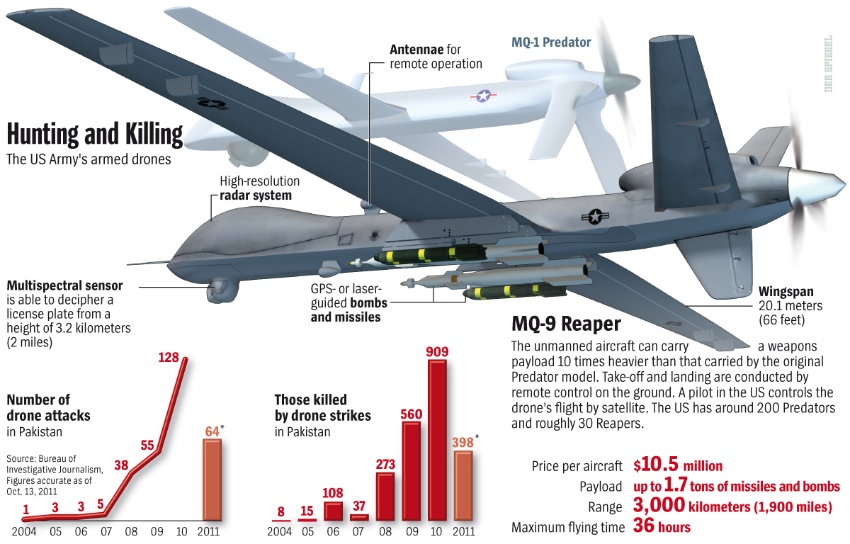
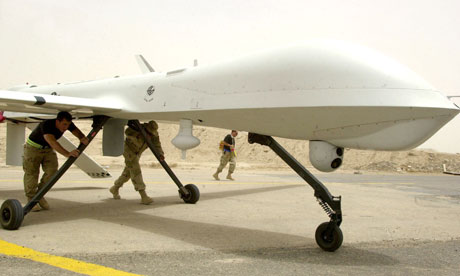
I asked him about the JSOC strike against him. He and eight of his people were on the run and were being surveilled regularly by US aircraft, he recalled. “Most of the time they were tracking us using unmanned drones. At night we were afraid of lighting a fire to cook, and in the daylight we did not want to create smoke and we had no precooked food, so it was really very tough. We also had Thuraya satellite phones, which clearly helped them easily trace us.”
On the night of January 23, Madobe and his small group set up camp under a large tree in rural southern Somalia. “At around 4 am we woke up to perform the dawn prayers, and that’s when the planes started to hit us. The entire airspace was full of planes. There was AC-130, helicopters and fighter jets. The sky was full of strikes. They were hitting us, pounding us with heavy weaponry.” The eight people with him, who Madobe said included men and women, were all killed.
Madobe was wounded. He believed that a ground force would come for him. “I picked a gun and a lot of magazines. I believed that death was in front of me, and I wanted to kill the first enemy I saw. But it did not happen.” Madobe lay there, losing blood and energy. At around 10 am, he said, US and Ethiopian forces landed by helicopter near his position. He recalled a US soldier approaching him as he lay shirtless on the ground. “Are you Ahmed Madobe?” the soldier asked. “Who are you?” he replied. “We are the people that are capturing you,” he recalled the soldier telling him.
They loaded Madobe onto a helicopter and took him to a makeshift base in Kismayo. The US forces, he said, immediately began interrogating him, and only after Ethiopian forces intervened did they give him water and medical treatment. In Kismayo, he was regularly interrogated by the Americans. “They had names of different rebels and fighters on a list, and they were asking me if I knew them or had information about them,” he said. A month later, on March 1, he was rendered to Ethiopia, where he was held for more than two years. For the first eight months in Addis Ababa, he was held in a hospital or in prison. While there, he said, he saw many ICU leaders and some of the foreign fighters who had come to Somalia to fight the Ethiopians. “While I was in jail in Addis Ababa, around fifty foreigners shared the jails with me,” he recalled.
Eventually, Madobe was placed under house arrest in a hotel. During his numerous “interviews” with US officials, as Madobe put it, they “sorted out differences.” It is clear that the Ethiopians, who had long funded various Somali warlords and other political figures, forged a new relationship with Madobe. “The view I had about Ethiopia greatly changed, as did the one I had about international policy on Somalia,” he told me. After reaching an agreement in 2009 with the Ethiopian and Somali governments, Madobe returned to his region.
Upon his return, Madobe discovered that local leaders had cut a deal with the Shabab forces that had filled the void after he was snatched. By 2010 Madobe’s forces had announced they were at war with the Shabab and supporting Somalia’s government forces. I asked him who is financing and supporting his fight against the Shabab. Some say it is Kenya, others Ethiopia. He smiled as he provided a nonanswer: “I would accept any American offer to support me,” he said. “The legal way.”
According to the UN Monitoring Group on Somalia, Madobe’s forces have received “training and support” from the Kenyan government, as well as “technicals.” In some battles with the Shabab around the key city of Dhobley, including this past March, “artillery for these incursions was provided by the Kenyan military, which included military helicopters to provide air support.”
As we finished our discussion, Madobe headed out with his men, all of them wearing crisp new uniforms and wielding new weapons and technicals, and they disappeared back into the bush.
* * *
The Ethiopian invasion was marked by indiscriminate brutality against Somali civilians. Ethiopian and Somali government soldiers secured Mogadishu’s neighborhoods by force, raiding houses in search of ICU combatants, looting civilian property and beating or shooting anyone suspected of collaboration with antigovernment forces. They positioned snipers on the roofs of buildings and reportedly responded to any attack with disproportionate fire, shelling densely populated areas and several hospitals, according to Human Rights Watch.
Extrajudicial killings by Ethiopian soldiers were widely reported, particularly in the final months of 2007. Reports of Ethiopian soldiers “slaughtering” men, women and children “like goats”—slitting throats—were widespread, according to Amnesty International. Both Somali government and Ethiopian forces were accused of horrific sexual violence. Gedi, who was returned to Mogadishu by the Ethiopian forces and says he worked closely with the United States, denies that any such abuses took place, saying soldiers “never targeted” any civilians. “I don’t believe that Al Qaeda is a negotiable institution. They have to kill you, or you have to kill them. Sometimes human rights agencies, they exaggerate in their activities.” In June 2007 Gedi survived a massive attack on his residence in Mogadishu, when a suicide bomber burst through his gates in a Toyota Land Cruiser laden with explosives, killing six of Gedi’s guards. It was the fifth assassination attempt against him. Later that year, he resigned.
In backing the Ethiopian invasion, the United States calculated that it could crush the “jihadist” elements of the ICU, while encouraging a reconciliation between its more moderate members and officials of the TFG. While the government that would emerge after the invasion included many former leaders of the ICU, Washington grossly miscalculated the blowback from the invasion. “The end result of the US-backed Ethiopian invasion and occupation,” Buubaa, the former foreign minister, told me, was “driving Somalia into the Al Qaeda fold.”
If Somalia was already a playground for Islamic militants, the Ethiopian invasion blew open the gates of Mogadishu for Al Qaeda. Within some US counterterrorism circles, the rise of the Shabab in Somalia was predictable and preventable. Some veteran counterterrorism analysts agree with Aynte that the ICU could have been engaged. Others say the United States dropped the ball when it turned its focus to Iraq, and thus opened the door for an insurrection. “The top policy-makers made the decision that the pre-eminent national security threat to America was Iraq,” says a former aide to a US Special Operations team that participated in the Ethiopian invasion.
Gartenstein-Ross, who has advised US military forces deploying to the Horn of Africa, believes the ICU was a threat but acknowledges that may be a minority view, even within the US intelligence community. “The major problem is that no steps were taken to avert an insurgency—and indeed, very early on you had an insurgency arise because of lack of stability in the country,” he says. “What we ended up doing was basically depending upon the Ethiopians to stabilize Somalia. And that in itself was a terrible assumption.”
With the ICU dismantled and the brutal Ethiopian occupation continuing for two more years, the Shabab emerged as the vanguard of the fight against foreign occupation. “For them, it was the break that they were looking for,” says Aynte. “It was the anger that they had been looking for, to harness the anger of the people and present themselves as the new nationalist movement that would kick Ethiopia out. So throughout the three years that Ethiopia was in Somalia, Al Shabab never uttered a word of global jihad at all. They always said that their main goal was just to kick the Ethiopians out.”
With the ICU leaders on the run, Al Qaeda saw Somalia as an ideal frontline for jihad and began increasing its support for the Shabab. “With the help of all these foreign fighters, Al Shabab took over the fighting, with Al Qaeda leadership,” recalls Indha Adde, who had been the ICU defense minister. “The Shabab started ordering executions, and innocent Muslims were killed. They even targeted members of [the ICU]. I turned against the Shabab after seeing these violations against Islam.” Indha Adde eventually fled Somalia, along with Hassan Dahir Aweys, and began receiving support from Ethiopia’s archenemy, Eritrea.
Sheik Sharif, who was the commander in chief of the ICU, escaped to Kenya in early 2007 with the help of US intelligence. Gedi tells me, “I believe that [Sharif] was also working with the CIA. They protected him.” Gedi says that when Sharif fled to Kenya, the US government asked him to issue Sharif documents allowing him to travel to Yemen. Gedi says he also wrote letters on Sharif’s behalf to the Kenyan and Yemeni governments asking that Sharif be permitted to relocate to Yemen. “I did that upon the request of the government of the US,” he recalls. TheNew York Times reported that US officials considered Sharif to be a “moderate Islamist.” In Yemen, Sharif began organizing his return to power in Mogadishu. In exile, he and other ICU leaders helped form the Alliance for the Re-liberation of Somalia (ARS). Sharif eventually ended up operating out of Djibouti, where the United States had a sizable CIA and Special Operations presence; another faction of the ARS, led by Aweys, based itself in Eritrea. While Aweys and his allies, including Indha Adde, vowed to continue the struggle against the Ethiopians and the Somali government, Sharif intensified his cooperation with the TFG and the US government.
The Ethiopian occupation began to wind down following an agreement signed in Djibouti in June 2008 between Sharif’s faction of the ARS and officials from the TFG. The “Djibouti Agreement” paved the way for Sharif to assume the presidency in Mogadishu in early 2009. To veteran observers of Somali politics, Sharif’s re-emergence was an incredible story. The United States had overthrown his ICU government only to later back him as the country’s president. When I met Sharif at the presidential offices in Mogadishu, he refused to discuss this period of his career, saying only that it was not the right time. Ironically, Sharif, who once declared himself a warrior against foreign occupation, would rely entirely on the African Union force that replaced the Ethiopians to keep his nominal grip on power.
When the ICU and the Somali government merged following the Djibouti Agreement, Aweys and his faction of the ARS, as well as the Shabab, rejected it, believing that ICU members “had submitted themselves to the infidels,” according to Aynte. They widened their insurrection, vowing to take down the new coalition government and to expel the AMISOM forces that had replaced the Ethiopians. Somalia became a prime target for increased influence from Al Qaeda forces.
In mid-2009, Indha Adde split with Aweys and then switched sides once again, serving as defense minister in Sheik Sharif’s government. Aweys began the formal process of merging with the Shabab. In May 2009 major fighting broke out between the former ICU allies, spurring the UN special envoy to Somalia to accuse Aweys of “an attempt to seize power by force—it’s a coup attempt.” The Shabab, once a ragtag militant group, had become a major force, one that would continue to benefit from a confused US policy that doubled down on past mistakes. As the Shabab began to rise, Washington once again hedged its Somalia bets with warlords, targeted-killing operations and foreign occupation.
When President Obama took office in 2009, the United States increased its covert military involvement in and around Somalia, as the CIA and JSOC intensified air and drone strikes in Somalia and Yemen, and began openly hunting people the United States alleged were Al Qaeda leaders. In September of that year, Obama authorized the assassination of Saleh Ali Nabhan, in his administration’s first known targeted-killing operation in Somalia. A JSOC team helicoptered into Somalia and gunned down Nabhan. JSOC troops then landed and collected the body. Earlier, in April, Obama had authorized JSOC to kill Somali pirates who had hijacked the Maersk Alabama, a ship operated by a major Defense Department contractor. But as the United States began striking in Somalia, the Shabab’s influence was spreading.
By 2010 the Shabab was in control of a greater swath of Somalia—by a long shot—than the Transitional Federal Government, even though the TFG was supported by thousands of US-trained, -armed and -funded African Union troops. The Ugandan government essentially picked up where the Ethiopian government had left off, and in Mogadishu AMISOM forces consistently shelled Shabab-held neighborhoods teeming with civilians. While the United States and its allies began bumping off militant figures, the civilian death toll pushed some clan leaders to lend support to the Shabab. Suicide bombings by Shabab militants, including US citizens, killed more than a dozen government ministers and other officials, and the Shabab regularly staged paramilitary parades. Under pressure from its paymasters to show that it had some control in Mogadishu, President Sharif’s government began turning to former ICU warlords for help. In parallel, Washington intensified its dealings with various regional power players and warlords.
By late 2010 the Obama administration unveiled what it referred to as a “dual-track” approach to Somalia wherein Washington would simultaneously deal with the “central government” in Mogadishu as well as regional and clan players in Somalia. “The dual track policy only provides a new label for the old (and failed) Bush Administration’s approach,” observed Somalia analyst Afyare Abdi Elmi. “It inadvertently strengthens clan divisions, undermines inclusive and democratic trends and most importantly, creates a conducive environment for the return of the organized chaos or warlordism in the country.”
The dual-track policy encouraged self-declared, clan-based regional administrations to seek recognition and support from the United States. “Local administrations are popping up every week,” says Aynte. “Most of them don’t control anywhere, but people are announcing local governments in the hopes that CIA will set up a little outpost in their small village.”
One of the more powerful forces that has emerged in Somalia’s anti-Shabab, government-militia nexus is Ahluu Sunna Wa’Jama (ASWJ), a Sufi Muslim paramilitary organization. Founded in the 1990s as a quasi-political organization dedicated to Sufi religious scholarship and community works—and avowedly nonmilitant—ASWJ viewed itself as a buffer against the encroachment of Wahhabism in Somalia. Its proclaimed mandate was to “preach a message of peace and delegitimize the beliefs and political platform of [al-Itihaad] and other fundamentalist movements.”
The group largely stayed out of Somalia’s civil war until 2008, when the Shabab began targeting its leaders, carrying out assassinations and desecrating the tombs of ASWJ’s elders. The Shabab considered ASWJ to be a mystic cult whose practice of praying at the tombs of Sufi saints was heresy. After much debate within the ASWJ community, militias were formed to take up arms against the Shabab. In the beginning, ASWJ’s fighting force of undisciplined clan fighters and religious scholars left much to be desired. Then, quietly, Ethiopia started arming and financing the group, as well as providing its forces with training and occasional boots on the ground. By early 2010 ASWJ was widely seen as an Ethiopian—and therefore US—proxy. In March 2010 it signed a formal cooperation agreement with Sheik Sharif’s government.
Among ASWJ’s key leaders is Abdulkadir Moallin Noor, known as The Khalifa, or The Successor. His father, a widely revered holy man, died in 2009 at 91, and had designated Noor as the new spiritual leader. Noor, educated in London, left his life of safety and comfort to return to Mogadishu, where he was given the title of minister of state for the presidency. Now he rolls around Mogadishu in an armored SUV with animal skins over the seats. Unlike Indha Adde, Noor is hardly a battle-hardened warlord, as evidenced by his tailored robes, pristine combat boots with the price tag still attached and the Koran he reads from his iPad. In his view, ASWJ is a natural US ally. Sufis, he says, are “good Muslims,” the antithesis of Wahhabis and Al Qaeda, and a natural fit for a close friendship with the United States.
As we walk through a camp outside Mogadishu that houses about 700 ASWJ members, Noor tells me his father built more than a thousand madrassas and forty-six mosques. Making our way through a labyrinth of tin structures, we pass a large kitchen, where women are preparing the afternoon meal of camel meat and pasta, a small medical clinic and large community sleeping areas. We enter a large barn where young men learn the Koran by studying verses written on wooden planks. “Since [the Shabab] started destroying the country and fighting with the government, we decided to take up arms. So the students who were here, you know, learning Koran and all those things, are now fighting against the Shabab. They are the ones who go to the frontline. They are not normal soldiers—they just have been given quick training, three months, and now they are fighting.”
Noor declines to reveal who funds ASWJ, but he singles out the United States as Somalia’s “number-one” ally. “I’m here to thank them, because they are helping us, fighting against the terrorists,” he tells me. What about on a military level? “I don’t want to mention a lot of things,” he replies. “But they are in deep, deep. They are working with our intelligence; they are giving them training. They do have people here, fighting Al Shabab. And by the help of Allah, we hope this mayhem will end soon.”
By some accounts, the ASWJ has been among the most effective fighters battling the Shabab outside Mogadishu, winning back territory in the Mudug region and several other pockets of land. But like most powerful paramilitary groups in Somalia, the ASWJ is far more complex than it may seem.
This past July, the UN Monitoring Group on Somalia declared that some ASWJ militias “appear to be proxies for neighboring States rather than emergent local authorities.” According to the UN report, ASWJ also received support and training from Southern Ace, a private security firm. Technically registered in Hong Kong in 2007 and run by a white South African, Edgar Van Tonder, Southern Ace committed the “most egregious violations of the arms embargo” on Somalia. Between April 2009 and early 2011, according to the United Nations, Southern Ace operated a 220-strong militia, paying $1 million in salaries and at least $150,000 for arms and ammunition. Southern Ace began acquiring arms from the weapons market in Somalia, including scores of Kalashnikovs, heavy machine guns, rocket-propelled grenade launchers and an anti-aircraft ZU-23 machine gun with 2,000 rounds of ammunition. Its arms purchases “were so substantial” that local officials “noted a significant rise in the price of ammunition and a shortage of ZU-23 rounds.” The company also imported to Somalia “Philippine army-style uniforms and bullet-proof jackets in support of their operations,” according to the UN.
Backed by Ethiopia and Southern Ace, ASWJ conducted a series of major offensives against the Shabab that the UN alleged were supported through violations of the arms embargo. While Ethiopia and the United States undoubtedly see ASWJ as the best counterbalance to the influence of the Shabab and Al Qaeda, in just three years they have transformed a previously nonviolent entity into one of the most powerful armed groups in Somalia. “To a certain extent, the resort to Somali proxy forces by foreign Governments represents a potential return to the ‘warlordism’ of the 1990s and early 2000s, which has historically proved to be counterproductive,” the UN soberly concluded.
* * *
As the drought and famine grabbed international headlines in July, the Shabab announced a tactical retreat from Mogadishu in August, paving the way for Somali and AMISOM forces to move into areas that had been under the total control of the Shabab for more than two years. The Somali government has portrayed this as a military victory and has declared the beginning of the end of the group. However, “These assessments owe more to wishful thinking than reality,” according to an analysis published in the well-respected journal Africa Confidential. “The military and political damage to Al Shabaab is likely to prove temporary.” The drought has undoubtedly weakened the Shabab’s short-term ability to collect taxes, and diaspora revenue has slowed, partly because of increased US monitoring of Somali money transfers, resulting in an inability to buy sufficient ammunition to fight the well-armed AMISOM forces. While the Shabab has taken heavy casualties among its leadership, the group remains a powerful force, one that has shown an ability to adapt. “The war in Mogadishu and elsewhere is by no means over,” according to Africa Confidential’s analysis. “Al Shabaab could adopt low-level insurgency and avenge the loss of its senior cadres by carrying out a ‘spectacular,’ a major bombing in Somalia or a neighboring country.”
There is evidence that even before the drought and famine became major news, the group was already deliberating a major shift in tactics.
In June the man the United States alleged was Al Qaeda’s chief of operations in East Africa, Fazul Abdullah Mohammed, was killed after he and a colleague got lost in the middle of the night and approached a Somali military checkpoint on the outskirts of Mogadishu. The Somali forces, not knowing his identity, riddled Fazul with bullets. US intelligence later determined it was indeed the most wanted man in Somalia.
In Mogadishu, a week after Fazul’s death, I interviewed senior Somali intelligence officials who were poring over the materials seized from the mobile command post Fazul had operated from his car. Among the documents recovered were writings by Fazul criticizing the Shabab leadership for trying to fight AMISOM and Somali government forces head-on. Instead of seeking to hold territory, he advised Shabab fighters to “go back to their old ways of hit-and-run insurgency and underground operations, and to disband the areas that they control,” according to a source who directly reviewed the documents. Fazul was “arguing that Al Shabab essentially give up the vast areas that they control in Somalia, in exchange for going underground across the country, including peaceful areas, in Somaliland and Puntland, and disrupting the whole country,” says the source. Fazul argued that “Al Shabab controls about 40 percent of Somalia. And the other 60 percent is either peaceful or semi-peaceful, and most people in Somalia are not feeling the pinch of Al Shabab.” Fazul advocated that the Shabab “just wreak havoc, carry out small operations, assassinations, throughout Somalia. And that creates a situation like in Mogadishu, where everyone is fearful of them—whether you live in a Shabab-controlled area or under the government area. You cannot travel at night and so on. So that’s his vision, to create a total savagery throughout the country.”
Perhaps the Shabab is truly on the ropes, as the Somali government claims. Or maybe the group is implementing Fazul’s vision of a guerrilla terror campaign that gives up territory in favor of sowing fear throughout the country. In any case, the Shabab’s meteoric rise in Somalia, and the legacy of terror it has wrought, is blowback sparked by a decade of disastrous US policy that ultimately strengthened the very threat it was officially intended to crush. In the end, the greatest beneficiaries of US policy are the warlords, including those who once counted the Shabab among their allies and friends. “They are not fighting for a cause,” says Ahmed Nur Mohamed, the Mogadishu mayor. “And the conflict will start tomorrow, when we defeat Shabab. These militias are based on clan and warlordism and all these things. They don’t want a system. They want to keep that turf as a fixed post—then, whenever the government becomes weak, they want to say, ‘We control here.’ ”