Showing posts with label Omnipotent Presidency. Show all posts

Wednesday, August 28, 2013

They're The Deciders


Why Today's Presidents Have More War-Waging Power Than Ever -- and Why No Congress Will Ever Stand In Their Way.


A recent article in Presidential Quarterly cited by my FP colleague Joshua Keating makes the case that well before World War II, American presidents were ignoring a Congress that often willingly acquiesced in many of America's small wars.
But there's no doubt, as Kalb demonstrates, that the trend over the past 80 years has intensified. Presidents act; Congress complies. Only five times in American history have presidents sought formal declarations of war from a Congress to which the Constitution gives the power to declare war:  the war of 1812,  the war with Mexico in 1846 (both heavily favored by many in Congress and organized there too), the Spanish-American war, and World Wars I and II.  Not since Dec. 7, 1941 has a president asked Congress for a formal declaration of war. Indeed, Harry Truman went into the Korean conflict without even informing Congress.
It's probably not all that surprising that presidents guard their foreign-policy prerogatives so zealously. What's perhaps more intriguing is how willing Congress has been to acquiesce and remove itself from the fight. As Kalb writes, "even though, Since World War II, presidents have ordered American troops into wars all over the world... they have not requested a declaration of war, and no one has been storming the White House demanding one." As we know, only once in 1973, frustrated by the never-ending war in Vietnam, did Congress move to assert its authority by passing the War Powers Act over President Richard Nixon's objection. But Congress never acted to put teeth into it.
Congressional consultation and declared wars don't necessarily guarantee successful wars. It's interesting to note that the only 20th-century war that was undeniably kind to a president's reputation and his electoral prospects -- while leaving the country stronger at home and abroad --was the last declared one: World War II. Most, if not all of America's subsequent undeclared wars -- Korea, Vietnam, Afghanistan, and Iraq have been pretty controversial affairs. Would it have made much of a difference had they been declared wars, and required congressional approval?
Foreign Policy: Do presidents want to go to war?
Marvin Kalb: No, but when a president faces that prospect these days, he finds it's easier now to lead the nation into war than at any other time in recent decades. His power on this issue has become paramount -- no other branch of government able or willing to take him on.
FP: Why? Has he literally acquired more power?
MK: Not in an institutional sense, but he has definitely acquired more power in matters of national security, governing a vast "military-industrial complex," to use President Eisenhower's apt phrase, and going off-budget to pay for controversial wars. In the chronic struggle between the executive and legislative branches of government, the executive usually wins, because the president can dominate the media and, more important, Congress, which has increasingly abdicated its constitutional powers to control war-and-peace decisions.
FPHow has it truly abdicated its powers?
MK: Congress is the only place in government that has the responsibility to "declare war." And yet, not since Dec. 8, 1941, one day after the Japanese attacked Pearl Harbor, has a president gone to Congress to request a "declaration of war," and since then, not once has Congress raised an angry voice to demand its proper role, even though the U.S. has fought in one war after another all over the world. What we have learned is that Congress can object to specific issues, such as the Benghazi disaster, but chooses to keep a tight lip on the question of whether the U.S. should go to war, apparently believing that it's politically safer for them to let the president make that decision.
FPIf Congress had to approve America's wars, would it make any difference?
MK: Not really -- not unless Congress set certain conditions for prosecuting the war, such as a time frame or a cost ceiling. Congress has approved of wars in the form of an approving resolution -- the invasion of Iraq in 2003, for example; but the president has the ultimate responsibility for setting policy for the war, conducting the war, and finding a way out of the war.
FPWhy has Congress acquiesced so much of the time?
MK: Because Congress does not want the responsibility for the costs of a war, measured in bodybags and budget shortfalls. Politicians are so encumbered these days by fundraising obligations, by party pressures and challenges, by the everyday responsibilities of the job that they are relieved to play a subordinate role to the executive in questions of war and peace.
FPHas a president ever gone to war without even informing Congress?
MK: Yes, Harry Truman in June 1950. He had promised Congress immediately after the end of World War II that if he ever had to send troops to fight in another war, he would first go to Congress and ask at least for a resolution of approval -- not a declaration of war but a congressional amber light of approval. But in fact, when the North Koreans invaded South Korea in June 1950, Truman believed the U.S. had to enter the war, but he did not go to Congress. He went instead to the United Nations, where he obtained the approval of the Security Council. This set a pattern, never violated since. The president has not needed Congress to take the country to war. He could ignore Congress or, more recently, get only a nod of approval for his war policy and action. If he wanted to go to war, he could -- easier now than ever.
FPDoes the presence of an all-volunteer military make it easier or harder for a president to go to war?
MK: Easier, by far. In medieval times, a monarch had his own army, and he could go to war in the secure knowledge that he did not have to worry about the loyalty of his troops. He paid them adequately, and they fought. In the Vietnam War, the American army was manned, in large number but not a majority, by drafted recruits, many of whose parents objected to American policy and voted and demonstrated accordingly. President Nixon ended the draft, in large measure to quiet the roiling streets of America. Now, with the draft obliterated, and with only .6 percent of the American people engaged in volunteer duty in the military, 99.4 percent have little or nothing to do with the military -- and therefore raise no objection of political consequence to any president's war policy or action. At the whim of a "pseudo-monarch," to quote former Senator James Webb, a president can lead the country into war with little to no resulting political damage to him and with no strong opposition from Congress. A pseudo-monarch, indeed.
FPWhat then does Congress do?
MK: Congress still provides the money for war, a kind of legislative benediction when the decision is made by the president to go to war, but it does little else. It rarely if ever has challenged a president, using its powerful purse strings, on the decision to go to war. During the Cold War and the current war against global terrorism, Congress appears content to nibble at the edges of a war policy, to debate the merits of a presidential decision to go to war, to vote yes or no on a resolution of approval, but never to challenge the decision itself by withholding funds to pay for the war. No congressman or senator wants to be on record as denying troops the money or the means to fight a war, no matter how controversial the decision to go to war.
FPHas Congress never acted against a presidential decision to go to war? 
MK: Once: In 1973, Congress passed the War Powers Act as a desperate way of stopping the Vietnam War, which at the time appeared to be endless and far too costly and a questionable adventure. The act stipulated that a president could go to war for 60 days and then add 30 more days if absolutely necessary and if cleared by Congress. But when the Libya operation got underway in 2011, President Obama engaged the American military in its execution without getting congressional approval. A few in Congress objected but did essentially nothing, and Obama continued his Libya operations until he decided, on his own, to end them. On this issue, even a law meant nothing.
FPWhat about the media? Does it have any role in fashioning public policy on issues of war and peace?
MK: The media today plays an enormous role in public policy -- more powerful than ever before. From a technological perspective, it can take advantage of the Internet and cover everything, anywhere in the world. It's always there. But at the same time the media is encumbered by economic and competitive pressures that have led to the shutting down of traditional newspapers and magazines, the lowering of journalistic standards, the rush to be first when a moment of reflection might avoid a costly error. The lessons seem to be: Stay away from controversies about war and peace, join the parade, show your patriotism, and sport an American flag in your lapel. Antagonizing the White House is not a good route to exclusives, bestowed on reporters by clever executives who know how to manipulate the media for political advantage.  Now, more than ever before, as presidential powers grow on matters of war and peace, media scrutiny of the executive branch and courage in pursuit of the truth become essential ingredients of our democracy. With Congress in a diminished state of curiosity, there is no other cop on the block of freedom.


Wednesday, March 06, 2013

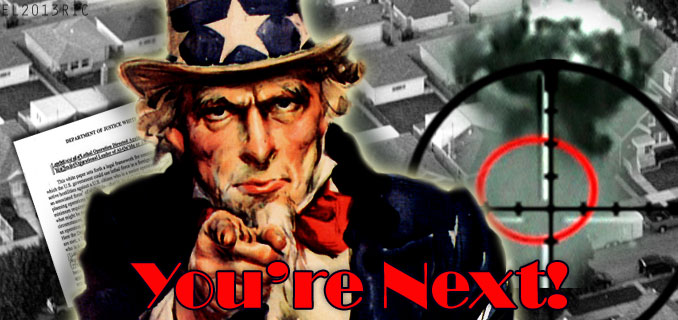
We Can Assassinate Americans On U.S. Soil


Yes, the president does have the authority to use military force against American citizens on US soil—but only in "an extraordinary circumstance," Attorney General Eric Holder said in a letter to Sen. Rand Paul (R-Ky.) on Tuesday. 
"The US Attorney General's refusal to rule out the possibility of drone strikes on American citizens and on American soil is more than frightening," Paul said Tuesday. "It is an affront the constitutional due process rights of all Americans."
Holder, stating that under certain circumstances, the president would have the authority to order lethal attacks on American citizens. The two possible examples of such "extraordinary" circumstances were the attack on Pearl Harbor and the 9/11 terrorist attacks. An American president ordering the use of lethal military force inside the United States is "entirely hypothetical, unlikely to occur, and one we hope no president will ever have to confront," Holder wrote. Here's the bulk of the letter:
As members of this administration have previously indicated, the US government has not carried out drone strikes in the United States and has no intention of doing so. As a policy matter moreover, we reject the use of military force where well-established law enforcement authorities in this country provide the best means for incapacitating a terrorist threat. We have a long history of using the criminal justice system to incapacitate individuals located in our country who pose a threat to the United States and its interests abroad. Hundreds of individuals have been arrested and convicted of terrorism-related offenses in our federal courts.
The question you have posed is therefore entirely hypothetical, unlikely to occur, and one we hope no president will ever have to confront. It is possible, I suppose, to imagine an extraordinary circumstance in which it would be necessary and appropriate under the Constitution and applicable laws of the United States for the President to authorize the military to use lethal force within the territory of the United States. For example, the president could conceivably have no choice but to authorize the military to use such force if necessary to protect the homeland in the circumstances like a catastrophic attack like the ones suffered on December 7, 1941, and September 11, 2001.
The letter concludes, "were such an emergency to arise, I would examine the particular facts and circumstances before advising the president of the scope of his authority."
In a Google+ Hangout last month, President Obama refused to say directly if he had the authority to use lethal force against US citizens. As Mother Jones reported at the time, the reason the president was being so coy is that the answer was likely yes. Now we know that's exactly what was happening. 
"Any use of drone strikes or other premeditated lethal force inside the United States would raise grave legal and ethical concerns," says Raha Wala, an attorney with Human Rights First. "There should be equal concern about using force overseas."

Monday, January 14, 2013

36 Civilians Are Murdered For Every Terrorist Killed By A Drone


Tom Mckay writes,


“Did we just kill a kid?” Brandon Bryant, a drone operator working for the Air Force,realized aloud.
“Yeah, I guess that was a kid,” another pilot replied.
“No. That was a dog,” someone answered via computer from a distant military command center.
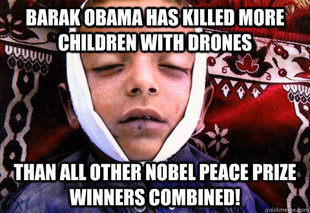
Bryant’s scenario is an all-too-common occurrence in the War on Terror. Under President Obama, the use of military drones to conduct targeted assassinations against terrorists has exploded. More than 300 drone strikes have been conducted, killing some 2,500 people.
Obama has authorized 193 drone strikes in Pakistan – 4 times the amount authorized by George W. Bush.
According to Global Research, over the past 4 years Obama has authorized attacks in Pakistan which have killed more than 800 innocent civilians and just 22 Al-Qaeda officers.
That constitutes at least 36 civilians per target. This is grotesquely unacceptable. 
Even if we accept the logic and rationale of drone strikes – which I do not – we should be shooting for zero civilians killed per target.
Worse: in August last year, the Bureau of Investigative Journalism investigated the history of drone strikes in Pakistan, concluding that there have been credible reports of 168 children killed in Pakistan by CIA drone strikes over the previous 7 years. This would account for a “minimum” of 44% of civilians killed by the attacks.
The rationale for these strikes is morally flimsy. They reveal a disturbing lack of empathy for the helpless bystanders caught in an unclear conflict with no escape. While bombs drop in Pakistan and Afghanistan, Americans justify these strikes as necessary.
How could our national defense teeter on the murder of children?
Glenn Greenwald criticized pundit Joe Klein in October for his “sociopathic” statement that “the bottom line is: ‘whose 4-year-olds get killed?'”
“The problem with drones is it’s like your lawn mower. You’ve got to mow the lawn all the time. The minute you stop mowing, the grass is going to grow back,” said Bruce Riedel, an Obama counter-terrorism adviser, in the Hartford Courant in late October.
The Fourth Geneva Convention states that “children shall be the object of special respect and shall be protected against any form of indecent assault”; R.K. Dixit explains that “the use of the word ‘shall’ makes it a mandatory provision in the form of ‘duty’ and casts an obligation on the parties to carry out the provision in letter and spirit.” Presumably, "indecent assault" includes being targeted with a missile.
It also states that nations must respect the Geneva Convention in all situations, including the occupation of another country’s territory.
It is not enough to ask Obama to end the War on Terror.
It is time to ask Obama to publicly denounce the killing of children in the War on Terror, state in no uncertain terms that the killing of children is unacceptable, and take serious measures to ensure that children are never considered acceptable collateral damage in drone or air strikes – and especially that they are never designated as targets.

Monday, November 05, 2012

Clearing The Path For Future Tyranny


By Murtaza Hussain,
Courtesy Of "Al-Jazeera"


The right to indefinitely detain citizens without trial, classified kill-lists and "disposition matrices", a fast-expanding fleet of legally-unaccountable aerial drones, and the presumptive right to kill American citizens without due process - all these sweeping expansions of executive power are the legacy of four years of Barack Obama's presidency and of themselves represent a new era in the power of the American government over its citizenry.

Never before has an American president asserted their ability to act as judge, jury and executioner towards their own citizens, a power which Barack Obama claimed for the executive branch in killing the New Mexico-born fundamentalist preacher Anwar Al-Awlaki in a drone strike - followed by his 16 year-old son two weeks later.
The passage of the National Defense Authorisation Act (NDAA) provides the President with the ability to place Americans under indefinite military detention without trial or even the provision of evidence; a power which extends to citizens abroad as well as to those on US soil. Such concepts seem utterly otherworldly to most Americans, especially given their origination from a liberal president who had been elected in large part as a response to the perceived belligerence and militarism of George W Bush.

With Obama facing a tight re-election battle with Mitt Romney, even his supporters - who would normally express alarm at these actions - are reticent to criticise him for fear of damaging his chances and empowering his Republican challenger. However it is important to note that the unprecedented assertions of executive power over the life and death of American citizens during the past four years is an issue that goes far beyond partisan politics and which will have lasting repercussions for the United States after the upcoming election is a distant memory.

While most Americans may trust Barack Obama as an individual not to abuse the broad new legal rights he has enshrined for his office, the undeniable truth is that regardless of whether he serves another four years, he will not be president indefinitely - and the expansive powers he has claimed represent an indelible legacy which will not expire when he leaves office. Even if Mitt Romney is defeated this coming November, an outcome which by most expert accounts is reasonably likely, further years and decades down the line there is no guarantee as to what type of president will come to office and what attitude they will have towards their new powers to detain and execute citizens without reference to once-sacred American values such as habeas corpus and the overarching right to due process - all of which have been unceremoniously discarded by this administration.
While the primary target of rights abuses in recent years have been religious minority communities towards whomsignificant percentages of Americans feel fear and antipathy, the dragnet will inevitably expand in the long-term given changing political priorities, and is already being applied to individuals and groups today whose ethno-religious background has nothing to do with the post-9/11 "War on Terror".

Domestic Surveillance and Suppression

The FAA Reauthorisation Act signed into law by President Obama earlier this year means that unmanned drones will be moving from foreign military theatres into American skies at a rapidly accelerating pace - an estimated 30,000 by 2020. The first American to be arrested by a domestic police force with the assistance of Predator drone technology was an anti-government "sovereigntist" named Rodney Brossart who was detained on his property in South Dakota using what his attorney described as "guerilla-like police tactics".

Drones are already in use by police forces around the country and law enforcement officials in Texas have already stated that they are considering equipping their own department's Predator drones with rubber bullets and tear gas - weapons which have historically been suited for crowd suppression. Plans are being implemented for the use of drones for domestic surveillance from New York to California, the latter which held a large-scale exercise dubbed "Urban Shield" which heavily involved the use of unmanned drones for reconnaissance purposes.

Contrary to popular criticisms, drone technology is not inherently malign and in many ways domestic use of them as a tool of police forces is not dissimilar to the employment of helicopters and other aerial vehicles in the past. What makes the new and rapidly expanding domestic drone fleet a potential threat to American civil liberties is that it has come into existence without meaningful oversight or regulation of their activities. As such, no lines have been drawn to mitigate their effect upon public privacy nor upon their impending weaponisation. Just as the drone warfare campaign in Pakistan and Yemen has become an entirely extrajudicial exercise in targeted killing and assassination, domestic drone use is rapidly expanding without meaningful attempts at legal oversight.

In what has been perhaps a conscious decision, technology in the hands of government has been allowed to advance without requisite changes in legislation to bring protection to the fundamental rights of American citizens. A policy paper published last year by the ACLU regarding domestic drone usage stated that "all the pieces appear to be lining up for the eventual introduction of routine aerial surveillance in American life - a development that would profoundly change the character of public life in the United States".

Americans, especially those who identify with progressive values, must ask themselves what happens when this new, massively expanding and legally unaccountable fleet of unmanned drones comes into the hands of a president whom they do not view to be as personally scrupulous as Barack Obama - something which in the long-term is almost inevitable regardless of who holds office over the next four years.

A Separate Rule Of Law

As noted by New York Times Editor Andrew Rosenthal, in the post-9/11 period the United States has implemented what is effectively a "separate legal system for Muslim Americans"; one which is uniquely harsh, unyielding, and where the constitutional right to due process is applied unevenly if at all in the majority of cases.

In this environment, once unconscionable government powers - such as indefinite detention, blanket surveillance as well as state-sanctioned kidnapping and rendition - have been asserted and often codified, thus ensuring that they remain in effect into posterity. While it is America's relatively small Muslim population today which bears the brunt of these measures, there is no guarantee upon whom they will be employed in the future. Ironically, Obama himself noted this in his 2004 keynote address to the Democratic National Convention where he astutely pointed out that"if there's an Arab American family being rounded-up, without benefit of an attorney, or due process, that threatens my civil liberties".

Disappointingly however, Obama has presided over an unprecedented and institutionalised erosion of the civil liberties of Muslim Americans and Muslims in general which has left them subject to blanket surveillance, due process-freeindefinite detention, and, as noted earlier, in certain cases extrajudicial execution. The use of entrapment as a tool by law enforcement agencies to mastermind terror plots on their own and induce young, isolated and impressionable Muslims into joining them has effectively become standard operating procedure, with the tacit endorsement of the executive branch.

Following a time-tested historical pattern, these odious and broad government powers are already expanding from victimising minority communities to targeting the population at large, as was evidenced in FBI operations against the "Occupy" movement, which arose across several American cities earlier this year.

Japanese and African American communities have borne the brunt of government oppression in decades before, but the formalised and indefinite scope of powers granted during this administration provide the opportunity for any future president to rule with less regard to civil liberties than at any time in history, suspending fundamental rights by executive fiat and operating with less transparency than any administration which preceded it.

Again, while Americans may "trust" Barack Obama with such powers, there is no guarantee that an as-yet unknown president years later will not abuse the rights granted him through the erosion of constitutionally mandated checks on executive power and legal protections for the citizenry.

Paving The Way For Tyranny

Imagine for a moment it were George W Bush and not Barack Obama who had asserted the right of a president to kill American citizens without trial, subject them to permanent military detention and warrantless wiretapping, and who had authorised the creation of a legally unaccountable fleet of unmanned, perhaps armed, aerial robots to conduct surveillance over American cities.

The outcry among liberal Americans would almost assuredly be greater than the muted reaction which Barack Obama's imposition of these very measures has created, and domestic opposition would perhaps cause them to be prevented or at least equipped with safeguards and oversight to prevent broad erosion of domestic civil rights. Although Barack Obama is facing an electoral challenge from Mitt Romney, a politician who many progressives find unpalatable, it is worth reflecting that regardless of what happens in this election these powers will always remain with any future president.

In coming years there could very well be another president as - or more - militaristic and belligerent than Bush and they will now possess far greater powers of domestic coercion than he ever had at his disposal. Had Bush wanted to impose such sweeping measures towards the latter years of his term he likely could not have - domestic opposition to the excesses of his government was more vocal and would have imposed great political costs had he tried to implement the type of radical measures which Obama has seamlessly placed into the hands of the federal government.  

To be clear, Barack Obama is not a tyrant, and he is not as president going to undertake a broad-based campaign of oppression against the American people. But what his remarkably successful campaign against American civil liberties over the past four years has tangibly done is remove the legal structures which exist to prevent the empowerment of a potentially wanton and increasingly tyrannical government in the future.

The power to hold secret "kill-lists" of American citizens and a raft of other measures that would only recently have been thought unconscionable are now firmly in the hands of the executive branch. America's founders knew the dangers of unchecked power and built safeguards to avoid the possibility of a president trampling the rights of the citizenry. Now that these have been systematically eroded by the Obama administration, what can we say of the next president who will inherit these sweeping new powers?

A time will inevitably come when progressives will have to face a right-wing president evocative of their former bête noire, and they will undoubtedly do so in an atmosphere where the ability of a president to oppress and subjugate American citizens is at a level comparable to legitimately despotic countries.

In the haste to squelch criticism of him during election season, it is worth reflecting that regardless of what happens on November 4, Barack Obama will not be president of the United States ad infinitum. Despite this, the legacy of dangerously expanded executive powers he has left behind will live on and will take a path which cannot be safely predicted. Failing to challenge this president on his campaign against US civil liberties may one day be looked at as a failing far more significant than the results of this single election.

Wednesday, September 19, 2012

Detaining Citizens Under NDAA


The US government seems determined to have the power to do away with due process and Americans' right to a trial.

I am one of the lead plaintiffs in the civil lawsuit against the National Defense Authorization Act, which gives the president the power to hold any US citizen anywhere for as long as he wants, without charge or trial. In May, following a March hearing, Judge Katherine Forrest issued an injunction against it; this week, in a final hearing in New York City, US government lawyers essentially asserted even more extreme powers - the power to entirely disregard the judge and the law. Indeed, on Monday, August 6, Obama's lawyers filed an appeal to the injunction - a profoundly important development that as of this writing has been scarcely reported.

In the March hearing, the US lawyers had confirmed that yes, the NDAA does give the president the power to lock up people like journalist Chris Hedges and peaceful activists like myself and other plaintiffs. Government attorneys have stated on record that even war correspondents could be locked up indefinitely under the NDAA. Judge Katherine Forrest had ruled for a temporary injunction against an unconstitutional provision in this law - after government attorneys refused to provide assurances to the court that plaintiffs and others would not be indefinitely detained for engaging in first amendment activities. Twice the government has refused to define what it means to be an "associated force", and it claimed the right to refrain from offering any clear definition of this term, or clear boundaries of power under this law. This past week's hearing was even more terrifying: incredibly, in this hearing, Obama's attorneys refused to assure the court, when questioned, that the NDAA's provision - one that permits reporters and others who have not committed crimes to be detained without trial - has not been applied by the US government anywhere in the world - after Judge Forrest's injunction. In other words, they were saying to a US judge that they could not or would not state whether Obama's government had complied with the legal injunction that she had lain down before them.

 US Senate passes 'indefinite detention' bill
To this, Judge Forrest responded that if the provision has indeed been applied, the United States government itself will be in contempt of court. Government attorneys also, in this hearing, again presented no evidence to support their position - and brought forth no witnesses.

I have mixed feelings about suing my government, and in particular, my president, over the National Defense Authorization Act. I voted for Obama. I even had an Obama dance; and I could not stop crying for joy and pride the night he was elected. I defended him for over two years.

But no longer. The US public often ignores his actual failings, and more importantly, entirely ignores how, when it comes to the "war on terror", the US government as a whole has been deceitful, reckless, even murderous. We lost nearly 3,000 people on 9/11. Then we allowed the Bush administration to lie and force us into war with a country that had nothing to do with that terrible day: we killed between several hundred thousand [PDF] and one million Iraqi citizens, caused vast harm to our own soldiers and gutted this nation's treasury for a war that never should have happened. Given these crimes, it is no wonder that Bush, Obama, and the US Congress appear now to be far more interested in enacting misguided, "boogieman in every corner" "war on terror" policies that distract citizens from investigating the truth about what we've done, and what we've become, since 9/11.

I, like many in this fight, am now afraid of my government. We have good reason to be. Due to the NDAA, Chris Hedges, Kai Wargalla, the other plaintiffs and I are squarely in the crosshairs of a "war on terror" that has been an excuse to undermine liberties, trample the US Constitution, destroy mechanisms of accountability and transparency, and cause irreparable harm to millions. Several of my co-plaintiffs know well the harassment and harm that they incur from having dared openly to defy the US government's narrative: court testimony included government subpoenas of private bank records of Icelandic Parliamentarian Birgitta Jonsdottir, Wargalla's account of having been listed as a "terrorist group", and Hedges' concern that he would be included as a "belligerent" in the NDAA's definition of the term - because he interviews members of outlawed groups as a reporter - a concern that the US attorneys refused on the record to allay. Other advocates have had email accounts consistently hacked, and often find their electronic communications corrupted in transmission - some emails vanish altogether - a now-increasing form of pressure that supporters of state surveillance and intervention in the internet often fail to consider.

I've been surprised to find that most people, when I mention that I am suing my president, Leon Panetta, and six members of Congress (four Democrats and four Republicans), thank me - even before I explain what I'm suing them over! And when I do explain the fact that I and my seven co-plaintiffs are suing over a law that suspends due process, threatens first amendment rights and takes away the basic right of every citizen on this planet to not be indefinitely detained without charge or trial, their exuberance shifts, and a deeper gratitude shines through their newly somber demeanours. But this fight has taken a personal toll on many of us, including myself. This winter, as I led the campaign to amend this lawsuit and was working over 80 hours per week to get everything ready, I suddenly ended up in the emergency room, and have subsequently endured six months of a debilitating neurological illness. Thus, I have relied on an international team of volunteers, whose courage and energy has led them successfully to garner support for a lawsuit that is an attempt to restore our most fundamental of liberties.

My government seems to have lost the ability to tell - and, perhaps, even to know - the truth about the Constitution any more. I and many others have not. We are fighting for due process and for the First Amendment; for a country we still believe in; and for a government that is still legally bound to its Constitution.

If that makes us their "enemies", then so be it. As long as they cannot call us "belligerents", lock us up and throw away the key - a power that, incredibly, this past week US government lawyers still asserted is their right to claim. Against such abuses, we will keep fighting.

I am no radical; I am simply a moderate Democrat, suing my out-of-control government. For the sake of people everywhere, I sincerely hope we win.

Via: "Al-Jazeera"

Saturday, August 04, 2012

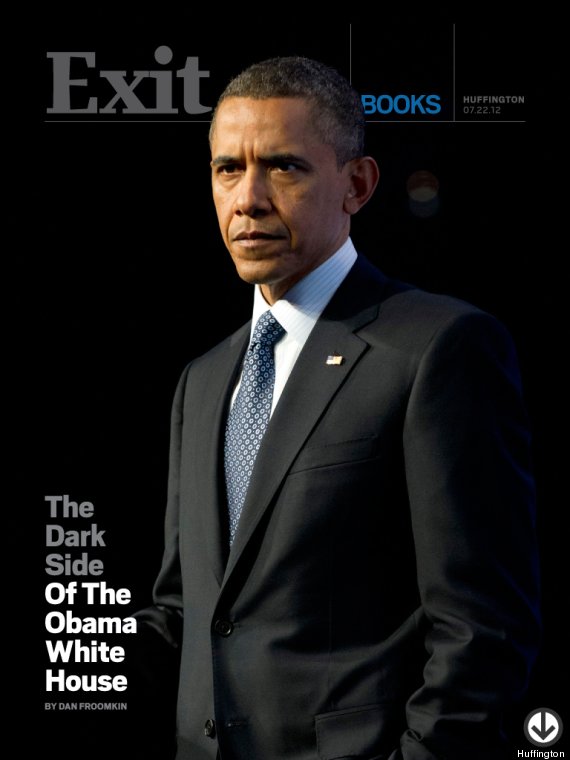
The Dark Side Of The Obama White House

obama book review


In "Confront and Conceal: Obama’s Secret Wars and Surprising Use of American Power," New York Times reporter David E. Sanger describes in quite extraordinary detail the Obama administration’s hitherto secret cyberwar campaign against Iran, its targeted drone strikes against Al Qaeda and affiliates, and any number of other covert ops, including of course the raid that killed Osama bin Laden. As he indicates in his subtitle, Sanger concludes that the biggest surprise of the Obama presidency is just how aggressive he has been in his application of military power.
But a case can be made that what’s even more surprising is Obama’s abuse of secrecy. Publicly an advocate of government transparency and oversight, Obama has nevertheless hidden the most controversial and unilateral aspects of his presidency — including new ways of waging acknowledged and unacknowledged wars — more thoroughly and effectively than anyone might have imagined.
Sanger does end up raising some profound questions here and there. For instance, Sanger asks:
“What is the difference — legally and morally — between a sticky bomb the Israelis place on the side of an Iranian scientist’s car and a Hellfire missile the United States launches at a car in Yemen from thirty thousand feet in the air? How is one an ‘assassination’ — condemned by the United States — and the other an ‘insurgent strike’? What is the difference between attacking a country’s weapon-making machinery through a laptop computer or through bunker-busters? What happens when other states catch up with American technology — some already have — and turn these weapons on targets inside the United States or American troops abroad, arguing that it was Washington that set the precedent for their use? These are all questions the Obama team discusses chiefly in classified briefings, not public debates.”

Via: "The Huffington Post"

Friday, August 03, 2012

Capitalism’s Sacrifice Zones


By Bill Moyers


There are forgotten corners of this country where Americans are trapped in endless cycles of poverty, powerlessness, and despair as a direct result of capitalistic greed. Journalist Chris Hedges calls these places “sacrifice zones,” and joins Bill this week on Moyers & Company to explore how areas like Camden, New Jersey; Immokalee, Florida; and parts of West Virginia suffer while the corporations that plundered them thrive.
“These are areas that have been destroyed for quarterly profit. We're talking about environmentally destroyed, communities destroyed, human beings destroyed, families destroyed,” Hedges tells Bill. “It's the willingness on the part of people who seek personal enrichment to destroy other human beings… And because the mechanisms of governance can no longer control them, there is nothing now within the formal mechanisms of power to stop them from creating essentially a corporate oligarchic state.”
The broadcast includes images from Hedges' collaboration with comics artist and journalist Joe Sacco, Days of Destruction, Days of Revolt, which is an illustrated account of their travels through America’s sacrifice zones. Kirkus Reviews calls it an "unabashedly polemic, angry manifesto that is certain to open eyes, intensify outrage and incite argument about corporate greed."
A columnist for Truthdig, Hedges also describes the difference between truth and news. “The really great reporters -- and I've seen them in all sorts of news organizations -- are management headaches because they care about truth at the expense of their own career,” Hedges says.

Thursday, August 02, 2012

High v. Low-Level Leaking

High v. low-level leaking
Army Pfc. Bradley Manning is escorted out of a courthouse in Fort Meade, Md., Wednesday, Dec. 21, 2011, after a military hearing that will determine if he should face court-martial for his alleged role in the WikiLeaks classified leaks case went on recess for the day. (AP Photo/Patrick Semansky)(Credit: AP)

Glenn Greenwald writes,

The Obama administration’s war on whistlebowers continues unabated this week on two fronts. First, several hearings were held in the court-martial prosecution of Bradley Manning, during which military prosecutors argued that evidence that Manning’s alleged leaks did no harm to national security, as well as evidence of his inhumane pre-trial detention conditions, should both be completely suppressed (in contrast to most American media outlets, which have ignored the proceedings entirely, Firedoglake’s superb young writer, Kevin Gosztola, is providing typically comprehensive coverage). Meanwhile, in a federal court in Virginia this morning, former CIA official John Kiriakou is seeking dismissal of most of the criminal charges brought against him by the DOJ for allegedly leaking details of the Bush era torture program; Kiriakou is claiming he is the victim of vindictive prosecution (as former NSA official Thomas Drake, who himself was prosecuted (unsuccessfully) by the Obama DOJ for whistleblowing, put it this morning: “Commit torture: receive exec branch/DoJ protection. Whistleblow on torture w/lawful disclosures: become criminal defendant like John Kiriakou” [Twitter typos corrected]).
But the worst part of this whistleblower war, beyond the obvious threats it poses to transparency and a free press, is how purely selective it is. Just as Lynndie England went to prison for her detainee abuse while Don Rumsfeld, Dick Cheney and John Yoo went on lucrative book tours for theirs, it is only low- to mid-level leakers who are punished by the Obama DOJ, and then only for the crime of embarrassing the U.S. Government rather than glorifying it. High-level Obama administration leakers disclose classified information at will, without the slightest fear of punishment. One can pick up a newspaper or listen to a television news broadcast almost every day and find examples of leaks from Obama’s high-level officials far more serious than those allegedly committed by the Bradley Mannings and Thomas Drakes of the world. From today’s New York Times article on Syria:
In Washington, a senior American official who is tracking Syria closely said Thursday that American intelligence reports had concluded that Syrian forces were moving some parts of their chemical weapons arsenal to safeguard it from falling into rebel hands, not to use it. “They’re moving it to defend it in some of the most contested areas,” said the official, who spoke on condition of anonymity because of the classified intelligence reports.
Quoting classified American intelligence reports on Syria to The New York Times is a more serious leak than any of those serving as the basis for the multiple espionage prosecutions brought by the Obama DOJ. The difference is that this is a “senior official” rather than a low-level one, and it’s not done with the intent to expose high-level corruption, deceit or illegality. Therefore, like all the other high-level crimes shielded from accountability by the Obama administration, it will be protected. Therein lies the clear lesson about the real purpose of the Obama war on whistleblowers.
* * * * *
New York Times columnist David Brooks carefully cultivates a centrist demeanor on domestic political questions, but on foreign policy, the former Weekly Standard writer and full-fledged Iraq War advocate is as neoconservative as it gets. Today, following in thefootsteps of the progressive Center for American Progress, Brooks devotes his column to hailing the grand success of President Obama’s foreign policy. Entitled “Where Obama Shines,” the column argues: “it should be noted that Barack Obama has been a good foreign policy president.” Deeming this record “impressive,” he gushes: “Obama has moved more aggressively both to defeat enemies and to champion democracy. He has demonstrated that talk of American decline is hooey. The U.S. is still responsible for maintaining global order, for keeping people, goods and ideas moving freely.” Brooks concludes:
And, partly as a result of his efforts, the world of foreign affairs isrelatively uncontentious right now. Foreign policy is not a hot campaign issue. Mitt Romney is having a great deal of trouble identifying profound disagreements. If that’s not a sign of success, I don’t know what is.
Again we see a prime legacy of the Obama presidency: the transformation of what had been contentious disputes into harmonious bipartisan consensus. And we also see again that one of the biggest myths of American political discourse is that bipartisanship is so terribly and tragically rare.
Via: "Salon"

Tuesday, July 31, 2012

Obama "Shooting People Evil, Senseless, Beyond Reason"

Jay Johnson writes:

While reading the Text of Obama Statement on Shootings in Colorado - Associated Press 7/20/2012, one line struck this writer as quite astounding: 


"We may never understand what leads anybody to terrorize their fellow human beings like this. Such violence, such evil is senseless. It's beyond reason."

The President may have realized afterward that since he has been ordering the shooting of thousands in a half-dozen countries, the words "evil, senseless, beyond reason" could easily reflect back on himself. A later Obama statement on the massacre in a Colorado movie house did not contain the words 'evil, senseless, violence beyond reason.'

In any case, history books, in some future, probably not to distant, day will deplore Obama's pathetic 9/11 excuse for increasing and extending a ten year old military occupation war in dirt poor Afghanistan, killing, and killing easily, young and old Afghani, who are fighting invaders of their nation as they have always done. And perhaps one day independent investigative journalism will reveal whose instructions Obama was following from within that "financial element" that FDR confided "has owned the government since the days of Andrew Jackson. "*

Historians will denounce his shameful exceeding of his executive powers under the Constitution, to have assassinated even American citizens without trial, and ridicule the pack of lies he offered in sick defense of his frightening Hellfire and Predator drones murdering intentionally and collaterally while menacing all citizens in some of the most poverty-stricken populations on earth. Historians will judge his character by his once infamous joking about using a drone on his daughters boyfriends- "they'll never know what hit them."**


Very possibly, scholars will chronicle a time when Americans were no longer kept in ignorance by a commercial media blackout of the last year of Martin Luther King Jr.' life, when King called his country " the greatest purveyor of violence in the world " and condemned US wars as all meant to maintain "unjust overseas predatory investments."*** Such a time might well arrive in the racing era of instant world-wide personal communication while Barack Obama is still alive and prosecutable for crimes against humanity, or in his own words of 2012, 'for violent, evil, senseless and beyond reason, terrorizing fellow human beings." - With the record of his words Obama would have difficulty pleading insanity.

Jay Janson peoples historian activist, musician and writer, who has lived and worked on all the continents and whose articles on media have been published in China, Italy, England and the US, and now resides in New York City.

Footnotes

Franklin D. Roosevelt, Wikipedia 


** listen or read: King's April 1967 New York sermon: Beyond Vietnam - a Time to Break Silence
or see International Awareness Campaign  
http://kingcondemneduswars.blogspot.com/

Friday, July 20, 2012

DHS Emergency Power Extended


The Obama administration has given the Department of Homeland Security powers to prioritize government communications over privately owned telephone and Internet systems in emergencies.
An executive order signed June 6 “gives DHS the authority to seize control of telecommunications facilities, including telephone, cellular and wireless networks, in order to prioritize government communications over private ones in an emergency,” said Amie Stephanovich, a lawyer with the Electronic Privacy Information Center (EPIC).
The White House says Executive Order 13618, published Wednesday in the Federal Register, is designed to ensure that the government can communicate during major disasters and other emergencies and contains no new authority.
“The [order] recognizes the creation of DHS and provides the Secretary the flexibility to organize the communications systems and functions that reside within the department as [she] believes will be most effective,”White House spokeswoman Caitlin Hayden said in an email. “The [order] does not transfer authorities between or among departments.”
She said the order replaced one originally signed in 1984 by President Reagan and amended in 2003 by President George W. Bush after DHSwas set up and took responsibility for emergency response and communications.
When the original order “was written during the Cold War, the motivating national security concern was maintaining communications capability following a devastating nuclear strike,” Ms. Hayden said.
The new order “address[es] a world in which our economy and government are far more reliant on communications technologies to maintain essential functions than we were then,” she wrote.
At issue is a provision of the four-page order that says Homeland Security Secretary Janet A. Napolitano “shall … satisfy [federal] priority communications requirements through the use of commercial, government, and privately owned communications resources.”
“The previous orders did not give DHS those authorities over private and commercial networks,” Ms. Stepanovich said. “That’s a new authority.”
“This should have been done by Congress, so there could have been proper debate about it,” she added. “This is not authority that should be granted by executive order.”
Ms. Hayden said the legal basis for the order is Section 706 of the 1934 Communications Act. The section authorizes the president to “cause the closing of any facility or station for wire communication” and gives him “control of any such facility or station” if a state of war, or the threat of one, exists.
The new order “extends Section 706 powers to the Internet,” said James Harper, an electronic-privacy advocate at the Cato Institute, a libertarian think tank.
The authorities “might have made sense in the 1930s,” but now the communication networks are too complex and interdependent, he said. “If you try to seize control of the Internet that way, you will break it.”
Under the previous executive orders, communications providers have long established priority access programs for federal users. In the telephone system, a special code the user inputs before dialing a number automatically tells the phone companies’ equipment to give the call priority.
“Mobile phones, the Internet, and social media are all now integral to the communications landscape,” Ms. Hayden said.