From The Era Of Gladio To The War On Terror
By Makinde Adeyinka
Courtesy Of "Global Research"
“You had to attack civilians, the people, women, children, unknown people far from any political game. The reason was quite simple – to force the people to turn to the state for greater security.” - Vincenzo Vinciguerra
The nature, necessity and scope of the miscellany of powers exercised by the state over the nation is in one sense arguably as contentious in the contemporary circumstances of the Western world as it was in the distant pre-democratic medieval past.
In his work Della Ragion di Stato (The Reason of State), which was completed in 1589, the Italian thinker Giovanni Botero argued against the underpinning philosophical amorality espoused by Niccolo Machiavelli in Il Principe (The Prince), a political treatise centred on the ways and methods of the manipulation of the levers of the power by a ruler in an organised state.
The thrust of Machiavelli’s seminal piece was that virtually any action taken by a ruler to preserve and promote the stability and the prosperity of his domain was inherently justifiable. Thus, the employment of violence, murder, deception and cruelty toward achieving these ends were not ignoble in so far as the ends justified the means.
With its implications of a required recourse to illegality and a subtext offering more than a whiff of authoritarianism, this is not a conceptualisation of the modus operandi by which modern Western democratic states are supposed to operate both in terms of their domestic and foreign policy-strategies.
Yet, while the modern state, guided as it is by an ethos encapsulating the rule of law and the respect for human rights, exercises powers which are checked and balanced by a mandated adherence to constitutionality, there are troubling questions and unresolved problems which have been raised by the workings of the intelligence agencies of the executive branch of government.
Those who work in the domestic and foreign branches of the security services are tasked with detecting threats under a necessary veil of secrecy. But questions abound as to the boundaries of their activities and about how truly accountable they are.
Astoundingly, the laws under of the United Kingdom did not even formally acknowledge the existence of MI5, the domestic security service, until near the closing of the 20th century.
The case of Harman and Hewitt versus the United Kingdom in 1991, which was brought under the European Convention of Human Rights, held that the failure of the United Kingdom to provide a statutory basis for the existence of this body which had powers of surveillance and file-keeping ran counter to the rights protecting privacy, and, by extension, was an abrogation of the rule of law.
As a consequence of the ruling in the case, the United Kingdom passed a statutory charter for MI5 under the Security Service Act of 1989, and later took a similar step for its counterpart with a foreign remit, the Secret Intelligence Service, via the Intelligence Services Act of 1994.
Quite extraordinarily, the United Kingdom’s intelligence services continue to maintain the fiction that they ‘don’t do dirty’, in other words, that they do not subvert foreign governments and plan assassinations.
This goes all the way back to the denials about the so-called Lockhart Plot, a scheme by MI-1C; MI6’s precursor, which was led by Robert Bruce Lockhart. Lockhart’s plan is believed to have had as its aim the assassination of Lenin and the overthrow of the newly installed Bolshevik government in Russia.
Such eventualities, it was hoped, would enable a succeeding government to tear up the Brest-Litovsk Treaty and have Russia rejoin the war being waged being against Germany.
The assertion some years ago by a top MI6 official that it did not organise assassinations correctly provoked howls of derision as well as a sense of utter incredulity. “What do they exist for?” went the typical response.
This was somewhat recanted by Sir Richard Dearlove, a former head who admitted that agents had the power to use “lethal force”.
Agents are allowed under the Intelligence Services Act to conduct illegal activities such as breaking and entering and planting listening devices in the interests of national security, and while there is no specific proviso giving MI6 agents a ‘license to kill’, section 7 of the Act, not only offers protection to agents who have bugged and bribed, but also where they have become enmeshed in enterprises involving murder, kidnap and torture, where such actions have been authorised in writing by a government minister.
Still, it must be reminded that while renegade British agents have alleged that plans had existed in the recent past to assassinate former heads of governments such as Serbia’s Slobodan Milosevic and Libya’s Muarmar Gadaffi, the official policy of course remains to neither confirm nor deny any allegations related to its activities.
Despite the recent legislative reforms in Britain, the perception of an extremely powerful and at times sinister working secret state persists there as it does in the United States and other Western nations.
Congressional investigations in the United States after the fall of President Richard Nixon in the aftermath of the Watergate scandal explored and uncovered schemes by intelligence agencies, notably by the Central Intelligence Agency (CIA) and the Federal Bureau of Investigation (FBI) which involved the deliberate subversion of foreign governments and targeted assassinations regarding the former, and widespread infringements on individual liberties through spying and harassment, as well as targeting groups and associations for infiltration and disruption.
A disturbing allegation often made and documented about many agencies of the secret state and their subterranean machinations, is a tendency to corruption and even the perpetuation of criminal cultures which have involved the forming of unholy alliances with gangsters, political extremists and corrupt regimes.
For instance, the CIA was discovered to have conspired with elements within the American Mafia to assassinate Cuba’s Fidel Castro in the 1960s, and in the 1980s, in defiance of the law set by Congress, it disbursed funds to the Nicaraguan Contras who agents knew where also financed from drugs sources.
In the 1960s and 1970s, Aginter Press, the front for Yves Guérin-Sérac’s fascist guerrilla training camp, which was designed to undermine the chances of Western liberal democracies from falling under the sway of the Left, was partly financed by the CIA.
Most of these endeavours were carried out with the backing and direction of figures in democratically elected governments. While politicians maintain the veneer of being subject to a guiding framework of moral propriety and the operation of the rule of law, in the shadows and behind the curtains, they urge, they manage and facilitate the commission by immoral methods what they construe to be ultimately in the interests of their nations.
And a critical question: to what extent does the historical record unmask governments as the agents of ‘synthetic’ terror? In the ‘Game of Nations’, the use of secret services and military ‘black operations’ to manufacture incidents to justify wars and social crackdowns is almost an obligation. As the often used phrase goes, “The first casualty of war is truth.”
Western historians have no problems attributing blame to incidents manufactured by totalitarian or authoritarian regimes such as those perpetrated by the forces of imperial Japan in order to invade Manchuria and then China, and also the ‘Gleiwitz Incident’ used by Hitler’s Third Reich to invade Poland.
And the Western media has had no problems in airing the suspicions about the Russian government’s complicity in the 1999 outrage dubbed ‘The Moscow Apartment Bombings’. Blamed on Chechen separatists, it formed the pretext for unleashing a second bloody war against the Russian federated state of Chechnya.
But what of the case for those acts of prefabricated violence and disinformation used by the security agencies of Western democracies not only to subvert foreign governments including the CIA’s famous overthrow of the democratically elected government of Mohamed Mossadegh in Iran, but also used within their own borders to achieve objectives based on a perceived ‘national interest’?
Further, it may be asked whether this picture; that of one involving the possibility of the mounting of False-Flag operations, fits into the current contemporary circumstances of terror attacks in the West which have occurred before and during a series of wars waged in the Middle East by an alliance of America and Western European nations.
The state today, as was the case in the times of Machiavelli and Botero has a preeminent concern for its sustenance and its self-preservation. These concerns may at times be couched in terms of what is perceived to be the ‘national interest’ or as the ‘strategic interests of the country’ and as a matter of ‘national security’.
And if the national interest is that Italy must not succumb to any form of influence by a government even partially populated by communists or that the American strategic interest must be to secure continuous access to mineral resources from a particular region of the world which happens to be predominantly populated by Muslims, how far should the state go towards ascertaining those interests?
Should it resort to amoral means including the aforementioned violence and deceit? Or are there limits or boundaries; the crossing of which would betray all of what is held to be sacrosanct in the self-avowed bastions of liberty and democracy?
Whereas the means of achieving certain state interests may be openly and unabashedly pursued and accomplished through the crude machineries of an authoritarian and despotic rulership, it becomes clear that in democratic societies, where objectives have to be met with the consent and approval of the majority of the people, recourse may have to be made to the services of secret apparatus’ of state to create the circumstances for facilitating such consent.
It also aids the rulers of such ostensibly freedom-loving and democratic states to be able to empower themselves with laws which enable it to adopt certain characteristics associated with authoritarian rule with the consent of the citizens who allow themselves to be stripped of hard won freedoms and liberties.
The result of some of the strategies employed first in containing the advancement of Soviet Communism and now in terms of grappling with political Islam in the context of the ‘War on terror’ has been to give the democratic states a surreal, almost psychopathic quality because of the pretence of a public face as being one of benevolence, while condoning secret organs which can act with extreme ruthlessness and even depravity.
Granted, it is the case for some that the use of the tactics of extraordinary renditions, torture and targeted assassinations, alongside the practice of the dark arts of deception and intrigue typically employed by the security and intelligence arms of the state, may be the necessary means used to justify the end of purportedly preserving public safety and safeguarding national interests.
But the discomfiture felt by others about the justification of the implementation of draconian and illegal government action speak to the counter argument to the ‘end justifies the means’ rationale. In other words, there must be limits placed on the deviations from conventional morality by governments operating under a democracy
It should be pointed out that the agencies utilised in the policy of fighting the aforementioned threats has not been delimited to the roles played respectively by the American and British secret services, alongside those of some of their Western European counterparts
The involvement of the military intelligence services of all the nations of Western Europe alongside their domestic and foreign intelligence spy houses have for long being co-ordinated under the aegis of the secret realm of a formidably powerful supra-national entity.
For at the centre of the promulgation of ‘dirty wars’ during the ideologically-based ‘Cold War’ between the Soviet Union and the ‘Clash of Civilizations’ between the West and Islamists in the era of the ‘War on Terror’ has been NATO, the acronym for the North Atlantic Treaty Organisation.
Under the leadership of the United States, NATO was created after the Second World War as a military alliance of much of the Western European nations for the purpose of defending the West from the threat of invasion posed by the Soviet Union.
However, it also provided the umbrella under which a war by stealth and deception was waged not only against violent extremist left-wing terrorist organisations, but also diabolically against the populations of certain Western European nations.
Further, as recent events in Libya and current events in Syria indicate, it is now clearly the case that the remit of NATO has expanded to one that vastly exceeds its originally drawn up terms of reference.
But how did NATO become embroiled in the commission of acts of violence against the public in a number of European countries? The answer lies in the policy of the United States geared towards containing the spread of communism and Soviet influence.
As the vastly dominant military partner in the liberation of Western Europe from Nazi domination, and also as the financial powerhouse which facilitated the economic rehabilitation of the area via the implementation of the Marshall Plan, the United States of America had an interest in maintaining the political status quo of these nations.
It meant therefore that it was unwilling to countenance a situation where communist parties stood a chance of attaining political power or exercising influence through the success in the electoral process. This line of thinking also pertained to some degree to ‘Soviet-friendly’ socialist parties.
In the aftermath of the Second World War and in the circumstances of a developing Cold War, both the United States and the United Kingdom decided to establish a network of paramilitary forces, so-called ‘stay-behind’ cells which would wage guerrilla war against an invasion by the armies of the Warsaw Pact led by the Soviet Union.
In time, these networks would be co-opted under the aegis of NATO which co-ordinated the running of these secret armies by the military intelligence services of a range of European countries along with the efforts of the CIA, MI6 and the training programmes offered by the British Special Air Service regiment (SAS) and the American Green Berets.
NATO’s Supreme Allied Commander in Europe was at the head of a structure which supervised the secret armies via the Clandestine Planning Committee (CPC) and a military command centre named Allied Clandestine Committee (ACC).
The existence of these secret armies and the malevolent role they played in contributing to politically motivated violence in many of the Western European nations was not officially revealed until November 1990 when Prime Minister Guilio Andreotti stood before the Italian Parliament to announce the existence of the stay-behind programme which went by different names in each country but which was known as Gladio in Italy.
The stay-behind cells were not subject to Parliamentary scrutiny or control, and such was the secrecy and sensitivity attached to this pan-European guerrilla network that many leaders such as French President Francois Mitterand feigned ignorance. Andreotti, who had caught a lot of heat after his revelation, had to point out that representatives of the French secret army had only met recently at the NATO headquarters in Brussels.
Most shocking about the revelation was how the secret armies had been used to foment violence and bore responsibility for several terrorist outrages against the people of their nations. The secret armies were also used in various plots to subvert and overthrow democratically elected governments, and are also suspected of having been involved in the assassinations of some European leaders.
In Italy they refer to the ‘Anni di Piombo’ or ‘Years of Lead’. This was from a period beginning in the late 1960s and lasting into the 1980s when the thunder of bombs and the sonic crack of bullets intermittently added to the smorgasbord of the nation’s urban soundscape.
These massacres and assassinations represented, ostensibly, a battle drama largely emanating from the ideological extreme Left-wing of the political spectrum. The Brigate Rosse (Red Brigades), a Marxist-Leninist terrorist organisation, was the standard bearer of a policy of waging war against capitalism and imperialism by means of urban guerrilla warfare.
They had ample competition provided by violent paramilitary groups of the far Right. But as pointed out by Daniele Ganser in his book, NATO’S SECRET ARMIES: Operation Gladio and Terrorism in Western Europe, while the Left favoured targeting specific figures from the state and business sectors, the Right favoured mass killings by placing bombs in highly populated areas.
And the Left’s ability to ‘compete’ with the Right was seriously curtailed by the fact that the latter received protection from senior figures working within the Italian secret state including the military secret service.
Among the numerous acts of terror perpetrated during this era, those which stood out were bombings carried out at Milan’s Piazza Fontana in 1969, Peteano in 1972 and Bologna in 1980. So far as assassinations were concerned, the 1978 kidnapping and execution of Aldo Moro, a prominent politician who had previously served as prime minister, represented a watershed.
Though the accumulated acts of violence were carried out by extremist political groups, it would later be revealed that the manipulating hand of the secret apparatuses of state had been at play; orchestrating bouts of synthetic violence in order to create a climate of fear and insecurity among the populace.
It was a ‘Strategy of Tension’, La Strategia della Tensione, an overarching plan which was designed to condition the public to call for a ‘strong’, authoritarian Right-wing government which would prevent the society from sliding into chaos and a possible political takeover of Italy by the Communist Party.
The confessions of Vincenzo Vinciguerra, a former member of the neo-fascist Ordine Nuovo, indicate that the carnage perpetrated at the Milan-based headquarters of the Banca Nazionale dell’Agricoltura which was blamed initially on anarchists, was in fact the work of the far-Right –with the collusion of the security agencies- and designed to instigate the declaration of a state of emergency.
What would have followed, the Left feared, might have been a reconstruction of the Italian constitution in an authoritarian mould.
Vinciguerra’s revelations, made under the auspices of an investigation conducted by Judge Felice Casson, also point to the fact that the Peteano outrage, which involved luring members of the Carabineri to a booby-trapped car and their subsequent murder, was carried out by members ofOrdine Nuovo, although at the time it was blamed on Brigate Rosse.
He also specifically alleged that members of the Italian Military Secret Service had closely collaborated with Ordine Nuovo in the Peteano attack.
Mention of Ordine Nuovo among other organisations and individuals of the extreme Right in Italy and other Western European nations in the post-war period provide evidence of the line of thinking behind the strategy of containing the spread of communism.
The stay-behind cells co-ordinated by NATO did not apparently remain dormant during the decades-long armed stand-off between its member nations and the forces of the Warsaw Pact.
he cells had access to stockpiles of weapons and munitions which were stored in multiple locations. Dumps were hidden in deep forests as well as under cemeteries and churches.
It was later discovered that the bomb used in Peteano, initially blamed on the Brigate Rosse, had in fact originated from a Gladio arms cache placed underneath a cemetery located on the outskirts of Verona.
The explosives utilised had not been of the type used by the Brigate Rosse, but were of the C4 variety, the most potent explosive available at that time, which was used by NATO.
Vinciguerra fitted the profile of the sort of person favoured for selection as a member of the NATO stay-behinds as well as those who were used for what were for all intents and purposes domestic false-flag operations of terrorism.
It was felt that those with leanings to extreme Right-wing political thinking would be more reliable in terms of the commitment and zeal required to carry out a ‘war’ against the spread of Soviet communism.
Of the Bologna railway massacre which led to the slaughter of 85 people, the attack has been blamed on the neo-Fascist Nuclei Armati Rivoluzionari, and as with the case of the Peteano bombing, is suspected of having been facilitated by elements working for the Italian secret service.
The Left-leaning Gruppo Democratici di Sinistra in a 2000 report based on a second parliamentary investigation of Organizzazione Gladio wrote the following:
“Those massacres, those bombs, those military actions had been organised or promoted or supported by men inside Italian state institutions and, as has been discovered more recently, by men linked to the structures of United States intelligence.”
The reference in the report to “men inside Italian state institutions” points to a sinister aspect of the aforementioned murder of Aldo Moro that fits into the whole backdrop of the Cold War and the avowed policy of the United States to contain the spread and influence of communism.
Moro was kidnapped by a cell of the Brigate Rosse run by Mario Moretti. He was put on ‘trial’ before a so-called ‘peoples’ court’ and then sentenced to death; a sentence which could only be commuted by the Italian state releasing 16 prisoners associated with the group. When this was not forthcoming, he was shot and his body placed in the trunk of an abandoned car on a street in Rome.
Was this a straightforward case of a terrorist operation ending in a promised murder after demands were not met? The investigations subsequent to the event have unearthed a series of troubling items of information, not least of which was the disappearance of most of the files on the case from the Ministry of the Interior.
Separate items of critical information were passed on to the ministry of interior, each of which could have led to the Via Gradoli apartment where Moro was imprisoned for at least part of his captivity, were not acted upon.
But of the backdrop. In March 1978 at the time of his kidnap, Moro was in the midst of securingcompromesso storico; the ‘historic compromise’, which was his grand plan aimed at forming a coalition government that would involve giving members of the Italian Communist Party; Partito Communista Italiano (PCI) posts in the executive arm of government.
While he was in captivity, Moro wrote a series of letters to members of his political party, the Democrazia Cristiana (DCI) imploring them to negotiate with his captors and presumably to accede to their demands. These letters, which were not revealed to the public until many years later, were particularly critical of Gulio Andreotti, the then head of government.
In the end, Moro’s pleas and that of his family fell on to the deaf ears of Italy’s rulers; men from Moro’s party who had decided upon a hardline policy of no concessions.
While in captivity, it is likely that Moro would have ruminated over whether his efforts at reaching the historic compromise with the Italian communists had something to do with his capture.
His wife, Eleonora, would recall that on an official visit to America four years previously, he had been told in no uncertain terms by a highly-placed government official that the United States was not in support of any accommodation being reached with the communist party and that he would suffer grievously if he persisted in making such an arrangement.
She testified that Moro had told her the official had said, “You must abandon your policy of bringing all the political forces in your country into direct collaboration. Either you give this up or you will pay dearly for it.”
The comments were said to have so shaken Moro that he cut short his visit and on his return seriously contemplated retiring from politics.
Moro would have been all too aware of the power wielded by the United States in aid of the forces of the political Right in situations where countries were threatening to turn to the left. In 1973, the CIA-backed coup in Chile saw the violent overthrow of the democratically elected Marxist administration of President Salvador Allende.
Closer to home CIA backed coups had unseated governments in Turkey and in Greece. Moreover, he would have recalled an event of what effectively was a coup which had taken place in June 1964 while he was prime minister. It was directed by General Giovanni De Lorenzo, the chief of the Carabinieri, with material support from Renzo Rocca, the director of Gladio units within the military secret police.
The prelude to ‘Piano Solo’, the code-name for the coup, was that elections held in 1963 had resulted in gains for the PCI which polled 14% to the Partito Socialista Italiano’s (PSI) 25%, with the American-favoured Christian Democrats (DCI) taking 38%.
As a result, the PSI was rewarded with cabinet positions, but the subsequent agitation by the PCI for cabinet posts caused a great deal of consternation.
When NATO forces staged a large military manoeuvre, and tanks and troops armed with heavy weaponry had remained within the precincts of Rome for all of May and a large portion of June after a parade marking the 150th anniversary of the founding of the Carabinieri, Moro had felt himself compelled to meet with De Lorenzo.
Shortly thereafter, the socialists gave up their ministerial posts.
A second Right-wing coup, led by Junio-Valerio Borghese, an unregenerate fascist took place on the night of December 7th 1970. ‘Operation Tora Tora’, as was the case with ‘Piano Solo’, laid out plans to take over public buildings, arrest Left-wingers and place hundreds on an internment camp on the island of Sardinia. Preparations were also made to subdue working class districts that were bastions of communist sentiment.
Again, the backdrop was elections in which the political Left had made gains.
Backed by the CIA and the NATO-sponsored units of Gladio, and with the warships of NATO on high-alert in the Mediterranean Sea, the putsch was called off by a mysterious telephone call made in the early hours of the 8th to Borghese from a high-ranking official of the United States.
The call had come from either President Nixon himself or a highly-placed NATO official, and like the originator of the call, the reason for calling off the coup remains a mystery, although some speculate and others insist that a high level of Soviet naval activity in the Mediterranean indicated that they knew of the plans.
The Italian peninsula, a land for centuries renowned for the intrigues and machinations of popes, princes and its political classes, has been the fertile incubator of miscellaneous secret societies who have been greatly influential in the events shaping its people.
These have ranged from the political revolutionary carbonaria movement of the 19th century to the regional-based organised criminal clans who compose Cosa Nostra, Ndrangheta, Camorra, andSacra Corona Unita. The impact of the former on the eventual political unification of the peninsula, and the latter on the perennial blood-sucking of both the state and the people, have been immense.
The level of impact, on the other hand, of the phenomena of massoneria or Masonic lodges on the substantive course of Italian history is sometimes debated. An exception to any doubts can be made in at least one case.
In March of 1981, a list of names consisting of over 900 individuals drawn from the ranks of politicians, the secret service, the armed forces, the police, civil service, journalism and industry was discovered at the home of Licio Gelli, the Grand Master of Propaganda Due (P2) a pseudo Masonic lodge.
Among its members was future prime minister Silvio Berlusconi.
The reference of the aforementioned report by Gruppo Democratici di Sinistra to “men inside Italian state institutions” could also be directed to secret cabals outside of the visible structures of the state; that is, the other possible feature of the ‘secret state’ which involves the contemporaneous existence of a group of powerful and influential persons who may form what effectively is a parallel state.
The idea here is that this group of unelected and unaccountable individuals who are unknown to the public of what is formally termed a democratic society can steer and shape events. It is the stuff of what is often labelled as a ‘conspiracy theory’, but in Italy such an organisation, forming as it was ade facto shadow government, was alive and breathing during the anni di piombo.
What is more is that it was an organisation which was stridently anti-communist and it maintained strong links with the American intelligence community. In 1974, Gelli had a secret meeting with Alexander Haig at the United States embassy in Rome. Haig, the former supreme commander of NATO, who was then the chief of staff of the Nixon administration assured Gelli of continued support for Gladio and efforts geared at circumventing the political Left.
Thus both P2 and Gladio were funded by the United States. Where Gladio provided the armed muscle, P2 acted as a brain trust of sorts, initiating and directing in collusion with American interests the stratagem aimed at derailing the expanding influence of communism.
This secret society, existing in defiance of article 18 of the Italian constitution which forbids the establishment of such associations, was essentially a criminal organisation with ties to Italian organised crime.
It gained international notoriety at the time of the scandal involving the bankrupting of the Banco Ambrosiano, and the murder of the bank’s managing director Roberto Calvi who was found hanging from Blackfriars Bridge in London in 1982.
The coat of arms of P2 bore the image of a black abbot.
P2 was involved in the murder of Mino Picorelli, a journalist whose fate was apparently not unrelated to inside information which he had obtained of the tragedy of Aldo Moro.
Members of the lodge, who were apparently embarking on a meeting on the morning of Moro’s kidnap at the nearby Hotel Excelsoir, are believed to have orchestrated the incident. Several of them, key personnel of the police, the carabinieri and the intelligence services, were allegedly intimately involved in the charade of attempting to locate Moro and his kidnappers.
If so, it was P2’s greatest victory, as the consequences of his murder halted any chance of thecompromisso storico. Gelli’s ultimate plan; that of overthrowing the government via golpista; a coup d’etat, which was to be under a programme dubbed the ‘Plan for Democratic Rebirth’, did not come to pass, but the marginalisation of the Left in general and of the communists in particular was achieved.
In Britain the ‘secret state’ was active during this era of the communist threat, reaching the stage where at two distinctive points in history, the possibility of a military takeover of the country became mooted and later heightened to the extent that plans for action were substantively laid out.
Both coups were to have been directed against the socialist administrations led by Harold Wilson, the first plot occurring in the late 1960s and the second, a culmination of intrigues perpetrated by Right-wing operatives in British military intelligence and the domestic security service, MI5.
The latter part of the 1960s witnessed certain events and trends which caused certain members of the British elite to be alarmed at the direction in which the former imperial power was heading.
One key event was the devaluation of the pound in 1967, a symptom of the continuing perceived ‘degradation’ of a waning nation-empire still traumatised by the humiliation of the Suez debacle of 1956.
Another was the deteriorating situation in Northern Ireland, where the bourgeoning civil rights movement of the Roman Catholic community was being transformed into a militarised struggle led by a revived Irish Republican Army (IRA).
There was also the perception of Wilson and the Labour Party being tolerant of the ‘Ban the Bomb’ movement and a drift towards a policy of unilateral nuclear disarmament. Furthermore, fears about the increasing power of trade unions and controversies related to the uneasiness felt about non-white immigration may have added to the sense of a nation in perpetual crisis.
In 1968, meetings were held at the instigation of the newspaper baron and M15 agent, Cecil King who took the lead in an enterprise which proposed that the army would depose the elected government and install a military alternative with Lord Louis Mountbatten at the helm.
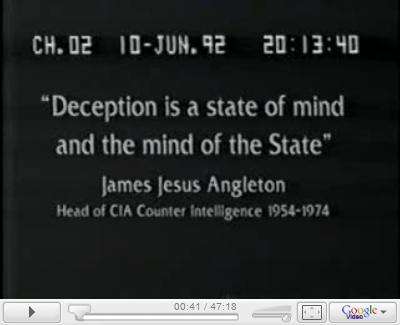
Wilson’s electoral victory in 1964 signified a lurch to the Left, a direction in which elements in the United States government looked upon balefully. The CIA’s ‘spy-hunter’, James Jesus Angleton, believed that Wilson was a Soviet-plant. The thesis went along the lines that Wilson had been compromised years before by Soviet agents when as chairman of the Board of Trade, he made several trips behind the ‘Iron Curtain’.
What is more is that the sudden death in January 1963 of Labour leader Hugh Gaitskell, came to be believed by Angleton and some in the British intelligence community to have been engineered by the KGB in order to pave the way for Wilson to succeed him as the leader of the party.
Gaitskell was on the Right of the Labour Party, and he had proposed the then radical measure of ditching Clause Four of the party’s constitution on common ownership. Wilson, on the other hand, was identified with the Left-wing of the party.
What followed was a dirty-tricks campaign mounted by British intelligence operatives. Code-named ‘Operation Clockwork Orange’, its remit was to smear a number of British politicians including not only Wilson, but significantly, Wilson’s political rival from the Conservative Party, Edward Heath.
Heath’s brand of ‘One Nation’ Toryism and perceived weakness in his handling of the increasingly belligerent trade unions did not meet with the approval of members of the Establishment who wanted a more Right-wing leader and agenda from the Conservatives.
This sort of thing was not without precedent in British political history. The infamous ‘Zinoviev Letter’, a 1924 forgery which came by way of an asset of MI6, was purportedly a communication from Grigori Zinoviev, the president of the Comintern, enjoining British communists to stimulate “agitation-propaganda” in the armed forces.
Thus, four days before the British General Election, the Daily Mail had as its banner headline the following: “Civil War Plot by Socialists’ Masters: Moscow Orders To Our Reds; Great Plot Disclosed.”
The Labour Party lost the election by a landslide.
The early part of the 1970s, a period which on the European continent was marked by an intensification of the ideological polarisation of the political Left and Right with malcontents on the Left favouring the use of urban violence in favour of the ‘ineffectual’ results of mass street demonstrations, saw the birth in Britain of an organisation calling itself the Angry Brigade.
The Angry Brigade, an anarchist group, temporarily provided Britain with a taste of continental-style guerrilla warfare which involved targeting figures of the state such as government ministers and judges as well as the bombing of foreign embassies and establishments of those states which its members considered as ‘imperialist’ or ‘fascist’.
The “law and order issue” became the short-handed appellation of choice in referring to the battles between the radicalised forces of the Left and the apparatus of state authority which permeated the political and cultural discourse.
The question of how these deep-rooted tensions were going to be resolved were framed in terms ranging from a revolution which would profoundly alter the status quo to that involving the state preserving its authority through the implementing of extreme measures.
The sentiments representing one version of a possible resolution to society’s discordant drift, namely one providing the template of the ‘strategy of tension’, even made its way into the public eye through the realm of popular entertainment.
In 1971, the ITV network aired an episode of the TV series, ‘The Persuaders!’’ entitled ‘The Time and The Place’ wherein the playboy heroes stumble upon a plot to carry out a coup d’etat by members of the British establishment which is being co-ordinated by a member of the aristocracy.
The idea is to have the prime minster assassinated during a live TV debate on a contentious law and order bill, which according to its opponents and proponents represents either a “death to democracy” or a “return to sanity”.
The assassin, who appears to be a subdued and detached figure nestled in the audience, is to be activated Manchurian Candidate-style with a gun hidden in the compartment of what on the outside is a book. The murder would then present itself as the justification for a takeover of the government and the imposition of martial law.
As one of the foot soldiers of the eventually failed conspiracy explains, “the public will be outraged, and when Croxley (the Lord leading the coup) makes an impassioned plea for strong action, the people of this country will not only approve of a new government, they’ll demand it.”
The aforementioned fiction from early evening light entertainment nonetheless did reference one consistent aspect of the prevalent understanding among the mass of Britons about the nature of their governance: namely its alluding to the existence of the Establishment; a group of powerful people who although unelected and unseen, consistently influence the direction of the country.
It also followed that any plan to effect any radical change in society such as by a military coup would find its conception and execution from persons belonging to such Establishment.
Traditionally, the British Establishment referred to those of high-born status and usually with an old school tie/Oxbridge background, who along with others in high government positions of the judiciary, the armed forces, civil service, courtiers within the royal family, the police and security services, have a tendency to form coteries within the exclusive enclaves of gentleman’s clubs.
The fictional Lord Croxley meets with establishment figures in the grandiose settings of a club to finalise the details of the coup which bears traces of reality to the claimed influence of the real life Clermont Club at which some argue that a plot to overthrow the Labour government in the 1970s was hatched.
It is useful to note that the Establishment does not necessarily merge with the concept of the ‘Deep State’, i.e. the ‘state within a state’ of which the Turkish derin devlet is considered the standard.
This other aspect of the secret state; that of a parallel government manipulating events in the background without the knowledge of the incumbent, visible elected power, has, unlike in the case of Turkey and Italy, never been specifically identified in the British context, although her majesty the Queen is once believed to have alluded to the “powers at work in this country about which we have no knowledge.”
However, what is not disputed is the existence of an influential establishment alongside at least a sizeable element of the secret service which plotted against the Labour government in the 1970s with the aim of destabilising it. Wilson himself had made intimations to the reporters Barrie Penrose and Roger Courtiour of “dark forces threatening Britain.”
There are historian-experts in the field such as the author Rupert Allason who assert that the intelligence services in the United Kingdom, unlike some of their European counterparts such as in Italy, is not composed overwhelmingly of individuals of a Right-wing bent. Those with Leftist tendencies, he has argued, were always represented.
While the personnel of the British secret service have tended to come from the elite of society, they did, after all, produce the notorious Cambridge set consisting of the likes of Burgess, McClean, Philby and Blunt, who indoctrinated earlier in their student days by the communist ideology, would later turn traitors against their country.
By the mid-1970s during Wilson’s second tenure as prime minister, the nation had already been through a three-day working week during Heath’s confrontation with the powerful miners union. Militant unions and a Left-wing agenda which could compromise Britain’s commitment to the free market economic system as well as to NATO was a cause of great concern.
Thus it was that in this noxious atmosphere of suspicion and paranoia of the existence of pro-Soviet subversive elements within the political classes, the intelligence services and the powerful labour unions that a group of MI5 agents led by Peter Wright, the author of Spycatcher, “bugged and burgled” their way across London, he claimed, “at the behest of the state.”
Harold Wilson was convinced that he was being watched and that insidious information about him was being disseminated from sources within the security services; part of the executive branch of the government which he was supposed to control.
Apart from the troublesome spooks who were lurking in the shadows, he was also of the mindset that waiting in the wings were high-ranking figures of the military, both serving and retired, who were ready for the signal to overthrow his government.
Not since 1648, when Colonel Thomas Pride strode into the august precincts of the English legislature one December day to bring an end to the ‘Long Parliament’, had anything of the semblance of a military coup d’etat taken place in the ‘mother-nation’ of democracy.
It seemed then to be a most unlikely development.
But Wilson, who privately complained of being undermined by the security services, also took note of a “ring of steel” mounted by the army around London’s Heathrow Airport, first in January and again in June of 1974. The first occurred on the eve of the February general election in which Labour was returned to power after a narrowly contested result.
Although explained as security measures in response to unspecified terrorist threats, Wilson considered these manoeuvres to be clear warnings pointed in his direction.
Warnings came from elsewhere. General Sir Walter Walker, a retired former high echelon figure within the command structure of NATO, expressed dissatisfaction over the state of the country and wrote to the Daily Telegraph calling for “dynamic, invigorating, uplifting leadership…above party politics” which would “save” the country from “the Communist Trojan horse in our midst.” He was involved with Unison (later renamed Civil Assistance) an anti-Communist organisation which pledged to supply volunteers in the event of a national strike.
Another military figure, Colonel David Stirling, the founder of the elite SAS regiment, created ‘Great Britain 75’. Composed of ex-military men, its task would be to take over the running of government in the event of civil unrest leading to a breakdown of government functioning.
These two, however, were red herrings according to Peter Cottrell, author of Gladio: NATO’s Dagger at the Heart of Europe, who claims that these public utterances were a distraction from “what was really going on.”
But the Rubicon was not crossed. There would be no tanks rolling down Whitehall along with the probable modus operandi of solemn martial music preceding the presumed clipped upper class tones of a lord or general proclaiming a state of national emergency and the establishment of a junta.
In the end, however, the British Right won. Wilson abruptly resigned in March 1976, thoroughly exhausted by the campaigns directed at him, while Edward Heath lost the Conservative Party leadership to Margaret Thatcher, the choice of the Right.
The common thread regarding the actions threatened, attempted or actualised in Britain and other Western European nations was the American secret state’s backing of any covert initiatives that would prevent a corruption of or the breakup of what was termed the Yalta system.
Disinformation campaigns against leaders and public officials, false-flag terrorism directed at innocent civilian targets and military coups against democratically elected governments were all part and parcel of the strategy.
Assassinations also played a part. The independent ways of President Charles de Gaulle impinged on the smooth working of the Yalta system and the attempt made to depose him in 1961 by four generals based in Algiers was done with the alleged support of elements within the CIA.
The subsequent assassination attempts mounted against him by the Organisation de l’armee secrete or Secret Army Organisation (OAS), were supported by the CIA and NATO’s secret networks. Many of the members of the OAS were in fact members of the French stay-behind version of Gladio.
An infuriated De Gaulle publically accused a trading company, Permanent Industrial Expositions, better known by its contraction Permidex, of secretly channelling funds to the OAS.
The company was expelled from Italy in 1962 for being a CIA front company involved in espionage and de Gaulle himself issued threats of retaliation against the Swiss government which forced the company to shut down its European offices in 1965.
Aware that at least one further NATO-CIA-sponsored plot against his life was in the works after the last major attempt led by Lt. Colonel Jean-Marie Bastien-Thiry in the Parisian suburb of Petit-Clamart in 1962, he embarked on the final phase of divesting France of its subordination to NATO’s command structure, a process that ended in 1968 when he had NATO evicted from its French headquarters.
The assassination of those who went counter to the designs of the American hegemon may also have applied to Britain. Airey Neave, a formidable figure of the British Establishment had been the campaign manager for Margaret Thatcher’s bid to become the leader of the Conservative party and planned the strategy for what would be her victory at the 1979 General Elections.
He was blown up by the Irish National Liberation Army (INLA), a group even more hardline than the provisional IRA. Neave had apparently been designated to be chief of the intelligence services upon Thatcher’s assumption of power.
He had plans, it is said, to reform the security organisation of Britain by merging MI5 and MI6 into one body and putting a number of its personnel on trial for “corruption”. He would also pursue an unmercifully hardline policy in combating the IRA and loyalist terror groups.
Enoch Powell, the Right-wing Conservative MP claimed that he was told by an officer of the Royal Ulster Constabulary (RUC), that the Americans had him killed because its goal was to have a united Ireland as part of the NATO structure. It was alleged that the mercury switch on the bomb placed in Neave’s car was only available to the CIA at the time.
History will record that the American-led Western alliance won the ‘Cold War’. Italy did not turn communist and the British electorate kept a Conservative government in power for 18 years after which it was defeated by a Labour opposition which had since moved to the centre of the political spectrum having renounced Clause 4 of its constitution.
But the ending of that war did not necessitate the dismantling of the alliance’s military set up. Indeed, NATO proceeding to enlarge its membership to include several of the former constituent parts of the Warsaw Pact.
The crashing into the twin towers of New York City’s World Trade Center by hijacked aeroplanes on September 11th, 2001 would unleash the might of NATO and, for the first time, the invoking of article 5 of its constitution. The article provides that an attack on one member state is considered as an attack on the others.
Within three weeks, battle orders were issued to commence the invasion of Afghanistan. An American-led war against the regime of Saddam Hussein was prosecuted in Iraq and this was to be followed by another against Iran.
The workings of the secret apparatus of the American government may be pivotal in an understanding of how the War on Terror was promulgated and also how it continues to be sustained.
The horrific events of September 11th which led to the massacre of almost 3,000 people is inextricably tied to the performance of the American state security agencies certainly as far as a consideration of its failure to prevent this massive breach in domestic security is concerned.
At worse, there are many who feel that enough evidence exists to presume the prior knowledge of or even collusion of elements of the secret state in the tragedy, which in classic strategy of tension tactics, is argued to have been a false-flag operation designed to institutionalise fear and stimulate public support for a series of wars which would have been difficult, if not impossible to be prosecuted without the backing of the overwhelming majority of the American population.
Francesco Cosigga, former president of Italian republic and one-time overseer of the Gladionetwork, for one, claimed in a 2007 interview in the Corriere della Sera newspaper that the 9/11 terrorist operation was an “inside job” carried out by the American and Israeli secret services and that this was “common knowledge among global intelligence services.”
There is, of course, great sensitivity here. The import of such conclusions would mean that elements within the American government were effectively involved in high treason and the mass murder of their own citizens.
Further, suggestions of the involvement of the state of Israel in a particularly vile brand of skulduggery tends to raise the accusation of anti-Semitism alongside the charge of ‘dual loyalty’ on Jewish-American citizens whom proponents of this theory claim were utilised as assets in the putative ‘cover up’.
If the attack was not a surprise attack by extremist Islamists often referred to as Al-Qaeda as the official government narrative contends, the event could fit into either of two other separate categories; namely that which is referred to as the ‘Let it Happen on Purpose’ (LIHOP) theory and the other which is designated the ‘Made it Happen on Purpose’ (MIHOP) theory.
These theories are based on a belief that the collapse of both main towers of the World Trade Center as well as Building Seven of the complex which was not hit by any aeroplanes, were accomplished by means of controlled demolition. The significance of Building Seven, which appeared to collapse right into its footprints, was not even addressed in the report of the commission which was set up to look into the attacks.
The 9/11 commission was itself only established after much pressure was brought to bear on the Bush administration, including that applied by a campaigning group of widows of the victims.
Headed by Thomas Kean and Lee Hamilton, it was considered by many to not be sufficiently independent to reach a full and unbiased judgement. In fact, both Kean and Hamilton claimed that the commission had been set up to fail due to a short time framework, under resourcing and that the persons responsible for setting it up were among the “most partisan people in Washington.”
The lack of access to relevant documents led to the resignation of Max Cleland, a former US senator. Both President Bush and Vice President Dick Cheney were not summoned to testify under oath.
Under these circumstances, it is perhaps understandable that the ‘Surprise Attack’ theory was confirmed when the commission issued its report, which was written by one Philip Zelikow, in the summer of 2004.
But doubts were raised and continue to be raised over numerous aspects of the explanations given to specific happenings on that fateful day. Did a plane crash into the relevant part of the Pentagon complex, or was the destruction caused by a missile?
Was NORAD, the North American Aerospace Defence Command, only alerted at the later stages of the hijackings by design or by incompetence? Was the change in hijacking protocols in May of 2001 which transferred the decision-making chain of command from the military to civilian authority based on a sinister motive?
What import should be given to the many witness accounts given by firemen and those escaping buildings of explosions heard coming from inside the stricken buildings?
Why was rubble from the collapsed buildings carted off and recycled in what could be termed indecent haste? What is the significance of the discovery of reacted and non-reacted nano-thermite, a particularly potent form of incendiary, in the dust particles culled from the rubble of the collapsed Twin Towers?
Andreas Von Bulow, a former German politician who served on the Bundestag’s intelligence services committee, is convinced of United States government complicity in the attacks. As he explained to Der Tagesspiegel in 2002:
“Planning the attacks was a master deed in technical and organisational terms. To hijack four big airliners within a few minutes and fly them into targets within a single hour and doing so on complicated flight routes! That is unthinkable without backing from the secret apparatuses of state and industry.”
The nature of the attack on the Pentagon building raised questions because of the size and shape of the hole in the relevant part of the complex and the inconclusiveness of the only film released which purports to present the moment of impact.
The relative flatness of the complex and the angle at which a Boeing aeroplane acting as a projectile would be required to fly would have severely taxed the capabilities of an expert pilot as much as it would have the level of precision manoeuvring required to hit each of the twin towers.
George Nelson, an aircraft accident investigator and retired US Air Force colonel claimed that “with all the evidence readily available at the Pentagon crash site, any unbiased rational investigator could only conclude that a Boeing 757 did not fly into the Pentagon as alleged.”
Even if the object of impact was not a projectile but an aeroplane, other questions still remain.
There are queries as to why the hijacked aeroplanes were not intercepted by NORAD and speculation as to whether the United States Air Force was enabled to ‘stand down’.
Norman Mineta, the transportation secretary at the time of the attacks, testified at the commission hearing about an incident while with Vice President Cheney in the Presidential Emergency Operating Center as flight 77 approached the Pentagon.
“There was a young man who had come in and said to the vice president, ‘The plane is 50 miles out. The plane is 30 miles out.’ And when it got down to, ‘The plane is 10 miles out,’ the young man also said to the vice president, ‘Do the orders still stand?’ And the vice president turned and whipped his neck around and said, ‘Of course the orders still stand. Have you heard anything to the contrary?’ Well, at the time I didn’t know what all that meant.”
This piece of testimony was not recorded in the 9/11 Commission Report.
Meanwhile, other matters serve to intrigue and exercise the mind of any rational being. World Trade Center Building Number 7, it was revealed, housed offices for the Department of Defense, the Secret Service and the CIA.
Also, the speed at with which rubble from the collapsed building was carted off and then recycled continues to raise questions because Ground Zero was essentially the scene of a crime. It meant that the steel beams and debris could not be subjected to the forensic scrutiny expected of a competent criminal investigation.
Furthermore, there are no effective explanations forthcoming in regard to Operation Able Danger, a top secret probe conducted by the Pentagon into potential Islamist motivated terrorism which had identified Mohammed Atta, the alleged ringleader of the hijacked planes and three other alleged participants, as posing a potential terrorist threat.
The whistleblower in this matter, former US Lt. Colonel Tony Schaffer claimed that while on active duty in Afghanistan, he had informed Philip Zelikow of the existence of Able Danger and its identification of Atta, but that none of this was considered by the commission.
Allegations of destroyed data on the project and government efforts aimed at suppressing information contained in Schaffer’s 2010 memoir have only added to the sense of murkiness.
Again, two questions give particular cause to meditate over. The first is whether it is conceivable that elements within an American government could countenance the deliberate slaughter of its own people. The natural follow up question relates to the reason undergirding such an act.
The answer to the former is that such a plan was once indeed concocted. The Northwoods Project, secretly developed after the unsuccessful attempt to unseat Fidel Castro’s government via the disastrous Bay of Pigs invasion, was to have involved orchestrating a series of violent and deadly incidents which would be blamed on operatives acting on behalf of the Cuban state.
These were to include hijackings, blowing up an American ship berthed at Guantanamo Bay, staging a shooting and bombing campaign in the Miami area, cities in the state of Florida and even in Washington D.C.
The modus operandi of a proposed hijacking gives cause for much cogitation in the light of the events of 9/11. An American passenger aeroplane would be hijacked by Special Forces who would be in the guise of Cuban agents. The plane would then dip from radar and be replaced by a pilotless aircraft which would crash and purportedly kill all the passengers, while the real plane would be secretly flown back to the United States.
The idea was that the identification of an irresponsible and belligerent Cuban government as perpetrators of the campaign would form the excuse for the full-scale invasion of that island which naturally would find overwhelming support from the American people and much of the international community of nations.
The document, titled ‘Top Secret – Justification for US Military Intervention in Cuba’, was undersigned by General Lyman Lemnitzer, the Chairman of the Joint Chiefs of Staff. President Kennedy refused to sanction such a project and relieved Lemnitzer of his position, redeploying him to Europe to serve as the Supreme Commander of NATO.
As to the second question, why corrupt elements of the American government and agents within its security apparatus would have either planned or allowed this outrage to happen, the answer, for some, can be found in the post-Cold War objectives of the Project For the New American Century (PNAC), a self-described educational think-tank which was established in 1997 .
As the world’s only superpower, PNAC argued that the United States needed to seize the opportunity to create a global framework which would be moulded to its advantage. But to achieve such a state of affairs would require a significant increase in American military expenditure, as well as a resolve to “challenge regimes” hostile to the “interests and values” of the United States; pre-eminent among which was that of Saddam Hussein’s Iraq.
In 2007, General Wesley Clark, a retired United States general, recalled that on a visit to the Pentagon about ten days after September 11, he encountered some of his former subordinates on the joint chiefs of staff, one of who told him that the decision had already been made to go to war with Iraq.
At this stage, the informing general told Clark that there was no information connecting Saddam Hussein with Al-Qaeda. Returning a few weeks later while NATO was bombing Afghanistan, the general who had revealed the intention to strike at Iraq referred him to a just-released memorandum which described how the United States was going to “take out seven countries in five years.”
The countries were Iraq, Syria, Lebanon, Libya, Somalia, Sudan and “finishing off” with Iran.
The connection with the strategic objectives of the state of Israel with this general policy, it is argued, stems from a similar document prepared in 1996 for the then Israeli Prime Minister Benjamin Netanyahu entitled A Clean Break: A New Strategy for Securing the Realm.
Known as the ‘Clean Break document’ and formulated by a team led by Richard Perle who had a contributing role in the aforementioned PNAC, it foreswore the goal of achieving a “comprehensive peace” with the entire Arab world. Instead, the report enjoined Israel to work jointly with Jordan and Turkey to “contain, destabilize and roll-back” those entities that are threats to all three.”
The removal of Saddam Hussein in Iraq was a primary objective as was the “weakening, controlling and even rolling back” of Syria. The fact that these regimes represented the remnant of the few Arab nations capable of offering a modicum of challenge to Israel’s undisputed military domination of the region invited comparisons with the Iron Wall Doctrine.
Standing at the heart of the Zionist Revisionism creed developed by Ze’ev Jabotinsky, the doctrine maintained that the Jewish settlers in Palestine had no alternative in their aim of securing the colonisation of Palestine other than by eschewing any attempts geared towards diplomacy and compromise, and instead crushing the will of Palestinian and Arab resistance by acquiring superior force of arms and adopting a military doctrine which needed to be implemented in a brutal manner.
Israel, a nation described by an intelligence analyst as one which “operates on strong survival instincts,” if it need be reminded is one which almost from the beginning of its inception as a state has managed to consistently penetrate the high commands and controlling brain trusts of virtually every Arab military and terrorist organisation of substance.
In the weeks following the attacks, FOX TV News in a series of reports which aired in 2002 reported on an Israeli spying network within the United States. Over 60 Israelis, including a “handful of active Israeli military”, had been detained under either under the provisions of the 2001 PATRIOT ACT or for immigration violations.
The report claimed that the Israelis, some of them shadowing Arabs suspected of militant tendencies, may have gathered evidence about the attack but failed to relay them to the United States authorities. The agents utilised fronts as art students, removal firms and an assortment of small business enterprises.
The story of an effervescent group of five Israelis, men who were seen celebrating on a white van in New Jersey’s Liberty State park; high-fiving, posing and making merry as they took photographs with the burning Twin Towers in the background is well known.
A phone call by a concerned resident who had taken the vehicle registration number and business logo led to the apprehension of five men in East Rutherford, New Jersey. When arrested, one member of the party identified as Sivan Kurzberg is said to have told the officers, “We are Israeli. We are not your problem. Your problems are our problems. The Palestinians are the problem.”
The logo of the van was marked as ‘Urban Moving Systems’ owned by Dominik Suter, an Israeli national, who after been interviewed by the FBI fled to Israel with his family.
Moving companies are just one of a range of tried and tested useful fronts for the conduct of espionage activities and the conclusion of the FBI investigating team was that Sutur was running a Mossad team who were spying on local Arabs who would have included the group of hijackers presumed to have taken control of the plane targeting the Pentagon along with those like Mohamed Atta who had traveled from Florida.
The Jewish-American Forward newspaper reported that the names of two of the Israelis appeared on a CIA-FBI database of foreign intelligence operatives.
These and other detentions resulted in a series of deportations. There were no prosecutions, but the aforementioned FOX report quoted an FBI source as saying about the implications regarding the terrorist outrage: “How could they not have known?”
Those who protest and attack any line of inquiry into the possibility of Israeli involvement should be reminded of at least one archived factual occurrence in history. In 1954, a cell of Mossad agents in Egypt who had been recruited from the populace of Jewish Arabs, planted a series of bombs in buildings around the cities of Alexandra and Cairo housing American and British interests.
A bomb prematurely exploded while one of the agents was entering a cinema which had been targeted, and the agent was arrested. Two of the terrorist conspirators went to the gallows while others who had not committed suicide in order to avoid capture, were handed down lengthy terms of imprisonment by an Egyptian military tribunal.
All the time, the Israeli government insisted that the government of Gamal Nasser was involved in a grotesque exercise in anti-Semitism by framing a group of innocent Jews and convicting them in a show trial.
Yet, the truth was that the failed Operation Susanah, hatched behind the back of Prime Minister Moshe Sharett who had established back channels of communication between emissaries of his and Nasser, had been an attempt by Israel to turn the Western powers away from any form of rapprochement with the Egyptian leader. It was intended to encourage the British not to withdraw from the Suez Canal. Worse, it could have led to major military action by the Americans and British against the Egyptian nation.
Israel, finally, officially admitted 51 years later that the ‘Lavon Affair’, so-called because defence minister Pinhas Lavon had been privy to its conception and execution, had indeed been a covert operation. The surviving members were awarded certificates of appreciation for their efforts on behalf of the state.
In the early years of its tumultuous existence the Zionist state applied its own secret ‘strategy of tension’, with the likes of David Ben Gurion and Moshe Dayan taken by a philosophy that without border skirmishes, many of which were provoked and responded to with brute force, its inhabitants might yield to laxity and complacency. It is a policy which dismayed Sharett. “What is our vision on this earth”, he entered in his diary, “war to the end of all generations and life by the sword?”
The sinking of the USS Liberty, an American listening ship which was cruising in international waters off the coast of Egypt during the Six Day War of 1967, by Israeli forces, also bears some mentioning.
The order, which was likely given by Dayan, who had been installed as the defence minister on the eve of war in the cabinet of Levi Eshkol by means of what can only be described as a form of coup d’etat, had the result of killing 34 crew members and wounding 171.
The Israelis made efforts to jam the ship’s frequencies and the sustained method of attack which included the launch of torpedoes, hurling napalm bombs and machine gunning those sighted on deck and the life rafts leave the impression of the unmistakable design that no survivors were to be left.
Why would Israel attack a non-combatant ship of an ally? The planners of the war, it is argued, knew that there would be a limited time to wage war before the inevitable United Nations resolution brokered by the US and Soviet superpowers to enforce a ceasefire would have to stop Israeli operations in its tracks.
The Johnson administration had acceded to the Israeli strategy of destroying Nasser’s armed forces, but not to attack Syria and take its territory, nor to take the territory of East Jerusalem.
The Liberty, which would be closely monitoring events and relaying the results to Washington, needed to be disabled so that the Americans would not be listening in when the full might of the Israeli war machine was swung northwards. Furthermore in the Sinai Desert Israeli troops, confronted by the swelling numbers of prisoners of war of the routed Egyptian army, were executing Egyptian soldiers in the town of El -Arish. Mass graves would be discovered there in 1995.
However, the ultimate objective of the Liberty’s destruction appears to have been to blame it on Egypt and thus give America a free hand -without the burden of potential Soviet intervention to save the face of its client states- to invade Egypt and overthrow the government of Nasser.
The discovery in the Lyndon Johnson Presidential Library of a document referring to ‘Operation Cyanide’ adds credence to this view. Conceived in the bowels of the National Security Agency, it was a joint effort between United States and Israeli intelligence services with a strong input on the American side coming from the CIA’s James Angleton, noted for his closeness to Israel and the beneficiary of a posthumous honour from Mossad.
The minutes of the document refer to the ‘303 Committee’; a method of examining proposed covert operations on behalf of the president so that he would not be compromised if it went wrong. The assault on the Liberty was decided upon months before the event took place. The result was that Cairo was to be attacked by American Air Force A-4 Skyhawk jets armed with nuclear bombs.
Although the Israelis admitted to having made a “mistake” and paid compensation, the aftermath of the event, which featured a series of cursory inquiries, the bestowal of medals for bravery out of the public eye as well as orders given to crew members to ensure their silence, smack of a cover up of the highest magnitude.
The discovery of Operation Cyanide provides an historical record of a precedent of elements of the intelligence services of the United States and Israel working in tandem towards a diabolical scheme. It also invites a consideration of the possibility of rogue elements from the intelligence services of both nations devising a sophisticated plan of deception geared towards facilitating the events of September 11th.
For some like Alan Sabrosky, a former director of studies at the United States War College, the Israeli Mossad had the motive and the means of carrying out such an operation along with garnering the relevant political protection to ensure its cover up.
The line of thinking here inexorably then asks in the Latin parlance “Cui bono?” What strategic benefits would be hoped to accrue from such an outrageous act of violence?
While Benjamin Netanyahu’s comments made seven years after the September attack and reported in the Israeli paper Ma’ariv, that 9/11 had “been good for Israel”, cannot be taken to be evidence of Israeli foreknowledge of or complicity in the outrage, its effect certainly dovetailed into the long-term policy of Israel which had been to involve the United States in a ‘war against terrorism’ in the Middle East.
“We are benefiting from one thing,” Netanyahu said, “and that is the attack on the Twin Towers and Pentagon, and the American struggle in Iraq.” These events he opined had, “swung American public opinion in our favour.”
And it may be added that the “catastrophic and catalyzing event – like a new Pearl Harbor” required to kick-start the new American century, as suggested by Dov Zakheim on page 51 the PNAC principles; this a fine-tuning of a doctrine long proselytised by Paul Wolfowitz, was enabled by virtue of the events of September 11th.
Among the signatories to the statement of principles were future Vice President Richard Cheney and future Defense Secretary, Donald Rumsfeld.
The ‘Wolfowitz Doctrine’, as mentioned earlier, called for greater military spending and the application of its war machinery with or without adherence to international treaty obligations in order to enforce the American will on a globe presently without any competing power in order to secure access to vital resources including that of oil from the Persian Gulf.
If the aforementioned theories of the involvement of secret state elements of espionage and political elites within America and Israel in planning and fomenting the War on Terror cannot be proved and the attack fits into the ‘surprise’ category, the role of the intelligence services in the conduct of the ‘war’ at home and abroad has nonetheless been obvious in so many respects.
The American secret agencies of state play a prominent role in the liberty-constricting legislation of the Homeland Security era and the latent threats to the values inherent to a democracy are all too apparent in the powers granted, for instance, to conduct surveillance of its citizens.
Their role in providing the political leaders with the information utilised for justifying militarily-based interventions in the Middle East and North Africa have been attacked as been based on carefully manufactured deceptions.
It is clear now the the war in Iraq, which was invaded after Afghanistan, was effected with the help of the secret state providing items of information which were fed to the media in order to swing public opinion in favour of an invasion.
The Western public was invited to believe that the secular regime of Saddam Hussein was a sponsor of Al Qaeda and had something to do with the September Attacks. Saddam’s Iraq had apparently sought to acquire uranium from the Republic of Niger and that the country already had weapons of mass destruction which could be deployed, according to British Prime Minister Tony Blair in an announcement before Parliament, within 45 minutes.
Blair himself blocked the United Kingdom’s attorney general, the government’s legal advisor, from giving his view on the legality of the proposed was to his cabinet. A document from Richard Dearlove, then head of MI6, to Blair revealed that the prime minister was advised that President Bush had decided on attacking Iraq even though the case for the existence of weapons of mass destruction was “thin”.
But that was no problem according to Dearlove, because “intelligence and facts were being fixed (by the US) around the policy.”
The results of this ‘fix’ would be revealed to the world in the infamous speech-presentation made before the United Nations Security Council in February of 2003, the United States secretary of state, Colin Powell claimed that Iraq was harbouring “weapons of mass destruction” and refusing to disarm.
No such weapons were found after the subsequent invasion.
Thus was America and a collection of allied nations led into a war predicated on flawed or fabricated information manufactured by the intelligence services.
The manipulation of the public in so-called democracies is continuing during the so-called ‘Arab Spring’ which was used as a cover to dislodged Muammar Gaddafi from Libya and is presently involved in the strategies at use in the ongoing attempt to unseat Bashar Assad in Syria.
Whereas in the anti-communist efforts, the United States had used Gladio outfits to perpetuate terrorist outrages against those populations perceived to be threatened by the Left, so it is now that it is using irregular combatants, many of them associated with the Islamic extremism to which the 9/11 terror attack is attributed, in order to unseat governments which fit the geo-political strategy mentioned in the memorandum to which Wesley Clark had been made privy.
The incomprehensive dallying-with-the-devil strategy employed during the anti-communism drive with a reliance on unreformed fascists from the pre-war period alongside the post-war generation of neo-fascists to defend liberal democracy from the perceived threat of the Soviets, are more than matched in grotesqueness by the chess board design of NATO’s covert support of jihadist death squads who formed a sizeable segment of the armies fighting in opposition to Libya’s Colonel Gaddafi, much in the manner that they form components of the so-called Free Syrian Army in the effort to overthrow the Assad regime.
The same species of fanatic which the United States targets for slaughter in Yemen, Somalia and Pakistan; the very same who went on tribal and racially motivated orgies of lynching during and after Gadaffi’s overthrow, and whose venom will likely inspire a similar fate, perhaps on a larger scale, for members of the Alawite, Shiite and Christian minorities of Syria.
Indeed, the maze of immorality staggers even by Machiavellian-style ‘end-justifies-the-means’ rationale, as the funding and supporting jihadists in Libya and Syria is full of the promise of poisonous blowback; one of which, notably, may have been behind the events occurring in the eastern Libyan city of Benghazi on September the 11th 2012, which shapes up to have all the trappings of an Iran-Contra-style scandal.
The very public revolt against Colonel Gaddafi which saw the bombardment of Libya’s infrastructure by NATO forces, involved a secret war conducted by Britain and the use of its special forces in training the rebels and co-ordinating their ground fighting strategies and the bombing campaign.
When Gaddafi, leader of a secular regime, had announced that the West was in fact aiding “Al Qaeda”, the world looked on in bemusement until evidence surfaced of the connections of certain leaders of the Libyan Islamic Fighting Group (LIFG) to Islamist militants in Afghanistan, Sudan and Pakistan.
Evidence gathered from the post-conflict ruins of Libyan government buildings also showed that Western intelligence agencies had shared information with Gadaffi’s own secret services in regard to the surveillance and apprehension of Islamist militants.
These included the LIFG’s Abdel Hakim Belhadj who was arrested in Malaysia in 2004 before been sent to a secret prison in Thailand operated by the CIA. He was later handed over to the Gaddafi regime by MI6 having been transported via the British controlled island of Diego Garcia. The papers authorising this move had been signed by the then foreign secretary, Jack Straw.
Belhadj is currently pursuing legal action against the British government for an ordeal which included being tortured by the Libyan state’s security apparatus. He has refused an offered settlement as was the case with a fellow Libyan, Sami al-Saadi whose whole family was rendition in an operation involving the British and American security services.
Of the capture of the former Libyan head of state which led to his lynching, there is little information forthcoming as to the possible role played by the Western security services and Special Forces, although press reports in August of 2011 indicated that the British SAS were taking a lead in hunting him down.
The justification for involvement in the overthrow of the Gaddafi regime, predicated on the “humanitarian” purposes argument is based on inconclusive evidence that a massacre was about to take place in Benghazi. Certainly, NATO’s destruction of the country’s infrastructure through its unceasing bombing campaign did not amount to ‘humanitarian’ conduct.
Humanitarianism has of course been the least of concerns so far as the behind-the-scenes tactics of extraordinary rendition and the torturing of Islamist suspects by the security agencies of the West are concerned.
The implications for democracy and constitutionality have been immense. The legislatures of the United States, Britain and the rest of the Western world implemented laws in the wake of 9/11 which had the sum effect of curbing personal freedoms.
And in the ‘Land of the Free’, it may be that the United States may need to revise its perception as a free nation to one with aspirations to be free. The observation by Tacitus that the “more corrupt the state, the more numerous its laws” bears the ring of truth given the apparent institutionalisation of fear and the ever present potential for the misuse of anti-terror laws.
In America, the Uniting (and) Strengthening America (by) Providing Appropriate Tools Required (to) Intercept (and) Obstruct Terrorism Act (2001), i.e. the ‘USA Patriot Act’ and the National Defense Authorization Act (2012) form the backdrop to the Homeland Security framework which allows for government to spy on its citizens, use secret evidence in court, utilize the framework of a gulag-style system of ‘black prison’ networks where people undergo medieval style techniques of torture having been ‘extraordinarily rendered’; the euphemism for state-sanctioned kidnapping, and condone a philosophy of state-sanctioned assassinations.
To make an analogy with the system employed by the fascist regimes of South America during Operation Condor may not be overstating the point. Suspects are killed by drone attacks in countries such as Pakistan and Yemen without trial, and the body count of innocent civilians caught up in the spiralling carnage is referred to by the euphemism ‘collateral damage.’
What, it may be asked, is the danger that such extreme measures, as applied to suspected Islamists abroad, may at some point in the future be re-directed to citizens within the borders of the United States?
Neither should it be considered as unnecessarily alarmist to raise concerns about the extension of a totalitarian-like system of ‘secret courts’ to the area of civil proceedings as envisaged by the present British government. The basis of this provision of the Justice and Security bill would allow for government transgressions such as complicity in torture and, conceivably murder, to be covered up.
The inspiration for this particular measure has its roots in the court room defeats suffered by the British government in civil claim actions brought by British citizens such as Binyam Mohamed who had been detained under the Guantanamo Regime as well as on-going actions by non-British citizens such as the aforementioned Belhadj.
If the events of September 11th alongside the bombings a few years later in London and Madrid, capital cities of two allied nations with significant constituencies demonstrating strong resistance to the wars being waged, are definitively revealed to have been episodes of manufactured, synthetic violence aimed at creating a false fear syndrome among the respective populaces; they will not have been without precedent as the Gladio-era of terror demonstrates.
For some, these events smack of the strategy of tension ploys conceived and directed by the genius manipulations of the practitioners of the dark arts of the secret state. The stench of the possibility of false-flag terrorism emanating or being directed by the state cannot be ruled out given the holes which lace the official narratives.
The British security services, it was discovered had at one time had one of the key participants in the London bombings under close surveillance, and as with the case of the Madrid bombing, anti-terror exercises simulating the response to an imagined terror attack took place on the actual day of the London bombs.
Whereas the exercises conducted under the auspices of NATO (CMX-04) concluded a few hours before the explosion in Madrid, those in London were still ongoing at the time of the actual bombings.
Peter Power, an ex-Scotland Yard official turned crisis management consultant gave interviews on July 7th 2005 in which he revealed that the mock exercises in which he was involved was “based on simultaneous bombs going off precisely at the railway stations where it happened this morning.”
Both may of course be coincidental. Jaap de Hoop Scheffer, a former NATO Secretary General used this term of description in regard to the Madrid exercise, as did Peter Power himself in later interviews (he used the term “spooky coincidence”), but it is not enough to dampen the mind of those blessed with average reserves of wit and healthy curiosity.
For sure, two of the presumed London bombers left what may be termed as ‘suicide videos’. Mohammad Sidique Khan justified the atrocity as his means of “protecting and avenging” Muslims who had suffered from the atrocities perpetrated “all over the world”, while Shehzad Tanweer claimed that the attacks would continue until forces were pulled out of Iraq and Afghanistan and also for British “financial and military support to America and Israel.”
But does this seal the matter?
The story of the American-born Mohammed Junaid Barbar and his connection with Mohammed Sidique Khan provides some food for thought. Barbar moved to Pakistan soon after the September 11th attack and set up a training camp at which he schooled people including Khan on a range of matters which included the manufacture of bomb devices.
He pled guilty to charges related terrorism and in return had a potential sentence of up to 70 years drastically reduced to one of less than five. He had returned to the United States in 2004, the year before the London bombings, where he agreed to cooperate with the government; this assuming that he was not already an American intelligence asset while in Pakistan.
If he was an asset of the American secret service while in Pakistan, he would have been passing on information gathered as he ran his training camp and such information as related to British subjects would have been passed on to British intelligence agencies, who admit to having had Khan under surveillance. Barber is believed to have known Khan by the name of ‘Ibrahim’.
Just as the intelligence services are thought to have infiltrated the Brigate Rosse in the Gladio years of terror in Italy and steered the hand of unwitting perpetrators of terror, so it may be that Sidique Khan and his accomplices were stooges of an elaborate ‘LIHOP’ or ‘MIHOP’ operation, much in the manner as Mario Moretti had been when he drew out and fired the weapons which ended the life of Aldo Moro.
Yves Guerin-Serac, the eminence grise of Right-wing European terrorism who was influential in the formation of the French OAS as well as the suspected architect of the Italian ‘strategy of tension’ beginning with the bombing at Piazza Fontana, perfected the art of infiltrating opposition groups among the range of skills in the art of urban violence taught at the training camps he ran under Aginter Press, his secret anti-communist army.
The template for staging such ‘false-flag’ operations is well established and there is no reason to disbelieve that the contemporary security services, domestic or foreign, are incapable of mounting them.
The change of administrations respectively in the United States and Britain have not altered the course set in the aftermath of the attacks of September 11th. Perhaps it is the case that the long-term strategists of the ‘invisible government’ of the deep state and security apparatus of state along with certain visible powerful lobbies play a large role in holding incoming leaders captive to their agendas. Certainly, those who felt that an Obama presidency would stem the sense of malaise have been sorely disappointed.
This era, envisioned by the Project for the New American Century as one to be dedicated to interventionism, can be best described as being one of American militarism. Such martial militancy was expected to reap rewards and induce stability.
But the benefits which were expected to accrue to the United States are not particularly easy to discern given that the nation is mired in debt, is severely divided in its political and cultural discourse, has had the tenets of its Bill of Rights compromised, and has seen its prestige among the generality of the community of nations plummet.
It has borne a heavy price. According to a 2011 report by a group of researchers at Brown University, the cost of wars in both Afghanistan and Iraq have amounted to at least over 225,000 human souls dead and over 4.4 trillion dollars spent. Among American soldiers the rates of suicide and domestic violence have spiralled.
And of the democratic right to free speech, there is much to argue of more than a semblance of its fracture in the aftermath of September 11th. The sense that the right of the concerned citizen to make earnest and forthright enquires, as well as to invite discourse, has been made an awkward enterprise is quite palpable.
The often used phrase ‘conspiracy theory’ is utilised blanket-style to pathologize those who make justifiable enquiries into the inconsistencies of official narratives which themselves may bear more than a few traces of fiction.
History is after all littered with diabolical conspiracies which have been unmasked in the past such as, to name but a few, that which involved Alfred Dreyfus, the Lavon Affair, the multi-national agreement at Sevres which preceded the Suez War and the Iran-Contra Affair.
And of course, the suspicions in Italy about certain operations carried out during the Anni di Piombo which were attributed to Left, but which were later found to have been committed by extremists on the right with the support of the secret state cannot be forgotten.
Yet, the mainstream media, a corporatized set of entities has displayed tentativeness and even outright timidity by failing to explore the covers up, the inconsistencies and inadequacies in government narratives of the September 11th and other attacks.
Andreas von Bulow is referred to as “anti-American” and a “paranoid publicity seeker”, while an Australian trade union leader who cast doubts on the official narrative had his views referred to as “stupid and wrong” by his prime minister.
The suspicion among a growing segment of world opinion is that these and other epithets including the appellation of ‘anti-Semite’ so far as the state of Israel is concerned is designed to shut down honest and open debate.
Professional groups of persons doubting the official version have arisen, including those composed of architects, engineers, scientists, pilots and lawyers. The objective is that a comprehensive and transparent investigation be given to the events of September 11th.
The potential for a correlation between the sinister aspects of the Gladio era and the War on Terror is one which is already being made, and the sentiments expressed in the Belgian Parliament’s condemnation of NATO and the United States in a resolution for having manipulated European politics with the stay-behind armies may likely be recreated in the future as more facts are unearthed and people become more aware.
There are many eminent persons who have gone on the record to voice strong suspicion, if not outright belief, of the current War on Terror as being an exercise in manipulation and deception; a clever but devious creation of a false fear syndrome based on synthesized violence.
Judge Ferdinando Imposimato, an honorary President of the Supreme Court of Italy and a former Senior Investigative Judge who has presided over investigations into the assassination of Aldo Moro and the attempted assassination of Pope John Paul II, is among those convinced that the attacks in New York bore the hallmarks of the ‘strategy of tension’ which maligned his nation decades ago. He has called for the International Criminal Court to convene a criminal trial on 9/11.
How to sum up or rationalise the role of the secret arms of state in the key Western powers during the anti-communist period and the present War on terror?
In the future, it will be detailed that both eras were dominated by the security and material concerns of the American empire and that its efforts to maintain its power and status required that it did not always act as a benign hegemon.
And just as the Soviet threat, genuine at the outset, was overrated so far as an armed invasion of Western Europe was concerned, so history may likely find evidence of a manufactured fear and a manipulated heightening of antipathy towards Islam, as a cover for the goal of an the expansion of American influence and consolidation of a form of global hegemony.
The discovering and uncovering of the truth behind September 11 and the War on Terror is proving to be an onerous process. It cannot be achieved where there is an absence of political will and is made all the more difficult by the inaction of the mainstream media and, naturally enough, the opacity of the secret state.
But the costs, measured in the deaths, the mangled bodies, the hatreds unleashed and the colossal waste of economic resources demands that the push for a review of the rationale which has nourished the ongoing militarism needs to be intensified.
The irony of the War on Terror, which has promulgated a doctrine of ‘pre-emptive war’ as a mask for the prosecution of wars of aggression, is that it has amounted to the conducting of a purportedly civilising mission in a grossly uncivilised manner.
History may yet record it as having been not so much a ‘War on Terror’, but as being a perpetration of mass terror and deception.


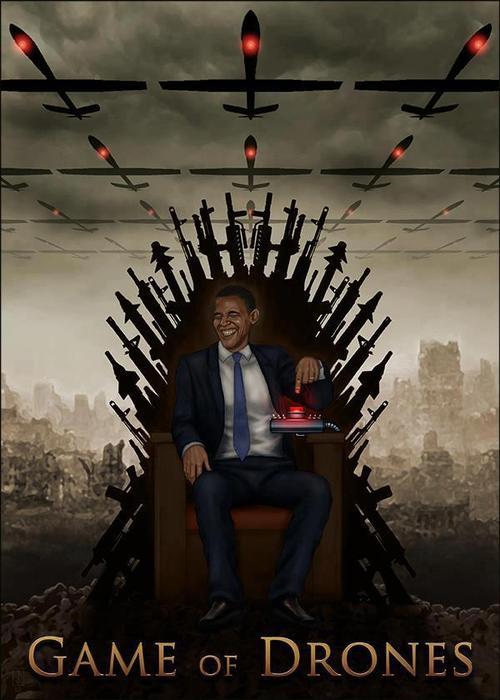
 Edmonds clarified, “the FBI counterintelligence investigation which was tracking these targets, along with their links to U.S. officials, was known as ‘Gladio B’, and was kickstarted in 1997. It so happens that Major Douglas Dickerson” – the husband of her FBI co-worker Melek whom she accused of espionage – “specifically directed the Pentagon’s ‘Gladio’ operations in Kazakhstan and Turkmenistan at this time.”