Showing posts with label North Africa. Show all posts

Monday, March 25, 2013

Iraq To Mali: The Changing Calculus Of War


It has been 10 years since the US-led invasion of Iraq, which marked a turning point in the West's so-called war on terror.

The pretext of the Iraq war was security and freedom, but the bombastic and openly pronounced objective was no less than remaking the greater Middle East region.

"We have gone in with bombastic ideology, self interest, and no real plan. I mean If you’re going to do this, at least do it competently. We have done all of that incompetently."
- Barbara Bodine, former US ambassador to the Republic of Yemen 
For Iraq, the invasion and occupation were cataclysmic. It claimed hundreds of thousands of lives, smashed the country's infrastructure, and tore its social fabric apart with a civil war that continues to kill hundreds of Iraqis a month. Baghdad - a cosmopolitan capital for thousands of years - has been reduced to a cluster of walled ghettos, armed against each other.

For the US, Iraq became a quagmire and a humiliation - a strategic and moral failure that the country has spent the last four years trying to forget.

President Barack Obama entered the White House with the promise of a new relationship with the Arab and Muslim world. His administration is withdrawing troops and replacing them with airstrikes, drones, and a surge of special forces. But how much has America's calculus of war really changed?

And as Africa becomes the new frontline in the 'war on terror', have the Europeans learnt from America's mistakes?

"We have to put boots on the ground. I’ve been in those boots; those are uncomfortable boots."
- John Nagl, retired US army lieutenant colonel 
Shortly after sending fighter jets and troops into Mali, French President Francois Hollande said: "We will stay...for as long as it’s necessary to ensure victory over terrorism.” That is the same socialist president who recently told his people that there would be: “no men on the ground, no engagement by French troops” and that France would only provide "material support" to Mali’s armed forces.

The twists and turns of the West’s endless 'war on terror' continue to confound and confuse.

Empire explores the merits, objectives, costs and morality of these wars with our guests: John Nagl, a retired Lieutenant Colonel who co-authored the US army and Marine Corps Counterinsurgency Field Manual; Jean Marie Guehenno, the director of the Center of International Conflict Resolution at Columbia University, and former United Nations under secretary general for Peacekeeping Operations; Barbara Bodine, a professor at Princeton University and a former US Ambassador to the Republic of Yemen who also served with the Office of Reconstruction and Humanitarian Assistance in Iraq; and Christopher Hedges, a senior fellow at The Nation Institute, former New York Times Middle East bureau chief, and author of several books, including War is a Force That Gives us Meaning and Empire of Illusion.

Saturday, March 23, 2013

French Military Presence In W Africa After Mali War


France has devised a scenario to station a rapid reaction force in West Africa after its war on Mali ends, UN-based diplomats privy to the plan say.

French diplomats have started briefing the UN, the US and other major powers on a plan for a so-called “beyond the horizon” force which will purportedly be tasked with conducting necessary future operations against the fighters in Mali. 

France has not informed its allies of the exact location of the force, but diplomats say it will probably be stationed in Senegal, Niger, or Chad, where France has military bases. 

On January 11, France launched a war in Mali under the pretext of halting the advance of fighters who had taken control of the north of the West African country. The United States, Canada, Britain, Belgium, Germany, and Denmark have aided France in its war on the African country. 

Meanwhile, French Ambassador to the UN Gerard Araud has been in contact with his counterparts to inform them that France does not intend to abruptly end its military presence in Mali over the coming weeks but plans a gradual withdrawal.

Wednesday, March 20, 2013

The Future Of Africa Looks Bleak


“Iraq was an attempt to reinstitute by force something like the old system of control, but it was beaten back. In general, I think, US policies remain constant, going back to the Second World War. But the capacity to implement them is declining….

“Take the Clinton doctrine. The Clinton doctrine was that the United States is entitled to resort to unilateral force to ensure ‘uninhibited access to key markets, energy supplies, and strategic resources’.…

“Then he expressed the reason. He said that ‘one of the main functions of the international institutional order is precisely to legitimate the use of deadly military force by western powers’.…

“So the principle on which the international system is based is that the United States is entitled to use force at will. To talk about the United States violating international law or something like that is amazingly naive, completely silly.…

“That's why you get all this talk about American decline. Take a look at the year-end issue of Foreign Affairs, the main establishment journal. Its big front-page cover asks, in bold face, ‘Is America Over?’ It's a standard complaint of those who believe they should have everything.

“If you believe you should have everything and anything gets away from you, it's a tragedy, the world is collapsing. So is America over? A long time ago we ‘lost’ China, we've lost Southeast Asia, we've lost South America. Maybe we'll lose the Middle East and North African countries. Is America over? It's a kind of paranoia, but it's the paranoia of the superrich and the superpowerful. If you don't have everything, it's a disaster.”

The United States has been given a mandate to do what it deems necessary to maintain western supremacy and its dominant role on the world stage. Africa happens to be an integral part of that plan, guaranteeing its bleak future.

In Africa, China has been securing access to resources through lucrative trade agreements while Western powers have decided to take the military option to secure their share of the pie.

“Across Africa, the red flag of China is flying. Lucrative deals are being struck to buy its commodities - oil, platinum, gold and minerals… From Nigeria in the north, to Equatorial Guinea, Gabon and Angola in the west, across Chad and Sudan in the east, and south through Zambia, Zimbabwe and Mozambique, China has seized a vice-like grip on a continent which officials have decided is crucial to the superpower's long-term survival.”

The most recent conflicts have also had a lot to do with obtaining access to Africa's oil:

“Although Africa has long been known to be rich in oil, extracting it hadn't seemed worth the effort and risk until recently. But with the price of Middle Eastern crude skyrocketing, and advancing technology making reserves easier to tap, the region has become the scene of a competition between major powers that recalls the 19th-century scramble for colonization. Already, the United States imports more of its oil from Africa than from Saudi Arabia, and China, too, looks to the continent for its energy security.”


 in October 2008 the United States government officially activated U.S. Africa Command (AFRICOM). Headquartered in Kelley Barracks, Stuttgart, Germany,AFRICOM is the most recent addition to the “unified combatant command with an area of responsibility (AOR) solely dedicated to the African continent”.

“In many ways, a context for the pending strategic role of AFRICOM can be gained from an understanding of the origins of CENTCOM and the role that it continues to provide in Iraq, Iran, Saudi Arabia, and the many ‘stans’ popping up after the implosion of the former U.S.S.R. That context is centered on strategic energy supplies and, explicitly, that of oil.”


click to enlarge - Source

Even though African countries were united in rejecting US requests for a military headquarters on the continent, there were reports as early as 2007 that operations through AFRICOM had already begun:

From oil rich northern Angola up to Nigeria, from the Gulf of Guinea to Morocco and Algeria, from the Horn of Africa down to Kenya and Uganda, and over the pipeline routes from Chad to Cameroon in the west, and from Sudan to the Red Sea in the east, US admirals and generals [had] been landing and taking off, meeting with local officials. [They'd] conducted feasibility studies, concluded secret agreements, and spent billions from their secret budgets.”

In late 2012, it was officially acknowledged that the United States had been expanding its military efforts in Africa and plans to deploy troops to 35 African countries in 2013. This should be regarded as bad news for Africa.

If you find the idea that Africa can become any bloodier than it is inaccessible, then consider this: Contrary to popular belief, the worst humanitarian crisis in Africa last decade was not Darfur, it was Somalia, and it all began in 2006 when the United States and Ethiopia started a war with Somalia, ending six months of the only peaceful period Somalis had known for years. The end result was the same as all other wars that the United States has started in the last century. Not only was Somalia devastated, it also destabilized the region.


One of the most amazing aspects of the African resource wars is that within their own countries, most western powers have been able to stifle opposition for their participation. An incredible achievement considering the state of their economies and the number of wars that they have been involved in in the last two decades (2011–present2003–20101990–2002).

Let’s take France as an example since it appears to have the backing of its citizens in taking the lead role in the recent wars which are set to determine the future of Africa.

“French companies must go on the offensive and fight the growing influence of rival China for a stake in Africa's increasingly competitive markets, France's Finance Minister Pierre Moscovici said on Saturday…

“‘It's evident that China is more and more present in Africa...(French) companies that have the means must go on the offensive. They must be more present on the ground. They have to fight,’ Moscovici told journalists during a trip to Ivory Coast…

“‘Africa is booming. Sub-Saharan Africa will have the second highest regional growth after Asia in 2012 with a rate of 5.5 percent,’ he said. ‘The new phenomenon is that African growth has the potential to stimulate growth in France. We want to be present there.’”

 To have a full appreciation for the magnitude of the folly of France’s decision to attempt a “total reconquest of Mali” under the supervision of the United States by getting involved in what David Cameron has predicted to be a multi-decade conflict, all we need to do is recap a little history and extrapolate to the present.

“‘It will require a response that is about years, even decades, rather than months, and it requires a response that is patient, that is painstaking, that is tough but also intelligent, but above all has an absolutely iron resolve; and that is what we will deliver over these coming years,’ [David Cameron] said.”

 Source: "The People's Voice"

Wednesday, March 13, 2013

Devastation In Mali Under French Attack


After François Hollande's victorious trip to Timbuktu, the three major cities in northern Mali have been declared "liberated" from rebels - although the Sharia law and Islamic extremism they enforced will not soon be forgotten. 

Nevertheless, this victory is a partial one. The militants have merely retreated and fled, and the suffering in this war has been disproportionate to its success. 

We're learning what happened in battle day by day. The small town of Konna in the Mopti region was seized by the Muyao tribe. They then fled to the north when French troops showed up. 

But it's reported that the cost of that liberation was high. French planes killed only two rebels, and the number of civilian casualties was an estimated 14. 

"I wasn't home when the bombing began. I started praying when I learned my house was under the attack. They ruined everything I had - my family and my livelihood. My wife's name was Aminata. She was 40. My son Ali was 11. Adam was 10 and Seinogu was 6. They all died", says Idrís Meiga, a farmer from Konna. 

People like this farmer, Idrís, ask themselves if the result was worth it. 

The Kampó family suffered badly. When the bombing began, everyone scattered. The Kampós lost two of their sons - they drowned in the river because they could not swim. The young mother died from shell splinters, leaving three children behind. One was a newborn baby. 

"The village was a complete mess, it's impossible to describe. I'll only discuss things I know for sure, and I can say that all we had is gone," says Mohama Kampó, a local resident. 

"Some kids came running up to us and said their mum had died. I brought them to our house. Their mother died after an hour clinging to life. The children have nobody else but us," neighbor Abdul Kampó says. 

Disaster visited every house in the town. People reject anything the military says about victory, and believe that their war crimes must be prosecuted under the Geneva Convention. 

Towns like Konna want more than just compassion. People who suffered at the hands of terrorist groups and drug traffickers are now facing the misery inflicted by war.


Friday, March 01, 2013

The Conflict In Mali Has Nothing To Do With Fighting Terrorists


Assed Baig writes,


Another Western nation and former colonial power, has engaged in yet another conflict with an African country, bombing from the air and attacking from the ground. We are told that France is fighting in Mali to push back 'Islamist' rebels (not too comfortable with the word 'Islamist', I've never heard of a Christianist) who are extremists, terrorists and fanatics - take your pick of which label you wish to adopt for the current enemies of the West.
Again, as in Afghanistan, we are being told that this battle is being fought for ideological reasons. The rebels are extremists, they have destroyed ancient heritage and amputated limbs according to their literalist religious interpretations. However the idea that France has gone into Mali to fight against extremists is a myth that I wish to dispel.
The West has no moral high ground; a short reading of their colonial past can easily show us that - France's colonial legacy in North Africa reads like a state terrorism handbook. 
If this battle is not for ideological reasons then what is it for? The answer, however cynical, is simple. 
Resources. Mali is rich in resources, from uranium to gold. It is an African kingdom that has historically been known for its mass of gold reserves and more recently the possibility of further oil and uranium exploration
Had the rebels expressed their love of the West and outlined their intentions to open up Mali's market to foreign companies (allowing the leaching of resources), we would not have heard a word of objection from France, the United Kingdom or any other power. Instead, we are greeted with the scramble to take a big slice out of this African cake. Everyone is rushing to fight 'terrorists' in Mali. France is ensuring energy security. There should be no disruption in the flow of uranium through France's nuclear reactors. The so-called rebels are bad for business.
America had no problem flying over members of the Taliban to the United Sates when they thought they could win them over with gas pipeline deals. Their ideology was not a problem back then, it only becomes a problem if someone challenges or stands up to Western hegemony.
 These rebels however, are fighting a regime that is a friend of the West and not an enemy, and these rebels just happen to be in the wrong country.
As with all foreign intervention there is always blowback and destabilisation of neighbouring countries. Afghanistan and the troubles in Pakistan are a prime example. The attack on a gas plant in Algeria was seemingly as a direct consequence of the Western intervention in Mali.
Had the West not attacked Mali, there would likely have been no hostage situation in Algeria and most of all, no deaths. Reports emerging tell us that the rebels in Algeria were only looking for Westerners. The foreign secretary denied that Algeria had anything to do with the intervention in neighbouring Mali. 
The public are not so easily fooled this time, especially in the aftermath of Afghanistan and Iraq. We are reminded that the West is engaged in Mali to fight these 'terrorists', but the West has been happy to support groups and leaders whose human rights records have been far from exemplary. 
From General Suharto of Indonesia to the Afghan resistance during the Soviet occupation, the West has no moral high ground when it comes to human rights.
The situation in Mali would not have occurred if the Tuareg were not pushed out from Libya to return to their region, armed and trained, looking for their rights and recognition as a people. 
Something the colonial carving up of Africa and the drawing up of artificial borders denied the Tuareg people. There has been an alliance of different groups in Mali all with different interests, but their enemy is the same - the Western sympathising regime in Bamako.
Not for a second am I defending the Salafi/Wahabi rebels or their literalist and brutal approach. I am simply pointing out the blatant contradictions of the Western powers. 
France and the West, in my opinion, are much more brutal than any rebel group. Dropping bombs on villages and murdering children is not something that should be applauded, but the government spin-doctors are always at hand to make us hate the people that should have our sympathy and love those that should have our indignation.
One day people will look back at these so-called wars of liberation and see them for what they are - politicians putting business interests before the lives of people and painting a veneer of moral superiority when there is none.

Wednesday, February 27, 2013

U.S. Intelligence and Security Command In Mali


... in the aftermath of the so far disastrous French campaign to eradicate "rebels" in the north of Mali, because of their implied threat fo Europe, that "US Drones, Boots Arrive In Mali." Turns out we were wrong, and as the case virtually always is, for some reason there was already a US presence of at least three US commandos in Mali in the summer of 2012. What they were doing there remains a mystery, as it is a mystery if the ever co-present flip flops on the ground were there inciting the perpetual scapegoat Al Qaeda to do this, or that. Or maybe it was not the CIA. Maybe it was the Army's "little-known and secretive" branch known as the Intelligence and Security Command. Regardless, what becomes obvious is that while the US was on the ground and engaged in secret missions, it needed an alibi to avoid "destabilizing" the local situation once its presence became conventional wisdom. It got just that, thank to one Francois Hollande just over a week ago.
From the WaPo, as of July 8, 2012:
In pre-dawn darkness, a ­Toyota Land Cruiser skidded off a bridge in North Africa in the spring, plunging into the Niger River. When rescuers arrived, they found the bodies of three U.S. Army commandos — alongside three dead women.
What the men were doing in the impoverished country of Mali, and why they were still there a month after the United States suspended military relations with its government, is at the crux of a mystery that officials have not fully explained even 10 weeks later.

At the very least, the April 20 accident exposed a team of Special Operations forces that had been working for months in Mali, a Saharan country racked by civil war and a rising Islamist insurgency. More broadly, the crash has provided a rare glimpse of elite U.S. commando units in North Africa, where they have been secretly engaged in counterterrorism actions against al-Qaeda affiliates.

The Obama administration has not publicly acknowledged the existence of the missions, although it has spoken in general about plans to rely on Special Operations forces as a cornerstone of its global counterterrorism strategy. In recent years, the Pentagon has swelled the ranks and resources of the Special Operations Command, which includes such units as the Navy SEALs and the Army’s Delta Force, even as the overall number of U.S. troops is shrinking.

At the same time, the crash in Mali has revealed some details of the commandos’ clandestine activities that apparently had little to do with counterterrorism. The women killed in the wreck were identified as Moroccan prostitutes who had been riding with the soldiers, according to a senior Army official and a U.S. counterterrorism consultant briefed on the incident, both of whom spoke on the condition of anonymity because of the sensitivity of the matter.

The Army’s Criminal Investigation Command, which is conducting a probe of the fatal plunge off the Martyrs Bridge in Bamako, the capital of Mali, said it does not suspect foul play but has “not completely ruled it out.” Other Army officials cited poor road conditions and excessive speed as the likely cause of the 5 a.m. crash.

U.S. officials have revealed few details about the soldiers’ mission or their backgrounds, beyond abrief news release announcing their deaths hours after the accident.

In many countries, including most in Africa, Special Operations forces work openly to distribute humanitarian aid and train local militaries. At times, the civil-affairs assignments can provide credible cover for clandestine counterterrorism units.

But in Mali, U.S. military personnel had ceased all training and civil-affairs work by the end of March, about a week after the country’s democratically elected president was overthrown in a military coup.

The military’s Africa Command, which oversees operations on the continent, said the three service members killed were among “a small number of personnel” who had been aiding the Malian military before the coup and had remained in the country to “provide assistance to the U.S. Embassy” and “maintain situational awareness on the unfolding events.”

Megan Larson-Kone, a public affairs officer for the U.S. Embassy in Mali, said the soldiers had stayed in Bamako because they were “winding down” civil-affairs programs in the aftermath of the coup while holding out hope “that things would turn around quickly” so they could resume their work.

Two of the soldiers, Capt. ­Daniel H. Utley, 33, and Sgt. 1st Class Marciano E. Myrthil, 39, were members of the 91st Civil Affairs Battalion, 95th Civil Affairs Brigade, which is based at Fort Bragg, N.C.

For two months after the crash, the U.S. military withheld the identity of the third soldier killed. In response to inquiries from The Washington Post, the Army named him as Master Sgt. Trevor J. Bast, 39, a communications technician with the Intelligence and Security Command at Fort Belvoir.
Enter the Intelligence And Security Command
The Intelligence and Security Command is a little-known and secretive branch of the Army that specializes in communications intercepts. Its personnel often work closely with the military’s Joint Special Operations Command, which oversees missions to capture or kill terrorism suspects overseas.

During his two decades of service, Bast revealed little about the nature of his work to his family. “He did not tell us a lot about his life, and we respected that for security purposes,” his mother, Thelma Bast of Gaylord, Mich., said in a brief interview. “We never asked questions, and that’s the honest truth.”
Why Mali?
U.S. counterterrorism officials have long worried about Mali, a weakly governed country of 14.5 million people that has served as a refuge for Islamist militants allied with al-Qaeda.

With only 6,000 poorly equipped troops, the Malian armed forces have always struggled to maintain control of their territory, about twice the size of Texas. Repeated famines and rebellions by Tuareg nomads only exacerbated the instability.

About six years ago, the Pentagon began bolstering its overt aid and training programs in Mali, as well as its clandestine operations.

Under a classified program code-named Creek Sand, dozens of U.S. personnel and contractors were deployed to West Africa to conduct surveillance missions over the country with single-engine aircraft designed to look like civilian passenger planes.

In addition, the military flew spy flights over Mali and other countries in the region with ­longer-range P-3 Orion aircraft based in the Mediterranean, according to classified U.S. diplomatic cables obtained by the anti-secrecy group WikiLeaks.

In what would have represented a significant escalation of U.S. military involvement in Mali, the Pentagon also considered a ­secret plan in 2009 to embed American commandos with ­Malian ground troops, diplomatic cables show.

Under that program, code-named Oasis Enabler, U.S. military advisers would conduct ­anti-terrorism operations alongside elite, American-trained ­Malian units. But the idea was rejected by Gillian A. Milovanovic, the ambassador to Mali at the time.
The stumbling block:
In an October 2009 meeting in Bamako with Vice Adm. Robert T. Moeller, deputy chief of the Africa Command, the ambassador called the plan “extremely problematic,” adding that it could create a popular backlash and “risk infuriating” neighbors such as Algeria.

Furthermore, Milovanovic warned that the U.S. advisers “would likely serve as lightning rods, exposing themselves and the Malian contingents to specific risk,” according to a State Department cable summarizing the meeting.

Moeller replied that he “regretted” that the ambassador had not been kept better informed and said Oasis Enabler was “a work in progress.” It is unclear whether the plan was carried out.
Moeller was right, and neighbors such as Algeria eventually did promptly respond in "popular backlash" that led to the deaths of at least one US hostage.
But back to the US Commandos, and, lo and behold, prostitutes:
The soldiers died of “blunt force trauma” when the vehicle landed upside down in the shallow river, crushing the roof, the Army said.

The Special Operations Command said it could not answer questions about where the soldiers were going, nor why they were traveling with the unidentified Moroccan women, saying the matter is under investigation.

Larson-Kone, the embassy spokeswoman, said the soldiers were on “personal, not business-related travel” at the time, but she declined to provide details. Officials from the Africa Command also said that they did not know who the women were, but they added in a statement: “From what we know now, we have no reason to believe these women were engaged in acts of prostitution.”
Hookers or not, what is obvious is that the US did have a largely secretive presence in Mali, which may or may not have led to ongoing social destabilization, which ultimately provided none other than the US with the ultimate cover to engage in whatever "anti-terrorist" operations it so chose. The name of the cover?
France.

Sunday, February 24, 2013

Northern Africa War Could Last ‘Decades’


Speaking at Chequers, Mr Cameron predicted a prolonged struggle in North Africa.
“It will require a response that is about years, even decades, rather than months and it requires a response that is patient, that is painstaking, that is tough but also intelligent, but above all has an absolutely iron resolve; and that is what we will deliver over these coming years,” he said.
Greater international support for democracy and security in the Sahel countries will now be a focus of Britain’s presidency of the Group of Eight this year, Mr Cameron indicated.

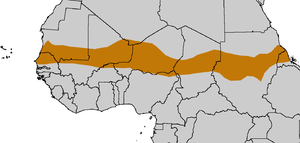
The heads of Britain’s top spy agencies as well as the Chief of the Defence Staff are planning a Tuesday meeting to begin planning for a broad war across the entire Sahel, a region spanning Africa from east to west from Eritrea to the coast of Senegal and including several hotbed areas in the Sahara desert.

Saturday, April 30, 2011

Canada's Military Industrial Complex

Ottawa's Complicity In The Multibillion Dollar Arms Trade

By Richard Sanders
April 21, 2011
Courtesy Of "Global Research"

Stoking the Tsunamis of War and Repression

Finally, after years of delays and just a few hours after Japan’s horrifying earthquake on March 11, the government finally released its latest deeply-flawed report on Canada’s military exports between 2007 and 2009. This timing ensured that the latest data on Canada’s shameful role in the international weapons trade was conveniently buried beneath a tsunami of news about Japan’s natural catastrophe.

Corporate media institutions have not deigned to report on Canada’s new arms-export figures, let alone expose how the government’s report covers up far more than it reveals.

Although Canada’s top military-industry association states that Canadian companies exported $15 Billion in so-called “defence” and “security” products between 2007 and 2009, the government’s extremely-limited report accounted for less than $1.5 Billion during that period.

Despite massive loopholes in the government’s report, their data does reveal that almost all of Canada’s military exports went straight into the arsenals of about 40 belligerent nations fighting in the Iraq and/or Afghan wars, which have killed over 1.5 million people. (See COAT data table.)

Although reprehensible, the highly-profitable business of fuelling war has been conducted with impunity by all Liberal and Conservative governments. And, because this trade in arms contributes to a virtual tidal wave of war, repression and environmental destruction, it is arguably even more disturbing than Japan’s natural catastrophe.

But what makes the arms-trade tsunami more horrifying than an earthquake, is that the misery it creates cannot be explained away as a natural disaster beyond human control.

On the contrary, the arms trade – as our government proudly explains – is "closely controlled" using “policy guidelines mandated by Cabinet."

This is the real horror veiled by the latest dry, statistical report from the Department of Foreign Affairs and International Trade (DFAIT) on Canada’s big business of war-industry exports.

But Canada’s arms trade is not just monitored, administered and controlled by DFAIT, it is applauded and promoted by our government. As DFAIT explains, with its usual penchant for euphemism, “Canada's defence industry makes a valuable contribution to the nation's prosperity.”

So Don’t Worry, It’s All Under Control

Since 2003, each of DFAIT’s arms-trade reports has opened with the same audacious claim, saying: "A key priority of Canada's foreign policy is the maintenance of peace and security.” Similarly, DFAIT’s eight previous annual reports began: “The promotion of international peace and security constitutes a key Canadian foreign policy objective.”

Every arms-export report, since its inception in 1990, has extolled the government’s "export control policy guidelines," which unequivocally state that "Canada closely controls the export of military goods and technology to countries...involved in or under imminent threat of hostilities."

Canada's "guidelines" also blithely assert that DFAIT "closely controls" military exports to countries "whose governments have a persistent record of serious violations of the human rights of their citizens, unless it can be demonstrated that there is no reasonable risk that the goods might be used against the civilian population."

Although DFAIT bureaucrats see “no reasonable risk” that Canadian munitions exports “might be used against the civilian population," those facing repression in the Middle East and elsewhere may view those risks differently. Canadian officials seem ever-willing to “risk” the lives of innocent civilians, if a tsunami of profits might make a “valuable contribution to the nation's prosperity,” or at least enrich Canadian military corporations.

To be clear, Canada’s strict "guidelines" are meant to “control” the flow of weapons systems, not actually stop them. Canada’s military products are in great demand not only by governments waging war, but by business-friendly regimes that control their populations through intimidation, threats and the fear of state “security” forces.

But, there’s no need for concern. Our government has it all under control.

And, Canadians generally aren’t concerned, because we too are under control. Thanks to government obfuscation, the corporate media’s acquiescence, and national myths portraying Canada as a global peacemaker, most citizens have no idea this country is awash in war technology. Few know that in 2009, Canada was virtually tied in a three-way race for sixth place among the world’s top arms exporters, right behind the U.S., Russia, Germany, the UK and China.

War is a booming business. And, as U.S. Major-General S. Butler said following his retirement in the early 1930s, “war is a racket.” A racket, he explained, “is not what it seems to the majority…. It is conducted for the benefit of the very few at the expense of the masses.”

Speaking of his 33-year Marine-Corps career, Butler said: “I had, as the boys in the back room would say, a swell racket…. I could have given Al Capone a few hints. The best he could do was operate his racket in three districts. I operated on three continents.”

Nowadays, with $4 billion a year in military products streaming stateside, Canada is America’s top military supplier, and our hardware is deeply embedded in U.S. weapons fighting on three important war fronts: North Africa (Libya), the Middle East (Iraq and Israel) and Central Asia (Afghanistan). Such U.S.-led invasions, occupations, proxy wars and regime changes have long enforced unjust structures of economic control over resources in the Third World. Canadian complicity in manufacturing, exporting and deploying the instruments of war, has helped maintain our high-rank among the world’s most prosperous nations.

But because one would never know this from the tsunami of corporate news inundating Canadians, the world remains secure for those back-room boys who profit from the “swell racket” of war.

Loopholes To Fly A Warplane Through

According to the Canadian Association of Defence and Security Industries (CADSI) -- a government-funded lobby group representing 860 member companies -- Canada now exports $5 Billion to $7.5 Billion in military and so-called “security” products per year. This represents an increase over the previous five years, when CADSI reported annual exports to be worth $5 Billion.

DFAIT’s recently-released military-export data only documents $475 million in military exports per year between 2007 and 2009. That’s less than 10% of CADSI’s estimates.

This huge discrepancy is largely due to two bookkeeping loopholes. Although celebrated by successive governments since 1990 as proof of their commitment to “transparency,” DFAIT’s arms-trade reports have never included Canada’s exports to the U.S. According to CADSI, the U.S. gets the lion’s share (80%) of Canada’s military exports.

Another limitation is that DFAIT’s reports only include restricted munitions on Canada’s “Export Controls List.” So, even when Canadian helicopters were sold to Colombia’s Air Force, DFAIT didn’t count them, because no weapons were attached.

According to DFAIT’s 2007-2009 report, Canadian companies sold $1.1 Billion worth of restricted munitions to 107 countries. Of these, 39 were fighting in Iraq and/or Afghanistan. Knowing that the U.S. absorbs 80% of our military exports, Canadian sales to the U.S. were about $5.7 Billion. This means 96% of the munitions types tabulated by DFAIT went to countries waging these two wars.

DFAIT’s list includes 14 other countries fighting armed struggles within their own borders or, in Israel’s case, within occupied territories. Between 2007 and 2009, these belligerents received $47 million in munitions tracked by DFAIT. This increased the value to 97% of Canada’s military exports to warring governments. (See COAT data table.)

Only 2.8% of the value of Canada's restricted munitions exports went to countries that are not at war. (See COAT data table.)

Because we too are at war, and half our military production flows into Canada’s armed forces, the total percentage of our military-industrial output that is supplying belligerents, reaches 98.5%. This gives the lie to DFAIT assurances that it “closely controls” the stream of military hardware to those “involved in or under imminent threat of hostilities."

Controlling The Middle East and North Africa

For decades, Conservative and Liberal governments have preached peace and human rights, while issuing a steady flow of export permits for military sales to repressive, undemocratic regimes in the Middle East and North Africa. DFAIT data for 1990 to 2009, reveals Canadian exports of $1.99 Billion in restricted munitions – including small arms, ammunition, tear gas, rockets, missiles, armoured vehicles and high-tech electronics for major weapons -- to sixteen countries in that region:

Algeria ($21.4M), Bahrain ($1.4M), Egypt ($34.1M), Iraq ($59K), Israel ($18.4M), Jordan ($5M), Kuwait ($4.1M), Lebanon ($1.5M), Morocco ($2.5M), Oman ($80.2M), Qatar ($1.9M), Saudi Arabia ($1.7B), Tunisia ($3.1M), Turkey ($67.6M), the United Arab Emirates (UAE) ($39.5M) and Yemen ($500).

If all Canadian military and police-equipment was included, these amounts would be perhaps twice as high, considering the disparity between DFAIT and CADSI figures. And, although Border-Services’ customs data includes Canadian small-arms exports to Iran, Libya and Syria, their absence from DFAIT’s report is unexplained.

(See seven sets of COAT data tables on Canada's military exports to the Middle East.)

The heavily U.S.-backed governments gracing DFAIT’s list include undemocratic regimes where human rights abuses are systemic, and torture is endemic.

· The absolute monarchies of Qatar, Saudi Arabia, Oman and the UAE are run by royal decree, political parties are banned and elected legislatures do not exist. (Although the UAE finally had an election in 2006, only 2% of those over 18 were allowed to vote, and half the legislature was appointed by hereditary Emirs from the country’s seven absolute monarchies.) · In 2008, women held less than 5% of parliamentary seats in Egypt, Kuwait, Lebanon, Turkey and Yemen. · Lebanon, Oman, Saudi Arabia and UAE spent more on their militaries than on health and education combined. (Saudi military expenditures were almost twice their combined health and education budgets.) · Israel and Jordan spent more on their militaries than on either health or education.

Workers’ Rights Under the Gun Trade union rights in Middle East and North Africa are among the least protected in the world. Migrant workers in particular face extremely exploitative conditions, sometimes resembling slavery. Underpaid and often confined to employers’ homes, they are forced to work excessive hours and have their passports confiscated. Foreign workers are also victimised sexually and face beatings, arrest and deportation for asserting their rights. Composing a large percent of the workforce in Persian-Gulf states, they are particularly at risk in Bahrain, Jordan, Kuwait, Oman, Saudi Arabia and the UAE.

· In Saudi Arabia, all unions, collective bargaining and strikes are illegal and the crime of union organising can lead to dismissal, imprisonment or deportation. · UAE labour law does not permit unions, strikes or collective bargaining. · Collective bargaining is also illegal in Bahrain and Jordan, while unions are still rare in Oman. · The right to strike is very limited in Oman, Qatar and Yemen, and is illegal in the Kuwaiti and Qatari public sectors. Meanwhile in Jordan, strikes are illegal without government permission. · The governments of Bahrain, Jordan, Kuwait, Oman, Qatar and Yemen impose a trade union monopoly, granting official recognition to only one union. · In Algeria, unions have been unduly denied registration in 2010, and hundreds were arrested for legitimate union activities. · In 2010, Egyptians were permitted to form their first independent union in half a century, but its members have been intimidated and assaulted.

Arming Enemies Of The “Arab Spring “

Although this year’s protests throughout the Arab region have inspired the progressive world, popular demands for democracy and human rights have come up against the heavily-armed bulwark of state “security” institutions. Military and police forces are powerful obstacles to achieving peace, democracy, security and human rights.

According to DFAIT’s reports, the vast majority of Canada’s restricted munitions’ exports to the region went to one country, Saudi Arabia, which received about 87% ($1.74 Billion) of the $2-Billion total since 1990.

According to Human Rights Watch’s 2010 report, Saudi authorities:

“continue to systematically suppress or fail to protect the rights of nine million Saudi women and girls, eight million foreign workers, and some two million Shia citizens. Each year thousands of people receive unfair trials or are subject to arbitrary detention. Curbs on freedom of association, expression and movement, as well as a pervasive lack of official accountability, remain serious concerns.”

Although the Saudi theocracy has imported Canadian small arms, ammunition, electronics and various weapons-systems and components, their main import was armoured military vehicles from General Dynamics (formerly General Motors) in London, Ontario. Since 1992, DFAIT issued export permits totaling about $1.5 Billion for these vehicles. Apparently, DFAIT saw no “reasonable risk” they “might be used against…civilian[s]." (Canadian customs data reveals $1.85 Billion in armoured-vehicle exports to Saudi Arabia during the same period.)

On March 5, with protests spreading throughout the region, Saudi Arabia banned all demonstrations. Then, on the ides of March, Saudi armoured vehicles carrying more than a thousand troops were sent into neighbouring Bahrain. Saudi and UAE troops have been aiding Bahrain’s deadly crackdown on nonviolent protests in this kingdom which hosts the U.S. Fifth Fleet. Saudi troops have since attacked peaceful Bahrainis rallying for democracy.

Meanwhile in Egypt, millions took to the streets to end decades of autocratic corruption. Being the most populous Arab nation and a centre of culture and communication, Egypt has stirred the region. But despite mass peaceful uprisings, Egypt’s military has not relinquished power, or ended the country’s 30-year emergency rule.

DFAIT reports show about $35 million in restricted-munitions exports to Egypt since 1990. Most were aircraft parts, probably for nine Canadian-made military transport planes, built by de Havilland.

But Canada’s direct sales to Egypt and Saudi Arabia, represent only one way for munitions to end up there. More significantly, Canadian military hardware is funneled through the U.S.

For example, Egypt’s arsenal includes U.S. weapons systems embedded with ample Canadian technology, such as F-16, F-4, C-130 and E-2C warplanes, and CH-47, AH-64 and UH-60 helicopters. The Saudi Air Force also has billions worth of U.S. war machines equipped with Canadian components, including F-15s, C-130s, AH-64s and UH-60s.

Since 1979, Egypt received about US$2 Billion per year in U.S. military aid, second only to Israel, which now gets about US$3 Billion. Canada’s direct exports of $18.4 million to Israel since 1990, probably pale in comparison to the value of Canadian-made parts within U.S. weapons given to Israel. For example, many Canadian companies have supplied parts for U.S.-made F-16 and F-18 fighter planes and AH-64 helicopter gunships used in Israeli airstrikes against Lebanon (2006) and Gaza (2008-2009).

No Quick-Fix Solutions For Long-Term Problems

Military powers have been arming client states in the Middle East for thousands of years. Canada is now part of this long-running saga. The solution to the age-old problem of brutal autocratic regimes, is not to authorise those who armed the dictators in the first place to launch humanitarian invasions to protect human rights. Such naïve, quick-fix military remedies perpetuate violence and merely empower new, hand-picked regimes with better PR.

Long-term solutions are required. Primary among these is to stop arming regimes that use war and repression to take or maintain power.

Citizens can use boycotts, divestment and electoral campaigns to withdraw consent from companies and governments complicit in militarism.

Given the widespread ignorance of Canada’s complicity in the arms trade, public education is essential. One approach is to focus on the most glaring manifestation of the military-industrial complex, the perennial arms bazaar.

In Canada’s case, the biggest weapons exhibition is CANSEC, to be held in Ottawa, June 1-2. Organized by the CADSI, it will include some 250 companies, of which about one third are known to have exported directly to the Middle East or North Africa. It is therefore a potent symbol of Canada’s control over the horrifying flood of military products that inundate warzones and oppressive regimes around the world.


Richard Sanders is coordinator of the Coalition to Oppose the Arms Trade, and editor of its magazine, Press for Conversion! For more information, visit http://coat.ncf.ca

This article will appear as the lead article in the May edition of The Monitor, published by the Canadian Centre for Policy Alternatives (CCPA).

Richard Sanders is a frequent contributor to Global Research.  

Global Research Articles by Richard Sanders

Saturday, April 23, 2011

Revolution and Counter-Revolution

Middle East and North Africa

By Johan Galtung
April 19, 2011
Courtesy Of "The Foreign Policy Journal"


Transcend Media Service — Chandra Muzaffar, in his superbJUST Commentary for March 2011, argues for Gaddafi to step down, and adds that if he does, he may be remembered “for some of his outstanding accomplishments in the first decades of his rule – accomplishments such as the closure of the huge American air base in Libya in 1970; his nationalization of oil; the pivotal role he played in the reorganization of OPEC that enabled it to emerge as a powerful cartel challenging Western dominance over the oil industry; his massive man-made river project to irrigate desert land; his housing schemes for the low-income segment of society; and other infra-structure programmes.” All are absent from mainstream media today.
U.S. military command zonesAdd to the above Gaddafi’s role in shaping the Arab League, thwarted by the US-backed international military venture code-named Operation “Odysseus Dawn” (March 19–31, 2011) to enforce United Nations Security Council Resolution 1973; thereafter, it became Operation “Unified Protector” under NATO command. Add also Gaddafi’s role in the African Union, which he chaired from 2009 to 2010. He turned his attention south rather than east (Egypt, Saudi Arabia etc). And you have an answer to why the West, not only the USA, hated him from the very beginning. But then he became a victim of his own success – a dictator seeing himself as indispensable.
The recent pan-Arab revolt, described as the Arab Spring, has five characteristics. It is anti-autocratic, anti-kleptocratic (against greedy, corrupt governments), anti-imperialist, for youth and for women. Gaddafi’s profile is mixed, but not like Mubarak of Egypt or Ben-Ali of Tunisia, the two recently fallen rulers. Nor like for the Saudi Royal House and the Bahraini and Yemeni leaderships. Macro history (characterizing big, long-term historical trends) moves slowly. Nasser and Gaddafi set the course, but few would expect them to succeed immediately. They will both be remembered when the present Western dwarfs are forgotten.
The counter-revolution was planned a long time ago. The CIA set up the “National Front for the Salvation of Libya” (NFSL) way back in 1981, followed by the “Libyan National Army” (LNA), now known as the Benghazi rebels. On November 2, 2010, the Anglo-French agreement to attack Libya no later than January 30, 2011 was signed – for the first time since the attack on Egypt in October 1956. In all likelihood, the attack on Libya is equally ill-fated. We sense already that Obama is distancing himself from the French-led attack, transferring some of the imperial role on a France that exacted a high price for rejoining NATO as a full member (French demands included America’s acceptance of an independent European defense and a leading French role in NATO’s command structure). Is Sarkozy, le petit Napoléon, hoping to take over as the USA gets increasingly bankrupt, already servicing debt with 41 cents of every federal dollar spent? Well, we shall soon find out, but NATO is still under US command and the EU is still unable to formulate a joint independent policy.
The West sacrificed dispensable figures like Ben-Ali and Mubarak, and then used Libya to create a humanitarian emergency of their own making. Who kills more civilians with cluster bombs or depleted uranium? But in cities re-conquered by Gaddafi, no massacre has taken place so far, as Stephen M. Walt points out inForeign Policy (See “Is America Addicted to War? The Top 5 Reasons Why We Keep Getting Into Foolish Fights,” April 4, 2011).
The alliance mobilized by the deeply Christian-Zionist Hillary Clinton to fight Gaddafi got “Yes” from 10 out of 15 UN Security Council members, while half of humanity (Brazil, Russia, India, China, and Germany) abstained. These member-states are neither against saving civilians nor for selective humanitarianism. In the Arab League, only 11 of 22 members voted – 9 in favor and Syria and Algeria against (Syria may be the next US target). Only Qatar and the United Arab Emirates participate militarily in the operation against Gaddafi. Qatar is displaying its usual ambiguity, and the UAE is totally unambiguous – pro-US.
This is NATO’s first African invasion (it has to be called as such) after several in Asia.
There was no attack on a NATO member-state. No common enemy, no real discussion, no vote, and no consensus within the Western alliance. Germany and Turkey are opposed and refuse any combat role. Turkey is involved in complex mediation, with Prime Minister Recep Tayyip Erdogan focusing his efforts on Gaddafi, and Foreign Minister Ahmet Davutoglu on the rebel-held Benghazi. Other factors in the background:Gaddafi seems to have wanted to switch from Western oil companies to Russian, Indian and Chinese companies, just as Saddam Hussein of Iraq had moved from dollars to euros; anti-Gaddafi forces in Benghazi say that when they have won, oil contracts will be awarded to those who helped them.
The key to this whole exercise is control of Africa, which in 1956 was still mainly owned by Britain and France. Libya had become an Italian colony way back in 1911. Now, Africa’s union is posing a threat. African nations are asserting their independence, and developing ties with China. NATO wants to control Africa through the United States African Command (AFRICOM) and European Command (EUCOM) – all synonyms for the Pentagon. This is where Libya enters, in rejecting AFRICOM, with Sudan, Eritrea, Zimbabwe and the Ivory Coast. These countries are to be subdued for not allowing US bases.
The Libyan action may put Africa on fire. Watch Turkey and Africans mediating, Libya eventually democratizing and Gaddafi stepping down to an honorary position, but staying in the country. Of course, Benghazi has rejected this, as has the NATO secretary general, Anders Fogh Rasmussen, who wants Gaddafi in the International Criminal Court.

Johan Galtung is a distinguished scholar, founder of the discipline of peace and conflict studies and of TRANSCEND International (www.transcend.org), a conflict resolution network. Read more articles byJohan Galtung.
http://www.transcend.org