Showing posts with label BioMetrics. Show all posts

Thursday, May 16, 2013

Biometric Database Of All Adult Americans Hidden In Immigration Reform


DAVID KRAVETS alerts us to the following:


The immigration reform measure the Senate began debating yesterday would create a national biometric database of virtually every adult in the U.S., in what privacy groups fear could be the first step to a ubiquitous national identification system.
Buried in the more than 800 pages of the bipartisan legislation (.pdf)  is language mandating the creation of the innocuously-named “photo tool,” a massive federal database administered by the Department of Homeland Security and containing names, ages, Social Security numbers and photographs of everyone in the country with a driver’s license or other state-issued photo ID.
Employers would be obliged to look up every new hire in the database to verify that they match their photo.
This piece of the Border Security, Economic Opportunity, and Immigration Modernization Act is aimed at curbing employment of undocumented immigrants. But privacy advocates fear the inevitable mission creep, ending with the proof of self being required at polling places, to rent a house, buy a gun, open a bank account, acquire credit, board a plane or even attend a sporting event or log on the internet. Think of it as a government version of Foursquare, with Big Brother cataloging every check-in.
“It starts to change the relationship between the citizen and state, you do have to get permission to do things,” said Chris Calabrese, a congressional lobbyist with the American Civil Liberties Union. “More fundamentally, it could be the start of keeping a record of all things.”
For now, the legislation allows the database to be used solely for employment purposes. But historically such limitations don’t last. The Social Security card, for example, was created to track your government retirement benefits. Now you need it to purchase health insurance.
“The Social Security number itself, it’s pretty ubiquitous in your life,” Calabrese said.
David Bier, an analyst with the Competitive Enterprise Institute, agrees with the ACLU’s fears.
“The most worrying aspect is that this creates a principle of permission basically to do certain activities and it can be used to restrict activities,” he said. “It’s like a national ID system without the card.”


Monday, March 18, 2013

Smartphones To Collect Biometric Data


The Defense Department has awarded a $3 million research contract to California-based AOptix to examine its “Smart Mobile Identity” biometrics identification package, Danger Room has learned. At the end of two years of research to validate the concepts of what the company built, AOptix will provide the Defense Department with a hardware peripheral and software suite that turns a commercially available smartphone into a device that scans and transmits data from someone’s eyes, face, thumbs and voice.
“They’ve asked us, based on what they’ve seen of our product, to work on some more specific needs and requirements for DoD,” Chuck Yort, AOptix’s vice president for identity solutions, tells Danger Room. Data security for the system will be provided by partner CACI International, which shares in the $3 million contract, which will be officially announced Wednesday morning.
Currently, U.S. troops rely on a single-use device, known as the Handheld Interagency Identity Detection System (HIIDE), to scan, upload and transmit data from someone’s facial, eye or thumb features to its wartime biometrics databases. The HIIDE, shown below, looks a bit like the cameraHipstamatic uses for its logo, and troops who want to operate it need to bring it close to the faces and thumbs of the people they scan.
The hardware AOptix has developed isn’t itself a phone. It’s a peripheral that wraps around a phone to enable the additional sensing capabilities necessary to acquire the biometric data. AOptix was hesitant to describe the peripheral, but supposedly it won’t impact the phone’s form factor, and the company swears a smartphone bulked up with its sensing dongle will weigh under a pound. Unlike HIIDE, it’ll only take one hand to operate.
Outside of the add-on, the computational power of the smartphone is supposed to enable the software package that AOptix built — and displayed at a September conference in Tampa partially sponsored by the National Security Agency. The company won’t say what operating system Smart Mobile Identity it’s configured to run on, but the Defense Department tends to like the relative cheapness and open architecture of Android devices. Yort promises the software will have a “very intuitive interface that leverages smartphone conventions.”
Smart Mobile Identity has limited ability to record biometric data at a distance, but its specs outperform the HIIDE camera. It scans faces at up to two meters away, irises from one meter, and voice from within the typical distance from a phone. Thumbprints will still require a finger against the reinforced glass face of the phone. Joey Pritikin, another AOptix executive, says that an additional advantage of the system is its ability to capture an iris in bright sunlight, which is a challenge for HIIDE and other biometrics device. Apparently the system will also be able to snap an image of someone’s face or eye once the phone running the software focuses on it, without a specific click, swipe or press.
AOptix is also cagey about which part of the Defense Department inked the deal with the company. (Pentagon officials didn’t respond to requests for additional information.) But since AOptix and CACI are supposed to deliver Smart Mobile Identity after 24 months of research, its most likely application would be for special operations forces, who after the 2014 completion of the troop drawdown from Afghanistan will be doing the majority of patrolling in places where biometric ID collection on a mobile device will be relevant.
It’s worth noting that even though the military is backing away from foot patrols in warzones, it’s not backing away from biometric data acquisition — far from it. The U.S. Central Command has held on to the biometric database of three million people it compiled during the Iraq war. And Darpa-funded projects are already working on biometric identifier devices that can scan irises and even fingerprints from further distances than Smart Mobile Identity — to say nothing of next-gen biometrics projects that can scan thearea around your eye, your odor, and even the way you walk.
It’ll be a very long time before any of those detection systems can run on a phone, however. And even with the Defense Department’s budget crunch, the Army and now the Navy are showing interest in equipping their troops with smartphone and smartphone-like devices. Enabling them to scan someone’s physical features with the same device may not be a step too far.


Via: "Wired"

Monday, September 10, 2012

FBI Installing NGI System Across The Nation


Birthmarks, be damned: the FBI has officially started rolling out a state-of-the-art face recognition project that will assist in their effort to accumulate and archive information about each and every American at a cost of a billion dollars.
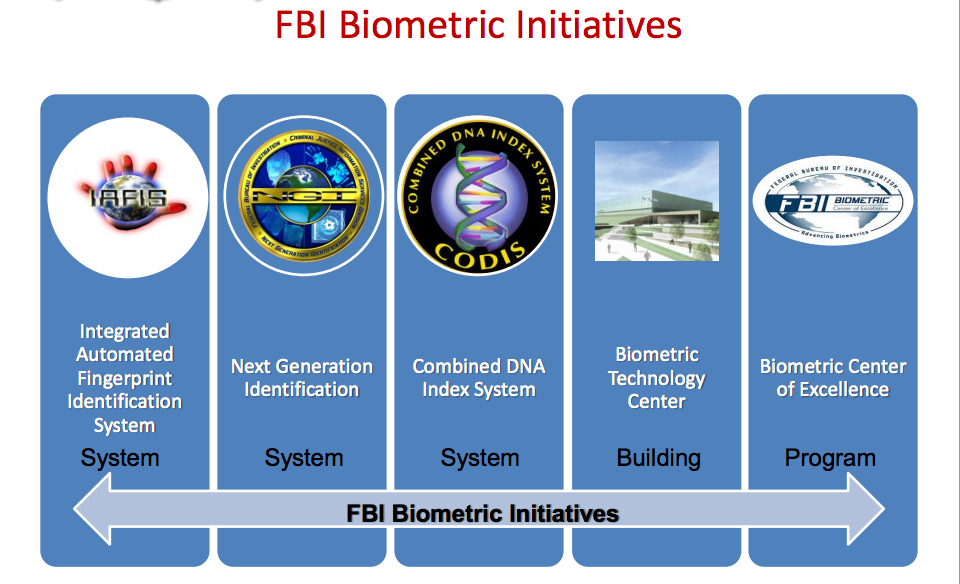
The Federal Bureau of Investigation has reached a milestone in the development of their Next Generation Identification (NGI) program and is now implementing the intelligence database in unidentified locales across the country, New Scientist reports in an article this week. The FBI first outlined the project back in 2005, explaining to the Justice Department in an August 2006 document (.pdf) that their new system will eventually serve as an upgrade to the current Integrated Automated Fingerprint Identification System (IAFIS) that keeps track of citizens with criminal records across America .
“The NGI Program is a compilation of initiatives that will either improve or expand existing biometric identification services,” its administrator explained to the Department of Justice at the time, adding that  the project, “will accommodate increased information processing and sharing demands in support of anti-terrorism.”
“The NGI Program Office mission is to reduce terrorist and criminal activities by improving and expanding biometric identification and criminal history information services through research, evaluation and implementation of advanced technology within the IAFIS environment.”
The agency insists, “As a result of the NGI initiatives, the FBI will be able to provide services to enhance interoperability between stakeholders at all levels of government, including local, state, federal, and international partners.” In doing as such, though, the government is now going ahead with linking a database of images and personally identifiable information of anyone in their records with departments around the world thanks to technology that makes fingerprint tracking seem like kids' stuff.
According to their 2006 report, the NGI program utilizes “specialized requirements in the Latent Services, Facial Recognition and Multi-modal Biometrics areas” that “will allow the FnewBI to establish a terrorist fingerprint identification system that is compatible with other systems; increase the accessibility and number of the IAFIS terrorist fingerprint records; and provide latent palm print search capabilities.”
Is that just all, though? During a 2010 presentation (.pdf) made by the FBI’s Biometric Center of Intelligence, the agency identified why facial recognition technology needs to be embraced. Specifically, the FBI said that the technology could be used for “Identifying subjects in public datasets,” as well as “conducting automated surveillance at lookout locations” and “tracking subject movements,” meaning NGI is more than just a database of mug shots mixed up with fingerprints — the FBI has admitted that this their intent with the technology surpasses just searching for criminals but includes spectacular surveillance capabilities. Together, it’s a system unheard of outside of science fiction.
New Scientist reports that a 2010 study found technology used by NGI to be accurate in picking out suspects from a pool of 1.6 million mug shots 92 percent of the time. The system was tested on a trial basis in the state of Michigan earlier this year, and has already been cleared for pilot runs in Washington, Florida and North Carolina. Now according to this week’s New Scientist report, the full rollout of the program has begun and the FBI expects its intelligence infrastructure to be in place across the United States by 2014.
In 2008, the FBI announced that it awarded Lockheed Martin Transportation and Security Solutions, one of the Defense Department’s most favored contractors, with the authorization to design, develop, test and deploy the NGI System. Thomas E. Bush III, the former FBI agent who helped develop the NGI's system requirements, tells NextGov.com, "The idea was to be able to plug and play with these identifiers and biometrics." With those items being collected without much oversight being admitted, though, putting the personal facts pertaining to millions of Americans into the hands of some playful Pentagon staffers only begins to open up civil liberties issues.
Jim Harper, director of information policy at the Cato Institute, adds to NextGov that investigators pair facial recognition technology with publically available social networks in order to build bigger profiles. Facial recognition "is more accurate with a Google or a Facebook, because they will have anywhere from a half-dozen to a dozen pictures of an individual, whereas I imagine the FBI has one or two mug shots," he says. When these files are then fed to law enforcement agencies on local, federal and international levels, intelligence databases that include everything from close-ups of eyeballs and irises to online interests could be shared among offices.
The FBI expects the NGI system to include as many as 14 million photographs by the time the project is in full swing in only two years, but the pace of technology and the new connections constantly created by law enforcement agencies could allow for a database that dwarfs that estimate. As RT reported earlier this week, the city of Los Angeles now considers photography in public space “suspicious,” and authorizes LAPD officers to file reports if they have reason to believe a suspect is up to no good. Those reports, which may not necessarily involve any arrests, crimes, charges or even interviews with the suspect, can then be filed, analyzed, stored and shared with federal and local agencies connected across the country to massive data fusion centers. Similarly, live video transmissions from thousands of surveillance cameras across the country are believed to be sent to the same fusion centers as part of TrapWire, a global eye-in-the-sky endeavor that RT first exposed earlier this year.
“Facial recognition creates acute privacy concerns that fingerprints do not,” US Senator Al Franken (D-Minnesota) told the Senate Judiciary Committee’s subcommittee on privacy, technology and the law earlier this year. “Once someone has your faceprint, they can get your name, they can find your social networking account and they can find and track you in the street, in the stores you visit, the government buildings you enter, and the photos your friends post online.”
In his own testimony, Carnegie Mellon University Professor Alessandro Acquisti said to Sen. Franken, “the convergence of face recognition, online social networks and data mining has made it possible to use publicly available data and inexpensive technologies to produce sensitive inferences merely starting from an anonymous face.”
“Face recognition, like other information technologies, can be source of both benefits and costs to society and its individual members,” Prof. Acquisti added. “However, the combination of face recognition, social networks data and data mining can significant undermine our current notions and expectations of privacy and anonymity.”
With the latest report suggesting the NGI program is now a reality in America, though, it might be too late to try and keep the FBI from interfering with seemingly every aspect of life in the US, both private and public. As of July 18, 2012, the FBI reports, “The NGI program … is on scope, on schedule, on cost, and 60 percent deployed.”

Wednesday, August 03, 2011

Mobile Biometrics To Hit US Streets


With new mobile gadgetry, suspects will no longer have to be taken to police stations for their fingerprints and irises to be scanned and recorded [GALLO/GETTY]


Despite Fuzzy Legality, US Law Enforcement Will Soon Be Able To Perform Mobile Iris Scans and Fingerprinting.

By D. Parvaz
Last Modified: 02 Aug 2011 16:25
Courtesy Of "Al-Jazeera"


We're fast approaching a time when law enforcement will no longer need to ask you for your identification - your physical self, and the biometric data therein, are all that will be required to identify you.

A gadget attached to a mobile phone can photograph and plot key points and features on your face (breaking the numbers down into biometric data), scan your iris and take your fingerprints on the spot.

This gizmo doesn't exist in a futuristic world - it's already been prototyped and tested. By autumn, the Mobile Offender Recognition and Information System (MORIS), which will allow 40 law enforcement agencies across the US to carry out such biometric diagnostics, will be rolled out. So far, the 1,000 units on order - at $3,000 and 12.5 oz per device - will be going to sheriff and police departments.

Proponents of the technology figure the deployment is a plus - having biometric data available almost instantly might prevent an officer from mistakenly identifying someone (via, say, a driver's license, which could be forged) and unnecessarily hauling them in for processing.

Scans taken on the road are checked against a database of stored scans from those who have in the past been or are currently incarcerated. Essentially, the idea is to see if a suspect has a prior record.

It's accurate. It'll keep us safe. It'll help law enforcement do its job.

But given that two of the three functions of the MORIS could legally be considered to be the sort of "search and seizure" covered by the US Constitution's Fourth Amendment (meaning that a person could, in theory, decline to have their iris scanned or fingerprints taken), law enforcement's ability to use them as intended seems questionable.

"The collection of personal biometric data has many privacy and civil liberties concerns attached to it, including scalability, reliability, accuracy, and security of the data collected," said Amie Stepanovich, national security counsel for the Electronic Privacy Information Center (EPIC), a Washington DC-based public interest group focused on privacy and civil liberty issues.

A key concern, said Stepanovich, is that this technology was essentially developed for a military environment and not for domestic use.

"The potential of this technology for use to track and monitor innocent individuals' personal information cannot be overshadowed. To prevent misuse, warrant requirements must be strictly enforced."

Looming Legal Questions

Does this gadgetry provide Americans with greater protection or does it allow the state - or unscrupulous law enforcement officials - to take advantage of loopholes left by laws and a Constitution drafted in a more technologically simple age?

 The Fourth Amendment to the
Constitution of the United States
The right of the people to be secure in their persons, houses, papers, and effects, against unreasonable searches and seizures, shall not be violated, and no Warrants shall issue, but upon probable cause, supported by Oath or affirmation, and particularly describing the place to be searched, and the persons or things to be seized. 
The Fourth Amendment, while prohibiting unreasonable searches and seizures, does not define what a "reasonable" search might be.
The Supreme Court, however, has ruled that warrants are not required for all searches, depending on the level of probable cause and the expectation of privacy - by the target of the search as well as by society - in what is being searched.
As Laurence Tribe, professor of constitutional law at Harvard, puts it: "The law determining what makes a search 'reasonable' or 'unreasonable' is enormously complex." It's difficult to determine if "the application of the relevant principles might be affected by any of the specific characteristics of this particular kind of search and by whether it is administered in a way that gives the person being subjected to it clear notice that the person's iris is being scanned by an identity-detecting device".
While Sean Mullin, the president of the Massachusetts-based BI2, the maker of the MORIS device, said that the constitutional issues surrounding such mobile search devices "have already been addressed" by the courts. He told Al Jazeera that he did not anticipate any problems with the technology, though he did submit that policy issues connected with the use of the device would have to be determined by lawmakers.

"This technology, though remarkable, does not change 200 years of constitutional law in the United States," said Mullin.

Legally speaking, there are grey areas when it comes to if and how road-side iris scans and fingerprinting can be carried out by law enforcement.

The Fourth Amendment in the US Constitution offers protection against "unreasonable"searches - this typically includes fingerprints.

But where does an iris scan fit in?

"An iris scan is almost certainly a 'search' within the meaning of the Fourth Amendment's protection against unreasonable searches and seizures. The closest analogy is of course a fingerprint," said Laurence Tribe, professor of constitutional law at Harvard Law School.

Tribe said that even the ways in which an iris scan could be distinguished from fingerprints - it is newer technology that does not require physical contact with the suspect - weren't constitutionally relevant, as using an iris scan would still be used to "provide accurate non-public information about the person's true identity" while obtaining "information that is not as accurately obtainable by mere observation of what an individual chooses to expose to the world at large".

EPIC's Stepanovich also says that certain constitutional protections are attached to the process of being taken into police custody, and that law enforcement ought not be able to bypass those protections by carrying out searches outside of the police station.
"Law enforcement officials must be clear with an individual about what they are consenting to - by performing these searches, which have historically been executed only at a police station, outside of police custody, many people may not be made aware of the scope of the search or their right to refuse. Well-accepted constitutional safeguards must be preserved," she said - adding that while a person can waive his or her Fourth Amendment rights, "it may be unclear to the individual what he or she is consenting to".

Expanded Use

Mullin said that while, so far only sheriff and police departments have placed orders with BI2, there "has been a great deal of interest from the federal government, including the Department of Homeland Security".

The Department of Homeland Security did not respond to requests for an interview or for information on whether it had ordered any of the mobile biometric units, although Animetrics, the company selling facial recognition software (which can be used on the mobile device) promotes its products as being highly useful not only for police departments, but for the DHS - as well private security firms. 

Paul Schuepp, president the New Hampshire-based Animetrics, readily acknowledges that private security firms, the US defence department and various local law enforcement agencies have purchased the facial recognition software, but remained tight-lipped when questioned specifically on whether the DHS or contractors such as Xe (formerly known as Blackwater) have ordered any of the handheld devices.

"That's a difficult one to answer … those are the ones that I can't even talk about - there's high interest from intelligence agencies, which is all of the above," said Schuepp.

The company has a number of facial recognition products on the market - everything from a free phone app that allows people to see which celebrity they resemble the most (Schuepp says his own facial biometrics resemble those of Kevin Costner and George Clooney) to software currently being tested in Iraq and Afghanistan, where Schuepp says he hopes his company will score lucrative contracts.

Massachusetts Plymouth County Sheriff's Department participated in BI2's promotional video [Youtube]
As with the the iris scan, Animetrics' mobile applications would not store the biometric data of a person who is not already logged in some sort of penal system database.

While Mullin said private companies would not have access to the iris database, it's worth noting facial recognition is employed by private companies, who, Schuepp said, might want to keep a "white list" of those who ought to have access to their facilities and "black list" of those they'd like to keep out.

When it comes to his own moral position as a developer, putting technology that could be misused into the hands of the government and private sectors alike, Schuepp said he had faith in the system.

"I'm counting on our government being honest, whether it's law enforcement or the military, trying to find people who threaten our lives," he said.

Mullin, too, takes a pretty easy moral position on his company's product.

He said the only significant difference between the MORIS and what already exists is its "miniaturisation". 

Still, Mullin acknowledged that there's nothing to stop an individual officer from misusing the device - coercing a suspect into submitting to a scan, for example - but said the device itself can only be used by authorised personnel, with five layers of verification and security to prevent "just anyone" from being able to access the iris database.   

Indeed, the Pinal County Sheriff's Department is among the agencies that has ordered the handheld devices. Given that Arizona last year passed the most stringent immigration law in the country - one President Barack Obama said "threatened to undermine basic notions of fairness" - it seems worth examining how these devices might be used in different jurisdictions.

The Pinal County Sheriff's department did not respond to numerous requests for an interview on its guidelines for using the device.

Constitutional watchdogs, as well as civil liberties groups such as the American Civil Liberties Union, have long hadissues with the use of biometric data, even when collected at international borders, fearing that the data could be misused.

"There is a greater risk of abuse with greater technological functionality, including unconstitutional targeting of persons in specific religious clothing or attending controversial events, or instances where the technology is used to [further] the personal ends of a law enforcement officer," said Stepanovich.

"Wide spread data collection often turns up a few cases of people who may or may not be guilty of criminal activity, but if that is done at the cost of frequent surveillance of the general public then it is not in line with constitutional principles."

Building A Biometric Arsenal 

We are living in the surveillance age. Google Street View vans roam our streets, mobile phone companies track our movements and most are even being watched by our social network, with Facebook allowing third parties to use facial recognition software to tag users without their consent.
 
This "Tag Suggestion" feature has attracted some negative attention, and at the behest of the Connecticut office of the attorney general, the social networking site earlier this month agreedto run adverts on its pages, informing users on how to opt-out of the tagging feature.

 
The uproar surrounding Facebook's facial recognition feature might be what has prompted Google to hold back on its facial recognition tool, although the company did not respond to a request for an interview. 

But a type of biometric census has been in wide use by US and NATO forces, which have been using registering to millions of Afghans and Iraqis in their own countries for some time. It's not only the criminals who are processed and entered in these databases - it's entire populations, although the focus seems to be on males of "fighting age".

The New York Times recently reported that one in every 20 residents of Afghanistan has been registered in the massive biometric database. In Iraq, one every 14 have been entered.

Within the US, the database of iris scans and facial data is expanding too.
The military has used different versions of iris and facial scanners in Afghanistan and Iraq for years [Reuters]

"In the fourth quarter of 2010 the system performed 3.2 billion – that's billion,with a 'b' - successful cross matches with one false accept [a false positive match]," said Mullin, of the iris database which is already employed in 47 states (the exceptions being Alaska, Hawaii and Delaware), although not in every jurisdiction in each state.

"The size of the database is growing very rapidly," said Mullin, who also said that the iris scanners are incredibly accurate and have a minute rate of "false accepts" - mistakenly matching an iris scan with one already in the database.

But not everyone is convinced of the accuracy of biometrics - a wide field that includes everything from voice and gait recognition to iris scans - as a whole.

A 2010 study done by the National Academy of Sciences found that technologies behind biometric data gathering are "inherently fallible". "The scientific basis of biometrics - from understanding the distributions of biometric traits within given populations to how humans interact with biometric systems - needs strengthening particularly as biometric technologies and systems are deployed in systems of national importance."

The study also highlighted that a subject might feel coerced into submitting to a scan due to "the possibility of negative consequences for nonparticipation", while instinctively wanting avoid a scan fearing "mission creep" - meaning that their data could be used for something other than the stated purpose.

Indeed, the notion of implied consent is where it gets sticky.

Tribe said that even within the context of what is considered a lawful stop and frisk that probable cause and a search warrant might still be required in order to compel someone to submit to an iris scan. 

Scan First, Apologise Later?

The US isn't unique in it's use of on-the-go fingerprinting - UK police are also using mobile fingerprinting application, despite objections from civil and immigrations rights groups.

Still, use of such data continues to grow in the US.

Massachusetts, for example, was already using facial recognition software, and according to James Walsh, the executive director of the Massachusetts Sheriff's Department, the state is looking to expand its database with a recent $250,000 grant from the US justice department.

Walsh was quick to point out that the grant did not include any MORIS units and that individual sheriff's departments in Massachusetts may have, independently, ordered some of the devices - but said he could not be sure.

They have. 

John Birtwell, the director of public information and technology at the Plymouth County Sheriff's Department told Al Jazeera that the county will get "more than a handful … at least three" of the devices.

But that's just about all the certainty Birtwell had to offer on the topic, as he seemed unclear as to whether officers would inform suspects of their Fourth Amendment rights to refuse to undergo impromptu fingerprinting and iris scanning.

He also seemed unsure as to what the protocol would be in the even that a suspect declined to be processed in such a manner.

"I'm dancing on the head of a pin here because I'm not a constitutional scholar," said Birtwell.

"The first or second time these devices are used, there would be some sort of appropriate constitutional test to make those bright lines [guidelines for field use] clear," said Birtwell, who said officers would be issued guidelines on when and how they could legally use the devices. He just wasn't sure when that would be - or what those guidelines would look like.

"All of these questions involve constitutional issues and protections and they should be addressed … nobody wants to make a bad arrest, nobody wants to violate anybody's rights."

Follow D. Parvaz on Twitter: @DParvaz

Wednesday, April 13, 2011

No Surveillance Without Oversight

Iris recognition scanner at the Biometrics 2004 exhibition, London
I spy for the FBI: Lockheed Martin has a $1bn contract for a new biometrics project for the bureau. Photograph: Ian Waldie/Getty Images


Given The FBI's Record Of Fallibility – and Without Genuine Safeguards For Citizens – This $1bn Biometrics Project Is Alarming

By Jay Stanley
Wednesday 30 March 2011 20.01 BST
Courtesy Of "The Guardian"


The FBI recently announced that its Next Generation Identification System (NGIS) has "reached its initial operating capacity". This vast new biometrics project, for which Lockheed Martin won a $1bn contract in 2008, encompasses not only fingerprints but also, possibly, such biometrics as iris scans, face recognition, bodily scars, marks and tattoos.
Such a system raises a number of concerns from a civil liberties perspective. Many types of biometrics are of particular concern because they allow individuals to be tracked secretly and at a distance. For instance, facial recognition may allow a person to be tracked by various CCTV cameras across a city. Worse, in the future, this may be automated and done by computers.
The FBI is rushing ahead with this system in a larger context that is very troubling. Since 9/11, we've repeatedly seen the government throw together new identity and tracking systems without building in the necessary protections to make sure innocent people aren't caught up in them. A good example is aviation watchlists. Countless travelers have found themselves trapped in a Kafkaesque nightmare – improperly listed as suspected terrorists, hassled, arrested or worse, and with no way to clear their names in the eyes of the government's secretive security bureaucracies. The problem is not just errors and mistaken identification, or the lack of due process or rigorous procedures for keeping the lists accurate, but also the possibility that government bureaucrats have used a "when in doubt, thrown a name on the list" approach.
We don't want to see the NGIS operate that way. Unfortunately, the FBI's record does not inspire confidence. In 2003, the bureau exempted its main criminal database, the National Crime Information Center (NCIC), from a requirement under the Privacy Act that agencies maintain records with "such accuracy, relevance, timeliness and completeness as is reasonably necessary to assure fairness to the individual". Some people have experienced the reality of this, such as a Maryland woman namedAmy Studnitz who was fired from her job after an NCIC background checkerroneously reported that she had a criminal record (even after the error was discovered, she was not rehired).
The experience of Oregon attorney Brandon Mayfield is also a cautionary tale. Considered a suspect in the 2004 bombing of a Madrid train due to a faulty fingerprint match, the FBI spied on Mayfield without a warrant, broke into his home several times and arrested him under the "material witness" statute. The FBI also investigated 19 other individualswhose fingerprints, like Mayfield's, were deemed similar to those found on evidence in Madrid.
Finally, the FBI's giant biometric project is taking place in a context where the United States – almost alone in the industrialised world – has no strong, overarching privacy laws, and no robust, independent institutions to enforce such laws. In another country where such institutions existed to protect people from error and abuse, this kind of programme might be cause for less concern. But rather than building such institutions, the US government has instead been granting sweeping new powers to our security agencies, and dismantling the checks and balances that are needed to ensure those powers are not misused.
Most technologies have good and bad uses, and limited uses of biometrics can be fine. But these databases need strict oversight, and now is the time to make sure the proper safeguards are in place. As the use of biometrics expands and our law enforcement moves into the future, so too should our privacy rights.

Friday, September 04, 2009

The Policies Of Secrecy and Deceit

"BioSecurity"

Meet Homeland Security's New Bioterror Czarina

By Tom Burghardt
Source: Antifascist Calling...
August 24, 2009
Courtesy Of Global Research

In the wake of the 2001 anthrax attacks, successive U.S. administrations have pumped some $57 billion across 11 federal agencies and departments into what is euphemistically called "biodefense."

Never mind that the deadly weaponized pathogen employed in the attacks didn't originate in some desolate Afghan cave or secret underground bunker controlled by Saddam.

And never mind that the principal cheerleaders for expanding state-funded programs are Pentagon bioweaponeers, private corporations and a shadowy nexus of biosecurity apparatchiks who stand to make a bundle under current and future federal initiatives.

Leading the charge for increased funding is the Alliance for Biosecurity, a collaborative venture between the Center for Biosecurity of the University of Pittsburgh Medical Center (UPMC) and Big Pharma.

Speaking at the World Economic Forum in Davos, Switzerland in January 2005, former U.S. Senate Majority Leader William Frist, a Bushist acolyte, baldly stated that "The greatest existential threat we have in the world today is biological" and predicted that "an inevitable bioterror attack" would come "at some time in the next 10 years."

Later that year, Frist and former House Speaker Dennis Hastert (R-IL) covertly inserted language into the 2006 Defense Appropriations bill (H.R. 2863) that granted legal immunity to vaccine manufacturers, even in cases of willful misconduct. It was signed into law by President Bush.

According to Public Citizen and The New York Times, Frist and Hastert benefited financially from their actions; the pair, as well as 41 other congressmen and senators owned as much as $16 million in pharmaceutical stock. SourceWatch revealed that "the Biotechnology Industry Organization (BIO) is purported to be the key author of the language additions. This trade association represents virtually all major vaccine manufacturers."

The Senate Majority Leader's alarmist jeremiad at Davos was seconded by Dr. Tara O'Toole who added, "This [bioterrorism] is one of the most pressing problems we have on the planet today."

Really? Not grinding poverty, global warming or the lack of access by hundreds of millions of impoverished workers and farmers to clean water, an adequate diet, health care or relief from epidemic levels of preventable diseases such as malaria, tuberculosis or diarrhea, but "bioterrorism" as narrowly defined by securocrats and their academic accomplices.

But Dr. Victor W. Sidel, a founder of Physicians for Social Responsibility (PSR) and an outspoken critic of the Bioweapons-Industrial-Complex challenged O'Toole's hysterical paradigm.

Sidel made the point that there is a fundamental conflict between the state's national security goals and health care providers' professional responsibilities to patients. He wrote in 2003 that "military, intelligence, and law enforcement agencies and personnel have long histories of secrecy and deception that are contrary to the fundamental health principles of transparency and truthfulness. They may therefore be unsuitable partners for public health agencies that need to justify receiving the public's trust."

In this context, the choice of O'Toole as the Department of Homeland Security's (DHS) Undersecretary of Science and Technology is troubling to say the least. As former CEO and Director of UPMC's Center for Biosecurity, critics charge that O'Toole's appointment will be nothing short of a disaster.

No ordinary policy wonk with an impressive résumé and years as a government insider, O'Toole is a key player advocating for the expansion of dual-use biological weapons programs rebranded as biodefense.

Subverting the Biological Weapons Convention

The resuscitation of American bioweapons programs are facilitated by their secretive and highly-classified nature. Under cover of academic freedom or intellectual property rights, the U.S. Bioweapons-Industrial-Complex has largely been outsourced by the state to private companies and contractors at top American corporations and universities.

Efforts to strengthen the Biological Weapons Convention (BWC) by the inclusion of verification language into the treaty and regular inspection of suspect facilities by international experts have been shot-down since 2001 by the Bush and now, the Obama administrations. Why?

Primarily because the United States view onsite measures as a threat to the commercial proprietary information of multinational pharmaceutical and biotechnology companies as well as to America's reputedly "defensive" biological programs; initiatives that continue to work with nature's most dangerous and deadly pathogens.

In fact, the problem of the dual-use nature of such research is a conundrum facing critics who challenge the break-neck expansion of concealed weapons programs. Simply put, military activities can be disguised as commercial research to develop medical countermeasures without anyone, least of all the American people, being any the wiser.

Highly-trained microbiologists deployed across a spectrum of low-key companies, trained for academic, public health, or commercial employment are part of the dual-use problem. Who's to say whether scientists who genetically-manipulate pathogens or create Frankenstein-like chimera disease organisms (say, synthesized Marburg or Ebola virus as has already been done with poliovirus in a U.S. lab) are engaged in treaty-busting weapons research or the development of life-saving measures.

And what about the accidental, or more sinisterly, the deliberate release of some horrific new plague by a scientist who's "gone rogue"? As researcher Edward Hammond pointed out:


British researchers pled guilty in 2001 to charges that they improperly handled a genetically engineered hybrid of the viruses causing hepatitis C and dengue fever. British authorities characterized the virus as "more lethal than HIV". 'Dengatitis' was deliberately created by researchers who wanted to use fewer laboratory animals in a search for a vaccine for Hepatitis C. Under unsafe laboratory conditions, the researchers created and nearly accidentally released a new hybrid human disease whose effects, fortunately, remain unknown; but which may have displayed different symptoms than its parents and thus been difficult to diagnose, and have required a new, unknown treatment regime. (Emerging Technologies: Genetic Engineering and Biological Weapons, The Sunshine Project, Background Paper No. 12, November 2003)


A new report by the Center for Arms Control and Nonproliferation has charged that despite restrictions under the BWC prohibiting the development, production, stockpiling and use of weaponized disease agents such as anthrax, smallpox or plague, as well as equipment and delivery systems intended for offensive use, the rapid growth of "biodefense and research programs over the last decade" has placed "new pressure" on efforts to curb the development of banned weapons listed in the treaty.

In an interview with Global Security Newswire Gerald Epstein, a senior fellow with the hawkish Center for Security and International Studies (CSIS) told the publication, "When one is doing bioresearch and biodefense, one has to be careful to not overstep the treaty itself."

He cited the U.S biodefense effort Project Bacchus--an investigation by the Defense Threat Reduction Agency to determine whether it was possible to build a bioweapons production facility using readily available equipment--as an instance where questions were raised if the treaty had been violated.

The type of biodefense activity that is most likely to raise questions regarding treaty compliance is "threat assessment," the process of determining what type of biological attacks are most likely to occur, he told Global Security Newswire. A dangerous biological agent could inadvertently be developed during such research, Epstein said. (Martin Matishak, "Biodefense Research Could Violate Weapons Convention, Report Warns," Global Security Newswire, August 20, 2009)

But Pentagon bioweaponeers did more than build "a bioweapons productions facility using readily available equipment." They built banned weapons. According to Jeanne Guillemin, author of Biological Weapons: From the Invention of State-Sponsored Programs to Contemporary Bioterrorism, the Pentagon and CIA made and tested a model of a Soviet anthrax bomb and created an antibiotic-resistant strain of anthrax.

After consulting with scientists who strongly suggested that the CIA anthrax bomb project would violate the BWC, "CIA lawyers decided the project was within the allowed realm of defensive research," Guillemin revealed. Project Clear Vision, a joint investigation by the CIA and the Battelle Memorial Institute, under contract to the Agency, reconstructed and tested a Soviet-era anthrax bomblet in order to test its dissemination characteristics. The Agency "decided the same" for the small, fully functional bioweapons facility built under the rubric of Project Bacchus.

The third initiative, Project Jefferson, led to the development of an antibiotic-resistant strain of anthrax based on a Soviet model. After the outgoing Clinton administration hesitated to give the CIA the go-ahead for the project, the Bush regime's National Security Council gave the Pentagon permission. "They believed" Guillemin wrote, "the Pentagon had the right to investigate genetically altered pathogens in the name of biodefense, 'to save American lives'."

Shortly thereafter, the Pentagon authorized the Defense Intelligence Agency (DIA), one of the most secretive and heavily-outsourced Defense Department branches, to re-create the deadly anthrax strain.

What the scope of these programs are today is currently unknown. We do know however, that based on available evidence the Department of Homeland Security, the Defense Department and the oxymoronic Intelligence Community, using the Department of Health and Human Services (HHS) and the U.S. Department of Agriculture (USDA) as a cover, continue to investigate the feasibility of transforming nature's most deadly pathogens into weapons.

In close coordination, the United States government and their outsourced corporate partners are spending billions of dollars on research and simulation exercises, dubbed "disaster drills" by a compliant media, to facilitate this grisly trade.

Secrecy and Deceit

That the official bioterror narrative is a preposterous fiction and swindle as even the FBI was forced to admit during its much-maligned Amerithrax investigation, is hardly worth a second glance by corporate media beholden to the pharmaceutical industry for advertising revenue; call it business as usual here in the heimat.

As we now know, the finely-milled anthrax powder which killed five people and shut down representative government didn't come from the Afghan-Arab database of disposable Western intelligence assets known as al Qaeda, but rather from deep within America's own Bioweapons-Industrial-Complex, to wit, from the U.S. Army Medical Research Institute of Infectious Diseases (USAMRIID) at Ft. Detrick in Maryland. But such troublesome and inconvenient truths are barely worth a mention by "respectable" media, e.g. the corporate stenographers who sold two imperialist military adventures to the American people.

Indeed, a credible case can be made that without the anthrax attacks, the fear levels gripping the country in the wake of the 9/11 terrorist events--and the subsequent clamp-down that followed, from the USA Patriot Act to the indefinite detention and torture of "terrorism" suspects, and from warrantless wiretapping to the demonization of dissent--may very well have been impossible.

It is difficult not to conclude that from the beginning of the affair, there was a clear intent on the part of the anthrax terrorist(s) to draw a straight line between 9/11 and the anthrax mailings. From there, it was but a short step to stitching-up a case for "regime change" in Iraq. The media's role in this criminal enterprise was indispensable for what Salon's Glenn Greenwald has called "the single greatest, unresolved media scandal of this decade." As Greenwald points out,

During the last week of October, 2001, ABC News, led by Brian Ross, continuously trumpeted the claim as their top news story that government tests conducted on the anthrax--tests conducted at Ft. Detrick--revealed that the anthrax sent to [former Senator Tom] Daschle contained the chemical additive known as bentonite. ABC News, including Peter Jennings, repeatedly claimed that the presence of bentonite in the anthrax was compelling evidence that Iraq was responsible for the attacks, since--as ABC variously claimed--bentonite "is a trademark of Iraqi leader Saddam Hussein's biological weapons program" and "only one country, Iraq, has used bentonite to produce biological weapons." (Glenn Greenwald, "Vital unresolved anthrax questions and ABC News," Salon, August 1, 2008)


Despite ABC News' claims that their information came from "four well-placed and separate sources," they were fed information that was patently false; as Greenwald avers, "No tests ever found or even suggested the presence of bentonite. The claim was just concocted from the start. It just never happened."

And as we will shortly explore below, the dubious "Dark Winter" and "Atlantic Storm" bioterror exercises designed by Dr. Tara O'Toole freely drew from the neocon's sinister playbook, right down to the weaponized smallpox supplied to al Qaeda by Saddam.

Whether or not one buys the current permutation of the "lone nut" theory, this one alleges that Dr. Bruce Ivins, a vaccine specialist employed by USAMRIID, was the anthrax mailer; the fact is, when all is said and done the attacks, to use a much over-hyped phrase, were an inside job.

And like other "lone nuts" who have entered the parapolitical frame at their own peril, Ivins isn't around to refute the charges.

The Alliance for Biosecurity: Insiders with a Mission and (Very) Deep Pockets

Before being pegged by the Obama administration to head DHS's Science and Technology division where she will oversee the department's billion dollar budget, with some 45 percent of it going towards chemical and bioweapons defense, O'Toole, as previously mentioned, was the CEO and Director of UPMC's Center for Biosecurity, a satrapy which describes itself as "an independent organization dedicated to improving the country's resilience to major biological threats."

How "independent"? You make the call!

According to their web site The Alliance for Biosecurity is "a collaboration among the Center for Biosecurity and 13 pharmaceutical and biotechnology companies whose mission is to work in the public interest to improve prevention and treatment of severe infectious diseases--particularly those diseases that present global security challenges."

Alliance partners include the usual suspects: Bavarian Nordic; Center for Biosecurity of UPMC; Cangene Corporation; DOR BioPharma, Inc.; DynPort Vaccine Company LLC, a CSC company; Elusys Therapeutics, Inc.; Emergent BioSolutions; Hematech, Inc., a subsidiary of Kyowa Kirin; Human Genome Sciences, Inc.; NanoViricides, Inc.; Pfizer Inc.; PharmAthene; Siga Technologies, Inc.; Unither Virology LLC, a subsidiary of United Therapeutics Corporation. Rounding out this rogues gallery are associate members, the spooky Battelle Medical Research and Evaluation Facility and the Lovelace Respiratory Research Institute.

Among the chief activities of the Alliance is lobbying Congress for increased funding for the development of new drugs deemed "countermeasures" under the Project BioShield Act of 2004, previously described by Antifascist Calling as a particularly grotesque piece of Bushist legislative flotsam.

The Alliance avers that "the United States faces unprecedented risks to national security ... by the clear and growing danger of bioterrorism or a destabilizing infectious disease pandemic," and that "our nation's vulnerability to biothreats is so severe" due to the fact that "most of the vaccines and medicines that will be needed to protect our citizens do not now exist." Therefore, countermeasures needed to mitigate nebulous biothreats never spelled out once in the group's literature "will likely require several years and several hundred million dollars each to successfully develop and produce." (emphasis added)

An Alliance report, The State of Biosecurity in 2008 and Proposals for a Public/Private Pathway Forward, charts a course for "improving and accelerating" efforts to "develop medical countermeasures (MCMs) for the nation's Strategic National Stockpile (SNS)."

Under the Project Bioshield Act of 2004, Congress authorized $5.6 billion over ten years "to purchase MCMs for the SNS." Funds were allocated for the procurement of the anthrax vaccine as well as for "therapeutic antibodies for inhalational anthrax, a botulism heptavalent antitoxin, a smallpox vaccine, and several products for radiological and nuclear threats, obligating a total of about $1.9 billion of the $5.6 billion BioShield fund."

In 2006 as I noted previously, Congress created the Biomedical Advanced Research and Development Authority (BARDA) within the Department of Health and Human Services (HHS). BARDA was authorized to spend some $1.07 billion over three years for MCMs, "only $201 million has been provided by Congress through FY 2008" noted the Alliance, "approximately one-fifth of the authorized level."

According to an "independent economic analysis" carried out by (who else!) the Alliance's academic partner, the Center for Biosecurity, "it would require $3.4 billion in FY 2009 to support one year of advanced development."

"Similarly" according to the organization, "the original appropriation of $5.6 billion for Project BioShield is equally insufficient to ensure that once MCMs are developed there will be funds available to procure them and maintain the stockpile." Indeed, "this level of funding would need to be sustained for many years." You can bet however, that Alliance lobbyists are busy as proverbial bees in pressuring Congress to fork over the dough!

The report state's that Alliance goals necessarily entail instilling "a sense of urgency ... with Congress" by hyping the "bioterror threat." But there's much more here than a simple cynical exercise at preparing the "public diplomacy" ground through academic and industry "message force multipliers" that will enable Congress to shower Big Pharma with a veritable tsunami of cash. A "risk-tolerant culture" should be promoted within BARDA, one that "understands the realities, risks, timelines, and costs of drug development."

The "risks" to whom and for what purpose are not enumerated, but one can be certain that a "risk-tolerant culture" crafted by industry insiders will come at the expense of the health and safety of the American people, one that pushes potential legal liability should things head south onto the taxpaying public.

The stealth nature of Alliance recommendations are clearly spelled out when they aver that "stakeholders" should "focus more on the potential biothreats and the corresponding countermeasures, rather than the price tag" and that BARDA, ostensibly a public agency, should be packed with insiders "who have drug development and manufacturing experience." This will lead to the development of "a culture that is focused on partnering with industry and academia."

But the bottom line as always, is the corporatist bottom line for Alliance shareholders! How else can one interpret their statement that emerging "biothreats" are all the more dire today now that "interest of the public and private capital markets in biodefense has declined over the last 2-3 years." What better way then, to beef-up those sagging capital markets than to install an industry-friendly individual at DHS with a documented track record of overplaying the "bioterror threat."

Dark Winter

O'Toole was the principal designer of two "tabletop" bioterror preparedness drills, the 2001 Dark Winter exercise and the 2005 Atlantic Storm run-through; both were criticized by scientific experts as fabrications of an alleged threat of a smallpox attack mounted by al Qaeda.

Reviewing Milton Leitenberg's 2005 report, Assessing the Biological Weapons and Bioterrorism Threat, published the U.S. Army War College's Strategic Studies Institute, protein chemist Dr. Eric Smith wrote the following:

Of note is Leitenberg's dissection of the process of assessment as practiced through bioterrorism threat scenarios conducted by the US government and private think tanks. Exercises like Dark Winter, which modeled an "aerosolized" smallpox attack, Top Off 2 and 3, both on pneumonic plague strikes, and Atlantic Storm, an exercise that purported to show an al Qaida group manufacturing a dry powder smallpox weapon, were rigged. In the cases of Dark Winter and the Top Offs, transmission rates of disease were sexed up beyond historical averages so that "a disastrous outcome was assured" no matter any steps taken to contain outbreaks. Eight pages are reserved to pointedly condemn the Atlantic Storm exercise on a host of sins which can generally be described as a bundle of frank lies and misinformation coupled with a claimed terrorist facility for making smallpox into a weapon that even state run biological warfare operations did not possess. And once again, juiced transmission rates of disease were employed to grease theoretical calamity. The reader comes to recognize the deus ex machina--a concoction or intervention added to dictate an outcome, in these cases very bad ones--as a regular feature of the exercises. However, the results of the same assessments--the alleged lessons learned--have never been reported with much, if any, skepticism in the media. (Eric Smith, "A Vaccine for the Hype: Milton Leitenberg's new 'Assessing the Biological Weapons and Bioterrorism Threat," Global Security, National Security Notes, March 31, 2006)

In criticizing "the fancy that such attacks are easy and one of the most catastrophic threats faced by the American people," Smith denounces the alarmist scenarios of Dark Winter and Atlantic Storm's designers--people like Dr. Tara O'Toole and the coterie of industry insiders and other well-paid "experts"--as guilty of perpetrating a massive "fraud ... and a substantial one" on the American people.

While one of Atlantic Storm's architects proclaimed "this is not science fiction" and that "the age of Bioterror is now..." Leitenberg and Smith denounce O'Toole's spurious claims as "not the least bit plausible."

Leitenberg wrote that "well before October-November 2001, the spectre of 'bioterrorism' benefitted from an extremely successful sales campaign." Indeed, hyped-up scenarios such as Dark Winter and Atlantic Storm that place "weapons of mass destruction" in the hands of shadowy, intelligence-linked terror outfits like al Qaeda provided "inflated predictions that ... were certainly not realistic. Much worse, in addition to being wrong, inflated predictions were counterproductive. They induced interest in BW in the wrong audiences."

But the implausible nature of the scenarios deployed in national exercises hardly prohibited the Bioweapons-Industrial-Complex from concocting scarecrow-like straw men designed to sow terror amongst the American people while extracting regular infusions of cash from Congress.

Among the eight exercises analyzed by Leitenberg between 1998-2005, he found that each and every one were fraudulently designed and the threat of bioterrorism had been framed as a rationalization for "political action, the expenditure of public funds for bioterrorism prevention and response programs," that could "not occur without it." This is "not benign," Leitenberg concludes.

A second consequence of sexed-up "bioterror" drills have even more ominous implications for the immediate future. Because of national security state perceptions that mitigation of catastrophic bioterrorism is of supreme importance for national survival--perceptions reinforced by academic, corporate and militarist peddlers of crisis--"the US biodefense research program appears to be drifting into violation" of the Biological Weapons Convention. This is a menacing development and has happened, I would argue precisely because the evaluation process which justifies research into biological weapons threat capabilities and scenarios, are repackaged to conceal the offensive thrust of this research as wholly defensive in nature, which it certainly is not.

How else would one explain ongoing research funded by the National Institutes of Health to study botulism toxin, "with the added qualification" Smith points out, that because the protein toxin is "unstable, therefore there will be collaboration with other researchers to stabilize it." The NIH grant "means preparing a much more effective botulinum toxin than had been available before."

Smith goes on to cite "another problematical breakout" offered by two scientists to study the "aerobiological" characteristics of the lethal Marburg and Ebola viruses. How this is "defensive" in nature, in keeping with research restrictions under the Biological Weapons Convention, is another instance of a backdoor move to kick-start illicit bioweapons development.

According to Smith, the study "looks to define how the organisms can be aerosolized, an instance of research into examining vulnerability in the complete absence of a verified threat." But I would argue that showering taxpayers dollars into such dark and troubling research tributaries deploy hyped-up threats as cover for the development of illegal weapons.

When her nomination was announced in May, Rutgers University and homeland security critic Richard Ebright told Wired,

"This is a disastrous nomination. O'Toole supported every flawed decision and counterproductive policy on biodefense, biosafety, and biosecurity during the Bush Administration. O'Toole is as out of touch with reality, and as paranoiac, as former Vice President Cheney. It would be hard to think of a person less well suited for the position."

"She was the single most extreme person, either in or out of government, advocating for a massive biodefense expansion and relaxation of provisions for safety and security," he adds. "She makes Dr. Strangelove look sane." (Noah Shachtman, "DHS' New Geek Chief is a Bioterror 'Disaster,' Critics Charge," Wired, May 6, 2009)


And Dr. Smith told Wired that exercises designed by O'Toole and her colleagues show her to be "the top academic/salesperson for the coming of apocalyptic bioterrorism which has never quite arrived."

As noted above, "[She's] most prominent for always lobbying for more money for biodefense, conducting tabletop exercises on bioterrorism for easily overawed public officials, exercises tweaked to be horrifying," Smith told Wired.

But Smith goes even further and denounces O'Toole as an industry shill who "has never obviously appeared to examine what current terrorist capabilities have been... in favor of extrapolating how easy it would be to launch bioterror attacks if one had potentially unlimited resources and scientific know-how." It's a "superb appointment if you're in the biodefense industry and interested in further opportunity and growth."

"Alternatively" Smith avers, O'Toole's appointment is "a disaster if threat assessment and prevention" has "some basis in reality."

Not that any of this matters in Washington. The Senate Homeland Security and Governmental Affairs Committee led by "independent Democrat" and arch neocon Sen. Joseph Lieberman, voted to send her nomination to the full Senate July 29.

Tom Burghardt is a researcher and activist based in the San Francisco Bay Area. In addition to publishing in Covert Action Quarterly and Global Research, his articles can be read on Dissident Voice, The Intelligence Daily, Pacific Free Press and the whistleblowing website Wikileaks. He is the editor of Police State America: U.S. Military "Civil Disturbance" Planning, distributed by AK Press.


Tom Burghardt is a frequent contributor to Global Research.

Global Research Articles by Tom Burghardt