


Showing posts with label Spy Drones. Show all posts
Showing posts with label Spy Drones. Show all posts
Thursday, October 02, 2014
The Black Knight Transformer Drone
The military's newest drone is a hybrid "heli-truck." Called the Black Knight Transformer, the drone is capable of carrying more than 4,000 pounds in payload, is able to travel over land on truck wheels, and comes with an attachable boat hull. RT's Lindsay France takes a look at the new vehicle.


Saturday, June 07, 2014
Spy Copters, Lasers, and Break-In Teams

Between 2006 and 2009, surveillance helicopters conducted daily flights over northwest Washington, D.C., taking high-resolution photographs of the new Chinese Embassy being constructed on Van Ness Street. The aircraft belonged to the Federal Bureau of Investigation, which wanted to determine where the embassy's communications center was being located. But the Chinese construction crews hid their work on this part of the building by pulling tarpaulins over the site as it was being constructed.
The FBI also monitored the movements and activities of the Chinese construction workers building the embassy, who were staying at a Days Inn on Connecticut Avenue just north of the construction site, in the hopes of possibly recruiting one or two of them. According to one Chinese diplomat, his fellow officials detected individuals who they assumed to be FBI agents covertly monitoring the construction materials and equipment being used to build the embassy, which were stored on the University of the District of Columbia's soccer field across the street from where the Chinese Embassy currently stands. The diplomat added that Chinese security officials assumed that the FBI agents were trying to determine whether it was possible to plant eavesdropping devices inside the construction materials stored at the site.
In recent weeks, the U.S. National Security Agency's efforts to monitor foreign diplomats have become the stuff of worldwide headlines. But the FBI has been in the business of spying on diplomats and breaking their codes for far longer than the NSA has. The surveillance of the Chinese Embassy was just one piece of a far larger espionage operation. The FBI not only endeavors to steal or covertly compromise foreign government, military, and commercial computer, telecommunications, and encryption systems being used in the United States, but the FBI and NSA work closely to intercept the communications of all diplomatic missions and international organizations located on American soil. In some important respects, the FBI's cryptologic work is more secretive than that being performed by the NSA because of the immense diplomatic sensitivity of these operations if they were to ever be exposed publicly.
The Bureau of Investigation, the predecessor to today's FBI, has been monitoring diplomatic communications since at least 1910, when it periodically solved Mexican government and revolutionary group cable traffic coming in and out of the United States. And for over a century, the FBI and its predecessors have been aggressive practitioners of the age-old art of stealing codes and ciphers. In June 1916, Bureau of Investigations agents surreptitiously obtained a copy of the new Mexican consular code by picking the pockets of a Mexican diplomatic courier while he cavorted with "fast women" in one of the innumerable border fleshpots along the Rio Grande.
Little has changed in the intervening century. Despite the creation of the NSA in 1952 to centralize in one agency all U.S. government signals intelligence (SIGINT) collection and processing work, the FBI, which did not respond to requests for comment for this story, has never ceased its own independent cryptologic efforts, especially when those efforts have been aim at diplomats on American soil.
***
The number of foreign government targets that the FBI monitors inside the United States is huge and growing. State Department records show that 176 countries maintain embassies in Washington, not including Cuba and Iran, which the U.S. government does not have diplomatic relations with but which maintain interest sections inside the Swiss and Pakistani embassies, respectively.
In addition, 115 of the 193 members of the United Nations maintain diplomatic missions of varying sizes in New York City. There are also 62 consulates in Los Angeles, 52 in Chicago, 42 in San Francisco, 38 in Houston, 35 in Miami, and 26 in Boston and Atlanta.
All told, there are almost 600 foreign government embassies, consulates, missions, or representative offices in the United States, all of which are watched to one degree or another by the counterintelligence officers of the FBI. Only eight countries do not maintain any diplomatic presence in the United States whatsoever, the most important of which is nuclear-armed North Korea.
Every one of these embassies and consulates is watched by the FBI's legion of counterintelligence officers to one degree or another. But some countries' receive the vast majority of the FBI's attention, such as Russia, China, Libya, Israel, Egypt, Syria, Jordan, Lebanon, Saudi Arabia, Iraq, Afghanistan, India, Pakistan, and Venezuela. The Cuban and Iranian interests section in Washington -- and their missions to the United Nations in New York -- of course receive special attention as well.
Unsurprisingly, most of the FBI's surveillance is technical in nature. For example, with substantial technical assistance from the NSA and the "big three" American telecommunications companies (AT&T, Verizon, and Sprint), the FBI taps the phones (including cell phones) of virtually every embassy and consulate in the United States. The FBI also intercepts the home phones and emails of many diplomats. The FBI's Washington and New York field offices have special wiretap centers that specialize in collecting all telephone, email, instant messaging, text messaging, and cellular telephone traffic coming in and out of all high-priority diplomatic targets in the United States 24 hours a day, seven days a week. According to a former Justice Department source, over the past decade these extremely sensitive intercepts have identified a number of spies working for governments that were caught in the act of stealing U.S. government secrets, as well as a larger number of cases involving the theft of industrial secrets from American companies.
Since 1978, all electronic communications, both plaintext and encrypted, between these embassies and their home countries have been routinely intercepted by the NSA's BLARNEY fiber-optic-cable intercept program. The NSA provides copies of all these intercepts, including telephone calls and emails, to the FBI's secretive signals-intelligence unit, the Data Intercept Technology Unit (DITU) at the Quantico Marine Corps base in Northern Virginia, and to the FBI's electronic-eavesdropping centers in Washington and New York.
The FBI also uses a wide range of vehicles and airborne surveillance assets to monitor the movements and activities of foreign diplomats and intelligence operatives in Washington and New York. Some of the vans, aircraft, and helicopters used by the FBI for this purpose are equipped with equipment capable of intercepting cell-phone calls and other electronic forms of communication. And when that doesn't work, the FBI calls in the burglars.
Another important part of the FBI's surveillance effort is dedicated to trying to surreptitiously get inside these diplomatic establishments on behalf of the NSA, which increasingly depends on the FBI to penetrate the computer and telecommunications networks used by these embassies and compromise their information security systems.
The FBI perfected this clandestine technique, known as the Surreptitious Entry Program operation, during Cold War intelligence-gathering operations directed at the Soviet Union and its Eastern European allies. These missions remain highly classified because of the diplomatic sensitivity surrounding breaking into the embassies of friends and enemies alike. In one instance during the 1960s, FBI agents reportedly drove a garbage truck into the central courtyard of the Czech Embassy in the middle of the night and spirited away one of the embassy's cipher machines for study by the NSA's code breakers.
The FBI is still conducting these highly sensitive operations. Specially trained teams of FBI agents are still periodically breaking into foreign embassies and consulates in the United States, primarily in New York and Washington. In New York, a special team of FBI burglars is based in a converted warehouse in Long Island City in Queens, according to a former FBI employee who worked there. The nondescript facility is large enough that the FBI can build mock-ups of the exteriors and interiors of embassies being targeted for break-ins. The FBI has a similar facility in Northern Virginia, where full-size mock-ups of embassies in Washington are constructed to train FBI teams prior to conducting black-bag jobs of the facilities.
To facilitate these operations, the FBI has a huge library of architectural drawings, floor plans, building permits, and any other documents that it can lay its hands on concerning the layouts of every embassy and consulate in the United States. Many of these documents were obtained in close conjunction with the diplomatic security staff of the State Department and the uniformed branch of the Secret Service, which is responsible for providing security for foreign diplomatic establishments in the United States. The FBI also interviews the repair and maintenance personnel who service the leased computers and telecommunications equipment used by a host of embassies and other diplomatic establishments in Washington and New York.
Since the 9/11 terrorist attacks, the tempo of FBI clandestine operations designed to steal, compromise, or influence foreign computer, telecommunications, or encryption systems has increased by several orders of magnitude. According to a former Justice Department official, over the past decade clandestine human-intelligence operations run by the FBI's Washington and New York field offices have been enormously successful in compromising a wide range of computer systems and encryption technology used by foreign governments and corporate entities. In a number of important cases, these FBI operations have allowed the NSA's code-breakers to penetrate foreign encryption systems that had defied the ability of the code-breakers to solve through conventional cryptanalytic means. For example, the FBI was able to give the NSA the daily changes in cipher keys for an encryption system used by a country in the developing world. In another case, the FBI was able to covertly insert spyware into the operating system of a computer being used by a foreign mission in New York, allowing the NSA to read the plaintext versions of cables before they were encrypted.
***
But by far the most productive and sensitive intelligence source about what is going on inside embassies and consulates in the United States is a joint FBI-NSA electronic-eavesdropping program known as Close Access SIGINT. It enables the FBI and NSA to listen to what is transpiring inside these buildings by using a wide range of covert technical sensors that are monitored in real time from covert listening posts located in close proximity to the targets.
Some of these operations involve spyware software that has been covertly planted inside the computer systems of embassies and consulates, which allows the NSA's computer-hacking organization, the Office of Tailored Access Operations (TAO), to read in real time everything that is being stored on individual computers or on the computer network itself. Some of these implants are designed and operated by TAO. Others are designed by the FBI's SIGINT unit, the DITU. Some sensors periodically copy the contents of computer hard drives; another sensor takes screen shots of documents being processed or reviewed on compromised computer systems. The FBI is also using sophisticated laser and acoustic systems to image and record the sounds of what is being typed on computers, according to a source with access to the trove of documents leaked to the media by former NSA contractor Edward Snowden.
To pick up the signals from these clandestine sensors, the FBI uses front companies to lease office space within line of sight of nearly 50 embassies and consulates in Washington and New York. In other instances, the FBI and NSA have installed disguised receivers on building rooftops near these embassies to pick up the data signals from clandestine sensors implanted inside these embassies and consulates. Some of these disguised receivers can clearly be seen on the rooftop of a building located within line of sight of the Chinese, Israeli, and Pakistani embassies on Van Ness Street in northwest Washington. It's a neighborhood that's awfully familiar to the FBI and its eavesdroppers.
Thursday, August 01, 2013
FBI: Drones Are In Use In America

FBI Director Robert Mueller revealed that the bureau uses drones to conduct surveillance on U.S. soil.
Asked by Sen. Chuck Grassley (R-Iowa) if the FBI was following in the footsteps of the Drug Enforcement Agency and the Bureau of Alcohol, Tobacco and Firearms in pursuing the use of unmanned aerial vehicles, Mueller said yes. The vehicles are used in very narrow circumstances for surveillance, he said.
Asked if the bureau had developed a set of policies governing drone use and privacy protections, however, Mueller said that such a process was just starting.
"We are in the initial stages of doing that," Mueller said, emphasizing that the FBI drone program was in the nascent stages. "I will tell you that our footprint is very small. We have very few of limited use, and we're exploring not only the use, but the necessary guidelines for that use."
He added that drones were used "in a very, very minimal way, and very seldom."
Sen. Dianne Feinstein (D-Calif.), a supporter of the recently revealed data collection program of the National Security Agency, told Mueller that drones represent a dire threat to Americans' privacy.
"I think the greatest threat to the privacy of Americans is the drone, and the use of the drone and the very few regulations that are on it today, and the booming industry of commercial drones," Feinstein said.
Pressed on what protections the FBI has in place to protect privacy, Mueller said the main safeguard is the way the drones are used.
"It is very narrowly focused on particularized cases and particularized needs," Mueller said. "That is the principal privacy limitation we have."
UPDATE: 5:37 p.m. -- News of the FBI's drone program also alarmed Sen. Mark Udall (D-Colo.), an Intelligence Committee member who has been critical of government surveillance. He found it troubling that the FBI had not yet developed a policy to govern its drone use.
"Unmanned aerial systems have the potential to more efficiently and effectively perform law enforcement duties, but the American people expect the FBI and other government agencies to first and foremost protect their constitutional rights," Udall said in a statement. "I am concerned the FBI is deploying drone technology while only being in the 'initial stages' of developing guidelines to protect Americans' privacy rights. I look forward to learning more about this program and will do everything in my power to hold the FBI accountable and ensure its actions respect the U.S. Constitution."
Monday, June 24, 2013
Nothing To Hide, Nothing To Fear
By James Corbett
corbettreport.com
“If you have nothing to hide, then you have nothing to fear.”
We’ve all heard this argument a million times when talking to people about the latest revelations of government snooping or the latest roll-out of creepy Orwellian technology. The implication is that the only people who complain about having their privacy violated are criminals who deserve to have their privacy violated. It is a simple phrase, learned by rote, that is meant to bring the conversation to a close.
We all know that this is argument is fundamentally flawed, but sometimes it is difficult to argue the point with someone who insists that they are fine with seemingly any level of government intrusion in their personal lives. Recently, Dan Dicks ofPressForTruth.ca, a Canadian alternative media outlet, demonstrated in a simple, fun way, the limits of people’s willingness to abide by the maxim that they have nothing to fear because they have nothing to hide. Setting up his camera on a busy thoroughfare, he asked a number of passersby a series of increasingly invasive questions. “What’s your name?” “Where are you from?” “How old are you?” “Who was the last person you phoned?” “What was the last thing you Googled?” “What’s your mother’s maiden name?” “What’s your bank account number?” Somewhere in the line of questioning, the person answering would inevitably claim that the question was too personal and would decline to answer. They had reached the limit of what they were willing to reveal about themselves to a total stranger.
So why are people (sometimes the very same people who argue that they have nothing to hide) reluctant to give away all of their personal information to a random person on the street? Obviously because they do not know that person or his intentions. He could be a criminal attempting to steal the information so he can access their bank account or steal their identity. Even if he wasn’t a criminal, who’s to say where the information would end up, and whether it may eventually end up in the hands of some nefarious criminal?
For some reason, people believe that allowing the government to spy on all of their electronic communications is somehow different. These aren’t random criminals on the street, after all, but government agencies. The information is not being accessed randomly, it is being used for official investigations into terrorism or wrongdoing. Our personal data, even our bank account numbers and personal histories, are surely safe with these government agencies and their trusted employees.
But think for a moment about the recent NSA spying scandal and what it has taught us. As much as Edward Snowden’s critics attempt to demonize him by pointing out that he is a high school dropout, an Army quitter, a lowly security guard who somehow or other flubbed his way into a job where he gained access to this top secret information, what these critics don’t realize is that they are making the very point for why we should not be happy entrusting our most personal information to a bunch of faceless government agencies. Because the faceless government agencies aren’t really faceless at all; they are populated by the very same types of potential criminals and nogoodniks that we would avoid sharing our personal information with on the street. Think about the extraordinary amount of data that someone like Snowden—a lowly employee of a subcontractor of the NSA—can access about you personally at any time he desires. As he himself stated: “I sitting at my desk certainly had the authorities to wiretap anyone, from you, to your accountant, to a federal judge to even the President if I had a personal email.”
You have something to fear about giving up private data to faceless individuals precisely because you have no idea how these people are going to use that information, or whether it will ever be misused. And when you realize that with the construction of the NSA’s new 1.5 million square foot data center in Utah the US government now has the ability to essentially store all of this data forever, you are entrusting your personal information not just to one potential criminal on the street, but to every single federal employee who ever has access to that data, and to anyone who might gain access to that data illegally. The government is essentially creating a trough of information that would be almost literally invaluable to any potential criminal or group of criminals, and making every effort to ensure that that trough is never emptied. How can anyone possibly be OK with this?
Think about this the next time someone tries to tell you they have nothing to hide.
Secret Court Document Finds Spy Techniques Unconstitutional
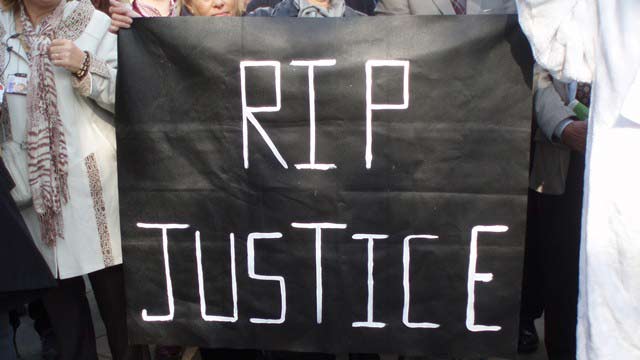
Justice Department Fights To Keep It Hidden
By Ryan W. Neal
The Justice Department may soon be forced to reveal a classified document that details unconstitutional surveillance of American citizens. The Justice Department has fought to keep the document secret for about a year, but a recent court order demands that they respond to a formal request filed by the Electronic Frontier Foundation by next week, June 7, 2013.
This document was first revealed last July by Sen. Ron Wyden, D-Ore., to call attention to an expansion of the Foreign Intelligence Surveillance Act in 2008 -- which then-Sen. Barack Obama voted for . According to Wyden, the Foreign Intelligence Surveillance Court ruled that the government violated the Fourth Amendment. The FISC mostly operates in secret, so the actual court decision remained classified. Wyden was only able to say the FISC decision existed; he was unable to disclose any details about the actual surveillance techniques that were deemed unconstitutional or how many Americans they affected.
The EFF took legal action to learn more about the FISC decision. An initial victory in a district court established in the public record that the Justice Department does possess an 86-page FISC decision on unconstitutional surveillance methods that was published Oct. 3, 2011. The decision found that some techniques were “unreasonable under the Fourth Amendment,” and that the court concluded that “on at least one occasion,” the Justice Department “circumvented the spirit of the law.”
The EFF’s next goal is to make the actual FISC decision public. The EFF had submitted a Freedom of Information Act request for the document to be declassified, but the Justice Department objected to the FOIA request on the grounds that making the FISC decision public would damage national security. It also argued that it didn’t even have the proper legal authority to release the FISC decision. A district court ruled in favor of the Justice Department and upheld the decision to keep the FISC document a secret.
The EFF decided to take its case directly to the FISC last week, and filed a motion to disclose the court records. On Friday, FISC Judge Reggie B. Walton ordered the Justice Department to submit any argument against the motion no later than 5 p.m. on June 7.
Of course, the Justice Department is likely to return with many of the same arguments as before. The difference, as Slate points out, is that this time the FISC, which has been under fire for its lack of transparency, will be deciding on the arguments. Sen. Dianne Feinstein, D-Calif., is working on a law that requires declassified versions of FISC decisions be made available to the public.
This could be an opportunity for the FISC to show that it is willing to be transparent. After all, it’s a decision it made nearly 20 months ago that was designed to protect the American people from unconstitutional intrusion by their government.
New technologies have made it easier for the Justice Department to spy on Americans, but others have fought back recently. Google has publicly fought against National Security Letters requesting user data, and more recently, a judge rejected and exposed an FBI proposal to use malware to turn a personal computer into a surveillance device.
Would You Ever Know If The Government Is Tracking You?

By Patrick C. Toomey
Court rulings unsealed last week in Washington show for the first time a behind-the-scenes legal battle over when the government should have to tell you that it's tracking your location and reading your email. These documents—which came to light only as the public learned more about the government's controversial investigation of Fox News journalist James Rosen—reveal significant new details about the government's obligation to provide notice, after the fact, when it obtains geolocation data or obtains stored email messages. Indeed, the court orders bring to light a striking contrast: federal prosecutors in Washington routinely provide notice to individuals they track using cell-phone geolocation data, even if that notice is delayed, yet the government strenuously resists giving any notice to individuals when searching and reading their emails.
The government is required to tell you when it listens in on your phone calls or searches your home. Now, it appears that at least some prosecutors provide delayed notice when they use cell-phone data to track your location in real-time. If prosecutors in Washington can provide such notice, then prosecutors elsewhere should be doing it too. Last year, the public learned that the phone companies receive a staggering 1.3 million surveillance requests per year, many of which are likely for geolocation data. Although notification is apparently the norm in Washington we're not aware of similar practices anywhere else in the country.
As for government searches of your personal email account, you will likely never know—unless you are ultimately charged with a crime or your email service provider voluntarily tells you about the search (something few do, often because the government obtains a gag order). The lack of notice for email searches appears to be a central question in court documents unsealed last week, which show the government trying to convince at least three judges that it has no duty to provide notice to email subscribers.
The new details emerged in a series of court opinions debating whether the government was ever required to tell Rosen that it had obtained a warrant to search his Gmail account. Relying on the convoluted and outdated federal statute governing email searches—the Electronic Communications Privacy Act (ECPA)—the government argued that it was excused from providing notice. U.S. Magistrate Judge John Facciola of the D.C. District Court rejected the government's argument and highlighted the perverse consequences of its position. Pointing out that federal prosecutors in Washington typically provide notice when tracking a person's movements using cell-phone data, Judge Facciola wrote:
[T]he user of a cell phone whose telecommunications data has been intercepted and captured pursuant to a warrant would ultimately learn that the government has been surveilling her, even though a portion of that surveillance may have occurred when she was in a public place. The e-mail account holder, on the other hand, would never learn of the search of the entire contents of her email account. Thus, as the government would have it, while it would have to tell a person that it followed his movements one day as he walked from K Street to Connecticut Avenue, it would never have to tell him that it has read and copied the entire contents of the e-mail account that he opened when he arrived at his office on K Street.
While the government was unable to convince Magistrate Judge Facciola, it appealed and ultimately persuaded Chief Judge Royce Lamberth that it had no obligation to notify Rosen of the email search. In particular, Chief Judge Lamberth held that the government's duty to provide notice was satisfied when investigators presented the warrant to the email service provider—in this case, Google. Magistrate Judge Facciola had previously rejected the government's interpretation of the notification statute, describing it as a "meaningless act of telling the ISP what it already knows." Facciola also observed that "[i]t is irrational to think that Congress would . . . grant the government a perpetual dispensation from ever notifying a person of the remarkable intrusion that a search of his email account creates."
These court opinions and filings tell us a great deal about how the government interprets its authority to obtain highly personal information, and the extent to which it interprets the law to avoid informing individuals when they have been spied upon. The documents also prompt further questions and significant concerns. For instance, we learned for the first time that federal prosecutors in Washington generally give delayed notice to the targets of cell-phone geolocation tracking—but what about prosecutors in other parts of the country, at the federal, state, and local level? Is this practice the result of a specific court ruling confined to our nation's capital, or does it reflect a national policy adopted nation-wide by the Department of Justice?
Even more, the documents show that the government seeks to access ever-greater quantities of our personal information with even less protection for individuals. Our email accounts contain vast amounts of private information, including personal communications, financial records, and other sensitive material. Yet courts do not even mandate the kind of notice that would be required if the government wanted to rifle through the letters we keep at home. Our laws have not caught up to the reality of today's electronic communications. The government should be required to notify individuals it targets for searches, whether electronic or physical, even if that notice is delayed for a time. Currently, individuals will only learn of these electronic searches if and when they are charged with a crime. The strange result of this policy: innocent people who are never charged will never learn that they were the subject of government surveillance and this type of intrusive search.
The Department of Justice has long kept the public in the dark about the scale of its surveillance activities. Such secrecy over surveillance powers is simply not appropriate in a democracy.
Sunday, June 23, 2013
Fisa Court Oversight

A Look Inside A Secret and Empty Process
By Glenn Greenwald
Since we began began publishing stories about the NSA's massive domestic spying apparatus, various NSA defenders – beginning with President Obama - have sought to assure the public that this is all done under robust judicial oversight. "When it comes to telephone calls, nobody is listening to your telephone calls," he proclaimed on June 7when responding to our story about the bulk collection of telephone records, adding that the program is "fully overseen" by "the Fisa court, a court specially put together to evaluate classified programs to make sure that the executive branch, or government generally, is not abusing them". Obama told Charlie Rose last night:
"What I can say unequivocally is that if you are a US person, the NSA cannot listen to your telephone calls … by law and by rule, and unless they … go to a court, and obtain a warrant, and seek probable cause, the same way it's always been, the same way when we were growing up and we were watching movies, you want to go set up a wiretap, you got to go to a judge, show probable cause."
The GOP chairman of the House Intelligence Committee, Mike Rogers,told CNN that the NSA "is not listening to Americans' phone calls. If it did, it is illegal. It is breaking the law." Talking points issued by the House GOP in defense of the NSA claimed that surveillance law only "allows the Government to acquire foreign intelligence information concerning non-U.S.-persons (foreign, non-Americans) located outside the United States."
The NSA's media defenders have similarly stressed that the NSA's eavesdropping and internet snooping requires warrants when it involves Americans. The Washington Post's Charles Lane told his readers: "the government needs a court-issued warrant, based on probable cause, to listen in on phone calls." The Post's David Ignatius told Post readers that NSA internet surveillance "is overseen by judges who sit on the Foreign Intelligence Surveillance Court" and is "lawful and controlled". Tom Friedman told New York Times readers that before NSA analysts can invade the content of calls and emails, they "have to go to a judge to get a warrant to actually look at the content under guidelines set by Congress."
This has become the most common theme for those defending NSA surveillance. But these claim are highly misleading, and in some cases outright false.
Top secret documents obtained by the Guardian illustrate what the Fisa court actually does – and does not do – when purporting to engage in "oversight" over the NSA's domestic spying. That process lacks many of the safeguards that Obama, the House GOP, and various media defenders of the NSA are trying to lead the public to believe exist.
No individualized warrants required under 2008 Fisa law
Many of the reasons these claims are so misleading is demonstrated by the law itself. When the original Fisa law was enacted in 1978, its primary purpose was to ensure that the US government would be barred from ever monitoring the electronic communications of Americans without first obtaining an individualized warrant from the Fisa court, which required evidence showing "probable cause" that the person to be surveilled was an agent of a foreign power or terrorist organization.
That was the law which George Bush, in late 2001, violated, when hesecretly authorized eavesdropping on the international calls of Americans without any warrants from that court. Rather than act to punish Bush for those actions, the Congress, on a bipartisan basis in 2008, enacted a new, highly diluted Fisa law – the Fisa Amendments Act of 2008 (FAA) – that legalized much of the Bush warrantless NSA program.
Under the FAA, which was just renewed last December for another five years, no warrants are needed for the NSA to eavesdrop on a wide array of calls, emails and online chats involving US citizens. Individualized warrants are required only when the target of the surveillance is a US person or the call is entirely domestic. But even under the law, no individualized warrant is needed to listen in on the calls or read the emails of Americans when they communicate with a foreign national whom the NSA has targeted for surveillance.
As a result, under the FAA, the NSA frequently eavesdrops on Americans' calls and reads their emails without any individualized warrants – exactly that which NSA defenders, including Obama, are trying to make Americans believe does not take place. As Yale Law professor Jack Balkin explained back in 2009:
"The Fisa Amendments Act of 2008, effectively gives the President - now President Obama - the authority to run surveillance programs similar in effect to the warrantless surveillance program [secretly implemented by George Bush in late 2001]. That is because New Fisa no longer requires individualized targets in all surveillance programs. Some programs may be 'vacuum cleaner' programs that listen to a great many different calls (and read a great many e-mails) with any requirement of a warrant directed at a particular person as long as no US person is directly targeted as the object of the program. . . ."New Fisa authorizes the creation of surveillance programs directed against foreign persons (or rather, against personsbelieved to be outside the United States) – which require no individualized suspicion of anyone being a terrorist, or engaging in any criminal activity. These programs mayinevitably include many phone calls involving Americans, who may have absolutely no connection to terrorism or to Al Qaeda."
As the FAA was being enacted in mid-2008, Professor Balkin explainedthat "Congress is now giving the President the authority to do much of what he was probably doing (illegally) before".
The ACLU's Deputy Legal Director, Jameel Jaffer, told me this week by email:
"On its face, the 2008 law gives the government authority to engage in surveillance directed at people outside the United States. In the course of conducting that surveillance, though, the government inevitably sweeps up the communications of many Americans. The government often says that this surveillance of Americans' communications is 'incidental', which makes it sound like the NSA's surveillance of Americans' phone calls and emails is inadvertent and, even from the government's perspective, regrettable."But when Bush administration officials asked Congress for this new surveillance power, they said quite explicitly thatAmericans' communications were the communications of most interest to them. See, for example, Fisa for the 21st Century, Hearing Before the S. Comm. on the Judiciary, 109th Cong. (2006) (statement of Michael Hayden) (stating, in debate preceding passage of FAA's predecessor statute, that certain communications 'with one end in the United States" are the ones "that are most important to us').The principal purpose of the 2008 law was to make it possible for the government to collect Americans'international communications - and to collect those communications without reference to whether any party to those communications was doing anything illegal. And a lot of the government's advocacy is meant to obscure this fact, but it's a crucial one: The government doesn't need to 'target' Americans in order to collect huge volumes of their communications."
That's why Democratic senators such as Ron Wyden and Mark Udallspent years asking the NSA: how many Americans are having their telephone calls listened to and emails read by you without individualized warrants? Unlike the current attempts to convince Americans that the answer is "none", the NSA repeatedly refused to provide any answers,claiming that providing an accurate number was beyond their current technological capabilities. Obviously, the answer is far from "none".
Contrary to the claims by NSA defenders that the surveillance being conducted is legal, the Obama DOJ has repeatedly thwarted any efforts to obtain judicial rulings on whether this law is consistent with the Fourth Amendment or otherwise legal. Every time a lawsuit is brought contesting the legality of intercepting Americans' communications without warrants, the Obama DOJ raises claims of secrecy, standing and immunity to prevent any such determination from being made.
The emptiness of 'oversight' from the secret Fisa court
The supposed safeguard under the FAA is that the NSA annually submits a document setting forth its general procedures for how it decides on whom it can eavesdrop without a warrant. The Fisa court then approves those general procedures. And then the NSA is empowered to issue "directives" to telephone and internet companies to obtain the communications for whomever the NSA decides – with no external (i.e. outside the executive branch) oversight – complies with the guidelines it submitted to the court.
In his interview with the president last night, Charlie Rose asked Obama about the oversight he claims exists: "Should this be transparent in some way?" Obama's answer: "It is transparent. That's why we set up the Fisa Court." But as Politico's Josh Gerstein noted about that exchange: Obama was "referring to the Foreign Intelligence Surveillance Court –which carries out its work almost entirely in secret." Indeed, that court's orders are among the most closely held secrets in the US government. That Obama, when asked about transparency, has to cite a court that operates in complete secrecy demonstrates how little actual transparency there is to any this.
The way to bring actual transparency to this process it to examine the relevant Top Secret Fisa court documents. Those documents demonstrate that this entire process is a fig leaf, "oversight" in name only. It offers no real safeguards. That's because no court monitors what the NSA is actually doing when it claims to comply with the court-approved procedures. Once the Fisa court puts its approval stamp on the NSA's procedures, there is no external judicial check on which targets end up being selected by the NSA analysts for eavesdropping. The only time individualized warrants are required is when the NSA is specifically targeting a US citizen or the communications are purely domestic.
When it is time for the NSA to obtain Fisa court approval, the agency does not tell the court whose calls and emails it intends to intercept. It instead merely provides the general guidelines which it claims are used by its analysts to determine which individuals they can target, and the Fisa court judge then issues a simple order approving those guidelines. The court endorses a one-paragraph form order stating that the NSA's process "'contains all the required elements' and that the revised NSA, FBI and CIA minimization procedures submitted with the amendment 'are consistent with the requirements of [50 U.S.C. §1881a(e)] and with the fourth amendment to the Constitution of the United States'". As but one typical example, the Guardian has obtained an August 19, 2010, Fisa court approval from Judge John Bates which does nothing more than recite the statutory language in approving the NSA's guidelines.
Once the NSA has this court approval, it can then target anyone chosen by their analysts, and can even order telecoms and internet companies to turn over to them the emails, chats and calls of those they target. The Fisa court plays no role whatsoever in reviewing whether the procedures it approved are actually complied with when the NSA starts eavesdropping on calls and reading people's emails.
The guidelines submitted by the NSA to the Fisa court demonstrate how much discretion the agency has in choosing who will be targeted. Those guidelines also make clear that, contrary to the repeated assurances from government officials and media figures, the communications of American citizens are – without any individualized warrant – included in what is surveilled.
The specific guidelines submitted by the NSA to the Fisa court in July 2009 – marked Top Secret and signed by Attorney General Eric Holder – state that "NSA determines whether a person is a non-United States person reasonably believed to be outside the United States in light of the totality of the circumstances based on the information available with respect to that person, including information concerning the communications facility or facilities used by that person." It includes information that the NSA analyst uses to make this determination – including IP addresses, statements made by the potential target, and other information in the NSA databases.
The decision to begin listening to someone's phone calls or read their emails is made exclusively by NSA analysts and their "line supervisors". There is no outside scrutiny, and certainly no Fisa court involvement. As the NSA itself explained in its guidelines submitted to the Fisa court:
"Analysts who request tasking will document in the tasking database a citation or citations to the information that led them to reasonably believe that a targeted person is located outside the United States. Before tasking is approved, the database entry for that tasking will be reviewed in order to verify that the database entry contains the necessary citations."
The only oversight for monitoring whether there is abuse comes from the executive branch itself: from the DOJ and Director of National Intelligence, which conduct "periodic reviews … to evaluate the implementation of the procedure." At a hearing before the House Intelligence Committee Tuesday afternoon, deputy attorney general James Cole testified that every 30 days, the Fisa court is merely given an "aggregate number" of database searches on US domestic phone records.
Warrantless interception of Americans' communications
Obama and other NSA defenders have repeatedly claimed that "nobody" is listening to Americans' telephone calls without first obtaining warrants. This is simply false. There is no doubt that some of the communications intercepted by the NSA under this warrantless scheme set forth in FAA's section 702 include those of US citizens. Indeed, as part of the Fisa court approval process, the NSA submits a separate document, also signed by Holder, which describes how communications of US persons are collected and what is done with them.
One typical example is a document submitted by the NSA in July 2009. In its first paragraph, it purports to set forth "minimization procedures" that "apply to the acquisition, retention, use, and dissemination of non-publicly available information concerning unconsenting United States persons that is acquired by targeting non-United States persons reasonably believed to be located outside the United States in accordance with section 702 of the Foreign Intelligence Surveillance Act of 1978, as amended."
That document provides that "communications of or concerning United States persons that may be related to the authorized purpose of the acquisition may be forwarded to analytic personnel responsible for producing intelligence information from the collected data." It also states that "such communications or information" - those from US citizens - "may be retained and disseminated" if it meets the guidelines set forth in the NSA's procedures.
Those guidelines specifically address what the NSA does with what it calls "domestic communications", defined as "communications in which the sender and all intended recipients are reasonably believed to be located in the United States at the time of acquisition". The NSA expressly claims the right to store and even disseminate such domestic communication if: (1) "it is reasonably believed to contain significant foreign intelligence information"; (2) "the communication does not contain foreign intelligence information but is reasonably believed to contain evidence of a crime that has been, is being, or is about to be committed"; or (3) "the communication is reasonably believed to contain technical data base information, as defined in Section 2(i), or information necessary to understand or assess a communications security vulnerability."
Although it refuses to say how many Americans have their communications intercepted without warrants, there can be no question that the NSA does this. That's precisely why they have created elaborate procedures for what they do when they end up collecting Americans' communications without warrants.
Vast discretion vested in NSA analysts
The vast amount of discretion vested in NSA analysts is also demonstrated by the training and briefings given to them by the agency. In one such briefing from an official with the NSA's general counsel's office - a top secret transcript of which was obtained by the Guardian, dated 2008 and then updated for 2013 - NSA analysts are told how much the new Fisa law diluted the prior standards and how much discretion they now have in deciding whose communications to intercept:
"The court gets to look at procedures for saying that there is a reasonable belief for saying that a target is outside of the United States. Once again - a major change from the targeting under Fisa. Under Fisa you had to have probable cause to believe that the target was a foreign power or agent of a foreign power. Here all you need is a reasonable belief that the target is outside of the United States ..."Now, all kinds of information can be used to this end. There's a list in the targeting procedures: phone directories, finished foreign intelligence, NSA technical analysis of selectors, lead information. Now, you don't have to check a box in every one of those categories. But you have to look at everything you've got and make a judgment. Looking at everything, do you have a reasonable belief that your target is outside the United States? So, cast your search wide. But don't feel as though you have to have something in every category. In the end, what matters is, 'Does all that add up to a reasonable belief that your target is outside the United States?'"
So vast is this discretion that NSA analysts even have the authority to surveil communications between their targets and their lawyers, and that information can be not just stored but also disseminated. NSA procedures do not ban such interception, but rather set forth procedures to be followed in the event that the NSA analyst believes they should be "disseminated".
The decisions about who has their emails and telephone calls intercepted by the NSA is made by the NSA itself, not by the Fisa court, except where the NSA itself concludes the person is a US citizen and/or the communication is exclusively domestic. But even in such cases, the NSA often ends up intercepting those communications of Americans without individualized warrants, and all of this is left to the discretion of the NSA analysts with no real judicial oversight.
Legal constraints v technical capabilities
What is vital to recognize is that the NSA is collecting and storing staggering sums of communications every day. Back in 2010, the Washington Post reported that "every day, collection systems at the National Security Agency intercept and store 1.7 billion e-mails, phone calls and other types of communications." Documents published by the Guardian last week detail that, in March 2013, the NSA collected three billions of pieces of intelligence just from US communications networks alone.
In sum, the NSA is vacuuming up enormous amounts of communications involving ordinary Americans and people around the world who are guilty of nothing. There are some legal constraints governing their power to examine the content of those communications, but there are no technical limits on the ability either of the agency or its analysts to do so. The fact that there is so little external oversight is what makes this sweeping, suspicion-less surveillance system so dangerous. It's also what makes the assurances from government officials and their media allies so dubious.
A senior US intelligence official told the Guardian: "Under section 702, the Fisa court has to approve targeting and minimization procedures adopted by the Attorney General, in consultation with the Director of National Intelligence."
"The targeting procedures ensure that the targets of surveillance are reasonably believed to be non-US persons outside of the US", the official added.
"Moreover, decisions about targeting are memorialized, reviewed on a regular basis and audited. Moreover, Congress clearly understood that even when the government is targeting foreign persons for collection, communications of US persons may be acquired if those persons are in communication with the foreign targets, for example as was testified to in today's hearing when Najibullah Zazi communicated with a foreign terrorist whose communications were being targeted under Section 702.
"That," the official continued, "is why the statute requires that there be minimization procedures to ensure that when communications of, or concerning, US persons are acquired in the course of lawful collection under Section 702, that information is minimized and is retained and disseminated only when appropriate. These procedures are approved on an annual basis by the Fisa court.
"Compliance with them is extensively overseen by the intelligence community, the DOJ, the ODNI and Inspectors General," the official said. "Both the Fisa court and Congress receive regular reports on compliance."
Friday, June 14, 2013
What A Drone Can See From 17,500 Feet
Courtesy Of PBS - NOVA
A new camera developed by the Pentagon's research arm was highlighted in a recent special on PBS' "Nova" in an episode called "Rise of the Drones." It's a camera system so detailed it can discern specific movements and even what a subject is wearing.
The Defense Advanced Research Projects Agency's (DARPA's) Autonomous Real-Time Ground Ubiquitous Surveillance Imaging System (ARGUS) has 1.8 billion pixels (1.8 gigapixels), making it the world' highest resolution camera. The sensors on the camera are so precise, PBS stated it is the equivalent to the capabilities of 100 Predator drones in a medium city.
In the clip from PBS, it is said this is the first time the government has allowed information to be shared about these capabilities.
"It is important for the public to know that some of these capabilities exist," Yiannis Antonaides with contractor BAE Systems said in the clip, but noted the sensor itself cannot be revealed. "Because we are not allowed to expose some of the pieces that make up this sensor, so you get to look a pretty plastic curtains."
The technology allows the user to open up a specific windows of interest in the camera's view while still keeping up an image of the larger picture (sort of like split screen).
Antonaides explained that the colored boxes in the image show that the sensor recognized moving objects. "You can see individuals crossing the street. You can see individuals walking in parking lots. There's actually enough resolution to see the people waving their arms or walking around or what kind of clothes they wear," he said. PBS noted that ARGUS can actually see much more details than just attire. It can see objects as small as six inches. At 2:23 in the clip,
Antonaides points out that from 17,500 feet, a white object in the field of view is a bird flying. PBS pointed out that DARPA put a time crunch on creating the camera, which lead Antonaides to look into technology that you probably have in your purse or pocket at this very moment. Taking similar imaging systems used in smartphones and putting 368 together, is essentially how Antonaides and other engineers at BAE Systems created ARGUS. It is this "mosaic" of cameras that allows the system to zoom in on specific sections in extreme detail. As for data, the system stores up to 1 million terabytes a day. Putting this into perspective, PBS notes this is equal to 5,000 hours of HD footage.
"You can go back and say 'I would like to know what happened at this particular location three days, two hours, four minutes ago' and it would actually show you what happened as if you were watching it live," Antonaides said.
It is still classified information whether ARGUS has been used in the field yet.
"If we had our choice, we would like ARGUS to be over the same area 24 hours a day, seven days a week. That's not very achievable with manned platforms. This is where UAVs come in and they're absolutely the perfect platform," Antonaides said.
Saturday, May 11, 2013
Naked Citizens
By JourneyMan Pictures
Increasing numbers of 'terror suspects' are being arrested on the basis of online and CCTV surveillance data. Authorities claim they act in the public interest, but does this intense surveillance keep us safer?
"I woke up to pounding on my door", says Andrej Holm, a sociologist from the Humboldt University. In what felt like a scene from a movie, he was taken from his Berlin home by armed men after a systematic monitoring of his academic research deemed him the probable leader of a militant group. After 30 days in solitary confinement, he was released without charges. Across Western Europe and the USA, surveillance of civilians has become a major business. With one camera for every 14 people in London and drones being used by police to track individuals, the threat of living in a Big Brother state is becoming a reality. At an annual conference of hackers, keynote speaker Jacob Appelbaum asserts, "to be free of suspicion is the most important right to be truly free".
But with most people having a limited understanding of this world of cyber surveillance and how to protect ourselves, are our basic freedoms already being lost?
Monday, May 06, 2013
Privacy Is Off The Table

In a press conference yesterday, both Mayor Michael Bloomberg and police commissioner Ray Kelly used the suspects' alleged plot to make the case for more surveillance cameras. "You’re never going to know where all of our cameras are," Bloomberg said. "And that’s one of the ways you deter people; they just don’t know whether the person sitting next to you is just somebody sitting there or a detective watching."
"YOU’RE NEVER GOING TO KNOW WHERE ALL OF OUR CAMERAS ARE."
Kelly promised that the New York City Police Department (NYPD) is expanding its already massive network of cameras. The number of public sector surveillance cameras in New York City is reportedly between 3,500 and 6,000. In an interview earlier this week, Kelly praised the network of "smart cameras" that allow police to remotely read licenses and recognize suspicious packages.
The cameras are part of the NYPD's elite surveillance system, developed by Microsoft over a three year period. It's known as The Domain Awareness System or simply "the dashboard," with the total costs reportedly between $30 million and $40 million.
The dashboard aggregates data from cameras, mapped crime patterns, 911 alerts, arrest records, parking tickets, and radiation detectors, and it's getting smarter all the time. The cameras can detect when a bag or package is abandoned in a public place, Kelly told MSNBC earlier this week, and he hopes to expand this capability, which he refers to as "video analytics."
IT'S KNOWN AS THE DOMAIN AWARENESS SYSTEM OR SIMPLY "THE DASHBOARD"
The NYPD is almost certainly the most advanced police department in the country, even expanding to include overseas bureaus in the years since the terrorist attacks on September 11th. However, other cities and even other countries have taken note of the Domain Awareness System. Police departments in other cities, as well as law enforcement and large events outside the US, have approached Microsoft about licensing the software.
There are questions as to whether surveillance cameras actually prevent attacks: Boston's relatively extensive network of cameras still failed to catch the bombers in the act or dissuade them from their crime. The extensiveness and sophistication of the NYPD's surveillance network also has the American Civil Liberties Union and other public rights advocates worried, but Kelly believes standards of privacy are changing. "The privacy issue has really been taken off the table," he said. "I don’t think people are concerned about it. I think people accept it in a post-9/11 world."
Kelly's sense of conviction is reminiscent of Mayor Bloomberg's statement on the use of drones to monitor civilians: "get used to it."
Subscribe to:
Posts (Atom)
