


Showing posts with label FISA. Show all posts
Showing posts with label FISA. Show all posts
Sunday, July 28, 2013
Is 2013 Actually '1984'?
Courtesy Of THNKR
Does Google know who you are even if you're using a different computer? Are retailers tracking which products you look at on their shelves? Can a laser tell if you've drunk coffee today? Learn the answers to these questions and more on Epiphany with technology expert and author Josh Klein.


Thursday, July 25, 2013
The Secret War

Illustrations by Mark Weaver
INFILTRATION. SABOTAGE. MAYHEM. FOR YEARS FOUR-STAR GENERAL KEITH ALEXANDER HAS BEEN BUILDING A SECRET ARMY CAPABLE OF LAUNCHING DEVASTATING CYBERATTACKS. NOW IT’S READY TO UNLEASH HELL.
By James Bamford
INSIDE FORT MEADE, Maryland, a top-secret city bustles. Tens of thousands of people move through more than 50 buildings—the city has its own post office, fire department, and police force. But as if designed by Kafka, it sits among a forest of trees, surrounded by electrified fences and heavily armed guards, protected by antitank barriers, monitored by sensitive motion detectors, and watched by rotating cameras. To block any telltale electromagnetic signals from escaping, the inner walls of the buildings are wrapped in protective copper shielding and the one-way windows are embedded with a fine copper mesh.
This is the undisputed domain of General Keith Alexander, a man few even in Washington would likely recognize. Never before has anyone in America’s intelligence sphere come close to his degree of power, the number of people under his command, the expanse of his rule, the length of his reign, or the depth of his secrecy. A four-star Army general, his authority extends across three domains: He is director of the world’s largest intelligence service, the National Security Agency; chief of the Central Security Service; and commander of the US Cyber Command. As such, he has his own secret military, presiding over the Navy’s 10th Fleet, the 24th Air Force, and the Second Army.
Alexander runs the nation’s cyberwar efforts, an empire he has built over the past eight years by insisting that the US’s inherent vulnerability to digital attacks requires him to amass more and more authority over the data zipping around the globe. In his telling, the threat is so mind-bogglingly huge that the nation has little option but to eventually put the entire civilian Internet under his protection, requiring tweets and emails to pass through his filters, and putting the kill switch under the government’s forefinger. “What we see is an increasing level of activity on the networks,” he said at a recent security conference in Canada. “I am concerned that this is going to break a threshold where the private sector can no longer handle it and the government is going to have to step in.”
In its tightly controlled public relations, the NSA has focused attention on the threat of cyberattack against the US—the vulnerability of critical infrastructure like power plants and water systems, the susceptibility of the military’s command and control structure, the dependence of the economy on the Internet’s smooth functioning. Defense against these threats was the paramount mission trumpeted by NSA brass at congressional hearings and hashed over at security conferences.
But there is a flip side to this equation that is rarely mentioned: The military has for years been developing offensive capabilities, giving it the power not just to defend the US but to assail its foes. Using so-called cyber-kinetic attacks, Alexander and his forces now have the capability to physically destroy an adversary’s equipment and infrastructure, and potentially even to kill. Alexander—who declined to be interviewed for this article—has concluded that such cyberweapons are as crucial to 21st-century warfare as nuclear arms were in the 20th.
And he and his cyberwarriors have already launched their first attack. The cyberweapon that came to be known as Stuxnet was created and built by the NSA in partnership with the CIA and Israeli intelligence in the mid-2000s. The first known piece of malware designed to destroy physical equipment, Stuxnet was aimed at Iran’s nuclear facility in Natanz. By surreptitiously taking control of an industrial control link known as a Scada (Supervisory Control and Data Acquisition) system, the sophisticated worm was able to damage about a thousand centrifuges used to enrich nuclear material.
The success of this sabotage came to light only in June 2010, when the malware spread to outside computers. It was spotted by independent security researchers, who identified telltale signs that the worm was the work of thousands of hours of professional development. Despite headlines around the globe, officials in Washington have never openly acknowledged that the US was behind the attack. It wasn’t until 2012 that anonymous sources within the Obama administration took credit for it in interviews with The New York Times.
But Stuxnet is only the beginning. Alexander’s agency has recruited thousands of computer experts, hackers, and engineering PhDs to expand US offensive capabilities in the digital realm. The Pentagon has requested $4.7 billion for “cyberspace operations,” even as the budget of the CIA and other intelligence agencies could fall by $4.4 billion. It is pouring millions into cyberdefense contractors. And more attacks may be planned.
Inside the government, the general is regarded with a mixture of respect and fear, not unlike J. Edgar Hoover, another security figure whose tenure spanned multiple presidencies. “We jokingly referred to him as Emperor Alexander—with good cause, because whatever Keith wants, Keith gets,” says one former senior CIA official who agreed to speak on condition of anonymity. “We would sit back literally in awe of what he was able to get from Congress, from the White House, and at the expense of everybody else.”
Now 61, Alexander has said he plans to retire in 2014; when he does step down he will leave behind an enduring legacy—a position of far-reaching authority and potentially Strangelovian powers at a time when the distinction between cyberwarfare and conventional warfare is beginning to blur. A recent Pentagon report made that point in dramatic terms. It recommended possible deterrents to a cyberattack on the US. Among the options: launching nuclear weapons.
He may be a four-star Army general, but Alexander more closely resembles a head librarian than George Patton. His face is anemic, his lips a neutral horizontal line. Bald halfway back, he has hair the color of strong tea that turns gray on the sides, where it is cut close to the skin, more schoolboy than boot camp. For a time he wore large rimless glasses that seemed to swallow his eyes. Some combat types had a derisive nickname for him: Alexander the Geek.
Born in 1951, the third of five children, Alexander was raised in the small upstate New York hamlet of Onondaga Hill, a suburb of Syracuse. He tossed papers for the Syracuse Post-Standard and ran track at Westhill High School while his father, a former Marine private, was involved in local Republican politics. It was 1970, Richard Nixon was president, and most of the country had by then begun to see the war in Vietnam as a disaster. But Alexander had been accepted at West Point, joining a class that included two other future four-star generals, David Petraeus and Martin Dempsey. Alexander would never get the chance to serve in Vietnam. Just as he stepped off the bus at West Point, the ground war finally began winding down.
In April 1974, just before graduation, he married his high school classmate Deborah Lynn Douglas, who grew up two doors away in Onondaga Hill. The fighting in Vietnam was over, but the Cold War was still bubbling, and Alexander focused his career on the solitary, rarefied world of signals intelligence, bouncing from secret NSA base to secret NSA base, mostly in the US and Germany. He proved a competent administrator, carrying out assignments and adapting to the rapidly changing high tech environment. Along the way he picked up masters degrees in electronic warfare, physics, national security strategy, and business administration. As a result, he quickly rose up the military intelligence ranks, where expertise in advanced technology was at a premium.
In 2001, Alexander was a one-star general in charge of the Army Intelligence and Security Command, the military’s worldwide network of 10,700 spies and eavesdroppers. In March of that year he told his hometown Syracuse newspaper that his job was to discover threats to the country. “We have to stay out in front of our adversary,” Alexander said. “It’s a chess game, and you don’t want to lose this one.” But just six months later, Alexander and the rest of the American intelligence community suffered a devastating defeat when they were surprised by the attacks on 9/11. Following the assault, he ordered his Army intercept operators to begin illegally monitoring the phone calls and email of American citizens who had nothing to do with terrorism, including intimate calls between journalists and their spouses. Congress later gave retroactive immunity to the telecoms that assisted the government.
In 2003 Alexander, a favorite of defense secretary Donald Rumsfeld, was named the Army’s deputy chief of staff for intelligence, the service’s most senior intelligence position. Among the units under his command were the military intelligence teams involved in the human rights abuses at Baghdad’s Abu Ghraib prison. Two years later, Rumsfeld appointed Alexander—now a three-star general—director of the NSA, where he oversaw the illegal, warrantless wiretapping program while deceiving members of the House Intelligence Committee. In a publicly released letter to Alexander shortly after The New York Times exposed the program, US representative Rush Holt, a member of the committee, angrily took him to task for not being forthcoming about the wiretapping: “Your responses make a mockery of congressional oversight.”
Alexander also proved to be militant about secrecy. In 2005 a senior agency employee named Thomas Drake allegedly gave information to The Baltimore Sun showing that a publicly discussed program known as Trailblazer was millions of dollars overbudget, behind schedule, possibly illegal, and a serious threat to privacy. In response, federal prosecutors charged Drake with 10 felony counts, including retaining classified documents and making false statements. He faced up to 35 years in prison—despite the fact that all of the information Drake was alleged to have leaked was not only unclassified and already in the public domain but in fact had been placed there by NSA and Pentagon officials themselves. (As a longtime chronicler of the NSA, I served as a consultant for Drake’s defense team. The investigation went on for four years, after which Drake received no jail time or fine. The judge, Richard D. Bennett, excoriated the prosecutor and NSA officials for dragging their feet. “I find that unconscionable. Unconscionable,” he said during a hearing in 2011. “That’s four years of hell that a citizen goes through. It was not proper. It doesn’t pass the smell test.”)
But while the powers that be were pressing for Drake’s imprisonment, a much more serious challenge was emerging. Stuxnet, the cyberweapon used to attack the Iranian facility in Natanz, was supposed to be untraceable, leaving no return address should the Iranians discover it. Citing anonymous Obama administration officials, The New York Times reported that the malware began replicating itself and migrating to computers in other countries. Cybersecurity detectives were thus able to detect and analyze it. By the summer of 2010 some were pointing fingers at the US.
Natanz is a small, dusty town in central Iran known for its plump pears and the burial vault of the 13th-century Sufi sheikh Abd al-Samad. The Natanz nuclear enrichment plant is a vault of a different kind. Tucked in the shadows of the Karkas Mountains, most of it lies deep underground and surrounded by concrete walls 8 feet thick, with another layer of concrete for added security. Its bulbous concrete roof rests beneath more than 70 feet of packed earth. Contained within the bombproof structure are halls the size of soccer pitches, designed to hold thousands of tall, narrow centrifuges. The machines are linked in long cascades that look like tacky decorations from a ’70s discotheque.
To work properly, the centrifuges need strong, lightweight, well-balanced rotors and high-speed bearings. Spin these rotors too slowly and the critical U-235 molecules inside fail to separate; spin them too quickly and the machines self-destruct and may even explode. The operation is so delicate that the computers controlling the rotors’ movement are isolated from the Internet by a so-called air gap that prevents exposure to viruses and other malware.
In 2006, the Department of Defense gave the go-ahead to the NSA to begin work on targeting these centrifuges, according to The New York Times. One of the first steps was to build a map of the Iranian nuclear facility’s computer networks. A group of hackers known as Tailored Access Operations—a highly secret organization within the NSA—took up the challenge.
They set about remotely penetrating communications systems and networks, stealing passwords and data by the terabyte. Teams of “vulnerability analysts” searched hundreds of computers and servers for security holes, according to a former senior CIA official involved in the Stuxnet program. Armed with that intelligence, so-called network exploitation specialists then developed software implants known as beacons, which worked like surveillance drones, mapping out a blueprint of the network and then secretly communicating the data back to the NSA. (Flame, the complex piece of surveillance malware discovered by Russian cybersecurity experts last year, was likely one such beacon.) The surveillance drones worked brilliantly. The NSA was able to extract data about the Iranian networks, listen to and record conversations through computer microphones, even reach into the mobile phones of anyone within Bluetooth range of a compromised machine.
The next step was to create a digital warhead, a task that fell to the CIA Clandestine Service’s Counter-Proliferation Division. According to the senior CIA official, much of this work was outsourced to national labs, notably Sandia in Albuquerque, New Mexico. So by the mid-2000s, the government had developed all the fundamental technology it needed for an attack. But there was still a major problem: The secretive agencies had to find a way to access Iran’s most sensitive and secure computers, the ones protected by the air gap. For that, Alexander and his fellow spies would need outside help.
This is where things get murky. One possible bread crumb trail leads to an Iranian electronics and computer wholesaler named Ali Ashtari, who later confessed that he was recruited as a spy by the Mossad, Israel’s intelligence service. (Israel denied the claim.) Ashtari’s principal customers were the procurement officers for some of Iran’s most sensitive organizations, including the intelligence service and the nuclear enrichment plants. If new computers were needed or routers or switches had to be replaced, Ashtari was the man to see, according to reports from semi-official Iranian news agencies and an account of Ashtari’s trial published by the nonprofit Iran Human Rights Voice.

He not only had access to some of Iran’s most sensitive locations, his company had become an electronics purchasing agent for the intelligence, defense, and nuclear development departments. This would have given Mossad enormous opportunities to place worms, back doors, and other malware into the equipment in a wide variety of facilities. Although the Iranians have never explicitly acknowledged it, it stands to reason that this could have been one of the ways Stuxnet got across the air gap.
But by then, Iran had established a new counterintelligence agency dedicated to discovering nuclear spies. Ashtari was likely on their radar because of the increased frequency of his visits to various sensitive locations. He may have let down his guard. “The majority of people we lose as sources—who get wrapped up or executed or imprisoned—are usually those willing to accept more risk than they should,” says the senior CIA official involved with Stuxnet. In 2006, according to Iran Human Rights Voice, Ashtari was quietly arrested at a travel agency after returning from another trip out of the country.
In June 2008 he was brought to trial in Branch 15 of the Revolutionary Court, where he confessed, pleaded guilty to the charges, expressed remorse for his actions, and was sentenced to death. On the morning of November 17, in the courtyard of Tehran’s Evin Prison, a noose was placed around Ashtari’s neck, and a crane hauled his struggling body high into the air.
Ashtari may well have been one of the human assets that allowed Stuxnet to cross the air gap. But he was not Israel’s only alleged spy in Iran, and others may also have helped enable malware transfer. “Normally,” says the anonymous CIA official, “what we do is look for multiple bridges, in case a guy gets wrapped up.” Less then two weeks after Ashtari’s execution, the Iranian government arrested three more men, charging them with spying for Israel. And on December 13, 2008, Ali-Akbar Siadat, another importer of electronic goods, was arrested as a spy for the Mossad, according to Iran’s official Islamic Republic News Agency. Unlike Ashtari, who said he had operated alone, Siadat was accused of heading a nationwide spy network employing numerous Iranian agents. But despite their energetic counterintelligence work, the Iranians would not realize for another year and a half that a cyberweapon was targeting their nuclear centrifuges. Once they did, it was only a matter of time until they responded.
Sure enough, in August 2012 a devastating virus was unleashed on Saudi Aramco, the giant Saudi state-owned energy company. The malware infected 30,000 computers, erasing three-quarters of the company’s stored data, destroying everything from documents to email to spreadsheets and leaving in their place an image of a burning American flag, according to The New York Times. Just days later, another large cyberattack hit RasGas, the giant Qatari natural gas company. Then a series of denial-of-service attacks took America’s largest financial institutions offline. Experts blamed all of this activity on Iran, which had created its own cyber command in the wake of the US-led attacks. James Clapper, US director of national intelligence, for the first time declared cyberthreats the greatest danger facing the nation, bumping terrorism down to second place. In May, the Department of Homeland Security’s Industrial Control Systems Cyber Emergency Response Team issued a vague warning that US energy and infrastructure companies should be on the alert for cyberattacks. It was widely reported that this warning came in response to Iranian cyberprobes of industrial control systems. An Iranian diplomat denied any involvement.
The cat-and-mouse game could escalate. “It’s a trajectory,” says James Lewis, a cybersecurity expert at the Center for Strategic and International Studies. “The general consensus is that a cyber response alone is pretty worthless. And nobody wants a real war.” Under international law, Iran may have the right to self-defense when hit with destructive cyberattacks. William Lynn, deputy secretary of defense, laid claim to the prerogative of self-defense when he outlined the Pentagon’s cyber operations strategy. “The United States reserves the right,” he said, “under the laws of armed conflict, to respond to serious cyberattacks with a proportional and justified military response at the time and place of our choosing.” Leon Panetta, the former CIA chief who had helped launch the Stuxnet offensive, would later point to Iran’s retaliation as a troubling harbinger. “The collective result of these kinds of attacks could be a cyber Pearl Harbor,” he warned in October 2012, toward the end of his tenure as defense secretary, “an attack that would cause physical destruction and the loss of life.” If Stuxnet was the proof of concept, it also proved that one successful cyberattack begets another. For Alexander, this offered the perfect justification for expanding his empire.
IN MAY 2010, a little more than a year after President Obama took office and only weeks before Stuxnet became public, a new organization to exercise American rule over the increasingly militarized Internet became operational: the US Cyber Command. Keith Alexander, newly promoted to four-star general, was put in charge of it. The forces under his command were now truly formidable—his untold thousands of NSA spies, as well as 14,000 incoming Cyber Command personnel, including Navy, Army, and Air Force troops. Helping Alexander organize and dominate this new arena would be his fellow plebes from West Point’s class of 1974: David Petraeus, the CIA director; and Martin Dempsey, chair of the Joint Chiefs of Staff.
Indeed, dominance has long been their watchword. Alexander’s Navy calls itself the Information Dominance Corps. In 2007, the then secretary of the Air Force pledged to “dominate cyberspace” just as “today, we dominate air and space.” And Alexander’s Army warned, “It is in cyberspace that we must use our strategic vision to dominate the information environment.” The Army is reportedly treating digital weapons as another form of offensive capability, providing frontline troops with the option of requesting “cyber fire support” from Cyber Command in the same way they request air and artillery support.
All these capabilities require a giant expansion of secret facilities. Thousands of hard-hatted construction workers will soon begin erecting cranes, driving backhoes, and emptying cement trucks as they expand the boundaries of NSA’s secret city eastward, increasing its already enormous size by a third. “You could tell that some of the seniors at NSA were truly concerned that cyber was going to engulf them,” says a former senior Cyber Command official, “and I think rightfully so.”
In May, work began on a $3.2 billion facility housed at Fort Meade in Maryland. Known as Site M, the 227-acre complex includes its own 150-megawatt power substation, 14 administrative buildings, 10 parking garages, and chiller and boiler plants. The server building will have 90,000 square feet of raised floor—handy for supercomputers—yet hold only 50 people. Meanwhile, the 531,000-square-foot operations center will house more than 1,300 people. In all, the buildings will have a footprint of 1.8 million square feet. Even more ambitious plans, known as Phase II and III, are on the drawing board. Stretching over the next 16 years, they would quadruple the footprint to 5.8 million square feet, enough for nearly 60 buildings and 40 parking garages, costing $5.2 billion and accommodating 11,000 more cyberwarriors.
In short, despite the sequestration, layoffs, and furloughs in the federal government, it’s a boom time for Alexander. In April, as part of its 2014 budget request, the Pentagon asked Congress for $4.7 billion for increased “cyberspace operations,” nearly $1 billion more than the 2013 allocation. At the same time, budgets for the CIA and other intelligence agencies were cut by almost the same amount, $4.4 billion. A portion of the money going to Alexander will be used to create 13 cyberattack teams.
What’s good for Alexander is good for the fortunes of the cyber-industrial complex, a burgeoning sector made up of many of the same defense contractors who grew rich supplying the wars in Iraq and Afghanistan. With those conflicts now mostly in the rearview mirror, they are looking to Alexander as a kind of savior. After all, the US spends about $30 billion annually on cybersecurity goods and services.
In the past few years, the contractors have embarked on their own cyber building binge parallel to the construction boom at Fort Meade: General Dynamics opened a 28,000-square-foot facility near the NSA; SAIC cut the ribbon on its new seven-story Cyber Innovation Center; the giant CSC unveiled its Virtual Cyber Security Center. And at consulting firm Booz Allen Hamilton, where former NSA director Mike McConnell was hired to lead the cyber effort, the company announced a “cyber-solutions network” that linked together nine cyber-focused facilities. Not to be outdone, Boeing built a new Cyber Engagement Center. Leaving nothing to chance, it also hired retired Army major general Barbara Fast, an old friend of Alexander’s, to run the operation. (She has since moved on.)
Defense contractors have been eager to prove that they understand Alexander’s worldview. “Our Raytheon cyberwarriors play offense and defense,” says one help-wanted site. Consulting and engineering firms such as Invertix and Parsons are among dozens posting online want ads for “computer network exploitation specialists.” And many other companies, some unidentified, are seeking computer and network attackers. “Firm is seeking computer network attack specialists for long-term government contract in King George County, VA,” one recent ad read. Another, from Sunera, a Tampa, Florida, company, said it was hunting for “attack and penetration consultants.”
One of the most secretive of these contractors is Endgame Systems, a startup backed by VCs including Kleiner Perkins Caufield & Byers, Bessemer Venture Partners, and Paladin Capital Group. Established in Atlanta in 2008, Endgame is transparently antitransparent. “We’ve been very careful not to have a public face on our company,” former vice president John M. Farrell wrote to a business associate in an email that appeared in a WikiLeaks dump. “We don’t ever want to see our name in a press release,” added founder Christopher Rouland. True to form, the company declined wired’s interview requests.
Perhaps for good reason: According to news reports, Endgame is developing ways to break into Internet-connected devices through chinks in their antivirus armor. Like safecrackers listening to the click of tumblers through a stethoscope, the “vulnerability researchers” use an extensive array of digital tools to search for hidden weaknesses in commonly used programs and systems, such as Windows and Internet Explorer. And since no one else has ever discovered these unseen cracks, the manufacturers have never developed patches for them.
Thus, in the parlance of the trade, these vulnerabilities are known as “zero-day exploits,” because it has been zero days since they have been uncovered and fixed. They are the Achilles’ heel of the security business, says a former senior intelligence official involved with cyberwarfare. Those seeking to break into networks and computers are willing to pay millions of dollars to obtain them.
According to Defense News’ C4ISR Journal and Bloomberg Businessweek, Endgame also offers its intelligence clients—agencies like Cyber Command, the NSA, the CIA, and British intelligence—a unique map showing them exactly where their targets are located. Dubbed Bonesaw, the map displays the geolocation and digital address of basically every device connected to the Internet around the world, providing what’s called network situational awareness. The client locates a region on the password-protected web-based map, then picks a country and city— say, Beijing, China. Next the client types in the name of the target organization, such as the Ministry of Public Security’s No. 3 Research Institute, which is responsible for computer security—or simply enters its address, 6 Zhengyi Road. The map will then display what software is running on the computers inside the facility, what types of malware some may contain, and a menu of custom-designed exploits that can be used to secretly gain entry. It can also pinpoint those devices infected with malware, such as the Conficker worm, as well as networks turned into botnets and zombies— the equivalent of a back door left open.
Bonesaw also contains targeting data on US allies, and it is soon to be upgraded with a new version codenamed Velocity, according to C4ISR Journal. It will allow Endgame’s clients to observe in real time as hardware and software connected to the Internet around the world is added, removed, or changed. But such access doesn’t come cheap. One leaked report indicated that annual subscriptions could run as high as $2.5 million for 25 zero-day exploits.
The buying and using of such a subscription by nation-states could be seen as an act of war. “If you are engaged in reconnaissance on an adversary’s systems, you are laying the electronic battlefield and preparing to use it,” wrote Mike Jacobs, a former NSA director for information assurance, in a McAfee report on cyberwarfare. “In my opinion, these activities constitute acts of war, or at least a prelude to future acts of war.” The question is, who else is on the secretive company’s client list? Because there is as of yet no oversight or regulation of the cyberweapons trade, companies in the cyber-industrial complex are free to sell to whomever they wish. “It should be illegal,” says the former senior intelligence official involved in cyberwarfare. “I knew about Endgame when I was in intelligence. The intelligence community didn’t like it, but they’re the largest consumer of that business.”
Thus, in their willingness to pay top dollar for more and better zero-day exploits, the spy agencies are helping drive a lucrative, dangerous, and unregulated cyber arms race, one that has developed its own gray and black markets. The companies trading in this arena can sell their wares to the highest bidder—be they frontmen for criminal hacking groups or terrorist organizations or countries that bankroll terrorists, such as Iran. Ironically, having helped create the market in zero-day exploits and then having launched the world into the era of cyberwar, Alexander now says the possibility of zero-day exploits falling into the wrong hands is his “greatest worry.”
He has reason to be concerned. In May, Alexander discovered that four months earlier someone, or some group or nation, had secretly hacked into a restricted US government database known as the National Inventory of Dams. Maintained by the Army Corps of Engineers, it lists the vulnerabilities for the nation’s dams, including an estimate of the number of people who might be killed should one of them fail. Meanwhile, the 2013 “Report Card for America’s Infrastructure” gave the US a D on its maintenance of dams. There are 13,991 dams in the US that are classified as high-hazard, the report said. A high-hazard dam is defined as one whose failure would cause loss of life. “That’s our concern about what’s coming in cyberspace—a destructive element. It is a question of time,” Alexander said in a talk to a group involved in information operations and cyberwarfare, noting that estimates put the time frame of an attack within two to five years. He made his comments in September 2011.
Monday, July 22, 2013
27 Quotes About U.S. Government Spying
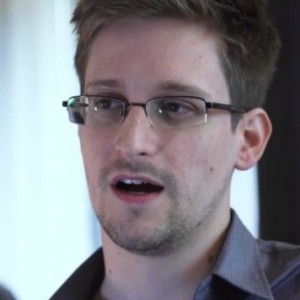
Edward Snowden informs us that:
#1 "The majority of people in developed countries spend at least some time interacting with the Internet, and Governments are abusing that necessity in secret to extend their powers beyond what is necessary and appropriate."
#2 "...I believe that at this point in history, the greatest danger to our freedom and way of life comes from the reasonable fear of omniscient State powers kept in check by nothing more than policy documents."
#3 "The government has granted itself power it is not entitled to. There is no public oversight. The result is people like myself have the latitude to go further than they are allowed to."
#4 "...I can't in good conscience allow the US government to destroy privacy, internet freedom and basic liberties for people around the world with this massive surveillance machine they're secretly building."
#5 "The NSA has built an infrastructure that allows it to intercept almost everything."
#6 "With this capability, the vast majority of human communications are automatically ingested without targeting. If I wanted to see your e-mails or your wife's phone, all I have to do is use intercepts. I can get your e-mails, passwords, phone records, credit cards."
#7 "Any analyst at any time can target anyone. Any selector, anywhere... I, sitting at my desk, certainly had the authorities to wiretap anyone, from you or your accountant, to a federal judge, to even the President..."
#8 "To do that, the NSA specifically targets the communications of everyone. It ingests them by default. It collects them in its system and it filters them and it analyzes them and it measures them and it stores them for periods of time simply because that's the easiest, most efficient and most valuable way to achieve these ends. So while they may be intending to target someone associated with a foreign government, or someone that they suspect of terrorism, they are collecting YOUR communications to do so."
#9 "I believe that when [senator Ron] Wyden and [senator Mark] Udall asked about the scale of this, they [the NSA] said it did not have the tools to provide an answer. We do have the tools and I have maps showing where people have been scrutinized most. We collect more digital communications from America than we do from the Russians."
#10 "...they are intent on making every conversation and every form of behavior in the world known to them."
#11 "Even if you're not doing anything wrong, you're being watched and recorded. ...it's getting to the point where you don't have to have done anything wrong, you simply have to eventually fall under suspicion from somebody, even by a wrong call, and then they can use this system to go back in time and scrutinize every decision you've ever made, every friend you've ever discussed something with, and attack you on that basis, to sort of derive suspicion from an innocent life."
#12 "Allowing the U.S. government to intimidate its people with threats of retaliation for revealing wrongdoing is contrary to the public interest."
#13 "Everyone everywhere now understands how bad things have gotten — and they’re talking about it. They have the power to decide for themselves whether they are willing to sacrifice their privacy to the surveillance state."
#14 "I do not want to live in a world where everything I do and say is recorded. That is not something I am willing to support or live under."
#15 "I don't want to live in a world where there's no privacy, and therefore no room for intellectual exploration and creativity."
#16 "I have no intention of hiding who I am because I know I have done nothing wrong."
#17 "I had been looking for leaders, but I realized that leadership is about being the first to act."
#18 "There are more important things than money. If I were motivated by money, I could have sold these documents to any number of countries and gotten very rich."
#19 "The great fear that I have regarding the outcome for America of these disclosures is that nothing will change. [People] won't be willing to take the risks necessary to stand up and fight to change things... And in the months ahead, the years ahead, it's only going to get worse. [The NSA will] say that... because of the crisis, the dangers that we face in the world, some new and unpredicted threat, we need more authority, we need more power, and there will be nothing the people can do at that point to oppose it. And it will be turnkey tyranny."
#20 "I will be satisfied if the federation of secret law, unequal pardon and irresistible executive powers that rule the world that I love are revealed even for an instant."
#21 "You can't come up against the world's most powerful intelligence agencies and not accept the risk."
#22 "I know the media likes to personalize political debates, and I know the government will demonize me."
#23 "We have got a CIA station just up the road – the consulate here in Hong Kong – and I am sure they are going to be busy for the next week. And that is a concern I will live with for the rest of my life, however long that happens to be."
#24 "I understand that I will be made to suffer for my actions, and that the return of this information to the public marks my end."
#25 "There’s no saving me."
#26 "The only thing I fear is the harmful effects on my family, who I won't be able to help any more. That's what keeps me up at night."
#27 "I do not expect to see home again."
Would you make the same choice that Edward Snowden made? Most Americans would not. One CNN reporter says that he really admires Snowden because he has tried to get insiders to come forward with details about government spying for years, but none of them were ever willing to...
As a digital technology writer, I have had more than one former student and colleague tell me about digital switchers they have serviced through which calls and data are diverted to government servers or the big data algorithms they've written to be used on our e-mails by intelligence agencies. I always begged them to write about it or to let me do so while protecting their identities. They refused to come forward and believed my efforts to shield them would be futile. "I don't want to lose my security clearance. Or my freedom," one told me.
And if the U.S. government has anything to say about it, Snowden is most definitely going to pay for what he has done. In fact, according to the Daily Beast, a directorate known as "the Q Group" is already hunting Snowden down...
The people who began chasing Snowden work for the Associate Directorate for Security and Counterintelligence, according to former U.S. intelligence officers who spoke on condition of anonymity. The directorate, sometimes known as “the Q Group,” is continuing to track Snowden now that he’s outed himself as The Guardian’s source, according to the intelligence officers.
If Snowden is not already under the protection of some foreign government (such as China), it will just be a matter of time before U.S. government agents get him.
And how will they treat him once they find him? Well, one reporter overheard a group of U.S. intelligence officials talking about how Edward Snowden should be "disappeared". The following is from a Daily Mail article that was posted on Monday...
A group of intelligence officials were overheard yesterday discussing how the National Security Agency worker who leaked sensitive documents to a reporter last week should be 'disappeared.'Foreign policy analyst and editor at large of The Atlantic, Steve Clemons, tweeted about the 'disturbing' conversation after listening in to four men who were sitting near him as he waited for a flight at Washington's Dulles airport.'In Dulles UAL lounge listening to 4 US intel officials saying loudly leaker & reporter on #NSA stuff should be disappeared recorded a bit,' he tweeted at 8:42 a.m. on Saturday.According to Clemons, the men had been attending an event hosted by the Intelligence and National Security Alliance.
As an American, I am deeply disturbed that the U.S. government is embarrassing itself in front of the rest of the world like this.
The fact that we are collecting trillions of pieces of information on people all over the planet is a massive embarrassment and the fact that our politicians are defending this practice now that it has been exposed is a massive embarrassment.
If the U.S. government continues to act like a Big Brother police state, then the rest of the world will eventually conclude that is exactly what we are. At that point we become the "bad guy" and we lose all credibility with the rest of the planet.
Sunday, July 14, 2013
The Internet Is A Surveillance State

By Bruce Schneier
I'm going to start with three data points.
One: Some of the Chinese military hackers who were implicated in a broad set of attacks against the U.S. government and corporations were identified because they accessed Facebook from the same network infrastructure they used to carry out their attacks.
Two: Hector Monsegur, one of the leaders of the LulzSac hacker movement, was identified and arrested last year by the FBI. Although he practiced good computer security and used an anonymous relay service to protect his identity, he slipped up.
And three: Paula Broadwell, who had an affair with CIA director David Petraeus, similarly took extensive precautions to hide her identity. She never logged in to her anonymous e-mail service from her home network. Instead, she used hotel and other public networks when she e-mailed him. The FBI correlated hotel registration data from several different hotels -- and hers was the common name.
The Internet is a surveillance state. Whether we admit it to ourselves or not, and whether we like it or not, we're being tracked all the time. Google tracks us, both on its pages and on other pages it has access to. Facebook does the same; it even tracks non-Facebook users. Apple tracks us on our iPhones and iPads. One reporter used a tool called Collusion to track who was tracking him;105 companies tracked his Internet use during one 36-hour period.
Increasingly, what we do on the Internet is being combined with other data about us. Unmasking Broadwell's identity involved correlating her Internet activity with her hotel stays. Everything we do now involves computers, and computers produce data as a natural by-product. Everything is now being saved and correlated, and many big-data companies make money by building up intimate profiles of our lives from a variety of sources.
Facebook, for example, correlates your online behavior with your purchasing habits offline. And there's more. There's location data from your cell phone, there's a record of your movements from closed-circuit TVs.
This is ubiquitous surveillance: All of us being watched, all the time, and that data being stored forever. This is what a surveillance state looks like, and it's efficient beyond the wildest dreams of George Orwell.
Sure, we can take measures to prevent this. We can limit what we search on Google from our iPhones, and instead use computer web browsers that allow us to delete cookies. We can use an alias on Facebook. We can turn our cell phones off and spend cash. But increasingly, none of it matters.
There are simply too many ways to be tracked. The Internet, e-mail, cell phones, web browsers,social networking sites, search engines: these have become necessities, and it's fanciful to expect people to simply refuse to use them just because they don't like the spying, especially since the full extent of such spying is deliberately hidden from us and there are few alternatives being marketed by companies that don't spy.
This isn't something the free market can fix. We consumers have no choice in the matter. All the major companies that provide us with Internet services are interested in tracking us. Visit a website and it will almost certainly know who you are; there are lots of ways to be trackedwithout cookies. Cellphone companies routinely undo the web's privacy protection. Oneexperiment at Carnegie Mellon took real-time videos of students on campus and was able to identify one-third of them by comparing their photos with publicly available tagged Facebook photos.
Maintaining privacy on the Internet is nearly impossible. If you forget even once to enable your protections, or click on the wrong link, or type the wrong thing, you've permanently attached your name to whatever anonymous service you're using. Monsegur slipped up once, and the FBI got him. If the director of the CIA can't maintain his privacy on the Internet, we've got no hope.
In today's world, governments and corporations are working together to keep things that way. Governments are happy to use the data corporations collect -- occasionally demanding that they collect more and save it longer -- to spy on us. And corporations are happy to buy data from governments. Together the powerful spy on the powerless, and they're not going to give up their positions of power, despite what the people want.
Fixing this requires strong government will, but they're just as punch-drunk on data as the corporations. Slap-on-the-wrist fines notwithstanding, no one is agitating for better privacy laws.
So, we're done. Welcome to a world where Google knows exactly what sort of porn you all like, and more about your interests than your spouse does. Welcome to a world where your cell phone company knows exactly where you are all the time. Welcome to the end of private conversations, because increasingly your conversations are conducted by e-mail, text, or social networking sites.
And welcome to a world where all of this, and everything else that you do or is done on a computer, is saved, correlated, studied, passed around from company to company without your knowledge or consent; and where the government accesses it at will without a warrant.
Welcome to an Internet without privacy, and we've ended up here with hardly a fight.
Thursday, June 27, 2013
NSA Sucks In Data From 50 Companies

Ambinder is co-author of a new book about government secrecy and surveillance, Deep State: Inside the Government Secrecy Industry.
**
Analysts at the National Security Agency can now secretly access real-time user data provided by as many as 50 American companies, ranging from credit rating agencies to internet service providers, two government officials familiar with the arrangements said.
Several of the companies have provided records continuously since 2006, while others have given the agency sporadic access, these officials said. These officials disclosed the number of participating companies in order to provide context for a series of disclosures about the NSA's domestic collection policies. The officials, contacted independently, repeatedly said that "domestic collection" does not mean that the target is based in the U.S. or is a U.S. citizen; rather, it refers only to the origin of the data.
The Wall Street Journal reported today that U.S. credit card companies had also provided customer information. The officials would not disclose the names of the companies because, they said, doing so would provide U.S. enemies with a list of companies to avoid. They declined to confirm the list of participants in an internet monitoring program revealed by the Washington Postand the Guardian, but both confirmed that the program existed.
"The idea is to create a mosaic. We get a tip. We vet it. Then we mine the data for intelligence," one of the officials said.
In a statement, Director of National Intelligence James Clapper said that programs collect communications "pursuant to section 702 of the Foreign Intelligence Surveillance Act, " and "cannot be used to intentionally target any U.S. citizen, any other U.S person, or anyone within the United States."
He called the leaks "reprehensible" and said the program "is among the most important" sources of "valuable" intelligence information the government takes in.
One of the officials who spoke to me said that because data types are not standardized, the NSA needs several different collection tools, of which PRISM, disclosed today by the Guardian and the Washington Post, is one. PRISM works well because it is able to handle several different types of data streams using different basic encryption methods, the person said. It is a "front end" system, or software, that allows an NSA analyst to search through the data and pull out items of significance, which are then stored in any number of databases. PRISM works with another NSA program to encrypt and remove from the analysts' screen data that a computer or the analyst deems to be from a U.S. person who is not the subject of the investigation, the person said. A FISA order is required to continue monitoring and analyzing these datasets, although the monitoring can start before an application package is submitted to the Foreign Intelligence Surveillance Court.
From the different types of data, including their credit card purchases, the locations they sign in to the internet from, and even local police arrest logs, the NSA can track people it considers terrorism or espionage suspects in near-real time. An internet geo-location cell is on constant standby to help analysts determine where a subject logs in from. Most of the collection takes place on subjects outside the U.S, but a large chunk of the world's relevant communication passes through American companies with servers on American soil. So the NSA taps in locally to get at targets globally.
It is not clear how the NSA interfaces with the companies. It cannot use standard law enforcement transmission channels to do, since most use data protocols that are not compatible with that hardware. Several of the companies mentioned in the Post report deny granting access to the NSA, although it is possible that they are lying, or that the NSA's arrangements with the company are kept so tightly compartmentalized that very few people know about it. Those who do probably have security clearances and are bound by law not to reveal the arrangement.
This arrangement allows the U.S. companies to "stay out of the intelligence business," one of the officials said. That is, the government bears the responsibility for determining what's relevant, and the company can plausibly deny that it subjected any particular customer to unlawful government surveillance. Previously, Congressional authors of the FAA said that such a "get out of jail free" card was insisted by corporations after a wave of lawsuits revealed the extent of their cooperation with the government.
It is possible, but not likely, that the NSA clandestinely burrows into servers on American soil, without the knowledge of the company in question, although that would be illegal.
The 2008 FISA Amendments Act allow the NSA to analyze, with court orders, domestic communications of all types for counter-terrorism, counter-espionage, counter-narcotics and counter-proliferation purposes. If the agency believes that both ends of the communication, or the circle of those communicating, are wholly within the U.S., the FBI takes over. If one end of the conversation is outside the U.S., the NSA keeps control of the monitoring. An administration official said that such monitoring is subject to "extensive procedures," but as the Washington Post reported, however, it is often very difficult to segregate U.S. citizens and residents from incidental contact.
One official likened the NSA's collection authority to a van full of sealed boxes that are delivered to the agency. A court order, similar to the one revealed by the Guardian, permits the transfer of custody of the "boxes." But the NSA needs something else, a specific purpose or investigation, in order to open a particular box. The chairman of the Senate intelligence committee, Sen. Dianne Feinstein, said the standard was "a reasonable, articulatable" suspicion, but did not go into details.
Legally, the government can ask companies for some of these records under a provision of the PATRIOT Act called the "business records provision." Initially, it did so without court cognizance. Now, the FISC signs off on every request.
Armed with what amounts to a rubber stamp court order, however, the NSA can collect and store trillions of bytes of electromagnetic detritus shaken off by American citizens. In the government's eyes, the data is simply moving from one place to another. It does not become, in the government's eyes, relevant or protected in any way unless and until it is subject to analysis. Analysis requires that second order.
And the government insists that the rules allowing the NSA or the FBI to analyze anything relating to U.S. persons or corporations are strict, bright-line, and are regularly scrutinized to ensure that innocents don't get caught up in the mix. The specifics, however, remain classified, as do the oversight mechanisms in place.
The wave of disclosures about the NSA programs have significantly unsettled the intelligence community.
The documents obtained by the two newspapers are marked ORCON, or originator controlled, which generally means that the agency keeps a record of every person who accesses them online and knows exactly who might have printed out or saved or accessed a copy. The NSA in particular has a good record of protecting its documents.
The scope of the least suggest to one former senior intelligence official who now works for a corporation that provides data to the NSA that several people with top-level security clearances had to be involved.
The motive, I suspect, is to punch through the brittle legal and moral foundation that modern domestic surveillance is based upon. Someone, at a very high level, or several people, may have simply found that the agency's zeal to collect information blinded it to the real-world consequences of such a large and unending program. The minimization procedures might also be well below the threshold that most Americans would expect.
Clapper said in his statement that the disclosures about the program "risk important protections for the security of Americans."
Wednesday, June 26, 2013
The Leak Nobody's Noticed

By digby
This McClatchy piece (written by some of the same people who got the Iraq war run-up story so right while everyone else got it wrong) is as chilling to me as anything we've heard over the past few weeks about the NSA spying. In fact, it may be worse:
Even before a former U.S. intelligence contractor exposed the secret collection of Americans’ phone records, the Obama administration was pressing a government-wide crackdown on security threats that requires federal employees to keep closer tabs on their co-workers and exhorts managers to punish those who fail to report their suspicions.
President Barack Obama’s unprecedented initiative, known as the Insider Threat Program, is sweeping in its reach. It has received scant public attention even though it extends beyond the U.S. national security bureaucracies to most federal departments and agencies nationwide, including the Peace Corps, the Social Security Administration and the Education and Agriculture departments. It emphasizes leaks of classified material, but catchall definitions of “insider threat” give agencies latitude to pursue and penalize a range of other conduct.
Government documents reviewed by McClatchy illustrate how some agencies are using that latitude to pursue unauthorized disclosures of any information, not just classified material. They also show how millions of federal employees and contractors must watch for “high-risk persons or behaviors” among co-workers and could face penalties, including criminal charges, for failing to report them. Leaks to the media are equated with espionage.
“Hammer this fact home . . . leaking is tantamount to aiding the enemies of the United States,” says a June 1, 2012, Defense Department strategy for the program that was obtained by McClatchy.
When the free free press, explicitly protected in the bill of rights becomes equivalent to an "enemy of the United States" something very, very bad is happening.
The administration says it's doing this to protect national security and that it is willing to protect those who blow the whistle on waste, fraud and abuse. But that is not how the effect of this sort of program is going to be felt. After all, it's being implemented across the federal government, not just in national security:
The program could make it easier for the government to stifle the flow of unclassified and potentially vital information to the public, while creating toxic work environments poisoned by unfounded suspicions and spurious investigations of loyal Americans, according to these current and former officials and experts. Some non-intelligence agencies already are urging employees to watch their co-workers for “indicators” that include stress, divorce and financial problems.
“It was just a matter of time before the Department of Agriculture or the FDA (Food and Drug Administration) started implementing, ‘Hey, let’s get people to snitch on their friends.’ The only thing they haven’t done here is reward it,” said Kel McClanahan, a Washington lawyer who specializes in national security law. “I’m waiting for the time when you turn in a friend and you get a $50 reward.”
The Defense Department anti-leak strategy obtained by McClatchy spells out a zero-tolerance policy. Security managers, it says, “must” reprimand or revoke the security clearances – a career-killing penalty – of workers who commit a single severe infraction or multiple lesser breaches “as an unavoidable negative personnel action.”
Employees must turn themselves and others in for failing to report breaches. “Penalize clearly identifiable failures to report security infractions and violations, including any lack of self-reporting,” the strategic plan says.
The Obama administration already was pursuing an unprecedented number of leak prosecutions, and some in Congress – long one of the most prolific spillers of secrets – favor tightening restrictions on reporters’ access to federal agencies, making many U.S. officials reluctant to even disclose unclassified matters to the public.
The policy, which partly relies on behavior profiles, also could discourage creative thinking and fuel conformist “group think” of the kind that was blamed for the CIA’s erroneous assessment that Iraq was hiding weapons of mass destruction, a judgment that underpinned the 2003 U.S. invasion.
I don't know about you, but that does not sound like freedom. In fact,it sounds like something else entirely to me.
This government paranoia and informant culture is about as corrosive to the idea of freedom as it gets. The workplace is already rife with petty jealousies, and singular ambition--- it's a human organization after all. Adding in this sort of incentive structure is pretty much setting up a system for intimidation and abuse.
And, as with all informant systems, especially ones that "profile" for certain behaviors deemed to be a threat to the state, only the most conformist will thrive. It's a recipe for disaster if one is looking for any kind of dynamic, creative thinking. Clearly, that is the last these creepy bureaucrats want.
This is the direct result of a culture of secrecy that seems to be pervading the federal government under president Obama. He is not the first president to expand the national security state , nor is he responsible for the bipartisan consensus on national security or the ongoing influence of the Military Industrial Complex.This, however, is different. And he should be individually held to account for this policy.:
Administration officials say the program could help ensure that agencies catch a wide array of threats, especially if employees are properly trained in recognizing behavior that identifies potential security risks.
“If this is done correctly, an organization can get to a person who is having personal issues or problems that if not addressed by a variety of social means may lead that individual to violence, theft or espionage before it even gets to that point,” said a senior Pentagon official, who requested anonymity because he wasn’t authorized to discuss the issue publicly.
[...]
“If the folks who are watching within an organization for that insider threat – the lawyers, security officials and psychologists – can figure out that an individual is having money problems or decreased work performance and that person may be starting to come into the window of being an insider threat, superiors can then approach them and try to remove that stress before they become a threat to the organization,” the Pentagon official said.
The program, however, gives agencies such wide latitude in crafting their responses to insider threats that someone deemed a risk in one agency could be characterized as harmless in another. Even inside an agency, one manager’s disgruntled employee might become another’s threat to national security.
Obama in November approved “minimum standards” giving departments and agencies considerable leeway in developing their insider threat programs, leading to a potential hodgepodge of interpretations. He instructed them to not only root out leakers but people who might be prone to “violent acts against the government or the nation” and “potential espionage.”
The Pentagon established its own sweeping definition of an insider threat as an employee with a clearance who “wittingly or unwittingly” harms “national security interests” through “unauthorized disclosure, data modification, espionage, terrorism, or kinetic actions resulting in loss or degradation of resources or capabilities.”
“An argument can be made that the rape of military personnel represents an insider threat. Nobody has a model of what this insider threat stuff is supposed to look like,” said the senior Pentagon official, explaining that inside the Defense Department “there are a lot of chiefs with their own agendas but no leadership.”
The Department of Education, meanwhile, informs employees that co-workers going through “certain life experiences . . . might turn a trusted user into an insider threat.” Those experiences, the department says in a computer training manual, include “stress, divorce, financial problems” or “frustrations with co-workers or the organization.”
An online tutorial titled “Treason 101” teaches Department of Agriculture and National Oceanic and Atmospheric Administration employees to recognize the psychological profile of spies.
A Defense Security Service online pamphlet lists a wide range of “reportable” suspicious behaviors, including working outside of normal duty hours. While conceding that not every behavior “represents a spy in our midst,” the pamphlet adds that “every situation needs to be examined to determine whether our nation’s secrets are at risk.”
The Defense Department, traditionally a leading source of media leaks, is still setting up its program, but it has taken numerous steps. They include creating a unit that reviews news reports every day for leaks of classified defense information and implementing new training courses to teach employees how to recognize security risks, including “high-risk” and “disruptive” behaviors among co-workers, according to Defense Department documents reviewed by McClatchy.
“It’s about people’s profiles, their approach to work, how they interact with management. Are they cheery? Are they looking at Salon.com or The Onion during their lunch break? This is about ‘The Stepford Wives,’” said a second senior Pentagon official, referring to online publications and a 1975 movie about robotically docile housewives. The official said he wanted to remain anonymous to avoid being punished for criticizing the program.
The emphasis on certain behaviors reminded Greenstein of her employee orientation with the CIA, when she was told to be suspicious of unhappy co-workers.
“If someone was having a bad day, the message was watch out for them,” she said.
Some federal agencies also are using the effort to protect a broader range of information. The Army orders its personnel to report unauthorized disclosures of unclassified information, including details concerning military facilities, activities and personnel.
The Peace Corps, which is in the midst of implementing its program, “takes very seriously the obligation to protect sensitive information,” said an email from a Peace Corps official who insisted on anonymity but gave no reason for doing so.
Granting wide discretion is dangerous, some experts and officials warned, when federal agencies are already prone to overreach in their efforts to control information flow.
The Bush administration allegedly tried to silence two former government climate change experts from speaking publicly on the dangers of global warming. More recently, the FDA justified the monitoring of the personal email of its scientists and doctors as a way to detect leaks of unclassified information.
Maybe this is just another way of reducing the federal workforce. Nobody normal should want to work there.
When the Department of Education is searching for "insider threats" something's gone very wrong.
Subscribe to:
Posts (Atom)
