


Showing posts with label Biology. Show all posts
Showing posts with label Biology. Show all posts
Tuesday, December 16, 2014
Glass Brain FlyThrough
This is an anatomically-realistic 3D brain visualization depicting real-time source-localized activity (power and "effective" connectivity) from EEG (electroencephalographic) signals. Each color represents source power and connectivity in a different frequency band (theta, alpha, beta, gamma) and the golden lines are white matter anatomical fiber tracts. Estimated information transfer between brain regions is visualized as pulses of light flowing along the fiber tracts connecting the regions.
The modeling pipeline includes MRI (Magnetic Resonance Imaging) brain scanning to generate a high-resolution 3D model of an individual's brain, skull, and scalp tissue, DTI (Diffusion Tensor Imaging) for reconstructing white matter tracts, and BCILAB (http://sccn.ucsd.edu/wiki/BCILAB) / SIFT (http://sccn.ucsd.edu/wiki/SIFT) to remove artifacts and statistically reconstruct the locations and dynamics (amplitude and multivariate Granger-causal (http://www.scholarpedia.org/article/G...) interactions) of multiple sources of activity inside the brain from signals measured at electrodes on the scalp (in this demo, a 64-channel "wet" mobile system by Cognionics/BrainVision (http://www.cognionics.com)).
The final visualization is done in Unity and allows the user to fly around and through the brain with a gamepad while seeing real-time live brain activity from someone wearing an EEG cap.
Team:
- Gazzaley Lab / Neuroscape lab, UCSF: Adam Gazzaley, Roger Anguera, Rajat Jain, David Ziegler, John Fesenko, Morgan Hough
- Swartz Center for Computational Neuroscience, UCSD: Tim Mullen & Christian Kothe


Sunday, November 10, 2013
Thursday, July 18, 2013
How We Focus and Concentrate

Scientists at Newcastle University have shed new light on how the brain tunes in to relevant information.
Publishing in Neuron, the team reveal the interplay of brain chemicals which help us pay attention in work funded by the Wellcome Trust and BBSRC.
By changing the way neurons respond to external stimuli we improve our perceptual abilities. While these changes can affect the strength of a neuronal response, they can also affect the fidelity of that response.
Lead author Alex Thiele, Professor of Visual Neuroscience explains: “When you communicate with others, you can make yourself better heard by speaking louder or by speaking more clearly. Neurons appear to do similar things when we’re paying attention. They send their message more intensely to their partners, which compares to speaking louder. But more importantly, they also increase the fidelity of their message, which compares to speaking more clearly.
“Our earlier work has shown that attention is able to affect the intensity of responses – in effect the loudness - by means of the brain chemical acetylcholine. Now we have shown that the fidelity of the response is altered by a different brain chemical system.”
In the paper, the team reveal that the quality of the response is altered by means of glutamate coupling to NMDA receptors (a molecular device that mediates communication between neurons). Carried out in a primate model, these studies for the first time isolate different attention mechanisms at the receptor level.
The research builds on the team’s previous studies and has potentially significant implications not only for our understanding of how our brains work but also give an insight into conditions such as schizophrenia, Alzheimer’s disease and attention deficit disorder, and may aid in the development of treatments for them.
Source: Newcastle University
Wednesday, July 10, 2013
The Scientific Power Of Thought
The power of the mind and it's ability to affect physical change may shock you! Find out how simply imagining can make it so.
Written and created by Mitchell Moffit
(twitter @mitchellmoffit)
and,
Gregory Brown
(twitter @whalewatchmeplz).
TWITTER: http://www.twitter.com/AsapSCIENCE
FACEBOOK: http://www.facebook.com/AsapSCIENCE
Mitchell Moffit
http://www.mitchellmoffit.com
http://www.twitter.com/mitchellmoffit
http://www.facebook.com/mitchellmoffit
Gregory Brown
http://www.gregorybrownart.tumblr.com
http://www.twitter.com/whalewatchmeplz
Further Reading --
1) The Brain That Changes Itself - Norman Doidge, M.D.
Music Experiment:
2) http://jn.physiology.org/content/74/3...
3) http://ti.me/WifVpK
Muscle Experiement:
4) http://jn.physiology.org/content/67/5...
Brain Plasticity:
5) http://bit.ly/S8CHlM
This Is How Your Brain Works
Ever wonder how your brain processes information? These brain tricks and illusions help to demonstrate the two main systems of Fast and Slow Thinking in your brain.
Written and created by Mitchell Moffit
(twitter @mitchellmoffit)
and,
Gregory Brown
(twitter @whalewatchmeplz).
TWITTER: http://www.twitter.com/AsapSCIENCE
FACEBOOK: http://www.facebook.com/AsapSCIENCE
Mitchell Moffit
http://www.mitchellmoffit.com
http://www.twitter.com/mitchellmoffit
http://www.facebook.com/mitchellmoffit
Gregory Brown
http://www.gregorybrownart.tumblr.com
http://www.twitter.com/whalewatchmeplz
Further Reading --
1) Thinking Fast and Slow - Daniel Khaneman
2) http://www.ncbi.nlm.nih.gov/pubmed/11...
3) http://bit.ly/UGmTGY
Monday, April 15, 2013
Humans Not Only Creatures That Think About Thinking

April Flowers reports:
Metacognition, or the ability to think about thinking, is not an ability solely limited to humans according to a new study. Scientists at Georgia State University and the University of Buffalo recently revealed that chimpanzees, humans’ closest relatives, also appear to have the ability.
The study, published in the journal Psychological Science, is the work of Michael J. Beran and Bonnie M. Perdue of the Georgia State Language Research Center (LRC), and J. David Smith of the University at Buffalo.
“The demonstration of metacognition in nonhuman primates has important implications regarding the emergence of self-reflective mind during humans’ cognitive evolution,” the research team noted.
The scientists at Georgia State’s LRC have trained chimpanzees to use a language-like system of symbols to name things. This gives researchers a novel way to investigate the animals’ states of knowing or not knowing.
For this study, the researchers tested the chimps on a task that required them to use their naming system to identify a food hidden in a location. If, for example, a banana was hidden, the chimpanzees would report that fact by touching the symbol for banana on their symbol keyboard. They would then get the food if they got it right.
The scientists then provided the chimpanzees with either complete or incomplete information about the identity of the food rewards.
Sometimes the animals had already seen the item available in the hidden location. They would immediately name the item by touching the correct symbol without going to look at the item in the hidden location to see what it was.
Other times, the chimps had no information about the hidden food item. This was because they had not seen any food yet on that trial or because even if they had seen a food item, it might not have been the one moved to the hidden location. In these cases, the chimps should have first gone to look in the hidden location before trying to name any food.
The end result was that the chimpanzees named items immediately and directly when they knew what was hidden. However, they sought out more information before naming when they did not already know.
“This pattern of behavior reflects a controlled information-seeking capacity that serves to support intelligent responding, and it strongly suggests that our closest living relative has metacognitive abilities closely related to those of humans,” the authors said.
Sunday, April 14, 2013
Exhaled Breath Is Unique Fingerprint

Jason Palmer reports:
Compounds Present In Exhaled Breath Can Act As A "Fingerprint" For Individuals
These "metabolites" represent the waste products of the body's chemistry - but their uniqueness had never been shown.
A study in PLOS ONE suggests they could be as useful to medical diagnosis as those found in urine or blood.
Because a breath test is non-invasive and the results are instantaneous, it could prove even more convenient for example in anaesthesia or doping tests.
"I don't understand why breath hasn't been a widely used [means of] medical science diagnosis," said the study's lead author Renato Zenobi of the Swiss Federal Institute of Technology (ETH) in Zurich.
"In traditional Chinese medicine, they feel your pulse, look at your tongue and smell your breath," he told BBC News. "There are trained dogs whocan sniff cancer with a fairly good hit-rate - but the dog doesn't tell you what the compounds are."
Prior work has shown that the precise type of bacteria responsible for lung infections or even the presence of stomach cancer could be discerned in the breath.
What remained to be seen was whether the breath's metabolic contents varied enough between people - and varied little enough within an individual - to be diagnostic - to act as a real and repeatable "breathprint".
"You need to show there is a core individual signal that is stable over time," Prof Zenobi said. "If it changes a lot during the course of the day or after you've had a coffee or smoked a cigarette, you can just forget about it."
It is the non-invasive and immediate nature of the test that makes it most promising.
It could for example help determine an appropriate dosage in anaesthesia, where an effective but safe dose is dependent on a patient's tolerance and metabolic rate - a small dose could be given to test how it is metabolised. A quick, at-the-starting-line test could be administered to check for doping in sport.
As the tests continue and the stability and uniqueness of each individual's breathprint is further verified, it could become a staple of the long-predicted "personalised medicine", tailored to each person's chemistry.
Saturday, April 13, 2013
Last Shark Standing

Shark Cannibalism and Early Life
Ovoviviparous shark pups depend on yolk for nutrition, and when an embryo has expended its own yolk sac, it turns to the eggs around it. Some species practice intrauterine cannibalism, or eating the other fertilized or unfertilized eggs in the womb.
The best-known intrauterine cannibal is the sand tiger shark. Although the sand tiger shark has two uteri and produces many eggs, each litter yields just two pups -- one from each uterus. That's because as the sharks develop their embryonic teeth, they start to eat the other embryos, killing their unborn brothers and sisters, as well as the unfertilized eggs. It's survival of the fittest in the womb, until only one shark remains. Because of their pre-birth diet, sand tiger pups enter the world bigger than other pups; they measure approximately three feet (one meter) long [source: National Aquarium].
The sand tiger's cannibalism is known as adelphophagy, which literally means "eating one's brother" [source: Martin]. But other sharks practice cannibalism as well, albeit in a slightly more subdued form known as oophagy, which is the eating of eggs that haven't been fertilized. Approximately 14 species of sharks are thought to practice some form of intrauterine cannibalism [source: Martin].
Frank Greenaway/Dorling Kindersley/Getty Images
The swell shark as an embryo...and as a two-month-old pup.
The number of shark pups in a litter varies among species; the sand tiger shark gives birth to one or two, while the viviparous blue shark has been known to give birth to 134 pups in one litter [source: Cooper]. The whale shark has given birth to 300, but such high numbers are rare [sources: Conrath, Greven]. But whether hatched from an egg or born live, shark pups emerge as miniature versions of the sharks they will become.
Shark pups are also very independent, and those that are born live swim away from their mothers as soon as they're born, perhaps to avoid being eaten. Even the tiniest sharks face the world on their own. Shark pups don't receive any further nourishment or support from their parents. It's up to the pup to find food and evade predators.
A shark pup's success in life is largely determined by its size at birth and whether the female shark has used a nursery area, or a shallow part of the sea with fewer predators than the open sea. Some shark species grow very slowly, putting them in danger of being eaten by bigger sharks for longer. If few pups survive to maturity and reproduce themselves, shark species could be in danger, particularly those subject to other pressures, such as fishing.
Source: Discovery
Wednesday, April 03, 2013
Imagine The Fruits Of Genetic Manipulation

Transgenic Sculptures
Patricia Piccinini’s silicone sculptures imagine a not-so-distant future where humans have mastered genetic manipulation and can create animals to serve their every emotional, social, and ecological need. Her transgenic creations serve as companions for children, protectors for endangered species, and even surrogate mothers. The results are often at the same time tender and repulsive.

Piccinini, who has lived in Australia since childhood, works with a critical eye toward genetic manipulation. Her series “Nature’s Little Helpers,” which includes “The Bodyguard,” “Getaway,” “The Surrogate,” and “Big Mother,” envisions creatures that have been created to protect and rehabilitate the Australian ecosystem:

The sculptures present a series of creatures that I have designed to ‘assist’ a series of the endangered Australian animals. In the photographs, we follow more closely one of these creatures, ‘The Bodyguard (for the Golden Helmeted Honeyeater)’. It is very seductive to think that we could find a simple technological solution to complex ecological problems such as extinction. It is far more exciting to talk about genetic engineering than to designate a large area of habitat/real estate as national park so that dozens or even hundreds of native species might be given a better chance of survival. We have a long history of scientifically introducing new stuff into our environment in order to make it better, however it has rarely worked. Yet our relatively recent understanding of genetics seems to have left us ready to add yet more stuff in an unprecedented way. Why do we think we have it all figured out now?

But the inclusion of children in many of her sculptures, who treat these unnatural creations with little more than curiosity, wonder, and affection but a different spin on the story, suggesting that the next generation would neither view these animals with revulsion nor focus merely on their usefulness. And another series, “Nest and The Stags,” lends overtly animalistic qualities to motor vehicles.
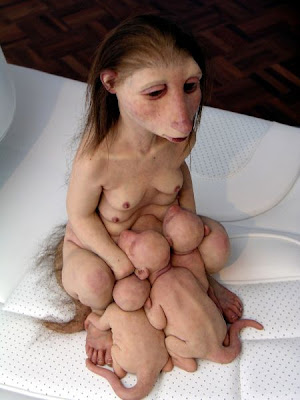
Via: "io9"
Check out: "Patricia Piccinini"
Sunday, March 31, 2013
CHINA IS ENGINEERING GENIUS BABIES

At BGI Shenzhen, scientists have collected DNA samples from 2,000 of the world’s smartest people and are sequencing their entire genomes in an attempt to identify the alleles which determine human intelligence. Apparently they’re not far from finding them, and when they do, embryo screening will allow parents to pick their brightest zygote and potentially bump up every generation's intelligence by five to 15 IQ points.

Geoffrey Miller, an evolutionary psychologist and lecturer at NYU, is one of the 2,000 braniacs who contributed their DNA. I spoke to him about what this creepy-ass program might mean for the future of Chinese kids.
Geoffrey Miller: As soon as Deng Xiaoping took power in the late 70s, he took the whole focus of the Chinese government from trying to manage the economy, to trying to manage the quality and quantity of people. In the 90s, they started to do widespread prenatal testing for birth defects with ultrasound, and more recently, they've spent a lot of money researching human genetics to figure out which genes make people smarter.
BGI is also doing lots of plant genetics, animal genetics, anything that’s economically relevant or scientifically interesting.
They seem mostly interested in people of Chinese and European descent. They’re basically recruiting through a scientific conference, through word of mouth. You have to provide some evidence that you’re as smart as you say you are. You have to send your complete CV, publications you’ve produced, standardized-test scores, where you went to college... stuff like that.
Once you’ve got that information and a fertilized egg that’s divided into a few cells, you can sample one of the cells to figure out the expected intelligence if it’s implanted and becomes a person.
Even if it only boosts the average kid by five IQ points, that’s a huge difference in terms of economic productivity, the competitiveness of the country, how many patents they get, how their businesses are run, and how innovative their economy is.
Actual use of the technology to do embryo screening might take five to ten years, but it could be just a few years. It depends on how motivated they are.
In fact, almost any trait other than intelligence would be easier to do. We know that intelligence depends on lots of genes while physical traits—like hair or eye color—only depend on a few genes. Things like body shape would be easier to do, physical attractiveness would be pretty complicated, personality traits might be a little simpler than intelligence—how hard working somebody is, how impulsive, how politically liberal or conservative they are would be easier. How religious you are—that’s definitely influenced by genes to some degree.
What Else Is China Doing That We Aren’t?
Well, they’re also investing a huge amount of money in education, they’re creating new systems of universities that emphasise more creative approaches to learning, and they’re sending hundreds of thousands of college students to America and Europe to see how our education systems operate so they can bring their own systems up to our standards and above.
Do You Think Global Domination Is In The Cards?
The Chinese Communist party has never really sought global domination. They think of it as restoring China to its rightful and historical place as the central culture of humanity. Europe got a temporary advantage, but they’re just restoring the natural balance as the world’s most populous country. I don’t think they have any imperial ambitions to spread China’s borders—they’re not going to act like Nazi Germany or America in the 20th century—but they do want respect and they do want influence and they don’t trust America or Europe to run the world in the right way, in terms of issues like global warming or equality or economic stability.
Via: "Vice"
Thursday, March 14, 2013
Lover's Hearts Beat At The Same Rate Everyday

This graph shows something quite wonderful. It shows that in a couple, the heart rates of a man and woman are in sync. Yes, when you're involved in a romantic relationship, your heart beats as fast as your partner's.
This couple was one of the 32 heterosexual couples in a study conducted by physiologies at UC Davis in the US that aimed to see if people in romantic relationships co-regulated their physiologies with their partners. By co-regulated, read change; by physiologies, read heart rates.
In one of the experiments, the couples sat facing each other but just far enough that they would not be able to touch. The researchers asked them to simply stare at one another for three minutes straight in as calm a manner as possible (ahem) while they monitored the couple's heart rates.
The graph above does not actually show the heart rates of the man and woman changing with time. Instead it shows a complex measure of heart rate which takes into consideration the observed changes in heart rate due to the individual self-regulating, that is trying to control himself or herself by keeping calm for instance, as well as the changes associated with the individual as he or she unconsciously mimics the partner, known as co-regulation. Since the extent of both self-regulation and co-regulation is different in man and woman, this measure allows for comparison between the two. In the above graph, the measure is actually shown by a blue line.
But the blue line is so closely matched by a red line that you barely see it. What does the red line indicate? It indicates the changes one would expect to see if the couple's heart rates are the same. Therefore the more closely the blue and red lines match, the closer an individual's heart rate is to the partner's. It is no surprise then that when the researchers compared the measure of heart rates between people not involved in a romantic relationship, the blue and red lines did not match.
The researchers also found that it was the women who tended to adjust their heart rates to their partners. Why this actually happens on a psychological level however is still a mystery. The researchers speculate that women have a strong link to their partners may have something to do with them having more empathy.
And inspired from this study, here's a great line: "I love you so much that my heartbeats as fast as yours whenever I see you."
In one of the experiments, the couples sat facing each other but just far enough that they would not be able to touch. The researchers asked them to simply stare at one another for three minutes straight in as calm a manner as possible (ahem) while they monitored the couple's heart rates.
The graph above does not actually show the heart rates of the man and woman changing with time. Instead it shows a complex measure of heart rate which takes into consideration the observed changes in heart rate due to the individual self-regulating, that is trying to control himself or herself by keeping calm for instance, as well as the changes associated with the individual as he or she unconsciously mimics the partner, known as co-regulation. Since the extent of both self-regulation and co-regulation is different in man and woman, this measure allows for comparison between the two. In the above graph, the measure is actually shown by a blue line.
But the blue line is so closely matched by a red line that you barely see it. What does the red line indicate? It indicates the changes one would expect to see if the couple's heart rates are the same. Therefore the more closely the blue and red lines match, the closer an individual's heart rate is to the partner's. It is no surprise then that when the researchers compared the measure of heart rates between people not involved in a romantic relationship, the blue and red lines did not match.
The researchers also found that it was the women who tended to adjust their heart rates to their partners. Why this actually happens on a psychological level however is still a mystery. The researchers speculate that women have a strong link to their partners may have something to do with them having more empathy.
And inspired from this study, here's a great line: "I love you so much that my heart
Via: "Nature"
Thursday, February 28, 2013
'Quadruple Helix' DNA Discovered In Human Cells

Image via: Gizmodo.com
In 1953, Cambridge researchers Watson and Crick published a paper describing the interweaving 'double helix' DNA structure - the chemical code for all life. Now, in the year of that scientific landmark's 60th Anniversary, Cambridge researchers have published a paper proving that four-stranded 'quadruple helix' DNA structures - known as G-quadruplexes - also exist within the human genome. They form in regions of DNA that are rich in the building block guanine, usually abbreviated to 'G'.
The findings mark the culmination of over 10 years investigation by scientists to show these complex structures in vivo - in living human cells - working from the hypothetical, through computational modelling to synthetic lab experiments and finally the identification in human cancer cells using fluorescent biomarkers.
The research, published today in Nature Chemistry and funded by Cancer Research UK, goes on to show clear links between concentrations of four-stranded quadruplexes and the process of DNA replication, which is pivotal to cell division and production.
By targeting quadruplexes with synthetic molecules that trap and contain these DNA structures - preventing cells from replicating their DNA and consequently blocking cell division - scientists believe it may be possible to halt the runaway cell proliferation at the root of cancer.
"The research indicates that quadruplexes are more likely to occur in genes of cells that are rapidly dividing, such as cancer cells. For us, it strongly supports a new paradigm to be investigated - using these four-stranded structures as targets for personalised treatments in the future."
Physical studies over the last couple of decades had shown that quadruplex DNA can form in vitro - in the 'test tube', but the structure was considered to be a curiosity rather than a feature found in nature. The researchers now know for the first time that they actually form in the DNA of human cells.
"This research further highlights the potential for exploiting these unusual DNA structures to beat cancer – the next part of this pipeline is to figure out how to target them in tumour cells," said Dr Julie Sharp, senior science information manager at Cancer Research UK.
"We have found that by trapping the quadruplex DNA with synthetic molecules we can sequester and stabilise them, providing important insights into how we might grind cell division to a halt," said Balasubramanian.
The study showed that if an inhibitor is used to block DNA replication, quadruplex levels go down - proving the idea that DNA is dynamic, with structures constantly being formed and unformed.
The researchers also previously found that an overactive gene with higher levels of Quadruplex DNA is more vulnerable to external interference.
"The possibility that particular cancer cells harbouring genes with these motifs can now be targeted, and appear to be more vulnerable to interference than normal cells, is a thrilling prospect.
Via: "Phys"
Monday, February 25, 2013
The Scientific Power Of Thought
Written and created by Mitchell Moffit (twitter @mitchellmoffit) and Gregory Brown (twitter @whalewatchmeplz).
The power of the mind and it's ability to affect physical change may shock you! Find out how simply imagining can make it so.
Get Your FREE Audio Book - http://bit.ly/10gMVnV
Further Reading:
1) The Brain That Changes Itself - Norman Doidge, M.D.
Music Experiment:
2) http://jn.physiology.org/content/74/3/1037.short
3) http://ti.me/WifVpK
Muscle Experiement:
4) http://jn.physiology.org/content/67/5/1114.short
Brain Plasticity:
5) http://bit.ly/S8CHlM
Sunday, February 24, 2013
Wednesday, February 20, 2013
How The Human Brain Adapts To Injury

This image shows four sources of evidence of takeover by a right-hemisphere area following the disablement of its left hemisphere counterpart. Credit: Carnegie Mellon University
For the first time, scientists at Carnegie Mellon University's Center for Cognitive Brain Imaging (CCBI) have used a new combination of neural imaging methods to discover exactly how the human brain adapts to injury. The research, published in Cerebral Cortex, shows that when one brain area loses functionality, a "back-up" team of secondary brain areas immediately activates, replacing not only the unavailable area but also its confederates.
"The human brain has a remarkable ability to adapt to various types of trauma, such as traumatic brain injury and stroke, making it possible for people to continue functioning after key brain areas have been damaged," said Marcel Just, the D. O. Hebb Professor of Psychology at CMU and CCBI director. "It is now clear how the brain can naturally rebound from injuries and gives us indications of how individuals can train their brains to be prepared for easier recovery. The secret is to develop alternative thinking styles, the way a switch-hitter develops alternative batting styles. Then, if a muscle in one arm is injured, they can use the batting style that relies more on the uninjured arm."
For the study, Just, Robert Mason, senior research psychologist at CMU, and Chantel Prat, assistant professor of psychology at the University of Washington, used functional magnetic resonance imaging (fMRI) to study precisely how the brains of 16 healthy adults adapted to the temporary incapacitation of the Wernicke area, the brain's key region involved in language comprehension. They applied Transcranial Magnetic Stimulation (TMS) in the middle of the fMRI scan to temporarily disable the Wernicke area in the participants' brains. The participants, while in the MRI scanner, were performing a sentence comprehension task before, during and after the TMS was applied. Normally, the Wernickearea is a major player in sentence comprehension.
The research team used the fMRI scans to measure how the brain activity changed immediately following stimulation to the Wernicke area. The results showed that as the brain function in the Wernicke area decreased following the application of TMS, a "back-up" team of secondary brain areas immediately became activated and coordinated, allowing the individual's thought process to continue with no decrease in comprehension performance.
The brain's back-up team consisted of three types of brain regions: (1) contralateral areas—areas that are in the mirror-image location of the brain; (2) areas that are right next to the impaired area; and (3) a frontal executive area.
"The first two types of back-up areas have similar brain capabilities as the impaired Wernicke area, although they are less efficient at the capability," Just said. "The third area plays a strategic role as in responding to the initial impairment and recruiting back-up areas with similar capabilities."
Additionally, the research showed that impairing the Wernicke area also negatively affected the cortical partners with which the Wernicke area had been working. "Thinking is a network function," Just explained. "When a key node of a network is impaired, the network that is closely collaborating with the impaired node is also impaired. People do their thinking with groups of brain areas, not with single brain areas."
Mason, the study's lead author, noted that following the TMS, the impaired area and its partners gradually returned to their previous levels of coordinated activity, while the back-up team of brain areas was still in place. "This means, that for some period of time, there were two cortical teams operating simultaneously, explaining why performance is sometimes improved by TMS," he said.
This research builds on Just's previous research on brain resilience after stroke and brain training to remediate dyslexia. The studies are motivated by a computational theory, called 4CAPS, that provides an account of how autonomous brain systems dynamically self-organize themselves in response to changing circumstances, which the researchers believe to be the basis of fluid intelligence.
Just, who uses brain imaging to understand how brain processes underpin various types of human thought, has helped to establish Carnegie Mellon as a world leader in brain sciences. The university recently launched a Brain, Mind and Learning initiative to build from its research excellence in psychology, computer science and computation to continue to solve real-world problems.
Via: "Medical Xpress"
Friday, February 15, 2013
Scientists Catch Virus In The Act Of Infecting A Cell
Researchers from The University of Texas at Austin and The University of Texas Health Science Center at Houston (UT Health) Medical School announced that they have caught a virus (called T7) in the act of infecting a cell. Researchers observed the changes in the structure of a virus as it infects an E. coli bacterium. The research paper was published in Science Epxress.
The researchers found that the T7 virus has six tail fibers folded back against its capsid. The virus can extend these fibers to "walk" across its host cell surface to find a site to infect. The researchers say the virus behaves "a bit like a planetary rover."
Ian Molineux, professor of biology at The University of Texas at Austin, said in a release that the idea that phages "walk" over the cell surface was previously proposed, but their paper provides the first experimental evidence. This is also the first time scientists have made images showing how the virus's tail extends into the host, which allows it to infect a cell with its DNA.
Molineux says, "Although many of these details are specific to T7, the overall process completely changes our understanding of how a virus infects a cell."
Via: "Science - Space - Robots"
Sunday, February 10, 2013
First Antibiotic-Resistant Gonorrhea Cases Detected In North America

Gonorrhea infects close to 700,000 Americans each year.
Completely Incurable Gonorrhea May Be At Hand
JASON KOEBLER reports,
The fears of major health organizations have come true: Gonorrhea that is immune to the last remaining effective oral antibiotic has been detected in at least nine North American patients, meaning the era of "incurable" gonorrhea could be close.
In a study released Tuesday in the Journal of the American Medical Association, a group of scientists led by Vanessa Allen of Public Health Ontario, found that 6.7 percent of patients with gonorrhea at a Toronto clinic still had the disease after a round of cephalosporins, the last effective oral antibiotic used to treat the disease. Of 133 patients who returned for a "test of cure" visit, nine remained gonorrhea-positive. This is the first time cephalosporin-resistant gonorrhea has been found in humans in North America.
Last year, both the World Health Organization and the Centers for Disease Control warned that untreatable gonorrhea—the world's second most common sexually transmitted infection—could soon be a reality as the bacteria showed increasing resistance to cephalosporins in lab tests.
"These are the clinical cases we've been waiting for," Allen says. "This is the translation of the lab information into what the clinical consequence is."
Previously, there had been a couple individual case reports of untreatable gonorrhea cases in the United Kingdom, Austria, France, Norway, and Japan. In an accompanying editorial, Robert Kirkcaldy of the CDC writes that gonorrhea is quickly becoming a more threatening disease.
"Cephalosporin treatment failures have now been documented in North America," he writes. "Although this milestone was expected, its arrival is deeply troubling."
Gonorrhea is estimated to infect close to 700,000 Americans each year. Symptoms include painful urination, abdominal pain, genital discharge, itching, and infertility in women. Women who have both HIV and gonorrhea are more likely to pass HIV to their offspring than women with just HIV.
Less than a year ago, Gail Bolan, director of the CDC's sexually transmitted disease prevention program, wrote that the "threat of untreatable gonorrhea is emerging rapidly." At the time, just 1.7 percent of gonorrhea isolated in the lab were considered resistant to cephalosporins. Allen says her study shows just how fast antibiotic resistance is evolving in the organisms.
"Our results aren't generalizable to the overall concentration because they all came from one clinic," she says. "But basically, the problem appears worse than we originally thought."
Although each of the nine patients in Canada were cured with the injectable antibiotic known as ceftriaxone, Allen warns that there's been "a parallel increase" in resistance to that antibiotic.
"I think without a doubt this will become a bigger problem," Allen says. "The next threat is when, not if, the same thing happens with ceftriaxone. And then what?"
According to Kirkcaldy, "clinicians now face the emergence of cephalosporin-resistant [gonorrhea] without well-studied, effective backup treatment options."
Via: "US News"
Thursday, February 07, 2013
One Cell Is All You Need

Image via: Carthage.edu
As described in a Dec. 21 paper in Science, a team of researchers, led by Xiaoliang Sunney Xie, the Mallinckrodt Professor of Chemistry and Chemical Biology, and made up of postdoctoral fellow Chenghang Zong, graduate student Alec Chapman, and former graduate student Sijia Lu, developed a method — dubbed MALBAC, short for Multiple Annealing and Looping-based Amplification Cycles — that requires just one cell to reproduce an entire DNA molecule.
More than three years in the making, the breakthrough technique offers the potential for early cancer treatment by allowing doctors to obtain a genetic “fingerprint” of a person’s cancer from circulating tumor cells. It also could lead to safer prenatal testing for a host of genetic diseases.
“If you give us a single human cell, we report to you 93 percent of the genome that contains three billion base pairs, and if there is a single base mutation, we can identify it with 70 percent detectability, with no false positives detected,” Xie said. “This is a major development.”
In a second paper, published simultaneously, researchers from Xie’s lab worked with scientists at Peking University in China to demonstrate MALBAC by sequencing 99 sperm cells from one individual and examining the paternal and maternal contribution to each cell’s genome.
As its name suggests, Xie said, MALBAC is a type of DNA amplification that allows researchers to duplicate the single DNA molecule present in a cell many times so it can be analyzed in the lab.
“While other methods of DNA amplification exist, most — like polymerase chain reaction (PCR) or multiple displacement amplification (MDA) — suffer from a specific problem,” Xie said. “Because they amplify exponentially, both have bias. They dramatically amplify some parts of the genome, but amplify others very little.”
By comparison, he said, MALBAC relies on linear amplification, meaning it is able to minimize the sequence-dependent bias.
Just as it does with other methods, the amplification process begins by splitting the DNA double helix into two single strands. Xie’s team then adds a random “primer” — tiny fragments of DNA — that binds in dozens of locations along each strand.
To extend those primers, Xie’s team used a DNA polymerase, the same cellular “machine” that synthesizes DNA as cells divide. Using that machine, researchers are able to extend the primers from as few as seven bases to as many as 2,000. Upon heating, they break the elongated primers apart from the original DNA, yielding half products.
When those half products are then amplified using the same primers, the two ends of the DNA combine, forming a loop that prevents it from being amplified again. The leftover half products and the original DNA are subject to another cycle of amplification. After five cycles of such linear pre-amplification, the full product is amplified by PCR to produce enough material for sequencing.
Despite the high coverage, DNA polymerases do occasionally make errors, Xie explained. To ensure that the genome produced by MALBAC is accurate, researchers turned to a different technique.
“Many diseases are associated with a single base mutation,” Xie said. “The challenge, however, is that finding one mutation in more than 3 billion base pairs is like looking for a needle in a haystack. Earlier techniques, like PCR or MDA, start with many cells, making the challenge even greater; a single mutation simply gets lost in the process. MALBAC, however, starts with a single cell, so it is easier to identify those mutations when they happen.”
To ensure MALBAC’s accuracy, Xie’s team simply let the original cell divide.
While the polymerase that researchers use to build the DNA sequence is highly accurate, only making one mistake per 10,000 bases, letting the cell divide gives researchers a chance to double check its work.
“The chances of the same mistake being made at the same base position are about one in 100 million,” Xie said. “If we let the cells divide again, and sequence three cells, the chances go up to one in 10 billion, less than the number of bases in the entire DNA molecule, so we can remove all the false positives.
“Getting that level of accuracy is very important, because if a doctor tells a patient that he detects a mutation, he doesn’t want to be wrong,” he continued. “When we use MALBAC, if a mutation appears in two or three related cells, we know it must be a real mutation.”
As a demonstration of MALBAC’s power, Xie and his team monitored the mutations that arose in a single cancer cell as it divided over 20 generations, and uncovered as many as 50 newly acquired mutations.
“This is the first time the mutation rate of a human cell has been measured directly,” Xie said. “Because we can now see the unique, newly acquired bases, we can study the dynamics of the genome in a way that was not possible before.”
Thursday, January 31, 2013
Babies Learn Language From Mothers While In Womb

Image via: Canada.com
Babies only hours old are able to differentiate between sounds from their native language and a foreign language, scientists have discovered. The study indicates that babies begin absorbing language while still in the womb, earlier than previously thought.
Sensory and brain mechanisms for hearing are developed at 30 weeks of gestational age, and the new study shows that unborn babies are listening to their mothers talk during the last 10 weeks of pregnancy and at birth can demonstrate what they've heard.
"The mother has first dibs on influencing the child's brain," said Patricia Kuhl, co-author and co-director of the Institute for Learning & Brain Sciences at the University of Washington. "The vowel sounds in her speech are the loudest units and the fetus locks onto them."
Previously, researchers had shown that newborns are born ready to learn and begin to discriminate between language sounds within the first months of life, but there was no evidence that language learning had occurred in utero.
"This is the first study that shows fetuses learn prenatally about the particular speech sounds of a mother's language," said Christine Moon, lead author and a professor of psychology at Pacific Lutheran University in Tacoma, Wash. "This study moves the measurable result of experience with speech sounds from six months of age to before birth."
The results will be published in an upcoming issue of the Journal Acta Paediatrica.
Forty infants, about 30 hours old and an even mix of girls and boys, were studied in Tacoma and Stockholm, Sweden. While still in the nursery, the babies listened to vowel sounds in their native tongue and in foreign languages.
Their interest in the sounds was captured by how long they sucked on a pacifier that was wired into a computer measuring the babies' reaction to the sounds. Longer or shorter sucking for unfamiliar or familiar sounds is evidence for learning, because it indicates that infants can differentiate between the sounds heard in utero.
In both countries, the babies at birth sucked longer for the foreign language than they did for their native tongue.
The researchers say that infants are the best learners, and discovering how they soak up information could give insights on lifelong learning. "We want to know what magic they put to work in early childhood that adults cannot," Kuhl said. "We can't waste that early curiosity.
Via: "Medical Xpress"
Subscribe to:
Posts (Atom)

