Showing posts with label Surveillance. Show all posts

Friday, October 12, 2012

"Luke Skywalker" Binoculars Use Brain Waves To Spot Threats


By Katie Drummond,

Five years after the Pentagon first conceived of them, the binoculars of the future have arrived: Scopes that not only allow soldiers to scan wide-ranging areas and lengthy distances, but that tap into their brains to vastly improve threat-detection.


Called the Cognitive Technology Threat Warning System (CT2WS), the initiative was first launched in 2007 by — not surprisingly — DARPA. Today, the agency announced the results of field tests using the futuristic system, which was nicknamed “Luke Skywalker” early on in the program. According to DARPA, the binoculars yielded a 91 percent success rate in detecting threats. By comparison, soldiers using conventional binoculars or camera systems currently miss around 47 percent of potential dangers.
The system is comprised of a high-powered video camera, mounted to a tripod, that boasts a 120-degree field of vision. That camera works in tandem with an electroencephalogram (EEG) cap, worn on a soldier’s head, that actually monitors brain signals in real-time and then transmits them to a computer system. That system is programmed with “cognitive visual processing algorithms” that can crunch the deluge of brainwave data, and “cue” noteworthy images for an operator to look over.
Using the system, a soldier scanning a given region would be “shown approximately ten images per second, on average.” Instead of having to process potential threats oneself, the soldier (and an operator reviewing key images) would instead rely on subtle brain signals — picked up by the EEG cap — to hone in on hazards. The EEG data, according to DARPA, can enhance accuracy and hasten the rate at which threats are detected, by spotting theminside the brain before a soldier has even processed the situation.
“CT2WS built on the concept that humans are inherently adept at detecting the unusual,” reads a statement from DARPA. “Even though a person may not be consciously aware of movement or of unexpected appearance, the brain detects it and triggers the P-300 brainwave, a brain signal that is thought to be involved in stimulus evaluation or categorization.”
In other words, CT2WS harnesses that capacity for detection, without relying on conscious input from the wearer. And, at least according to these field tests, it seems to work extremely well when combined with human input. When tested without someone wearing an EEG cap, the system produced 810 false alarms every hour. Add a soldier decked out in EEG sensors to the mix, and that figure dropped to five false positives.
I’ve reached out to DARPA for more particulars on the prototype, which was developed by a team that includes HRL Laboratories and the University of California, San Diego. But based on reporting from Sharon Weinberger at Wired in 2007, the agency also wanted the binoculars to have a range from 1,000 to 10,000 meters, and be able to spy moving vehicles at a range of up to 6 miles.

Monday, June 11, 2012

Soldiers To Increasingly Tap Military Apps

Image

By S. William Matthews
Monday, June 4, 2012
Courtesy Of "The Daily"

Modern warfare? There’s an app for that.

Well, not from Apple, but there are a handful from the Pentagon — and more to come. They’re being downloaded on tablets and smartphones to help combat troops complete their missions.

Right now, in transports and fighters, pilots and navigators are on Air Force-issued iPads, checking their orders and reviewing their flight plans.

And this summer, the Army is putting Droids in the hands of grunts headed to Afghanistan so they can receive streaming surveillance video from drones, scan their surroundings for threats, call for fire support and request medical evacuations. Sailors and Marines are connected, too.

Though not a nuclear warhead or an M-16 rifle, the smartphone and the tablet are indeed weapons — helping the warfighter defeat the enemy.

The Air Force has led the electronics revolution and understandably so since it is considered the most technical of the services. The Army is close behind and the Navy and Marines are coming on board, too.

This spring, the Air Force bought 20,000 iPad 2s so air crews in Air Mobility Command and Special Operations Command no longer have to haul around 70 pounds of technical orders, flight manuals, charts and the like. These new “electronic flight bags,” which weigh about a pound apiece, are expected to speed up responses to in-flight emergencies and will most definitely eliminate stacks of paper that can quickly clutter cockpits, officials with the commands said.

Inter-service rivalry might make the Air Force want to claim credit for the Army’s entry into the world of gadgetry, but the Big Green Machine came into it on its own.

Soldiers have their own apps store, which the Army opened in March with prototypes of training manuals mostly.

But dozens of warfighting applications are in development: one tracks the blood pressure and temperature of a wounded troop still on the battlefield, another searches continuously for updated information on nearby enemy activity and yet another translates English into Pashto and Dari. 

The next step is to get all that information to every soldier by making smartphones, and someday tablets, standard equipment, just like boots and rain gear.

The first smartphones and tablets go to Afghanistan in a matter of weeks. Some will use whatever connectivity is available on the battlefield — satellites, cellphone antennas attached to aerostats, aircraft and towers, tiny cellular base stations. Others will boost the brain power of standard military radios for communication.

Michael McCarthy has spent two years testing smartphones and tablets in simulated combat on ranges at Fort Bliss, Texas, and he’s convinced the devices are ready to go to war.

“Imagine getting off a helicopter on a moonless night at 3 a.m. The first thing you have to do is to determine where you’re at,” said McCarthy, director of operations at the Army Brigade Modernization Command.

A smartphone’s global positioning capability can pinpoint its location to within a meter. The phone can then connect to Army databases to download “situational awareness” intelligence — where nearby friendly forces are, where the enemy is, what recent attacks and ambushes were in the vicinity.

A few doubters had worried that a commercial smartphone wouldn’t be rugged enough for combat, but the Army made it more durable by putting it an inexpensive silicon case and sticking a thin film glass protector on the screen, McCarthy, said.

“We don’t have to spend a couple thousand dollars to harden a $200 phone,” he said.

Still, there are limits. McCarthy learned the hard way that a smartphone won’t survive being run over by an armored vehicle, even in a protective case.

“That kind of thing is going to happen,” he said.

In a program called Nett Warrior, the Army uses smartphones to get more out of its Rifleman Radios.

A Droid smartphone is plugged into the radio, and the phone’s ability to run applications and process data transforms the radio into a “dismounted situation awareness and command and control tool,” said Maj. Gregory Soule, one of the officers overseeing the project.

The slick new radio and smartphone combination weighs about 3 pounds, significantly lighter than the clunky radio and computer combo, and costs substantially less. The computers they replace ran $15,000; smartphones cost a few hundred dollars.

As Soule aptly puts it: “This is designed for someone at the tactical edge.”

Thursday, December 15, 2011

GroundBot: A Spherical All-Terrain Surveillance Robot

BY EDW LYNCH 
ON NOVEMBER 22, 2011 
Courtesy Of "Laughing Squid"


GroundBot by Rotundus

GroundBot by Rotundus

GroundBot by Rotundus

GroundBot by Rotundus


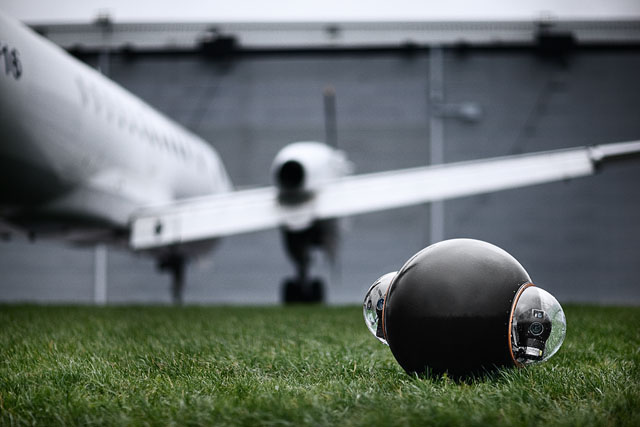
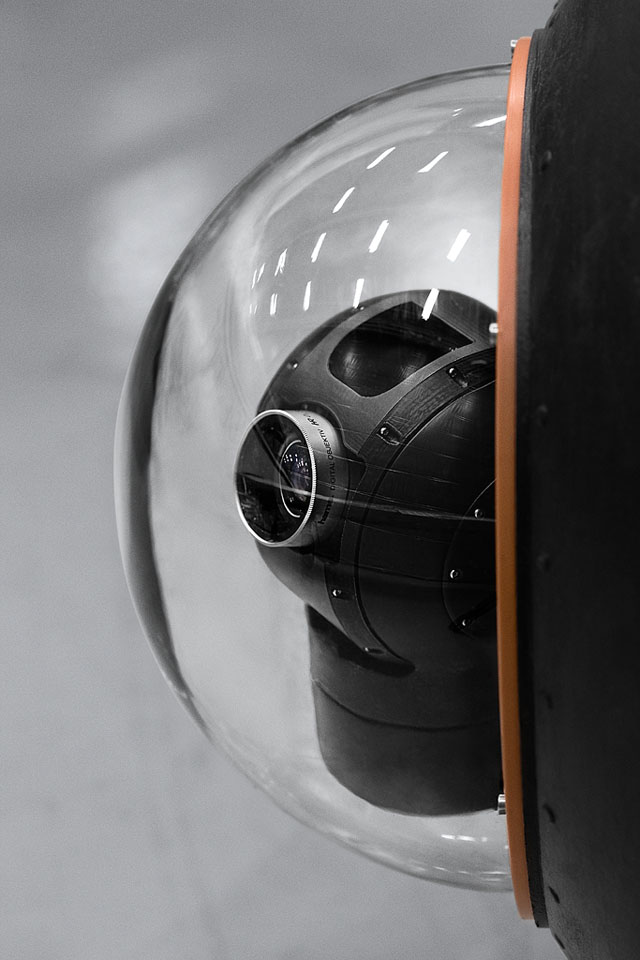
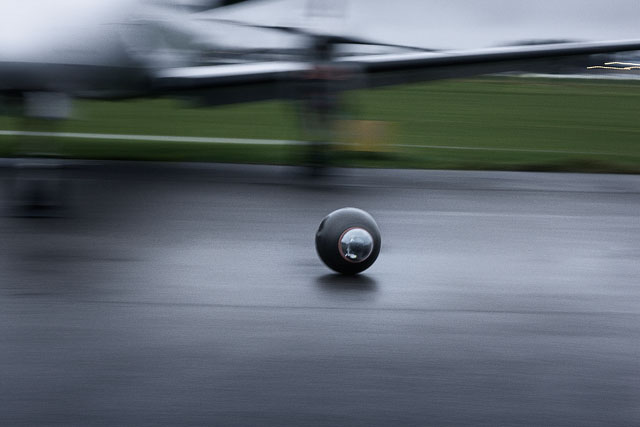
GroundBot by Swedish robotics firm Rotundus is an all-terrain, amphibious surveillance robot in the shape of a bug-eyed sphere (video). Roughly the size of a car tire, the robot moves silently at up to six mph. GroundBot houses two cameras which provide a stereoscopic view to its remote operator. Rotundus notes that the current version “cannot house robot arms or weapons.” Maybe in the next release.
The spherical design is simplicity itself. With its large circumference, GroundBot takes all kinds of terrain in its stride. And yet its appearance is friendly and unthreatening.
Inside, all cameras and sensors are sealed off from the outside world. This means that they are protected from bangs and knocks. In addition, the outside world is protected from potential electrical sparks when GroundBot is investigating gas leaks.

Thursday, May 19, 2011

Inside The FBI’s ‘Threat Matrix’

From Nuclear Urinals To Osama’s USBs

By Noah Shachtman
May 13, 2011 | 2:00 pm
Courtesy Of "Wired Magazine"


Yesterday, President Obama said he wanted to extend FBI director Bob Mueller’s term for another two years, on top of the 10 Mueller has already served. It’s not only the first time since Hoover that a Bureau director has been asked to stay on. It makes Mueller the only major public official to have kept his job through the entire “War on Terror” era.

Mueller remains largely unknown to the general public. He doesn’t give many interviews to the press, and even some of the people who have worked with him for years say they don’t know him particularly well.
Washingtonian magazine editor Garret Graff is the exception. He has interviewed Mueller at least a half-dozen times, and spent more than a thousand hours speaking to the director, his top aides and 180 current and former officials at the FBI, White House, Justice Department, CIA, NYPD and the Pentagon. These interviews form the heart of Graff’s new book, The Threat Matrix: The FBI at War in the Age of Global Terror.
We talked to Graff about the director’s longevity, Osama bin Laden’s thumb drives, the Bureau’s allergy to technology and the lamest ultimatum by a wannabe terrorist ever.
Wired.com: How has Mueller been able to hang on?
Garrett Graff: Mueller last year became the longest-serving FBI director since J. Edgar Hoover himself and, with this proposed extension by President Obama, will clearly be the most influential director since, as well. There have been five FBI directors since Hoover but Mueller was set to be the first to reach the full 10-year term limit — two directors quit early, one was fired and one was appointed director of the CIA.
What’s particularly impressive about Mueller’s accomplishment is that the job has never been harder than it is today — it’s 24/7 in a way that the job never was under Mueller’s predecessors, with enormous pressures from both U.S. security threats and geopolitical pressures overseas.
I think this is going to be a Cal Ripken-like record, one that we’ve never seen before in modern history and one we’re unlikely to ever see again. Mueller just happened to have a unique constitution — an enormous reserve of physical stamina, the right set of political skills for an apolitical job, and the right mix of management skills necessary to lead and transform an agency in the midst of tremendous pressure.
Wired.com: News reports say that the FBI is part of the team that’s scouring the discs and drives taken from the bin Laden raid. Any insight on what the agents are doing, specifically?
Two FBI agents from the Charlotte Field Office pose before a makeshift sign during their winter deployment to Afghanistan, just some of the hundreds of FBI agents who have worked in war zones since 2001.
Graff: While the bin Laden operation was mostly led by the SEALs and the CIA, the FBI was very much involved in the planning, helping to train the SEALs about how to gather evidence at the scene and ensure the collection of valuable intelligence. Much of that intelligence — the flash drives, documents and so on — is now being worked on by the FBI forensics and laboratory teams (along with other agencies).
The Bureau really pushed the SEALs to preserve forensic evidence like fingerprints on the evidence they collected at the Abbottabad compound so that the FBI lab officials could track every possible lead. The effort to process that information since has been a joint exercise by the FBI, CIA, NSA and Pentagon.
The combat-intelligence role has been one the Bureau has played since the fall of 2001, going into Afghanistan and later Iraq to help gather intelligence, process raid sites for evidence and leads, and conduct interrogations. The first FBI agents in Afghanistan, who went to Kandahar after the invasion in 2001, worked with U.S. special forces to teach them how to treat raid sites as crime scenes with an eye toward gathering what the FBI calls “pocket litter,” the random documents and personal property that was lying around.
Wired.com: Mueller became FBI director just a few days before 9/11. Was this the job he thought he was walking into?
Graff: Mueller actually thought he was showing up to fix the computers. Under his predecessor, Louis Freeh, the Bureau had neglected its IT infrastructure — Freeh himself didn’t like computers — and Mueller’s big challenge was supposed to be fixing that.
Mueller’s a bit of a closet geek — he got onto cybercrime threats very early in his career, launching the Justice Department’s first cyber team, helping to build the computer system used by U.S. Attorneys nationwide, and he’s always quick to purchase the latest gadget — but he came into the job on September 4, 2001, with little knowledge of counterterrorism or the intelligence worlds. I tell the story in the book of how coincidentally he was sitting on the morning of Tuesday, September 11, 2001, in one of his first briefings on al-Qaida when the Trade Centers were attacked.
The irony of just how much Mueller has changed the Bureau in the last decade, overseeing a huge transition toward more intelligence-driven, threat-based cases, is that the Mueller of 2001 would likely not be considered capable of replacing the Mueller of 2011.
Wired.com: Two FBI squads spent years chasing al-Qaida. Yet, after 9/11, Mueller turned the investigation over to a whole different squad. How come?
Graff: There was a feeling — quite wrong, I believe — that because the 9/11 attacks occurred, the FBI teams in New York who had been chasing bin Laden’s organization had failed. Mueller chose to move the al-Qaida investigation from New York to Washington and turn the investigation over to a different squad; most of those key agents from the al-Qaida squads, who at that point had spent years chasing bin Laden and made some key arrests and gathered some critical intelligence on the organization, were sidelined.
Still today, not one of the eight heads of counterterrorism who have served over the last decade had worked al-Qaida before 9/11.
Hours after he tried to flee the country, Times Square bomber Faisal Shahzad’s car was searched by FBI evidence technicians in an empty hangar at JFK Airport.
Wired.com: You write that Mueller was key to Dick Cheney’s agenda to radically expand executive power after 9/11 — and to largely control the levers of the security state personally. How?
Graff: Mueller served a tour in Vietnam and won a Purple Heart and Bronze Star with valor leading a Marine platoon there. He’s a good Marine — he keeps his head down, keeps a low profile in the media, and doesn’t stray outside his lane, responsibility-wise. It’s one of the political skills that has kept him in the job as director for so long.
Vice President Cheney radically shaped the nation’s response to 9/11, putting the CIA much more at the fore of the response than it had been traditionally, and greatly expanding the military’s role through programs like Guantanamo and enhanced interrogations. The FBI, which until 9/11 had really been the lead agency in responding to terrorism attacks like Pan Am 103 and the East Africa embassy bombings, was sidelined in some key respects.
Mueller, while he has his own firmly developed sense of Constitutional rights and protections, didn’t see his role as advocating for specific policies — he saw his role as executing the agenda presented by the president and vice president. Even though he disagreed with many of the decisions made in the wake of 9/11, he protested remarkably little.
Wired.com: After 9/11, you write, the federal government lost all sense of proportion when it came to terror. Any potential whisper of terrorism got put on the “threat matrix,” the list of potential plots forwarded to the White House. (My personal favorite: the e-mail that read, “Dear America, I will attack you if you don’t pay me 999999999999999999999999999999999999999999 dollars. MUHAHAHA.”) Tell
us how the threat matrix drove the agenda in those years — and how long it took for sanity to return.
Graff: The name of the book, The Threat Matrix, comes from the document that the FBI and the CIA developed after 9/11 to track the the unfolding terrorism plots. Each morning, CIA director George Tenet, FBI director Mueller, President Bush, Vice President Cheney and other national security officials, spent an hour going over that document — it was a spreadsheet, actually, that many days stretched to 15 to 20 pages, outlining every piece of intelligence and unfolding plot gathered by the U.S. government in the previous 24 hours.
The problem with the document, though, was that everyone wanted to share everything — so most of the stuff listed in the threat matrix was bunk at best, specious rumors, half-baked analysis and half-true exaggerations. The team in the Oval Office, though, didn’t know that, so they had to treat everything as a serious threat — the document really numbed them and made it hard to make smart decisions about how real and expansive the terrorist threat was after 9/11.
The best example of this is about a month after 9/11, a report came in on the threat matrix that a nuclear weapon was on board a train bound for Pittsburgh, set to be detonated within 24 hours. That obviously spun up the government and put people into panic mode. It took a couple of days to run down that the intelligence actually originated from a misheard conversation in a men’s bathroom in the Ukraine, there was no basis in reality at all. For weeks, President Bush teased the men briefing him, “Is this another Ukrainian urinal incident?”
Special agents Fred Bradford and Richard Kolko raised an FBI flag on top of the Bureau’s first Iraq headquarters, on the outskirts of Baghdad International Airport, in April 2003.
Wired.com: What steps did Mueller take to reorient the FBI around counterterror?
Graff: The biggest shift under Mueller is that counterterrorism has gone from one of the top priorities tothe top priority. That’s meant they’ve reshuffled thousands of agents from other tasks.
It’s also meant that they’ve really accelerated a push overseas that began in the 1990s. The FBI, which originally was designed as a domestic agency, today operates in about 80 countries overseas and has hundreds of agents deployed to places like Afghanistan, Iraq, Pakistan and other global hotspots. Agents are in Thailand working organized crime cases, in Africa doing kidnapping cases, Latin America doing drugs and gangs, and in Eastern Europe doing cybercrime cases.
The FBI actually last month conducted its first raid on the ground in Somalia, going in to capture a pirate ringleader and bring him back to the U.S. to stand trial. J. Edgar Hoover really wouldn’t recognize much of the work that Mueller’s FBI does today.
Wired.com: When Mueller took the helm of the FBI, its computer systems were woefully out of date. Have they gotten any better, relatively speaking? Does the Bureau have an electronic case-record system yet, for instance?
Graff: The FBI’s computer upgrade has been by most accounts the biggest failure of Mueller’s tenure — it went wildly off track in the years after 9/11, running hundreds of millions of dollars over budget and years behind schedule. Only in the last couple of years has it gotten on track and begun delivering real value to agents.
It’s come a long way since 2001 — I tell the story in the book of how in the summer of 2001, FBI agents in San Francisco had no way to transfer an al-Qaida’s suspect e-mail securely to agents in New York; they had to save the e-mail to a floppy disc and fly commercially to LaGuardia to hand-deliver the disc. But the FBI still isn’t where many people had hoped they’d be.
While agents now can do things like share information better, access the internet at their desks, and use BlackBerrys — you might laugh but many of these innovations were years in coming — the case-management system is really the last puzzle piece and that is scheduled to be completed by next year. One good argument for extending Mueller’s term is the chance for him to see that full process through and not change horses midstream.
I believe though that the computer system is just one part of the big picture: I still think that the FBI is underinvesting in cyberthreats right now in the same way that it underinvested in counterterrorism in the 1990s.
Wired.com: What were the downsides of turning the FBI into more of a counterterror shop? What was lost, as a result?
Graff: The reassignment of so many agents to counterterrorism and the re-prioritization on national security hasn’t been without cost. We haven’t pumped new staff into the FBI at the rate that we have in other homeland security agencies since 9/11, which means that many of the new CT agents have been pulled from the traditional criminal divisions of the FBI — squads that investigated things like bank robberies, fraud, white collar crime and particularly drug cases.
In many of those areas, prosecutions have dropped by 40, 50, and even 60 percent. Mueller, for instance, pulled 2,000 agents off the southern border who had been working big drug cases — and that reassignment actually tracks pretty closely to the tremendous rise of violence in the Mexican drug world over the last decade.
I think part of President Obama’s decision to extend Mueller’s term by two years is to give him a chance to continue the rebuilding of the criminal division, a process that Mueller began about two years ago. He’s got one of his most favored executives, TJ Harrington, heading that process now, trying to bring some of the same evolution in thinking that they’ve applied to counterterrorism — focusing more on threats and intelligence — to the criminal investigation process.
Photos courtesy of Garrett Graff

Saturday, January 22, 2011

Unlimited Government Overseas

By Jacob G. Hornberger
Thursday, January 13, 2010
Courtesy Of "The Future Of Freedom Foundation"

Americans who travel overseas do so at their own risk. That principle used to apply only to foreign governments but now it also applies to the U.S. government, which is exercising unlimited powers against Americans and others while operating within foreign countries.

We already know about the omnipotent power of the U.S. military and the CIA to deprive Americans of due process of law and trial by jury and to torture and assassinate Americans who are suspected of being terrorists. So far, the military has wielded the denial-of-due process power and the denial-of-trial-by-jury power as well as the torture power on an American here at home (i.e., Jose Padilla) and has wielded the assassination power, so far unsuccessfully, on an American overseas (i.e., Anwar al-Awlaki).

The case of an American teenager, 19-year-old Gulet Mohamed of Alexandria, Virginia, is demonstrating that federal officials are exercising other dictatorial powers on Americans who travel overseas. Mohamed was recently detained in Kuwait, where he says that FBI agents subjected him to several hours of increasingly hostile interrogation. Even after Mohamed asked for the services of an attorney, the agents continued interrogating him. The interrogation, Mohamed says, culminated in his being severely beaten and deprived of sleep. Mohamed said that Kuwaiti officials finally intervened and ended the U.S. interrogation.

So, does Mohamed now plan on returning home? Well, he’d like to, but he is having a hard time doing so. Even though he is an American citizen, he can’t take a flight home. Why? Because the feds have placed him on their “no-fly” list, which prohibits him from flying home, no matter how many body scanners and pat-downs he’s willing to undergo.

When the Constitution was proposed, many Americans opposed it. They were concerned that the federal government that the Constitution was calling into existence would end up exercising the types of dictatorial powers that the British government had exercised on the British people, especially those living in the British colonies in America.

Proponents of the Constitution responded that people didn’t need to be concerned because the Constitution expressly set forth the limited powers that federal officials would be permitted to exercise. Since such enumerated powers didn’t include the types of dictatorial powers that the British government had exercised, federal officials would never be able to exercise them.

Americans were still not convinced. As a condition for approving the Constitution, they demanded passage of the Bill of Rights, which expressly set forth specific rights and guarantees that the federals would not be permitted to infringe upon. Such rights had become recognized over centuries of resistance by British citizens against the tyranny of their own government. The Fifth Amendment prohibits the feds from depriving a person of life, liberty, and property without due process of law. The Ninth Amendment pointed out that the rights and guarantees named in the Bill of Rights were not all-inclusive; freedom of travel, a long-recognized natural, God-given right, is a good example.

Some people today might argue that the Constitution and the Bill of Rights are antiquated and outmoded. We can trust federal officials to do the right thing, statists say. Yet, when we see how U.S. officials operate overseas without constitutional restraints, we have to thank our lucky stars for the wisdom of our American ancestors. As bad as things are here at home with respect to liberty, imagine how much worse they would be if U.S. officials were able to exercise the same unlimited, dictatorial powers at home that they are wielding on Americans and others overseas.

Despite his detention, harsh interrogation, and infringement on his freedom to travel at the hands of his own government operating without constitutional restraint overseas, perhaps American Gulet Mohamed should count himself fortunate. At least they haven’t assassinated him.


Jacob Hornberger is founder and president of The Future of Freedom Foundation.

Friday, May 07, 2010

Army Spy Plane Snooped NYC Bomber

By Noah Shachtman
May 5, 2010 | 11:23 am
Courtesy Of The Wired Danger Room


2424707389_d540bb276c_b

Investigators were able to track wannabe terrorist Faisal Shahzad through his anonymous, pre-paid cell phone — exactly how, they won’t say. But there was a tantalizing explanation posted — and then quickly yanked — from the website of WCBS TV. “In the end, it was secret Army intelligence planes that did him in. Armed with his cell phone number, they circled the skies over the New York area, intercepting a call to Emirates Airlines reservations, before scrambling to catch him at John F. Kennedy International Airport.”

Jeremy Scahill, relying on a source in U.S. Special Operations, says those planes were likely RC-12s, equipped with a Guardrail Signals Intelligence (SIGINT) system. The planes are designed to pluck all kinds of communications from the air. But from the ground, they could easily be mistaken for an executive aircraft. The RC-12 is based on the Hawker-Beechcraft King Air B200 suit-carrier. And while earlier versions of the aircraft were covered in odd-looking antennas, the latest aircraft are far less conspicuous.

Variants of the planes are at the center of “Project Liberty,” a crash project by the Air Force to send more airborne spies to Afghanistan. The first of an estimated 37 aircraft began flying there last December.

“It sucks up everything. We’ve got these things in Jalalabad [Afghanistan]. We routinely fly these things over Khandahar. When I say everything, I mean BlueTooth would be effected, even the wave length that PlayStation controllers are on. They suck up everything. That’s the point,” Scahill’s source tells him.

Exactly why Army SIGINT planes would be required — as opposed to, say, the NSA’s industrial strength signal-swallowers that are almost undoubtedly able to pick up Big Apple-area communications — is unclear.

In 2007, Northrop Grumman received a contract worth up to $462 million to upgrade the spy planes, which are serviced at Tobyhanna Army Depot, less than a hundred miles from New York City.

[Photo: Flickr/av8pix]

See Also:

Wednesday, February 03, 2010

Pentagon’s Black Budget Tops $56 Billion

By Noah Shachtman
February 1, 2010 | 3:57 pm
Courtesy Of
Wired Blog Network

The Defense Department just released its king-sized, $708 billion budget for the next fiscal year. Much of the proposed spending is fairly detailed — noting exactly how many helicopters the Pentagon plans to buy and how many troops it plans on playing. But about $56 billion goes simply to “classified programs,” or to projects known only by their code names, like “Chalk Eagle” and “Link Plumeria.” That’s the Pentagon’s black budget.

Cobbling together this round figure for the military’s hush-hush projects is easier than it seems. The Pentagon’s separate ledgers for operations, research and procurement all contain line items for “classified programs.” Add those to the nonsensically-named programs, and you’ve got yourself an estimate for the Pentagon’s secretive efforts.

Last year, that budget grew to more than $50 billion – ”the largest-ever sum,” according to Aviation Week’s Bill Sweetman, a longtime black-budget seer. A few more billion were added for wartime operations, for a total of $54 billion. This year’total would be $2 billion higher, a 3.7 percent increase.

Not all of the Pentagon’s secret projects got a budget boost, however. Funds for the Cobra Judy missile-watching radar system were cut nearly in half, from $61 million to $36.5 million. Similar, money for the Navy’s Link Evergreen project was cut to $41 million, from $123 million.

Photo: Marcin Wichary / Flickr

– Noah Shachtman and Katie Drummond


Read More http://www.wired.com/dangerroom/2010/02/pentagons-black-budget-tops-56-billion/#ixzz0eQsURlyQ

Friday, August 21, 2009

Army Camera Promises Super-Wide Surveillance

Courtesy Of Wired Blog NetWork

argusThe ability to provide real-time surveillance of large areas may be getting closer, as the Army launches a quest for a 2.3 gigapixel camera that could be packaged aboard a drone or a manned aircraft. The new device would be smaller and lighter than previous systems – and it would work in the infrared range too.

Airborne surveillance is moving fast. We’ve seen the 66-megapixel Angel Fire and 39-megapixel BuckEye sensors being used in operations, while the even more powerful Gorgon Stare is being flight tested next year. In February we reported on Darpa’s Autonomous Real-time Ground Ubiquitous Surveillance - Imaging System (ARGUS-IS ), a 1.8 gigapixel flying eye which will be mounted in a 500-pound pod carried by a Predator or A160 Hummingbird robocopter. The ARGUS-IS makes for an impressive camera, with the resolution and processing power to track a large number of separate items including “dismounts” — people on foot — over a wide area, as well as “a real-time moving target indicator for vehicles throughout the entire field of view in real-time.”

But ARGUS-IS is already looking old. Now the Army is asking for something even more powerful. In a new request for solicitations, it outlined the concept for a novel visible/infrared sensor that will cover a much larger area on the ground — with much higher resolution.

The sensor is required to be lightweight with low power consumption and to have significantly lower operating costs compared to existing systems, and must be able to operate from small aircraft, either manned or unmanned. In terms of specifics, the Army is looking for 2.3 gigapixels running at two frames per second. By my reckoning, this suggests continuous coverage of area of around sixty-two square miles at 0.3m resolution with a single sensor. That’s quite a step up from Angel Fire, which covers a tenth of the area at much lower resolution. And the new camera will work in the near-infrared range as well. This is useful for analysis, as sometimes things that are invisible in the normal range can be picked out easily in infrared; it also means that people can be illuminated without being aware of it.

At this point, the Army is still looking for proposals, and actual working hardware is some years down the line. However, the technology is moving fast and there is little doubt that the following generation will be much smaller than the 500-pound ARGUS. The PANOPTES being developed by Marc Christensen at Southern Methodist University with Darpa funding could potentially cut camera weight by a factor of ten by using a large array of small imaging elements.

Once the technology is developed, anticipated civilian spin-offs will include “improved border and maritime management/patrol, critical infrastructure protection, transportation security, search & rescue, crime prevention, land & sea traffic monitoring, pipeline/powerline monitoring, private infrastructure surveillance/security”
Meanwhile Darpa is also working on something a bit more advanced. This is ARGUS-IR, a version of ARGUS that works in the medium and long infra-red. This is the “emissive” end of the infra-red scale, where warm objects are visible by the infra-red light they emit. ARGUS-IR will only have a trifling 200 megapixels, later to be upgraded to 400. But the ability to see warm objects such as people in pitch darkness through some types of cover will add a new dimension.

The old adage “you can run, but you can’t hide” is becoming more true than ever, and real-time surveillance of huge swathes of territory using small drones will become a practical proposition. Airborne cameras providing a persistent view were a key factor in Task Force ODIN’s success in Iraq; given the new technology, their successors could have even more impact. And those cameras might have some effect on the home front too.

IMAGE: Darpa

See Also: