Showing posts with label State-Terror. Show all posts

Wednesday, December 05, 2012

Assassinating Iranian Scientists Is Terrorism: U.S. Official


“The American political leaders who support the de-listing of the MEK terror group"

By Jim Lobe,


... two “senior State Department officials” who cannot be otherwise identified, briefed the press on the decision in a teleconference last Friday afternoon, Sep. 28.
They explained the reasons for the de-listing, while making very clear the administration’s institutional distaste for the MEK. As was reported in the mainstream press, they said, among other things:
…[T]he Department does not overlook or forget the MEK’s past acts of terrorism, including its involvement in the killing of U.S. citizens in Iran in the 1970s and an attack on U.S. soil in 1992. The Department also has serious concerns about the MEK as an organization, particularly with regard to allegations of abuse committed against its own members. The Secretary’s decision today took into account the MEK’s public renunciation of violence, the absence of confirmed acts of terrorism by the MEK for more than a decade, and their cooperation in the peaceful closure of Camp Ashraf, their historic paramilitary base.…
 

As the briefing progressed, the emphasis was placed very much on the phrase “the absence of confirmed acts of terrorism,” as when one questioner recalled the NBC report earlier this year that quoted one unnamed U.S. official as confirming Iran’s charges that Israel had used MEK militants in recent years to carry out assassinations of Iranian scientists associated with Tehran’s nuclear program. The briefing’s senior official repeated the mantra about “confirmed acts”, noting,
And I should add that the United States Government has not claimed that the MEK was involved in the assassination of scientists in Iran. And that’s really all we’re going to have to say on that.
I followed up later in the briefing by asking whether the U.S. government considered the assassination of Iranian scientists an act of terrorism, and the following colloquy ensued:
Briefer: “If we had information on that and could pursue it, we would, but as I said, we have never said that this group was involved in those assassinations.”
Question: “…I just wanted to find out whether the USG considered that the assassination, regardless of who it was by, of Iranian scientists, would constitute an act of terrorism.”
Briefer: “Well that would be my understanding, but I think you’d have to have the lawyers take a look at that.”
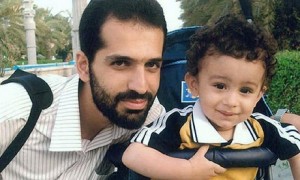
I may be wrong about this, but I think this was the first acknowledgment by a senior State Department official that killing Iranian scientists was an act of terrorism. At the time of the assassination last January of Mostafa Ahmadi Roshan, my recollection was that, while vehemently denying any responsibility for the killing, U.S. officials avoided using the word “terrorism” in describing the act. As Clinton said at the time, “I want to categorically deny any United States involvement in any kind of act of violence inside Iran.” Other officials also referred to the killing as violence, rather than terrorism. It seemed a deliberate avoidance; after all, all eyes were focused on Israel as the most likely instigator, if not perpetrator, of the killing — an assumption that Israeli officials did very little to dispel — and it would be politically pretty dicey for the Obama administration to suggest that Israel practices terrorism against its perceived enemies.
Of course, the senior State Department official who said it would be his understanding that the assassination constituted terrorism added an artful hedge, suggesting that the lawyers would have the last word on the question. And, because the briefing was on “background,” his statement did not constitute “official” U.S. policy in as authoritative a way as if it had been “on the record,” in which case his name would be public. But henceforward, at least, there is some institutional backing for the notion that killing Iranian scientists does indeed constitute terrorism and that those who are responsible can therefore be considered terrorists, including states.
Asked whether the U.S. might engage the MEK as a party in U.S. relations or actions regarding Iran, the same senior State Department official was pretty unequivocal:
I want to be very clear about this. We do not see the MEK as a viable opposition or democratic opposition movement. We have no evidence and we have no confidence that the MEK is an organization that could promote the democratic values that we would like to see in Iran.
There is nothing in the way they govern themselves that would suggest they’re interested in adopting democratic principles, and there is a long and fairly rich set of documentation on how they treat their own personnel that really does suggest to the contrary. So continue to have serious concerns about the group with regard to allegations of abuse that’s committed against its own members. They are not part of our picture in terms of the future of Iran.
It will be interesting to see if the advocates MEK has been able to accumulate and/or buy among former officials and members of Congress can overcome get any traction in the coming months.
Via: "LobeLog"

Friday, August 10, 2012

Myanmar Religious Cleansing: Crime Against Humanity


 Ethnic cleansing is rife in Myanmar and is turning into a human tragedy of colossal proportions. A confidential United Nations report dated May 29, 2011 and marked “Not for Public Citation or Distribution”, defines ethnic cleansing as a “purposeful policy designed by one ethnic or religious group to remove by violent and terror-inspiring means the civilian population of another ethnic or religious group from certain geographic areas.”


What is happening in Myanmar to the Rohingya Muslims violates international laws and is to be categorized as crime against humanity. 
Unfortunately, the Myanmar peace prize laureate Aung San Suu Kyi has turned a blind eye and a deaf ear to the plight of the Rohingya Muslims. Maybe she has forgotten her own words on democracy and human rights that, “The struggle for democracy and human rights in Burma is a struggle for life and dignity.” 

US photographer Greg Constantine has recently released a book of black and white photography titled “Exiled to Nowhere: Burma’s Rohingya.” He believes that “One of the things that is lost in the discussions of the issues of statelessness—particularly with the Rohingya—are human stories.”
He relates the story of 20-year-old Kashida who had to “flee to Bangladesh with her husband. The Burmese authorities had denied her permission to get married, but when they discovered she had married in secret and was pregnant they took away all her family’s money and cows and goats. They forced Kashida to have an abortion, telling her: “This is not your country; you don’t have the right to reproduce here.”
The dire humanitarian crisis has already begun to assume tragic proportions and Muslims and non-Muslims alike are beginning to respond with perturbation and fear.
Iran's Foreign Ministry has called for end to violence in Myanmar.
“It is expected that the Myanmar government will prepare the ground for solidarity, national unity and asserting the rights of Muslims in the country and that it will avert violence and a human catastrophe in this regard,” Foreign Ministry Spokesman Ramin Mehmanparast said on Monday.
Also, the president of India’s Jamiat Ulma-i-Hind has voiced concern about the massacre, calling for an end to the humanitarian crisis in the country. Maulana Syed Arshad Madani lashed out at the Myanmar government for being indifferent to the massacre of Muslims by extremist Buddhists. He also criticized the silence of the international community and human rights organizations across the world about this humanitarian tragedy.
The International Union for Muslim Scholars (IUMS) has strongly condemned the brutal massacre perpetrated against the Rohingya Muslims and has demanded that the Organization of Islamic Cooperation (OIC) take necessary and urgent steps to prevent religious cleaning and these crimes against humanity in this region.
The statement reads, “The IUMS is reviewing in all concern what has befallen the Muslims in the Muslim region of Arakan, Burma, of fierce killing, displacement and persecution since a long time, not to mention displacement of them, and demolition of their homes, properties and mosques at the hands of the religious extremists in the Buddhist community. Unfortunately, the Buddhist government acts as a bystander in face of the heinous massacres escalating day after day against the Muslim minorities in the country. The numbers of casualties, in the attacks that are considered the most ferocious in the history of targeting the Muslims in Burma, are countless.”
In view of the ongoing inhumane violations in Myanmar, the US and its western allies, which keep pontificating about human rights in the world, have feigned ignorance about this humanitarian catastrophe. Why? Because they will not be able to reap any benefits of their future efforts in the country as they do in the Middle East and elsewhere. To crown it all, they have kept an agonizingly meaningful silence over the massacre.
It is certainly incumbent upon every person who cares about human dignity to fly in the face of this inhumanity and give a helping hand to the downtrodden Myanmar Muslims.  
As the great Persian poet Sa'di says, “Human beings are members of a whole, In creation of one essence and soul. If one member is afflicted with pain, Other members uneasy will remain. If you've no sympathy for human pain, The name of human you cannot retain!”

Tuesday, March 08, 2011

Libya: A State Of Terror

As Gaddafi Wages War Against A Popular Uprising, Libyan Exiles Explain How Terror Has Long Been A Tool Of The Regime.

On February 22, Muammar Gaddafi, the Libyan president, appears on Libyan state television - sharing his troubles with the world and declaring war on his people.

It began in Benghazi, with the police shooting two men at a rally demanding the release of a human rights lawyer.

Internet calls for a 'day of rage' take on the language of the recent Egyptian revolution, and as the men are buried, police open fire on the mourners. Furious crowds confront security forces and outrage spreads across Libya, demanding an end to Gaddafi's rule.

The state crackdown is gruesome, hundreds of Libyan's are killed, but the chant "the people want regime change" only gets louder, the will to remove Gaddafi stronger.

For the watching world, Gaddafi's cruel retaliation defies belief, but for Libyans, the danger inherent in speaking out is nothing new. It has become an inescapable part of their life.

For many Libyans, the uprising against Muammar Gaddafi is a watershed moment in a lifetime of fear, and for the generation of Libyan exiles the uprising revives memories of what they left behind.

Some have waited all their adult lives for the tide to change, and now dare to break their silence and anonymity for the first time.

Their stories of brutal measures to crush opponents echo the horrific accounts from Libya's civilian population today, as they endure Gaddafi's reprisals.