Showing posts with label Ingushetia. Show all posts

Thursday, January 27, 2011

Caucasus Is Threatening To Become Russia's Iraq

Russia has been increasingly frustrated by the situation in the volatile northern Caucasus, where neither warfare nor economic investment has proven effective. Instead, the violent separatist insurgency has spread.

January 25, 2011
Courtesy Of "Deutsche Welle"


With Moscow investigators reportedly searching for a trio of Chechens in connection with Monday's suicide bombing at Domodedovo airport, attention has once again turned to the volatile North Caucasus, where Russia has been battling a stubborn insurgency for years.
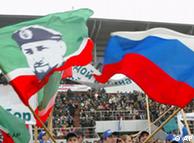
The area has been troubled since Russian troops marched into Chechnya in 1994 following the state's unilateral declaration of independence. After the initial war and reoccupation of the capital city Grozny, the soldiers returned in 1999, starting what has become known as the second Chechen war, which ended with Russia's unstable military occupation of the province.
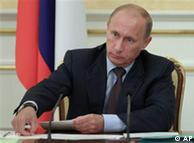
Guerrilla war ensued, and Russia frequently referred to its own "war on terror" - against an insurgency that became increasingly Islamist as the past bloody decade wore on. Finally, in April 2009, Russian Prime Minister Vladimir Putin declared that that the trouble in Chechnya was over. He appointed the former businessman Alexander Khloponin as a new plenipotentiary to the North-Caucasian Federal District a year later, a new man who arrived offering to give the region an image overhaul.
"The Caucasus is not a nuclear bomb and not a powder keg, on which we sit. It is a strategic territory for Russia," Khloponin told journalists in May 2010. This explained why "that amount of money is invested into Northern Caucasus; and so many armed forces are kept there."
Putin's 'Mission Accomplished' Moment
But the army has remained, and troops have kept getting killed one by one. Analysts say the carrot and stick policy of economic investment and targeted attacks on separatist leaders has merely suppressed rather than eradicated the insurgency.
"I think that over the past year the Kremlin has been experiencing something akin to Bush's 'Mission Accomplished' moment in Iraq," Ben Judah, policy fellow at the European Council on Foreign Relations (ECFR), told Deutsche Welle
While Chechnya itself has become relatively peaceful compared to five years ago, violence has stirred in the neighboring regions of Ingushetia, Dagestan, North Ossetia and Kabardino-Balkaria. "The situation has clearly been increasing in intensity, but also in scope," said Judah. "This has taken the Kremlin by surprise."
As a whole, the region is far from pacified. The Russian military has said they're losing as many as six interior ministry troops a day, and last year Russia lost more of her security forces in North Caucasus than the US lost in Afghanistan. Meanwhile, in the first nine months of 2010 the number of attacks linked to separatist violence quadrupled to 352 compared to the previous year.
Economic Investment Lost To Bribery
Khloponin's drive to promote investment in the region is therefore coming under increasing doubt. Uwe Halbach, researcher at the German Institute for International and Security Affairs (SWP), thinks the airport bombing will not do his cause much good. "This well-meaning reform strategy is being questioned more and more," he told Deutsche Welle. "In the light of the precarious security situation in the region, companies that support tourism in North Caucasus will lose confidence."
It is almost impossible to say which of Russia's many problems is the worst. On a basic level, Judah believes Russia's endemic corruption is compromising security for its population. "According to Transparency International, Russia is as corrupt as Congo or Papua New Guinea," he said. "The fact that the state is increasingly corrupt means that the state isn't functioning efficiently, and is exposing normal Russians to dangers."
"The latest estimate is that bribes swallow up to 20 percent of the entire Russian GDP," Judah added. This is clearly also affecting North Caucasus. "The Russian government is always announcing that large amounts of funds will be dispatched to the region," said Judah. "But the question is, with corruption, how much is actually getting there?"
"Even though corruption is such a problem in Russia anyway, there's almost no region in Russia that is so affected by corruption as North Caucasus," agreed Halbach. But this is just one of many problems. "It's everything," the researcher continued. "It's the state of the regional authorities, the official security organs and the government organs. There's Islamist mobilization, there are mafia organizations. There are just so many different sources of violence."
All these factors fuel separatist groups. "Human rights abuses, poverty, economic difficulties, and the fact they don't see themselves as being control of their own destiny. All these things foment separatism," said Judah. On top of this, "there are large ethnic tensions in Russia, which cause a lot of discontent in the Caucasus region. People in Moscow call people from the Caucasus 'blacks.'"
Degrees Of Separatism
The complexity of the discontent in the region is reflected in the way separatist impulses are expressed. The situation in North Caucasus is a lot more complex than is perhaps appreciated in the rest of the world, or even in Moscow. No single separatist group holds sway - while jihadism has certainly grown over the past few years, Islamic extremism is far from being the dominant rallying point for disgruntled people in the area.
"It depends who you mean by separatist," said Judah. "There are people who would like the region to have more autonomy, but are not willing to risk their lives or their livelihoods for it. Then you have people who used to be separatist, when they were young, or when the situation was different, but who are now making money out of Russian investment in the region. Then you have people who will help separatists without being directly involved, then you have a variety of separatist splinter groups - some Islamic extremist, some more nationalist."
The two civil wars in Chechnya have left a legacy of hatred that Russia's economic policies in the region, hamstrung by corruption, have done little to assuage.
Author: Ben Knight
Editor:  Rob Mudge

Friday, July 02, 2010

Russia's Empty Empire

Russia’s Neo-Imperialist Ambitions Founder On The Rocks Of Reality

Jun 24th 2010
Courtesy Of "The Economist"

SO MUCH for Russia’s “zone of privileged interests” and the West’s worries about it. The phrase was coined by Dmitry Medvedev, Russia’s president, in the aftermath of the 2008 war with Georgia, when Russian rhetoric reached shrill levels. The events of the past two weeks in Belarus and Kyrgyzstan have provided a humble reality check and exposed the hollowness of Russia’s neo-imperialist ambitions among the states that once made up the Soviet Union.

Russia has long wished to keep the West away from its backyard. Now that America and the EU are tied up with their own problems, Russia has had its wish partly granted. Left to its own devices, however, it has shown little leadership, vision or sense of imperial responsibility in its vaunted “zone”.

A spat over gas with Belarus has exposed the fragility of the embryonic customs union between Russia, Kazakhstan and Belarus, put forward by Moscow as the nucleus of a new Russia-dominated economic club. The bloody pogroms in Kyrgyzstan (see article) reveal the Collective Security Treaty Organisation—a post-Soviet military alliance of Russia, Kyrgyzstan, Uzbekistan, Kazakhstan, Tajikistan, Belarus and Armenia—to be a chimera.

In its dispute with Belarus this week Russia started to cut gas supplies to its supposed close ally, claiming it was owed some $200m. The debt stems from Belarus’s decision to pay last year’s price of $150 per thousand cubic metres of gas, ignoring a Gazprom price increase. Alyaksandr Lukashenka, Belarus’s maverick leader, upped the stakes by ordering a cut in transit shipments of Russian gas to the EU, arguing it was also owed money. On June 24th Gazprom resumed full supply but Belarus maintained its claim.

This is not the first spat between Russia and Belarus, and it will not be the last. But, as Fyodor Lukyanov, the Russia editor for Global Affairs, argues, this time the row has a political flavour. For all his authoritarianism and anti-Americanism, Mr Lukashenka is disdained by Russian officials for reneging on his promises and dragging his feet on agreements. He has skilfully managed to extract large subsidies from Russia while poking it in the eye and playing it off against the EU.

Last year the Belarusian president refused to recognise the independence of South Ossetia and Abkhazia, the two breakaway Georgian territories over which Russia had warred with Georgia. That was followed by a Russian ban on Belarus’s milk products. More recently, Mr Lukashenka has decided to shelter Kurmanbek Bakiyev, the overthrown authoritarian leader of Kyrgyzstan, who is loathed by Moscow.

Mr Lukashenka has also sabotaged the customs union with Kazakhstan and Russia, demanding that Russia scrap its export duty on oil and oil products, which would allow Belarus to buy them at Russia’s domestic prices and to re-export them at a profit. (Russia wants to keep oil out of the union for now.) Russia’s response is to reach for its favourite weapon: the gas taps.

In its relations with its neighbours, Russia has mostly relied on coercion. Consider its response to Mr Bakiyev’s fall and the subsequent pogroms in Kyrgyzstan. The Kremlin shed no tears for Mr Bakiyev, whom it saw as two-faced and greedy. Last year Mr Bakiyev extracted a $2 billion aid package from Russia in exchange for a promise to close an American military air base in Kyrgyzstan, as Russia insisted. He then raised the rent for the American base and allowed it to stay.

Solve Your Own Problems
 
When, earlier this month, the Kyrgyz clashed with the Uzbek minority in the southern Kyrgyzstani city of Osh and the interim government appealed to Russia for military help, the Kremlin stood back. To the outside world it looked like the opportunity Russia had been waiting for to show that it dominates its backyard. To Russia it was a nightmare that evoked memories of Soviet involvement in Afghanistan in the 1980s. Russia’s official line was that it could not interfere in Kyrgyzstan’s internal affairs (a statement that sat oddly with Russia’s war against Georgia).

In fact, Russia has neither the capacity nor the will for such intervention. As Alexander Golts, an expert on Russia’s armed forces, argues, the Russian army—which largely consists of unskilled recruits and is plagued by bullying—is not equipped for the sort of peacekeeping operation they were asked to carry out in Kyrgyzstan. Besides, Russia’s “allies” in the CSTO, particularly nearby Uzbekistan and Kazakhstan, have no desire to see Russian troops setting a precedent by sorting out the internal affairs of a neighbouring state.
Russia’s intervention would be unpopular at home too. Xenophobia towards migrant workers from Central Asia and memories of Afghanistan would make any sacrifice of Russian lives in Kyrgyzstan unacceptable to most Russians. Yet, if Russia was right not to send troops to Kyrgyzstan, it was wrong to claim the country as part of a zone of privileged Russian interest.

When ethnic clashes broke out in Osh 20 years ago, Mikhail Gorbachev sent in Soviet troops. Today’s government, for all its Soviet nostalgia, seems to feel no such obligation. What Russia’s response to Kyrgyzstan has made clear, Mr Golts observes, is that “Moscow bosses imitate imperial ambitions in the same way they imitate democracy.”

Friday, April 16, 2010

Islam In Russia

History and Facts

By Elmira Akhmetova
Freelance Writer
Courtesy Of
Islam Online
Image

Early Muslims had built great civilization in Russia before the Tsarist Russian Empire emerged.(Reuters photos)

There are about 20 million indigenous Muslims living in the Russian Federation where the total population is over 140 million (about 15 percent of the total population). Unlike other Muslim minorities in Europe, Russian Muslims are not foreign immigrants. They are native citizens of the country in which they live in.

Muslims are integral part of the Russian community For instance, during the 2008 Beijing Olympics, Russian athletes won 23 gold medals, 10 of which were obtained by indigenous Muslim athletes.

The majority of Russian Muslims live in the Volga-Ural region and the Northern Caucasus. Other parts of Russia including megacities, such as Moscow or Saint-Petersburg, also have significant Muslim populations.

The ethnically Muslims are predominant in seven republics of the Russian Federation which are the Republics of Bashkortostan and Tatarstan in the Volga-Urals region, and the Republics of Chechnya, Ingushetia, Dagestan, Kabardino-Balkaria and Karachay-Cherkessia in the Northern Caucasus.
Islam in Russia: Part Two
Read: Flash file of the Soviet Union Muslims


Roots of Islam in Russia

Islam first entered Russia through Dagestan from the mid 7th century it started to spread to the Northern Caucasus. By the year 21 AH (Muslim calendar) (641 CE), the Muslim army under the leadership of ‘Abd Rahman ibn

Islam gradually established itself in the Volga basin through trade and other economic relations with the Muslim world.
Rabiah reached the Southern Caucasus northward after taking control of Persia and Al-Quds (Jerusalem).

The Muslim army achieved victory over the powerful Khazar Kingdom during the Umayyad rule in 119 AH (737 CE).

Subsequently, the Northern Caucasus, which previously was a vassal of the Khazar Kingdom, became a part of the Umayyad Empire. And, Muslims transformed the region into an important administrative centre and introduced Islam to the tribes of the Caucasus.

Islam gradually established itself in the Volga basin through trade and other economic relations with the Muslim world. The Bulgar Kingdom, which existed in the Middle Volga region from the 8th century until its invasion by Mongols in 1236 CE, recognized Islam as an official religion of the state in 922 CE ( 304 AH).

Starting from the central region, Islam spread to north and east parts of Russia, particularly to Siberia.

The second wave of introducing Islam to Russia took place during the period of the Golden Horde (Jusi Ulusi or Altan Ordon ), which was established as a north kingdom of the Mongols in 1242 CE.

In fact, the small numbers of the Mongols who stayed in the area did not have any significant impact on the fabric of the local society. So, culture, language, religion, and social life remained the same.

In the beginning of the 15th century, a number of independent Islamic khanates[1] emerged from the gigantic Golden Horde. These khanates covered almost all of the modern Russian territory, except the region between the cities of Moscow and Kiev where the majority of Russians used to live in a number of principalities.

Until these Islamic Khanates were defeated by the Russian Empire in the 16th century, Islam dominated the most parts of the modern Russia.

Due to the importance of the Volga River for transportation to Tsarist Russian Empire, the Volga-Ural region was the first to fall under the newly-established mighty Russian Empire. On October 15, 1552, after the conquest of Kazan Khanate—which was previously the strongest state in the region—the way for the Russians to occupy the entire Volga region and the Caspian Sea was wide-open.

In 1859, Muslims of Dagestan (Chechnya and Ingushetia were altogether part of Dagestan) also lost their country to Tsarist Russia after 34 years of resistance under Imam Shamil (1797-1871).

Independence: Hope and Reality

In October 1991, Chechnya declared its independence from Russia after Djohar Dudayev (1944-1996) was elected as president.

The disintegration of the Soviet Union in 1991 inspired hopes of Muslims living under the Russian control[2] for several centuries for self-determination.

Following the declaration of independence of the former Soviet Republics in the Baltic, Central Asia and Caucasus, most autonomous republics adopted Declarations of State Sovereignty that proclaimed their sovereign status.

In October 1991 Chechnya declared its independence from Russia after Djohar Dudayev (1944-1996) was elected by referendum as the president of the Chechen Republic of Ichkeria. Russian troops left Chechnya, and for the next three years, the country gained de facto independence[3].

In 1992 the republic of Tatarstan held a referendum on independence from Russia, and 62 percent of those who participated voted in favor of independence.

Then it was in Kazan, the capital city of Tatarstan, the first President of the Russian Federation Boris Yeltsin (1931-2007) made his oft-quoted statement to Russia's different regions: "Take as much sovereignty as you can swallow".

However, in reality, the movement of independence among nations of the Volga region and the Northern Caucasus ended with the First Chechen War (1994-1996) leaving 7,500 Russian military casualties, 4,000 Chechen combatants and no less than 35,000 civilians—a minimum total of 46,500 while others have cited figures within the range of 80,000 to 100,000[4] .

The International Community did not recognize the independence of Tatarstan too. On February 15, 1994, the Treaty On Delimitation of Jurisdictional Subjects and Mutual Delegation of Authority between the State Bodies of the Russian Federation and the State Bodies of the Republic of Tatarstan was signed between the Russian Federation and the Government of the Republic of Tatarstan.

Leaders of the Tatar freedom movements, such as the party of “Ittifaq”, accused Tatarstan government of putting off the independence of Tatarstan for cheap sale. And, despite strong disagreement of national independence movements, all articles mentioning the sovereignty of Tatarstan were withdrawn from its Constitution.


Consequently, the Constitution itself, which was adopted on November 30, 1992 by the parliament of the republic, was amended 15 times between 1994-2005.

Thus, by legal and military means, Russia succeeded in maintaining its system of federalism that was once prevailed during the Soviet Union's era. Currently, the Russian Federation consists of 83 subjects: 21 republics, 46 oblasts (provinces), 9 krais (territories), 1 autonomous oblast (The Jewish Autonomous Province), 4 autonomous okrugs (district) and 2 federal cities.

The Republics in general represent areas of non-Russian ethnicity. Unlike other subjects, republics are nominally autonomous and each republic has its own constitution, president and parliament. Every republic is meant to be the home to a specific ethnic minority.

Muslim Republics of the Volga-Urals Basin

Modern Tatars are direct descendants of the Volga Bulgars, who admitted Islam as an official religion of their state in 922 CE.
There are two indigenously-Muslim predominant republics exist in the Volga-Ural region, which are Tatarstan and Bashkortostan.

The Republic of Tatarstan is located in the center of the East European Plain, approximately 800 kilometers (497 miles) east of Moscow. It lies between the Volga and Kama Rivers, and extends east to the Ural Mountains. Its capital city is Kazan (Qazan in Tatar).

According to the All-Russia Population Census of 2002, the total population of Tatarstan is about 3,779,000. The ethnic Tatars constitute 52,9 percent of the total population of the republic, while 39,5 percent are ethnic Russians.

The neighboring republic of Bashqortostan (or Bashkortostan) is situated between the Volga River and Ural mountains with its capital city called Ufa. The total population of the republic is about 4,104,000.

According to the 2002 Census, the 'national composition' in Bashkortostan is as follows: Russians 36.32 percent, Bashqorts (Bashkirs) 29.76 percent, Tatars 24.14 percent, Chuvashs 2.86 percent, Maris 2.58 percent, Ukrainians 1.35 percent, Mordovians 0.63 percent, Udmurts 0.55 percent, Belarusians 0.42 percent, Armenians 0.21 percent, Germans 0.20 percent, Uzbeks 0.13 percent, Azeri 0.12 percent, Kazakhs 0.10 percent, Tadjiks 0.07 percent, Jews 0.06 percent ,and various other groups of less than two thousand persons each.

As these demographic figures demonstrate, the majority of the inhabitants of the two republics are Tatars and Bashqorts. The majority of both who are of Turkic origins are ethnically Muslims. Modern Tatars are direct descendants of the Volga Bulgars, who admitted Islam as an official religion of their state in 922 CE.

The Bulgars then brought Islam to the Bashqort tribes, who lived in the region of the Ural Mountains. For instance, the Muslim geographer Yaqut Al-Hamawi wrote that he saw a Bashqort Muslim in Aleppo. This person informed Al-Hamawi that seven Muslims came from the Bulgar Kingdom and spread Islam among the Bashqorts[5] .

Muslim Republics of the Northern Caucasus

There are five predominantly Muslim republics in the region,
which are the Republics of Chechnya, Dagestan, Ingushetia, Kabardino-Balkaria, and Karachay-Cherkessia.

Differing from the Muslim republics of the Volga region, the proportion of ethnic Russians in Northern Caucasus is quite low. During the Second World War, the Soviet Union deported many people of Northern Caucasus under the pretext of allegedly helping the German army during its invasion of the Soviet Union[6].

Muslim Chechens, Ingushes, Balkars and Karachays were deported from their native lands in 1944 to steppes of Kazakhstan.
Although the majority of the entire Muslim inhabitants of the regions of Chechens, Ingushes, Balkars and Karachays were deported from their native lands in 1944 to steppes of Kazakhstan, the social and demographic pattern of the region did not undergo major changes.

Currently, the Muslim population constitutes the overwhelming majority in Chechnya, Dagestan, and Ingushetia.

According to the 2002 Census, the population of the Republic of Chechnya is approximately 1.1 million.

Chechens are 1,031,647 million making up 93.5 percent of the republic's population. Other groups include Russians (only 40,645, or 3.7 percent), Kumyks (8,883, or 0.8 percent, also Muslims), Ingush (2,914 or 0.3 percent) and other smaller groups, each accounts for less than 0.5 percent of the total population.

The neighboring republic of Ingushetia is the home of the indigenous Ingush/Vainakh tribes. The people of Vainakh are a group of people of the Northern Caucasus including modern Chechens' and Ingushes' ancestries speaking Nakh language. Ingushetia is Russia’s smallest federal subject with the population of 467,000.

According to the 2002 Russian Census, ethnic Ingushes make up 77.3 percent of the republic's population. Other groups include Chechens (20.4 percent), and Russians (1.2 percent).

The largest republic of Russia in Northern Caucasus in terms of area and population is Dagestan. Its total population is 2,577,000. Dagestan includes a large variety of ethnic groups as there are tens indigenous Muslim ethnicities.

According to the 2002 Census, Northeast Caucasians including Avars, Dargins and Lezgins make up almost 75 percent of Dagestan's population. Turkic peoples such as Kumyks, Nogais and Azeris make up 20 percent whereas Russians are only 5 Percent. Each other ethnic groups account for less than 0.5 percent of the total population. With such ethnic diversity, 90.4 percent of the population are Muslims.

The republic of Kabardino-Balkaria has a population of about 901,000. It consists of two ethnic territories: one predominantly of Kabardin (speakers of a North-West Caucasian language, the most of which are Sunni Muslims) and the other predominantly Balkars (speakers of a Turkic language, the most of which are also Sunni Muslims).

According to the 2002 Census, Kabardins make up 55.3 percent of the republic's population, followed by Russians (25.1 percent), and Balkars (11.6 Percent).

Other groups include Ossetians (9,845, or 1.1percent), Turks (8,770, or 1.0 percent), Ukrainians (7,592, or 0.8 percent), Armenians (5,342, or 0.6 percent), Koreans (4,722, or 0.5 percent), Chechens (4,241, or 0.5 percent), and a other smaller groups, each accounts for less than 0.5 percent of the total population.

The neighboring republic of Karachay-Cherkessia’s total population is about 439,000. It consists of two ethnic Muslim nations of Karachay and Cherkes. According to the 2002 Census, Karachays make up 38.5 percent of the republic's population, followed by Russians (33.6 percent) and Cherkes (11.3 Percent).

Other groups include Abazins (7.4 percent), Nogais (3.4 percent), Ossetians (3,333, or 0.8 percent), Ukrainians (3,331, or 0.8 percent), Armenians (3,197, or 0.7 percent), Tatars (2,021, or 0.5 percent).


Elmira Akhmetova, is a freelance writer who covers current events and general interest topics, including the situation of Muslims in the former Soviet Union.

[1]Khanate is a Turkic originated word referring to a political sovereign entity ruled by a sovereign political or military leader called Khan.

[2]Muslim population in Caucasus part of Russia, like Chechnya, considered- and still consider the Russian presence as occupation and colonization of their native lands.

[3]Look at Tony Wood's article titled "The Case for Chechnya" in New Left Review journal.

[4]Look at Tony Wood's article titled "The Case for Chechnya" in New Left Review journal

[5]Marjani, Shihabetdin. Mustafad al'-akhbar fi Ahwali Qazan wa Bulgar. Kazan: Tatarstan Publishing House, 1989. pp 134.

[6]Actually, Stalin followed forceful deportation policy in order to break up the socio-political harmony of predominantly Muslim regions of Northern Caucasus so as to make them easier to control. The charge that the population of Northern Caucasus helped the Nazis was refuted by many contemporary historians.


Russian Muslims Between Oil and Federalism


Image

Although Russian authorities carried out massacres against Muslims in Chechnya, some Russian Muslims prefer not to secede, (Reuters photo)

Muslim republics in Northern Caucasus are rich in oil, natural gas, coal, gold, and many other mineral resources.

According to Ariel Cohen, a research fellow at the Washington-based Russian and Eurasian Studies at the Heritage Foundation, the huge oil reserves are estimated to be over 25 billion barrels under the Caspian Sea.

He estimated that oil reserves in the Central Asian republics of Kazakhstan, Turkmenistan, and Uzbekistan are similar to those in Kuwait and larger than those in Alaska's Northern Slope and the North Sea combined.

Islam in Russia Part one

Natural resource abundance, however, could not result in economic prosperity among Caucasian Muslim republics because of many reasons.

Oil's Bloody Politics

Russia's control of Chechnya enables Moscow to control the flow of natural resources, mainly oil and gas.

For instance, the tiny republic of Ingushetia is rich in marble, timber, dolomite, plaster, limestone, gravel, granite, clay, thermal medical water, rare metals, mineral water, oil (over 60 billion tons), and natural gas reserves.

Yet, Ingushetia remains one of Russia's poorest and most restive regions. In 2003, Ingushetia's percapita income was 463 Euro/ $ 678 dollars per year, and this figure remains the same every year, with the average monthly income stopped at $60 starting from 2006.

As Russia’s daily online Kommersant reported that the difference between the maximum (in Moscow) and minimum (in Ingushetia) average percapita incomes in the first half of 2007 was 9.8 times.

And, according to Rosstat, the state statistics service, incomes in Russia's richest areas are nearly 10 times higher than in the poorest ones.

Many experts agreed that the Caspian Sea's oilfields and the strategic significance of oil pipelines passing through Caucasus were major incentives for Moscow to use force in Chechnya during the two Chechen Wars of 1994-1996 and 1999-2000.

Read More: Muslims of Former Soviet Union.
In 1995, Time magazine's former Russia correspondent Andrew Meier wrote of many issues baffling Western observers about Russia's intervention in Chechnya.

He contended that the question of the timing of the invasion has gone unanswered while the reason was simply oil.

Chechnya, as many correspondents have noted, has considerable oil reserves that Moscow clearly covets. Yet, oil production in Chechnya has been dropping drastically by some 71 percent since 1991.

Much more significant is the fact that Russia's control of Chechnya enables Moscow to control the flow of natural resources, mainly oil and gas, running from former Soviet Union republics in Central Asia.

The small mountainous region of the Northern Caucasus sits astride a critical pipeline that links the oil-rich republics of Azerbaijan and Kazakhstan — both are bordering the landlocked Caspian Sea — to the Russian port of Novorossiysk on the Black Sea. (Andrew Meier, What does Russia see in Chechnya? Oil)

The ongoing military conflict in the neighboring Chechnya has occasionally spilled over into other republics of the Northern Caucasus.

"Although there has been a decrease in the number of disappearances in Chechnya, serious violations continue with impunity, and in recent years the violations have spread to other parts of the Northern Caucasus," said Nicola Duckworth, the director of Amnesty International's Europe and Central Asia Program. (Human Rights Watch, Council of Europe Failing in Russia).

Muslim Republics Between Federalism and Unitarianism

Yet, usually the candidates of federal republic’s presidents are nominated by the president of the Russian Federation.
The system of federalism in Russia was inherited from the Soviet Union's political structure, and it was first formally instituted by the federal constitution of Russia in 1918.

Despite its professed commitment to "socialist federalism", the Union of Soviet Socialist Republics (USSR) was a unitary state, and policies of the Russian Socialist Federated Soviet Republic (RSFSR) [1] had to conform to those determined by the USSR.

After the dissolution of the USSR, the federal constitution was amended to eliminate the term "autonomous" from the title of the former republics of the RSFSR which was replaced by "Russian Federation."

So, all the territories, regions, and federal cities were recognized as members of the Russian Federation.

Russian federal subjects are tied with the Russia's federal government by the uniform Federal Treaty — the agreement on the delineation of jurisdiction and the powers between federal bodies and the central government in Moscow.

Principally, as many experts observed, the Russian constitution envisages the equal rights for all subjects; federal republics enjoy different status which allows them to adopt domestic constitutions, to establish state languages, to elect presidents, and to form constitutional courts.

Different status presupposes asymmetrical federalism in the sense that not all of the constituent units are equal in economical, geographical, and social spheres (Salikov, The Russian Federal System: Sub-National and Local Levels).

Although its constitution was compelled to be amended 15 times, the republic of Tatarstan enjoys the most rights among other republics.

Tatarstan's constitution of 2000 defines the republic's status without contradicting the constitution of the Russian Federation:

The republic of Tatarstan is a democratic constitutional state associated with the Russian Federation by the constitution of the Russian Federation, the constitution of the republic of Tatarstan, and the treaty between the Russian Federation and the republic of Tatarstan on delimitation of jurisdictional subjects and mutual delegation of powers between the state bodies of the Russian Federation and the state bodies of the republic of Tatarstan.


In fact, the sovereignty of Tatarstan shall be its inalienable qualitative status.

The constitution of neighboring Bashqortostan was adopted on Dec. 24, 1993. Article 1 of the constitution stipulates that Bashkortostan is a sovereign state within Russia; it has all the state power beyond the limits of authority of the Russian Federation.

The republic of Bashqortostan resolves all the issues of its administrative-territorial structure on its own.

The list of significant Bashkortostan's districts, towns, and municipalities as well as the order of establishing, amending, and changing borders of municipalities and their names are stipulated by the republic of Bashkortostan's law of administrative-territorial structure.

The head of the government and the highest executive post in the Muslim Republics is the president.

Yet, usually the candidates of federal republic’s presidents are nominated by the president of the Russian Federation.

The Kremlin’s direct involvement in nominating presidents of Russia's republics without paying attention to the will of local communities produces new conflicts and preserves the status quo, rather than changing the system itself for the benefit of the people.

For instance, in Ingushetia when former Ingushetia's president and Putin-critic Ruslan Aushev resigned from his post, former KGB and FSB [2] (Federal Security Service) member Murat Zyazikov took over the presidency with clear support from then Russia's president Vladimir Putin in a Kremlin-manipulated 2002 election.

In the eyes of the people of Ingushetia, President Zyazikov did not come into office through a democratic process, and therefore lacks local legitimacy.

Tensions between Ingush people and the government led to numerous recent protests and increasingly severe acts of violence in the republic.

Gennady Skorin of Prague Watchdog confirmed that in recent years the situation in Ingushetia has begun to change rapidly.

Abductions and law enforcement operations have turned the small republic into a place where no one could feel safe.

The Russian authorities’ claims that they hunted for extremists sounded like an open lie, because it is well-known that in most cases the people who suffer during the so-called "mop-ups" (zachistki) are innocent. (Skorin, Ingushetia as the last line of defence in Russia's Caucasus War).

"Some 200 kidnappings and over 500 murders are too many for a republic with an entire population of only about 300, 000," Skorin comments.

Marat S. Salikov, the dean of the Institute of Justice of the Urals Law Academy in Yekaterinburg, Russia, concludes that the central government’s attempts to subjugate federal states could lead not just to centralized federalism, but to de-federalization, like unitarianism. (Salikov, The Russian Federal System: Sub-National and Local Levels).

Future of Muslim Republics in Russia

With intellectuals' joint efforts, the Russian Ummah can reach notable progress in influencing the foreign and domestic politics of Moscow.

The atmosphere of liberty which prevailed in 1990s in Muslim-populated areas of Russia has now abated.

Today, streets of even small towns of Bashqortostan and its supreme council, which enthusiastically adopted the declaration of the sovereignty of the Bashkir Soviet Republic on Oct.11,1990, are decorated with plentiful banners sympathetically demonstrating their dependence on Russia.

In 2007, the government celebrated 450 years of the "willful joining" of the Bashqort tribes to the Russian Empire.

The opposition, which believes in the independence of Bashqortostan from Russian supremacy, does not have many chances to be heard by internal or international communities.

For instance, right after the Russian aggression against Georgia, Tatar's independence partyIttifaq released an appeal to the international community, indicating why the oil-rich republic of Tatarstan must pursue independence from the Russian Federation.

The authors of the appeal state:

The republic of Tatarstan must be independent from Russia. […] Russia has been denying us the right [of] self-determination for centuries, [and] we have to seek help from the international community. Please protect us from the Russian aggression, help us to [gain independence, and to build] a democratic society. Oil-rich Tatarstan does not want to empower Russia any more. Recognize the independence of the republic of Tatarstan. The hard-working, trustworthy Tatar people — having old history, robust economy, well-developed oil resources, and rich agriculture — are ready to contribute to the development of the world civilization together with other nations.


Unfortunately, the appeal, which was circulated by email, attracted little attention from the media either in Russia or the West.

However, today, many Russian Muslim experts completely oppose the idea of the independence of Muslim republics from the Russian Federation, supposing it to be unfeasible due to territorial and demographic considerations.

For instance, as Damir Khairetdinov pointed out, only one-fourth of Tatar population is living inside the republic of Tatarstan while the rest are living in other parts of the Russian Federation.

In the case of Tatarstan separating from Russia, it may result in massive persecution of Tatars in Russia. These Tatars are descendants of the Kasimian, Siberian, Astrakhan and Noghay Khanates, and completely unrelated to the republic of Tatarstan.

Damir Khairetdinov believes that the secession of Tatarstan and Bashqortostan from the Russian Federation would be a colossal smack to the Russian Ummah which nobody will care about due to its small quantity and dispersal of its population.

Therefore, only with Tatarstan and Bashqortostan being part of the Russian Federation, the strengthening of the Russian Muslim Ummah is possible.

With intellectuals' joint efforts, the Russian Ummah can reach notable progress in influencing the foreign and domestic politics of Moscow.

This is already happening: nobody could even imagine that Russia, which is mainly a Christian state, would want to become a member of the Organization of Islamic Conference (OIC), and want to utilize the Muslim factor in its foreign politics.

In this regard, the roles of Chechnya and Tatarstan, as well as of Muslim communities outside these republics — namely the Muslim community of Moscow — are the most notable.

Director of Nizhny Novgorod Islamic Institute of "Medina" Damir Mukhetdinov is also positive about the future of Muslims in Russia.

In his live dialogue on IslamOnline.net, Mukhetdinov pointed out that, according to the recent sociological researches, by 2020, Muslims may compose the half of Russia's population, which may be possible due to extensive labor migration from Central Asia to Russia.

In addition, Muslim Republics in the Northern Caucasus, especially Chechnya, have the youngest populations in the generally aging Russian Federation; in the early 1990s, it was among the few regions experiencing natural population growth.

In the first half of 2007, the birth rate in Chechnya was 26.4, while in Russia it was 11.28 per 1,000 individual.

During an iftar at the central Moscow mosque in Ramadan 2008, Grant Mufti of the European part of the Russian Federation Ravil Gainetdinov stressed on long-lasting tradition of dialogue between Muslims and other confessions of Russia.

He declared: "Russia is our shared home, and we, Muslims of Russia, are obliged to protect and enlarge spiritual wealth left by our forefathers."

[1] Today's Russian Federation.

[2] KGB is former USSR's and former Russian Federation's intelligence agency while FSB is Russia's Federal Security Service.


Sources:

Cohen, Ariel. The New "Great Game": Oil Politics in the Caucasus and Central Asia,http://www.heritage.org/Research/RussiaandEurasia/BG1065.cfm

Human Rights Watch. Council of Europe Failing in Russia.http://www.alertnet.org/thenews/newsdesk/HRW/acb93ad76de9628c932576501538c803.htm

Incomes Nearly 10x Higher in Richest Areas than Poorest
http://www.kommersant.com/p-11336/r_500/demographics_standard_of_living/%20

Marjani, Shihabetdin. Mustafad al'-akhbar fi Ahwali Qazan wa Bulgar. Kazan: Tatarstan Publishing House, 1989.

Meier, Andrew. What does Russia see in Chechnya? Oilhttp://amina.com/article/chechenrus_confl.html

Salikov, Marat. The Russian Federal System: Sub-National and Local Levels.http://camlaw.rutgers.edu/statecon/subpapers/salikov.pdf Retrieved September 20, 2008.

Skorin, G. Ingushetia as the last line of defence in Russia's Caucasus War.
http://www.watchdog.cz/?show=000000-000004-000002-000048&lang=1


Elmira Akhmetova, is a freelance writer who covers current events and general interest topics, including the situation of Muslims in the former Soviet Union.

Monday, April 12, 2010

Blowback: The Lessons Of The Moscow Bombings For America

By Doug Bandow
Senior Fellow at the Cato Institute
Posted: April 9, 2010 05:39 AM
Courtesy Of
The Huffington Post

The horrid attacks of 9/11 led to the cry: Why do they hate us? The recent bombings in the Moscow subway remind us that terrorism is most often a political tool used to advance political ends.

Of course, after 9/11 President George W. Bush and his neoconservative supporters reassured Americans: we were attacked because we are beautiful. Evil, nasty, mean foreigners hate Americans because we are free, fabulous, nice, selfless, and all-around good guys, busily spreading freedom, liberty, capitalism, democracy, and the hallowed American way around the world.

Many Americans preferred to accept this explanation than to reflect on the sometimes less beautiful actions of our government. To seek an explanation was not to excuse the inexcusable: monstrous, murderous attacks on civilians. But understanding what motivated people to kill could help prevent future killing.

Terrorism long has been a common tool used by individuals, groups, and occasionally nations to promote political ends. Why some people hate other people often is complicated. Nevertheless, the historical pattern is clear. Terrorism has been deployed against Russian Tsars, the Austro-Hungarian monarchy, British colonial officials, and Algerian governments from French colonial to recent military. Basque and Irish separatists employed assassination and bombing. Until Iraq, the most promiscuous suicide bombers were Tamils in Sri Lanka. Needless to say, in none of these cases did terrorism occur in response to American freedom or other values.

More tellingly, it is impossible to deny that U.S. foreign policy has inadvertently created enemies and turned Americans into targets. For instance, nearly three decades ago President Ronald Reagan intervened in a multi-sided civil war in Lebanon, taking the side of the minority Christian government which controlled little more than the capital of Beirut. The American military actively targeted Muslim and Druze factions; the U.S.S. New Jersey bombarded Lebanese villages. It should have surprised no one when the U.S. embassy and Marine Corps barracks were attacked. Had Washington kept its forces at home, Islamic terrorists likely would have stayed home as well. They would have had no cause to pack their bags and head to America to wreak havoc and murder.

At times, U.S. policymakers have demonstrated extraordinary hubris and callousness. In 1996 United Nations Ambassador Madeleine Albright was asked to justify sanctions against Iraq, which had killed a half million Arab children. That number surely was inflated and Saddam Hussein bore the bulk of the blame for any deaths, but Amb. Albright did not contest the claim. Instead, she responded chillingly: "we think the price is worth it." Washington's assertion of the unilateral right to kill hundreds of thousands of Muslim kids did not suggest beauty to the Islamic world.

Still, we were told after 9/11 that to even ask whether U.S. government behavior might have sparked antagonism against America was unpatriotic. Why would anyone be upset with Washington imposing deadly sanctions, unseating democratically elected leaders, supporting dictatorships, backing another country's Apartheid-like system on a subject people, and promiscuously waging war for its own purposes? Perish the thought that someone somewhere might end up disliking the American government and seek to strike back.

The good news was that no angry individuals or groups had nuclear-tipped missiles or strategic air wings or carrier battle groups. (Some foreign governments possessed such weapons, but they had "return addresses" and faced devastating retaliation if they struck the U.S. for whatever reason.) The bad news was that terrorism became the tool by which those who hated American policy brought the war home to America.

The Moscow attacks should highlight the fact that there are consequences to intervention. The Putin government blames religious fanatics for Chechen terrorism, but Robert Pape, Lindsey O'Rourke, and Jenna McDermit, all of the University of Chicago, studied 63 Chechen suicide terrorists. Few had religious motives. Rather: "As we have discovered in our research on Lebanon, the West Bank, Iraq, Afghanistan, Sri Lanka and elsewhere, suicide terrorist campaigns are almost always a last resort against foreign military occupation. Chechnya is a powerful demonstration of this phenomenon at work."

Ignoring the obvious merely ensures future terrorist attacks. The New York Times reported: "Federal operatives have no way of knowing whom to trust. Opposition fighters might be the disheveled young fanatics evoked by Russian propaganda--or they could be local bureaucrats. Or policemen. And the more violence Russian forces use to hunt them down, the deeper the reservoir of hatred they leave behind."

Consider the Moscow bombings. Both suicide bombers apparently were so-called "Black Widows," whose militant husbands had been killed by Russian security forces. Forget about which side has the better cause in this brutal battle over Chechnya's future. Dzhennet Abdurakhmanova and Markha Ustrakhanova did not kill themselves because Russia is so free or because they hate freedom. Rather, they almost certainly were motivated by a mix of revenge for their husbands and desire for Chechen independence.

Even some conservatives, who typically decry discussion of "root causes" of terrorism against America, have a different take on Russian policy in Chechnya. In National Review's The Corner Alex Alexiev wrote about Kremlin-related "root causes" of Chechen terrorism: "it is impossible to imagine a harsher and more brutal treatment than the one Moscow and its henchmen have been inflicting on the local populace for the past decade."

Unfortunately, there is no reason to believe that America is exempt from the same sort of blowback. The fact that the U.S. is not Russia, and it is not, is true but irrelevant. The determining issue is what those on the receiving end of American policies believe.

Consider the newly released WikiLeaks video of U.S. forces killing a dozen or so Iraqi civilians. Particularly striking was the attack on a second group of civilians who drove up to aid a wounded Iraqi--who had no weapon. One American soldier commented after the wounding of two children, whose father was killed: "Well it's their fault for bringing their kids into a battle"--at a time when entire Iraqi cities were potential battlegrounds. One can cite the fog of war as justification for the killings, but that is unlikely to placate relatives and friends of those who died. It would hardly surprise if an event like this pushed some angry young men toward insurgency and/or terrorism.

The same problem is evident in Afghanistan. Gen. Stanley McChrystal recently admitted: "We've shot an amazing number of people [at checkpoints] and killed a number and, to my knowledge, none has proven to have been a real threat to the force." Yet, he added, he knew of no case when "we have engaged in an escalation of force incident and hurt someone has it turned out that the vehicle had a suicide bomb or weapons in it."

There is no reason to expect Afghans, or Muslims elsewhere, to cheerfully wave off such deaths. We Americans may believe that we are beautiful. But others around the world likely are less convinced as the U.S. government is killing people, supporting tyrants, and engaging in other less than beautiful behavior. The fact that we believe, however reasonably, such conduct to be necessary--that "the price is worth it"--does not mean others will agree with us.

Terrorism cannot be justified, whether committed by Russian anarchists, Tamil Tigers, Basque separatists, the Irish Republican Army, Chechen militants, al-Qaeda, Palestinians, or Afghan and Iraqi insurgents. But terrorism can be understood and explained. And we should use that knowledge in making policy. It may be inevitable that the U.S. government will make some enemies. However, Washington should stop carelessly making unnecessary enemies.

America is not invulnerable. Washington cannot expect to act in the world without consequence. Jesus insisted that people "count the cost" before following him (Luke 14:28). Policymakers should do the same before they casually thrust the U.S. into military conflicts, political struggles, and other volatile controversies abroad. It turns out that the cost of global intervention can be high indeed.