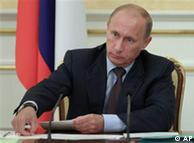
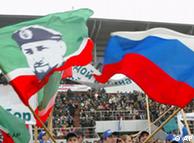
| Although Russian authorities carried out massacres against Muslims in Chechnya, some Russian Muslims prefer not to secede, (Reuters photo) |
Muslim republics in Northern Caucasus are rich in oil, natural gas, coal, gold, and many other mineral resources. According to Ariel Cohen, a research fellow at the Washington-based Russian and Eurasian Studies at the Heritage Foundation, the huge oil reserves are estimated to be over 25 billion barrels under the Caspian Sea. He estimated that oil reserves in the Central Asian republics of Kazakhstan, Turkmenistan, and Uzbekistan are similar to those in Kuwait and larger than those in Alaska's Northern Slope and the North Sea combined. Natural resource abundance, however, could not result in economic prosperity among Caucasian Muslim republics because of many reasons. Oil's Bloody Politics | Russia's control of Chechnya enables Moscow to control the flow of natural resources, mainly oil and gas. |
For instance, the tiny republic of Ingushetia is rich in marble, timber, dolomite, plaster, limestone, gravel, granite, clay, thermal medical water, rare metals, mineral water, oil (over 60 billion tons), and natural gas reserves. Yet, Ingushetia remains one of Russia's poorest and most restive regions. In 2003, Ingushetia's percapita income was 463 Euro/ $ 678 dollars per year, and this figure remains the same every year, with the average monthly income stopped at $60 starting from 2006. As Russia’s daily online Kommersant reported that the difference between the maximum (in Moscow) and minimum (in Ingushetia) average percapita incomes in the first half of 2007 was 9.8 times.
And, according to Rosstat, the state statistics service, incomes in Russia's richest areas are nearly 10 times higher than in the poorest ones. Many experts agreed that the Caspian Sea's oilfields and the strategic significance of oil pipelines passing through Caucasus were major incentives for Moscow to use force in Chechnya during the two Chechen Wars of 1994-1996 and 1999-2000. In 1995, Time magazine's former Russia correspondent Andrew Meier wrote of many issues baffling Western observers about Russia's intervention in Chechnya. He contended that the question of the timing of the invasion has gone unanswered while the reason was simply oil. Chechnya, as many correspondents have noted, has considerable oil reserves that Moscow clearly covets. Yet, oil production in Chechnya has been dropping drastically by some 71 percent since 1991. Much more significant is the fact that Russia's control of Chechnya enables Moscow to control the flow of natural resources, mainly oil and gas, running from former Soviet Union republics in Central Asia. The small mountainous region of the Northern Caucasus sits astride a critical pipeline that links the oil-rich republics of Azerbaijan and Kazakhstan — both are bordering the landlocked Caspian Sea — to the Russian port of Novorossiysk on the Black Sea. (Andrew Meier, What does Russia see in Chechnya? Oil) The ongoing military conflict in the neighboring Chechnya has occasionally spilled over into other republics of the Northern Caucasus. "Although there has been a decrease in the number of disappearances in Chechnya, serious violations continue with impunity, and in recent years the violations have spread to other parts of the Northern Caucasus," said Nicola Duckworth, the director of Amnesty International's Europe and Central Asia Program. (Human Rights Watch, Council of Europe Failing in Russia). Muslim Republics Between Federalism and Unitarianism | Yet, usually the candidates of federal republic’s presidents are nominated by the president of the Russian Federation. |
The system of federalism in Russia was inherited from the Soviet Union's political structure, and it was first formally instituted by the federal constitution of Russia in 1918.Despite its professed commitment to "socialist federalism", the Union of Soviet Socialist Republics (USSR) was a unitary state, and policies of the Russian Socialist Federated Soviet Republic (RSFSR) [1] had to conform to those determined by the USSR. After the dissolution of the USSR, the federal constitution was amended to eliminate the term "autonomous" from the title of the former republics of the RSFSR which was replaced by "Russian Federation." So, all the territories, regions, and federal cities were recognized as members of the Russian Federation. Russian federal subjects are tied with the Russia's federal government by the uniform Federal Treaty — the agreement on the delineation of jurisdiction and the powers between federal bodies and the central government in Moscow. Principally, as many experts observed, the Russian constitution envisages the equal rights for all subjects; federal republics enjoy different status which allows them to adopt domestic constitutions, to establish state languages, to elect presidents, and to form constitutional courts.
Different status presupposes asymmetrical federalism in the sense that not all of the constituent units are equal in economical, geographical, and social spheres (Salikov, The Russian Federal System: Sub-National and Local Levels).
Although its constitution was compelled to be amended 15 times, the republic of Tatarstan enjoys the most rights among other republics. Tatarstan's constitution of 2000 defines the republic's status without contradicting the constitution of the Russian Federation:
The republic of Tatarstan is a democratic constitutional state associated with the Russian Federation by the constitution of the Russian Federation, the constitution of the republic of Tatarstan, and the treaty between the Russian Federation and the republic of Tatarstan on delimitation of jurisdictional subjects and mutual delegation of powers between the state bodies of the Russian Federation and the state bodies of the republic of Tatarstan.
In fact, the sovereignty of Tatarstan shall be its inalienable qualitative status.
The constitution of neighboring Bashqortostan was adopted on Dec. 24, 1993. Article 1 of the constitution stipulates that Bashkortostan is a sovereign state within Russia; it has all the state power beyond the limits of authority of the Russian Federation. The republic of Bashqortostan resolves all the issues of its administrative-territorial structure on its own. The list of significant Bashkortostan's districts, towns, and municipalities as well as the order of establishing, amending, and changing borders of municipalities and their names are stipulated by the republic of Bashkortostan's law of administrative-territorial structure. The head of the government and the highest executive post in the Muslim Republics is the president. Yet, usually the candidates of federal republic’s presidents are nominated by the president of the Russian Federation. The Kremlin’s direct involvement in nominating presidents of Russia's republics without paying attention to the will of local communities produces new conflicts and preserves the status quo, rather than changing the system itself for the benefit of the people. For instance, in Ingushetia when former Ingushetia's president and Putin-critic Ruslan Aushev resigned from his post, former KGB and FSB [2] (Federal Security Service) member Murat Zyazikov took over the presidency with clear support from then Russia's president Vladimir Putin in a Kremlin-manipulated 2002 election. In the eyes of the people of Ingushetia, President Zyazikov did not come into office through a democratic process, and therefore lacks local legitimacy.
Tensions between Ingush people and the government led to numerous recent protests and increasingly severe acts of violence in the republic. Gennady Skorin of Prague Watchdog confirmed that in recent years the situation in Ingushetia has begun to change rapidly. Abductions and law enforcement operations have turned the small republic into a place where no one could feel safe. The Russian authorities’ claims that they hunted for extremists sounded like an open lie, because it is well-known that in most cases the people who suffer during the so-called "mop-ups" (zachistki) are innocent. (Skorin, Ingushetia as the last line of defence in Russia's Caucasus War).
"Some 200 kidnappings and over 500 murders are too many for a republic with an entire population of only about 300, 000," Skorin comments. Marat S. Salikov, the dean of the Institute of Justice of the Urals Law Academy in Yekaterinburg, Russia, concludes that the central government’s attempts to subjugate federal states could lead not just to centralized federalism, but to de-federalization, like unitarianism. (Salikov, The Russian Federal System: Sub-National and Local Levels). Future of Muslim Republics in Russia | With intellectuals' joint efforts, the Russian Ummah can reach notable progress in influencing the foreign and domestic politics of Moscow. |
The atmosphere of liberty which prevailed in 1990s in Muslim-populated areas of Russia has now abated. Today, streets of even small towns of Bashqortostan and its supreme council, which enthusiastically adopted the declaration of the sovereignty of the Bashkir Soviet Republic on Oct.11,1990, are decorated with plentiful banners sympathetically demonstrating their dependence on Russia.
In 2007, the government celebrated 450 years of the "willful joining" of the Bashqort tribes to the Russian Empire. The opposition, which believes in the independence of Bashqortostan from Russian supremacy, does not have many chances to be heard by internal or international communities.
For instance, right after the Russian aggression against Georgia, Tatar's independence partyIttifaq released an appeal to the international community, indicating why the oil-rich republic of Tatarstan must pursue independence from the Russian Federation. The authors of the appeal state:
The republic of Tatarstan must be independent from Russia. […] Russia has been denying us the right [of] self-determination for centuries, [and] we have to seek help from the international community. Please protect us from the Russian aggression, help us to [gain independence, and to build] a democratic society. Oil-rich Tatarstan does not want to empower Russia any more. Recognize the independence of the republic of Tatarstan. The hard-working, trustworthy Tatar people — having old history, robust economy, well-developed oil resources, and rich agriculture — are ready to contribute to the development of the world civilization together with other nations.
Unfortunately, the appeal, which was circulated by email, attracted little attention from the media either in Russia or the West.
However, today, many Russian Muslim experts completely oppose the idea of the independence of Muslim republics from the Russian Federation, supposing it to be unfeasible due to territorial and demographic considerations. For instance, as Damir Khairetdinov pointed out, only one-fourth of Tatar population is living inside the republic of Tatarstan while the rest are living in other parts of the Russian Federation. In the case of Tatarstan separating from Russia, it may result in massive persecution of Tatars in Russia. These Tatars are descendants of the Kasimian, Siberian, Astrakhan and Noghay Khanates, and completely unrelated to the republic of Tatarstan. Damir Khairetdinov believes that the secession of Tatarstan and Bashqortostan from the Russian Federation would be a colossal smack to the Russian Ummah which nobody will care about due to its small quantity and dispersal of its population. Therefore, only with Tatarstan and Bashqortostan being part of the Russian Federation, the strengthening of the Russian Muslim Ummah is possible. With intellectuals' joint efforts, the Russian Ummah can reach notable progress in influencing the foreign and domestic politics of Moscow. This is already happening: nobody could even imagine that Russia, which is mainly a Christian state, would want to become a member of the Organization of Islamic Conference (OIC), and want to utilize the Muslim factor in its foreign politics.
In this regard, the roles of Chechnya and Tatarstan, as well as of Muslim communities outside these republics — namely the Muslim community of Moscow — are the most notable.
Director of Nizhny Novgorod Islamic Institute of "Medina" Damir Mukhetdinov is also positive about the future of Muslims in Russia.
In his live dialogue on IslamOnline.net, Mukhetdinov pointed out that, according to the recent sociological researches, by 2020, Muslims may compose the half of Russia's population, which may be possible due to extensive labor migration from Central Asia to Russia.
In addition, Muslim Republics in the Northern Caucasus, especially Chechnya, have the youngest populations in the generally aging Russian Federation; in the early 1990s, it was among the few regions experiencing natural population growth.
In the first half of 2007, the birth rate in Chechnya was 26.4, while in Russia it was 11.28 per 1,000 individual. During an iftar at the central Moscow mosque in Ramadan 2008, Grant Mufti of the European part of the Russian Federation Ravil Gainetdinov stressed on long-lasting tradition of dialogue between Muslims and other confessions of Russia.
He declared: "Russia is our shared home, and we, Muslims of Russia, are obliged to protect and enlarge spiritual wealth left by our forefathers."
[1] Today's Russian Federation.
[2] KGB is former USSR's and former Russian Federation's intelligence agency while FSB is Russia's Federal Security Service.
Sources:
Cohen, Ariel. The New "Great Game": Oil Politics in the Caucasus and Central Asia,http://www.heritage.org/Research/RussiaandEurasia/BG1065.cfm Human Rights Watch. Council of Europe Failing in Russia.http://www.alertnet.org/thenews/newsdesk/HRW/acb93ad76de9628c932576501538c803.htm Incomes Nearly 10x Higher in Richest Areas than Poorest
http://www.kommersant.com/p-11336/r_500/demographics_standard_of_living/%20 Marjani, Shihabetdin. Mustafad al'-akhbar fi Ahwali Qazan wa Bulgar. Kazan: Tatarstan Publishing House, 1989. Meier, Andrew. What does Russia see in Chechnya? Oilhttp://amina.com/article/chechenrus_confl.html Salikov, Marat. The Russian Federal System: Sub-National and Local Levels.http://camlaw.rutgers.edu/statecon/subpapers/salikov.pdf Retrieved September 20, 2008. Skorin, G. Ingushetia as the last line of defence in Russia's Caucasus War.
http://www.watchdog.cz/?show=000000-000004-000002-000048&lang=1
|