


Showing posts with label Economic MeltDown. Show all posts
Showing posts with label Economic MeltDown. Show all posts
Sunday, December 07, 2014
Wars Based On Lies
A short video editorial discussing America's war in the middle east. Featuring clips from the documentary "Why We Fight", along with footage of speeches made by Congressmen Dennis Kucinich and Ron Paul.


Monday, May 19, 2014
The Truth Is Out: Money Is Just An IOU
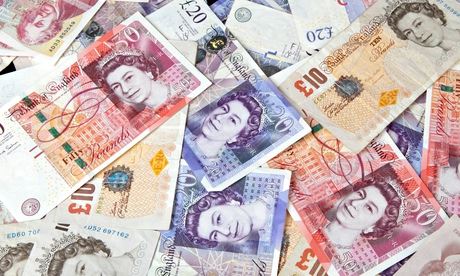
The central bank can print as much money as it wishes.' Photograph: Alamy
The Bank of England's Dose Of Honesty Throws The Theoretical Basis For Austerity Out The Window
Back in the 1930s, Henry Ford is supposed to have remarked that it was a good thing that most Americans didn't know how banking really works, because if they did, "there'd be a revolution before tomorrow morning".
Last week, something remarkable happened. The Bank of England let the cat out of the bag. In a paper called "Money Creation in the Modern Economy", co-authored by three economists from the Bank's Monetary Analysis Directorate, they stated outright that most common assumptions of how banking works are simply wrong, and that the kind of populist, heterodox positions more ordinarily associated with groups such asOccupy Wall Street are correct. In doing so, they have effectively thrown the entire theoretical basis for austerity out of the window.
To get a sense of how radical the Bank's new position is, consider the conventional view, which continues to be the basis of all respectable debate on public policy. People put their money in banks. Banks then lend that money out at interest – either to consumers, or to entrepreneurs willing to invest it in some profitable enterprise. True, the fractional reserve system does allow banks to lend out considerably more than they hold in reserve, and true, if savings don't suffice, private banks can seek to borrow more from the central bank.
The central bank can print as much money as it wishes. But it is also careful not to print too much. In fact, we are often told this is why independent central banks exist in the first place. If governments could print money themselves, they would surely put out too much of it, and the resulting inflation would throw the economy into chaos. Institutions such as the Bank of England or US Federal Reserve were created to carefully regulate the money supply to prevent inflation. This is why they are forbidden to directly fund the government, say, by buying treasury bonds, but instead fund private economic activity that the government merely taxes.
It's this understanding that allows us to continue to talk about money as if it were a limited resource like bauxite or petroleum, to say "there's just not enough money" to fund social programmes, to speak of the immorality of government debt or of public spending "crowding out" the private sector. What the Bank of England admitted this week is that none of this is really true. To quote from its own initial summary: "Rather than banks receiving deposits when households save and then lending them out, bank lending creates deposits" … "In normal times, the central bank does not fix the amount of money in circulation, nor is central bank money 'multiplied up' into more loans and deposits."
In other words, everything we know is not just wrong – it's backwards. When banks make loans, they create money. This is because money is really just an IOU. The role of the central bank is to preside over a legal order that effectively grants banks the exclusive right to create IOUs of a certain kind, ones that the government will recognise as legal tender by its willingness to accept them in payment of taxes. There's really no limit on how much banks could create, provided they can find someone willing to borrow it. They will never get caught short, for the simple reason that borrowers do not, generally speaking, take the cash and put it under their mattresses; ultimately, any money a bank loans out will just end up back in some bank again. So for the banking system as a whole, every loan just becomes another deposit. What's more, insofar as banks do need to acquire funds from the central bank, they can borrow as much as they like; all the latter really does is set the rate of interest, the cost of money, not its quantity. Since the beginning of the recession, the US and British central banks have reduced that cost to almost nothing. In fact, with "quantitative easing" they've been effectively pumping as much money as they can into the banks, without producing any inflationary effects.
What this means is that the real limit on the amount of money in circulation is not how much the central bank is willing to lend, but how much government, firms, and ordinary citizens, are willing to borrow. Government spending is the main driver in all this (and the paper does admit, if you read it carefully, that the central bank does fund the government after all). So there's no question of public spending "crowding out" private investment. It's exactly the opposite.
Why did the Bank of England suddenly admit all this? Well, one reason is because it's obviously true. The Bank's job is to actually run the system, and of late, the system has not been running especially well. It's possible that it decided that maintaining the fantasy-land version of economics that has proved so convenient to the rich is simply a luxury it can no longer afford.
But politically, this is taking an enormous risk. Just consider what might happen if mortgage holders realised the money the bank lent them is not, really, the life savings of some thrifty pensioner, but something the bank just whisked into existence through its possession of a magic wand which we, the public, handed over to it.
Historically, the Bank of England has tended to be a bellwether, staking out seeming radical positions that ultimately become new orthodoxies. If that's what's happening here, we might soon be in a position to learn if Henry Ford was right.
(By David Graeber)
Thursday, April 24, 2014
The Crisis of Civilization
"This civilization in its current form can not survive the 21st Century"
The Crisis of Civilization is a documentary feature film investigating how global crises like ecological disaster, financial meltdown, dwindling oil reserves, terrorism and food shortages are converging symptoms of a single, failed global system.
Directed by Dean Puckett
Animations by Lucca Benney
Based on the Book by Nafeez Mosaddeq Ahmed :http://crisisofcivilization.com/book/
Wednesday, April 02, 2014
U.S. "Stock Market Is Rigged"
Courtesy of: CBS and 60 Minutes
Steve Kroft reports on a new book from Michael Lewis, "Flash Boys," that reveals how a group of unlikely characters discovered how some high speed traders work the stock market to their advantage.
U.S. stock ownership is at a record low and less than half of Americans trust banks and financial services. And in the last two weeks, the New York attorney general and the Commodities Futures Trading Commission in Washington have both launched investigations into high-frequency computerized stock trading that now controls more than half the market.
Tuesday, April 01, 2014
"Spending Money Is Not Speech"
Noam Chomsky: 'Let's Forget Any Pretense of Being a Democratic Society'
Famed linguist, philosopher Noam Chomsky sits down with Abel Collins to talk about money, free speech, McCutcheon vs FEC, and Citizens United in this poignant interview at MIT 10-8-13.
Blog on Huffington Post - http://www.huffingtonpost.com/abel-co...
This video is about 10-8-13 #2 Abel & Noam Interview Part 2 Money as Free Speech Produced by Robert Malin c.2014
Tuesday, October 08, 2013
How The Economic Machine Works
Ray Dalio manages the world's largest hedge fund, Bridgewater Associates.
It has a tremendous track record, so when the man talks about markets, people usually listen.
Beyond that, Dalio is known for having one of the most refined understandings of the economy in the financial industry.
Lots of investors pontificate, but Dalio's views are legitimately well-respected.
As part of his mission to explain how the economy works, Dalio has put together a neat, new 30-minute animated video called "How the Economic Machine Works," where Dalio narrates his big-picture view of the economy.
"I feel a deep sense of responsibility to share my simple but practical economic template," Dalio says. "Though it's unconventional, it's helped me to anticipate and sidestep the financial crisis, and it has worked well for me for over 30 years."
Dalio is worth almost $13 billion, so it's safe to say his economic template has served him well.
Friday, August 09, 2013
Capitalism Has Failed The World
Courtesy Of Al-Jazeera
It seems that mistakes made in Wall Street and the City of London are paid for by people around the world, but can we govern greed within the realm of capitalism or is it all just money down the drain? Is austerity really needed? Can we trust the banks?
Lord Turner said: “I’m not an egalitarian, I’m not a socialist, but I am worried about the sheer extent of the inequality that’s now growing. I think finance is part of that story.”
Lord Turner was at the helm of the UK’s Financial Services Authority (FSA) in the wake of the financial meltdown and is now trying to find ground-breaking solutions to global problems at the Institute of New Economic Thinking. Hasan challenges a man at the heart of rethinking the global economic system about his past experience, his present thoughts, and our future.
“I am concerned that we have not been radical enough in our reform,” concluded Lord Turner.
But he also sounded a note of hope based on some of the new ideas and policies coming out from previously orthodox bastions of economic thinking.
Joining our discussion are: Jon Moulton, a venture capitalist and the founder of the private equity firm Better Capital. He has nurtured a reputation for forthrightness even to point of challenging his private equity peers for abusing tax regimes. He is also one of the few men in the City of London who warned about the impending crash before it happened; Professor Costas Lapavitsas, who teaches economics at the School of Oriental and African Studies (SOAS) at the University of London and is the author of several notable books on the crash and its consequences including Crisis in the Eurozone and Financialisation in Crisis; and Ann Pettifor, the director of PRIME (Policy Research in Macroeconomics),
and a fellow of the New Economics Foundation. She was one of the first to warn about the debt crisis in her bookThe Coming First World Debt Crisis, and is also well-known for her leadership of the successful worldwide campaign to cancel developing world debt - Jubilee 2000.
Saturday, July 13, 2013
Japan Switches To Stimulus and Gets Growth
It's rare to see a macroeconomics experiment play out in real time in the way we are seeing it right now in Japan and in Europe. Prime Minister Shinzō Abe has embarked on aggressive measures to stimulate Japan's long-moribund economy since he took office in December, and the result so far has been strong growth -- and, perhaps, liftoff after a triple-dip recession. Europe, on the other hand, remains mired in the muck of austerity and economic contraction.
To briefly recap Japan's economic woes: the Japanese economy has been largely stagnant for the last two decades.
Since the financial crisis in 2008, it has gone through three bouts of negative growth.

Its economic output per person -- GDP per capita -- was actually lower in 2012 than it was in 2008.
In the economics profession, this is what they refer to in technical terms as "not good."
However, Japan's economy surged in the first quarter of this year, growing at an annualized rate of 3.5 percent. For its part, the Abe administration credits a three-pronged economic strategy, dubbed Abenomics: "unprecedented monetary stimulus, a big boost to government spending, and structural reforms designed to make Japanese industry and institutions more competitive."
Then there's Europe, which refuses to shift away from austerity. Its economy shrank for the sixth consecutive quarter, the longest downturn since World War II.

"The real economy is responding [in Japan]," said Adam S. Posen, president of the Peterson Institute for International Economics in Washington. "The last five months, six months, there's been a mini consumer boom. All the things that people said could never happen in Japan have turned around."
He added: "Japan's central bank is supporting recovery, and it's working. The European Central Bank is supporting stagnation, and it's working."
Some in Europe understand that austerity is not the solution, but rather the problem. Unfortunately, that "some" does not include the people making the decisions:
"'The elites in Europe don't learn,' said Stephan Schulmeister, an economist with the Austrian Institute of Economic Research. 'Instead of saying, Something goes wrong, we have to reconsider or find a different navigation map, change course, instead what happens is more of the same.'"
Schulmeister added that German Chancellor Angela Merkel -- austerity's champion and the one person who could push Europe to change course -- is "not willing to learn" the lesson offered by Japan's recent switch from contraction to growth.
Apparently, Europe (read: Germany) sees austerity as a kind of "morality play" whereby the profligate must suffer for their sins. And yet the people most responsible for Europe's economic crisis -- bankers and politicians -- are the ones suffering the least from austerity. Although unemployment in the eurozone reached a new high in March, you don't see bankers and politicians on the unemployment line. What's really immoral is an austerity policy that punishes the innocent while one guilty party bails out the other.
Regardless of who is hurting, austerity is simply not always the best way to achieve its supposed goal: reducing government deficits. As Europe reminds us, it prevents recession-battered economies from growing. The alternative is to prime the economic pump by having governments engage in fiscal and monetary stimulus.
When economies grow under this approach, Keynesian economists like Paul Krugmanargue, governments collect more in the way of revenues, straightening out their finances faster than they would by reducing their spending. Once a country's economy is again operating at capacity, government should cut spending -- and increase taxes on those who can afford it -- in order to deal with the problem of deficits in a balanced, moral way that neither grievously harms the economically vulnerable nor sacrifices the long-term investments by government that are necessary to further growth over time.
The lessons to be drawn from the recession are counterintuitive. The dominant morality tell us to tighten our belts and save up. But if the government as well as the private sector hoards cash during a recession, the economy slows to a crawl. That is the kind of economic suicide that Europe has leaped into: painful cuts, no growth, and rampant unemployment. America has avoided the worst of Europe's fate thanks in part to the stimulus passed in 2009, and Japan, at last, looks to be hurtling in the opposite direction due to its recent stimulative policies. The key question is whether the pro-austerity politicians who currently control the purse strings in Washington and Brussels will take a hard look at the evidence accumulating around them -- or retreat back into their comfortable, self-righteous views of the world.
John Maynard Keynes, the father of the proactive approach to economic policy that now bears his name, had something to say on this topic as well. Responding to a critic who questioned his shifting position on monetary policy during the Great Depression, the British economist answered: "When my information changes, I alter my conclusions. What do you do, sir?"
Monday, April 29, 2013
BitCoin Explained
By Duncan Elms
A short video looking at 'Bitcoin', a decentralised digital currency.
Directed, Designed and Animated by Duncan Elms - duncanelms.com
Written and Voiced by Marc Fennell - marcfennell.com
This is a personal project done between other jobs. Therefore some of the stats are not up to date. For more info please seeen.wikipedia.org/wiki/Bitcoin
Thursday, March 21, 2013
Currency Wars

It’s Starting To Look A Bit Too Much Like 1931
JOHN HANCOCK warns:
History may not repeat itself, but the parallels between the world economy in the 1930s and the world economy today are becoming hard to ignore. Then, as now, the world was in the grip of a severe economic downturn and painfully high unemployment. Then, as now, governments tried to restore growth and exports by devaluing their currencies and carving out trade blocs, risking a chain reaction around the world. Then, as now, the system was rudderless, unstable, and insecure – which persuaded countries to protect their own national interests, even at the expense of the collective good.
The world has not yet plunged into a full-scale currency war, but the trends are not good. This fact was implicitly acknowledged by G7 finance ministers meeting last Tuesday who went out of their way to renounce “targeting exchange rates,” only to sett off a new and even larger wave of currency volatility. China continues to rebuff pressure to end the fixed and undervalued Yuan, exacerbating global imbalances and fuelling accusations of beggar-thy-neighbour trade strategies. The U.S. continues to drive down the dollar and flood the world with capital through successive rounds of quantitative easing. Brazil, Switzerland, and others continue to intervene aggressively intervene in markets to arrest their currencies from appreciation.

The latest salvo is Japan’s decision in December to pursue a radically expansionary monetary policy, which is both pushing the yen to new lows against all major currencies and dramatically ramping up global currency tensions. Korea is threatening “an active response,” Russia is warning of reciprocal devaluations, Venezuela has just announced a massive devaluation, soon to be followed by Argentina, while the euro zone is again split between France, which is demanding immediate action to weaken a fast-rising euro, and Germany, which is so-far resisting political interference in the European Central Bank. Not without reason, Jens Weidmann, Germany’s Bundesbank president, warned last month that the growing politicization of exchange rate policy was unleashing a global “race to the bottom.”
Recent actions on the trade front, though less volatile, are just as worrying. For the first time in history, the United States and Europe are talking seriously about forming a vast transatlantic free-trade bloc, encompassing half the world’s economic output. This follows the United States’ equally ambitious strategy to link ten or more “like-minded” Pacific Rim economies in a Trans-Pacific Partnership Agreement. Both initiatives are clearly aimed as much at restoring the West’s dwindling leverage vis-à-vis China and other recalcitrant emerging giants as at increasing intra-bloc trade. As Joao Vale de Almeida, the EU’s ambassador to Washington, recently put it, “if we get the [transatlantic] agreement right, we can call the shots around the world.”
These trade trends also have historical echoes. The Great Depression entered its most virulent phase not during the financial crisis of 1929, but during the trade crisis that followed, when the U.S.’s infamous Smoot-Hawley Tariff of 1930 set off an escalating global trade war and splintered the world economy into rival regional blocs. World trade collapsed, falling by an astonishing two-thirds between 1929 and 1932.
To repeat, 2013 is not 1931. Global economic integration is deeper today, trade and capital flows are greater, and governments have less scope to manipulate exchange rates or even tariffs in the face of powerful market forces. Policy-makers have also presumably learned from past mistakes. The current international economic system – composed of the International Monetary Fund, the World Bank, and the World Trade Organization (formerly the General Agreement on Tariffs and Trade) – was specifically designed to prevent a replay of the competitive devaluations and trade battles that caused the economic chaos of the 1930s and, ultimately, the outbreak of war. The fact that G7 finance ministers are clearly conscious of the currency war threat shows that the world has made progress.
Is it enough? In his seminal The World in Depression, Charles Kindleberger argued that the root problem in the 1930s lay less in countries’ “mistakes” than in their collective lack of faith in the possibility of an international solution and the absence of an actor powerful enough to provide leadership. In 1929, the old hegemon, Britain, “couldn’t” stabilize the global economy and the new hegemon, the United States “wouldn’t,” Mr. Kindleberger observed. This left countries scrambling to protect their narrow national interests, with the result that “the world public interest went down the drain, and with it the private interests of all.”
Widespread financial instability and volatility, lack of trust in international co-operation, and a diminishing global hegemon with no obvious successor…it all sounds a little too familiar.
Thursday, January 31, 2013
Iceland: "Let Banks Go Bankrupt"
Iceland Experienced Strong Economic Recovery After Complete Financial Collapse In 2008
Iceland’s President Olafur Ragnar GRIMMSON was interviewed over the weekend (26./27.01.2013) at the World Economic Forum in Davos on why Iceland has enjoyed such a strong recovery after it’s complete financial collapse in 2008, while the rest of the Western world struggles with a recovery that has no clothes.
Grimsson gave a famous reply to the financial MSM reporter, stating that Iceland’s recovery was due to the following primary reason:
„… We were wise enough not to follow the traditional prevailing orthodoxies of the Western financial world in the last 30 years. We introduced currency controls, we let the banks fail, we provided support for the poor, and we didn’t introduce austerity measures like you’re seeing here in Europe. …“
When asked whether Iceland’s policy of letting the banks fail would have worked in the rest of Europe, Grimsson replied:
„… Why are the banks considered to be the holy churches of the modern economy? Why are private banks not like airlines and tele-communication companies and allowed to go bankrupt if they have been run in an irresponsible way? The theory that you have to bail-out banks is a theory that you allow bankers enjoy for their own profit their success, and then let ordinary people bear their failure through taxes and austerity. People in enlightened democracies are not going to accept that in the long
Friday, December 28, 2012
Is The World Abandoning The U.S. Economy?

By Brandon Smith,
Courtesy Of "Alt-Market"
... there is no such thing as an invincible economy, especially if it is predicated on overt debt creation, fiat printing, and reckless foreign policy. When it comes down to the raw data, the American system is just as fragile as any corrupt third world shanty-town nation.
The possibility of a U.S. without financial hegemony is very real. To understand that this possibility exists is one thing; to understand that the process of destabilization has already begun is another. Many analysts with their heads stuck in the mainstream clouds attempt to argue against the “theory” of foreign markets decoupling from the U.S., not realizing that their entire debate platform is pointless because the decoupling is happening right under their noses…
The recent press covering the ongoing plan by BRIC nations (or “BRICS” if you count the latest bilateral agreements with South Africa) to establish their own supranational banking hub merely highlights the fact that developing countries are not simply “talking” about decoupling from the United States, they are taking actions to make it happen:
http://www.bloomberg.com/news/2012-10-16/goldman-sachs-s-o-neill-sees-brics-bank-gathering-momentum-1-.html
The response from mainstream financial analysts is, of course, that the project for a BRIC bank will fail. Their argument, however, usually revolves around the assumption that this new central bank is designed to “compete” with the IMF, and is a merely an overreaction to the IMF and World Bank’s failure to give developing nations more inclusion in decision making processes. I see no evidence that the BRICS are trying to create a counter-system which would conflict with IMF control. Instead, it would seem that the BRICS are much more interested in forcing the issue of greater inclusion, and garnering greater favor within the already existing IMF structure:
http://www.reuters.com/article/2012/04/19/imf-idUSL2E8FJ90K20120419
Last year the G20 discussed heightened participation by China and the BRICS in the IMF’s global basket currency, the SDR. French Finance Minister and later “elected” IMF chief Christine Lagarde agreed with the idea while stating that certain conditions, including appreciation of the Yuan’s value, would have to take place:
http://www.bbc.co.uk/news/business-12905205
Contrary to the belief that the BRICS are building opposition to the IMF, China has on several occasions called for the EXPANSION of the IMF’s power, as well as widespread circulation of the SDR:
http://www.businessweek.com/news/2011-11-03/chinese-president-hu-calls-for-reform-of-imf-sdr-currency-basket.html
How have the MSM talking heads missed this trend? Simply put: Bias, controlled and pre-written talking points from their editors, as well as many half-baked presumptions. The popular belief amongst financial academia is that the IMF is a product of American economic might, and that the organization will do whatever is in the best interests of the U.S. at all times. The reality is that the IMF is fast becoming the central authority of economic operations around the globe, and America just happens to be paying the largest “tithe” to the respective coffers of the banking syndicate. Do you get more control in the operations of the IRS when you pay more taxes?
The IMF’s goal is world centralization of economic control. For them, any sovereign nation is expendable in pursuit of the end game, including the United States. The IMF would not be pushing the issuance of a new world reserve currency to unseat the dollar if they did not intend to follow through, and they certainly would not hobble the greenback if they cared in the slightest about American economic concerns.
Rather than running counter to the IMF, BRIC partners and the newly realized ASEAN bloc are making themselves indispensible to the globalists, ensuring wider partnership in the near future. A BRIC central bank is, I believe, a bargaining chip to be used to open the door to more leadership in the IMF while reducing American influence. To summarize, the BRICS are not in conflict with the IMF, rather, they are in conflict with the U.S., and this conflict is coming to a climax…
Trade amongst BRIC nations continues to climb while exports to the U.S. have diminished. Between 2001 and 2009, exports and imports between BRICS skyrocketed, even amidst the derivatives collapse:
http://www.bbc.co.uk/news/business-13046521
Last year, ASEAN overtook Japan as China’s third largest trading partner. With the announcement of increased participation by Japan in the ASEAN bloc this year, the economic body looks poised to eclipse the U.S. and perhaps even the EU as China’s primary source of export and import business:
http://www.channelnewsasia.com/stories/afp_asiapacific_business/view/1197997/1/.html
Meanwhile, overall exports around the world have dropped for five consecutive months in 2012 on slowing demand in the West. The expectation of a massive resurgence in consumer demand from the U.S. has been proven unfounded, while the recession in the EU is exacerbating the downturn. U.S. exporters, who not long ago held dreams of foreign buyers clamoring for goods in the midst of Federal Reserve inflation and dollar devaluation, have discovered that they are instead floundering:
http://www.nytimes.com/2012/10/23/business/global/chinas-slowing-economy-puts-pressure-on-american-exporters.html?pagewanted=all&_r=1&
The mainstream claim is that this is due to a breakdown in general Chinese demand, but with exponential bilateral trade deals (many of which cut out the U.S. dollar completely as a reserve currency) being made between China and major producing and consuming countries, it is clear that this is not just a demand issue in China; it is an ongoing process of removal of the U.S. from the trading picture. That is to say, China is deliberately reducing purchases of U.S. goods and turning towards BRIC and ASEAN partner countries to fill the void. This may be the reason why China recently surpassed the U.S. as the top sanctuary for foreign investment:
http://online.wsj.com/article/SB10001424052970203406404578074683825139320.html?mod=asia_home
A Treasury report on China’s status as a “currency manipulator” already due but now delayed until after the elections may become the catalyst for the final phase of the global shunning of American markets. With China being presented as a primary issue during the presidential debates, it would seem that regardless of who “wins” the election there will be strain applied to Chinese trade relations.
China’s incredible gold buying extravaganzas over the past few years (including an estimated 500 tons in 2011 and another 500 tons so far in 2012) indicate that they are indeed hedging against what they obviously expect will be devaluation in the dollar or multiple currencies around the world including the dollar. India continues its long tradition of gold buying, while Russia is now increasing its reserves by half-a-billion dollars a month. These are the actions of countries getting ready for a break in the financial system, not a recovery, and certainly not a return to the old days of American consumer bliss.
The argument over whether or not the BRICS and the rest of the world can drop the U.S. economy and move onward has, ultimately, been rendered obsolete. Many will claim that a decoupling is impossible, but the fact remains that a decoupling is taking place. The consequences of this fiscal divorce remain to be seen, and the mainstream could very easily predict disaster for the BRICS. The real question they should be asking themselves, though, is which countries are better placed to survive such an event? Is the U.S. economy really built to withstand a loss of the dollar as the world reserve currency? Is the U.S. prepared for plummeting foreign investment and a reduction in its already dismal production capacity (production taking place by Americans on American soil, that is)? Is the U.S. really ready for extreme inflation in imported goods (most of the goods we consume)? Who really needs who more? It is time for the pundits and average Americans alike to set aside their commercialized and subsidized fake patriotism and question how strong our economy truly is. To ignore vast weakness today, is to feel vast pain tomorrow…
Tuesday, December 18, 2012
The End Of The New World Order

By Seumas Milne
Courtesy Of "The Guardian"
In the late summer of 2008, two events in quick succession signalled the end of the New World Order. In August, the US client state of Georgiawas crushed in a brief but bloody war after it attacked Russian troops in the contested territory of South Ossetia.
The former Soviet republic was a favourite of Washington's neoconservatives. Its authoritarian president had been lobbying hard for Georgia to join Nato's eastward expansion. In an unblinking inversion of reality, US vice-president Dick Cheney denounced Russia's response as an act of "aggression" that "must not go unanswered". Fresh from unleashing a catastrophic war on Iraq, George Bush declared Russia's "invasion of a sovereign state" to be "unacceptable in the 21st century".
As the fighting ended, Bush warned Russia not to recognise South Ossetia's independence. Russia did exactly that, while US warships were reduced to sailing around the Black Sea. The conflict marked an international turning point. The US's bluff had been called, its military sway undermined by the war on terror, Iraq and Afghanistan. After two decades during which it bestrode the world like a colossus, the years of uncontested US power were over.
Three weeks later, a second, still more far-reaching event threatened the heart of the US-dominated global financial system. On 15 September, the credit crisis finally erupted in the collapse of America's fourth-largest investment bank. The bankruptcy of Lehman Brothers engulfed the western world in its deepest economic crisis since the 1930s.
The first decade of the 21st century shook the international order, turning the received wisdom of the global elites on its head – and 2008 was its watershed. With the end of the cold war, the great political and economic questions had all been settled, we were told. Liberal democracy and free-market capitalism had triumphed. Socialism had been consigned to history. Political controversy would now be confined to culture wars and tax-and-spend trade-offs.
In 1990, George Bush Senior had inaugurated a New World Order, based on uncontested US military supremacy and western economic dominance. This was to be a unipolar world without rivals. Regional powers would bend the knee to the new worldwide imperium. History itself, it was said, had come to an end.
But between the attack on the Twin Towers and the fall of Lehman Brothers, that global order had crumbled. Two factors were crucial. By the end of a decade of continuous warfare, the US had succeeded in exposing the limits, rather than the extent, of its military power. And the neoliberal capitalist model that had reigned supreme for a generation had crashed.
It was the reaction of the US to 9/11 that broke the sense of invincibility of the world's first truly global empire. The Bush administration's wildly miscalculated response turned the atrocities in New York and Washington into the most successful terror attack in history.
Not only did Bush's war fail on its own terms, spawning terrorists across the world, while its campaign of killings, torture and kidnapping discredited Western claims to be guardians of human rights. But the US-British invasions of Afghanistan and Iraq revealed the inability of the global behemoth to impose its will on subject peoples prepared to fight back. That became a strategic defeat for the US and its closest allies.
This passing of the unipolar moment was the first of four decisive changes that transformed the world – in some crucial ways for the better. The second was the fallout from the crash of 2008 and the crisis of the western-dominated capitalist order it unleashed, speeding up relative US decline.
This was a crisis made in America and deepened by the vast cost of its multiple wars. And its most devastating impact was on those economies whose elites had bought most enthusiastically into the neoliberal orthodoxy of deregulated financial markets and unfettered corporate power.
A voracious model of capitalism forced down the throats of the world as the only way to run a modern economy, at a cost of ballooning inequality and environmental degradation, had been discredited – and only rescued from collapse by the greatest state intervention in history. The baleful twins of neoconservatism and neoliberalism had been tried and tested to destruction.
The failure of both accelerated the rise of China, the third epoch-making change of the early 21st century. Not only did the country's dramatic growth take hundreds of millions out of poverty, but its state-driven investment model rode out the west's slump, making a mockery of market orthodoxy and creating a new centre of global power. That increased the freedom of manoeuvre for smaller states.
China's rise widened the space for the tide of progressive change that swept Latin America – the fourth global advance. Across the continent, socialist and social-democratic governments were propelled to power, attacking economic and racial injustice, building regional independence and taking back resources from corporate control. Two decades after we had been assured there could be no alternatives to neoliberal capitalism, Latin Americans were creating them.
These momentous changes came, of course, with huge costs and qualifications. The US will remain the overwhelmingly dominant military power for the foreseeable future; its partial defeats in Iraq and Afghanistan were paid for in death and destruction on a colossal scale; and multipolarity brings its own risks of conflict. The neoliberal model was discredited, but governments tried to refloat it through savage austerity programmes. China's success was bought at a high price in inequality, civil rights and environmental destruction. And Latin America's US-backed elites remained determined to reverse the social gains, as they succeeded in doing by violent coup in Honduras in 2009. Such contradictions also beset the revolutionary upheaval that engulfed the Arab world in 2010-11, sparking another shift of global proportions.
By then, Bush's war on terror had become such an embarrassment that the US government had to change its name to "overseas contingency operations". Iraq was almost universally acknowledged to have been a disaster, Afghanistan a doomed undertaking. But such chastened realism couldn't be further from how these campaigns were regarded in the western mainstream when they were first unleashed.
To return to what was routinely said by British and US politicians and their tame pundits in the aftermath of 9/11 is to be transported into a parallel universe of toxic fantasy. Every effort was made to discredit those who rejected the case for invasion and occupation – and would before long be comprehensively vindicated.
Michael Gove, now a Tory cabinet minister, poured vitriol on the Guardian for publishing a full debate on the attacks, denouncing it as a "Prada-Meinhof gang" of "fifth columnists". Rupert Murdoch's Sun damned those warning against war as "anti-American propagandists of the fascist left". When the Taliban regime was overthrown, Blair issued a triumphant condemnation of those (myself included) who had opposed the invasion of Afghanistan and war on terror. We had, he declared, "proved to be wrong".
A decade later, few could still doubt that it was Blair's government that had "proved to be wrong", with catastrophic consequences. The US and its allies would fail to subdue Afghanistan, critics predicted. The war on terror would itself spread terrorism. Ripping up civil rights would have dire consequences – and an occupation of Iraq would be a blood-drenched disaster.
The war party's "experts", such as the former "viceroy of Bosnia" Paddy Ashdown, derided warnings that invading Afghanistan would lead to a "long-drawn-out guerrilla campaign" as "fanciful". More than 10 years on, armed resistance was stronger than ever and the war had become the longest in American history.
It was a similar story in Iraq – though opposition had by then been given voice by millions on the streets. Those who stood against the invasion were still accused of being "appeasers". US defence secretary Donald Rumsfeld predicted the war would last six days. Most of the Anglo-American media expected resistance to collapse in short order. They were entirely wrong.
A new colonial-style occupation of Iraq would, I wrote in the first week of invasion, "face determined guerrilla resistance long after Saddam Hussein has gone" and the occupiers "be driven out". British troops did indeed face unrelenting attacks until they were forced out in 2009, as did US regular troops until they were withdrawn in 2011.
But it wasn't just on the war on terror that opponents of the New World Order were shown to be right and its cheerleaders to be talking calamitous nonsense. For 30 years, the west's elites insisted that only deregulated markets, privatisation and low taxes on the wealthy could deliver growth and prosperity.
Long before 2008, the "free market" model had been under fierce attack: neoliberalism was handing power to unaccountable banks and corporations, anti-corporate globalisation campaigners argued, fuelling poverty and social injustice and eviscerating democracy – and was both economically and ecologically unsustainable.
In contrast to New Labour politicians who claimed "boom and bust" to be a thing of the past, critics dismissed the idea that the capitalist trade cycle could be abolished as absurd. Deregulation, financialisation and the reckless promotion of debt-fuelled speculation would, in fact, lead to crisis.
The large majority of economists who predicted that the neoliberal model was heading for breakdown were, of course, on the left. So while in Britain the main political parties all backed "light-touch regulation" of finance, its opponents had long argued that City liberalisation threatened the wider economy.
Critics warned that privatising public services would cost more, drive down pay and conditions and fuel corruption. Which is exactly what happened. And in the European Union, where corporate privilege and market orthodoxy were embedded into treaty, the result was ruinous. The combination of liberalised banking with an undemocratic, lopsided and deflationary currency union that critics (on both left and right in this case) had always argued risked breaking apart was a disaster waiting to happen. The crash then provided the trigger.
The case against neoliberal capitalism had been overwhelmingly made on the left, as had opposition to the US-led wars of invasion and occupation. But it was strikingly slow to capitalise on its vindication over the central controversies of the era. Hardly surprising, perhaps, given the loss of confidence that flowed from the left's 20th-century defeats – including in its own social alternatives.
But driving home the lessons of these disasters was essential if they were not to be repeated. Even after Iraq and Afghanistan, the war on terror was pursued in civilian-slaughtering drone attacks from Pakistan to Somalia. The western powers played the decisive role in the overthrow of the Libyan regime – acting in the name of protecting civilians, who then died in their thousands in a Nato-escalated civil war, while conflict-wracked Syria was threatened with intervention and Iran with all-out attack.
And while neoliberalism had been discredited, western governments used the crisis to try to entrench it. Not only were jobs, pay and benefits cut as never before, but privatisation was extended still further. Being right was, of course, never going to be enough. What was needed was political and social pressure strong enough to turn the tables of power.
Revulsion against a discredited elite and its failed social and economic project steadily deepened after 2008. As the burden of the crisis was loaded on to the majority, the spread of protests, strikes and electoral upheavals demonstrated that pressure for real change had only just begun. Rejection of corporate power and greed had become the common sense of the age.
The historian Eric Hobsbawm described the crash of 2008 as a "sort of right-wing equivalent to the fall of the Berlin wall". It was commonly objected that after the implosion of communism and traditional social democracy, the left had no systemic alternative to offer. But no model ever came pre-cooked. All of them, from Soviet power and the Keynesian welfare state to Thatcherite-Reaganite neoliberalism, grew out of ideologically driven improvisation in specific historical circumstances.
The same would be true in the aftermath of the crisis of the neoliberal order, as the need to reconstruct a broken economy on a more democratic, egalitarian and rational basis began to dictate the shape of a sustainable alternative. Both the economic and ecological crisis demanded social ownership, public intervention and a shift of wealth and power. Real life was pushing in the direction of progressive solutions.
The upheavals of the first years of the 21st century opened up the possibility of a new kind of global order, and of genuine social and economic change. As communists learned in 1989, and the champions of capitalism discovered 20 years later, nothing is ever settled.
Saturday, December 15, 2012
Prosecuting Wall Street
Why Has Wall Street Not Been Held Accountable For Crimes Connected To The Deepest Recession Since The Great Depression?
Bob Abeshouse writes,
Four years ago on September 15, the New York investment bank Lehman Brothers declared bankruptcy and the financial collapse of 2008 began.
The economic meltdown wiped out more than $11bn of personal wealth in the US, threw millions out of work, and has already resulted in the foreclosure of more than 10 million homes.
Americans across the political spectrum believe that financial executives should have gone to jail for the practices that led to the collapse, but there have been no significant prosecutions. People & Power investigates why Wall Street has not been held accountable for crimes connected to the deepest recession since the Great Depression.
Two government bodies looked into the causes of the meltdown, the Financial Crisis Inquiry Commission and the US Senate's Permanent Subcommittee on Investigations. Both made criminal referrals to the Department of Justice.
But the Department did not prosecute executives from mortgage lenders and banks like Washington Mutual, Countrywide, Deutsch Bank and Goldman Sachs for mortgage origination and securitisation practices that were a focus of the panels' work.
Byron Georgiou, who served on the Financial Crisis Inquiry Commission, says it is "a demonstration of a lack of accountability that is really quite unique in American history".
Chris Swecker, a former assistant FBI director in charge of the Criminal Investigative Division, thinks that the Justice Department has been "timid in approaching prosecutions," and finds it "puzzling".
In order to hold Wall Street accountable, he says: "You have to resource the agencies appropriately, and that really and truly has not been done."
As an assistant FBI director back in 2004, Swecker took the unusual step of issuing a public warning about an epidemic of mortgage fraud in the US his agents had uncovered that he feared could lead to economic calamity. The FBI warning went unheeded by bankers who were bundling up high-risk loans and selling them on Wall Street.
Swecker says: "That's where we start to talk about criminal intent and fraud is knowing full well that there was fraud going on and just turning your back on it and saying, alright, we're going to package this stuff up anyway and we're going to sell it anyway."
Swecker believes that the Justice Department is reluctant to pursue a criminal prosecution unless it is a "slam-dunk" after losing a case in 2009 in which two Bear Stearns hedge fund managers were acquitted of charges that they misled investors about the health of a hedge fund that invested in mortgage-backed securities.
He says the Justice Department has not allocated the resources necessary to prosecuting financial crimes, and that prosecutors are reluctant to go up "against $1,000-an-hour defence attorneys". Swecker also thinks the fact that US Attorney General Eric Holder and Criminal Division Chief Lanny Bruer were white-collar defence attorneys has also had an impact, creating more of a "defence mindset" at the top of the Department that discourages prosecution.
In the late 1980s and 1990s, the US went through a Savings and Loan scandal that cost taxpayers $150bn. The deregulation of the industry enabled bank executives to play fast and loose with federally insured deposits, and led to widespread fraud.
William Black, who played a central role as a senior financial regulator in prosecuting bank executives for fraud during the Savings and Loan crisis, says the impact of the 2008 meltdown "is roughly 70 times larger".
According to Black, we should be seeing an effort to hold financial executives accountable "that is absolutely unparalleled in US history. Instead you are seeing an effort that is considerably smaller than the effort made in the Savings and Loan crisis".
Black, an expert in white collar crime, argues that prosecutors do not understand the connection between the 2008 meltdown and a crime called "accounting control fraud" in which executives who control a company loot it and become rich. Black says "mortgage fraud hyperinflated the housing bubble" that was a main cause of the economic crisis.
So-called liars loans, home mortgages banks made without requiring borrowers to provide income verification, grew by 500 per cent between 2003 and 2006, becoming almost the most common form of home loan in the US.
Liars loans were the perfect ammunition for accounting control fraud, enabling lenders to make up whatever income was needed for a loan to appear safe so that it can be sold into the secondary market for packaging in mortgage-backed securities. The banks grew like crazy by making terrible loans, and executives walked away with millions because of modern compensation structures.
"That's why we say the best way to rob a bank is to own one or control one," Black says. There was fraud all along the chain, from their origination so banks could grow, to sales on Wall Street, Black argues, because once you have got liars loans, "all the sales after that have to hide their terrible quality or nobody is going to buy them".
The Senate Subcommittee on Investigations paid particular attention to transactions by Wall Street banks in the late 2006 and early 2007 period. That is when mortgage defaults spiked and financial executives realised that they faced huge losses if they did not unload their inventories of mortgage-backed securities.
In 2010 public hearings, Senator Carl Levin, the chairman of the Senate Subcommittee, took Goldman Sachs CEO Lloyd Blankfein to task for selling mortgage-backed securities to investors that traders inside the firm called crap, and for betting that they would fail at the same time by taking a short position against the mortgage-backed securities investors.
In August, the Justice Department dropped its criminal investigation of Goldman Sachs, Barack Obama's top corporate donor in 2008.
Sheila Krumholz of the Center for Responsive Politics, which tracks campaign expenditures and lobbying expenditures, says it is hard not to associate "the incredible clout that Goldman Sachs wields in Washington with decisions that favour their interests".
Krumholz says it is both the money and the connections - the financial industry has spent more than $5bn on lobbying and campaign contributions to both Democrats and Republicans in the last decade. And the revolving door means that government officials find it difficult to view the leaders of companies where they have worked or have friends "as being capable of criminal acts".
Former Securities and Exchange Commission investigator Gary Aguirre argues that the main reason there have been no prosecutions is because of the revolving door.
Regulators are reluctant to pursue cases that could cost them a private sector job with a starting salary of $2m - 10 times their salary with the government.
"If you are a team player and these cases don't get brought," he says, "then maybe there'll be room for you at one of the big law firms or Goldman, or one of the big banks."
Steve Bartlett, the CEO of the Financial Services Roundtable, a trade association that represents 100 top financial companies in the US, thinks the Securities and Exchange Commission has done a good job to "identify what went wrong and correct it". The reason there have been no prosecutions, he says, is because there was no criminal wrong-doing, "it’s as simple as that".
Occupy Wall Street activists have been strategising about how to force the issue of prosecuting financial executives onto the 2012 electoral agenda.
"It's so clearly something the American public wants to know about," says Alexis Goldstein, who used to work in finance in New York.
Akshat Tewary of the working group, Occupy the SEC, says the failure to prosecute executives in connection with the meltdown "undermines the legitimacy of our government".
Both are concerned that the statute of limitations for prosecution of federal securities laws, which is six years, could run out without Wall Street being held accountable for the meltdown.
So is Chris Swecker, who believes a major initiative needs to be launched quickly for crimes connected to the 2008 collapse.
"We're in a tough spot," he says, "where essentially some very bad actors are going to skate if we don't put that effort out."
Black sees no chance that a Mitt Romney administration would be more aggressive than that of Obama in prosecuting financial executives. Romney has already raised more than twice as much from Wall Street as Obama.
Both candidates are avoiding the prosecution issue, but Black thinks it needs to be high on the electoral agenda of both parties.
"If elite financial bankers can continue to get away with these kinds of frauds that lead to catastrophic losses and make you wealthy as the CEO simultaneously," he says, "then they'll keep doing it, and they'll do it bigger."
Wednesday, October 17, 2012
Swiss Prepare Army For Euro Zone Fallout

Switzerland launched the military exercise “Stabilo Due” in September to respond to the current instability in Europe and to test the speed at which its army can be dispatched. The country is not a member of the union or among the 17 countries that share the euro.
Swiss newspaper Der Sonntag reported recently that the exercise centered around a risk map created in 2010, where army staff detailed the threat of internal unrest between warring factions as well as the possibility of refugees from Greece, Spain, Italy, France, and Portugal.
The Swiss defense ministry told CNBC that it doesn’t not rule out having to deploy troops in the coming years.
“It's not excluded that the consequences of the financial crisis in Switzerland can lead to protests and violence,” a spokesperson told CNBC.com. “The army must be ready when the police in such cases requests for subsidiary help.”
Some 2,000 troops were part of the drill exercise in eight different towns across the country.
Some 2,000 troops were part of the drill exercise in eight different towns across the country.
Infantry soldiers were used as well as the Air Force and special forces personnel in an assignment that took years to organize.
Quoted in a Schweizer Soldat magazine, Defense Minister Ueli Maurer warned of an escalation of violence in Europe.
"I can’t exclude that in the coming years we may need the army," he said.
According to the minister, under pressure to save, some European countries didn’t renew their armies as they could no longer afford the upkeep of modern systems.
He said that the situation could amplify dramatically, with countries that couldn’t defend themselves facing the possibility of “blackmail.” In the paper, he also asked how long the crisis could be calmed with money alone.
Der Sonntag newspaper also reported that army chief André Blattmann is set to submit a proposal in December to utilize four battalions of military police. This will consist of 1,600 soldiers guarding strategic points in the country including the airport, industrial plants, and the international organizations in Geneva.
Quoted in a Schweizer Soldat magazine, Defense Minister Ueli Maurer warned of an escalation of violence in Europe.
"I can’t exclude that in the coming years we may need the army," he said.
According to the minister, under pressure to save, some European countries didn’t renew their armies as they could no longer afford the upkeep of modern systems.
He said that the situation could amplify dramatically, with countries that couldn’t defend themselves facing the possibility of “blackmail.” In the paper, he also asked how long the crisis could be calmed with money alone.
Der Sonntag newspaper also reported that army chief André Blattmann is set to submit a proposal in December to utilize four battalions of military police. This will consist of 1,600 soldiers guarding strategic points in the country including the airport, industrial plants, and the international organizations in Geneva.
Via: "CNBC"
Tuesday, October 09, 2012
Riots, Terror and Checkpoints
In 2008 the Washington Post published an article titled “Washington’s Future, a History.” The article used the insight of two panels of experts who looked into the future 17 years from 2008. The Post’s article is a “fictional” account of a future Washington D.C. in which “small scale” terror attacks and angry rioters plague the streets and implantable ID chips allow government workers to pass through checkpoints.
Many of the scenarios depicted were foreseen by the alternative media and other well informed researchers well before the Washington Post. It didn’t take a crystal ball or otherworldly powers to discern what was coming. Government white papers and open statements foreshadowed plans for the construction of a surveillance society, a rising police state, and the implementation of martial law as globalization and economic collapse destroyed America.
The events that have transpired since the Post’s publishing of this article have brought visions of a far off future into cold, hard reality. As Homeland Security and other government entities are arming to the teeth, cities are being locked down in response to rising violence, government produced computer viruses are threatening to “blowback” and martial law could be just around the corner.
A 2008 report from the Army War College titled Known Unknowns: Unconventional Strategic Shocks in Defense Strategy Development stated that “Widespread civil violence inside the United States would force the defense establishment to reorient priorities in extremis to defend basic domestic order and human security…” This response would come after “… unforeseen economic collapse, loss of functioning political and legal order…”
[Scenario One]
VIVIAN AND VICTOR VERVER IN MANY WAYS EPITOMIZED THE CAPITAL REGION'S "YO-YO GENERATION." After 9/11 and the next wave of terrorist attacks, motivated at least in part by fear, they moved from their apartment in Crystal City out to the edge of sprawl, to a new townhouse in Stafford County. Then, more than a decade later, they found themselves moving back to the city's core.
Late in the 21st century's second decade, the Ververs settled in Stafford along with many other refugees from Fairfax, Arlington and other close-in suburbs. After years of nationwide economic decline, energy crises and sporadic small-scale terrorist hits, Vivian and Victor's townhouse community filled with people inspired to follow President Heath Shuler's "New Pioneers" call in 2017 for Americans to decentralize, to leave behind the congested and crumbling 1960s suburbs and embark on a massive resettlement of the land beyond the exurbs. Shuler's lure was the great open spaces that were now finally fully linked to AmeriWeb, the wireless information network that extended into every community in the land, the result of the most massive public works project since the construction of the interstate highway system.
Shuler used that public investment to attract private capital, and, together with the nation's governors, he wove land development and job creation ever more tightly together. The private sector now created its own live-work communities, on the model of 19th-century factory towns, where private capital -- and employers' rules -- largely took the place of government investment.
The Second Age of Discovery, as Shuler called it, was designed to spread out the nation's population from the traffic-choked suburbs and therefore ease the road, rail and air gridlock that was strangling the economy. A more widely dispersed population, working in new urban centers such as Fredericksburg, Gainesville, Frederick, Konterra and La Plata, was supposed to strengthen the economy, enhance quality of life, let more people live near their work and bolster Americans' sense of safety in a dangerous world. Politically, AmeriWeb and the push to repopulate rural regions won support from both left and right by emphasizing the tremendous commitment to infrastructure (with millions of resulting jobs) and the strategic importance of dispersing the population and thereby diminishing the impact of any terror attacks. The old anti-sprawl ideology that was at the heart of the turn-of-the-century green movement gradually gave way to a consensus that Americans would never give up their dream of owning a nice piece of land, well separated from the neighbors.
What could be changed was the idea that the only way to keep housing affordable was for workers to live far from their jobs. The new acceptance of a more diffused population didn't do much to preserve open spaces, but Shuler and other politicians sold the idea by dangling before employers and workers alike the carrot of jobs and homes in close proximity. The idea was to engineer a significant drop in driving, which, coupled with striking increases in energy efficiency, would yield sharp declines in consumption of fossil fuels. Alas, as the Ververs would learn, reality did not live up to political rhetoric. Finding a job near home turned out to be harder than the president's pronouncements made it out to be. And, as ocean temperatures continued to drift upward, people worried about increasingly volatile weather. One upside for Washingtonians: January was an average of three degrees warmer than 30 years earlier. Downside: So was August.
As the memory of 9/11 began to fade, the fear that had driven the Ververs and others out of Dodge shifted to a new plane. Sporadic e-attacks hit at the heart of American business and government, causing temporary havoc and instilling a lasting fear that the core of the economy -- the intricate electronic web that enabled a seamless flow of information -- was no longer reliable.
As it has so often in the past, uncertainty proved to be a boon to the Washington region. Just as the District and its suburbs had added more than 100,000 jobs during the homeland security scare of the century's first years, now Washington was emerging as the world capital of cyber security, an industry undergoing explosive growth and helping to change the face of the region. It certainly changed the Ververs' life.
Victor never would have predicted that, by 2025, they'd be in the District, in a new high-rise development built on land that had previously held a federal housing complex. Vivian could hardly believe the view when she first looked out the picture window of their 22nd-story apartment -- a panorama stretching from Homeland Security headquarters high on a bluff over the Anacostia River in Southeast across the city's federal core to the Lincoln Memorial and over the Potomac to the towers of Rosslyn. The lifting of Washington's height restriction in neighborhoods two miles away from the Mall was certainly one factor that drew the Ververs back to the city, but, oddly enough, the main reason they'd returned was the same reason they had fled in the first place -- security.
The Ververs came to feel too isolated, too vulnerable being far from the city, especially now that life online was so uncertain. You never knew when you were being spoofed: tricked with fake news, bogus financial transactions or some new strain of identity breach. Whether it was organized crime, rogue nation states or old-school terrorists messing with the grid, the result was a surprising epiphany: There was both comfort and convenience in urban density. During those weeks when everything virtual was on the fritz, the city suddenly made sense again, just as it had hundreds of years before. Here, it was economical and practical for the government to provide the security, supplies and information that became more scarce as you moved away from the center.
So, like many of their neighbors who decided to join friends and relatives in one of the burgeoning urban centers dotted around the Washington/Baltimore/Richmond metroplex, Victor and Vivian took a hit on the depressed value of their place in Stafford and returned to a Washington they barely recognized. The move felt a little gutsy, but the couple figured that at least one of them would be able to work from home -- especially after Victor, an information-filtering specialist, hooked on with The Network, the Fredericksburg contractor that handles media synthesis and response for the federal government.
Victor was assigned to monitor and massage bloggers and citizen journalists who wrote about and took shots at the feds. Just as the work of journalism had devolved to a ragtag crew of volunteers working out of their cars and bedrooms, now the government was outsourcing much of its effort to communicate with voters, and Victor was supposed to be on round-the-clock patrol to catch any opinion wildfire that might be threatening the policymakers in his assigned sector. All that was easier to do from home than from the small office the agency maintained in Virginia.
Vivian, a teacher, easily found a new job with the Fairfax County schools, which were once again booming with the influx of families from China and India. The new arrivals were spending upwards of $1 million each for EasyIn visas designed to encourage immigration by people with advanced degrees. Vivian was sad to leave behind her students in Prince William County, the closest place she could find to teach when they lived in Stafford. But the new commute to Fairfax proved to be much easier, thanks to the jitney bus services that had developed to ease the pain of the congestion-pricing tolls now imposed on all Potomac River crossings. Besides, Prince William's schools were imploding, losing an entire school's worth of Hispanic students each year as recent immigrants steadily left the county, an exodus fueled by both pressure -- tough enforcement programs aimed at illegal immigrants -- and the lure of the good money back home in Central America, where the service, hospitality and health industries were hungry for workers around the huge retirement colonies filled with septuagenarian boomers from El Norte.
It had been nine years since a small nuclear device had exploded in a truck parked alongside a Manhattan synagogue just before the 2016 presidential election, instantly killing twice as many people as had died in the September 11, 2001, attacks. The Ververs, then still living in a wooded cul-de-sac in Stafford, spent some months glued to the Web site featuring 24-hour radiation maps, not so much out of fear that New York's poisoned air would pose a danger to them, but more out of some nagging, generic anxiety, an unspoken questioning about whether it made sense to invest in home, community and the future when life seemed so very fragile.
The Ververs' neighbors in Stafford County were a mix of retirees, middle-aged couples drifting into third careers, and young idealists who believed that exurbia would be the next frontier, the place where private capital would provide decent roads, schools, jobs and energy.
Alas, it didn't quite work out that way. Jobs didn't always follow residential construction. Families didn't necessarily want to live where they worked. Younger workers found themselves having to construct mega-commutes to Reston, Tysons, Dulles, the burgeoning Greenway Corporate Park, Quantico and Fredericksburg (Northern Virginia's fastest-growing commercial and office center) by some combination of hybrid vans, VRE, Metro and bus rapid transit. The logistics of life seemed too expensive, arduous and time-consuming.
Despite decades of agitation, the Metro system remained stuck in its 20th-century conception. The money for expansion out to new job centers never materialized. The result was a flowering of private bus services, an expansion of bus rapid transit lanes on major roadways and a new wave of sprawl, as employers sought more obscure locations away from the most heavily traveled commuter routes. People like the Ververs found themselves spending four hours a day just getting to and from work in other suburbs.
Although many professionals now had African and Middle Eastern immigrants drive them to and from work so they could be on the job in the car, that was a luxury the Ververs simply could not afford.
The city beckoned. Plug-in hybrid cars had finally caught on, and only the city was equipped with government-subsidized charging stations attached to every parking meter. With gas at $12 a gallon and air travel still trying to rebound from a devastating series of crashes that were blamed on cutbacks in maintenance budgets, the idea of living in a self-sufficient city made more and more sense. (To the great surprise of many, while energy prices soared steadily for almost two decades after the 9/11 attacks, in the past few years the cost of fossil fuels had stabilized. Depending on your political ideology, this was the result of either the Total War for Energy Independence that President Jeb Bush launched in 2021, or of Iran's velvet revolution and the new openness toward the West that the secular-friendly Young Islam movement was exporting across the Middle East.)
The District's tax rates were remarkably low, and crime had fallen as gentrification pushed poor people farther and farther from the region's center, out to where the new subsidized housing was being built. As crime and social ills followed society's least well-educated and -housed members from the city, the District evolved into one of the nation's wealthiest enclaves. The city remained sharply divided between haves and have-nots, but the haves changed their perception of the District as a place that made sense only for the childless.
By focusing on a handful of top-shelf schools that were now privatized or managed by independent nonprofits, the city had satisfied its more affluent residents, even as the remaining poor population struggled in subpar facilities. The Ververs had no kids, and, while they cared about good education, it wasn't a personal priority. Indeed, as more and more people lived longer and worked well into their 80s, the portion of life during which most taxpayers cared deeply about the local schools had diminished, leaving the public schools with precious little in the way of voter support.
Victor, whose mother was Chinese, had been especially attracted to the city's burgeoning Asian American neighborhoods. When they were still debating the move, he often lamented to Vivian that Washington had decent Chinese food, and here they were, living two hours away. Vivian had been less enthusiastic about the idea of moving back inside the Inner Beltway -- where would she work? Before Vivian found the job in Fairfax, Victor had suggested that she might be able to teach at one of the new, private Asian Academies that wealthy Indian, Pakistani, Chinese and Korean Americans had opened to train the children of new immigrants for jobs in the tech, health and communications sectors.
These academic boot camps were springing up to serve immigrants who had been pouring over the Canadian border ever since major U.S. employers and universities had lobbied quietly, and successfully, to deactivate the virtual fences that had been thrown up at the height of the anti-illegal immigration movement. The academies' reputation for excellence grew so quickly that they were filled not only by the children of the new Chinese, Korean and South Asian scientists and other professionals that U.S. firms needed to compete against Asian economies, but also now with more and more affluent non-Asian students. Indeed, some non-Asian families had begun to move to Washington from the suburbs expressly to take advantage of the Asian Academies. That phenomenon created a boom in the teaching field, as well as a subindustry of tutors and prep centers such as the Great Leap Language Institutes that prepared native English speakers for the Academies' entrance exams (the Academies' instruction was primarily conducted in the immigrants' native languages because many of the newcomers intended to send their children back to Asia to launch their careers).
Vivian finally was persuaded to give up her back yard and proximity to the woods where she had loved taking long hikes. But, by moving to the city, at least she and Victor would be an hour closer to the Delaware coast, where they had a friend who had held on to his beachfront condo, even when the feds declared Atlantic Coast properties to be uninsurable after the devastating wave of hurricanes and floods in the 2010s.
They made the move on a blistering May day in 2023. The view -- and the all-solar energy system -- had sold them on their building. They loved the idea of the ground-floor showrooms that the new residential buildings featured -- big, sprawling spaces reminiscent of the department stores of yore, where city dwellers could browse and touch the wares of hundreds of retailers before making their purchases electronically for instant delivery to their apartments. That kind of convenience, plus the prospect of sharing their lives with other smart, creative people, convinced the Ververs that they could be happy in the city.
But a slight unease remained. Washington was still a target. The city was still a place they associated at some level with danger, noise, vermin and class resentments.
Victor overrode the butterflies in his gut, just as he'd overcome his addiction to the attention-boosting pills he'd been provided with each day at lunchtime at his previous job at Listenwell, a Herndon company that supplied employers with intelligence about job applicants' character flaws by searching job seekers' cellphone conversations for troublesome content. (Listenwell was one of the most successful of the giant information-processing firms that sprang to life as two seemingly contradictory legal trends -- the protection of free speech on the Internet and the removal of old barriers to surveillance -- combined to increase the ability of government and the private sector to monitor Americans' activities.)
Victor's concerns about his new home were outweighed by a chance to create a new life, to find a way to live more as his grandparents' generation had -- surrounded by family, friends and people who knew one another's lives and cares, people who found ways to carve out time to just be. Like the kids in high school and on college campuses who were now rebelling against the technology that suffused their education, the Ververs sympathized with the paper nostalgia movement, those Luddites and fuddy-duddies who put out neighborhood newspapers and insisted on writing letters long after the government had sold off the Postal Service to UPS. There was something about those old ways of connecting with other people that reminded Vivian of the quieter, slower life she read about in her "20th-Century Novel" course in college.
So, soon after the Ververs moved into their apartment in Washington, they handed out invitations to their new neighbors to just "come over and hang out" on Friday nights after work. Mostly they got weird looks. Vivian's idea of having adult sleepovers -- all-night movie marathons, a cooking project involving the whole floor -- didn't exactly go over well with folks who wondered whether the Ververs were some kind of political or religious extremists. But the Ververs persisted, and eventually found two like-minded couples, people who had kept their parents' and grandparents' old diaries and occasionally dipped into them to find stories of a time when what your relations and close friends were doing was somehow more important than the latest developments at the office.
Together, the three couples spent their Saturdays down on New York Avenue, queuing up to buy provisions from the Locavore Center, a store that carried only goods grown or created within 100 miles of home. (About the only time the Ververs and their friends left the city on weekends was an occasional jaunt across the Potomac to grab some fried food, which had become awfully hard to secure because of government restrictions on unhealthful cooking methods in the District and Maryland.) Locavore was one of the few remaining stores in town that spurned the trend toward combining retail with entertainment. Ever since Wal-Mart -- desperate to persuade time-starved customers to leave their homes to shop -- began installing gaming parlors, movie theaters, dog-racing tracks and shooting ranges in its stores, retailers had been adding on any attractions they could think of to compete against automated purchase and delivery systems such as Last Shop and TheFlow. Even so, most people took care of life's necessities by subscribing to a retail service that delivered everything on a weekly schedule. On weekends, the affluent stole away to the lifestyle centers that had been built in most urban nodes, places that charged admission and provided the privileged with a demographically calibrated blend of outdoor sports, experiential retailing, medical care, and school and work coaching.
Even if he could afford them, Victor couldn't stomach those places. The prepackaged experience felt false, even cartoonish. He preferred the social connections he and Vivian created on their own -- clumsy and overly purposeful, yes, but nonetheless the beginnings of real community. The close friends they began to gather got them thinking about how they could make this weekend oasis of a few hours the center of their lives. Could they recruit some friends to swim against the currents of an atomized culture? In theory, the density of the city meant more opportunity to connect with others, but, in fact, life seemed to speed up with each passing year -- almost impossibly so.
In a society with only the most tenuous ties to old notions of trust, Vivian thought there was enough latent longing for human connection that people would embrace a way to step out of their media rooms and away from online acquaintances they had never met in person, and find satisfaction just being with others. She decided to offer her services as a trust counselor, advising stressed commuters on how to rebuild bridges to neighbors and extended families, creating the kind of friendships they recalled from childhood.
She started with her own friends, then spread the word at the school where she worked. For this to catch fire, she knew the initial contacts would have to be face-to-face; that was the whole idea, wasn't it? She set out to remind people of those few experiences they had had living in close contact with people other than their nuclear family -- a college dorm, a summer camp, military training. She promised to find ways to recapture some of that magic.
Hardly anyone thought she could do it. But as word spread about Vivian's venture, which she called In the Flesh, a few people actually hired her to consult on their lives. She knew that much of her advice garnered little more than nods and theoretical agreement; sure, her ideas were lovely, but nobody wanted to face the rejection, suspicion and derision that would surely follow the entreaties and invitations Vivian suggested. Couldn't we just discuss this with our online friends, they wondered?
And yet, just as she thought her effort was destined to devolve into one more electronic service, one more site to visit for a facsimile of connection, a strange thing happened. People started to show up at the Ververs' door on Saturday mornings. They just wanted to tag along with Vivian and Victor, to spend the day. What Vivian loved most was when people didn't even text her that they were coming. They just . . . popped by.
[Scenario Two]
THE MILITARY HAD WARNED THAT THE DAYS FOLLOWING THE ASSASSINATION OF AMERICA'S BELOVED TOP GENERAL in the Total War for Energy Independence might be dangerous. A nation in mourning is a nation vulnerable, the Joint Chiefs of Staff had cautioned, and President Jeb Bush had orchestrated an elaborate week of remembrances. Even so, the cyber meltdown that followed a campaign of denial-of-service attacks on Homeland Security headquarters at St. Elizabeths in Southeast Washington struck with thoroughly unexpected force. Within weeks, the pace of the federal exodus from the District had accelerated to a level no study had foreseen. But it wasn't only the billions of dollars in fried electronics and the incalculable loss of data that was driving the relocations. They had begun even earlier, during the difficult days of 2015's Saudi civil war, when the United States suffered scheduled blackouts, alternate-day driving restrictions and spasms of e-terrorism.
Paula Pineiro was tempted to blame the strains and pains of those years on the constant threat of attack, but the reshaping of her life had little to do with terrorism and much to do with heat -- the brutal, relentless steaminess that made life in her District apartment seem like a special kind of hell. As temperatures mounted in urban hot spots, the escalating restrictions placed on air-conditioning use seemed like a targeting of those who couldn't afford to get out of the city.
So, when the jobs started drifting out of town, Paula felt compelled to follow. The federal government had decided it was much cheaper to build new structures using solar-powered water-cooling systems than it would be to retrofit 20th-century buildings downtown, so nearly half the federal agencies were now clustered along the I-95 and Intercounty Connector corridors.
The privatization of the roads and transit lines Paula would have to use to get to Konterra, the nation's burgeoning satellite capital in northwestern Prince George's County, made a commute from Washington all but impossible. Only the top ranks in her agency could possibly afford a long commute during premium-priced rush hour, and Paula could hardly switch to all-night work hours with the kids at home. The drive from Washington to Konterra took long enough; now, the checkpoints at the gateways that controlled movement in and out of the inner District could stretch any workday by two or three hours, especially for people like Paula who still had no security clearance implants and little prospect of being able to afford any.
In this era of e-attacks and cyber meltdowns, energy rationing and angry protests, the path to social and economic mobility was clear: It was all about physical proximity. If you could somehow arrange to live near where you work, get your kids into nearby schools and subscribe to food and other suppliers close to home, you could make it. If not, well, sometimes Paula didn't think there really was a bottom to how far a family could sink these days.
Goodness knows she started out encouraged. A job at the Energy Department's Fossil Fuel Resource Allocation Agency campus in Konterra and the prospect of a place to live in Clarksburg or one of its suburbs -- this was what she'd worked for all these years. Never again would she have to swallow hard and choose the $65 Lexus lane to have any prayer of making it on time. Now, she might even be able to wangle a seat on FedBus, the agency's employees-only transit system that came with the too-good-to-be-true bonus of its own dedicated lane all the way to the new campus.
By joining the move out of the city and into one of the new federal office and residential clusters in Konterra, Hyattsville or Fredericksburg, workers like Paula caught a tax break, too. If your agency relocated for security or energy reasons, you'd be exempted from the federal energy tax, which charged citizens based on the mileage between their home and place of employment.
But the move proved harder than the politicians made it out to be. After all, except for the opening of Montgomery County's agricultural reserve to developers, hardly any private land remained to be turned into housing, and nearly all of the new homes within an affordable commute were being built by employers for their own staffs.
Schools built housing for teachers -- the only way many teachers could afford to work in the Washington area was to live in the new high-rises going up on former playing fields outside many suburban schools. Counties put up communities for their police, fire and other workers. And the feds were busy erecting a new kind of company town -- especially after the Pentagon's decision to close all defense bases inside the Inner Beltway and redevelop them as residential projects.
But the building boom couldn't come close to keeping up with demand, and million-dollar starter townhouses were not in the cards for Paula's family. When she did hear about possible openings near Konterra, what Paula found left her in despair. The new housing looked fine at first, but it quickly became clear that the government's contractors had used low-quality materials. Within a few years, the agency's new headquarters was surrounded by instant slums. Add the continuing power outages and the rapidly diminishing Web access for families that couldn't afford the steep subscription fees, and a community that at first had seemed like a stepladder to mobility began to look more like a place to park society's have-nots.
To her own surprise, Paula was prepared to accept substandard housing if she could get her daughter, Petra, into Konterra's Federal High, one of the top-rated schools for kids heading into the security and information sectors. With so few tuition-free public high schools remaining in or near the city, landing Petra a place at Fed High would be a coup.
Under President Mark Warner's Live-Work-Learn clustering policy, parents and schools alike benefited from powerful incentives to keep children in schools near where their parents worked. But that only jacked up competition for those cherished spots, and the privatized, charter and religious schools gave preference to paying customers and the most gifted students. That left kids like Petra scrambling to find space in an academic public school for fear of landing at one of the government's job-training schools, which so rarely led to real careers.
Petra, being 15, was loath to leave her hard-won place at the District's Wilson High School, which was operated by the American Federation of State, County and Municipal Employees government workers union. She didn't want to give up her post as president of the school's Anti-PED Campaign, which agitated for a return to the days before officially sanctioned performance-enhancing drugs had changed the face of scholastic athletics. But over time, Paula convinced her daughter that a new school would have a far su-perior academic program and more kids like herself. It's not that Petra had anything against the Chinese and Iranian immigrants who dominated Wilson's population; she just sometimes felt excluded from their social circles.
In Konterra, Petra wouldn't be a minority -- no one is. Fed High, like all of Prince George's County, had no dominant racial or ethnic group. And with the entire county school system now operated by Google PeopleShaping, Fed High was free of all No Child Left Behind regulations, free to offer a full range of courses in subjects that the city's schools hadn't taught in decades, such as music and drama. Another advantage of switching schools: By enrolling in a Google-sponsored school, Petra would automatically qualify for one of the new Brin college grants for young women who pledged their intent to bear children -- a policy aimed at relieving the persistent shortage of well-educated, homegrown workers.
Paula wanted all that for her daughter, yet she knew the move would be best of all for her son. Paxten was 12 and big. Already, he'd been caught inside one of the District's fried food speakeasies, where kids found ways around the ban on unhealthful eats in Maryland and the District. And Paula was desperate to find a way to keep Paxten far from the gang battles that too often crossed the river from Virginia, where Salvadoran and Mexican gangs had set up what seemed like a permanent insurrection against state and federal immigration agents. Konterra promised to be a respite from that scene -- a place where the region's biggest employers were determined to develop a new generation of native-born workers who could ease the need to recruit constantly in Asia and Latin America.
Paxten grumbled about having to leave the city and the activities he loved, hanging out at Unicare City, the giant sports-and-healthplex alongside the Anacostia River where the Hogs and D.C. United played at Fenty Field and where much of the city received medical care at Six Flags' Snyder Memorial Hospital. (Paxten's favorite NFL team, finally renamed in 2016, might be hopelessly lackluster on the field, but it would soon be the first professional sports franchise to also act as health insurer for a majority of its fan base.) His mother didn't know it, but Paxten and his friends loved to wander around the mostly abandoned Nationals Park and the ruins of the entertainment complex, despite reports that coyotes had a den in the Nationals' former bullpen. The park had been neglected since Major League Baseball dissolved Washington's team in the second wave of contractions to hit the sport. Once Paxten moved to Konterra, there would be no such chance to roam the city, to think of it as his own playground.
Of course, that's exactly the kind of excessive freedom Paula sought to curb. Maybe she was dreaming, but Paula hoped that, with the whole family spending nearly all its waking hours in the new town, the kids might discover some of the joys of her own childhood -- the simple pleasures of lingering over meals or discovering some new path through the woods. Well, she could dream, couldn't she? Her friends listened to her fantasies about family evenings and weekends, then reminded Paula that the 10-hour workday was now a given, that the supposedly temporary mandatory sixth day of work wasn't going away anytime soon, and that the only reason she still had a federal job was because she had "voluntarily" signed a life contract that would keep her at her desk well into her 70s. As the bosses always said, somebody has to pay for all those boomers in assisted living.
By the time Paula, Petra and Paxten settled in a small, one-bedroom apartment at the edge of Konterra, the family was exhausted. Nervous about their new lives, the three of them sat down over dinner one night and catalogued the changes that defined their days, changes sparked in many cases by the pressures of the dwindling workforce.
After the church in which she'd grown up closed for lack of money and pastors, Paula switched to one of the nondenominational congregations that Wal-Mart had added to many of its retail/social complexes. She got around mainly by bus, but sometimes she drove to the office with a friend who owned one of those cool autonomous vehicles -- self-guided cars that spaced themselves out on the interstates -- that really did take some stress out of commuting. The new "auto-autos" dramatically reduced accidents, despite the growing number of overriders -- those kids who managed to hack their way past the safeguards and take back the authority to drive the cars as they wished, which usually meant too fast. Then there were the national ID cards that, once the controversy died down, really had helped to control the borders, redefine labor markets and reduce health costs. An explosion in the higher education business -- including a wave of expansions of many of the nation's greatest universities, driven by the spike in philanthropy from the new Carnegies, the now-retiring first generation of digital-era billionaires -- bolstered America's position in competition with China and India. And the development of effective antiviral pharmaceuticals by companies along the I-270 corridor had sparked a new wave of innovation and hiring there.
Now, Paula thought, what people needed was a similar set of advances in how to relate to one another -- a way for the most technologically connected generation in history to recapture the human bonds that seemed to dissipate ever since the Internet and video games first drove people to hunker down at home. On good days, Paula liked to think that the pendulum was swinging back toward those old kinds of bonds, first in places like Konterra, where so many functions of life that had once been separate were now blending into one space: The new retail spaces erased old concepts of category, weaving entertainment and socializing into the process of gathering goods, eating and working. The new subscription retailing was catching on in cavernous buildings, old big box stores that had been reconstituted as workspaces. Here, people could spend a good chunk of their day, moving seamlessly from their work pod to take in a movie with a friend, choose the dinner items that would be delivered before they got home, and take care of the day's errands, all while staying in constant touch with colleagues, and all for one monthly Google LifeServices subscription fee.
But that new way of living was something for Paula to observe, not to take part in. Only the top brass could afford LifeServices or any of the other new ways. Yes, Paula Pineiro could escape the city and move closer to the life of those who enjoyed the fruits of change. But actually participating was something that only her children might get to do -- or maybe even that was an unattainable dream.
Footnotes:
1. "The distinction between the private and public sectors will be blurred," says Bobbie Kilberg, president of the Northern Virginia Technology Council. "Basic functions of government will be outsourced."
2. The root desire of the creative class and investors to live in the city will continue to drive increases in urban density, says John Talmage, president of Social Compact, a nonprofit that promotes investment in low-income communities. And in Washington, he believes, the need to compete with other cities and to attract a strong workforce will lead to a lifting of the city's restriction on building heights, at least in the areas outside the federal core. But Stephen Fuller, director of the Center for Regional Analysis at George Mason University, cautions that change comes only slowly and that 80 percent of the region's jobs and 90 percent of its population are in the suburbs. "There's no demand for 50-story buildings," he says. Rather, he says, we will see new urban centers pop up around the region, from Fredericksburg to Konterra Town Center near Laurel.
3. The forces that created sprawl will not change appreciably, Kilberg contends. "I don't believe our transportation infrastructure will ever catch up," she says. "Leesburg will be a close-in community." Verizon's decision to move from Reston to Loudoun County because its workers couldn't afford to live near their office is a symbol of the inexorable push outward. But employers and governments will work together to create more opportunities for people to live near their jobs in those new communities. "There is no Metro 2.0," says Michael Beyard, senior resident fellow for retail and entertainment development at the Urban Land Institute. "Maryland is building light rail; the District is doing streetcars. The little change we will see in transportation infrastructure is totally disconnected."
4. Anxiety and even the reality of terror don't have nearly the impact on people's life decisions that doomsayers believe they do. At the height of the sniper terror in 2002, "housing sales in this region had the best October in history," Fuller says. "Life goes on." Flight from the city just won't happen, argues Beyard. High energy prices and the need to reduce global warming emissions are more likely to push people toward dense urban centers than terrorism is to drive them away. "European cities have lived with terrorism for years and years," he says. "People just get used to it."
5. Our panelists are almost unanimous in declaring that the District's public school system will have to be dissolved, sold off or otherwise disposed of. Not one of our panelists sees much hope for success in the reform efforts ofthe early 21st century. Gary Marx, president of the Center for Public Outreach in Vienna, foresees a decision to shut down industrial-age schools and reinvent education with a heavy emphasis on expanding the ranks of creative workers and diminishing differences across national borders.
6. Beyard and others who study shopping trends see a return to the showrooms of the early days of catalogue shopping, with niche and experiential retailing combining with online commerce to produce retail centers that are as much about entertainment as they are about acquisition. "The next period will be about recapturing the public realm from fear of crime and of people who are different," Beyard says. "The fear that led to gated communities and shopping in enclosed boxes will give way to streets that feel more friendly, safer and more full of cultural experiences."
7. Despite the continued migration of some commerce to the Internet, the number of retail establishments per capita continues to rise, notes Robert Lang, director of the Metropolitan Institute at Virginia Tech's Alexandria campus. "People need to connect," he says. "The more technology permeates our lives, the more people want to be together," says D.C. developer Monty Hoffman. "There is a primal need to socialize."
8. A cyber meltdown is "a real threat," says Suzanne Spaulding, a veteran of the National Commission on Terrorism who served as Mark Warner's adviser on homeland security when he was Virginia's governor. "The Internet will be pinged and hacked and become unreliable." Attacks that disrupt the flow of information could produce a situation "where you can't trust anything; you're constantly being spoofed." The threat of such attacks is likely to create a "burgeoning industry in cyber security" in the Washington area, says Kilberg.
9. Poet and cultural critic E. Ethelbert Miller foresees the core of the District becoming "akin to the Green Zone in Baghdad," a place of such powerful symbolic importance and yet a place under such extreme threat of attack that it is essentially cordoned off from the rest of the country, protected but isolated as nowhere else.
10. A major health or terrorism event is likely to spark new federal or regional taxes, says Fuller. "It has to be something that threatens the suburbs."
11. George Mason University is building housing for its faculty members, and Fairfax and Montgomery counties are exploring using public land to create affordable housing for civil servants, just the beginning of a trend toward a new twist on the factory towns of an earlier time, says Fuller. "The government is the next big player in affordable housing because the government has land," says Hoffman.
12. "This area has the characteristics of Los Angeles," says Lang. "We're the Sunbelt of the Northeast, the most affluent and best-educated area in the country." With students of 140 nationalities at George Mason University, and a thoroughly international workforce in Northern Virginia's tech industry and Montgomery County's biotech corridor, the region's economic needs will outweigh any backlash against increased immigration.
13. Attention-boosting drugs are already here, and other designer pharmaceuticals will slip easily into daily life, our panelists agree. Our chemically enhanced work and leisure hours will coexist with a growing emphasis on locally grown and less industrial foods, at least for the affluent, says Julianne Brienza, founder and executive director of the Capital Fringe Festival.
Also, I'm including the following pdf info:
Many of the scenarios depicted were foreseen by the alternative media and other well informed researchers well before the Washington Post. It didn’t take a crystal ball or otherworldly powers to discern what was coming. Government white papers and open statements foreshadowed plans for the construction of a surveillance society, a rising police state, and the implementation of martial law as globalization and economic collapse destroyed America.
The events that have transpired since the Post’s publishing of this article have brought visions of a far off future into cold, hard reality. As Homeland Security and other government entities are arming to the teeth, cities are being locked down in response to rising violence, government produced computer viruses are threatening to “blowback” and martial law could be just around the corner.
A 2008 report from the Army War College titled Known Unknowns: Unconventional Strategic Shocks in Defense Strategy Development stated that “Widespread civil violence inside the United States would force the defense establishment to reorient priorities in extremis to defend basic domestic order and human security…” This response would come after “… unforeseen economic collapse, loss of functioning political and legal order…”
Recently Congressman Roscoe Bartlett warned American citizens “… to develop an individual emergency plan to prepare for the absence of government assistance for extended periods…”
Much of the Washington Post’s article is not based in science fiction fantasy but in very real trends. Government reports from the United States and United Kingdom have outlined similar scenarios, many of which have already materialized.
Below is the complete "Washington Post" article, which follows fictional characters lives as they travel through the future city:
VIVIAN AND VICTOR VERVER IN MANY WAYS EPITOMIZED THE CAPITAL REGION'S "YO-YO GENERATION." After 9/11 and the next wave of terrorist attacks, motivated at least in part by fear, they moved from their apartment in Crystal City out to the edge of sprawl, to a new townhouse in Stafford County. Then, more than a decade later, they found themselves moving back to the city's core.
Late in the 21st century's second decade, the Ververs settled in Stafford along with many other refugees from Fairfax, Arlington and other close-in suburbs. After years of nationwide economic decline, energy crises and sporadic small-scale terrorist hits, Vivian and Victor's townhouse community filled with people inspired to follow President Heath Shuler's "New Pioneers" call in 2017 for Americans to decentralize, to leave behind the congested and crumbling 1960s suburbs and embark on a massive resettlement of the land beyond the exurbs. Shuler's lure was the great open spaces that were now finally fully linked to AmeriWeb, the wireless information network that extended into every community in the land, the result of the most massive public works project since the construction of the interstate highway system.
Shuler used that public investment to attract private capital, and, together with the nation's governors, he wove land development and job creation ever more tightly together. The private sector now created its own live-work communities, on the model of 19th-century factory towns, where private capital -- and employers' rules -- largely took the place of government investment.
The Second Age of Discovery, as Shuler called it, was designed to spread out the nation's population from the traffic-choked suburbs and therefore ease the road, rail and air gridlock that was strangling the economy. A more widely dispersed population, working in new urban centers such as Fredericksburg, Gainesville, Frederick, Konterra and La Plata, was supposed to strengthen the economy, enhance quality of life, let more people live near their work and bolster Americans' sense of safety in a dangerous world. Politically, AmeriWeb and the push to repopulate rural regions won support from both left and right by emphasizing the tremendous commitment to infrastructure (with millions of resulting jobs) and the strategic importance of dispersing the population and thereby diminishing the impact of any terror attacks. The old anti-sprawl ideology that was at the heart of the turn-of-the-century green movement gradually gave way to a consensus that Americans would never give up their dream of owning a nice piece of land, well separated from the neighbors.
What could be changed was the idea that the only way to keep housing affordable was for workers to live far from their jobs. The new acceptance of a more diffused population didn't do much to preserve open spaces, but Shuler and other politicians sold the idea by dangling before employers and workers alike the carrot of jobs and homes in close proximity. The idea was to engineer a significant drop in driving, which, coupled with striking increases in energy efficiency, would yield sharp declines in consumption of fossil fuels. Alas, as the Ververs would learn, reality did not live up to political rhetoric. Finding a job near home turned out to be harder than the president's pronouncements made it out to be. And, as ocean temperatures continued to drift upward, people worried about increasingly volatile weather. One upside for Washingtonians: January was an average of three degrees warmer than 30 years earlier. Downside: So was August.
As the memory of 9/11 began to fade, the fear that had driven the Ververs and others out of Dodge shifted to a new plane. Sporadic e-attacks hit at the heart of American business and government, causing temporary havoc and instilling a lasting fear that the core of the economy -- the intricate electronic web that enabled a seamless flow of information -- was no longer reliable.
As it has so often in the past, uncertainty proved to be a boon to the Washington region. Just as the District and its suburbs had added more than 100,000 jobs during the homeland security scare of the century's first years, now Washington was emerging as the world capital of cyber security, an industry undergoing explosive growth and helping to change the face of the region. It certainly changed the Ververs' life.
Victor never would have predicted that, by 2025, they'd be in the District, in a new high-rise development built on land that had previously held a federal housing complex. Vivian could hardly believe the view when she first looked out the picture window of their 22nd-story apartment -- a panorama stretching from Homeland Security headquarters high on a bluff over the Anacostia River in Southeast across the city's federal core to the Lincoln Memorial and over the Potomac to the towers of Rosslyn. The lifting of Washington's height restriction in neighborhoods two miles away from the Mall was certainly one factor that drew the Ververs back to the city, but, oddly enough, the main reason they'd returned was the same reason they had fled in the first place -- security.
The Ververs came to feel too isolated, too vulnerable being far from the city, especially now that life online was so uncertain. You never knew when you were being spoofed: tricked with fake news, bogus financial transactions or some new strain of identity breach. Whether it was organized crime, rogue nation states or old-school terrorists messing with the grid, the result was a surprising epiphany: There was both comfort and convenience in urban density. During those weeks when everything virtual was on the fritz, the city suddenly made sense again, just as it had hundreds of years before. Here, it was economical and practical for the government to provide the security, supplies and information that became more scarce as you moved away from the center.
So, like many of their neighbors who decided to join friends and relatives in one of the burgeoning urban centers dotted around the Washington/Baltimore/Richmond metroplex, Victor and Vivian took a hit on the depressed value of their place in Stafford and returned to a Washington they barely recognized. The move felt a little gutsy, but the couple figured that at least one of them would be able to work from home -- especially after Victor, an information-filtering specialist, hooked on with The Network, the Fredericksburg contractor that handles media synthesis and response for the federal government.
Victor was assigned to monitor and massage bloggers and citizen journalists who wrote about and took shots at the feds. Just as the work of journalism had devolved to a ragtag crew of volunteers working out of their cars and bedrooms, now the government was outsourcing much of its effort to communicate with voters, and Victor was supposed to be on round-the-clock patrol to catch any opinion wildfire that might be threatening the policymakers in his assigned sector. All that was easier to do from home than from the small office the agency maintained in Virginia.
Vivian, a teacher, easily found a new job with the Fairfax County schools, which were once again booming with the influx of families from China and India. The new arrivals were spending upwards of $1 million each for EasyIn visas designed to encourage immigration by people with advanced degrees. Vivian was sad to leave behind her students in Prince William County, the closest place she could find to teach when they lived in Stafford. But the new commute to Fairfax proved to be much easier, thanks to the jitney bus services that had developed to ease the pain of the congestion-pricing tolls now imposed on all Potomac River crossings. Besides, Prince William's schools were imploding, losing an entire school's worth of Hispanic students each year as recent immigrants steadily left the county, an exodus fueled by both pressure -- tough enforcement programs aimed at illegal immigrants -- and the lure of the good money back home in Central America, where the service, hospitality and health industries were hungry for workers around the huge retirement colonies filled with septuagenarian boomers from El Norte.
It had been nine years since a small nuclear device had exploded in a truck parked alongside a Manhattan synagogue just before the 2016 presidential election, instantly killing twice as many people as had died in the September 11, 2001, attacks. The Ververs, then still living in a wooded cul-de-sac in Stafford, spent some months glued to the Web site featuring 24-hour radiation maps, not so much out of fear that New York's poisoned air would pose a danger to them, but more out of some nagging, generic anxiety, an unspoken questioning about whether it made sense to invest in home, community and the future when life seemed so very fragile.
The Ververs' neighbors in Stafford County were a mix of retirees, middle-aged couples drifting into third careers, and young idealists who believed that exurbia would be the next frontier, the place where private capital would provide decent roads, schools, jobs and energy.
Alas, it didn't quite work out that way. Jobs didn't always follow residential construction. Families didn't necessarily want to live where they worked. Younger workers found themselves having to construct mega-commutes to Reston, Tysons, Dulles, the burgeoning Greenway Corporate Park, Quantico and Fredericksburg (Northern Virginia's fastest-growing commercial and office center) by some combination of hybrid vans, VRE, Metro and bus rapid transit. The logistics of life seemed too expensive, arduous and time-consuming.
Despite decades of agitation, the Metro system remained stuck in its 20th-century conception. The money for expansion out to new job centers never materialized. The result was a flowering of private bus services, an expansion of bus rapid transit lanes on major roadways and a new wave of sprawl, as employers sought more obscure locations away from the most heavily traveled commuter routes. People like the Ververs found themselves spending four hours a day just getting to and from work in other suburbs.
Although many professionals now had African and Middle Eastern immigrants drive them to and from work so they could be on the job in the car, that was a luxury the Ververs simply could not afford.
The city beckoned. Plug-in hybrid cars had finally caught on, and only the city was equipped with government-subsidized charging stations attached to every parking meter. With gas at $12 a gallon and air travel still trying to rebound from a devastating series of crashes that were blamed on cutbacks in maintenance budgets, the idea of living in a self-sufficient city made more and more sense. (To the great surprise of many, while energy prices soared steadily for almost two decades after the 9/11 attacks, in the past few years the cost of fossil fuels had stabilized. Depending on your political ideology, this was the result of either the Total War for Energy Independence that President Jeb Bush launched in 2021, or of Iran's velvet revolution and the new openness toward the West that the secular-friendly Young Islam movement was exporting across the Middle East.)
The District's tax rates were remarkably low, and crime had fallen as gentrification pushed poor people farther and farther from the region's center, out to where the new subsidized housing was being built. As crime and social ills followed society's least well-educated and -housed members from the city, the District evolved into one of the nation's wealthiest enclaves. The city remained sharply divided between haves and have-nots, but the haves changed their perception of the District as a place that made sense only for the childless.
By focusing on a handful of top-shelf schools that were now privatized or managed by independent nonprofits, the city had satisfied its more affluent residents, even as the remaining poor population struggled in subpar facilities. The Ververs had no kids, and, while they cared about good education, it wasn't a personal priority. Indeed, as more and more people lived longer and worked well into their 80s, the portion of life during which most taxpayers cared deeply about the local schools had diminished, leaving the public schools with precious little in the way of voter support.
Victor, whose mother was Chinese, had been especially attracted to the city's burgeoning Asian American neighborhoods. When they were still debating the move, he often lamented to Vivian that Washington had decent Chinese food, and here they were, living two hours away. Vivian had been less enthusiastic about the idea of moving back inside the Inner Beltway -- where would she work? Before Vivian found the job in Fairfax, Victor had suggested that she might be able to teach at one of the new, private Asian Academies that wealthy Indian, Pakistani, Chinese and Korean Americans had opened to train the children of new immigrants for jobs in the tech, health and communications sectors.
These academic boot camps were springing up to serve immigrants who had been pouring over the Canadian border ever since major U.S. employers and universities had lobbied quietly, and successfully, to deactivate the virtual fences that had been thrown up at the height of the anti-illegal immigration movement. The academies' reputation for excellence grew so quickly that they were filled not only by the children of the new Chinese, Korean and South Asian scientists and other professionals that U.S. firms needed to compete against Asian economies, but also now with more and more affluent non-Asian students. Indeed, some non-Asian families had begun to move to Washington from the suburbs expressly to take advantage of the Asian Academies. That phenomenon created a boom in the teaching field, as well as a subindustry of tutors and prep centers such as the Great Leap Language Institutes that prepared native English speakers for the Academies' entrance exams (the Academies' instruction was primarily conducted in the immigrants' native languages because many of the newcomers intended to send their children back to Asia to launch their careers).
Vivian finally was persuaded to give up her back yard and proximity to the woods where she had loved taking long hikes. But, by moving to the city, at least she and Victor would be an hour closer to the Delaware coast, where they had a friend who had held on to his beachfront condo, even when the feds declared Atlantic Coast properties to be uninsurable after the devastating wave of hurricanes and floods in the 2010s.
They made the move on a blistering May day in 2023. The view -- and the all-solar energy system -- had sold them on their building. They loved the idea of the ground-floor showrooms that the new residential buildings featured -- big, sprawling spaces reminiscent of the department stores of yore, where city dwellers could browse and touch the wares of hundreds of retailers before making their purchases electronically for instant delivery to their apartments. That kind of convenience, plus the prospect of sharing their lives with other smart, creative people, convinced the Ververs that they could be happy in the city.
But a slight unease remained. Washington was still a target. The city was still a place they associated at some level with danger, noise, vermin and class resentments.
Victor overrode the butterflies in his gut, just as he'd overcome his addiction to the attention-boosting pills he'd been provided with each day at lunchtime at his previous job at Listenwell, a Herndon company that supplied employers with intelligence about job applicants' character flaws by searching job seekers' cellphone conversations for troublesome content. (Listenwell was one of the most successful of the giant information-processing firms that sprang to life as two seemingly contradictory legal trends -- the protection of free speech on the Internet and the removal of old barriers to surveillance -- combined to increase the ability of government and the private sector to monitor Americans' activities.)
Victor's concerns about his new home were outweighed by a chance to create a new life, to find a way to live more as his grandparents' generation had -- surrounded by family, friends and people who knew one another's lives and cares, people who found ways to carve out time to just be. Like the kids in high school and on college campuses who were now rebelling against the technology that suffused their education, the Ververs sympathized with the paper nostalgia movement, those Luddites and fuddy-duddies who put out neighborhood newspapers and insisted on writing letters long after the government had sold off the Postal Service to UPS. There was something about those old ways of connecting with other people that reminded Vivian of the quieter, slower life she read about in her "20th-Century Novel" course in college.
So, soon after the Ververs moved into their apartment in Washington, they handed out invitations to their new neighbors to just "come over and hang out" on Friday nights after work. Mostly they got weird looks. Vivian's idea of having adult sleepovers -- all-night movie marathons, a cooking project involving the whole floor -- didn't exactly go over well with folks who wondered whether the Ververs were some kind of political or religious extremists. But the Ververs persisted, and eventually found two like-minded couples, people who had kept their parents' and grandparents' old diaries and occasionally dipped into them to find stories of a time when what your relations and close friends were doing was somehow more important than the latest developments at the office.
Together, the three couples spent their Saturdays down on New York Avenue, queuing up to buy provisions from the Locavore Center, a store that carried only goods grown or created within 100 miles of home. (About the only time the Ververs and their friends left the city on weekends was an occasional jaunt across the Potomac to grab some fried food, which had become awfully hard to secure because of government restrictions on unhealthful cooking methods in the District and Maryland.) Locavore was one of the few remaining stores in town that spurned the trend toward combining retail with entertainment. Ever since Wal-Mart -- desperate to persuade time-starved customers to leave their homes to shop -- began installing gaming parlors, movie theaters, dog-racing tracks and shooting ranges in its stores, retailers had been adding on any attractions they could think of to compete against automated purchase and delivery systems such as Last Shop and TheFlow. Even so, most people took care of life's necessities by subscribing to a retail service that delivered everything on a weekly schedule. On weekends, the affluent stole away to the lifestyle centers that had been built in most urban nodes, places that charged admission and provided the privileged with a demographically calibrated blend of outdoor sports, experiential retailing, medical care, and school and work coaching.
Even if he could afford them, Victor couldn't stomach those places. The prepackaged experience felt false, even cartoonish. He preferred the social connections he and Vivian created on their own -- clumsy and overly purposeful, yes, but nonetheless the beginnings of real community. The close friends they began to gather got them thinking about how they could make this weekend oasis of a few hours the center of their lives. Could they recruit some friends to swim against the currents of an atomized culture? In theory, the density of the city meant more opportunity to connect with others, but, in fact, life seemed to speed up with each passing year -- almost impossibly so.
In a society with only the most tenuous ties to old notions of trust, Vivian thought there was enough latent longing for human connection that people would embrace a way to step out of their media rooms and away from online acquaintances they had never met in person, and find satisfaction just being with others. She decided to offer her services as a trust counselor, advising stressed commuters on how to rebuild bridges to neighbors and extended families, creating the kind of friendships they recalled from childhood.
She started with her own friends, then spread the word at the school where she worked. For this to catch fire, she knew the initial contacts would have to be face-to-face; that was the whole idea, wasn't it? She set out to remind people of those few experiences they had had living in close contact with people other than their nuclear family -- a college dorm, a summer camp, military training. She promised to find ways to recapture some of that magic.
Hardly anyone thought she could do it. But as word spread about Vivian's venture, which she called In the Flesh, a few people actually hired her to consult on their lives. She knew that much of her advice garnered little more than nods and theoretical agreement; sure, her ideas were lovely, but nobody wanted to face the rejection, suspicion and derision that would surely follow the entreaties and invitations Vivian suggested. Couldn't we just discuss this with our online friends, they wondered?
And yet, just as she thought her effort was destined to devolve into one more electronic service, one more site to visit for a facsimile of connection, a strange thing happened. People started to show up at the Ververs' door on Saturday mornings. They just wanted to tag along with Vivian and Victor, to spend the day. What Vivian loved most was when people didn't even text her that they were coming. They just . . . popped by.
[Scenario Two]
THE MILITARY HAD WARNED THAT THE DAYS FOLLOWING THE ASSASSINATION OF AMERICA'S BELOVED TOP GENERAL in the Total War for Energy Independence might be dangerous. A nation in mourning is a nation vulnerable, the Joint Chiefs of Staff had cautioned, and President Jeb Bush had orchestrated an elaborate week of remembrances. Even so, the cyber meltdown that followed a campaign of denial-of-service attacks on Homeland Security headquarters at St. Elizabeths in Southeast Washington struck with thoroughly unexpected force. Within weeks, the pace of the federal exodus from the District had accelerated to a level no study had foreseen. But it wasn't only the billions of dollars in fried electronics and the incalculable loss of data that was driving the relocations. They had begun even earlier, during the difficult days of 2015's Saudi civil war, when the United States suffered scheduled blackouts, alternate-day driving restrictions and spasms of e-terrorism.
Paula Pineiro was tempted to blame the strains and pains of those years on the constant threat of attack, but the reshaping of her life had little to do with terrorism and much to do with heat -- the brutal, relentless steaminess that made life in her District apartment seem like a special kind of hell. As temperatures mounted in urban hot spots, the escalating restrictions placed on air-conditioning use seemed like a targeting of those who couldn't afford to get out of the city.
So, when the jobs started drifting out of town, Paula felt compelled to follow. The federal government had decided it was much cheaper to build new structures using solar-powered water-cooling systems than it would be to retrofit 20th-century buildings downtown, so nearly half the federal agencies were now clustered along the I-95 and Intercounty Connector corridors.
The privatization of the roads and transit lines Paula would have to use to get to Konterra, the nation's burgeoning satellite capital in northwestern Prince George's County, made a commute from Washington all but impossible. Only the top ranks in her agency could possibly afford a long commute during premium-priced rush hour, and Paula could hardly switch to all-night work hours with the kids at home. The drive from Washington to Konterra took long enough; now, the checkpoints at the gateways that controlled movement in and out of the inner District could stretch any workday by two or three hours, especially for people like Paula who still had no security clearance implants and little prospect of being able to afford any.
In this era of e-attacks and cyber meltdowns, energy rationing and angry protests, the path to social and economic mobility was clear: It was all about physical proximity. If you could somehow arrange to live near where you work, get your kids into nearby schools and subscribe to food and other suppliers close to home, you could make it. If not, well, sometimes Paula didn't think there really was a bottom to how far a family could sink these days.
Goodness knows she started out encouraged. A job at the Energy Department's Fossil Fuel Resource Allocation Agency campus in Konterra and the prospect of a place to live in Clarksburg or one of its suburbs -- this was what she'd worked for all these years. Never again would she have to swallow hard and choose the $65 Lexus lane to have any prayer of making it on time. Now, she might even be able to wangle a seat on FedBus, the agency's employees-only transit system that came with the too-good-to-be-true bonus of its own dedicated lane all the way to the new campus.
By joining the move out of the city and into one of the new federal office and residential clusters in Konterra, Hyattsville or Fredericksburg, workers like Paula caught a tax break, too. If your agency relocated for security or energy reasons, you'd be exempted from the federal energy tax, which charged citizens based on the mileage between their home and place of employment.
But the move proved harder than the politicians made it out to be. After all, except for the opening of Montgomery County's agricultural reserve to developers, hardly any private land remained to be turned into housing, and nearly all of the new homes within an affordable commute were being built by employers for their own staffs.
Schools built housing for teachers -- the only way many teachers could afford to work in the Washington area was to live in the new high-rises going up on former playing fields outside many suburban schools. Counties put up communities for their police, fire and other workers. And the feds were busy erecting a new kind of company town -- especially after the Pentagon's decision to close all defense bases inside the Inner Beltway and redevelop them as residential projects.
But the building boom couldn't come close to keeping up with demand, and million-dollar starter townhouses were not in the cards for Paula's family. When she did hear about possible openings near Konterra, what Paula found left her in despair. The new housing looked fine at first, but it quickly became clear that the government's contractors had used low-quality materials. Within a few years, the agency's new headquarters was surrounded by instant slums. Add the continuing power outages and the rapidly diminishing Web access for families that couldn't afford the steep subscription fees, and a community that at first had seemed like a stepladder to mobility began to look more like a place to park society's have-nots.
To her own surprise, Paula was prepared to accept substandard housing if she could get her daughter, Petra, into Konterra's Federal High, one of the top-rated schools for kids heading into the security and information sectors. With so few tuition-free public high schools remaining in or near the city, landing Petra a place at Fed High would be a coup.
Under President Mark Warner's Live-Work-Learn clustering policy, parents and schools alike benefited from powerful incentives to keep children in schools near where their parents worked. But that only jacked up competition for those cherished spots, and the privatized, charter and religious schools gave preference to paying customers and the most gifted students. That left kids like Petra scrambling to find space in an academic public school for fear of landing at one of the government's job-training schools, which so rarely led to real careers.
Petra, being 15, was loath to leave her hard-won place at the District's Wilson High School, which was operated by the American Federation of State, County and Municipal Employees government workers union. She didn't want to give up her post as president of the school's Anti-PED Campaign, which agitated for a return to the days before officially sanctioned performance-enhancing drugs had changed the face of scholastic athletics. But over time, Paula convinced her daughter that a new school would have a far su-perior academic program and more kids like herself. It's not that Petra had anything against the Chinese and Iranian immigrants who dominated Wilson's population; she just sometimes felt excluded from their social circles.
In Konterra, Petra wouldn't be a minority -- no one is. Fed High, like all of Prince George's County, had no dominant racial or ethnic group. And with the entire county school system now operated by Google PeopleShaping, Fed High was free of all No Child Left Behind regulations, free to offer a full range of courses in subjects that the city's schools hadn't taught in decades, such as music and drama. Another advantage of switching schools: By enrolling in a Google-sponsored school, Petra would automatically qualify for one of the new Brin college grants for young women who pledged their intent to bear children -- a policy aimed at relieving the persistent shortage of well-educated, homegrown workers.
Paula wanted all that for her daughter, yet she knew the move would be best of all for her son. Paxten was 12 and big. Already, he'd been caught inside one of the District's fried food speakeasies, where kids found ways around the ban on unhealthful eats in Maryland and the District. And Paula was desperate to find a way to keep Paxten far from the gang battles that too often crossed the river from Virginia, where Salvadoran and Mexican gangs had set up what seemed like a permanent insurrection against state and federal immigration agents. Konterra promised to be a respite from that scene -- a place where the region's biggest employers were determined to develop a new generation of native-born workers who could ease the need to recruit constantly in Asia and Latin America.
Paxten grumbled about having to leave the city and the activities he loved, hanging out at Unicare City, the giant sports-and-healthplex alongside the Anacostia River where the Hogs and D.C. United played at Fenty Field and where much of the city received medical care at Six Flags' Snyder Memorial Hospital. (Paxten's favorite NFL team, finally renamed in 2016, might be hopelessly lackluster on the field, but it would soon be the first professional sports franchise to also act as health insurer for a majority of its fan base.) His mother didn't know it, but Paxten and his friends loved to wander around the mostly abandoned Nationals Park and the ruins of the entertainment complex, despite reports that coyotes had a den in the Nationals' former bullpen. The park had been neglected since Major League Baseball dissolved Washington's team in the second wave of contractions to hit the sport. Once Paxten moved to Konterra, there would be no such chance to roam the city, to think of it as his own playground.
Of course, that's exactly the kind of excessive freedom Paula sought to curb. Maybe she was dreaming, but Paula hoped that, with the whole family spending nearly all its waking hours in the new town, the kids might discover some of the joys of her own childhood -- the simple pleasures of lingering over meals or discovering some new path through the woods. Well, she could dream, couldn't she? Her friends listened to her fantasies about family evenings and weekends, then reminded Paula that the 10-hour workday was now a given, that the supposedly temporary mandatory sixth day of work wasn't going away anytime soon, and that the only reason she still had a federal job was because she had "voluntarily" signed a life contract that would keep her at her desk well into her 70s. As the bosses always said, somebody has to pay for all those boomers in assisted living.
By the time Paula, Petra and Paxten settled in a small, one-bedroom apartment at the edge of Konterra, the family was exhausted. Nervous about their new lives, the three of them sat down over dinner one night and catalogued the changes that defined their days, changes sparked in many cases by the pressures of the dwindling workforce.
After the church in which she'd grown up closed for lack of money and pastors, Paula switched to one of the nondenominational congregations that Wal-Mart had added to many of its retail/social complexes. She got around mainly by bus, but sometimes she drove to the office with a friend who owned one of those cool autonomous vehicles -- self-guided cars that spaced themselves out on the interstates -- that really did take some stress out of commuting. The new "auto-autos" dramatically reduced accidents, despite the growing number of overriders -- those kids who managed to hack their way past the safeguards and take back the authority to drive the cars as they wished, which usually meant too fast. Then there were the national ID cards that, once the controversy died down, really had helped to control the borders, redefine labor markets and reduce health costs. An explosion in the higher education business -- including a wave of expansions of many of the nation's greatest universities, driven by the spike in philanthropy from the new Carnegies, the now-retiring first generation of digital-era billionaires -- bolstered America's position in competition with China and India. And the development of effective antiviral pharmaceuticals by companies along the I-270 corridor had sparked a new wave of innovation and hiring there.
Now, Paula thought, what people needed was a similar set of advances in how to relate to one another -- a way for the most technologically connected generation in history to recapture the human bonds that seemed to dissipate ever since the Internet and video games first drove people to hunker down at home. On good days, Paula liked to think that the pendulum was swinging back toward those old kinds of bonds, first in places like Konterra, where so many functions of life that had once been separate were now blending into one space: The new retail spaces erased old concepts of category, weaving entertainment and socializing into the process of gathering goods, eating and working. The new subscription retailing was catching on in cavernous buildings, old big box stores that had been reconstituted as workspaces. Here, people could spend a good chunk of their day, moving seamlessly from their work pod to take in a movie with a friend, choose the dinner items that would be delivered before they got home, and take care of the day's errands, all while staying in constant touch with colleagues, and all for one monthly Google LifeServices subscription fee.
But that new way of living was something for Paula to observe, not to take part in. Only the top brass could afford LifeServices or any of the other new ways. Yes, Paula Pineiro could escape the city and move closer to the life of those who enjoyed the fruits of change. But actually participating was something that only her children might get to do -- or maybe even that was an unattainable dream.
Footnotes:
1. "The distinction between the private and public sectors will be blurred," says Bobbie Kilberg, president of the Northern Virginia Technology Council. "Basic functions of government will be outsourced."
2. The root desire of the creative class and investors to live in the city will continue to drive increases in urban density, says John Talmage, president of Social Compact, a nonprofit that promotes investment in low-income communities. And in Washington, he believes, the need to compete with other cities and to attract a strong workforce will lead to a lifting of the city's restriction on building heights, at least in the areas outside the federal core. But Stephen Fuller, director of the Center for Regional Analysis at George Mason University, cautions that change comes only slowly and that 80 percent of the region's jobs and 90 percent of its population are in the suburbs. "There's no demand for 50-story buildings," he says. Rather, he says, we will see new urban centers pop up around the region, from Fredericksburg to Konterra Town Center near Laurel.
3. The forces that created sprawl will not change appreciably, Kilberg contends. "I don't believe our transportation infrastructure will ever catch up," she says. "Leesburg will be a close-in community." Verizon's decision to move from Reston to Loudoun County because its workers couldn't afford to live near their office is a symbol of the inexorable push outward. But employers and governments will work together to create more opportunities for people to live near their jobs in those new communities. "There is no Metro 2.0," says Michael Beyard, senior resident fellow for retail and entertainment development at the Urban Land Institute. "Maryland is building light rail; the District is doing streetcars. The little change we will see in transportation infrastructure is totally disconnected."
4. Anxiety and even the reality of terror don't have nearly the impact on people's life decisions that doomsayers believe they do. At the height of the sniper terror in 2002, "housing sales in this region had the best October in history," Fuller says. "Life goes on." Flight from the city just won't happen, argues Beyard. High energy prices and the need to reduce global warming emissions are more likely to push people toward dense urban centers than terrorism is to drive them away. "European cities have lived with terrorism for years and years," he says. "People just get used to it."
5. Our panelists are almost unanimous in declaring that the District's public school system will have to be dissolved, sold off or otherwise disposed of. Not one of our panelists sees much hope for success in the reform efforts ofthe early 21st century. Gary Marx, president of the Center for Public Outreach in Vienna, foresees a decision to shut down industrial-age schools and reinvent education with a heavy emphasis on expanding the ranks of creative workers and diminishing differences across national borders.
6. Beyard and others who study shopping trends see a return to the showrooms of the early days of catalogue shopping, with niche and experiential retailing combining with online commerce to produce retail centers that are as much about entertainment as they are about acquisition. "The next period will be about recapturing the public realm from fear of crime and of people who are different," Beyard says. "The fear that led to gated communities and shopping in enclosed boxes will give way to streets that feel more friendly, safer and more full of cultural experiences."
7. Despite the continued migration of some commerce to the Internet, the number of retail establishments per capita continues to rise, notes Robert Lang, director of the Metropolitan Institute at Virginia Tech's Alexandria campus. "People need to connect," he says. "The more technology permeates our lives, the more people want to be together," says D.C. developer Monty Hoffman. "There is a primal need to socialize."
8. A cyber meltdown is "a real threat," says Suzanne Spaulding, a veteran of the National Commission on Terrorism who served as Mark Warner's adviser on homeland security when he was Virginia's governor. "The Internet will be pinged and hacked and become unreliable." Attacks that disrupt the flow of information could produce a situation "where you can't trust anything; you're constantly being spoofed." The threat of such attacks is likely to create a "burgeoning industry in cyber security" in the Washington area, says Kilberg.
9. Poet and cultural critic E. Ethelbert Miller foresees the core of the District becoming "akin to the Green Zone in Baghdad," a place of such powerful symbolic importance and yet a place under such extreme threat of attack that it is essentially cordoned off from the rest of the country, protected but isolated as nowhere else.
10. A major health or terrorism event is likely to spark new federal or regional taxes, says Fuller. "It has to be something that threatens the suburbs."
11. George Mason University is building housing for its faculty members, and Fairfax and Montgomery counties are exploring using public land to create affordable housing for civil servants, just the beginning of a trend toward a new twist on the factory towns of an earlier time, says Fuller. "The government is the next big player in affordable housing because the government has land," says Hoffman.
12. "This area has the characteristics of Los Angeles," says Lang. "We're the Sunbelt of the Northeast, the most affluent and best-educated area in the country." With students of 140 nationalities at George Mason University, and a thoroughly international workforce in Northern Virginia's tech industry and Montgomery County's biotech corridor, the region's economic needs will outweigh any backlash against increased immigration.
13. Attention-boosting drugs are already here, and other designer pharmaceuticals will slip easily into daily life, our panelists agree. Our chemically enhanced work and leisure hours will coexist with a growing emphasis on locally grown and less industrial foods, at least for the affluent, says Julianne Brienza, founder and executive director of the Capital Fringe Festival.
Also, I'm including the following pdf info:
In 2006, the United Kingdom’s Ministry of Defense published the DCDC Strategic Trends 2007-2036 report, outlining possible scenarios for technology, society and world politics. Among other issues, the 2006 report accurately envisioned a “revolutionary middle class” that would revolt against economic hardship and burdens of debt, and described a future population implanted with brain chips.
Subscribe to:
Posts (Atom)
