Showing posts with label Syria. Show all posts

Thursday, January 29, 2015

The US "Peace Plan" For Syria

JPEG - 16.8 kb
Former commander of NATO forces in Afghanistan, General John R. Allen conspired with General David Petraeus to sabotage the Syria peace plan at the Geneva 1 Conference. President Barack Obama had him placed under surveillance and managed to prevent his appointment as head of NATO. However, he managed to stay in office despite the charges against him (while Petraeus was forced to resign from the leadership of the CIA). Become commander of the anti-Daesh Military Coalition, he supports the shenanigans that General Petraeus leads from the Kohlberg Kravis Roberts Global Institute. He is director of the Center for a New American Security (CNAS), the think tank of "liberal hawks".

When, in 2001, President George W. Bush decided to place Syria on his list of targets to destroy, he had three objectives: 
- Breaking the "Axis of Resistance" and encouraging Israeli expansion;
- Laying hands on the huge gas reserves;
- Reshaping the "Broader Middle East".
Several months ago, I explained that the Daesh project corresponds with the new US map of the division of the Middle East, published by Robin Wright in The New York Times in 2013 [1]. In continuation of the Sykes-Picot, the US plan aimed to further drastically reduce Syria. Also, when the US - after having waited for Daesh to complete the ethnic cleansing in Iraq for which they had been created - began bombing the jihadists, the question arose as to whether the liberated areas of Daesh would or would not be returned to Baghdad and to Damascus.
As the United States has refused to coordinate its military action against Daesh with Syria, and in view of the fact that Russia is preparing a peace conference, "liberal hawks" in Washington have set new goals.
The "peace" plan of the "liberal hawks" consists therefore in achieving the original goals by dividing Syria in two: an area governed by Damascus and another by "moderate rebels" (read: the Pentagon). The Republic is to have the capital and the Mediterranean coast; the Pentagon: the Syrian desert and gas reserves (that is to say the Daesh zone liberated by the bomber raids of General John Allen). According to their own records, "liberal hawks" would leave only 30% of the territory to the Syrian People!
JPEG - 26.2 kb
Remodelling map according Robin Wright
The principle is simple: at present, the Republic controls all major cities except Rakka and a small part of Aleppo, but no one can claim to control a vast desert, neither the government nor the jihadists. So the Pentagon suggests that what is not clearly governed by Damascus rightfully belongs to its mercenaries!

Friday, January 23, 2015

West's Islamic State Focus Neglects Human Tragedy In Syria


Western states are focusing too much on tackling Islamic State and are forgetting the daily suffering of ordinary Syrians in areas of the country where the medical situation has become catastrophic.
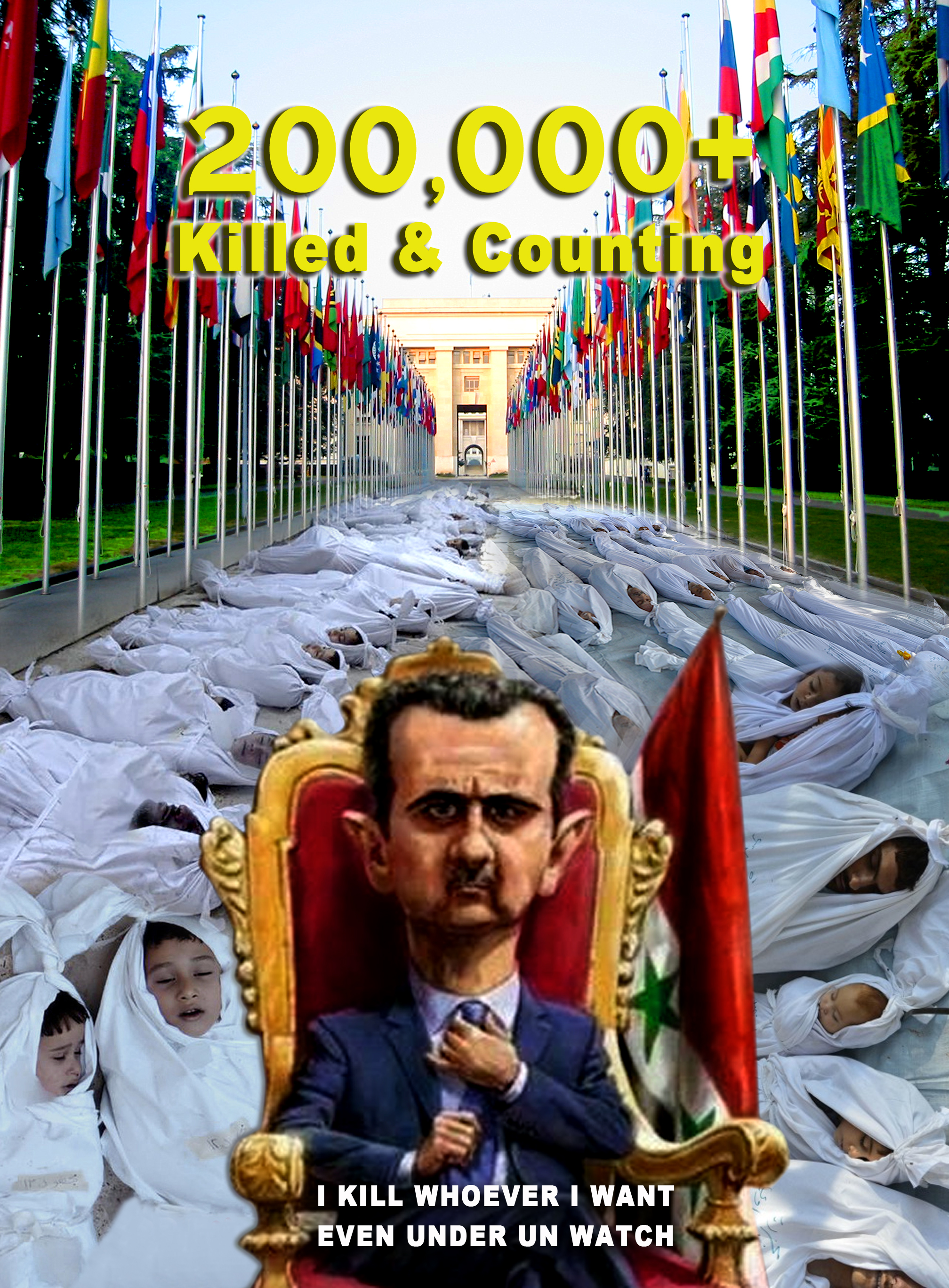
Some 200,000 people have died and nearly half the Syrian population has been displaced by the conflict that began with anti-government protests in 2011 and spiraled into full-scale civil war.
The situation has been exacerbated since a U.S-led coalition began bombing areas of Syria controlled by Islamic State.
"Between 30 to 60 people are dying each day since the bombings started. There is only talk of extremism and Islamic State, but not the women and children who are killed, the bodies torn apart, the stomachs blown open, which is what doctors are dealing with each day."
Said Tawfik Shamaa, spokesman for the Union of Syrian Medical Relief Organisations (UOSSM), a non-governmental association that brings together 14 groups.

The group has about 300 medical posts and 12 dispensaries across Syria, but said its efforts are limited given the lack of medicines, equipment and staff.
"The situation is unbearable, catastrophic," said Obaida al-Moufti, a Franco-Syrian doctor.
One doctor in Aleppo, who gave his name as Abdelaziz, said there were just five functioning hospitals to cater to 360,000 people encircled by government troops.
"There are only 30 doctors of all specialities," he said adding that people were dying of diseases such as cholera, typhoid, scabies and tuberculosis because there were no treatments or vaccines available.
The U.S.- led coalition has backed anti-government rebels to counter Islamic State, but it has not targeted government forces. 
Source: Reuters

Thursday, January 22, 2015

Addition Of Assad's Atrocities To The US Holocaust Museum


No gallery for the 500,000+ Iraqi babies who died due to Western sanctions? Or the 1 million+ Iraqi citizens who've died since 2003? 

No gallery for the Palestinians who've died or been dispossessed since 1947? 

Of course not because these are "our" crimes rather than those committed by people on the official enemies list. 

Posted by Gutenberg

Thursday, November 20, 2014

Jihadis Are Like Jews Who Left For Palestine


The Theme Of The Broadcast Was About Possibly Confiscating The Passports Of Jihadists.


In the interview, Broertjes, a politician for Dutch Labor and former editor-in-chief of the highbrow Volkskrant daily, was asked whether he thought Jihadists who are leaving to fight in Syria and Iraq should be prevented from departing.
He opposed such steps, and added: 
“Dutchmen after World War II went to Israel to fight the English. We didn’t prevent them then.”

Wednesday, November 19, 2014

To Our Countries - لبلادي


لبلادي عمل من إعداد وإنتاج وتنفيذ مجموعة شباب يقيمون في السويد وهم من سوريا و العراق و لبنان و فلسطين. على أمل السلام

To Our Countries is a project produced by a group of youths who live in Sweden and are originally from Syria, Iraq, Lebanon and Palestine.

Sunday, October 05, 2014

All The Ayatollah's Men


Iraq's Shiite Militias Are Becoming As Great A Danger As The Islamic State.

Armed men posing with severed heads, massacres of mosque-goers during Friday prayers, massive reliance on transnational jihadists -- these are crimes that are usually associated with the Islamic State (IS). However, they're also the actions of some of Iraq's growing Shiite militia organizations, which are playing an increasingly prominent role in fighting the Sunni jihadists. These groups, many of which have deep ideological and organizational links to Iran, are sweeping away what is left of any notion of the Baghdad government's authority -- and represent a massive challenge to President Barack Obama's stated goal of working with an inclusive Iraqi government to push back IS.
Over 50 Shiite militias are now recruiting and fighting in Iraq. These groups are actively recruiting -- drawing potential soldiers away from the Iraqi army and police and bringing fighters into highly ideological, anti-American, and rabidly sectarian organizations. Many of these trainees are not simply being used to push back Sunni jihadists, but in many cases form a rear guard used to control districts that are supposedly under Baghdad's control. 
Shiite militias have embedded themselves within the structures of the Iraqi government, which has become far too reliant on their power to contemplate cracking down on them. Together, they have committed horrifying human rights abuses: In early June, Shiite militias, along with Iraqi security forces, reportedly executed around 255 prisoners, including children. An Amnesty International report from June detailed how Shiite militias regularly carried out extrajudicial summary executions, and reported that dozens of Sunni prisoners were killed in government buildings.
The militias also played a leading role in the liberation of the besieged Shiite Turkmen town of Amerli. Kataib Hezbollah, a U.S.-designated terrorist group and direct Iranian proxy, even used Iraqi government helicopters to deliver arms and other supplies during the battle. Just as IS has captured and used U.S.-supplied vehicles, U.S.-made M1A1 Abrams tanks provided to the Iraqi governmenthave flown sectarian Shiite banners and supported Kataib Hezbollah operations. Those tanks are not alone: U.S.-made armored Humvees, which Kataib Hezbollah once targeted during the Iraq War with rocket-propelled grenades (when driven by Americans), have also been taken by the militia and used in operations.
Iran has led the way in developing Iraq's Shiite militias. Since May 2013, Tehran has bolstered its network of new and old Iraqi proxy groups to provide a steady flow of fighters to Syria. Some of these Iraqi forces, who had been fighting on behalf of President Bashar al-Assad's regime, redeployed back to Iraq and form the nucleus of newer militia groups which are currently fighting the Baghdad government's Sunni enemies.
Due to Iran's Syria-focused recruitment efforts, Tehran's proxies also had a leg up on pulling in new fighters for the Iraq front. In April, Iran-backed groups such as Kataib Hezbollah, Badr, and Asaib Ahl al-Haq called for fresh recruits to fight in IraqEventually, these calls morphed into Iraqi Shiite militias spinning off popular committee-based militias under their command. While the creation of so many groups may seem unnecessarily complicated, it actually helps create the image of wide-ranging popular support for militias promoting Iran's policies and ideology. Furthermore, it allows established groups to more easily separate new, less-experienced volunteers from career militiamen.
For example, Kataib Hezbollah -- a militia formed with the help of Lebanon's Hezbollah in 2007 -- recently announced the creation of the Popular Defense Companies. The new group was crafted to take Iraqi Shiite volunteers under Kataib Hezbollah's management, and today it boasts large deployments south of the cities of Baghdad, Diyala, and Amerli.
The Badr Organization, an armed group in the thousands and one of Iran's primary clients in Iraq, is another pillar of Tehran's efforts to develop Shiite militias. During the Iraq War, through its domination of government offices, the group ran a number of sectarian death squads. Badr has also been involved in the fighting in Syria, creatingthe Martyr Baqir al-Sadr Force for that purpose. 
But it is in Baghdad where the Badr Organization's influence is strongest.
The group's sway extends deep into Iraq's Internal Security Forces, where it is said to directly manage many police and special operations-type groups. Badr also has great influence in the political sphere: It has secured key positions within the Iraqi government, and is part of Prime Minister Haider al-Abadi's State of Law alliance -- Abadi even wants to appoint its leader, Hadi al-Amiri, as the country's interior minister. 
Badr's militiamen have spread far and wide among the constellation of Iraq's Iranian proxies. Its alumni include Kataib Hezbollah leaderJamal al-IbrahimiAli al-Yasiri, the leader of a Shiite militia fighting in Syria called the Khurasani Unit; and Wathiq al-Battat, leader of the Mukhtar Army, a hyper-sectarian group that once launched a rocket attack against Iranian dissidents at Camp Liberty.  
Former Badr militiamen are also deeply embedded within Iraq's political leadership. Sheikh Adnan al-Shahmani, an Iraqi parliamentarian and member of the Iraqi parliament's National and Defense Committee, is himself a former Badr fighter and leader of the Tayyar al-Rasuli political party, which also has a militia. As early as September 2013, he had called for sectarian militias to protect Shiites living in Sunni areas. The parent parties of Khurasani Unit and Tayyar al-Rasuli are both members of the State of Law coalition -- portions of a nebula of allied organizations created to impose Iran's will within Iraq.
Iran's most powerful proxies in Iraq have worked closely together to prop up the Assad regime in Damascus. Kataib Hezbollah and Badrformed the Kataib Sayyid al-Shuhada ("The Master of the Martyrs Brigade," or KSS) in early 2013 to fight in Syria. KSS is led in part by Abu Mustafa al-Sheibani, a commander affiliated with both Badr and the Iranian Islamic Revolutionary Guard Corps' Quds Force. The group's secretary-general, Mustafa al-Khazali, deployed to Syria andwas wounded in the suburbs of Damascus.
Now, the commanders who cut their teeth in Syria are returning home to play a political and military role in the struggle for Iraq. Khazali went on to win a seat in parliament during Iraq's parliamentary election in April, when his group took on the role of political party and ran in the city of Basra on then Prime Minister Nouri al-Maliki's State of Law electoral list. KSS commanders are also engaged in fighting against their domestic enemies: Abu Mujahid al-Maliki, a KSS veteran from Syria and Khazali's campaign manager,was killed fighting in Iraq in August.
Asaib Ahl al-Haq ("The League of the Righteous," or AAH) has been another major Iranian proxy in Iraq. The group began during the Iraq War as an Iranian-backed splinter from radical cleric Moqtada al-Sadr's Mahdi Army, and quickly grew into a formidable fighting group. During the war, it gained a degree of infamy for itskidnappings and executions of British contractors and American soldiers. The group has sent many fighters to Syria, and in early 2014started to deploy in Iraq's restive Anbar province to combat the government's Sunni enemies.
The growth of these pro-Iranian Shiite militias, and many more like them, helps demonstrate Iran's goals for the domination of Shiite Iraq. These groups not only benefit from Iran's patronage and organizational capabilities -- they also all march to Tehran's ideological tune. They are loyal to Iran's Supreme Leader Ayatollah Khamenei and Iran's ideology of absolute wilayat-e faqih, which grants the supreme leader ultimate political and religious authority. They also follow the model of Iran's Lebanese proxy, Hezbollah, and are intent on executing Iran's will in the region and furthering Iran's "Islamic Revolution."
Just as IS's stated aim is to erase the borders that were drawn in the Middle East following the end of World War I, Iranian-backed Shiite militias are also taking part in this process. The cross-pollination between Syrian and Iraqi Shiite militias has eroded national boundaries as surely as the Sunni jihadist campaign: From the beginning of their involvement in both conflicts, Shiite militias have adopted a narrative that they will "defend shrines" or "defend Shiites," no matter their geographic location.
Damascus's oldest and most prominent Shiite foreign fighter militia, the Abu Fadl al-Abbas Brigade (LAFA), has played a key role in promoting this grander notion of sectarian war. In August, the pro-Iranian organization announced its own Iraq-based organization, which claims to be deployed south of Baghdad and possibly near Amerli. Abu Ali al-Darraji, one of its former commanders from Damascus, also started his own LAFA affiliate with fighters who had previously been engaged in Syria. Often, these LAFA offshoots have been hazy regarding their own ideology, but their links to Iran's networks certainly suggest that Tehran exerts a strong pull on them.
While Iran has extensive links to most, if not all, of Iraq's Shiite militias, other powerful
Iraqi Shiite elements that do not share Iran's absolutist ideology have also invested in their own groups.
Moqtada al-Sadr's Saraya al-Salam ("The Peace Brigade") was established this June, at around the same time Grand Ayatollah Ali al-Sistani issued a fatwa calling for a jihad against the Islamic State. Sistani's fatwa, however, was clarified to say that Iraqis should join the Iraqi army, whereas the fighters in Sadr's new brigade have no loyalty to Sistani. Nevertheless, with the ability to draw on tens of thousands of Sadrist supporters, Saraya al-Salam certainly will not lack for fighters.
Despite reported cooperation on some levels with Iranian proxies, Sadr's forces have had years of conflict with AAH, Badr, and other groups. Additionally, his political party is currently in an alliance with a political bloc that opposes the State of Law coalition.
When Saraya al-Salam was initially formed, Sadr called for it to engage mainly in defensive actions. In the past month, however, the group has been more heavily invested in offensive actions. Today, its deployments have occurred across Iraq, from the shrine city ofSamarra, to the recently liberated Amerli, to the city of Jurf al-Sakhr, to Diyala in the east. Saraya al-Salaam's large numbers, increasing activity in the conflict, and Mahdi Army background suggest the group could re-engage in sectarian mass killings.
Following Sistani's fatwa, Ammar al-Hakim's Islamic Supreme Council of Iraq (ISCI) established the Ashura Brigades. The group has engaged in recruitment efforts using ISCI's media and political apparatus, and its forces have deployed to Baghdad and Samarra. In July, the group's recruits from the southeastern province of Maysan suffered heavy casualties during fighting in Anbar Province.*
As political and clerical leaders have established their own militias throughout Iraq, fringe groups have at times come in conflict with the government. One of the more unusual cases was that of the marginal Shiite cleric Mahmoud al-Sarkhi. His supporters engaged in firefights with members of Iraq's internal security forces in southern Iraq, resulting in seven deaths. While the example of Sarkhi is unique, the risk of intra-Shiite conflicts rearing their head is very real.
Iraqi Shiite militias are also on a collision course with the Kurdish community, a major U.S. ally in the fight against the Islamic State.Harakat Hizballah al-Nujaba, another Iranian proxy group spun off of AAH, and Kataib Hezbollah both accused Kurdistan President Masoud Barzani of coordinating with IS and Baathist groups, and issued stern warnings against any Kurdish moves in Kirkuk. Harakat Hizballah al-Nujaba's spokesman went so far as to say, "the rockets of the Islamic Resistance will strike at Erbil" if Barzani continued to "coordinate" with the jihadists.
The growing power of these militias is a sign that, despite Maliki's removal as prime minister, the Iraqi government remains beholden to deeply sectarian forces. These militias have generally retained their operational independence from Baghdad, even as they exploit the country's nascent democratic system to gain support through their domination of official bodies. They are not simply addendums to the state -- they are the state, and do not answer to any authority in Baghdad, but only to their own clerical leaders or Tehran.
While ostensibly focused on defeating the Islamic State, these armed factions also promise to be hugely influential in shaping the future of Iraq's Shiite community. Their radical ideology and organizational ties suggest that they will allow Iran a greater influence in Iraq than ever before. If Washington does not take steps now to check their growth, it may discover too late that it has effectively ceded Baghdad to Tehran -- and that there is no going back.

Wednesday, October 01, 2014

Preventing Civilian Casualties Doesn't Cover Iraq & Syria


Above image: U.S. Apache helicopters killing Iraqi civilians after the U.S. had occupied that nation.

The White House has acknowledged for the first time that strict standards President Obama imposed last year to prevent civilian deaths from U.S. drone strikes will not apply to U.S. military operations in Syria and Iraq.
A White House statement to Yahoo News confirming the looser policy came in response to questions about reports that as many as a dozen civilians, including women and young children, were killed when a Tomahawk missile struck the village of Kafr Daryan in Syria's Idlib province on the morning of Sept. 23.
At a briefing for members and staffers of the House Foreign Affairs Committee late last week, Syrian rebel commanders described women and children being hauled from the rubble after a cruise missile destroyed a home for displaced civilians. Images of badly injured children also appeared on YouTube, helping to fuel anti-U.S. protests in a number of Syrian villages last week.
“They were carrying bodies out the rubble. … I saw seven or eight ambulances coming out of there,” said Abu Abdo Salabman, a political member of one of the Free Syria Army factions, who attended the briefing for Foreign Affairs Committee members and staff.


Residents inspect damaged buildings in what activists say was a U.S. strike, in Kfredrian, Idlib province September 23, 2014. (REUTERS/Abdalghne Karoof)

Residents inspect damaged buildings in what activists say was a U.S. strike, in Kfredrian, Idlib province September …
Hayden said that a much-publicized White House policy that President Obama announced last year barring U.S. drone strikes unless there is a “near certainty” there will be no civilian casualties does not cover the current U.S. air strikes in Syria and Iraq.


The “near certainty” standard was intended to apply “only when we take direct action ‘outside areas of active hostilities,’ as we noted at the time,” Hayden said in an email. “That description — outside areas of active hostilities — simply does not fit what we are seeing on the ground in Iraq and Syria right now.” 
The laws of armed conflict prohibit the deliberate targeting of civilian areas and require armed forces to take precautions to prevent inadvertent civilian deaths as much as possible.
But one former Obama administration official said the new White House statement raises questions about how the U.S. intends to proceed in the conflict in Syria and Iraq, and under what legal authorities.


View gallery
.
A man inspects a damaged site in what activists say was a U.S. strike, in Kfredrian, Idlib province September 23, 2014. (REUTERS/Abdalghne Karoof)

A man inspects a damaged site in what activists say was a U.S. strike, in Kfredrian, Idlib province September 23, …


“They seem to be creating this grey zone” for the conflict, said Harold Koh, who served as the State Department’s top lawyer during President Obama’s first term. “If we’re not applying the strict rules [to prevent civilian casualties] to Syria and Iraq, then they are of relatively limited value."
The issue arose during last week’s briefing for two House Foreign Affairs Committee members and two staffers when rebel leaders associated with factions of the Free Syria Army complained about the civilian deaths — and the fact that the targets were in territory controlled by the Nusra Front, a sometimes ally of the U.S.-backed rebels in its war with the Islamic State and the Syrian regime.
But at least one of the House members present, Rep. Adam Kinzinger, an Illinois Republican who supports stronger U.S. action in Syria, said he was not overly concerned
“I did hear them say there were civilian casualties, but I didn’t get details,” Kinzinger said in an interview with Yahoo News. “But nothing is perfect,” and whatever civilian deaths resulted from the U.S. strikes are “much less than the brutality of the Assad regime.”
Source: Yahoo News

Sunday, September 28, 2014

Clear As Mud

Null

Are you confused by what's going on in the Middle East? 

Let me explain:

We support the Iraqi government in the fight against the Islamic State. We don't like IS, but IS is supported by Saudi Arabia, whom we do like.

We don't like President Assad in Syria. We support the fight against him, but not IS, which is also fighting against him. 

We don't like Iran, but Iran supports the Iraqi government against IS. 

So, some of our friends support our enemies and some of our enemies are fighting against our other enemies, whom we want to lose, but we don't want our enemies who are fighting our enemies to win. 

If the people we want to defeat are defeated, they might be replaced by people we like even less. 

And all this was started by us invading a country to drive out terrorists who weren't actually there until we went to drive them out. 

Do you understand now?

By Aubrey Bailey,
Fleet, Hants.

Transcribed by: CZ

Sunday, June 22, 2014

Iraq’s Iranian Ruler: General Qasem Soleimani


"He is the most powerful man in Iraq without question, Nothing gets done without him."

[Iraq's former national security minister, Mowaffak al-Rubaie, told the newspaper al-Sharq al-Awsat]

Soleimani is in charge of Iran's foreign policy in the following nations: Lebanon, Iraq, Afghanistan, Iraq and Syria. He is the commander of the "Quds Force" which are part of Iran's Revolutionary Guards Corps.

He has deployed 3 battalions of Quds Force to Iraq. Each battalion is 500 men and above.

Soleimani always resorts to the military option, instead of a peaceful political resolution to solve any problem.

Which ever nation he is interferes in, destabilization, death, destruction and terror follows. 

Thursday, March 13, 2014

What If London Was Syria?


London-based Save The Children just released this powerful PSA to raise awareness about the millions of children affected by the crisis in Syria. The PSA follows a young girl one second a day for one year, and imagines what the crisis in Syria would look like if it were to happen in the UK.

Find out more at http://bit.ly/3yearson

Monday, December 16, 2013

Syria: Shia Are Killing Us


Witness the brutality and cruelty that the Alawites of Syria, with aid from Iran's Shia, have subjected the Sunni's of Syria to.

Friday, November 08, 2013

Israeli Factor In Syrian Conflict Unveiled


Their "Plan A" was to enforce a change in the Syrian regime as their "big prize" and replace it by another less threatening and more willing to strike a "peace deal" with Israel and in case of failure, which is the case as developed now, their "Plan B" was to pursue a "lesser prize" by disarming Syria of its chemical weapons to deprive it of its strategic defensive deterrence against ... 

By Nicola Nasser

More than two and a half years on, Israel's purported neutrality in the Syrian conflict and the United State's fanfare rhetoric urging a "regime change" in Damascus were abruptly cut short to unveil that the Israeli factor has been all throughout the conflict the main concern of both countries.

All their media and political focus on "democracy versus dictatorship" and on the intervention of the international community on the basis of a "responsibility to protect" to avert the exacerbating "humanitarian crisis" in Syria was merely a focus intended to divert the attention of the world public opinion away from their real goal, i.e. to safeguard the security of Israel.

Their "Plan A" was to enforce a change in the Syrian regime as their "big prize" and replace it by another less threatening and more willing to strike a "peace deal" with Israel and in case of failure, which is the case as developed now, their "Plan B" was to pursue a "lesser prize" by disarming Syria of its chemical weapons to deprive it of its strategic defensive deterrence against the Israeli overwhelming arsenal of nuclear, chemical and biological weapons of mass destruction. Their "Plan A" proved a failure, but their "Plan B" was a success.

However, the fact that the Syrian humanitarian crisis continues unabated with the raging non - stop fighting while the United States is gradually coming to terms with Syria's major allies in Russia and Iran as a prelude to recognizing the "legitimacy" of the status quo in Syria is a fact that shutters whatever remains of U.S. credibility in the conflict.

President Barak Obama, addressing the UN General Assembly on last September 24, had this justification: "Let us remember that this is not a zero-sum endeavor. We are no longer in a Cold War. There's no Great Game to be won, nor does America have any interest in Syria beyond the well-being of its people, the stability of its neighbors, the elimination of chemical weapons, and ensuring it does not become a safe-haven for terrorists. I welcome the influence of all nations that can help bring about a peaceful resolution."

This U - turn shift by the U.S. dispels any remaining doubts that the U.S. ever cared about the Syrian people and what Obama called their "well being."

The U.S. pronounced commitment to a "political solution" through co-sponsoring with Russia the convening of a "Geneva - 2" conference is compromised by its purported inability to unite even the "opposition" that was created and sponsored by the U.S. itself and the "friends of Syria" it leads and to rein in the continued fueling of the armed conflict with arms, money and logistics by its regional Turkish and Gulf Arabs allies, which undermines any political solution and render the very convening of a "Geneva - 2" conference a guess of anybody.

Israeli "Punishment"

Meanwhile, Israel's neutrality was shuttered by none other than its President Shimon Peres.

Speaking at the 40th commemoration of some three thousand Israeli soldiers who were killed in the 1973 war with Syria and Egypt, Peres revealed unarguably that his state has been the major beneficiary of the Syrian conflict.

Peres said: "Today" the Syrian President Basher al-Assad "is punished for his refusal to compromise" with Israel and "the Syrian people pay for it."

When it became stark clear by the latest developments that there will be no "regime change" in Syria nor there will be a post- Assad "Day After" and that the U.S. major guarantor of Israel's survival has made, or is about to make, a "U-turn" in its policy vis-ˆ-vis the Syrian conflict to exclude the military solution as "unacceptable," in the words of Secretary of State John Kerry on this October 6, Israel got impatient and could not hide anymore the Israeli factor in the conflict. 


On last September 17, major news wires headlined their reports, "In public shift, Israel calls for Assad's fall," citing a report published by the Israeli daily the Jerusalem Post, which quoted Israel's ambassador to the United States, Michael Oren, as saying: "We always wanted Bashar Assad to go, we always preferred the bad guys who weren't backed by Iran to the bad guys who were backed by Iran."

"The greatest danger to Israel is by the strategic arc that extends from Tehran, to Damascus to Beirut. And we saw the Assad regime as the keystone in that arc," Oren added.

And that's really the crux of the Syrian conflict: Dismantling this "arc" has been all throughout the conflict the pronounced strategy of the U.S.-led so-called "Friends of Syria," who are themselves the friends of Israel.

The goal of this strategy has been all throughout the conflict to change the regime of what Oren called the Syrian "keystone in that arc," which is supported by a pro-Iran government in Iraq as well as by the Palestinian liberation movements resisting the more than sixty decades of Israeli military occupation, or otherwise to deplete Syria's resources, infrastructure and power until it has no choice other than the option of yielding unconditionally to the Israeli terms and conditions of what Peres called a "compromise" with Israel as a precondition for the return of the Israeli-occupied Syrian Golan Heights.

Syria The Odd Number

This strategic goal was smoke-screened by portraying the conflict first as one of a popular uprising turned into an armed rebellion against a dictatorship, then as a sectarian "civil war," third as a proxy war in an Arab-Iranian and a Sunni-Shiite historical divide, fourth as a battle ground of conflicting regional and international geopolitics, but the Israeli factor has been all throughout the core of the conflict.

Otherwise why should the U.S.-led "Friends of Syria & Israel" care about the ruling regime in a country that is not abundant in oil and gas, the "free" flow of which was repeatedly pronounced a "vital" interest of the United States, or one of what Obama in his UN speech called his country's "core interests;" the security of Israel is another "vital" or "core" interest, which, in his words, "The United States of America is prepared to use all elements of our power, including military force, to secure."

The end of the Cold War opened a "window of opportunities" to build on the Egyptian - Israel peace treaty, according to a study by the University of Oslo in 1997. A peace agreement was signed between the Palestine Liberation Organization (PLO) and the Hebrew state in 1993 followed by an Israeli-Jordanian peace treaty the year after. During its invasion of Lebanon in 1982 Israel tried unsuccessfully to impose on the country a similar treaty had it not been for the Syrian "influence," which aborted and prevented any such development ever since.

Syria remains the odd number in the Arab peace - making belt around Israel; no comprehensive peace is possible without Syria; Damascus holds the key even to the survival of the Palestinian, Jordanian and Egyptian peace accords with Israel. Syria will not hand over this key without the withdrawal of the Israeli Occupation Forces (IOF) from Syrian and other Arab lands and a "just" solution of the "Palestinian question."

This has been a Syrian national strategy long before the Pan-Arab Baath party and the al-Assad dynasty came to power.

Therefore, the U.S. and Israeli "Plan A" will remain on both countries' agendas, pending more forthcoming geopolitical environment.

Friday, October 11, 2013

Hezbollah Executes Wounded Syrian Rebels


The video shows armed men in fatigues, at least one wearing the yellow arm band sported by the Lebanese Shiite movement, dragging several bloodied men out of a van and shooting them dead.
The men speak in the Lebanese dialect of Arabic, and at the end of the video one man calls them over, saying: "One moment, one moment. We are doing our duty, not avenging ourselves."
The others call out: "For the sake of God, for the sake of God."
Hezbollah declined to comment on it.
Al-Arabiya television said it may have been filmed during the battle for Qusayr, a strategic Syrian town near the Lebanese border that Syrian troops recaptured from rebels with the help of Hezbollah earlier this year.
Hassan Nasrallah and his Hezbollah have lambasted Syria's "Sunni takfiri fighter's" for the atrocities they committed against pow's, wounded soldiers and civilians, and that they supposedly held the moral high ground in that area, but this video proves that they are no better.

Thursday, October 10, 2013

الديك


Poem by نزار قباني

في حارتنا ديك سادي سفاح
ينتف ريش دجاج الحارة كل صباح
ينقرهن, يطاردهن, يضاجعهن
ولا يتذكرأسماء الصيصان

في حارتنا ديك يصرخ عند الفجر
كشمشون الجبار
يطاق لحيته الحمراءويقمعنا ليل نهار
يخطب فينا, ينشد فينايسدي فينا
فهو الخالد وهو القادر الجبار

في حارتنا ثمة ديك
عدواني فاشستي نازي الأفكار
سرق السلطة بالدبابة

ألقى القبض على الحرية والأحرار
الغى وطنا ألغى شعبا
الغى لغة الغى أحداث التاريخ
الغى ميلاد الأطفال
والغى اسماء الأزهار

في حارتنا ديك يلبس في العيد القومي لباس الجنرالات
يأكل جنسا يشرب جنسا يسكر جنسا
يركب سفنا من أجساد 
يهزم جيشا من حلمات 

في حارتنا ديك من أصل عربي
فتح الكون بآلاف الزوجات

في حارتنا ثمة ديك أمي
يرأس احدى الميليشيات
لم يتعلم الا الغزو والا الفتك 
والا زرع حشيش الكيف وتزوير العملات
كان يبيع ثياب أبيه
ويرهن خاتمه الزوجي 
ويسرق حتى أسنان الأموات

في حارتنا ديك كل مواهبه
أن يطلق النار من مسدسه الحربي على الكلمات

في حارتنا ديك عصبي مجنون
يخطب يوما كالحجاج
ويمشي زهوا كالمأمون
يصرخ من مأذنة الجامع
يا سبحاني يا سبحاني
فأنا الدولة والقانون

كيف سيأتي الغيث الينا
كيف سينمو القمح 
وكيف يفيض علينا الخير
وتغمرنا البركة
هذا وطن لا يحكمه الله 
وانما تحكمه الديكة

في بلدتنا يذهب ديك يأتي ديك
و الطغيان هو الطغيان
يسقط حكم لينيني 
يهجم حكم أمريكي
والمسحوق هو الانسان

حين يمر الديك بسوق القرية
مزهوا منفوش الريش
وعلى كتفيه تضيء نياشين التحرير
يصرخ كل دجاج القرية في اعجاب
يا سيدنا الديك, يا مولانا الديك
يا جنرال الجنس ويا فحل الميدان
أنت حبيب ملايين النسوان
هل تحتاج الى جارية؟
هل تحتاج الى خادمة؟
هل تحتاج الى تدليك؟

حين الحاكم سمع القصة
أصدر أمرا للسياف
بذبح الديك
قال بصوت غاضب:
كيف تجرّأ ديك من أولاد الحارة
أن ينتزع السلطة مني
كيف تجرأ هذا الديك
وأنا الواحد دون شريك