Showing posts with label ISIS (Islamic State In Iraq and Sham). Show all posts

Sunday, February 08, 2015

Comparing Israel To ISIS


"{ISIS'] quest for an ethnically pure Sunni state mirrors the quest for a Jewish state eventually carved out of Palestine in 1948. Its tactics are much like those of the Jewish guerrillas who used violence, terrorism, foreign fighters, clandestine arms shipments and foreign money, along with horrific ethnic cleansing and the massacre of hundreds of Arab civilians, to create Israel," 

[Chris Hedges]

Friday, January 23, 2015

West's Islamic State Focus Neglects Human Tragedy In Syria


Western states are focusing too much on tackling Islamic State and are forgetting the daily suffering of ordinary Syrians in areas of the country where the medical situation has become catastrophic.
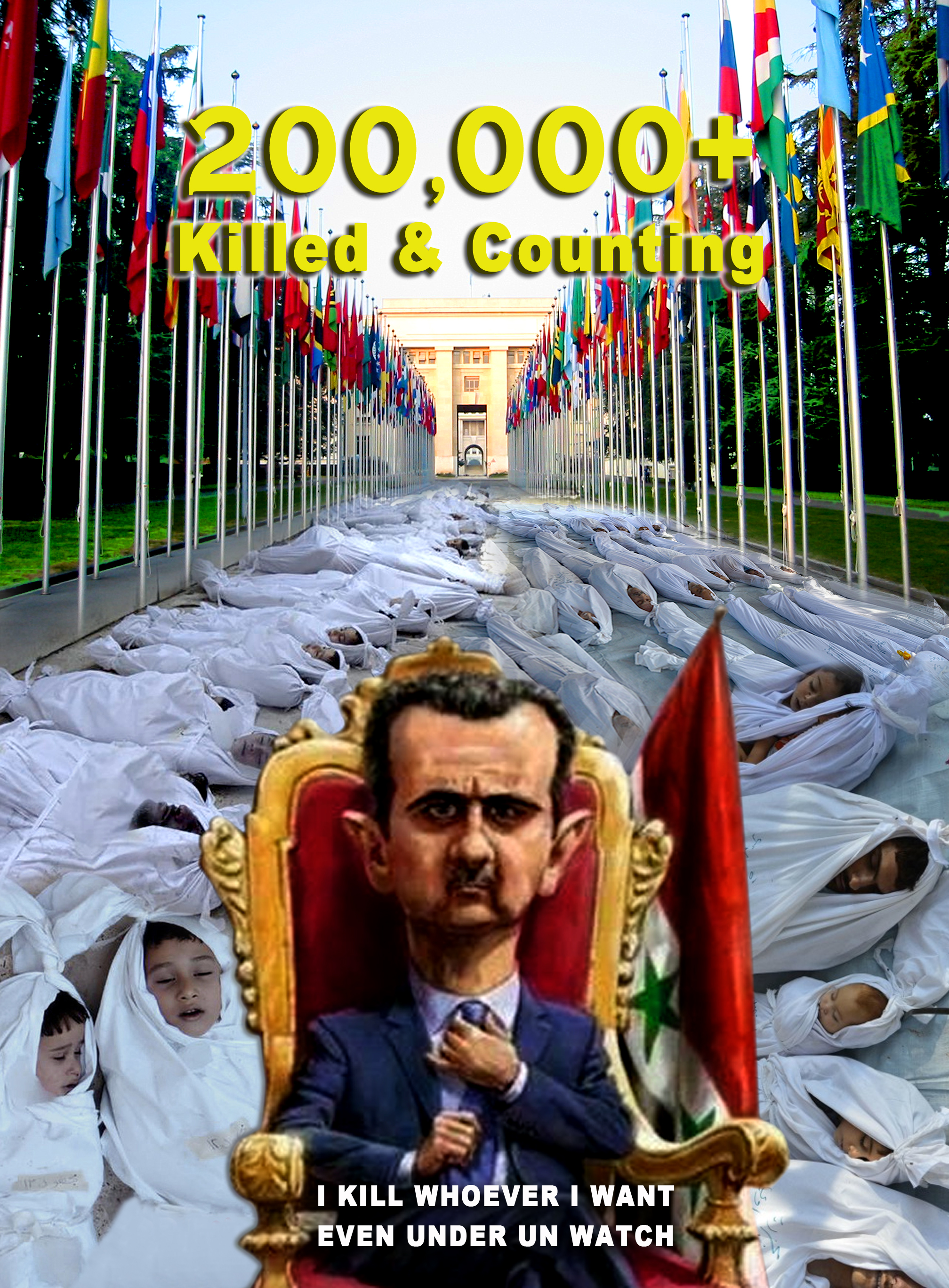
Some 200,000 people have died and nearly half the Syrian population has been displaced by the conflict that began with anti-government protests in 2011 and spiraled into full-scale civil war.
The situation has been exacerbated since a U.S-led coalition began bombing areas of Syria controlled by Islamic State.
"Between 30 to 60 people are dying each day since the bombings started. There is only talk of extremism and Islamic State, but not the women and children who are killed, the bodies torn apart, the stomachs blown open, which is what doctors are dealing with each day."
Said Tawfik Shamaa, spokesman for the Union of Syrian Medical Relief Organisations (UOSSM), a non-governmental association that brings together 14 groups.

The group has about 300 medical posts and 12 dispensaries across Syria, but said its efforts are limited given the lack of medicines, equipment and staff.
"The situation is unbearable, catastrophic," said Obaida al-Moufti, a Franco-Syrian doctor.
One doctor in Aleppo, who gave his name as Abdelaziz, said there were just five functioning hospitals to cater to 360,000 people encircled by government troops.
"There are only 30 doctors of all specialities," he said adding that people were dying of diseases such as cholera, typhoid, scabies and tuberculosis because there were no treatments or vaccines available.
The U.S.- led coalition has backed anti-government rebels to counter Islamic State, but it has not targeted government forces. 
Source: Reuters

Tuesday, November 18, 2014

From Pol Pot To ISIS and Our War Criminals


In transmitting President Richard Nixon's orders for a "massive" bombing of Cambodia in 1969, Henry Kissinger said, "Anything that flies on everything that moves".  As Barack Obama ignites his seventh war against the Muslim world since he was awarded the Nobel Peace Prize, the orchestrated hysteria and lies make one almost nostalgic for Kissinger's murderous honesty.

As a witness to the human consequences of aerial savagery - including the beheading of victims, their parts festooning trees and fields - I am not surprised by the disregard of memory and history, yet again. 

A telling example is the rise to power of Pol Pot and his Khmer Rouge, who had much in common with today's Islamic State in Iraq and Syria (ISIS). They, too, were ruthless medievalists who began as a small sect. They, too, were the product of an American-made apocalypse, this time in Asia.

According to Pol Pot, his movement had consisted of "fewer than 5,000 poorly armed guerrillas uncertain about their strategy, tactics, loyalty and leaders". Once Nixon's and Kissinger's B52 bombers had gone to work as part of "Operation Menu", the west's ultimate demon could not believe his luck.

The Americans dropped the equivalent of five Hiroshimas on rural Cambodia during 1969-73. They levelled village after village, returning to bomb the rubble and corpses. The craters left monstrous necklaces of carnage, still visible from the air. The terror was unimaginable. A former Khmer Rouge official described how the survivors 


"froze up and they would wander around mute for three or four days. Terrified and half-crazy, the people were ready to believe what they were told... That was what made it so easy for the Khmer Rouge to win the people over."
A Finnish Government Commission of Enquiry estimated that 600,000 Cambodians died in the ensuing civil war and described the bombing as the "first stage in a decade of genocide". What Nixon and Kissinger began, Pol Pot, their beneficiary, completed. Under their bombs, the Khmer Rouge grew to a formidable army of 200,000.

ISIS has a similar past and present. By most scholarly measure, Bush and Blair's invasion of Iraq in 2003 led to the deaths of some 700,000 people - in a country that had no history of jihadism. The Kurds had done territorial and political deals; Sunni and Shia had class and sectarian differences, but they were at peace; intermarriage was common. Three years before the invasion, I drove the length of Iraq without fear. On the way I met people proud, above all, to be Iraqis, the heirs of a civilization that seemed, for them, a presence.

Bush and Blair blew all this to bits. Iraq is now a nest of Jihadism. Al-Qaeda - like Pol Pot's "Jihadists" - seized the opportunity provided by the onslaught of Shock and Awe and the civil war that followed. The arrival of foreign recruits was inevitable

A former British ambassador, Oliver Miles, wrote recently, 


"The [Cameron] government seems to be following the example of Tony Blair, who ignored consistent advice from the Foreign Office, MI5 and MI6 that our Middle East policy - and in particular our Middle East wars - had been a principal driver in the recruitment of Muslims in Britain for terrorism here."
ISIS is the progeny of those in Washington and London who, in destroying Iraq as both a state and a society, conspired to commit an epic crime against humanity. 

Like Pol Pot and the Khmer Rouge, ISIS are the mutations of a western state terror dispensed by a venal imperial elite undeterred by the consequences of actions taken at great remove in distance and culture. Their culpability is unmentionable in "our" societies.

It is 23 years since this holocaust enveloped Iraq, immediately after the first Gulf War, when the US and Britain hijacked the United Nations Security Council and imposed punitive "sanctions" on the Iraqi population - ironically, reinforcing the domestic authority of Saddam Hussein

It was like a medieval siege. Almost everything that sustained a modern state was, in the jargon, "blocked" - from chlorine for making the water supply safe to school pencils, parts for X-ray machines, common painkillers and drugs to combat previously unknown cancers carried in the dust from the southern battlefields contaminated with Depleted Uranium.

Just before Christmas 1999, the Department of Trade and Industry in London restricted the export of vaccines meant to protect Iraqi children against diphtheria and yellow fever. 

Kim Howells, parliamentary Under-Secretary of State in the Blair government, explained why. "The children's vaccines", he said, "were capable of being used in weapons of mass destruction". The British Government could get away with such an outrage because media reporting of Iraq - much of it manipulated by the Foreign Office - blamed Saddam Hussein for everything.

Under a bogus "humanitarian" Oil for Food Programme, $100 was allotted for each Iraqi to live on for a year. This figure had to pay for the entire society's infrastructure and essential services, such as power and water. 


"Imagine," the UN Assistant Secretary General, Hans Von Sponeck, told me, "setting that pittance against the lack of clean water, and the fact that the majority of sick people cannot afford treatment, and the sheer trauma of getting from day to day, and you have a glimpse of the nightmare. And make no mistake, this is deliberate. I have not in the past wanted to use the word genocide, but now it is unavoidable."
Disgusted, Von Sponeck resigned as UN Humanitarian Co-ordinator in Iraq. 

His predecessor, Denis Halliday, an equally distinguished senior UN official, had also resigned. 


"I was instructed," Halliday said, "to implement a policy that satisfies the definition of genocide: a deliberate policy that has effectively killed well over a million individuals, children and adults."
A study by the United Nations Children's Fund, Unicef, found that between 1991 and 1998, the height of the blockade, there were 500,000 "excess" deaths of Iraqi infants under the age of five

An American TV reporter put this to Madeleine Albright, US Ambassador to the United Nations, asking her, "Is the price worth it?" Albright replied, "We think the price is worth it."

In 2007, the senior British official responsible for the sanctions, Carne Ross, known as "Mr. Iraq", told a parliamentary selection committee, 


"[The US and UK governments] effectively denied the entire population a means to live."  
When I interviewed Carne Ross three years later, he was consumed by regret and contrition. 

"I feel ashamed," he said. He is today a rare truth-teller of how governments deceive and how a compliant media plays a critical role in disseminating and maintaining the deception. "We would feed [journalists] factoids of sanitised intelligence," he said, "or we'd freeze them out."

On 25 September, a headline in the Guardian read: "Faced with the horror of Isis we must act." The "we must act" is a ghost risen, a warning of the suppression of informed memory, facts, lessons learned and regrets or shame. The author of the article was Peter Hain, the former Foreign Office minister responsible for Iraq under Blair. In 1998, when Denis Halliday revealed the extent of the suffering in Iraq for which the Blair Government shared primary responsibility, Hain abused him on the BBC's Newsnight as an "apologist for Saddam". In 2003, Hain backed Blair's invasion of stricken Iraq on the basis of transparent lies. At a subsequent Labour Party conference, he dismissed the invasion as a "fringe issue".

Now Hain is demanding "air strikes, drones, military equipment and other support" for those "facing genocide" in Iraq and Syria. This will further "the imperative of a political solution". 

Obama has the same in mind as he lifts what he calls the "restrictions" on US bombing and drone attacks. 


This means that missiles and 500-pound bombs can smash the homes of peasant people, as they are doing without restriction in Yemen, Pakistan, Afghanistan and Somalia - as they did in Cambodia, Vietnam and Laos. On 23 September, a Tomahawk cruise missile hit a village in Idlib Province in Syria, killing as many as a dozen civilians, including women and children. None waved a black flag.
The day Hain's article appeared, Denis Halliday and Hans Von Sponeck happened to be in London and came to visit me. They were not shocked by the lethal hypocrisy of a politician, but lamented the enduring, almost inexplicable absence of intelligent diplomacy in negotiating a semblance of truce. Across the world, from Northern Ireland to Nepal, those regarding each other as terrorists and heretics have faced each other across a table. 

Why not now in Iraq and Syria.

Like Ebola from West Africa, a bacteria called "perpetual war" has crossed the Atlantic. 

Lord Richards, until recently head of the British military, wants "boots on the ground" now. 

There is a vapid, almost sociopathic verboseness from Cameron, Obama and their "coalition of the willing" - notably Australia's aggressively weird Tony Abbott - as they prescribe more violence delivered from 30,000 feet on places where the blood of previous adventures never dried. They have never seen bombing and they apparently love it so much they want it to overthrow their one potentially valuable ally,  Syria. This is nothing new, as the following leaked UK-US intelligence file illustrates:

"In order to facilitate the action of liberative [sic] forces... a special effort should be made to eliminate certain key individuals [and] to proceed with internal disturbances in Syria. CIA is prepared, and SIS (MI6) will attempt to mount minor sabotage and coup de main [sic] incidents within Syria, working through contacts with individuals... a necessary degree of fear... frontier and [staged] border clashes [will] provide a pretext for intervention... the CIA and SIS should use... capabilities in both psychological and action fields to augment tension."
That was written in 1957, though it could have been written yesterday. In the imperial world, nothing essentially changes. 


Last year, the former French Foreign Minister Roland Dumas revealed that "two years before the Arab spring", he was told in London that a war on Syria was planned


"I am going to tell you something," he said in an interview with the French TV channel LPC, "I was in England two years before the violence in Syria on other business. I met top British officials, who confessed to me that they were preparing something in Syria... Britain was organising an invasion of rebels into Syria. They even asked me, although I was no longer Minister for Foreign Affairs, if I would like to participate... This operation goes way back. It was prepared, preconceived and planned."
A truce - however difficult to achieve - is the only way out of this imperial maze.

Together with a truce, 


there should be an immediate cessation of all shipments of war materials to Israel and recognition of the State of Palestine. 

The issue of Palestine is the region's most festering open wound, and the oft-stated justification for the rise of Islamic extremism. Osama bin Laden made that clear. Palestine also offers hope. Give justice to the Palestinians and you begin to change the world around them.
More than 40 years ago, the Nixon-Kissinger bombing of Cambodia unleashed a torrent of suffering from which that country has never recovered. The same is true of the Blair-Bush crime in Iraq. 

With impeccable timing, Henry Kissinger's latest self-serving tome has just been released with its satirical title, "World Order". In one fawning review, Kissinger is described as a "key shaper of a world order that remained stable for a quarter of a century"

Tell that to the people of Cambodia, Vietnam, Laos, Chile, East Timor and all the other victims of his "statecraft".  


Only when "we" recognise the war criminals in our midst will the blood begin to dry.
By John Pilger


Note: I included the above 2 videos, which were not part of John Pilger's article. 

Thursday, November 06, 2014

How Much Moral High Ground Does The US Have Over ISIS?


Warning: 72 virgin dating service. Apply here


The United States' war on sexual violence, mass murder and religious persecution should begin at home.
Without question, ISIS is an abomination. However, it is unclear whether America is the right agent to see this through. Part of the trouble relates to the Obama administration's strategy, which seems likely to empower ISIS even as it undermines the security and interests of the Unted States and its allies - but there is an ethical dimension as well.
While ISIS poses a serious (although likely overstated) threat to the governments of Iraq and Syria, over the last two administrations, the United States has itself forcibly overthrown the governments of Iraq and Libya - each time in defiance of international law. And along with ISIS, the United States has spent the last three years seeking to undermine the Syrian government. Additionally, it has sheltered Israel from meaningful accountability to the international community, allowing the crisis in Palestine to fester.
It would not be a stretch to say that the United States is actually a greater threat to peace and stability in the region than ISIS - not least because US policies in Iraq, Libya and Syria have largely paved the way for ISIS's emergence as a major regional actor.
But perhaps more disturbingly, many of the same behaviors condemned by the Obama administration and used to justify its most recent campaign into Iraq and Syria are commonly perpetrated by US troops and are ubiquitous in the broader American society. Until these problems are better addressed, United States' efforts to undermine ISIS will be akin to using a dirty rag to clean an infected wound.
Sexual Violence
The initial driver of US involvement was the outrage over ISIS' capture of thousands of Yazidi women and the sexual violence subsequently exercised against them - horrors which provided moral credence to the war against ISIS in much the same way that the 2001 US war against the Taliban was justified in part by highlighting the plight of Afghan women living under their rule.
However, over the course of that war, and the subsequent 2003 war in Iraq, US soldiers and contractors repeatedly used rape as a weapon of war, both against prisoners and the local civilian population. But perhaps more disturbing than the crimes committed by US personnel against Iraqis and Afghans were the atrocities committed by servicemen against their fellow soldiers.
As many as one out of three female soldiers are raped over the course of their military careers. Up to 80 percent of these assaults go unreported, in large part because reported cases rarely result in convictions or proportional punishment. In fact, the victims are frequently punished socially and professionally for reporting abuse, and they are barred from suing the government for reparations even when wrongdoing is proven.
The stats are not much better in the broader population. As many as one in five women who attend college in America are sexually assaulted over the course of their academic career, often with no justice even when the crimes are reported. This is commensurate with the broader trend in America - according to White House estimates, roughly a fifth of all American women are raped at some point in their lives.
As in the military, most of these crimes are not reported to the police, and most reported rapes are never prosecuted - let alone result in convictions for the perpetrators.
If the crimes against thousands of women in Iraq and Syria justify a US mobilization that costs nearly $10 million per day, how much more militant should Americans be about resolving the tens of thousands of cases of sexual violence that go unpunished and largely unnoticed in the United States each year?
Astonishing Cruelty
In addition to sexual violence, there was widespread outrage over ISIS's uncompromising brutality and the pornographic way they record and broadcast these acts - which include beheadings, crucifixions, and occasional incidences of cannibalism.
Of course, US soldiers and contractors have and continue to torture their enemies, often taking obscene photos to brag about and reminisce upon their acts. The contractors who were implicated in these abuses have never been prosecuted. Instead, one whistleblower who initially exposed these crimes, Chelsea Manning, has been sentenced to 35 years in prison.
There are further reports of US servicemen committing massacres, desecrating the corpses of their enemies, or even hunting the locals for sport while collecting photos, and even body parts, as trophies. And these are just a sampling of the acts which have been picked up by war correspondents and detailed in the media - many more crimes have never received exposure abroad, with crimes committed against Iraqis and Afghans by US servicemen going largely under-prosecuted or altogether unprosecuted.
Because these atrocities are not sufficiently dealt with by the United States, the governments of Iraq and Afghanistan have demanded the right to try Americans in their own courts. However, as protecting US politicians and soldiers from international accountability formed the basis of US opposition to establishing or joining the International Criminal Court, the Obama Administration refused to cede anything to these nascent states. 
As a result, concerns about accountability proved to be the main obstacle in the US reaching a security agreement with Afghanistan - and Iraq's refusal to grant US soldiers immunity was the reason the US ultimately abandoned the pursuit of a status of forces agreement there, contributing significantly to the security vacuum that allowed ISIS to rebuild in Iraq and expand into Syria. That is, ISIS's crimes were largely enabled by America's refusal to face up to its own.
Americans should bear this in mind as the Obama Administration loosens its already overly permissive standards vis à vis collateral damage and targeting civilians in its current campaign. The killing of innocents is not somehow morally superior if committed remotely by a drone or missile rather than the tools at ISIS' disposal.
Religious Persecution
Finally, many Westerners have been horrified by ISIS's persecution of religious minorities (especially crimes against Christians). However, the United States is complicit in this as well: US policies in Iraq helped spark this cycle of sectarian violence.
Meanwhile, its own armed forces were indoctrinated with anti-Muslim propaganda - complete with recommendations for servicemen to resort to "Hiroshima tactics," in a "total war against Islam," in which protections for civilians were "no longer relevant." 
Reflective of this mentality, the armed forces have been heavily infiltrated by white-supremacists, neo-Nazis and other hate groups who believe and act as though they are engaged in a holy war to begin in the Middle East and then be carried back into America. This institutionalized misrepresentation of Islam and dehumanization of Muslims probably played a significant role in the aforementioned atrocities.
However, this is hardly just an issue in the Army. Anti-Muslim discrimination and hate crimes are pervasive in America, from the classroom to the boardroom. In the popular culture, Islamophobia transcends the political spectrum and is fairly mainstream - to the point where pundits and politicians can openly call for Muslim internment camps, or push for laws restricting or altogether banning Muslims from practicing their faith, even as many of these same people work to obliterate the lines between the (Christian) church and state.
Muslim voices which could unapologetically challenge these tropes are largely excluded from the public discourse in favor of "house-Muslims" who will nod their heads in condemnation of terrorism (emphasizing that most Muslims are "moderates") while uncritically calling for (liberal) reform and revolution in Muslim lands of which they are no longer residents (if they ever were) - and all without voicing much (if any) substantive criticism of the Western countries in which they reside, beyond the narrow concerns about discrimination and persecution.
And yet despite these compliant spokespeople, and the fact that only 6 percent of terror incidents in the United States have been carried out by Muslims over the last 30 years (and the threat of terrorism is itself overblown), Muslims are frequently subjected to arbitrary surveillance and detention, as well as legal entrapment
All of these practices are considered crimes against humanity according to the Universal Declaration of Human Rights, which the US ostensibly champions everywhere else in the world . . . perhaps nowhere more than in Muslim-majority countries - seven of which the US has bombed in the last 6 years, almost always under the auspices of "humanitarian intervention."
Authentic Outrage, Authentic Patriotism
Criticisms like these invariably evoke charges of anti-Americanism among reactionary readers - unduly. If one were truly committed to defending America and promoting its values, if sincerely outraged by the sorts of atrocities committed by ISIS - rather than sanctioning condescending and counterproductive incursions abroad, Americans should dedicate much more time and energy to responding to these same problems within the United States and its institutions abroad. 
In this way, the United States could respond to the ISIS challenge by growing better and stronger, rather than undermining American's interests and freedoms in the name of "security." 
By Musa al-Gharbi

Saturday, October 25, 2014

Mexican Drug Cartels Are Worse Than ISIL


Western Obsession With The Islamic State Is Fueled More By Bigotry Than Any Genuine Assessment Of Risk Or Atrocities

The horrific rampage of the Islamic State of Iraq and the Levant (ISIL) has captured the world’s attention. Many Western commentators have characterized ISIL’s crimes as unique, no longer practiced anywhere else in the civilized world. They argue that the group’s barbarism is intrinsically Islamic, a product of the aggressive and archaic worldview that dominates the Muslim world. The ignorance of these claims is stunning.
While there are other organized groups whose depravity and threat to the United States far surpasses that of ISIL, none has engendered the same kind of collective indignation and hysteria. This raises a question: Are Americans primarily concerned with ISIL’s atrocities or with the fact that Muslims are committing these crimes?
For example, even as the U.S. media and policymakers radically inflate ISIL’s threat to the Middle East and United States, most Americans appear to be unaware of the scale of the atrocities committed by Mexican drug cartels and the threat they pose to the United States.

Cartels versus ISIL

A recent United Nations report estimated nearly 9,000 civilians have been killed and 17,386 wounded in Iraq in 2014, more than half since ISIL fighters seized large parts on northern Iraq in June. It is likely that the group is responsible another several thousand deaths in Syria. To be sure, these numbers are staggering. 
But in 2013 drug cartels murdered more than 16,000 people in Mexico alone, and another 60,000 from 2006 to 2012 — a rate of more than one killing every half hour for the last seven years. What is worse, these are estimates from the Mexican government, which is known to deflate the actual death toll by about 50 percent.
Statistics alone do not convey the depravity and threat of the cartels. 
They carry out hundreds of beheadings every year. In addition to decapitations, the cartels are known to dismember and otherwise mutilate the corpses of their victims — displaying piles of bodies prominently in towns to terrorize the public into compliance. They routinely target women and children to further intimidate communities. Like ISIL, the cartels use social media to post graphic images of their atrocious crimes.
The narcos also recruit child soldiers, molding boys as young as 11 into assassins or sending them on suicide missions during armed confrontations with Mexico’s army. They kidnap tens of thousands of children every year to use as drug mules or prostitutes or to simply kill and harvest their organs for sale on the black market. Those who dare to call for reforms often end up dead. 


In September, with the apparent assistance of local police, cartels kidnapped and massacred 43 students at a teaching college near the Mexican town ofIguala in response to student protests. A search in the area for the students has uncovered a number of mass graves containing mutilated bodies burned almost beyond recognition, but none of the remains have been confirmed to be of the students.
While the Islamic militants have killed a handful of journalists, the cartels murdered as many as 57 since 2006 for reporting on cartel crimes or exposing government complicity with the criminals. Many of Mexico’s media have been effectively silenced by intimidation or bribes. 
These censorship activities extend beyond professional media, with narcos tracking down and murdering ordinary citizens who criticize them on the Internet, leaving their naked and disemboweled corpses hanging in public squares. 
Yet American intellectuals such as Sam Harris appear to be more outraged when Muslims protest or issue threats in response to blasphemous or anti-Muslim hate speech than when cartels murder dozens of journalists and systematically co-opt an entire country’s media.
Similarly, Westerners across various political spectrums were outraged when ISIL seized 1,500 Yazidi women, committing sexual violence against the captives and using them as slaves. Here again, the cartels’ capture and trafficking of women dwarfs ISIL’s crimes. Narcos hold tens of thousands of Mexican citizens as slaves for their various enterprises and systematically use rape as a weapon of war.
U.S. media have especially hyped ISIL’s violence against Americans. This summer ISIL beheaded two Americans and has warned about executing a third; additionally, one U.S. Marine has died in efforts to combat the group. By contrast, the cartels killed 293 Americans in Mexico from 2007 to 2010 and have repeatedly attacked U.S. consulates in Mexico. While ISIL’s beheadings are no doubt outrageous, the cartels tortured, dismembered and then cooked one of the Americans they captured — possibly eating him or feeding him to dogs.
The US government cannot formulate an effective response to the narcos’ severe threats because the American public is far too busy disparaging Islam while the US military kills Arabs and Muslims abroad. 
The cartels’ atrocities are not restricted to the Mexican side of the border. From 2006 to 2010 as many as 5,700 Americans were killed in the U.S. by cartel-fueled drug violence. By contrast, 2,937 people were killed in the Sept. 11, 2001, attacks. Over the last decade, some 2,349 Americans were killed in Afghanistan, and 4,487 Americans died in Iraq. In four years the cartels have managed to cause the deaths of more Americans than during 9/11 or either of those wars.
Barack Obama’s administration claims ISIL poses a severe threat to U.S. interests and national security. However, the militants were primarily concerned with seizing and holding territory in Iraq and Syria until the U.S. began targeting them. Even now, while they have called for lone wolves to carry out attacks on targets in the United States, so far those arrested in connection to ISIL have been trying to go and fight abroad rather than plotting domestic attacks. To the extent ISIL wants to kill Americans, its primary tactic has been to try to lure U.S. troops to its turf by publicly executing citizens they already hold hostage
In fact, several U.S. intelligence officials have asserted that ISIL poses no credible threat to the United States homeland. 
However, the same cannot be said of the cartels.
Narcos have infiltrated at least 3,000 U.S. cities and are recruiting many Americans, including U.S. troops and law enforcement officers, to their organizations. They have an increasingly sophisticated and robust foundation in the U.S., with Mexican cartels now controlling more than 80 percent of the illicit drug trade in the United States and their top agents deployed to virtually every major metropolitan area. There are no realistic assessments indicating that ISIL could achieve a similar level of penetration in the United States.

Explaining The Dissonance

It is clear that the anti-ISIL campaign is not driven by the group’s relative threat to the United States or the scale or inhumane nature of their atrocities. If these were the primary considerations, the public would be far more terrified of and outraged by the narcos. Perhaps the U.S. would be mobilizing 50 nations to purge Mexico’s Sinaloa cartel rather than shielding it from prosecutionhelping it polish off its rivals or even move drugs into the United States.
Some may argue that despite the asymmetries, the cartels are less of a threat than ISIL because ISIL is unified around an ideology, which is antithetical to the prevailing international order, while the cartels are concerned primarily with money. This is not true.
A good deal of the cartels’ violence is perpetrated ritualistically as part of their religion, which is centered, quite literally, on the worship of death. The narcosbuild and support churches all across Mexico to perpetuate their eschatology. One of the cartels, the Knights Templar (whose name evokes religious warfare), even boasts about its leader’s death and resurrection. When cartel members are killed, they are buried in lavish mausoleums, regarded as martyrs and commemorated in popular songs glorifying their exploits in all their brutality. Many of their members view the “martyrs” as heroes who diedresisting an international order that exploits Latin America and fighting the feckless governments that enable it. The cartels see their role as compensating for state failures in governance. The narco gospel, which derives fromCatholicism, is swiftly making inroads in the United States and Central America. In short, the cartels’ ideological disposition is no less pronounced than ISIL’s, if not worse.
Unfortunately, the U.S. government cannot formulate an effective response to these much more severe threats because the American public is far too busy disparaging Islam while the U.S. military kills Arabs and Muslims abroad. One thing is certain: America’s obsession with ISIL is fueled by Islamophobia rather than any empirical realities
Musa al-Gharbi is an instructor in the Department of Government and Public Service at the University of Arizona, and an affiliate of the Southwest Initiative for the Study of Middle East Conflicts (SISMEC).


Sunday, October 19, 2014

Decoding The ISIS/ISIL Threat


As the globalists continue to expand their power, wealth and agenda - they've got us preoccupied with the bogus war on terror and the wrong kind of terrorist threat.

So let's stop playing into their game and start pointing our fingers at the real enemy...criminal elements within the intelligence communities which in my books puts the State as suspect number one!

Friday, October 17, 2014

Harvard Students: "America Is A Bigger Threat Than ISIS"


They’re among the brightest young minds in the country… and they think America is a bigger threat to world peace than ISIS.
Campus Reform, a self-styled ‘campus watchdog’ for conservative students, carried out the interviews in the quad at the Ivy League school on Saturday and asked: ‘Who is the bigger threat to world peace, ISIS or the U.S.?’
The students featured in the video were overwhelming in their belief that America and its interventionist foreign policy is a greater threat than the group of Muslim fanatics that have gained global notoriety in recent months through a series of video of Western hostages being beheaded.
The interviews were carried out by Caleb Bonham, editor of Campus Reform and a frequent guest on the Fox News Channel.
‘In many ways I have to think it’s America because America is making decisions that are much more likely to affect the world,’ one student responds to Bonham’s question.
‘The amount of spending that America has on causes of potential destruction in the world is really outlandish,’ she continues.

Sunday, October 05, 2014

All The Ayatollah's Men


Iraq's Shiite Militias Are Becoming As Great A Danger As The Islamic State.

Armed men posing with severed heads, massacres of mosque-goers during Friday prayers, massive reliance on transnational jihadists -- these are crimes that are usually associated with the Islamic State (IS). However, they're also the actions of some of Iraq's growing Shiite militia organizations, which are playing an increasingly prominent role in fighting the Sunni jihadists. These groups, many of which have deep ideological and organizational links to Iran, are sweeping away what is left of any notion of the Baghdad government's authority -- and represent a massive challenge to President Barack Obama's stated goal of working with an inclusive Iraqi government to push back IS.
Over 50 Shiite militias are now recruiting and fighting in Iraq. These groups are actively recruiting -- drawing potential soldiers away from the Iraqi army and police and bringing fighters into highly ideological, anti-American, and rabidly sectarian organizations. Many of these trainees are not simply being used to push back Sunni jihadists, but in many cases form a rear guard used to control districts that are supposedly under Baghdad's control. 
Shiite militias have embedded themselves within the structures of the Iraqi government, which has become far too reliant on their power to contemplate cracking down on them. Together, they have committed horrifying human rights abuses: In early June, Shiite militias, along with Iraqi security forces, reportedly executed around 255 prisoners, including children. An Amnesty International report from June detailed how Shiite militias regularly carried out extrajudicial summary executions, and reported that dozens of Sunni prisoners were killed in government buildings.
The militias also played a leading role in the liberation of the besieged Shiite Turkmen town of Amerli. Kataib Hezbollah, a U.S.-designated terrorist group and direct Iranian proxy, even used Iraqi government helicopters to deliver arms and other supplies during the battle. Just as IS has captured and used U.S.-supplied vehicles, U.S.-made M1A1 Abrams tanks provided to the Iraqi governmenthave flown sectarian Shiite banners and supported Kataib Hezbollah operations. Those tanks are not alone: U.S.-made armored Humvees, which Kataib Hezbollah once targeted during the Iraq War with rocket-propelled grenades (when driven by Americans), have also been taken by the militia and used in operations.
Iran has led the way in developing Iraq's Shiite militias. Since May 2013, Tehran has bolstered its network of new and old Iraqi proxy groups to provide a steady flow of fighters to Syria. Some of these Iraqi forces, who had been fighting on behalf of President Bashar al-Assad's regime, redeployed back to Iraq and form the nucleus of newer militia groups which are currently fighting the Baghdad government's Sunni enemies.
Due to Iran's Syria-focused recruitment efforts, Tehran's proxies also had a leg up on pulling in new fighters for the Iraq front. In April, Iran-backed groups such as Kataib Hezbollah, Badr, and Asaib Ahl al-Haq called for fresh recruits to fight in IraqEventually, these calls morphed into Iraqi Shiite militias spinning off popular committee-based militias under their command. While the creation of so many groups may seem unnecessarily complicated, it actually helps create the image of wide-ranging popular support for militias promoting Iran's policies and ideology. Furthermore, it allows established groups to more easily separate new, less-experienced volunteers from career militiamen.
For example, Kataib Hezbollah -- a militia formed with the help of Lebanon's Hezbollah in 2007 -- recently announced the creation of the Popular Defense Companies. The new group was crafted to take Iraqi Shiite volunteers under Kataib Hezbollah's management, and today it boasts large deployments south of the cities of Baghdad, Diyala, and Amerli.
The Badr Organization, an armed group in the thousands and one of Iran's primary clients in Iraq, is another pillar of Tehran's efforts to develop Shiite militias. During the Iraq War, through its domination of government offices, the group ran a number of sectarian death squads. Badr has also been involved in the fighting in Syria, creatingthe Martyr Baqir al-Sadr Force for that purpose. 
But it is in Baghdad where the Badr Organization's influence is strongest.
The group's sway extends deep into Iraq's Internal Security Forces, where it is said to directly manage many police and special operations-type groups. Badr also has great influence in the political sphere: It has secured key positions within the Iraqi government, and is part of Prime Minister Haider al-Abadi's State of Law alliance -- Abadi even wants to appoint its leader, Hadi al-Amiri, as the country's interior minister. 
Badr's militiamen have spread far and wide among the constellation of Iraq's Iranian proxies. Its alumni include Kataib Hezbollah leaderJamal al-IbrahimiAli al-Yasiri, the leader of a Shiite militia fighting in Syria called the Khurasani Unit; and Wathiq al-Battat, leader of the Mukhtar Army, a hyper-sectarian group that once launched a rocket attack against Iranian dissidents at Camp Liberty.  
Former Badr militiamen are also deeply embedded within Iraq's political leadership. Sheikh Adnan al-Shahmani, an Iraqi parliamentarian and member of the Iraqi parliament's National and Defense Committee, is himself a former Badr fighter and leader of the Tayyar al-Rasuli political party, which also has a militia. As early as September 2013, he had called for sectarian militias to protect Shiites living in Sunni areas. The parent parties of Khurasani Unit and Tayyar al-Rasuli are both members of the State of Law coalition -- portions of a nebula of allied organizations created to impose Iran's will within Iraq.
Iran's most powerful proxies in Iraq have worked closely together to prop up the Assad regime in Damascus. Kataib Hezbollah and Badrformed the Kataib Sayyid al-Shuhada ("The Master of the Martyrs Brigade," or KSS) in early 2013 to fight in Syria. KSS is led in part by Abu Mustafa al-Sheibani, a commander affiliated with both Badr and the Iranian Islamic Revolutionary Guard Corps' Quds Force. The group's secretary-general, Mustafa al-Khazali, deployed to Syria andwas wounded in the suburbs of Damascus.
Now, the commanders who cut their teeth in Syria are returning home to play a political and military role in the struggle for Iraq. Khazali went on to win a seat in parliament during Iraq's parliamentary election in April, when his group took on the role of political party and ran in the city of Basra on then Prime Minister Nouri al-Maliki's State of Law electoral list. KSS commanders are also engaged in fighting against their domestic enemies: Abu Mujahid al-Maliki, a KSS veteran from Syria and Khazali's campaign manager,was killed fighting in Iraq in August.
Asaib Ahl al-Haq ("The League of the Righteous," or AAH) has been another major Iranian proxy in Iraq. The group began during the Iraq War as an Iranian-backed splinter from radical cleric Moqtada al-Sadr's Mahdi Army, and quickly grew into a formidable fighting group. During the war, it gained a degree of infamy for itskidnappings and executions of British contractors and American soldiers. The group has sent many fighters to Syria, and in early 2014started to deploy in Iraq's restive Anbar province to combat the government's Sunni enemies.
The growth of these pro-Iranian Shiite militias, and many more like them, helps demonstrate Iran's goals for the domination of Shiite Iraq. These groups not only benefit from Iran's patronage and organizational capabilities -- they also all march to Tehran's ideological tune. They are loyal to Iran's Supreme Leader Ayatollah Khamenei and Iran's ideology of absolute wilayat-e faqih, which grants the supreme leader ultimate political and religious authority. They also follow the model of Iran's Lebanese proxy, Hezbollah, and are intent on executing Iran's will in the region and furthering Iran's "Islamic Revolution."
Just as IS's stated aim is to erase the borders that were drawn in the Middle East following the end of World War I, Iranian-backed Shiite militias are also taking part in this process. The cross-pollination between Syrian and Iraqi Shiite militias has eroded national boundaries as surely as the Sunni jihadist campaign: From the beginning of their involvement in both conflicts, Shiite militias have adopted a narrative that they will "defend shrines" or "defend Shiites," no matter their geographic location.
Damascus's oldest and most prominent Shiite foreign fighter militia, the Abu Fadl al-Abbas Brigade (LAFA), has played a key role in promoting this grander notion of sectarian war. In August, the pro-Iranian organization announced its own Iraq-based organization, which claims to be deployed south of Baghdad and possibly near Amerli. Abu Ali al-Darraji, one of its former commanders from Damascus, also started his own LAFA affiliate with fighters who had previously been engaged in Syria. Often, these LAFA offshoots have been hazy regarding their own ideology, but their links to Iran's networks certainly suggest that Tehran exerts a strong pull on them.
While Iran has extensive links to most, if not all, of Iraq's Shiite militias, other powerful
Iraqi Shiite elements that do not share Iran's absolutist ideology have also invested in their own groups.
Moqtada al-Sadr's Saraya al-Salam ("The Peace Brigade") was established this June, at around the same time Grand Ayatollah Ali al-Sistani issued a fatwa calling for a jihad against the Islamic State. Sistani's fatwa, however, was clarified to say that Iraqis should join the Iraqi army, whereas the fighters in Sadr's new brigade have no loyalty to Sistani. Nevertheless, with the ability to draw on tens of thousands of Sadrist supporters, Saraya al-Salam certainly will not lack for fighters.
Despite reported cooperation on some levels with Iranian proxies, Sadr's forces have had years of conflict with AAH, Badr, and other groups. Additionally, his political party is currently in an alliance with a political bloc that opposes the State of Law coalition.
When Saraya al-Salam was initially formed, Sadr called for it to engage mainly in defensive actions. In the past month, however, the group has been more heavily invested in offensive actions. Today, its deployments have occurred across Iraq, from the shrine city ofSamarra, to the recently liberated Amerli, to the city of Jurf al-Sakhr, to Diyala in the east. Saraya al-Salaam's large numbers, increasing activity in the conflict, and Mahdi Army background suggest the group could re-engage in sectarian mass killings.
Following Sistani's fatwa, Ammar al-Hakim's Islamic Supreme Council of Iraq (ISCI) established the Ashura Brigades. The group has engaged in recruitment efforts using ISCI's media and political apparatus, and its forces have deployed to Baghdad and Samarra. In July, the group's recruits from the southeastern province of Maysan suffered heavy casualties during fighting in Anbar Province.*
As political and clerical leaders have established their own militias throughout Iraq, fringe groups have at times come in conflict with the government. One of the more unusual cases was that of the marginal Shiite cleric Mahmoud al-Sarkhi. His supporters engaged in firefights with members of Iraq's internal security forces in southern Iraq, resulting in seven deaths. While the example of Sarkhi is unique, the risk of intra-Shiite conflicts rearing their head is very real.
Iraqi Shiite militias are also on a collision course with the Kurdish community, a major U.S. ally in the fight against the Islamic State.Harakat Hizballah al-Nujaba, another Iranian proxy group spun off of AAH, and Kataib Hezbollah both accused Kurdistan President Masoud Barzani of coordinating with IS and Baathist groups, and issued stern warnings against any Kurdish moves in Kirkuk. Harakat Hizballah al-Nujaba's spokesman went so far as to say, "the rockets of the Islamic Resistance will strike at Erbil" if Barzani continued to "coordinate" with the jihadists.
The growing power of these militias is a sign that, despite Maliki's removal as prime minister, the Iraqi government remains beholden to deeply sectarian forces. These militias have generally retained their operational independence from Baghdad, even as they exploit the country's nascent democratic system to gain support through their domination of official bodies. They are not simply addendums to the state -- they are the state, and do not answer to any authority in Baghdad, but only to their own clerical leaders or Tehran.
While ostensibly focused on defeating the Islamic State, these armed factions also promise to be hugely influential in shaping the future of Iraq's Shiite community. Their radical ideology and organizational ties suggest that they will allow Iran a greater influence in Iraq than ever before. If Washington does not take steps now to check their growth, it may discover too late that it has effectively ceded Baghdad to Tehran -- and that there is no going back.