Showing posts with label War Games. Show all posts

Wednesday, May 08, 2013

America's War Games


The United States' military expenditures today account for about 40 percent of the world total. In 2012, the US spent some $682bn on its military - an amount more than what was spent by the next 13 countries combined.

Now that the war in Iraq is over and the withdrawal of US troops from Afghanistan will be complete in 2014, the stage might therefore appear to be set for a decrease in US defence spending. Even in Washington DC, many have argued that the defence budget can be cut substantially and the resulting "peace dividend" could be diverted to more pressing domestic concerns, such as dealing with the nation's continuing economic problems.

You can't do anything about it [because] there's too much political support.
Chuck Spinney, a defence analyst ,
However, a battle to ward off cuts to the Pentagon's budget has begun and the way things are going, it seems likely that the US will have the smallest drawdown or reduction of the military budget after a period of conflict since World War II - in comparative terms, smaller than after Vietnam, Korea and the end of the Cold War. 

The Pentagon's joint chiefs of staff have appeared before Congress warning of dire results from the impacts of sequestration, a requirement to reduce defence spending by $500bn over 10 years that grew out of a 2011 budget deal between President Obama and Congress. In March, sequestration led to a $41bn cut in 2013 defence spending.

Pentagon officials, defence companies, politicians and conservative commentators argue that defence cuts will be devastating for the military and the economy. Others point out that after sequestration, the Pentagon's base defence budget, which does not include additional funds for the war in Afghanistan - will remain above the Cold War average, and close to the highest level since World War II.

Chuck Spinney, who worked as an analyst in the US secretary of defence's office for 26 years, believes it is difficult for the United States to reap the benefits of a peace dividend because of the workings of the military-industrial complex that President Dwight Eisenhower warned about in his final 1961 address.

"It's what in Washington we call an iron triangle," Spinney says, " you have an alliance between the private sector, the defence contractors, the executive branch, in this case the Pentagon, and the legislative branch."

Everyone benefits from expensive procurement projects - the Pentagon gets weapons, defence companies get to make profits, and politicians get re-elected by funding armaments that generate jobs for constituents and campaign contributions from defence companies.

The result, according to Spinney, is a defence budget "that is packed to the gills with weapons we don't need, with weapons that are underestimated in their future costs".

The Pentagon and defence contractors low-ball costs and exaggerate performance in the early stages of a project to "turn on the money spigot". Then the companies engage in "political engineering," they spread the contracts and employment for a weapon around to as many Congressional districts as possible. They do that, Spinney says, so that once cost-overruns and performance problems become apparent, "you can't do anything about it [because] there's too much political support".

The F-35 Joint Strike Fighter is a textbook case of a Pentagon procurement project that reveals why it is difficult to cut the defence budget. Three versions of the F-35 are being built for the Air Force, Navy and Marines by Lockheed Martin, the largest defence contractor in the US. The F-35 is the most expensive military weapons programme in US history, bigger than the Manhattan Project that produced nuclear weapons.

The F-35 was sold as a programme that would cost $226bn for about 2,900 aircrafts. It is now seven years behind schedule, and the price has increased almost 100 percent to $400bn for only 2,400 fighters. At least another $1 trillion will be required for operations and maintenance of the F-35 over its lifetime.

Pierre Sprey, an aircraft engineer and analyst who was one of Defense Secretary Robert McNamara's 'whizz kids' in the 1960s, believes that the project should be cancelled or "there will be so little money left over for anything that's needed, it'll be unbelievable. They'll be cutting people, pilots, training, everything just to pay for this thing."

There will be so little money left over for anything that's needed, it'll be unbelievable.
Pierre Sprey, an aircraft engineer and analyst
Sprey played a key role in the design and procurement of the F-16 fighter and the A-10 ground support plane, two mainstays of the current US Air Force fleet.

Mike Rein, the F-35 spokesman for Lockheed, says that the company saw the period from 2012 and into 2013 as "a step of great progress for the programme and [something which is] certainly going in the right direction". He points to the tests of the F-35 that were completed in 2012. 

Sprey argues that "they're re-testing stuff they already failed. So this isn't progress. This is like every day that you're flying, you're finding new problems. And you're slipping the schedule worse and worse."

The F-35 was supposed to be operational by 2012, but critics say it is unlikely to be deployed before 2017 at the earliest.

Despite a litany of engineering and performance problems, Congress continues to support the programme. Lockheed has spread jobs and contracts to 47 states and Puerto Rico, according to its website.

The company also seems to have an international political engineering strategy - eight countries besides the US are involved in the aircraft's development program - including Britain, Italy, Canada, 

Australia and Turkey. Meanwhile, Israel, Singapore and Japan have plans to buy the fighter.
According to Spinney, that "makes it even more difficult to cut the programme because now you're creating an international incident of some kind. That's no accident. It was done deliberately."

Pork barrel deal-making that goes on in Congress over weapons projects also makes it hard to secure a peace dividend.

According to William Hartung of the Center for International Policy, "there will be a sort of log rolling process where you know, ‘I'll support your weapons system if you support my weapons system.' And so once that horse trading goes on, then it's much harder to cut anything."

Two years ago, the US army announced that it could save close to $2.8bn by pausing production of the Abrams M1 tank. Ray Odierno, the army chief of staff, said the M1 fleet was in good shape and no more tanks were needed. The Pentagon does not see much use for the M1 in confronting 21st century threats like terrorism and piracy. However, Congress did not go along. Over the last two years, it has provided $355bn to keep the M1 production line rolling at the Joint Systems Manufacturing Center in Lima, Ohio.

General Dynamics, which operates the tank plant, spent $22m on lobbying Congress over the past two years, and about $2m on campaign contributions. According to the David Berger, the mayor of Lima, General Dynamics also put together a study claiming that it would be more cost-effective to keep the tank plant open now than to reopen the plant in the future if it was needed.

The company would not send us the cost study, and declined our request for an interview.

Hartung says that Pentagon contractors have "for years used the jobs argument to revive weapons systems that have been cancelled. To push for things that even the Pentagon itself has not wanted." 

For months, a study has been circulating in Washington, underwritten by the Aerospace Industries Association, a major defence industry trade group. It claims that a million jobs would be lost as a result of sequestration cuts to defence spending.

Hartung, who has analysed the study, says it exaggerates the potential job loss number by a factor of three, and that many of those jobs will be replaced. He points out that spending on education, health care, and infrastructure "can create 1.5 to 2 times as many jobs. So the economy would be much better off spending on things other than the Pentagon."

Several recent reports examining ways to cut Pentagon spending call for changes in the US nuclear weapons posture. They claim that it would produce hundreds of billions of dollars of savings in coming decades, and the Obama administration is reportedly considering nuclear weapons cuts. But they will be difficult to achieve.
The economy would be much better off spending on things other than the Pentagon.
William Hartung, the Center for International Policy
"People are still mired in Cold War thinking and they feel like the more nuclear weapons we have the better," Hartung says. "And in addition to that the nuclear weapons industry has some of the biggest strongest companies in the military industrial complex."

Lockheed Martin builds submarines, launches ballistic missiles, and runs the nuclear weapons laboratories; General Dynamics builds nuclear subs; and Northrop Grumman, Boeing and Lockheed Martin are all hoping to build the next nuclear bomber.

Chuck Hagel, the new US secretary of defence, was a member of a US Nuclear Policy Commission sponsored by the anti-nuclear arms group Global Zero. Headed by a former vice chairman of the US joint chiefs of staff, the commission called for shrinking the number of US nuclear warheads from 5,000 to 900. Commission members also thought there was little risk in eliminating ballistic missiles from the US nuclear delivery triad of submarines, bombers and missiles.

At his confirmation hearing, Hagel was attacked by senators whose states have a stake in the nuclear weapons business, and subsequently criticised by the staff of conservative think tanks like the Heritage Foundation. Steve Bucci, the head of the Center for Foreign Policy Studies at Heritage, believes that any change in America's nuclear posture would be "a very foolish thing to do".

Along with two other think tanks, Heritage has launched a campaign called Defending Defence to ward off cuts to the US defence budget. A major reason is the potential threat they see from China, which Bucci says "cannot be underestimated. They are trying to make themselves a world power, not just a regional power."

In his view, the US needs to keep defence spending high, in case the Chinese become "more aggressive and hostile".

Concerns about China were reflected in the Obama administration's announcement last year that it is re-positioning US military resources to the Asia-Pacific region after the wars in Iraq and Afghanistan. It is estimated that China spends about one-fifth to one-quarter as much on its military as the US. Spinney and others see warnings about China and the administration's so-called Asia-Pacific "pivot" as a way to bolster defence spending in the face of pressure for cuts.

"We need a threat," Spinney says, "Al-Qaeda has sort of run out of strength and we have to have a new threat to justify continued spending." Spinney believes that there is little chance of a peace dividend after the wars in Iraq and Afghanistan. "We are going to pivot to Asia and increase the defence budget," he says.

There are signs he could be right.

This month, President Obama released a 2014 federal budget proposal that called for $526.6bn in funding for the department of defense. It was widely expected that the defence total would be at least $50bn less.

The White House and the Pentagon chose to ignore the statutory requirement for a $50bn reduction mandated by sequestration. They apparently hope that sequestration can be overturned, and defence budget cuts already agreed to, reversed. Instead of laying the groundwork for a peace dividend by putting the Pentagon on a glide path to smaller budgets, the administration's proposal projects increases in America's base defence budget over the next five years.

Wednesday, November 07, 2012

How I Tried to Bomb Iran Into The Stone Age


Via: Deesillustration.com

By Michael Peck,
Courtesy Of "Forbes"

PART-1

Tell Me How It Ends is a computer game released today by the TrumanNational Security Project. The game puts the player in the role of the President of the United States as he chooses from various options for military action against Iran’s nuclear program. The game, which the public can play via Web browser, is intended to illustrate the consequences of a U.S.-Iran conflict, from rising oil prices to terrorist attacks against American civilians. I had a chance to play Tell Me How It Ends using various strategies. Below is a replay of what happened when I chose a strong military option:


Day 1: The time for talk was over. The time for action had arrived. Some of my advisers said yes, and others no. But they are not President of the United States. I was, and the decision for war and peace is mine alone. Our economy was still in recovery, and the American people were weary after a decade of war. Yet our intelligence community has concluded that Iran can build a bomb within a year, and as my White House Chief of Staff reminds me, our red line for action against Iran is 20 percent nuclear fuel enrichment. Despite economic sanctions, that line has been crossed. My duty is clear; we must use force to eliminate Iran’s nuclear capability. By moving forcefully and resolutely, I believe we can eliminate Iran’s threat to world peace at a minimal cost.
My first decision: does the U.S. go it alone, or do we assemble a multinational coalition to destroy Iran’s nuclear facilities? As usual, the Secretary of State says a coalition is best, while my national security advisor and chief of staff prefer unilateral action. I don’t believe Russia and China will ever endorse a military option, Britain is too broke for another war, and I have no idea whose side France is on. The longer we wait, the closer Iran is to a bomb, so we’ll go it alone. I give the order, and after a sleepless night, I awake at dawn to reports of air strikes against nuclear facilities, air defenses and command centers. News reports estimate at least 800 Iranian deaths, though Tehran naturally claims thousands. 
We seem to have badly damaged some nuclear sites. But our intel has detected Iranian preparations to block the Straits of Hormuz with mines and missiles, which would bottle up oil tanker traffic and devastate the global economy. Oil prices have jumped overnight 25 percent, from $102/barrel to $127/barrel, since hostilities began. My budget staff calculates the conflict is costing us $200 million per day. We cannot afford this war to drag on. Decisive action is the call of the hour.
Day 2: My next decision: How do we keep the Straits of Hormuz open? The Secretary of State recommends containing the violence by limited strikes against Iranian naval and missile sites threatening shipping lanes, while the Chairman of the Joint Chiefs urges massive bombing of Iranian forces. A war half-fought is a war lost, I have always believed, so I order all-out bombing.
Day 30: After a month of combat, we have reopened the Straits of Hormuz, but Iran has retaliated by killing our diplomats in Baghdad and kidnapping contractors in Bahrain. More worrying is that the conflict has expanded beyond the Middle East;  truck bombs have killed dozens of Americans in Argentina and London. The price of oil has doubled to $200 per barrel, and U.S. gas prices are topping $6 per gallon. The war is costing us $300 million per day.
Another decision point: how do we respond to the wave of Iranian-backed terrorism across the world? The Secretary of Homeland Security fears attacks on American soil, my national security adviser wants to blast the Iranian Revolutionary Guard Corps that is orchestrating the terror campaign, but Defense warns that this will divert our already overstretched forces from destroying nuclear sites. I authorize strikes against the IRGC to stop the terrorism. I know I’m doing the right thing. Or am I?
Our aircraft play cat-and-mouse with IRGC troops and camps that appear and disappear. Yet two weeks later, the terror attacks continue. Ominously, Iran has expanded the war by firing three dozen missiles into Israel, while their Lebanese proxy Hezbollah shot a thousand rockets into Israel, and Islamic Jihad is bombarding southern Israel from Gaza. I can guess how Jerusalem would react, or how I would react in their shoes. Oil has soared to $218/barrel.
Day 45: A 3 a.m. call from Israel’s prime minister. He is characteristically blunt: Either the U.S. commits reconnaissance and ballistic missile defense assets to the defense of Israel, or Israel invades southern Lebanon and Gaza. My chief of staff says we need to back our closest ally, the Joint Chiefs warn this will overstretch our forces, and State just mutters that we’re in a tough spot. No kidding. Time for a cabinet reshuffle after this is over.
I want to honor our commitment to Israel, but I cannot place a heavier burden on our troops. Regretfully, I inform the Israelis that they are on their own. Within hours, they cross into Lebanon and Gaza. But report indicate that the IDF is now bogged down in southern Lebanon, and are taking casualties in Gaza. Thousands of Israeli and Arab civilians have died in fighting across the region.
Day 60: I need to end this. Our forces are overstretched and under constant attack. Iranian-backed terrorism continues across the globe. We have already poured billions of dollars into this war, the economy will probably enter recession and unemployment is sure to rise. Yet after spending all that blood and treasure, there is still no guarantee that Iran’s nuclear program has been destroyed. My options are three: end the war immediately and stand down our forces, contain Iran by maintaining a strong presence in the Persian Gulf and backed by occasional air strikes, or – the final option – launch an all-out ground invasion of Iran to overthrow the mullahs. My stomach churns, but I cannot commit the U.S. to a permanent state of low-level conflict with Iran for years. The U.S. must not be defeated, or the next generation of Americans will be faced with the Iranian threat.
I order an invasion of Iran. Marines land on the coast, supported by Rangers and Special Forces parachuting into southern Iran, while U.S. aircraft strike day and night, pounding  targets across the country. My advisers tell me that we will need 200,000 to 300,000 American troops to occupy a nation
as mountainous as Afghanistan, but more than twice the size and triple the population. We can expect at least an eight-year occupation, at an estimated cost of $400 million per day and a thousand American dead per year.
That which I feared has come to pass. The war has become a quagmire that will afflict America for years to come. I believe my actions were correct, and yet the results were not. The war on Iran has failed.
Lessons learned from the game: Don’t initiate a military campaign against Iran’s nuclear program in the expectation of quick victory. Escalating the violence only led to even more violence. As the title of Tell Me How It Ends suggests, don’t begin a war without a clear exit strategy.
On Monday, the War Games blog will replay this simulation with a different strategy. In the meantime, try the game yourself – it’s a free browser-based game – at http://tellmehowthisends.com/  Let us now how well your strategy works.
Day 1. America cannot afford another quagmire like the Iraq or Afghan Wars. Our declared policy is not to allow Iran to build a nuclear weapon. Iran has crossed the nuclear fuel enrichment threshold, and I have no choice but to act. Now that the UN has failed to authorize military action, my first decision is whether  America should act alone, or build a multinational coalition. I order every effort be made to assemble a coalition, and Britain, France, Canada, Germany, Poland and the Czech Republic agree to commit their forces, while the Gulf states agree to provide bases and logistical support. Reports indicate some damage to Iranian nuclear sites, with several hundred Iranians reported dead. As expected, oil has jumped from $100/barrel to $122/barrel, and my budget staff estimates the conflict is already costing us $170 million/day.
Day 3: Iran has now vowed a crash program to develop nuclear weapons. More worrisome is that our intelligence has detected Iranian preparations to use mines and missiles to block the Straits of Hormuz to tanker traffic. The Chairman of the Joint Chiefs recommends a massive bombing effort to disrupt those preparations, but the State Department hopes that limited strikes might reassure Iran that we are not seeking a wider war. I opt for limited attacks.
Day 30: Limited strikes against Iranian forces have failed to reopen the Straits of Hormuz, bringing tanker traffic to a standstill and driving oil prices to $244/barrel. U.S. casualties have thankfully been light, but ripples are being felt across the U.S. economy. Meanwhile, Iran has launched a terrorist campaign across the world. American diplomats and contractors have been killed or kidnapped across the Middle East, and I have just received word that truck bombs have destroyed U.S. facilities in Argentina and London. The Iranian Revolutionary Guard Corps is directing these terrorist attacks, and myNational Security Adviser urges me to strike the IRGC, which hopefully will degrade their operations. But the Secretary of Defense wants to focus on destroying Iran’s nuclear capability and keeping the Straits of Hormuz open. I want to keep this war from spiraling out of control, so I order our forces to ignore the IRGC.
Day 45:  Iranian terrorist attacks are expanding, and Tehran has just launched three dozen missiles at Israel, while Hezbollah and Hamas are firing rocket barrages. Israel has mobilized its army. I receive a 3 a.m. phone call from the Israeli prime minister. He warns that unless the U.S. commits reconnaissance and ballistic missile defense assets to protect Israel, he will be forced to order an invasion of Lebanon and Gaza. My chief of staff reminds me that we have pledged to support our ally, but the Pentagon warns that this will overstretch our forces that are already committed to fighting Iran. But multiple Israeli invasions will expand the conflict, and while it will strain our resources, I order that U.S. troops be immediately sent to Israel. This quiets the Israeli-Arab front, but our air and naval commanders are privately telling reporters that supporting Israel has deprived our troops in the Gulf of vital assets. If there is any good news, it is that oil prices have fallen to $195/barrel, still double their pre-war price.
Day 60: I have to end this. The world and American economies are reeling, gas prices are at $6.25/gallon, and despite all our efforts, our experts report that Iran can probably rebuild their nuclear capability within three or four years. I can try to finish the war by toppling the Iranian regime with a ground invasion, I can try to contain Iranian ambitions with a continual low-level air campaign, or I can just end the war unilaterally. With a heavy heart, I opt to end the war. Iran will resume its nuclear program, and Turkey and Saudi Arabia will follow suit. Using force to stop the Iranian Bomb has failed.
Analysis
Tell Me How It Ends is an op-ed masquerading as a game. Whether a player chooses all-out war to destroy Iran’s nuclear program, or opts for a limited military effort, the outcome is the same. Iran retaliates with a global terror campaign, Iran’s nuclear program is damaged but not eliminated, the U.S. economy is devastated by soaring oil prices, and the war is judged a U.S. failure (though the game can end with different levels of oil prices depending on the options chosen). This was not poor game design. The Truman National Security Project, the Washington thinktank that designed Tell Me How It Ends, argues that the U.S. had better think carefully about an exit strategy before it resorts to force against Iran.
It’s a sensible warning about rushing into a quagmire, especially in light of a decade stuck in Iraq and Afghanistan. And while the game is somewhat narrow (there is no scenario for Israel attacking Iran, and then the U.S. entering the conflict), it’s frighteningly plausible. The game’s cause-and-effect, where U.S. military action is met by Iranian retaliation using the asymmetric warfare tools such as terrorism, quite possible. I don’t know that Iran would be able to build a nuclear bomb in four years after a pounding by U.S. bombers, and I don’t that Iran would risk Israeli retaliation by firing missiles at Israel in response to an American attack. But it’s a sequence that is very possible.
Still, I’m troubled by the concept of what McGill University professor Rex Brynen calls a “simuvocacy”; using a game to advocate an argument. The essence of games, and why they’re such good teaching tools as well as entertainment, is that they offer choice. You know the odds are against you at a Las Vegas blackjack table, but there is always a chance that you can win, and that your decisions can affect your chances of winning. Seeing how the different choices that you make have different outcomes – like taking another card when you have an ace in blackjack, versus hitting when you have a 19 – is how you learn. As advocacy groups increasingly use games to make their points, I fear that we will see more games where all decisions lead to the same outcome, and the same lesson that the advocates want you to learn. There is a line between games as education and games as propaganda.


Monday, October 31, 2011

Ultimate Battlefield 3 Simulator

By Guest Poster "Sayf Maslul" 

Courtesy Of "The Gadget Show" 

The full story of The Gadget Show's FPS gaming simulator build premiered on Channel 5 in the UK at 8pm on Monday 24th October 2011. This video contains the highlights.


A full press release can be downloaded at the following address:
https://www.yousendit.com/dl?phi_action=app/orchestrateDownload&rurl=http...

---

For more information on the contributors who helped to make this simulator happen:

MSE Weibull [Omni-Directional Treadmill and Motion Tracking]
http://www.mseab.se/

Igloo Vision [Projection and 360-degree Dome]
http://www.igloovision.com/

aps events and media Ltd [Visual Manipulation]
http://www.thinkaps.com

Extra Dimensional Technologies [Ambient Lighting]
http://www.extradmt.com/site

Running in the Halls [Kinect Hack]
http://www.rith.co.uk/

Robo Challenge [Paintball Marker Control System]
http://www.robochallenge.co.uk

Yoyotech [Gaming PC]
http://www.yoyotech.co.uk/

---

This is a world first. A unique FPS simulator that turns gaming into reality as you move, aim, fire and get shot within a 360-degree immersive environment.

Using a pre-release copy of Battlefield 3 and a team of top technology experts from across Europe we've built a truly one of a kind simulator.

Centred on the world's first, portable omni-directional treadmill (designed by Swedish company MSE Weibull) the simulator lets you control the movements of a Battlefield 3 character with your own body. Other key technology employed includes: an Igloo Vision projection dome; 12 paintball markers that allow the player, in real time, to feel the enemy gunfire experienced in the game; a wireless gun system; ambient LED lighting; and an Xbox Kinect camera hack.

Monday, April 25, 2011

When War Games Go Live

"Staging" A "Humanitarian War" against "SOUTHLAND", Under An Imaginary UN Security Council Resolution 3003

By Prof. Michel Chossudovsky
April 16, 2011
Courtesy Of "Global Research"


Military operations of this size and magnitude are never improvised. The war on Libya as well as the armed insurrection were planned months prior to the Arab protest movement...
Libya, 19 March 2011. "No Fly Zone" under UN Security Council Resolution 1973: A "Humanitarian War" is Launched.

We were led to believe that the protest movement in Egypt and Tunisia had spread to Libya.

The insurrection in Libya was presented as a spontaneous response to a wave of pro-democracy activism which had swept the Arab World.

In turn, we were led to believe that "the international community" decided in response to these unfolding events, to "protect the lives of civilians" and refer the matter to the United Nations Security Council.

The media then reported that it was only once the UN Security Council had adopted Resolution 1973, that the US and NATO member countries took the decision to intervene militarily in Libya under the "No Fly Zone"... 
THE WAR ON LIBYA WAS KNOWN AND DECIDED WELL IN ADVANCE.

MILITARY PLANNING WAS IN "AN ADVANCED STAGE OF READINESS".

UN SECURITY COUNCIL RESOLUTION 1973 PERTAINING TO LIBYA WAS ALREADY ON THE DRAWING BOARD, MONTHS PRIOR TO THE ONSET OF  THE "PRO-DEMOCRACY" INSURRECTION IN EASTERN LIBYA. ...  
Read carefully  ["   " indicate quotation  from "The Southern Mistral 2011" War Games, Scenario)]
  
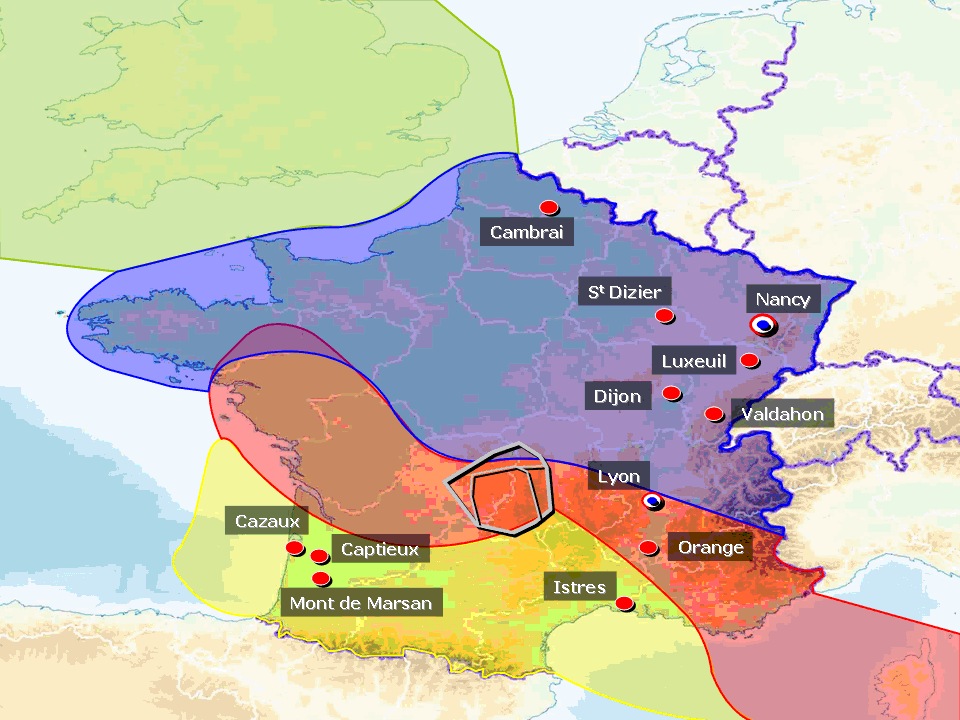
On November 02 2010, more than four months prior to the onset of Operation Odyssey Dawn, France and the UK announced the conduct of war games under Operation "SOUTHERN MISTRAL 2011" against "AN IMAGINARY COUNTRY' called "SOUTHLAND", living under a "DICTATORSHIP"  which allegedly "was responsible for an attack against France's national interests".  

The Franco-British (humanitarian) air operation against "SOUTHLAND" was to be carried out pursuant to an IMAGINARY "UNITED NATIONS SECURITY COUNCIL RESOLUTION NO: 3003".

The war games were scheduled to start on March 21, 2011. THESE FRANCO-BRITISH WAR GAMES  NEVER TOOK PLACE. OPERATION "SOUTHERN MISTRAL" WENT LIVE ON MARCH 19, 2011 (two days prior to the scheduled date).
Below is the exact quote and colors from the Franco-British war games website which is hosted by France's Air Force: 
"SOUTHLAND : Dictatorship responsible for an attack against France's national interests. 

FRANCE : Makes the decision to show its determination to SOUTHLAND (under United Nations Security council resolution n°3003).

UNITED-KINGDOM : Allied country as determined in the bilateral agreement. The United Kingdom supports France through the deployment of its air assets." (Commandement de la défense aérienne et des opérations aériennes,  Southern Mistral 2011:  Scenario)
The war games were scheduled to take place from the 21st to the 25 March 2011.
"Six Royal Air Force Tornado GR4s, one tanker Vickers VC-10 and one Boeing E3D will be deployed together with French Air force Mirage 2000Ds, 2000Ns and 2000Cs operating with a fleet of around thirty aircraft including helicopters, Boeing tankers and Awacs radar aircraft.
Air Raid Southern Storm will be commanded and controlled by the National Air Operations Centre (CNOA) of Lyon Mont-Verdun air base (BA 942).
An Air Operations Cell deployed at Nancy air base (BA 133) will follow in real time all the air missions and reproduce the air raids.
Simultaneously, Paratrooper Commando Air 20 (CPA20) will receive its British counterpart in Dijon: the RAF Regiment. Together they will train for air base protection missions on operational theatres in compliance with what is achieved today in Afghanistan.


SOUTHLAND : Dictatorship responsible for an attack against France's national interests.

FRANCE : Makes the decision to show its determination to SOUTHLAND (under United Nations Security council resolution n°3003).

UNITED-KINGDOM : Allied country as determined in the bilateral agreement. The United Kingdom supports France through the deployment of its air assets.

NAVARRE : Allied country giving clearance to French and British aircraft to overfly its territory.

(See Commandement de la défense aérienne et des opérations aériennes, Operation Southern Mistral: Scenario)


THESE FRANCO-BRITISH WAR GAMES  NEVER TOOK PLACE. OPERATION "SOUTHERN MISTRAL" WENT LIVE ON MARCH 19, 2011 AGAINST "SOUTHLAND".
"OPERATION SOUTHERN MISTRAL"  =  "Operation Odyssey Dawn"
"SOUTHLAND" = "Libya"
"Security Council Resolution 3003"   = "Security Council Resolution 1973".

"DICTATORSHIP" = "Qadhaffi Regime"

Under the war games scenario Security Council Resolution 3003 was proposed by France, whereas "the real life" UN Security Council Resolution 1973 was proposed by France, the UK and Lebanon. 
The only difference of substance is that "SOUTHLAND" (aka Libya), the so-called imaginary Southern country for the war games was inserted inside the territory of Southern France (See Map above THE UK IS GREENFRANCE IS BLUESOUTHLAND IS RED AND NAVARRE IS ORANGE). (Navarre 'Navarra" designates a region of  Northern Spain).
  
The imaginary location of this imaginary Southern country called "SOUTHLAND" was not really an issue, because the war games were postponed...
     
The French Air Force announced (in English) the "Suspension of exercise Southern Mistral 2011 [against SOUTHLAND]... Due to the current international events [BOMBING OF LIBYA], exercise Southern Mistral has been suspended."  Suspension of exercise Southern Mistral 2011. The French version uses the term Mise en veille which means "put on standby" (Mise en veille de l’exercice Southern Mistral 2011). THE OPERATION WAS NOT "PUT ON STANDBY": THE BRITISH AND FRENCH WAR PLANES WHICH WERE TO BE DEPLOYED AS PART OF OPERATION "SOUTHERN MISTRAL" INCLUDING FRANCE'S MIRAGE 2000 AND BRITAIN'S TORNADO GR4A WERE SENT TO BOMB LIBYA

Royal Air Force Tornado GR4A slated to be deployed in
the Southern Mistral war games against "Southland".


What can be said regarding these war games, the attacks on Libya and United Nations Security council resolutions 3003 and 1973?....

We invite our readers to think and reflect on the logic of military planning.

Military operations of this size and magnitude are never improvised. The war on Libya as well as the armed insurrection were planned months prior to the Arab protest movement. In the words of  Rep. Denis Kucinich:
"While war games are not uncommon, the similarities between ‘Southern Mistral’ and ‘Operation Odyssey Dawn’ highlight just how many unanswered questions remain regarding our own military planning for Libya.

The ‘Southern Mistral’ war games called for Great Britain-French air strikes against an unnamed dictator of a fictional country, “Southland.” The pretend attack was authorized by a pretend United Nations Security Council Resolution. The ‘Southern Mistral’ war games were set for March 21-25, 2011.

On March 19, 2011, the United States joined France and Great Britain in an air attack against Muammar Gaddafi’s Libya pursuant to UN Security Council Resolution 1973.

Scheduling a joint military exercise that ends up resembling real military action could be seen as remarkable planning by the French and British, but it also highlights questions  regarding the United States’ role in planning for the war. We don’t know how long the attack on Libya has been in preparation, but Congress must find out. We don’t know who the rebels really represent and how they became armed, but Congress must find out. (Denis Kucinich, Kucinich: President Had Time to Consult with International Community, Not Congress? | Congressman Dennis J. Kucinich, Press Release, March 29, 2011)

 Global Research Articles by Michel Chossudovsky

Tuesday, December 07, 2010

More Israeli Game Theory Warfare?

By Jeff Gates
Online Journal Contributing Writer
Dec 3, 2010, 00:26
Courtesy Of "The Online Journal"


“The United States is the real victim of WikiLeaks. It’s an action aimed at discrediting them.” --Franco Frattini, Foreign Minister of Italy

The impact of the WikiLeaks release of diplomatic cables fits the behavior profile of those well versed in game theory warfare.

When Israeli mathematician Robert J. Aumann received the 2005 Nobel Prize in economic science for his work on game theory, he conceded, “the entire school of thought that we have developed here in Israel” has turned “Israel into the leading authority in this field.”

The candor of this Israeli-American offered a rare insight into an enclave long known for waging war from the shadows. Israel’s most notable success to date was “fixing” the intelligence that induced the U.S. to invade Iraq in pursuit of a geopolitical agenda long sought by Tel Aviv When waging intelligence wars, timing is often the critical factor for game theory war planners. The outcome of the WikiLeaks release suggests a psy-ops directed at the U.S.

Why now? Tel Aviv was feeling pressure to end its six-decade occupation of Palestine. With this release, its foot-dragging on the peace process was displaced with talk of an attack on Iran.

While the U.S. bore the brunt of the damage, the target was global public opinion. To maintain the plausibility of The Clash of Civilizations, a focus must be maintained on Iran as a credible Evil Doer.

With fast-emerging transparency, Israel and pro-Israelis have been identified as the source of the intelligence that took coalition forces to war in Iraq. Thus, the need to shift attention off Tel Aviv.

WikiLeaks may yet succeed in that mission.

Foreseeable Futures

Game theory war planning aims to create outcomes that are predictable -- within an acceptable range of probabilities. That’s why Israeli war planners focus on gaining traction for a plausible narrative and then advancing that storyline step by gradual step.

For the Zionist state to succeed with its expansionist agenda, Iran must remain at center stage as an essential villain in a geopolitical morality play pitting the West against Islamofascists.

To displace facts with false beliefs -- as with belief in the intelligence that induced the invasion of Iraq -- momentum must be maintained for the storyline. Lose the plot (The Clash) and peace might break out. 

And those deceived may identify the deceiver.

Thus the timing of this latest WikiLeaks release. Its goal: to have us believe that it is not Tel Aviv but Washington that is the forefront of geopolitical duplicity and a source of Evil Doing.

Intelligence wars rely on mathematical models to anticipate the response of those targeted. With game theory algorithms, reactions become foreseeable -- within an acceptable range of probabilities.

Control enough of the variables and outcomes become a mathematical inevitability.

The WikiLeaks’ Motive

Was the reaction to this latest WikiLeaks foreseeable? With exquisite timing, the U.S. was discredited with an array of revelations that called into question U.S. motives and put in jeopardy U.S. relations worldwide.

As the Italian Foreign Minister summarized: “The news released by WikiLeaks will change diplomatic relations between countries.”

The hard-earned trust of the Pakistanis disappeared overnight. Attempts to engage Iran were set back. 

The overall effect advanced The Clash storyline. If Washington could so badly misread North Korean intentions, then why is the U.S. to be trusted when it comes to a nuclear Iran?

This Wiki-catalyzed storyline pushed Israel off the front page in favor of Iran.

Even U.S. detainees at Guantanamo are again at issue, reigniting that shameful spectacle as a provocation for extremism and terror. U.S. diplomats will now be suspected of spying and lying. What nation can now trust Americans to maintain confidences?

In short, the risks increased for everyone.

Except Israel.

Should Israel launch an attack on Iran, Tel Aviv can cite WikiLeaks as its rationale. Though an attack would be calamitous from a human, economic and financial perspective, even that foreseeable outcome would be dwarfed by the enduring hatred that would ensue.

That too is foreseeable -- from a game theory perspective of those marketing The Clash.

The effect of the U.S. invasion of Iraq was predictable. King Abdullah of Saudi Arabia foresaw it, noting simply that the U.S. invasion would “give Iraq to Iran as a gift on a golden platter.”

With the elimination of Sunni leader Saddam Hussein, the numerically dominant Shiites of Iraq were drawn into the political orbit of the Shiite-dominant Iran.

Game theorists focus their manipulation of affairs on their control of key variables. Then events take on a life all their own. The impact of this discrediting release was wide-ranging and fully foreseeable.

A Mossad case officer explained Israel’s success at waging war by way of deception: “Once the orchestra starts to play, we just hum along.”

These, after all, are the leading authorities in the field.

Jeff Gates is author of “Guilt By Association -- How Deception and Self-Deceit Took America to War.” See www.criminalstate.com.


Copyright © 1998-2007 Online Journal

Friday, December 18, 2009

Computer Model Predicts Future Conflicts

Calculated Terror
How a computer model predicts the future in some of the world's most volatile hotspots.
BY AARON MANNES, V.S. SUBRAHMANIAN
DECEMBER 15, 2009
Courtesy Of Foreign Policy Magazine

On Oct. 27, a Katyusha rocket was fired from Lebanon and struck down in an open area outside the northern Israeli town of Kiryat Shmone. This was the ninth such rocket strike since the end of the 2006 war between Israel and Hezbollah. No group claimed responsibility for the attack, but smaller Palestinian groups hoping to spark another round of fighting are the most likely suspect. Hezbollah, despite its extreme anti-Israel politics, did not join the fight, even after Israeli counterstrikes.

The "Blue Line" separating Israel from Lebanon is one of the most volatile borders in the world. But predicting when this area, and other tense regions throughout the world, will erupt into violence often appears to be little more than guesswork. How can policymakers overcome their own biases and limited information to anticipate if an incident like the recent rocket strike on Israel will spark a larger conflict, like the 2006 war, or fizzle out?

Increasingly, the answer is: Develop a computer model from historical data. The University of Maryland's Laboratory for Computational Cultural Dynamics (LCCD) constructed one such model that predicted this period of quiet along the Israeli-Lebanese border, and also provides insight into Hezbollah's priorities. LCCD developed a framework, known as Stochastic Opponent Modeling Agents (SOMA), that examines historical data and automatically generates rules assessing the probability that a group will take certain actions under certain conditions.

SOMA examines historical data about the group's behavior and tries to find conditions such that, when the condition is true, the group takes a given action with high probability and, when the condition is false, the group takes the action with very low probability. A human analyst could make these connections when there are relatively few variables being tracked. But when there are dozens of variables there are millions of such possible rules -- far more than an analyst can process. This is often the case in the interconnected world of Middle East politics, where events are shaped by the actions of many actors working in a diverse array of countries.

SOMA rules have also been extracted on the behavior of other Middle Eastern groups. Hamas, for example, is twice as likely to commit kidnappings during periods of conflict with other Palestinian organizations (the probability increases from approximately 33 percent to 67 percent). If another round of Fatah-Hamas fighting erupts in the West Bank, this may present a new challenge for Israeli security. While the rules had not been extracted in 2006, it is worth noting that the Israeli soldier Galid Shalit was kidnapped as the conflict between Hamas and Fatah expanded after the 2006 Palestinian elections.

SOMA is not specifically designed to model the behavior or Hezbollah or even of terrorist organizations -- it has also examined the behaviors of various actors in the Afghan drug trade under different circumstances. This model was built on a hypothetical situation, not systematically gathered data, but demonstrates the way in which SOMA can be applied to a broad range of conflicts and scenarios. The analysis showed that frequently used strategies such as burning poppy fields and destroying drug labs in Afghanistan are unlikely to lead to a long-term decline in the Afghan drug trade.

Models require data, and limitations of that data can limit the accuracy of a system such as SOMA. For the analysis of Hezbollah (and several other groups) SOMA used the Minorities at Risk Organization Behavior (MAROB) data set created at the University of Maryland's Center for International Development and Conflict Management. MAROB identifies factors that motivate members of ethnic minorities to form activist organizations and move from conventional politics to terrorism. MAROB has systematically collected information on more than 150 variables from over 100 organizations across the Middle East during the last several decades. Hezbollah is one of the organizations profiled; the data collected covers Hezbollah from its 1982 founding through 2004.

In examining the rules generated by SOMA about Hezbollah's behavior, the most striking finding was the correlation between Hezbollah attacks on Israeli citizens and Lebanese elections. Since the re-establishment of Lebanon's parliamentary democracy in 1992, there was a 62 percent chance Hezbollah would target Israeli civilians (primarily through rocket attacks) in any given year through 2004. In off-election years the likelihood jumped to 78 percent, while in election years the probability was negligible. The one election year in which Hezbollah fired rockets at Israel was 1996. Though Hezbollah won a propaganda victory when Israel's response caused heavy Lebanese civilian casualties, the organization lost parliament seats in the 1996 elections. Hezbollah has since sought to keep its fighting with Israel within certain boundaries, avoided major escalations during election years, and re-emphasized its provision of social services within Lebanon.

The test for any model is whether or not its predictions hold. During Israel's Operation Cast Lead against Hamas in Gaza, there was concern that Hezbollah would initiate a second front to aid its ally. But Hezbollah offered only rhetorical support to Hamas. During the Gaza operation, a few rockets were fired from Lebanon into Israel and Hezbollah quickly and credibly denied responsibility. With an election later in the year, Hezbollah determined that it could not risk renewed violence with Israel -- particularly in the wake of the 2006 war, which many Lebanese felt was brought on by Hezbollah and that left much of south Lebanon in ruin.

Beyond its predictive value, these findings provide insight into Hezbollah's behavior and priorities. The SOMA results highlight how Hezbollah needs to maintain its position within Lebanon's political system, even if that restricts its ability to wage war on Israel. Though the conflict with Israel is the organization's raison d'être, Hezbollah's leadership has taken steps -- such as participating in the Lebanese parliament -- to prevent the party from being politically isolated.

However, this balancing act is becoming more difficult to maintain, as these two aspects of Hezbollah are coming into increasing conflict. The 2006 war inflicted massive costs on the Lebanese people, which has made them less likely to tolerate Hezbollah's foreign adventurism. Earlier in October an explosion at a private home revealed the presence of a Hezbollah arms cache (Hezbollah disputes this). This incident reminded the Lebanese that Hezbollah remains capable of launching another round of fighting with Israel, and raised the specter of the conflict being sparked by accident. The recent Israeli seizure of a cargo ship carrying nearly 400 tons of weapons apparently intended for Hezbollah raised further concerns that Lebanon could again become a battlefield between foreign powers. If one appreciates that Lebanese popular opinion exerts a strong influence on Hezbollah's actions, it should be clearer that another Israel-Hezbollah war remains unlikely.

SOMA's analysis of Hezbollah's behavior serves both analysts and policymakers by making a specific prediction about the group's likely actions, and also by highlighting this important underlying dynamic. As the data collected expands in breadth and depth, it may become possible to make specific predictions about how, when, and under what circumstances regional changes will occur. While the Oct. 27 rocket strike on northern Israel seems to be just the sort of incident which could cause an unpredictable chain reaction in the region, in the future its repercussions may largely be known before the rocket leaves the ground.