Showing posts with label Cell Phones. Show all posts

Tuesday, November 19, 2013

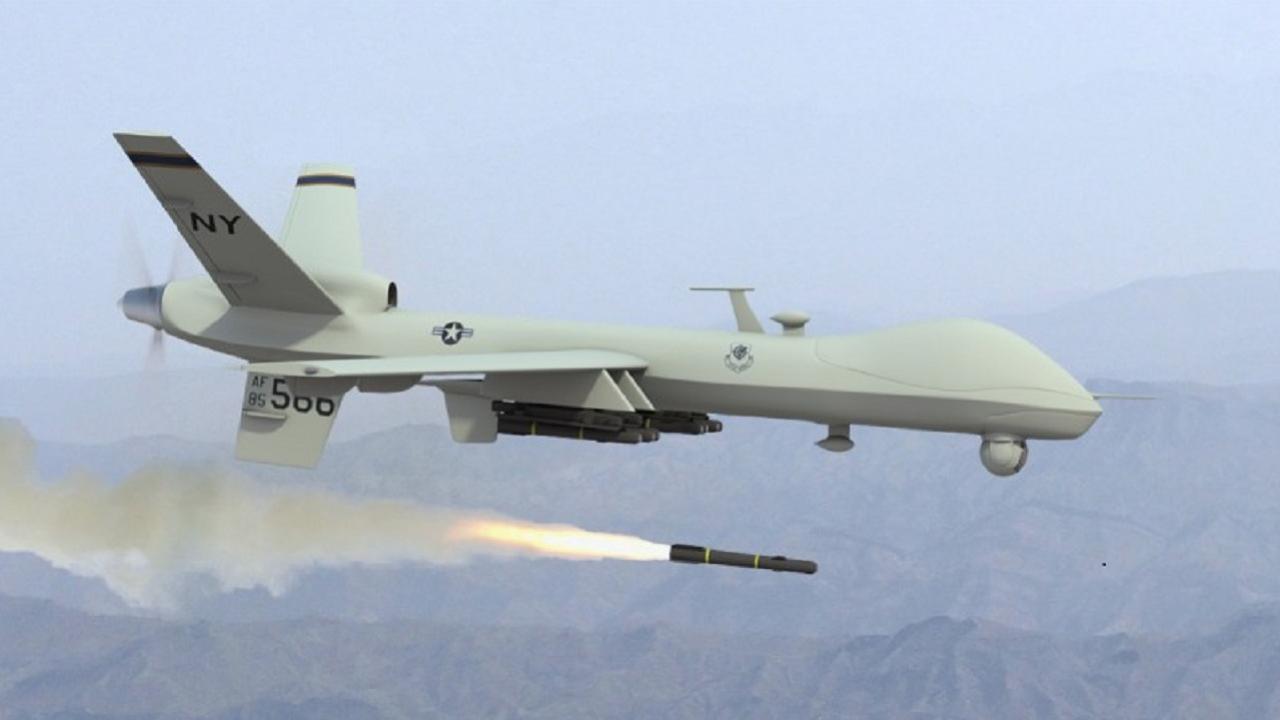
HOW THE CIA CAN SEND A DRONE AFTER ANY MOBILE PHONE


NEW REVELATIONS FROM THE CIA'S KILLER UAV PROGRAM SHOW HOW THE AGENCY IS ABLE TO LOCK PREDATOR DRONES ON TARGETS THROUGH THEIR MOBILE PHONES--EVEN AFTER THEY HAVE TURNED THEIR PHONES OFF.

Since 2001, armed Predator drones have been used by the CIA in many foreign nations to attack individuals on the ground. There's a new revelation about them, too: In some cases, the NSA helped the CIA find targets by locking onto their powered-off mobile phones. Even when phones have their batteries removed, it appears the NSA still has the ability to locate them.
Buried inside a Washington Post story by Dana Priest is the following tidbit:
By September 2004, a new NSA technique enabled the agency to find cellphones even when they were turned off. JSOC troops called this "The Find," and it gave them thousands of new targets, including members of a burgeoning al-Qaeda-sponsored insurgency in Iraq, according to members of the unit.
At the same time, the NSA developed a new computer linkup called the Real Time Regional Gateway into which the military and intelligence officers could feed every bit of data or seized documents and get back a phone number or list of potential targets. It also allowed commanders to see, on a screen, every type of surveillance available in a given territory.
"The Find," the Post article says, is run by a team in the basement of the NSA's headquarters whose job is to track the location of mobile phones in real time. Because many phones have chips that stay on even after a battery has been removed, tracking powered-down phones is within the realm of possibility.
The revelations fit right in with the Edward Snowden disclosures, but the NSA isn't the only one tracking phones: Other government agencies and private companies regularly track them without warrants or court orders as well.
[Image: Teknolgeek]

Saturday, March 16, 2013

Stingray: The Clandestine Cellphone Tracking Device

--

It was described recently by one rights group as a “secretive new surveillance tool.” But documents just released by the FBI suggest that a clandestine cellphone tracking device known as the “Stingray” has been deployed across the United States for almost two decades—despite questions over its legality.
Stingrays, as I’ve reported here before, are portable surveillance gadgets that can trick phones within a specific area into hopping onto a fake network. The feds call them “cell-site simulators” or “digital analyzers,” and they are sometimes also described as “IMSI catchers.” The FBI says it uses them to target criminals and help track the movements of suspects in real time, not to intercept communications. But because Stingrays by design collaterally gather data from innocent bystanders’ phones and can interrupt phone users’ service, critics say they may violate a federal communications law.
fresh trove of FBI files on cell tracking, some marked “secret,” was published this week by the Electronic Privacy Information Center. They shed light on how, far from being a “new” tool used by the authorities to track down targets, Stingray-style technology has been in the hands of the feds since about 1995 (at least). During that time, local and state law enforcement agencies have also been able to borrow the spy equipment in “exceptional circumstances,” thanks to an order approved by former FBI Director Louis Freeh.
EPIC, a civil liberties group, obtained the documents through ongoing Freedom of Information Act litigation that it is pursuing in order to get the feds to hand over some 25,000 pages of documents that relate to Stingray tools, about 6,000 of which are classified. The FBI has been drip-releasing the documents monthly, and there have been a couple of interesting nuggets in the batches so far—like a disclosure that the FBI has a manual called “cell tracking for dummies” and details hinting that the feds are well aware the use of Stingrays is in shaky legal territory.
The latest release, amounting to some 300 selectively redacted pages, not only suggests that sophisticated cellphone spy gear has been widely deployed since the mid-‘90s. It reveals that the FBI conducted training sessions on cell tracking techniques in 2007 and around the same time was operating an internal "secret" website with the purpose of sharing information and interactive media about "effective tools" for surveillance. There are also some previously classified emails between FBI agents that show the feds joking about using the spy gear. "Are you smart enough to turn the knobs by yourself?" one agent asks a colleague.
On a more serious note, EPIC attorney Alan Butler told me he believes the release raises further legal questions about the technology. It shows that the bureau has been classifying the use of “cellsite simulator” as a “pen register device,” following guidance issued by the Department of Justice. “Pen register” is a term used to describe a type of surveillance that does not usually require a search warrant because it records only metadata—the who, where, and when of a communication but not the content. However, Butler pointed out, a June 2012 ruling in the Southern District of Texas found that Stingrays should require a warrant, with the judge concluding that “the government has not provided any support that the pen register statute applies to stingray equipment.”
Stingrays have garnered attention since a 2011 Arizona court case in which one agent admitted in an affidavit that the tool collaterally swept up data on “innocent, non-target devices” (U.S. v. Rigmaiden). The government eventually conceded in this case that the “tracking operation was a Fourth Amendment search and seizure,” meaning it required a warrant. But given that the Justice Department has continued to claim that cellphone users have no reasonable expectation of privacy over their location data, it may take a Supreme Court judgement to settle the Stingray issue countrywide.
In a statement emailed in response to questions about Stingray technology, FBI spokesman Christopher Allen told me that its use of “any investigative tool” is required to be in compliance with the Constitution, U.S. laws, internal DOJ guidelines, and is subject to internal and external oversight. He added that the bureau “strives to protect our country and its people using every available tool, with utmost respect for the rule of law and our cherished right to privacy.” 
“Location information is a vital component of law enforcement investigations,” Allen wrote. “During the course of FBI investigations and as permitted by controlling legal authority, the FBI may use a variety of tools and technology, including cell phone location technology.” 
Via: "Slate"

Saturday, February 16, 2013

Anti-Surveillance Stealth Wear

463163_4088787225000_1173267298_o-720x540

Promises To Thwart Cell Tracking and Drones

In a move that demonstrates that drones, facial recognition technology, and cellphone snooping are starting to affect the broader culture, the New York-based artist has designed a line of high-tech garments made with sophisticated fabrics that can block signals and thwart cameras.

Set to launch next week in London as part of a collaborative project with fashion designer Johanna Bloomfield, Harvey’s line of “Stealth Wear” clothing includes an “anti-drone hoodie” that uses metalized material designed to counter thermal imaging used by drones to spot people on the ground.
He’s also created a cellphone pouch made of a special “signal attenuating fabric.” The pocket blocks your phone signal so that it can’t be tracked or intercepted by devices like the covert “Stingray” tool used by law enforcement agencies like the FBI. And if that’s not enough, Harvey has also made what he calls an “XX-Shirt,” which uses material designed to “protect your heart from X-ray radiation.”
The 31-year-old artist, who studied mechanical engineering as an undergrad at Penn State, says the increased use of military surveillance technologies in civilian environments inspired him to create the clothing line. 
“Military technology is coming home from the war,” he tells me, referring to the growing use of spy drones across the United States. “These pieces are designed to live with it, to cope with it—to live in a world where surveillance is happening all the time.”
The artist’s past endeavours have taken a similar stand against the rise of surveillance technologies. A previous project called “CVDazzle” explored how face-painting and hair-styling could be used to thwart face recognition cameras. He’s not alone in this anti-snooping field, either. Last year, German artist Martin Backes created a counter-surveillance balaclava called “Pixelhead.” Meanwhile, others have tried using DIY methods such as infrared head torches to frustrate the operators of security cameras.
As surveillance becomes more ubiquitous, it seems, we can expect to see increasingly creative and innovative efforts to challenge it coming from all corners of society. Fashion might be most commonly associated with models and catwalks—but it’s a sign of the times that it can now be about drones and data mining, too.
Via: "Stealth"

Friday, February 15, 2013

The FBI's Clandestine Cellphone Tracking Tool


The FBI calls it a “sensitive investigative technique” that it wants to keep secret. But newly released documents that shed light on the bureau’s use of a controversial cellphone tracking technology called the “Stingray” have prompted fresh questions over the legality of the spy tool.
Functioning as a so-called “cell-site simulator,” the Stingray is a sophisticated portable surveillance device. The equipment is designed to send out a powerful signal that covertly dupes phones within a specific area into hopping onto a fake network. The feds say they use them to target specific groups or individuals and help track the movements of suspects in real time, not to intercept communications. But by design Stingrays, sometimes called “IMSI catchers,” collaterally gather data from innocent bystanders’ phones and can interrupt phone users’ service—which critics say violates a federal communications law.
The FBI has maintained that its legal footing here is firm. Now, though, internal documents obtained by the Electronic Privacy Information Center, a civil liberties group, reveal the bureau appears well aware its use of the snooping gear is in dubious territory. Two heavily redacted sets of files released last month show internal Justice Department guidance that relates to the use of the cell tracking equipment, with repeated references to a crucial section of the Communications Act which outlines how “interference” with communication signals is prohibited. 
It’s a small but significant detail. Why? Because it demonstrates that “there are clearly concerns, even within the agency, that the use of Stingray technology might be inconsistent with current regulations,” says EPIC attorney Alan Butler. “I don't know how the DOJ justifies the use of Stingrays given the limitations of the Communications Act prohibition.”
The FBI declined a request to comment on specific questions related to the legality of Stingrays, as it says the matter remains in litigation. Spokesman Christopher Allen told me by email that “in general the FBI cautions against drawing conclusions from redacted FOIA documents.”
A potential legal conflict, however, is not all the documents draw attention to. They disclose that the feds have procedures in place for loaning electronic surveillance devices (like the Stingray) to state police. This suggests the technology may have been used in cases across the United States, in line with a stellar investigation by LA Weekly last year, which reported that state cops in California, Florida, Texas, and Arizona had obtained Stingrays. More still, the trove offers a rare hint at the circumstances in which Stingrays are deployed. “Violent Gang Safe Street Task Forces Legal Issues" is the title of one newly released set of FBI presentation slides related to tracking tactics.
It’s likely that in the months ahead, a few more interesting nuggets of information will emerge. The FBI has told EPIC that it holds a mammoth 25,000 pages of documents that relate to Stingray tools, about 6,000 of which are classified. The Feds have been drip-releasing the documents month by month, and so far there have been four batches containing between 27 and 184 pages each. Though most of the contents—even paragraphs showing how the FBI is interpreting the law—have been heavy-handedly redacted, several eyebrow-raising details have made it through the cut. As I reported back in October, a previous release revealed the Feds have an internal manual called “GSM cellphone tracking for dummies.”
The release of the documents was first prompted last year after EPIC launched a lawsuit under the Freedom of Information Act. The suit was triggered after it emerged during a court case in 2011 that the feds had used a cell-site simulator in order to track down a suspect, with one agent admitting in an affidavit that the tool collaterally swept up data on “innocent, non-target devices” (U.S. v. Rigmaiden). The government has previouslyargued that tools like the Stingray are permissible without a search warrant—outside the search and seizure protections offered by the Fourth Amendment—because they use them to gather location data, not the content of communications. The Justice Department says cellphone users have no reasonable expectation of privacy over their location data—a claim that has incensed privacy and civil liberties groups.
Via: "Slate"

Monday, May 14, 2012

DNA-Destroying Chip Being Embedded Into Mobile Phones

Terrence Aym
April 29, 2012
Courtesy Of "4 Winds 10"


According to Dr. Boian Alexandrov at the Center for Nonlinear Studies at Los Alamos National Laboratory in New Mexico, terahertz (THz) waves destroy human DNA. The waves literally unzip the helix strand. Now a team of technologists at UT Dallas are planning to take chips broadcasting THz waves and embed them into mobile phones for use as an imaging system for consumers, law enforcement and medical personnel… a potentially deadly technology that could eventually kill or sicken millions of people.
The controversial THz scanner technology used by the TSA at many of the nation’s airports is being adapted for cell phone use. Studies of terahertz radiation have caused experts to raise alarms over the significant health risks to humans.

Recently major media touted a new chip that permits the adaption of a THz generating device to be embedded into cellular phones.
Is the price for seeing through walls, a grisly death?
The excited press painted grand pictures of such technology being used by consumers to see through walls and objects, while health professionals like physcians might incorporate the technology to seek out small tumors inside patients without the need for invasive surgery.
The THz wave—located between microwaves and infrared on the electromagnetic spectrum—was chosen for security devices because it penetrates matter such as clothing, wood, paper and other porous material that’s non-conducting. At the time experts believed this type of radiation was harmless.

They were wrong.
From this…                                                To this…?
THz Radiation Unzips The DNA Molecule
In a breakthrough study conducted by Dr. Boian Alexandrov at the Center for Nonlinear Studies at Los Alamos National Laboratory in New Mexico and a team of physicists, they discovered terrifying evidence that exposure to THz radiation builds cumulatively and affects human and animal tissue DNA. In essence, it tends to unzip the DNA molecule. [See: Inside TSA scanners: How terahertz waves tear apart human DNA]

The Los Alamos scientists paper, DNA Breathing Dynamics in the Presence of a Terahertz Field reveals very disturbing—even shocking—evidence that THz radiation significantly damages the DNA of the people being directed through airport scanners and all TSA workers in close proximity to the machines.

Their synopsis: “We consider the influence of a terahertz field on the breathing dynamics of double-stranded DNA. We model the spontaneous formation of spatially localized openings of a damped and driven DNA chain, and find that linear instabilities lead to dynamic dimerization, while true local strand separations require a threshold amplitude mechanism. Based on our results we argue that a specific terahertz radiation exposure may significantly affect the natural dynamics of DNA, and thereby influence intricate molecular processes involved in gene expression and DNA replication.

 
What all that means is the resonant effects of the THz waves bombarding humans unzips the double-stranded DNA molecule. This ripping apart of the twisted chain of DNA creates bubbles between the genes that can interfere with the processes of life itself: normal DNA replication and critical gene expression.

Likely To Cause Cancer
David J. Brenner, a Columbia University doctor and expert on the effects of radiation stated that it’s quite likely the TSA scanners will cause cancer in some individuals.

Brenner, whose Columbia’s Center for Radiological Research work focuses on radiation’s effects on biological processes, low exposure risk evaluation and radio-isotopic therapy, is concerened that people with compromised immune systems such as AIDS patients, those suffering from lupus or other immune-deficient ailments are especially at risk. Infants, children up to age 5 or 6, women who are pregnant or lactating, cancer patients and many more should steer far clear of the machines.
DNA strand bombarded by THz radiation unzips
Those exposed to THz radiation—whether from security scanners or future cell phone technology—who are taking certain prescription medications or have significantly low levels of certain vitamins have increased risk of radiation induced carcinomas.

Repeated exposure to low level radiation scans can also lead to cataracts and bring on skin cancer—including deadly melanoma.
A CMOS chip used in many different products
THz To Utilize Existing CMOS Chips
According to the Daily Mail, the chips—created using Complementary Metal-Oxide Semiconductor—or CMOS use the same technology already incorporated into devices like HD TVs, smart phones and personal computers.
Dr. Kenneth O, professor of electrical engineering at the University of Texas at Dallas and leader of the project explained to theDaily Mail that “We’ve created approaches that open a previously untapped portion of the electromagnetic spectrum for consumer use and life-saving medical applications.

“CMOS is affordable and can be used to make lots of chips,” Dr. O said. “The combination of CMOS and terahertz means you could put this chip and receiver on the back of a cellphone, turning it into a device carried in your pocket that can see through objects.”

The team’s findings were presented to an enthusiastic audience at the 2012 International Solid-State Circuits Conference held in San Francisco, California. Next the team plans to create the CMOS terahertz imaging system.

Before moving ahead with the project, the good doctor and his team might consider contacting Dr. Boian Alexandrov and histeam at Los Alamos to compare notes.

It would be a shame if a deadly technology that could eventually kill or sicken millions of people were unknowingly sold across the world.


Wednesday, September 02, 2009

Biometric Passports Leads To Constant Surveillance

The protection of privacy and personal data is vital for any democratic society, and should be respected as much as freedom of expression or movement.
By Vera von Kreutzbruck ,
Source: The Women's International Perspective.
Posted August 28, 2009.
Courtesy Of Alter Net

One of life’s sweet pleasures is to travel. Thanks to the increasing number of low-cost flights, traveling abroad is no longer a luxury reserved for the privileged few. At the same time, however, there is an alarming increase in the demand of personal data from tourists and no clear transatlantic legal framework on personal data exchange. Though third parties such as airlines and airport operators have the right to read this data, we don’t know what happens with it afterwards.

Under legislation introduced after the September 11th attacks, the United States has tightened security measures for foreign tourists entering its country. The latest measure requires that by 2012, every traveler entering the United States who is part of the visa-waiver program must have a biometric passport or be forced to apply for a visa.

The biometric passport – which contains an embedded chip with personal data, facial images and fingerprints – is on its way to becoming a global travel prerequisite. Current passports will remain valid for travel to most countries until then. Germany, France and the Netherlands have already started issuing the new documents. EU parliamentarians approved the US’ demand and passed a ruling at the end of 2005 saying that its goal is to combat illegal immigration, terrorism and organized crime. But the excuse that the new passports will help prevent international terrorism is questionable since security agents will need to know whose face or fingerprints they are looking for in the first place.

Initially, Washington gave a 2006 deadline for the 27 countries in the EU and other visa-waiver countries such as Norway, Iceland and Switzerland, but then pushed the date back to June of this year to give these countries more time to prepare the technology needed to issue the biometric passports. The US State Department started introducing e-passports in 2006 and every passport holder in the US is projected to have one by 2017.

In the meantime, there is little enthusiasm for these new requirements. Data watchdogs and human rights activists argue that this regulation treats everyone as a potential criminal, thus violating the protection of citizens’ personal data and imposing a state of constant surveillance.

Peter Hustinx, the European Data Protection Supervisor, said in a press conference on the implementation of biometric passports in 2007 that security measures aimed at preventing terrorism are often stepped up at the expense of privacy. Hustinx is in charge of giving governments and EU bodies advice on data security standards and acts independently of EU institutions. He warned that the EU was “rushing in a new era” of using biometric identifiers for security checks while standards for data protection were still not clear.

“It is very important that the biometric data is only saved in the passport and not in external databanks. Until now there are no international regulations which guarantee this,” said Peter Schaar, German Federal Commissioner for Data Protection, at a conference on data protection held in March of this year in Berlin.

In 2005 when this ruling was issued, no intense political debate occurred in Germany but there were some voices of dissent. The left-wing daily newspaper Die Tageszeitung published a column saying that since 9/11 domestic security had gained more importance than the protection of fundamental citizen rights. In addition, security experts have warned of the danger and ease with which hackers and state agencies could abuse the data registers and the sensitive personal information they track.

In fact, the e-pass, which is supposed to protect states against terrorist attacks, is not so safe at all. In 2006 at the Black Hat security conference held in Las Vegas, Lukas Grunwald, a German computer security consultant, proved that the data in the chips is easy to copy. He demonstrated that a terrorist could carry a passport with his/her real name and photo printed on the pages, but with a chip that contains different information cloned from someone else’s passport. However, this could be easily avoided if the security official examines the pass to make sure the name and the picture printed on it match the data read from the chip.

Further troubling to activists and watchdogs, the European Union is about to enter talks with the US on giving it access to banking data. The plan could go beyond an existing deal with the EU that allows trans-Atlantic airlines to transfer credit card, email addresses, passport, travel itineraries and other data belonging to European passengers to US officials. The US has already been examining transactions handled by the Society for Worldwide Interbank Financial Transactions (SWIFT) since 9/11. SWIFT, which is headquartered in Belgium, is planning to move its servers and database from the US to Europe. With data privacy laws far stricter in Europe, the US would then need permission from the EU before it could gain access to this sensitive information.

The protection of a citizen’s privacy and personal data is vital for any democratic society, and should be respected as much as freedom of expression or movement. Some officials in the US and the EU would do well to re-read Article 8 of the European Union’s Charter of Fundamental Rights which states the following:

“Everyone has the right to the protection of personal data concerning him or her. Such data must be processed fairly for specified purposes and on the basis of the consent of the person concerned or some other legitimate basis laid down by law. […] Compliance with these rules shall be subject to control by an independent authority.”

In the paranoid quest for more security, freedom and privacy are often sacrificed. We are all being watched by “Big Brother,” but who is watching “Big Brother” for us?

You might be interested in: