Showing posts with label 911. Show all posts

Sunday, June 02, 2013

Dissent As 'Terrorism': Targeting Public Protest In The Post-9/11 Era


Results from a year-long investigation into the activities of the United States' expansive counter-terrorism apparatus found that, throughout the country, the government has turned the tax-payer-funded intelligence-gathering against its own citizens in an effort to suppress dissent.


Released Monday by the DBA Press and the Center for Media and Democracy, the report, Dissent or Terror: How the Nation's Counter Terrorism Apparatus, In Partnership With Corporate America, Turned on Occupy Wall Street (pdf), focuses primarily on the many instances of "fusion center" monitoring of Occupy Wall Street activists nationwide.
"Put simply," the report states, "heavily-funded municipal, county, state and federal 'counter-terrorism' agencies (often acting in concert through state/regional 'fusion centers') view citizens engaged in movements of political and social dissent, such as Occupy Wall Street, as nothing less than nascent, if not bona fide, 'terrorist' threats."
In addition, the review of records shows that this "monitoring" and "suppression" of activists and dissident groups has been largely carried out "on behalf of, and in cooperation with, some of the nation’s largest financial and corporate interests—the very entities that the Occupy Wall Street (OWS) movement and others oppose as usurpers of American democracy."
In a statement released alongside the report, the Center for Media and Democracy says their examination is the first detailed look at the "the breadth and depth of the degree to which the nation's post-September 11, 2001 counter terrorism apparatus has been applied to politically engaged citizens exercising their Constitutionally-protected First Amendment rights."
The report largely focuses the activities of an Arizona fusion center, the Arizona Counter Terrorism Information Center (ACTIC), whose surveillance of those citizens active in Occupy Phoenix "benefited a number of corporations and banks that were subjects of Occupy Phoenix protest activity," including J.P. Morgan Chase.
Some other key findings of the report include:
  • How law enforcement agencies active in the Arizona fusion
 center dispatched an undercover officer to infiltrate activist groups
 organizing both protests of the American Legislative Exchange Council 
(ALEC) and the launch of Occupy Phoenix and how the work of this 
undercover officer benefited ALEC and the private corporations that
 were the subjects of these demonstrations.


  • How fusion centers, funded in large part by the U.S. Department of Homeland Security, expended countless hours and tax dollars in the monitoring of 
Occupy Wall Street and other activist groups.


  • How the U.S. Department of Homeland Security has financed
 social media "data mining" programs at local law enforcement agencies engaged in fusion centers.


  • How counter terrorism government employees applied facial
 recognition technology, drawing from a state database of driver's
 license photos, to photographs found on Facebook in the effort to 
profile citizens believed to be associated with activist groups.


  • How corporations have become part of the homeland security “information sharing environment” with law enforcement/intelligence agencies through various public-private intelligence sharing partnerships. The report examines multiple instances in which the counter terrorism/homeland security apparatus was used to gather intelligence relating to activists for the benefit of corporate interests that were the subject of protests. 


  • How private groups and individuals, such as Charles Koch, 
Chase Koch (Charles' son and a Koch Industries executive), Koch 
Industries, and the Koch-funded American Legislative Exchange Council 
have hired off-duty police officers -- sometimes still armed and in
 police uniforms -- to perform the private security functions of keeping
 undesirables (reporters and activists) at bay.


  • How counter terrorism personnel monitored the protest
 activities of citizens opposed to the indefinite detention language
 contained in National Defense Authorization Act of 2012.
  • How the FBI applied "Operation Tripwire," an initiative
 originally intended to apprehend domestic terrorists through the use
 of private sector informants, in their monitoring of Occupy Wall 
Street groups. [Note: this issue was reported on exclusively by DBA/CMD in December, 2012.]

Tuesday, June 19, 2012

What Might Cause Another 9/11?

What might cause another 9/11?
(Credit: Reuters/Pete Souza/The White House)


It Is Supporters Of Obama's Aggression, Not Its Opponents, Who Are Likely To Provoke Another Terrorist Attack

BY GLENN GREENWALD
TUESDAY, JUN 12, 2012 04:06 PM EDT
Courtesy Of "Salon"

Today’s defense of President Obama from Andrew Sullivan isdevoted to refuting Conor Friedersdorf’s criticism of Obama’s drone program. Says Sullivan:
What frustrates me about Conor’s position – and Greenwald’s as well – is that it kind of assumes 9/11 didn’t happen or couldn’t happen again, and dismisses far too glibly the president’s actual responsibility as commander-in-chief to counter these acts of mass terror.
This is exactly backward. I absolutely believe that another 9/11 is possible. And the reason I believe it’s so possible is that people like Andrew Sullivan — and George Packer — have spent the last decade publicly cheering for American violence brought to the Muslim world, and they continue to do so (now more than ever under Obama). Far from believing that another 9/11 can’t happen, I’m amazed that it hasn’t already, and am quite confident that at some point it will. How could any rational person expect their government to spend a full decade (and counting) invading, droning, cluster-bombing, occupying, detaining without charges, and indiscriminately shooting huge numbers of innocent children, women and men in multiple countries and not have its victims and their compatriots be increasingly eager to return the violence?
Just consider what one single, isolated attack on American soil more than a decade ago did to Sullivan, Packer and company: the desire for violence which that one attack 11 years ago unleashed is seemingly boundless by time or intensity. Given the ongoing American quest for violence from that one-day attack, just imagine the impact which continuous attacks over the course of a full decade must have on those whom we’ve been invading, droning, cluster-bombing, occupying, detaining without charges, and indiscriminately shooting.
One of the many reasons I oppose Obama’s ongoing aggression is precisely that I believe the policies Sullivan and Packer cheer will cause another 9/11 (the other reasons include the lawlessness of it, the imperial mindset driving it, the large-scale civilian deaths it causes, the extreme and unaccountable secrecy with which it’s done, the erosion of civil liberties that inevitably accompanies it, the patently criminal applications of these weapons, the precedent it sets, etc.). I realize that screaming “9/11″ has been the trite tactic of choice for those seeking to justify the U.S. Government’s militarism over the last decade, but invoking that event strongly militates against the policies it’s invoked to justify, precisely because those policies are the principal cause of such attacks, for obvious reasons.
In fact, one need not “imagine” anything. One can simply look at the explanations given by virtually every captured individual accused of attempting serious Terrorist attacks on U.S. soil. The Times Square bomber, the Pakistani-American Faisal Shahzad, said this:
As soon as he was taken into custody May 3 at John F. Kennedy International Airport, onboard a flight to Dubai, the Pakistani-born Shahzad told agents that he was motivated by opposition to U.S. policy in the Muslim world, officials said.
“One of the first things he said was, ‘How would you feel if people attacked the United States? You are attacking a sovereign Pakistan’,” said one law enforcement official, who spoke on condition of anonymity because the interrogation reports are not public. “In the first two hours, he was talking about his desire to strike a blow against the United States for the cause.”
When the federal judge who sentenced Shahzad asked with disgust how he could try to detonate bombs knowing that innocent children would die, he replied: “Well, the drone hits in Afghanistan and Iraq, they don’t see children, they don’t see anybody. They kill women, children, they kill everybody.” Those statements are consistent with a decade’s worth of emails and other private communications from Shahzad, as he railed with increasing fury against the wars in Afghanistan and Iraq, drone attacks in Pakistan, Israeli violence against Palestinians and Muslims generally, Guantanamo and torture, and asked: “Can you tell me a way to save the oppressed? And a way to fight back when rockets are fired at us and Muslim blood flows?”
Najibullah Zazi, one of the first Afghans ever to be accused of Terrorism on U.S. soil when he plotted to detonate bombs in the New York subway system, was radicalized by the U.S. occupation of his country (“This is the payback for the atrocities that you do,” he said). Al Qaeda in the Arabian Peninsula (AQAP) expressly said that the Christmas Day bomb attempt by Umar Farouk Abdulmutallab was in retaliation for the Obama cluster-bomb airstrike in Yemen that killed dozens of women and children along with U.S. support for the Yemeni dictator. The Fort Hood shooter Nidal Hasan was motivatedby “the killing of Muslims in Iraq and Afghanistan.”
Anwar Awlaki was once such a moderate that he vehemently denounced the 9/11 attacks, got invited to the Pentagon to speak, and hosted a column in The Washington Post on Islam — but then became radicalized by the constant post-9/11 killing of Muslims by his country (the U.S.). David Rodhe, the former New York Times reporter who was held hostage by the Taliban for nine months,said after he was released that Taliban “commanders fixated on the deaths of Afghan, Iraqi and Palestinian civilians in military airstrikes, as well as the American detention of Muslim prisoners who had been held for years without being charged.”
Even The Washington Post just two weeks ago pointed out that the primary source of strength for AQAP — the Terror group which the U.S. Government insists is the greatest threat to the U.S. — are repeated U.S. drone strikes in Yemen; said The Post: “An escalating campaign of U.S. drone strikes is stirring increasing sympathy for al-Qaeda-linked militants and driving tribesmen to join a network linked to terrorist plots against the United States.” In late 2009 — almost three years ago – The New York Times pointed out exactly the same thing when quoting a Yemeni official after Obama’s civilian-killing cluster bomb attack (“The problem is that the involvement of the United States creates sympathy for Al Qaeda“). Even Sullivan acknowledges: “there does seem a danger, especially in Yemen, that drones may be focusing the Islamists’ attention away from their own government and onto ours.”
In other words, the very policies that Sullivan and Packer adore are exactly the ones that make another 9/11 so likely. Running around screaming “9/11″ at Obama critics to justify his ongoing American violence in the Muslim world is like running around screaming “lung cancer” to justify heavy cigarette smoking. It isn’t those of us who oppose American aggression in the Muslim world who need manipulative, exploitative reminders about 9/11; it’s those who cheer for these policies who are making a follow-up attack ever more likely.
Prior to 9/11, of course, the U.S. spent decades propping up dictators in that part of that world, overthrowing their democratically elected leaders, imposing devastating sanctions that killed hundreds of thousands of Muslim children — literally — and then blithely justifying it like it was the most insignificant problem in the world, arming, funding and diplomatically protecting continuous Israeli aggression, and otherwise interfering in and dominating their countries. There’s a reason they decided to attack the U.S. as opposed to, say, Peru, or South Africa, or Finland, or Brazil, or Japan, or Portugal, or China. It isn’t because The Terrorists put the names of all the countries into a hat and — bad luck for us — randomly picked out the piece of paper that said “The United States.”
It’s because the U.S. has been and continues to be guided by the imperial mindset that causes Andrew Sullivan, George Packer and people like them to cheer and cheer and cheer for U.S. violence and other forms of coercion in that part of the world — violence and coercion that they would be the first to denounce and demand war in response to if it were done to the U.S. rather than by the U.S. Indeed, that’s precisely how they reacted — and, a full decade later, are still reacting — to a one-time attack on U.S. soil.
In light of that, I can’t even conceive of the uncontrolled rage, righteous fury and insatiable desire for violence in which they would be drowning if those attacks lasted not a single day but a full decade, if it involved constant video imagery on American television of dead American children and charred American wedding parties and thousands of Americans imprisoned for years in cages in a ocean prison without charges and surveillance and weaponized drones flying constantly over American soil and unignited cluster bombs left on American soil that explode when American children find them.
Although I can’t conceive of the rage that would be produced in people like Sullivan and Packer from a decade’s worth of violence on American soil, they should spend some time trying to imagine it. Then perhaps they’d understand how much they — and the President whose foreign policy they venerate — are doing to bring about “another 9/11″ with the non-stop violence they so enthusiastically endorse.
* * * * *
For those who don’t understand or who like purposely to ignore the difference between observations about causation (A causes B) andarguments about justification (B is justified) — where “B” is “violent attacks on civilians” — see here. To be clear, this analysis is an example of the former (a causal argument), not the latter (an argument about justification).
On a related note: a Democratic Party club recently created a website to tout all of President Obama’s sterling achievements. AsCharles Davis and Reason both note, half of those “achievements” are corpses that he created. This, ladies and gentlemen, is your Democratic Party in the Era of Obama:
I have no idea who my President keeps killing — never heard of almost any of them — but I’m going to blissfully assume that they’re TERRORISTS and thus stand and cheer when their lives are ended.
Why do they hate us?


Saturday, July 02, 2011

5 Outrageous Examples Of FBI Intimidation & Entrapment


In The 10 Years Since The Sept. 11th Attacks, The FBI Has Expanded Its Powers, Transforming Into A Massive Domestic Spying Agency.

By Kevin Gosztola
June 30, 2011
Courtesy Of "Alter Net"

In 2010, the FISA court approved all 1,506 requests by the FBI to electronically monitor suspects. They were also generous with granting “national security letters," which allow the FBI to force credit card companies, financial institutions, and internet service providers to give confidential records about customers’ subscriber information, phone number, email addresses and the websites they’ve visited. The FBI got permission to spy on 14,000 people in this way. 
Do they really think there are 14,000 terrorists living in the US?
That's just the beginning. 
Now, the FBI is claiming the authority to exercise more surveillance powers, which include undocumented database searches, lie detector tests, trash searches, surveillance squads, investigations of public officials, scholars and journalists and rules that would provide more freedom for agents and informants to not disclose participation in organizations that are targets of FBI surveillance. 
Here are five cases of FBI abuse that show the FBI deserves more scrutiny, not a free pass to continue fighting the so-called “war on terror.” 
1. FBI’s Use Of Warrantless GPS Tracking 
Given the fact that Americans have a constitutional right to privacy, one might think you have to get a warrant to place a GPS device in a location that can track a suspect 24 hours a day. Yet, in many cases, law enforcement officers are attaching GPS devices without first getting a warrant.  
In October 2010, 20-year old Arab-American student Yasir Afifi was concerned that he had found a pipe bomb when he noticed a “black, rectangular device” attached to his car. Upon finding the device, he posted photos to Reddit.com hoping someone could tell him what was on his vehicle. A couple days later, FBI agents showed up at his apartment to “retrieve the device.” 
Turns out, the mysterious device resembling a bomb, which had understandably petrified Afifi, was a GPS device. 
As a lawsuit filed by the Council on American-Islamic Relations (CAIR) details, “after requesting counsel, the FBI agents continued to make demands of Mr. Afifif and interrogate him…They asked him whether he was a national security threat, whether he was excited about an upcoming (but undisclosed) trip abroad, whether he was having financial difficulties, whether he had been to Yemen, why he traveled overseas, and many other questions.”  
Attorney General Eric Holder and FBI Director Robert Mueller are being sued for violating Afifi’s constitutional rights.   
Nevertheless, the Obama administration has urged the Supreme Court to allow government to attach GPS devices on “suspects’ vehicles to track their every move.” According to the Justice Department, “A person traveling on public thoroughfares has no reasonable expectation of privacy in his movements from one place to another,” and that is why, as of April 2011, they wanted a lower court’s decision that reversed a conviction and life sentence for a drug dealer whose vehicle had a GPS attached without a warrant undone.  
The ACLU of Delaware filed a brief at the end of May urging Delaware to uphold its ruling on the case of the drug dealer. The brief asserts, “The Fourth Amendment protects all persons, regardless of their location, from government searches, absent exigent circumstances, unless a court has issued a warrant upon proof of probable cause.” It adds, despite the rise in use of “sophisticated electronics,” the New York Court of Appeals, for example, does not find the public’s “socially reasonable expectation that our communications and transactions will remain to a large extent private” has diminished.  
Additionally, the FBI’s use of warrantless GPS tracking is invasive, for the reasonoutlined by a Washington, DC, federal appeals court: 
A person who knows all of another’s travels can deduce whether he is a weekly churchgoer, a heavy drinker, a regular at the gym, an unfaithful husband, an outpatient receiving medical treatment, an associate of particular individuals or political groups — and not just one such fact about a person, but all such facts. 
The US Supreme Court agreed on June 27 to hear the case on whether police can attach a GPS tracking devices to a suspect’s vehicle without obtaining a warrant. The court’s decision could have profound implications for US citizens because a majority carry a “tracking device” every day—a cell phone. It could define whether the FBI would be able to circumvent traditional wiretapping guidelines and just use this loophole to tap citizens through their cell phones.  
2. FBI Targeting WikiLeaks and Bradley Manning Supporters 
David House, co-founder of the Bradley Manning Support Network, has faced harassment since November 2010, when Department of Homeland Security agents detained him at O’Hare International Airport on his return trip from Mexico.  
A press release posted by the Bradley Manning Support Network described how House had his laptop seized and was “questioned extensively" about his support for alleged WikiLeaks whistleblower Bradley Manning. House requested a copy of his research data from the computer that was seized. His request was denied. 
House faced intrusive and intimidating tactics that included copying and possibly disseminating the contents of his USB drive, camera and laptop, all because he joined a lawful group.
“The search and seizure of my laptop has had a chilling effect on the activities of the Bradley Manning Support Network, by silencing once-outspoken supporters and causing donors to retreat. Our government should not be treating lawful activists like suspects,” House said. Days later, the FBI approached House at a computer conference. 
The FBI has also been at the center of attempts to intimidate WikiLeaks supporters, especially those involved in organizing with the Bradley Manning Support Network, a grassroots group.
In April of this year, House sent a message on Twitter reporting that FBI agents had gone to “interrogate a West Coast friend at his place of work.” He described how his friend, who is not involved in computers or activism, was pressured to sign a non-disclosure agreement and was held for four hours after the interrogation. His friend was released after repeated banging on the interrogation room’s door. He had taken notes during the interrogation on “a scrap of magazine paper during his four-hour detention” but was made to surrender his notes before leaving his detention.  
The friend said that the FBI agents wanted to know what he knew about House, his beliefs and his lifestyle. There were no questions about Manning.
The ACLU has come to House’s defense and filed a lawsuit against the DHS. The ACLU has called for the “return or destruction of any of House’s personal data still in the custody of the government and disclosure of whether and to whom the data has been disseminated.” If not for the ACLU sending a letter to DHS, House would likely have not been able to get his seized laptop, camera and USB drive back after seven weeks.  
The FBI recently subpoenaed House to appear before a federal grand jury empanelled to investigate WikiLeaks in Alexandria, Virginia. He pled the fifth and refused to answer questions on possible violations of the Espionage Act. House also has alleged that agents from various government agencies tried to bribe him for information on Boston-area hackers.   
Additionally, Jacob Appelbaum, a computer security researcher who represented WikiLeaks at the 2010 Hope conference, has been detained and searched regularly for nearly a year. On July 29, 2010, he was detained for three hours at the Newark airport. His bag was searched, receipts in his bag were photocopied and his laptop was inspected. Appelbaum refused to answer questions because he did not have a lawyer present. He was not allowed to make a phone call and three mobile phones he was carrying were seized and have yet to be returned. 
Days later, he was approached by two FBI agents at a Defcon conference after he made a presentation about the Tor Project. 
FBI agents wanted to chat but Appelbaum said he had nothing to say. An agent claimed he was interested in hearing how his rights were being trampled because “sometimes it’s nice to have a conversation to flesh things out.” The agents said they were at the conference for official and personal reasons. 
Appelbaum continues to be detained at US airports. He was detained when returning from a vacation in Iceland on January 10 at the Seattle airport, in a Houston airport when returning from Siberia on April 12 and on June 14, he was subjected to detention without charge when he arrived at the Seattle airport from Iceland.  
3. FBI Spied On Children While Using 'Roving Wiretaps,' Intentionally Misled Courts On Freedom Of Information Act Requests
The FBI Intelligence Oversight Board (IOB), which is responsible for reviewing the activities of the US intelligence community, found one instance where the FBI spent a week monitoring children. According to the IOB report, a language specialist listening to the wiretap knew the FBI did not have the right target, but continued to listen in to the children for five more days. 
The report was obtained by digital rights advocacy organization Electronic Frontier Foundation (EFF) through its FOIA Litigation for Accountable Government (FLAG) Project. The FLAG Project requested records of intelligence violations from the FBI’s use of provisions of the PATRIOT Act that were due to expire, particularly Section 215. The request contained evidence of “multiple reports of potential violations,” but the FBI managed to keep most of the revelations secret by redacting a significant portion of the documents requested. The FBI's target is unknown and the aforementioned spying was only discovered after comparing the redacted documents to documents from a previous EFF FOIA request.
The incident involving the FBI listening to children constitutes a “roving wiretap” violation. Roving wiretaps are wiretaps that follow the surveillance target. They are typically used when it is believed a target is changing locations to deliberately avoid electronic surveillance. 
Senator Dick Durbin (D-IL) has said that roving wiretaps are designed to allow law enforcement to track targets who evade surveillance by "frequently changing phones.” They used to only be permitted for criminal investigations but the PATRIOT Act has “insufficient checks to protect innocent Americans from unwarranted government surveillance.” Now under the PATRIOT Act the FBI does not have to know the target is present at the location being tapped.  
Beyond the abuse of wiretapping, the FBI appears to be playing games with FOIA requests. It has improperly used “outside the scope” redactions to cover up misconduct.  
A post by Jennifer Lynch of EFF indicates the US District Court for the Central District of California found “the FBI lied to the court about the existence of records requested” under FOIA. The FBI “materially and fundamentally misled the court” on its filings related to the case of Islamic Shura Council of S. Cal v. FBI, a case related to the FBI surveillance of the Muslim organization.   
Additionally, according to EFF, the FBI argued it was “allowed to mislead the court when it believed revealing information would ‘compromise national security.’”  
The Court did not go along with this assertion by the FBI:  
“The Government argues that there are times when the interests of national security require the Government to mislead the Court. The Court strongly disagrees. The Government’s duty of honesty to the Court can never be excused, no matter what the circumstance. The Court is charged with the humbling task of defending the Constitution and ensuring that the Government does not falsely accuse people, needlessly invade their privacy or wrongfully deprive them of their liberty. The Court simply cannot perform this important task if the Government lies to it. Deception perverts justice. Truth always promotes it.”  
Section 215 of the PATRIOT Act, containing the roving wiretaps provision was recently extended by Congress, despite a bipartisan alliance that attempted to challenge the extension of expiring provisions with little to no debate.   
4. FBI Entrapment Of Muslims  
When David Williams’ younger brother, Lord McWilliams, was hospitalized with liver cancer early in 2009, Williams, 24, was devastated. He had spent the last two years, after serving a five-year prison sentence for selling drugs, being a father figure for McWilliams. 
Williams knew he had to find a way to make money so his younger brother could get a liver transplant. In April 2009, an acquaintance named James Cromitie told him that someone named Maqsood could give him $250,000, luxury cars and financing for a barbershop if he helped carry out a terrorist attack in the United States. Williams became part of the scheme because Cromitie allegedly had a plan for getting the money without carrying out a terror plot. 
Maqsood was a paid informant named Shahed Hussain, who had spent the last eight months working to get Cromitie to plant bombs at a local synagogue. Hussain had done previous work for the FBI and was involved in a controversial case against a pizza-parlor owner and local imam in Albany, New York.  
As a report published by the Center for Human Rights and Global Justice of the New York University School of Law in May and titled, “Targeted and Entrapped: Manufacturing the ‘Homegrown Threat’ in the United States,” describes, “On May 13, 2009, at the FBI’s direction, Hussain drove Cromitie, David, and two others—Laguerre Payen and Onta Williams (no relation to David)—to the Bronx to conduct surveillance on various synagogues. Next he drove them to Connecticut to look at the Stinger missile they were to use. Unbeknownst to David and the others, the weapons were fake and supplied by the FBI.” 
Hussain drove Cromitie, Payen and David and Onta Williams to the Bronx on May 20th. In front of the proposed targets, the FBI placed two cars. The four led by Cromitie were to place explosives in the cars’ trunks. Hussain dropped off David Williams, drove the other three men to the first car and then Hussain turned off a recording device he had been wearing. The men were arrested soon after. 
The FBI raided Williams’ younger brother’s home immediately after the arrests. Williams was locked up in White Plains, where people would slip him notes calling him a terrorist. According to David’s aunt Alicia McWilliams, at the jury selection in White Plains, snipers were placed on the roof for “show,” making it seem like Williams’ trial might lead to an attempted terror attack.  
McWilliams claims that Williams was “pulled into a political game. The case was directed, produced and scripted by the FBI and all they needed were puppets.” 
The CHRGJ report looks at this case and two others to show the “profound toll government policies are taking on Muslim communities and families.” It details how “counterterrorism law-enforcement policies and practices are undermining U.S. human rights obligations to guarantee the rights to nondiscrimination; a fair trial; freedom of religion expression and opinion; as well as the right to an effective remedy when rights violations take place.” 
Relaxed FBI guidelines have made it possible to rely on informants like Hussain. Guidelines put into place by former Attorney General Michael B. Mukasey allowed the FBI to authorize informants and other surveillance techniques without any factual predicate or nexus to suspected criminal conduct,” which meant the FBI could have informants “gather names, emails, and phone numbers of particularly devout mosque attendees, without any particular nexus to suspected criminal activity.” And, under former Attorney General Alberto Gonzales, guidelines were established that did not explicitly prohibit using informants to engage in entrapment. 
Informants present a particular problem because they may be receiving a benefit for helping the FBI target individuals (for example, a reduction in a criminal sentence or a change in immigration status, etc). They may also be receiving payment for their service. The “dangerous incentive structure,” inevitably helps to increase the possibility of abuse of authority by the FBI. As former FBI agent Mike German says:  
If the government targets somebody based on political advocacy, and can lure a few people into committing bad acts, then a successful prosecution in those cases justifies future targeting of people who are in the same position. . . Whether these cases could survive an entrapment defense is not the relevant question.  It’s whether it’s appropriate for the government to act in a way where they’re aggrandizing the nature of the threat. It’s just difficult to understand what the legitimate government interest is in these cases.”
Williams and the other men were found guilty in October 2010. In May of this year, a judge denied the defendants’ motions for dismissal “on the basis of outrageous government conduct and entrapment.” The men are currently in the process of being sentenced for their participation in this scheme and prosecutors are pushing for life sentences for three of the four men, including Williams.  
5. The Criminalization Of Travel By The FBI 
At least 23 antiwar, labor and international solidarity activists have been subpoenaed to appear before a federal grand jury in Chicago. Several of the activists from Chicago, the Twin Cities in Minnesota and other areas have had their homes raided by the FBI with documents, cell phones, storage disks, computers and children’s artwork seized.  
The FBI alleges the activists have provided “material support for terrorism.” In the past months, it has been discovered the FBI used an informant named Karen Sullivan to spy on an antiwar organization for months as it made plans for the 2008 Republican National Convention. The FBI also flubbed the investigation when an agent left documents in the home of one of the subpoenaed activists.  
A troubling aspect of the investigation is how it effectively criminalizes outspoken citizens who travel to other countries to meet groups that may have beliefs or agendas that are in conflict with US foreign policy. For example, Sarah Smith, a Jewish American woman and avid traveler who lives in Chicago, received a call from the FBI on December 3, 2010. The agent, Robert Parker, asked Smith to meet with him and answer some questions. 
Smith asked what questions the agent had, and he said he was not at liberty to discuss the questions. This made Smith think she needed a lawyer. The agent told Smith that it was not necessary to have a lawyer because she was not in trouble. He claimed he had some routine questions about a trip and said, "I think you know which trip I'm talking about." Realizing Parker wanted to talk to her about the trip she took to Israel and Palestine in August, just months ago, she reached out to a lawyer with the National Lawyers Guild.  
"We went on an educational trip in which we met with NGOs, teachers, nonviolent protesters," explains Smith. "We didn't meet with anyone who is on any terrorist list. We didn't give money to anyone that is on a terrorist list. We wanted to see what it was like for ourselves, to live in Israel with Palestinians in the occupied West Bank." 
Suppressing the right of American groups to travel is not new to U.S. government policy. In 1992, the Center for Constitutional Rights (CCR) mounted a case on behalf of the American Friends Service Committee (AFSC), Geo-Vista Global Experiences and Veterans for Peace asserting regulations on group travel to Vietnam and Cambodia were "making it impossible to organize academic study groups, to travel with study groups, to travel with colleagues to assess humanitarian aid and to engage in group fact-finding trips."
Secretary of State James Baker eventually lifted the regulations, making it permissible for groups to travel to the two countries. 
Tom Burke is another traveler alleged to have provided “material support to terror.” Burke was at home with his wife and daughter on September 24, 2010 and began to receive phone calls from people in Chicago and Minneapolis informing them the FBI had raided their homes. Burke thought the FBI might be coming to raid his house. He decided his daughter needed to get to kindergarten before the FBI entered his home. He left with his daughter. 
Burke thought he needed to write a press release, took his computer and got in his car to go find a web café. On the way he noticed that his car was being followed. He called his wife and they agreed he should drive to the parking garage at her work. As Burke reached the parking garage, the car that had been following him sped off. An SUV sped into the road right behind him and followed him into the garage. Burke was served with a subpoena to appear before a grand jury. His wife was later served with a subpoena too. 
"We've been doing solidarity work with people in other countries who get killed for doing what they do,” Burke explains. “When I went to Colombia in 2003 with a labor union delegation, at that time three Colombian trade unionists were being killed every single week. And that was the scariest week of my life." Burke was with the human rights director of the oil workers union. All week he had to have armed security, know who was with the group and whether they were in a safe place. 
Months into targeting the activists, there is no evidence that any of these activists provided "material support for terrorism."  
Reminiscent of how animal rights and environmental activists have been targetedin recent years, the FBI is going after the activists, wrecking their lives, intimidating Americans who believe in their right to dissent. It is pressing on, widening its investigation despite a growing backlash against the investigation. And some of the activists fear indictments from the investigation may be coming soon.  

Friday, May 13, 2011

Why The Planes Were Not Intercepted On 9/11

FAA

The Wall Street Lawyer and The Special Ops Hijack Coordinator

By Kevin Ryan
April 29, 2011
Courtesy Of "The Foreign Policy Journal"

Of the many unanswered questions about the attacks of September 11, one of the most important is: Why were none of the four planes intercepted?  A rough answer is that the failure of the US air defenses can be traced to a number of factors and people.  There were policy changes, facility changes, and personnel changes that had recently been made, and there were highly coincidental military exercises that were occurring on that day.  But some of the most startling facts about the air defense failures have to do with the utter failure of communications between the agencies responsible for protecting the nation.  At the Federal Aviation Administration (FAA), two people stood out in this failed chain of communications.  One was a lawyer on his first day at the job, and another was a Special Operations Commander who was never held responsible for his critical role, or even questioned about it.


The 9/11 Commission wrote in its report that “On 9/11, the defense of U.S. airspace depended on close interaction between two federal agencies: the FAA and the North American Aerospace Defense Command (NORAD).”[1]
According to the Commission, this interaction began with air traffic controllers (ATCs) at the relevant regional FAA control centers, which on 9/11 included Boston, New York, Cleveland, and Indianapolis.  In the event of a hijacking, these ATCs were expected to “notify their supervisors, who in turn would inform management all the way up to FAA headquarters.  Headquarters had a hijack coordinator, who was the director of the FAA Office of Civil Aviation Security or his or her designate. “
The hijack coordinator would then “contact the Pentagon’s National Military Command Center (NMCC)” and “the NMCC would then seek approval from the Office of the Secretary of Defense to provide military assistance.  If approval was given, the orders would be transmitted down NORAD’s chain of command [to the interceptor pilots].”[2]
The 9/11 Commission report (hereafter, “the report”) indicated that the military was eventually notified about all the hijackings, but none of those notifications were made in time to intercept the hijacked aircraft.  The report also contradicted a good deal of testimony given on the subject by suggesting that earlier statements made by military leaders, in testimony to the Commission, were “incorrect.”  The corrections to these statements led to a reassessment of how much time the military actually had to respond to requests for interception from the FAA.  Ultimately, the report stated that “NEADS air defenders had nine minutes’ notice on the first hijacked plane, no advance notice on the second, no advance notice on the third, and no advance notice on the fourth.”[3]
The report does not place blame for the failure to intercept on any specific people in the chain of communications, but it specifically exonerates “NEADS commanders and officers” and “[i]ndividual FAA controllers, facility managers and Command Center managers.“  In fact, the report goes so far as to praise these people for how well they did.[4]  Curiously, the hijack coordinator at FAA headquarters was not mentioned in the list of those who were exonerated.
The ATCs did notify their management as required, but further notification to FAA headquarters (FAA HQ) was apparently riddled with delays.  FAA HQ got plenty of notice of the four hijacked planes, but failed to do its job.  One of the most glaring examples was demonstrated by the failure of FAA HQ to request military assistance for the fourth hijacking, that of Flight 93.
On page 28, the report says, “By 9:34, word of the hijacking had reached FAA headquarters.”  Despite this advance notice, Flight 93 “crashed” in Pennsylvaniasometime between 10:03 and 10:07.
To put this in perspective, at 9:34 it had been over 30 minutes since a second airliner had crashed into the World Trade Center (WTC).  It was known that a third plane was hijacked, and it was about to crash into the Pentagon.  Everyone in the country knew we were under a coordinated terrorist attack via hijacked aircraft because, as of 9:03, mainstream news stations including CNN had already been televising it.
That was the situation when FAA HQ was notified about a fourth hijacking.  Given those circumstances, an objective observer would expect the highest level of urgency throughout all levels of government in response to that fourth hijacking.  But FAA management did not follow the protocol to ask for military assistance.  The 9/11 Commission contends that FAA HQ gave air defenders no notice whatsoever of the hijacking of Flight 93 until after the plane had been destroyed.  For whatever reasons, the FAA’s Command Center (located in Herndon, VA) did not request military assistance, either.  In fact, neither the Command Center nor FAA HQ contacted NMCC to request military assistance for any of the hijacked planes.
Therefore it seems reasonable to look at the people whose roles were most important in this failed chain of communications.  Once the entire country was aware that we were under attack and that planes were being hijacked and used as weapons, the two people who were most important to the FAA’s response were: 1) the person running the FAA’s national Command Center and 2) the hijack coordinator at FAA headquarters.
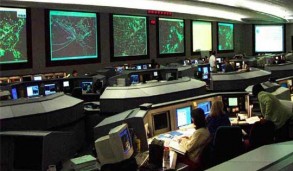
It turns out that these two people were both new to their jobs.  In fact, it was the first day on the job for Benedict Leo Sliney, the national operations manager at FAA’s Command Center.
Benedict Sliney
Benedict Sliney was an ATC in the US Air Force during the Vietnam War and, after that, worked at the FAA for the first half of his professional career.  In the 1980s, Sliney went on from the FAA to work as an attorney and continued in that career throughout the 1990s.  He worked for several law firms during this time, handling various kinds of cases, and he was a partner in some of those firms.
Sliney’s clients included financial investors who were accused of Securities and Exchange violations.  In one 1998 case, he represented Steven K. Gourlay, Jr., an employee of Sterling Foster.  It was reported that Sterling Foster was “secretly controlled” by Randolph Pace and was at the center of “one of the most notorious scams ever.”[5] Sliney got Gourlay’s charges dropped in 1998, but, in a related 2002 case, Gourlay pled guilty to conspiracy to commit securitiesfraud, mail fraud, and wire fraud, and was sentenced to six months in prison.[6,7]
In the summer of 2000, Sliney represented Merrill Lynch in a case in which the delay of the transfer of clients’ funds to Smith Barney was said to have “caused their investments with Merrill, Lynch to lose some $638,000 in value.”  Sliney was able to get Merrill Lynch off the hook.[8]
For whatever reasons, Sliney decided to leave his lucrative law career behind just months before 9/11 in order to return to the FAA.  It was reported that Jack Kies, FAA’s manager of tactical operations, offered Sliney the job of Command Center national operations manager.  Instead, Sliney asked to work as a specialist and he started in that role.  Kies offered Sliney the national operations manager position again six months later, and Sliney accepted.[9] His first day on the job was 9/11/01.
On 9/11, others present at the FAA’s Command Center outranked Sliney.  Interviews of those others, however, including Linda Schuessler and John White, confirm that Ben Sliney was given the lead in the Command Center’s response to the hijackings that day.  Despite that critical role, Sliney is mentioned only one time in the narrative of the 9/11 Commission report.
According to the summary of his interview for the investigation, Sliney was first notified of “a hijack in progress” sometime between 8:15 and 8:20 EDT.  This was about the same time as communications were lost with American Airlines Flight 11, the first of the planes to be hijacked, and it was about 30 minutes before that plane crashed into the north tower of the World Trade Center(WTC).  It was nearly two hours before Flight 93 was destroyed in Pennsylvania.  Incredibly, according to Sliney’s interview, it was not until after a second confirmed hijacking occurred and two planes had crashed into the WTC (nearly an hour after he learned about the first hijacking) that Sliney “realized that the hijackers were piloting the aircraft.”[10]
After the second tower was hit, Sliney responded by asking for a military response via the special military outfit assigned to the FAA’s Command Center,  the Air Traffic Services Cell (ATSC).  This was at approximately 9:06 am.  At the time, one of the three military officers in the ATSC called the NMCC and that officer was told that “senior leaders” at the NMCC were “in a meeting to determine their response” to the attacks, and would call back.[11] As this example shows, there are at least as many unanswered questions about what went on at the NMCC that morning as there are about what happened at the FAA.[12]
Several of the FAA’s top people confirmed that the military was engaged and knew about the hijackings early on.  This included Jeff Griffith at the Command Center and Monte Belger, the FAA’s acting Deputy Administrator, who waspresent at FAA Headquarters.  Belger stated that “[T]here were military people on duty at the FAA Command Center, as Mr. Sliney said. They were participating in what was going on. There were military people in the FAA’s Air Traffic Organization in a situation room. They were participating in what was going on.”[13]
Sliney’s interview summary is full of phrases like he “did not recall” and “was not aware,” although he did recall “being informed” that interceptors were eventually launched (too late).  Apparently, Sliney didn’t even know what the fighters would do if they were launched.  He recalled thinking: “Well, what are they going to do?”  Additionally, in an apparent defensive posture, Sliney claimed “definitively that he did not receive a request to authorize a request to the military for assistance.”[14]
One might think that the national operations manager for the FAA’s Command Center would not need a “request to authorize a request for military assistance” and that he might know what military assistance would entail.  But Sliney’s interview summary suggests that he did not even know what the protocol was for requesting military assistance in the event of a hijacking.  Sliney’s understanding on 9/11 “and today” (two years later, when the interview was conducted) was that an FAA request for military assistance “emanates from the effected Center…directly to the military.“  That is, Sliney supposedly was not aware of any role that the FAAs’ Command Center or FAA HQ might have had in the request for interception of hijacked aircraft.  This appears to be in contradiction to the protocol given by the 9/11 Commission report and it is definitely in contradiction to the concept of a “hijack coordinator.”
In addition to the confusion about the Command Center’s role in requesting military assistance, it seems there was only one person at FAA headquarters who was authorized to request military assistance.  On 9/11, Ben Sliney was told that no one could find that one person.  Sliney later recounted his experience learning of that fact in this way:
I said something like, “That’s incredible. There’s only one person. There must be someone designated or someone who will assume the responsibility of issuing an order, you know.” We were becoming frustrated in our attempts to get some information. What was the military response?[15]
Michael Canavan
The hijack coordinator at FAA headquarters, Lt. Gen. Michael A. Canavan, had been in his position for only nine months, and would leave the job within a month of 9/11.  Surprisingly, although Mike Canavan was mentioned in the 9/11 Commission report, he was not cited for his role as the FAA’s hijack coordinator, a role that was at the center of the failure to intercept the planes on 9/11.
Instead of being mentioned as the hijack coordinator, Canavan was in the report because he had been the commander of the Joint Special Operations Command (JSOC), which ran the military’s counterterrorism operations and covert missions.  The report described Canavan’s part in the failure to follow-through on a carefully laid-out 1998 CIA plan to capture Osama bin Laden (OBL) in Afghanistan.  Canavan was quoted as saying that the plan put tribal Afghanis at too much risk and that the “operation was too complicated for the CIA.”[16]
Nearly the entirety of Canavan’s career was in military special operations.  He was a Special Forces soldier for many years, and before he was JSOC Commander, he was Special Operations Commander for the US European Command (SOCEUR), which included operations throughout Africa as well.  Canavan was SOCEUR from 1994 to 1996 and JSOC Commander from 1996 to 1998.
JSOC is a successor organization to the Office of Policy Coordination (OPC), which was a secret government-funded organization authorized by the NationalSecurity Council in 1948. The OPC was led by CIA director Allen Dulles and Frank Wisner, a State Department official who wielded unprecedented power due to his position in New York law and financial circles.  The JSOC was created in 1980 by the Pentagon and run by Ted Shackley’s OPC colleague, Richard Stillwell.  According to author Joseph Trento, JSOC quickly became “one of the most secret operations of the US government.”[17]
Creation of the JSOC was, ostensibly, a response to the failed 1980 hostage rescue attempt in Iran called Operation Eagle Claw.  JSOC immediately went on to engage in an “array of highly covert activities” by way of “black budgets.”[18] This included operations in Honduras and El Salvador which supported the illegal wars associated with the Nicaraguan rebels called the Contras.
In 1987, JSOC was assigned to a new military command called the US Special Operations Command (SOCOM) that came about through the work of SenatorWilliam S. Cohen.  Senator Cohen went on to become the Secretary of Defense from 1997 to 2001, and it was he who led the Quadrennial Defense Review of 1997 that reduced the number of fighters actively protecting the continental US from 100 to 14.[19] Cohen is now chairman of The Cohen group, where he works with his Vice Chairman, Marc Grossman, whom FBI whistleblower Sibel Edmonds says figures prominently in the information she has been trying to provide.
Interestingly, Hugh Shelton was the commander of SOCOM during the same years that Canavan was the commander of JSOC.  Shelton went on to become the chairman of the Joint Chiefs of Staff (JCS), which is the highest position in the US military.  He was in that position on September 11th and was, like Canavan, curiously absent for just the morning hours on that day.[20]
In any case, it seems odd that Michael Canavan occupied what turned out to be the most important position relative to the failure to intercept the hijacked planes on 9/11 and was also involved in evaluating plans to capture OBL just three years earlier.  Apart from the coincidence that he was selected as the most qualified person for both of those very different positions, he was also a central figure in these two different reasons why the 9/11 attacks were said to have succeeded.
When he first started the job as FAA’s hijack coordinator, just nine months before the attacks, Canavan was in charge of running training exercises that were “pretty damn close to [the] 9/11 plot, according to John Hawley, an employee in the FAA’s intelligence division.[21] In his comments to the 9/11 Commission, Canavan denied having participated in any such exercises and the Commission apparently didn’t think to reconcile the conflicting comments it had received from Hawley and Canavan on this important issue.
That’s not surprising in light of the fact that Canavan’s treatment by the 9/11 Commission was one of uncritical deference.  Reading through the transcript of the related hearing gives the impression that the Commission members were not only trying to avoid asking the General any difficult questions, but they were fawning over him.
Lee Hamilton began his questioning of Canavan by saying “You’re pretty tough on the airlines, aren’t you?”[22] As with many of the statements and reports made by Hamilton, however, the evidence suggests that the opposite is true.
In May 2001, Canavan wrote an internal FAA memorandum that initiated a new policy of more lax fines for airlines and airports that had security problems.  The memo suggested that, if the airlines or airports had a written plan to fix the problem, fines were not needed.  For whatever reason, the memo was also taken to mean that FAA agents didn’t even have to enforce corrections as long as the airline or airport said they were working on it. Canavan’s memo was repeatedly cited as a cause of failure to fix security problems in the months leading up to 9/11.[23,24]
Canavan’s job as hijack coordinator was clearly the most important link in the communications chain between the FAA and the military.  But the 9/11 Commission did not address this hijack coordinator position in terms of how it was fulfilled on 9/11, and did not mention the alarming fact that we don’t know who actually handled the job of hijack coordinator on the day of 9/11.  We don’t know because Canavan said he was in Puerto Rico that morning and claimed to have missed out on “everything that happened that day.”[25]
Here is Canavan’s exact statement to the Commission, in response to a question from Commissioner Richard Ben-Veniste, whose questions were, like Hamilton’s, rather submissive:
Here’s my answer — and it’s not to duck the question. Number one, I was visiting the airport in San Juan that day when this happened. That was a CADEX airport, and I was down there also to remove someone down there that was in a key position. So when 9/11 happened, that’s where I was. I was able to get back to Washington that evening on a special flight from the Army back from San Juan, back to Washington.  So everything that transpired that day in terms of times, I have to — and I have no information on that now, because when I got back we weren’t — that wasn’t the issue at the time. We were — when I got back it was, What are we going to do over the next 48 hours to strengthen what just happened?[26]
One might think that the Commissioners would have expressed surprise at Canavan’s rambling, somewhat incoherent claim that he was just not available during the events of 9/11.  We would certainly expect the Commissioners to have followed up with detailed questions about who was in charge that day with respect to the most important role related to the failed national response.  But that was not the case.  Instead, Ben-Veniste redirected the discussion while “putting aside the issue.”  None of the other Commissioners said a word about Canavan being missing that day or even asked who was filling in for him as the primary contact between the FAA and the military with regard to hijackings.  And, of course, the 9/11 Commission report did not mention any of it at all.
In the interest of finding out what happened, we should return to the failure of FAA HQ to request military assistance for Flight 93.  We should ask: What was FAA HQ doing with this information for those 30 minutes in the absence of the one person who was charged to do something about it?  Apparently, for fifteen minutes, nothing was done.  But after fifteen minutes, according to the 9/11 Commission report, the conversations were going nowhere.
At 9:49, according to the report, this was the exchange between the FAA Command Center and FAA HQ.
Command Center:  Uh, do we want to think, uh, about scrambling aircraft?
FAA Headquarters:  Oh, God, I don’t know.
Command Center:  Uh, that’s a decision somebody’s gonna have to make probably in the next ten minutes.
FAA Headquarters:  Uh, ya know everybody just left the room.
The Commission report says that ineffectual discussions about scrambling aircraft were still occurring at FAA HQ twenty minutes after it had received notification of the fourth hijacking.
At 9:53 am, “FAA headquarters informed the Command Center that the deputy director for air traffic services was talking to Monte Belger about scrambling aircraft.”
Apart from contradicting Benedict Sliney’s testimony that an FAA request for military assistance “emanates from the effected Center … directly to the military,” this part of the 9/11 Commission report never mentions who the “deputy director for air traffic services” was.  Tape recordings suggest that it was someone named Peter.  This might have been Peter  H. Challan, an engineer who had worked for the FAA since 1969 and had been Deputy Associate Administrator for Air Traffic Services since July 1999.  But the Deputy Director of Air Traffic Services that day was Jeff Griffith.  Monte Belger was the Deputy Administrator for the FAA, second in command to the FAA Administrator, Jane Garvey.  Belger and Griffith later denied they ever had a conversation about scrambling aircraft, despite the 9/11 Commission stating this as fact.
Jane Garvey was also present during the failed response at FAA HQ.  She was the FAA Administrator from 1997 to 2002 and, coincidentally, in the years before that, had been the director of Logan International Airport in Boston, where two of the flights took off on 9/11.  Apparently Garvey’s record as director for the Logan airport, which had for many years the worst security record of any major airport, was not a problem for her nomination to the top job at FAA.  It was Garvey who appointed Canavan to his role as Associate Administrator for Civil Aviation Security and, therefore, as hijack coordinator.
In any case, in the absence of the hijack coordinator, the FAA was completely incompetent in terms of communicating the need to intercept the hijacked planes on 9/11.  Officially, the only notice of the hijackings to the military came directly from the FAA centers, bypassing both the Command Center and FAA HQ.   Boston Center reached the North East Air Defense Sector (NEADS) at 8:37 to request help with the first hijacking, and New York Center notified the military of the second hijacking at 9:03.  NEADS only found out about the third hijacking at 9:34 by calling the Washington center to ask about Flight 11, and the military was said to have first learned about the hijacking of Flight 93 from Cleveland Center at 10:07. Still, none of the planes were intercepted.
9/11 and special operations
Although Michael Canavan was unavailable to perform his critical job function on 9/11, he was fully involved in the response to the attacks.  Just two days later, he attended a “Principals Committee Meeting” chaired by Condoleezza Rice that included all of Bush’s “war cabinet.”[27] This meeting set the stage for how the new War on Terror would be conducted.
Canavan later cashed in on the windfalls of the resulting wars and the privatization of military operations when he was hired on at Anteon International Corporation as president of its Information Systems Group.  In doing so, he joined a number of prominent defense department alumni, including his former special operations colleague, SOCOM commander and JCS chairman Hugh Shelton, who was on the board of directors at Anteon.
Since 9/11, covert activities have been encouraged at a much higher level, but, prior to 9/11, SOCOM was not supposed to conduct covert operations.  Therefore, JSOC worked intimately with the CIA’s clandestine division called the Special Activities Division (SAD). Canavan led those kinds of operations in northern Iraq, Liberia and Bosnia. He ran special operations in Croatia in 1996 and, according to President Clinton, was the one who identified Secretary of Commerce Ron Brown’s body after Brown’s plane crashed there.[28]
JSOC regularly works with foreign intelligence agencies, including the Mossad.[29] It has been involved with hijackings, for example that of the Achille Lauroand TWA Flight 847.  It has also operated from bases in foreign countries, such as Saudi Arabia, for many years.[30] Presidential Decision Directive PDD-25 gave JSOC one of the rare exemptions from the Posse Comitatus Act of 1878, which means that JSOC can legally conduct its missions within the US.[31]
In the “War on Terror”, the special mission units of JSOC have been given the authority to pursue secret operations around the world.  JSOC effectively operates outside the law, capturing and killing people with or without the knowledge of the host countries in which it operates.  JSOC missions are always low-profile, and the US government will not acknowledge any specifics about them.
Reporter Seymour Hersh has reported that the JSOC was under the command of Vice President Dick Cheney after the attacks.[32] Hersh also claimed that the leaders of JSOC “are all members of, or at least supporters of, the Knights of Malta” and that “many of them are members of Opus Dei.”[33] The ties between the Knights of Malta and high-level US intelligence personnel, including William Casey and William Donovan, have been well-documented.[34] Such accusations have also been made of Louis Freeh, who headed the FBI from 1993 to June 2001 and would have worked closely with Canavan and Shelton in the pursuit of special operations targets.
Other special operations leaders who were involved in the lack of response on 9/11 included Richard Armitage, who was present on the Secure VideoTeleconference (SVTS) during the attacks.[35] This was the White House meeting chaired by Richard Clarke, which the 9/11 Commission said convened at 9:25 and included leaders of the CIA, the FBI, the FAA, as well as the departments of State, Defense and Justice.   Even with all those leaders in on the call, nothing was done to stop Flight 93 from “crashing” that morning, approximately 40 minutes after the call began.  Instead, we were left completely undefended.
Like Canavan and Shelton, Armitage was involved in special operations in Vietnam and later was reportedly involved in several of the most well-known covert operations in US history, including the Phoenix Program and the Iran-Contra crimes.[36] Although he had spent many years in the Defense department, he was Deputy Secretary of State on 9/11.  After the invasion of Iraq, he was identified as the one who betrayed CIA agent Valerie Plame by revealing her identity, apparently in retaliation for her husband’s attempt to set the record straight on weapons of mass destruction.  Armitage admitted he revealed Plame’s identity, but claimed it was done inadvertently.[37]
Another special operations soldier who testified to the 9/11 Commission and played a significant role with regard to the airlines and facilities prior to 9/11 was Brian Michael Jenkins.  While Shelton and Canavan were running SOCOM and JSOC, Jenkins was the deputy chairman of Kroll when that company was designing the security system for the World Trade Center (WTC) complex.[38]
Jenkins was appointed by President Clinton to be a member of the White House Commission on Aviation Safety and Security, where he collaborated with James Abrahamson of WTC security company Stratesec, and FBI director (and alleged Opus Dei member) Louis Freeh.  In 1999 and 2000, Jenkins served as an advisor to the National Commission on Terrorism, led by L. Paul Bremer, who went on to be an executive of WTC impact zone tenant, Marsh & McLennan, and then the Iraq occupation governor.  Jenkins returned to the RAND Corporation, where he had previously worked with Donald Rumsfeld, Condoleezza Rice, Frank Carlucci of The Carlyle Group, and Paul Kaminski of Anteon.
Lieutenant Colonel John Blitch was yet another special operations soldier who played a big part in the events immediately following 9/11.  Blitch spent his career in the US Army’s Special Forces and was said to have retired just the day before 9/11 to become an employee of Science Applications International Corporation (SAIC).   Immediately following the attacks, he was put in charge of the team of robotic machine operators that explored the pile at Ground Zero, using devices that had previously been used for elimination of unexploded ordnance.
Conclusions
Despite being given plenty of notice about the four planes hijacked on 9/11, FAA management did not request military assistance to ensure the planes were intercepted before they crashed.  The 9/11 Commission attributes this to a string of gross failures in communication between the FAA and the military on 9/11.  However, the report places no blame on any of the people who were involved and doesn’t even mention the one person who was most important to this chain of communications.
One of the most important people involved was Benedict Sliney, who had, just before 9/11, left a lucrative law career defending Wall Street financiers to return to work as a specialist at the FAA.  It was his first day on the job.  With regard to ensuring military interception of the hijacked planes, he said he did not receive a “request to authorize a request.”  Sliney also claimed to not know that FAA management at the Command Center, where he was in charge, or FAA HQ, had any role in requests for military assistance.   This is in contradiction to the stated protocol in the 9/11 Commission report and also the idea of an FAA “hijack coordinator.”
The FAA hijack coordinator was Michael Canavan, a career special operations commander who had come to the civilian FAA job only nine months before 9/11.  According to an FAA intelligence agent, one of the first things Canavan did in that job was lead and participate in exercises that were “pretty damn close to the 9/11 plot.”  He was also known within the FAA for writing a memo just a few months before 9/11 that instituted a new leniency with regard to airport and airline security.
With regard to the communication failures, Canavan offered the unsolicited excuse that he was absent during the morning hours of 9/11, in Puerto Rico.  The 9/11 Commission did not pursue this excuse, nor did it ask who was filling the critical hijack coordinator role in Canavan’s absence.  In fact, the 9/11 Commission report didn’t address the hijack coordinator role at all.  The report mentioned Sliney only once in the entire narrative and did not refer to Canavan in his role as hijack coordinator.
When a new, honest investigation is finally convened, it should look into why a lawyer, who knew how to handle evidence and get financiers off the hook, was experiencing his first day on the job as national operation manager at the FAA.  And If 9/11 was a “special operation” as many people now suspect, that investigation might consider that a number of special operations specialists were in place to ensure that the operation went off without a hitch and was not discovered.  Long-time special operations leaders like Michael Canavan, Hugh Shelton, Brian Michael Jenkins, and Richard Armitage played critical parts with respect to the facilities, events, and official story of 9/11.  These facts seem worth investigating.
References
[1] The 9/11 Commission Report, page 14
[2] The 9/11 Commission report, pages 17 to 18
[3] The 9/11 Commission report, page 34
[4] Ibid
[5] Matthew Goldstein, When Bad Scams Go Good, The Wall Street Journal, May 21, 2001, http://www.smartmoney.com/investing/stocks/when-bad-scams-go-good-10573/
[6] NASD Regulation, Inc. Office of Dispute Resolution, Arbitration No. 9644952
[7] Westlaw citation WL 31426028, United States District Court, S.D. New York, No. 00 CR 91-11 RWS, Oct. 28, 2002
[8] United States District Court, E.D. New York, 103 F.Supp.2d 579, Downes v. O’Connell, 103 F.Supp.2d 579 (2000)
[9]  Lynn Spencer, Touching History: The Untold Story of the Drama That Unfolded in the Skies Over America on 9/11, Free Press, 2008, page 2
[10]  9/11 Commisison memorandum for the record, Interview with Benedict Sliney, May 21, 2004
[11]  History Commons 9/11 Timeline page for John Czabaranek,http://www.historycommons.org/entity.jsp?entity=john_czabaranek_1
[12]  Matthew Everett, The Repeatedly Delayed Responses of the Pentagon Command Center on 9/11, 911blogger.com, November 7, 2010,http://911blogger.com/news/2010-11-07/repeatedly-delayed-responses-pentagon-command-center-911
[13]  History Commons 9/11 Timeline page for Monty Belger,http://www.historycommons.org/entity.jsp?entity=monty_belger
[14]  9/11 Commisison memorandum for the record, Interview with Benedict Sliney, May 21, 2004
[15]  History Commons 9/11 Timeline page for Ben Sliney,http://www.historycommons.org/entity.jsp?entity=ben_sliney
[16] The 9/11 Commission report, page 113
[17] Peter Dale Scott, American War Machine, Rowan & Littlefield, 2010
[18] Harvey M. Sapolsky, Benjamin H. Friedman, Brendan Rittenhouse Green, US military innovation since the Cold War: creation without destruction, Taylor & Francis Publishers, 2009
[19] History Commons 9/11 Timeline profile for William S. Cohen,http://www.historycommons.org/entity.jsp?entity=william_s._cohen
[20] History Commons 9/11 Timeline profile for Henry Hugh Shelton,http://www.historycommons.org/entity.jsp?entity=henry_h._shelton
[21] 9/11 Commission Memorandum for the Record (MFR) on John Hawley interview, October 8, 2003, http://media.nara.gov/9-11/MFR/t-0148-911MFR-00608.pdf
[22] Transcript of 9/11 Commission public hearing of May 23, 2003, 9/11 Commission Archive, http://www.9-11commission.gov/archive/hearing2/9-11Commission_Hearing_2003-05-23.htm
[23] Andrew R. Thomas, Aviation Security Management: Volume 1, GreenwoodPublishing Group, page 78,http://terrortalk.org/myfiles/Terrorism%20Books/Aviation%20Security%20Management.pdf
[24] Ricardo Alonso-Zaldivar, FAA Culture of Bureaucracy Stymies SecurityReform Efforts, Critics Say, Los Angeles
[25] History Commons 9/11 Timeline profile for Mike Canavan,http://www.historycommons.org/entity.jsp?entity=mike_canavan#a830faahijackcoordinator
[26] Interview of Michael Canavan, 9/11 Commission Public Hearing, May 23, 2003, http://www.9-11commission.gov/archive/hearing2/9-11Commission_Hearing_2003-05-23.htm
[27] 9/11 Commission Report, footnote 36 to Chapter 10
[28] White House press briefing by Leon Panetta, January 10, 1996
[29] Gordon Thomas, Gideon’s Spies: The Secret History of the Mossad, Thomas Dunne Books, 1995, pp 309-310
[30] John T. Carney, Benjamin F. Schemmer, No Room for Error: The Story Behind the USAF Special Tactics Unit, Presido Press, 2002, p 232
[31] Graeme C. S. Steven, Rohan Gunaratna, Counterterrorism: a reference handbook, ABC-CLIO, 2004, p 230
[32] Abbas Al Lawati, ‘You can’t authorise murder’: Hersh, Gulf News, May 12, 2009, http://gulfnews.com/news/region/palestinian-territories/you-can-t-authorise-murder-hersh-1.68504
[33] Blake Hounshell, Seymour Hersh unleashed, Foreign Policy, January 18, 2011,http://blog.foreignpolicy.com/posts/2011/01/18/seymour_hersh_unleashed
[34] Matthew Phelan, Pulitzer Prize Winner Seymour Hersh And The Men Who Want Him Committed, WhoWhatWhy.com, Feb 23, 2011,http://whowhatwhy.com/2011/02/23/pulitzer-prize-winner-seymour-hersh-and-the-men-who-want-him-committed/
[35] Summary of 9/11 Commission interview with John Flaherty, Chief of Staff for Secretary of Transportation, Norman Mineta, April 2004
[36] Spartacus Educational webpage for Richard Armitage,http://www.spartacus.schoolnet.co.uk/JFKarmitage.htm
[38] Kevin R. Ryan, Demolition Access To The WTC Towers: Part Two –Security, 911Review.com, August 22, 2009,http://911review.com/articles/ryan/demolition_access_p2.html
Kevin R. Ryan began to investigate the tragedy of September 11th, 2001 through his work as Site Manager for a division of Underwriters Laboratories (UL). He was fired by UL in 2004 for writing to the National Institute of Standards and Technology (NIST), asking about its World Trade Center investigation and UL’s work to ensure the fire resistance of the buildings. He now serves as co-editor of the Journal of 9/11 Studies, and board director at Architects and Engineers for 9/11 Truth. Ryan has co-authored several books and peer-reviewed scientific articles on the subject. Read more articles by Kevin Ryan.
http://ultruth.wordpress.com/