Showing posts with label America's BackYard. Show all posts

Friday, October 26, 2012

USAID Spying In Latin America


By Nil Nikandrov
Courtesy Of "Global Research"

The ejection of USAID from Russia was a long-awaited and welcome development. Moscow has repeatedly warned its US partners via an array of channels of communication that the tendency of USAID to interfere with Russia’s domestic affairs was unacceptable and, particularly, that the radicalism of its pet NGOs in the Caucasus would not be tolerated. When, on October 1, the decision made by the Russian leadership takes effect, the Moscow-based USAID staff which has been stubbornly ignoring the signals will have to pack and relocate to other countries facing allegations of authoritarian rule…In Latin America, USAID has long earned a reputation of an organization whose offices are, in fact, intelligence centers scheming to undermine legitimate governments in a number of the continent’s countries. The truth that USAID hosts CIA and US Defense Intelligence Agency operatives is not deeply hidden, as those seem to have played a role in every Latin American coup, providing financial, technical, and ideological support to respective oppositions. USAID also typically seeks engagement with the local armed forces and law-enforcement agencies, recruiting within them agents ready to lend a hand to the opposition when the opportunity arises.
To varying extents, all of the Latin American populist leaders felt the USAID pressure. No doubt, Venezuela’s H. Chavez is the number one target on the USAID enemies list. Support for the regime’s opponents in the country shrank considerably since the massive 2002-2004 protests as the nation saw the government refocus on socioeconomic issues, health care, housing construction, and youth policies. The opposition had to start relying more on campaigns in the media, around 80% of which are run by the anti-Chavez camp. Panic-provoking rumors about imminent food supply disruptions, overstated reports about the crime level in Venezuela (where, actually, there is less crime than in most countries friendly to the US), and allegations of government incompetence in response to technological disasters which became suspiciously frequent as the elections drew closer are bestowed on the audiences as a part of the subversive scenario involving a network ofVenezuelan NGOs. In some cases, the membership of the latter can be limited to 3-4 people, but, coupled to strong media support, the opposition can prove to be an ominous force. Pro-Chavez commentators are worried that USAID agents will contest the outcome of the vote and, synchronously, paramilitary groups will plunge Venezuelan cities into chaos to give the US a pretext for a military intervention.
USAID is known to have contributed to the recent failed coup in Ecuador, during which president R. Correa narrowly escaped an assassination attempt. Elite police forces heavily sponsored by the US and the media which made use of the liberal free speech legislation to smear Correa were the key actors in the outbreak. Subsequently, it took Correa serious efforts to get a revised media code approved in the parliament contrary to the USAID-lobbied resistance.
Several bids to displace the government of Evo Morales clearly employed the USAID operative potential in Bolivia. According to journalist and author Eva Golinger, USAID poured at least $85m into destabilizing the regime in the country. Initially, the US hoped to achieve the desired result by entraining the separatists from the predominantly white Santa Cruz district. When the plan collapsed, USAID switched to courting the Indian communities with which the ecology-oriented NGOs started to get in touch a few years before. Disorienting accounts were fed to the Indians that the construction of an expressway across their region would leave the communities landless, and the Indian protest marches to the capital that followed ate away at the public standing of Morales. It transpired shortly that many of the marches including those staged by the TIPNIS group, had been coordinated by the US embassy. The job was done by embassy official Eliseo Abelo, a USAID curator for the Bolivian indigenous population. His phone conversations with the march leaders were intercepted by the Bolivian counter-espionage agency and made public, so that he had to escape from the country while the US diplomatic envoy to Bolivia complained about the phone tapping.
In June 2012, foreign ministers of the ALBA bloc countries passed a resolution on USAID. It read: «Citing foreign aid planning and coordination as a pretext, USAID openly meddles in sovereign countries’ domestic affairs, sponsoring NGOs and protest activities intended to destabilize legitimate governments which are unfavorable from Washington’s perspective. Documents released from the US Department of State archives carry evidence that financial support had been provided to parties and groups oppositional to the governments of ALBA countries, a practice tantamount to undisguised and audacious interference on the US behalf. In most ALBA countries, USAID operates via its extensive NGO networks, which it runs outside of the due legal framework, and also illicitly funds media and political groups. We are convinced that our countries have no need for external financial support to maintain the democracy established by Latin American and Caribbean nations, or for externally guided organizations which try to weaken or sideline our government institutions». The ministers called the ALBA leaderships to immediately deport USAID representatives who threaten the sovereignty and political stability of the countries where they work. The resolution was signed by Bolivia, Cuba, Ecuador, the Dominican Republic, Nicaragua, and Venezuela.
Paul J. Bonicelli was confirmed by the US Senate as the USAID Assistant Administrator for Latin America and the Caribbean last May. Former USAID chief Mark Feuerstein gained such notoriety in Latin America as the brain behind the ousters of the legitimate leaders of Honduras and Paraguaythat the continent’s politicians simply had to learn to avoid him. The USAID credibility is increasingly drying up, and it is unlikely that Bonicelli, a PhD and a conservative, will be able to reverse the tendency. His record includes heading various USAID divisions and «promoting democracy» in concert with the US National Security Council.
Bonicelli’s views are reflected in his papers in the Foreign Policy journal. To Bonicelli, Chavez is not a democrat but a leader eager to get rid of all of his opponents. The new USAID boss holds that, apart from the drug threat, Chavez – having inspired populist followers in Ecuador, Bolivia, and Nicaragua – poses the biggest challenge to the US interests in Latin America. Bonicelli therefore urges the US to prop up the Venezuelan opposition in every way possible, providing material support and training, so that it can maximally take part in elections and civilian activities.
Another paper by Bonicelli portrays Russia’s present-day evolution as grim regress and a slide towards «neo-Tsarism». Based on the perception, Bonicelli argues that the West should hold Russia and its leaders accountable in whatever concerns freedom and democracy – even if freedom in the country is important to just a handful of people – and cites the case of Poland where the US used to stand by Lech Wałęsa.
Chances are slim that a reform of USAID would restore the agency’s credibility in Latin America. Sticking to a trimmed list of priorities, USAID axed a few minor programs and shut down its offices in Chile, Argentine, Uruguay, Costa Rica, and Panama, with Brazil next in line. USAID believes that the above countries are already in reasonable shape and no longer need assistance, so that the agency can throw its might against its main foes – the populists and Cuba, and do its best to have the politicians unfriendly to Washington removed across the Western Hemisphere. The stated USAID budget for Latin America is $750m, but estimates show that the secret part of the funding, which is leveraged by the CIA, may total twice the amount.

Wednesday, July 04, 2012

Trading Democracy For Corporate Rule

Post by "CavalierZee"


You, Me, and the SPP: Trading Democracy for Corporate Rule is a feature length documentary which exposes the latest manifestation of a corporatist agenda that is undermining the democratic authority of the citizens of North America.

Two processes, the Security Prosperity Partnership (SPP) and the Trade Investment Labour Mobility Agreement (TILMA) are rapidly eroding and eliminating standards, civil liberties, regulatory systems and institutions put in place over generations through the democratic process. Proponents of the SPP and TILMA say that they are needed to keep trade flowing, opponents say these agreements not only undermine the democratic authority of citizens they threaten the sovereignty of the three nations through the integration of military, security structures and regulatory regimes.
Even though the SPP (Security Prosperity Partnership) is officially finished, this film provides an excellent background to this agenda and helps to expose how quickly and easily the corporate elite and their political cronies will abandon democratic principles to consolidate their own power, control and authority at the expense of citizens rights.

Sunday, May 20, 2012

Is The United States An Accidental Empire?


The United States was born out of a struggle against an imperial power. Beginning in the 1840s — seven decades after its founding — it embarked on a succession of "wars of choice" that were profoundly at odds with its founding principles and left it with an empire of its own. This inaugural "Thomas Paine" column looks at how American changed — and how its empire is handicapping its future.

By The Globalist
Friday, May 04, 2012

Our present predicament didn't happen overnight. It was a long time in the making. Along the way, America changed. We forsook our birthright, we deceived ourselves and, ever so slowly, our loadstar changed from liberty to force. When it was all over, we woke up and had an empire.


The United States broke with the foreign policy of the Founders in three wars of choice — against Mexico in 1848, against Spain in 1898, and against Germany in 1917.
The United States broke with the foreign policy of its Founders in three wars of choice. We used guns to annex two-fifths of Mexico. We used guns to remove Spain from its colonies in the Caribbean and the Philippines. We used guns to replace Germany as the leading military power in Europe.


In the seven decades between the start of the Mexican-American war in 1848 and America entering World War I in 1917, the die was cast.

We didn't go to war with Mexico, Spain and Germany to defend ourselves.

President James Polk proclaimed it was our Manifest Destiny to redraw our southern border to include almost half of Mexico. Likewise, President McKinley thought it was our Manifest Destiny to replace Spain as a colonial power in Cuba and the Philippines. In World War I, President Woodrow Wilson repackaged Manifest Destiny as saving the world for democracy.


War no longer needed to be justified as defending our country. War was now justified as promoting democracy around the world. Americans were now a force for good in the world.


The U.S. Constitution was subverted in the wars against Mexico, Spain and Germany. Yes, Congress declared war in the Mexican-American War, the Spanish-American War and World War I. But the legitimacy of the congressional declaration was undermined by Presidential lies:


  Americans weren't attacked on American soil, as President Polk claimed. In fact, volunteer American soldiers were attacked on Mexican soil.

  The Spanish didn't sink our ship in Havana, as President McKinley claimed.


  The Germans sunk our ship, but President Wilson didn't mention the American guns on board which violated our declared neutrality. Wilson's Secretary of State resigned in protest.


Each of these presidential lies was an impeachable offense. There were no impeachment proceedings. We just looked the other way.


These three wars of choice redefined American exceptionalism into something very different from what the Founders intended. We were no longer exceptional because of our unique form of government. The federal government no longer existed to protect the sovereignty of the individual.


World War II laid the foundation for an American empire. Our forward presence gave impetus to bin Laden, 9/11 and the permanent war on terrorism.
The government now existed to promote democracy abroad. Never mind that the American republic was never a democracy. (The Constitution established a republic. The Founders rejected democracy because it didn't protect the individual from the tyranny of the majority.)


Each war of choice made the next one easier. President Polk's decision to take the country to war against Mexico made President McKinley's decision to go to war against Spain seem less unreasonable. It is hard to imagine President Wilson taking the country to war against Germany if Polk and McKinley hadn't gotten their wars.


Now the Constitution was turned upside down. We were set on a trajectory that turned the government against citizens. Wilson tolerated no war dissent and severely limited civil liberties.


We could have turned back to the foreign policy of the Founders. Mexico was no existential threat to the United States. But the war was popular and Polk gave the people what they wanted and made the country richer. We could have stopped there.


The little war with Spain was avoidable, too. But that war was also popular, cost-free and journalism became an accomplice in war. We could have stopped there. But wars of choice had become a habit for ambitious Presidents — and Wilson was ambitious.


Wilson's decision to take the country to war against Germany was far-reaching. The rapid rise of Germany was a reality that the major powers in Europe had to recognize. The Germans built an economy greater in size than the combined economies of France, England and Russia. Rather than let the Europeans find their own solution, Wilson decided to enter into an "entangling alliance" against Germany.


Unlike the two earlier wars of choice, World War I became unpopular at home. Fifty-thousand Americans gave their lives to fight the Kaiser. Clemenceau and Lloyd George ran circles around Wilson at the Versailles peace conference. Wilson lost the peace and the Versailles Treaty was rejected by the U.S. Senate.


Our intervention in the First World War was the equivalent of a European power coming to the United States during the Civil War and saying South wins, North loses.
World War I made World War II inevitable. Wilson's war of choice created Roosevelt's war of necessity. The French and English demanded onerous reparations from Germany. The ensuing inflation destroyed the Germany economy. Hitler rose to power by exploiting the political backlash inside Germany. The Second World War was a continuation of the unfinished business of the First.


World War II laid the foundation for an American empire. Six million Jews and 30 million Russians perished. This led to the creation of Israel and the outbreak of the Cold War. The United States took over British bases around the globe, and our forward presence gave impetus to bin Laden, 9/11 and the permanent war on terrorism.


The 120 million who perished in these 20th-century conflicts died mostly because of the failure of the existing major powers to accommodate the new strength of Germany on the European continent.


The solutions to yesterday's problems create today's problems. We live with the choices made by those who went before us. Looking back, Woodrow Wilson was the worst President in American history: His intervention in the First World War was the equivalent of a European power coming to the United States during the Civil War and saying South wins, North loses.


Now the Germans are back in the driver's seat in Europe. The Germans are once again dominating the economy of Europe. The United States is sidelined by the weakness of our economy and our staggering debt. We have lost our way and don't know how to get out of the empire business.


The Globalist's Thomas Paine column will examine the points of departure between America's founding principles and its historical and contemporary reality. 

Friday, May 18, 2012

Calls For Stepped-Up Interventionism In Latin America


Bogeymen Like Iran and Drug Cartels Are The Pretext, While Maintaining Hegemony Is The Goal

By John Glaser,
May 08, 2012
Courtesy Of "Anti-War"


The top Republican in Congress on Tuesday called for stepping up U.S. “engagement” and interventionism in Latin America in order to obstruct various bogeymen that pose no threat to America.
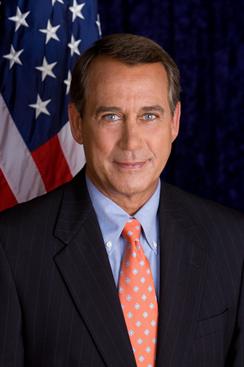
“The best defense against an expansion of Iranian influence in Latin America – and against the destructive aspirations of international criminals in the region – is for the United States to double down on a policy of direct engagement,” U.S. House of Representatives Speaker John Boehner said at the State Department.
Boehner said Iranian President Mahmoud Ahmadinejad’s visits to Venezuela, Cuba, Nicaragua and Ecuador in recent months “underscored the designs Iran has for expanding its influence in Latin America, and its eagerness to forge bonds with governments in the Western Hemisphere that have demonstrated a lesser interest in freedom and democracy.”
If diplomatic meetings between Iran and Latin American countries reveals Iran’s surreptitious imperial designs to expand its influence and threaten America, one has to wonder what encircling Iran with two aggressive American wars, dozens of U.S. military bases, missile defense systems, and fleets of navy warships looks like to the Islamic Republic.
As for forming bonds with the region’s undemocratic governments, the U.S. has Iran beat by a long shot. For over a hundred years, the United States has wrought terror, war, poverty, and repression throughout Latin America in the form of CIA-orchestrated military coups, support of terrorists and dictatorial regimes, and a very bloody war on drugs, all while peppering the entire region with the U.S. military.
Other than encroaching Iranian influence, an inflated threat that has been repeatedly debunked, Boehner said the drug cartels are the region’s next greatest threat. But Washington’s insistence on draconian prohibitionist policies and reliance onmilitarization of the drug war is what is emboldening and enriching the drug gangs by driving them into the black market. Several leaders throughout Latin America have asked the U.S. to consider decriminalization as a new approach, but have been rejected.
“We must be clear that we will be there, with our friends and partners in the region, committed to fighting and winning the war for a free, stable, and prosperous hemisphere,” Boehner added. Promising continued and increased U.S. presence in Latin America is a tradition that goes back a long time in the history of imperial foreign policy, but a free, stable, and prosperous hemisphere is precisely what America has prevented lo these hundred years.

Monday, April 30, 2012

A Tectonic Political Shift

US Hegemony In Latin America

By Renee Parsons
Published on Thursday, April 26, 2012
Courtesy Of "Common Dreams"

...the tectonic political shift that surfaced at the recent Summit of the Americas meeting.
The Summit, an offshoot of the Organization of American States organized in 1948, consists of 35 western hemisphere nations that meet on a tri-annual basis with the U.S. historically setting the agenda since the summit's inception in 1994.
Attending were over three hundred U.S. business executives with Chamber of Commerce President Tom Donohue in attendance to push for a free trade deal with Brazil. 
Once China began out-hustling the U.S. for its share of the global pie in Latin America and as the U.S. bogged down in a decade of war with an enduring economic catastrophe on its hands, Summit countries took the opportunity to readjust their vision of Uncle Sam's once omnipotent authority. 
That readjusted vision has offered a measure of independence from U.S. trade markets as well as U.S. domination on policy decisions. 
While not known for its historical memory, the U.S. does not usually react kindly to previously compliant nations flexing their sovereign muscles, U.S. AID to Latin American and the Caribbean at $1.3 billion in 2010 will most likely provide the necessary tether for continued cooperation.
Out of left field, the president's usual razzle dazzle charm offensive so successful at his first summit in 2009 ran into a brick wall amid deep contentious divisions that had been brewing since the previous summit. In what may be karmic payback for one hundred and fifty years of U.S. policy imposed on Latin America, 32 nations supported a resolution that Cuba be allowed to attend the 2015 summit with only the U.S. and the reliable Canadians voting against.
Cuba had been expelled from the OAS in 1962 with the beginning of 50 years of economic sanctions and was readmitted in 2009 but not invited to the summit.
In an amiable display of hubris, the president dug in his heels insisting that Cuba cannot attend since it has "not yet moved to democracy" and is still a "single party state" meaning no adversarial political parties. As Obama spoke of democracy, the irony of the U.S. undermining democratically elected Latin American heads of state and now requiring democracy as a condition for membership must have been subject for some sarcasm among current summit leaders.
A summit rule adopted in 2001 required each participant to respect the rule of law as a 'democratic' country although Mexico, which had been a regular Summit participant since 1994, achieved real democracy only in 2000. How well each participant respects the rule of law and encourages robust political partisan debate may rest in the eye of the beholder.
It is curious that American leaders expect its citizens and other nations to not connect the dots when it comes to its own double standards. It would be educational to know how the U.S. would justify applying the summit's democracy rule to China, our third largest trading partner, or to Saudi Arabia, our favorite importer of petroleum, neither known as guiding lights for justice or equality.
If the democratic standard is that a majority vote carries the day and since an overwhelming majority of summit nations adopted the Cuban resolution, how is democracy served when a minority of two have the power to challenge that resolution's implementation and how is it that one nation gets to decide who is invited? Therein lies the problem for U.S. foreign policy around the world -- that other nations and its people are capable of 'seeing' beyond the pretense.
As a backdrop for atmosphere at the summit, the experience of Bolivia is informative. In 2008, the Bush Administration suspended 'trade preferences' including duty free status for Boliviaalleging an insufficient effort to stop drug trafficking. The move came less than a month after Bolivian President Evo Morales accused the U.S. Ambassador of fomenting violence and upheaval with right wing opposition groups. In expelling the envoy, Morales accused the U.S. of an attack on a gas pipeline and initiating an assassination conspiracy.
With the election of Barack Obama, diplomatic relations between the two countries were set back when the Bush suspension was made permanent, costing Bolivia 20,000 non-drug industry related jobs and $278 million in exports. The coca leaf is legal in Bolivia as a tea and for religious and cultural purposes.
If the discussion on Cuba was not a forewarning of a challenge to its authority, the U.S. response to decriminalizing drugs must have been especially irksome to nation who has lived with years of massive violence and corruption from the drug cartels. Fareed Zakaria reportedSunday on CNN that Mexico had suffered an unbelievable 50,000 drug related deaths in the last six years.
While U.S. strategy at the Summit may be viewed as a metaphor for American pursuit of obsolete Cold War objectives around the world, the president offered little more than platitudes and some confusion with his categorical statement that "For the sake of the health and safety of our citizens -- all our citizens -- the United States will not be going in this direction."
It remains a puzzle as to why Obama, greeted as a rock star at the 2009 summit, left no room for negotiation on an issue that isolates the U.S. from many of its south-of-the-border allies and causes great anguish for millions of American families. With over two million incarcerated and another five million on probation, the U.S. can claim to have the most citizens in jail for drug-related offenses than any other country in the world.
Latin American leaders have raised the issue with the U.S. in the past when the former presidents of Mexico, Colombia and Brazil called for decriminalization of marijuana in 2009.
The U.S. drug policy, which has spent $25 billion on ineffectual crop eradication and border interdiction efforts as it has encouraged a militarization of the failed war on drugs, the president's 'new environment of cooperation' hit a serious ditch in the road as the U.S. and Canada objected to a consensus document preferring the 'reduce-demand' theory reminiscent of Nancy Reagan's Just Say No campaign.
In what has been deemed a setback for the U.S., the sixth Summit of the Americas faltered to an unhappy conclusion for all participants with President Morales and Brazilian President Dilma Rousseff predicting no future summits without Cuba.
The president seriously misread the mood in the hemisphere, especially in an awkward moment when he said "Sometimes I feel as if... we're caught in a time warp, going back to the 1950s, gunboat diplomacy, and Yankees and the Cold War, and so forth, and not addressing the world we live in."
That was, Mr. President, exactly the problem at Cartagena. The Summit wants to move forward into the 21st Century but it is the United States that clings to the past as it resists the will of the majority.
Renee Parsons was a lobbyist for Friends of the Earth in Washington, D.C. focusing on nuclear energy issues. While at FOE, she was responsible for a TRO that stopped the Dept of Energy from conducting an experimental drilling program at 12 locations along the perimeter of Canyonlands National Park as a possible high-level nuclear waste repository. Her efforts included opposing the Nuclear Waste Policy Act and organizing the coalition that successfully defunded the Clinch River Breeder Reactor. She also served as staff in the U.S. House of Representatives. In 2005, she was elected to the Durango City Council (Colorado) and served four years as Councilor and Mayor.


Sunday, April 08, 2012

Why The Drug War Won’t Be Terminated


By John Glaser,
April 03, 2012
Courtesy Of "Anti-War"


Central America has become the most dangerous place on Earth. The prevalence of organized crime, corruption, and inordinate rates of homicide has “metastasized,” as this new report from the Council on Foreign Relations describes it. The U.S. hasflooded the region’s states with security assistance and aggressively pushed for a militarized approach to organized crime and drug trafficking. Together with prohibitionist drug policies which significantly increases profits for cartels, the “ironfisted” war-like approach has compounded the problem and intensified violence. Even as the report concedes that much about the dominant U.S. approach to Central America has “ultimately failed to ensure greater public security,” it recommends essentially that same approach, only tweaked.
The report does point to specific U.S. policies that exacerbate the problem. “Lax gun regulations,” it claims, along with “U.S. inaction on comprehensive immigration reform” and domestic drug consumption are preventing constructive progress. It even has the gall to suggest “U.S. government agencies should seriously consider the role that Americans who consume illicit drugs play in fueling criminal violence in Central America,” and make it known. I don’t doubt these contribute to the problem, but the author seems to be going a long way around to avoid the crux of the issue.
Completely absent from the report’s recommendations is of course the obvious, most comprehensive solution: decriminalization and/or legalization of drugs. Not only is such an approach an elementary part of understanding the problem the region faces, but Central American leaders have come out explicitly in favor of such a shift. Only to be met with stiff vetoes from the U.S.
“It’s worth discussing, but there is no possibility the Obama/Biden administration will change its policy on [drug] legalization,” he said after meeting with President Felipe Calderon….
Biden’s trip [to Mexico and Honduras] takes place amid unprecedented pressure from political and business leaders to talk about decriminalizing drugs. The presidents of Costa Rica, Guatemala, El Salvador, Colombia and Mexico have said in recent weeks they’d like to open up the discussion of legalizing drugs.
Guatemalan President Otto Perez, while he came into office vowing to wage war on drug gangs and organized crime, has been the foremost advocate of decriminalization. Just in the last few days, a conference he helped organized to consider decriminalization was suddenly boycotted. Perez suspects the hegemon is at fault.
Guatemalan President Otto Perez accused Washington on Thursday of pressuring Central American leaders to boycott a summit he convened last Saturday to discuss changes on drug policy in the region, including decriminalization of narcotics.
“The boycott was because of fears in the United States that our region could unite around decriminalizing drugs,” Perez, a right-wing retired general, told reporters.
Washington’s refusal to consider decriminalization is a mix of a number of things, standard political paralysis and ideological stubbornness being included. But the military component to this is important. As Gen. Douglas M. Fraser, Commander of SOUTHCOM, told the House Armed Services Committee in early March: “The key to our defense-in- depth approach to Central America, South America, and the Caribbean has been persistent, sustained engagement, which supports the achievement of U.S. national security objectives by strengthening the security capacities of our partner nations. Militaries in our area of responsibility (AOR) are increasingly capable, professionalized, and rank among the most trusted institutions in many countries in the region.”
Even the CFL report disputes that last part: the militaries Washington supports are not professionalized or trusted, for obvious reasons. But the point is that Washington’s military dominance in Central America is long-standing and embedded into the policy structure. Resistance to solving the problem through decriminalization, I think, is similar to the State Department’s recent refusal to reduce aid to Egypt due to human rights concerns. As the New York Times reported “A delay or a cut in $1.3 billion in military aid to Egypt risked breaking existing contracts with American arms manufacturers that could have shut down production lines in the middle of President Obama’s re-election campaign and involved significant financial penalties, according to officials involved in the debate.” The military-industrial-congressional-complexrelies on the status quo.

Tuesday, December 06, 2011

U.S. Agents Launder Mexican Profits of Drug Cartels

By GINGER THOMPSON 
Published: December 3, 2011 
Courtesy Of "The New York Times"


WASHINGTON — Undercover American narcotics agents have laundered or smuggled millions of dollars in drug proceeds as part of Washington’s expanding role in Mexico’s fight against drug cartels, according to current and former federal law enforcement officials.
Multimedia
Metro Twitter Logo.

Connect With Us on Twitter

Follow@nytimesworldfor international breaking news and headlines.
The agents, primarily with the Drug Enforcement Administration, have handled shipments of hundreds of thousands of dollars in illegal cash across borders, those officials said, to identify how criminal organizations move their money, where they keep their assets and, most important, who their leaders are.
They said agents had deposited the drug proceeds in accounts designated by traffickers, or in shell accounts set up by agents.
The officials said that while the D.E.A. conducted such operations in other countries, it began doing so in Mexico only in the past few years. The high-risk activities raise delicate questions about the agency’s effectiveness in bringing down drug kingpins, underscore diplomatic concerns about Mexican sovereignty, and blur the line between surveillance and facilitating crime. As it launders drug money, the agency often allows cartels to continue their operations over months or even years before making seizures or arrests.
Agency officials declined to publicly discuss details of their work, citing concerns about compromising their investigations. But Michael S. Vigil, a former senior agency official who is currently working for a private contracting company called Mission Essential Personnel, said, “We tried to make sure there was always close supervision of these operations so that we were accomplishing our objectives, and agents weren’t laundering money for the sake of laundering money.”
Another former agency official, who asked not to be identified speaking publicly about delicate operations, said, “My rule was that if we are going to launder money, we better show results. Otherwise, the D.E.A. could wind up being the largest money launderer in the business, and that money results in violence and deaths.”
Those are precisely the kinds of concerns members of Congress have raised about a gun-smuggling operation known as Fast and Furious, in which agents of the Bureau of Alcohol, Tobacco, Firearms and Explosives allowed people suspected of being low-level smugglers to buy and transport guns across the border in the hope that they would lead to higher-level operatives working for Mexican cartels. After the agency lost track of hundreds of weapons, some later turned up in Mexico; two were found on the United States side of the border where an American Border Patrol agent had been shot to death.
Former D.E.A. officials rejected comparisons between letting guns and money walk away. Money, they said, poses far less of a threat to public safety. And unlike guns, it can lead more directly to the top ranks of criminal organizations.
“These are not the people whose faces are known on the street,” said Robert Mazur, a former D.E.A. agent and the author of a book about his years as an undercover agent inside the Medellín cartel in Colombia. “They are super-insulated. And the only way to get to them is to follow their money.”
Another former drug agency official offered this explanation for the laundering operations: “Building up the evidence to connect the cash to drugs, and connect the first cash pickup to a cartel’s command and control, is a very time consuming process. These people aren’t running a drugstore in downtown L.A. that we can go and lock the doors and place a seizure sticker on the window. These are sophisticated, international operations that practice very tight security. And as far as the Mexican cartels go, they operate in a corrupt country, from cities that the cops can’t even go into.”
The laundering operations that the United States conducts elsewhere — about 50 so-called Attorney General Exempt Operations are under way around the world — had been forbidden in Mexico after American customs agents conducted a cross-border sting without notifying Mexican authorities in 1998, which was how most American undercover work was conducted there up to that point.
But that changed in recent years after President Felipe Calderóndeclared war against the country’s drug cartels and enlisted the United States to play a leading role in fighting them because of concerns that his security forces had little experience and long histories of corruption.
Today, in operations supervised by the Justice Department and orchestrated to get around sovereignty restrictions, the United States is running numerous undercover laundering investigations against Mexico’s most powerful cartels. One D.E.A. official said it was not unusual for American agents to pick up two or three loads of Mexican drug money each week. A second official said that as Mexican cartels extended their operations from Latin America to Africa, Europe and the Middle East, the reach of the operations had grown as well. When asked how much money had been laundered as a part of the operations, the official would only say, “A lot.”
“If you’re going to get into the business of laundering money,” the official added, “then you have to be able to launder money.”
Former counternarcotics officials, who also would speak only on the condition of anonymity about clandestine operations, offered a clearer glimpse of their scale and how they worked. In some cases, the officials said, Mexican agents, posing as smugglers and accompanied by American authorities, pick up traffickers’ cash in Mexico. American agents transport the cash on government flights to the United States, where it is deposited into traffickers’ accounts, and then wired to companies that provide goods and services to the cartel.
In other cases, D.E.A. agents, posing as launderers, pick up drug proceeds in the United States, deposit them in banks in this country and then wire them to the traffickers in Mexico.
The former officials said that the drug agency tried to seize as much money as it laundered — partly in the fees the operatives charged traffickers for their services and another part in carefully choreographed arrests at pickup points identified by their undercover operatives.
And the former officials said that federal law enforcement agencies had to seek Justice Department approval to launder amounts greater than $10 million in any single operation. But they said that the cap was treated more as a guideline than a rule, and that it had been waived on many occasions to attract the interest of high-value targets.
“They tell you they’re bringing you $250,000, and they bring you a million,” one former agent said of the traffickers. “What’s the agent supposed to do then, tell them no, he can’t do it? They’ll kill him.”
It is not clear whether such operations are worth the risks. So far there are few signs that following the money has disrupted the cartels’ operations, and little evidence that Mexican drug traffickers are feeling any serious financial pain. Last year, the D.E.A. seized about $1 billion in cash and drug assets, while Mexico seized an estimated $26 million in money laundering investigations, a tiny fraction of the estimated $18 billion to $39 billion in drug money that flows between the countries each year.
Mexico has tightened restrictions on large cash purchases and on bank deposits in dollars in the past five years. But a proposed overhaul of the Mexican attorney general’s office has stalled, its architects said, as have proposed laws that would crack down on money laundered through big corporations and retail chains.
“Mexico still thinks the best way to seize dirty money is to arrest a trafficker, then turn him upside down to see how much change falls out of his pockets,” said Sergio Ferragut, a professor at the Autonomous Technological Institute of Mexico and the author of a book on money laundering, which he said was “still a sensitive subject for Mexican authorities.”
Mr. Calderón boasts that his government’s efforts — deploying the military across the country — have fractured many of the country’s powerful cartels and led to the arrests of about two dozen high-level and midlevel traffickers.
But there has been no significant dip in the volume of drugs moving across the country. Reports of human rights violations by police officers and soldiers have soared. And drug-related violence has left more than 40,000 people dead since Mr. Calderón took office in December 2006.
The death toll is greater than in any period since Mexico’s revolution a century ago, and the policy of close cooperation with Washington may not survive.
“We need to concentrate all our efforts on combating violence and crime that affects people, instead of concentrating on the drug issue,” said a former foreign minister, Jorge G. Castañeda, at a conference hosted last month by the Cato Institute in Washington. “It makes absolutely no sense for us to put up 50,000 body bags to stop drugs from entering the United States.”