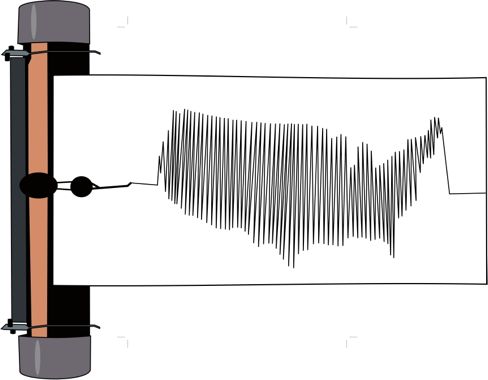
The National Reconnaissance Office is so intent on extracting confessions of personal or illicit behavior that officials have admonished polygraphers who refused to go after them and rewarded those who did, sometimes with cash bonuses, a McClatchy investigation found.
The disclosures include a wide range of behavior and private thoughts such as drug use, child abuse, suicide attempts, depression and sexual deviancy. The agency, which oversees the nation’s spy satellites, records the sessions that were required for security clearances and stores them in a database.
Even though it’s aggressively collecting the private disclosures, when people confess to serious crimes such as child molestation they’re not always arrested or prosecuted.
“You’ve got to wonder what the point of all of this is if we’re not even going after child molesters,” said Mark Phillips, a veteran polygrapher who resigned from the agency in late May after, he says, he was retaliated against for resisting abusive techniques. “This is bureaucracy run amok. These practices violate the rights of Americans, and it’s not even for a good reason.”
The agency refused to answer McClatchy’s questions about its practices. However, it’s acknowledged in internal documents that it’s not supposed to directly ask more personal questions but says it legally collects the information when people spontaneously confess, often at the beginning of the polygraph test.
McClatchy’s review of hundreds of documents – including internal policy documents, memos and agency emails – indicates that the National Reconnaissance Office is pushing ethical and possibly legal limits by:
– Establishing a system that tracks the number of personal confessions, which then are used in polygraphers’ annual performance reviews.Various national security experts, including those who support the use of polygraph in general for security screening, said they were disturbed by what McClatchy found, especially considering that the number of polygraph screenings has spiked in the last decade.
– Summoning employees and job applicants for multiple polygraph tests to ask about a wide array of personal behavior.
– Altering results of the tests in what some polygraphers say is an effort to justify more probing of employees’ and applicants’ private lives.
“There’s a narrow jurisdiction for a polygraph program, which is to promote security,” said Steven Aftergood, a senior analyst with the Federation of American Scientists, a nonpartisan research center that tracks intelligence policies. “When agencies exceed their authority, they not only violate the privacy of employees, they corrupt the entire process.”
In 2002, the National Academies, the nonprofit institute that includes the National Academy of Sciences, concluded that the federal government shouldn’t use polygraph screening because it was too unreliable.
Yet since then, in the Defense Department alone, the number of national-security polygraph tests has increased fivefold, to almost 46,000 annually. Many of those who are required to undergo the tests aren’t just bureaucrats in Washington but also private contractors across the country.
But some national security experts question whether U.S. agencies are striking the appropriate balance between protecting Americans’ privacy rights and the nation’s security interests as agencies are being permitted to ask what could be seen as more intrusive questions.
Last month, the Obama administration announced that federal agencies, including the National Reconnaissance Office, now may ask employees and applicants during polygraph screenings whether they’ve leaked classified information to the news media.
“If a whole program is susceptible to manipulation, then relying on it further is all the more disturbing,” Aftergood said.
The National Reconnaissance Office orders the second highest number of screening polygraphs in the Pentagon, conducting about 8,000 a year at its headquarters in Chantilly, Va., and at locations in Los Angeles and the Silicon Valley area.
The agency’s is among eight Pentagon polygraph programs that under Defense Department policy can directly ask only about national security issues in what’s known as the counterintelligence scope polygraph.
The test was designed to catch spies and terrorists who are trying to infiltrate the government without encroaching unnecessarily on the private lives of government employees and military personnel. Polygraphers are allowed to ask about espionage, terrorism, sabotage and the unauthorized sharing of classified information.
But about five years ago, the National Reconnaissance Office began pressuring polygraphers to pursue information outside those limits in what amounted to an unwritten policy, said a group of polygraphers who agreed to describe the practices to McClatchy. The polygraphers include Phillips, a former Marine who worked for a number of intelligence agencies over two decades, and a former National Reconnaissance Office colleague, Chuck Hinshaw.
Both agreed to be named because they think the agency’s practices violate Defense Department policies and should be stopped.
Other polygraphers backed their accounts, but they asked to remain anonymous because they feared retaliation. “I was coached to go after this stuff,” one of the polygraphers said. “It blew my mind. They were asking me to elicit information that I’m not permitted to ask about, and I told them I wasn’t going to do it.”
Another longtime polygrapher said the National Reconnaissance Office had established an off-the-books policy that encouraged going after prohibited information.
“The organization says in writing that they’re not supposed to be asking about this information, when in fact behind closed doors they are pushing (polygraphers) to actively pursue it,” the polygrapher said.
Hinshaw, who said he’d witnessed the improper practices as a former acting supervisor, accused the agency of becoming so cavalier about following the rules that the polygraph branch chief, Michael McMahon, pressured him to change the results of the agency director’s polygraph if he failed the test. In the end, director Bruce Carlson passed, but Hinshaw said the incident demonstrated how the agency’s use of polygraph was arbitrary and wasn’t about protecting the country.
“There’s a line you have to draw,” said Hinshaw, who worked in the program from 2005 until earlier this year. “The original idea for using polygraph to clear people was to ferret out moles and spies. Now it’s morphing into an ambiguous exam where anything’s possible.”
The National Reconnaissance Office, meanwhile, has branded Phillips and Hinshaw troubled employees. Before Phillips resigned, the agency suspended him for three days, saying he was insubordinate, among other complaints, and it revoked Hinshaw’s security clearance earlier this year, citing his foreclosure on his family home.
Both men said they thought the agency had retaliated against them for trying to resist the polygraph practices, and records show that they’d voiced their concerns before the agency took action against them. The Pentagon’s inspector general is investigating Phillips’ complaint.But even if the agency were found to be violating Pentagon policies, the laws that limit the government’s use of polygraph in screening aren’t specific on what constitutes an illegal abuse. The Privacy Act of 1974 requires that the government collect only personal information that’s necessary and relevant, and a 1981 presidential directive calls for “the least intrusive collection techniques feasible.”
Much of the interpretation of what that means has been left to the federal departments that run the polygraph programs.
“Some polygraph programs have been getting away with all sorts of abuses for years,” said Mark Zaid, an attorney for Phillips who’s been handling national security cases for 20 years. “It’s very difficult to hold them accountable.”
Why is the National Reconnaissance Office interested in such private details? In internal documents and emails, supervisors told polygraphers they felt pressure from the officials known as adjudicators, who make the final decisions on national security clearances.
The agency’s motives, however, are more complicated, some of the polygraphers said.
The Pentagon’s test is so restricted to counterintelligence issues that it’s notorious among polygraphers for compelling admissions of mundane and ultimately harmless infractions. One of the most common confessions involves harried bureaucrats who admit to taking classified documents home by mistake. By collecting confessions to repulsive or criminal behavior, officials can justify using polygraph screenings to their bosses, Congress and a skeptical public despite questions about the test’s reliability, the polygraphers said.
As a result, the National Reconnaissance Office closely tracked how many personal confessions it collected. The agency called them “Code 55 admissions,” the records show.
In fiscal year 2011, almost 50 percent of the 757 confessions the agency collected were of the personal nature that the rules said shouldn’t be directly pursued, the agency’s statistics show. Of 33 polygraphers, one-third collected more confessions related to personal behavior than to national security violations.
Other polygraph programs, such as those in the Naval Criminal Investigative Service, also conduct limited national-security polygraph screenings, but in an entire year their polygraphers may not encounter any confessions that are outside the limits of the test. It’s a rare occasion when someone blurts it out without prompting, officials said.
“If an agency is getting a big portion of its confessions that are outside the limits, it’s an indication that they’re going on fishing expeditions,” said John Sullivan, a former CIA polygrapher of 30 years. “And if they’re doing that, it’s wrong and being done under false pretenses.”Phillips and Hinshaw accused the polygraph program’s branch chief, McMahon, of encouraging improper practices.
Within the intelligence world, only the CIA and the National Security Agency are permitted to directly ask about drug use, unreported crimes and falsification of the forms filled out for national security clearances, which require a wide array of personal information. The tests are known as lifestyle polygraphs.Late last year, the Pentagon discovered that the National Reconnaissance Office had ordered five of the lifestyle tests in violation of Defense Department policies, according to an internal report obtained by McClatchy. The agency then claimed to have the legal authority to do so, when it was supposed to be asking only national security questions designed to catch spies and terrorists, the report said. The Pentagon concluded that the program was in “full compliance” because the agency said it was a mistake.
Polygraphers, however, say the agency’s pursuit of the off-limits information is much more widespread than the Pentagon’s report noted. Records show that the agency ordered at least one more lifestyle test after it was told to stop.
The agency also pursues the information in its routine counterintelligence tests, polygraphers said. In one instance last year, Phillips’ supervisors told him to “assess” the mental health of an applicant during a polygraph test, records show. Phillips said he’d refused to do it.
As a result of its efforts, the agency ends up with a vast accumulation of personal details of questionable national-security significance, polygraphers said.
Last September, a woman who’d held a clearance for more than 15 years and already had passed a national security polygraph was interrogated for more than four hours over two additional polygraph sessions, said Hinshaw, who said he’d been ordered to do it. Hinshaw’s supervisors launched the aggressive inquiry because they suspected that the woman had smoked pot more than the one time years before that she’d admitted to, records show. In the end, however, the only other information the National Reconnaissance Office extracted from her was that she’d been molested at age 16.
Hinshaw said he’d received thousands of dollars in bonuses over several years in part because he’d collected a high number of confessions, including the more personal ones.
Phillips, on the other hand, had a much lower collection rate and received negative performance reviews. His supervisors cited his reluctance to collect the Code 55 information as part of the reason for their dissatisfaction with him.“There are ways of leading people into making these admissions even though you’re not supposed to,” Phillips said. “By setting up a system that gives polygraphers an incentive to go after the information, the agency is pressuring them to collect it.”
Despite the agency’s interest in criminal behavior, those who confess to serious offenses aren’t always criminally prosecuted even when child molestation is involved, McClatchy found.
In one case, a contractor who was a former Escondido, Calif., substitute teacher admitted to molesting a third-grade student in 2005 during outside tutoring sessions paid for by the girl’s immigrant parents. In a 2010 polygraph session, the man said that if he were asked, “ ‘Have you ever molested a 9-year-old?’ I’d have to say yes.”
The Escondido Police Department and school district where he’d been employed weren’t notified of the incident. After being contacted by McClatchy, the school district called the Escondido Police Department to file a report.The agency refused to answer McClatchy’s questions about the molestation confession, saying in a statement only that its polygraph program “is in compliance with the law.”
NATIONAL RECONNAISSANCE OFFICE STATEMENT ON ITS POLYGRAPH PROGRAM
“The National Reconnaissance Office directs, manages and oversees appropriate investigative inquiries, including polygraph, for the purposes of rendering informed security access determinations. Such inquiries and determinations are in full compliance with the law and provide the security compliance required to best protect and further Intelligence Community program activities and objectives.
“If adverse information is disclosed during the administration of a polygraph examination the information is evaluated and forwarded to the appropriate authorities. For Privacy Act purposes the NRO has a policy of not commenting on specific cases.
“The National Center for Credibility Assessment (NCCA), Quality Assurance Program (QAP), conducted an on-site inspection of the NRO Polygraph Program on November 15-17, 2011. During the QAP inspection, 118 criteria in nine primary areas were reviewed. Upon conclusion of the inspection, the NRO Polygraph program was found to be in full compliance with their policies and procedures and met or exceeded all standards required of a federal government polygraph program.”
Via: "McClatchy Newspapers"