Mark LeVine writes:
The large-scale military assault launched by Israel on Gaza, and the manner in which both Israeli and Palestinian forces are fighting this war, raise numerous red flags regarding large scale violations of human rights and international humanitarian law (IHL).
Certainly, international law offers no panacea for the death and destruction of war; nor does most media coverage of the Israeli-Palestinian conflict devote more than the scantiest attention to the human rights implications of such violence.
As Gaza-based human rights campaigner
Raji Sourani described it in the midst of the current violence, human rights is the "skin" to protect civilians from the all-out aggression of those who attack them.
International law impacts the present war in Gaza in two key ways. One pertains to whether the violence deployed by each side complies with or violates IHL, in particular the Geneva Conventions of 1949 and their Additional Protocol I of 1977. The other, more complicated issue pertains to the legal status of Gaza and its relationship to Israel, which profoundly affects what kind of violence Israel can deploy there.
Since the 1967 conquest of Gaza and the West Bank, Israel has asserted that the Geneva Conventions do not apply to these areas or govern Israel's conduct toward Palestinian inhabitants on several grounds, including that Palestinians are not a High Contracting Party (state signatory). However, the International Committee of the Red Cross, the official guardian and authoritative interpreter of IHL, has consistently maintained that the Fourth Geneva Convention, which governs militarily captured territories and their civilian population, is
applicable. This view is endorsed by a vast preponderance of international legal opinion, including United Nations resolutions and the opinion of the International Court of Justice.
Under IHL, five core principles govern what conduct is lawful in armed conflict. Violations of these constitute grave breaches and thus can be considered war crimes.
These principles are: civilian immunity (ie, the prohibition against intentionally targeting civilians or otherwise treating them as combatants); distinction (ie, the imperative to distinguish between civilians and combatants in military operations, and for combatants to distinguish themselves as such through identifiable dress and insignia and by carrying arms openly); proportionality (ie, the requirement to use force in a manner that is proportionate to the military value of the target); necessity (ie, the obligation to restrict targets or tactics to those necessary to achieve legitimate military goals); and humane treatment (ie, the prohibition of torture, inhumane and degrading treatment of prisoners, and the imperative to guard the rights and interests of "protected persons", the legal term for civilians in occupied territories).
Additional Protocol I established people's right to use armed force to resist foreign occupation as well as colonial domination and to fight against racist regimes in the exercise of their right of self-determination. This Protocol was promulgated for the purpose of injecting IHL standards into asymmetric wars (between states and non-state groups).
Israel has refused to sign this Protocol (as has the US) and does not recognise the right of non-state groups to fight for those specified causes, even if they were to abide by the laws of war.
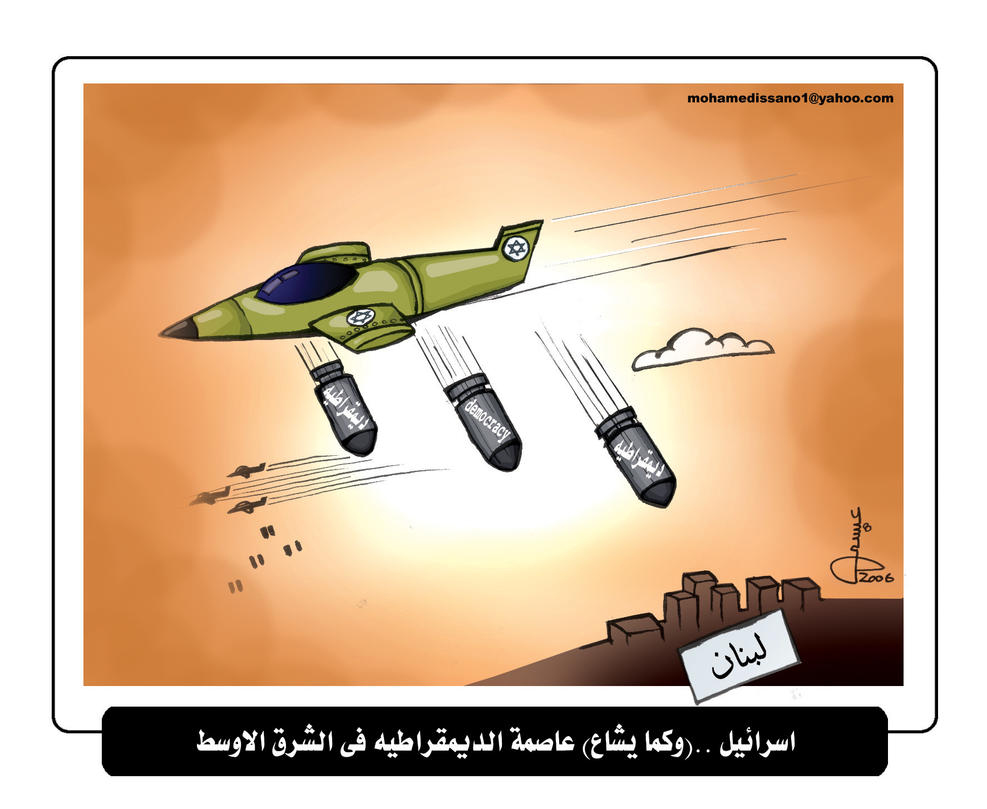
Israel has not only refused to respect the principles of civilian immunity and distinction but has openly disregarded both as a matter of policy. At the start of Operation Pillar of Defence, officials declared their intention to target any variety of sites including the homes of Hamas activists.
On November 19 and 20, Israel bombed the Gaza media building, killing two journalists and injuring eight others, one of whom lost a leg. Officials justified that bombing by claiming that the building is a "Hamas operational communications centre", thus purporting it to be a legitimate target, and admonished journalists who had not heeded Israel's warning to "stay clear of Hamas bases and facilities" for functioning as human shields. The bombed building houses numerous international media outlets. After the first day's bombing, Ofir Gendalman, spokesperson for Prime Minister Binyamin Netanyahu, tweeted that no "Western journalists" had been hurt. Under IHL, journalists doing their jobs enjoy the status of civilians and intentionally targeting them is a war crime. Warnings of the sort issued by Israel, whether by dropping leaflets from planes or broadcasting announcements, provide no legal cover when the civilian immunity of journalists or others is callously disregarded.
Such disregard has been the stuff of statements by senior Israeli politicians and security officials who have spoken openly of "flattening" Gaza or "bombing it back to the Middle Ages" or even causing a Palestinian "shoah" (the Hebrew word used to describe the Holocaust). This clearly suggests that such officials regard all of Gaza a legitimate target and their intention to use indiscriminate and disproportionate force against Palestinians, including civilians, thus violating three of the five cardinal principal for lawful war fighting under IHL.
Indeed, based on the latest statistics available, such declarations reflect
actual policy on the ground. As of November 19,
according to the Palestinian Centre for Human Rights, 58 civilians including 18 children and 12 women had been killed, and 622 had been wounded including 175 children and 107 women. Israel justifies massive and devastating attacks on Gaza's civilian infrastructure by claiming that any structure or location associated with the Hamas government is automatically linked to its terroristic activities, even when such attacks involve significant risk to civilians. This seems to confirm the veracity of
UNRWA's assessment that civilians are bearing the brunt of this violence.
Legally, for a state to deploy military force in self-defence, there must be a grave and imminent threat that can only be ameliorated militarily, as opposed to through diplomacy or police actions. The claim that such a threat existed on November 14 and remains present is the centerpiece of
Israel's justifications for the ongoing operation. This self-defence rationale has been wholeheartedly embraced by some allies, most notably
President Obama.
First, the wave of rockets that provided the immediate context for Israel's assassination of Jabari were launched in retaliation for prior indiscriminate Israeli killings of Gazan civilians, including the November 5 killing of a 23-year-old mentally disabled man who strayed too close to the border fence, and at least one boy killed while playing football five days later. Two other Palestinians who rushed to the latter scene to help the victims were themselves immediately killed by three more shells fired by Israeli forces.
These attacks prompted a retaliatory strike by the Popular Front for the Liberation of Palestine, which launched an anti-tank missile at an army jeep near the border, wounding four soldiers. That attack by a group not under the operational control of Hamas in turn triggered the targeting of Jabari and the all-out assault on Gaza by Israel.
The second factor that undercuts the self-defence rationale is that Jabari was involved in negotiating an Egyptian-brokered comprehensive, long-term cease-fire with Israel when he was assassinated. In a November 17 New York Times op-ed, Israeli academic Gershon Baskin (who was a mediator in these negotiations) declared that Jabari had been given a near-final version of the agreement hours before he was killed. Had he not been killed, Jabari would have been responsible for enforcing the agreement to stop rockets fired by various Palestinian groups from Gaza into Israel.
Israeli officials had to know and anticipate that killing Jabari would precipitate a violent Palestinian response, raising serious questions about their moral and political responsibility for the ensuing violence.
Does Israel Have A Legal Right To Wage War On Gaza?
The background for determining the legality of Israel's resort to military force must be judged against a reality which, although vehemently rejected by Israeli officials, nevertheless enjoys an overwhelming
international consensus: Namely, that the entirety of the territories captured by Israel in 1967 remain occupied according to international law.
Specifically, despite changes in the administration of Gaza and the West Bank as a result of agreements signed in the 1990s by Israel and the PLO, the establishment of a Palestinian Authority, and the redeployment of Israeli military forces from Palestinian population centres, the Israeli occupation continues as a matter of international law.
Among the authoritative sources affirming that these areas remain occupied is the International Court of Justice, which in its 2003 Advisory Opinion on the legality of the West Bank Wall "reaffirm[ed] the applicability of the Fourth Geneva Convention as well as Additional Protocol I to the Geneva Conventions to the Occupied Palestinian Territory, including East Jerusalem".
In regard to Gaza specifically, Israeli officials have argued that since the unilateral withdrawal of settlers and armed forces in 2005, the Strip can no longer be considered under occupation and, in the words of the former Head of the International Law Department of the Military Advocate General's Office, Israel no longer bears responsibility to "actively ensure a normal life for the civilian population". But in fact neither the unilateral withdrawal nor any other thing Israel has done over the last decade negates the continuity of the occupation.
On the contrary, Israel continues to exercise "effective control", a legal designation with implications. As the Goldstone Report (paragraph 187) makes clear (supporting the conclusion of the 2003 ICJ decision), "in addition to controlling the borders, coastline and airspace... Israel continued to control Gaza's telecommunications, water, electricity and sewage networks, as well as the population registry, and the flow of people and goods into and out of the territory while the inhabitants of Gaza continued to rely on the Israeli currency."
Why is it important to recognise that Gaza is still occupied by Israel? Because this legal status speaks to issues far broader than the current war in Gaza and the Israeli-Palestinian conflict. Put simply, an occupying state has no legal right to wage a full-scale military war against an occupied population. Rather, the occupying state is legally obligated to protect the rights and prioritise the interests of this population, something Israel has manifestly not done in any part of the Occupied Territories.
The occupying power has rights, too, including the right to maintain order and to take steps to ensure for its own security. But
in a context of occupation, these options are limited to police actions and at most use of small arms to address an immediate threat, not full-scale war.
Since the redeployments agreed to under the Oslo Accords, and particularly since the start of the second intifada, Israel has asserted its right to wage war on Palestinians in Gaza and the West Bank, deploying military force at levels unprecedented since 1967, including the deployment of tanks, helicopter gunships, and snipers.
In response to international criticism about the excessive use of force, officials asserted that, because the army was "out" of Palestinian-inhabited areas, riot control and policing were no longer options, and therefore a militarised response was necessary and legitimate to defend against a foreign "armed adversary". Israel asserted its self-defence right to attack an "
enemy entity", while denying that those stateless enemies had any right to use force, even in self-defence. These are the propositions that have guided Israeli policy since then, up to the latest conflagration.
Waging War Against An Occupied Population
Israel has asserted and continues to assert its right to attack the "enemy entity" that resides and operates in areas that Israel denies are still occupied. Palestinians were and continue today to be denied any right to use force, even in self-defence against systematic Israeli violence and violations of international law.
The larger implications of this Israeli discourse are two-fold: First, Israel tries to frame its policies as
complying with international law in order to avoid accusations of war crimes. The success of this argument depends on its terminology, and the policies that flow from it, remaining unchallenged. Second, to the extent that state practice (especially the practices of powerful states) is the main means through which international law - especially the laws of war - evolve, the "Israeli model" of disregarding civilian immunity and using disproportionate force in the aggressive pursuit of security may attain influence and credibility beyond this conflict.
According to former senior Israeli military lawyer Daniel Reisner, this situation is precisely the goal of Israeli legal reasoning, which seeks to achieve "a revision of international law... If you do something for long enough, the world will accept it... International law progresses through violations. We invented the targeted assassination thesis and we had to push it. At first there were protrusions that made it hard to insert easily into the legal moulds. Eight years later it is in the centre of the bounds of legitimacy."
The Israeli model has become influential for the US government in waging the "war on terror", albeit in somewhat different ways under the Bush and Obama administrations. Perhaps one reason President Obama has been so reluctant to criticise Israel's use of force in Gaza during Operation Cast Lead in 2009 and now is that many if not most of these tactics and rationales have been blended into the fabric of US warfare.
In the case of Israel and the Occupied Territories, the use of the
sui generis concept is particularly pernicious because it allows for the creation of a state of legal, and through it political and diplomatic, confusion which has enabled Israel relentlessly to change the demographic, political, economic and cultural landscape of the Occupied Territories for almost half a century without serious international opposition.
The designation
sui generis literally places the West Bank and Gaza and their populations into a state of exception, outside the reach of IHL and thus open to any and all policies Israel may choose to impose, without fear of violating - at least according to Israel's interpretations - international human rights and humanitarian norms. Of course, Palestinians and their leaders are accorded no similar freedom of action as long as Gaza "
await[s] the finalisation of permanent status negotiations".
It will become increasingly apparent that Israel's continual deployment of large-scale, indiscriminate force against people and space of Gaza - and, equally important, the West Bank as well - constitute not merely the context for war crimes but for crimes against humanity and, because of their clearly aggressive nature, a crime against.peace.
Ultimately, no matter how much Israel wants to keep the Occupied Territories in political, legal and moral limbo, its actions and legacy, like those of the US in its war on terror, will be determined by its adherence to or violations of normative interpretations of international law.
The longer Israel continues to kill Palestinians indiscriminately and with impunity, and the longer it maintains the violent and illegal occupation in the West Bank and Gaza that requires such policies to maintain it, the greater the delegitimation and opprobrium its policies will face.
Via: "Al-Jazeera"